7 High Margin Print on Demand Products to Skyrocket Sales in 2026


Print-on-demand is still one of the easiest ways to start an ecommerce business in 2026 but profitability depends on choosing the right products. While POD removes inventory risk, high margins are what turn sales into real profit.
In this guide, we’ll break down 7 high-margin print-on-demand products that are already proven to perform in 2025, along with real cost ranges, selling prices, and margin benchmarks. You’ll also learn what makes a POD product profitable and how to start a POD business in 2026 the right way.
Top 7 High Margin Print on Demand Products to Make Money
1. Spiral Notebook
- Supplier Price: $4-$6
- Selling Price: $12-$18
- Average Gross Profit Margin: 50-65%
Spiral notebooks are a great example of a high-margin POD product. They usually cost around $4-$6 to make but can sell at $12-$18 that gives you a 50-65% profit margin.

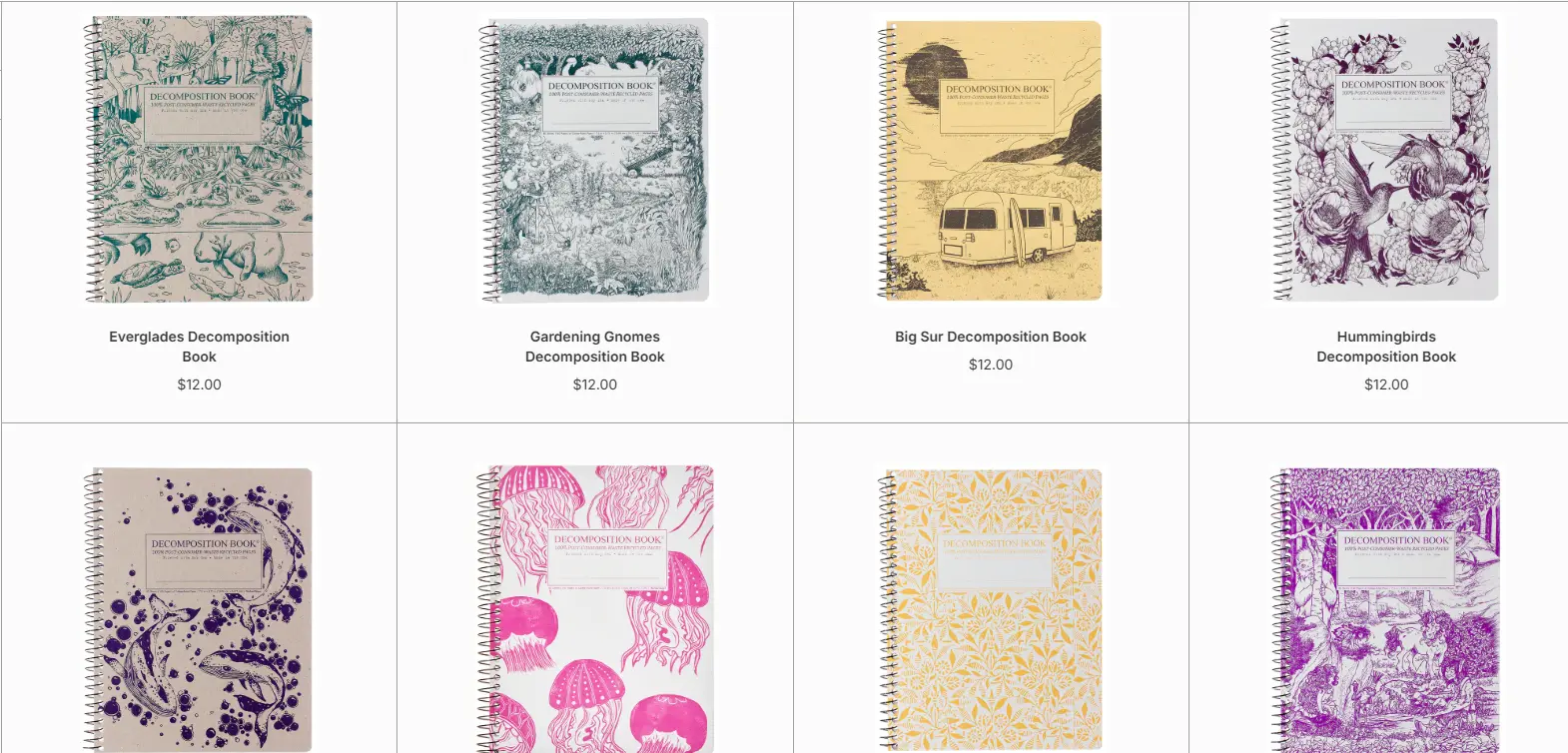
The best part? You can easily boost that margin through upselling and cross-selling. Sell a notebook with a matching pen or a few stickers and you’re doubling your revenue for just a tiny extra cost. Plus, notebooks sell repeatedly because people often buy multiple notebooks throughout the year, leading to a high rate of return and better profit over time.
2. Print Tote Bag
- Supplier Price: $7-$10
- Selling Price: $20-$30
- Average Gross Profit Margin: 50-60%
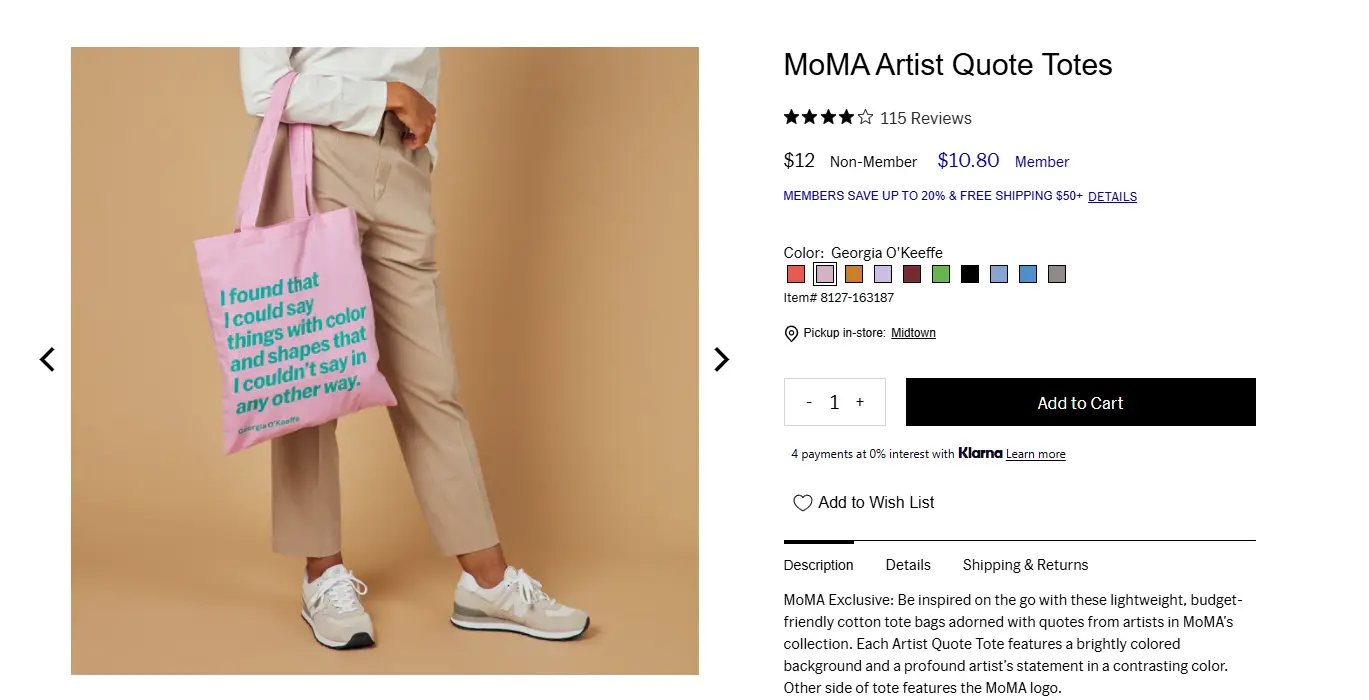
If you’re looking for a POD product that’s easy to start with and profitable from day one, print tote bags are a perfect choice. They usually cost around $7-$10 to produce but sell for $20-$30, giving you a 50-60% profit margin straight away.
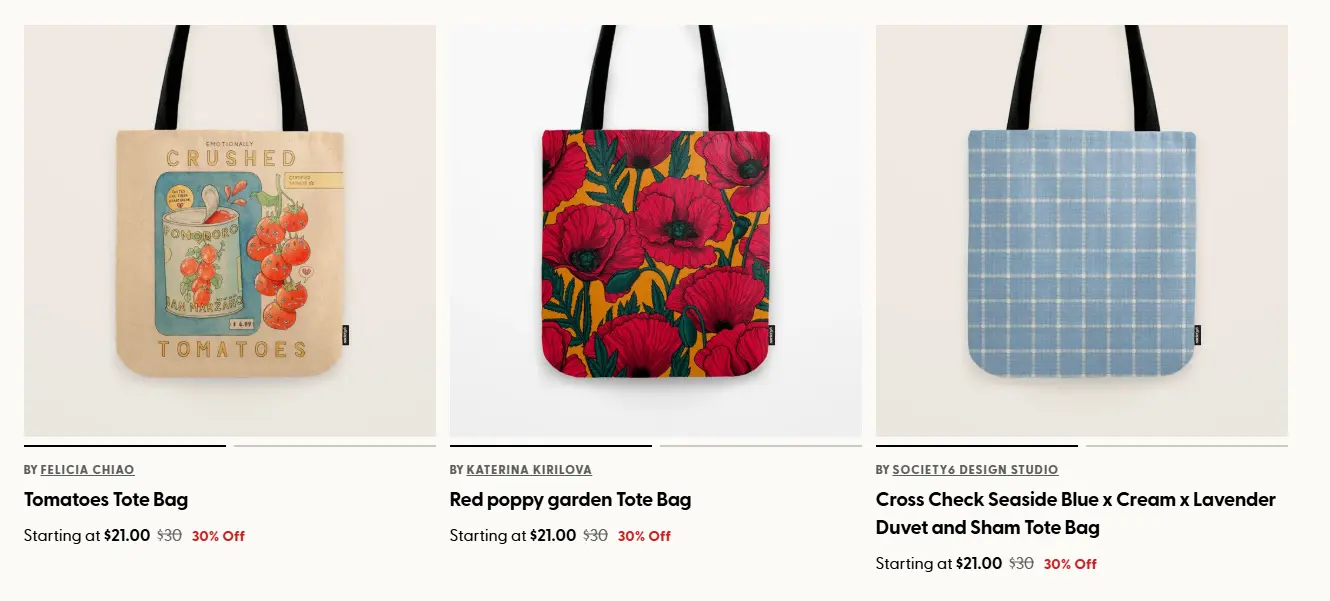
Add trendy quotes, pop-culture designs, or niche illustrations, and suddenly an ordinary bag becomes a must-have item. Seasonal or limited-edition designs make buyers feel like they’re getting something special, which means you can charge more without adding cost.
3. Giclée Print Canvas
- Supplier Price: $15-$20
- Selling Price: $50-$120
- Average Gross Profit Margin: 60-85%
One of the most exciting things about Giclée print canvases is how flexible the profit margin can be. Production costs can range from $15 to $25, but the selling price depends almost entirely on how the buyer perceives value.
If it has a beautiful design, a popular artist’s signature, or a limited-edition theme, a buyer may feel it’s worth spending more.
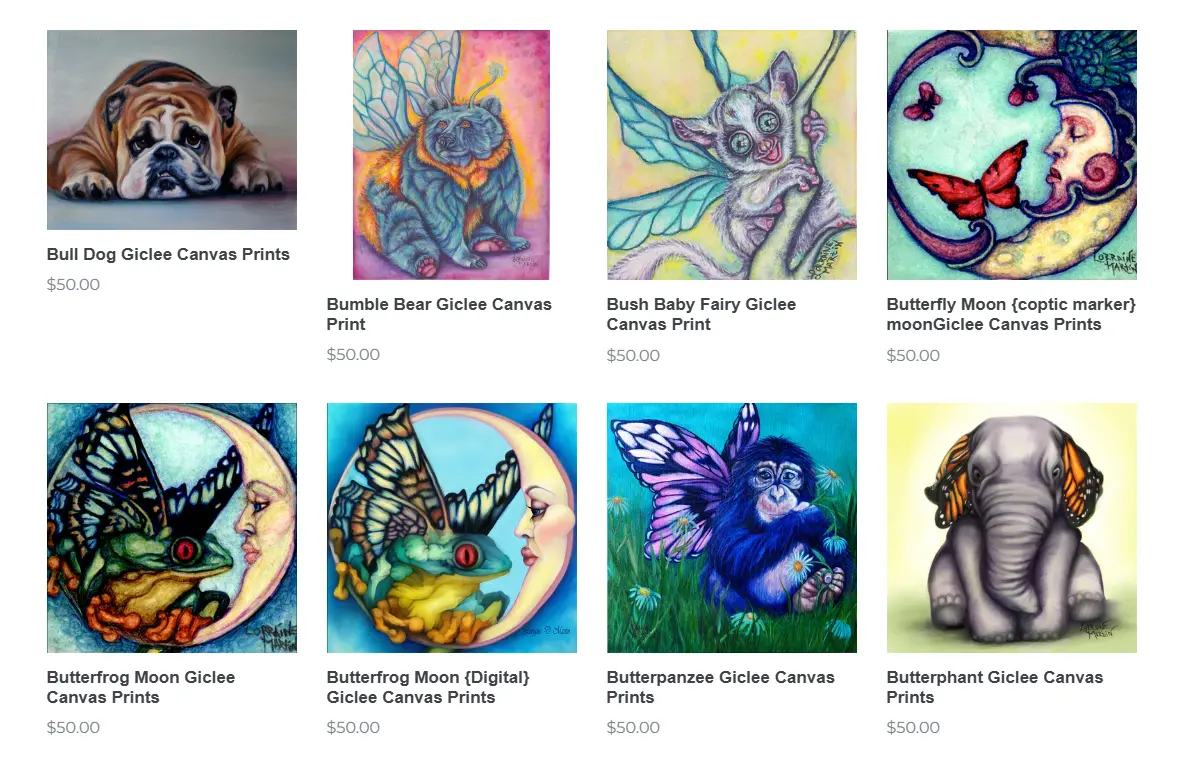
A canvas can easily sell for $50-$160, like this:
Yet, in some cases, premium designs or limited editions can fetch $200 or even $650.
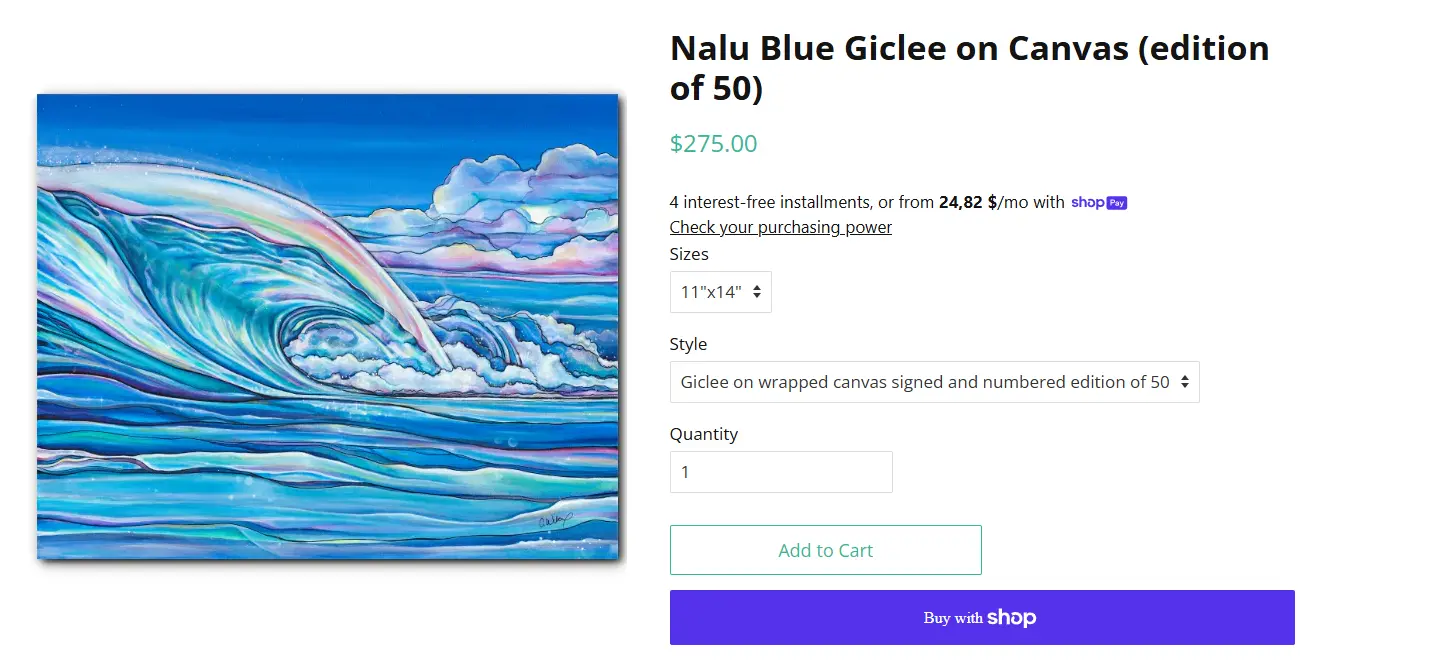
That’s a huge gap between cost and potential revenue, which means margins can skyrocket if you hit the right design or niche.
4. Unisex Softstyle T-Shirt
- Supplier Price: $8-$12
- Selling Price: $25-$40
- Average Gross Profit Margin: 50-65%
For POD sellers, softstyle T-shirts are easy to sell, easy to market, and consistently profitable.Production costs usually fall between $8–$12, while selling prices range from $25–$40, giving sellers a profit margin of 50-65%.
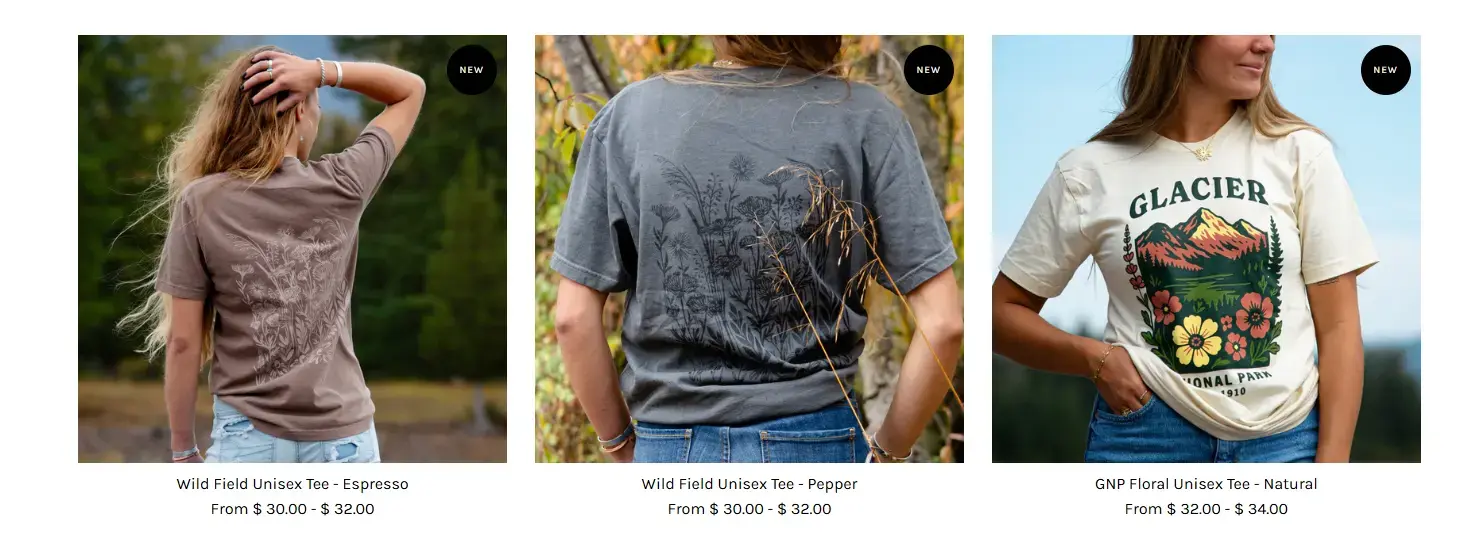
What makes softstyle tees special is their wearable canvas. Moreover, the limited-edition designs, seasonal collections, or bundles with accessories like caps or tote bags can boost average order value, increasing margins without adding much cost.

5. Pet Bandanas
- Supplier Price: $3-$5
- Selling Price: $12-$25
- Average Gross Profit Margin: 50-75%
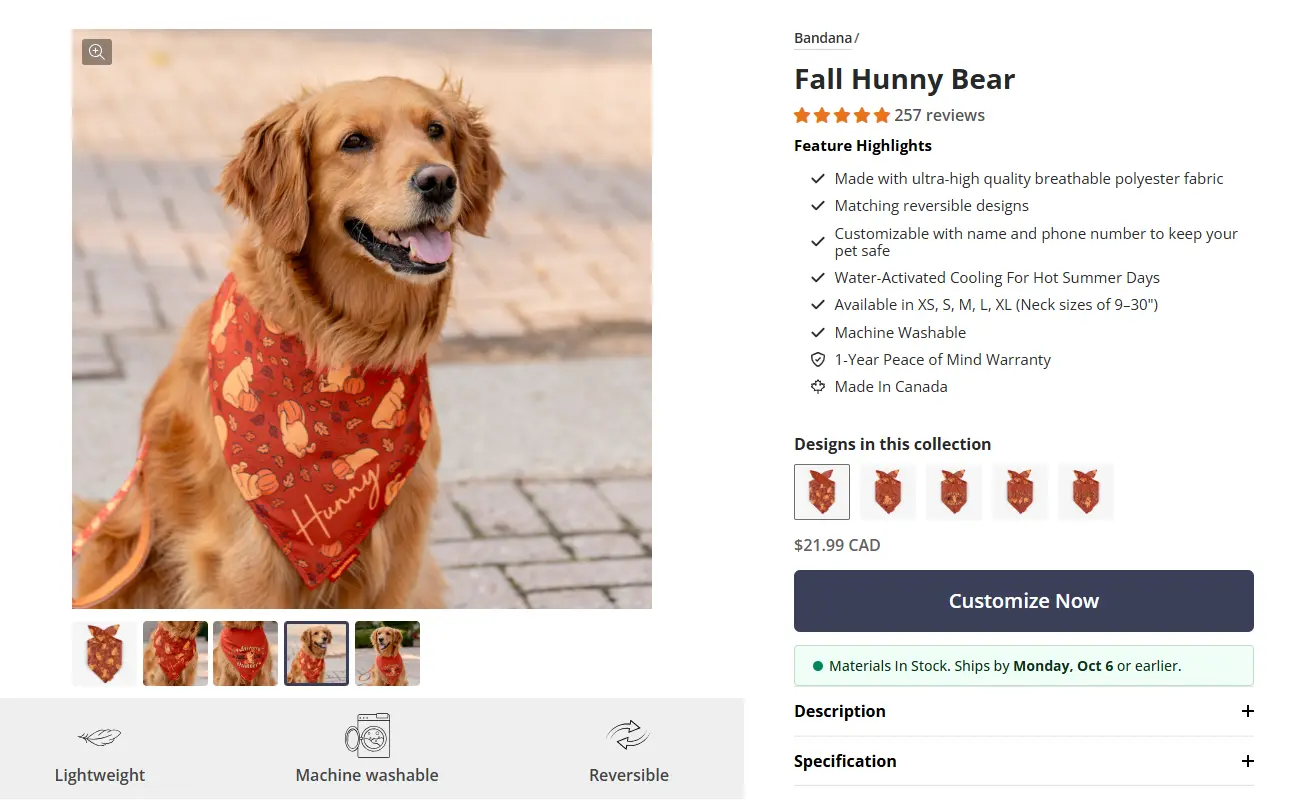
Pet bandanas are cute, low-cost, and highly profitable. They typically cost $3–$5 to produce but sell for $12–$25, giving a profit margin of 50-75%.

They’re also perfect for bundles: pair a bandana with a matching pet toy or treat bag to increase average order value. Because the product is small, lightweight, and inexpensive to ship, it’s easy to maintain high margins while scaling your store.
6. Ceramic Mugs
- Supplier Price: $5-$8
- Selling Price: $15-$30
- Average Gross Profit Margin: 50-65%
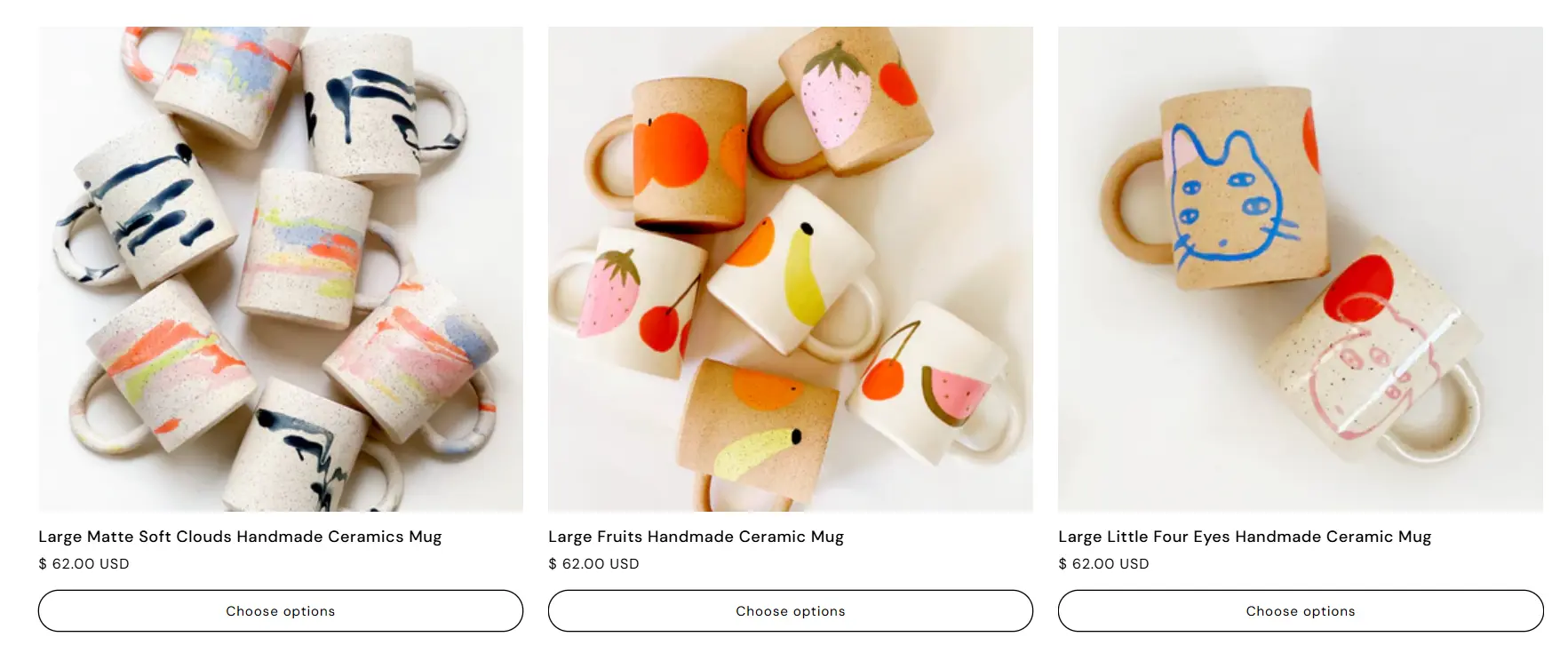
Ceramic mugs are a classic POD product that continues to sell well because they’re practical and giftable. Production costs range from $5–$8, while selling prices fall between $15–$30, giving a profit margin of 50-65%.
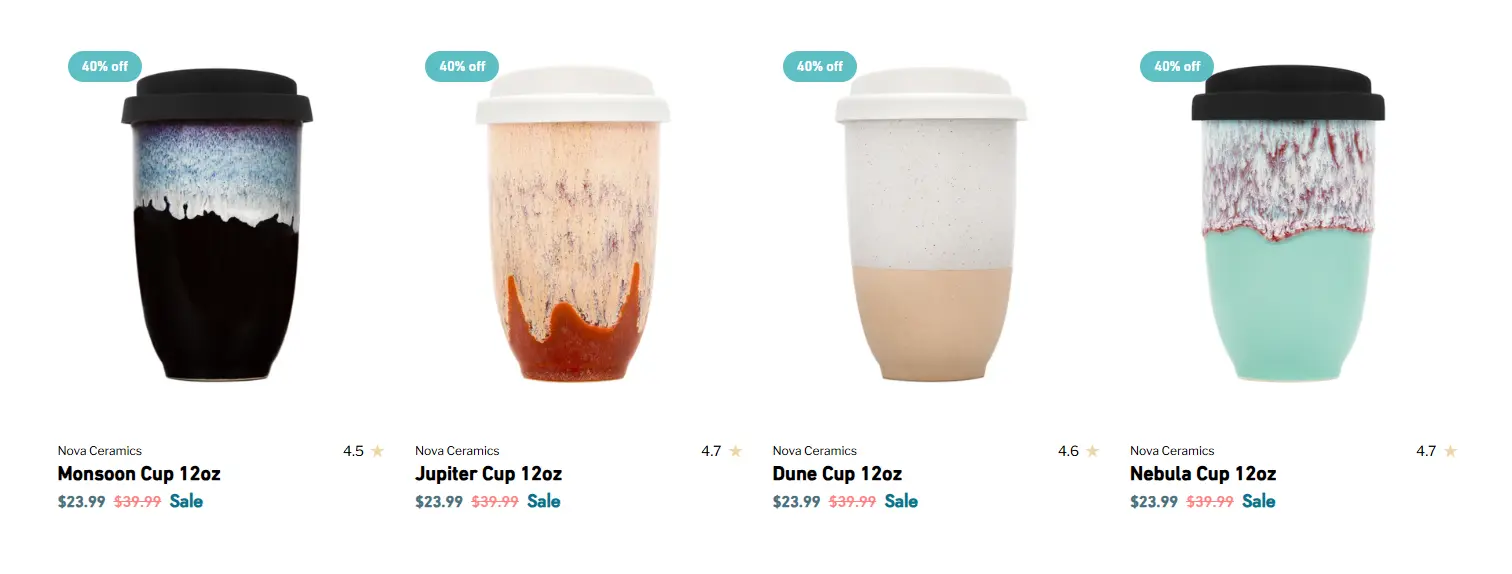
Premium designs, personalized names, or seasonal collections allow sellers to charge higher prices, sometimes up to $40–$60, increasing margins further.
7. Stickers & Decals
- Supplier Price: $0.20-$1
- Selling Price: $2-$5
- Average Gross Profit Margin: 60-80%
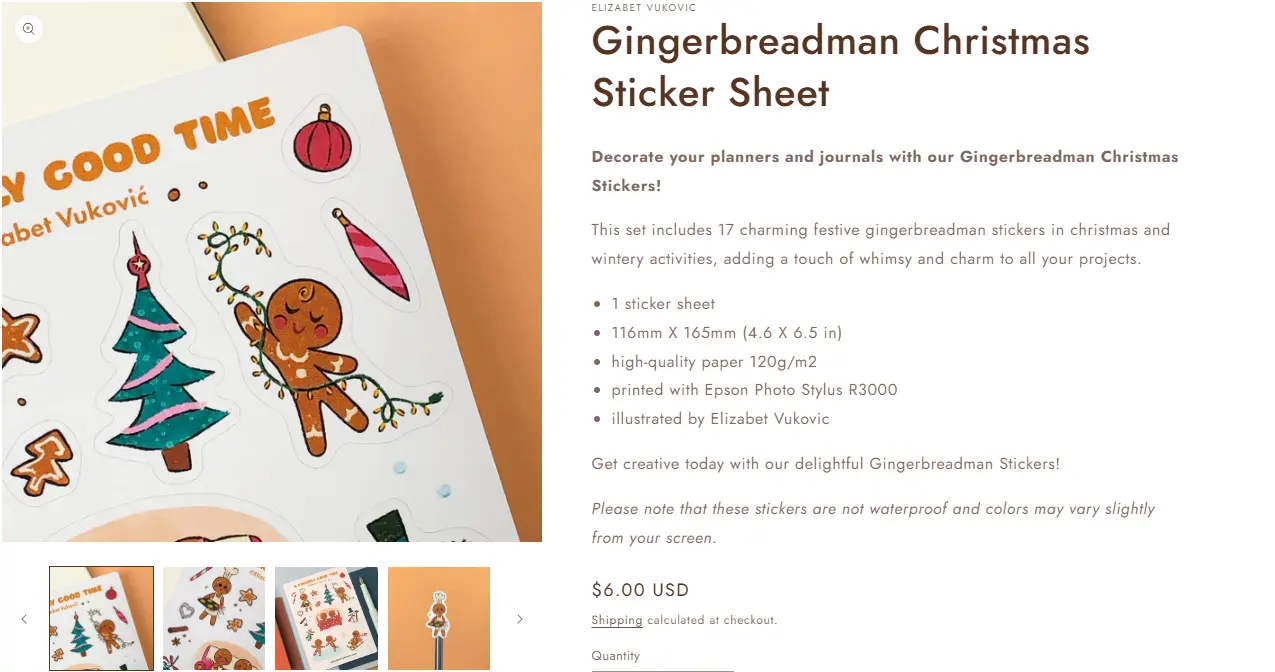
Stickers and decals are tiny products with huge potential. They’re cheap to produce, usually $0.20–$1 per sticker, but can sell for $2–$5 each, giving massive margins of 60–80% or more.
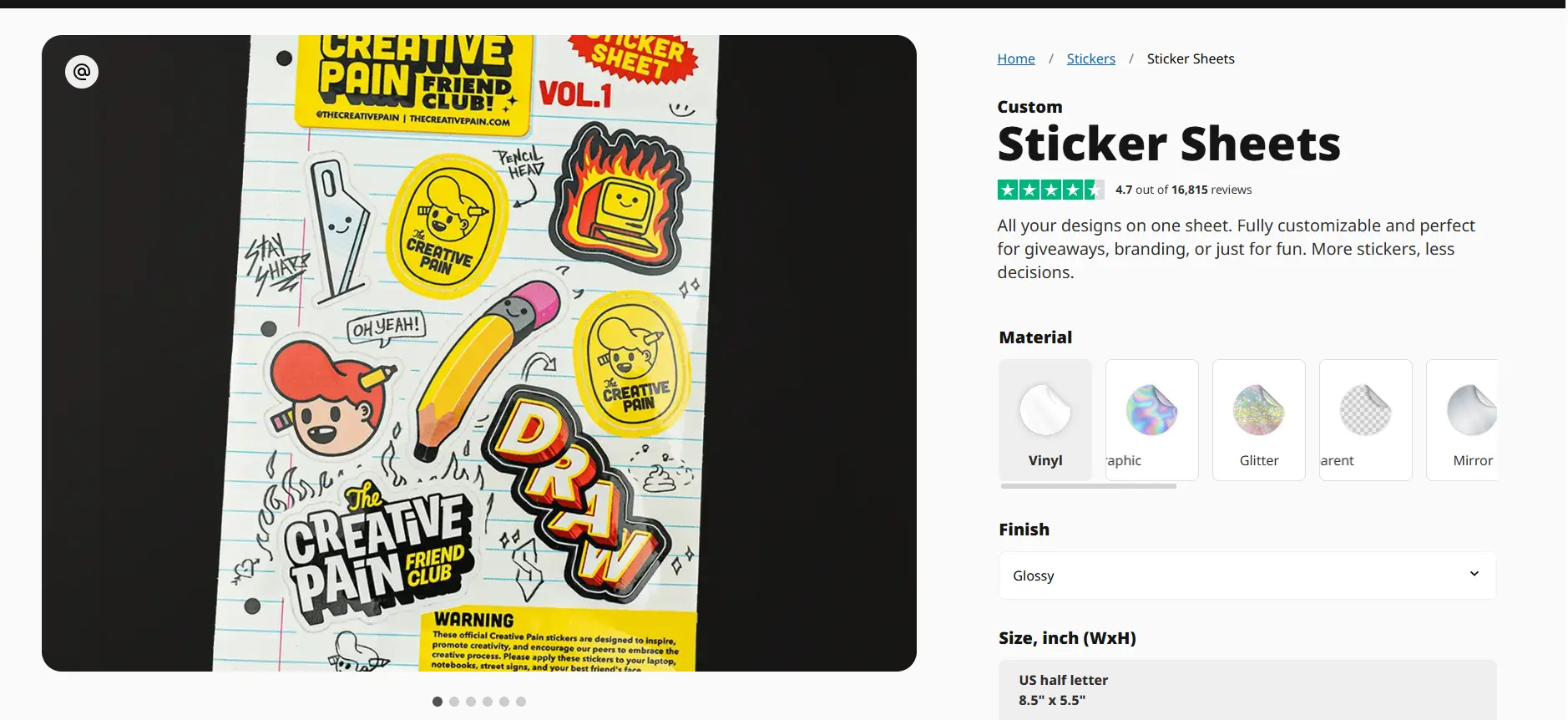
What makes them exciting is stickers are highly customizable and appeal to all ages and niches, from laptop decals to planners, gaming, or pop-culture fans. Because they’re lightweight and inexpensive to ship, you can often offer free shipping without cutting into your margins.

What Makes a Print-on-Demand Product High-Profit?
Not all print-on-demand products are created equal. While the business model is attractive because it removes inventory risk, profitability still depends heavily on the type of product you sell. High-margin print-on-demand products tend to share a few core traits that allow sellers to charge premium prices while keeping costs predictable and controlled.
1. Strong Emotional or Identity-Based Appeal
High-profit print-on-demand products almost always sell more than just a design, they sell identity, emotion, or belonging. Customers aren’t buying a hoodie or a poster for its material value; they’re buying something that reflects who they are, what they believe in, or how they want to be perceived.
This emotional attachment makes customers less price-sensitive. When a product resonates on a personal level, shoppers are far more willing to pay a premium, which directly improves profit margins. This is why niche-focused designs, inside jokes, cultural references, and lifestyle-driven messaging consistently outperform generic visuals in print-on-demand stores.
2. Low Base Cost Relative to Perceived Value
One of the most important drivers of profit margin in print-on-demand is the gap between production cost and perceived value. The most profitable products are typically inexpensive to produce but feel valuable to the customer because of design, messaging, or exclusivity.
For example, a simple t-shirt, mug, or wall art piece may cost very little to print, but if the design feels unique or meaningful, customers will judge the product based on what it represents rather than how much it costs to make. This pricing flexibility gives sellers room to absorb marketing costs while still maintaining healthy net margins.
3. Simple Production and Fulfillment Requirements
High-margin print-on-demand products are usually easy to produce and fulfill. Products with fewer variants, standard sizing, and straightforward printing methods tend to have more stable costs and fewer operational issues.
Complex products often introduce hidden margin killers such as higher print fees, increased error rates, slower fulfillment times, and more customer support requests. Simpler products reduce refunds, reprints, and logistics headaches, allowing sellers to retain more profit per order over time.
4. Evergreen Demand Instead of Trend Dependence
Products with evergreen demand consistently generate profit long after launch. While trending designs can create short-term spikes in revenue, they often lead to unstable margins due to rushed advertising, intense competition, and fast market saturation.
High-profit print-on-demand businesses typically focus on timeless niches or recurring customer needs. These products sell steadily throughout the year, making it easier to optimize pricing, advertising, and fulfillment costs. Over time, this stability leads to stronger net profit margins compared to constantly chasing trends.
5. Ability to Support Premium Pricing
The most profitable print-on-demand products are positioned to justify higher prices. This usually comes from a combination of strong branding, clear niche targeting, and a differentiated design angle.
When customers understand exactly who a product is for and why it exists, price becomes secondary. Premium pricing not only increases gross margin but also creates more room to cover marketing expenses, platform fees, and transaction costs without eroding net profit.
6. Low Return and Refund Risk
High-margin products often have lower return rates. Digital-first designs, clear sizing expectations, and products that don’t rely heavily on exact fit or physical feel tend to generate fewer complaints and refunds.
Since returns and reprints directly eat into profit, products with low post-purchase friction are far more scalable. Over time, even a small reduction in refunds can make a significant difference in overall profitability for print-on-demand businesses.
How to Start a Print on Demand Business in 2026?
Starting a print-on-demand business is one of the most accessible ways to enter ecommerce, allowing you to sell custom products without holding inventory or managing complex fulfillment from day one.
Below, we’ll walk through 8 practical steps to help you start a profitable print-on-demand business in 2026, from choosing the right niche to tracking real net profit.
Step 1: Pick a Niche
A niche is a segment of a larger market where sellers target a specific group of customers. For example, a niche of T-shirts might be “T-shirts for yoga moms,” “gym T-shirts,” or “T-shirts for gardeners.”
A niche works best when it has a high profit margin (around 60-70% gross) and low competition, so it can be specific enough to stand out but broad enough to have a solid market.
2. Pick Products to Sell
Next, decide which products to offer. Above are 7 best POD high margin products to start in 2026:
- Unisex Softstyle T-shirt
- Pet Bandanas
- Ceramic Mugs
- Stickers & Decals
- Giclee Print Canvas
- Print Tote Bags
- Spiral Notebook
3. Create Designs
In POD, the product is usually a blank item, so your design is crucial for boosting sales. You can create designs using Canva or Adobe Illustrator, or hire freelancers on Fiverr or Upwork.
Keep in mind: Designs on your screen may look different when printed and each product has specific printable zones and size limits
4. Pick a Selling Channel
Print-on-demand sellers can either rely on marketplaces or build their own storefront. Platforms like Amazon Merch and Redbubble are common entry points because they offer built-in traffic. However, these platforms limit how much control you have over pricing, branding, and customer relationships, which can cap long-term profit potential.
For sellers focused on building a profitable print-on-demand business, creating your own store on Shopify is often the better choice. Shopify makes it easy to launch without technical complexity, integrates seamlessly with leading print-on-demand providers, and gives you full control over pricing, branding, and customer data.
This level of ownership allows you to optimize margins, run your own marketing, and scale sustainably making Shopify one of the strongest platforms to start and grow a print-on-demand business in 2026.
5. Pick a Fulfillment Partner
Your fulfillment partner prints and ships orders directly to customers. Popular POD suppliers include:
- Printful – high-quality products and global fulfillment
- Printify – affordable prices and flexible suppliers
- Teelaunch – unique niche product options
- Gooten – automated order management and variety
- SPOD – fast production and easy customization
6. Build Your Store
If you choose Shopify to build your print-on-demand storefront, here’s a simple checklist to help you get started.
- First, sign up at shopify.com with email, password, and store name.
- Then choose a theme and customize it (colors, fonts, logo, homepage). Clean and simple themes work best.
- Visit the Shopify App Store and install POD apps like Printful, Printify, or Teelaunch. Create an account inside the app.
- Upload your artwork and create products using the app, then push them to your Shopify store.
- Enable payment gateways in Shopify Settings > Payments (Shopify Payments, PayPal, etc.).
- Set shipping zones and rates in Settings > Shipping & Delivery. Most POD apps handle fulfillment automatically.
- Create important pages: About Us, Contact, Shipping Policy, Return Policy, Privacy Policy.
- Remove password protection under Online Store > Preferences to go live.
7. Set Selling Price
Your selling price minus total costs equals net profit. Profit margin is a key benchmark because it shows how much profit you make relative to the product’s selling price. For POD, a 20–35% net profit margin is healthy. Strong branding and pricing power can push margins above 35%
8. Promote Your Store and Products
Social media is still the fastest way to get eyes on your products. Platforms like Instagram, TikTok, and Pinterest are especially powerful for visual products like T-shirts, mugs, or stickers. The more consistent you are, the easier it is to build a loyal following around your brand.
Keep an Eye on Your POD Profits
High-margin products are the backbone of a profitable POD business. Focusing on products like spiral notebooks, tote bags, Giclée prints, softstyle t-shirts, pet accessories, mugs, and stickers will help you maximize profit while tapping into proven demand.
One thing all successful POD stores have in common is that they frequently track their net profit performance. Without accurate profit tracking, even strong sales can turn into hidden losses.
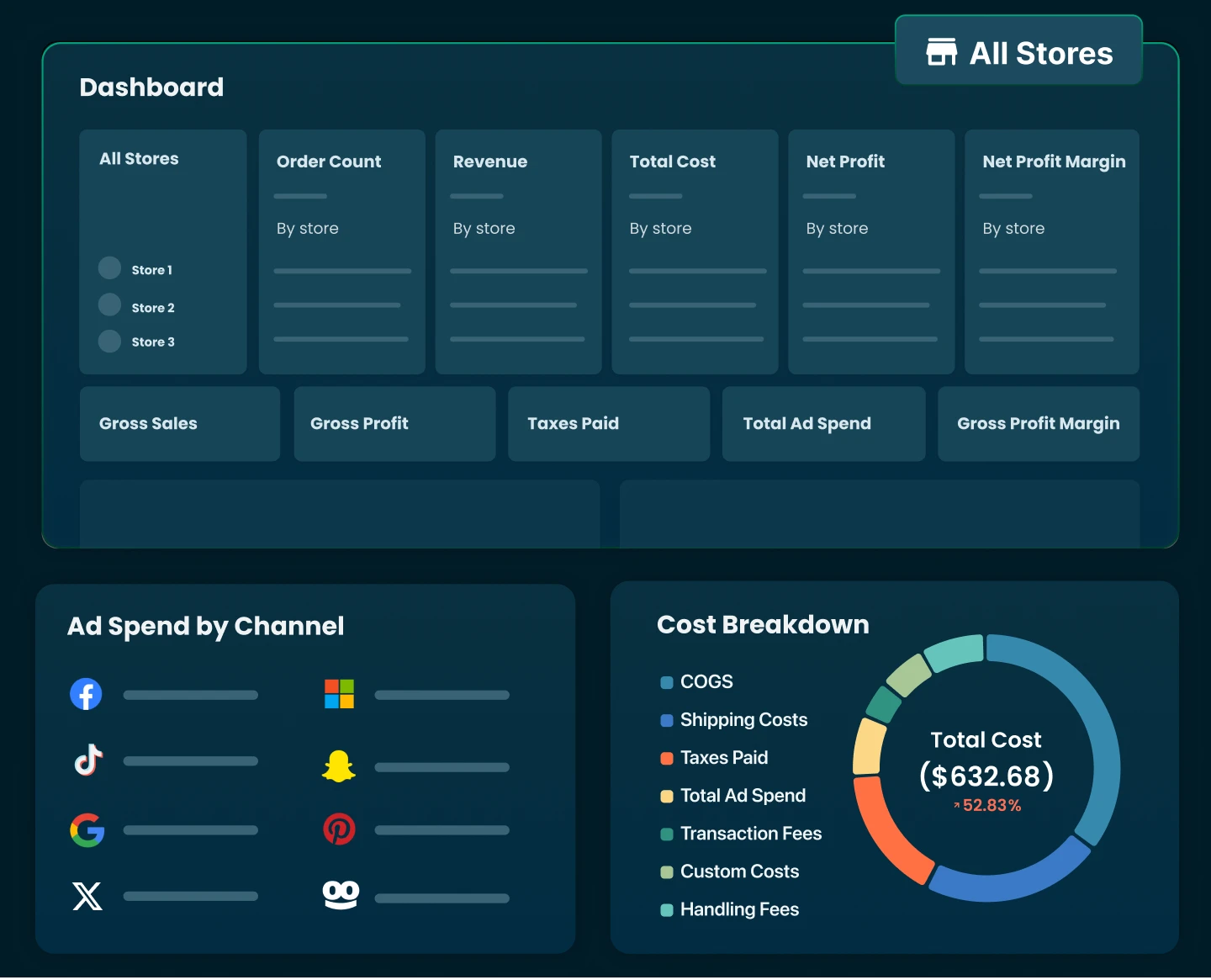
TrueProfit is the leading Shopify profit analytics solution designed to give POD sellers complete visibility into their true net profit in real time. By automatically pulling in every cost from COGS to shipping and ads you’ll know exactly how your store is performing and which products are driving growth.
Key advantages of TrueProfit include:
- Real-time net profit dashboard that shows your true earnings after all costs, not just revenue or ROAS.
- Automatic cost tracking for COGS, POD fulfillment fees, shipping, ad spend, and transaction fees, fully synced and calculated for you.
- Native integration with POD platforms like Printful and Printify, pulling product costs automatically for accurate net profit tracking.
- Profit-based product and channel analytics to quickly identify which designs, products, and traffic sources actually drive profit.
- Complete P&L reporting and custom metrics, giving POD sellers a clear view of performance at the store, product, and channel level.
This level of financial clarity enables you to scale sustainably, focus on your best-selling products, and protect your margins.

Leah Tran is a Content Specialist at TrueProfit, where she crafts SEO-driven and data-backed content to help eCommerce merchants understand their true profitability. With a strong background in content writing, research, and editorial content, she focuses on making complex financial and business concepts clear, engaging, and actionable for Shopify merchants.