





What is a Good Click Through Rate (CTR) in 2026?


Table of Contents
CTR is a critical metric for marketers looking to measure the effectiveness of ads, emails, and other campaigns.
In this guide, we’ll cover everything you need to know about CTR, from what counts as a good rate to the factors affecting it and tips to improve your results.
In this blog:
What is Click Through Rate (CTR)
Click Through Rate (CTR) measures the percentage of people who click on a link, ad, or call-to-action out of the total number of people who saw it. The formula is simple:
For example, if an ad receives 50 clicks from 2,000 impressions, the CTR would be:
50 ÷ 2000 × 100 = 2.5%
CTR is a key business performance metric for marketers because it reflects how well your message resonates with your target audience. Higher CTR usually means your content is relevant, engaging, and compelling.

What is a Good Click Through Rate (CTR)
Generally, marketers consider a CTR between 3% and 6% as good, with anything above 6% often being excellent, particularly for search ads and email campaigns.
However, what qualifies as “good” can vary, often depending on industry, marketing channel, and ad format.
Why Keeping a Good CTR is Important
Maintaining a strong Click-Through Rate (CTR) directly impacts return on investment (ROI) and overall campaign performance.
A higher CTR means more users are engaging with the content, which leads to increased traffic, better-quality leads, and higher potential conversions.
A good CTR can also reduce advertising costs. On platforms like Google Ads or Facebook Ads, ads with higher CTRs are considered more relevant, which often lowers your cost-per-click (CPC).
Key Factors Affecting Click Through Rate on Ads
Below are the key elements that can make or break CTR.
1. Ad Relevance
Ad relevance refers to how closely your ad matches what users are searching for. Platforms like Google and Meta reward advertisers who create relevant ads, often leading to better ad placement at lower costs and ~5–2x higher CTR.
2. Ad Creative
It’s the combination of visual elements, copywriting, and layout that work together to capture attention and persuade users to take action.
Creative quality has a direct impact on CTR. In fact, according to Nielsen, creative accounts for nearly 50% of ad campaign effectiveness, while Google reports that ads with strong visuals and clear messaging can increase CTR by up to 30% compared to generic creatives.
3. Ad CTA (Call to Action)
An Ad CTA (Call to Action) is the instruction within your ad that tells users what to do next, such as “Shop Now,” “Sign Up,” or “Learn More.” Research by WordStream shows that ads with well-crafted CTAs can increase CTR by up to 202% compared to those without strong CTAs.
4. Targeting Accuracy
An ad is considered accurately targeted when:
- The audience matches the product or service being promoted.
- The ad copy and creative resonate with that specific group’s needs or behaviors.
Targeting accuracy has a direct and measurable impact on CTR. According to Google Ads data, campaigns with refined audience targeting can see CTR increases of 2–3x compared to broad, untargeted campaigns.
5. Ad Placement
Ad placement refers to the location where the ad appears across a platform, whether that’s at the top of Google search results, within a Facebook news feed, before a YouTube video, or on the sidebar of a website.
Google Ads data shows that ads appearing in the top positions of search results average a CTR of 7–10%, while those on the right-hand side or lower positions can drop to below 1% CTR. It’s because ad placement strongly affects ad visibility and user behavior, leading to a significant change in CTR.

How to Boost Click Through Rate in Ads
Here are the key strategies to boost CTR, explained in detail.
1. Optimize Your Headlines
The headline is the first thing users notice in an ad. A strong headline directly influences whether someone clicks.
To make headlines effective, focus on clarity and specificity, such as stating the exact benefit your audience will receive. Incorporating numbers, percentages, or clear results helps make your headline more tangible and credible.


2. Use Compelling Visuals
Visuals in ads include images, videos, or graphics and serve as the first attention-grabbing element for users scrolling through their feeds.
To boost CTR with visuals, ensure that images or videos are high-quality, relevant to the ad message, and visually uncluttered so the core point is immediately clear. Small edits, such as adjusting colors or using tools tochange background elements, can also help your visuals stand out without overwhelming the viewer.
Videos should have attention-grabbing thumbnails, while images should be visually distinct from competing content in the feed.

3. Craft Clear and Actionable CTAs
A Call-To-Action (CTA) is the instruction guiding users on the next step, such as “Learn More,” “Sign Up,” or “Shop Now.”
For higher CTR, your CTA should be direct and concise, leaving no ambiguity about what the user will get. HubSpot reports that personalized CTAs perform 202% better than basic, generic CTAs.

4. Refine Audience Targeting
To improve CTR, focus on reaching highly relevant audiences by creating segments based on prior interactions or engagement with your brand. Retargeting users who have shown interest in your products or services often leads to higher CTR than cold audiences.
Optimize Campaigns for Better ROI
Understanding a good Click-Through Rate (CTR) gives a concrete benchmark to evaluate campaign performance. Yet, it’s only the first step, optimizing ad campaigns requires insights into customer acquisition cost, ROAS, and net profit - the true bottom line that truly reflects the marketing effort.
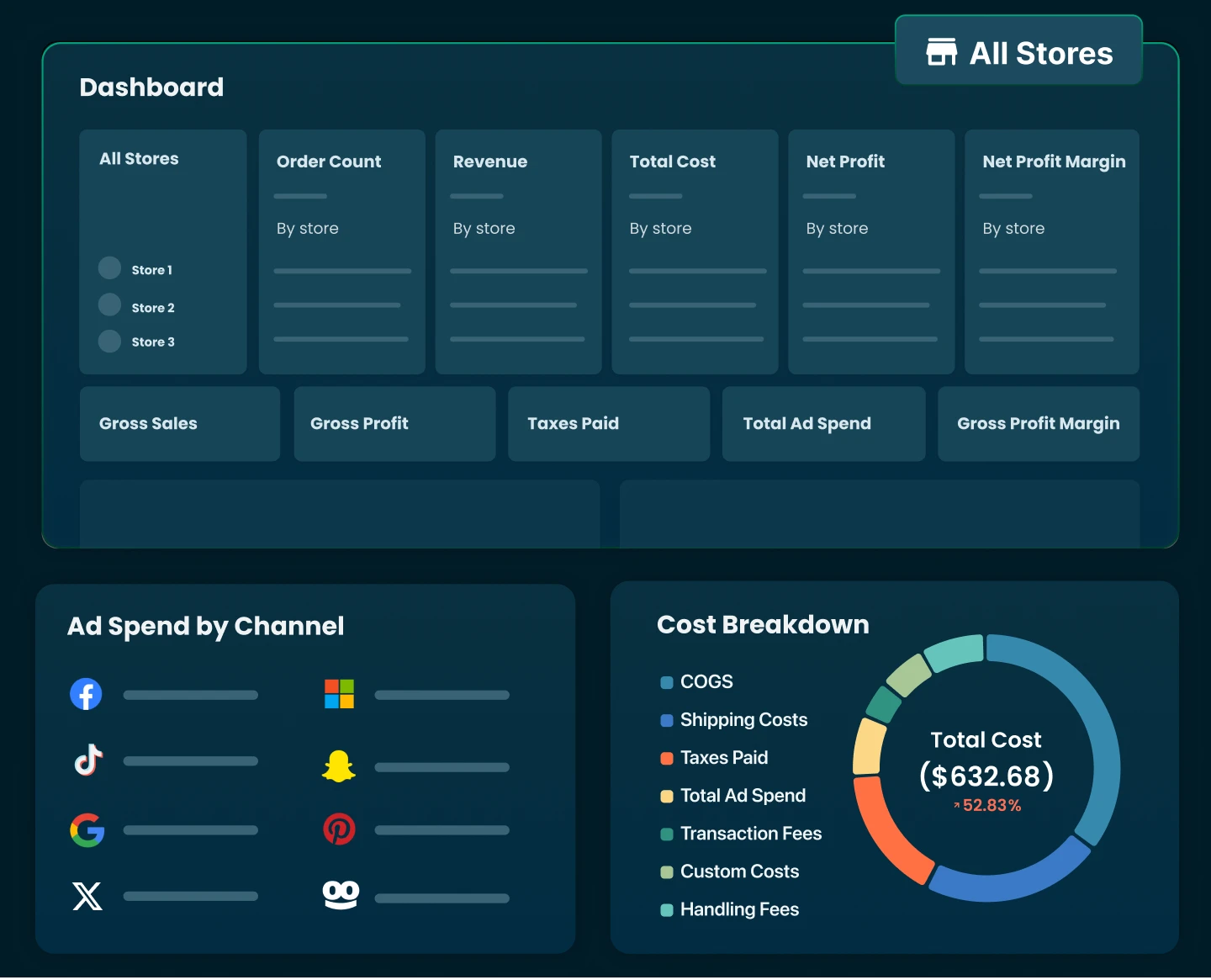
This is where tools like TrueProfit come in. It’s a net profit analytics tool that helps Shopify sellers track essential financial performance metrics such as click through rates, conversion rates, return on ad spend, net profit on ad spend, and more, give a complete view of their ad. What’s even better is TrueProfit tracks net profit by calculating all expenses from total sales, so markers can easily optimize ROI and ensure their effort contributes to meaningful profit growth, not just clicks in total.

Leah Tran is a Content Specialist at TrueProfit, where she crafts SEO-driven and data-backed content to help eCommerce merchants understand their true profitability. With a strong background in content writing, research, and editorial content, she focuses on making complex financial and business concepts clear, engaging, and actionable for Shopify merchants.