Shopify Marketing Automation Tools: 10+ Best Apps Recommended for 2026


Table of Contents
- 1. What Are Shopify Marketing Automation Tools?
- 2. 6 Shopify's Built-In Marketing Automation Features (What You Already Have)
- 3. 10 Best Shopify Marketing Automation Tools, Side by Side
- 4. 3 Essential Shopify Marketing Automation Workflows (With Examples)
- 5. Final Thoughts
- 6. Shopify Marketing Automation Tools FAQ
From welcome emails and abandoned cart reminders to SMS campaigns, loyalty rewards, and personalized onsite experiences, the right automation platform can help you recover lost sales, increase repeat purchases, and save hours of manual work.
The problem? Shopify's app marketplace is packed with options, and not every tool is built for the same type of business.
To help you choose, I've reviewed 10 of the best Shopify marketing automation tools for 2026, comparing their features, pricing, strengths, and ideal use cases. Whether you need an all-in-one platform or a specialized tool for SMS, popups, or loyalty marketing, this guide will help you find the best fit for your Shopify store.
In this blog:
- 1. What Are Shopify Marketing Automation Tools?
- 2. 6 Shopify's Built-In Marketing Automation Features (What You Already Have)
- 3. 10 Best Shopify Marketing Automation Tools, Side by Side
- 4. 3 Essential Shopify Marketing Automation Workflows (With Examples)
- 5. Final Thoughts
- 6. Shopify Marketing Automation Tools FAQ
What Are Shopify Marketing Automation Tools?
At their core, shopify marketing automation tools are software that trigger marketing actions based on what a customer does, their purchase history, or a set timing rule, without you having to hit send.

6 Shopify's Built-In Marketing Automation Features (What You Already Have)
Before we get into third-party apps, it’s important to understand what Shopify already gives you out of the box.
Instead of a single marketing automation product, Shopify provides a built-in suite of tools that work together across email, customer workflows, segmentation, and on-site communication. These native features are designed to help merchants automate core marketing tasks without adding extra apps or monthly costs.

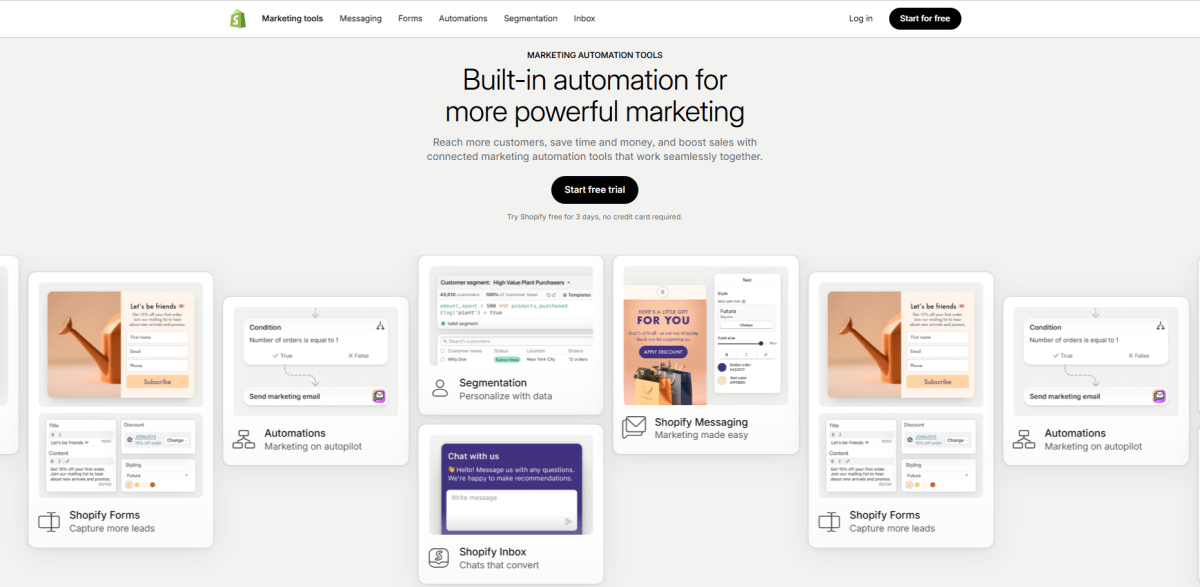
For many early-stage stores, this built-in stack is often enough to cover essentials like abandoned cart recovery, email campaigns, customer segmentation, and basic workflow automation.
Let’s break down what’s included in Shopify’s marketing automation suite.
Shopify Messaging and Email
Shopify Email and Shopify Messaging live right inside your admin, with templates, basic segmentation, and pre-built flows for abandoned checkout reminders, welcome sequences, and post-purchase follow-ups.
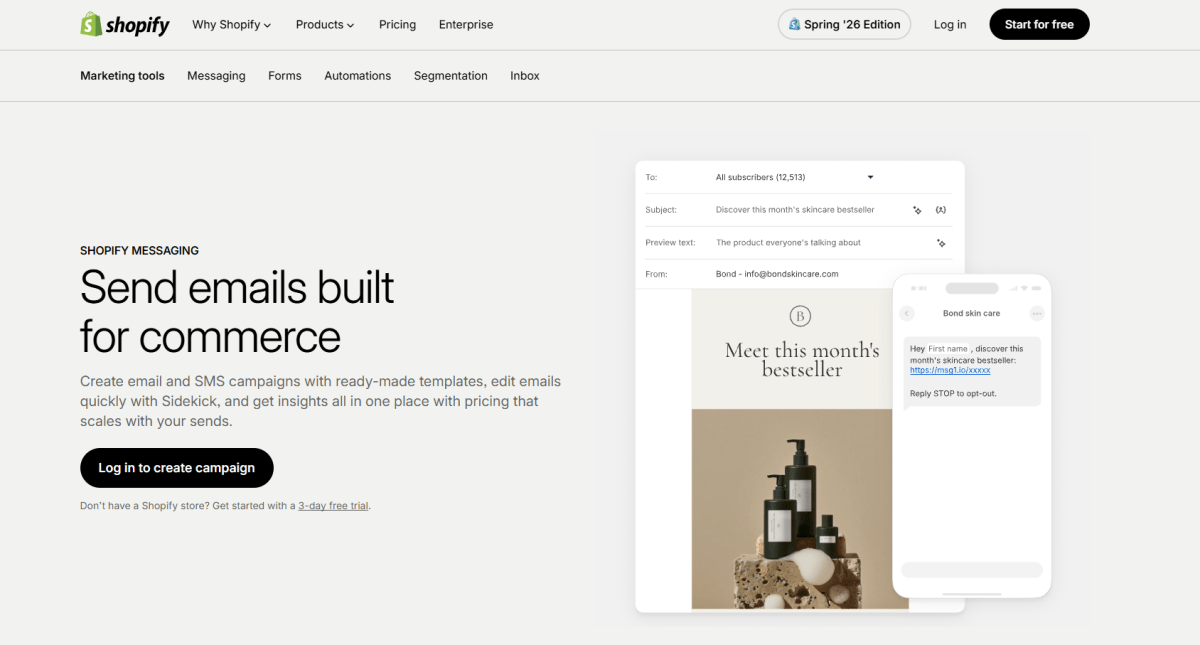
Pricing: Free for up to 10,000 emails per month, then $1 per additional 1,000 emails.
Pros
- Built directly into Shopify admin, so no third-party setup is required.
- Includes ready-made templates and basic automation for key flows like welcome emails, abandoned checkout, and post-purchase follow-ups.
- Covers essential ecommerce email automation out of the box.
Cons
- Segmentation is basic compared to dedicated email marketing platforms.
- Limited A/B testing capabilities.
- Reporting is not as advanced as specialized tools.
Best for: Shopify stores that want an affordable way to automate welcome emails, abandoned cart reminders, and post-purchase follow-ups without investing in a dedicated email marketing platform.
Shopify Inbox
Shopify Inbox is a free, built-in live chat tool that answers customer questions and offers pre-sales help automatically, right on your storefront.
It handles FAQs and basic product questions instantly, which shortens the path to purchase without you needing to bolt on a separate support app.
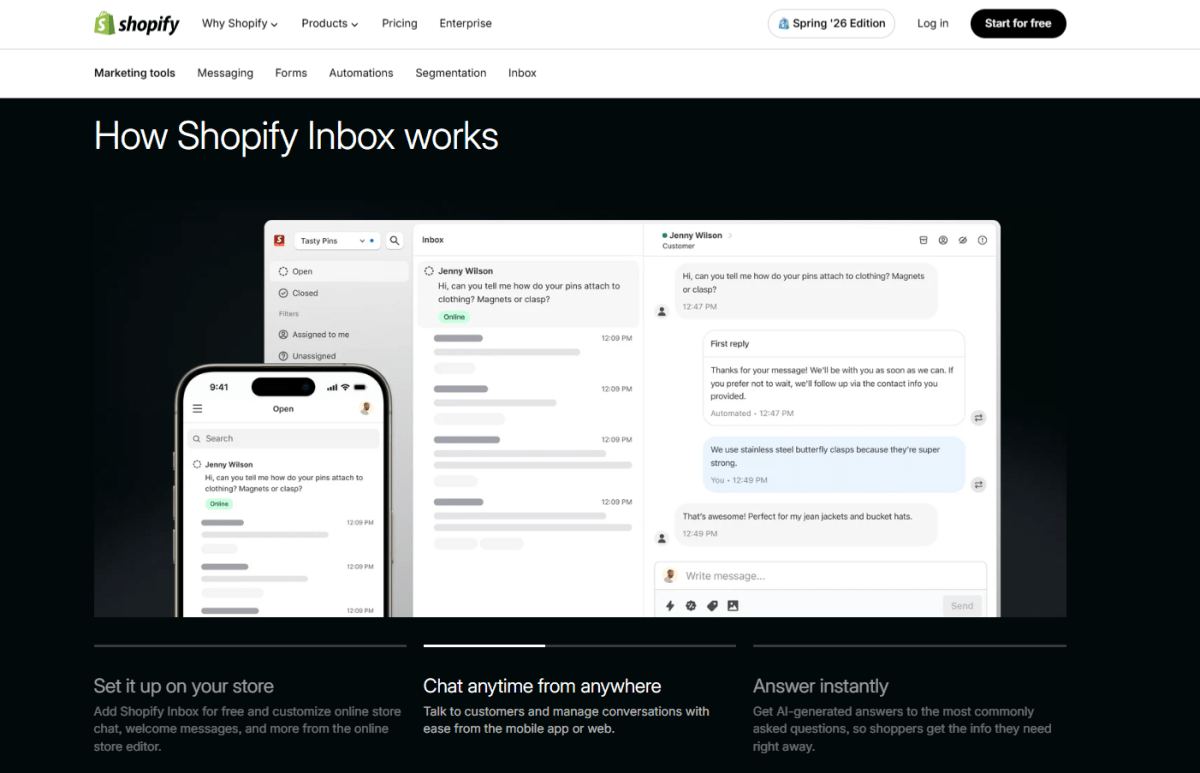
Pricing: Free.
Pros
- Built-in live chat tool that requires no setup cost or third-party app installation.
- Helps answer common customer questions instantly, reducing friction during the purchase journey.
- Supports pre-sales engagement directly on the storefront, which can improve conversion rates.
Cons
- Focused mainly on customer support rather than full marketing automation.
- Lacks advanced automation or multi-channel messaging capabilities compared to dedicated chat or CRM tools.
- Not designed to replace full customer engagement or marketing platforms.
Best for: Stores that receive frequent pre-purchase questions and want to improve customer support while helping more shoppers convert through live chat.
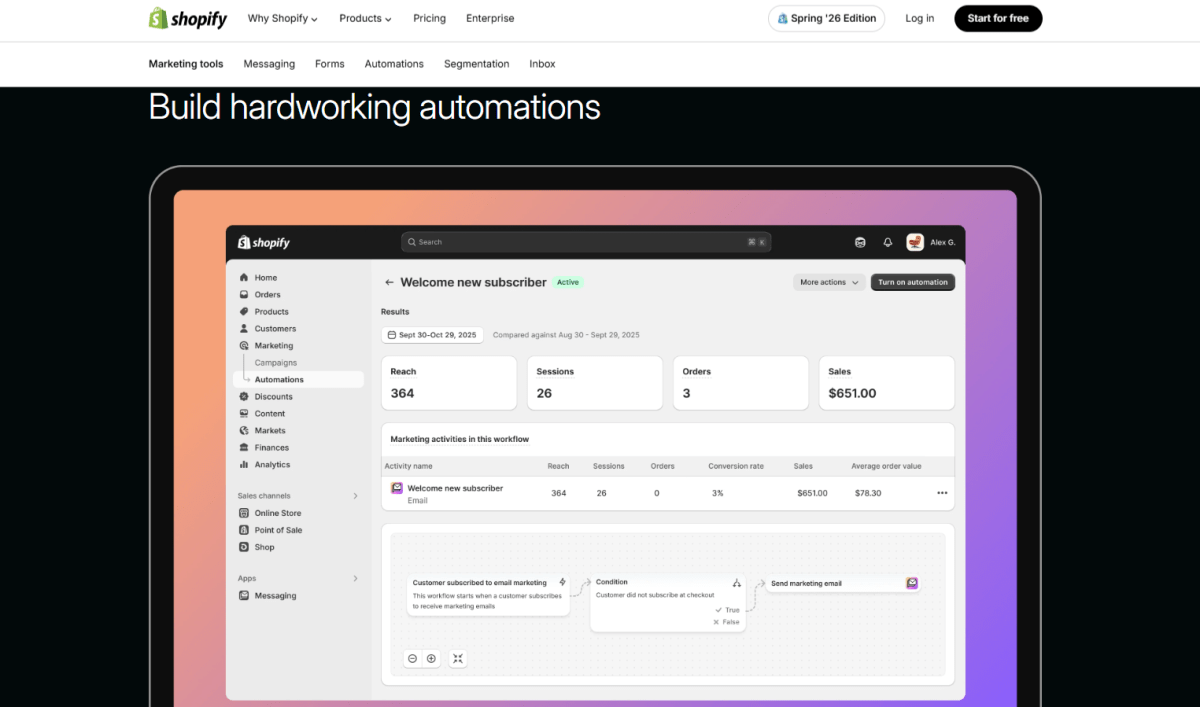
Shopify Automations
Shopify Automations lets you create basic automated workflows triggered by customer actions or store events. These automations help handle repetitive marketing and engagement tasks without manual effort.
Pricing: Included with Shopify plans.
Pros
- Reduces manual work by automating repetitive marketing and customer engagement tasks.
- Can trigger simple workflows based on customer behavior or store events.
- Works well with segmentation and email tools to support lifecycle marketing.
Cons
- Limited workflow complexity compared to dedicated automation platforms (fewer advanced logic options).
- Not suitable for complex multi-step or multi-channel automation systems.
Best for: Stores that need simple automation for customer engagement, follow-ups, and basic lifecycle triggers.
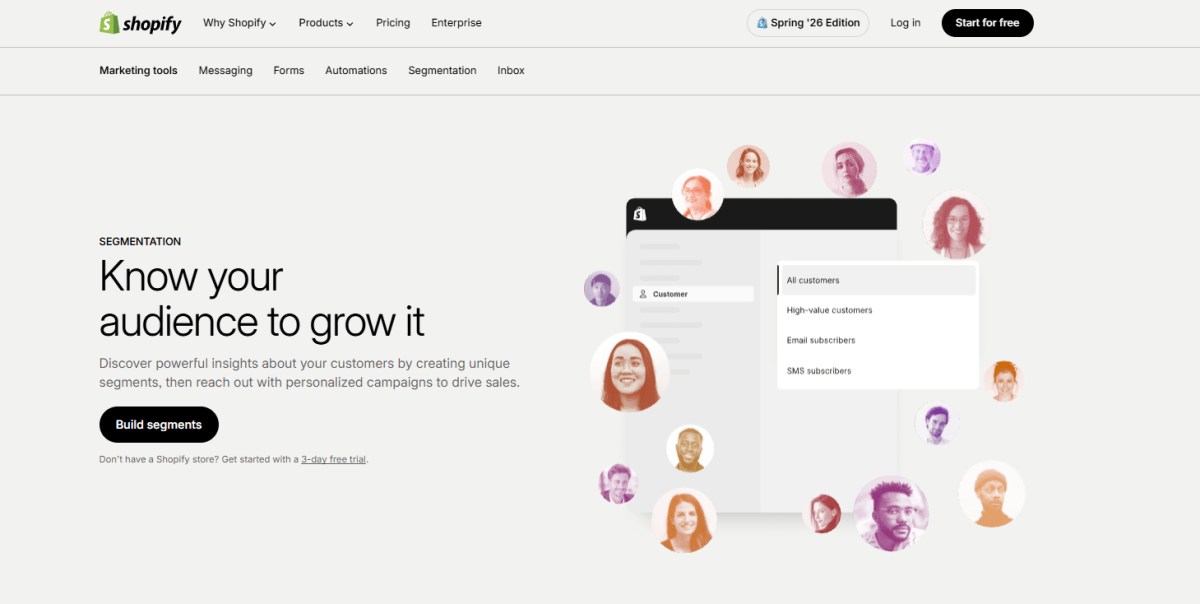
Shopify Segmentation
Shopify Segmentation allows you to group customers based on behavior, purchase history, and engagement data. These segments can then be used for more targeted marketing and campaign personalization.
Pricing: Included with Shopify plans.
Pros
- Helps you target specific customer groups based on real Shopify customer and order data.
- Improves relevance of marketing campaigns by separating customers into meaningful groups.
- Works directly within Shopify without needing external CRM tools for basic segmentation.
Cons
- Less advanced than dedicated CRM or marketing automation platforms with deeper behavioral modeling.
- Limited flexibility for highly complex segmentation logic or predictive audience building.
Best for: Stores that want to improve marketing performance through simple, data-driven customer grouping.
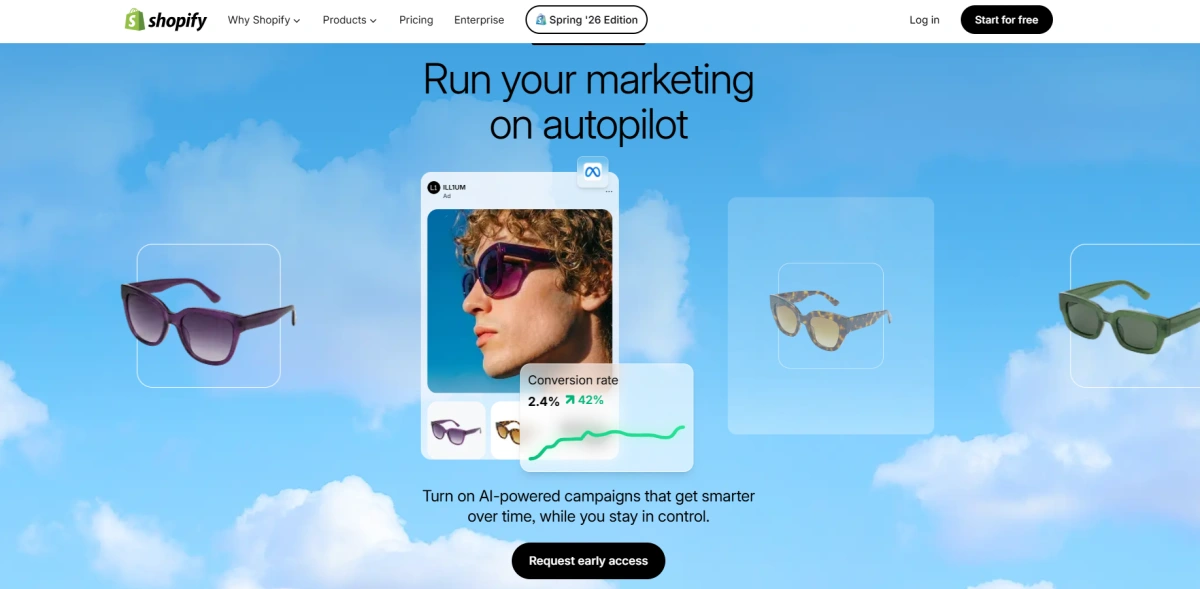
Campaign Autopilot
Campaign Autopilot is Shopify's AI-powered marketing manager introduced in the Spring '26 Edition. After you set a budget and a few guardrails, it plans, launches, and optimizes campaigns across Shopify Email, Meta, and the Shop App automatically.
Worth keeping in mind: it's still in early access, with more ad channels rolling out over time. I'd treat it as a monitored test rather than a full replacement for your existing marketing stack for now.
Pricing: Currently in early access.
Pros
- Uses AI to manage campaigns with minimal manual work.
- Supports multiple Shopify-owned marketing channels from one place.
- Designed to simplify campaign planning and optimization.
Cons
- Still in early access.
- Supports a limited number of marketing channels today, with more planned over time.
- Better suited as an AI assistant than a complete replacement for an established marketing stack.
Best for: Small and growing Shopify stores that want AI to manage email and ad campaigns with minimal manual setup, but don't need advanced cross-channel marketing yet.
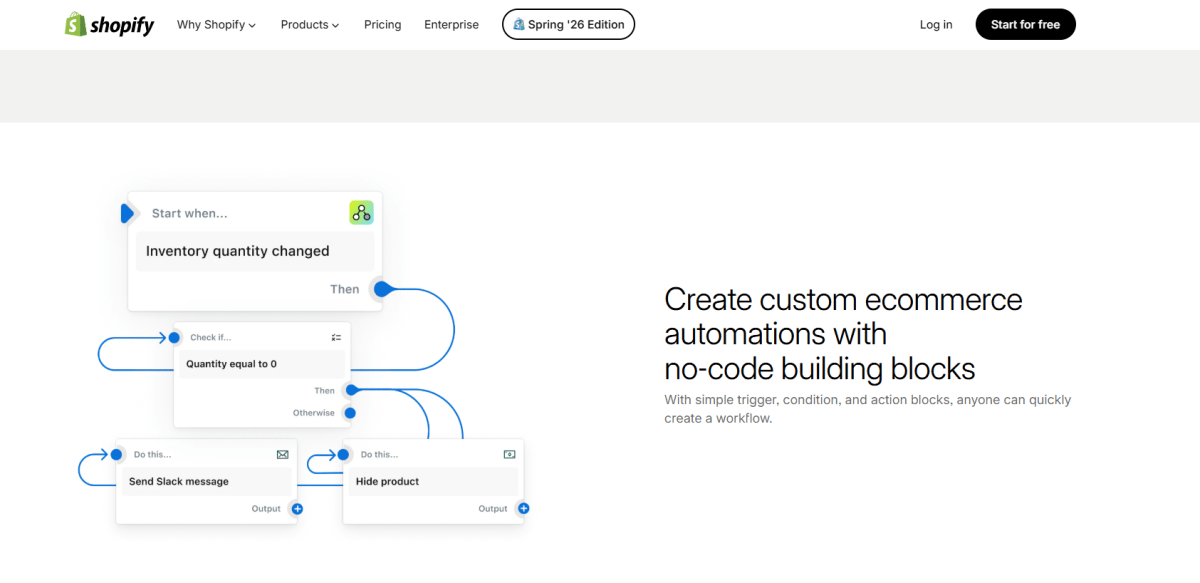
Shopify Flow
Shopify Flow is a no-code, drag-and-drop workflow builder available on Shopify Basic and above, and honestly, it's one of the most underused tools in the entire ecosystem. It uses triggers, conditions, and actions to automate tasks such as tagging customers, rewarding VIP shoppers, tracking purchase behavior, and sending data to connected marketing platforms.
Running a dropshipping operation specifically? This list of Shopify automation apps built for dropshipping pairs well with Flow's logic layer.
Pricing: Free with Shopify Basic and higher plans.
Pros
- No-code workflow builder using triggers, conditions, and actions.
- Can automate tasks like customer tagging, segmentation, and reward logic.
- Useful for connecting Shopify data with marketing workflows.
Cons
- Send HTTP Request action is only available on Grow, Advanced, and Plus plans.
- Some external integrations require higher-tier plans.
- Requires workflow logic setup (not plug-and-play).
Best for: Shopify merchants who want to automate repetitive workflows, such as customer segmentation, VIP tagging, loyalty rewards, and syncing data with other marketing tools.
10 Best Shopify Marketing Automation Tools, Side by Side
I picked the tools below based on Shopify App Store ratings, depth of Shopify integration, feature breadth, pricing value, and real feedback from the Shopify and ecommerce community. Here's the quick-scan version before we get into the details on each one:
Best All-in-One Platforms
1. Klaviyo
Ask around in any Shopify community, and Klaviyo comes up more than any other email and SMS platform. There's a reason for that: it has one of the deepest native integrations available, syncing your customer data, purchase history, and browsing behavior in real time.
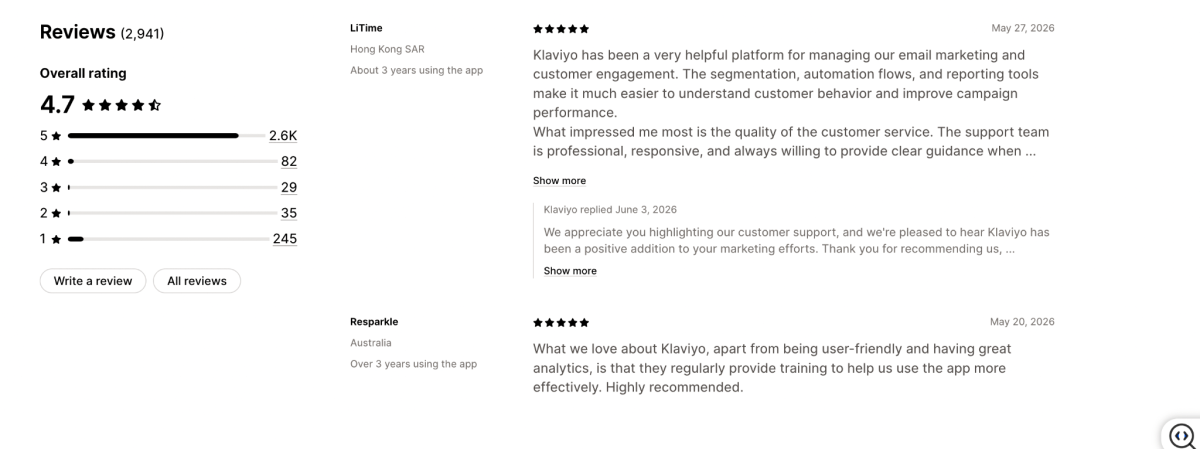
Klaviyo is a favorite among growing Shopify brands, with thousands of positive merchant reviews
Pricing: Free plan available; paid plans start around $20/month.
Key Features:
- Advanced segmentation built on live Shopify data
- Predictive analytics, including predicted next order date and customer lifetime value
- Pre-built Shopify-specific automation flows
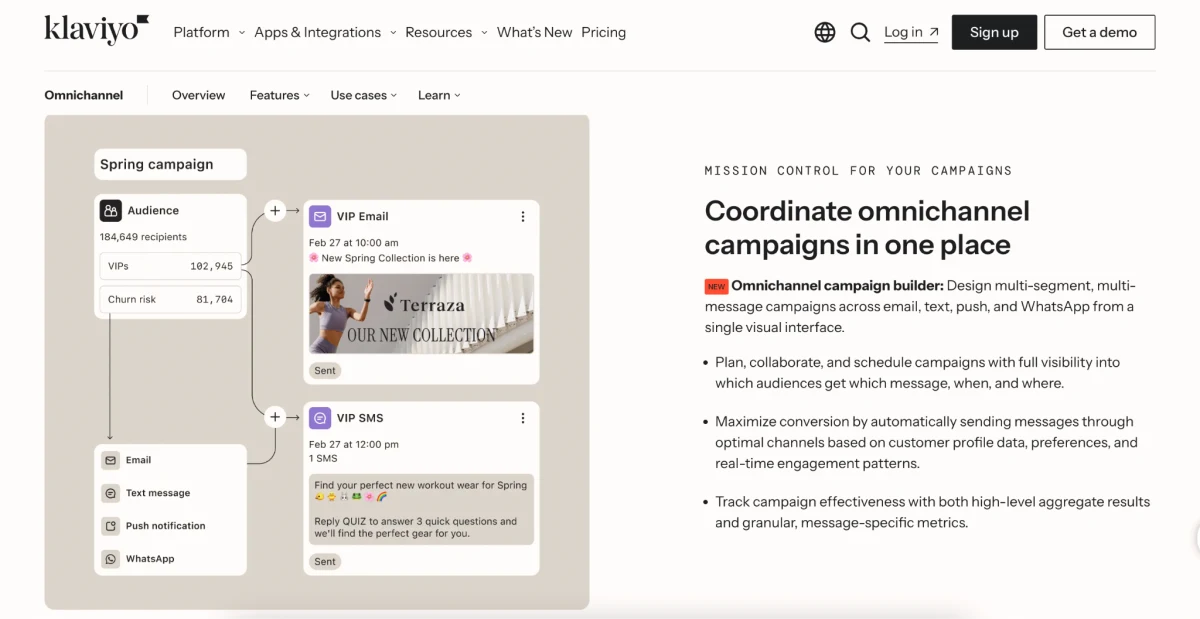
- Combined email, SMS, and native WhatsApp in one platform
- AI-driven optimization: Smart Send Time, predictive content, and AI-generated subject lines and copy
- Unified email and SMS automation with revenue attribution
Pros
- Extremely deep integration with Shopify customer and purchase data, enabling highly accurate targeting
- Strong automation system for lifecycle marketing such as abandoned cart, win-back, and post-purchase flows
- Advanced segmentation improves personalization and campaign performance
- AI tools help optimize timing and messaging for better conversion rates
Cons
- Pricing increases quickly as your contact list grows
- Requires time and proper setup to fully unlock advanced automation capabilities
Best for: Mid to large Shopify stores that rely heavily on data-driven email and SMS marketing to maximize customer lifetime value.
2. Omnisend
If Klaviyo's price tag makes you wince, Omnisend is the alternative I'd point you to. It covers the same multi-channel ground, email, SMS, and web push, at a friendlier cost, and the free tier alone covers 250 contacts and 500 emails a month.
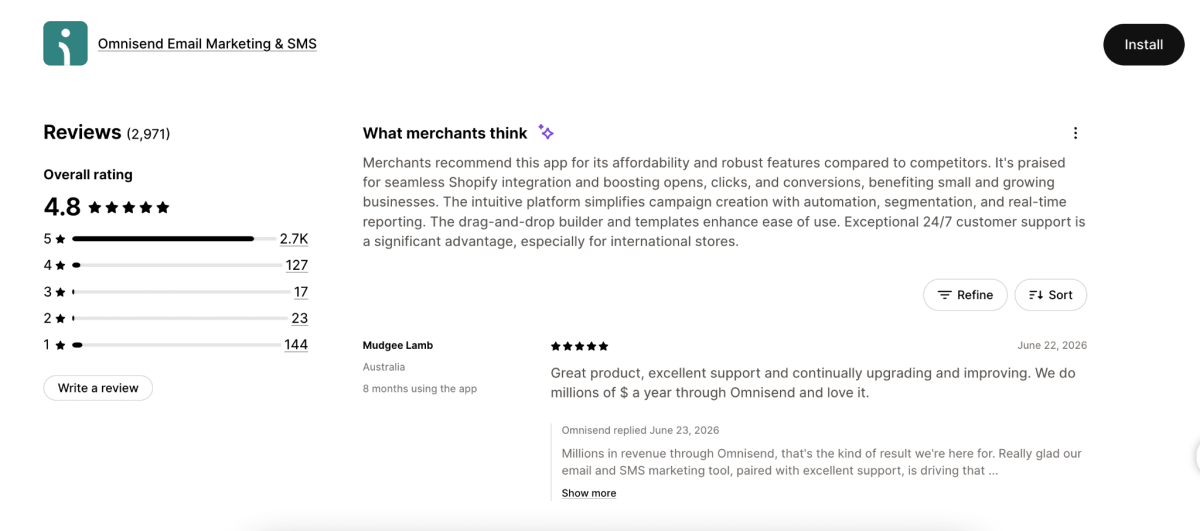
Omnisend has earned a 4.8/5 rating on the Shopify App Store from nearly 3,000 merchants
Key Features:
- Native Shopify integration with automatic customer and product sync
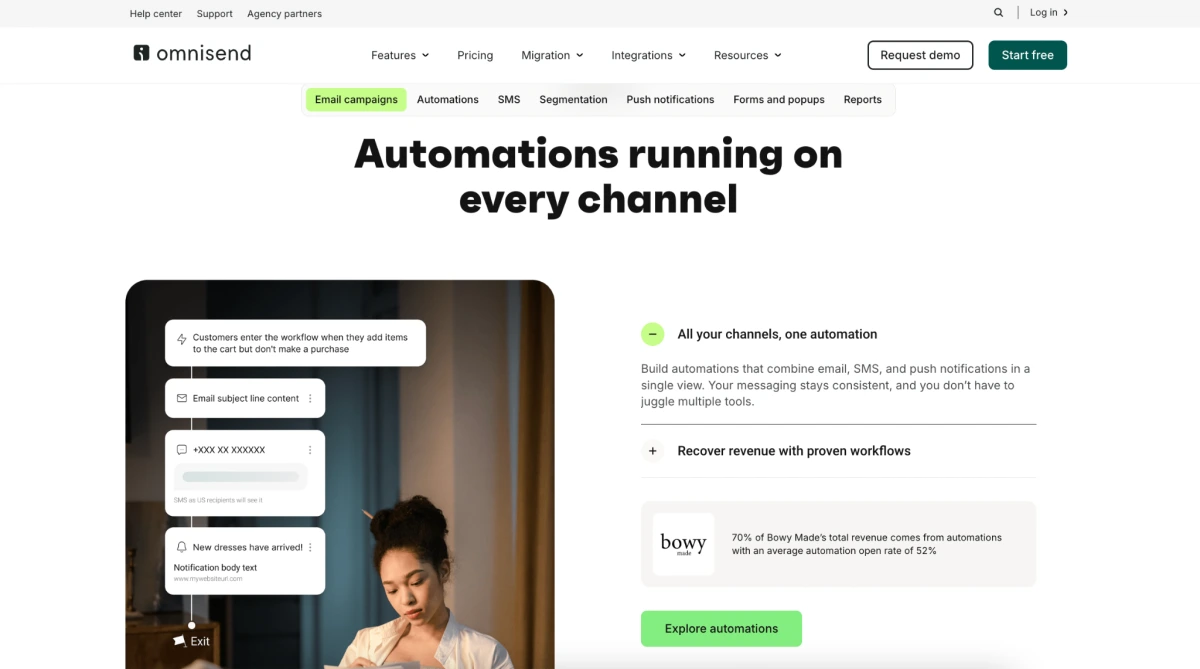
- Omnichannel automation across email, SMS, and web push notifications
- Pre-built ecommerce workflows for cart recovery, welcome series, and post-purchase campaigns
- Drag-and-drop workflow builder with conditional splits
- Built-in discount codes and product recommendations for Shopify emails
- AI segment builder and AI Writer that generate subject lines and email copy automatically
Pricing: Free up to 250 contacts and 500 emails a month, then plans start around $16/month.
Pros
- Strong all-in-one multi-channel setup without needing multiple tools
- Beginner-friendly Shopify workflows that are easy to activate
- Generous free plan for early-stage stores
- AI features help speed up campaign creation and segmentation
Cons
- Segmentation depth is weaker compared to advanced platforms like Klaviyo at scale
Best for: Shopify stores that want multi-channel automation (email + SMS + push) without high platform costs or complex setup.
3. ActiveCampaign
ActiveCampaign is the one I'd reach for if your customer journeys are genuinely complex. It layers in a CRM most marketing automation platforms don't have, plus one of the most flexible visual builders around for branching workflows.
For Shopify stores, it allows deep integration of customer purchase data into automated workflows, making it suitable for more complex lifecycle strategies and CRM-driven marketing.
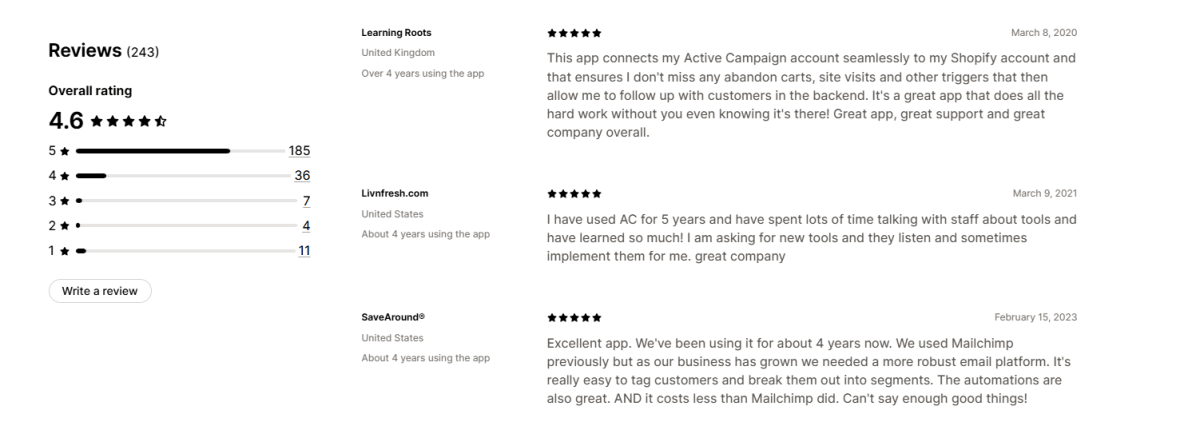
ActiveCampaign has built a strong reputation for its advanced automation and personalization features.
Key Features:
- Shopify integration that syncs purchase data for behavioral triggers
- Predictive sending and site tracking for added personalization
- Built-in CRM with deal pipelines
- Flexible, branching automation builder
- Multi-channel automation across email, SMS, WhatsApp, and site messages
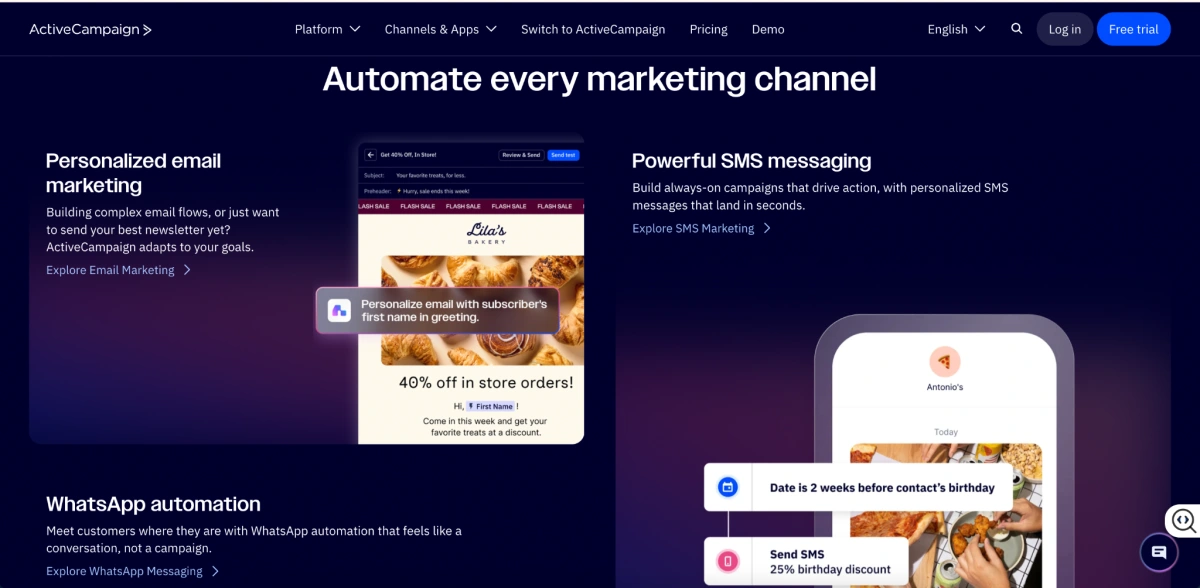
Pricing: No free plan; starts around $19/month.
Pros
- Extremely flexible automation builder for complex workflows and branching logic
- Built-in CRM allows better management of customer relationships and sales pipelines
- Handles advanced customer journeys beyond basic email marketing
Cons
- Steeper learning curve compared to simpler tools
- Less Shopify-native compared to platforms like Klaviyo or Omnisend
Best for: Shopify stores with complex customer journeys, especially those that need both CRM and marketing automation in one system.
Best for Email Marketing Automation
4. Mailchimp
Mailchimp restored its direct Shopify integration, which makes it a real option again if you're already in the Mailchimp ecosystem. It's not trying to be fancy: a friendly interface, a usable free tier, and the core automation workflows you'd expect.
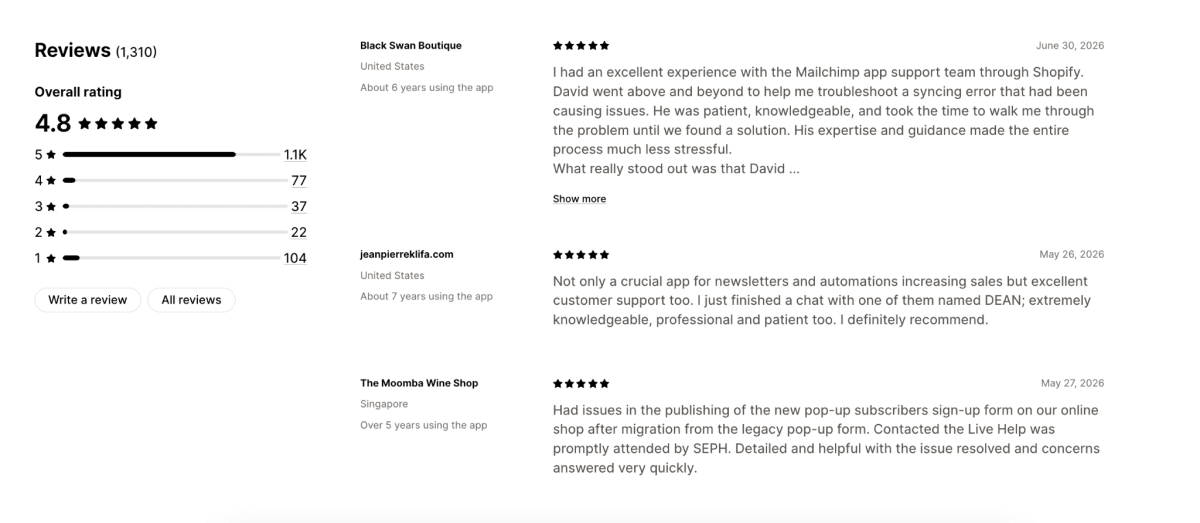
With over 1,300 merchant reviews, Mailchimp continues to be one of the highest-rated email marketing apps on Shopify
Key Features
- Shopify integration for syncing store and customer data
- Email campaign builder for newsletters and promotional emails
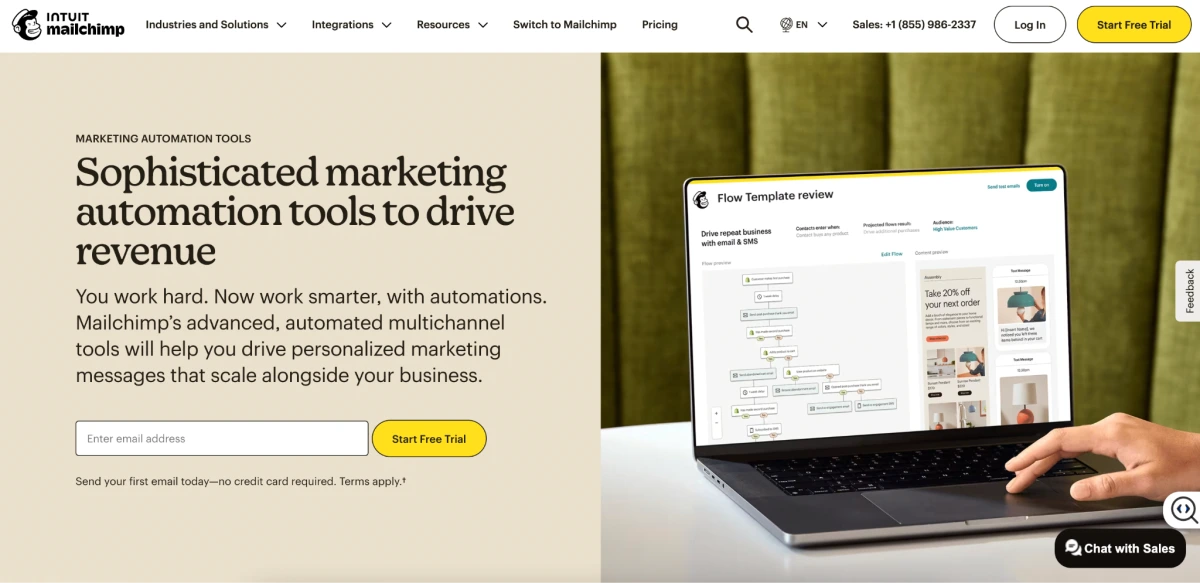
- Basic automation workflows such as welcome emails and abandoned cart reminders
- Customer Journey Builder for automated lifecycle campaigns
- AI-assisted subject lines and content optimization
Pricing: Free plan available, paid plans start around $13/month.
Pros
- Easy to use for beginners
- Simple interface for creating campaigns quickly
- Free plan available to get started
- Good for basic email marketing setup
Cons
- Limited advanced ecommerce automation features
- Basic segmentation compared to more advanced platforms
- Not designed for complex customer journeys
Best for:
New or small Shopify stores that want a simple, low-barrier way to start email marketing with basic automation like welcome emails and abandoned cart follow-ups.
5. Brevo
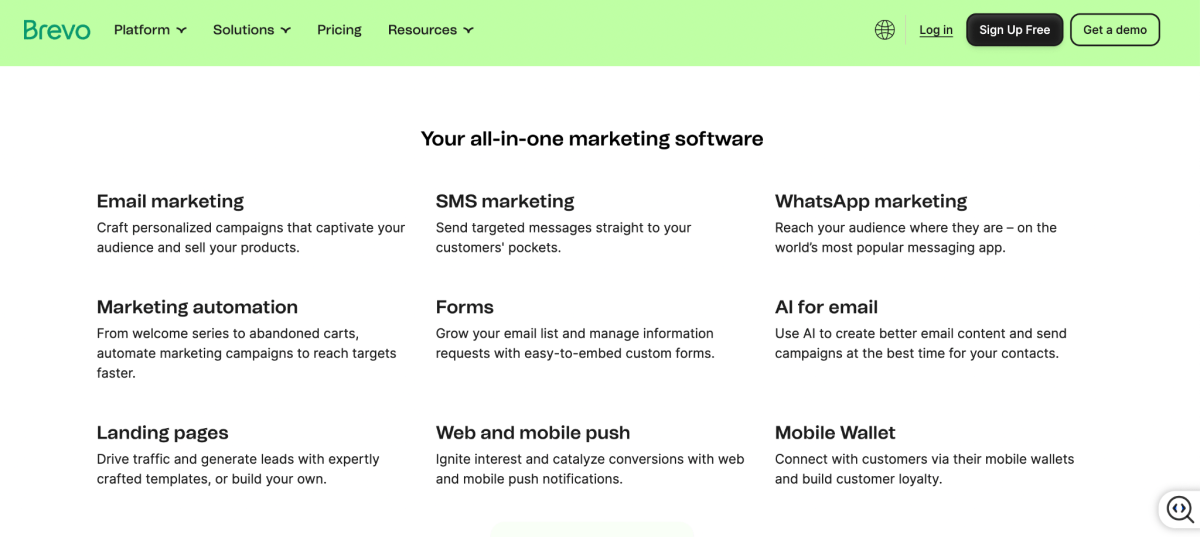
Brevo bundles email, SMS, transactional email, and live chat into one platform at a genuinely competitive price. The free tier covers 300 emails a day, plenty to test automations before you commit to paying for anything.
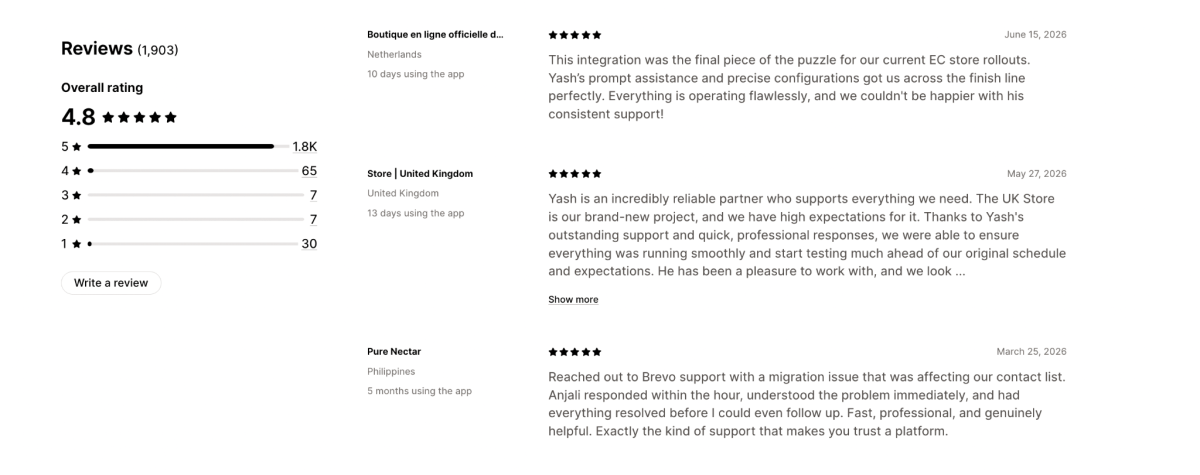
Brevo is highly rated by merchants looking for an affordable all-in-one marketing platform
Key Features:
- Shopify integration with customer, order, and product data sync
- Visual automation builder with event-based and behavioral triggers
- Multi-channel automation across email, SMS, WhatsApp, push notifications, and live chat
- Transactional email and SMS alongside marketing campaigns
- Customer segmentation and personalized messaging
Pricing: Free plan available; paid plans start around $9/month.
Pros
- Affordable pricing with generous contact limits for growing businesses
- Combines marketing automation with transactional messaging in one platform
- Easy-to-use visual workflow builder
- Good option for businesses that want marketing, sales, and customer communication in a single platform
Cons
- Less Shopify-specific depth compared to advanced tools
Best for: Budget-conscious stores that want email and SMS without juggling two separate platforms.
Best for SMS and Multi-Channel Automation
6. Postscript
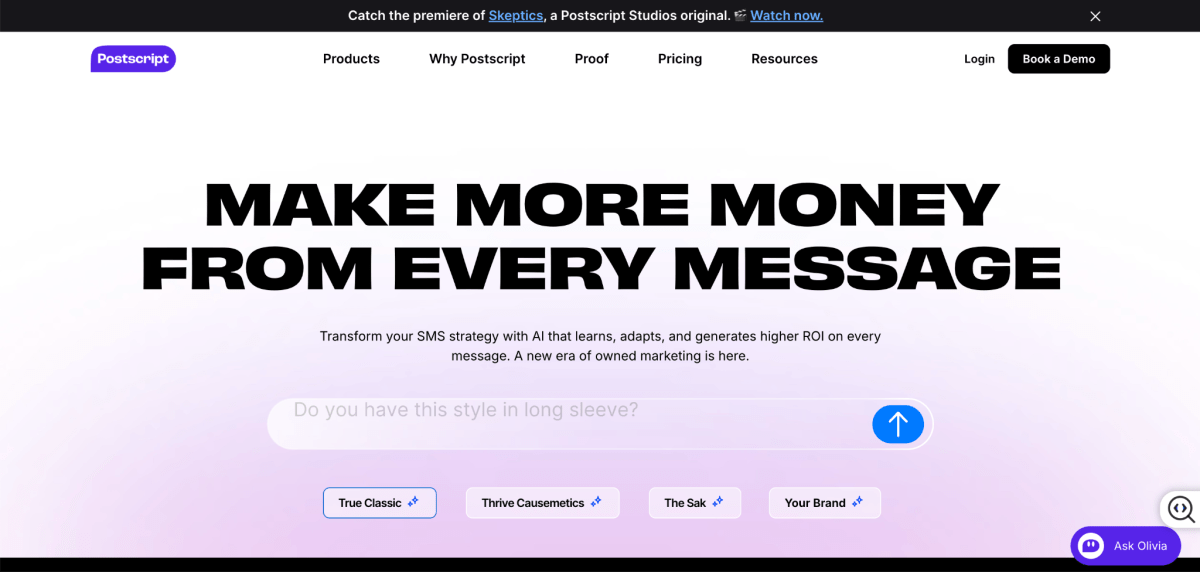
Postscript is a Shopify-focused SMS marketing platform designed specifically for text message automation. It helps merchants build SMS subscriber lists, send automated campaigns based on customer behavior, and track performance through SMS-driven revenue metrics. It is built around Shopify’s data structure, making it suitable for SMS-first marketing strategies.
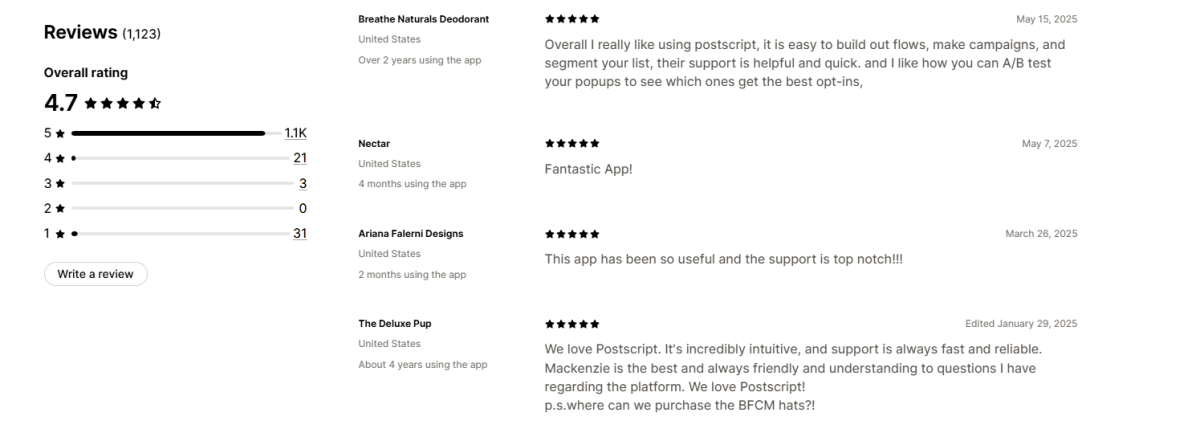
Postscript is consistently popular for helping Shopify brands drive revenue through SMS marketing
Key Features:
- Shopify-first SMS marketing platform with deep customer and order synchronization
- Automated SMS flows for welcome, abandoned cart, post-purchase, browse abandonment, and winback campaigns
- AI-powered SMS tools for campaign creation, personalization, and optimization
- Audience segmentation based on Shopify customer behavior and purchase history
- Two-way conversational SMS with performance and revenue attribution
Pricing: Free to install with a 30-day trial. Starter includes a $49/month minimum spend. Growth starts at $100/month.
Pros:
- Built specifically for Shopify, with deep native integration
- Excellent SMS automation for ecommerce lifecycle marketing
- Strong personalization and behavioral targeting using Shopify data
- AI features help streamline SMS campaign creation and optimization
- Detailed attribution for measuring SMS-driven revenue
Cons:
- SMS-only platform with no email functionality
- Costs increase with message volume
Best for: Stores that rely heavily on SMS as a primary marketing channel.
7. Recart
Recart is a Shopify-focused marketing automation platform that helps merchants grow subscribers and automate customer engagement through SMS and email. It combines lifecycle messaging with list-building tools like popups to drive conversions and customer retention.
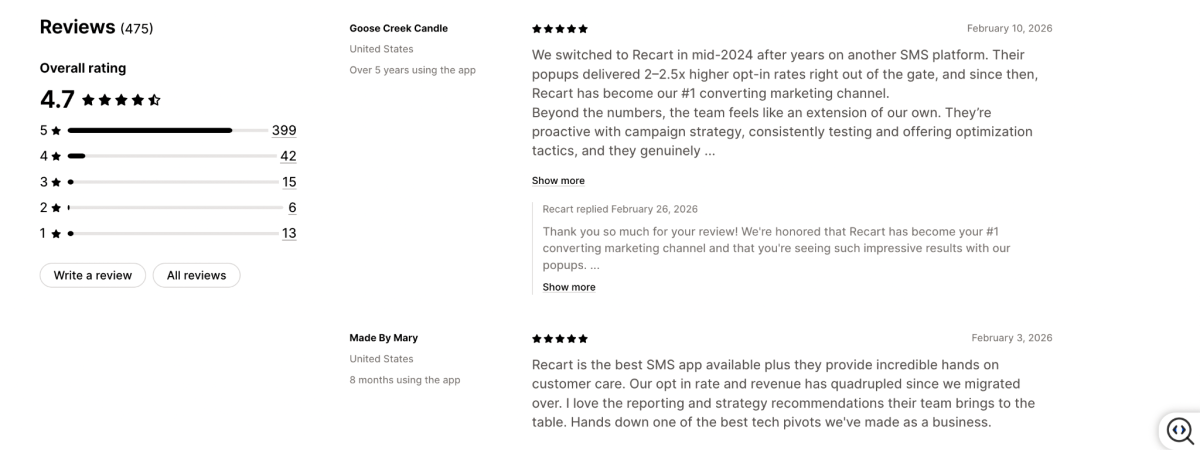
Recart holds a 4.7-star rating based on more than 475 Shopify App Store reviews
Key Features:
- Shopify-native automation for SMS, email, and Messenger marketing
- Automated flows for abandoned cart, welcome series, post-purchase, and winback campaigns
- Audience segmentation based on Shopify customer behavior and purchase history
- Personalized messaging with product recommendations and dynamic content
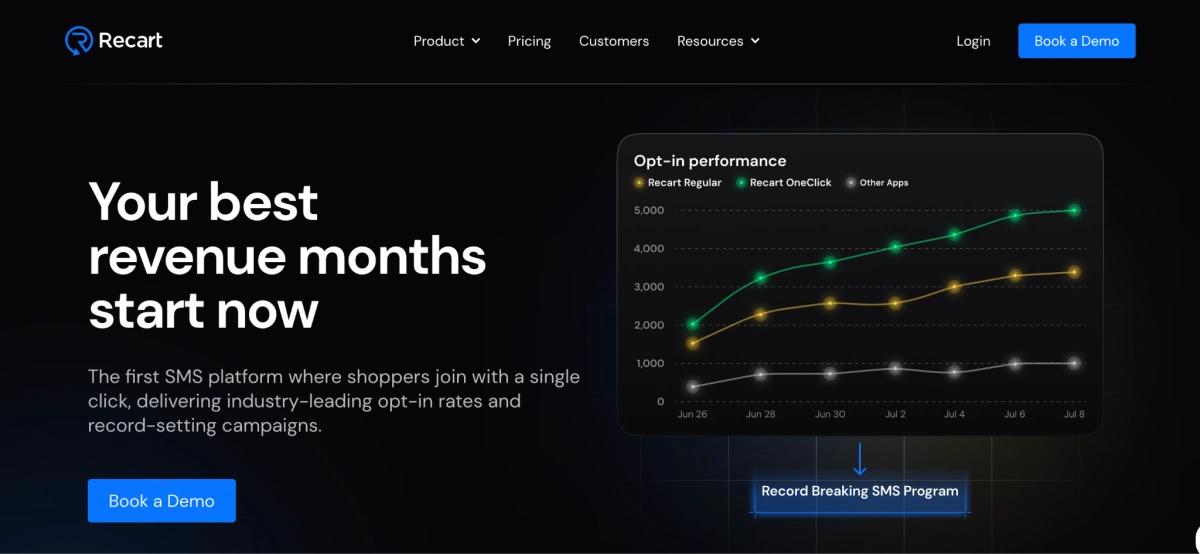
Pricing: Free plan available. Paid plan starts around $299/month.
Pros:
- Built specifically for Shopify merchants
- Easy to launch high-converting lifecycle automation with pre-built flows
- Supports both SMS and email from a single platform
- Strong abandoned cart recovery capabilities
- Clear revenue attribution for automated campaigns
Cons:
- High starting price compared to most SMS tools
- More niche compared to general marketing automation platforms
Best for: Growing Shopify brands that want an ecommerce-focused platform for SMS and email lifecycle automation, especially those prioritizing abandoned cart recovery and customer retention.
Best for Popups, Lead Capture, and On-Site Automation
8. Privy
Privy is a Shopify marketing tool focused on onsite conversion and basic email and SMS automation. It is mainly used to capture email leads and recover abandoning visitors through popups and simple follow-up campaigns. The platform combines list-building tools with lightweight automation to help stores convert traffic already on their website.
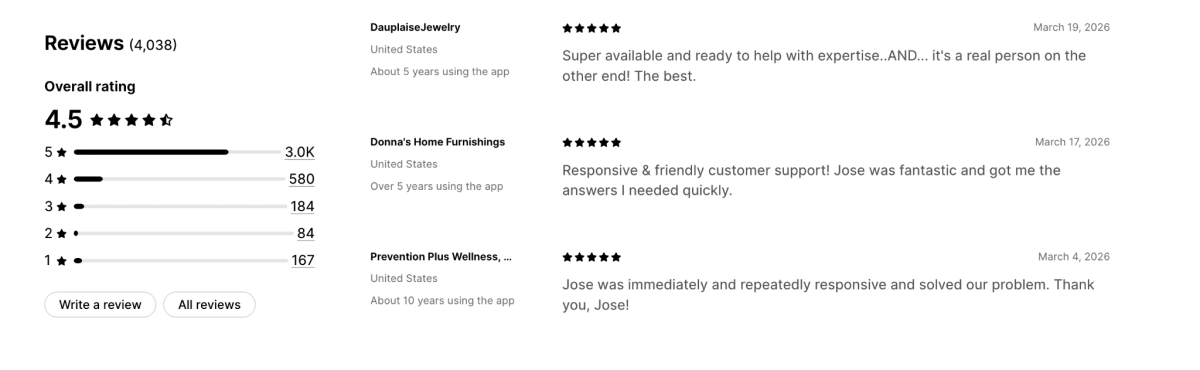
The numbers speak for themselves, Privy has earned over 4,000 reviews on the Shopify App Store
Key Features:
- Exit-intent and cart-saver popups to capture visitors before they leave the store or abandon checkout
- Spin-to-win and gamified opt-in forms to increase email and SMS signups through incentives
- Automated email and SMS follow-up to re-engage subscribers after signup or cart abandonment
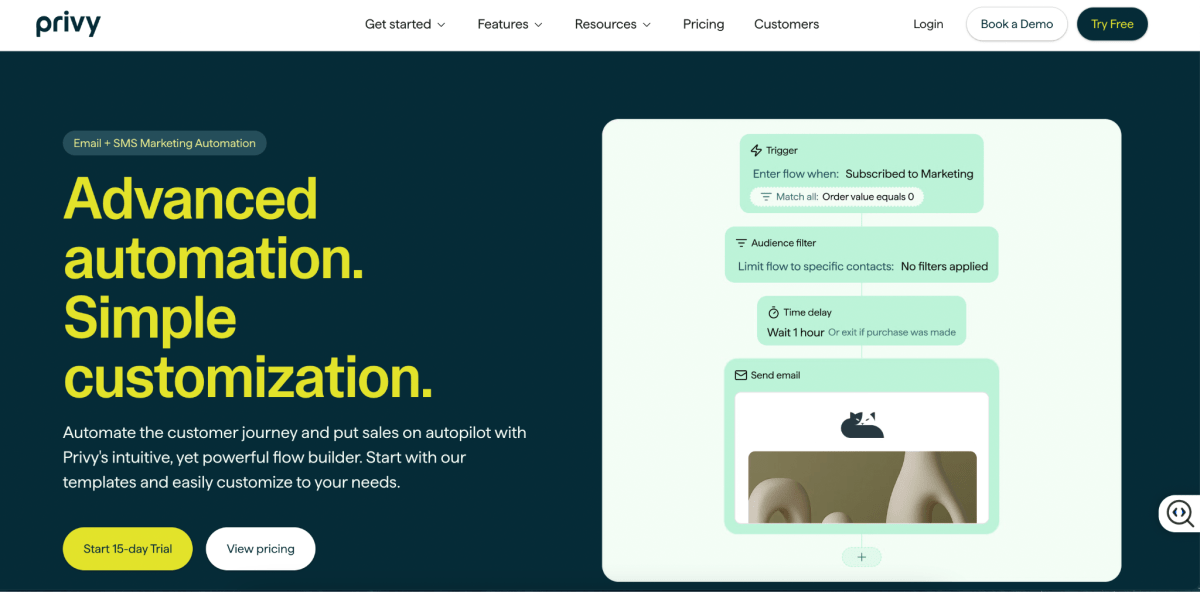
Pricing: Free plan available; paid plans start around $30/month.
Pros:
- Easy to set up and use without technical setup
- Combines popups and basic email/SMS automation in one tool
- Free plan is useful for early-stage stores
Cons:
- Email automation capabilities are less advanced than dedicated email platforms
- Limited depth for complex lifecycle marketing workflows
Best for: Stores focused on list building and improving onsite conversion rates.
9. Justuno
Justuno leans on AI logic to serve up personalized popups and product recommendations based on how a visitor's actually behaving on your site. Combined with A/B testing and advanced segmentation, it's a strong pick if conversion rate is what you're chasing.
If AI tooling is a priority across your whole stack, this list of Shopify AI apps is worth a look too.
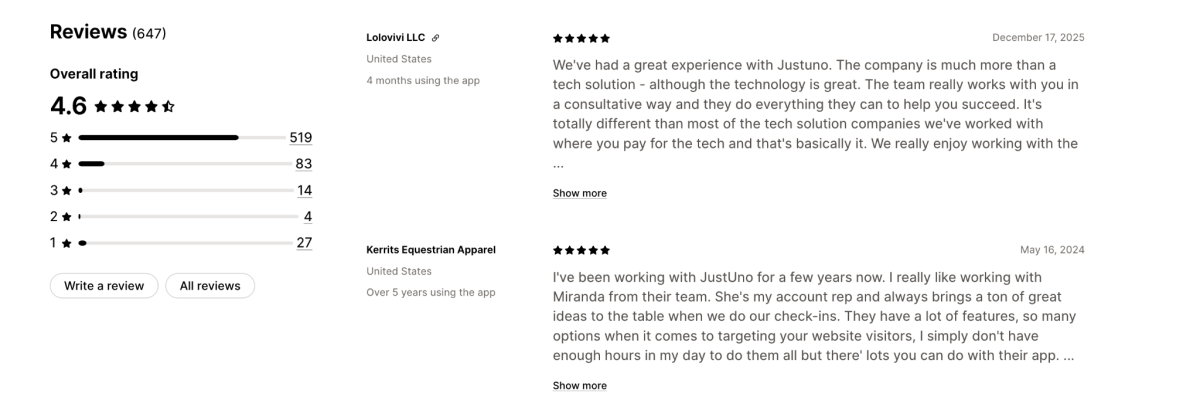
Justuno has built a strong reputation among Shopify merchants over the years
Key Features:
- Native Shopify integration with customer, product, and purchase data
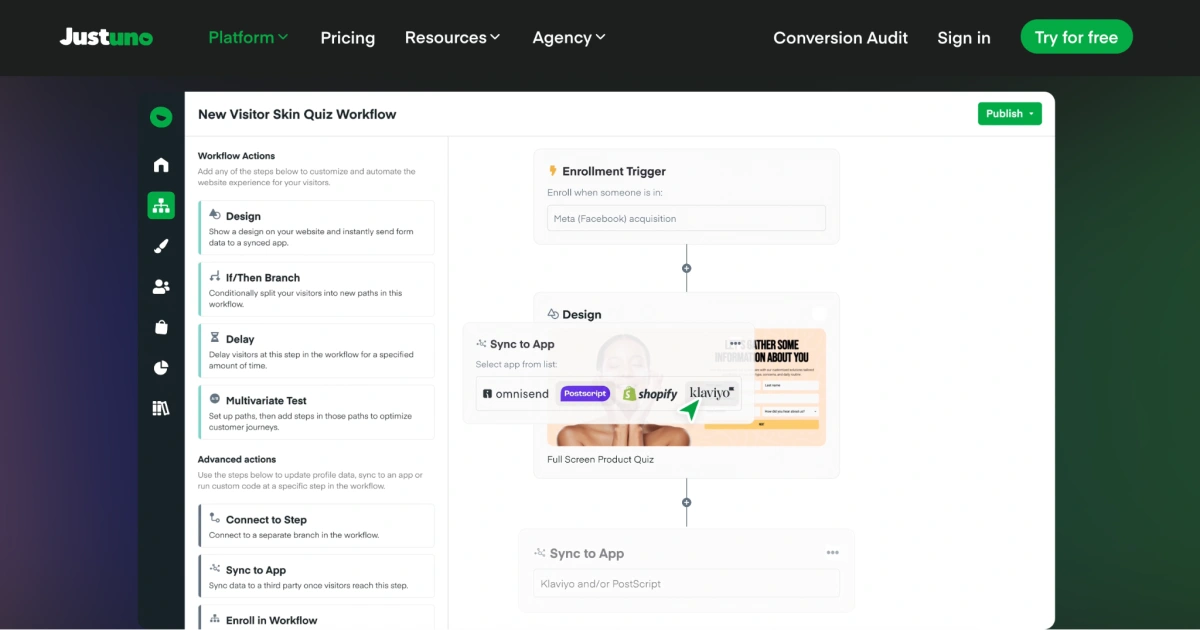
- Advanced popups, forms, banners, quizzes, and gamified promotions for lead capture
- Behavioral and audience targeting based on browsing activity, cart value, traffic source, location, and more
- AI-powered visitor segmentation and personalized onsite experiences
- Integrations with email and SMS platforms like Klaviyo, Omnisend, Mailchimp, and Attentive to trigger automated campaigns
Pricing: No free plan; starts around $59/month.
Pros:
- Excellent onsite conversion and list-growth capabilities
- Highly customizable targeting and personalization rules
- Deep Shopify integration with real-time visitor data
- Integrates seamlessly with leading email and SMS marketing platforms
- Helps improve lead quality before customers enter automation workflows
Cons:
- Higher pricing compared to basic popup tools
- Requires setup to fully optimize performance
Best for: Stores focused on improving onsite conversion through personalization.
Best for Loyalty and Retention Automation
10. Smile.io
Smile.io is a loyalty and retention platform for Shopify stores that helps merchants encourage repeat purchases through rewards, referrals, and VIP programs. It is mainly used to increase customer lifetime value by building structured retention programs.
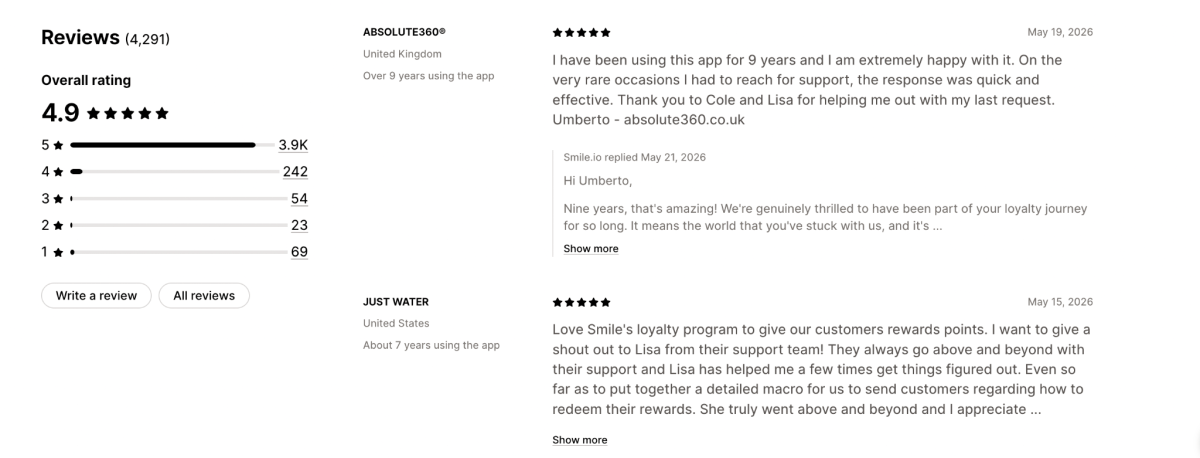
A go-to choice for merchants looking to build long-term customer loyalty
Key Features:
- Native Shopify integration with automatic customer and order synchronization
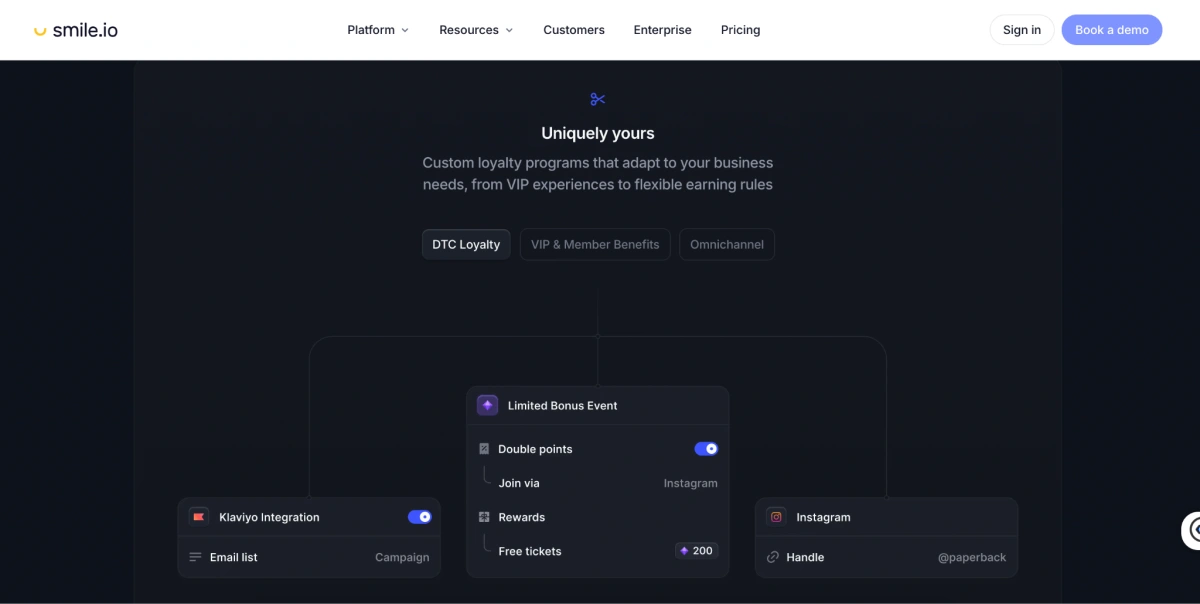
- Customizable points, rewards, VIP tiers, and referral programs
- Loyalty-based customer segmentation for personalized marketing
- Integrations with Klaviyo, Omnisend, Mailchimp, and other marketing platforms
- Analytics for loyalty program performance and customer engagement
Pricing: Free plan available; paid plans start around $15/month.
Pros:
- Helps increase repeat purchases through structured loyalty programs
- Supports referral and VIP-based customer retention
- Integrates with major Shopify marketing tools
Cons:
- Advanced features require higher-tier paid plans
Best for: Stores focused on increasing customer lifetime value through loyalty and retention programs.
3 Essential Shopify Marketing Automation Workflows (With Examples)
These five workflows are the ones I'd consider highest-impact for most Shopify stores, from cart recovery all the way through win-back campaigns.
1. Recover Abandoned Carts
Abandoned cart automation helps recover lost sales by reminding shoppers to complete their purchase. A typical workflow combines email, SMS, or web push notifications, starting with a gentle reminder before introducing social proof or a limited-time incentive if needed.
2. Automate Customer Communication
Marketing automation keeps customers engaged throughout their journey by sending the right message at the right time. Common workflows include welcome email, product recommendations, back-in-stock alerts, promotional campaigns, post-purchase follow-ups, and win-back campaigns triggered by customer behavior rather than fixed schedules.
3. Automate Customer Support with AI
AI agents can answer frequently asked questions, recommend products, provide order updates, and handle return requests around the clock. They also collect customer information before handing complex conversations to your support team, reducing response times while improving the overall shopping experience.

Final Thoughts
Shopify marketing automation is not about setting up more tools, it’s about building a system that runs consistently in the background while your store grows. The stores that win long-term are not the ones sending more campaigns, but the ones that connect the right message to the right customer at the right moment.
If you’re just starting out, Shopify’s native tools are often enough to cover the basics without adding extra cost. As your store grows, adding specialized tools for email, SMS, or onsite conversion helps you scale more efficiently without overloading a single platform.
The key shift happens when you stop thinking in terms of individual campaigns and start thinking in automated customer journeys that continuously generate revenue across the entire lifecycle.

Lila Le is the Marketing Manager at TrueProfit, with a deep understanding of the Shopify ecosystem and a proven track record in dropshipping. She combines hands-on selling experience with marketing expertise to help Shopify merchants scale smarter, through clear positioning, profit-first strategies, and high-converting campaigns.