10+ Best eCommerce AI Agents 2026 That Replace Manual Store Work



AI agents are quickly becoming part of everyday ecommerce operations, but not every tool deserves a place in your stack. Some automated support. Others optimize ads, merchandising, or analytics. The challenge isn't finding an AI agent, it's choosing one that actually improves profit.
In this guide, you'll learn what ecommerce AI agents are, where they fit across the customer journey, and which tools are worth considering in 2026.
What Are E-Commerce AI Agents?
E-commerce AI agents are AI-powered software systems that can understand goals, make decisions, and take actions on behalf of an online store owner, rather than simply generating text or answering questions.
Unlike traditional AI tools that require constant prompts, AI agents can actually monitor data, execute multi-step tasks, and adapt their actions based on changing conditions. Think of them as virtual teammates instead of standalone tools.
What can AI agents do for an ecommerce store?
Depending on the platform and permissions you give them, AI agents can:
- Optimize product listings by rewriting titles, descriptions, and SEO metadata.
- Answer customer support inquiries 24/7, escalating complex issues when needed.
- Monitor inventory and predict when products need reordering.
- Analyze advertising performance and recommend or implement budget adjustments.
- Track profitability by combining sales, shipping, ad spend, fees, and product costs into actionable insights.
- Recover abandoned carts through personalized emails or chat messages.
- Identify sales trends and alert you when products are underperforming or suddenly gaining traction.

Types of E-Commerce AI Agents (Mapped to the E-Commerce Funnel)
E-commerce AI agents fall into six categories, each tied to a different stage of the funnel. Now, I’ll walk you through each one.
- Customer Acquisition Agents: These sit at the top of the funnel, managing paid ad budgets, adjusting bidding in real time, generating SEO content, and automating social publishing.
- Product Discovery and Merchandising Agents: These agents adjust search rankings, personalize category pages, and surface products based on shopper behavior and inventory levels, directly affecting conversion rate.
- Sales and Conversion Agents: These work mid-funnel, powering conversational shopping assistants, applying dynamic pricing by demand or customer segment, and triggering cart recovery sequences at the right moment.
- Customer Service and Retention Agents: Cognigy identifies post-purchase support as one of the highest-value deployment areas for these agents. They handle order tracking, initiate returns and exchanges, collect reviews, and run re-engagement campaigns autonomously.
- Analytics and Operations Agents: These back-office agents forecast inventory needs, flag underperforming SKUs, detect fraudulent orders, and surface profit anomalies before they become problems.
- Payments and Checkout Agents: Agents here handle checkout optimization, payment method routing, and fraud screening autonomously.
The 10 Best AI Agents to Automate Your E-Commerce Store in 2026
After going through a wide range of e-commerce AI tools, I’ve narrowed it down to this final list. It brings together the best mix of functionality, use cases, and pricing, making it easier for you to compare and choose what fits best. Let’s dive in.
1. Tidio Lyro: Best for Customer Service Automation

Best for: Small to mid-size stores that want AI-handled support without hiring extra staff
What it does
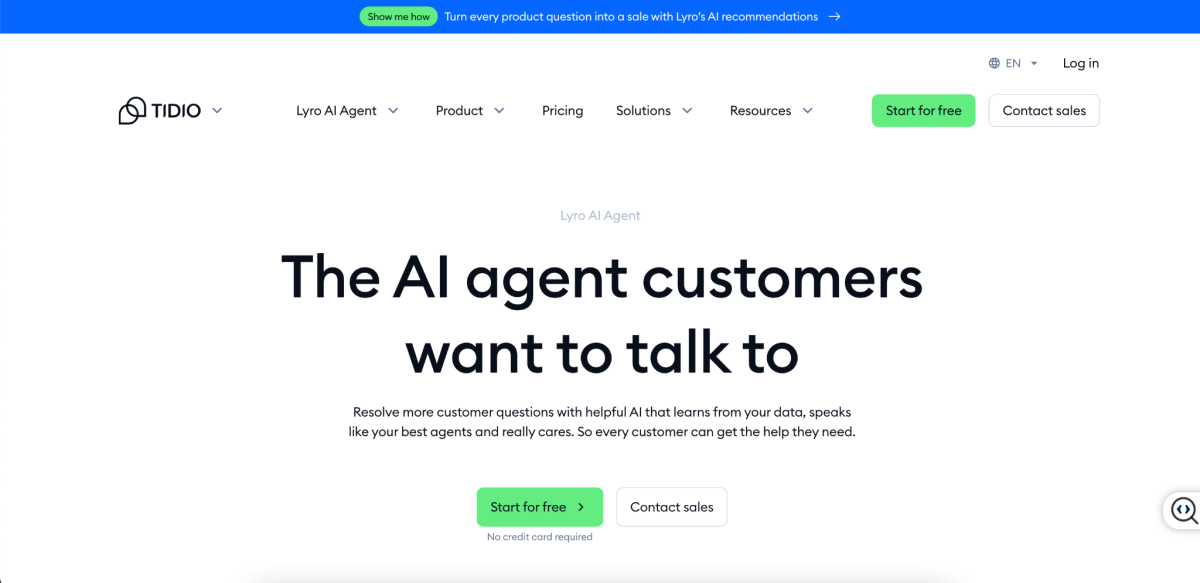
Lyro is Tidio's AI Agent, built into its live chat and helpdesk platform. It trains on your own website and supports content to answer questions in natural language, and through a feature called Lyro Actions it can call APIs to check order status or update records instead of only replying with text. Tidio cites resolution rates in the 60 to 70% range for common questions.
What you can automate
- Answering FAQs and product questions from your store's content
- Checking and sharing Shopify order status
- Qualifying leads outside business hours
- Recommending products once trained on your catalog
Pros
- Native Shopify and WooCommerce integration
- No-code setup
- Available even on Tidio's free plan, with a limited monthly conversation quota
- Multilingual out of the box
Cons
- Nuanced complaints and multi-step requests still need frequent human handoff
- Custom Lyro Actions beyond the pre-built templates require API setup
2. Gorgias AI: Best for High-Volume DTC Support

Best for: High-volume Shopify and Magento DTC brands handling hundreds of tickets a day
What it does
Gorgias is an e-commerce help desk with a built-in AI Agent that resolves tickets, detects intent, and reads sentiment. Because it connects directly to Shopify order data, it can take real actions inside a conversation, like issuing a refund or updating an order, not just answer questions.
What you can automate
- Order status, tracking, and shipping questions
- Refunds, exchanges, and discount code issuance
- Ticket tagging and intent-based routing
- Return and exchange initiation
Why it matters
Stores with high ticket volume see the biggest payoff here, since each automated resolution offsets a roughly $3/ticket cost benchmark Gorgias cites for human-handled tickets. The math gets less favorable at low volume.
Pros
- Deep, two-way Shopify integration that can act, not just read data
- Plans start at $10/month for low ticket counts
- Strong fit for stores already centralizing support in Gorgias
Cons
- AI Agent resolutions are billed separately, typically $0.90 to $1.00 per resolved conversation, on top of the base plan
- Costs can climb fast during high-volume periods like BFCM
- Less cost-effective for stores with low, inconsistent ticket volume
3. Klaviyo AI (K:AI): Best for Email and SMS Marketing
Best for: Email-and-SMS-first brands already running marketing through Klaviyo
What it does
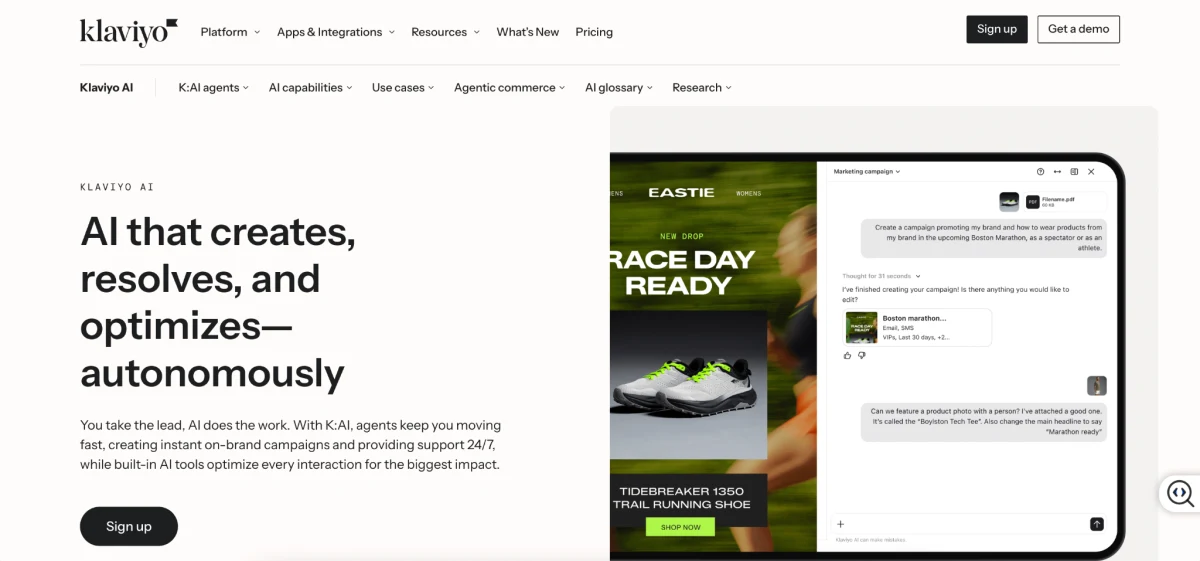
K:AI is the set of AI features built into Klaviyo's email and SMS platform: predictive analytics (lifetime value, churn risk), AI-generated subject lines and segment-specific copy, and send time optimization that targets each subscriber's typical engagement window.
What you can automate
- Predicting customer lifetime value and churn risk
- Generating subject lines and campaign copy
- Sending each campaign at a subscriber's optimal time
- Building behavior-based audience segments
Why it matters
Most of these features are aimed at retention, which costs less to act on than acquisition. The predictive segments in particular let smaller teams run lifecycle marketing that used to require a dedicated analyst.
Pros
- Deep native integration with Shopify and BigCommerce order data
- Predictive analytics and segmentation are more advanced than most direct competitors
- Most AI tools are included in paid plans rather than gated behind a separate fee
Cons
- Some features, including personalized send time, are limited to higher-tier Marketing Analytics and Advanced Data Platform plans
- Costs rise quickly as your contact list grows, especially after the 2025 shift to active-profile billing
- Needs enough historical purchase and engagement data to train on before predictions are reliable
4. Jasper: Best for Content and SEO
Best for: Marketing teams producing high volumes of on-brand written content
What it does
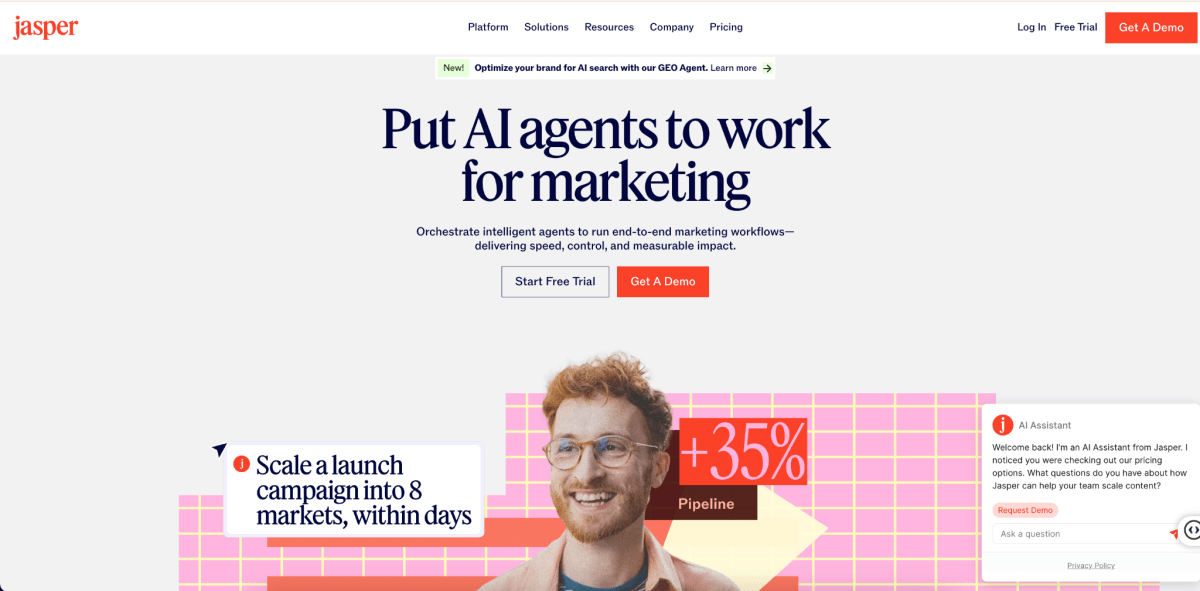
Jasper is a general AI content platform, not an e-commerce-specific tool. It generates blog posts, ad copy, email sequences, and product descriptions, and can run full campaign briefs that produce coordinated content across several channels from a single input. A human still reviews and directs the output.
What you can automate
- Drafting blog posts, ad copy, and email sequences
- Keeping brand voice consistent across multiple writers
- Generating multi-channel campaign drafts from one brief
- Building no-code AI workflows for repeatable content tasks
Why it matters
For catalogs or content calendars with high output needs, Jasper cuts first-draft time significantly, freeing the team to focus on editing and strategy instead of blank-page writing.
Pros
- Brand voice training is widely considered one of its strongest features
- Useful for teams managing large catalogs or frequent content output
- Campaign workflows can draft for multiple channels at once
Cons
- Not e-commerce-specific, so it has no native order, inventory, or customer data access
- Full SEO optimization requires a separate Surfer SEO subscription
- Starts around $59/month for a single seat; team and business pricing is custom-quoted
- Generated drafts still need human review, especially for technical or niche topics
5. Rebuy: Best for Personalization and AOV
Best for: Shopify and Shopify Plus stores focused on raising average order value
What it does
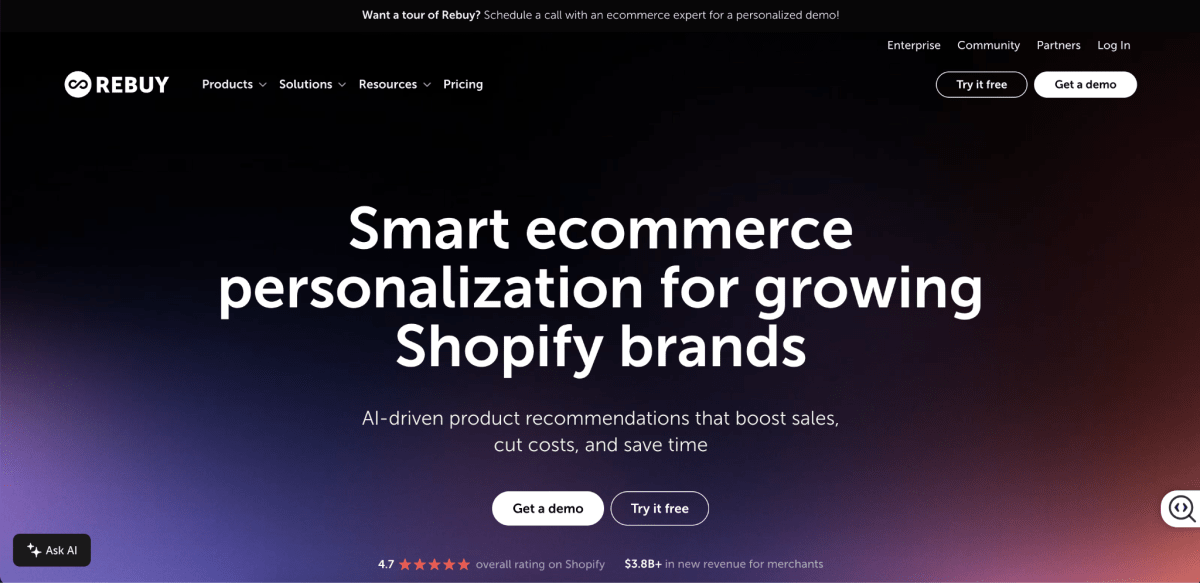
Rebuy is a Shopify-native personalization platform built around Smart Cart, an AI-powered slide-out cart, along with product recommendations, dynamic bundles, and post-purchase upsell offers that adjust based on real-time shopper behavior.
What you can automate
- Personalized product recommendations across the site
- Cart-based upsells and cross-sells
- AI-suggested product bundles
- Post-purchase upsell offers
Why it matters
Because Rebuy acts at the moment of purchase intent (in the cart and at checkout), it tends to lift AOV without needing new traffic, which makes it one of the more direct profit levers on this list.
Pros
- Purpose-built for Shopify with deep storefront and checkout integration
- Modular, package-based pricing so you only pay for what you use
- Free plan available to start
Cons
- Checkout Extensions, its in-checkout offer feature, are exclusive to Shopify Plus
- Not available outside the Shopify ecosystem
- Less impactful for stores with small or low-margin catalogs
6. Triple Whale Moby: Best for Analytics and Insights
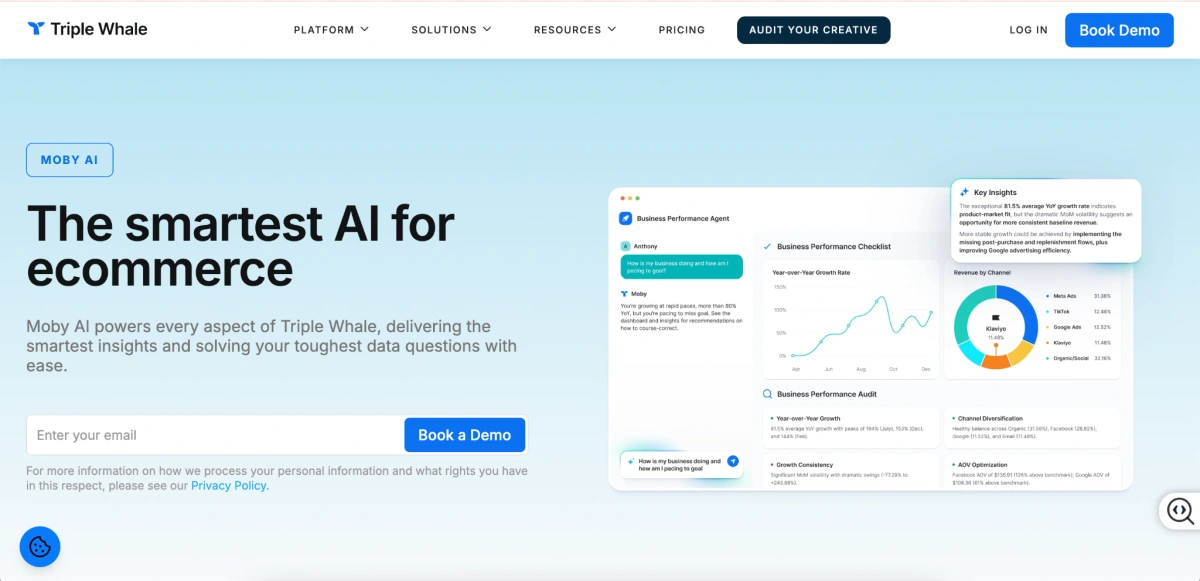
Best for: Data-driven teams that want one AI layer across analytics, ad platforms, and email
What it does
Triple Whale's AI assistant, Moby (relaunched in 2026 as Moby 2), sits on top of Triple Whale's centralized e-commerce data warehouse and answers plain-language performance questions. Newer "Moby Agents" go further, taking actions like adjusting Meta ad bids or building Klaviyo campaigns rather than only reporting on results.
What you can automate
- Answering plain-language performance questions, like "What was my most profitable campaign last month?"
- Surfacing anomalies in spend or site behavior
- Adjusting Meta ad budgets and bids
- Building and monitoring Klaviyo email campaigns
Why it matters
For teams drowning in disconnected dashboards, having one AI layer that already understands CAC, ROAS, and attribution cuts the time between noticing a problem and acting on it.
Pros
- Centralizes data from multiple ad platforms and tools in one place
- Moby Agents can now act on ad campaigns, not just report on them
- Built on e-commerce-specific data context rather than a generic AI wrapper
Cons
- The action-taking Moby Agents are newer and less proven than the core analytics product
- Value depends on connecting most of your ad and marketing stack; partial setups limit what it can see and do
- Pricing is tiered and not fully transparent upfront
7. Nosto: Best for Merchandising
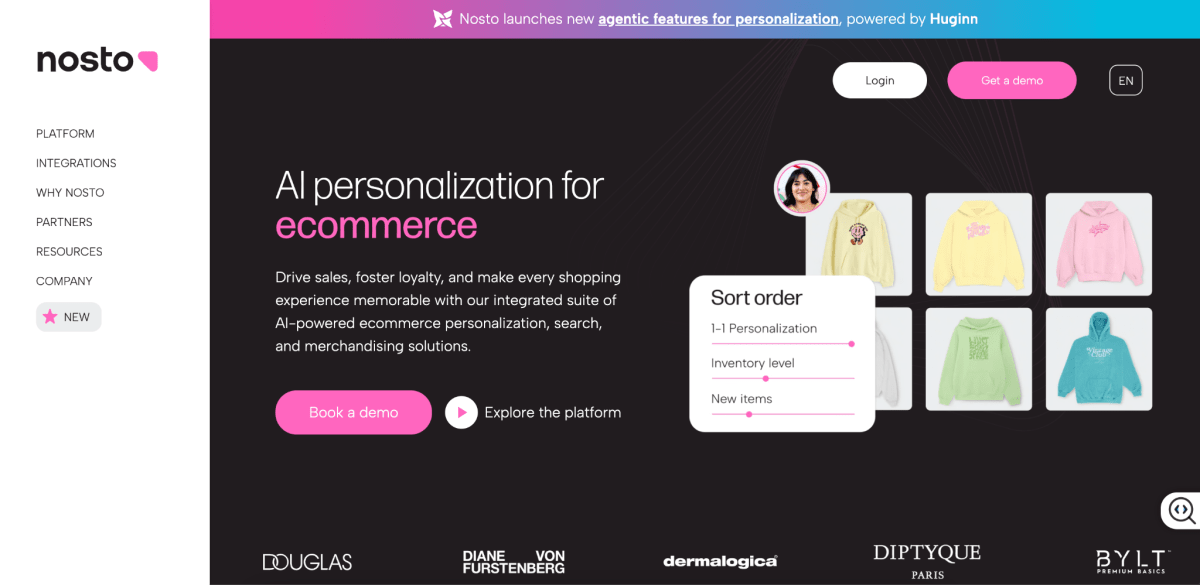
Best for: Mid-to-large catalogs that want one platform for search, merchandising, and personalization
What it does
Nosto is a Commerce Experience Platform built around its experience.AI engine, combining personalized product recommendations, AI-driven on-site search, and rule-based category merchandising. Its AI agent, Huginn, runs in the background to surface revenue opportunities and answer strategic questions.
What you can automate
- Personalized product recommendations across product pages, cart, and email
- Search relevance tuning based on shopper intent
- Category page sequencing by margin, stock level, or new arrivals
- Ongoing opportunity surfacing through Huginn
Why it matters
Consolidating recommendations, search, and merchandising into one vendor cuts the integration overhead of running three separate point tools, and gives merchandisers UI-level control without filing developer tickets.
Pros
- Combines recommendations, search, and merchandising under one platform
- Works across Shopify, BigCommerce, Salesforce Commerce Cloud, and other storefronts
- Strong fit for merchandising teams that want self-service control
Cons
- Pricing isn't published; real-world quotes for mid-market stores commonly run well above $1,000/month
- Needs meaningful traffic and catalog size to justify the cost
- Implementation and rule setup take longer than plug-and-play apps
8. Adscale: Best for Ad Spend Optimization
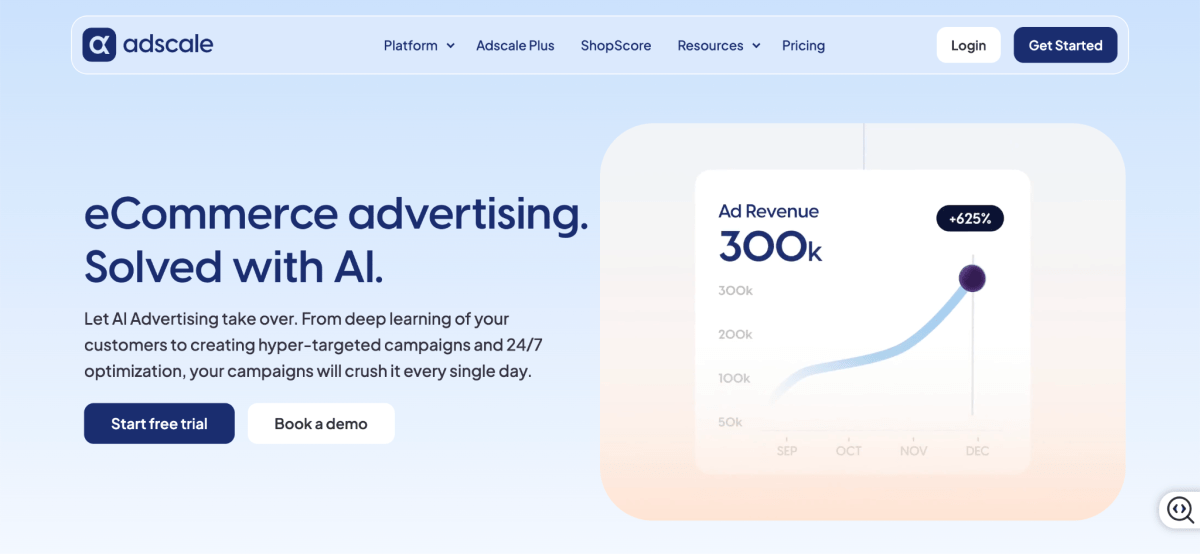
Best for: Shopify, BigCommerce, and WooCommerce stores spending consistently on Google and Meta ads without a dedicated media buyer
What it does
Adscale connects to your store's product and order data to build and run campaigns across Google Search, Performance Max, Facebook, and Instagram, then continuously adjusts bids and budgets using its own optimization layer.
What you can automate
- Campaign and ad creative generation from store data
- Bid and budget optimization across Google and Meta, running continuously
- Image and video ad generation
- Cross-channel performance reporting
Why it matters
For stores without a dedicated media buyer, Adscale's continuous optimization catches underperforming spend faster than a weekly manual review would, which matters most once monthly ad spend climbs past a few thousand dollars.
Pros
- Manages multiple ad channels from one dashboard
- Continuous optimization instead of periodic manual reviews
- Plans available from roughly $169/month depending on ad spend tier
Cons
- Still requires manual setup and brand-specific tuning, it isn't fully hands-off
- Pricing tiers are based on ad spend caps, so cost rises as budget scales
- Most cost-effective for stores already spending meaningfully on paid media
9. Reamaze (Re:amaze): Best for Omnichannel Customer Support
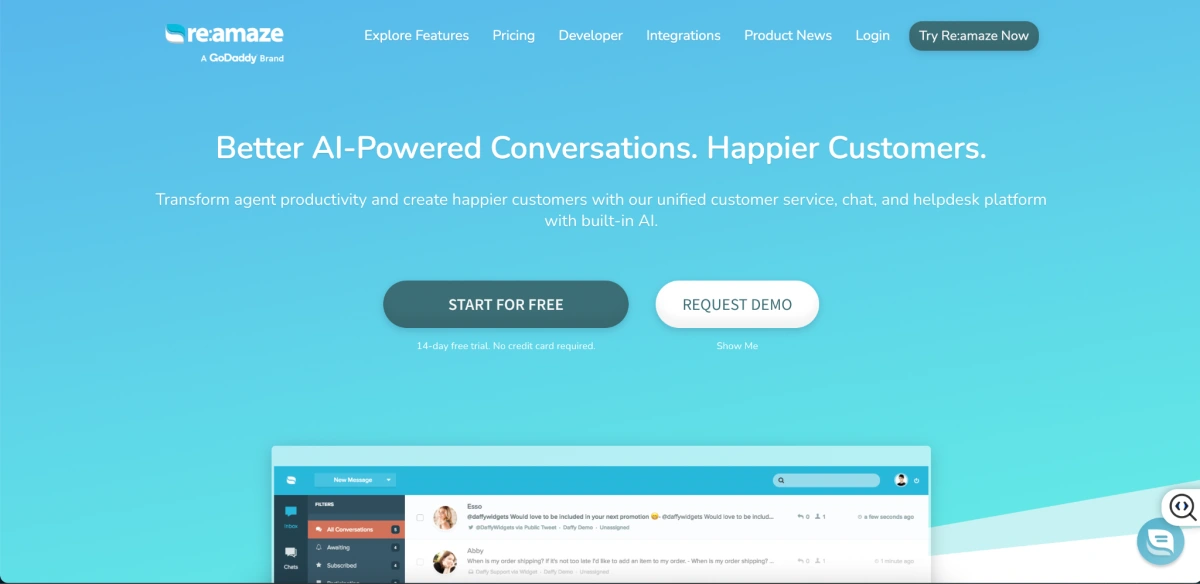
Best for: Multi-channel Shopify, BigCommerce, or WooCommerce brands managing fragmented support volume
What it does
Re:amaze is an omnichannel helpdesk unifying email, live chat, social, SMS, and voice into one inbox. Its AI features draft and suggest replies from your help center content, while AI-powered Intents automatically tag and route conversations by topic.
What you can automate
- Suggested and drafted replies based on customer messages and order data
- Conversation tagging and routing through AI Intents
- FAQ article drafting and long-conversation summarization
- Customer sentiment detection
Why it matters
Consolidating channels into one inbox, then letting AI draft the first pass on replies, is usually enough to noticeably cut response time without a full headcount increase.
Pros
- True omnichannel coverage, including SMS and voice on higher tiers
- AI drafting and tagging features are included across plans rather than a separate paid module
- Flat-rate Starter plan available for very small teams
Cons
- Per-agent pricing, starting around $26/user/month, gets expensive as headcount grows
- Multi-brand management, SMS, and voice are limited to Pro plan and above
- The AI mostly drafts and assists rather than fully resolving tickets on its own
10. Recart: Best for Conversational SMS Retention
Best for: Established Shopify DTC brands that want SMS handled for them rather than built and run in-house
What it does
Recart is a managed SMS (and Messenger) marketing platform built around two-way conversational messaging, abandoned cart recovery, and AI-assisted campaign copywriting. On its standard plans, a dedicated Customer Success Manager builds and manages your campaigns rather than you running the platform yourself.
What you can automate
- Abandoned cart and post-purchase SMS sequences
- AI-generated campaign copy tailored to your most profitable segments
- Two-tap mobile pop-up opt-ins
- Two-way SMS conversations for support or feedback
Why it matters
For brands without in-house SMS expertise, the managed-service model trades a higher monthly fee for execution that would otherwise require hiring a specialist, which can pencil out if SMS subscriber volume is already meaningful.
Pros
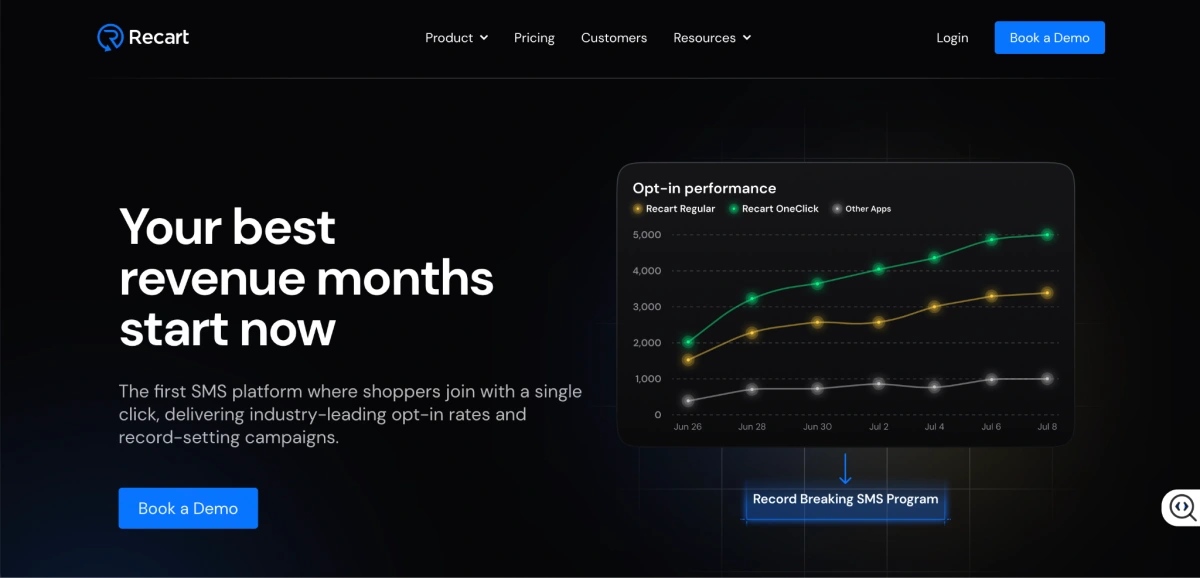
- Reported pop-up opt-in rates of 8 to 12%, above typical industry averages
- Two-way messaging supports real conversations, not just one-way blasts
- Includes a dedicated strategist on standard plans
Cons
- Starts at $200/month, one of the higher entry prices in this category
- The managed-service model means less direct, self-serve control than competitors like Postscript
- Best ROI is concentrated in stores that already have meaningful SMS subscriber volume
How to Choose the Right AI Agent for Your Store
The best AI agent isn't necessarily the one everyone is talking about. It's the one that solves the biggest problem that's costing your store time or profit today.
1. Find Where Your Store Is Losing the Most Money
Before looking at features, take a step back and identify your biggest operational costs and revenue bottlenecks.
Maybe your support team spends hours answering repetitive questions. Maybe abandoned carts keep piling up. Or maybe ad spend is increasing while ROAS is falling.
Once you know where the biggest leak is, look for an AI agent that can handle that workflow autonomously. That's usually where you'll see the fastest ROI.
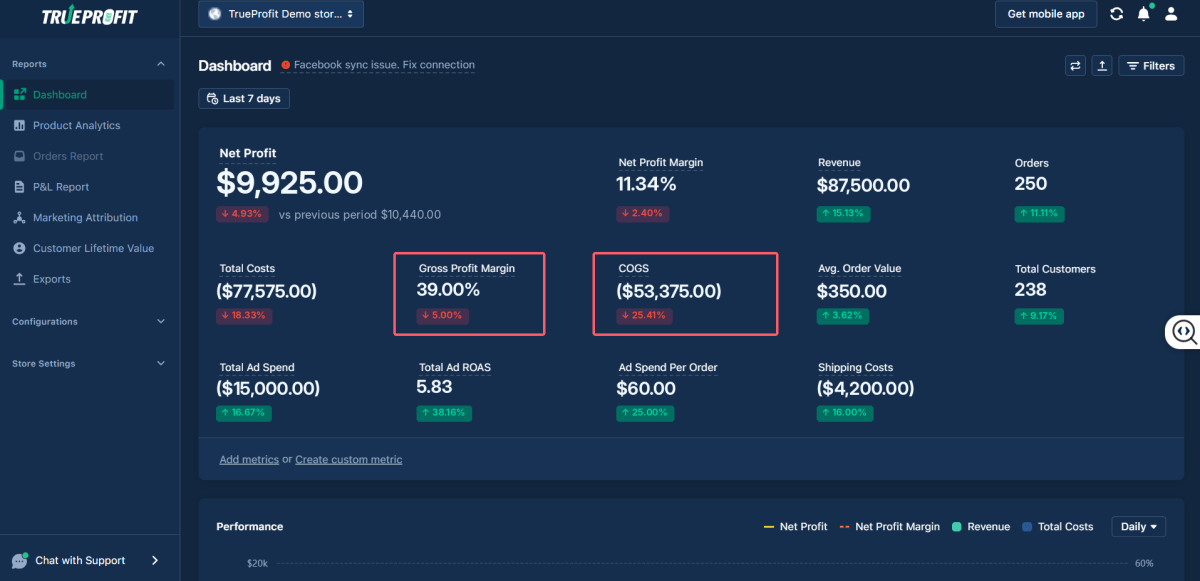
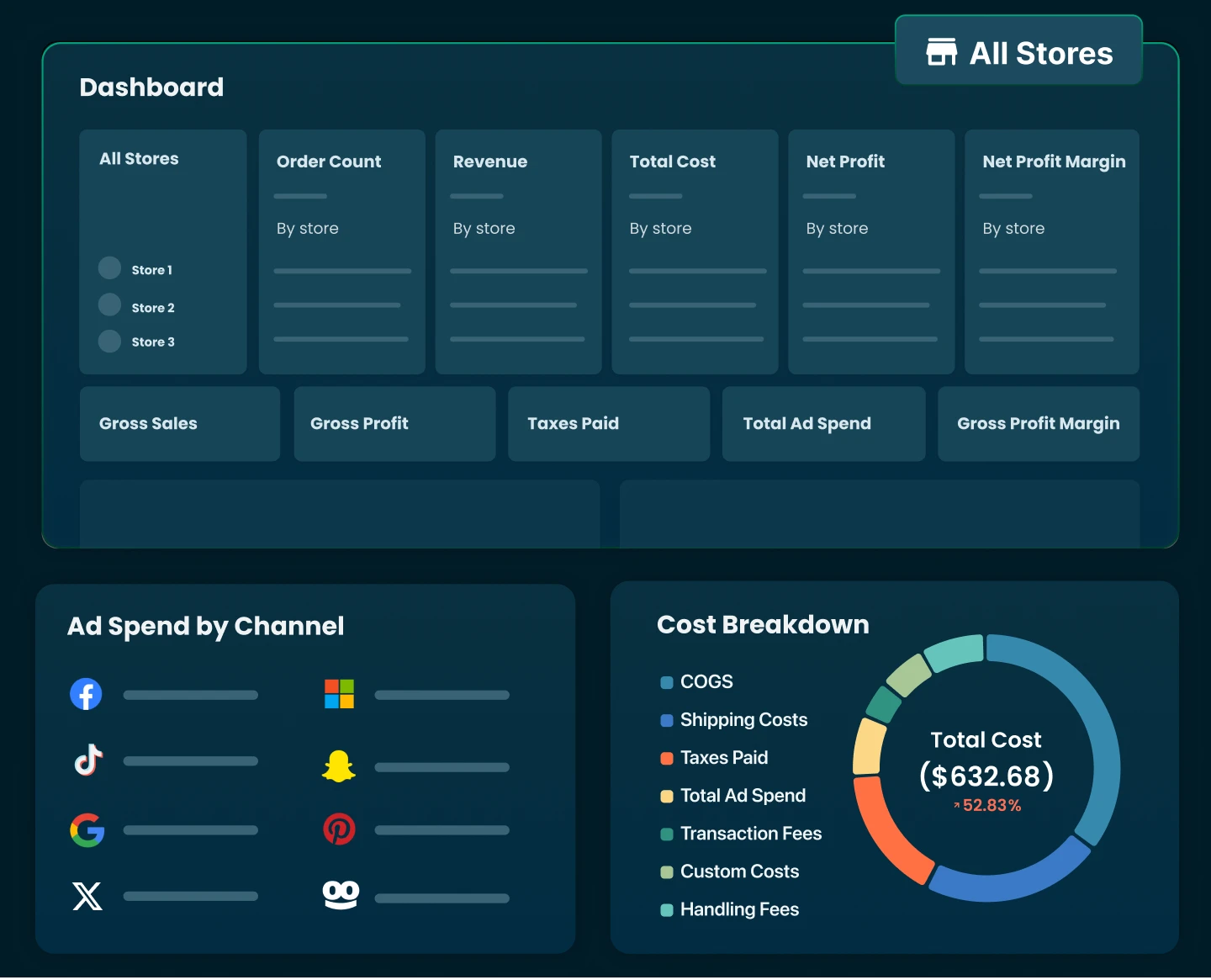
For example in this dashboard, Gross Profit Margin and COGS should be the first areas to review, as both are putting pressure on Net Profit
2. Make Sure It Fits Your Existing Stack
Even the smartest AI agent becomes a headache if it doesn't work with the tools you already use.
Many AI agents are built with Shopify merchants in mind. If you're running WooCommerce, BigCommerce, or a headless setup, double-check native integrations before committing. A few minutes of research can save weeks of implementation headaches.
3. Solve One Problem Before Expanding
You don't need five AI agents on day one.
Start with a single workflow, whether that's customer support, ad optimization, or inventory planning, and measure the impact against one clear KPI like support cost per ticket, cart recovery rate, or ROAS.
Once you know it's delivering value, you can confidently expand into other areas instead of paying for overlapping tools that barely get used.
4. Give Agents Freedom, but Keep the Important Decisions in Human Hands
AI is great at handling repetitive work, but not every decision should be fully automated.
Tasks like processing large refunds, changing prices, or approving unusual orders often deserve a human review. Think of AI as a capable teammate rather than a replacement. Start with clear guardrails, then gradually give the agent more autonomy as you build trust in its performance.

Final Thoughts
As ecommerce becomes more competitive, efficiency matters just as much as growth. AI agents give merchants a practical way to automate repetitive work, respond faster, and make better decisions without constantly adding headcount.
Whether you're looking to improve support, optimize marketing, or gain clearer insights into your business, the right AI agent can become a valuable extension of your team.

Harry Chu is the Founder of TrueProfit, a net profit tracking solution designed to help Shopify merchants gain real-time insights into their actual profits. With 11+ years of experience in eCommerce and technology, his expertise in profit analytics, cost tracking, and data-driven decision-making has made him a trusted voice for thousands of Shopify merchants.