

15+ Effective Christmas Marketing Strategies to Stand Out & Boost Q4 Sales


Table of Contents
Christmas is coming, and this is usually when ecommerce gets interesting.
By Q4, most ecommerce brands are competing for the same attention, the same ad space, and the same holiday shoppers. So, how do you make your Christmas campaign stand out instead of getting lost in the holiday noise?
Here are 15+ Christmas marketing strategies you can use in 2026, plus a practical look at when to launch them, which channels to prioritize, and how to turn more holiday sales into profitable growth.
In this blog:
When Should You Start Christmas Marketing?

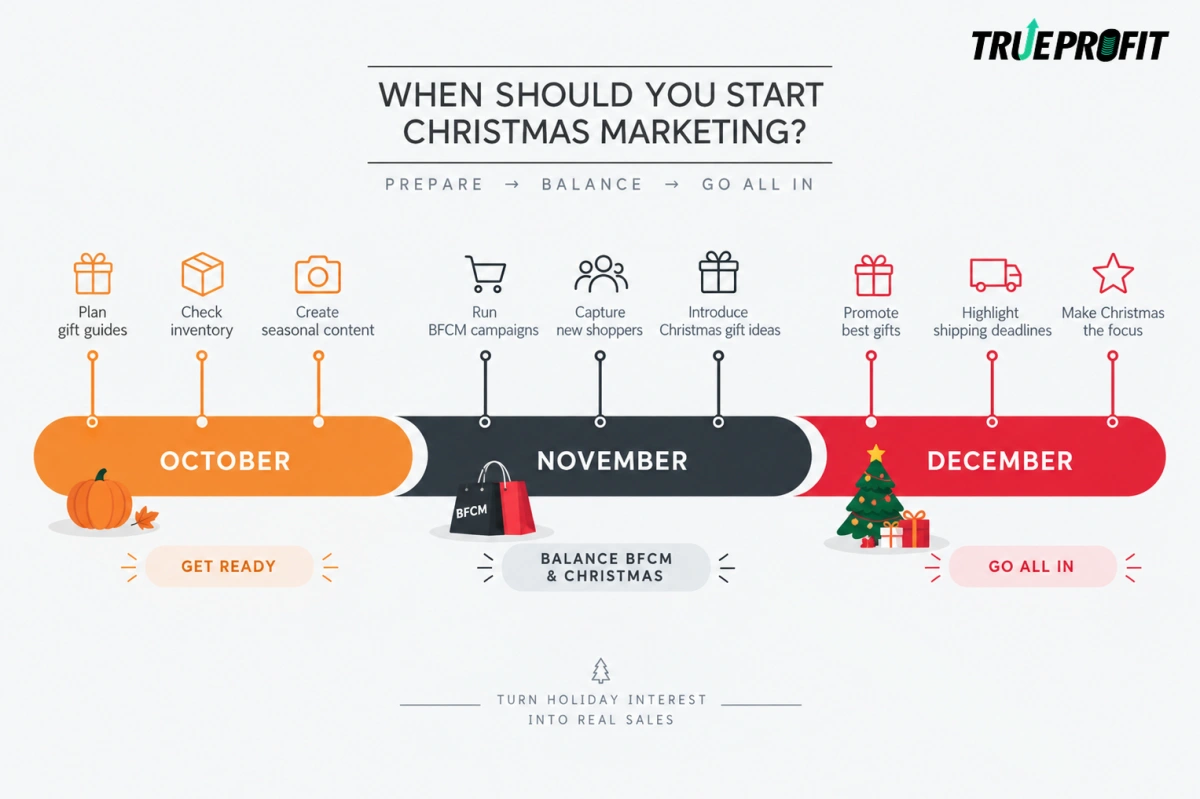
Christmas marketing doesn't have to wait until December.
But that doesn't mean you should start pushing Christmas discounts in October either. With Black Friday and Cyber Monday taking up a big part of November, most ecommerce brands already have plenty going on before the Christmas rush really kicks in.
The better approach is to prepare early and ramp up your Christmas campaign as the season gets closer.
October: Get Your Christmas Campaign Ready
October is a good time to start preparing the pieces you'll need for the holiday season.
You can start building gift guides, planning Christmas bundles, producing seasonal creatives, and testing which products make the strongest gift candidates.
This is also when I'd look at your inventory, fulfillment times, shipping options, and margins. There's not much point in finding a Christmas bestseller in November if you can't keep it in stock or make a decent margin on it.
You don't necessarily need to lead with Christmas promotions yet. The goal is to get your campaign ready before November gets busy.
November: Balance BFCM and Christmas
November is a little tricky because you've got two major shopping moments competing for attention: Black Friday/Cyber Monday and Christmas.
The good news is, you don't have to choose one over the other.
BFCM can bring new shoppers into your store, and some of those shoppers will still have Christmas shopping left to do afterward. So make sure you're capturing that audience and giving them a reason to come back.
Your Christmas gift guides, bundles, and best-seller collections can start appearing alongside your BFCM campaigns, without making every message feel like a Christmas promotion.
Then, once BFCM is over, you can shift the focus much more heavily toward Christmas.
December: Make Christmas the Priority
By December, shoppers are no longer just browsing for ideas. A lot of them are trying to get their gift shopping done.
That's when your messaging should become more direct.
Push your best giftable products, bundles, gift wrapping, free-shipping offers, reviews, and, most importantly, clear shipping deadlines.
The closer you get to Christmas, the less patience shoppers have for figuring things out themselves.
If someone has five days left to buy a gift, they're not looking for a 200-product catalog. They want to know what makes a good gift, how much it costs, and whether it will arrive on time.
That's what your December marketing should make obvious.

Top Christmas Marketing Ideas Capture More Sales For Your Store
1. Create Christmas-Themed Product Bundles
Christmas shoppers don't always know exactly what they want to buy. They know they need a gift, who they're buying for, and roughly how much they want to spend.
That's where product bundles can make a big difference.
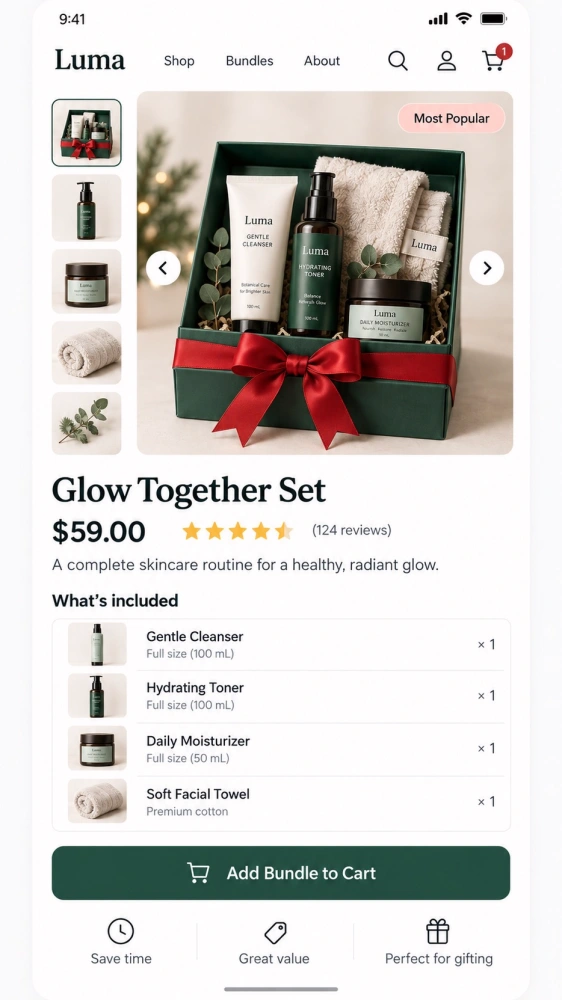
Instead of sending shoppers through your entire catalog, put a few products together around a clear gifting occasion. A skincare set, a pet-lover bundle, or a collection built around a specific price point can instantly make the buying decision easier.
And there's a nice upside for the store, too. Bundles can increase your average order value because you're giving customers a reason to buy multiple products at once. You don't even need to offer a huge discount.
2. Launch Limited-Time Christmas Offers
Instead of putting your whole store on sale, focus the promotion on products that make good gifts. This helps you create urgency without giving away too much margin.
For example, if you sell skincare, you could run a “Christmas Gift Week” where customers get 15% off selected gift sets from December 5 to 12. You could then switch to a different offer closer to Christmas, such as “Free Gift With Orders Over $75” or “Last Chance: Free Express Shipping.”
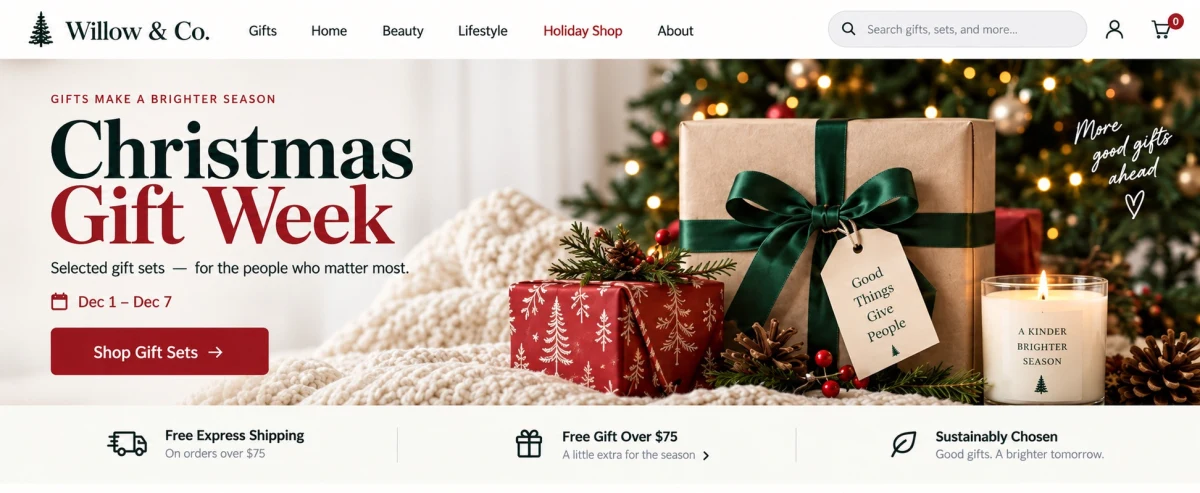
The offer doesn't have to be a massive discount. A small price reduction, free gift, bundle upgrade, or free shipping can be enough when the promotion has a clear deadline.
The other thing I'd pay attention to is how long the offer runs. If the same Christmas deal stays on your website for four weeks, shoppers have little reason to act today. A shorter promotion creates a natural reason to make the purchase before the offer disappears.
3. Build Gift Guides Around Different Shoppers
Christmas shoppers often know who they're buying for, but not what to buy. A gift guide can turn that uncertainty into a much easier decision.
Instead of making customers browse your entire catalog, organize products around clear buying occasions or budgets. For example, a fashion store could have “Gifts for Her,” “Gifts for Him,” and “Gifts Under $50.” A pet store could create “Gifts for Dog Lovers” or “Gifts for Cat Lovers.”
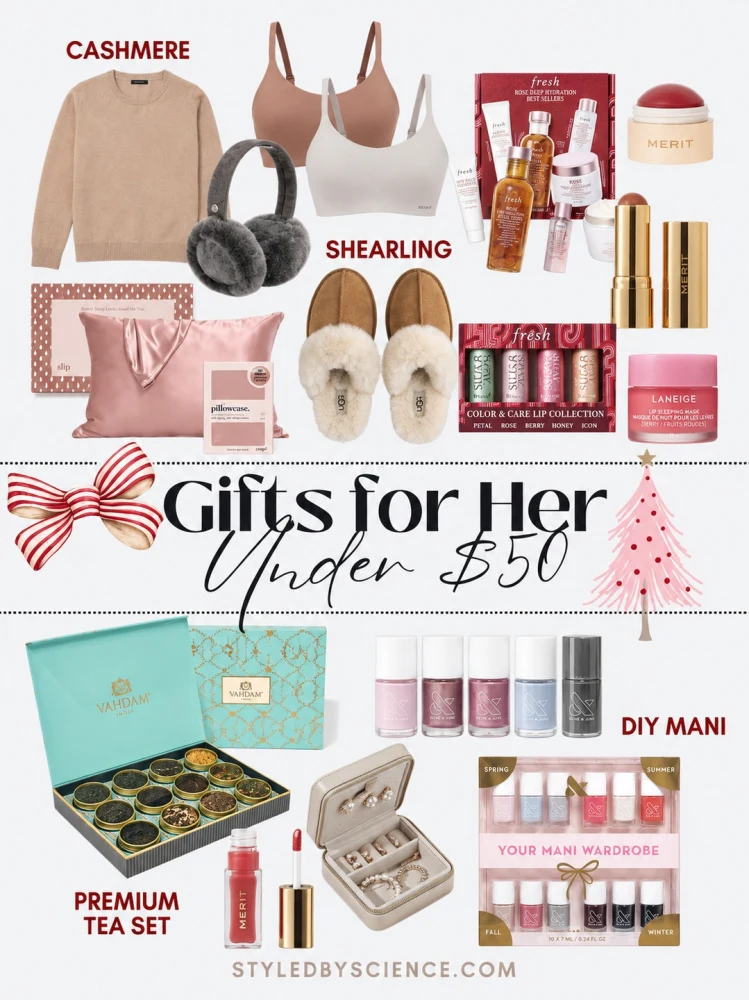
The goal is simple: help shoppers find a relevant product faster. You can also feature your best sellers, reviews, and bundles in these guides to give people more confidence before they buy.
Ideally, get these pages live before December so they can help shoppers while they're still researching and comparing gifts.
4. Add Christmas Packaging and Gift Options
Sometimes the easiest way to make a product feel more giftable is to make it ready to give.

Offer simple Christmas touches like seasonal packaging, gift wrapping, a handwritten note, or a gift message at checkout. For example, a skincare store could let customers add Christmas wrapping and a personalized note for an extra $5.
This can make the product feel more special without requiring a big discount. It also removes one more step for the shopper, especially for customers buying gifts at the last minute.
Just keep the options simple. You want gift wrapping to make the purchase easier, not turn checkout into another decision the customer has to think about.
5. Use Free Shipping as a Holiday Incentive
Shipping can easily become the reason someone abandons a Christmas purchase, especially when they're already comparing prices across different stores.
Instead of discounting the product itself, consider using free shipping as the incentive. For example, you could offer free standard shipping on orders over $50 or free shipping on selected Christmas gift bundles.
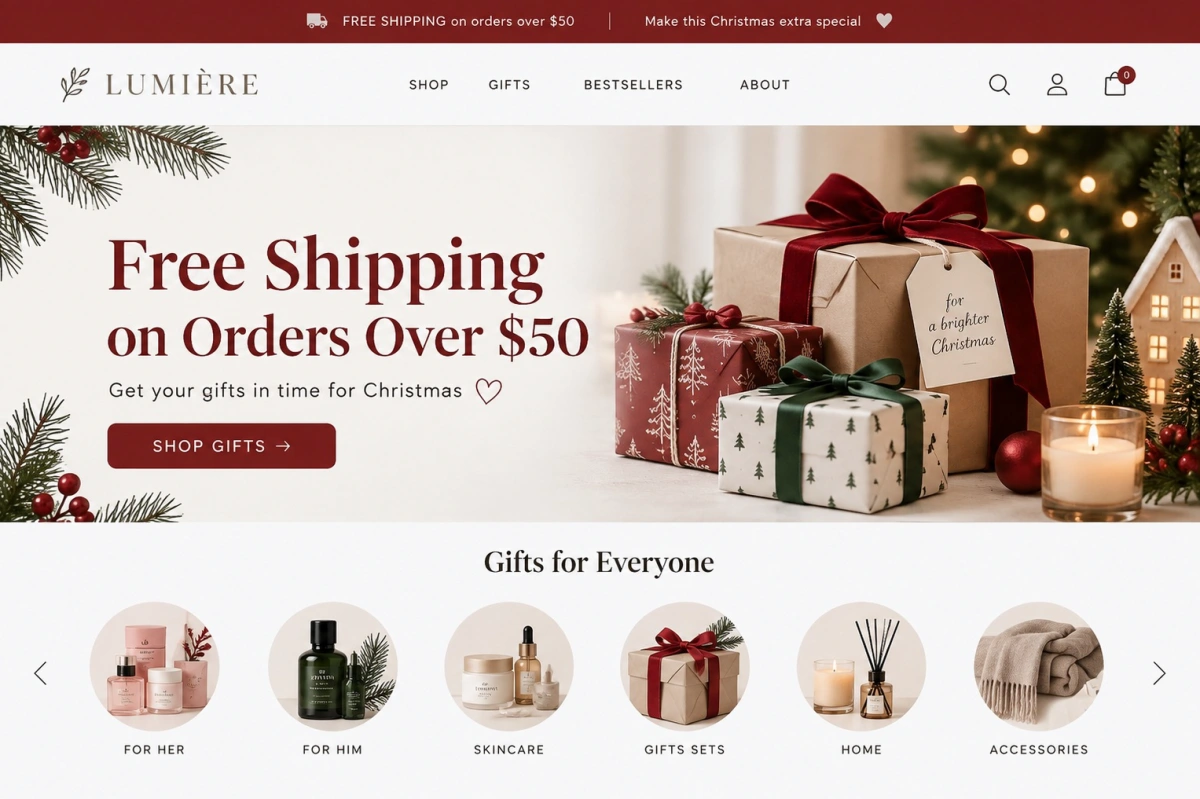
This works especially well when the customer is already close to your target order value. Someone with a $45 cart might add a $10 product just to unlock free shipping, which can increase your average order value while still making the offer feel valuable.
6. Create a Christmas Landing Page
One thing I'd definitely do during the holiday season is give your Christmas campaign its own destination.
If someone clicks your Christmas ad and lands on a generic homepage, you're making them do the work. A dedicated landing page lets you control the entire shopping journey, from gift ideas to the final purchase decision.
For example, a beauty store could build a “Christmas Gift Shop” featuring bestselling gift sets, products by price point, customer reviews, and the latest date customers can order for Christmas delivery.
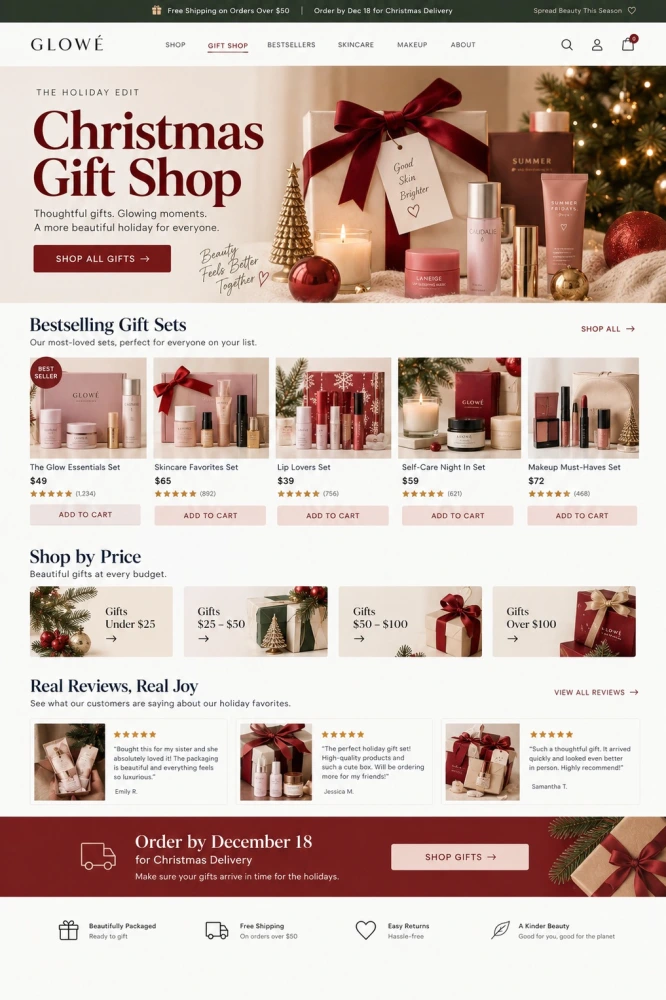
You don't need anything complicated. The page just needs to answer the questions a Christmas shopper actually cares about: Is this a good gift? Is it within my budget? And will it get there on time?
7. Run Christmas-Themed Social Media Campaigns
Christmas is a great time to make your social content feel a little more seasonal. But you don't need to turn every post into a giant “CHRISTMAS SALE” ad.
I'd focus on content that gives people a reason to imagine your products as gifts. Show how the product looks when wrapped, create gift ideas around different types of shoppers, or share a simple “3 gifts under $50” video.
The key is to make the content feel native to the platform while still giving shoppers a clear next step. If someone sees a product they like, make it easy for them to go from watching the content to checking out.
8. Partner With Micro-Influencers and Creators
You don't necessarily need a big influencer to make Christmas marketing work. Smaller creators can be a better fit when their audience already trusts their recommendations.
The important part is giving the creator enough room to make the content feel natural. A scripted product pitch can feel like an ad, while a genuine gift recommendation can feel much more useful.
You can also reuse the best-performing creator content in your own social posts or paid ads, so one collaboration doesn't have to end with a single post.
9. Use User-Generated Content for Gift Inspiration
Here's something I'd take advantage of during Christmas: let your customers do some of the selling for you.
People trust seeing a real person use or unbox a product more than another perfectly staged product photo. And during the holidays, that matters because shoppers are trying to figure out whether something actually feels gift-worthy.
A customer posts a video showing how your product looks in their Christmas setup. That's already useful content. You can turn it into a Reel, TikTok, ad, or even feature it on your Christmas landing page.
The trick is to show the gifting experience, not just the product. You're helping the next shopper think, “Yeah, I could see myself giving this to someone.”
10. Retarget Holiday Shoppers With Personalized Ads
Not everyone who visits your store during Christmas is going to buy on the first visit. Some people are comparing products, waiting for payday, or simply saving ideas for later.
That's where retargeting comes in. Instead of showing the same Christmas ad to everyone, bring shoppers back with ads that match what they already looked at.
For example, if someone viewed a $60 gift set but didn't buy it, you could retarget them with an ad featuring that same set alongside a limited-time Christmas offer or a reminder about the shipping deadline.
This is usually more useful than sending a generic “Christmas Sale” ad to someone who has already shown interest in a specific product. You're continuing the conversation instead of starting from scratch.
11. Use Email and SMS to Build Christmas Urgency
Email and SMS can do a lot of the heavy lifting during Christmas because you're reaching people who already know your brand.
You don't need to bombard people with promotions. Think about what your customer needs at each stage of the season. Maybe they're still looking for gift ideas in early December. A week later, they're ready to buy. And near Christmas, their biggest question is probably whether the order will arrive in time.
So your messages should follow that journey. You could start with “Our top Christmas gifts under $50,” then move into a limited-time offer, and eventually send a simple “Order by December 18 for Christmas delivery” reminder.
12. Highlight Shipping Cutoff Dates
When you're getting close to Christmas, delivery time can matter more than price.
Think about a shopper on December 20. They might love your product and even like your discount, but if they can't figure out when it will arrive, they're probably going to look somewhere else.
Make the deadline clear wherever customers are making a buying decision. Something as simple as “Order by December 18 to receive it by Christmas” can remove a lot of uncertainty.
And don't hide this information in a shipping policy page. If the deadline can influence whether someone buys, it belongs right next to the product and offer.
13. Create Last-Minute Gift Offers
The closer you get to Christmas, the more the shopping mindset changes. People aren't necessarily looking for the perfect product anymore. They just need to find a good gift quickly.
This is where a last-minute gift offer can work really well. Instead of promoting your entire catalog, focus on products that are easy to choose, easy to order, and can still arrive before Christmas.
For example, a beauty store could promote a “Last-Minute Gifts Under $50” collection featuring best-selling gift sets, while clearly showing the final delivery date.
14. Use Countdown Timers Carefully
Countdown timers can create urgency, but they only work when there's a real reason for the countdown.
For example, if your Christmas bundle is available at a special price until December 15, a timer showing “Offer ends in 2 days” can give shoppers a clear reason to act instead of putting the decision off.
You can also use a countdown for a real shipping deadline, such as “Order within 18 hours for Christmas delivery.” That's especially useful in the final days when shoppers are already worried about timing.
The key is not to fake the urgency. If the timer resets every day or the “last chance” offer never actually ends, shoppers will eventually stop believing it. Use countdowns for genuine deadlines, and they become a useful part of the buying experience rather than just another marketing trick.
15. Turn Christmas Buyers Into Repeat Customers
Christmas shouldn't be the end of the customer relationship. If someone buys from you in December, you've already done the hardest part: getting them to trust your store enough to make a purchase.
The next step is giving them a reason to come back after the holidays. A simple post-purchase email can thank them for the order, ask for a review, or introduce products that make sense for their next purchase.
You can also use a small January incentive, such as “10% off your next order,” to bring holiday customers back. The goal isn't to immediately push another sale. It's to turn a one-time Christmas purchase into the start of a longer customer relationship.
Christmas Marketing Strategies by Channel
Now that we've covered the individual strategies, let's look at how you can actually put them to work across your marketing channels. The approach shouldn't be exactly the same everywhere. Each channel has a different job during the Christmas season.
Christmas Social Media Marketing
Social media is where you can get people thinking about your products as Christmas gifts before they're ready to buy.
I'd focus on content that helps with the actual shopping decision, like gift ideas, product demos, customer content, unboxings, and seasonal recommendations. The goal isn't to make every post look like a Christmas ad. It's to give shoppers useful reasons to consider your products.
You can also use social media to build urgency as Christmas gets closer. Early in the season, focus more on discovery and gift inspiration. Later, shift toward promotions, best sellers, last-minute gifts, and shipping deadlines.
Christmas Email Marketing
If you already have an email list, Christmas is a good time to put it to work.
You can use email to guide shoppers through the season, starting with gift inspiration and best sellers, then moving into promotions and eventually shipping deadlines as Christmas gets closer.
There's also a lot of room for personalization. Someone who's bought from you before can get a different message from someone who's never purchased, and that's usually going to feel much more relevant.
I'd think of your Christmas email campaign less as a series of sales emails and more as a way to help people finish their holiday shopping.
Christmas Paid Advertising
Christmas is usually a competitive time for paid ads, so I'd avoid putting extra budget behind every product just because demand is higher.
Instead, focus your spend on products that already have strong demand and enough margin to support higher acquisition costs. Your creatives should also evolve with the season. Early campaigns can introduce gift ideas, while later campaigns can focus on best sellers, holiday offers, and shipping deadlines.
Retargeting is especially useful here. Someone who visited your store or viewed a product during November already has some buying intent, so you don't have to convince them from scratch.
And keep an eye on the numbers beyond revenue. A campaign can generate a lot of Christmas sales and still be a bad campaign if rising ad costs leave you with very little profit.
How to Measure Your Christmas Marketing Performance
Now let's talk about something that's just as important as running the campaign itself: knowing whether it actually worked.
So, which numbers should merchants actually prioritize checking regularly?
Revenue, orders, conversion rate, and ROAS are the usual suspects. They're familiar, easy to understand, and absolutely worth tracking. I'm not going to tell you otherwise.
But during Christmas, I'd look beyond those numbers.
There are a few metrics that tell you what's happening underneath the sales numbers. Are shoppers actually converting? Are they spending more per order? How much are you paying to acquire them? And after all those costs are taken out, how much are you actually keeping?
Here are the metrics I'd keep a close eye on:
And if I had to pick the one I'd want to see clearly at the end of the day, it's net profit.
But the problem is that tracking net profit accurately takes work. You need to pull costs from different places, make sure they're attributed to the right orders or products, keep the numbers updated, and constantly recalculate as new sales and expenses come in.
That’s where having a proper tracking system can make a big difference.
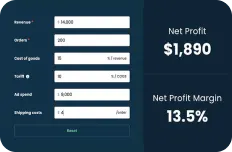
You can calculate your net profit manually in Excel, but that means constantly updating revenue, COGS, ad spend, shipping, payment fees, refunds, and other costs as your business moves. During Christmas, when order volume and ad spend can change quickly, keeping everything accurate becomes a job in itself.
What you really want is a system that keeps your profit numbers updated automatically, so you can see what's happening while the campaign is still running.
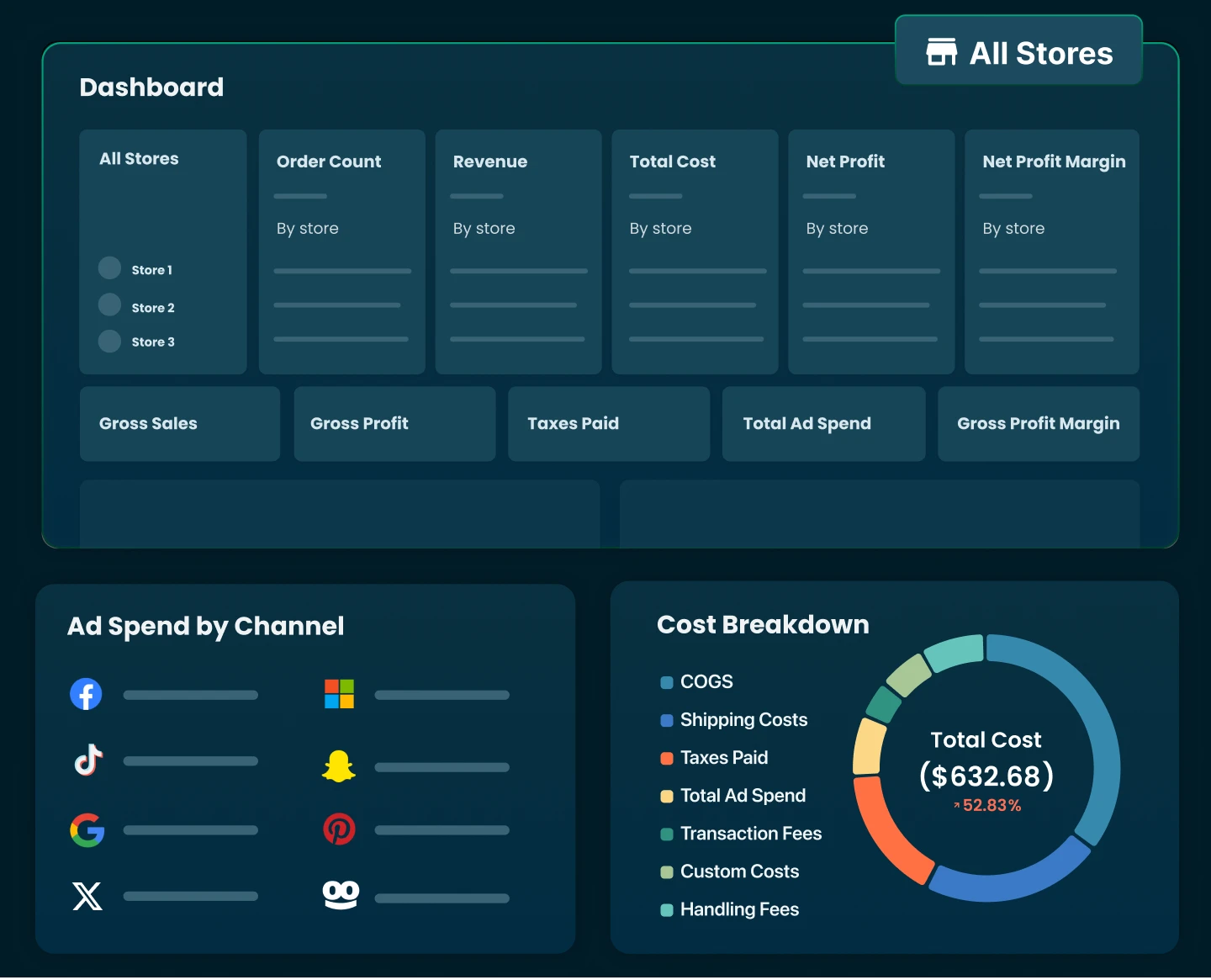
That's whereTrueProfitcomes in. It automatically tracks your revenue and total costs, including COGS, ad spend, shipping, payment fees, refunds, chargebacks, and any other expenses, giving you a real-time view of your actual net profit before, during and even after the sales season.
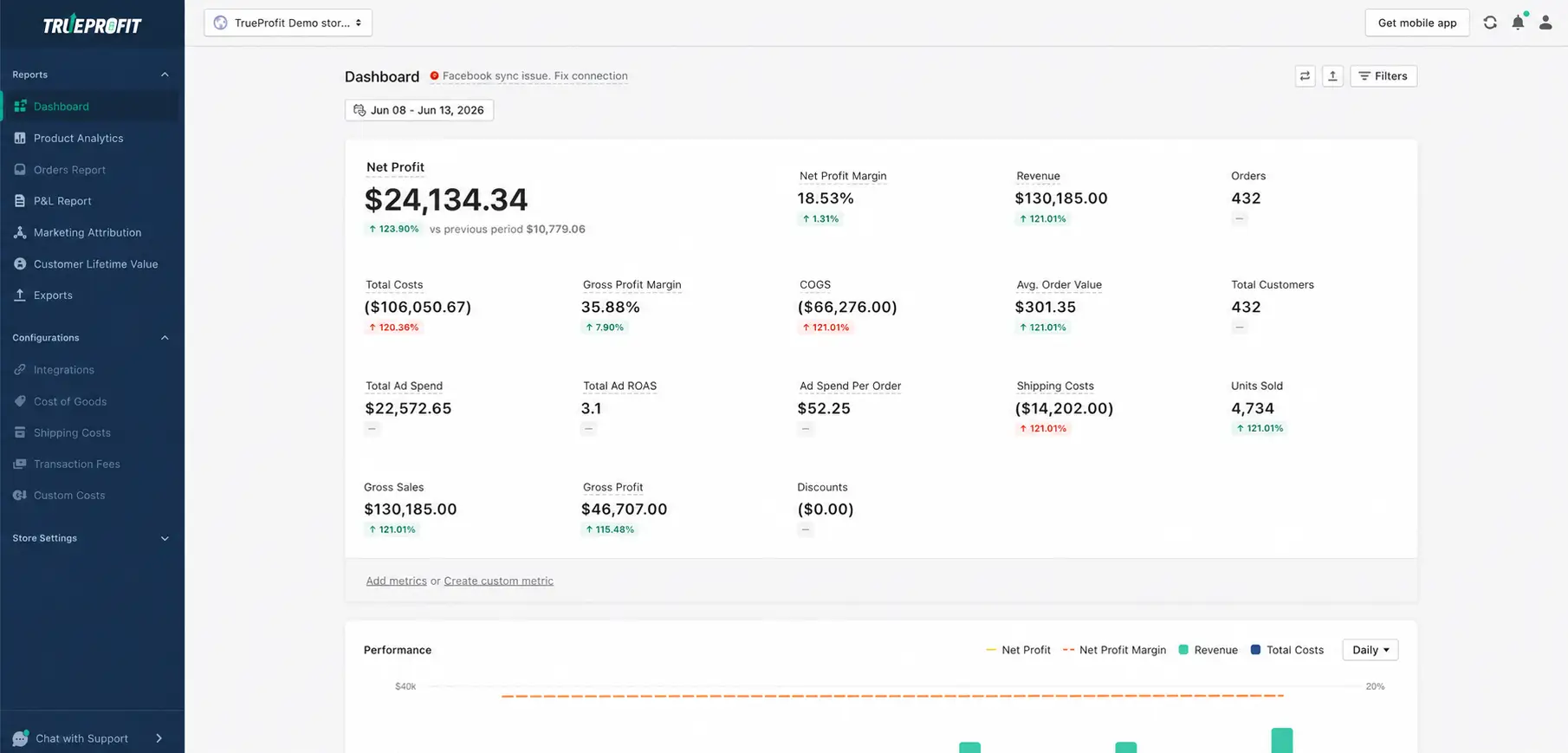
You can also break that profit down by product, order, and marketing channel. So instead of just knowing that your Christmas campaign generated more revenue, you can see which products are actually profitable, which campaigns are worth scaling, and where your margins are getting squeezed.
The goal isn't just to calculate your net profit after Christmas. It's to have an accurate number while you're still making decisions.

Final Thoughts
The best Christmas marketing doesn't necessarily mean the biggest discount or the biggest ad budget.
It's about being useful at the right moment. Help shoppers discover gift ideas early, give them compelling reasons to buy in December, and make the final purchase as easy and low-risk as possible.
Then look beyond the sales dashboard. Track what you're spending to generate those orders and, most importantly, what you're actually keeping after all the costs.
Because Christmas should give your business more than more orders.
It should give you more profitable growth.

[cta]
Irene Le is the Content Manager at TrueProfit, specializing in crafting insightful, data-driven content to help eCommerce merchants scale profitably. With over 5 years of experience in content creation and growth strategy for the eCommerce industry, she is dedicated to producing high-value, actionable content that empowers merchants to make informed financial decisions.