

The 2026 Christmas Dropshipping Playbook: Products, Strategy & Tips


Table of Contents
For most dropshippers, BFCM is the main event of Q4. Now comes the second half of the game: Christmas.
But how do you keep the momentum going when the biggest sale of the year has only just ended? Understanding what makes Christmas different from BFCM allows you to adjust your strategy and make the most of the remaining Q4 demand.
So, I won’t beat around the bush. Here’s your playbook for winning at Christmas dropshipping and finishing Q4 strong.
In this blog:
What Christmas Products Are Actually Worth Selling?
If you’re researching Christmas dropshipping products, don’t start by looking for products that look like Christmas.
Instead, start with a more useful question: Why would someone buy this for Christmas?
And here are the product categories I’d look at first.
Category 1. Giftable Products

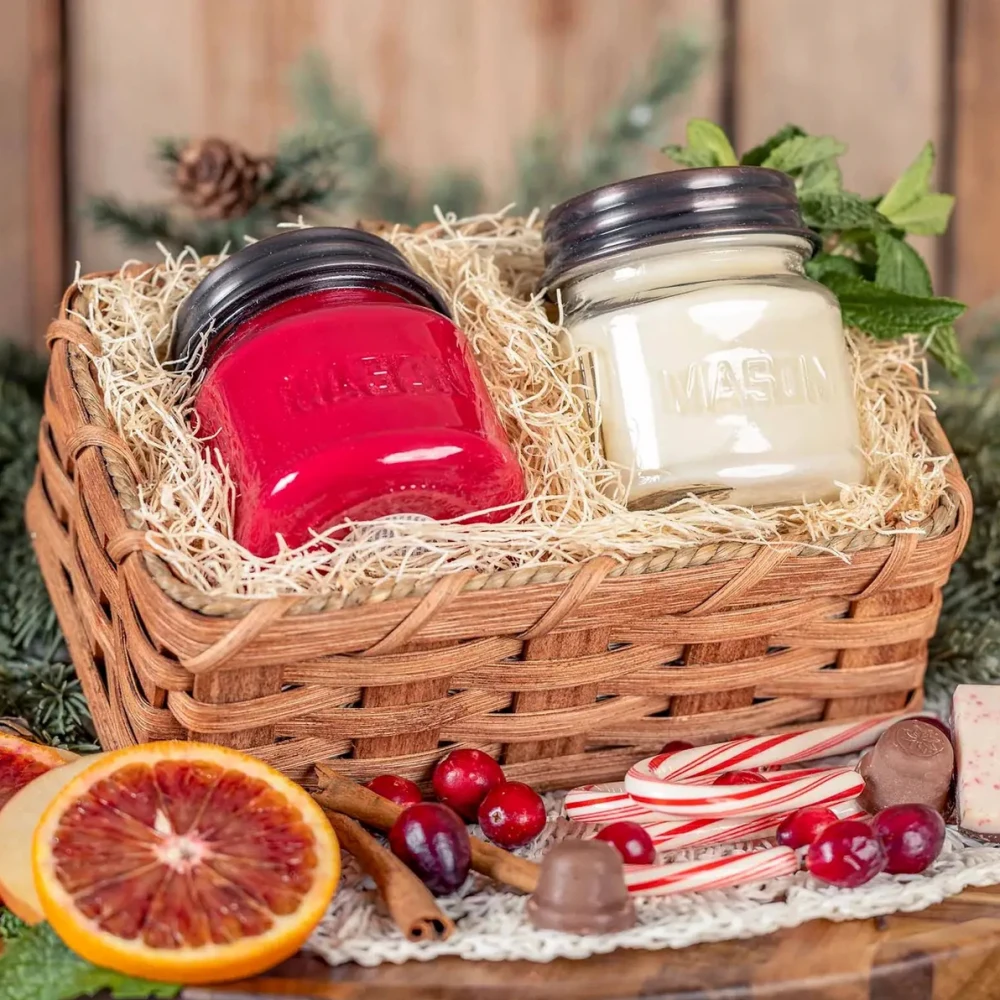
Let’s start with the most obvious one: gifts.
But I’m not talking about throwing a bunch of “gift ideas” into your store and hoping something sticks.
The better approach is to work backwards from the person receiving the gift.
Think about it. “Christmas gifts for everyone” is an incredibly broad market. But “Christmas gifts for dads who love fishing” immediately tells you who you’re selling to, what kind of products to look for, and even what your ad should say.
That’s exactly what you want.
Look for products that naturally fit a specific recipient, hobby, or personality. Products for parents, couples, grandparents, pet owners, coffee lovers, travelers, gamers, or hobbyists can all work here.
And don’t automatically chase expensive products, either. A product in the $20–$50 range can be much easier to position as an affordable Christmas gift, stocking stuffer, or add-on.
The real test is simple:
When someone sees the product, can they immediately think of a person they could buy it for?
If the answer is yes, you’re onto something.
Category 2: Christmas Decor

Instead of building a store around generic Christmas decorations, look for products that help customers create a specific look, mood, or experience at home.
For example, rather than another standard Christmas ornament, you could explore products around cozy Christmas interiors, personalized tree decor, outdoor displays, table settings, or nostalgic holiday themes.
The more specific the use case, the easier it becomes to build a strong creative force around it.
There’s also a practical advantage here: decor gives you more room to bundle products together. A table centerpiece can lead to matching napkin rings, candle holders, or other accessories. That gives you a chance to increase AOV instead of relying on one low-ticket item.
And last but not least, just keep fulfillment in mind. Bulky, fragile, or oversized decorations can quickly eat into your margin through shipping and damage claims.
For dropshipping, I’d prioritize products that are lightweight, visually appealing, easy to ship, and instantly recognizable in a 5-second video or image.
Category 3: Personalized Products

Here’s where Christmas gets interesting: people aren’t really looking for another product. They’re looking for a gift that feels like they actually put some thought into it.
That’s why personalization works so well during the holiday season. Put a family name on a blanket, turn a pet photo into a keepsake, or add a meaningful date to a piece of jewelry, and you’ve changed the product completely.
The item itself might be simple, but the reason for buying it becomes much stronger.
And that gives you a much better marketing angle, too. The personalization itself becomes part of the story, making the product feel more like a thoughtful gift than a generic purchase.
One thing I’d be careful with, though: personalization adds friction to fulfillment. More customization usually means more processing time, more room for mistakes, and less flexibility when orders start piling up.
So, make sure your supplier can handle personalization accurately and still deliver on time.
Category 4: Apparel & Accessories

Christmas apparel works because people wear it as part of the celebration, whether that’s for family photos, office parties, ugly sweater contests, or Christmas morning.
So rather than another generic Santa T-shirt, look for products that create a shared look or a fun moment. Matching pajamas, couple outfits, funny sweaters, or pet-and-owner accessories are much easier to build a Christmas angle around.
And they’re great for short-form content, too. Show the product in the moment, and shoppers can instantly picture themselves wearing it.
The trade-off is that apparel can get messy operationally. Sizes, exchanges, returns, and shipping delays can quickly eat into your margin. So for a dropshipping store, keep the design simple, the sizing straightforward, and the fulfillment reliable.
Category 5: Pet & Family Products

Now, if you want to lean into the emotional side of Christmas, this is a category I wouldn’t overlook.
People love turning Christmas into a shared moment with the people, and even the pets, they care about. That opens up products like personalized pet gifts, family keepsakes, matching items, or anything that can become part of the Christmas photo.
The good thing is, you don’t have to work too hard to explain the value. Show the family, show the pet, show the reaction, and the product makes sense.
That’s also why this category can work especially well with short-form content. You’re selling the moment around the product, not just the product itself.
Category 6: Stocking Stuffers & Small Add-Ons

If you’re already selling giftable products, don’t ignore the small-ticket stuff. Christmas shoppers are often looking for those little extras to fill a stocking, add to a gift, or simply make the order feel more complete.
This is where smaller products can punch above their weight. A $10–$20 item might not be exciting enough to build an entire store around, but it can make a very good add-on, bundle item, or quantity deal.
And from a dropshipping perspective, I’d favor products that are small, lightweight, inexpensive to ship, and easy to understand at a glance. You want something that can increase the value of an order without creating another fulfillment problem.
Category 7: Advent Calendars & Countdown Products
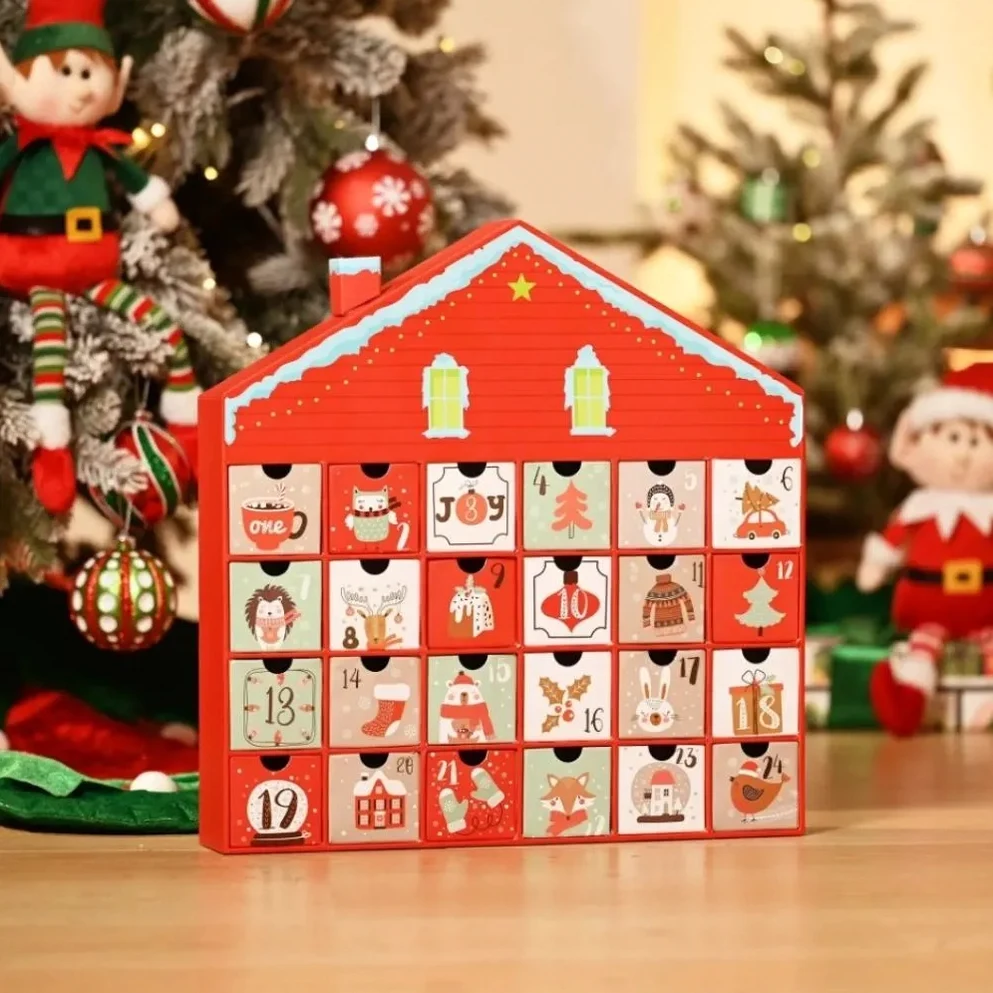
Now, this one is a little different, but I think it’s worth putting on your radar for Christmas 2026: advent calendars.
And I’m not just talking about the classic chocolate calendar anymore. The format has expanded into beauty, snacks, stationery, hobbies, kids’ products, self-care, and even pet products.
Why does that matter for dropshippers? Because you’re not really selling 24 individual products. You’re selling the experience of having something to look forward to every day.
That gives you a pretty interesting marketing angle. Instead of running another ad that says “Christmas gift idea,” you can build the whole creative around the countdown, the surprise, and the anticipation of opening the next one
But there’s one big catch: timing. Make sure your supplier can process and ship them early enough for customers to actually start their countdown on time.
Category 8: Hobby & Interest-Based Products

One of the easiest ways to make a Christmas gift feel personal is to connect it to something the recipient already loves.
That’s why I wouldn’t limit your research to products that look festive. A golfer doesn’t need a Christmas-themed golf product. A coffee lover doesn’t need a mug with Santa on it. If the product fits their hobby, you already have a reason to buy.
From a dropshipping perspective, this gives you a much clearer niche to work with. Instead of targeting everyone looking for Christmas gifts, you can go after a specific audience with a specific interest, then build your product selection and creatives around them.
And there’s a nice upside here: the Christmas angle has an expiration date, but the niche doesn’t. If you find a product that genuinely sells to golfers, gamers, travelers, or coffee lovers, you can keep marketing it long after the Christmas rush is over.

Your Roadmap to Launch a Christmas Dropshipping Store
Let’s be real, most merchants are going all-in on BFCM, and the window between BFCM and Christmas is really short. So, for Christmas 2026, October or early November is a good time to start putting the first pieces in place.
So instead of waiting until Black Friday is over, prepare your Christmas operation in the background while you’re getting your BFCM campaigns ready. Your products, fulfillment, creatives, offers, and shipping plan should already be in place before the BFCM rush begins.
Now that you know when to start, let’s look at what you should have ready before BFCM kicks off.
Phase 1 | Before BFCM: Get Christmas Ready in the Background
By early November, BFCM is probably taking up almost all your attention. You’re finalizing products, creatives, offers, and ad campaigns, so Christmas is probably the last thing you want to add to the list.
But this is exactly when you should get the Christmas essentials ready in the background.
1. Start with fulfillment. Talk to your agent now and lock in fast-line shipping options or US/EU warehouse inventory. You also need a firm shipping cutoff for Christmas orders based on your actual processing and delivery times. Don’t leave this until December when your options are already limited.
2. Next, prepare your Christmas ad assets. Get your gifting and unboxing UGC videos and static creatives ready, but don’t spend on them yet. Keep them on hand so you can launch as soon as BFCM is over.
3. Finally, prepare your Christmas offers. Set up bundles like Buy 2 Get 1 or Christmas Gift Sets on your store and keep them hidden or in draft for now.
Phase 2 | BFCM: Turn Your Traffic Into Christmas Data
BFCM is now in full swing, so keep your focus on selling. You don’t need to change your campaign strategy just because Christmas is coming.
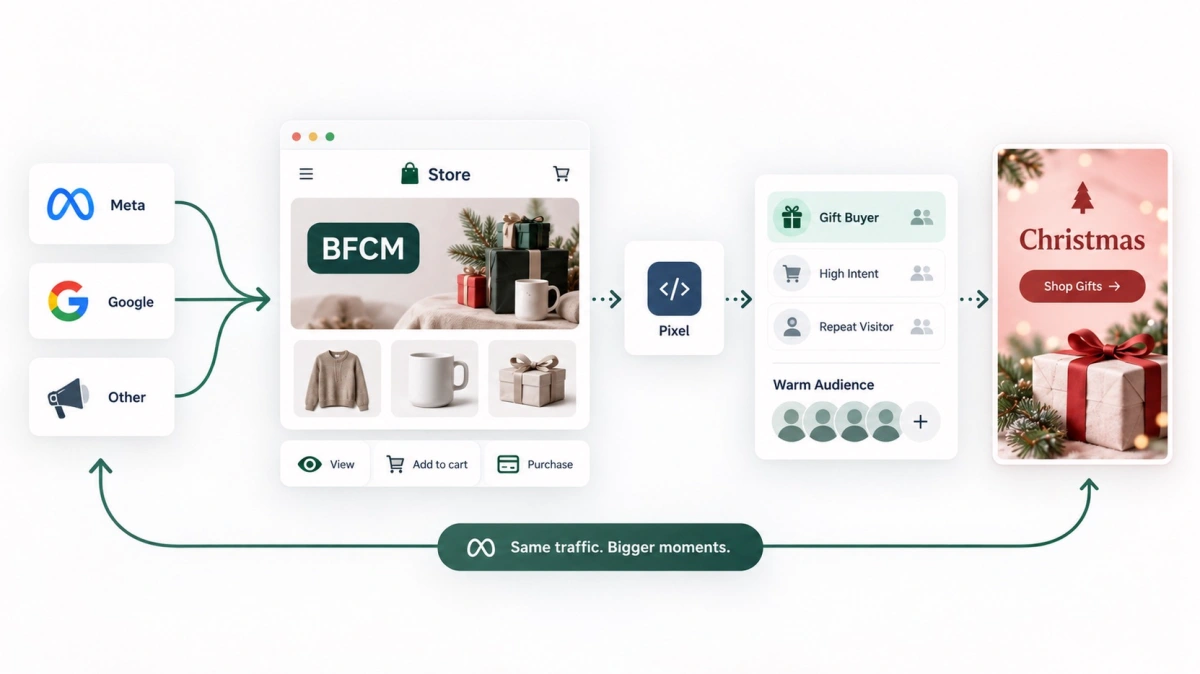
What you should do, however, is make your BFCM traffic work for you twice.
Start segmenting the customers and visitors coming through your store. If someone buys or shows strong interest in a product that could make a good Christmas gift, tag them as a potential gift buyer, such as “BFCM-Gift-Buyer.” You can then use these segments for your Christmas campaigns instead of treating every BFCM customer the same.
At the same time, let your Meta, Google, and other ad pixels keep collecting data. Every product view, add-to-cart, purchase, and engagement during BFCM can help build the warm audiences you’ll retarget once the sale ends.
You’ve already spent money bringing these shoppers to your store. Don’t let that audience disappear when BFCM is over. Use the data you’ve collected to give your Christmas campaign a warmer starting point.
Phase 3 | After Cyber Monday: Make the Christmas Pivot
This is the make-or-break week. BFCM is almost over, your ad account has just come through a heavy sales period, and you have a very short window to turn that traffic into Christmas sales.
As soon as your Cyber Monday campaign ends, make the switch on your store. Update the banner and seasonal messaging, activate the Christmas bundles you prepared earlier, and make the gifting angle obvious from the moment shoppers land on your site.
Then move your ad strategy with it. Turn off the BFCM campaigns and start pushing your Christmas offers to the warm audiences you built during BFCM, including your email/SMS lists and retargeting audiences from your pixel data.
The biggest change is your messaging. You’re no longer selling “the best deal of the year.” You’re selling “the gift they’ll love, and it needs to arrive in time.”
Your ad copy should reflect that shift: “Done hunting BFCM deals? Now it’s time to get your Christmas gifts sorted before the shipping cutoff.”
Phase 4 | Early December: Race the Shipping Cutoff, Then Pivot Fast
By early December, shipping becomes the constraint, not demand. You might still have shoppers ready to buy, but if the order arrives after Christmas, that sale can quickly turn into a refund, dispute, or unhappy customer.
Start by making the deadline impossible to miss. Add a clear countdown or shipping notice to your store, telling shoppers the latest date they should order to receive their gifts before Christmas. Just make sure the date matches your actual fulfillment and carrier timelines.
Once your cutoff passes, stop selling products you can no longer reliably deliver in time. If you’re still running ads for products shipping from China, you’re taking a risk for every order that comes in.
Instead, shift your budget toward E-Gift Cards and products available from local warehouses with 2–3 day delivery. These give you a way to keep capturing last-minute shoppers without promising a delivery timeline you can’t meet.
At this stage, don’t chase every possible sale. Protect the customer experience and sell what you can actually deliver.
BFCM → Christmas: The Merchant Pivot at a Glance
So, what actually changes when you move from BFCM into Christmas? Here’s the shift you need to make across your offers, audiences, messaging, and operations.
Factor | BFCM: November | Christmas: Late November → Early December |
|---|---|---|
Primary goal | Maximize volume, move inventory, push deep discounts | Increase AOV, lean into gifting, protect margin |
Ad audience | Cold traffic: Go broad and acquire deal-seeking shoppers | Warm traffic: Retarget BFCM buyers, email/SMS lists, and pixel audiences |
Core message | “Discount / Clearance / Best Price” | “The Perfect Gift / Get It in Time for Christmas” |
Operational risk | High order volume and fulfillment delays of a few days may be manageable | Late delivery can turn a sale into a refund, dispute, or unhappy customer |
6 Tips to Win Christmas 2026 For Dropshipper
1. Double Down on Your Christmas Winners
Don’t spend the short Christmas window testing a completely new product lineup. Look at what already worked during BFCM and identify the products that can be repositioned as Christmas gifts. Then build creatives around who the product is for, why it makes a good gift, and the moment of giving or unboxing it.
You can also test Christmas bundles, quantity offers, or gift-ready packaging to increase AOV. Just keep tracking the actual profit behind those sales. A product that looks great on revenue can still lose money once you factor in ad spend, COGS, shipping, and discounts.
2. Create Urgency Without Over-Discounting
As Christmas gets closer, urgency becomes a stronger selling point than another big discount. Use clear delivery messaging, countdowns, and “last chance” creatives to remind shoppers that they have a limited window to get their gifts in time.
You don’t need to keep cutting your price to create urgency. A clear Christmas shipping deadline, a limited-time bundle, or a gift-focused offer can give shoppers a reason to act now while helping you protect your margin.
3. Make Every Product Feel Gift-Worthy
You don’t always need a Christmas-themed product to sell more during the holidays. Sometimes, changing how you position the product is enough. Show who it’s for, what problem it solves, and why it would make a thoughtful gift.
Update your product pages and creatives with gift-focused messaging, real-life use cases, and clear recipient ideas. The easier it is for shoppers to picture giving the product to someone they care about, the easier it becomes to justify the purchase.
4. Build Offers Around the Gift, Not Just the Product
Christmas shoppers are often buying for someone else, so make the buying decision as easy as possible. Instead of simply offering a product at a discount, package it around the gifting occasion with bundles, complementary products, or simple gift sets.
For example, “Gift Set for Dad” is much easier to understand than asking shoppers to choose several individual products themselves. It also gives you more room to increase AOV without relying on deeper discounts.
5. Keep Your Shipping Promise Front and Center
As I’ve mentioned throughout this guide, shipping is one of the biggest risks you need to manage during the Christmas season.
During Christmas, delivery time is part of the offer. Make your shipping estimates and cutoff dates easy to find across your product pages, cart, and ads, so shoppers know exactly what they can expect before they place an order.
As the deadline gets closer, shift your ads toward products with faster fulfillment or local inventory. Don’t keep pushing a product just because it converts well if you can no longer get it to the customer before Christmas.
6. Track the Right Metrics, the Right Way
This is one I wouldn’t skip. Christmas and holiday campaigns can make your dashboard look busier and more exciting than ever.
And there are two things I want to remind you of.
First, don’t let manual spreadsheets become your bottleneck. The Christmas selling window is short, so you don’t really have the luxury of spending hours every day pulling data from your ad platforms, Shopify, payment providers, and fulfillment records.
And honestly, manual tracking is probably the last thing you want to deal with during the busiest part of Q4. Your data can be outdated by the time you finish updating it, and one missing cost or reporting error can make a profitable campaign look better than it really is.
Second, you don’t need to watch every metric at once. For a Christmas campaign, I’d focus on the numbers that tell you whether you’re actually making money:
- Net profit
- Net profit margin
- Profit per order
- AOV, CAC, and product-level profit
Revenue and ROAS can tell you that a campaign is moving, but they don’t necessarily tell you whether it’s worth scaling. Your net profit does.
So what if one tool could kill both problems at once: wipe out the manual tracking and hand you the only numbers that move the needle in real time?
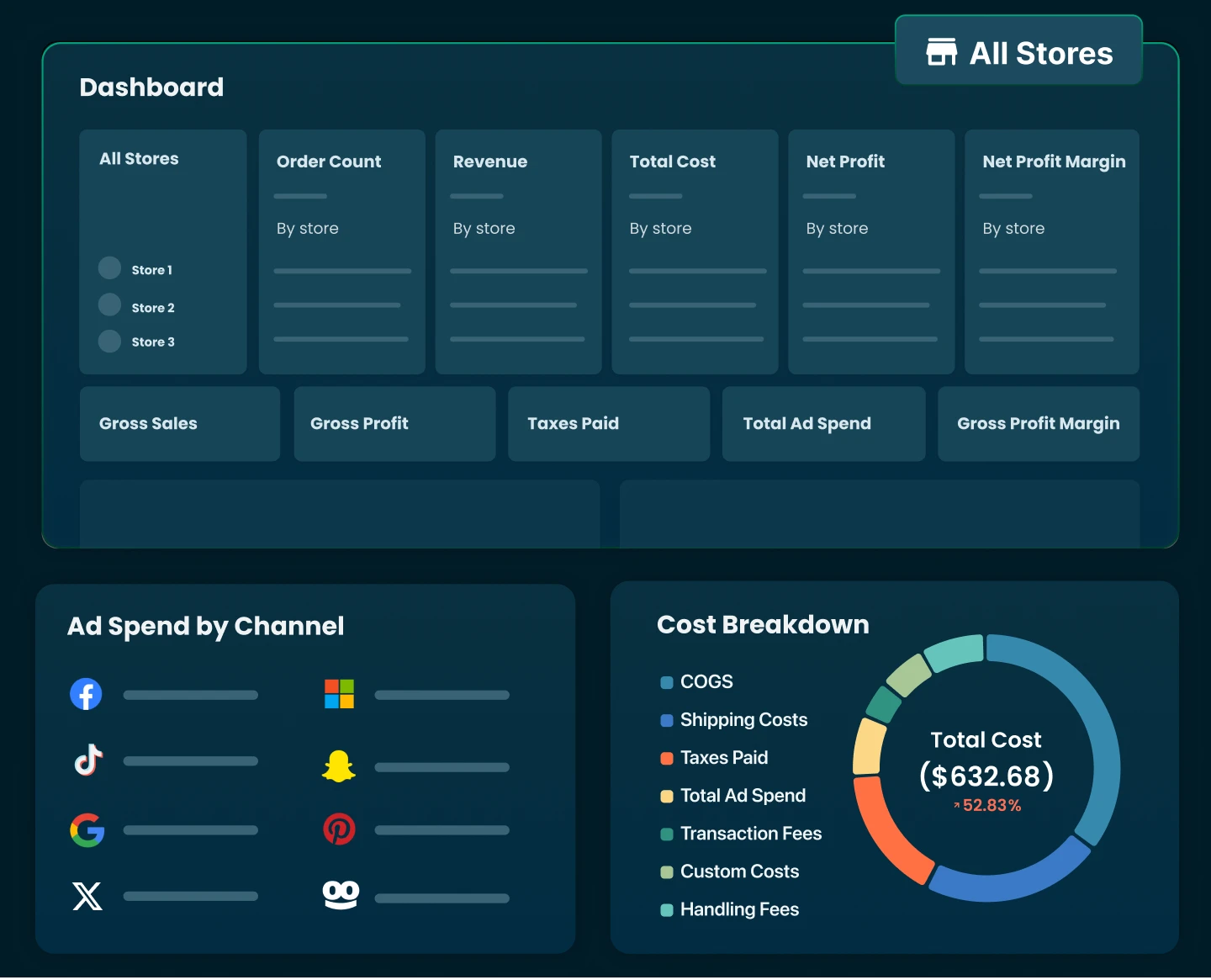
That's exactly what TrueProfit does. As the #1 net profit analytics platform for Shopify merchants, it pulls all your costs into one place, from the obvious ones like COGS and ad spend to the hidden costs that are easy to overlook, such as shipping, transaction fees, refunds, and chargebacks.
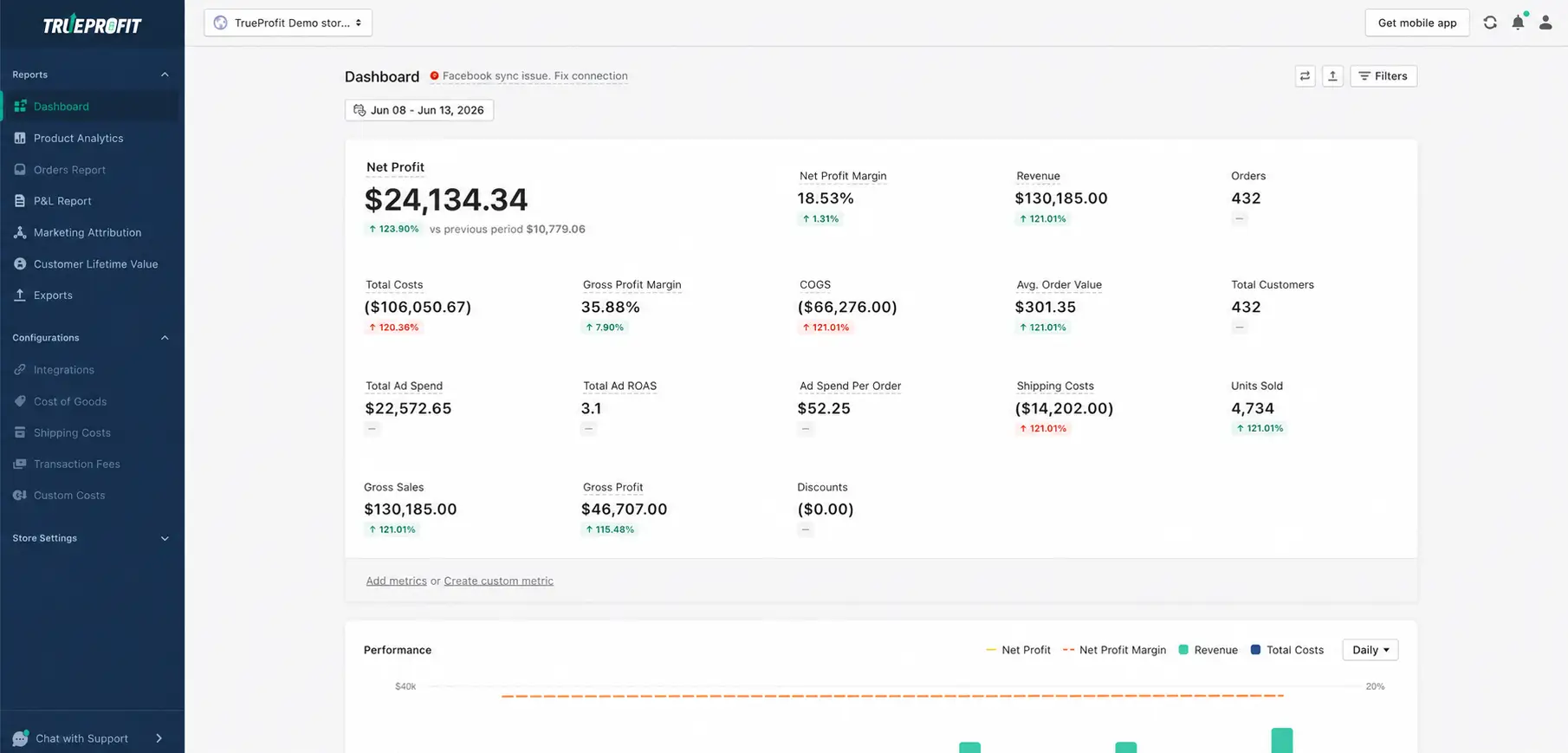
So instead of piecing together data from different platforms, you can see:
- Real-time net profit & net profit margin: see how much your store is actually making after all costs.
- Product-level profit analytics: identify which products are generating profit and which ones are quietly eating into your margins.
- Profit-based ad attribution: connect your marketing spend to the profit it actually generates, not just revenue or ROAS.
- Full cost tracking: automatically accounts for COGS, ad spend, shipping fees, transaction fees, refunds, chargebacks, and other operating costs.
- Real-time profit dashboard: monitor your store's financial performance without manually pulling data from multiple sources.
- P&L reporting: get a clearer view of your store's revenue, costs, and profitability in one place.
- Customer Lifetime Value (CLV): understand how much customers are actually worth beyond their first purchase.
- Custom metrics: build the metrics and views that matter most to your business.
In other words, you don't have to spend your Christmas campaign switching between spreadsheets, Shopify, and ad dashboards just to figure out whether you're actually profitable. TrueProfit gives you that picture in one place, so you can make faster calls on what to scale, what to cut, and where your Christmas budget is really going.
How to Handle Christmas Shipping Without Losing Customers
And finally, before we wrap up this guide, I want to leave you with 3 Christmas shipping tips that every dropshipper should have in their back pocket.
1. Let Your Shipping Cutoff Guide Your Ad Spend
Your shipping cutoff isn't just a date you put on your store. It should also influence where your ad budget goes.
As the deadline approaches, shift more spend toward products with faster fulfillment and reliable delivery. Once a product can no longer realistically arrive before Christmas, don't let a good ROAS convince you to keep scaling it.
2. Know When to Pivot, Not Just When to Stop
Once your normal shipping window closes, don't assume Christmas sales are over. Change what you're selling and how you're selling it.
Shift toward local-warehouse products, faster fulfillment options, or e-gift cards for last-minute shoppers. The goal isn't to keep forcing the same product until December 25. It's to keep capturing demand with an offer you can still deliver.
3. Don't Sacrifice Profit to Chase Last-Minute Orders
The final days before Christmas can create a strong sense of urgency, but not every order is worth taking.
If an expensive shipping option wipes out your margin or the delivery timeline is too risky, it may be better to let that sale go. Protect your profit and customer experience instead of chasing revenue at any cost.

Final Thoughts
Christmas can be one of the biggest opportunities of Q4, but the window to get it right is brutally short. There’s no room for slow testing, messy fulfillment, or chasing revenue without knowing what’s left in your pocket.
The winning formula is pretty simple: find products people want to gift, build on your BFCM momentum, move fast while demand is high, and know when to pivot before shipping becomes a problem.

Lila Le is the Marketing Manager at TrueProfit, with a deep understanding of the Shopify ecosystem and a proven track record in dropshipping. She combines hands-on selling experience with marketing expertise to help Shopify merchants scale smarter, through clear positioning, profit-first strategies, and high-converting campaigns.