


From Dropshipping to Multi-Million Success: The Icon Amsterdam Story
Scaling past six figures is every dropshipper's dream, but it's definitely not every dropshipper's reality.
Of all the brands that have supposedly cracked it, one name keeps popping up: Icon Amsterdam, a Dutch menswear brand that's become hard to ignore.
The founder claims they hit $30M in 2024. Naturally, some industry insiders question that, especially when you factor in his flex-heavy lifestyle and high-ticket mentorship program.
But when I look at the money and effort they're pouring into scaling, I'm convinced they’re making serious money with the brand, even if the exact number is debatable.
Controversies aside, let's break down the solid tactics they use.
#1. Strategic Product Positioning
I'm a big believer that product and product positioning decide 90% of the success of any business, especially in dropshipping.
If you screw that up, nothing else will save you.
Icon Amsterdam gets this. Their play is simple:
They mirror winning designs from high-end fashion brands (in fashion, copyright is basically non-existent) and sell them at affordable prices.
Basically: they sell clothes to guys who want to look expensive without dropping $500 on a single piece.
And you know the rule: customers buy when the value they feel they get is higher than the price they pay.
#2. High-Caliber Models for Visual Credibility
This is clearly not a move most dropshipping brands have the guts (or budget) to make, but it’s a huge part of why Icon Amsterdam hits so hard.
They put their clothes on high-caliber names: Alex Bowen (Love Island UK, 1.5M+ followers), Rico Verhoeven (Glory heavyweight champion), Instagram model Max Wyatt, etc.
These are faces people already associate with status & looks. The moment those guys wear Icon Amsterdam, the brand borrows that status. That’s instant luxury association.
Plus, these people don’t just show up in paid shoots.
They also post the brand organically, which makes Icon Amsterdam look even more legit in the eyes of their followers.
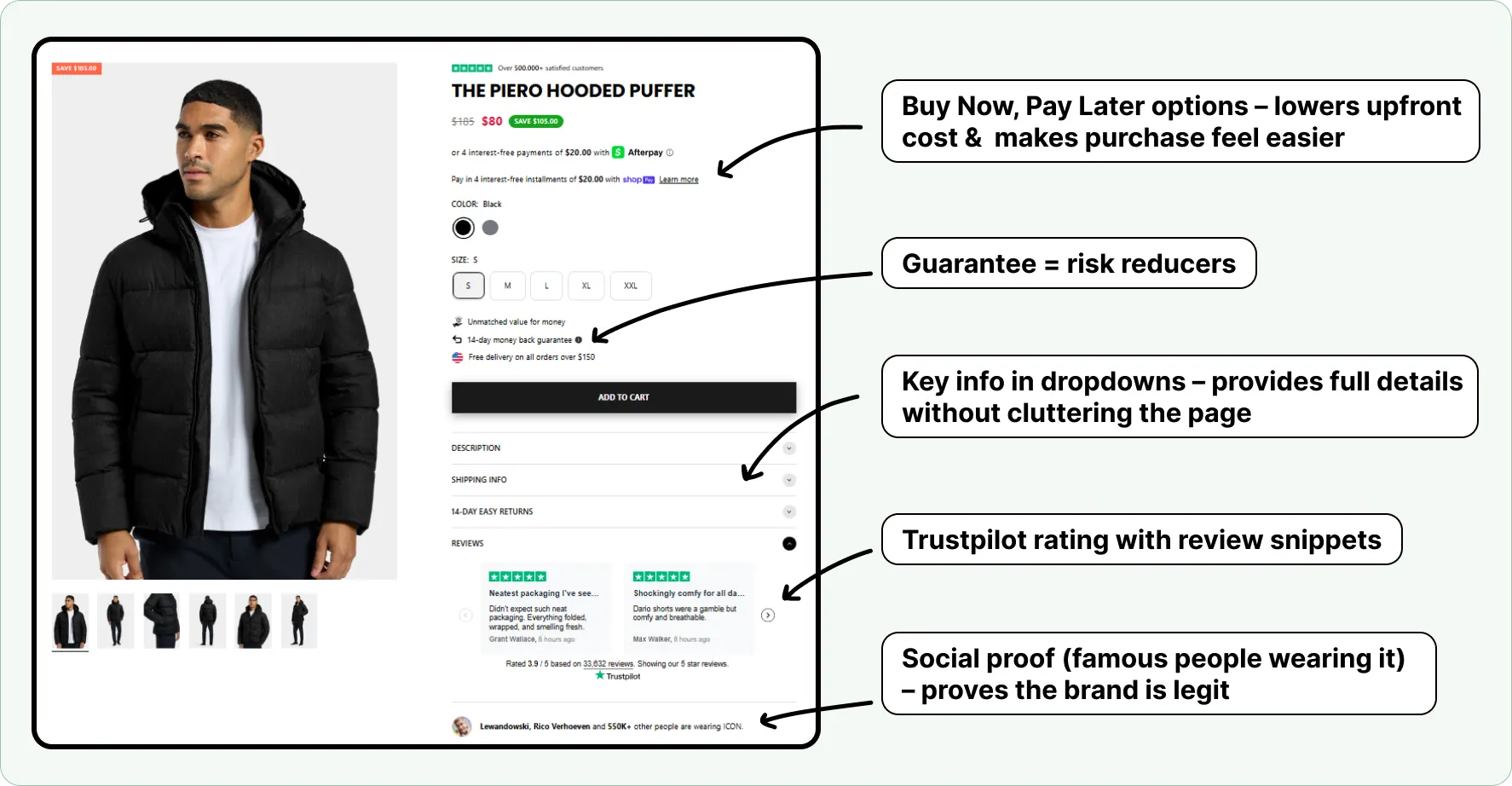
#3. High-Converting Product Page
To be honest, there’s nothing revolutionary about their product page.
But what I like is how everything you need to make a decision is packed into the top half of the page.
For niches like clothing or jewelry, that is usually enough.
Other than their pretty low review rating that might make some people raise an eyebrow, the rest of the page is clean and clearly built to convert:

#4. High-Volume Creative Testing
Icon Amsterdam does not play small with ads. They test a 40+ of new creatives every week.
At the time I am writing this (one week before Black Friday), they are running around 520 ads on Meta.
You don’t need to run hundreds of ads like they do. But you do need to aim for creative diversity, especially with Meta’s Andromeda update in play.
#5. Product Optimization at Every Level
Just like any business that wants to survive long term and actually keep money, Icon Amsterdam has to care about profit at the end.
Their prices are not super high, so they have to be strategic. Two of the biggest levers they use:
- Low fulfillment costs through 3PL: Third-party logistics help keep per-order costs lean by holding bulk stock in one place, cutting warehouse overhead and avoiding duplicate shipping legs. That means more margin left on each product sold.
- Smart tactics to boost AOV: Instead of offering free shipping on every order, they only offer it on orders over $150. That pushes customers to add an extra item to "unlock" free shipping, which directly increases profit per order. On top of that, they use simple cart upsells like "People also bought" to squeeze in one more product per order.
The Bottom Line
While the legitimacy of their revenue claim is up for debate, the value of their tactics is not.
Icon Amsterdam might be overstating what they make, but the way they market, structure their store, and think about the business is still something you can plug into your own brand.

Content Marketer at TrueProfit & eCommerce Operator
I’m part of the TrueProfit content team, but before that, I’m an eCom nerd with 3 years of hands-on experience. I’ve done a bit of everything, but running high-performing ads and making sense of the numbers? That’s my thing. If it’s written here, it’s because I’ve lived it.
 Top Reads