


Once BFCM Is Over, Here’s How To Profit After
Once BFCM is over, the hype dies and the only question that really matters is: how much did you actually keep?
You pushed discounts, ramped ad spend, watched orders spike. Nice. But revenue screenshots are vanity if your profit got killed in the process.
A lot of brands treat BFCM as the finish line. In reality, it is the starting point for everything that decides your profit for the rest of Q4.
This post is not about how to crush BFCM, it is about how to profit after it.
Tactic 1: Analyze Your BFCM Performance
BFCM just handed you a massive wave of data. Hidden in that wave are the answers to why things worked (or didn't).
The brands that win December are the ones who actually slow down for a minute and read the signals.
When you dig into your BFCM data, there are 2 questions you have to answer:
1) Who did you acquire?
BFCM attracts all types: deal hunters, impulse buyers, and future VIPs. If you treat them all the same, you'll waste time and money.
Knowing who you really brought in helps you decide who deserves attention after that.
And you do not measure that on the weekend itself, you measure it 30–60 days later, when you can see who actually sticks around.
2) How profitable were you?
BFCM is not a normal weekend. You stack discounts, you fight in expensive auctions, you push way more volume than usual.
That combo can make your sales and ROAS look amazing while your profit quietly gets smoked.
So instead of asking "how much did we sell?", the better questions are:
- Were we profitable while the sale was live?
- And were we still profitable after, once all costs, refunds, and fees landed?
You get that answer in 3 layers.
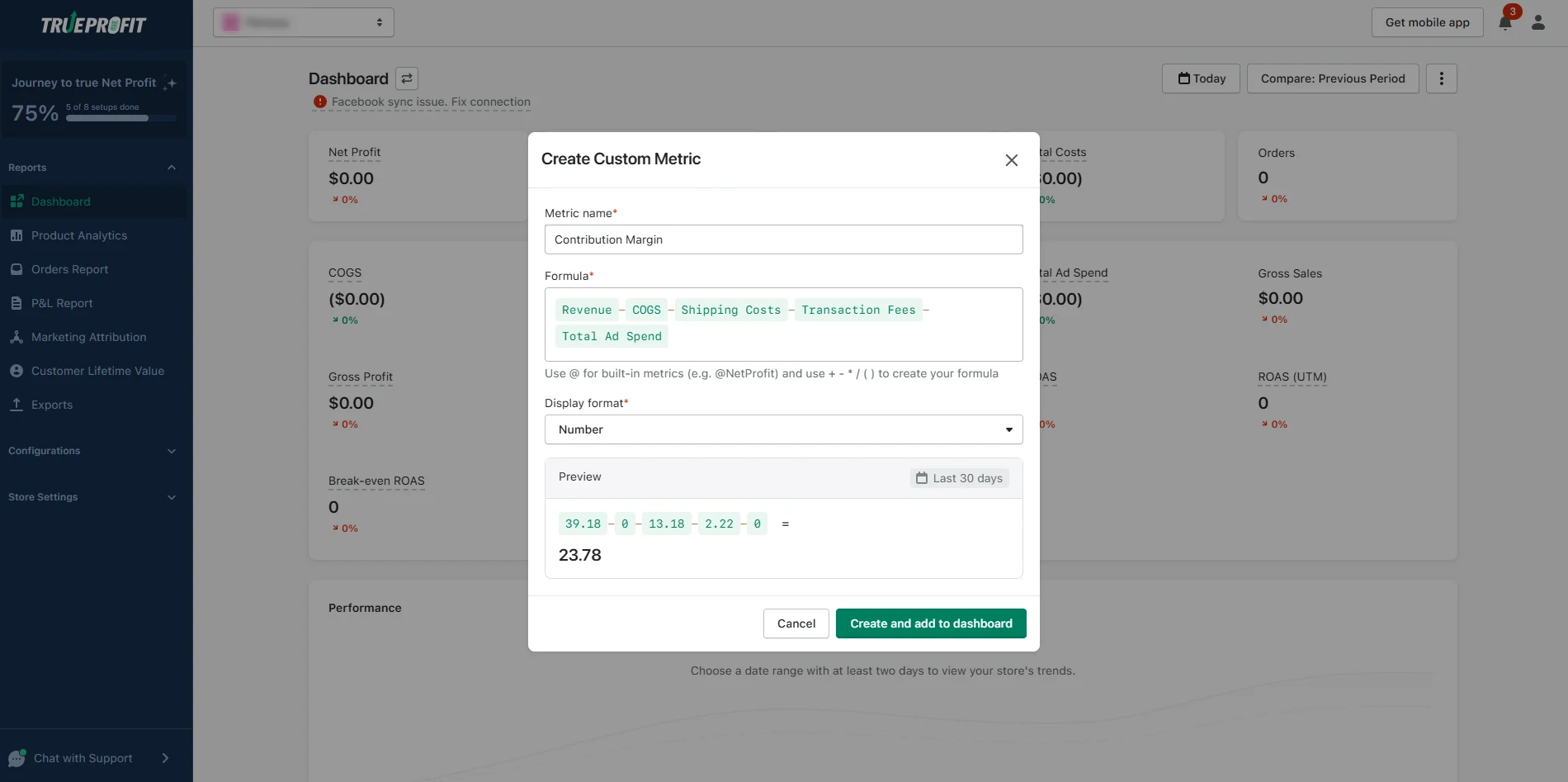
Layer #1. Check your Contribution Margin
First, see how much is left after variable costs.
Basic Formula: Contribution Margin = Revenue − Variable Costs
This tells you very simply: "For each dollar that came in, how much actually helped cover fixed costs and profit?"
In TrueProfit, you can build Contribution Margin (or any custom metric you want) directly from existing data.

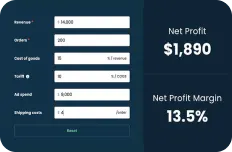
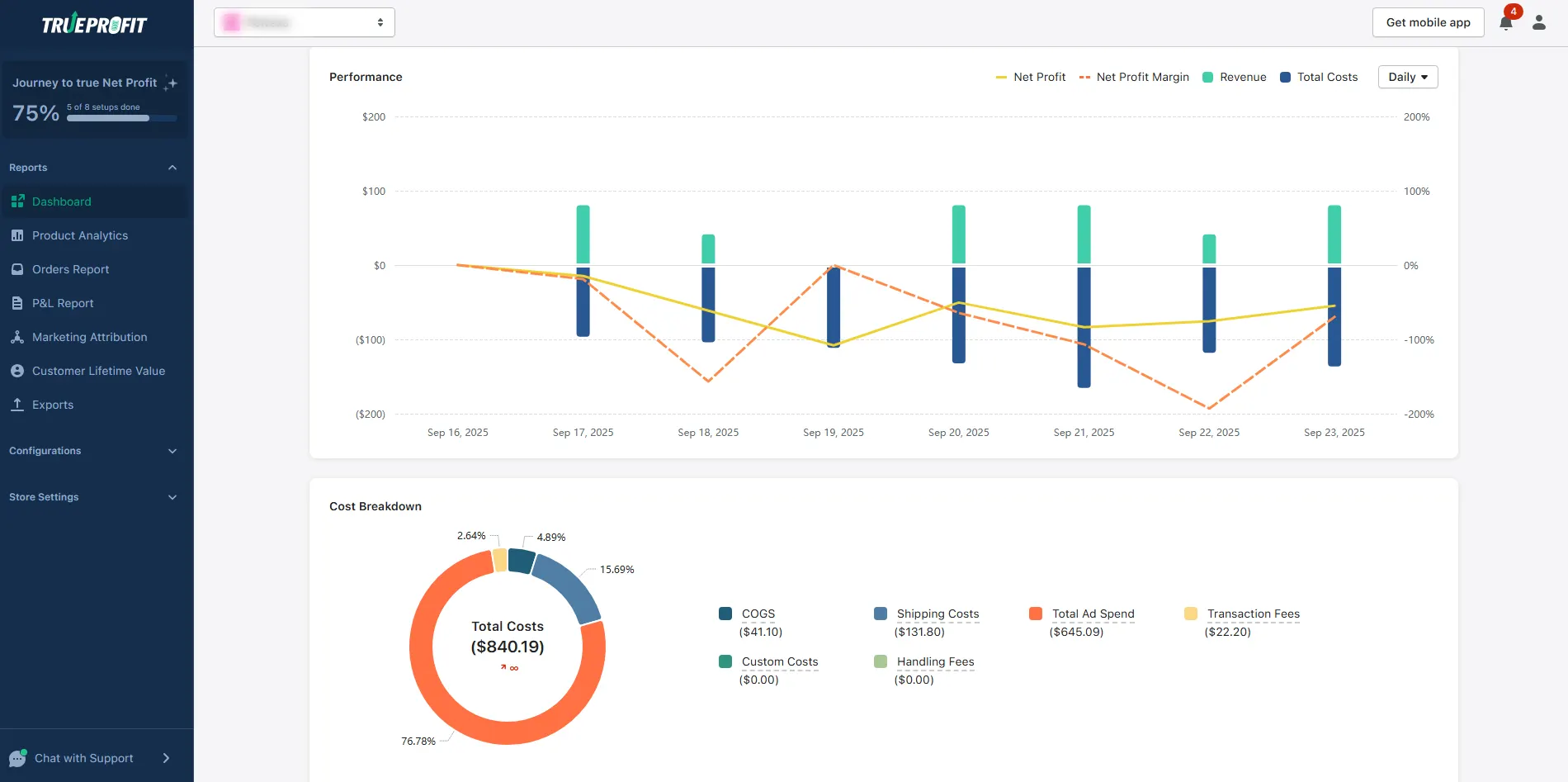
Layer #2. Check your Net Profit
This one matters most, because at the end of the day, you care about one thing: how much money is left after all costs.
TrueProfit is built to make that number crystal clear:
- You can track any type of cost your business has, even the tricky ones like COGS or ad spend.
- You can see your net profit exactly how you want it: as a single number, as a trend, over any time range.
Layer #3. See What Actually Drove (or Killed) Profit
Once you know the total profit, the next question is: where did it come from?
The answer tells you exactly what to scale, what to fix, and what to kill.
In TrueProfit, you can:
- Spot your most profitable products with Product Analytics.
- Spot the most profitable ad channels (down to the ad level) with Marketing Attribution.
Tactic 2: Optimize Every Channel Post-BFCM
The work you do on each channel after BFCM is just as important as everything you set up before it.
Social Ads
Most brands sharply cut ad spend on Meta/TikTok right after BFCM. But you can play it differently.
When the sale ends, CPMs start to drop. And you are sitting on the best data you will have all year.
Instead of going dark immediately, pivot how you buy traffic:
- Build high-intent segments from recent buyers, high add-to-carts, and engaged video viewers.
- Switch your ads from discount messaging to product value.
The goal is not to keep BFCM spend levels, it is to stabilize the learning.
In short: When you cut back spend, do it gradually. That way, you ride cheaper post-sale traffic and turn a short spike into a stronger, more profitable baseline for Q1.
Email/SMS
For email and SMS, your post-purchase flow is priority number one after BFCM. You just acquired a ton of customers. This is where you either keep them or lose them.
Beyond the upsell emails, there are 2 emails you absolutely want dialed in:
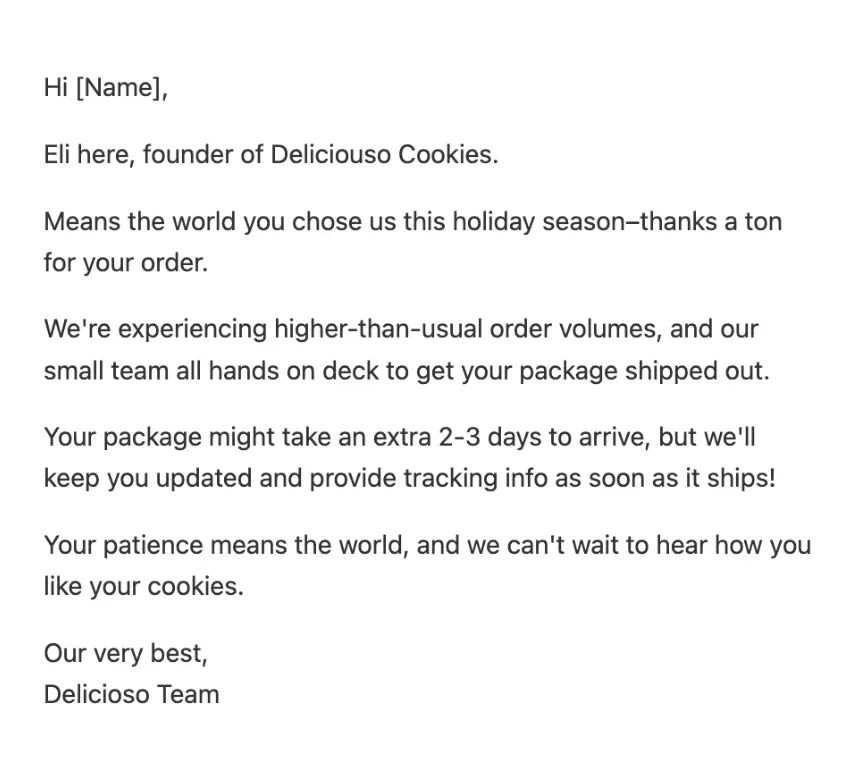
Email #1: Set expectations about shipping
Everyone's fulfillment gets slammed after BFCM.
Sending a simple email that shares the estimated shipping date and asks for a bit of patience is far better than saying nothing and waiting for support tickets to pile up.
Customers are much more forgiving when they feel informed.
Email #2: Ask for feedback / reviews
Once orders have arrived, follow up with a short check-in asking how everything went and inviting them to share a review.
This is an easy way to obtain fresh social proof for your next campaigns and to catch any issues early.
On-Site / CRO
Go back through your heatmaps, session replays, and analytics to see how people actually behaved. Key things to look for:
- Where scroll depth drops sharply, especially on mobile
- Which CTAs got clicked and which were ignored
- Where checkout friction (forms, fields, extra steps) killed conversions
Tactic 3: Turn BFCM Buyers Into Repeat Customers
If I had to sum up what you should do with BFCM buyers, it comes down to 2 ultimate goals:
- Get them to a second purchase ASAP: If a BFCM customer does not buy again within 45 days, their churn rate can hit around 80%.
- Build an actual relationship: You want them to see you as a brand they come back to.
A simple email/SMS post-purchase flow can do a lot of the work here. You can tweak timing & messaging based on your data, but a solid structure is:
- Day 1: Order confirmation with clear shipping timelines. If delays are likely, be upfront.
- Day 3: Product usage guide, tutorial, or unboxing tips. Make it simple and exciting. Get them hyped to actually use what they bought.
- Day 7: Share customer stories or strong reviews to reinforce their decision. It’s hard to regret a purchase everyone else seems to love.
- Day 10: Send personalized bundling recommendations. "You bought X, you might like Y."
- Day 14: Give a small, targeted incentive to nudge another purchase while the experience is still fresh.
On top of that, you can stack the evergreen retention plays:
- Introduce or level up a loyalty program: Make it clear what they earn and why coming back is better than shopping around.
- Build a small community space: A Facebook group or Discord for your most engaged buyers, where they get tips, sneak peeks, early access, or even chances to help shape new products.
- Celebrate milestones: Mark their third purchase, their one-year mark, their birthday. It shows you are paying attention and that they are more than a transaction.
Final Thoughts
Pretty lengthy post, right? But this is the part of Q4 where paying attention actually pays off.
Most brands are already sprinting toward Christmas without even catching their breath. And that's exactly why most brands fall apart when it comes to profitability.
Take what you just learned, apply it with intention, and you'll make December work for you instead of leaving it to chance.

Founder of TrueProfit & eCommerce Profitability Expert
Harry Chu is the Founder of TrueProfit, a net profit tracking solution designed to help Shopify merchants gain real-time insights into their actual profits. With 11+ years of experience in eCommerce and technology, his expertise in profit analytics, cost tracking, and data-driven decision-making has made him a trusted voice for thousands of Shopify merchants.
 Top Reads