

Key Shopify Updates That Could Impact Your Q4 Sales and Profits (Weekly Update)


Table of Contents
- 1. Latest Shopify Updates at a Glance
- 2. Shopify Will Automatically Calculate Tax on Return Shipping Fees
- 3. Shop Checkout Can Help Shoppers Complete Purchases Faster
- 4. Shopify Rollouts Lets You Test Different Discounts
- 5. Shopify Canvas Lets You Build Storefront Designs With Sidekick
- 6. Market-Driven Shipping Rates Can Help Prevent Unexpected Shipping Charges
- 7. Shopify Is Phasing Out Legacy Script Tags
- 8. Shopify API Version 2026-10 Recalculates Tax When Certain Order Addresses Change
- 9. Make Better Decisions With a Clearer View of Profit
- 10. Final Thoughts
What's new on Shopify this week? Several updates could affect how merchants manage discounts, shipping, and store operations, making them worth a closer look as businesses prepare for the Q4 sales rush.
We've shown all the key updates that could influence your sales, costs, or profitability, with practical takeaways to help you decide which ones need your attention. Let’s get started!
In this blog:
- 1. Latest Shopify Updates at a Glance
- 2. Shopify Will Automatically Calculate Tax on Return Shipping Fees
- 3. Shop Checkout Can Help Shoppers Complete Purchases Faster
- 4. Shopify Rollouts Lets You Test Different Discounts
- 5. Shopify Canvas Lets You Build Storefront Designs With Sidekick
- 6. Market-Driven Shipping Rates Can Help Prevent Unexpected Shipping Charges
- 7. Shopify Is Phasing Out Legacy Script Tags
- 8. Shopify API Version 2026-10 Recalculates Tax When Certain Order Addresses Change
- 9. Make Better Decisions With a Clearer View of Profit
- 10. Final Thoughts
Latest Shopify Updates at a Glance
Effective from October 23, 2026
Shopify is introducing automatic tax calculations for return shipping fees in the US for eligible stores using Shopify Tax or Tax Platform. The applicable tax will be included in the return estimate and recorded when the return is processed, with the relevant amounts reflected in tax reports.
Effective from October 5, 2026
Shop can now verify shoppers while they browse your store, before they reach checkout. For Shop users, this supports faster checkout, one-tap sign-in, carts that sync across devices, and a prefilled Buy with Shop Pay button. Shop can also remind shoppers about carts they left behind. The updated experience is supported across browsers.
You don't need to redesign your checkout just because this feature is available. Start with your current setup and look for signs that customers are dropping off before payment.
3. Shopify Rollouts Lets You Test Different Discounts
Effective from October 2, 2026
Shopify has expanded Rollouts to support discount experiments, allowing merchants to test different discount experiences with portions of their online store traffic before rolling out a change more broadly. This can help you compare promotional approaches and coordinate discount changes with other storefront updates.
A promotion that generates more orders isn't necessarily the better choice. Focus on the offer that brings in sales while protecting your margins.
Effective from October 1, 2026
Shopify introduced Canvas, a visual workspace that lets merchants view and edit storefront pages and use Sidekick to make changes through natural-language instructions. You can preview changes in the workspace and see how your storefront looks across different products, collections, and screen sizes. Availability and compatibility may depend on your store's setup.
5. Market-Driven Shipping Rates Can Help Prevent Unexpected Shipping Charges
6. Shopify Is Phasing Out Legacy Script Tags
Shopify no longer allows apps to create or update storefront Script Tags. Existing tags can continue to run for now, but Shopify plans to stop injecting them into storefronts on March 1, 2027. Depending on what a script does, developers may need to migrate it to a theme app extension, web pixel, or another supported approach.
Don't remove existing tags without confirming what depends on them. A careful migration is less disruptive than discovering a broken feature after the deadline.
7. Shopify API Version 2026-10 Recalculates Tax When Certain Order Addresses Change
Relevant to custom integrations using API version 2026-10 or later.
Shopify's 2026-10 Admin API recalculates taxes when the shipping address changes on an entirely unfulfilled order through the relevant order-update APIs. Custom integrations need to account for the updated tax and order totals after an address change. The behavior differs for partially or fully fulfilled orders.
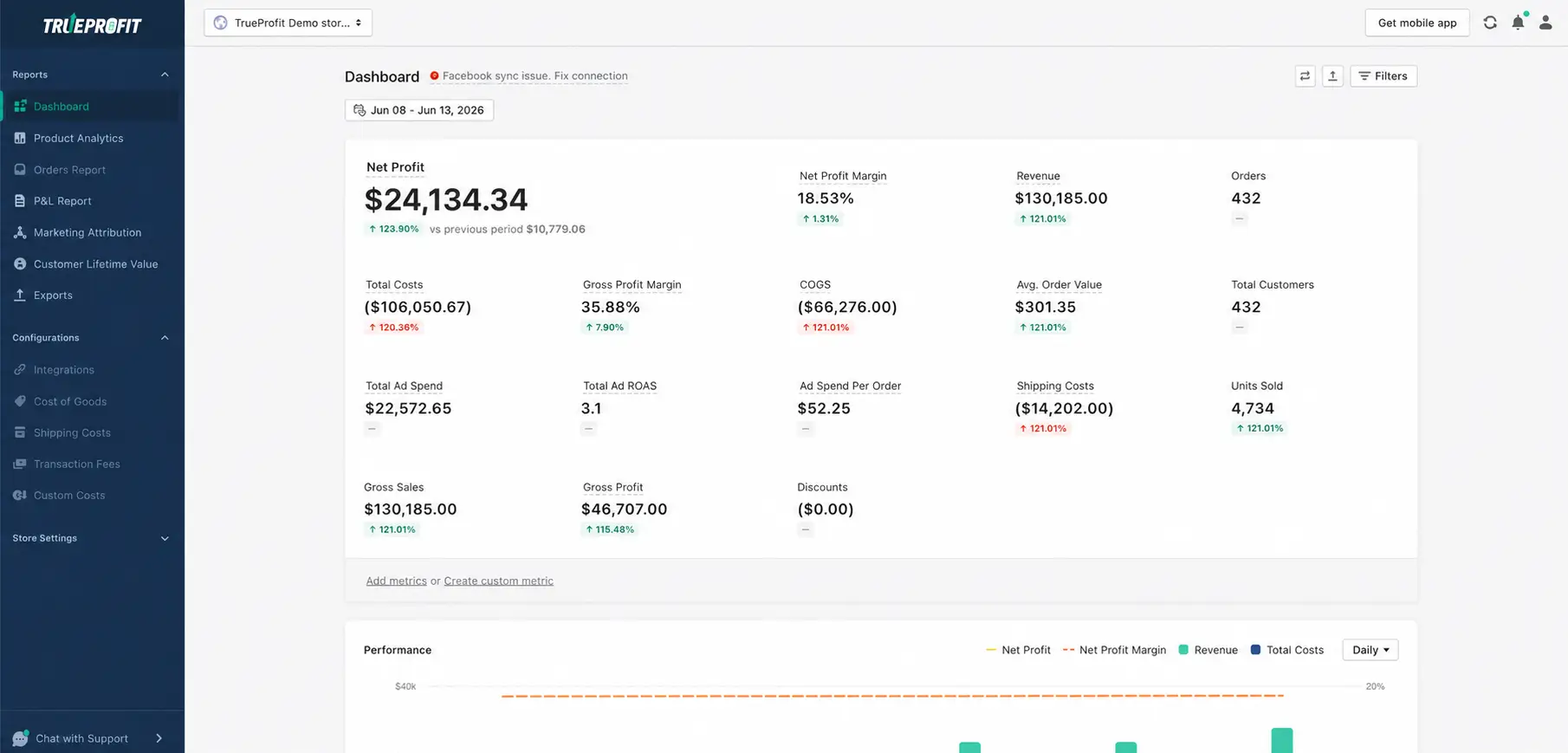
Make Better Decisions With a Clearer View of Profit
Final Thoughts

Senior Content Specialist at TrueProfit
Rosie Doan is a Senior Content Specialist at TrueProfit with over 4 years of experience creating content for the ecommerce and SaaS industry. Having worked closely with Shopify merchants and ecommerce businesses, she has developed a deep understanding of the challenges store owners face, from growing revenue and acquiring customers to tracking performance, managing costs, and improving profitability.











The Newsletter for Dropshippers
Who Hate Losing Money
Weekly tactics from dropshippers & eCom operators who've cracked profitability in an era where thin margins kill most stores.
Your next wise move starts with seeing your True Net Profit now.
Get instant net profit insights into your numbers to make every choice count with TrueProfit!