The 2026 Guide to Dropshipping Privacy Policies: What Merchants Need to Know


Table of Contents
- 1. Understanding Privacy Policies for Dropshipping Stores
- 2. Key Legal Requirements for Dropshipping Privacy Policies
- 3. What Your Dropshipping Privacy Policy Needs to Cover
- 4. How to Create a Dropshipping Privacy Policy Step-By-Step
- 5. Best Privacy Policy Generators and Templates for Dropshipping Stores
- 6. Final Thoughts
- 7. FAQ About Dropshipping Privacy Policy
Let me guess. You need a privacy policy for your dropshipping store, so you find a similar store, copy its policy, change the business name, and put it on your website.
If yes, you’re not alone. It’s probably the quickest way to get a privacy policy page up. But there’s a catch: your store doesn’t necessarily collect, use, or share customer data in the same way.
So rather than copying a policy and calling it done, let’s look at what a dropshipping privacy policy actually needs and how you can create one that fits your store in just a few minutes.
In this blog:
- 1. Understanding Privacy Policies for Dropshipping Stores
- 2. Key Legal Requirements for Dropshipping Privacy Policies
- 3. What Your Dropshipping Privacy Policy Needs to Cover
- 4. How to Create a Dropshipping Privacy Policy Step-By-Step
- 5. Best Privacy Policy Generators and Templates for Dropshipping Stores
- 6. Final Thoughts
- 7. FAQ About Dropshipping Privacy Policy
Understanding Privacy Policies for Dropshipping Stores
What Is a Dropshipping Privacy Policy
A dropshipping privacy policy is the page that tells customers what data your store collects, what you do with it, and who you share it with.
Even though you don’t keep the products in your own warehouse, you still collect customer information like names, email addresses, phone numbers, and shipping addresses. And when an order comes in, some of that information may need to go to your supplier so they can ship the product.
Then you’ve got payment processors, email tools, analytics platforms, ad platforms, and other apps that may also process customer data.
Why Your Dropshipping Store Needs a Privacy Policy
Because it gives customers a straightforward explanation of what happens to their information after they visit your store, place an order, or contact you.
And because dropshipping usually involves several third parties, you need to be clear about who may receive or process that data. Your supplier might need the customer’s shipping details, while your payment or marketing tools may handle other parts of the customer information.
A good privacy policy helps you:
- Be transparent: Tell customers what data you collect, why you need it, and how you use it.
- Meet applicable privacy laws: Depending on your customers and where your business operates, laws such as the GDPR or CCPA/CPRA may give customers specific privacy rights and require certain disclosures.
- Explain third-party sharing: Make it clear that suppliers and service providers may process customer information as part of running your store.
- Build trust: Customers are more likely to understand your store when you’re upfront about how their data is handled.

Key Legal Requirements for Dropshipping Privacy Policies
Your obligations can change based on your target market, the information you collect, and the tools and suppliers you use.
1. Major Privacy Laws That May Apply to Your Store
The first thing to figure out is which privacy laws apply to your business.
If you sell to customers in the EU, the GDPR may apply to your store, including in some cases when your business is located outside the EU. It sets requirements around transparency, the purposes and legal basis for processing personal data, data recipients, retention, and customer rights.
In the US, privacy requirements vary by state. For example, the CCPA applies to certain businesses handling California residents’ personal information and gives covered consumers rights such as accessing, deleting, correcting, and opting out of certain uses or sharing of their information.
You may also have to consider privacy laws in other countries or US states where you sell. So don't assume that creating a GDPR-style policy automatically covers every customer you have.
2. When a Privacy Policy Is Legally Required
There isn't a single rule that says every dropshipping store must have the same privacy policy.
Instead, look at the privacy laws that apply to your business and what your store actually does with personal data. If those laws require privacy notices or specific disclosures, your store needs to provide them.
For example, a typical dropshipping store may collect a customer's name, email, phone number, and shipping address at checkout. You might then send some of that information to a supplier or fulfillment provider, while Shopify, payment processors, analytics tools, and advertising platforms may process other customer data.
3. Shopify, Supplier, and Marketplace Privacy Requirements
Your legal obligations aren't the only thing to check. The platforms and services you use can have their own privacy requirements, terms, and tools.
For example, Shopify makes it clear that merchants are responsible for complying with the privacy laws that apply to their business and customers. Shopify provides privacy and compliance tools, but simply running your store on Shopify doesn't make the store automatically compliant.
Your dropshipping supplier matters too. If you send a customer's name and shipping address to a supplier so they can fulfill an order, you should know what data you're sharing, why you're sharing it, where it's processed, and what the supplier does with it.
The same applies to your payment provider, fulfillment app, email platform, analytics tools, and advertising platforms.
What Your Dropshipping Privacy Policy Needs to Cover
When I look at a dropshipping privacy policy, I don't think it needs to sound like it was written by a lawyer. What matters is that your customers can quickly understand what data you collect, why you need it, who gets access to it, and what choices they have.
And because you're working with suppliers and other third parties, there are a few areas I would pay extra attention to.
1. What Data You Collect
First, be clear about the personal information your store collects.
That could include a customer's name, email address, phone number, billing and shipping address, payment information, IP address, device information, cookies, and browsing activity.
I’d recommend checking your Shopify settings, apps, analytics tools, and other integrations before writing this section. You want your policy to describe what your store actually collects, not what a generic template assumes you collect.
2. How You Collect Customer Data
Next, explain how that information gets into your system.
Customers may provide data when they create an account, place an order, subscribe to your email list, fill out a form, or contact customer support. You may also collect certain information automatically through cookies, analytics, and other tracking technologies.
This is worth spelling out because not all customer data comes directly from a checkout form.
3. Why You Use Customer Data
Now answer the question customers actually care about: why do you need my information?
For a dropshipping store, common purposes include processing and fulfilling orders, handling payments, providing customer support, preventing fraud, improving the website, analyzing performance, and sending marketing communications where permitted.
I’d keep this practical. Only mention purposes that actually apply to your store.
4. Third-Party Access and Data Sharing
This is the section I’d pay the most attention to as a dropshipping merchant.
When someone buys from your store, you're often not the only business handling their information. Your supplier or fulfillment partner may need the customer's name, shipping address, and order details to get the product delivered.
You may also share information with payment processors, shipping carriers, ecommerce platforms, analytics providers, customer support tools, or advertising platforms.
Your policy should explain what types of third parties may receive customer data and why. Don't say that you never share personal information if your fulfillment process requires you to share it with a supplier.
5. Data Storage, Security, and Retention
I’d also explain how you protect customer information and how long you generally keep it.
You can describe the safeguards you use to protect data against unauthorized access, loss, misuse, or disclosure. Then explain that certain information may need to be retained for things like legal, tax, accounting, or dispute-resolution purposes.
You don't need to promise that your store is “100% secure.” That's a claim no business can realistically guarantee.
6. Cookies, Tracking Technologies, and Advertising
If you're running Meta ads, Google Ads, analytics, retargeting, or similar tools, don't skip this part.
Explain whether your store uses cookies, pixels, analytics tools, or other tracking technologies and what they're used for, such as understanding website activity, measuring campaigns, or improving the customer experience.
Depending on where your customers are located, you may also need to provide specific consent or opt-out choices.
7. User Rights and Choices
This section tells customers what they can do with their personal information.
Depending on the privacy laws that apply, they may have rights to access, correct, delete, or obtain a copy of their data. Some laws also give people rights to object to or restrict certain processing activities or opt out of specific uses of their information.
I wouldn't simply list every privacy right you can find online. The rights that apply depend on the customer's location and your business circumstances.
8. International Data Transfers
Dropshipping can get complicated here because your customer, your business, your supplier, and your service providers may all be in different countries.
If customer information is transferred to or processed in another country, your privacy policy should explain that clearly. You may also need to provide information about the safeguards used for those transfers, depending on the laws that apply.
9. Privacy Policy Updates
Your data practices can change as your store grows.
Maybe you switch suppliers, install a new analytics app, add a payment provider, or start selling in a new market. When those changes affect how you handle personal information, your privacy policy may need to be updated too.
I’d include the policy's effective date and explain how you'll notify customers about significant changes when required.
10. Contact Information and Complaints
Finally, make it easy for customers to reach you.
Give them a clear contact method for privacy questions and requests, and explain how they can raise concerns about the way their information is handled. Depending on the applicable law, they may also have the right to complain to a relevant data protection authority.
The basic rule I’d follow is pretty simple: your privacy policy should match what actually happens to customer data behind the scenes. For a dropshipping store, that means being especially transparent about suppliers, fulfillment partners, tracking tools, and cross-border data flows.
How to Create a Dropshipping Privacy Policy Step-By-Step
Here’s the process I’d recommend if you’re creating one from scratch.
Step 1: List the customer data your store collects
Start with a simple question: What customer information does my store actually collect?
This usually includes names, email addresses, shipping and billing addresses, phone numbers, order details, and payment-related information. Your store may also collect IP addresses, cookie data, browsing behavior, or other information through analytics and advertising tools.
And don’t just look at your checkout page. Check the Shopify apps and other tools connected to your store too. Your email platform, review app, analytics tools, and ad platforms may all process customer data.
Step 2: Figure out why you use each type of data
Once you know what you collect, figure out why you collect it.
For example, you need a customer's shipping address to fulfill an order, their email to send order updates, and their order history to provide customer support.
If you use customer data for marketing, analytics, personalization, or advertising, explain that clearly. I’d avoid vague statements like "we use your information to improve our services" when you can be more specific.
Step 3: Identify your suppliers and other third parties
This is one step I’d pay extra attention to as a dropshipping merchant.
Your supplier may receive a customer's name and shipping address to fulfill the order. Payment processors, shipping carriers, email platforms, analytics providers, and advertising services may also process customer information.
So, make a list of the third parties involved in your store and what they do with customer data.
The goal isn't to turn your privacy policy into a giant technical document. It’s simply to make sure you’re not using a generic policy that completely leaves out the fact that a third-party supplier is fulfilling your orders.
Step 4: Check international data transfers
Next, take a look at where that customer data actually goes.
This matters a lot if you're selling internationally or working with suppliers and service providers in different countries. For example, your store could be based in the US while your supplier or software provider processes data somewhere else.
Depending on the privacy laws that apply to your business and customers, you may need to disclose these international transfers and explain the safeguards used.
Step 5: Add the privacy rights that apply to your customers
Your policy should explain what privacy rights your customers have under the laws that apply to them and how they can exercise those rights.
Depending on the jurisdiction, these may include the right to access, correct, delete, or restrict the use of personal information.
Keep this practical. Give customers a clear way to contact you about privacy requests instead of making them search through your entire website to figure out what to do.
Step 6: Cover cookies and tracking technologies
Now, don’t forget about everything that happens before someone even places an order.
If you use tools such as Meta Pixel, Google Analytics, TikTok Pixel, or other tracking technologies, your privacy policy should address them where required.
Explain what these technologies are used for, such as analytics, personalization, or advertising, and what choices customers may have around them.
This is an easy one for merchants to miss, especially when you're installing apps and tracking tools one by one as the store grows.
Step 7: Explain data retention and security
Next, explain what happens to customer information after you collect it.
Your policy should tell customers how long you retain personal data, or the criteria you use to determine how long you keep it when a specific period isn't appropriate.
You should also explain the general measures you take to protect customer information.
One important point here: don’t overpromise. If you don't actually have a particular security system or process in place, don't claim that you do just because you saw it in another privacy policy template.
Step 8: Publish it and keep it updated
Once you've covered everything, publish the policy somewhere customers can easily find it, such as your website footer and relevant checkout or account pages.
And here's the part I’d really keep in mind: your privacy policy isn't a "write it once and forget about it" document.
Add a new supplier? Install a new marketing app? Start selling to a new market? Change how you collect or use customer data?
Go back and review the policy.
Your privacy policy should describe what your store is actually doing today, not what it was doing when you first launched.

Best Privacy Policy Generators and Templates for Dropshipping Stores
Here are a few options I’d look at.
1. Shopify Privacy Policy Generator
If you’re already using Shopify, this is probably the easiest place to start. Shopify offers a free privacy policy generator that creates a basic policy based on information about your business and website.

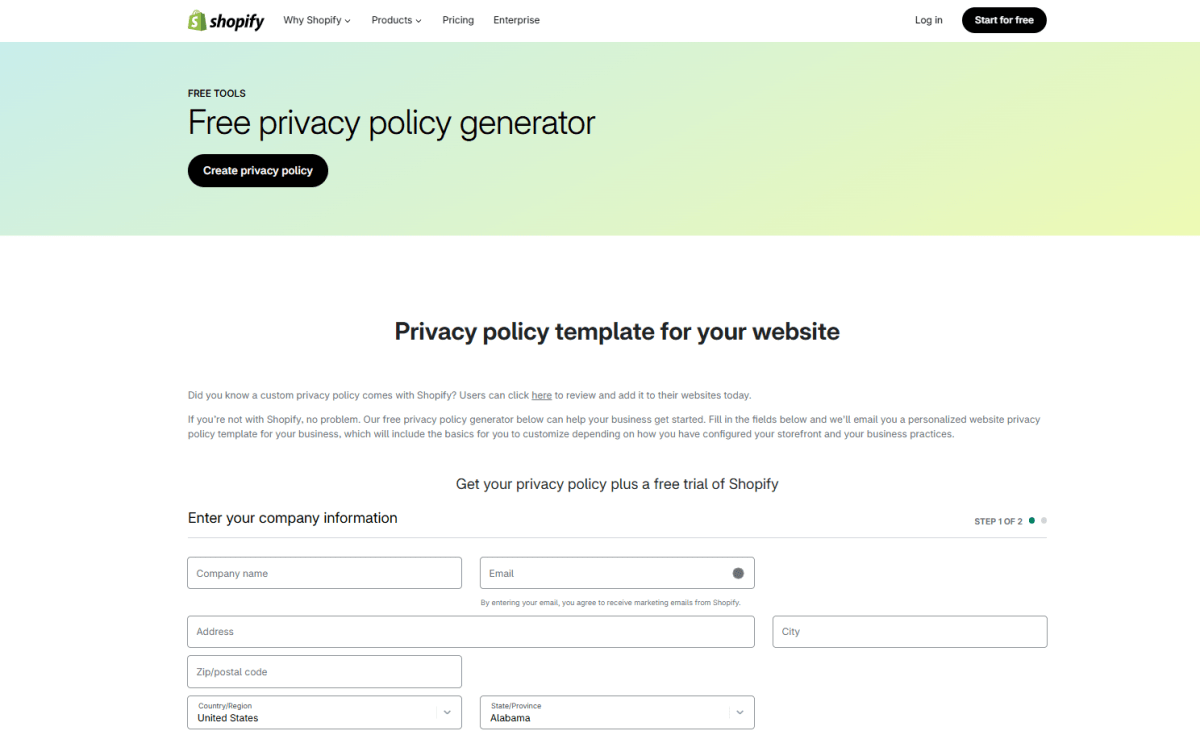
For a new merchant, that can be more than enough to get the first draft going. Just remember to review and customize it rather than publishing the generated version word for word. Shopify also states that its generator isn't legal advice.
Best for: Shopify merchants who want a quick, free starting point.
2. Termly Privacy Policy Generator
Termly is worth a look if your store has a more complicated setup. Its generator is designed for ecommerce businesses and can cover things like payments, shipping, customer accounts, marketing, and third-party services.
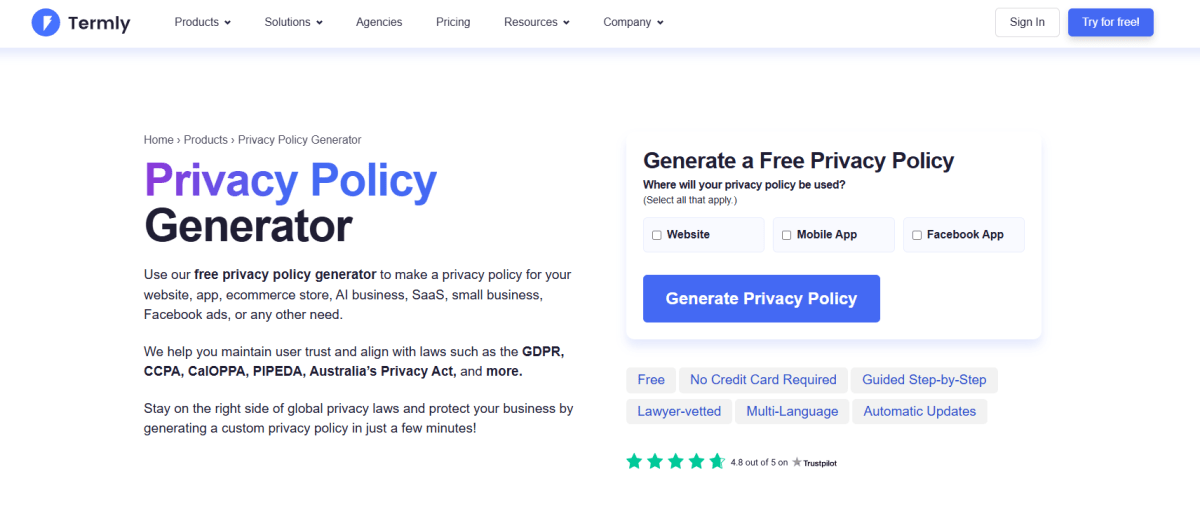
It also supports privacy frameworks such as GDPR, CCPA/CPRA, UK GDPR, and PIPEDA.
So if you're selling internationally and have several tools connected to your store, this can give you more to work with than a very basic template.
Best for: Merchants selling across multiple markets or using a lot of third-party tools.
3. GetTerms Privacy Policy Generator
Another option is GetTerms. It offers privacy policy generators and templates for websites and ecommerce businesses, with support for different privacy requirements and multiple languages.
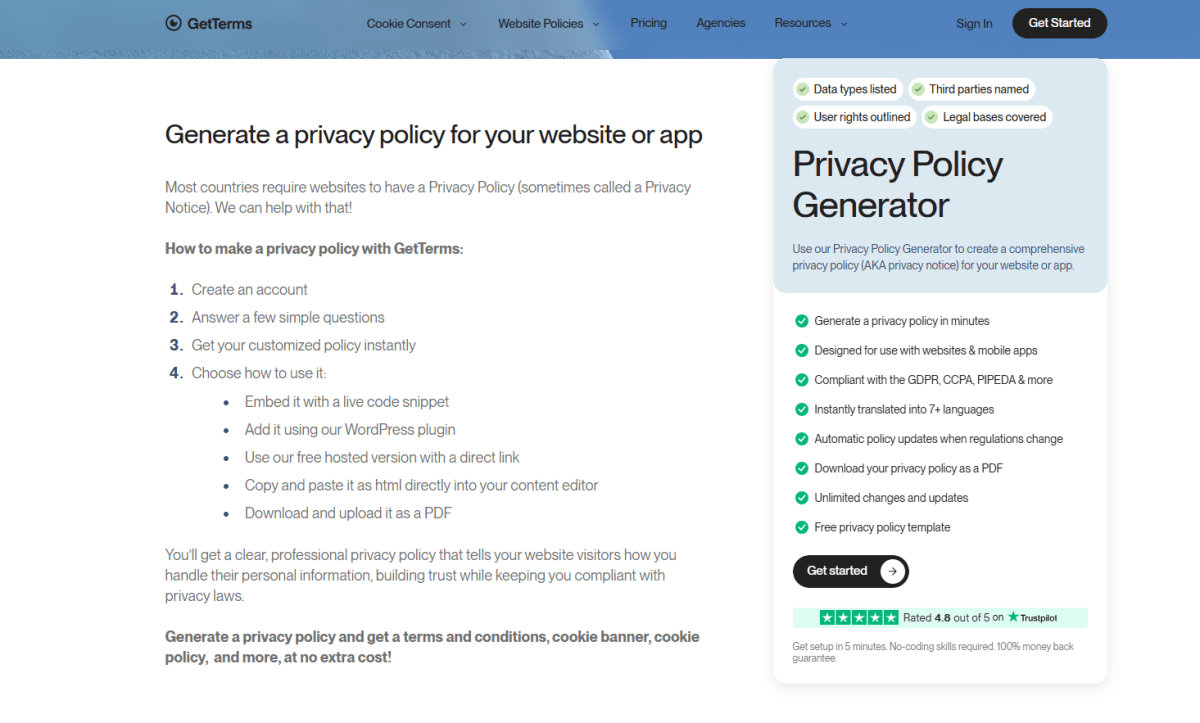
What I like about this type of tool is that you can use the generated policy as a foundation and then adjust it as your store grows.
Best for: Merchants who want more customization and an easier way to maintain their policy over time.
4. Free Privacy Policy Templates
And honestly, you don't always need a generator.
If you know what data your store collects and which third parties are involved, starting with a reputable ecommerce privacy policy template can work just fine. GetTerms and Termly, for example, both offer free templates you can use as a starting point.
The important word here is starting point.
Go through the template and replace the placeholders, remove anything that doesn't apply, and add the suppliers, apps, tracking tools, and data practices that are actually part of your store.
Which Privacy Policy Option Should You Use?
There isn't one tool that makes sense for every dropshipping business. I'd look at it based on how your store is set up:
- Simple Shopify store: Shopify's free generator is a practical place to start.
- Selling internationally: Look at a more customizable generator such as Termly or GetTerms.
- You want more control: Start with a reputable template and customize it yourself.
- Complex data practices or higher legal risk: Consider getting advice from a qualified privacy professional instead of relying entirely on a generator.
Final Thoughts
A good dropshipping privacy policy should reflect what actually happens behind your store. From collecting customer details at checkout to sharing shipping information with suppliers, every step matters.
You don’t need to make the policy unnecessarily complicated. Focus on being clear about what data you collect, why you need it, who can access it, and what rights your customers have.
And don’t treat it as a one-time task. Whenever your suppliers, apps, payment providers, tracking tools, or target markets change, give your privacy policy another look. Keeping it accurate is what makes it useful for both your customers and your business.

[cta]
Rosie Doan is a Senior Content Specialist at TrueProfit with over 4 years of experience creating content for the ecommerce and SaaS industry. Having worked closely with Shopify merchants and ecommerce businesses, she has developed a deep understanding of the challenges store owners face, from growing revenue and acquiring customers to tracking performance, managing costs, and improving profitability.