How Dropshipping With Lazada Works and How to Get Started in 2026


Table of Contents
- 1. What Is Dropshipping on Lazada?
- 2. Can You Really Dropship on Lazada?
- 3. Here’s What You Need to Start Selling on Lazada
- 4. How to Make Your Lazada Store More Competitive
- 5. Lazada Local vs. Cross-Border Dropshipping: What’s Difference?
- 6. 5 Typical Problems When Dropshipping With Lazada
- 7. Final Thoughts
- 8. FAQs About Dropshipping on Lazada
If you want to build a profitable Lazada dropshipping business, it really comes down to four calls: the right niche, suppliers you can trust, pricing that actually protects your margin, and a fulfillment process you can scale.
In this guide I'll walk you through setup, the day-to-day, and the problems that quietly eat your profit, all built specifically for sellers, especially if you’re a US or UK merchant targeting Lazada’s Southeast Asian markets.
In this blog:
- 1. What Is Dropshipping on Lazada?
- 2. Can You Really Dropship on Lazada?
- 3. Here’s What You Need to Start Selling on Lazada
- 4. How to Make Your Lazada Store More Competitive
- 5. Lazada Local vs. Cross-Border Dropshipping: What’s Difference?
- 6. 5 Typical Problems When Dropshipping With Lazada
- 7. Final Thoughts
- 8. FAQs About Dropshipping on Lazada
What Is Dropshipping on Lazada?
Dropshipping on Lazada is a business model where you source products from a third-party supplier, list them on your Lazada store, and sell them without holding inventory yourself.
When a customer places an order, you purchase the product from your supplier, who then ships it directly to the customer following the requirements of the Lazada market you're selling into.
So here's the setup. Lazada runs marketplaces across Indonesia, Malaysia, the Philippines, Singapore, Thailand, and Vietnam. And it supports cross-border sellers too, with its official site listing sellers from markets including the United States and Europe.
Now if you're a US or UK merchant, that changes the whole game.
This isn't about selling to people down the street. It's about using Lazada's cross-border infrastructure to reach Southeast Asian buyers without setting up local operations first.
How the Lazada dropshipping model works
The image below gives a simple overview of how a dropshipping order on Lazada works.

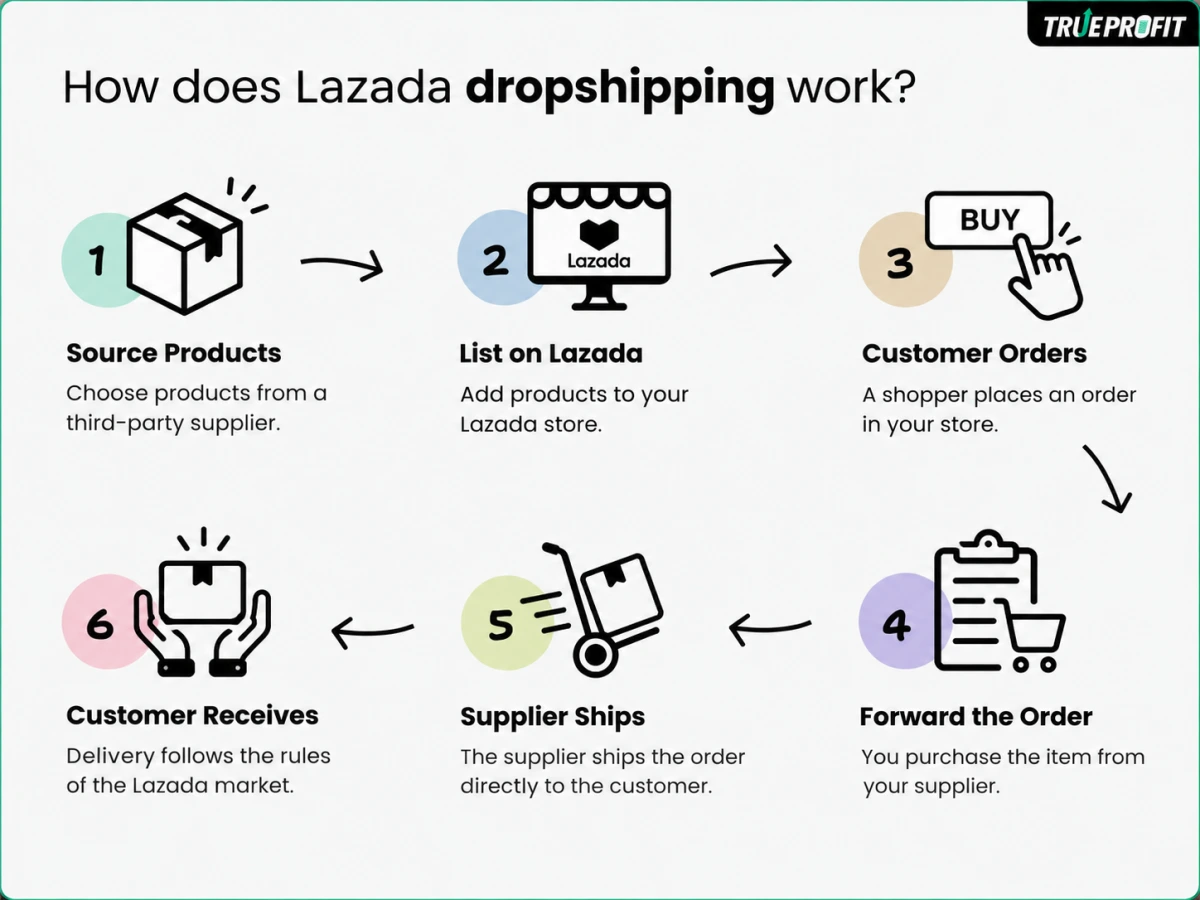
At a high level, the flow is simple. The details, though, depend on your supplier, your fulfillment setup, and the market you're targeting.
Here's the tricky part. You've got to keep inventory, orders, fulfillment, and tracking all in sync. And it matters even more cross-border, because one delay can hurt both your customer's experience and your seller's performance score.
Who this model fits best
Let me be honest about who this is for.
It works great if you're a US or UK merchant entering Southeast Asia without wanting to build local inventory, if you're testing demand before committing to stock, if you're an existing brand expanding into the region, or if you just want to keep upfront risk low.
Where it struggles is when you need tight control over quality, branded packaging, customization, or delivery speed. And products with import restrictions, certifications, or special handling pile on extra compliance work.
So the trade-off is pretty direct. You cut your upfront inventory risk, but you give up control over fulfillment and delivery. Keep that in the back of your mind for everything that follows.

Can You Really Dropship on Lazada?
Yes, you can dropship on Lazada. There's no separate dropshipping program to sign up for. You just open a normal seller account and use a third-party supplier to fulfill your orders.
What Lazada actually cares about
Here's what most people get wrong. Lazada cares way more about how you handle orders than whether the products are sitting in your own warehouse. Ship on time, provide valid tracking, follow the product and seller policies, and a dropshipping setup is completely fine.
The rules themselves are simple. Register a proper seller account, ship within the required window, provide valid tracking, be honest about the product and where it ships from, and stay away from counterfeit or prohibited goods.
Where your responsibility starts
But here's the part I really want you to hear. You're responsible for everything that happens after someone clicks Buy. The marketplace doesn't need you to own inventory, sure, but late shipments, wrong items, and bad service all land on your account, not your supplier's.
That's the thing you're protecting from day one.
Here’s What You Need to Start Selling on Lazada
Getting started really comes down to four things: what you sell, who supplies it, how you price it, and how you handle orders once they roll in.
Let me take you through each one.
Step 1. Choose a niche and product category
Don't pick a product just because you see other sellers moving it. I know it's tempting, but that's not a strategy. What you actually want is steady demand, manageable shipping costs, and low return risk.
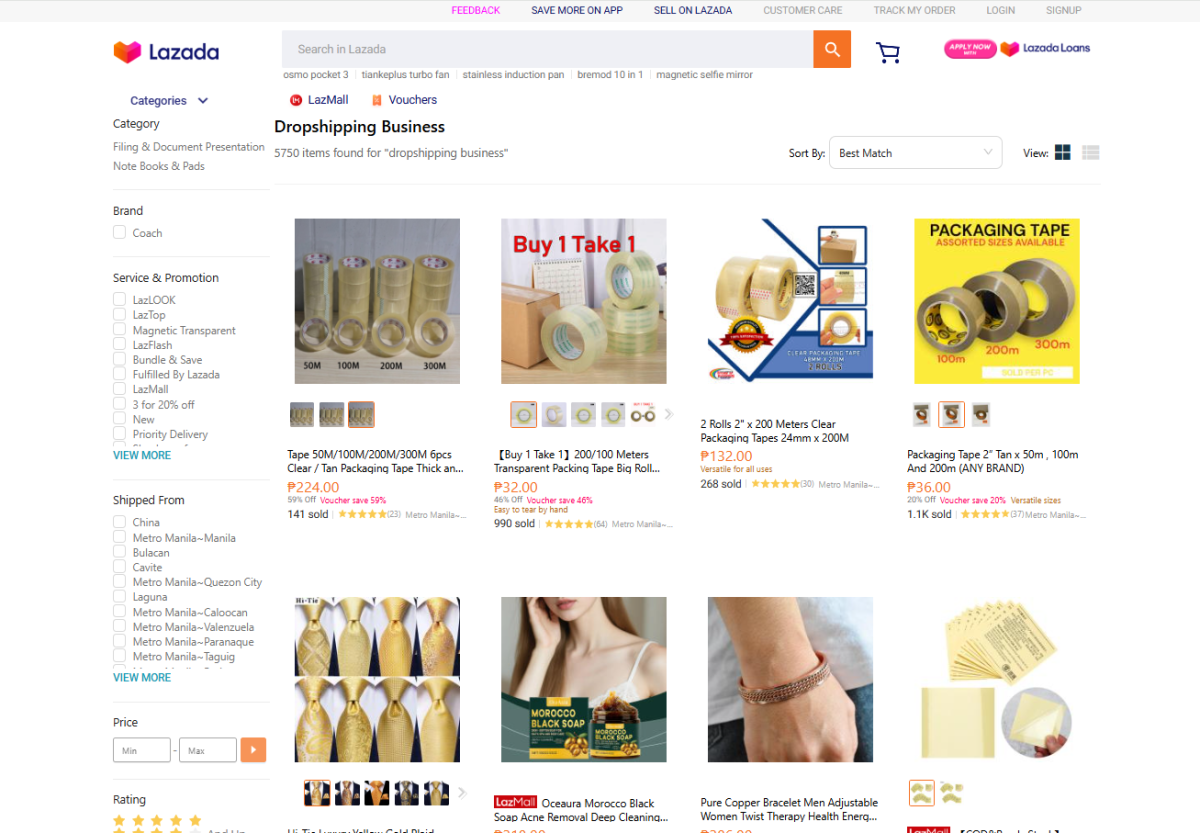
Think small and lightweight, because those are easier to fulfill. Simple sizing and clear use cases save you a ton of customer service headaches too. Compare evergreen, seasonal, problem-solving, and passion niches and see which direction fits your market.
Here are a few less crowded niches I’d consider promising for sellers to enter on Lazada:
- Packaging supplies: packing tape, bubble mailers, shipping labels, carton cutters
- Cleaning & maintenance: drain brushes, grout brushes, lint removers, cleaning tools
- Home repair supplies: sealing tape, furniture pads, cable clips, adhesive hooks
- Car maintenance: detailing brushes, microfiber towels, interior cleaning tools
- Storage accessories: vacuum storage bags, drawer dividers, shelf organizers
- Pet maintenance: grooming gloves, hair-removal tools, feeding accessories
Step 2. Find reliable suppliers
Okay, so you know what you're selling. Now, where's it coming from? This is not the place to save a few cents.
You want a supplier that keeps inventory updated, ships on time, provides reliable tracking, and actually responds when something goes wrong.
For US and UK merchants, the supplier question looks a little different. You’re not just looking for a cheap source. You need one that can reliably fulfill orders to the specific Southeast Asian Lazada market you’re targeting.
There’s one more thing to check before choosing a supplier: how easily it connects to Lazada. A supplier may have great products and shipping, but if you still have to manually create listings and forward every order, the workflow can become much harder to manage at scale.
With that in mind, here’s a quick look at how each supplier fits into a Lazada dropshipping workflow:
Step 3. Register as a Lazada seller
Now you set up your account through Lazada Seller Center. The requirements shift depending on your market and whether you're a local or cross-border seller.
You might need identification, business documents, bank or payout details, and address or fulfillment info. And do me a favor: build Lazada's commissions and payment fees into your pricing from day one. Otherwise a product looks profitable right up until the numbers tell you it never was.
Step 4. Create listings people click
Here's a mistake I see constantly. People just upload the supplier's listing as-is and wonder why nothing sells. Your title needs to match what shoppers are actually searching for, and your description should tell them what the product does, why it's useful, and who it's for.
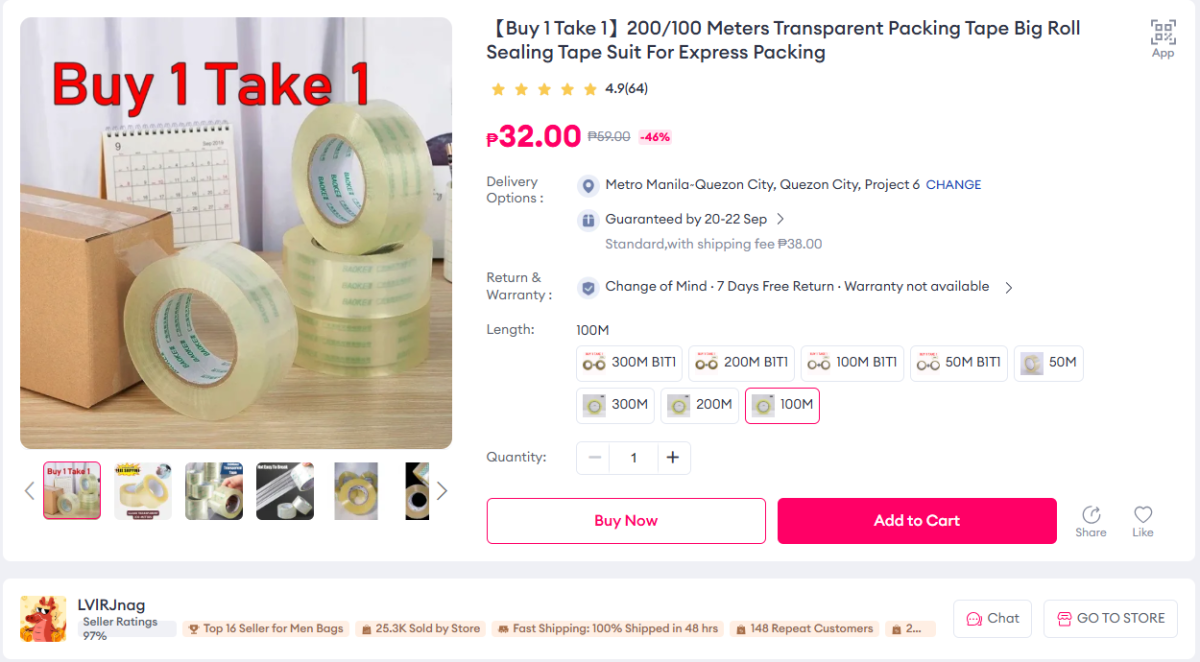
Then really pay attention to your images, because customers can't hold the product before buying. Clear shots, multiple angles, lifestyle photos, all of it helps. And be upfront about shipping, especially cross-border. Never promise a delivery time you can't hit again and again.
Step 5. Set your price before chasing orders
Let me slow you down for a second, because this is where people bleed money. Don't just look at the cheapest seller and price below them. That's a race where your order count climbs while your profit quietly vanishes.
Instead, start with your full cost: supplier price, shipping, Lazada fees, payment fees, ads, vouchers, all of it. Set the minimum profit you're willing to accept, then adjust against competitors and promos without ever breaking that floor.
Step 6. Process and forward orders
Once that first order hits, this part should feel easy. Check it in the Seller Center, verify the details, and send it to your supplier manually or through an integration. They handle fulfillment and shipping while you keep the order and tracking info current.
Speed is the whole game here. Don't let orders pile up in your dashboard while you plan to "deal with it later." A simple daily fulfillment routine kills off most of your avoidable delays.
Step 7. Handle tracking, returns, and service
And here's the thing to never forget: you're still the seller, even when someone else ships the box. When an order shows up late, damaged, wrong, or just not what they pictured, the customer comes to you.
So you'll coordinate returns, replacements, and refunds with your supplier while keeping the customer in the loop. Know exactly how your supplier handles all of that before you scale. Keep the setup lean, test products without drowning in inventory risk, and build a fulfillment process you can actually grow into.
How to Make Your Lazada Store More Competitive
A competitive Lazada store wins on four fronts: sharper product research, disciplined pricing, better listings, and reliable fulfillment. Nail those and conversion usually takes care of itself.
1. Find gaps instead of copying competitors
Seeing a product sell well is a good starting point, but copying the top seller’s listing won’t give shoppers much reason to choose you.
Look at what competitors are missing. Maybe their images are weak, the product information is confusing, shipping is slow, or they’re targeting everyone instead of a specific use case.
Find one of those gaps and build your offer around it.
2. Make your listings easier to buy from
Getting someone to click is only half the job.
Take a close look at your product page. Does the price make sense? Are the images clear? Can shoppers quickly understand what the product does? Are shipping times and return information easy to find?
When shoppers are clicking but not buying, fixing the listing can often make more sense than simply sending more traffic to it.
3. Use Lazada promotions strategically
Lazada gives you tools like vouchers, flash deals, and Sponsored Solutions to push products in front of more shoppers. Use them, but don’t turn every product into a permanent discount.
I’d test promotions on products that already show some demand and have enough margin to support the extra spend. That way, you’re using promotions to accelerate something that works, rather than paying to make an unprofitable product look busy.
4. Double down on products that prove themselves
You don’t need every SKU to be a winner.
Once you start getting enough data, look for products that consistently bring in sales, convert well, and leave you with a healthy margin. Those are the products worth giving more attention to.
For cross-border dropshipping, this is where the model gets interesting. You can test demand first, then move proven products to a local or regional fulfillment setup when the sales volume justifies it.

Lazada Local vs. Cross-Border Dropshipping: What’s Difference?
Pick your model based on your product's stage, not shipping speed alone. Cross-border is for testing and range; local is for scaling proven winners with faster delivery.
When local dropshipping makes sense
Local dropshipping is your move when you already know a product sells. Delivery's faster, returns are simpler, and customers just trust domestic fulfillment more. The catch is you're working with a narrower product and supplier selection.
When cross-border makes sense
Cross-border gives you room to experiment. You get a wider product range and often lower supplier prices, especially from China. But longer delivery, customs, taxes, and shipping costs can chew through your margin fast.
The smart play, honestly, is to validate demand cross-border first, then move your proven products to a local supplier or regional warehouse once sales get consistent. You skip the early inventory commitment and only invest in speed once the volume actually justifies it.
5 Typical Problems When Dropshipping With Lazada
Most Lazada dropshipping headaches trace back to five things: weak traffic, supplier delays, stock gaps, messy returns, and account risk.
Good news is each one has a concrete fix.
1. Low sales and weak traffic
Not getting enough orders? Don’t jump straight into spending more on ads. First, make sure your listings are actually giving shoppers a reason to click and buy. Tighten your titles, images, descriptions, pricing, and keywords, then use Lazada Sponsored Solutions or vouchers to test what brings in traffic and conversions.
Once you have some data, check your ROAS to see how efficiently your ads are turning spend into revenue. And don’t forget to look at your actual profit after COGS, shipping, Lazada fees, discounts, refunds, and other costs.
2. Supplier delays and canceled orders
Your supplier's performance is your store's performance, full stop. Check fulfillment speed, shipping consistency, tracking, and communication before you scale anything.
For your best sellers, keep a backup supplier ready, and replace any supplier that keeps causing delays or cancellations. Don't get sentimental about it.
3. Inventory problems
Out-of-stock products lead straight to canceled orders and annoyed customers. Keep supplier inventory updated, use inventory-sync tools where you can, and pause SKUs with unstable stock instead of selling right through them.
4. Returns and refunds
Returns get messy when the product never actually passes through you. So before scaling, agree with your supplier on return addresses, replacement rules, refunds, and who eats the return shipping cost.
Keep the customer communication on your side, and handle the supplier coordination quietly behind the scenes.
5. Account suspension risks
Repeated fulfillment issues, counterfeit products, misleading listings, or fake reviews can all put your account at risk. Watch your Seller Center performance, keep your listings accurate, steer clear of unauthorized branded goods, and move fast on any warnings or disputes.
Final Thoughts
Dropshipping with Lazada can be a practical way to reach Southeast Asian shoppers without buying and storing inventory upfront. But the model is a little different from the typical dropshipping setup you may be used to.
Before committing to it, take the time to understand the market you want to enter, find a supplier that can support that market, and choose a fulfillment setup that keeps orders moving smoothly. Start with one market, test the process with real orders, and use what you learn to refine your store before expanding further.

Lila Le is the Marketing Manager at TrueProfit, with a deep understanding of the Shopify ecosystem and a proven track record in dropshipping. She combines hands-on selling experience with marketing expertise to help Shopify merchants scale smarter, through clear positioning, profit-first strategies, and high-converting campaigns.