The Complete 2026 Guide to Dropshipping Fulfillment For Merchants

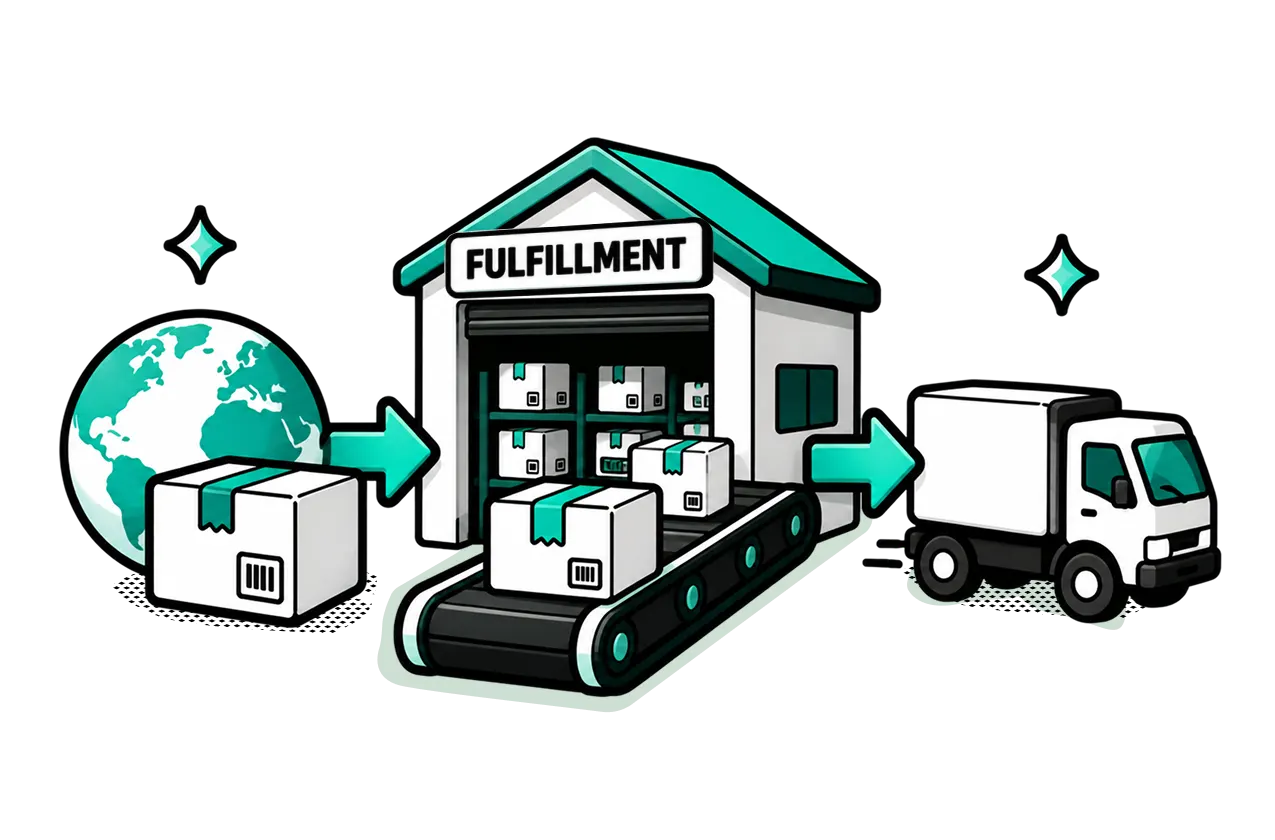

Table of Contents
- 1. What Is Dropshipping Fulfillment and How Does It Work?
- 2. Main Dropshipping Fulfillment Models You Can Use
- 3. How Much Does Dropshipping Fulfillment Cost?
- 4. How to Choose the Right Fulfillment Solution
- 5. How Dropshipping Fulfillment Works Across Different Platforms
- 6. Comparing Popular Fulfillment Providers
- 7. Final Thoughts
- 8. FAQs ABout Dropshipping Fulfillment
Dropshipping fulfillment is more than simply getting a package from your supplier to your customer. It’s the backbone of your operation, and it can have a direct impact on whether your store keeps its profit or slowly eats into it.
Whether you’re handling your first few orders or getting ready to scale, you need to know how fulfillment works, what it really costs, and how to build a workflow that can keep up.
In this blog:
- 1. What Is Dropshipping Fulfillment and How Does It Work?
- 2. Main Dropshipping Fulfillment Models You Can Use
- 3. How Much Does Dropshipping Fulfillment Cost?
- 4. How to Choose the Right Fulfillment Solution
- 5. How Dropshipping Fulfillment Works Across Different Platforms
- 6. Comparing Popular Fulfillment Providers
- 7. Final Thoughts
- 8. FAQs ABout Dropshipping Fulfillment
What Is Dropshipping Fulfillment and How Does It Work?
1. What fulfillment actually means
Dropshipping fulfillment turns an order on your store into a shipped package without you owning or storing anything. The supplier holds the stock, picks and packs the item, ships it to the buyer, and sends tracking back to your store. You hold on to the customer relationship and hand off the physical work.
That's the pure model. As merchants grow, a lot of them move bestsellers into their own inventory or a 3PL to speed things up, and I'll get into that in the models section.
2. The basic fulfillment workflow
The workflow looks simple, but every step can throw up delays or errors if you rush the setup. Here's how it plays out:
- A customer orders and pays retail price on your store.
- Your store passes the order to a supplier or app, automatically or after a quick review.
- You pay the product cost plus shipping and fees.
- The supplier ships straight to the customer under your name or neutral branding.
When it's running well, tracking comes back fast and customers see progress instead of silence. And the more orders you push, the more automation earns its keep.
3. Who's involved in fulfillment process
Most setups pull in a few parties on a single order. Here's who does what:
Often one company wears more than one hat. An agent might take care of sourcing, packaging, and shipping all at once, which makes it feel closer to a full-service 3PL.

Main Dropshipping Fulfillment Models You Can Use
There are four setups worth knowing: supplier-direct dropshipping, an automation layer over a supplier network, a sourcing or fulfillment agent, and inventory-backed 3PL or hybrid.
1. Supplier-direct dropshipping
This is the simplest way in. You list a supplier's product, and when someone orders, you pass that order to the supplier to ship.
It's cheap and easy to test. No inventory upfront, you can add or drop products in seconds, and warehouse costs stay at zero. The catch is control: you don't own the stock, the packaging, or the delivery speed. If the supplier runs dry or ships slow, you're the one who has to smooth things over with the customer.
Best for early testing and low-volume stores still hunting for a winner.
2. Automated supplier network
An automation layer connects your store to a supplier network and runs most of the order flow for you. Tools like Zendrop and Fulfillman pair sourcing with automated routing, so you can do away with the email-and-spreadsheet grind. Keep in mind this is a software layer over dropshipping, not a separate fulfillment channel.
The platform syncs products with clear cost and shipping data, routes paid orders to the right supplier, pushes tracking back into your store, and lets you manage dozens of SKUs from one dashboard. Once real volume kicks in, it cuts down the human errors that tend to pile up.
Best for stores with big catalogs or steady order flow.
3. Sourcing or fulfillment agent
A sourcing agent does more than a plain marketplace supplier. They track down products for you, negotiate unit costs, hold light stock, and often add custom packaging and branded inserts, sitting somewhere between a supplier and a full 3PL.
Next to a marketplace supplier, an agent gives you more consistent pick-pack-dispatch times, real stock visibility, and packaging control. The tradeoff is that you usually have to commit to steadier volume. Best for sellers with proven winners who want consistency and branding without running a warehouse.
4. Inventory-backed 3PL or hybrid
This model brings stock in-house. You hold inventory in your own space or a third-party logistics (3PL) warehouse, and often mix methods: dropship experimental products, hold bestsellers for fast shipping, and route high-volume items through the 3PL.
That keeps risk low on long-tail products while giving speed and brand control to your core offers. It also holds up across Shopify, marketplaces, and wholesale, since you pick the best method per SKU. Best for scaling, multi-channel stores. Just know these steps beyond pure dropshipping into hands-on inventory management.
How Much Does Dropshipping Fulfillment Cost?
Dropshipping fulfillment costs can range from a few dollars to $12+ per order, depending on your supplier, product weight, shipping destination, and fulfillment method.
1. Typical Dropshipping Fulfillment Cost Breakdown
Your fulfillment bill usually comes from a few different places:
2. Fulfillment Cost by Business Model
The fulfillment model you choose affects both your costs and delivery speed. Overseas suppliers can keep costs low for product testing, while domestic fulfillment usually costs more but gets orders to customers faster.
These are rough benchmarks, not fixed rates. Your actual cost can change based on product size and weight, destination, warehouse location, shipping method, order volume, and the provider you use.
How to Choose the Right Fulfillment Solution
The best fulfillment solution matches your stage, product type, and the promise you make to customers.
Beginners need speed and simplicity; bigger stores need consistency, branding, and multi-channel support. My rule of thumb is: pick the easiest model that still delivers acceptable speed and quality.
1. Get clear on your stage
Figure out where your store actually stands before you commit to anything. Still testing products and hunting for winners? Supplier-direct or an automated network is plenty. They let you validate demand without locking yourself into storage.
Already sitting on repeat sales and proven winners? A sourcing agent or inventory-backed setup earns its keep through reliable shipping and tighter control. New stores should chase learning speed, not perfect operations.
2. Compare what affects profit
Zero in on the factors that hit customer experience and margin directly:
- Shipping speed and consistency across regions.
- Stock reliability and how often items sell out.
- Order automation and fewer manual steps.
- Clear return, refund, and replacement rules.
- Packaging quality and custom branding support.
- How fast the supplier actually gets back to you.
The cheapest option loses if it drags in slow shipping, damaged items, or messy returns. Refunds, bad reviews, and lost repeat buyers cost far more than whatever you saved upfront.
3. Spot the red flags
Walk away from any supplier or partner that shows these signs:
- Slow or inconsistent replies.
- No stock updates or refusal to share inventory data.
- Vague shipping times for key destinations.
- Restrictive or unclear return rules.
- Missing or delayed tracking that leaves orders invisible.
- A pile of reviews about damage, wrong items, or bad packing.
A partner who communicates poorly turns into your customer service problem down the line. You're the one who has to explain the delays to buyers.
4. Match the model to your situation
Use this quick guide:
Most sellers start simple and level up only after they know what sells. Keep an eye on both operations and real profit so you never scale a workflow that's quietly eating your margins.

How Dropshipping Fulfillment Works Across Different Platforms
1. Shopify fulfillment
Shopify plugs into a wide range of supplier apps and automation tools. You can set different fulfillment methods per product, automate routing, and drop tracking right into the order timeline.
A strong Shopify setup sends only paid, low-risk orders to fulfillment, syncs SKUs cleanly, pushes tracking back automatically, fires off customer notifications the second tracking lands, and flags delayed or risky orders first. On Shopify, your supplier choice shapes shipping times more than anything else.
2. Amazon fulfillment
Amazon allows dropshipping only if you are the seller of record. That means your name shows up on the packing slip, invoice, and external packaging, never the supplier's or another retailer's, and you take care of returns and customer service. Amazon flatly bans buying from another online retailer and having them ship directly with their branding.
On top of that, keep an eye on delivery times, on-time rates, order defect rates, and feedback. Weak fulfillment or a policy slip-up hits your account health fast, which can cost you the Buy Box, get listings suspended, or trigger an account review. You need partners who ship neutrally and hit Amazon's timelines every time.
3. Wix and other builders
Wix supports dropshipping through dedicated apps and 3PL integrations, several of which sync products and push automatic tracking. Depending on the app you pick, some workflows still call for manual steps.
For simple stores or early experiments, this gets the job done. As volume climbs, check whether your chosen app handles routing and tracking on its own, and watch how much time fulfillment still eats up.
Comparing Popular Fulfillment Providers
Here are four providers worth looking into. This isn't a ranking. The right fit depends on your product, target market, and how much of the fulfillment process you want to manage yourself.
Zendrop describes its platform as combining sourcing, automated fulfillment, and shipping, while USAdrop offers sourcing, order processing, and warehouse-based fulfillment. These are useful examples of how fulfillment providers can differ in the way they support your business.
Final Thoughts
One thing I’d definitely avoid is overcomplicating fulfillment too early. If you’re still testing products, you probably don’t need custom packaging, bulk inventory, or some huge 3PL setup. Keep it simple and focus on learning what actually sells.
But once you find a winner, that’s when fulfillment starts to matter a lot more. You want faster and more predictable delivery, reliable stock, clean tracking, fewer refunds, and ideally better margins as your volume grows.
The key is to upgrade based on real order data, not because a provider has a fancy feature list. If a new setup makes the customer experience better and the economics better, that’s an upgrade worth making.

Lila Le is the Marketing Manager at TrueProfit, with a deep understanding of the Shopify ecosystem and a proven track record in dropshipping. She combines hands-on selling experience with marketing expertise to help Shopify merchants scale smarter, through clear positioning, profit-first strategies, and high-converting campaigns.