9 Best Non-China Dropshipping Suppliers for Fast, Reliable Shipping


Table of Contents
China is still the go-to for dropshipping, mainly because the products are cheap and the selection is huge.
But what ifshipping speed and customer experience matter more than saving a few dollars per product?
That's where suppliers outside China can make a difference. You may pay more, but you can get inventory closer to your customers, faster delivery, and easier returns.
In this guide, I'll show you the best dropshipping suppliers based outside of China in 2026, plus what to look for before making the switch.
In this blog:
China vs. Non-China Dropshipping Suppliers: Which Is Better?
Now, before jumping into the supplier list, let's clear up one thing.
Neither is automatically better. It really comes down to what you're optimizing for.
China-based suppliers usually win on product cost and selection. Non-China suppliers, especially those with inventory in your target market, tend to win on shipping speed, consistency, and customer experience.
Here's how I'd look at the trade-off:
So, what do you actually get with each?
China-based suppliers are great when you're still in the testing phase.
You can source products at very low costs, test different offers without putting much money into inventory, and leave more room for advertising. That's a big reason China remains so popular in dropshipping.
The trade-off is fulfillment.
Longer delivery windows can mean more “Where's my order?” messages, more complicated returns, and a less predictable customer experience.
Non-China suppliers take the opposite approach.
You're usually paying more for the product, but you're getting inventory that's closer to your customers. That can mean much faster delivery, easier returns, and more confidence when you're trying to build a store that feels like a real brand rather than a quick product test.
The downside? Your margins have less room to breathe.
Higher product costs mean you'll either need a higher selling price, a stronger offer, or tighter control over your other costs. And because local suppliers often carry smaller inventories, popular products can sell out faster.
Now, let's get into the suppliers.

So, Which Non-China Suppliers Are Worth Trying?
Before we get into each supplier, here's a quick look at what each one offers and who it might make the most sense for.
1. Spocket
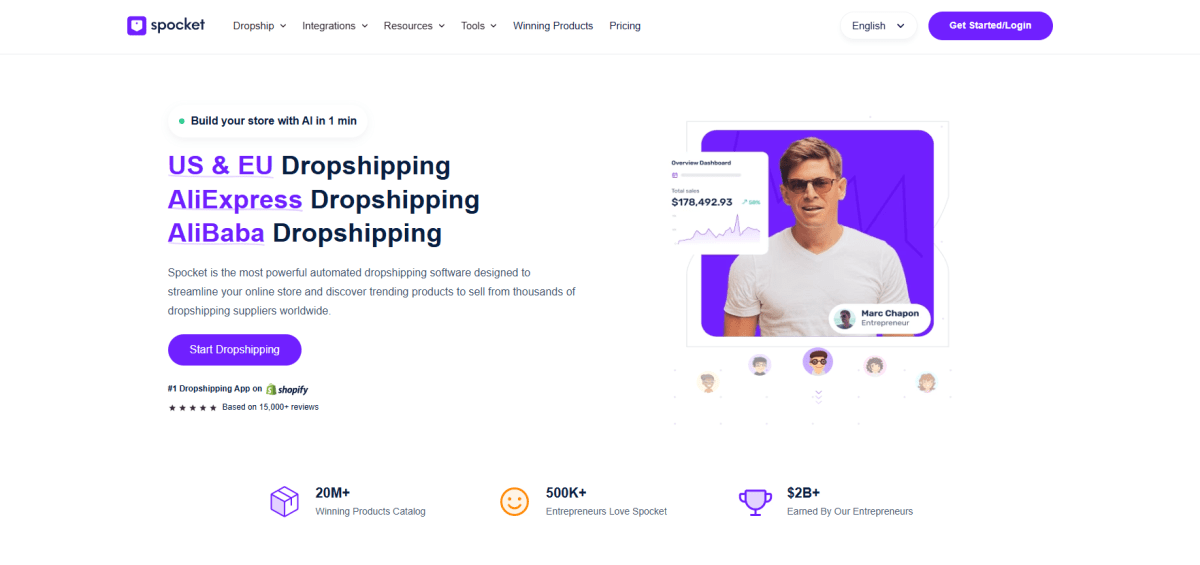
Spocket is a dropshipping marketplace that connects merchants with suppliers from the US, Europe, Canada, the UK, and other regions.

- Based in: US
- Main supplier locations: US, Europe, Canada, UK, and other regions
- Best for: Merchants targeting US and European customers
- Product categories: Apparel, beauty, home, accessories, and lifestyle
- Shipping: Shipping times and costs vary by supplier and destination
- Integrations: Shopify, WooCommerce, Wix, BigCommerce, and more
- Pricing: From $39.99/month, with a 7-day free trial
- What makes it stand out: A large supplier marketplace with a strong focus on suppliers in North America and Europe, making it easier to source products closer to your customers
- Potential downside: Product costs can be higher than China-based alternatives
Spocket is one of the first platforms I'd look at if shipping speed is a priority. Its suppliers are required to hold their own inventory and follow specified processing and shipping times, with most suppliers producing and shipping from Europe or North America.
The trade-off is pretty straightforward: you'll usually pay more for that convenience. So before adding a product to your store, compare the product cost and shipping fee against your selling price and target margin.
2. Syncee
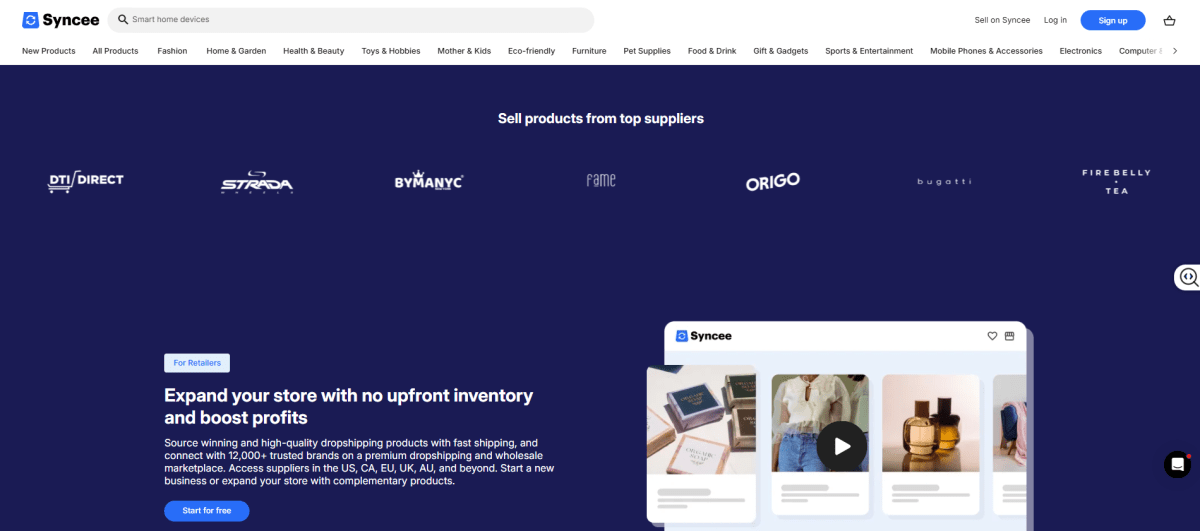
Syncee is a B2B dropshipping and wholesale marketplace that connects merchants with suppliers across the US, Canada, Europe, the UK, Australia, and other markets.
- Based in: Hungary
- Main supplier locations: US, Canada, UK, Europe, Australia, and other regions
- Best for: Merchants wanting a broad supplier marketplace
- Product categories: Fashion, home, beauty, electronics, and more
- Shipping: Varies by supplier, destination, and product
- Integrations: Shopify, WooCommerce, Wix, BigCommerce, and more
- Pricing: Free plan available; paid plans start at $39.99/month
- What makes it stand out: Large supplier marketplace with product sourcing, automated product updates, and order/tracking synchronization
- Potential downside: Supplier quality, pricing, and shipping conditions can vary significantly
Syncee is useful when you don't want to be locked into one supplier network.
You can browse suppliers from different regions and filter by supplier location and shipping destination, then choose products that make sense for your target market.
Just keep in mind that Syncee doesn't handle fulfillment itself. The individual supplier is responsible for shipping, so always check that supplier's delivery times, shipping costs, and return terms before listing a product.
3. SaleHoo
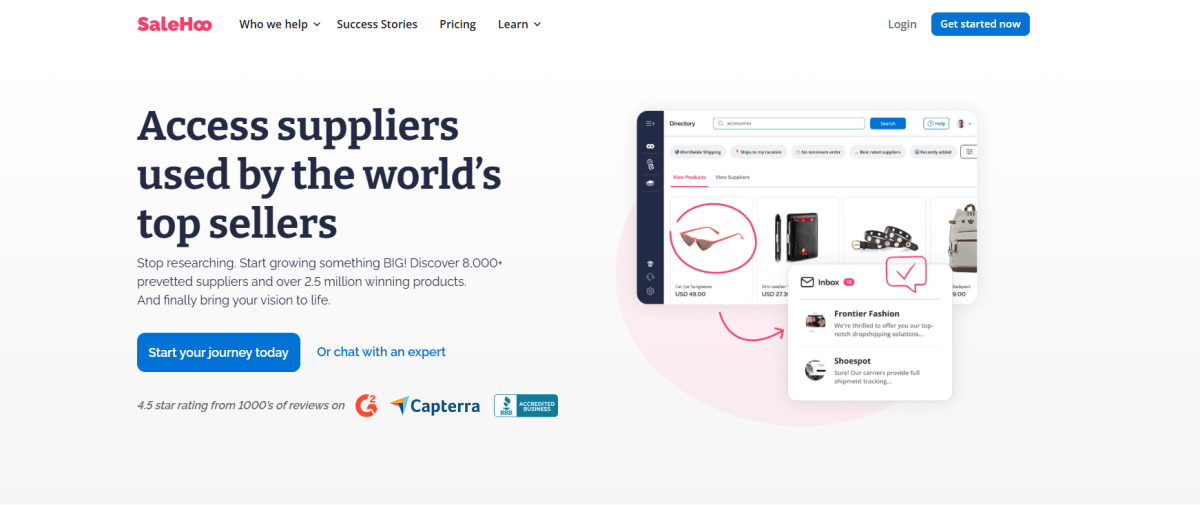
SaleHoo is an online supplier directory and sourcing platform that connects merchants with vetted dropshipping suppliers and wholesalers worldwide.
- Based in: New Zealand
- Main supplier locations: North America, Europe, Asia, Australia, and other regions
- Best for: Merchants looking for vetted suppliers across different markets
- Product categories: Fashion, electronics, health & beauty, home, and more
- Shipping: Varies by supplier and destination
- Integrations: Shopify, WooCommerce, BigCommerce, and more
- Pricing: From $9/month when billed annually
- What makes it stand out: 8,000+ vetted suppliers with filters for supplier type, product category, and pricing
- Potential downside: SaleHoo is primarily a supplier directory and sourcing platform, so fulfillment depends on the supplier you choose
SaleHoo is a good option if you want to spend more time finding the right supplier instead of relying on one supplier network. You can filter its directory by location, product type, and supplier type to narrow down your options.
The trade-off is that SaleHoo doesn't control the fulfillment experience for every supplier. You'll still need to check shipping times, costs, and return policies before listing a product.
4. Avasam
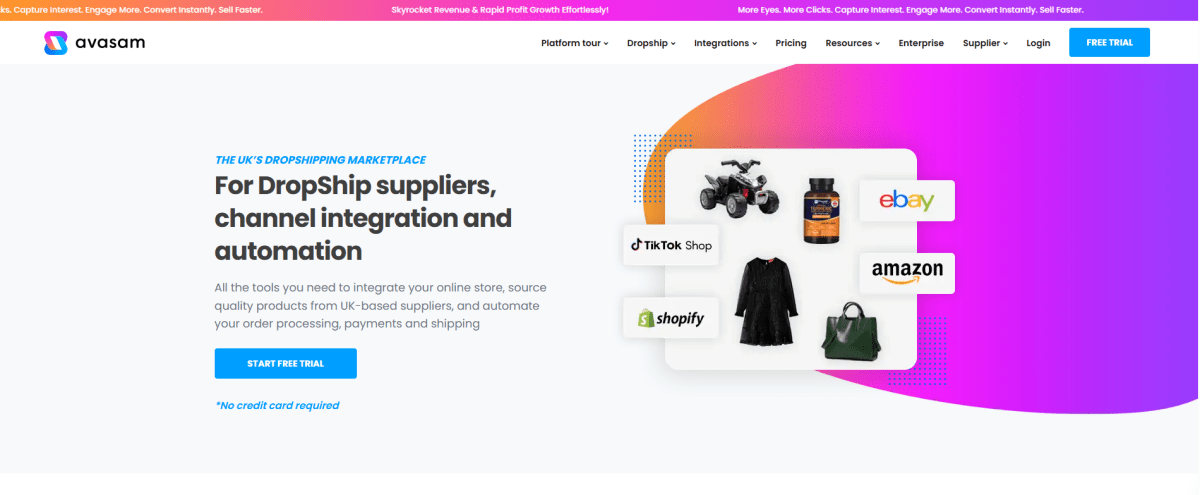
Avasam is a UK-based dropshipping platform that connects retailers with verified UK and international suppliers and automates product and order management.
- Based in: UK
- Main supplier locations: UK and other regions
- Best for: Merchants targeting the UK market
- Product categories: Fashion, beauty, home, electronics, and more
- Shipping: Varies by supplier and destination
- Integrations: Shopify, WooCommerce, eBay, Amazon, and more
- Pricing: Free plan available; paid plans available
- What makes it stand out: Focus on verified suppliers and UK-based fulfillment, with automated product and order syncing
- Potential downside: Product selection is more focused on the UK market, and supplier pricing varies
Avasam is worth considering if the UK is one of your main markets. Its focus on UK suppliers can help you avoid the long delivery windows that often come with cross-border fulfillment.
Another useful feature is automation. Product information, inventory, and orders can be synced with your store, so you're not manually managing every update.
The trade-off is that supplier selection and shipping conditions vary, so you still need to check each supplier before committing to a product.
5. Modalyst
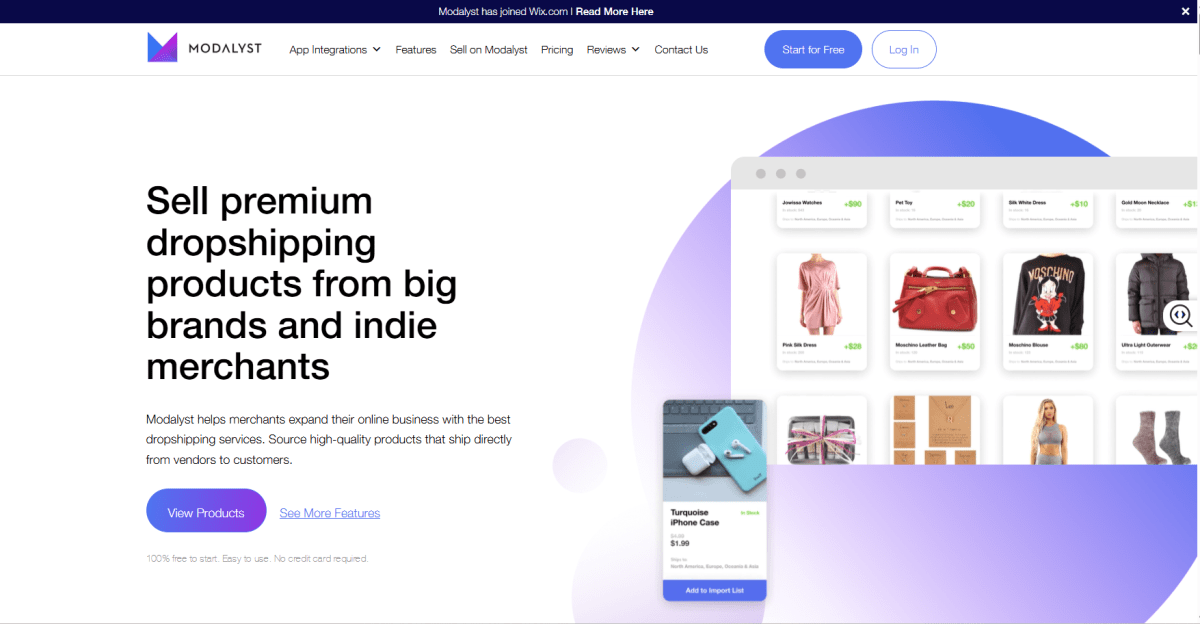
Modalyst is a curated dropshipping marketplace that connects merchants with independent brands and suppliers, including a large network of US suppliers.
- Based in: US
- Main supplier locations: US, Europe, and other regions
- Best for: Merchants looking for independent brands and products with faster shipping options
- Product categories: Fashion, accessories, beauty, home, and more
- Shipping: Varies by supplier and destination; domestic rates are generally capped at $5 and international rates at $15 on the marketplace
- Integrations: Shopify, Wix, eBay, and more
- Pricing: Free plan available; paid plans start at $35/month, plus a 5% transaction fee
- What makes it stand out: Curated independent brands and thousands of US suppliers, with supplier inventory and product data synced to stores
- Potential downside: Product costs can be higher than mass-market China-based suppliers
Modalyst is worth considering when product differentiation matters as much as shipping speed. Its marketplace focuses on independent brands and vetted suppliers rather than simply giving you the biggest possible catalog.
The trade-off is that these products can cost more than what you'd find through China-based marketplaces. Also, shipping isn't automatically fast just because a supplier is on Modalyst, so check the supplier's inventory location and shipping destinations for each product before listing it.
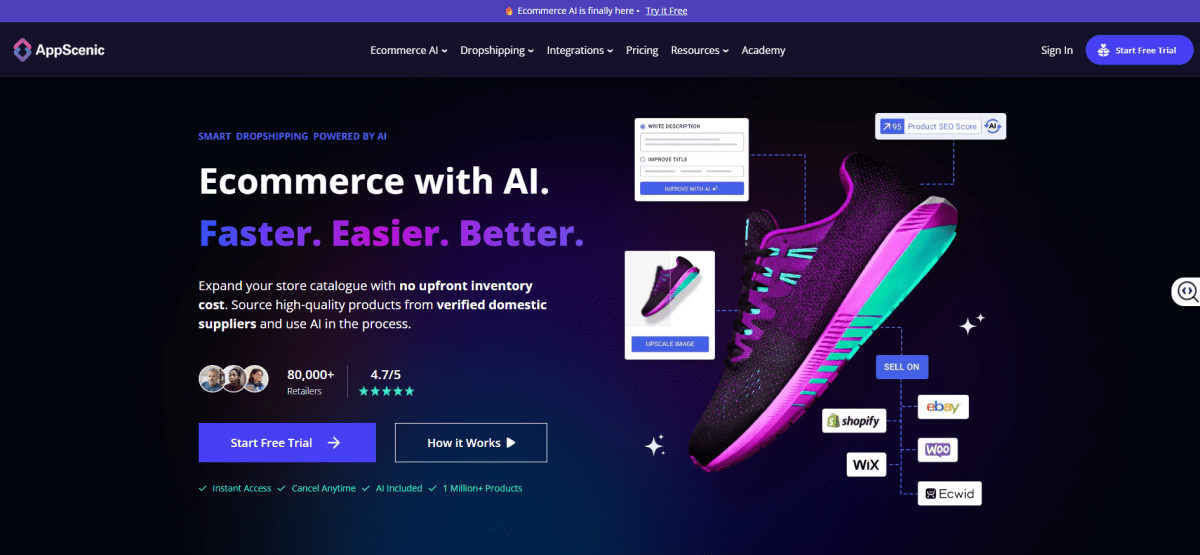
6. AppScenic
AppScenic is a dropshipping platform that connects merchants with verified suppliers in the US, UK, EU, Canada, Australia, and other markets.
- Based in: UK
- Main supplier locations: US, UK, EU, Canada, Australia, and other regions
- Best for: Merchants prioritizing fast domestic or regional fulfillment
- Product categories: Fashion, home & garden, electronics, beauty, pets, fitness, and more
- Shipping: Many suppliers offer 2–5 day shipping, depending on location and destination
- Integrations: Shopify, WooCommerce, Wix, and more
- Pricing: Free plan available; paid plans start at $39/month
- What makes it stand out: Verified domestic suppliers, automated ordering, inventory syncing, and tracking updates
- Potential downside: Paid plans get expensive as your store scales
AppScenic is a strong option when fulfillment speed is one of your main priorities.The platform also automates product syncing, orders, and tracking, so you're not adding a fast supplier at the cost of more manual work.
The main trade-off is pricing. The free plan is useful for browsing, but automatic ordering starts on the $39/month Standard plan. So I'd look at AppScenic more seriously once you've identified products worth scaling, rather than paying for another tool just to test random products.
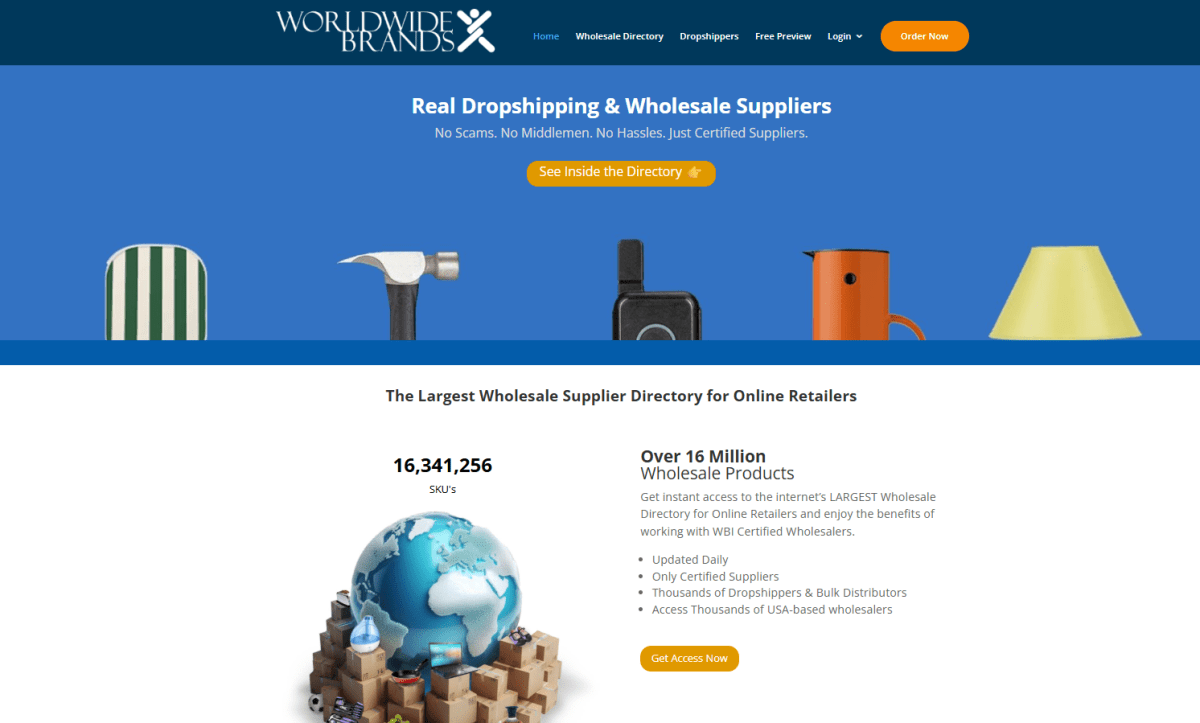
7. Worldwide Brands
Worldwide Brands is a US-based supplier directory that connects online retailers with certified dropshippers, wholesalers, and manufacturers.
- Based in: US
- Main supplier locations: Mainly US and Canada, plus suppliers from other countries
- Best for: Merchants who want to find established wholesale suppliers directly
- Product categories: Pet supplies, electronics, fashion, home, toys, and more
- Shipping: Varies by supplier and destination
- Integrations: Primarily a supplier directory rather than a store integration platform
- Pricing: $299 one-time lifetime membership
- What makes it stand out: 8,000+ certified wholesalers and dropshippers, with 16M+ products listed
- Potential downside: More hands-on than automated dropshipping platforms, since you manage the supplier relationship yourself
Worldwide Brands makes sense when you want to find the supplier yourself rather than rely on a middleman platform. Its directory is built around certified wholesalers, with the majority based in the US, while international suppliers are also available.
The trade-off is convenience. Worldwide Brands doesn't automate product imports, orders, or fulfillment for you. You're using it to find and vet suppliers, then building the supplier relationship directly, which can take more work but gives you more control over sourcing.
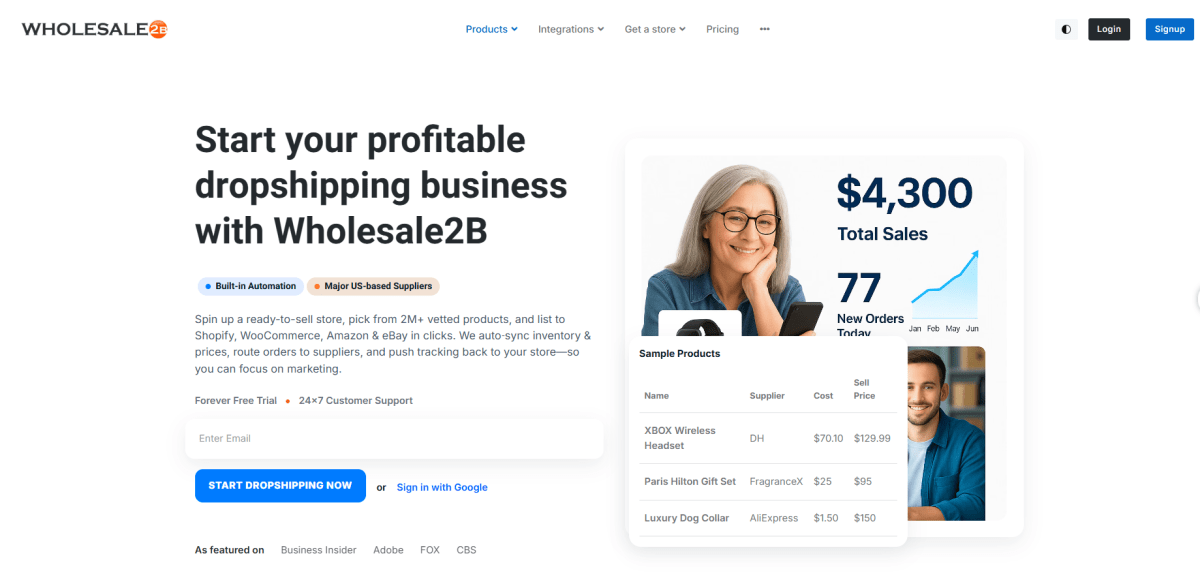
8. Wholesale2B
Wholesale2B is a US-focused dropshipping platform that gives merchants access to a large catalog of products from vetted suppliers and automates product, order, inventory, and tracking management.
- Based in: US
- Main supplier locations: Mainly US, with suppliers in other regions
- Best for: Merchants targeting the US and selling across multiple ecommerce channels
- Product categories: Electronics, home, toys, fashion, pets, general merchandise, and more
- Shipping: Varies by supplier and destination, with a large selection of products shipping from the US
- Integrations: Shopify, WooCommerce, Amazon, eBay, BigCommerce, Ecwid, and more
- Pricing: Free account available; paid plans vary by sales channel
- What makes it stand out: 1.5M+ products, 100+ vetted suppliers, automated inventory and order syncing, and strong US supplier coverage
- Potential downside: The catalog also includes products shipped from China, so you need to filter by shipping origin rather than assume every product is non-China
Wholesale2B is interesting because you can use the platform to specifically filter for products that ship from the US. Its current catalog shows hundreds of thousands of products with US shipping origin, while the platform also works with 100+ vetted suppliers, many of them US-based.
You'll need to check the “Ship from” location for each product and filter out China-based inventory if that is a requirement for your store. That extra check matters more here than it does with platforms built specifically around regional suppliers.
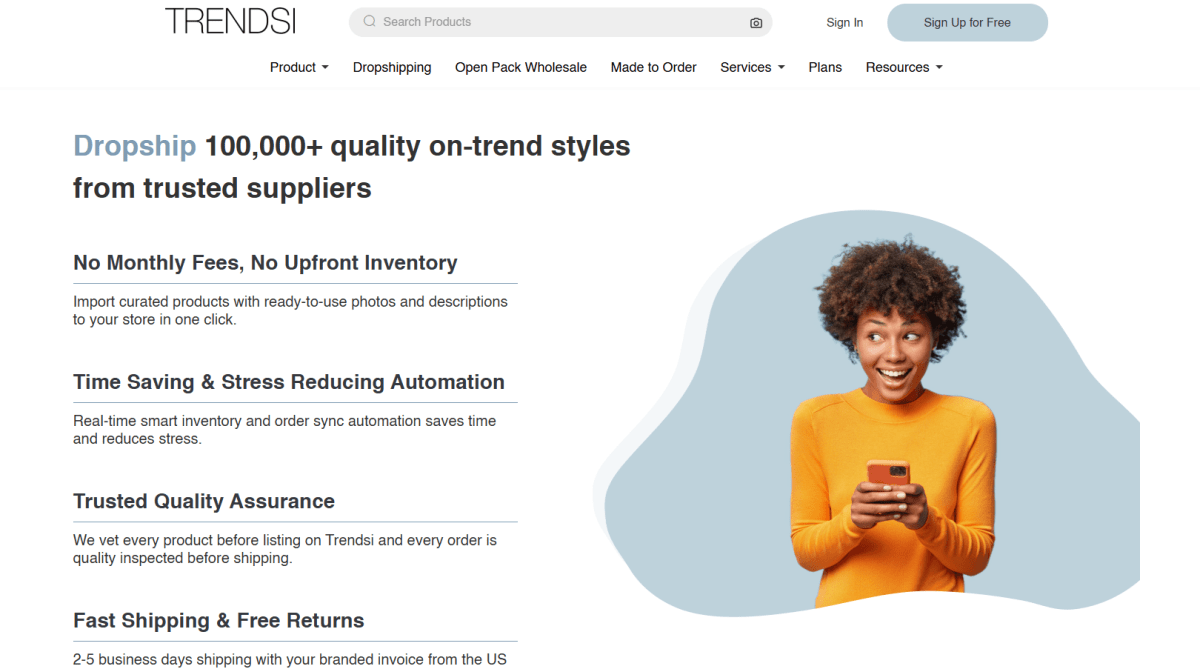
9. Trendsi
Trendsi is a fashion-focused dropshipping supplier with US-based inventory, designed mainly for Shopify and fashion retailers.
- Based in: US
- Main warehouse/fulfillment locations: US and overseas warehouses
- Best for: Fashion and apparel stores targeting the US
- Product categories: Clothing, jewelry, beauty, shoes, bags, accessories, and home
- Shipping: US products typically arrive in 2–5 business days; overseas products generally take 5–10 business days within the US
- Integrations: Shopify and TikTok
- Pricing: Free plan available; Pro starts at $29.90/month
- What makes it stand out: 40,000+ products, US inventory, quality checks, samples, custom branding, and automated order syncing
- Potential downside: It's heavily focused on fashion, so it's not a good fit for general-product stores
Trendsi is one of the stronger choices if you're building a fashion store and want US fulfillment without dealing with a traditional wholesaler. You can filter products by shipping origin, order samples before selling, and have orders automatically synced and processed.
The important detail is that not every Trendsi product ships from the US. US-sourced products can arrive in 2–5 business days, while overseas inventory takes longer, so check the shipping origin before adding a product to your store.
What Should You Watch Out for When Choosing One?
Here are the key things I’d look at before making the switch.
1. Start With Your Target Market, Not Just the Supplier’s Country
Here's the first thing I'd recommend when moving away from China-based suppliers: start with where your customer is, not where the supplier is based.
A supplier being based in the US doesn't automatically mean your product ships from the US. What really matters is where that specific product is stocked and fulfilled from.
Say you're selling to US customers. A US-fulfilled product can give you a very different delivery experience from one that's still coming from overseas, even if both suppliers are US-based.
So when you're comparing non-China suppliers, don't stop at “US supplier” or “EU supplier.” Check the actual fulfillment location, shipping destination, and delivery time for each product.
2. Compare the Full Landed Cost, Not Just Product Price
Non-China suppliers will often look more expensive at first glance, especially when you're comparing the product price alone.
The better comparison is the full landed cost: product cost, shipping, payment fees, potential duties, and the costs that come with returns or delivery issues.
A $6 product from China might look better than a $10 product from a US supplier. But if the US option lets you offer cheaper or faster delivery and reduces the friction around returns, the $10 product may still make more sense for your store.
So don't compare suppliers based on product cost alone. Look at what it actually costs to get the product into your customer's hands while keeping your target margin intact.
3. Check Whether Faster Shipping Actually Improves Your Margin
Faster shipping sounds great on paper. But before you pay more for it, make sure you're actually getting something back from that extra cost.
With a China-based supplier, you might accept longer delivery times because the product cost gives you more room for profit. Switch to a US, UK, or EU supplier, and you're usually paying a premium for that faster fulfillment.
That's the part I'd pay attention to. Faster shipping isn't automatically more profitable. It's more profitable when your store can turn that speed into higher conversion, better retention, or lower operating costs.
4. Check the Supplier’s Inventory Depth Before You Scale
One thing you don't want to discover after a product starts selling is that your new supplier can't keep up with demand.
China-based suppliers often compete on huge product catalogs and sourcing flexibility. With non-China suppliers, especially curated networks or local brands, the selection can be smaller and inventory may be more limited.
That's why I'd look beyond the current stock level. Check whether the supplier regularly replenishes popular products, how inventory updates are handled, and what happens when an item goes out of stock.
5. Check the Return Process Before You Switch
Returns are one of those things that can completely change the economics of a supplier switch.
With a China-based supplier, you're dealing with cross-border returns, so sending a low-cost product all the way back may not make much sense. That's why some stores choose to refund the customer without requiring the product to be returned.
With a local or regional supplier, you may have a much easier return setup. But don't assume it. Check the actual return address, who covers return shipping, how refunds are handled, and whether the supplier accepts returns for your products.
A faster supplier is great, butif returns are still messy, you've only solved half the fulfillment problem.
How to Start Dropshipping With a Supplier Outside of China
Step 1. Choose Your Target Market
Don't start by asking, “Which non-China supplier should I use?”
Start with, “Where are my customers?”
That's because the biggest advantage of a non-China supplier is usually proximity. A US warehouse matters when you're selling to US customers. A UK warehouse matters much more when your buyers are in the UK.
And there's another detail worth checking: supplier location isn't the same as inventory location.
A company can be based in the US while a particular product is still fulfilled from overseas. So before you get excited about a supplier's country, check where your actual winning products are stocked.
Step 2. Shortlist Suppliers That Can Fulfill Locally
Now narrow your options based on where the product ships from, not how impressive the supplier's catalog looks.
This is where the trade-off with China becomes obvious.
China gives you an enormous product pool. A non-China supplier may give you fewer choices, but if the right product is already stocked near your customers, that smaller catalog can be more valuable.
Step 3. Compare Product and Fulfillment Costs
This is where merchants can make a bad comparison.
Don't put a $6 China product next to a $10 US product and immediately conclude that China wins.
Instead, ask what happens to the $4 difference.
Does the more expensive supplier give you faster delivery? Can you charge a higher selling price? Does a stronger delivery promise improve conversion? Could fewer delivery complaints reduce refunds and support costs?
That's the real calculation.
Step 4. Order Samples
A sample isn't just a quality check. It's a reality check on your supplier's entire value proposition.
If a supplier charges more because it promises better fulfillment, test that promise yourself.
Look at the actual delivery time, packaging, tracking, product quality, and consistency. Compare that experience with what you'd get from your China supplier.
Because if the product arrives only slightly faster but costs substantially more, you may not have found a better supplier. You may have simply found a more expensive one.
Step 5. Connect the Supplier to Your Store
Don't underestimate the operational side of the switch.
A supplier can offer excellent local fulfillment and still become a headache if inventory isn't synced properly, orders require manual processing, or tracking information doesn't flow back to your store.
So when comparing integrations, think beyond “Can I connect it to Shopify?”
Ask “What happens after I get 100 orders?”
That's when a small manual task becomes an actual operating cost.
Step 6. Test With a Small Number of Orders
This is where I wouldn't trust the supplier's promises. Let your customers test them for you.
Start with a small batch of orders and measure what actually happens: delivery time, stock accuracy, tracking, product quality, customer complaints, and return requests.
You may discover that the supplier's advertised 2–5 day shipping is excellent. Or you may find that processing takes three days before the package even leaves the warehouse.
Either way, real orders give you something a product page can't: evidence that the fulfillment advantage is real.
Step 7. Track Whether Faster Fulfillment Is Actually Paying Off
Moving off China usually means higher unit or shipping costs, often in exchange for faster delivery. That’s fine if the speed pays for itself. The real question isn’t “Does this supplier cost more?” but “Does the extra speed earn back its premium?”
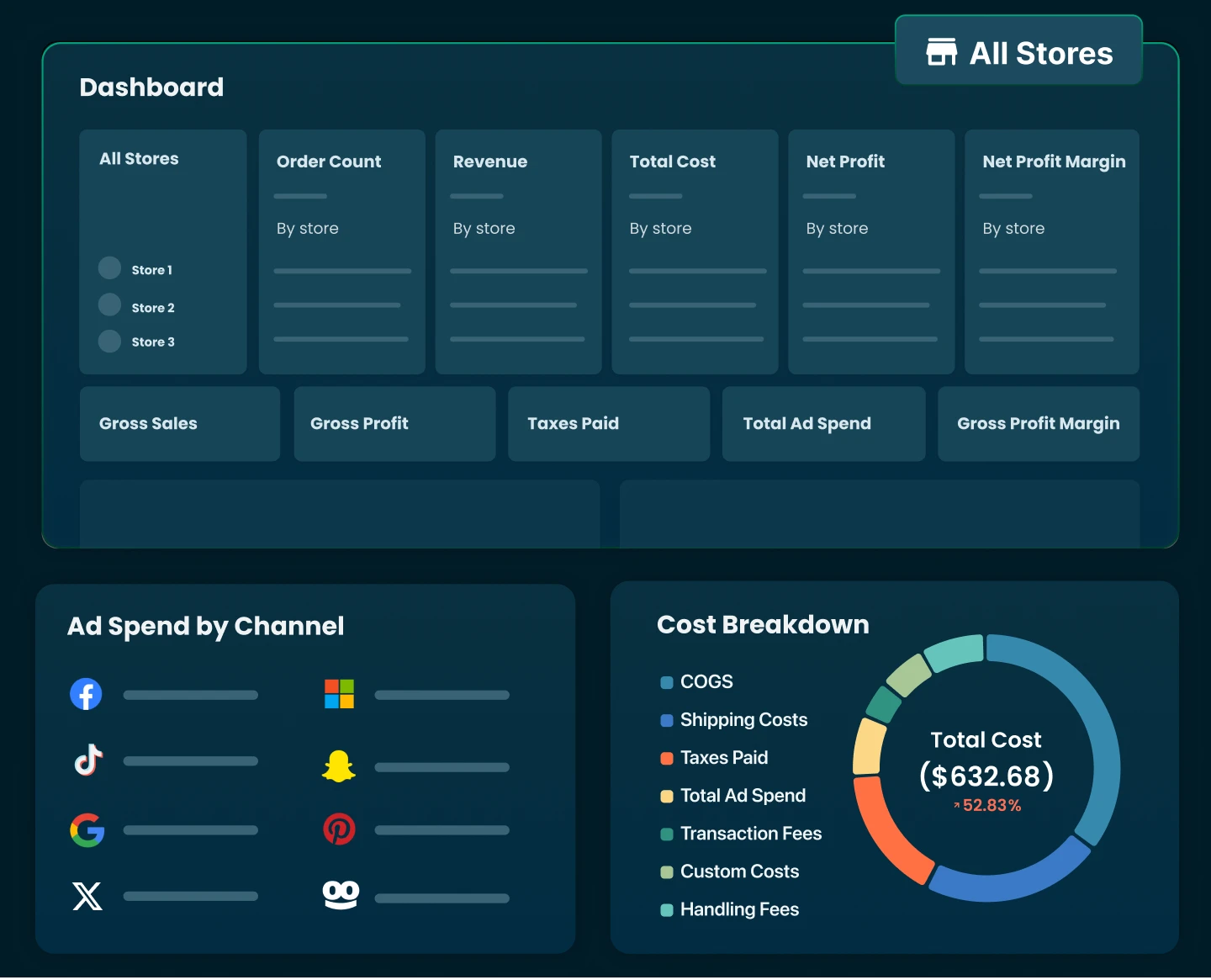
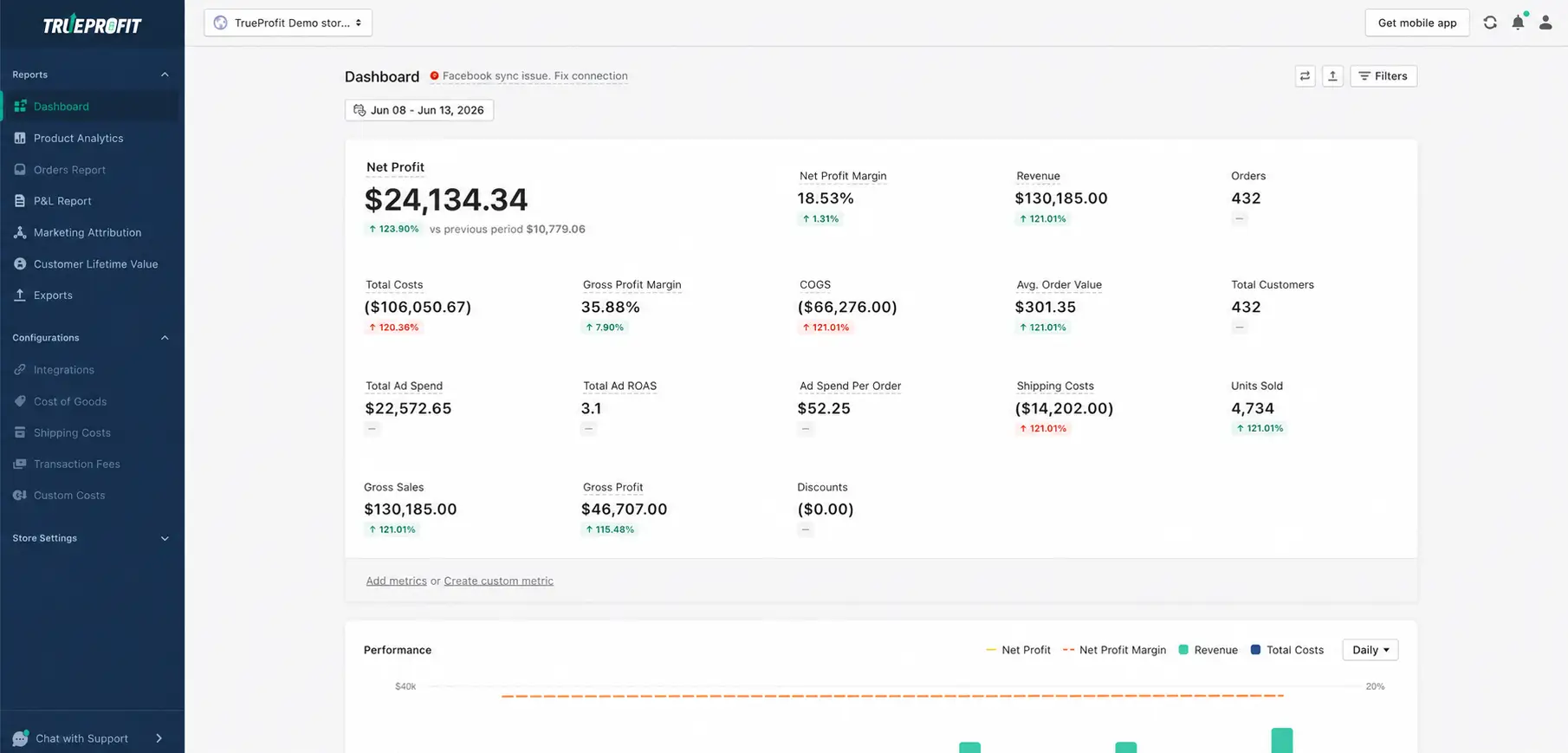
So don’t judge the switch by revenue and product cost alone. From the first order, track the full picture: COGS, shipping, ad spend, payment fees, refunds, and net profit alongside conversion rate and AOV.
You won’t get a perfect cause-and-effect readout, but the pattern still tells you plenty. If net profit per order rises and refunds fall after the switch, that’s a strong signal the faster supplier is worth the premium. If margins fall and nothing else improves, that’s your answer too.
This is where real-time profit tracking matters. Wait for the monthly close, and you may discover four weeks too late that your “faster” supplier ate your margin. Track profit live, and you can catch the shift as orders come in, then hold the supplier, adjust pricing, or move the product before the damage compounds.
A tool like TrueProfit can pull all of that together automatically, showing revenue, costs, and net profit for your store in one view, so supplier calls come down to real numbers instead of hopeful guesses.

Final Thoughts
So, is it time to ditch China?
Not really.
China still makes a lot of sense when low costs and product variety are your priorities. But when faster delivery and a better customer experience start to matter more, suppliers outside China are worth a serious look.
Just don't pay more for the sake of paying more.Make sure the extra cost actually buys your store something valuable.

Rosie Doan is a Senior Content Specialist at TrueProfit with over 4 years of experience creating content for the ecommerce and SaaS industry. Having worked closely with Shopify merchants and ecommerce businesses, she has developed a deep understanding of the challenges store owners face, from growing revenue and acquiring customers to tracking performance, managing costs, and improving profitability.