
10+ Free Dropshipping Suppliers for New and Growing Stores in 2026


Table of Contents
Want to start dropshipping without paying a monthly supplier fee? You absolutely can.
The tricky part is figuring out which “free” suppliers are actually useful for your business. Some let you source and fulfill orders without a subscription, while others offer free plans that come with limits.
So instead of simply looking for the supplier with the lowest price, I’d look at the whole package: product selection, shipping, fulfillment, quality, and the costs you’ll still have to cover yourself.
Here are the best free dropshipping suppliers to consider in 2026, plus how to choose one that makes sense for your store.
In this blog:
The Best Free Dropshipping Suppliers Worth Trying in 2026
If you’re looking for free dropshipping suppliers, don’t just look for a platform with a $0 plan. I’d first check what you can actually do for free.
Some suppliers charge no monthly membership fee and only charge you when you place an order. Others offer a free plan with limits on products, stores, or features. Then you have supplier directories and tools that are free to use but don’t actually handle fulfillment for you.
To make this list useful, I’ve focused on platforms that can help you source or sell products without an upfront monthly supplier subscription. I’ve also included a few tools and directories that are worth knowing about, even though they aren’t traditional dropshipping suppliers.
Supplier | Free cost | Product range | Shipping | Best for |
|---|---|---|---|---|
CJdropshipping | No monthly fee | General products, sourcing, POD | Varies by product and warehouse | Overall dropshipping |
EPROLO | No membership fee | General products, sourcing, branding | Varies by product and destination | Budget-friendly sourcing |
AliExpress | No membership fee | Millions of products | Varies widely by seller and method | Product testing |
Trendsi | Free to use | Fashion and boutique products | Fast US-focused options available | Fashion stores |
Printful | Free plan | Apparel, accessories, home goods | Varies by product and destination | Premium POD branding |
Printify | Free plan | 2,000+ POD products | Varies by print provider | POD product variety |
DSers | Free plan | AliExpress catalog | Depends on AliExpress seller | AliExpress automation |
Zendrop | $0 plan with limits | General products | Varies by product and destination | Beginner-friendly sourcing |
Syncee | Free browsing plan | Wholesale and dropshipping suppliers | Varies by supplier | Supplier discovery |
DropCommerce | Free plan | US and Canadian products | US and Canada-focused fulfillment | US & Canada suppliers |
Shopify Collective | No platform subscription fee | Products from participating Shopify brands | Depends on supplier | Shopify-to-Shopify selling |
1. CJdropshipping

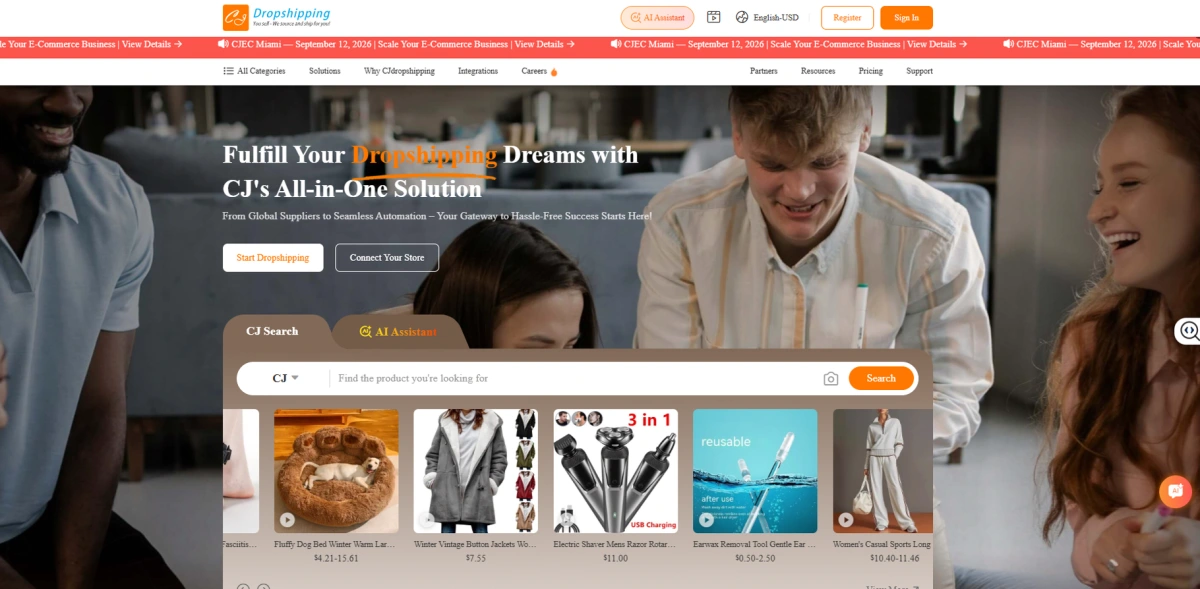
CJdropshipping is one of the strongest options if you want to start without a monthly supplier fee.
You can source products, connect your store, automate orders, and use CJ's fulfillment network without paying a recurring membership just to access the platform. You only pay for the products, shipping, and any applicable services when you actually place orders.
I’d consider CJdropshipping if you want more than a basic product marketplace. It supports product sourcing, global warehouses, custom packaging, and print-on-demand, so you have room to build beyond the initial testing stage.
The trade-off is the platform itself. There are a lot of features, and the dashboard can feel like a lot when you’re just getting started. If you want simplicity above everything else, another option may be easier.
2. EPROLO
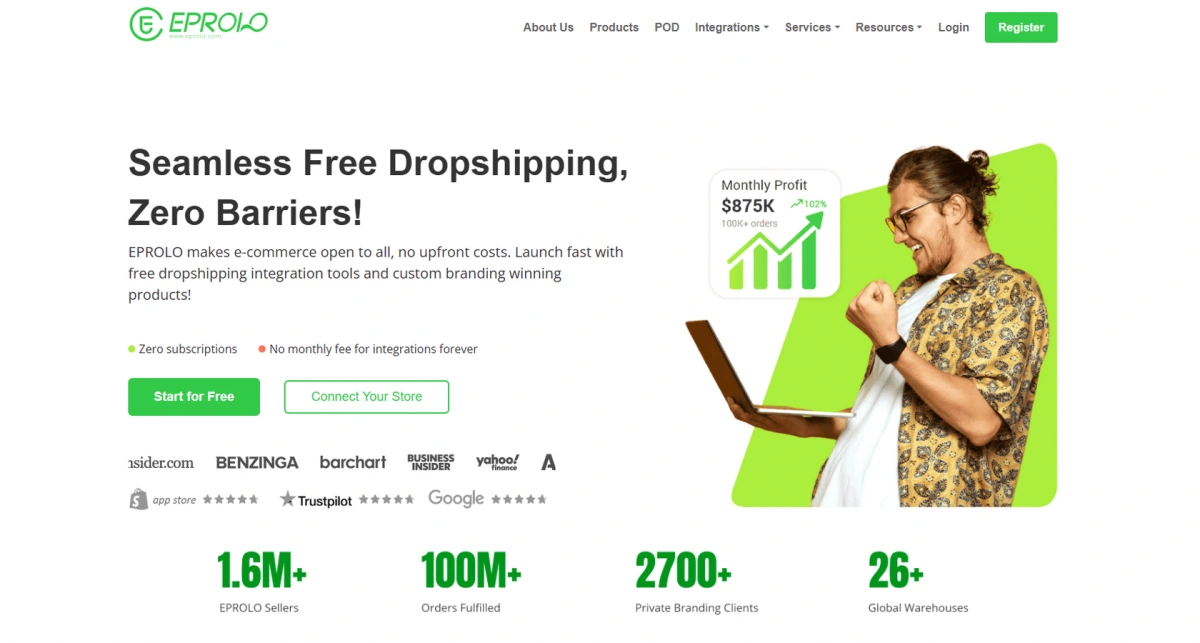
EPROLO is worth considering if you want free sourcing plus basic branding options.
The platform doesn't charge a membership or monthly subscription fee. You can source products, connect your store, and pay for products and shipping when you fulfill orders.
What makes EPROLO interesting is that it goes beyond basic product sourcing. It also supports custom packaging, branding, product sourcing, fulfillment, and print-on-demand.
I’d recommend taking a closer look at EPROLO if your goal is to start lean but eventually build a more branded store. Just make sure you check the shipping method and estimated delivery time for each product before listing it.
3. AliExpress
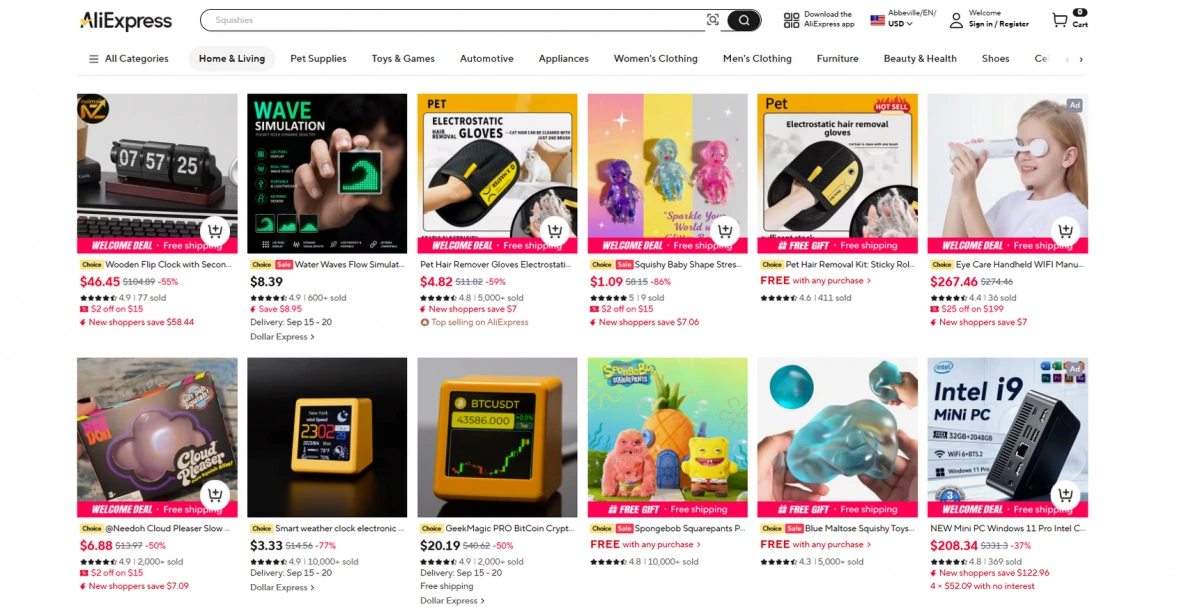
If your priority is testing products with as little upfront commitment as possible, AliExpress is hard to ignore.
There is no membership fee to browse products or buy from sellers. The marketplace gives you access to an enormous range of products across almost every niche, which makes it easy to test different ideas before investing heavily in inventory.
You can connect AliExpress with Shopify through DSers or place orders manually. However, shipping is where you need to be careful. Delivery times can vary significantly depending on the seller, warehouse, destination, and shipping method.
I’d use AliExpress primarily for product research and testing, then consider moving winning products to a supplier with better fulfillment once order volume starts growing.
4. Trendsi
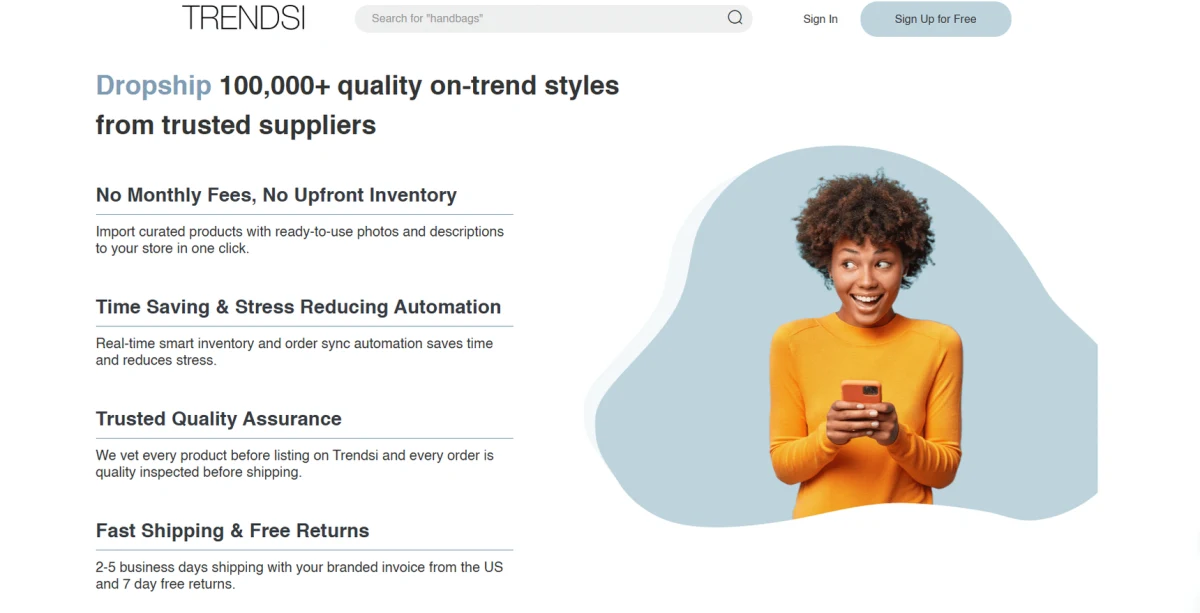
For fashion merchants targeting the US market, Trendsi is one of the more focused free options.
Trendsi specializes in women's fashion, boutique clothing, shoes, accessories, and related products. You can browse its catalog and connect products to your Shopify store without paying a monthly supplier subscription.
Another advantage is its US-focused fulfillment network, which can make delivery much more practical for American customers than relying on long-distance shipping from overseas suppliers.
I’d choose Trendsi when your store is clearly fashion-focused. If you need electronics, home products, beauty tools, or general merchandise, its narrower catalog becomes a limitation.
For more options in this niche, check out our clothing dropshipping suppliers guide.
5. Printful
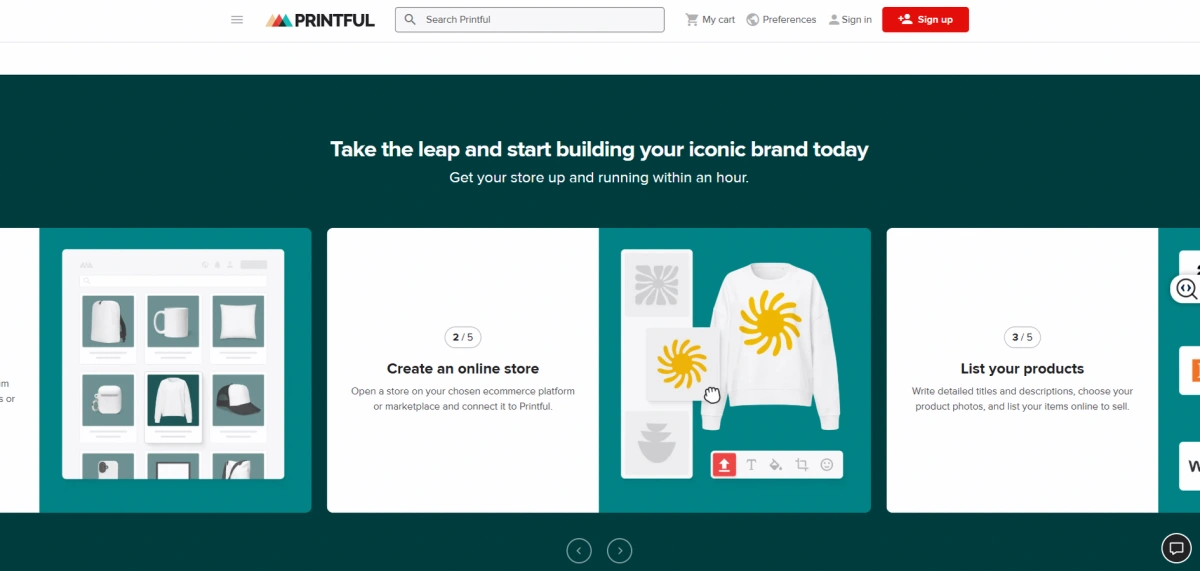
If you want to sell custom products without holding inventory, Printful is a strong free option for print-on-demand.
Printful's free plan lets you create and sell custom products without paying a monthly subscription. You pay for fulfillment when customers place orders, while Printful handles printing, packing, and shipping.
Its catalog covers apparel, accessories, home products, and other customizable items. Shopify integration also makes it relatively straightforward to connect your store and automate fulfillment.
I’d consider Printful if product quality and branding matter more to you than getting the lowest possible product cost. The downside is that its base prices can be higher than some alternatives, so you’ll need to price your products carefully to protect your margin.
6. Printify
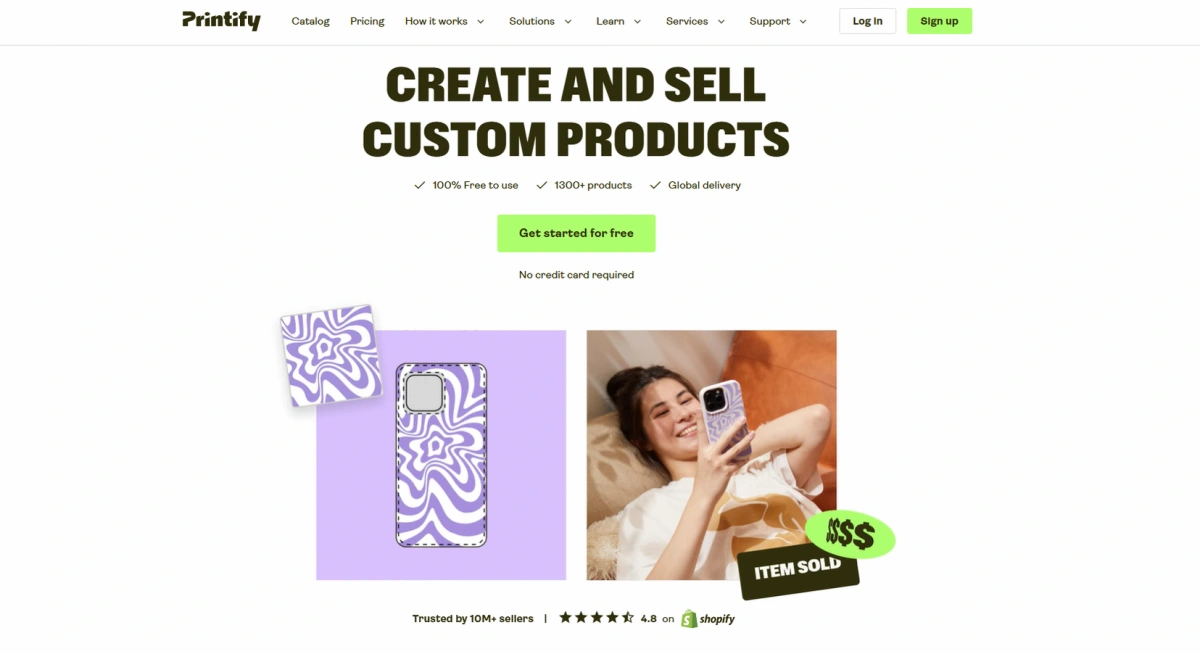
Printify is another strong choice if you want to build a print-on-demand store without paying a monthly platform fee.
The free plan gives you access to a large catalog of customizable products and a network of print providers. You can sell products such as T-shirts, mugs, phone cases, accessories, and home goods without buying inventory upfront.
One thing I’d pay attention to is the print provider you choose. Printify works with different providers, so product quality, production time, and shipping can vary.
That flexibility is also its biggest advantage. You can compare providers and choose the combination of price, quality, and delivery that makes sense for your store.
7. DSers
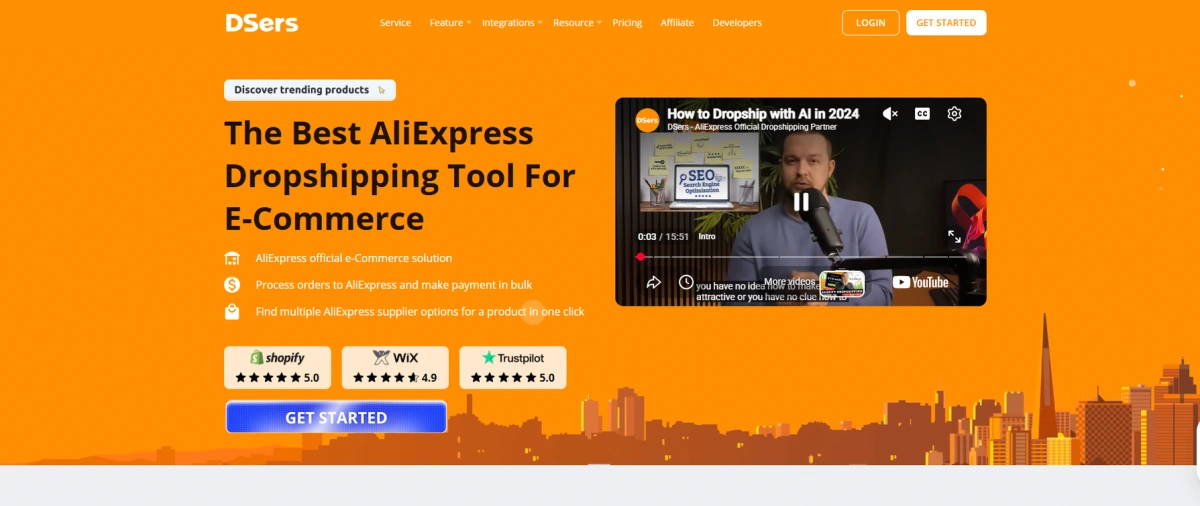
One important distinction: DSers isn't a dropshipping supplier. It's an automation tool that connects your store with AliExpress.
The free plan helps automate product importing and order processing, which can save a lot of manual work if you're sourcing products from multiple AliExpress sellers.
Instead of copying customer details into AliExpress one order at a time, you can process orders in bulk through DSers. Shipping still depends on the AliExpress seller and shipping method you select.
I’d include DSers in your toolkit if you plan to use AliExpress. Just don't treat it as your supplier. Think of it as the automation layer between your store and your AliExpress suppliers.
8. Zendrop
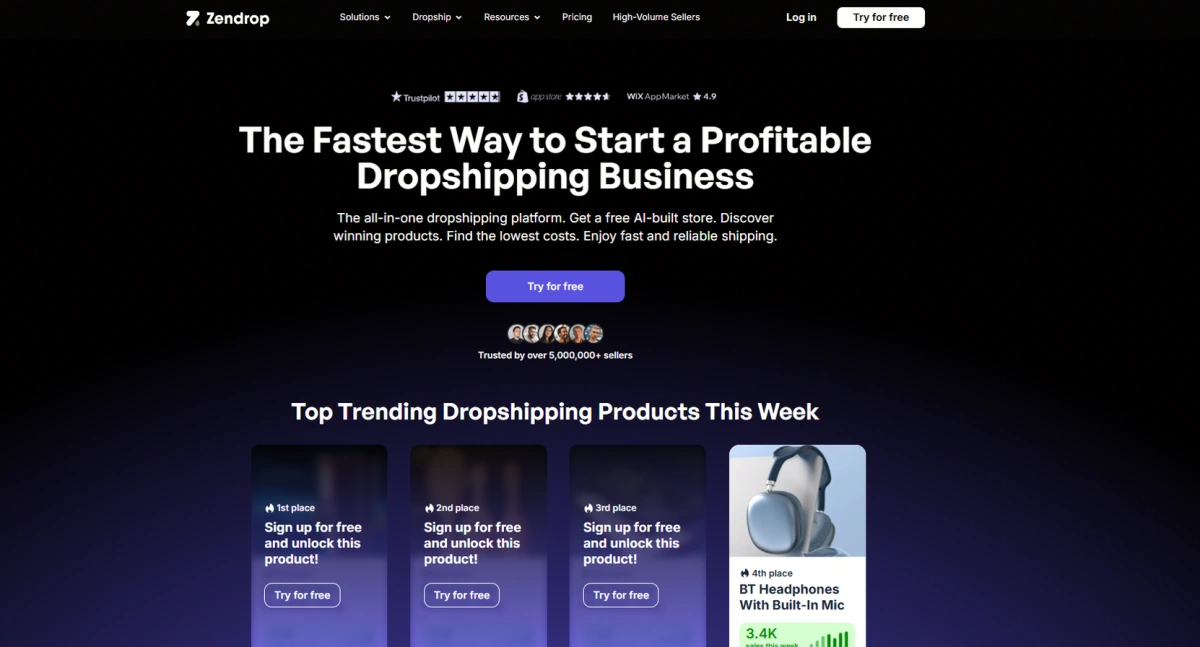
Zendrop is worth considering if you want a more beginner-friendly sourcing platform, but don't assume everything is free.
Zendrop offers a $0 plan, but free access comes with limitations. Some of the features and product usage you may need as your store grows require a paid plan.
That makes Zendrop different from platforms such as EPROLO or CJdropshipping, where you can operate without a recurring membership fee and pay mainly when you fulfill orders.
I’d use Zendrop's free access to explore the platform and see whether its workflow fits your business. Before adding a large number of products, check the current plan limits and fulfillment costs so the upgrade doesn't come as a surprise.
If you're completely new to dropshipping, our beginner's guide to starting a dropshipping business covers the basics you need before choosing a supplier.
9. Syncee
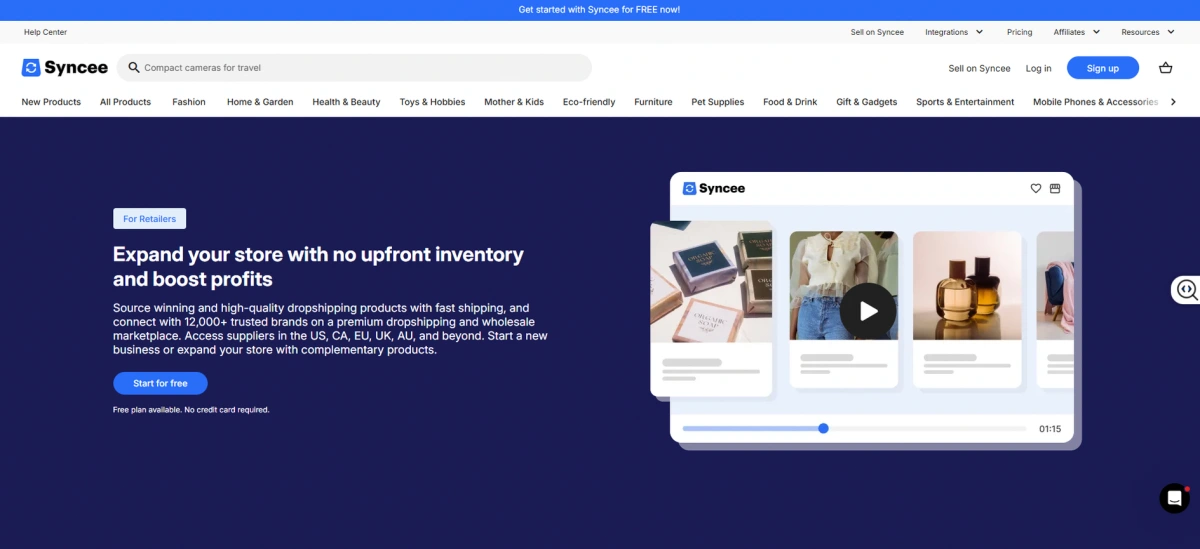
Syncee is more useful as a supplier discovery platform than as a completely free dropshipping solution.
Its free access lets you explore suppliers and products, which can be useful if you're trying to find US, European, or other regional suppliers for a specific niche.
However, free access has limitations, particularly around importing products and using the platform's full automation features. So don't assume that finding a supplier for free means you can run the entire fulfillment workflow for free.
I’d use Syncee when supplier location and product quality are more important than simply finding the cheapest option. Once you find a supplier you like, check what you'll actually need to pay to import and manage their products at scale.
10. DropCommerce
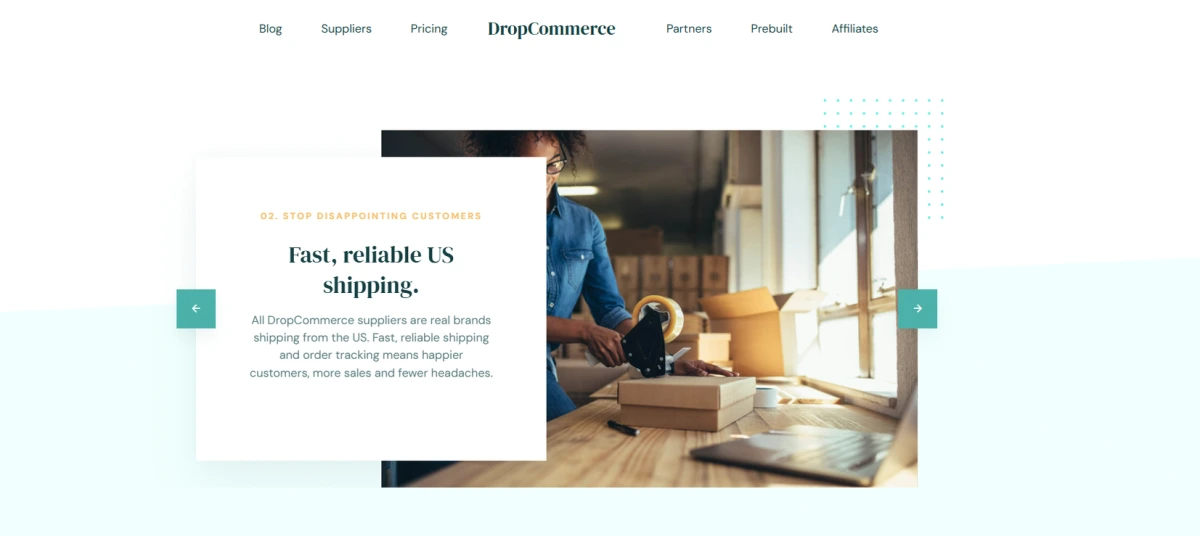
If your main concern is shipping speed, DropCommerce is worth a look.
Its supplier network focuses on businesses in the US and Canada, which can be a better fit if you want to serve North American customers without relying entirely on overseas fulfillment.
DropCommerce also offers a free plan, so you can explore the platform without adding another monthly subscription right away. The trade-off is that the free plan comes with limitations, so you’ll need to check what features and products are available before building your store around it.
I’d consider DropCommerce if faster North American fulfillment matters more to you than having the lowest possible product cost. It can be especially useful for stores targeting the US or Canada where delivery speed and customer experience play a bigger role in the buying decision.
11. Shopify Collective
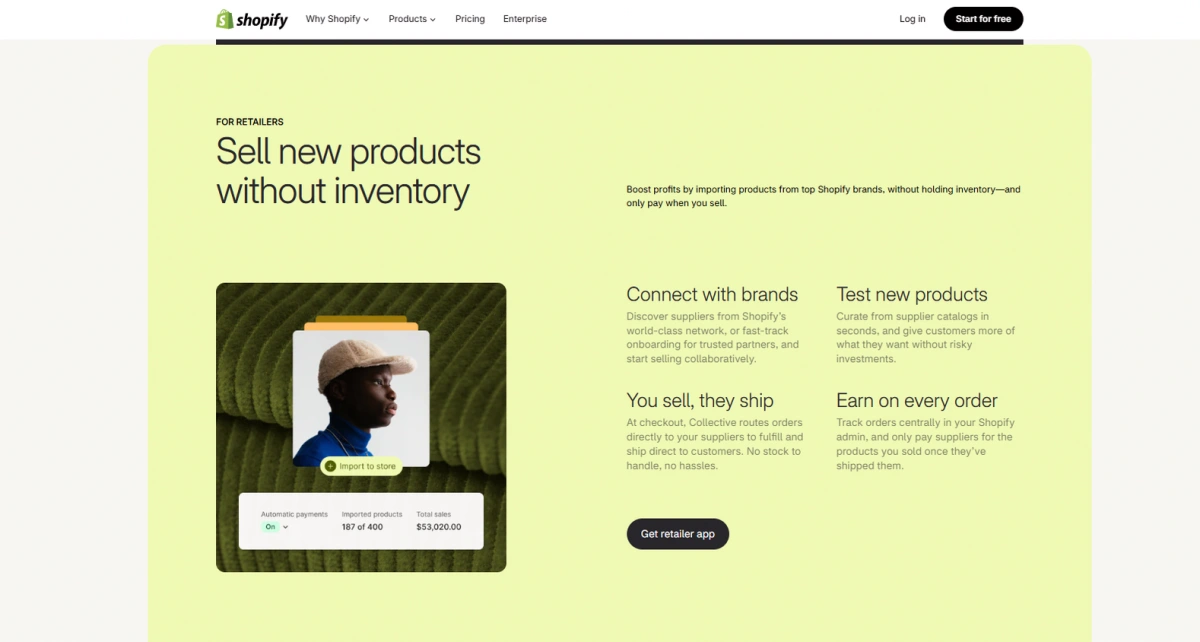
If you're already running a Shopify store, Shopify Collective is an option worth checking before looking elsewhere.
Instead of sourcing products from overseas marketplaces, Collective lets eligible Shopify merchants sell products from other participating Shopify brands. The supplier handles fulfillment while you focus on selling the products through your store.
This can be a good fit if you want to build a curated store with established brands rather than relying entirely on generic products.
The catch is that availability isn't universal. Eligibility, supplier availability, product categories, and regional access can vary, so check whether Collective is available for your store before building your sourcing strategy around it.

How to Vet a Free Supplier Before You Commit
Finding a supplier with a $0 monthly fee is easy. Finding one that won't create problems for your store is the real challenge.
I’d look beyond the product price and check four things before committing. A supplier with slightly higher costs can easily be the better option if it delivers faster, has better quality, and makes fulfillment easier.
What to check | What to look for |
|---|---|
Sample order | Order the product yourself to check quality, packaging, tracking, and actual delivery time. |
Return and refund policy | Understand who pays for returns, defective products, and replacements before you start selling. |
Processing and shipping speed | Check the actual delivery estimate for your target market and make sure it matches what you promise customers. |
Recent supplier feedback | Look for recent reviews and recurring complaints about quality, shipping, stock, or customer support. |
How to Work Smarter With Free Dropshipping Suppliers
A free supplier can be a great way to keep costs low, but you’ll usually have to be a little more hands-on.
That’s not necessarily a bad thing. When you’re still testing products, being more involved can actually help you understand your costs, customers, and fulfillment process before you start scaling.
Here’s how you can approach it.
Use Free Suppliers to Test, Not Just to Save
The biggest advantage of a free supplier isn’t simply avoiding a monthly fee. It’s giving you a low-risk way to test whether a product is worth scaling.
Use that stage to validate demand, check your margins, and see how customers respond before committing to paid tools, premium suppliers, or larger inventory orders.
Once a product proves itself, you can then decide whether the same supplier can support your next stage or whether it’s time to upgrade.
Test the Entire Customer Experience
Don’t judge a supplier by the product page alone.
Order samples and look at the experience from your customer’s perspective. How long does fulfillment take? Is the packaging acceptable? Does the product match the listing? Is the tracking information reliable?
A supplier might be free, but if poor fulfillment leads to refunds and unhappy customers, you’re paying for it somewhere else.
Keep an Eye on Free Plan Limits
This is easy to overlook.
Some suppliers offer free access but limit the number of products you can import, orders you can process, automation features, or supplier information you can access.
Before building your store around a free plan, check exactly what happens when you hit those limits. You don’t want your store to depend on a feature that suddenly requires a paid upgrade once your sales pick up.
Don’t Let Low Supplier Costs Hide Your Real Costs
A $0 supplier fee can look great on paper, but it tells you very little about your actual profitability.
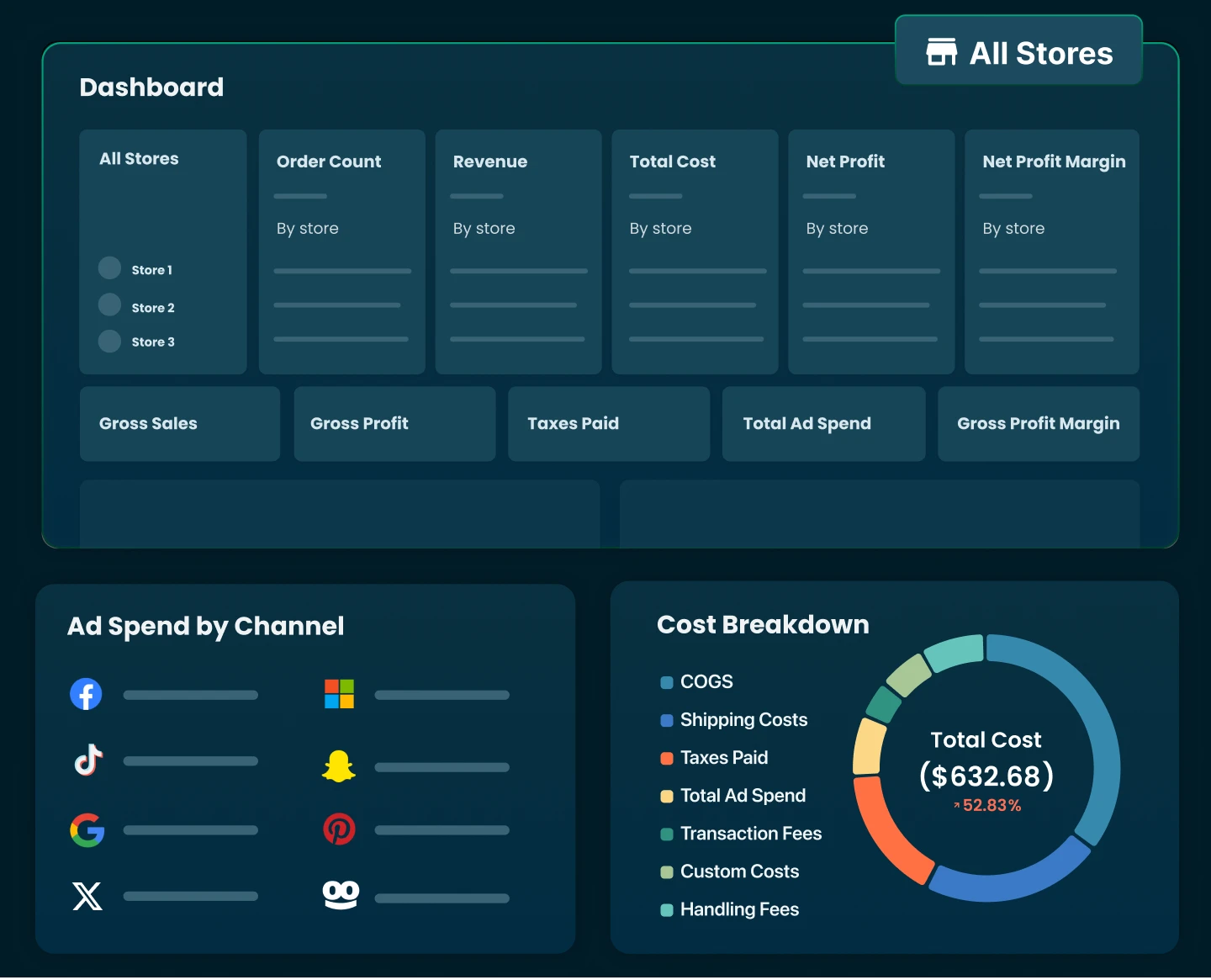
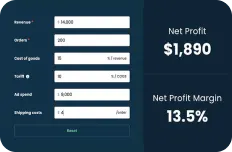
Product costs, shipping, payment processing, ad spend, refunds, replacements, and discounts can all affect what you keep from each order.
I’d track your total cost per order and net profit, not just how much you’re saving on supplier fees. That gives you a much better basis for deciding whether a free supplier is actually worth using.
Know When Free Has Done Its Job
Free suppliers are particularly useful during the testing stage. But once your store starts getting consistent orders, your priorities may change.
You may need faster fulfillment, better automation, custom branding, more reliable inventory, or stronger supplier support. At that point, paying for those improvements can make more sense than forcing a free solution to handle a business it wasn’t designed for.
When Should You Switch to a Paid Dropshipping Supplier?
Free suppliers are great when you're validating products, keeping costs low, or handling a small number of orders. But once your store starts gaining traction, I’d stop asking whether a supplier is free and start asking whether it’s profitable.
A paid supplier or upgraded plan can make sense when the extra cost saves you enough time, improves fulfillment, or gives you better margins.
What changes | Why a paid supplier or plan may help |
|---|---|
Order volume increases | Advanced automation and bulk processing can save time and reduce fulfillment errors. |
Faster fulfillment becomes important | Better warehouse locations or priority shipping options can improve delivery times. |
You want stronger branding | Custom packaging, inserts, and private-label options can help create a more branded customer experience. |
You need more automation | Higher-tier plans may unlock better inventory sync, order automation, and product management tools. |
Better unit economics justify the fee | Lower product costs or better shipping rates can offset a monthly subscription. |
I’d make the switch based on the numbers, not the order count alone. If a $30 monthly plan saves several hours of manual work or increases your profit per order enough to cover the fee, it can already be worth considering.
Before upgrading, compare the additional monthly cost with the profit or time you expect to gain. A supplier that costs more upfront can still be the better choice if it improves your overall margins.

Final Thoughts
“Free” is a great place to start. It’s not necessarily where you want to stay.
Use free suppliers to test products, validate demand, and keep your initial costs under control. Once your store starts growing, look at what’s slowing you down and whether paying for better fulfillment, automation, or branding can actually improve your bottom line.
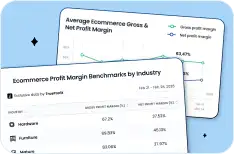
And remember, more sales don’t automatically mean more profit. Once you start getting consistent orders, it’s worth looking at the full picture, from product and shipping costs to ad spend and fees.
That’s where having a clear view of your numbers becomes important. A profit analytics platform like TrueProfit, the #1 net profit analytics platform for Shopify merchants, can help you see what you’re actually keeping after those costs.

Rosie Doan is a Senior Content Specialist at TrueProfit with over 4 years of experience creating content for the ecommerce and SaaS industry. Having worked closely with Shopify merchants and ecommerce businesses, she has developed a deep understanding of the challenges store owners face, from growing revenue and acquiring customers to tracking performance, managing costs, and improving profitability.