8 Best Low-Cost Dropshipping Jewelry Suppliers for Shopify 2026 (Ranked by Strategy)



Table of Contents
Finding the best dropshipping jewelry suppliers at low cost is genuinely hard. Not because good suppliers don't exist, but because most lists are written by people who have never actually ordered from them.
This guide is different. Below you'll find a deep dive into 8 suppliers that work specifically for Shopify and eCommerce stores, whether you're testing your first product or processing 100+ orders per day. Each entry covers pricing, real US shipping times, honest pros and cons, and who each supplier is actually right for.
The guide also covers pricing, branding, and a simple vetting checklist before you scale.
In this blog:
What "Low Cost" Actually Means in Jewelry Dropshipping
Low cost does not mean lowest price per unit. It means the best landed cost relative to the quality level your customers expect.
A $1.50 zinc alloy ring that generates a 15% return rate and three chargebacks per 100 orders is more expensive than a $4.00 PVD stainless steel ring with a 1% return rate. When you're evaluating low-cost jewelry suppliers for bulk wholesale orders, you need to factor in return logistics, dispute resolution time, and ad account health from bad reviews.
The ranking looks at total cost, not just unit price.

The Best Low-Cost Dropshipping Jewelry Suppliers (Organized by Strategy)
The right supplier depends entirely on where your business is right now. If you're still testing products, a brand-focused supplier usually costs more than you need. Once a product is working, staying too long on a testing platform can hurt shipping reliability and customer trust.
Pick the section that matches your current situation.
If You're Just Starting (0–10 Orders Per Day)
At this stage, the main goal is to find a product that converts. Don't invest in custom packaging yet. Don't negotiate bulk wholesale pricing yet. Keep costs as low as possible and run real traffic against real products until you have data.
These two suppliers make it easy to test a wide range of products without upfront inventory.
AliExpress via DSers: Fastest Way to Validate


AliExpress is not a supplier; it's a marketplace with millions of jewelry listings from thousands of Chinese sellers. With DSers, you can import a product into Shopify, run a small paid test, and see quickly whether it has traction.
The workflow is simple: find a listing, import it, run ads, check conversion. If it sells, migrate it to a dedicated supplier. If it doesn't, move to the next one. DSers handle order routing and tracking sync automatically, so you're not touching individual orders manually.
AliExpress works best for early testing. Once you have a few proven products, it usually makes sense to move on. It is not a platform you should still be running at 30+ orders per day.
Pros:
- Broadest product selection for testing; millions of jewelry SKUs
- No upfront cost; no MOQ
- DSers automates most fulfillment tasks
- Customer reviews on listings give early quality signals before you commit
Cons:
- Inconsistent supplier quality; no unified standard across sellers
- Shipping ranges from 7 to 30+ days depending on the individual seller
- Disputes go through AliExpress's platform, not a dedicated support team
- Not viable for brand-building or bulk wholesale at scale
US Shipping: ePacket: 10–15 days. Cainiao Super Economy: 7–18 days. Standard China Post: 15–30 days. Filter for sellers offering ePacket or faster.
Nihao Jewelry: Best for TikTok and Trend-Based Testing

If your store targets the under-35 demographic and your traffic comes from TikTok or Instagram Reels, Nihao Jewelry tends to move quickly with trend-driven styles. They update 100,000+ SKUs weekly to track what's going viral: chunky gold chains, Y2K layered sets, celestial pendants, huggie earrings, stacking rings.
Prices start around $1 per piece with no MOQ. For stores ready to move beyond pure dropshipping, Nihao also offers tiered wholesale pricing at 50-, 100-, and 500-piece thresholds, which makes them worth revisiting as you scale.
Quality is inconsistent across SKUs, so sampling is important. But for the testing phase, the breadth and trend relevance of their catalog is hard to match.
Pros:
- 100,000+ SKUs refreshed weekly to match trending styles
- No MOQ for dropshipping; tiered bulk wholesale pricing at volume
- $1–$5 per unit allows high retail markups
- Direct dropshipping program with basic branded packaging options
Cons:
- Quality varies significantly across SKUs; always sample before selling
- Standard US shipping runs 10–20 business days from China
- Customer support slows during Chinese holiday periods
- Private labeling options are limited at low volumes
US Shipping: Standard from China: 10–20 business days. DHL/FedEx Express: 6–10 days at $8–$15 extra per order. No US warehouse.
If You're Scaling Ads (10–50 Orders Per Day)
At this stage, shipping consistency and operational automation usually matter more than lowest unit cost. In most cases, a supplier delivering in 3 to 7 days will create fewer complaints than one taking 14 to 20 days, even at a lower unit cost.
These three suppliers are the strongest options for stores actively running paid ads and processing consistent daily orders.
CJ Dropshipping: US Stock and Private Agent Support

CJ Dropshipping is a common next step for stores that have already validated products and need more reliable fulfillment. They operate warehouses in California and New Jersey, plus China and Europe, and their Shopify integration supports full order automation.
Its US warehouse network is one of the main advantages for stores targeting US customers. Orders from that warehouse typically arrive within 3 to 7 business days, which can help reduce complaints and refund pressure.
At higher volume, CJ may assign a private agent to help with sourcing and coordination. Your agent handles custom sourcing requests, pre-shipment quality checks, and logistics coordination. For bulk wholesale orders, agents can often negotiate better per-unit pricing than what the platform publicly lists.
Pros:
- US warehouse (CA and NJ) for 3–7 day domestic shipping
- Private agent support for quality control and sourcing at scale
- White-label and custom packaging available
- Bulk wholesale and affordable wholesale pricing tiers
- Strong Shopify and WooCommerce automation
Cons:
- Catalog is broad but not trend-forward; less useful for TikTok-style stores
- Quality control varies between China and US warehouse stock
- Private agent access requires higher order volume to activate
- Support slows during Chinese national holidays
US Shipping: From US warehouse: 3–7 business days. From China: 7–15 days standard, 5–8 days express.
EPROLO: Best for Automation-Heavy Operations

EPROLO suits stores that want to reduce manual fulfillment work. Their platform lets you set order routing rules, auto-trigger purchases when stock drops, and sync tracking numbers back to Shopify without touching individual orders. For stores running 20+ SKUs or multiple storefronts, that saves hours per week.
They also support bulk wholesale ordering and private label packaging at reasonable minimums. Custom pouch inserts, branded thank-you cards, and logo stickers are available through their packaging portal, which makes them a practical option for stores beginning to invest in branded packaging as part of their scaling strategy.
Pros:
- Deep Shopify and WooCommerce automation
- Bulk wholesale pricing tiers for established stores
- Custom and private label packaging options
- Multi-store management from a single dashboard
- Growing US warehouse inventory
Cons:
- Catalog is not trend-forward; weaker for TikTok-style testing
- China warehouse shipping runs 7–15 days to the US
- Platform UI has a learning curve
- Customer support is inconsistent
US Shipping: From US warehouse: 5–10 business days. From China: 7–15 days standard, 5–8 days express.
Zendrop: Reliable Shipping with Real Human Support

Zendrop was built specifically to solve the two things that kill most dropshipping businesses at the scaling stage: unpredictable shipping and nonexistent supplier support.
Their internal team mediates supplier problems, handles replacement orders for defective items, and gives you a direct contact when something goes wrong at volume. For jewelry specifically, where tarnishing, broken clasps, and shipping delays are the most common dispute triggers, that support structure is genuinely valuable. You usually get less direct support on AliExpress and similar marketplaces.
The Pro tier also unlocks better bulk wholesale pricing and priority sourcing. For stores with steady order volume, the added fee may be worth it.
Pros:
- Consistent shipping performance across orders
- Dedicated account manager at Pro tier
- US domestic inventory for 5–10 day delivery
- Formal replacement process for defective items
- Bulk wholesale pricing at Pro tier
Cons:
- About $49/month Pro subscription required for best features
- Curated catalog is smaller than AliExpress or Nihao
- Better suited to established stores; unnecessary overhead for beginners
- Less depth for trend-forward fashion jewelry
US Shipping: US-stocked products: 5–10 business days. Internationally sourced: 7–14 days.
If You're Building a Brand (50+ Orders Per Day or Brand-First Strategy)
At this stage, you're no longer competing on price. You're competing on trust, quality, and positioning. That requires suppliers whose products hold up under wear, ship from the US or EU, and support the perception that your store is a real brand, not a reseller.
These three suppliers support that transition.
Silverbene: Boutique Quality for the Affordable Luxury Segment

Silverbene is not for product testers. It's for stores with a validated concept and an audience that responds to quality. Their catalog covers dainty stacking rings, minimalist chains, tennis bracelets, and birthstone pendants in sterling silver and high-grade stainless steel with rhodium and gold plating.
Most pieces run $8–$30 at wholesale. For stores with AOVs above $50 targeting the "affordable luxury" or boutique segment, the quality-to-cost ratio is strong. Compared with cheaper alloy pieces, they are generally less prone to tarnishing under normal wear, which directly reduces return rates and increases repeat purchases.
The catalog is narrower than any other supplier on this list. That's a feature, not a limitation. A smaller catalog can also make the store feel more focused.
Pros:
- Genuine sterling silver; not fashion costume jewelry
- Consistent finishing reduces defect rates and disputes
- Ideal for boutique and luxury brand positioning
- Cleaner packaging presentation than most competitors at this price range
Cons:
- Highest per-unit cost on this list; requires AOV above $50 to maintain margins
- Small catalog; not suitable for trend-driven product testing
- Limited bulk wholesale discounts at lower volumes
- Asia-based shipping adds 7–15 days to US delivery
US Shipping: Standard: 7–15 business days. DHL Express: 4–7 days at additional cost.
ShineOn: High-Margin Personalized Gifts with US Fulfillment

ShineOn dominates a specific, highly profitable niche: personalized jewelry for gifting occasions. Mother's Day pendants, memorial pieces, anniversary rings, custom name necklaces, and "to my daughter" message card sets are its core catalog. Everything is produced and shipped from the US.
Because the product is personalized, you're not competing on price at all. A customer comparing your $59 engraved pendant to a $12 AliExpress necklace is not making the same purchase decision. They're buying something specific and emotionally meaningful. That changes how customers compare options.
The margin math is unusually strong: a ShineOn pendant costs $10–$18 landed including the gift box. Retail pricing runs $49–$89, sometimes higher with upsells. Many sellers target gross margins in the 60 to 80 percent range.
Pros:
- Fully US-based production and fulfillment; 3–5 day shipping
- 60–80% gross margins consistently achievable
- Personalization removes direct price comparison
- Free gift box included with every order
- Dedicated Shopify app with clean integration
Cons:
- Narrow catalog by design; limited product variety
- Higher per-unit cost eliminates low-ticket strategies
- Strong seasonal dependency; peaks around Mother's Day, Christmas, Valentine's Day
- No bulk wholesale or volume discount model
US Shipping: 3–5 business days nationwide.
Richard Cannon Jewelry: Real Fine Jewelry at Dropshipping Terms

Richard Cannon is the clearest fine-jewelry option on this list, meaning actual 10K and 14K gold, diamond studs, birthstone rings, and sterling silver sets, at dropshipping terms with no inventory requirement.
Based in New York, they ship everything domestically in 2–5 business days. Their wholesale program includes tiered bulk pricing at higher volume thresholds. You'll need to apply for a verified business account to access dropshipping pricing, which means this isn't accessible to brand-new stores.
Customers often evaluate fine jewelry differently from fashion jewelry. A customer who won't pay $80 for a fashion necklace will pay $150–$200 for a 10K gold piece without hesitation. Your sourcing cost at $40–$70 supports real margins at significantly higher AOVs, and dispute rates are lower because customers treat high-value pieces with more care.
Pros:
- Real precious metals and genuine stones; not imitation jewelry
- US-based; 2–5 day nationwide shipping
- Strong credibility for premium brand positioning
- No MOQ on dropshipping; bulk wholesale pricing at volume
Cons:
- Higher per-unit cost requires AOV above $100 to maintain healthy margins
- Verified business account required; not accessible to new stores
- Smaller catalog than fashion jewelry suppliers
- Higher-value returns require more careful handling
US Shipping: 2–5 business days from their New York facility.
Aligning Supplier Choice with Your Business Stage
The common mistake new dropshippers make is using a scaling-stage supplier while still testing, or staying on a testing platform after they've found winning products. Here's how to think about it:
Stage 1: Testing (0–10 Orders Per Day)
Use AliExpress via DSers or Nihao Jewelry. Your only goal is finding a product that converts. Keep costs minimal, test 5–10 products simultaneously, and gather real purchase and review data before committing to any supplier relationship.
At this stage, skip bulk pricing talks and custom packaging. Focus on validating the product first.
Stage 2: Growing (10–50 Orders Per Day)
Migrate your winning products to CJ Dropshipping or EPROLO. Shipping consistency and automation matter more than unit cost at this stage. Begin testing affordable wholesale pricing on your top 3 SKUs and start with basic branded packaging.
Stage 3: Scaling (50+ Orders Per Day)
At higher volume, Zendrop Pro or a private CJ agent can make more sense. Invest in custom packaging, professional lifestyle photography, and supplier-level quality control. At this volume, operational efficiency and defect rate management directly affect your bottom line.
Stage 4: Brand-Building
Transition to Silverbene or Richard Cannon Jewelry to compete on quality and positioning rather than price. At this stage, your brand should be able to charge a premium and your supplier needs to support that promise.
How to Source Low-Cost Jewelry Without Looking "Cheap"
Sometimes the product gap is smaller than it seems. Packaging, photography, and presentation often do more to shape perceived value.
Custom Packaging and Private Labeling: The Biggest Lever
A branded thank-you card ($0.05–$0.15 per unit), a ribbon, and a logo-printed pouch together cost under $1 total. That combination can make the product feel more premium and turns a transactional purchase into a gift-level experience.
At 20+ orders per day, most suppliers on this list will accommodate custom packaging for affordable wholesale bulk orders. At lower volumes, platforms like Packlane, noissue, or Alibaba let you order small runs (50–100 units minimum) of branded boxes and mailers.
Stainless Steel vs. Alloy: Why Material Choice Drives Retention
Tarnishing is one of the most common reasons customers complain about jewelry. A product that turns green on a customer's wrist within two weeks of purchase generates a refund request, a negative review, and potentially a chargeback.
PVD-plated stainless steel costs $1–$2 more per unit at wholesale. It holds its finish under daily wear, sweat, water, and UV exposure. The extra cost is often easier to absorb than repeated refunds and complaint handling.
When evaluating any supplier, ask specifically: "Is this PVD-plated stainless steel, coated alloy, or zinc-based?" If they can't answer that clearly, the default assumption should be zinc alloy.
Ditch the Stock Photos: Lifestyle Content Converts Better
Supplier stock photos are used by thousands of stores simultaneously. Customers often see them as generic. They don't build brand trust, and they don't convert as well as original content.
The highest-performing jewelry ads consistently use:
- Lifestyle photography: Real people wearing pieces in natural light, not mannequins on white backgrounds
- UGC video: Customer unboxings, wear tests, and reactions
- Short video clips: 6–12 second cuts of light catching a pendant or ring often do better than static images on major ad platforms
Platforms like Billo, Trend, or Fiverr let you commission UGC content for $50–$150 per piece. Replacing supplier stock photos with original content typically produces an immediate improvement in click-through and conversion rates.

Final Thoughts
The best low-cost suppliers are not always the ones with the lowest unit price. They're the ones with the right combination of product quality, reliable shipping, and responsive support for your specific stage of business.
Start with AliExpress or Nihao to validate products without financial commitment. Migrate winning SKUs to CJ Dropshipping or Zendrop when reliability becomes more important than flexibility. Move up to Silverbene or Richard Cannon when you're ready to compete on brand rather than price.
A simpler way to think about it is this: test first, then improve fulfillment, then invest in branding. Low-cost jewelry dropshipping can be extremely profitable when you treat your supplier as a business partner rather than a commodity.
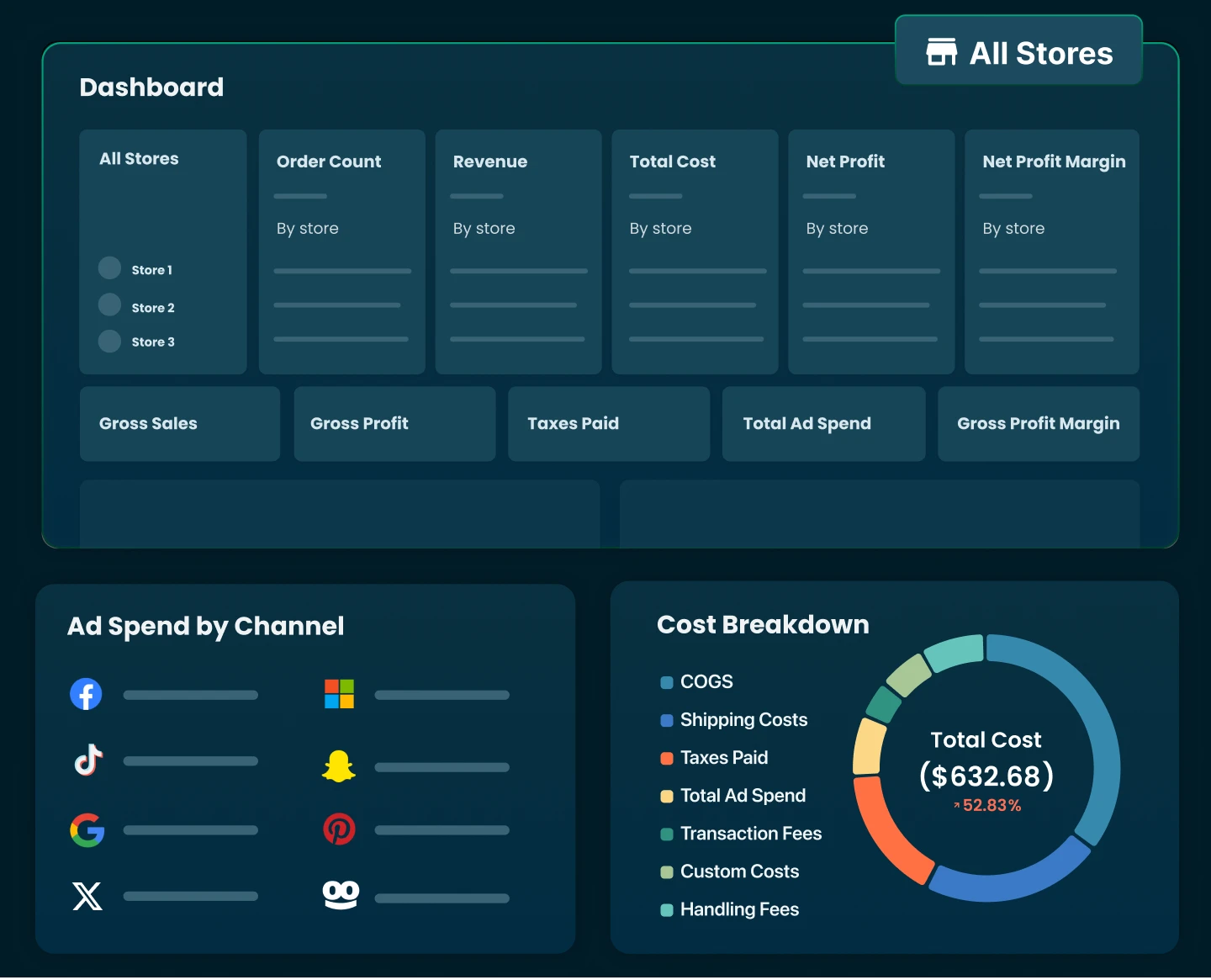
What ties all of this together is not just supplier choice, but how well you manage your margins as you move between stages. Because profitability doesn’t come from finding the cheapest supplier. It comes from knowing exactly when to switch, what to optimize, and how each decision impacts your bottom line. That’s also where tools like TrueProfit quietly become useful, giving you a clearer view of net profit as your operations get more complex.
Irene Le is the Content Manager at TrueProfit, specializing in crafting insightful, data-driven content to help eCommerce merchants scale profitably. With over 5 years of experience in content creation and growth strategy for the eCommerce industry, she is dedicated to producing high-value, actionable content that empowers merchants to make informed financial decisions.