20+ Best Halloween Dropshipping Products (2026): High-Margin Ideas, Trends & Supplier Tips


Halloween is one of the most profitable short windows in ecommerce. U.S. shoppers spent a record $13.1 billion on Halloween in 2025, up from $11.6 billion the year before, according to the National Retail Federation (NRF). That demand is seasonal, urgent, and driven almost entirely by social media, which makes it a near-perfect fit for dropshipping.
I've put together the products, margins, suppliers, and marketing angles that actually move units in Q4. Every product below includes a realistic price range and gross margin so you can build a store that makes money, not just sales.
What Are the Best Halloween Dropshipping Products in 2026?
The best Halloween dropshipping products in 2026 are decor, accessories, and party items with high perceived value and strong gross margins, typically 60% to 80%.
Costumes drive the most search volume, but decor and add-ons carry better margins and lower return rates. NRF's 2025 survey shows spending split across costumes ($4.3B), decorations ($4.2B), and candy ($3.9B), so the demand is spread across categories, not just outfits.
Here's the full lineup at a glance before the deep dives:
Now the details, category by category.
Adults, kids, couples and family costumes
Costumes are the biggest search category but the trickiest margin. Sizing, returns, and shipping timelines make generic costumes risky, so focus on niche, viral, or matching sets where buyers pay a premium for the "look."
1. Matching family/couple costume sets
- Estimated Selling Price: $45 to $80 per set
- Supplier Price: $14 to $24
- Gross Profit Margin: ~65% to 70%

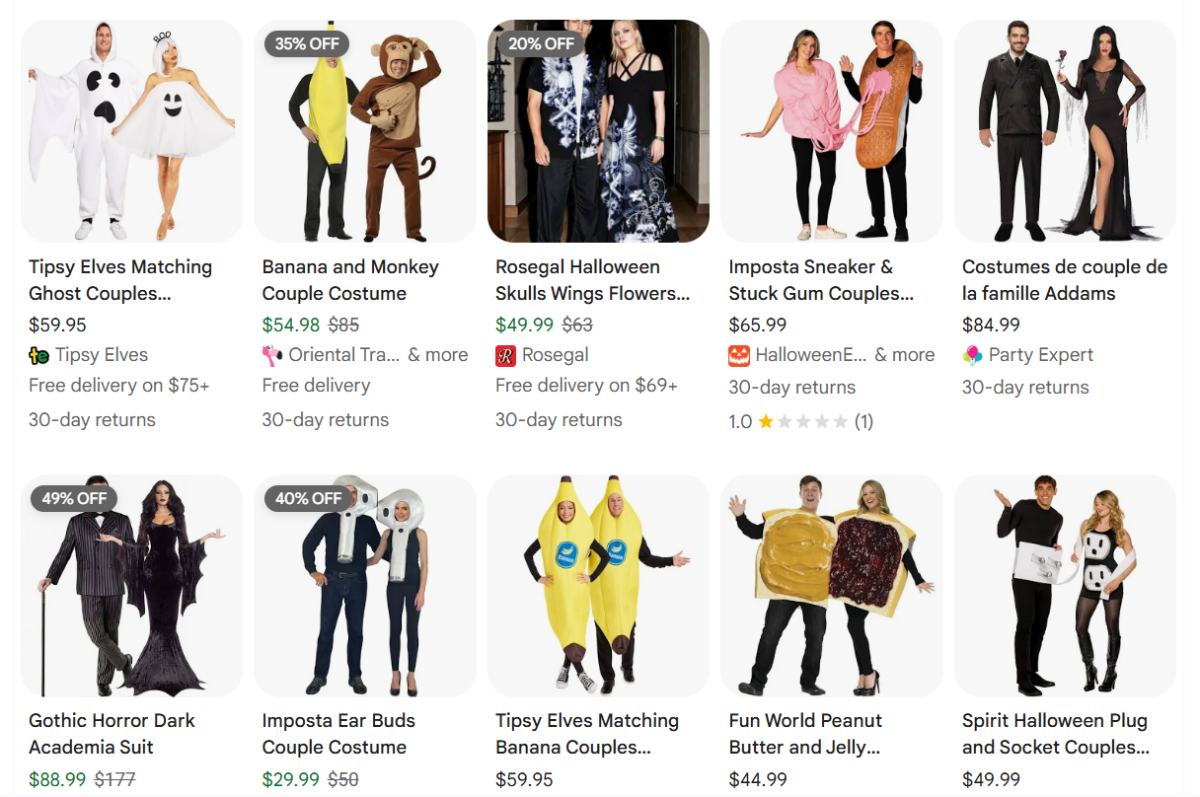
The real driver here is belonging and the shared photo. People don't buy a matching set for the costume, they buy it for the moment it creates: the family that looks like a team, the couple everyone screenshots, the group that "wins" the party. Its identity and status wrapped in one purchase, and that emotional payoff is why they'll pay set pricing.
The catch is that everyone's chasing the same look with the same AliExpress SKU, so the price war on singles is brutal. That's exactly why matching sets are the smarter bet: a curated three or four piece set behaves like a bundle, so the seller controls the price and buyers can't reverse-image-search a cheaper version.
Target audience:
- Parents of young kids, couples in their 20s and 30s, and group-costume friend circles.
- Couple sets peak right before late-October parties, while family sets sell earlier as parents plan ahead.
Marketing tips:
- Film the full set worn together and sell the matching moment, not the individual pieces.
- One warning: costumes have the highest return rate of the category, so publish a real size chart and shoot your own fit video before running ads.
2. Viral pop-culture and meme costumes
- Estimated Selling Price: $30 to $55
- Supplier Price: $9 to $18
- Gross Profit Margin: ~65% to 72%
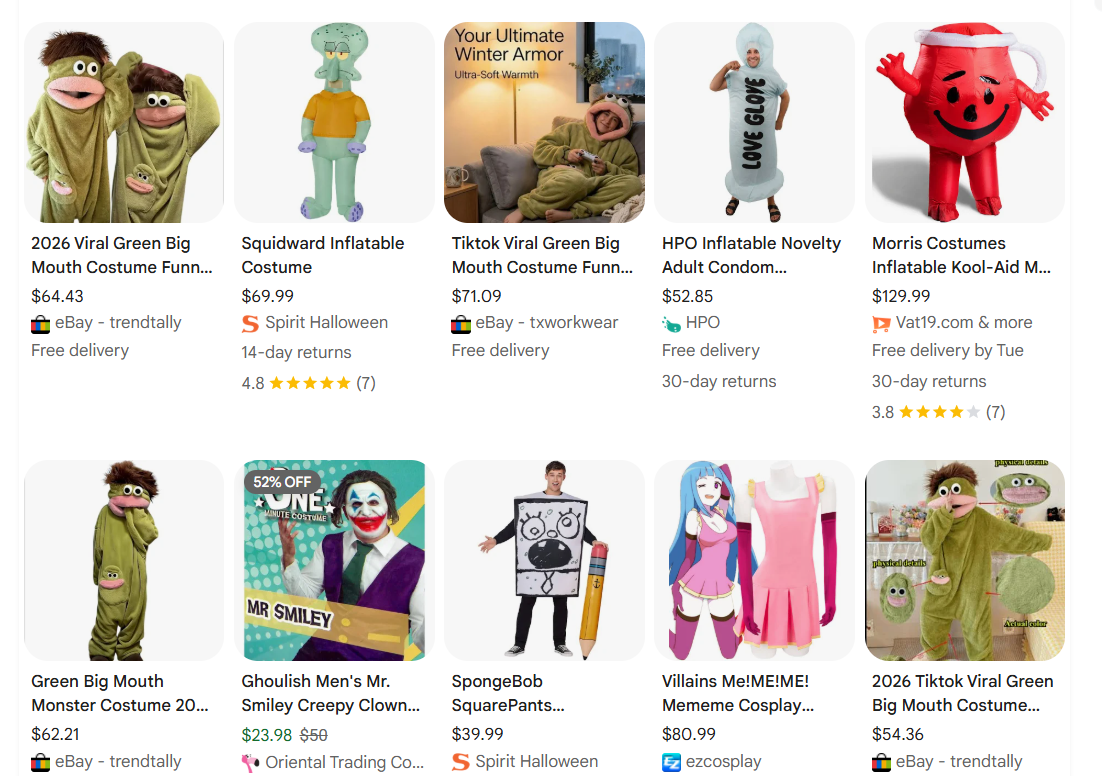
This purchase runs on FOMO and cultural relevance. When a character blows up on TikTok, wearing it says "I'm in on the joke, I'm current," and missing the window feels like showing up to the party a year late. The urgency is the emotion: buyers want it now, before the moment passes, which is why they pay for speed over price.
The demand is not subtle either. NRF's rankings show: 5.6 million adults as a witch, 2.7 million as a vampire, 2.3 million kids as Spider-Man.
Target audience: Gen Z and younger millennials shopping straight off TikTok and Instagram, plus parents hunting the year's hot kids' character.
Marketing tips:
- Keep evergreen characters (witch, vampire, ghost) as the reliable base and treat meme costumes as bets on top.
- Never touch unlicensed branded IP (more on why below).
- Sell "inspired by" versions and name the pages around the look, like "classic witch," not a trademarked character.
- Timing beats price here, because a viral costume has maybe a three to four week window before the market floods, so launching early matters more than being cheapest.
3. Pet costumes
- Estimated Selling Price: $18 to $35
- Supplier Price: $5 to $11
- Gross Profit Margin: ~68% to 75%
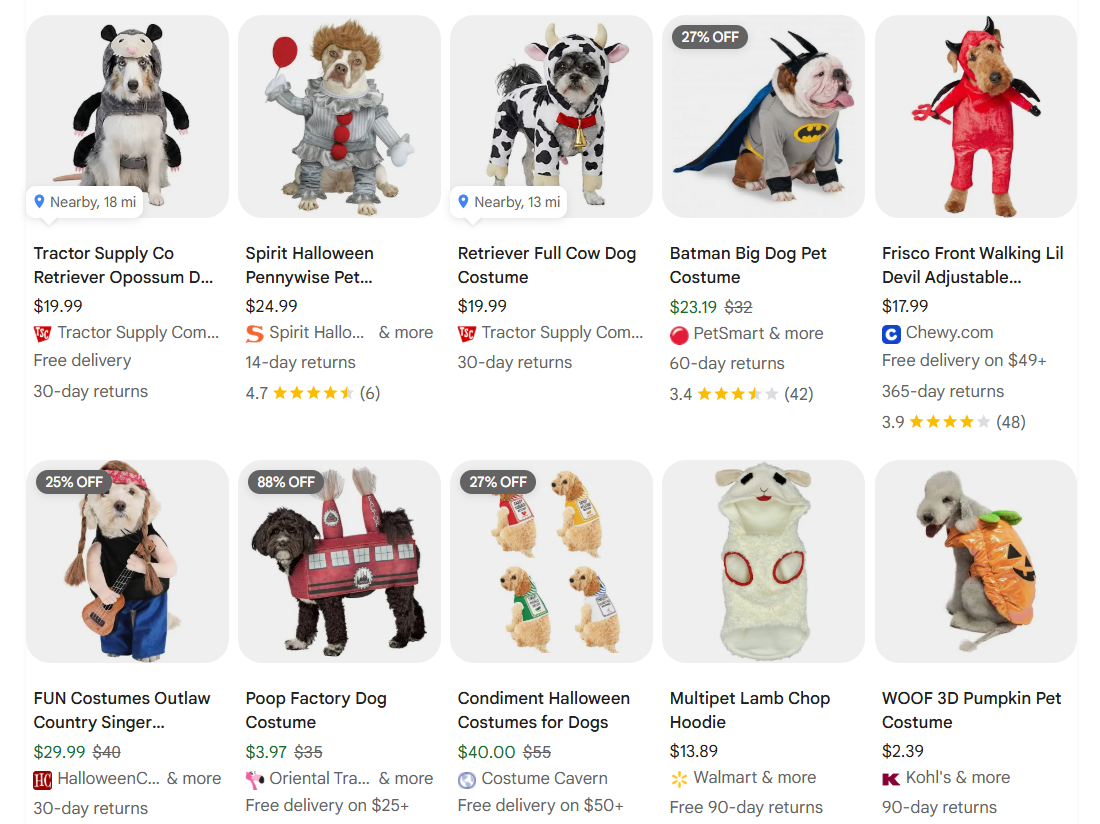
Owners see their dog or cat as a family member, and dressing them up is an act of affection plus a guaranteed dopamine hit when the photo gets showered with likes. The buyer isn't really shopping for a costume, they're buying an adorable moment they get to share.
And the demand is real: pet costumes are a standalone market valued at roughly $500 million in 2025 and growing at an 8% CAGR through 2033 per Data Insights Market, not a novelty afterthought. The seasonal spike is sharp too, with searches for "dog costume for Halloween" up 154% and "cat costume for Halloween" 64% heading into 2025.
Target audience: Millennial and Gen Z pet owners, especially dog and cat households who already post their animals constantly.
Marketing tips:
- Post the dog, not the product page.
- One good pet reel per hero SKU can carry the whole season.
Halloween Accessories and Makeup (High Margin Add Ons)
Accessories and makeup are the highest-margin corner of Halloween because they're cheap to source, light to ship, and bought as impulse add-ons. These are your bundle and upsell heroes.
4. SFX makeup and prosthetic kits
- Estimated Selling Price: $22 to $40
- Supplier Price: $6 to $12
- Gross Profit Margin: ~70% to 78%
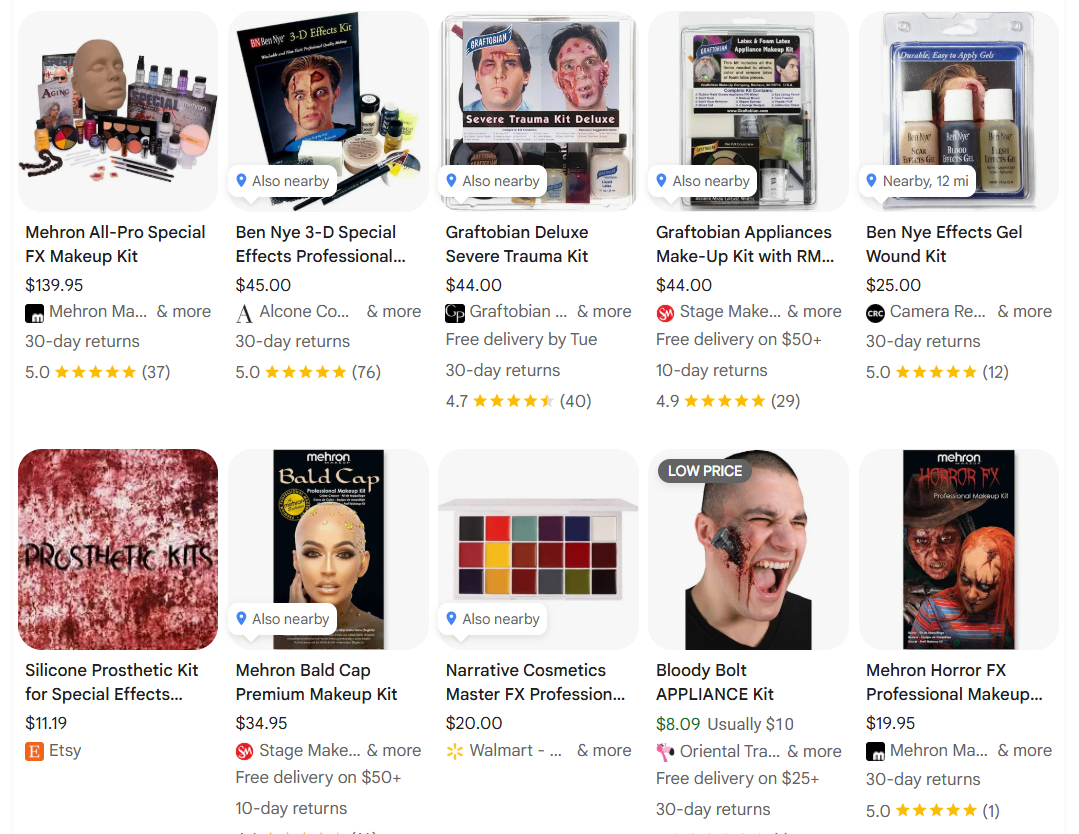
The emotional hook is transformation and creative pride. SFX makeup lets someone become something, and the buyer is chasing the "wow, did you do that yourself?" reaction. It's self-expression plus a skill flex, which is far more satisfying than a costume off the rack.
Target audience: Costume DIYers, teens, cosplayers, and beauty enthusiasts who want a custom look rather than something off the rack.
Marketing tips:
- Lead the reel with the finished look in the first two seconds, then reverse into the process to hold watch time.
- Stock modular pieces (fake blood, scar wax, prosthetics) instead of one-and-done themed kits, so buyers mix, match, and build bigger carts.
5. LED and light-up accessories (masks, contacts, gloves)
- Estimated Selling Price: $16 to $30
- Supplier Price: $4 to $9
- Gross Profit Margin: ~72% to 80%
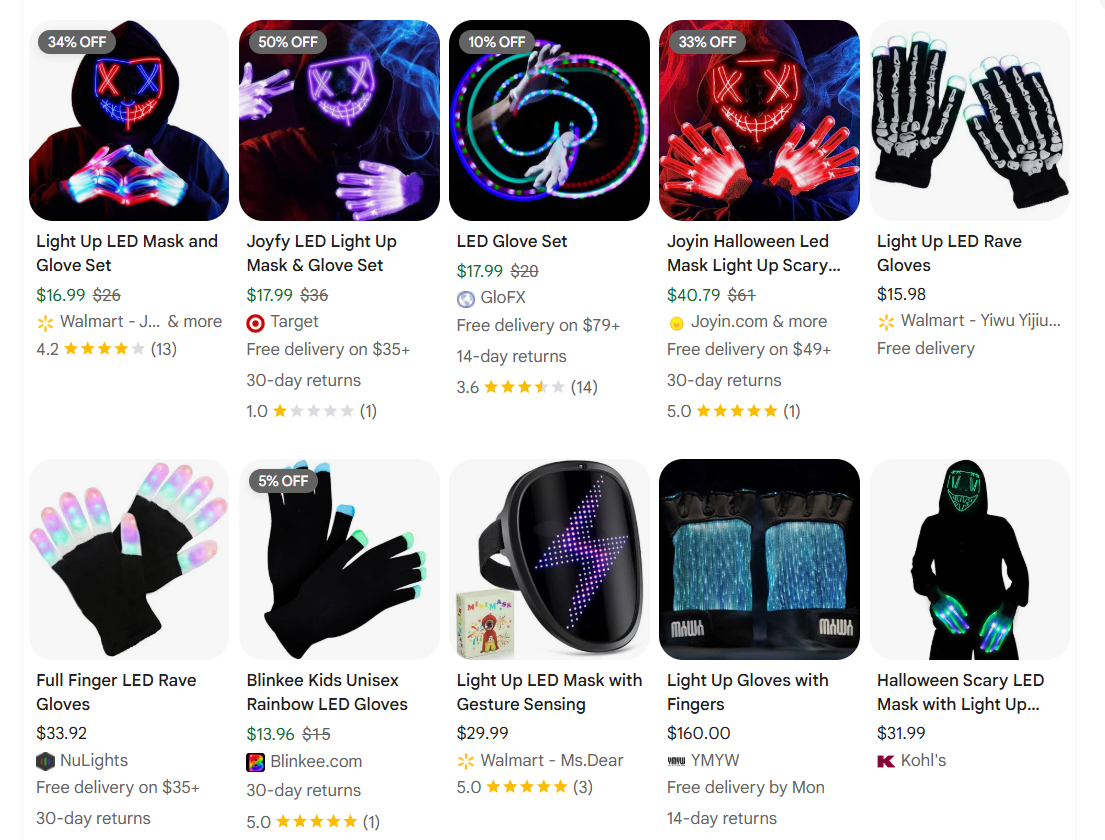
The buy is driven by the desire to stand out in the dark. Halloween happens at night, at parties, in dim rooms, and a glowing mask or gloves makes the wearer the one people look at. It's an instant status upgrade for a few dollars, and the impulse is strong because the payoff is so visible.
At a $4 to $9 cost they feel premium the moment they light up, so the perceived-value gap does the selling and pushes margins toward 80%.
Target audience: Partygoers, ravers, teens, and anyone building a costume around a single standout effect.
Marketing tips:
- Film in the dark. The glow is the entire pitch, and a static daytime photo will kill your conversion.
- One good night-shot loop beats ten product photos.
Indoor Halloween Decor: Transforming Homes and Parties
Indoor decor sells on atmosphere and shareability. Buyers want a "vibe" for photos and parties, so lean into items that create a scene rather than single trinkets.
6. Floating candles and LED candle sets
- Estimated Selling Price: $28 to $45
- Supplier Price: $8 to $15
- Gross Profit Margin: ~66% to 72%
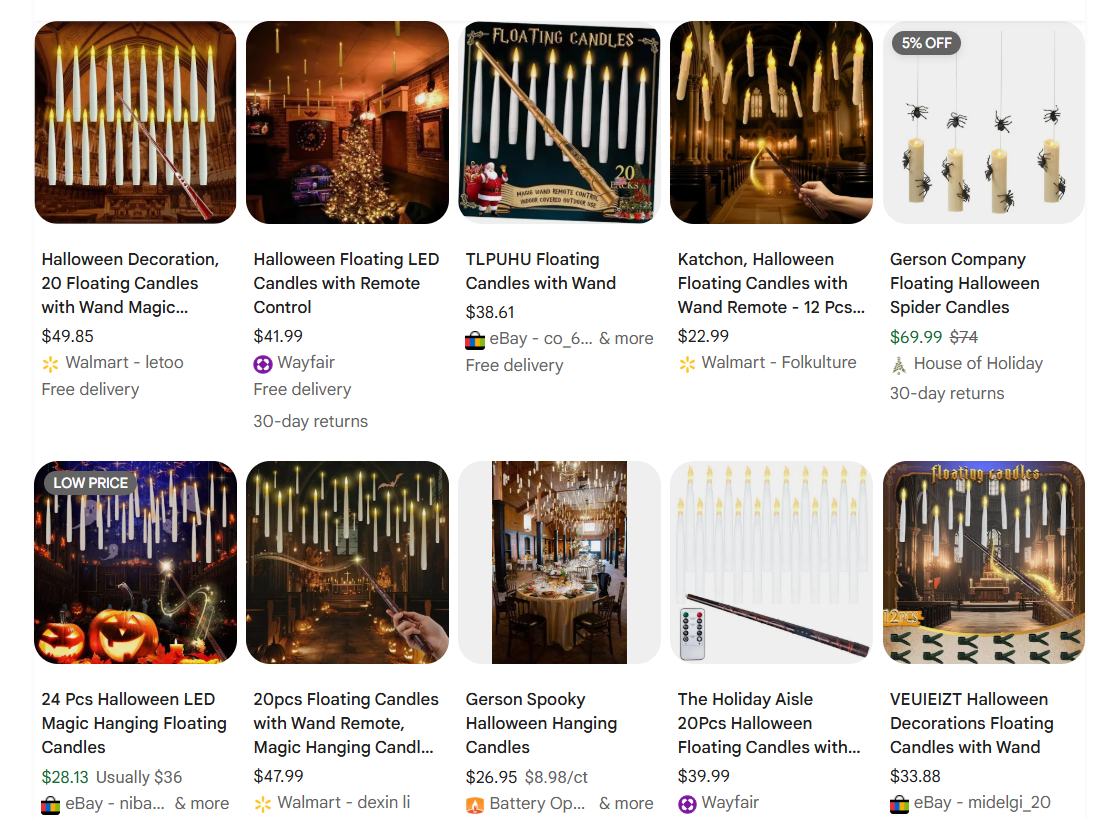
The floating candle look sells a fantasy, the Hogwarts great hall in your own hallway, and the reward is the gasp from guests and the photo that looks staged by a pro. It's aspiration and hosting pride in one cheap package.
A useful bonus: the same candles resell for Christmas and general cozy home decor, so the SKU keeps earning long after October.
Target audience: Home decorators, party hosts, and families who want a dramatic centerpiece without hiring anyone.
Marketing tips:
- Sell this as a set, never a single, because buyers want the full hallway or doorway effect.
- A 6 or 12 candle bundle at $28 to $45 lifts order value versus one lonely candle
- Showing the installed look rather than the box keeps returns low.
7. Spider web lights and themed string lights
- Estimated Selling Price: $18 to $32
- Supplier Price: $5 to $10
- Gross Profit Margin: ~68% to 75%
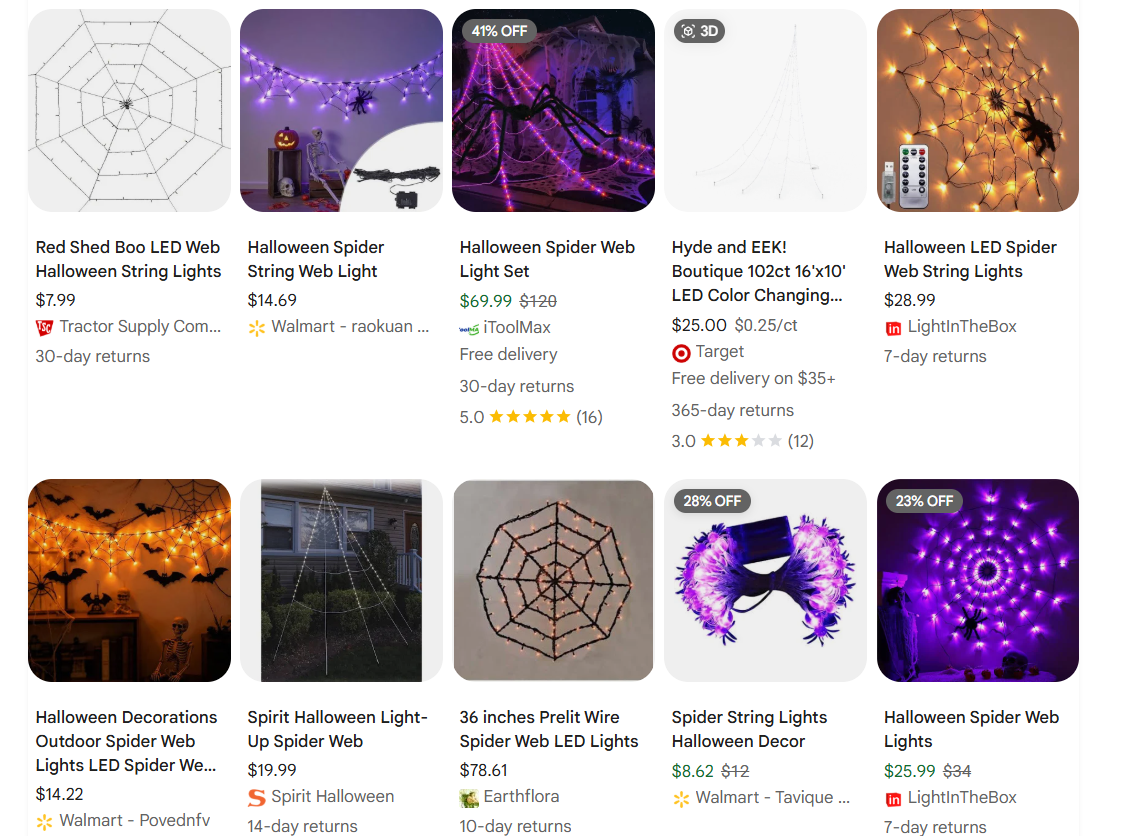
The motivation is low-commitment festivity: people want their space to feel like Halloween without spending much, risking much, or committing to a big setup. String lights are the easy "yes" that instantly signals the season, which is why they're such a comfortable impulse grab.
Buyers routinely grab two or three sets to cover a room or porch, so it wins on units per order rather than ticket price.
Target audience: Renters, dorm decorators, and budget-conscious hosts who want max atmosphere for minimal effort.
Marketing tips:
- Push the multi-pack. A simple "buy 2, get 10% off" converts easily and lifts average order without discounting the hero products.
- Show a full wall or porch lit up, not a single strand, so buyers picture the quantity they'll actually need.
8. Wall decals, window silhouettes, and hanging ghosts
- Estimated Selling Price: $15 to $28
- Supplier Price: $4 to $8
- Gross Profit Margin: ~70% to 76%
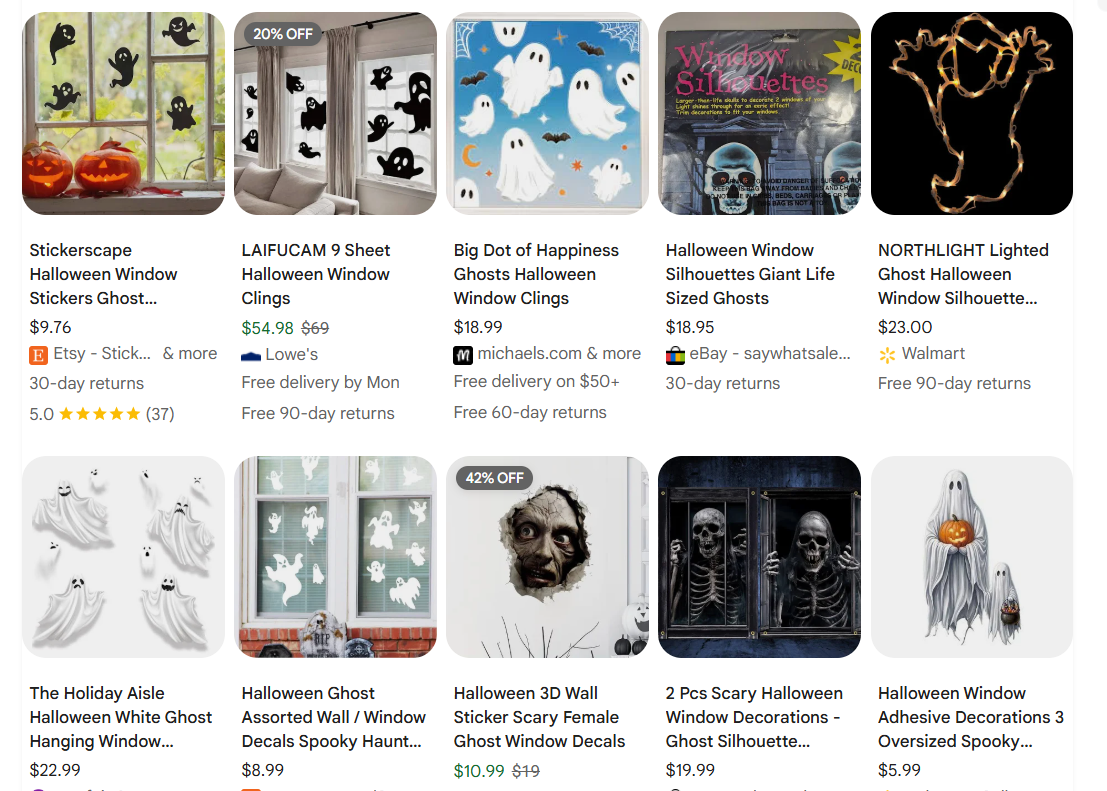
This solves a specific frustration: renters and people in temporary spaces want to celebrate but can't drill, paint, or damage anything. Peel-and-stick decor removes the guilt and the risk, so the buyer gets the festive payoff without the "I'll lose my deposit" anxiety.
Reusable 3D bats, silhouettes, and hanging ghosts were flagged as budget-friendly viral decor precisely because they deliver a big visual change for a few dollars. The feature to lead with is "no damage, peels right off," which unlocks the entire renter market.
Target audience: Apartment dwellers, teachers, and office workers doing breakroom or cubicle decor.
Marketing tips:
- The empty-room-to-haunted-room time-lapse does all the work, and it doubles as reusable footage for the classroom and office crowd.
- Bundle window silhouettes with hanging ghosts as a "complete room kit" to bump the ticket.
Outdoor Halloween Decor and Inflatables
Outdoor decor is the fastest-growing and most emotional category, fueled by the 12-foot skeleton craze that redefined yard decorating over the last five years. Big items carry big tickets, but even affordable inflatables ride the same "yard clout" wave.
9. Halloween inflatables (ghosts, pumpkins, archways)
- Estimated Selling Price: $45 to $90
- Supplier Price: $15 to $32
- Gross Profit Margin: ~62% to 68%
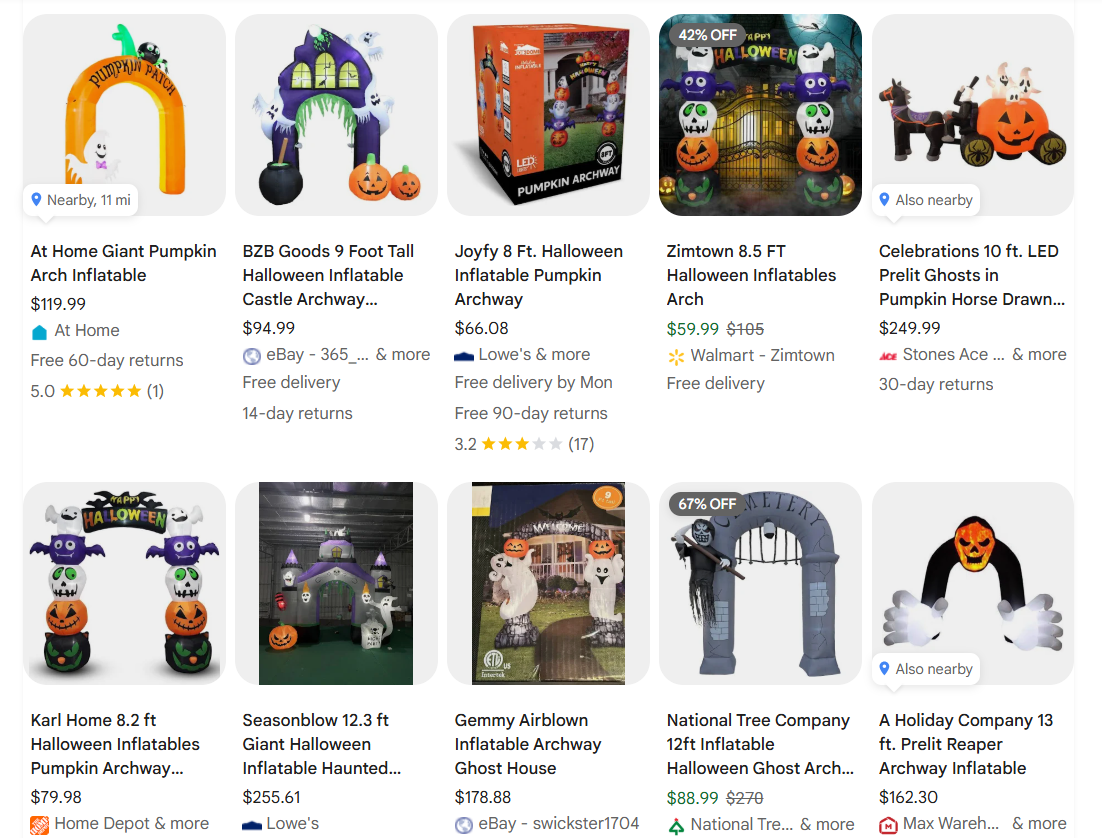
The engine here is neighborhood status and the joy of being "the fun house." An inflatable turns a plain yard into a talking point, and buyers get real social currency: the kids point at it, neighbors comment, the block notices. That's why outdoor "haunted yard" decor is one of the strongest Halloween trends of the decade.
The viral 12-foot skeleton Home Depot kicked off in 2020 turned yard displays into a genuine arms race, Costco's giant skeleton sold out in 2025 on pure social hype, and inflatable monsters were called "bigger and bolder for 2025."
Target audience: Homeowners with kids and suburban families quietly (or not so quietly) competing with the neighbors.
Marketing tips:
- Film the inflation in fast-forward. That flat-to-towering reveal is the hook, and the same clip works for both organic and paid.
- Sample for quality first, since seam and fan defects are the main return driver.
10. Solar and battery yard stakes (tombstones, pathway lights)
- Estimated Selling Price: $22 to $40 per set
- Supplier Price: $6 to $13
- Gross Profit Margin: ~66% to 72%
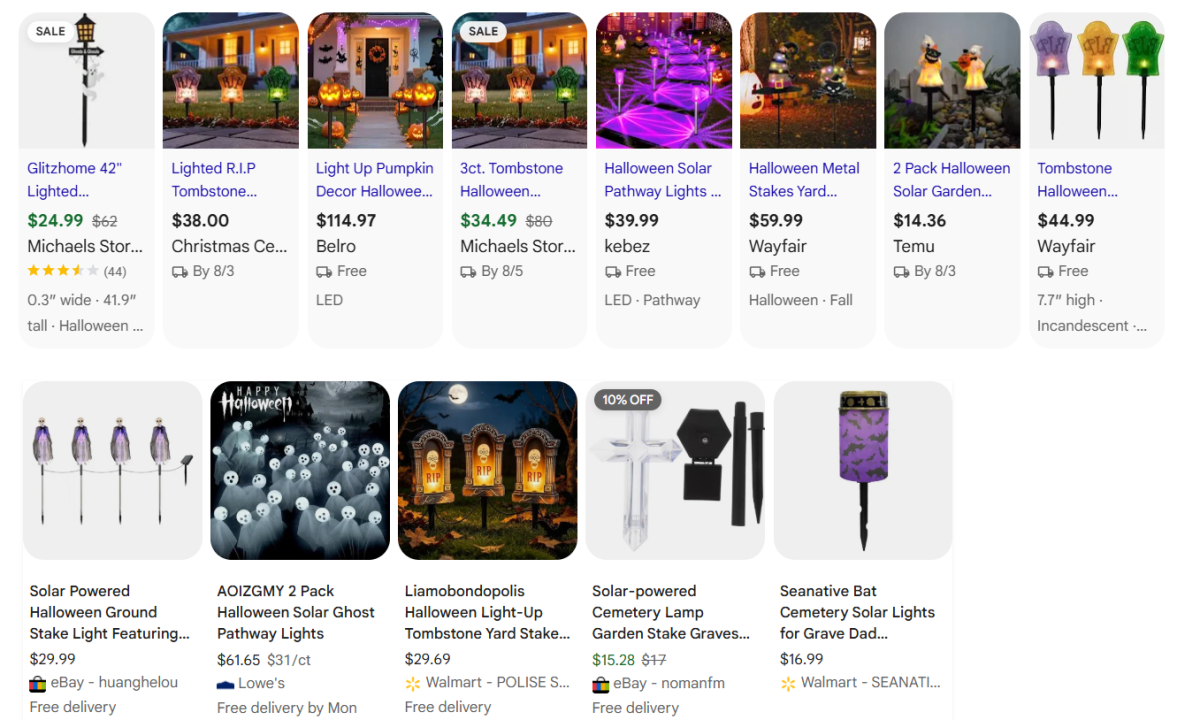
Buyers want the "pro haunted yard" look but are scared of the effort and the electrical hassle. Solar stakes sell the confidence that anyone can pull off a real scene, no wiring, no ladder, no skills.
That maps onto a clear growth area: retailers were advised in 2025 to market solar pathway lights and reusable props to budget-conscious Gen Z and Millennial buyers, the same 42% and 55% who prioritize DIY or reusable decor.
Stakes remove the biggest friction in outdoor decorating, running power outside, so someone can build a full graveyard scene in minutes with almost nothing to break.
Target audience: Homeowners and first-timers who want a display without the cost or hassle of animatronics.
Marketing tips:
- Never sell singles. One tombstone is forgettable; a set of ten is a scene, and the scene is what people buy.
- Selling by the set ($22 to $40) turns a low-ticket item into a respectable order, so show the full nighttime scene assembled.
Halloween Tech Products: Multi-Holiday Winners for Q4 Sales
Tech and projectors are smart inventory because they sell for Halloween and Christmas, extending your profitable window across all of Q4. Higher ticket, higher perceived value, and strong repeat demand.
11. Holographic window projectors
- Estimated Selling Price: $40 to $70
- Supplier Price: $14 to $24
- Gross Profit Margin: ~62% to 66%
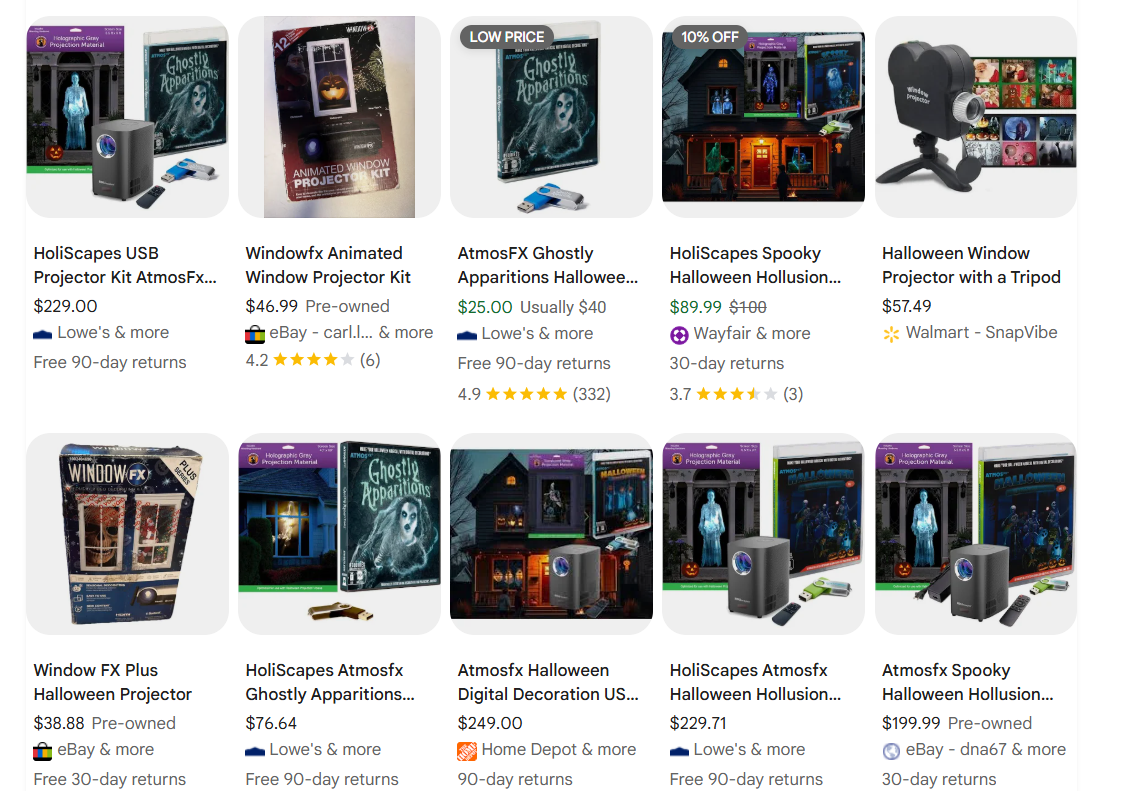
A projector lets someone create a moving, cinematic display without building anything, and buyers love that it makes them look impressive with almost no work. There's also a value-justifying logic they tell themselves: "I'll reuse it for Christmas," which makes the spend feel responsible rather than seasonal.
That reusability is exactly why projectors are a leading tech-forward decor trend for 2025 (Accio), and window-projector kits with hologram films kept getting flagged as viral "decor for tech lovers."
Target audience: Homeowners, party hosts, and tech-curious decorators who want maximum effect with minimum setup.
Marketing tips:
- Show the effect at night on a real house and mention the Christmas use case outright to widen appeal.
- The strongest selling point is the multi-holiday angle: the same projector sells for Halloween (ghosts, bats) and Christmas (snowflakes, Santa) with nothing but a slide swap, nearly doubling the selling window.
12. Fog machines and mini fog effects
- Estimated Selling Price: $35 to $60
- Supplier Price: $12 to $22
- Gross Profit Margin: ~60% to 65%
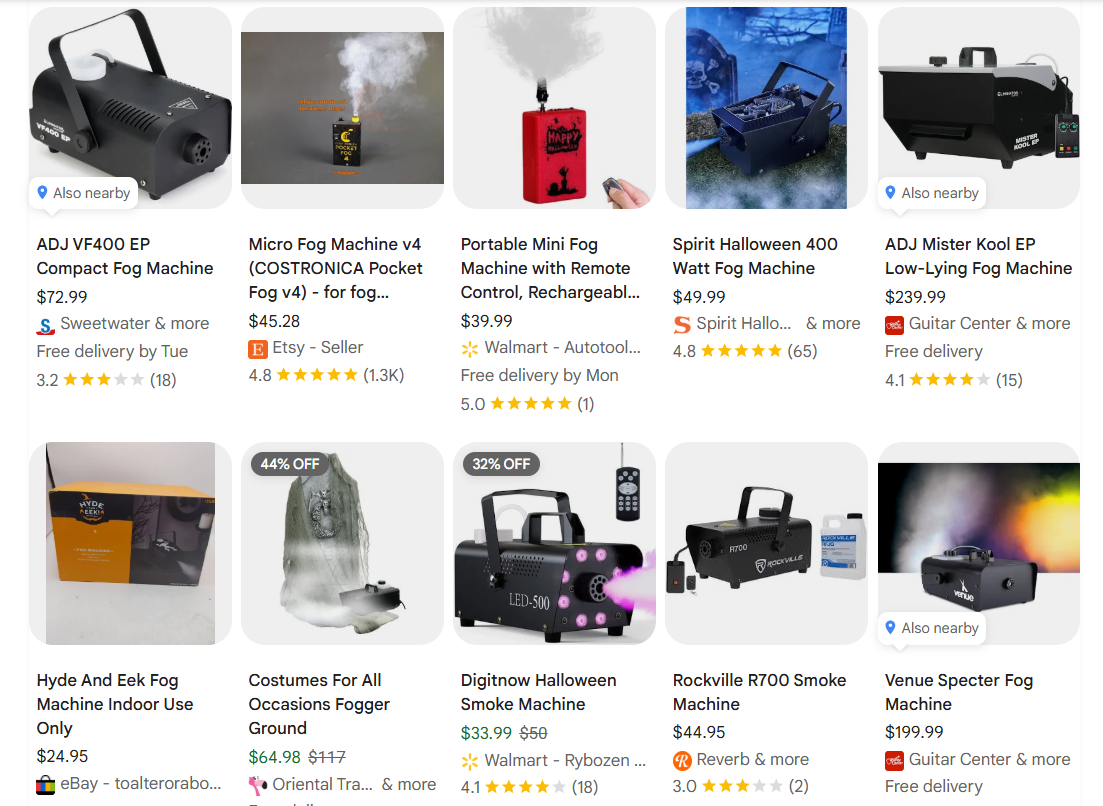
Fog buys atmosphere, and atmosphere is what makes a party feel like an event instead of a room with decorations. The host is really buying the reaction, the moment guests walk in and say "whoa, this is legit." It converts an ordinary space into an experience, and that emotional upgrade is worth far more than the machine costs.
Target audience: Party throwers and haunted-house DIYers chasing a professional look at home.
Marketing tips:
- Show it filling a room or rolling across a yard at night, where the effect actually lands.
- Retailers were literally advised to build all-in-one packages of projectors, LED strips, and fog machines, and every haunted-yard guide pairs fog with graveyard props for the cinematic effect buyers now expect.
Halloween Party Supplies and Event Props
Party supplies win on order quantity. Buyers hosting an event grab tableware, banners, and props in one large cart, so this category is built for average-order-value growth through bundles.
13. Themed tableware and party kits
- Estimated Selling Price: $20 to $40 per kit
- Supplier Price: $6 to $13
- Gross Profit Margin: ~65% to 70%
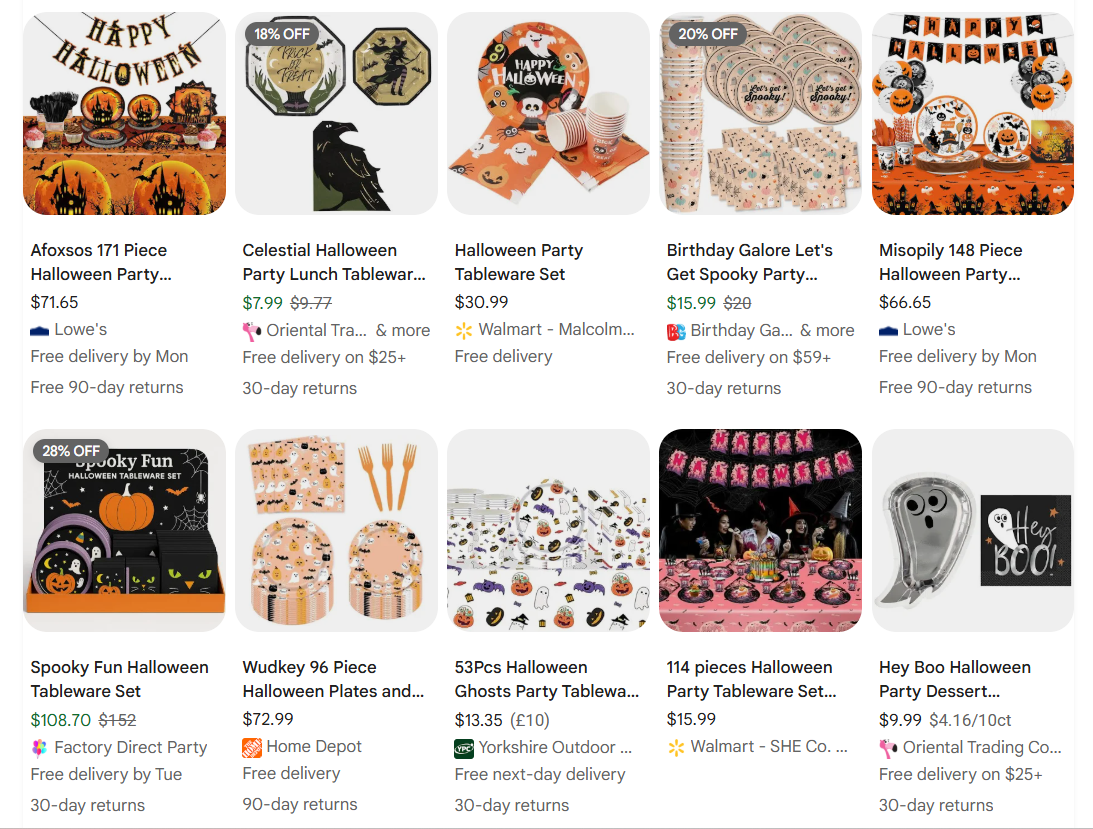
The host is buying peace of mind and a done-for-you result. Planning a party is stressful, and a coordinated kit removes the fear of mismatched, half-finished decor.
That convenience-and-reassurance motive is powerful, and participation is rising to match it: NRF found 32% of consumers planned to throw or attend a Halloween party in 2025, up year over year. That's a large, growing pool of hosts who need tableware, banners, and decor all at once and would rather grab a coordinated set than assemble it piece by piece.
Target audience: Party hosts and parents planning kids' events who value speed and a matching theme over cost per item.
Marketing tips:
- Sell the "party in a box," not individual cups, and photograph a fully styled table so buyers see exactly what they're paying for.
- They pair naturally with photo props and balloons for an even bigger cart.
14. Photo booth props and backdrops
- Estimated Selling Price: $16 to $30
- Supplier Price: $4 to $9
- Gross Profit Margin: ~70% to 76%
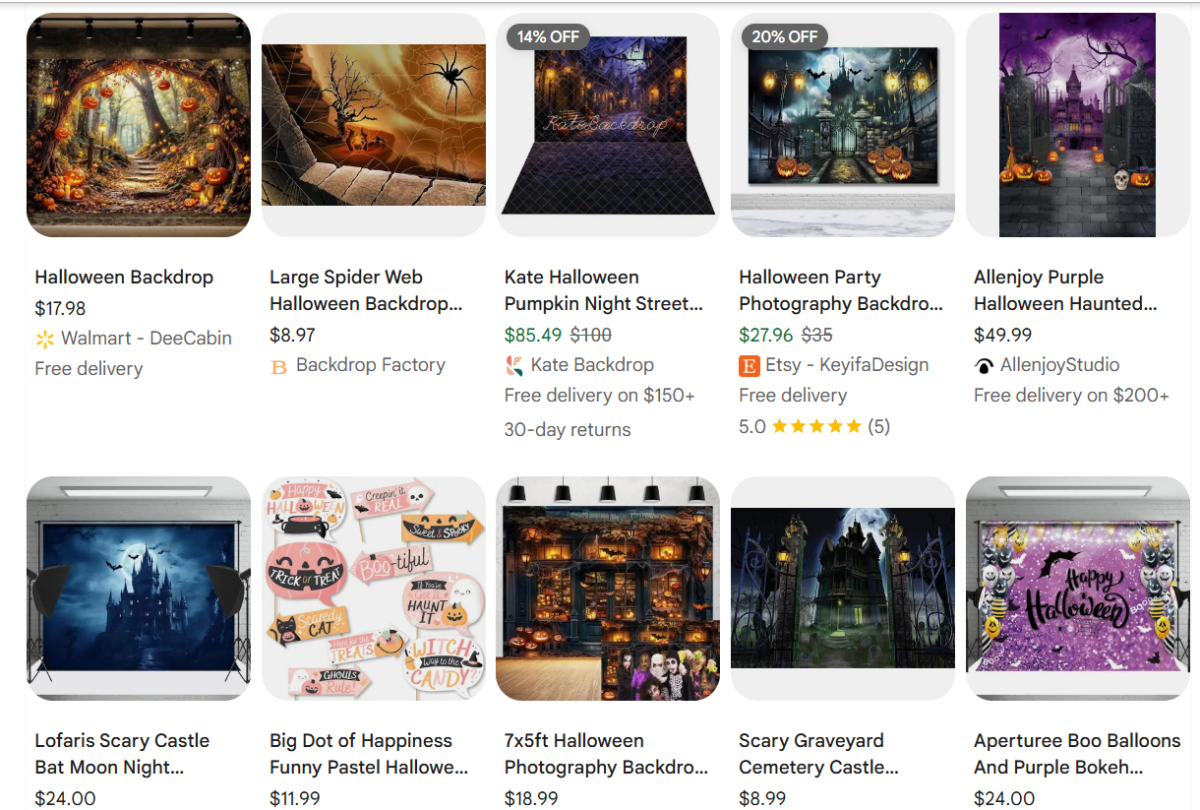
The real purchase is the shared laughter and the photos everyone keeps. That fits how the holiday now works: online searches (37%) are the leading source of inspiration (NRF), and Instagram-worthy setups are openly driving decor demand.
Photo props sit right at that intersection: people buy them to make shareable content, and every photo taken becomes free distribution, a built-in marketing flywheel where the product effectively advertises itself.
Target audience: Party hosts, teachers running class events, and office event planners who need cheap crowd-pleasers.
Marketing tips: Use real party photos with the props in hand, because authentic UGC sells this way better than a flat-lay.
Trick or Treat Essentials: Buckets, Bags and Candy Accessories
Trick-or-treat essentials are dependable, low-return impulse buys with broad appeal to families. Margins are solid and buyers rarely return a candy bucket, which keeps your net margin clean.
15. LED and character trick-or-treat buckets
- Estimated Selling Price: $14 to $26
- Supplier Price: $4 to $8
- Gross Profit Margin: ~68% to 74%
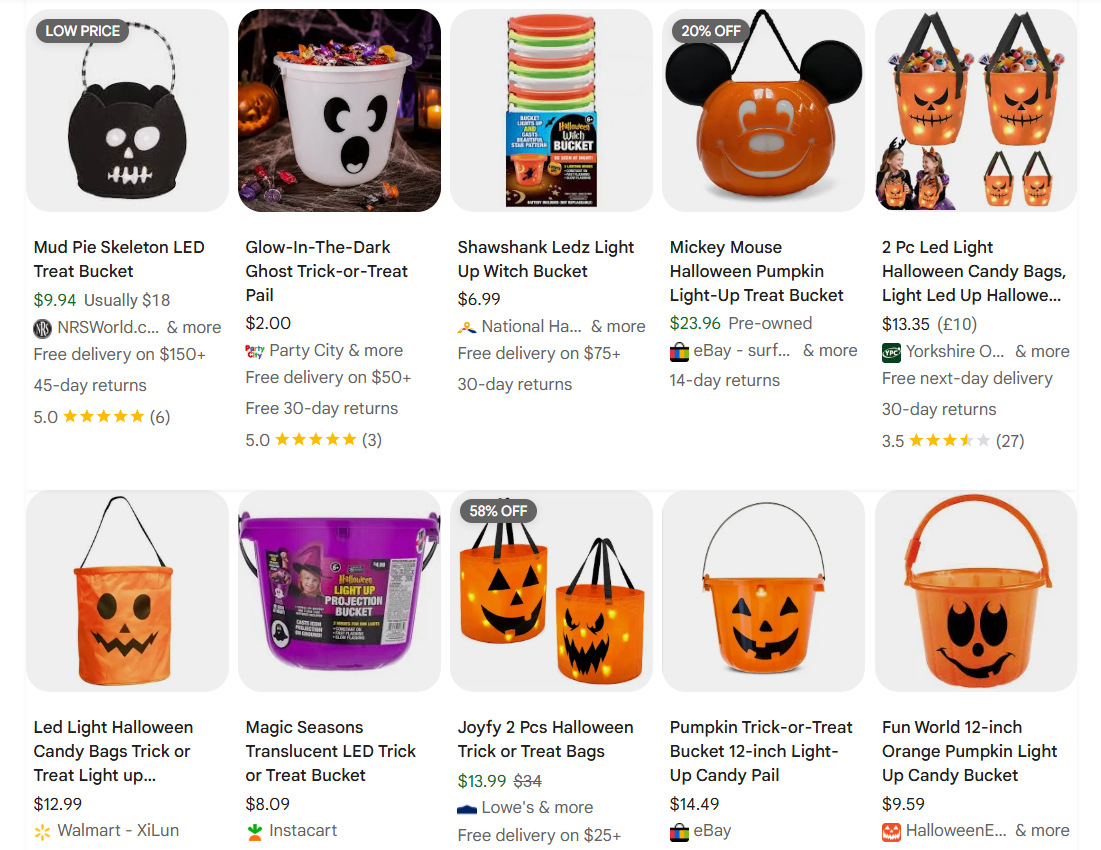
A light-up bucket makes the child feel special and keeps them visible in the dark, so mom or dad buys it with both the heart and the worry in mind. That dual pull lets it escape commodity pricing.
The upgrade angle is what makes it profitable: a basic plastic bucket is a commodity nobody wins on, but an LED or character bucket is a differentiated product parents happily pay $14 to $26 for, because it doubles as a safety light in the dark.
Target audience: Parents of young kids and grandparents shopping for the holiday.
Marketing tips: Show kids using them at dusk so the glow reads as both the fun feature and the safety benefit at once.
16. Reusable candy bags and treat totes
- Estimated Selling Price: $12 to $22
- Supplier Price: $3 to $7
- Gross Profit Margin: ~70% to 76%
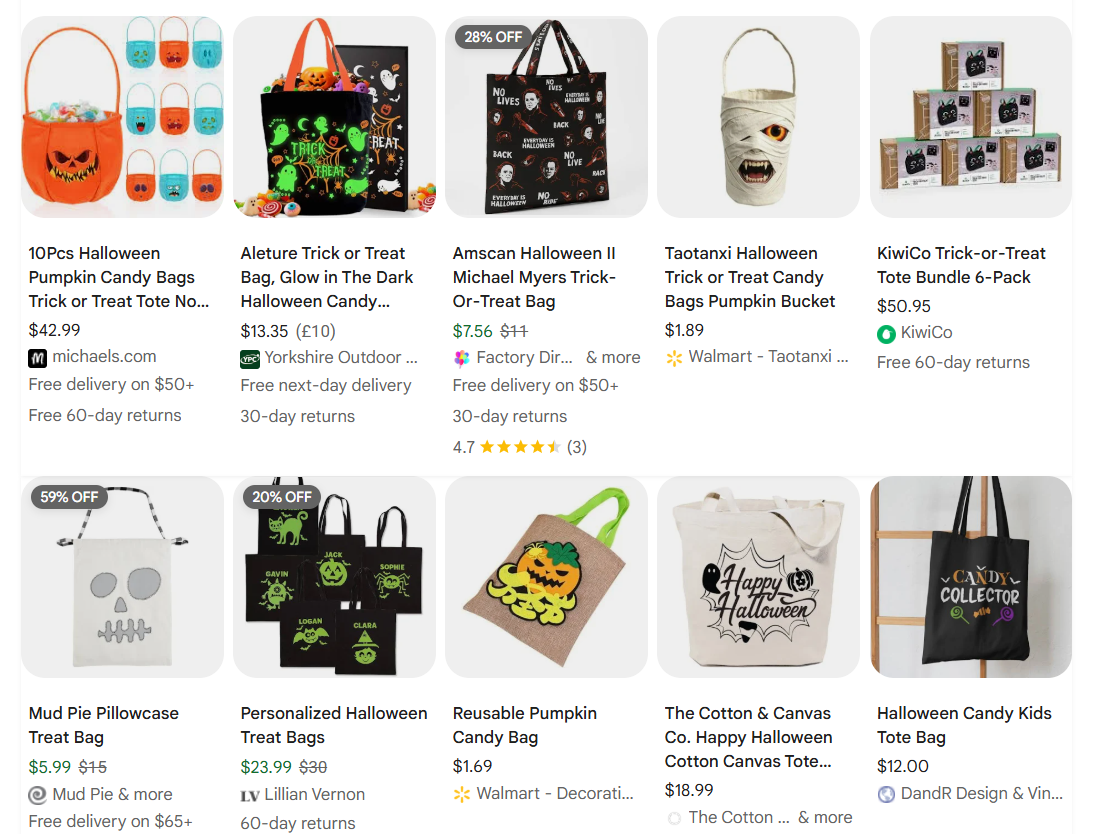
That's a documented driver now, not a nice-to-have: 74% of shoppers prioritized eco-friendly packaging and reusable decorations in 2025 (Accio), and 57% turned to DIY or secondhand to manage inflation. A durable, reusable candy tote speaks to both groups, especially the parent who'd rather buy one good bag than replace a flimsy one every October.
Target audience: Eco-conscious parents and repeat buyers who value durability over the lowest price.
Marketing tips:
Focus on durability and reusability instead of price. Show parents comparing a sturdy tote with disposable plastic bags, then highlight how it carries more candy comfortably and can be reused for future Halloweens or other outings.
Halloween Food, Baking, and DIY Craft Products
Food, baking, and DIY craft products tap the huge "Halloween Pinterest" audience and sell as low-cost impulse add-ons.
17. Themed silicone baking molds (skulls, bats, pumpkins)
- Estimated Selling Price: $14 to $26
- Supplier Price: $3 to $8
- Gross Profit Margin: ~72% to 78%
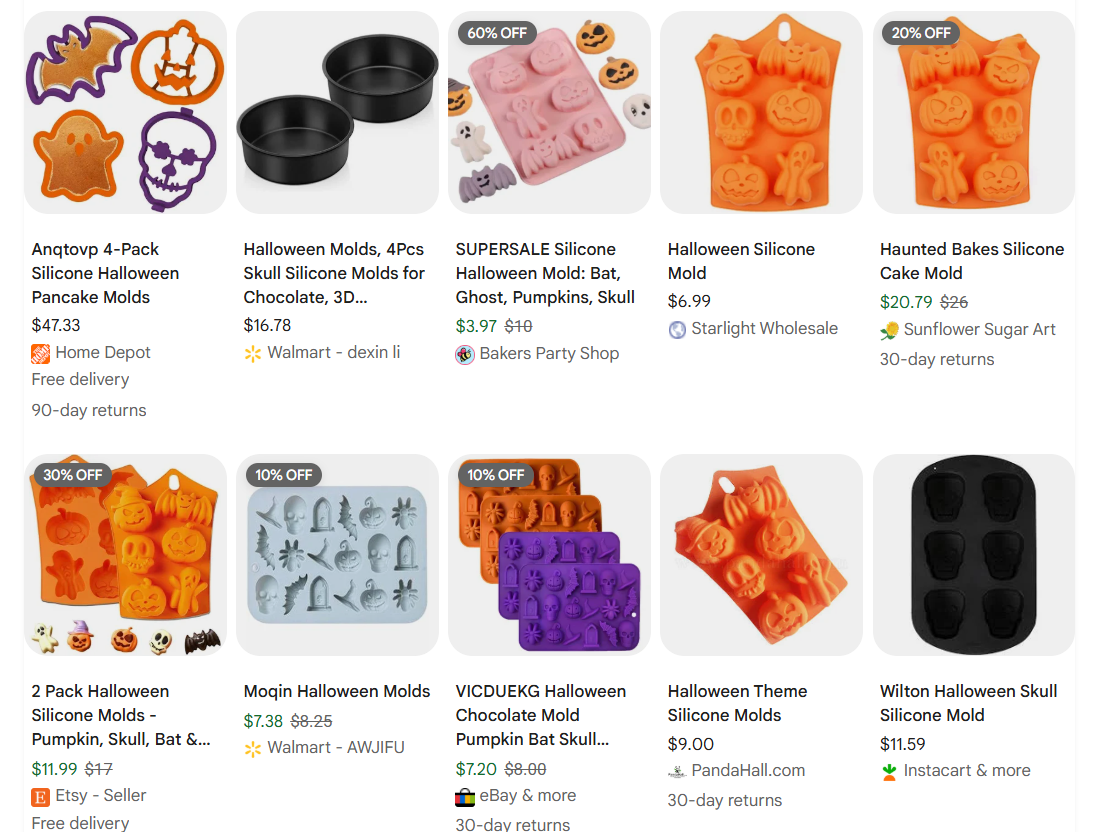
Home bakers buy molds to create something impressive enough to photograph and share, and the reward is the compliment when they bring spooky treats to a party or post the finished tray. It's a creative accomplishment in easy mode, which is exactly what a mold promises.
That maps onto the data: personalization and DIY kits dominate Halloween's top-selling craft and food products (Accio), with Etsy and marketplace data showing strong demand for unique, make-it-yourself items.
Target audience: Home bakers, parents making treats for class parties, and craft enthusiasts.
Marketing tips: Show the finished treats, never the empty mold. A tray of spooky cupcakes or gummies is the hook, and recipe reels convert best. It's also a natural bundle add-on with cookie cutters and toppers for a "Halloween baking kit."
18. Cookie cutters and cake toppers
- Estimated Selling Price: $10 to $20
- Supplier Price: $2 to $6
- Gross Profit Margin: ~74% to 80%
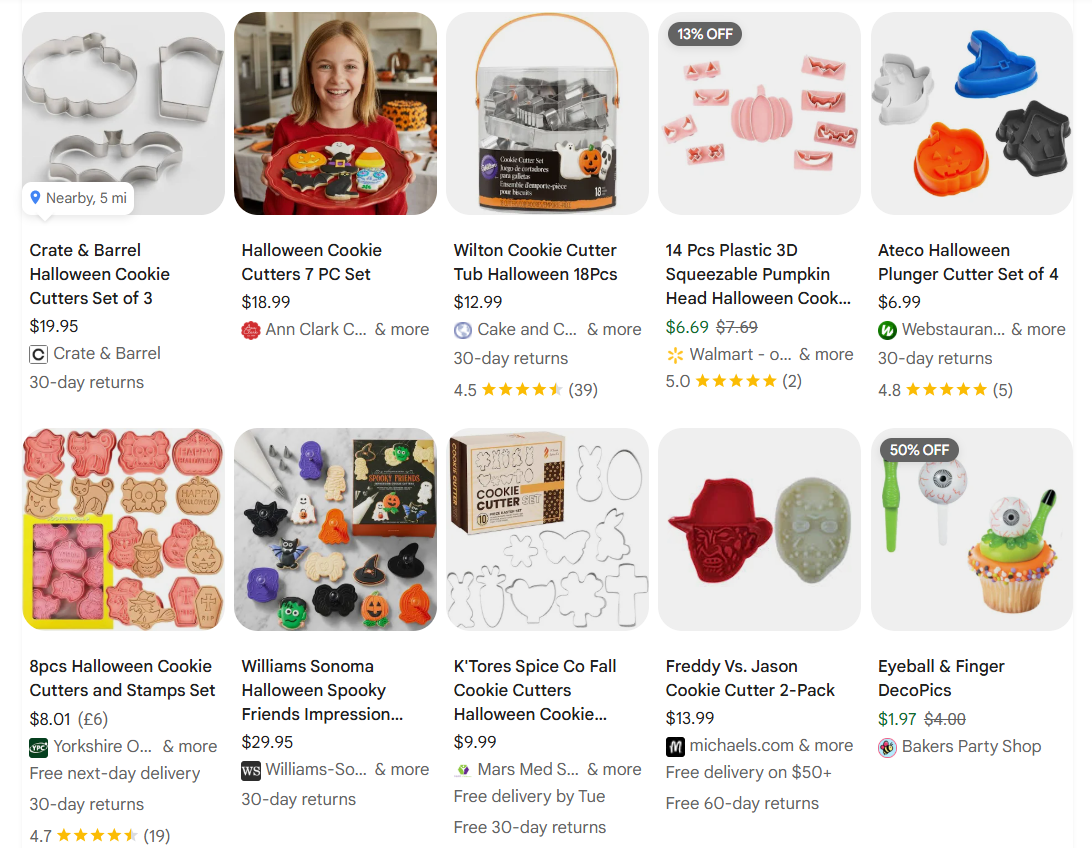
The buyer is mid-project (baking, planning a party) and a themed cutter feels like a cheap way to make the result a little more special. Almost no deliberation, pure impulse. That's why they convert so well for anyone already shopping the food or party category, with Halloween baking content everywhere each October reinforcing the mood.
Target audience: Bakers, parents, and party hosts already picking up other Halloween goods.
Marketing tips:
- List them as "frequently bought together" on mold and party-kit pages to capture near-free incremental profit.
- Position them as the finishing touch to a baking or party purchase, not a standalone buy.
19. DIY wreath and craft kits
- Estimated Selling Price: $22 to $38
- Supplier Price: $7 to $14
- Gross Profit Margin: ~64% to 70%
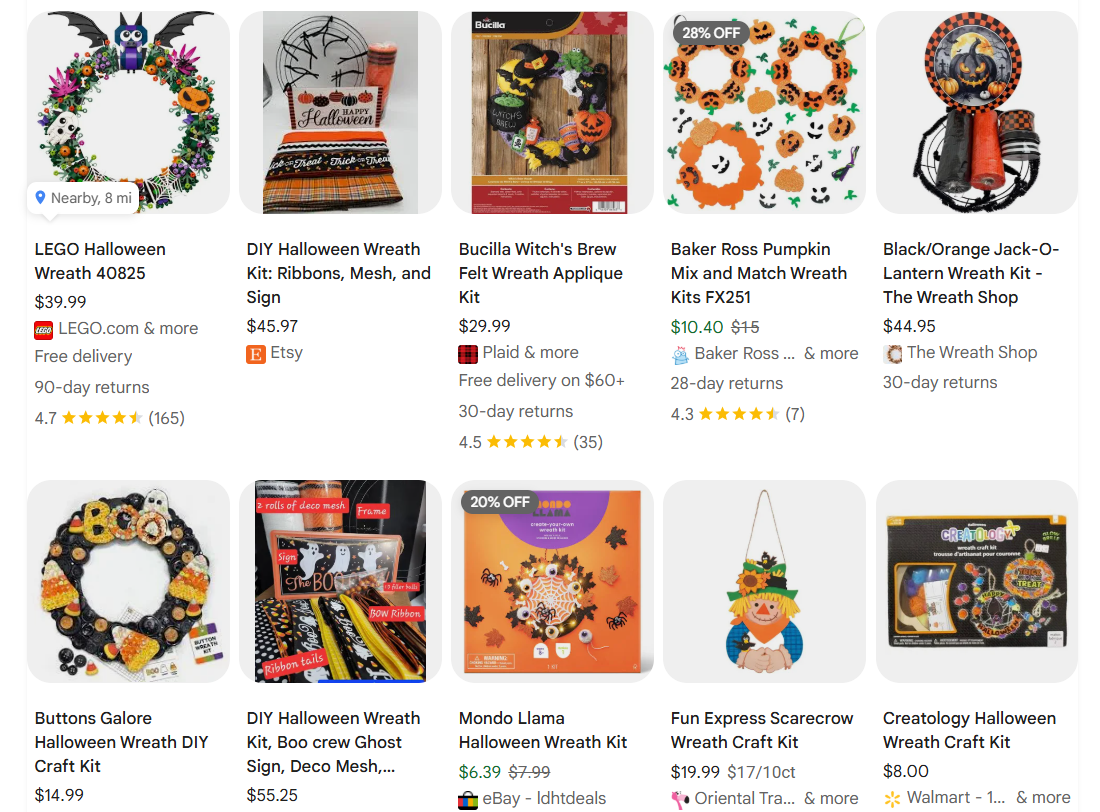
The buyer wants the satisfaction of making something, plus a guaranteed good result. A kit sells the fun of a craft afternoon without the fear of it turning out ugly, and the finished wreath becomes a small point of pride on the door. It's the experience and the outcome, not the raw materials, that people pay for.
Target audience: Crafters and Pinterest-driven decorators who enjoy the making as much as the display.
Marketing tips:
- Show the completed wreath first, then reveal it's a kit.
- Lead with the aspirational result so buyers picture their own version, then reassure them it's beginner-friendly.
20. Pumpkin carving and decorating kits
- Estimated Selling Price: $16 to $28
- Supplier Price: $4 to $9
- Gross Profit Margin: ~70% to 76%
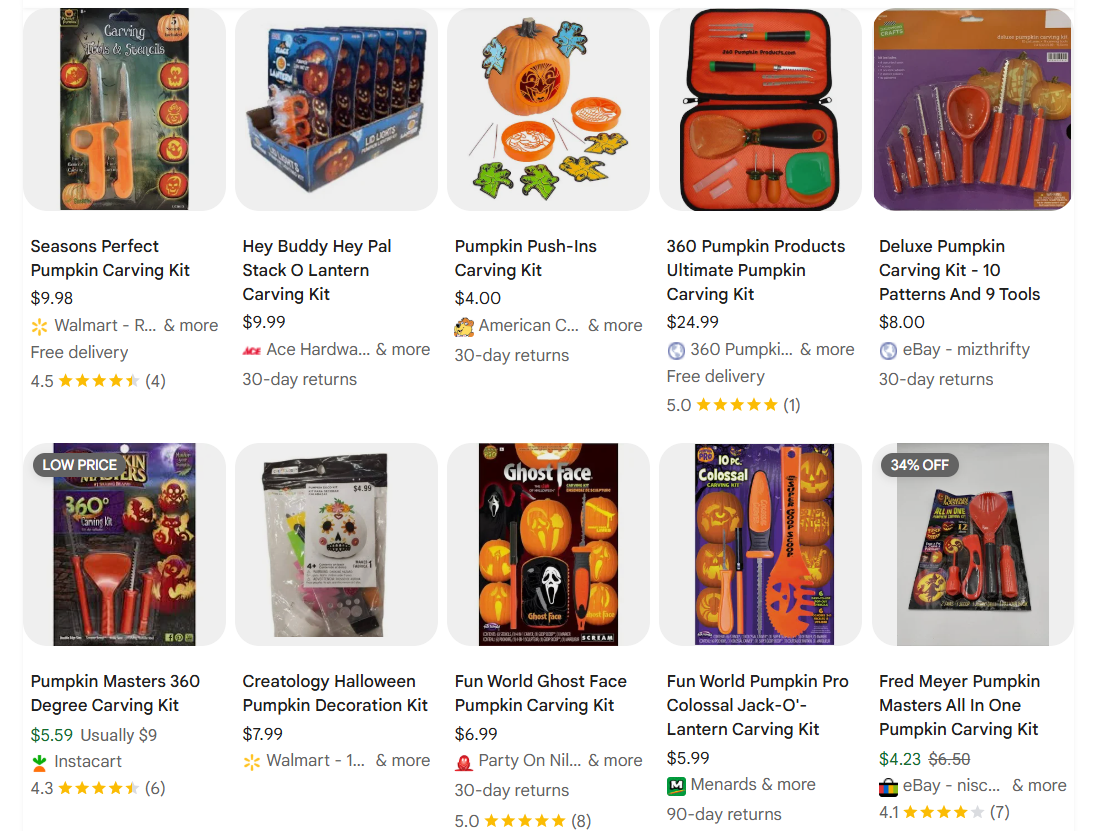
Carving is a family tradition, and the buyer is really purchasing togetherness plus a good outcome. Parents want a memory-making afternoon with the kids, but they also don't want a mangled pumpkin and a butter knife, so a proper kit promises the bonding without the frustration. The emotional payoff is the shared ritual and the glowing result on the porch.
It rides one of the biggest documented Halloween behaviors too: NRF found 46% of consumers planned to carve a pumpkin in 2025, up from the year before, which gives this a massive, predictable audience that isn't tied to any passing trend.
Target audience: Families and first-time carvers who want everything in one purchase.
Marketing tips:
- Show a finished, glowing jack-o'-lantern made with the kit so buyers see the achievable result.
- The activity is family content gold, so it markets itself with UGC.
- One timing note: carving happens close to the 31st, so demand for this SKU skews later than decor, and it pays to keep ad pressure up through mid and late October rather than pulling back.

Finding the Right Suppliers for This Halloween
Here's how the main options compare.
Order samples of every hero product before you run ads. Halloween has a high rate of "photo versus reality" complaints, and a flood of returns in a four-week window can wipe out your season.
Lock in suppliers with US warehouse stock for your bestsellers. Delivery after October 31 means a guaranteed refund, so speed matters more than price for seasonal goods.
Winning Marketing Strategies for Halloween Dropshipping
Winning at Halloween dropshipping comes down to focus, timing, and creativity. Online searches are the top source of Halloween inspiration (37%), and nearly half of shoppers (49%) start buying in September or earlier (NRF), so early, well-targeted campaigns beat late, broad ones.
1. Win Through Niche Focus, Not General Halloween Stores
Niche stores convert better than general Halloween stores because they build trust and rank for specific terms. A "Halloween pet costume" store or a "haunted yard decor" store signals expertise and lets you dominate a narrow keyword set instead of competing with everyone.
Pick one audience: pet owners, party hosts, yard decorators, or bakers. Build your product range, ads, and content around that single buyer.
2. Win Through Unique Product Bundles
Bundles raise average order value and are harder for competitors to price-match. Instead of selling a single fog machine, sell a "haunted house starter kit" with fog machine, colored lights, and fog fluid at a package price.
Bundling also fixes Halloween's thin-margin problem, which is the trap most new dropshippers fall into. A $60 bundle at 65% margin beats three separate $20 sales that each carry their own ad and shipping cost.
3. Win Through Better Creative Angles
Creative wins Halloween, not product pages. The best-performing content shows the product in use at night, in a party, or on a pet, because Halloween buying is emotional and visual.
Strong angles include the transformation reveal (empty room to haunted room), the "own the block" yard flex, and pet or kid reaction videos. Lead with the payoff in the first two seconds.
4. Win Through Early Seasonal Timing
Start marketing in early September, not October. Nearly half of shoppers (49%) begin buying in September or earlier, so waiting until October means competing for attention after the best customers have already bought.
Warm up your audience with content in August, launch ads in early September, and reserve October for retargeting and urgency-driven closing.
5. Win Through Shipping & Customer Experience
Fast, honest shipping is the difference between profit and a wave of refunds. Set clear cutoff dates, use suppliers with domestic stock, and over-communicate delivery timelines on every product page.
Add a visible "order by" date as October approaches. Urgency drives conversions and protects you from post-holiday chargebacks.
Common Mistakes in Halloween Dropshipping
Each one either invites legal trouble, drives returns, or leaves money on the table.
Scaling on revenue instead of tracking net profit
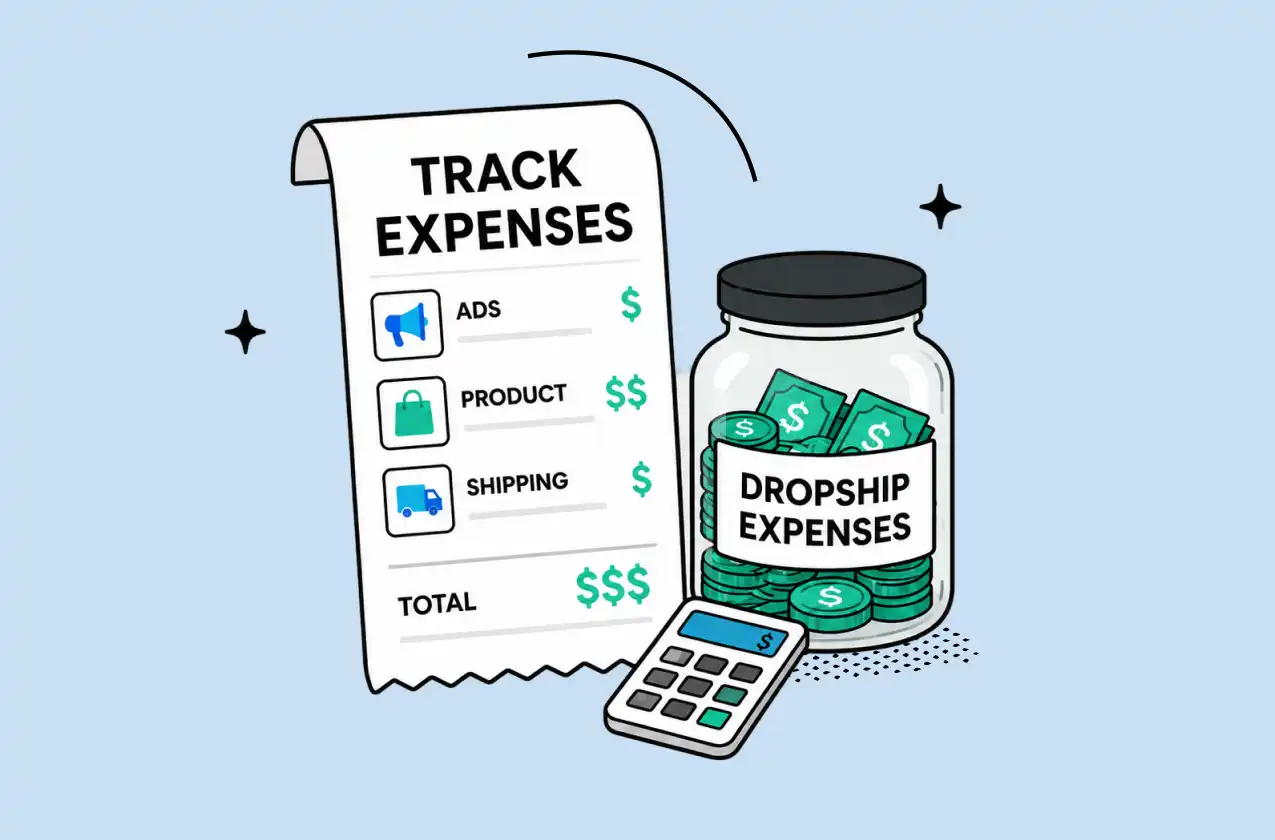
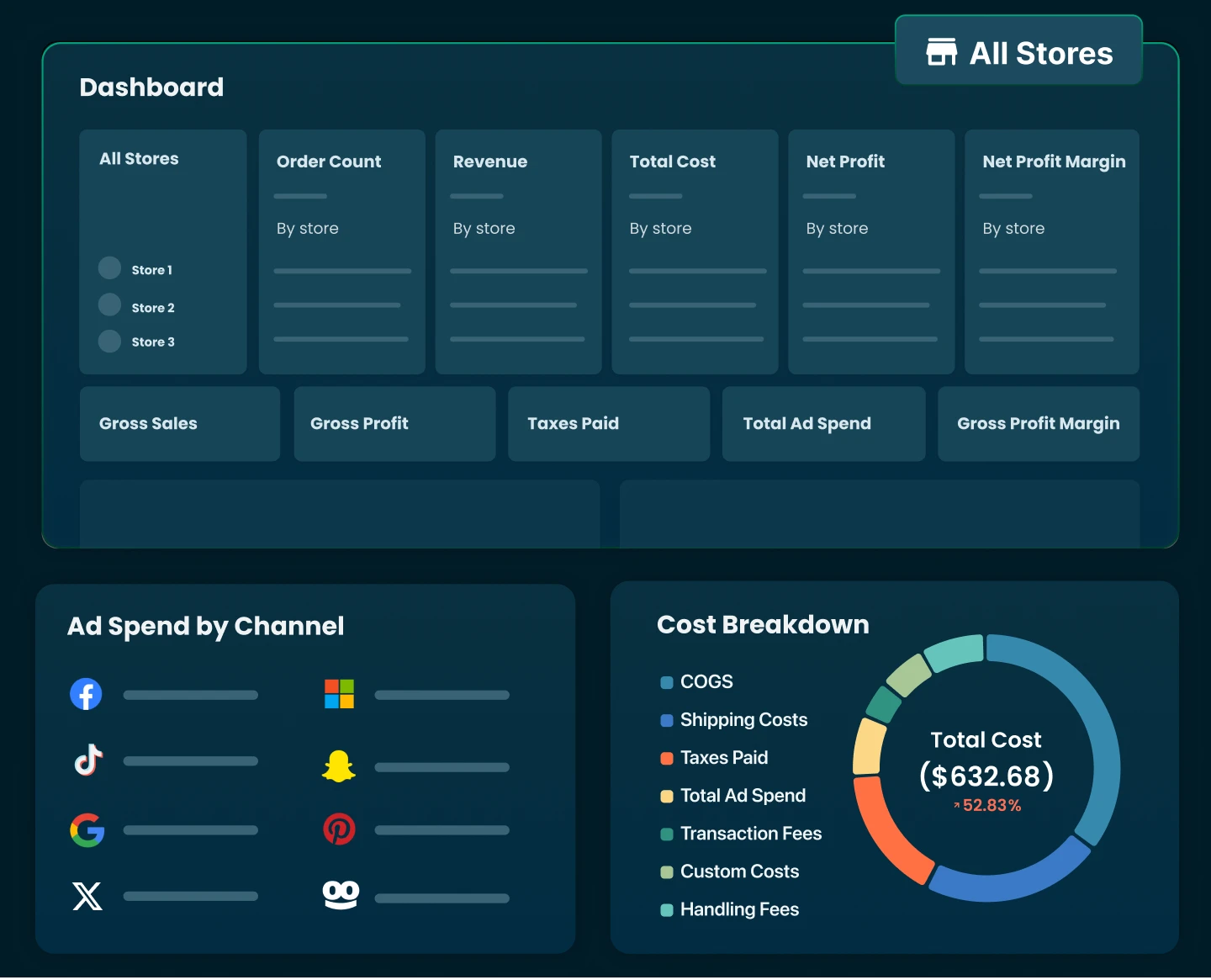
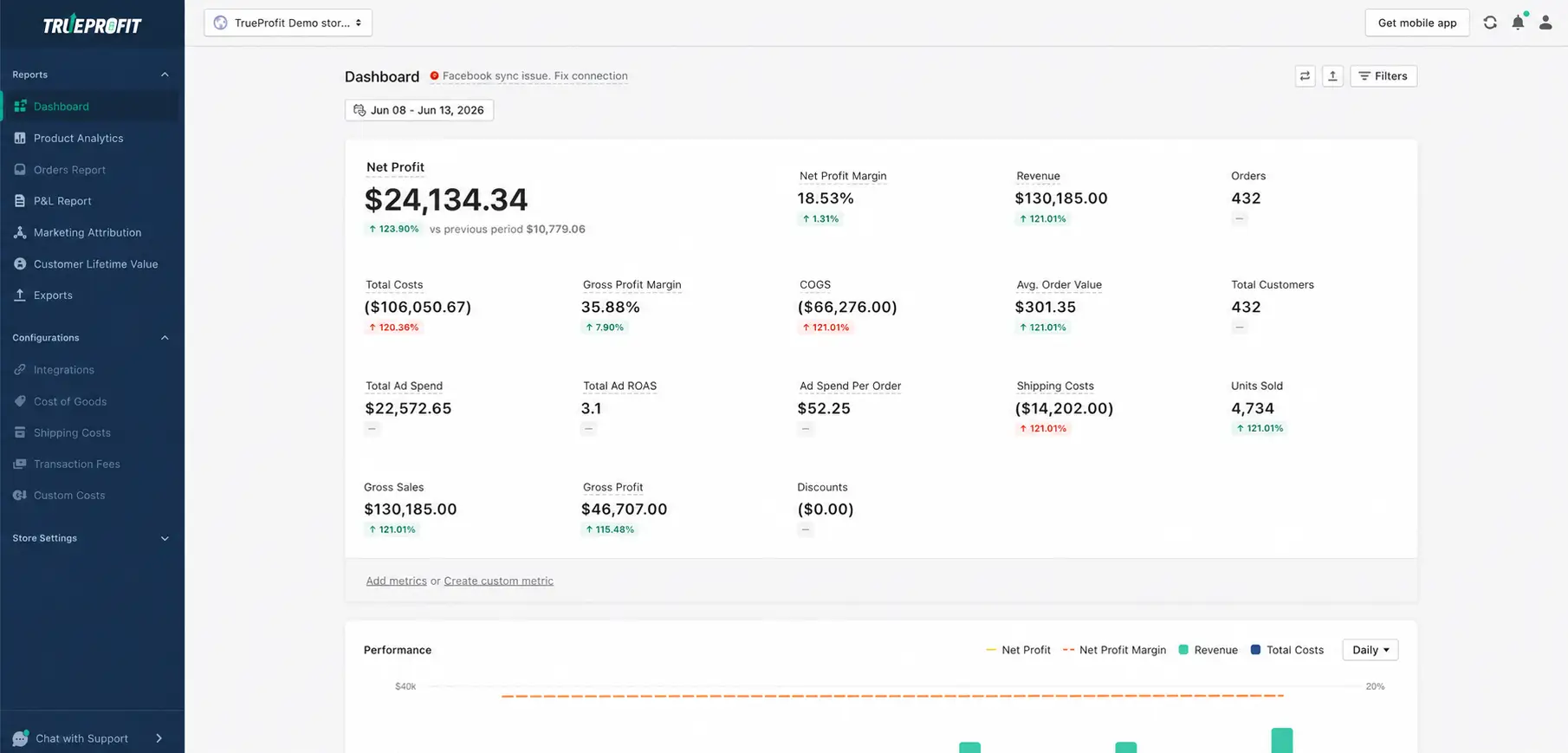
This is the mistake that quietly kills otherwise-successful Halloween stores. A product can post huge sales numbers and still lose money once ad spend, transaction fees, shipping, and returns are subtracted, and Halloween magnifies the risk because ad costs spike and the whole season is compressed into a few weeks.
The fix is to track net profit per product and per order, not just top-line revenue. That means knowing your true landed cost (product plus shipping plus fees), your real ad cost per sale, and your return rate for each SKU, then cutting or repricing anything that doesn't clear a healthy margin.
A dedicated profit-analytics tool like TrueProfit can pull these numbers together automatically so you see real net margin in real time instead of reconciling spreadsheets after the season ends, but the principle matters more than the tool: scale what's actually profitable, not just what's selling.
Relying on copyrighted IP without strategy
Selling unlicensed branded characters risks takedowns, account bans, and legal action. Marvel, Disney, and other IP holders actively police marketplaces during Halloween, and a suspended store in October is a lost season.
Sell "inspired by" generic versions instead. A generic superhero cape or witch look captures the trend without naming or copying protected characters.
Poor quality control and misleading product photos
Misleading photos are the top driver of Halloween returns and chargebacks. When the delivered item looks nothing like the ad, refunds spike in a window too short to recover from.
Order samples, shoot your own photos and video, and set realistic expectations. Your real footage converts better than supplier stock images anyway.
Ignoring niche audiences and year round opportunities
Treating Halloween as a one-month event leaves most of the profit unclaimed. Pet owners, party planners, and yard-decor enthusiasts are underserved niches, and many Halloween products (projectors, fog machines, lights, baking molds) sell across Christmas and other holidays.
Build a store that pivots. The same tech and decor inventory that sells in October can carry you through Q4 with minimal changes.

Final Thoughts
Halloween creates a short selling window, but it's one of the few seasonal events where demand, urgency, and social sharing all peak at the same time. The stores that win aren't necessarily the ones with the most products, they're the ones that pick the right niche, launch early, build compelling bundles, and deliver orders before October 31.
Irene Le is the Content Manager at TrueProfit, specializing in crafting insightful, data-driven content to help eCommerce merchants scale profitably. With over 5 years of experience in content creation and growth strategy for the eCommerce industry, she is dedicated to producing high-value, actionable content that empowers merchants to make informed financial decisions.