Amazon FBA vs. Dropshipping: Which E-commerce Model Is Right For You? (2026)


Table of Contents
- 1. Amazon FBA vs. Dropshipping: The Quick Comparison
- 2. What is Amazon FBA?
- 3. What is Dropshipping?
- 4. A Deep Dive into Amazon FBA vs. Dropshipping Key Differences
- 5. Pros and Cons of Amazon FBA
- 6. Pros and Cons of Dropshipping
- 7. Who Should Choose Amazon FBA?
- 8. Who Should Choose Dropshipping?
- 9. Can You Do Both Amazon FBA and Dropshipping? A Hybrid Approach
- 10. Final Thoughts
- 11. Amazon FBA vs Dropshipping FAQs
Amazon FBA and dropshipping are two popular paths into e-commerce, both allowing you to sell without managing your own warehouse. However, they differ in execution: Amazon FBA uses Amazon's fulfillment network, while dropshipping relies on third party suppliers to ship directly to customers.
This guide breaks down their key differences, costs, and use cases so you can choose the model that best fits your goals and resources.
In this blog:
- 1. Amazon FBA vs. Dropshipping: The Quick Comparison
- 2. What is Amazon FBA?
- 3. What is Dropshipping?
- 4. A Deep Dive into Amazon FBA vs. Dropshipping Key Differences
- 5. Pros and Cons of Amazon FBA
- 6. Pros and Cons of Dropshipping
- 7. Who Should Choose Amazon FBA?
- 8. Who Should Choose Dropshipping?
- 9. Can You Do Both Amazon FBA and Dropshipping? A Hybrid Approach
- 10. Final Thoughts
- 11. Amazon FBA vs Dropshipping FAQs
Amazon FBA vs. Dropshipping: The Quick Comparison
The world of online selling offers diverse strategies, and understanding the core mechanics of each model is key to making an informed decision. Here's a quick side-by-side overview.
Amazon FBA vs. Dropshipping at a Glance

What is Amazon FBA?
Amazon FBA, or Fulfillment by Amazon, is a service where Amazon handles the storage, packing, and shipping of products for sellers. This model allows entrepreneurs to utilize Amazon's extensive logistics network and customer service infrastructure, tapping into its vast customer base without needing their own warehouse facilities.
How Amazon FBA Works
Understanding the FBA process involves several steps from sourcing to customer delivery. Here's how it works step by step:
- Product sourcing and purchasing: Sellers identify and procure products in bulk, often directly from manufacturers or wholesalers, based on market demand.
- Shipping to Amazon fulfillment centers: Once inventory is acquired, the seller prepares and dispatches it to specific Amazon fulfillment centers, following Amazon's strict labeling and packaging guidelines.
- Amazon handles storage, packing, shipping, and customer service for FBA orders: Upon receiving the inventory, Amazon stores it in its warehouses. When a customer places an order, Amazon manages the entire fulfillment process: picking the item, packing it, shipping it (often with Prime's fast delivery), and handling all fulfillment-related customer service inquiries and returns.
- Seller's responsibilities (listing, marketing, inventory monitoring): The seller remains responsible for creating compelling product listings on Amazon, driving sales through marketing efforts (such as Amazon PPC or external promotions), and continuously monitoring inventory levels to prevent stockouts or overstocking. If you have limited marketing experience, partnering with an Amazon PPC agency can be a smart choice.


What is Dropshipping?
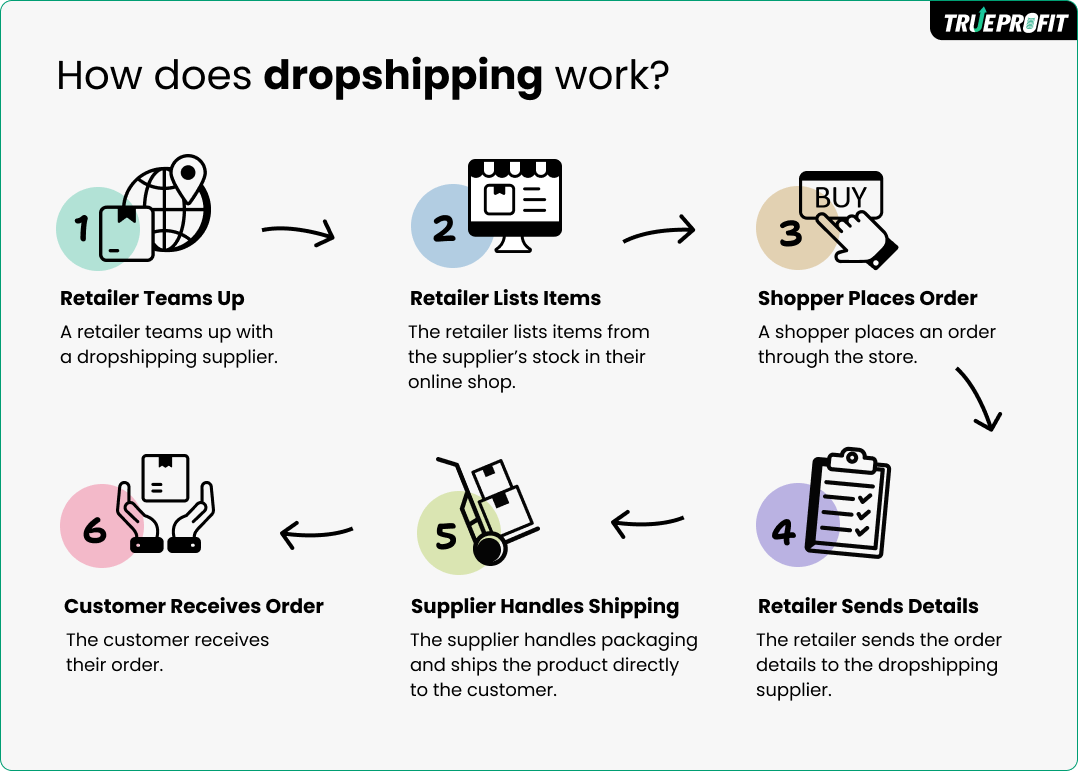
Dropshipping is an e-commerce fulfillment method that allows businesses to sell products without ever holding any inventory themselves. When a store sells a product, it purchases the item from a third-party supplier or manufacturer and has it shipped directly to the customer.
How Dropshipping Works
The dropshipping model operates on a simple, streamlined process that minimizes inventory risk.
- Seller lists products for sale without holding inventory: The entrepreneur establishes an online store (for example, using a platform like Shopify) and lists products sourced from various suppliers. They do not purchase or store any inventory upfront.
- Customer places an order: A customer visits the seller's online store, selects a product, and completes their purchase.
- Seller forwards the order to a third-party supplier: The seller receives the customer's payment, retains their profit margin, and then uses the remaining amount to buy the product from their chosen supplier. They provide the customer's shipping details to the supplier.
- Supplier ships the product directly to the customer: The supplier then takes responsibility for packing and shipping the product directly to the customer, often with the seller's branding if a white-label arrangement has been established.
- Seller's responsibilities (marketing, customer service, supplier management): The seller's primary roles involve attracting customers to their store through effective marketing, handling all customer service inquiries (including product questions, shipping updates, and returns), and diligently managing relationships with their suppliers.
A Deep Dive into Amazon FBA vs. Dropshipping Key Differences
Understanding the core differences between Amazon FBA and dropshipping helps you choose the right path. Here's a breakdown across the factors that matter most.
1. Startup Costs and Investment
FBA requires significant upfront capital: bulk inventory, shipping to Amazon's warehouses, and ongoing selling fees.
Dropshipping is far more accessible; you only pay for products after customers buy them. Your main costs are your store platform and marketing.
2. Inventory Management and Control
With FBA, you buy and manage inventory in bulk, which means forecasting demand and monitoring stock levels to avoid fees or stockouts.
With dropshipping, you hold zero inventory, but you're fully dependent on your supplier's reliability and stock availability, making thorough supplier vetting essential.
3. Fulfillment and Shipping
FBA taps into Amazon's logistics network for fast, Prime-eligible shipping with returns handled automatically.
Dropshipping leaves fulfillment entirely to your supplier, meaning delivery times and quality can be inconsistent, especially with overseas suppliers.
4. Profit Margins and Pricing
FBA allows bulk pricing that can improve gross margins, but Amazon's fees (referral, fulfillment, storage) eat into net profit.
Dropshipping margins are slimmer per unit, but lower overhead means profitability is achievable at scale.
5. Customer Service
Amazon handles fulfillment-related issues under FBA, but product questions and certain returns still fall on you.
With dropshipping, all customer service is your responsibility, from shipping updates to returns, requiring strong supplier coordination.
6. Branding and Brand Building
FBA lets you build a brand within Amazon's ecosystem (especially via private labeling), but your identity is tied to the Amazon platform.
Dropshipping gives you full control over your own store, customer experience, and brand voice. Private label dropshipping takes this even further.
7. Scalability
Both models scale well. FBA scales through Amazon's logistics once your sourcing system is solid.
Dropshipping scales by adding products with no inventory investment, provided your marketing and suppliers can keep up.
8. Risk Assessment
FBA risks include slow-moving inventory, storage fees, and dependence on Amazon's policies, an account suspension can be devastating.
Dropshipping risks center on supplier reliability, long shipping times, chargebacks, and supply chain disruptions.
9. Time Commitment
FBA is front-loaded: heavy research and setup upfront, then largely passive once stocked.
While dropshipping is more hands-on ongoing, requiring continuous marketing, customer service, and supplier management.
10. Marketing and Sales Channels
FBA merchants tap into Amazon's existing traffic through listing optimization and PPC campaigns.
Dropshippers must build their own audience from scratch via social media ads, Google Ads, SEO, and content marketing. Your choice of ecommerce platform is key.

Pros and Cons of Amazon FBA
For entrepreneurs considering Amazon FBA, weighing its specific advantages against its potential drawbacks is essential for a balanced decision.
Benefits of Amazon FBA
Amazon FBA offers several compelling advantages, primarily by leveraging Amazon's robust infrastructure.
- Access to Amazon's customer base: You can tap into millions of loyal Amazon shoppers, many of whom are Prime members actively looking to buy.
- Prime eligibility for faster shipping: Products are often visible to Prime customers, offering faster delivery and increased trust, which can significantly boost conversion rates.
- Hands-off fulfillment and customer service: Amazon handles storing, packing, shipping, and returns for FBA orders, freeing up your time to focus on other aspects of your business.
- Scalability through Amazon's infrastructure: You can easily increase sales volume without needing to invest in scaling your own logistics or warehouse space.
Drawbacks of Amazon FBA
Despite its benefits, Amazon FBA also comes with distinct disadvantages that require careful consideration.
- Higher upfront investment (inventory): This model requires significant capital to purchase products in bulk before you make any sales.
- Strict Amazon rules and fees: You must adhere to Amazon's often stringent policies and pay various fees, including referral fees, fulfillment fees, and potentially storage fees.
- Storage fees for slow-moving inventory: Products that do not sell quickly can accumulate costly long-term storage fees, eating into your profit margins.
- Less control over branding and customer data: Operating within Amazon limits your ability to fully control your brand's presence and direct access to valuable customer information.
- Intense competition on Amazon: The platform is crowded with many sellers competing for visibility, making product differentiation challenging and often requiring significant ad spend.
Pros and Cons of Dropshipping
Dropshipping attracts many new entrepreneurs due to its flexible nature, but it also comes with a unique set of challenges compared to FBA.
Here are the key advantages and disadvantages of dropshipping to help you evaluate if it's the right fit:
Benefits of Dropshipping
Dropshipping offers a low-risk entry into e-commerce with significant operational flexibility.
- Low startup costs and minimal upfront inventory risk: You don't need to purchase products until after a customer buys them, significantly reducing financial commitment.
- Wide product selection and easy market testing: You can quickly add and remove products from your store, allowing for agile testing of various niches and product ideas.
- Flexible location and operational independence: You can run your dropshipping business from anywhere in the world with an internet connection, offering unparalleled lifestyle flexibility.
- Full control over branding and customer experience (outside of fulfillment): You can build your own unique storefront and cultivate direct relationships with your customers, fostering brand loyalty.
Drawbacks of Dropshipping
While flexible, dropshipping presents several challenges, primarily related to reliance on third parties and intense market competition.
- Lower profit margins: Dropshipping typically yields smaller per-unit profits due to individual product sourcing and smaller purchasing power compared to bulk buying for FBA.
- Reliance on third-party suppliers (quality, shipping, stock): Quality control, shipping times, and inventory availability are largely out of your direct control, making supplier vetting crucial.
- Intense marketing efforts required to drive traffic: You are solely responsible for generating all your sales, necessitating significant investment in advertising and SEO to attract customers.
- Managing customer service for fulfillment issues: You are responsible for handling all customer inquiries, including those related to supplier shipping delays or product defects.
- Potentially longer shipping times: Delivery can be slower and less predictable, especially when dealing with international suppliers, which can sometimes lead to customer dissatisfaction.
Who Should Choose Amazon FBA?
Amazon FBA is particularly well-suited for certain types of entrepreneurs and business models, especially when specific resources and goals are in place.
Consider FBA if you fit these descriptions:
- Entrepreneurs with some capital to invest in inventory upfront.
- Those aiming for higher per-unit profit margins through bulk purchasing.
- Businesses focused on private label or unique product creation with a desire for brand presence on a major platform.
- Sellers who value streamlined logistics and a hands-off fulfillment process.
- Those comfortable operating within Amazon's ecosystem and its specific rules and fees.
Who Should Choose Dropshipping?
Dropshipping offers a flexible entry point into e-commerce, making it an excellent choice for individuals with particular circumstances and aspirations.
Dropshipping might be for you if you are:
- Beginners with limited startup capital looking to minimize financial risk.
- Entrepreneurs keen on testing various product ideas and niches without investing in inventory.
- Those who prioritize a flexible, location-independent business model.
- Sellers interested in building their own brand and direct customer relationships through a dedicated online store.
- Individuals willing to actively manage marketing, advertising, and all aspects of customer service. You can also consider if dropshipping is a good side hustle for you.
Can You Do Both Amazon FBA and Dropshipping? A Hybrid Approach
Yes, many experienced entrepreneurs find success by adopting a hybrid strategy that combines elements of both Amazon FBA and dropshipping. This strategic approach allows businesses to leverage the strengths of each model while mitigating some of their inherent weaknesses.
Adopting a hybrid strategy provides a balanced approach to e-commerce, maximizing opportunities while minimizing risks.
- Diversifying risk and revenue streams: By not relying solely on a single platform or fulfillment method, you reduce overall business risk and open up multiple avenues for sales.
- Testing products with dropshipping before committing to FBA: You can use dropshipping to effectively gauge market demand and product viability with minimal financial risk before investing in bulk inventory for FBA.
- Leveraging dropshipping for long-tail products and FBA for best-sellers: Utilize FBA for your high-volume, proven best-sellers that benefit most from Amazon's fast shipping and Prime eligibility. Meanwhile, use dropshipping for niche, specialized, or slower-moving items that you don't wish to store in bulk.
Final Thoughts
Navigating the choice between Amazon FBA and dropshipping requires a clear understanding of your resources, entrepreneurial goals, and risk appetite. While FBA offers the robust power of Amazon's logistics and vast customer trust, dropshipping provides unmatched flexibility and significantly lower startup costs. Both models present unique opportunities and challenges for e-commerce entrepreneurs.
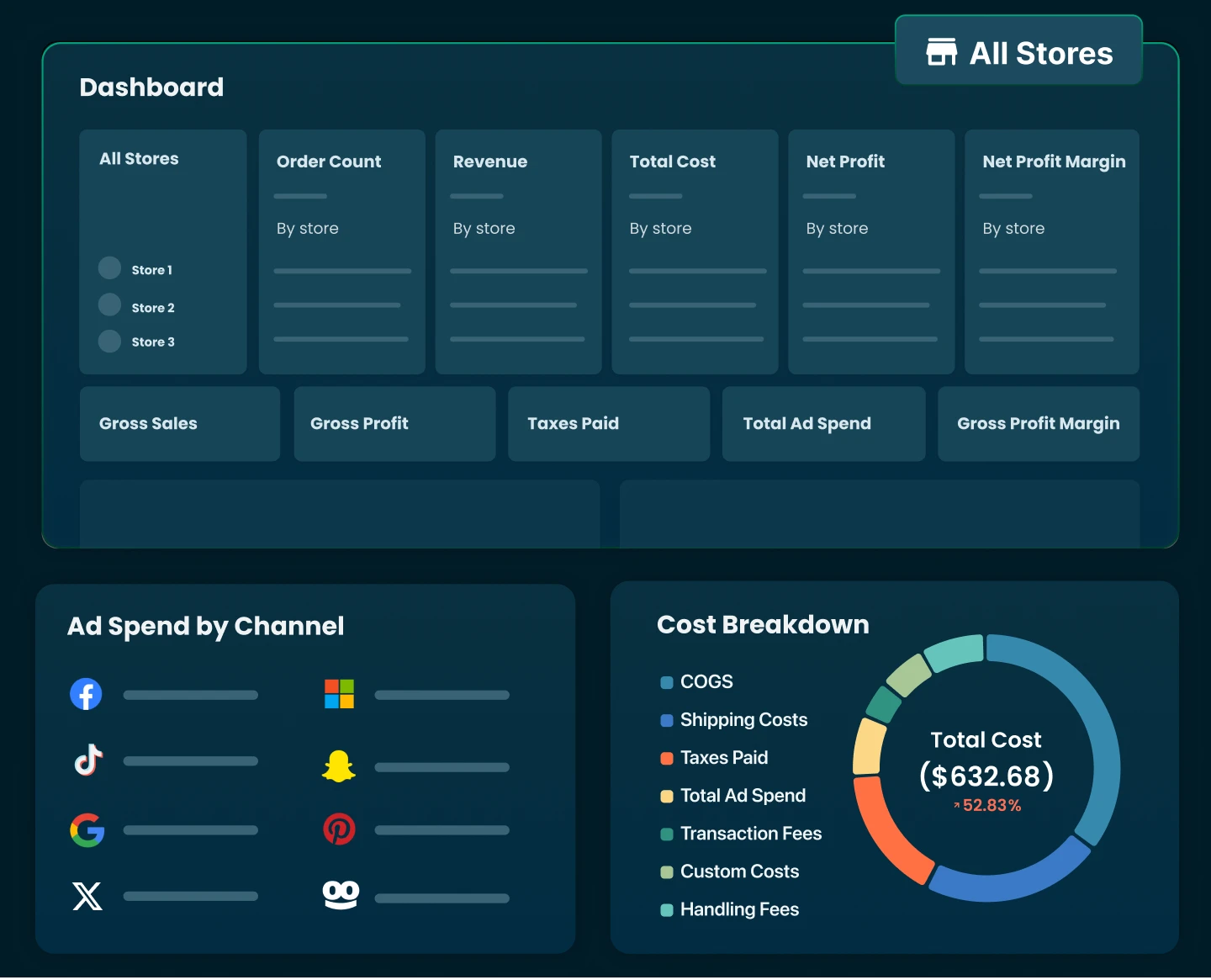
No matter which model you choose, what ultimately matters is your net profit, the bottom line that determines whether your business is truly sustainable. This is where tools like TrueProfit come in, helping Shopify sellers track every cost and revenue stream so they can clearly see their real profit and make smarter decisions to scale.
Lila Le is the Marketing Manager at TrueProfit, with a deep understanding of the Shopify ecosystem and a proven track record in dropshipping. She combines hands-on selling experience with marketing expertise to help Shopify merchants scale smarter, through clear positioning, profit-first strategies, and high-converting campaigns.