
Is Dropshipping Oversaturated in 2026? The Truth About Competition and Profitability


Table of Contents
Short answer: dropshipping isn't oversaturated. But the lazy version of it is.
There are too many stores copying the same products, using the same supplier photos, running the same ads. That market is brutal. But that's not the whole picture.
In this guide, I'll show you why the saturation myth exists, what the dropshipping market actually looks like in 2026, and what separates stores that make money from stores that don't.
In this blog:
The Short Answer: Is Dropshipping Really Oversaturated?
Dropshipping as a business model isn't oversaturated. Certain approaches to it are.
The market for generic, unbranded, low-effort stores is crowded and getting worse. But niche-focused, brand-driven dropshipping still has plenty of room.
1. Why This Isn't a Simple Yes or No
Dropshipping isn't one market. It's thousands of them.
A store selling unbranded phone cases competes with hundreds of near-identical shops on price alone. A store selling ergonomic tools for arthritis patients, or natural skincare for teenagers with eczema, faces a completely different landscape.
When people say dropshipping is saturated, they're describing the first type. The second type is largely wide open, because it takes real work to build.
2. How Dropshipping Has Changed
Early dropshipping was easy. Find a cheap product, run some Facebook ads, make money before the market notices. That window is mostly closed now.
If you're thinking about how to start a dropshipping business in 2026, the playbook has shifted. It looks less like flipping products and more like building a real brand.
That's actually good news. It means the serious competition is smaller than the raw number of stores suggests.
3. Market Size vs. Effective Competition
Let’s talk about the competition:
Factor | Reality | What It Means |
|---|---|---|
Total dropshipping stores | Millions globally | Looks intimidating |
Generic, unbranded stores | The vast majority | Low quality, high churn |
Actual effective competitors | A small fraction | Much more manageable |
Global e-commerce growth | Expanding every year | More buyers entering every niche |
Most stores that launch fail within months. They were never real businesses. The dropshipping success rate data reflects this: failure clusters heavily among stores with no differentiation or real strategy.

Why the "Oversaturated" Myth Keeps Spreading

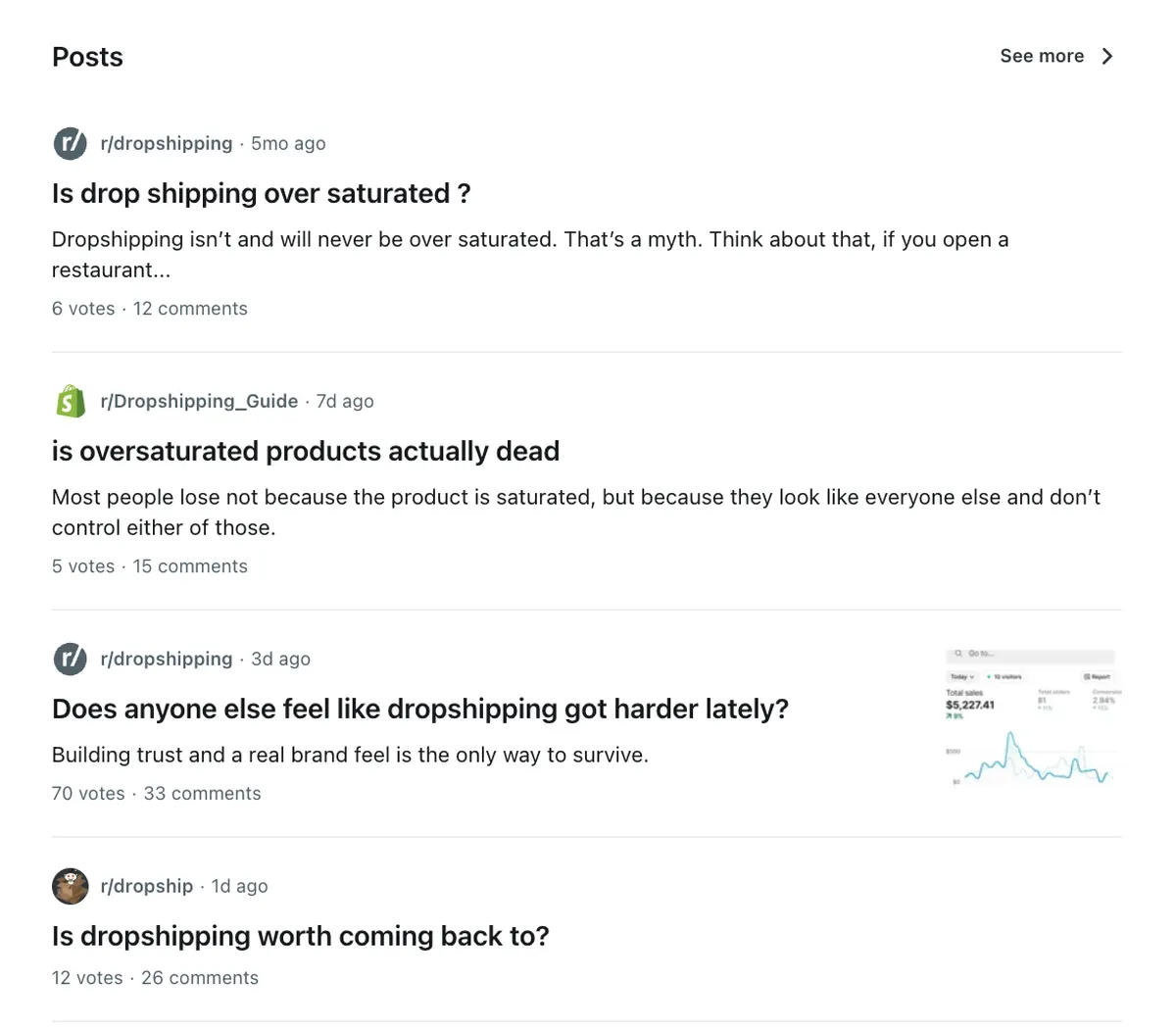
Is dropshipping oversaturated conversations on Reddit
The saturation narrative isn't completely wrong. It just gets applied to the wrong thing.
It accurately describes a real problem with low-effort dropshipping. Then people incorrectly apply that description to the whole model.
1. Low Barriers to Entry Make the Market Look Crowded
Dropshipping is cheap to start. Compared to traditional retail, the cost to start dropshipping is minimal, no inventory, no warehouse, no large upfront investment.
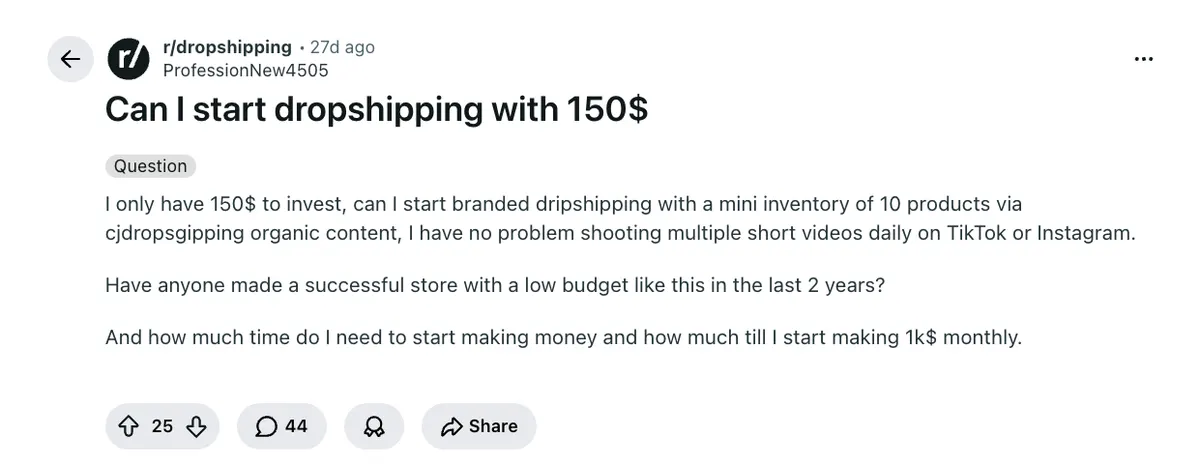
Lots of Redditors want to start dropshipping with mimum costs
That accessibility is great. It also means thousands of people start stores every week with no marketing skills, no business plan, and sometimes no real understanding of how e-commerce works. Most of those stores quietly disappear. But while they're live, they add to the noise.
2. Generic Products and Poor Execution Kill Margins
Most of the "dropshipping is dead" stories come from stores that made the same three mistakes:
- Copied trending products without adding anything different or better
- Competed on price, which destroys margins and trains customers to see you as a commodity
- Ran untargeted ads to broad audiences who had no reason to buy
When hundreds of stores sell the same product with the same photos and the same copy, they're fighting over cents. That looks like a saturated market from the outside. It's really just a lot of bad strategy in one place.
3. The "Get Rich Quick" Hangover
Early dropshipping YouTube content promised passive income and financial freedom in 30 days. It attracted a lot of people expecting something that doesn't exist.
When those stores failed, those people concluded the market was the problem. In most cases, the strategy was the problem.
Dropshipping is not a scam, but it was sold dishonestly for years. It's a legitimate business model that requires real effort, just like any other.
4. More Competition Is Actually Useful
Higher competition makes it harder to succeed with a lazy approach. But it also raises the floor on quality.
Customers now expect reasonable shipping speeds, responsive support, and stores that look like they were built by an actual business. Most stores still don't clear that bar. The ones that do stand out immediately.
What Modern Dropshipping Actually Looks Like in 2026
The opportunities are real. They just look different from what worked six years ago.
1. E-commerce Is Still Growing
More people are shopping online than ever, and that number increases every year. Every new buyer is a potential customer for some niche. The total addressable market for well-targeted stores keeps expanding.
2. Micro-Niches Beat General Stores
Selling "kitchen gadgets" to everyone is a hard game. Selling ergonomic kitchen tools for left-handed cooks, or low-prep cooking gear for people with chronic fatigue, is a much easier one.
Micro-niches reduce your competition, make your ads cheaper and more targeted, and build the kind of audience loyalty a general store can never get.
3. Branding Is the Real Differentiator
The most successful dropshippers today don't think of themselves as resellers. They think of themselves as brands.
That means a distinct identity, consistent visuals, a real value proposition, and customer relationships that have actual value. Branded dropshipping turns a transactional store into a business with equity.
A competitor can copy your product page overnight. They can't copy your brand.
4. Data Separates Profitable Stores from Unprofitable Ones
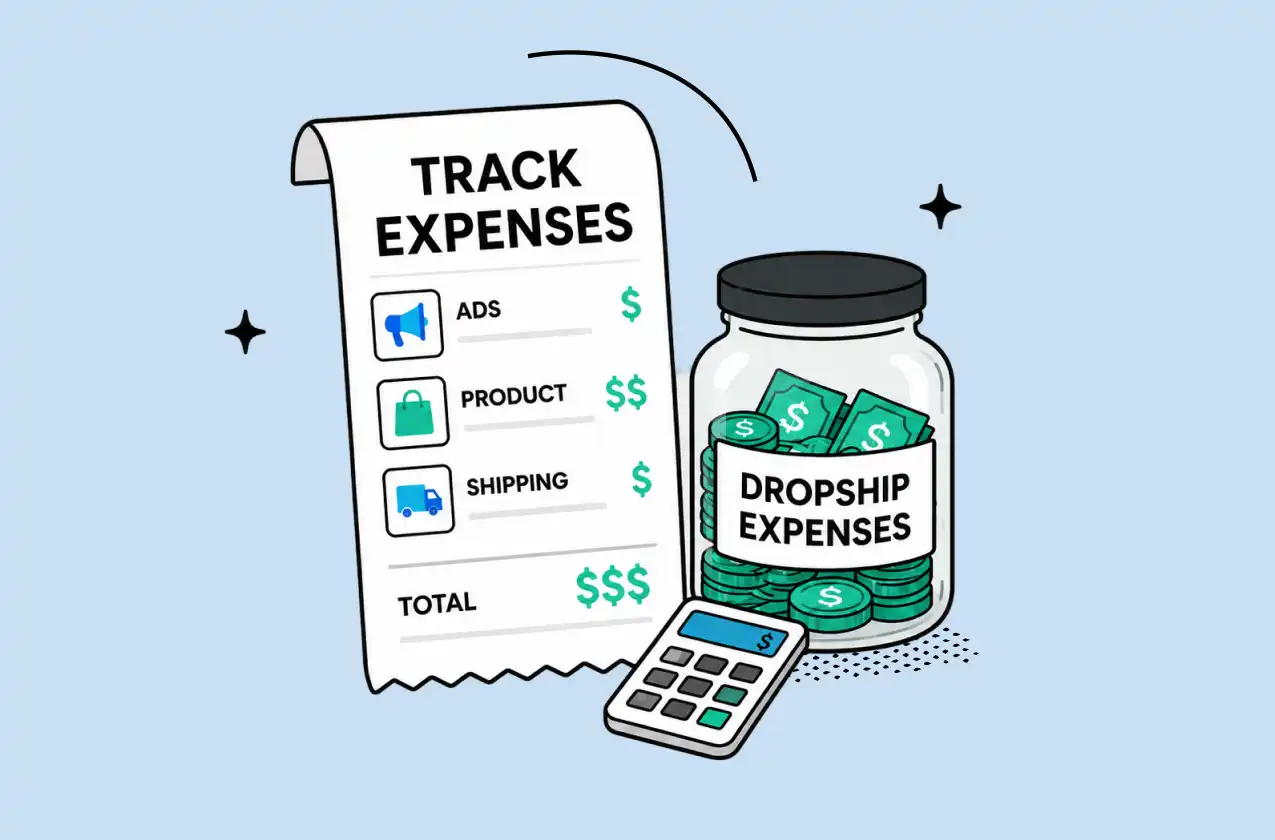
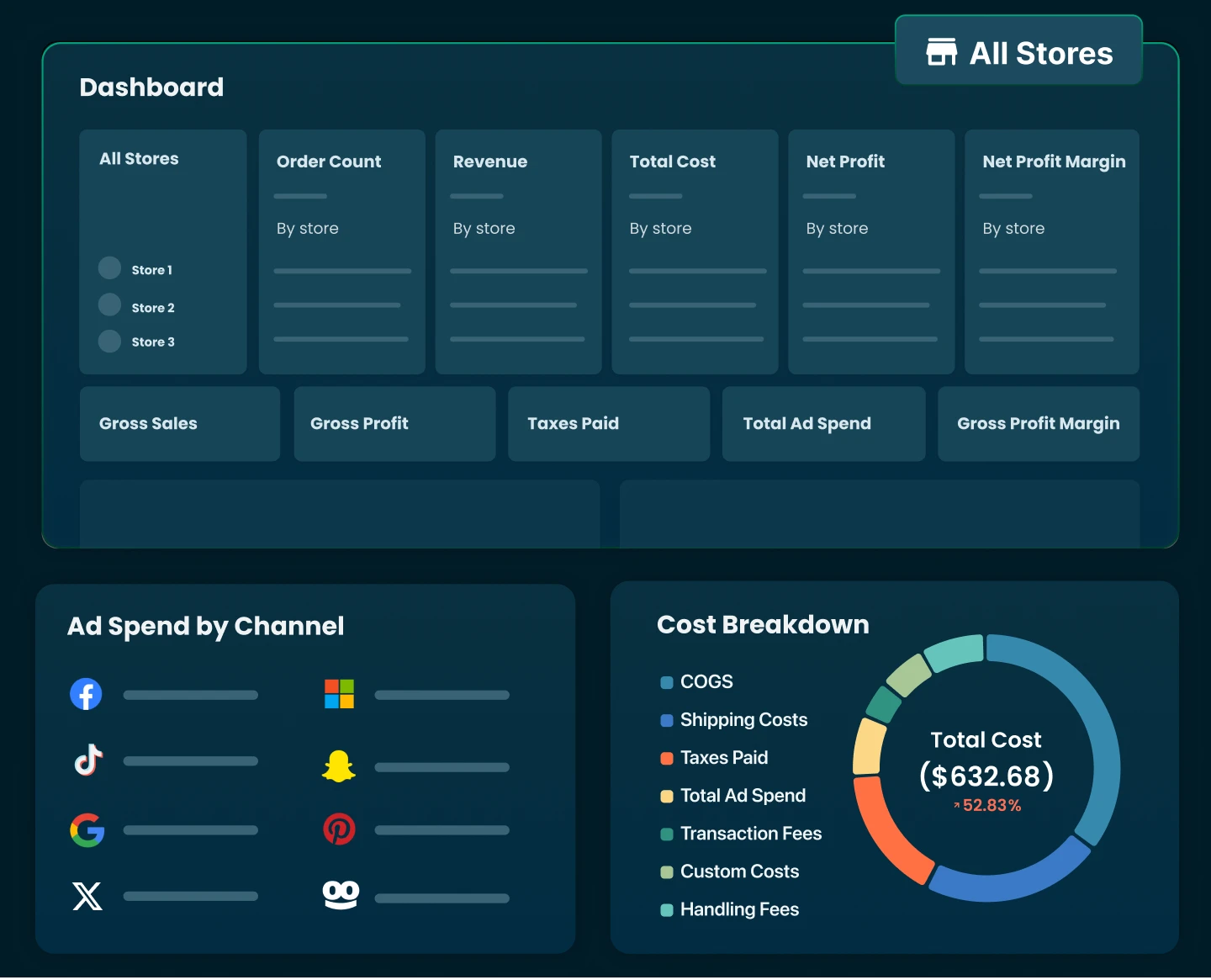
Stores that win in 2026 track the right numbers: customer acquisition cost, lifetime value, return rates, and net profit per product.
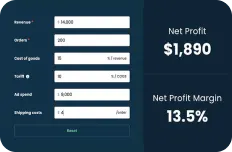
Knowing whether dropshipping is profitable means looking past revenue at what you're actually keeping. After ad spend, returns, platform fees, and shipping, your real margin is often very different from what your dashboard shows.
How to Actually Succeed at Dropshipping in 2026
Here's what separates stores that grow from stores that stall.
1. Research Your Niche Before You Build Anything
Don't pick a niche based on what seems popular. Validate it.
Use Google Trends, keyword tools, Amazon reviews, and Reddit communities to understand what a specific audience is searching for, complaining about, and buying. The best niches sit inside larger categories with a specific angle: not "fitness equipment," but "resistance training tools for people over 60." Not "pet products," but "anxiety relief for rescue dogs."
Specificity is your competitive advantage.
2. Build a Brand Identity Early
Before you design a single page, define who you're selling to, what problem you're solving, and why your store exists.
A brand isn't a logo. It's the reason someone picks you over the cheaper option on Amazon. Your value proposition should be obvious within the first five seconds of landing on your store. If it isn't, you're competing on price by default.
3. Vet Your Suppliers Carefully
What to Check | Why It Matters |
|---|---|
Shipping speed | Affects your reviews and repeat purchase rate |
Product consistency | Returns and complaints directly cut into margins |
Communication speed | Slow suppliers make customer issues worse |
Ethical sourcing | Increasingly important in premium niches |
If you're sourcing from international platforms like Alibaba for dropshipping, always order samples first. One bad batch can undo months of reputation building.
4. Build a Marketing Mix, Not Just Ads
Paid ads are one channel. They're not a strategy on their own.
A sustainable marketing approach looks like:
- SEO and content for long-term organic traffic that doesn't require constant spend
- Social commerce to reach buyers where they already are. TikTok dropshipping in particular has become a high-converting channel for the right product types
- Email to move browsers into buyers and buyers into repeat customers
- Micro-influencer partnerships for niche credibility at a fraction of the cost of larger creators
Organic dropshipping through SEO takes longer, but it's the channel that compounds over time and lowers your acquisition cost across the board.
5. Make Customer Service a Priority
Most generic stores offer no real customer support. That alone makes it easy to stand out.
Responding quickly, resolving problems without friction, and following up after purchases builds trust that drives repeat orders. In a niche market, word of mouth matters more than in mass-market retail.
6. Review Your Numbers Every Week
Set a weekly review: which products are profitable after all costs, which ads are wasting budget, which pages are losing visitors before checkout.
Stores that survive long-term treat every week as a learning cycle. The ones that stall set up a store and wait.

Can You Still Make Real Money from Dropshipping?
Yes, but what you earn depends heavily on where you are in the learning curve.
Based on TrueProfit's analysis of 1,200+ stores, here's what monthly net profit actually looks like by experience level:
Experience Level | Monthly Net Profit |
|---|---|
Beginner | $0 – $2,000 |
Intermediate | $2,000 – $10,000 |
Advanced | $10,000 – $50,000+ |
Most people reach their first sale within 7–14 days. Getting to $5,000–$10,000/month consistently takes 6–12 months of testing, reinvestment, and learning. The stores that get there treat it as a real business, not a side bet, and they optimize for net profit, not just revenue.
In Short, Saturation Is a Strategy Problem, Not a Market Problem
Dropshipping isn't oversaturated. The undifferentiated, brand-free, copy-paste version of it is.
Build for a specific audience. Source products worth standing behind. Treat customers like they matter. None of that requires a massive budget, it requires the discipline most newcomers skip.
One thing the stores that succeed have in common: they know their real numbers. Not just revenue, but actual net profit after every cost. If you're running a Shopify dropshipping store and want that clarity, TrueProfit is the go-to net profit analytics platform built specifically for that - tracking everything from ad spend to COGS to fees, all in one place.
The market in 2026 is open. But only for the people building something real.
Irene Le is the Content Manager at TrueProfit, specializing in crafting insightful, data-driven content to help eCommerce merchants scale profitably. With over 5 years of experience in content creation and growth strategy for the eCommerce industry, she is dedicated to producing high-value, actionable content that empowers merchants to make informed financial decisions.