Best Dropshipping Product Research Tools to Spy Winning Products (2026)



Table of Contents
- 1. Why Dropshipping Product Research is Non-Negotiable for Success
- 2. Understanding a "Winning Product": Key Characteristics
- 3. Essential Dropshipping Product Research Methods (Manual & Free)
- 4. Top Dropshipping Product Research Tools (Free & Paid)
- 5. Your Step-by-Step Dropshipping Product Research Roadmap 2026
- 6. Common Dropshipping Product Research Mistakes to Avoid
- 7. Beyond Research: What Comes Next?
- 8. Final Thoughts
- 9. Best Dropshipping Product Research Tools FAQs
Dropshipping product research is the cornerstone of any successful online store. It's the strategic process of uncovering high-demand, profitable products with manageable competition, identifying precisely what your customers want and will buy.
This guide will equip you with the essential strategies, powerful tools, and a clear step-by-step roadmap to navigate this crucial process and confidently launch your next winning product.
In this blog:
- 1. Why Dropshipping Product Research is Non-Negotiable for Success
- 2. Understanding a "Winning Product": Key Characteristics
- 3. Essential Dropshipping Product Research Methods (Manual & Free)
- 4. Top Dropshipping Product Research Tools (Free & Paid)
- 5. Your Step-by-Step Dropshipping Product Research Roadmap 2026
- 6. Common Dropshipping Product Research Mistakes to Avoid
- 7. Beyond Research: What Comes Next?
- 8. Final Thoughts
- 9. Best Dropshipping Product Research Tools FAQs
Why Dropshipping Product Research is Non-Negotiable for Success
Dropshipping success hinges not on how vast your product catalog is, but on the quality and market fit of the products you choose to sell. Guessing what customers might want is a fast track to financial loss. Strategic dropshipping product research is the antidote to this uncertainty, providing data-driven insights that inform every critical business decision. It transforms speculation into an informed strategy.
1. The Direct Link Between Product Choice and Business Profitability
Every product you list represents an investment in time, marketing efforts, and often ad spend. A product that genuinely resonates with your target audience translates directly into sales, while a poorly chosen product can drain resources with little to no return. Effective product research ensures that your efforts are directed towards items with proven market appeal, directly impacting your bottom line from day one. It's the difference between merely launching a store and building a profitable dropshipping business.
2. Minimizing Risk and Avoiding Common Pitfalls
Without thorough research, dropshippers often fall into traps like selling oversaturated products, items with razor-thin profit margins, or those with complex shipping issues. Product research helps mitigate these risks by identifying potential problems upfront, from assessing supplier reliability to understanding a product's seasonal demand.
This proactive approach saves you from costly inventory mistakes, advertising budget wastage, and potential customer service headaches down the line. It's about making informed choices to safeguard your investment.
3. Importance of Market Validation and Understanding Your Niche
Product research isn't just about finding what to sell, but to whom. It involves deeply understanding your target audience's desires, pain points, and purchasing habits.
Validating a market means confirming there's enough existing interest and a willingness to buy a particular product within a specific niche. This validation is critical for building a sustainable business with a loyal customer base, ensuring your product isn't just a fleeting trend but addresses a genuine, persistent need or want.
For a deeper dive into establishing your business foundation, explore our comprehensive guide to Dropshipping for Dummies: Guide to Start Profitable in 2026.
4. Setting Yourself Apart From Competitors
In a highly competitive dropshipping landscape, offering the exact same products as everyone else is a recipe for mediocrity. Strategic product research allows you to uncover untapped niches, identify unique product variations, or find innovative ways to market existing products.
By focusing on products that offer distinct value or cater to underserved segments, you can differentiate your store, build a unique brand identity, and secure a competitive edge that helps you stand out in the crowded market.

Understanding a "Winning Product": Key Characteristics
Identifying a winning product for dropshipping goes beyond a gut feeling; it requires a systematic evaluation against a set of proven characteristics gleaned from market analysis and consumer behavior. These traits collectively increase the likelihood of a product's success and profitability within your store.
1. High Demand Yet Low/Moderate Competition
The sweet spot for dropshipping product research is finding products with substantial demand without overwhelming competition. High demand ensures a consistent flow of potential customers, while low to moderate competition means your marketing efforts will be more effective, and you won't be forced into aggressive price wars. Always avoid products where major retailers or established dropshippers already dominate the market with identical offerings.

2. Problem-Solving or Niche Appeal
Products that genuinely solve a specific problem or cater to a passionate, well-defined niche tend to perform exceptionally well.
Think about items that simplify daily tasks, improve health, organize spaces, or appeal to hobbyists (e.g., pet owners, gamers, crafters). These products often command higher perceived value and foster stronger customer loyalty because they address a genuine need or desire, making them indispensable to their target audience.
A product that makes life easier or caters to a specific passion often has an intrinsic "buy me now" appeal.
3. Good Profit Margins
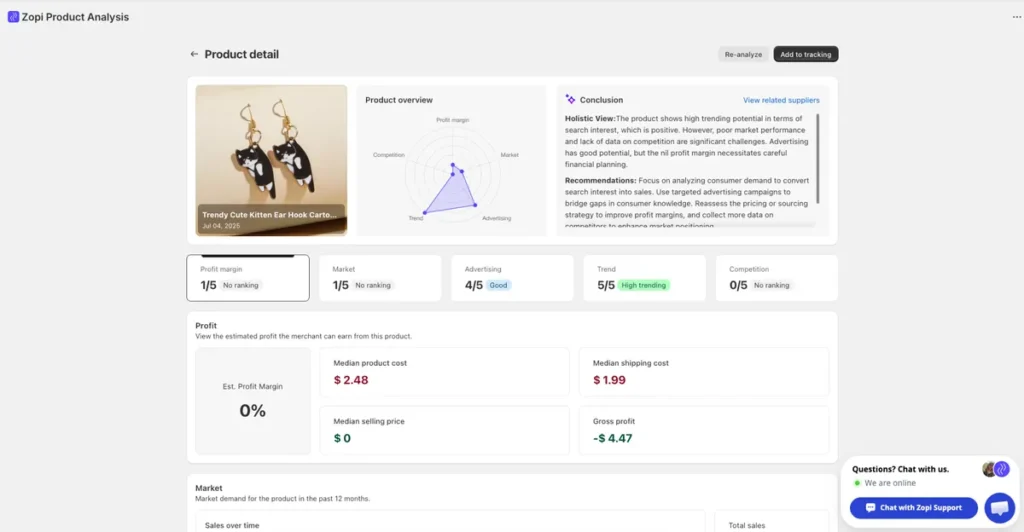
Profitability is what determines whether a product is truly worth scaling. A product may generate strong sales, but if margins are too thin after accounting for product cost, shipping, ads, fees, and returns, it quickly becomes unsustainable.
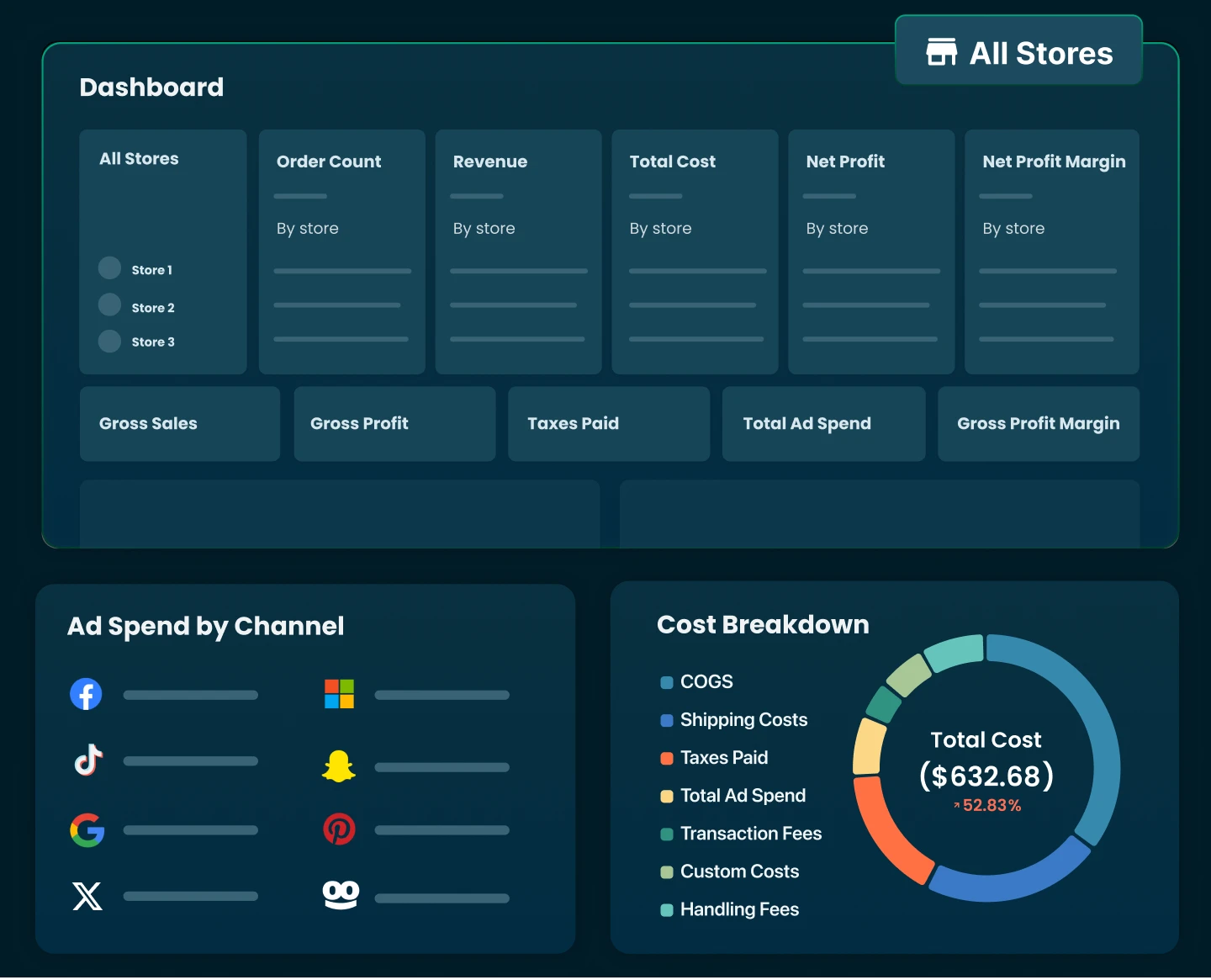
Based on TrueProfit’s analysis of over 1,200 dropshipping stores, a gross profit margin in the range of 65–70% is typically considered healthy, while a net profit margin of around 15–25% is a strong benchmark for sustainable growth. Products that fall below these thresholds often struggle to remain profitable once advertising costs scale.
This is why validating margins early is critical. Before committing to a product, you should model your full cost structure and understand your true profitability. Using a profit tracking tool like TrueProfit allows you to estimate your net profit upfront and avoid scaling products that look promising on the surface but fail at the bottom line.
4. Untapped Potential / "Wow" Factor
Look for products that are either new to the market, have a unique twist on an existing product, or possess a "wow" factor that genuinely excites customers. These could be innovative gadgets, visually appealing items, or products that go viral.
Such products create buzz, encourage social sharing, and allow you to capture early market share before they become mainstream. "TikTok Made Me Buy It" trends often fall into this category, capitalizing on novelty and virality.
5. Ease of Shipping and Reliability
Logistics can make or break a dropshipping business. Ideal products are lightweight, compact, and durable, making them easy and affordable to ship globally.
Avoid fragile items, hazardous materials, or oversized products that incur exorbitant shipping costs and increase the risk of damage during transit.
Reliable products with low return rates also mean fewer customer service complaints and chargebacks, ensuring a smoother operation.
6. Scalability
A winning product should have the potential for scalability. This means there are opportunities for cross-selling complementary products (e.g., a phone accessory and a phone holder), upselling premium versions, or encouraging repeat purchases (e.g., consumable goods, subscription-based items). Products that fit into a broader niche or lifestyle can also be expanded upon later, providing avenues for long-term growth.
7. Evergreen vs. Trending
Understanding a product's lifecycle is crucial. Evergreen products (e.g., posture correctors, kitchen gadgets) have consistent, long-term demand, providing a stable revenue stream.
Trending products (e.g., fidget spinners, certain fashion items) experience a rapid surge in popularity but often decline just as quickly. While trending products can offer quick profits, they also carry higher risk. A balanced approach often involves a mix of evergreen anchor products with a few carefully selected trending items to capitalize on short-term opportunities.
Essential Dropshipping Product Research Methods (Manual & Free)
Before diving into advanced tools, mastering manual and free product research methods is critical for building a foundational understanding of market dynamics and identifying preliminary product ideas. These methods are accessible to anyone, regardless of budget, and provide invaluable qualitative insights.
1. Brainstorming & Niche Exploration
This initial phase leverages your instincts and observations to spark product ideas, letting you tap into organic inspiration.
- Personal Interests and Passions: What are you passionate about? Your hobbies can reveal niche product opportunities you already understand deeply, giving you an authentic edge.
- Everyday Problems and Potential Solutions: Pay attention to common frustrations in your daily life or conversations. Products that solve problems organically generate demand.
- Browsing Physical Stores and Local Markets: Observe what people are buying in brick-and-mortar stores and local markets. Local trends can sometimes hint at broader market interests, offering unique insights before they hit online saturation.
2. Social Media Diving (TikTok, Instagram, Facebook, Pinterest)
Social media platforms are goldmines for spotting viral dropshipping trends and understanding true consumer interests.
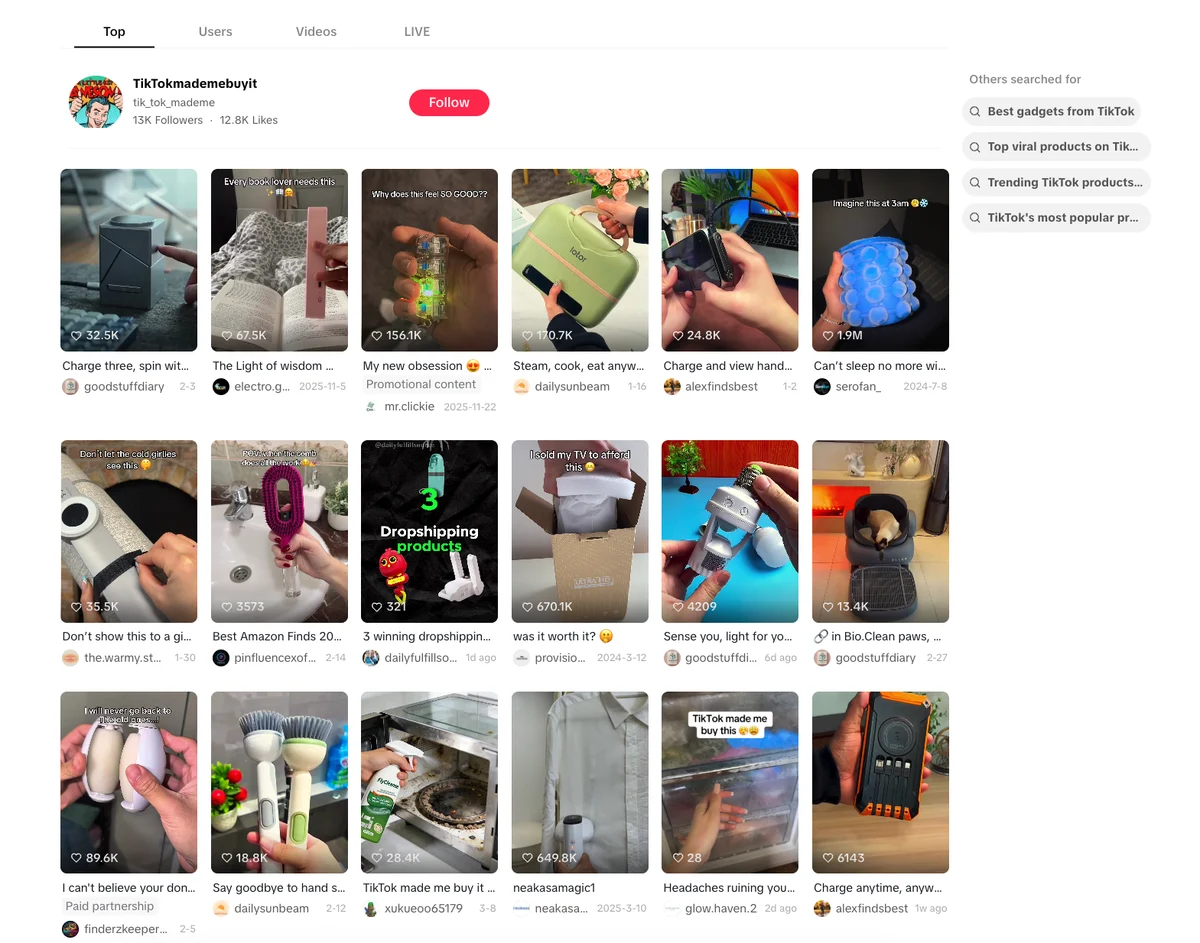
- TikTok: Monitor "TikTok Made Me Buy It" hashtags, trending sounds, and popular product review videos. This platform is excellent for discovering viral products and quick fads that can offer rapid, albeit short-lived, profitability.
- Instagram/Facebook: Analyze active ads in your feed (especially those with high engagement), follow influencers in potential niches, and join relevant community groups to see what products people are discussing. High engagement often indicates strong interest.
- Pinterest: As a visual discovery engine, Pinterest is excellent for niche hobbies, home decor, fashion, and lifestyle products. Look at trending pins and boards for inspiration, as it reflects aspirational purchasing and visual trends.
3. E-commerce Marketplace Exploration
Marketplaces provide direct, data-rich insights into what's already selling well and where demand lies, offering a snapshot of current consumer behavior.
- Amazon Bestsellers & Movers & Shakers: Explore Amazon's bestsellers lists and the "Movers & Shakers" section to identify top-selling and rapidly trending products across various categories.
- eBay Trending & Watch Count: On eBay, look at "Trending" sections and products with high "Watch Count" to gauge growing interest. Observing competitor listings can also reveal effective pricing strategies and compelling product descriptions.
- AliExpress/Alibaba: Crucial for supplier research, these platforms allow you to explore vast product catalogs. Filter by "Orders" or "Reviews" to see top-selling items and evaluate supplier ratings for product quality and reliability.
- Etsy: For niche and handmade product inspiration, Etsy can reveal unique items that might be suitable for a dropshipping spin, such as personalized gifts or craft supplies, catering to specific artisan markets.
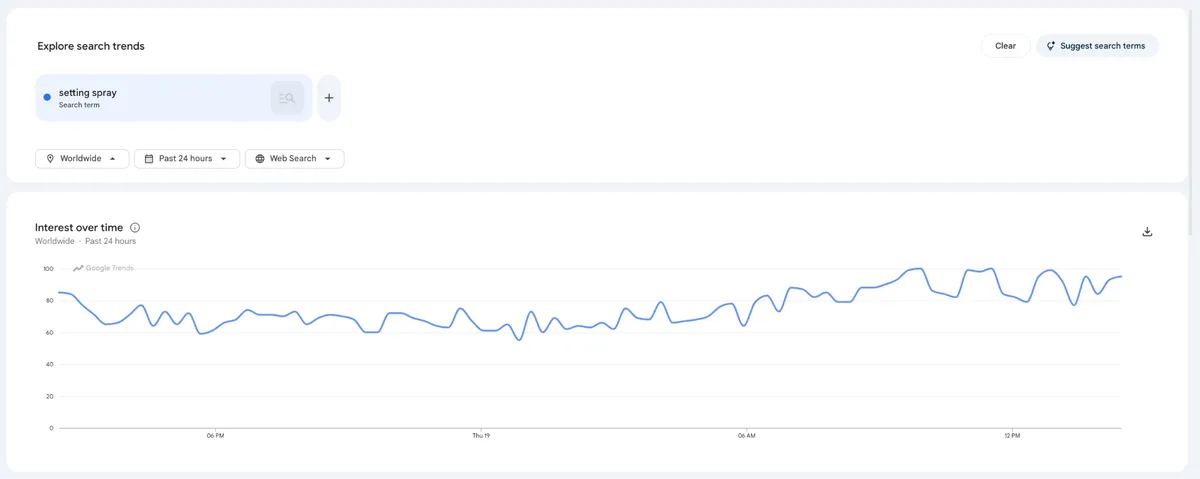
4. Google Trends for Demand Validation
Google Trends is an indispensable free tool to quickly validate a product's demand over time and identify seasonal patterns, providing crucial foresight.
- Checking Search Volume and Trend Stability: Input potential product keywords to see if interest is growing, stable, or declining. Look for consistent upward or stable trends rather than sharp, temporary spikes, which indicate fleeting fads.
- Identifying Seasonal Demand and Geographic Interest: Understand when a product's demand peaks (e.g., holiday gifts, summer items) and where in the world it is most popular. This helps in targeted marketing and inventory planning.
- Related Queries for Complementary Products: Google Trends also suggests related search queries, which can lead to ideas for complementary products or niche variations, broadening your store's appeal.
5. Forums, Communities, and Review Sites
These platforms offer invaluable qualitative insights into customer needs, pain points, and desires that quantitative data alone might miss, giving you a deeper understanding of consumer sentiment.
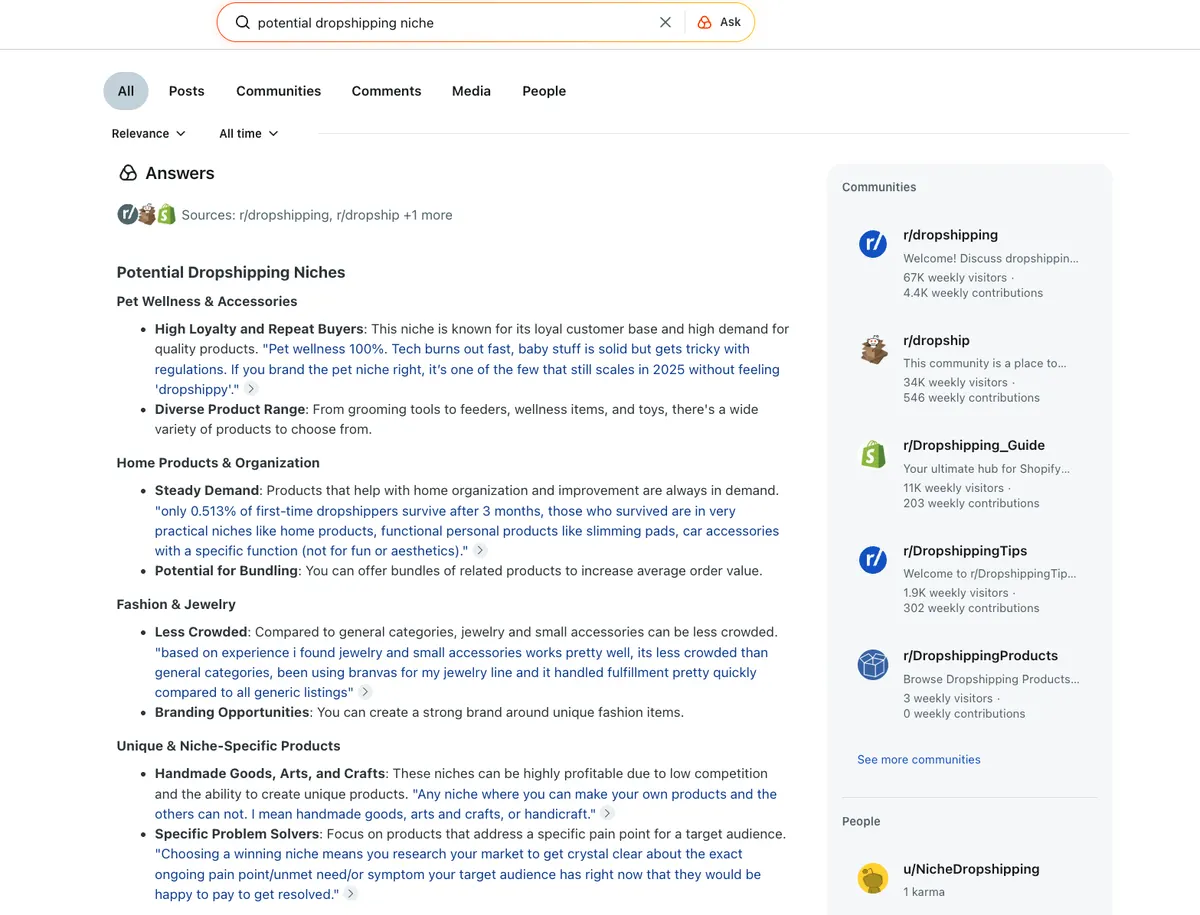
- Reddit: Explore niche subreddits related to potential product categories. People often discuss problems, seek solutions, or share product recommendations, offering unfiltered opinions and emerging needs.
- Quora: Search for questions people are asking about specific problems or products. This reveals unmet needs and common frustrations that your product could potentially address.
- Product Review Sites: Read reviews on Amazon, Trustpilot, or niche-specific review sites. Analyzing reviews helps you understand what customers love, hate, and wish for in existing products, highlighting opportunities for differentiation or improvement.
Top Dropshipping Product Research Tools (Free & Paid)
While manual methods provide a strong foundation, specialized dropshipping product research tools offer expedited, data-driven insights, helping you analyze markets, competitors, and product potential with greater precision.
1. All-in-One Research Platforms
These comprehensive tools consolidate various research functionalities into a single interface, offering a holistic view of market opportunities.
- ZIK Analytics: An industry-leading tool, ZIK Analytics offers competitive analysis, product research, and market insights primarily for eBay and Amazon. It helps identify profitable items, analyze seller performance, and understand market saturation.
- Dropship.io: This platform focuses on helping dropshippers find winning products by providing data on sales volume, competitor activity, and advertising strategies.
- SaleHoo: While best known as a supplier directory, SaleHoo also offers product research insights, enabling users to find high-demand products from vetted suppliers directly.
- Pipiads: Primarily focusing on ad intelligence, Pipiads allows users to analyze competitor ads and uncover products with successful advertising campaigns, revealing hidden gems.
2. Trend & Niche Spotters
These tools are designed to keep you ahead of the curve by identifying emerging market trends, allowing you to capitalize on new opportunities early.
- Exploding Topics: This tool identifies emerging trends early, often before they hit mainstream popularity. It's excellent for discovering future "wow" products and staying ahead of the competition.
- Google Trends: As previously discussed, this free tool allows you to validate interest over time and understand geographical and seasonal demand for specific keywords, providing crucial data for trend analysis.
3. Supplier & Product Sourcing Tools
Integrated with major e-commerce platforms, these tools streamline the process of finding and adding products to your store, often with built-in research capabilities.
- AliExpress/Alibaba Product Research: Beyond manual browsing, these platforms offer powerful built-in filters (e.g., by orders, ratings, price range, ePacket shipping available) that act as an internal research tool to identify top-selling products.
- DSers / Spocket / Zendrop: These apps integrate directly with Shopify and other e-commerce platforms. They offer curated product catalogs, often with faster shipping options, making it easier to import products and manage orders from vetted suppliers. They often include features for trend spotting within their own catalogs. Platforms like DSers, Spocket, and Zendrop also offer features for automated dropshipping.
4. Advertising & Competitor Intelligence
Understanding what your competitors are doing, especially in their advertising, can reveal winning product opportunities and effective marketing angles.
- Facebook Ad Library: A free tool that allows you to search for any active ads running on Facebook or Instagram. Use it to analyze competitor ad strategies, identify popular products they are promoting, and gather inspiration for your own campaigns.
- SimilarWeb: Primarily a competitor analysis tool, SimilarWeb allows you to analyze website traffic, top-performing pages, and audience demographics for competitor dropshipping stores. This can expose what products are driving sales for established players.

Your Step-by-Step Dropshipping Product Research Roadmap 2026
A structured approach to product research helps you move from a broad idea to a validated, profitable product without missing critical steps. Instead of relying on guesswork, you systematically filter and validate opportunities before committing.
Phase 1: Idea Generation & Initial Scouting
The process begins by casting a wide net. Before diving into products, define your target audience: their demographics, interests, and pain points, so your research stays focused.
From there, generate a broad list of product ideas using platforms like social media, marketplaces, and your own observations of everyday problems. At this stage, quantity matters more than precision.
Once you have a list, run quick trend checks using tools like Google Trends or Exploding Topics to eliminate products with declining demand and avoid wasting time on weak opportunities.
Phase 2: Deep Dive & Validation
With a shortlist in place, the next step is to validate real market potential. Start by analyzing competitors selling similar products, look at their pricing, positioning, ad strategies, and especially customer reviews to uncover gaps or common complaints. At the same time, confirm demand through keyword research tools and by observing engagement on social content related to the product.
Equally important is supplier and cost validation. Research suppliers on platforms like AliExpress, Alibaba, or Zendrop, compare pricing, and assess product quality and shipping times.
Then estimate your full cost structure, including product cost, shipping, payment fees, advertising spend, and potential returns. This step is critical, one of the most common reasons dropshippers fail to scale is misjudging profitability early, products that appear promising at the revenue level often break down once real costs are applied.
Some decisions at this stage go beyond basic product research. A team may need to compare product angles, validate a market category, assess pricing assumptions, understand competitor positioning, or decide whether an idea is worth testing at all. Tools like Rocket and its solve feature can help by researching the context, evaluating risks, gathering evidence, and turning scattered information into a structured recommendation that can be acted on, presented, or used as a starting point for the next build or test.
Phase 3: Evaluation & Selection
In the final phase, you evaluate each product against clear criteria, such as its ability to solve a real problem, maintain healthy margins, and remain practical to ship and support. At the same time, watch for red flags like oversaturation, legal risks, or unreliable suppliers that could derail your efforts.
Even after selecting a product, avoid committing all your resources at once. Start with small tests, validate performance using real data, and analyze sales, ad results, and customer feedback before scaling. If you’re new to the process and want a complete walkthrough, you can refer to this step-by-step guide on how to start a dropshipping business.
Common Dropshipping Product Research Mistakes to Avoid
Even with the best tools, missteps during the dropshipping product research phase can lead to significant setbacks. Being aware of these common pitfalls can help you navigate the process more effectively and maximize your chances of success.
1. Chasing Every Fad
While trending products can offer quick profits, solely focusing on short-term fads (e.g., fidget spinners without a long-term strategy) can leave your store with obsolete products once the trend dies. Balance trending items with evergreen products for sustainable income and stability.
2. Ignoring Profit Margins
Many beginners focus only on product cost and selling price, forgetting about critical expenses like advertising spend, platform fees, payment processing fees, shipping insurance, and potential returns. Underestimating these costs inevitably leads to disappointment, even with high sales. Always calculate your estimated net profit per sale to ensure true profitability.
3. Insufficient Competition Analysis
Entering a market without thoroughly understanding your competitors can be detrimental. Failing to analyze their pricing, unique selling propositions (USPs), marketing strategies, and customer reviews means you're operating blindly in a crowded space. Always look for gaps or weaknesses in their offerings that you can exploit.
4. Lack of Niche Focus
Trying to sell to "everyone" often results in appealing to no one. Without a defined niche, your marketing efforts become diluted, and it's harder to connect with a specific audience. A focused niche allows for targeted marketing, stronger brand building, and establishing authority within a specific market segment.
5. Poor Supplier Vetting
Choosing a supplier based solely on the lowest price is a common mistake that can backfire. Poor quality products, slow shipping, or unreliable service can lead to frustrated customers, negative reviews, chargebacks, and a severely damaged brand reputation. Always prioritize reliable suppliers with good communication and consistent product quality.
6. Overlooking Shipping & Logistics
Shipping costs, times, and potential customs issues are often an afterthought. High or unpredictable shipping costs can annihilate profit margins, and long delivery times can deter customers and lead to disputes. Always confirm these details with your supplier upfront to avoid unpleasant surprises.
7. Ignoring Customer Feedback
Whether from competitor reviews or your initial test sales, customer feedback is invaluable. Ignoring consistent complaints about product quality, functionality, or lack of features means missing crucial opportunities for product improvement or even avoiding bringing a fundamentally flawed product to market altogether.
Beyond Research: What Comes Next?
Finding a winning product is an epic achievement, but it's just the first major step in building a successful dropshipping business. The next phases are equally crucial for turning your meticulous research into sustainable revenue and growth.
1. Supplier Relations
Build strong, transparent relationships with your chosen suppliers. Good communication, timely order fulfillment, and a clear understanding of product quality and shipping terms are vital for long-term success and a smooth operational flow.
2. Store Setup & Branding
Create a professional and compelling online store platform, such as Shopify. Focus on strong branding, high-quality product images, persuasive product descriptions, and a smooth user experience to convert visitors into loyal customers. Consider integrating essential dropshipping apps to streamline operations and enhance customer experience.
3. Marketing & Advertising Strategies
Even the best product won't sell itself. Develop targeted marketing and advertising campaigns (e.g., Facebook Ads, Google Ads, TikTok ads, influencer marketing) to bring your product in front of the right audience and drive traffic. To optimize your campaigns, explore how AI tools can boost productivity in dropshipping.
4. Order Fulfillment & Customer Service
Establish efficient processes for order fulfillment, including clear communication with your suppliers. Provide excellent customer service to handle inquiries, returns, and complaints promptly and professionally, fostering loyalty and positive reviews that build your brand's reputation.
Final Thoughts
Diligent and strategic product research is not just a starting point. It is the foundation of a sustainable dropshipping business. The difference between a product that looks promising and one that actually scales often comes down to how well you validate demand, competition, and most importantly, profitability.
By combining manual research with the right tools, you can move beyond guesswork and make decisions backed by real data. The goal is not just to find products that sell, but to find products that can consistently generate profit as you scale.
This is where many dropshippers fall short. They validate trends and demand, but overlook what truly matters, the bottom line. As your store grows, tracking your real profit across products, channels, and ad spend becomes increasingly complex.
That is where tools like TrueProfit come in. Built specifically for Shopify merchants, TrueProfit gives you a clear, real time view of your net profit, so you know exactly which products are worth scaling and which ones are not.

Start your research, validate your numbers, and launch with confidence. Because in the long run, the winners are not the ones who sell the most. They are the ones who keep the most profit.
Lila Le is the Marketing Manager at TrueProfit, with a deep understanding of the Shopify ecosystem and a proven track record in dropshipping. She combines hands-on selling experience with marketing expertise to help Shopify merchants scale smarter, through clear positioning, profit-first strategies, and high-converting campaigns.