The Best Print on Demand Providers for E-commerce (2026 Picks + How to Choose)


Print on demand lets you sell custom products without holding inventory. You design it, a customer buys it, and your POD provider prints and ships it directly to them. No upfront stock, no warehousing, no wasted product.
But not every provider fits every business. Printful suits quality-focused brands. Printify wins on product variety. Gelato is built for fast international shipping. Choosing the wrong one costs you margins, customers, and time.
This guide covers the top providers, how to compare them, and how to get started. Let’s dig in!
What Is Print on Demand and How Does It Work?
Print on demand is a fulfillment model where products are manufactured one at a time, only after a customer places an order. You never buy stock upfront. Your POD provider handles printing, packaging, and shipping on your behalf.
The POD Workflow from Order to Delivery
- You create a product listing with your design on your store (Shopify, Etsy, WooCommerce, etc.)
- A customer places an order and pays you.
- That order automatically routes to your POD provider through a platform integration.
- The provider prints, packs, and ships directly to your customer under your brand.
- You keep the difference between your retail price and the provider's base cost.
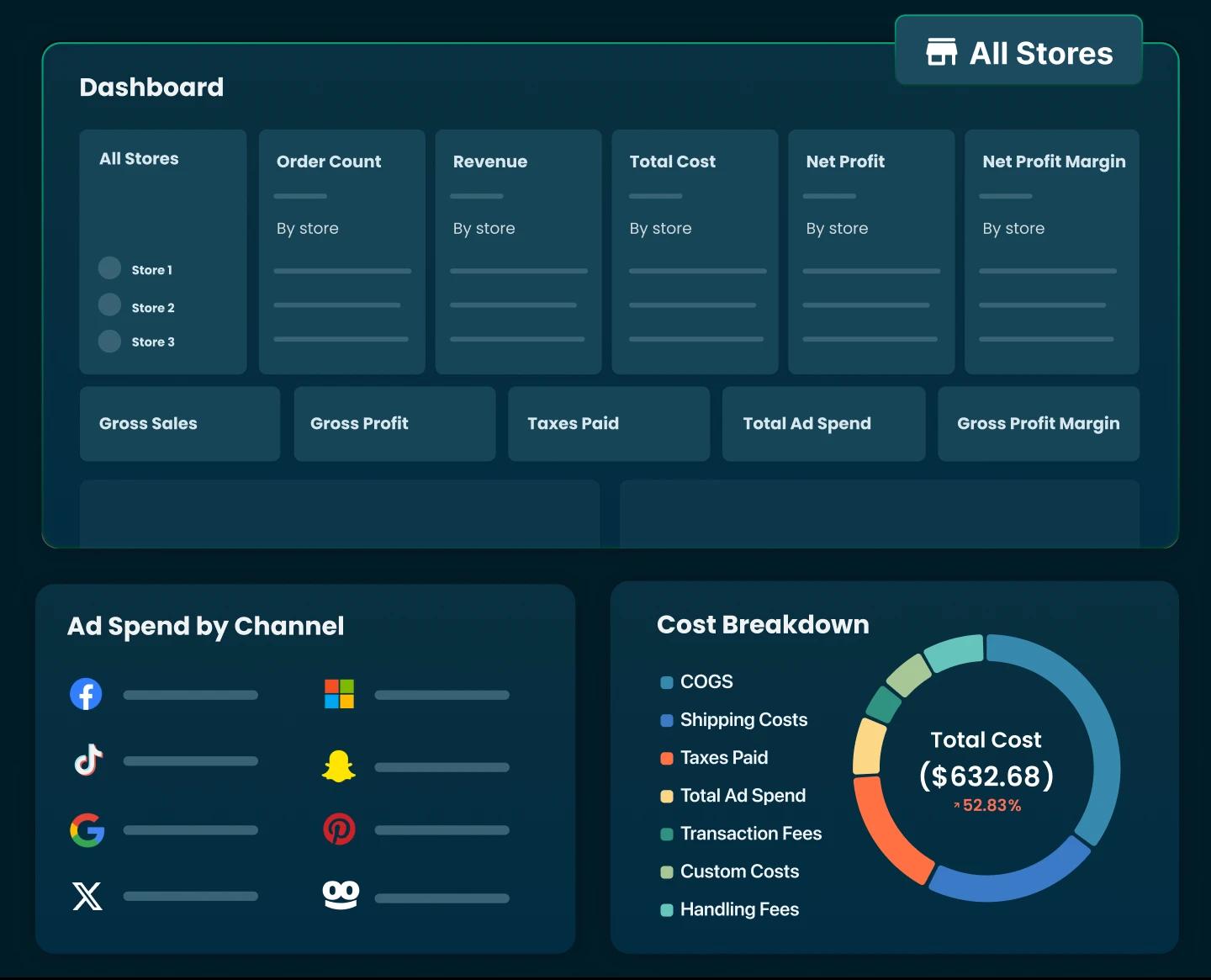
Your profit on each order depends on your markup above that base cost, minus shipping, transaction fees, and any ad spend. If you sell on Shopify, a profit tracking tool like TrueProfit can show you your actual net margin per order, not just revenue.
Why Sellers Choose the POD Model
The biggest pro is low risk. You can test print on demand products across dozens of niches without committing to inventory. If a design flops, you lose nothing but design time.
Other advantages include no storage costs, the ability to offer a wide catalog from one storefront, and easy scaling as sales grow. The trade-off is a higher per-unit cost than bulk manufacturing, which puts more pressure on smart pricing. If you're wondering whether the model actually works, read our breakdown of whether print on demand is profitable.

The Best Print on Demand Providers (Who Each One Is Actually For)
Most POD guides list features. That’s not the problem.
The real problem is choosing a provider that doesn’t match how you plan to run your business.
Because each provider is optimized for a different trade-off:
- better quality vs lower cost
- faster shipping vs wider catalog
- consistency vs flexibility
Pick wrong, and you’ll feel it in refunds, slow delivery, or margins that never scale.
Here’s how the top providers actually perform in practice.
1. Printful - Best for Brand-Controlled, Quality-First Stores

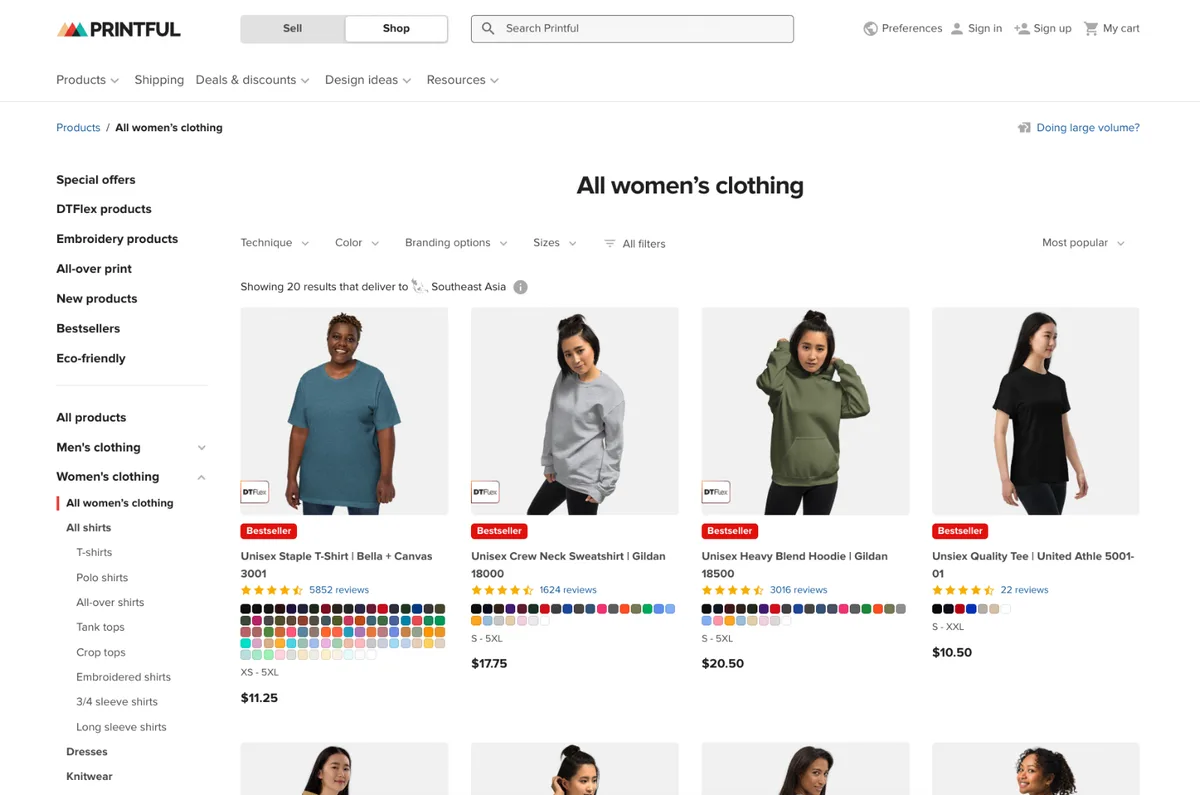
Printful is the safest choice if your brand depends on consistency.
Unlike marketplace-style providers, Printful handles production in-house. That means fewer surprises in print quality, sizing, and packaging, especially important if you're building a long-term brand, not just testing products.
Where it stands out:
- Consistent product quality across orders
- Strong branding options (labels, inserts, packaging)
- Reliable fulfillment and fewer customer complaints
Trade-off:
- Higher base costs → tighter margins unless you price well
Verdict:
Best for building a real brand. Not ideal if you're aggressively optimizing for lowest cost.
2. Printify - Best for Testing, Scaling, and Margin Optimization
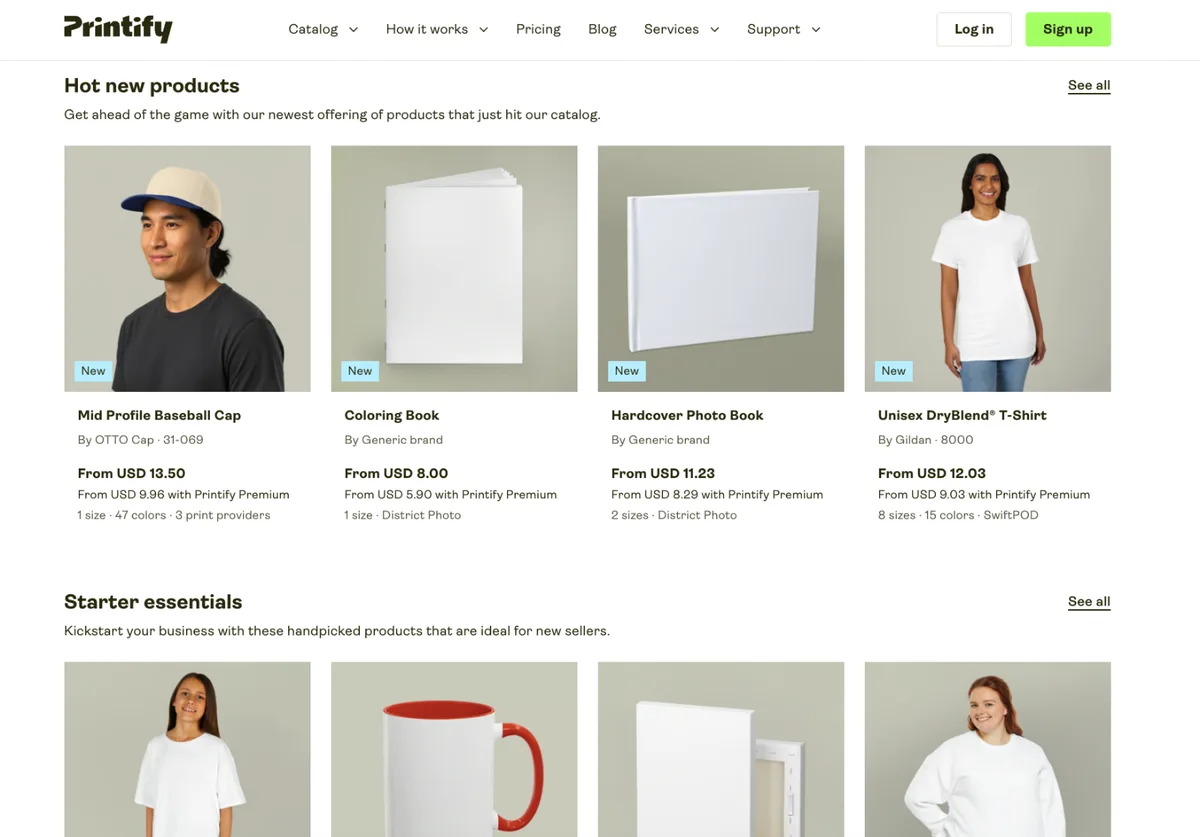
Printify gives you leverage.
Instead of one supplier, you get access to a network of 80+ print providers. That means you can compare prices, switch vendors, and test different suppliers for the same product.
Where it stands out:
- Massive product catalog (900+)
- Lower base costs → better margin potential
- Flexibility to switch suppliers per product
Trade-off:
- Quality and shipping vary depending on the vendor you choose
Verdict:
Best for sellers who test aggressively and optimize for margin. Requires hands-on management.
3. Gelato - Best for International Brands and Faster Global Delivery
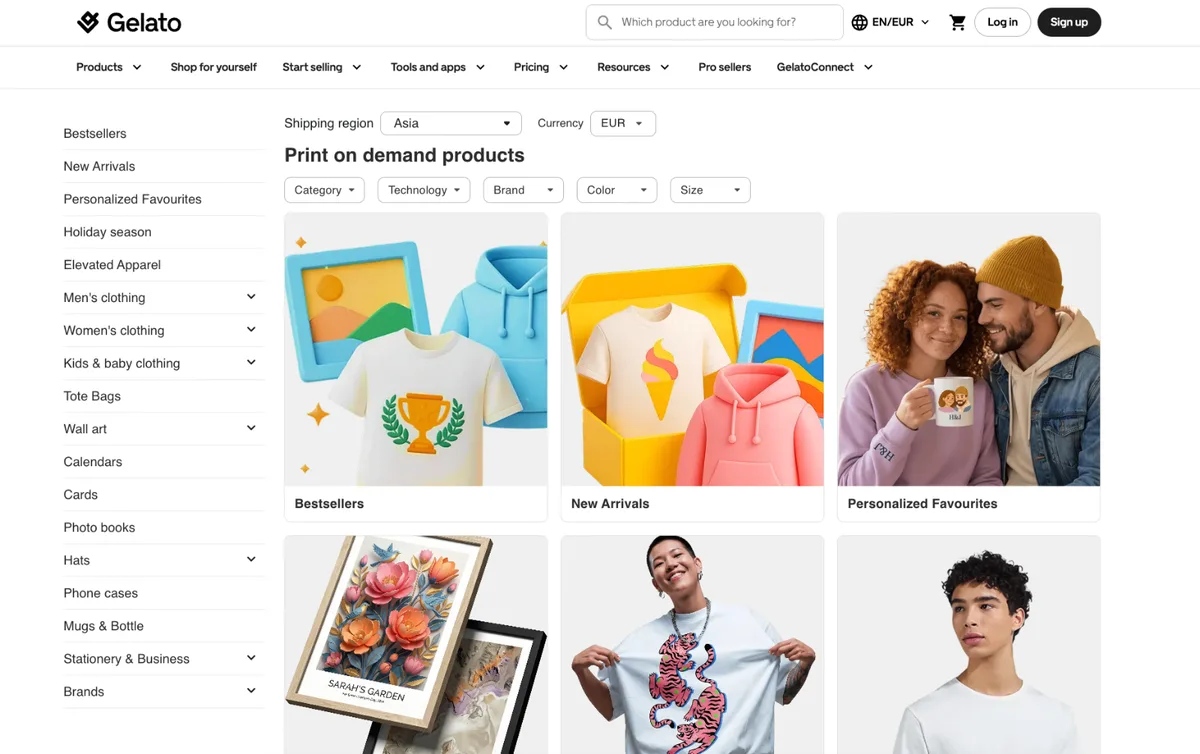
Gelato is built around location advantage.
Orders are routed to the nearest production facility (32+ countries), which reduces shipping time and cost, especially for non-US customers.
Where it stands out:
- Faster delivery for international orders
- Lower shipping costs due to local production
- Strong footprint in Europe
Trade-off:
- Smaller product catalog compared to Printify
Verdict:
Best for global audiences. Less useful if your market is mostly US-based.
4. SPOD - Best for Speed-Driven Shopify Stores
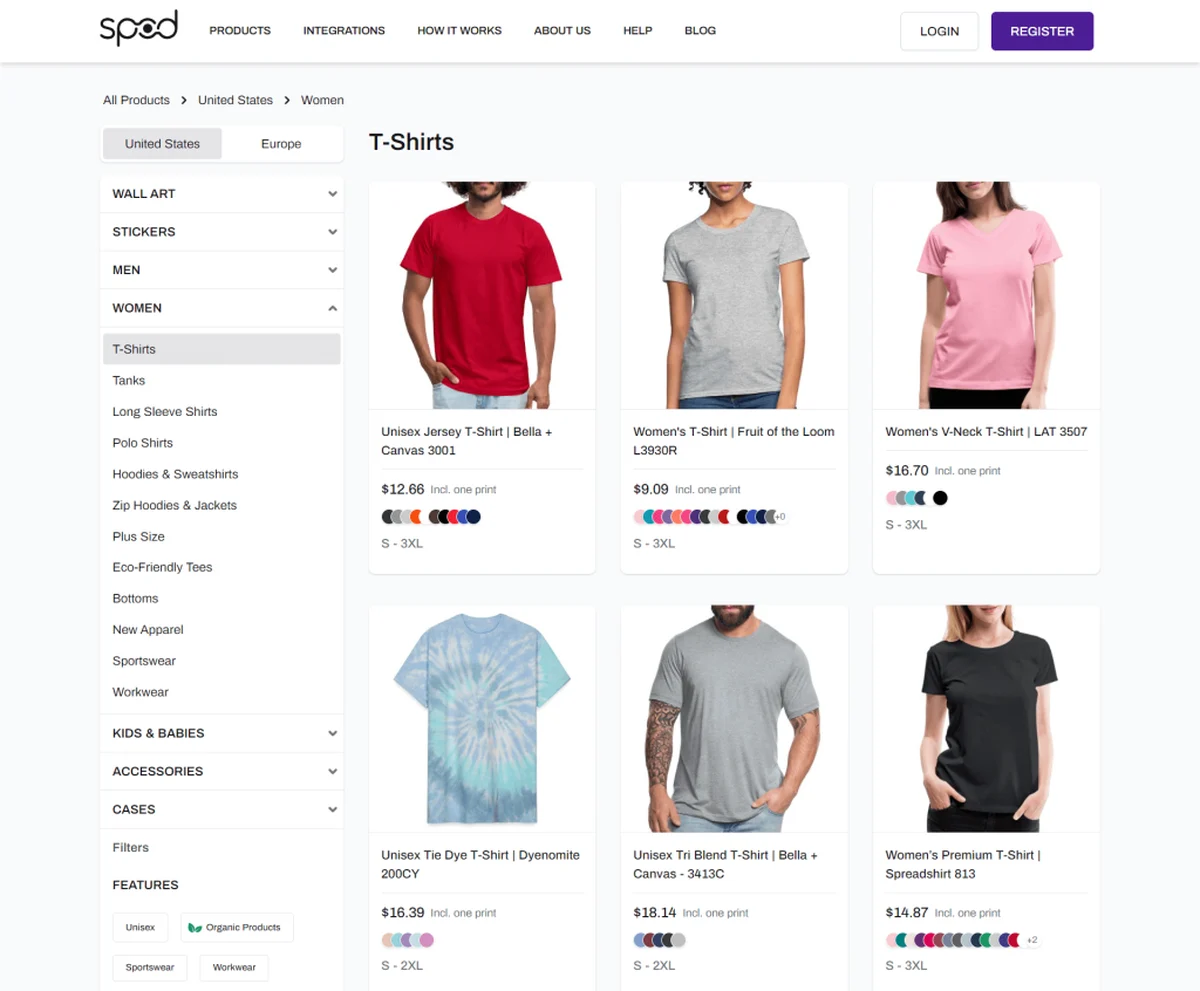
SPOD competes on one thing: speed.
With production times as fast as 48 hours, it’s one of the quickest fulfillment options in the POD space. That matters more than most sellers think, faster delivery directly reduces refund rates and increases customer satisfaction.
Where it stands out:
- Extremely fast production times
- Reliable fulfillment for time-sensitive campaigns
Trade-off:
- Limited product range
- Primarily built for Shopify
Verdict:
Best for speed-focused stores and campaign-based selling. Not for broad catalogs.
5. CustomCat - Best for High-Volume Sellers Who Care About Margins
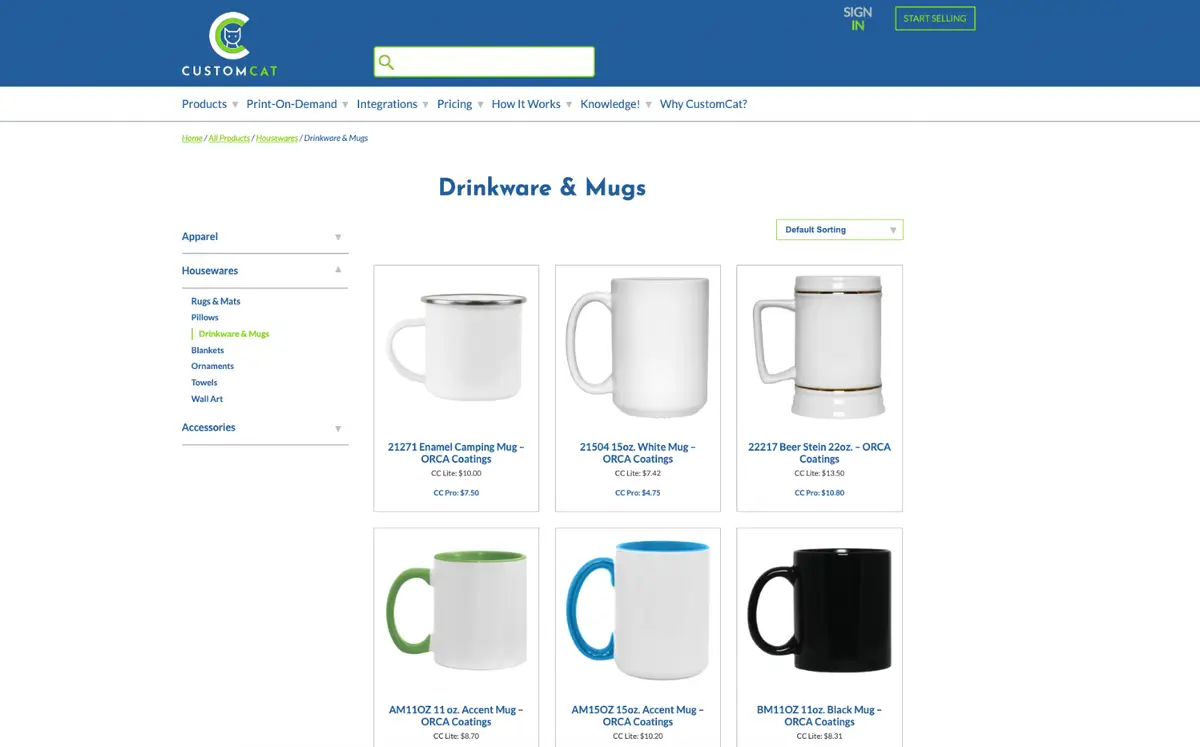
CustomCat is built for scale.
If you’re selling large volumes especially apparel, their pricing structure (especially with the Pro plan) gives you some of the lowest base costs in the market.
Where it stands out:
- Very competitive pricing at scale
- Strong for apparel-heavy stores
- Better margins when volume increases
Trade-off:
- Less emphasis on branding and premium feel
Verdict:
Best for volume-driven businesses. Not ideal for premium brand positioning.
6. Gooten - Best for Niche Products and Catalog Differentiation
Gooten is where you go when you want something different.
Their catalog includes categories most providers don’t prioritize: travel accessories, niche home goods, and specialty items that help your store stand out.
Where it stands out:
- Unique product categories
- Good for niche positioning and differentiation
- Scales well with dedicated support
Trade-off:
- Less predictable than more standardized providers
Verdict:
Best for niche stores that win on product uniqueness. Not for beginners who want simplicity.
How to Choose the Right Print on Demand Provider
The right provider depends on your niche, your platform, and where your customers are. Use these criteria to narrow it down.
1. Match the Provider to Your Product Niche
Start with what you plan to sell. Printify's 900+ product catalog suits stores with broad or experimental catalogs. Apliiq is the right call if you're building a premium streetwear brand with embroidery and private labels. T-Pop fits eco-conscious brands selling into Europe.
If your print on demand business idea involves a specific niche like custom pet gear or all-over-print activewear, make sure the provider actually excels in that category before committing.
2. Run the Real Profit Math Before You Commit
Base price is only part of the equation. Factor in shipping costs, transaction fees, platform fees, and your ad spend before deciding what to charge. A provider with a $2 lower base price can still hurt your margins if their shipping adds $4.
This is especially important for Shopify sellers. TrueProfit pulls in all your costs automatically and shows true net profit per order, so you're not flying blind. If you're still figuring out startup costs, our guide on how much print on demand actually costs breaks it down clearly.
3. Check Integration with Your Selling Platform
Every provider on this list integrates with Shopify. Beyond that, coverage varies. If you sell on Etsy, Printful, Printify, and Gelato all connect cleanly. If you're on WooCommerce, confirm the integration is maintained and well-reviewed before setting up your store around it.
See our full breakdown of print on demand platforms if you're still deciding where to sell.
4. Order Samples Before You Launch
Never skip this step. Screenshots and mockups do not tell you how a shirt feels, how accurate the colors are, or whether the print holds up after washing. Order samples of every product you plan to sell. Most providers offer discounted sample pricing.
This is the fastest way to identify quality issues before they become customer complaints and refund requests.
5. Factor in Shipping Speed and Customer Expectations
If you're targeting US customers, a US-based provider like SPOD or CustomCat will deliver faster and cheaper than one routing from overseas. If your audience is spread across Europe, Gelato's local production network is a real advantage.
Fast shipping is now table stakes. Customers compare you to Amazon whether you like it or not.
How to Get Started with a Print on Demand Provider
Getting started with POD takes less than a day. Here's the exact sequence.
1. Sign Up and Connect Your Store
Create a free account with your chosen provider, then install their integration app on your e-commerce platform. On Shopify, this is usually a one-click install from the App Store. On WooCommerce, you'll install a plugin. The connection syncs your orders automatically once live.
2. Design Your Products and Build Mockups
Upload your designs using the provider's design tool. Most have built-in mockup generators that let you preview products realistically. Use these mockups in your store listings. Good product photography (even digital mockups) directly affects conversion rates.
3. Set Prices Based on Actual Costs
Add up the base product cost, estimated shipping, and platform fees. Then set a selling price that covers those costs and leaves a real margin. A common starting point is a 2x to 3x markup on base cost, but this depends heavily on your niche and competition.
For a detailed look at pricing strategy and what margins to target, check out our guide on successful print on demand stores to see what's working in practice.
4. Order Samples and Verify Quality
Before publishing any product, order a sample. Check print alignment, color accuracy, material quality, and packaging presentation. If anything is off, adjust your design or switch products before customers find the problem for you.
5. Publish and Drive Traffic
Once you're satisfied with quality, publish your listings and start marketing. Organic traffic from SEO and Pinterest works well for evergreen products. Paid ads on Meta and TikTok can scale quickly for products with strong visual appeal. Email and community-building work well for niche audiences.
For a complete launch checklist, read our guide on how to start a print on demand business.

Final Thoughts
Print on demand is one of the easiest ways to launch an ecommerce business but it’s not as simple as picking a supplier and uploading designs. The provider you choose directly impacts your product quality, delivery speed, customer experience, and ultimately, your margins.
The real difference between sellers who struggle and those who scale isn’t just creativity or marketing, it’s clarity. Knowing which products actually make money, which channels drive profit, and where your margins are leaking is what turns POD from a side hustle into a real business.
That’s where most sellers get it wrong. They focus on revenue, but ignore the full cost picture.
If you’re running your POD store on Shopify, TrueProfit helps you track your real net profit in real time, it factors in product costs, shipping, transaction fees, ad spend and all types of costs automatically. So instead of guessing which products are “winning,” you’ll know exactly what’s driving your bottom line.
Because in POD, margins are tight, and profit clarity is what decides who wins.


Irene Le is the Content Manager at TrueProfit, specializing in crafting insightful, data-driven content to help eCommerce merchants scale profitably. With over 5 years of experience in content creation and growth strategy for the eCommerce industry, she is dedicated to producing high-value, actionable content that empowers merchants to make informed financial decisions.