




Top 10+ Eco-Friendly Print on Demand Companies 2026 (Full Comparison Guide)


Table of Contents
I'll be honest: "eco-friendly" is one of the most overused phrases in e-commerce right now.
Some POD companies genuinely mean it. They use certified organic fabrics, non-toxic inks, plastic-free packaging, and they can tell you exactly which factory made their products. Others just slap a green leaf on their homepage and call it a day.
This guide focuses on the companies doing it properly. Before I get into the list, I'll quickly cover what separates a real eco-friendly POD supplier from a performative one, so you know what to look for. Then I'll break down each platform honestly, including the trade-offs most reviews skip over.
If you're still building out the business side of things, it's worth reading how to start a print on demand business with sustainability in mind from the start.
In this blog:
What Actually Makes a POD Company Eco-Friendly?
Before getting into the list, it's worth spending two minutes on this. Not because it's complicated, but because a lot of companies use vague language that sounds green without committing to anything specific.
Here's what I look for.
1. Certified Materials, Not Just "Sustainable Fabrics"
When it comes to sustainability, “sustainable fabrics” on their own don’t mean much. Almost anyone can use that label without real proof behind it. What actually matters are official certifications that verify how a product is made.
- GOTS (Global Organic Textile Standard): It is considered one of the most complete standards for organic textiles. It doesn’t just look at the fabric. It checks the entire process, starting from the raw fiber all the way to the final finished product.
- Oeko-Tex Standard 100: This certification is based on independent testing. It confirms that the final product does not contain harmful substances, including things like toxic dyes or inks that could affect health.
- Fair Trade / Fair Wear Foundation: These focus more on the people behind the product. They make sure workers throughout the supply chain are treated fairly, receive fair wages, and work in safe conditions, and this is verified through audits.
- GRS / RCS: They don’t just say a product is “recycled.” Instead, they verify the actual percentage of recycled materials used in the product.
If a supplier can't point to at least one of these, their eco claims are marketing, not evidence.
The most common sustainable fabrics you'll actually find in POD:
2. Cleaner Inks and Printing Methods
The fabric gets all the attention, but what's printed on it matters just as much.
Water-based inks contain no PVC or phthalates, feel softer on the garment, and are safer for the workers applying them. DTG (direct-to-garment) printing with water-based inks is currently one of the cleanest printing options in the POD space. If a supplier defaults to plastisol inks and offers no alternative, that's worth knowing before you sign up.
3. Local Fulfillment, Not Just Carbon Offsets
Local production works differently. Because the product is made closer to the customer, the emissions are reduced at the source rather than being offset later. In most cases, this makes local fulfillment a stronger and more direct way to improve sustainability compared to relying only on carbon offsets.
4. Transparency About the Supply Chain
A supplier worth trusting should be able to tell you which factory makes their products, where the materials come from, and how their wastewater is handled. If they can't answer that, or don't want to, treat it as a signal.

The Best Eco-Friendly Print on Demand Companies
I looked at what each of these companies actually does, not just what their marketing says. Here's my honest breakdown.
How They Compare at a Glance
1. Printful: Best for Range and Reliability

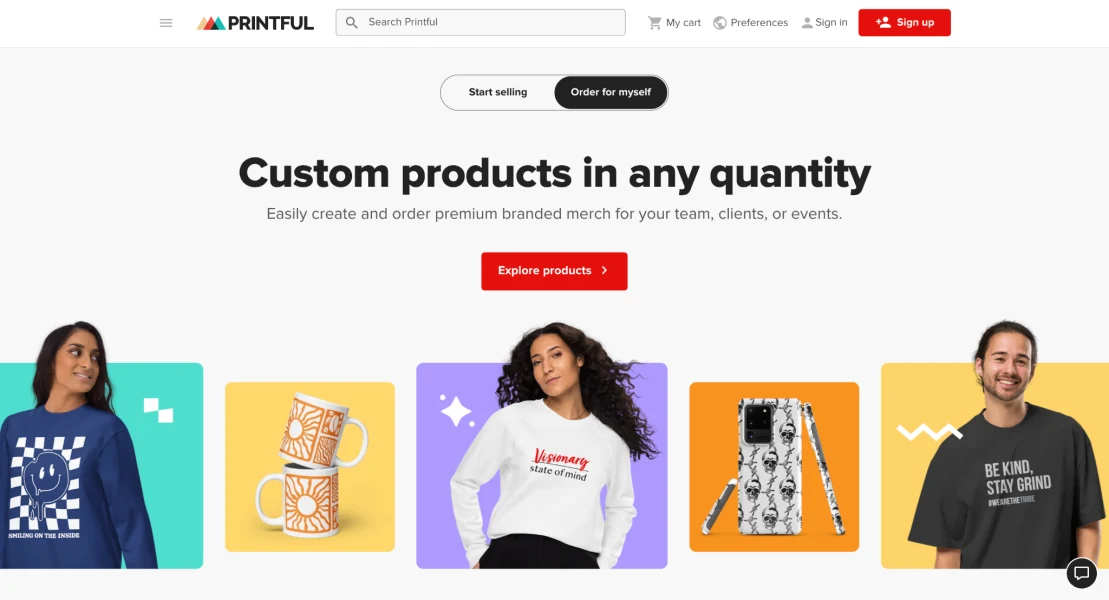
Printful is one of the largest POD platforms globally and runs a dedicated eco-friendly product collection alongside their main catalog. They use organic cotton, rPET fabrics, and water-based vegan inks. Their fulfillment network spans the US, EU, Mexico, Canada, Japan, and beyond, so orders route to the closest facility automatically.
They also recycled over 787,000 pounds of fabric waste in 2022 and use packaging made from post-consumer recycled materials.
What they sell: Apparel (t-shirts, hoodies, activewear, kids' clothing), accessories (tote bags, hats, socks), home goods, all with eco-friendly options available.
Where they fulfill: Global, with facilities in the US, EU, Mexico, Canada, Japan, Australia, and more.
The trade-offs: Not everything in their catalog is eco-friendly. You need to use their dedicated eco filter, otherwise you'll miss it. Pricing runs slightly higher than budget-focused alternatives.
Bottom line: Printful is the best all-around option for most brands. Strong product quality, a genuinely good eco-friendly range, reliable integrations, and global reach. I'd start here for most sustainable POD brands that need variety and scale.
2. Printify: Best for Flexibility and Product Variety
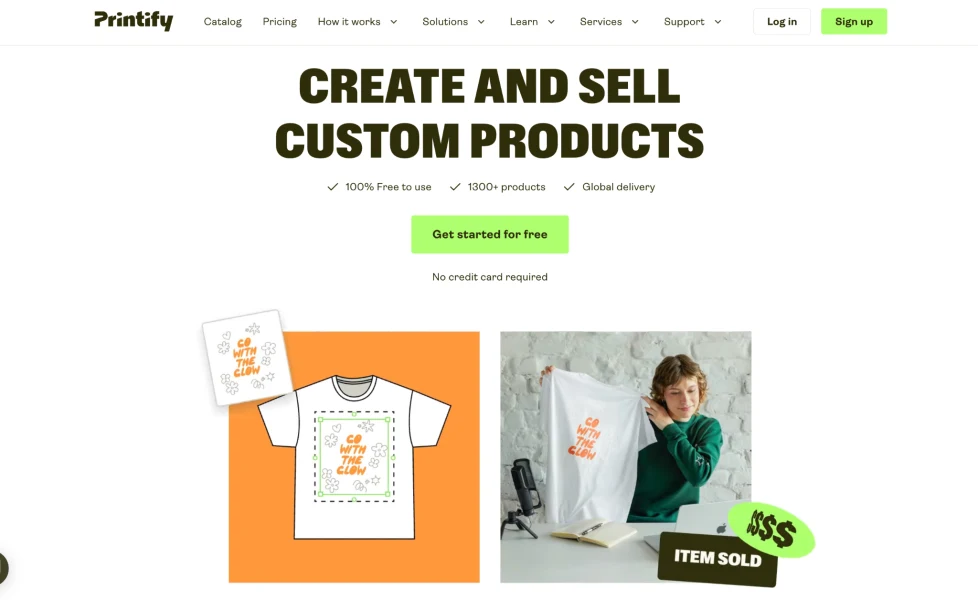
Printify is a marketplace, not a manufacturer. They connect you to a network of independent print providers, and you can filter for eco-friendly options to find suppliers using organic cotton or rPET from brands like Stanley/Stella and Bella+Canvas.
The catalog is massive. You can find high-margin products, non-traditional items, and pet accessories across their network. That flexibility is useful.
What they sell: Broad apparel (t-shirts, hoodies, sweatshirts, leggings), accessories (tote bags, phone cases, hats), home goods, and more.
Where they fulfill: Global, via their network of independent providers.
The trade-offs: Inconsistent sustainability standards across providers. The vetting is your responsibility. Product quality can also vary more than with a unified platform.
Bottom line: Printify makes sense if you want maximum product variety and competitive pricing, and you're willing to put in the work to vet suppliers carefully.
3. EcoMerch: Best for Full Sustainability Commitment
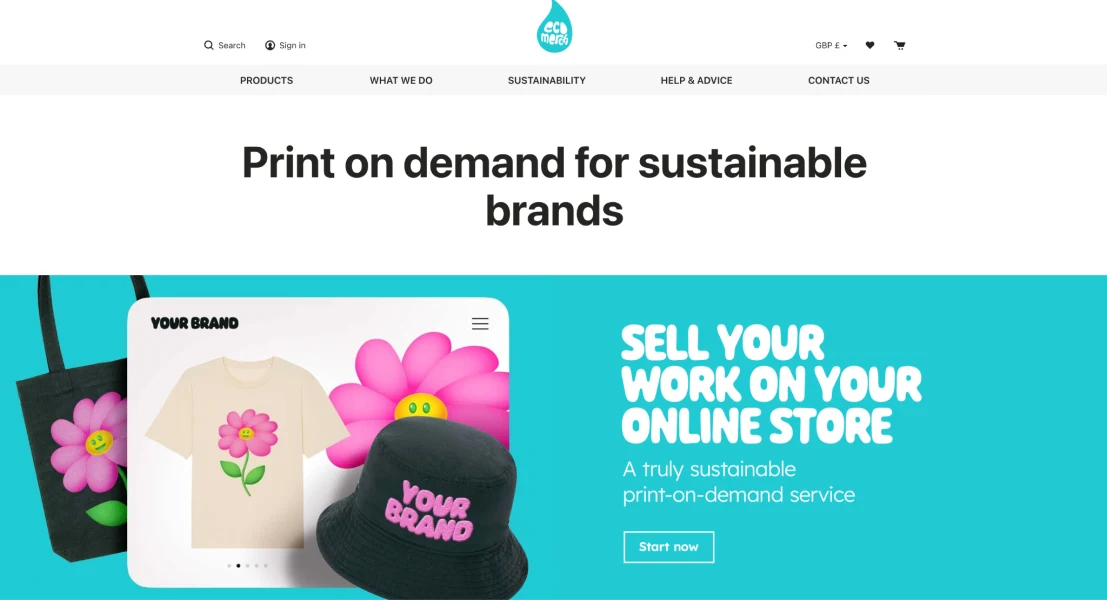
EcoMerch is the most genuinely committed platform I've found in the POD space. Every product uses GOTS-certified organic cotton or recycled materials. All packaging is 100% plastic-free. Their factories are independently audited by the Fair Wear Foundation, which verifies fair wages and safe conditions.
What I like most is their transparency. They'll tell you exactly which factories they work with. That level of accountability is rare in this industry.
What they sell: Organic and recycled apparel (t-shirts, hoodies, sweatshirts), tote bags, select accessories.
Where they fulfill: UK-based, ships globally.
The trade-offs: The product range is smaller than general POD platforms. No shoes, home goods, or phone cases. Base costs are higher, which reflects the materials and ethical production. If you need a wide catalog, this isn't the right fit.
Bottom line: If sustainability is the core of your brand identity and you need supply chain credentials you can actually stand behind, EcoMerch is the strongest choice in POD right now.
4. Gelato: Best for Reducing Shipping Emissions
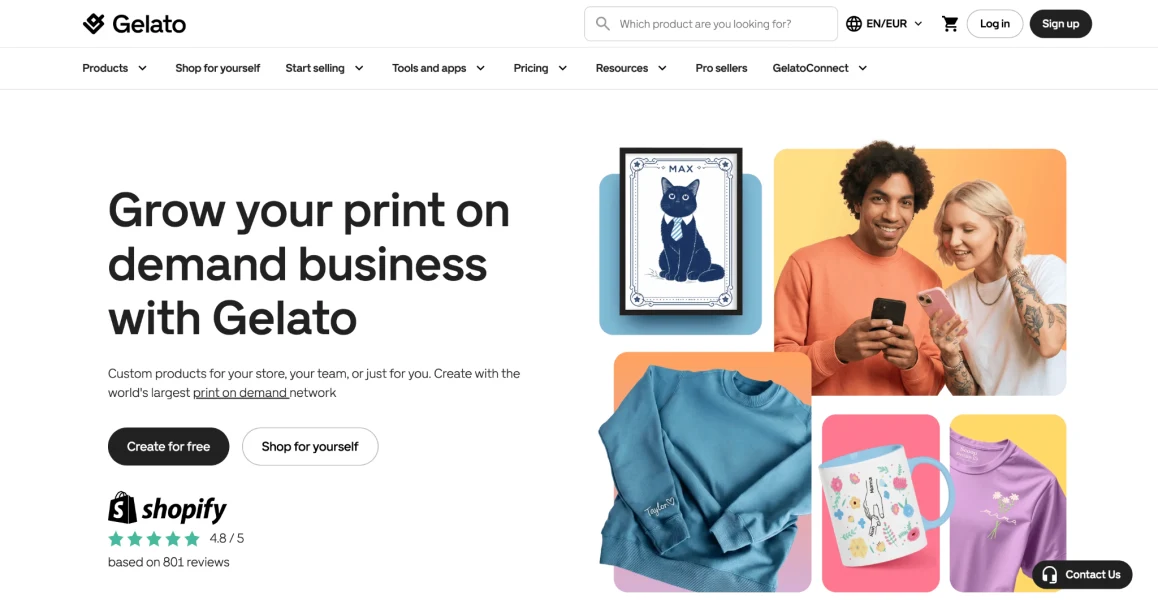
Gelato’s sustainability approach starts with something very simple: geography. The company works with more than 100 production partners spread across 32 countries, which allows them to produce items close to where the customer actually is.
Their paper products are FSC-certified, and there's a broader push on waste reduction across their partner network.
What they sell: Wall art (posters, framed prints, canvas), stationery (greeting cards, notebooks, calendars), photo books, select apparel.
Where they fulfill: 32 countries, 100+ production partners.
The trade-offs: The apparel range is narrower than dedicated garment platforms. Sustainability standards also vary across individual fulfillment partners within their network.
Bottom line: If you sell art prints, stationery, or photo products to a global audience, Gelato is the strongest choice for minimizing your shipping footprint. The local production model is genuinely compelling.
5. Apliiq: Best for Sustainable Custom Streetwear
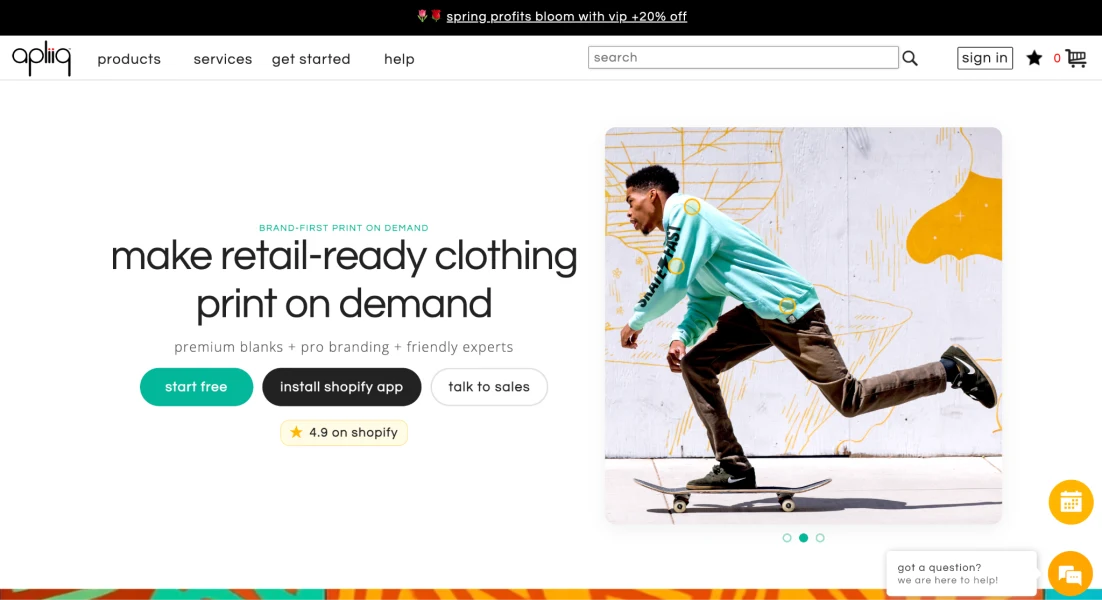
Apliiq is a Los Angeles-based POD company that specializes entirely in clothing. All of their printing and customization methods use organic and vegan materials, biodegradable packaging, and non-toxic inks. They carry organic cotton, recycled polyester, and hemp fabrics, with options from sustainable brands like Allmade and econscious.
They're one of the few POD companies that prioritize private labeling, so you can add your own custom tags, patches, and neck labels.
What they sell: T-shirts, hoodies, hats, tote bags, and custom streetwear and fashion apparel.
Where they fulfill: US-based (Los Angeles), ships globally.
The trade-offs: Primarily clothing only, no home goods or accessories beyond bags and hats. Also US-focused, which means longer shipping times and higher costs for international customers.
Bottom line: If you're building a sustainable streetwear or boutique clothing brand and want a US-based partner with strong private-label options, Apliiq is a genuinely strong choice.
6. Gooten: Best for Eco-Friendly Custom Homeware
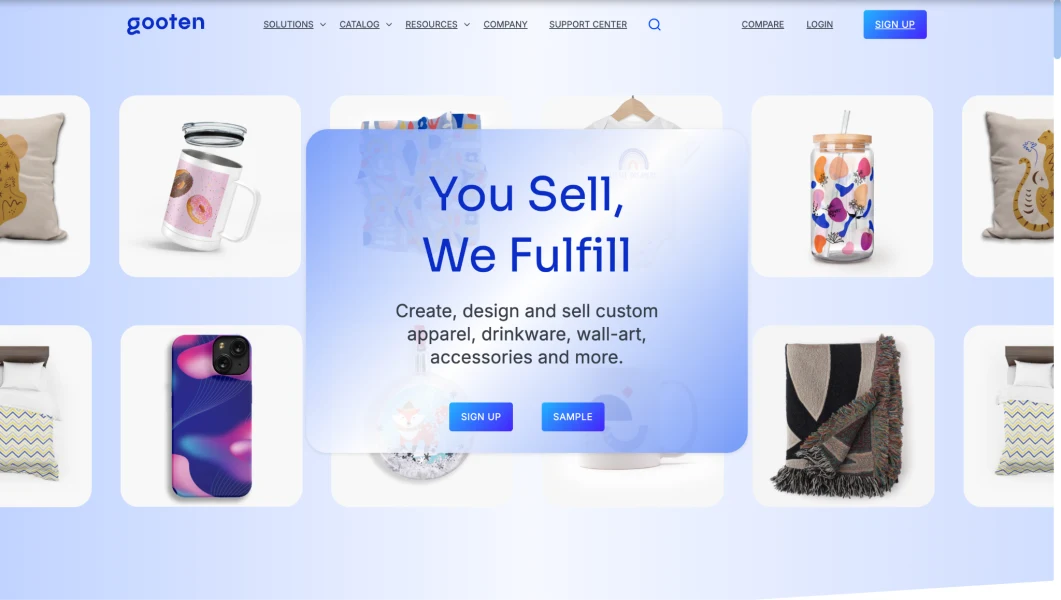
Gooten focuses on custom homeware alongside a broader apparel catalog, and they take sustainability seriously within their network. They partner with Kornit printers, whose wet-on-wet printing method produces less water waste and uses GOTS-approved inks. Their vendor network has shifted from plastic packaging to cardboard and paper tape, and a majority of their apparel brands offer eco-friendly alternatives.
Their catalog includes 150+ eco-friendly and exclusive items across 500+ total products, with fast average production times of 1 to 3 days for most items.
What they sell: Apparel, home decor, drinkware, wall art, accessories, and baby products.
Where they fulfill: Global, via their manufacturer network.
The trade-offs: Gooten relies on third-party print providers like Printify, which means sustainability standards can vary. They're not exclusively eco-focused at the company level.
Bottom line: A solid choice for brands selling custom homeware and apparel who want meaningful sustainability practices without being locked into a fully green-only catalog.
7. Spreadconnect: Best for Fast Fulfillment with Eco Options
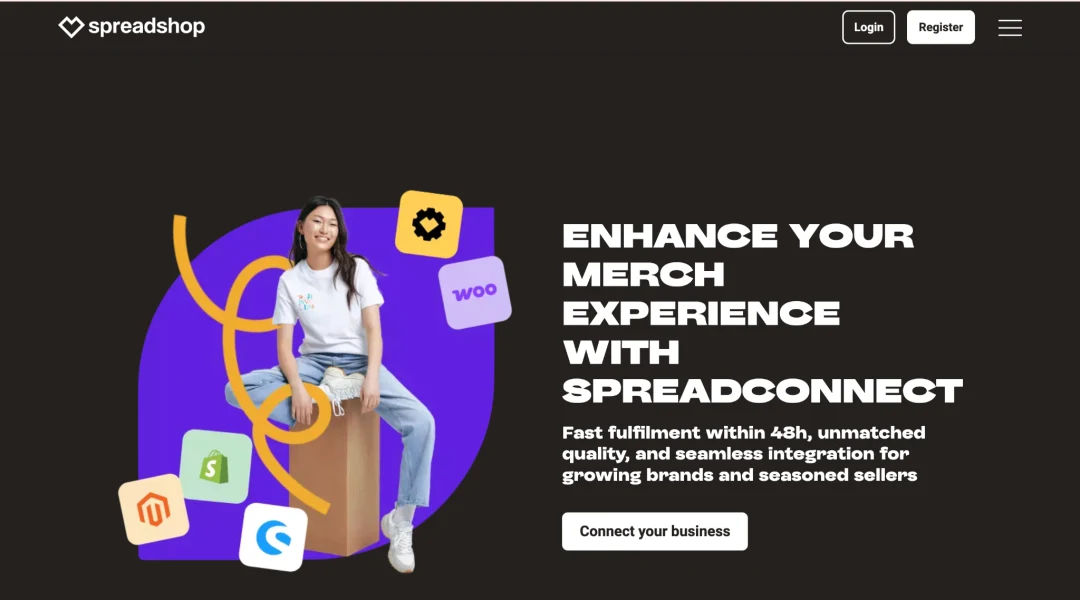
Spreadconnect (formerly SPOD, owned by Spreadshirt) is primarily known for speed: orders are printed and shipped within 48 hours. But they also carry organic and eco-friendly product options, including OEKO-TEX certified inks across their product range. Their production is centered in Europe (Germany and Czech Republic), which keeps shipping distances shorter for EU customers.
Spreadshirt, the parent company, has over 20 years in POD and carefully selects textile suppliers that meet environmental regulations, maintain fair working standards, and pay living wages.
What they sell: Apparel, bags, hats, drinkware, home decor, wall art, and accessories.
Where they fulfill: Europe (Germany, Czech Republic), with global shipping.
The trade-offs: Eco-friendly options are available but require manual filtering. Not a sustainability-first platform. Mostly EU-based production means longer US shipping times.
Bottom line: A good pick if you're EU-based, want fast fulfillment, and need organic or certified product options available alongside a broader conventional catalog.
8. AOP+: Best for UK-Based In-House Printing
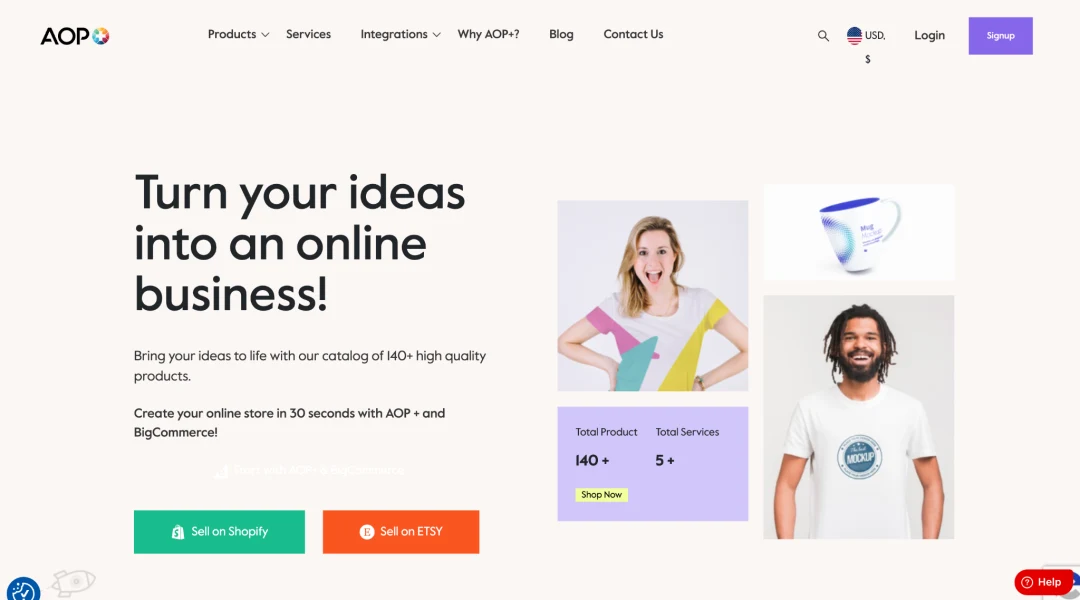
AOP+ is a UK-based company that prints everything in-house, which gives them direct control over quality and consistency at every step. Founded in 2009, they describe themselves as a sustainable and ethical POD company and focus heavily on all-over-print (AOP) products using dye sublimation and DTG methods.
Being in-house means they can apply sustainable practices to every stage of production without depending on third-party network partners. They integrate with Shopify, BigCommerce, and Etsy, and offer custom branding options including branded stickers and heat-pressed labels.
What they sell: All-over-print apparel, home accessories, pet supplies, and more across 140+ customizable items.
Where they fulfill: UK-based, ships to US, EU, and internationally.
The trade-offs: Primarily suited for UK merchants or brands targeting UK customers. International shipping times can run 15 to 20 business days. Eco-friendly product range is more limited compared to dedicated sustainability platforms.
Bottom line: A reliable choice for UK-focused brands who want in-house quality control and a partner with a sustainable ethos. Especially strong for all-over-print products.
9. Teelaunch: Best for Unique Niche Products
Teelaunch stands out for offering genuinely unusual products that most POD platforms don't carry, including Bluetooth speakers, laser-etched cutting boards, custom jewelry, and dog bandanas. They print using DTG and laser engraving, and fulfill from facilities in the US, UK, Europe, and Australia.
That said, Teelaunch is not a sustainability-focused platform. I found no evidence of eco certifications, organic material lines, or meaningful green initiatives. They're a strong pick for unique niche products, but not the right choice if sustainability is a priority.
What they sell: T-shirts, home decor, unique niche items (speakers, jewelry, laser-engraved goods), and more across 180+ products.
Where they fulfill: US, UK, Europe, Australia.
The trade-offs: No notable eco-friendly credentials. Conventional materials and inks are the default.
Bottom line: Great for unique products and niche markets. Not the right fit for an eco-conscious brand.
10. CustomCat: Best for High-Volume US Fulfillment
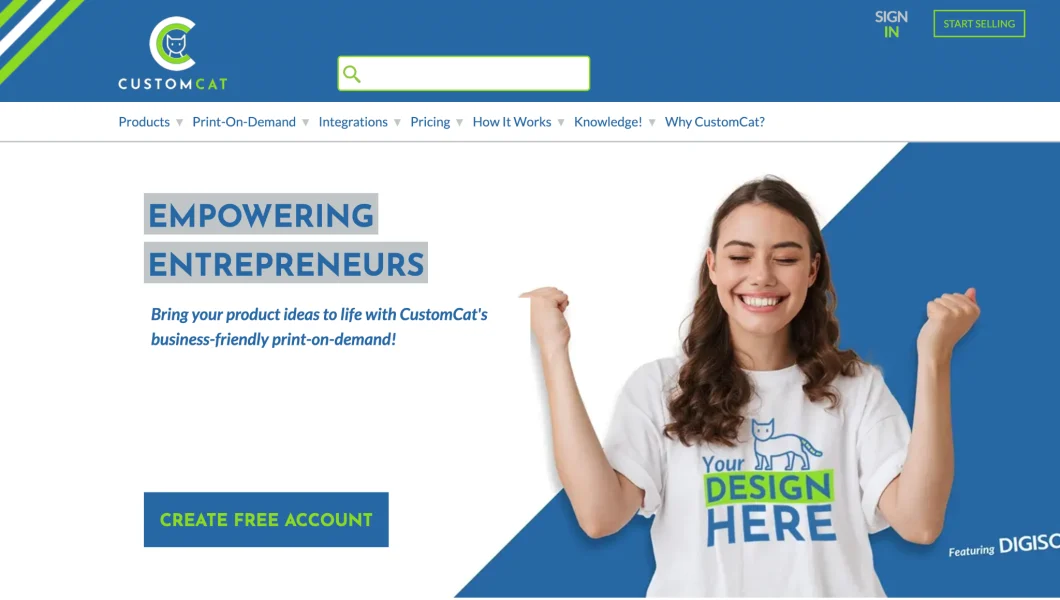
CustomCat has been in POD for over 20 years and is known for fast US fulfillment (95% of orders ship within 3 business days) and its proprietary Digisoft printing technology. They offer 550+ products across apparel, accessories, and home goods at competitive prices.
What they sell: Apparel, accessories, home goods across 550+ products.
Where they fulfill: US-based, multiple facilities.
The trade-offs: No meaningful eco-friendly credentials. Good for volume and speed, not for sustainable branding.
Bottom line: A strong platform for high-volume US sellers who prioritize speed and price. Not a fit for eco-focused brands.
11. ShineOn and JetPrint: Best for Niche Specialty Products
I'm grouping these two together because they occupy similar territory: highly specialized product categories with no meaningful sustainability story.
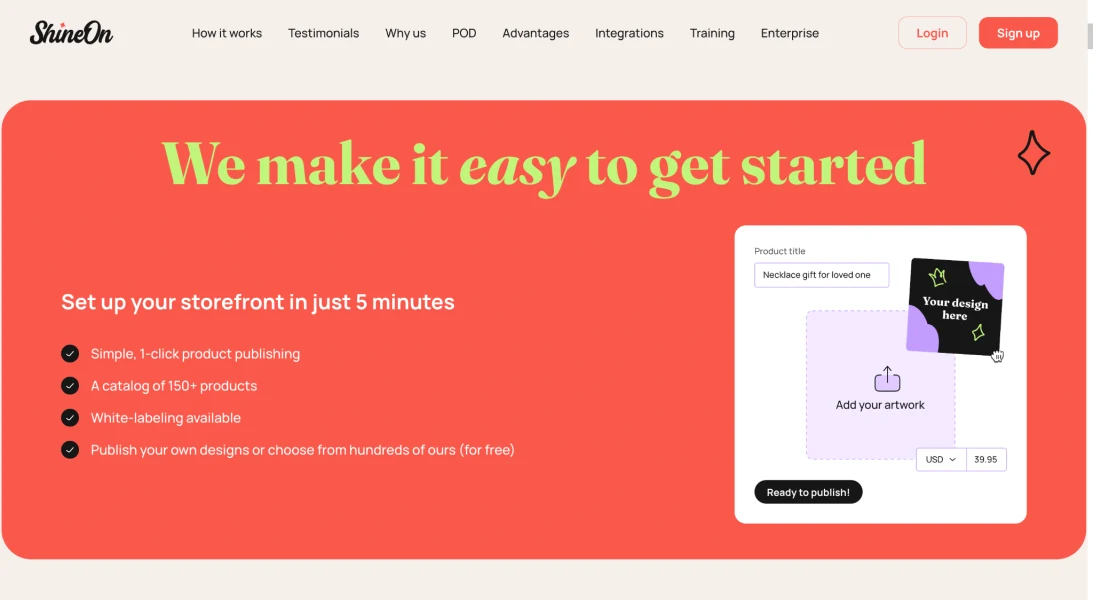
ShineOn focuses exclusively on custom jewelry and personalized gifts. They're genuinely impressive at what they do, with high-margin products, custom packaging, and message cards. Their items ship from the US within 1 to 4 business days. But jewelry and metal products don't lend themselves easily to the same eco-friendly materials framework as apparel, and ShineOn has no notable sustainability certifications or programs.
JetPrint specializes in custom watches and shoes, with products manufactured in China and global shipping. They offer competitive pricing and professional product photography. Again, no meaningful eco credentials to speak of.
Bottom line for both: Excellent choices if you want to sell high-quality specialty products in their respective niches. Not the right partners if sustainability is a core brand value.
How to Pick the Right One for Your Brand
Now that you know what each company offers, here's how to narrow it down.
1. Get Specific About What Sustainability Means for You
This sounds obvious, but most people skip it. Before you look at any platform, decide what matters most to your brand specifically. Is GOTS-certified organic material non-negotiable? Do you need plastic-free packaging? Is ethical labor certification your hard line? Is reducing shipping emissions the priority?
Your answers will cut the shortlist quickly. If you can't answer this question, you'll end up choosing on price alone, which usually means making the wrong call.
2. Match the Platform to Your Product Focus
The platform you choose should match what you're actually selling:
- Apparel-first brand with high sustainability standards: EcoMerch or Printful
- Art prints, wall decor, stationery for a global audience: Gelato
- Wide product variety with eco options mixed in: Printify
If you're still figuring out what to sell, a good starting point is looking at popular print on demand products and seeing which categories have strong sustainable options available.
3. Order Samples Before You List Anything
No product page tells you how a garment feels after washing or whether the print holds its color. Order samples before you list a single product. Check the fabric weight, the hand feel, the color accuracy, and how it holds after a wash cycle. If it doesn't impress you, it won't impress your customers either.
4. Do the Full Margin Calculation
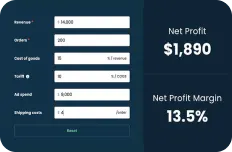
Eco-friendly base costs typically run 20 to 40% higher than conventional equivalents. Before committing to any product, run the complete math: base cost, printing fee, packaging, shipping, platform fees, transaction fees, and your target margin.
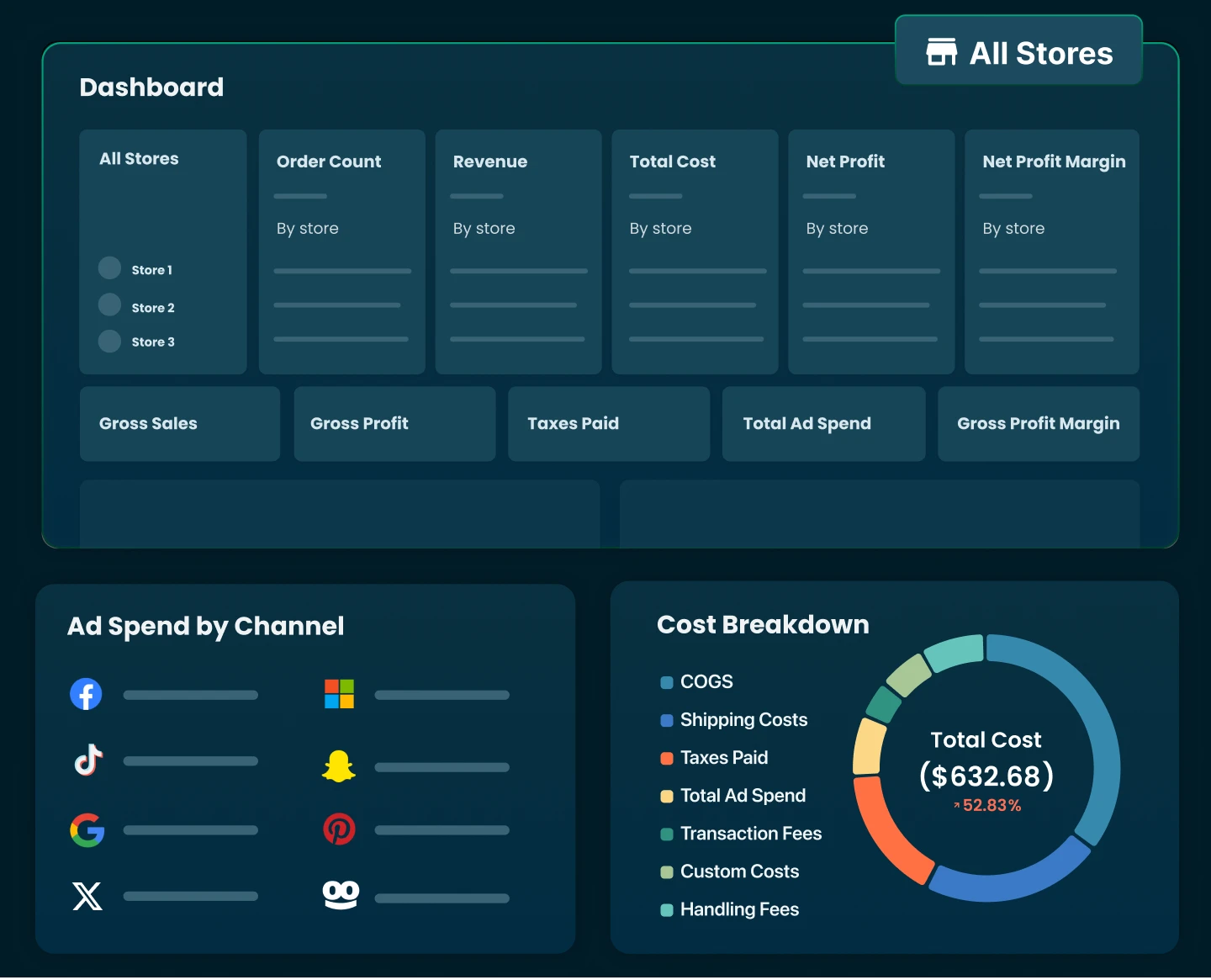
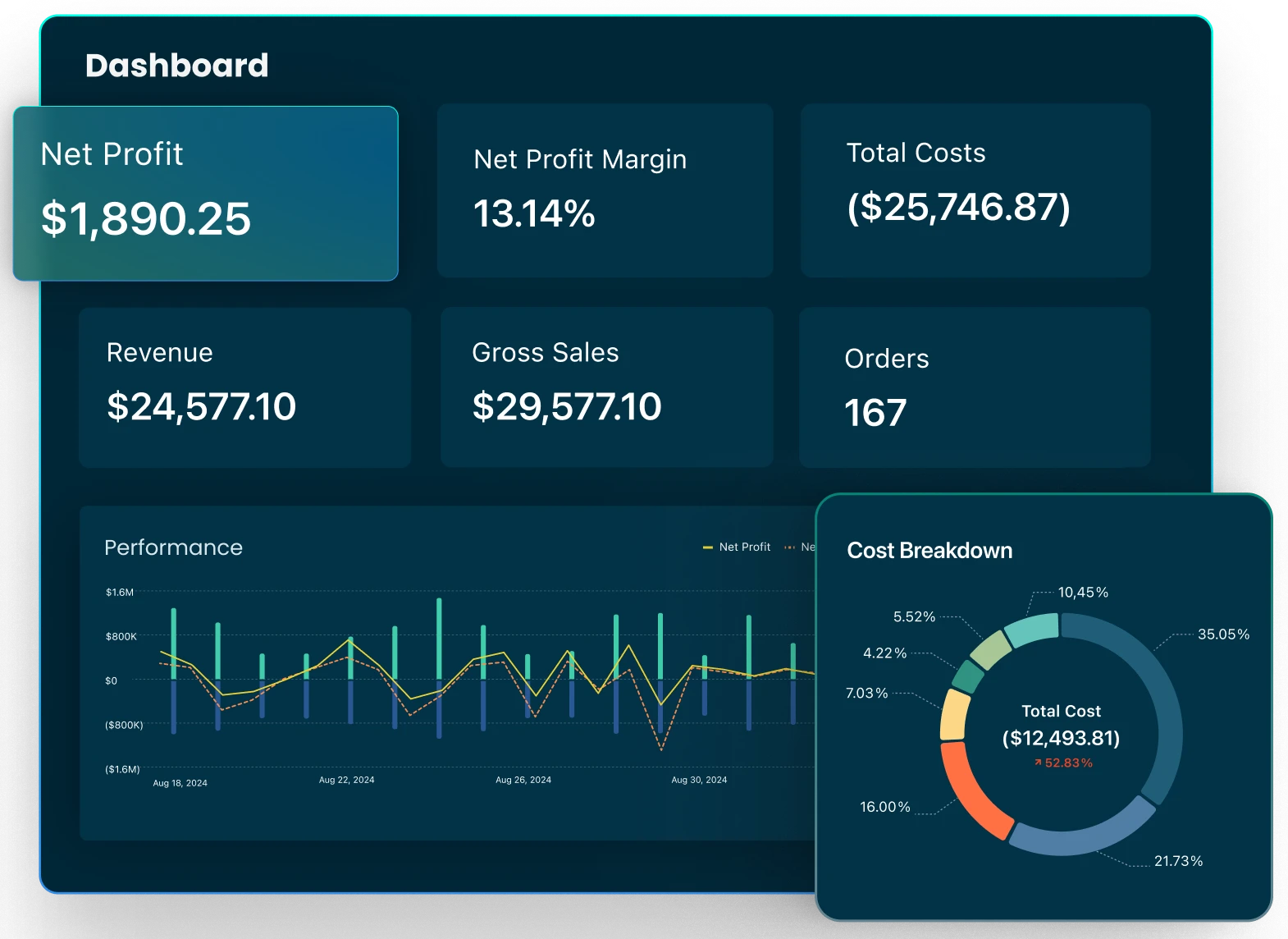
It's also worth understanding the financial side of POD more broadly before you go all in. A look at whether print on demand is actually profitable and what the real startup costs look like can save you a lot of surprises later. Tools like TrueProfit help Shopify sellers track true net profit, including all costs and fees, so your sustainability mission stays financially viable.
5. Verify Certifications Before You Trust the Claims
GOTS, Oeko-Tex, Fair Trade, FSC are all independently issued and publicly searchable. A company that displays them can be verified. One that uses the word "sustainable" without a certification behind it probably can't be.
Final Thoughts
Eco-friendly print on demand is not just about choosing “green” products, it is about understanding the real impact behind every order. Sustainability only matters when it can be proven through materials, production methods, and responsible shipping, not just labels or marketing claims.
From my perspective, many sellers focus too much on what looks eco-friendly on the surface and not enough on what actually reduces waste and emissions in practice. The reality is that every choice in the supply chain carries a trade-off, and there is rarely a perfect option.
I believe the goal should not be perfection, but awareness. When you clearly understand what is truly sustainable and what is simply positioned as sustainable, you make better decisions for both your brand and your customers.

Irene Le is the Content Manager at TrueProfit, specializing in crafting insightful, data-driven content to help eCommerce merchants scale profitably. With over 5 years of experience in content creation and growth strategy for the eCommerce industry, she is dedicated to producing high-value, actionable content that empowers merchants to make informed financial decisions.