9+ Shopify Clothing Stores Crushing It This Year & Here’s Why (2026)


Table of Contents
Running a clothing store on Shopify is the most promising path for self-entrepreneurs in 2026, while the success comes down to understanding the audience, niche positioning, and following a proven blueprint that real brands already use to scale.
In this guide, you’ll see 10 top clothing brands and which tactics they use to promote their stores. Let’s dive in!
In this blog:
Top 10 Shopify Fashion Stores to Inspire Your Ecommerce Brand
Below are top 10 successful Shopify clothing stores. For each one, we break down who they are and what specifically makes them convert.
- Miss Lola - Fast-fashion women’s footwear
- Rachel Riley - Luxury children’s clothing
- Everlane - Women’s and men’s apparel
- Allbirds - Sustainable footwear
- Oh Polly - “Going-out” & party wear
- Vessi - Waterproof footwear
- Goorin - Streetwear hats
- Filson - Premium outdoor clothing
- JW PEI - Vegan leather handbags
- Kerrits - Equestrian clothing gear
1. Miss Lola
Niche: Fast-fashion women footwear

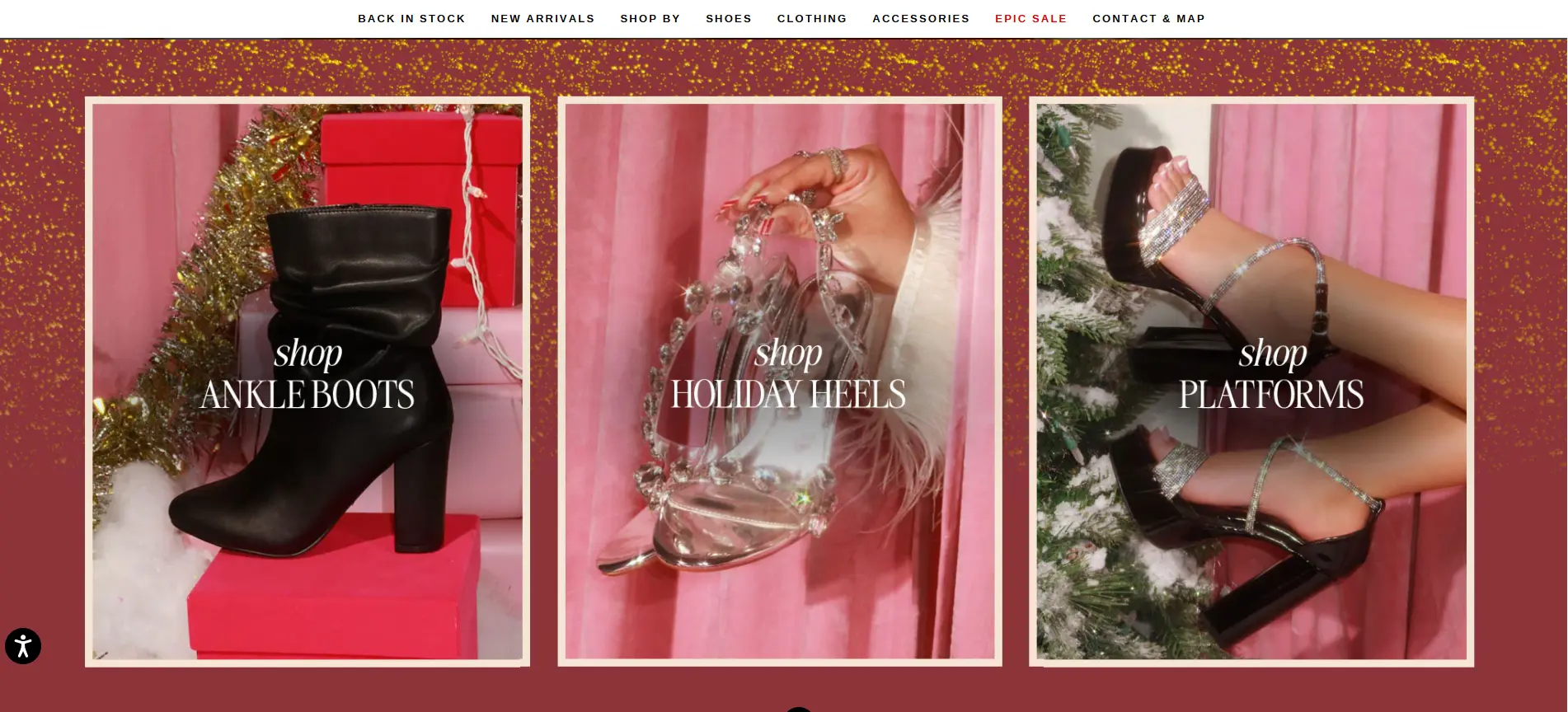
Miss Lola is a fast-fashion Shopify store that mainly sells women’s heels and shoes. Their customers are mostly young women who care a lot about trends and usually buy whatever is blowing up online right now.
Because of that, social media is their main growth channel. Miss Lola has built over 2 million followers on Instagram and runs a very active gifting and affiliate program at the same time.
Through this program, Miss Lola constantly sends free shoes to both small and big influencers, usually with a discount code to share. This leads to tons of real people posting Miss Lola shoes on Instagram, which makes the brand feel popular, legit, and worth buying from.
Another big thing they do right is keeping the store feeling fresh. Miss Lola puts a lot of focus on “New Arrivals” and updates their catalog all the time. When you land on the site, it’s obvious that new styles are always coming in, which fits perfectly with fast fashion and pushes people to buy before trends move on.
2. Rachel Riley
Niche: Luxury children’s clothing
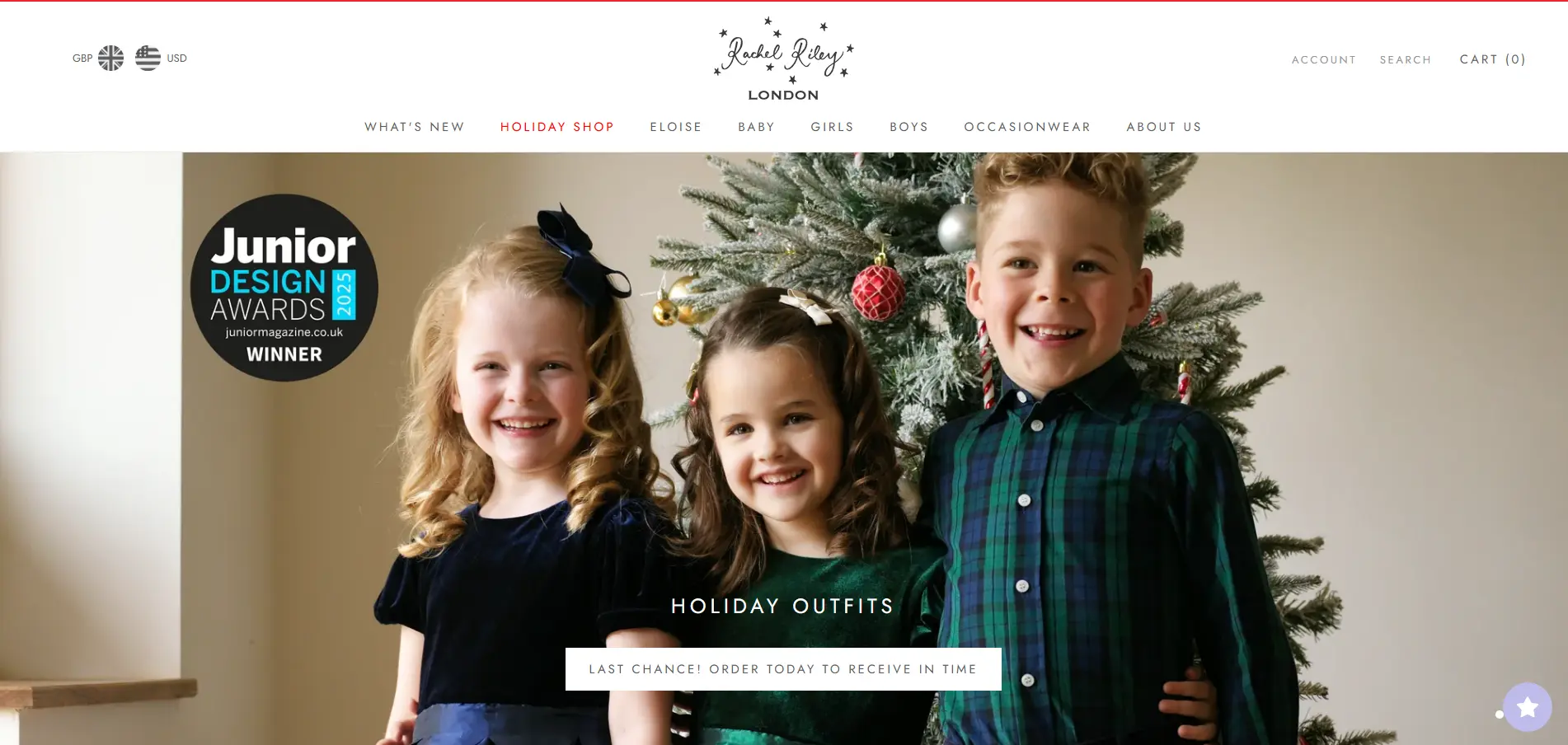
Rachel Riley is a high-end kids’ clothing brand that sells clothes for babies all the way up to around 10–14 years old. They’re best known for the 1940s, 50s, and 60s collection, and their $100+ to $200+ pricing matches that premium positioning.
The biggest problem most high-end stores face is simple: how do you make expensive prices feel reasonable? Here’s how Rachel Riley solves this.
First, they prove authority. Rachel Riley clearly shows they’re legit by putting award badges right on the site. Seeing awards like Best UK Children’s Fashion Brand, Best Children’s Wear, and Mumsnet Best quickly tells shoppers this is an award-winning British brand, not just another pricey kidswear store.
Then, they borrow credibility from big names. The site shows logos from VOGUE and The Telegraph upfront, which instantly signals that the brand is respected in the luxury fashion world and has real media backing.
On top of that, they build emotional trust. Rachel Riley openly shows the charities they support, making the brand feel more human and values-driven. For parents spending serious money, this helps justify the price by showing they’re buying from a brand that cares about more than just profit.
3. Everlane
Niche: Women's and men's apparel
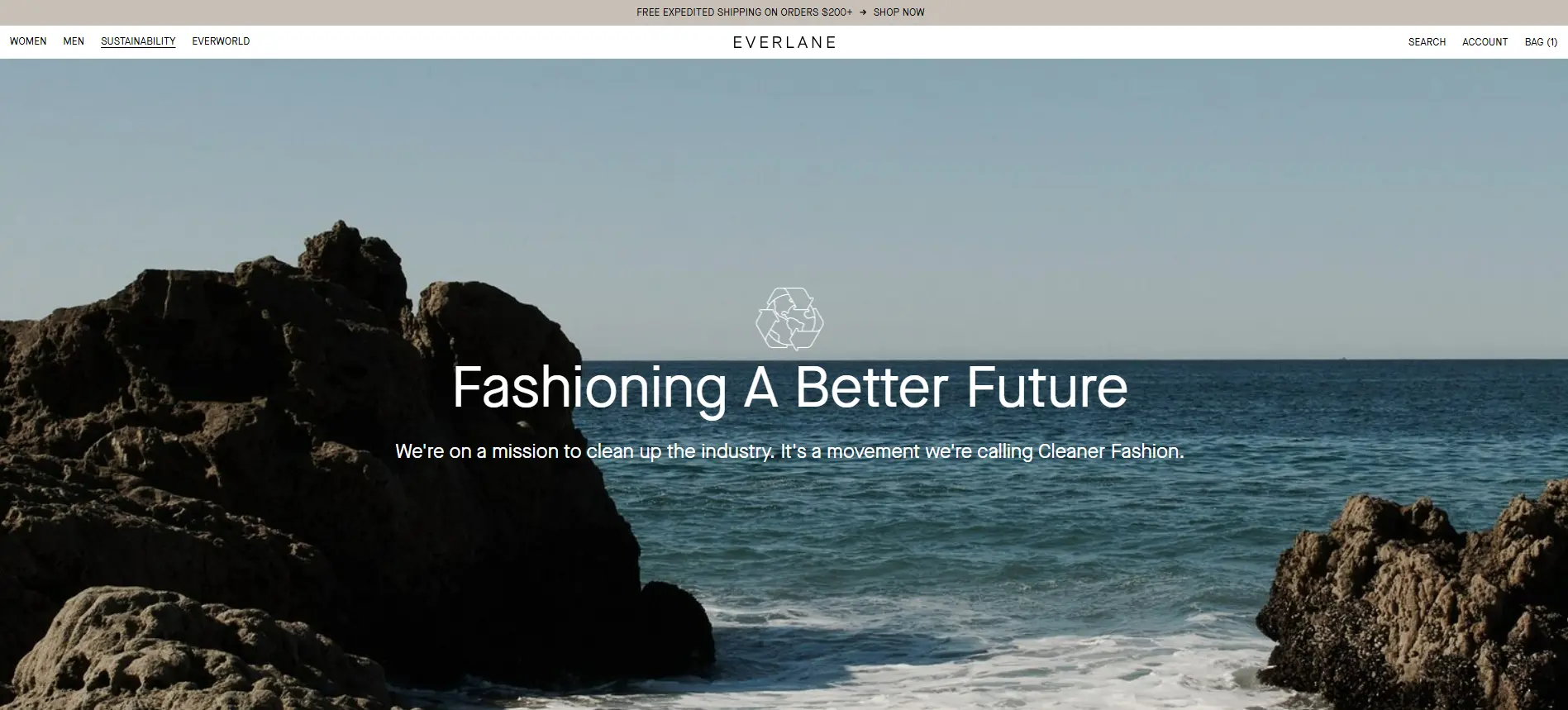
Everlane is a direct-to-consumer brand making premium essentials that are meant to last for years. The idea of "sustainable product" naturally shapes everything Everlane does, from product design to how the brand promotes itself online.
Much of Everlane's success comes from its clear and consistent storytelling. The message "We're on a mission to clean up a dirty industry" shows up everywhere across the site or social media. This position immediately justify why the prices are higher than average and make customers comfortable paying a bit more cuz they understand the brand's practices are sustainable and humane.
And since the product is timeless and minimalist, the website design must reflect this core identity. It's not picking a random Shopify theme, but carefully using the theme with minimal distraction, clean interface, plenty of white space, all to strengthen Everlane's image as a premium, no-nonsense essential brand.
4. Allbirds
Niche: Sustainable footwear
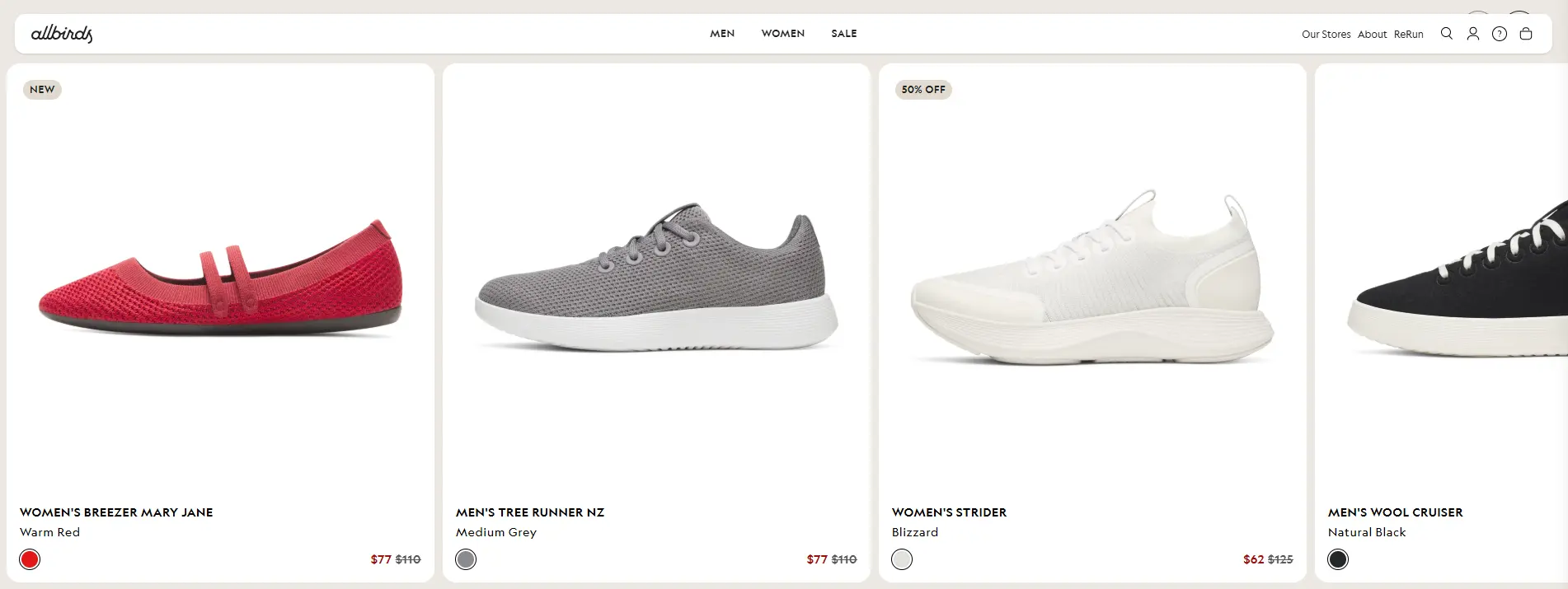
Allbirds is best known as having "The World's Most Comfortable Shoes" made from innovative natural materials such as merino wool, tree fiber or sugar cane. They clearly positioned themselves as a sustainable shoe company and used it as its own competitive advantage in this niche.
Here's how Allbirds stand out: Instead of just selling "shoes," Allbirds sells "materials." This appeals to the science- and value-minded customer. By using proprietary names such as Men's tree runner go or Men's wool strider and focusing on the material's functional benefits such as softness, breathability, sustainability, Allbirds create product categories that competitors can’t easily copy.
For driving sales, Allbirds currently invest heavily in PR and social mentions, which is more effective for their brand as a long-established name in the market.
They also partner with social ambassadors and content creators to promote their brand across Instagram, TikTok, YouTube, etc. This programme generates large volumes of authentic content and helps Allbirds show up everywhere online, which is a smart move, especially as discovery through AI and LLM-powered search becomes more common heading into 2026.
5. Oh Polly
Niche: "Going out out" & party wear
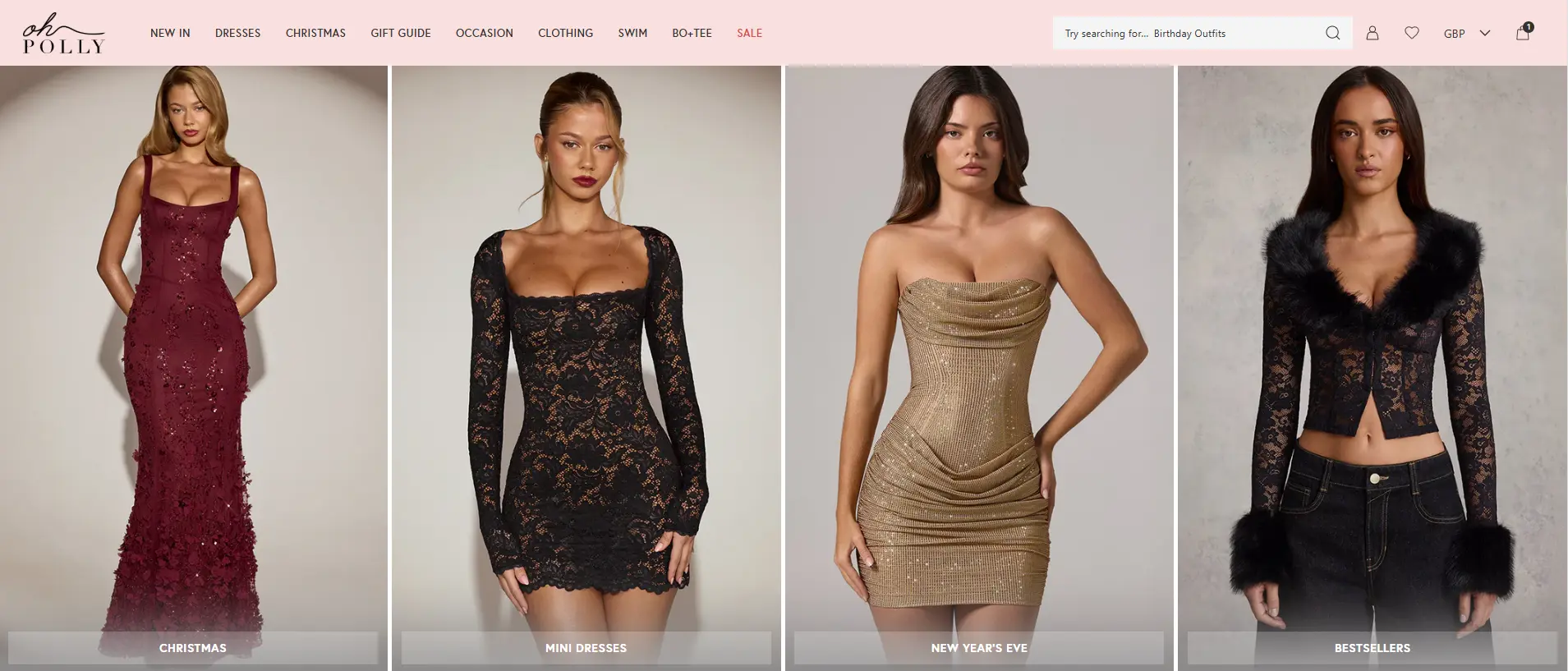
Oh Polly dominates the “going out out” and partywear niche, selling outfits needed for parties, birthdays, holidays, formal events, and nights out. With prices typically ranging from $60 to $200, the brand positions itself above ultra-cheap fast fashion like Shein but below designer labels, appealing to young women who want to stand out without paying luxury prices.
In fashion, style sells first, that's why as a party wear brand, Oh Polly invests heavily in using models who are styled with professional lighting, confident posing, and polished makeup. Together, it forms a "Oh Polly Girl" aesthetic across the whole store.
On top of that, many shoppers hesitate because they’re unsure how to style a piece or whether it fits the occasion. That’s why Oh Polly offers personal styling chat, helping customers mix and match or get quick advice. This subtly removes buying friction while also making it easier to upsell full outfits instead of single items.
6. Vessi
Niche: Waterproof footwear
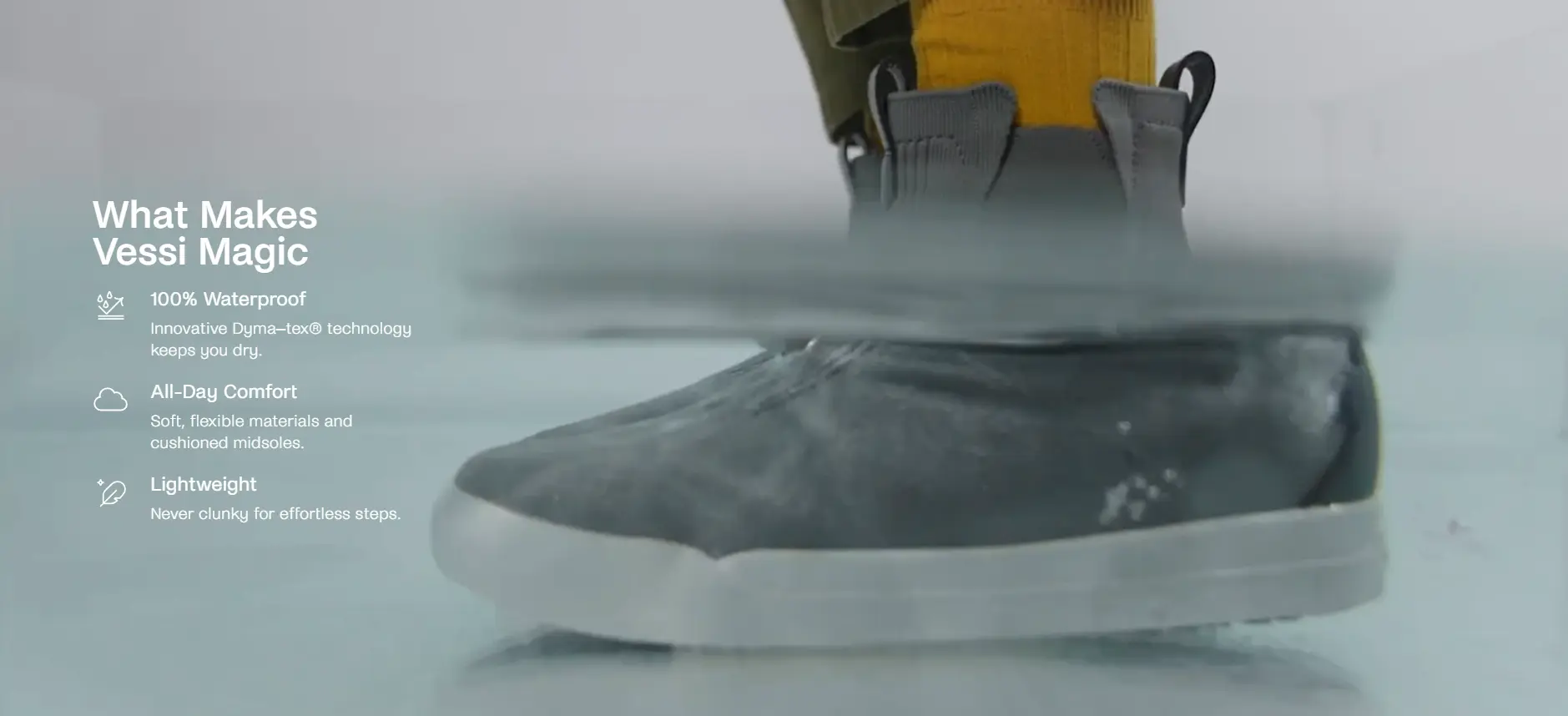
Vessi is a footwear company that sells the world's first 100% waterproof knit shoes using its proprietary Dyma-tex® technology. With this product, Vessi mostly sells to audiences who want all-day comfort even in wet climates without sacrificing their styles.
Vessi is a great reminder that product–market fit always sells best. When a product has a clear wow factor and solves a real problem for a very specific audience like staying dry in Canada’s rainy Pacific regions, marketing naturally becomes much simpler. Vessi doesn’t need to push hard or over-explain; they just show the product working, and it essentially sells itself.
On top of that, Vessi thoughtfully integrates its Clean Water Initiative directly into the shopping experience. The live donation counter, now over 230 million liters, appeals directly to Gen Z and Millennial shoppers who want their purchases to make a real impact.
7. Goorin
Niche: Streetwear hats
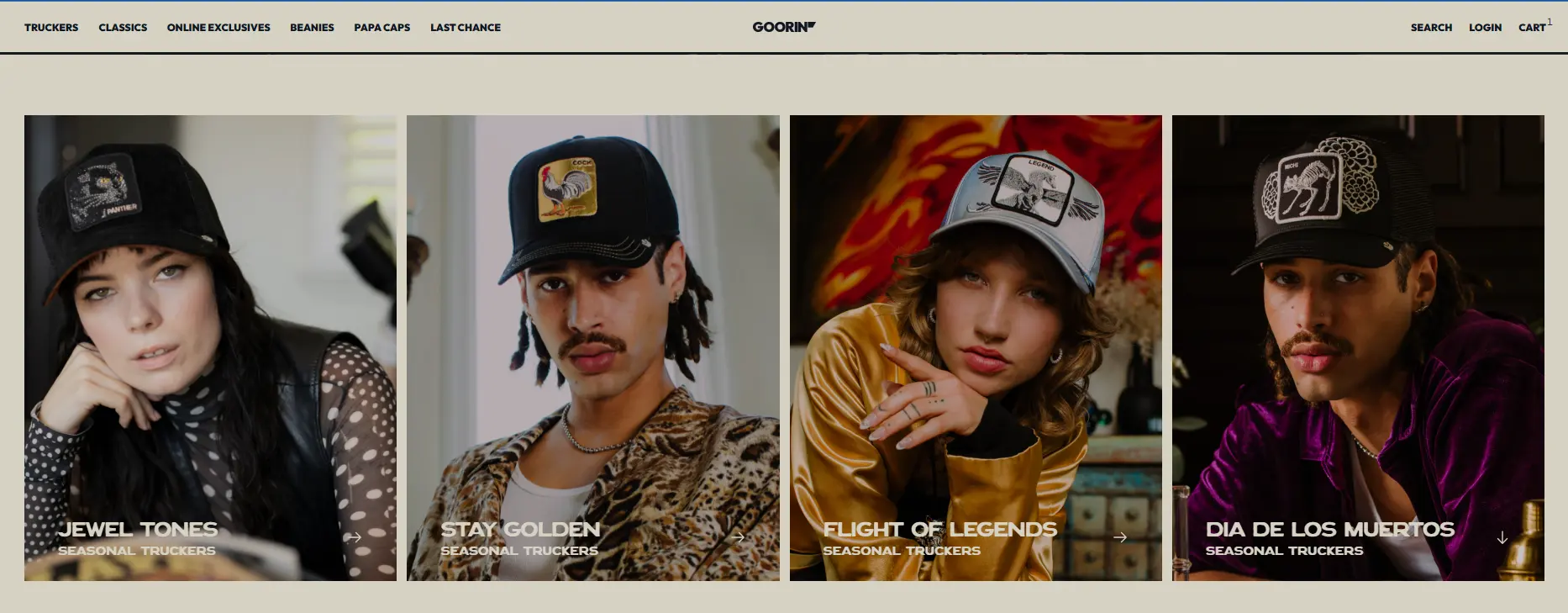
Goorin Bros. is a classic American hat brand selling wool and straw hats, but it’s best known today for its Animal Farm trucker caps. With over 130 years of history, the brand started out serving working-class communities. By adapting to trends over time, Goorin Bros. now lives somewhere between heritage and streetwear, with a growing audience of streetwear fans, skaters, and younger shoppers.
What Goorin Bros. does really well is product storytelling. Each animal patch tells a story and represents a personality, which makes it easy for customers to pick a hat that matches their vibe. From a business perspective, this also lets the brand launch tons of SKUs by tweaking small details instead of creating entirely new designs.
8. Filson
Niche: Premium outdoor clothing

Filson is a high-ticket clothing brand selling cardigans, crewneck, hoodie, shirt, jacket, backpack,..etc.. They're all outdoor clothing items but 5–10x more expensive than standard.
Since the products themselves honestly aren't that much different, Filson justified the higher selling price by promoting that their products are “passed down for generations”.
They support this message with strong social proof, such as customer stories like: “My dad worked for the U.S. Forest Service and purchased a Cruiser Vest in 1972. He used the vest for marking timber and sometimes while fighting fires. 34 years later I still use the vest when hunting, fishing, and hiking in the woods”.
They’ve positioned themselves as unfailing goods since 1897 and use their historical status as a supplier to the U.S. Forest Service to validate their quality. If it’s good enough for a smokejumper, it’s good enough for a commuter, attracting customers who are tired of "disposable" goods and are willing to pay a premium ($400-$600 for a jacket) for something that ages beautifully.
9. JW PEI
Niche: Vegan Leather handbags

JW PEI is a vegan leather handbags and accessories, best known for selling ethical items that use recycled plastic bottles and cruelty-free materials.
Here's what's different about JW PEI: By providing high-fashion looks for the price of a dinner out, they make luxury outfits just available to everyone.
For marketing, JW PEI works with both small influencers and global icons like Megan Fox and Emily Ratajkowski. This "top-down" seeding makes the brand showing up literally everywhere across social, attracting wider audiences globally.
For products, JW PEI competes at both price and variants. Unlike traditional brands that launch 2–3 colors, JW PEI often launches the same bag (like the Gabbi) in 15+ vibrant hues. This encourages "color collecting" and makes the product highly "Instagrammable" in various settings.
10. Kerrits
Niche: Equestrian clothing gear
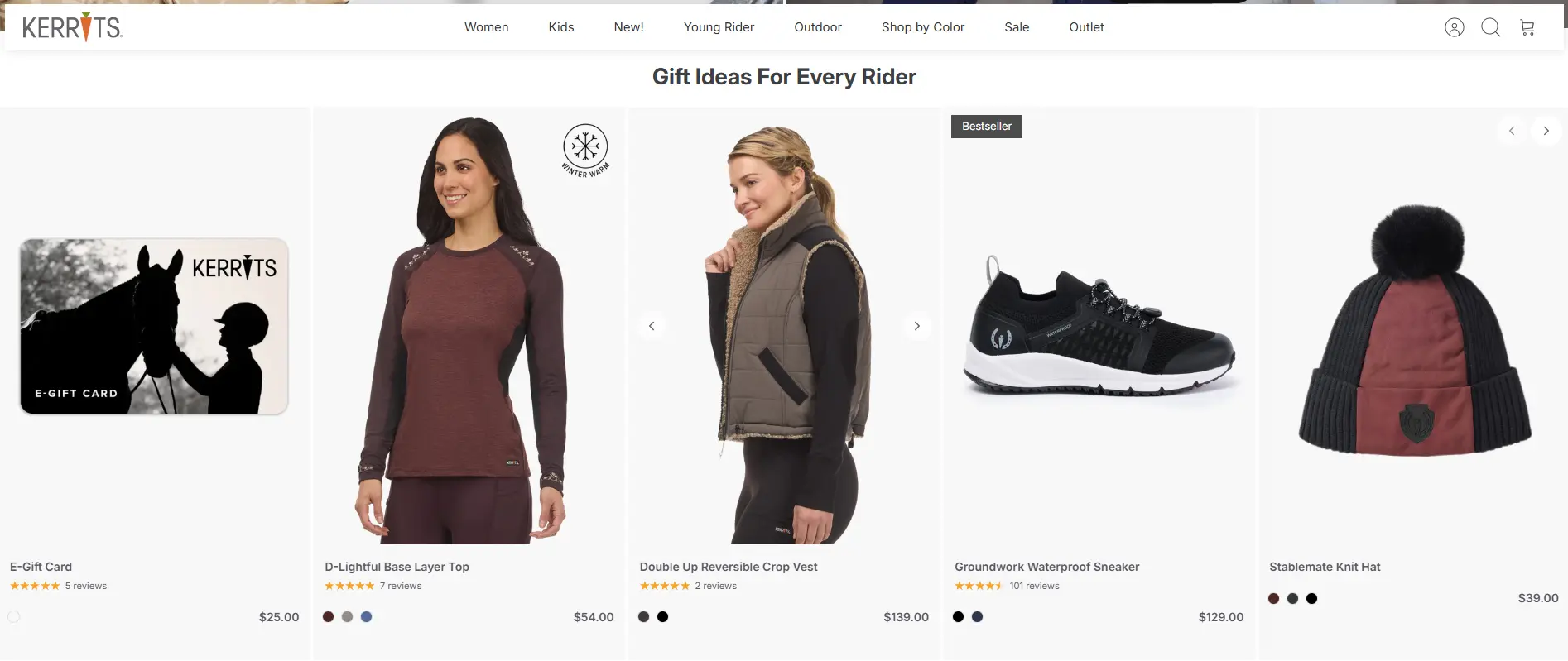
Kerrits is an equestrian apparel brand that sells riding gear including riding pants, top & jackets, kids riding gear, and other riding accessories such as bag, socks, knit hat, etc.
What sets Kerrits apart is how it segments products by weather conditions, not trends. Lines like Ice Fil® for extreme summer heat and Polartec® Windpro® for freezing winter rides create clear, seasonal reasons to buy. When the weather changes, riders already know exactly what they need.
And by replacing heavy, traditional fabrics with four-way stretch, moisture-wicking materials from premium activewear, Kerrits clearly positions itself as a technical performance brand that solves real riding problems.

Common Traits of a Successful Shopify Clothing Store
You can learn a lot from top Shopify stores before running a real store on your own. But for quick lessons, here’re 7 biggest lesson they all share together that you can steal:
1. Sell a Lifestyle, Not Just Clothes
When you sell a black t-shirt, the customer might buy that one item. But when you sell a "style," such as “quiet luxury” or “streetwear gangs”, the customers are more likely to buy that product and its accessories in the same collection, leading to bundling and more value per order.
Moreover, style helps you sell best on platforms like TikTok and Instagram, where users consume styles without wanting to buy anything. Seeing a "style" they admire makes a user want to own it and even are willing to pay premium prices for an item that makes them feel a certain way.
2. Serve a Niche Audience Well
Picking a niche can create instant trust. It’s because focusing on a niche allows you to prove your deepest understanding of a specific group of people. And customers are 63% more likely to buy from a brand they perceive as a specialist in their specific problem.
Moreover, marketing the one product store is more effective than the general store, since your target audience now is clear. You can attribute your penny on acquiring the right customers who are interested in 90% of your catalog.
3. Build Strong Social Proof
When a customer shops online, they cannot touch the fabric or try on the garment. Social proof gives them the confidence to hit "buy" by seeing how it looks in others’ bodies.
By collecting social proof, it can come from two main sources:
Social proof from other sellers. Customers want to see how clothes fit on people with body types like theirs, not just 6-foot-tall models.
And social proof from influencers/KOLs. When a customer sees an influencer they admire or a celebrity like Lionel Messi wearing a brand, the "Perceived Value" of that item skyrockets.
4. Go Hard on Storytelling
A product with a good story can sell best and save your brand from the risk of being buried in this competitive clothing market. It is the "reason why" a customer chooses your brand over a cheaper alternative. They stay loyal to you even if a cheaper competitor emerges because that competitor can’t steal the story from you.
Moreover, the story can boost product value up to 98% higher, meaning you can charge more for each item. It makes it much easier for you to market products with higher price points without sounding nonsense.
5. Make Shopping Easy
In fashion, return rates are super high, and sizing is one of the biggest reasons. High-performing clothing brands remove this friction by offering size guides, size comparisons, model measurements, and “how it fits” notes to help shoppers feel more confident choosing a size.
Meanwhile, the abandoned cart rate is also another problem, mainly because shoppers are often unsure about what to buy, how to wear it, and whether it will actually look good on them. That’s why style guidance matters just as much. Features like complete outfit suggestions, “wear it with” bundles, and live styling chat help customers visualize the final look instead of guessing.
6. Sell More Per Order
With high return rates, every order carries a fixed cost to bring that customer in. If someone buys only one low-priced item, there’s very little margin left after marketing, payment fees, and platform costs.
When an order contains only one item and it gets returned, that order becomes a net loss. But when customers buy a complete outfit or multiple items, even if one piece comes back, the order often remains profitable. Selling more per order is one of the most effective ways to absorb return risk.
7. Monitor the Money Out & In
Monitoring the money out and in is one of the most overlooked, but most critical parts of running a successful clothing store. Strong brands treat financial tracking as a daily habit, not a monthly task. They watch metrics like gross margin, net profit, return rate, ad efficiency, and average order value together. This helps them quickly spot problems, double down on your best-selling products, and cut what quietly drains cash.
How to Start a Profitable Clothing Store on Shopify in 2026
Clothing remains one of the most potential niches in eCommerce but starting a profitable clothing dropshipping store requires a clear, step-by-step framework that ties strategy, operations, and financial discipline together.
1. Define a Unique, Marketable Identity
Every successful clothing store starts with focus. Pick one clear audience and one clear problem to solve. Broad fashion stores struggle to compete with fast-fashion giants, but niche brands win by serving specific needs like plus-size eveningwear, eco-friendly hoodies, or riding apparel built for extreme weather.
This clarity helps you charge healthier margins, reduce competition, and build a brand customers actually remember. In 2026, profitable clothing stores don’t sell “everything for everyone” they own a small, defensible category.
2. Design a Logo
Your logo doesn’t need to be fancy, but it must be usable everywhere. Keep it simple, readable, and scalable across your website, packaging, social media, and ads.
A clean logo builds trust instantly, especially in fashion, where visual credibility matters. If your logo looks amateur, customers subconsciously assume the product quality is too.
3. Set Up Your Online Store
Choose a fast, mobile-optimized Shopify theme and remove anything that causes friction. Most fashion shoppers browse and buy on mobile, so speed and clarity matter more than flashy animations.
Your homepage should quickly answer three questions: Who is this for? What makes it different? Or Why should I trust this brand?
Remember clutter kills conversions. A focused layout sells better than a “feature-packed” one.
4. Choose Your Supply Model (POD, Wholesale, or In-House)
Your supply model directly impacts margins, control, and scalability.
Print-on-demand works well for testing designs with low upfront risk. Meanwhile, doing wholesale on Shopify can offer better margins but requires inventory planning. In-house production gives the most control but demands capital and operational experience.
There’s no “best” model, only the one that matches your budget, risk tolerance, and growth plan.
5. Find a Manufacturer
Prioritize quality consistency over the cheapest option. In clothing, returns are expensive, and poor quality quickly destroys trust.
Reliable manufacturers help with consistent sizing, fabric quality, and delivery times, all of which directly affect reviews and repeat purchases. One bad supplier can quietly wipe out your profit through refunds and customer support costs.
6. Choose an Inventory Model
Inventory mistakes are one of the fastest ways clothing brands lose money. Instead of ordering large quantities upfront, test demand first.
Start with small batches, pre-orders, or dropshipping-style validation. Once you see consistent sales and low return rates, scale inventory with confidence. Cash flow matters more than “looking big” early on.
7. Prepare for Fulfillment
Shipping speed and reliability directly impact customer satisfaction, reviews, and retention. Late deliveries hurt fashion brands more than most niches because clothing is often purchased for specific occasions.
Clear shipping expectations, easy tracking, and a fair return policy reduce friction and protect your brand reputation.
8. Develop a Marketing Strategy
In 2026, fashion marketing works best when channels support each other. Combine short-form content (TikTok, Instagram), influencer seeding, SEO content, and paid ads based on your budget stage.
Remember marketing strategy will change depending on the season of the year. For example, you might plan a different campaign for BFCM, Christmas, Valentine. What stays the same might be the channel you think it’s the highest-converting to your store, but tactics can change drastically.
Track the True Performance of Your Clothing Store with TrueProfit
Fashion brands often look “successful” on the surface while quietly losing profit behind the scenes. That’s why tracking true performance is a must, not a nice-to-have.
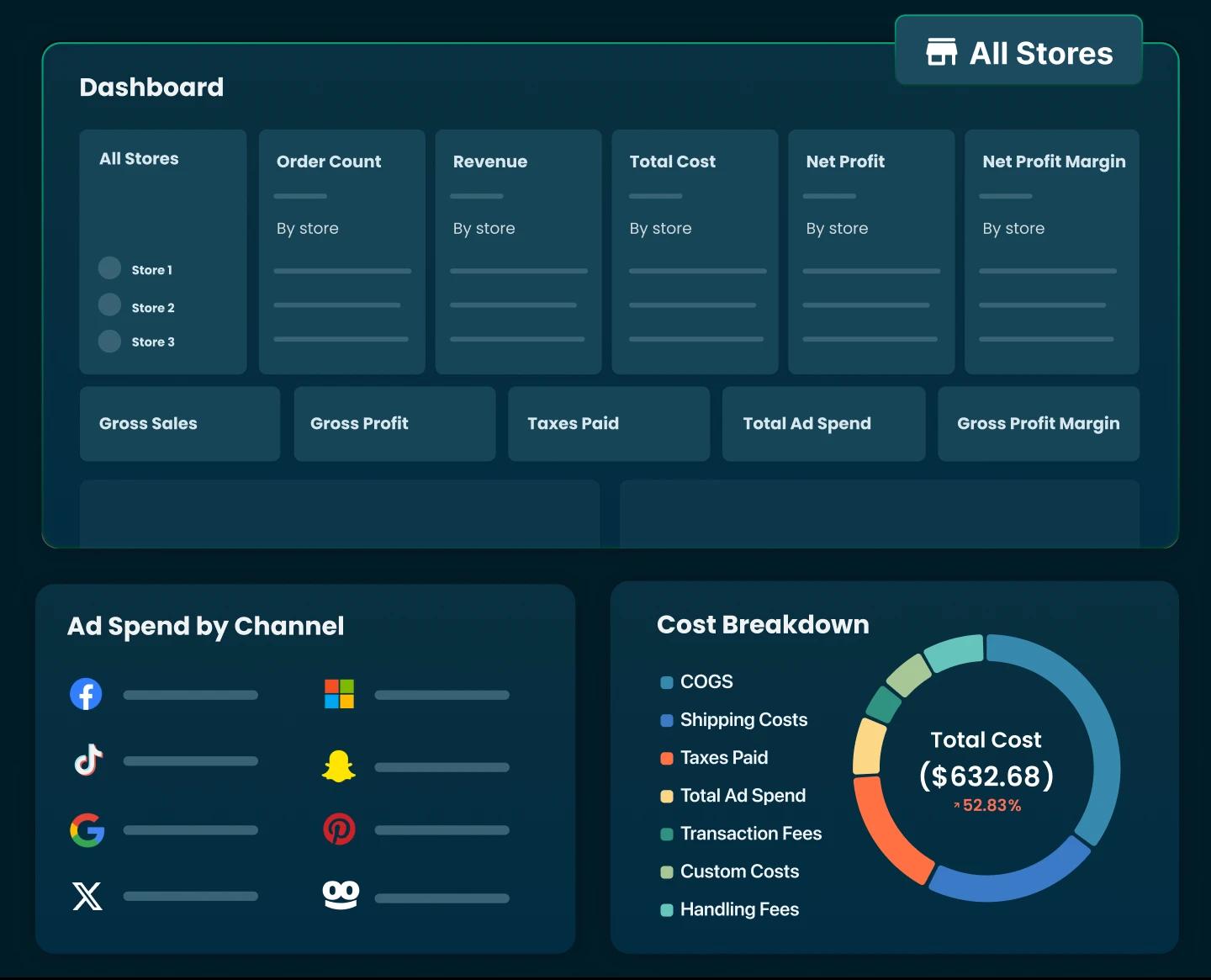
TrueProfit is the #1 net profit analytics solution that helps Shopify stores measure their true performance through the lens of net profit. It helps track every dollar coming in and going out, including revenue, net profit, margin, acquisition cost, customer lifetime value, ROAS, product cost, shipping, ad spend, transaction fees, discounts, refunds, and returns, etc.
By reviewing those metrics regularly, you can have the true picture of your clothing store performance and spot profit killers early before it drains out your profit.
With TrueProfit, Shopify merchants can use:
- Real-time net profit dashboard: Instantly see how much you’re actually earning after all expenses are accounted for.
- Automatic cost tracking: COGS, ad spend, shipping, transaction fees, and more are automatically synced and calculated, no spreadsheets required.
- Profit-based product analytics & attribution: Quickly spot which products and channels are truly profitable so you can scale with confidence.
- Complete P&L reporting: Get clear, automated weekly and monthly profit reports without manual setup.
- Customer lifetime value (CLV): Know exactly what each customer is worth to make smarter CAC and retention decisions.
- Custom metrics: Create and track any KPI your business depends on, updated in real time.
With the TrueProfit mobile app, your profit performance is always within reach anytime, anywhere.

Final Thoughts
Every successful Shopify clothing store follows a repeatable formula: clear niche, strong branding, frictionless shopping, and disciplined financial tracking.
You don’t need to reinvent fashion. You need to execute better than average and stay consistent.

Leah Tran is a Content Specialist at TrueProfit, where she crafts SEO-driven and data-backed content to help eCommerce merchants understand their true profitability. With a strong background in content writing, research, and editorial content, she focuses on making complex financial and business concepts clear, engaging, and actionable for Shopify merchants.