Dropship Baking Supplies: 10 Best Products, Suppliers, and Profit Guide (2026)


Table of Contents
- 1. Is Dropshipping Baking Supplies Profitable?
- 2. 10 Best Baking Supplies to Dropship in 2026
- 3. How to Pick Baking Products That Actually Leave You Profit
- 4. Top Baking Supplies Suppliers for Dropshipping in 2026
- 5. How to Start a Baking Supply Dropshipping Business
- 6. 5 Baking Dropshipping Mistakes That Can Wipe Out Your Profit
- 7. Final Thoughts
- 8. Dropship Baking Supplies FAQs
Let me cut through it. Below I'll walk you through which dropship baking supplies are actually worth selling in 2026, where to source them, how to price them so you keep more than you spend, and the mistakes that make a "winning" product lose money.
My goal here isn't to hand you a list of trendy items. It's to help you pick products you can build a real, profitable store around. Let’s go!
In this blog:
- 1. Is Dropshipping Baking Supplies Profitable?
- 2. 10 Best Baking Supplies to Dropship in 2026
- 3. How to Pick Baking Products That Actually Leave You Profit
- 4. Top Baking Supplies Suppliers for Dropshipping in 2026
- 5. How to Start a Baking Supply Dropshipping Business
- 6. 5 Baking Dropshipping Mistakes That Can Wipe Out Your Profit
- 7. Final Thoughts
- 8. Dropship Baking Supplies FAQs
Is Dropshipping Baking Supplies Profitable?
Yes, dropshipping baking supplies can be profitable, and the reason is structural rather than lucky. The winning products are lightweight, cheap to ship, and easy to demonstrate on video, which keeps fulfillment costs low and marketing costs manageable at the same time.
A Growing Market to Sell Into
Demand is on your side here. The global bakeware market was valued at around $4.09 billion in 2024 and is projected to reach roughly $5.89 billion by 2030, growing at a 6.3% CAGR over that period. In plain terms, that's a big, steadily expanding pool of buyers, not a fad you're trying to catch before it disappears. Molds are even called out as the fastest-growing product segment, which lines up neatly with several of the picks below.
Part of what keeps this market healthy is the home-baking habit that surged during the pandemic and never fully faded. People kept baking, kept posting it, and kept buying the tools that make it easier, which is exactly the kind of steady, hobby-driven demand you want under a store.
Why the Margins Work
The math tends to favor you here. Most of the products I recommend below cost a few dollars to source, sell for $10 to $50, and travel safely in a padded envelope. That combination is rare in ecommerce, and it's exactly what gives baking supplies room for a healthy profit margin after ads and refunds.
There's also the visual angle. Baking is a hobby people love to watch, so a single product can carry an entire ad on its own. When your creative costs are low and your shipping is cheap, profit gets a lot easier to hold onto.

10 Best Baking Supplies to Dropship in 2026
Here are the products worth testing this year. Each one balances demand, margin, and low shipping risk, which is the combination that actually holds up once you start spending on ads.
1. Silicone Baking Molds
Silicone molds help home bakers create eye-catching desserts without needing advanced decorating skills, and the sheer variety of shapes makes the category easy to bend around trends, holidays, and specific dessert niches.

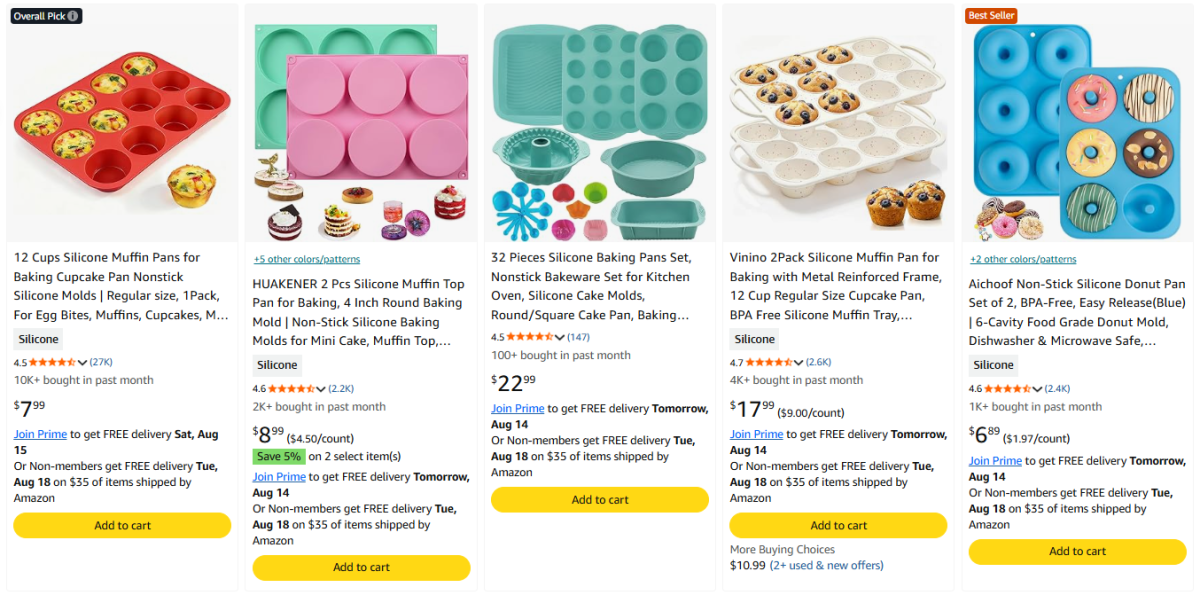
- Why it sells: A single mold can transform a plain cake, chocolate, pudding, or mini dessert, and that gives you ready-made material for TikTok, Reels, and Pinterest. Buyers reach for them because the mold does the hard part for them, letting a beginner produce a dessert that looks far more impressive than their skill level
- Price potential: $12-$30, depending on size, complexity, and whether you sell singles or sets
- Shipping risk: Low, since silicone is light, flexible, and hard to break in transit
- Best products to test: 3D molds, mini dessert molds, flower molds, animal shapes, and seasonal designs tied to current food trends
Profit insight: Generic muffin molds are difficult to differentiate. Specialized 3D molds, mini dessert molds, and seasonal designs give you a stronger marketing hook because customers are often buying the idea of the finished dessert, not just the baking tool.
2. Cake Decorating Kits
Decorating kits bundle several low-cost tools into one solution, which is exactly what makes them so good for lifting perceived value and average order value.
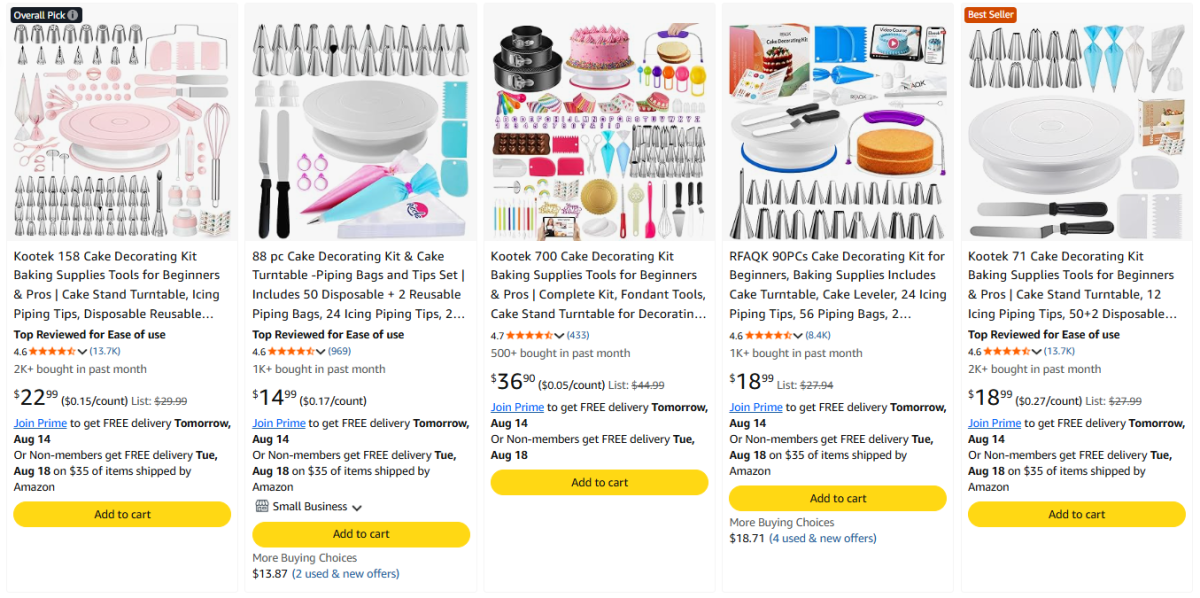
- Why it sells: Beginners rarely know which tools they need, and a complete kit removes that friction by handing them piping bags, tips, scrapers, and couplers in one go. Buyers happily pick the kit over single items because it feels like the safe, no-guesswork choice, and one purchase covers the whole project
- Price potential: $15-$35, with larger or more complete kits reaching higher
- Shipping risk: Low, as most components are small and light
- Best products to test: Beginner kits, 20-50 piece decorating sets, buttercream kits, cupcake decorating kits, and cake-finishing bundles
Profit insight: Bundling is the main opportunity here. Combine piping tips, bags, scrapers, couplers, and other accessories into a complete kit that feels more valuable than the individual components.
3. Piping Bags and Tips Sets
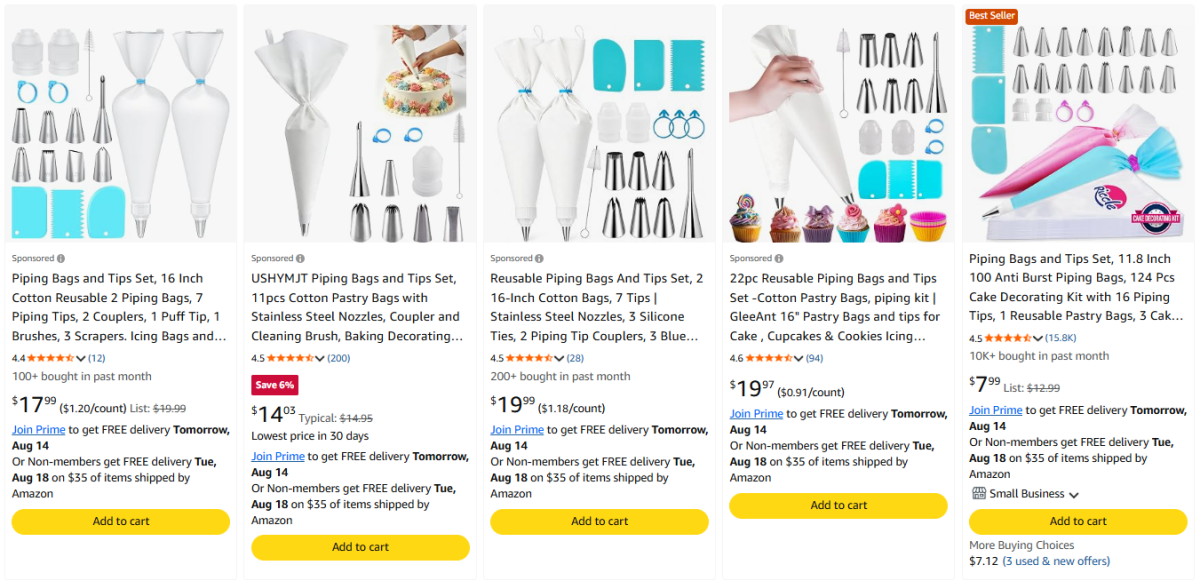
Piping bags and tips are inexpensive baking essentials, and they're especially good for dropshipping because they combine low product costs with almost no shipping complexity.
- Why it sells: The use case is obvious and the results are highly visual, so customers instantly grasp the difference between tips by seeing the frosting patterns they make. Buyers also treat them as consumables, replacing and upgrading sets often, which brings the same customers back
- Price potential: $10-$25, depending on the number and type of tips
- Shipping risk: Very low, since these are compact, light, and tough to damage
- Best products to test: Reusable piping bags, stainless steel tip sets, specialty flower tips, and multi-piece decorating sets
Profit insight: A basic piping bag set can quickly become a commodity product. Larger multi-piece kits create more room for differentiation and make it easier to justify a higher selling price.
4. Food Coloring Kits
Food coloring kits are about as visual as products get, turning the coloring process itself into content. That makes them a natural fit for sellers who lean on short-form video.
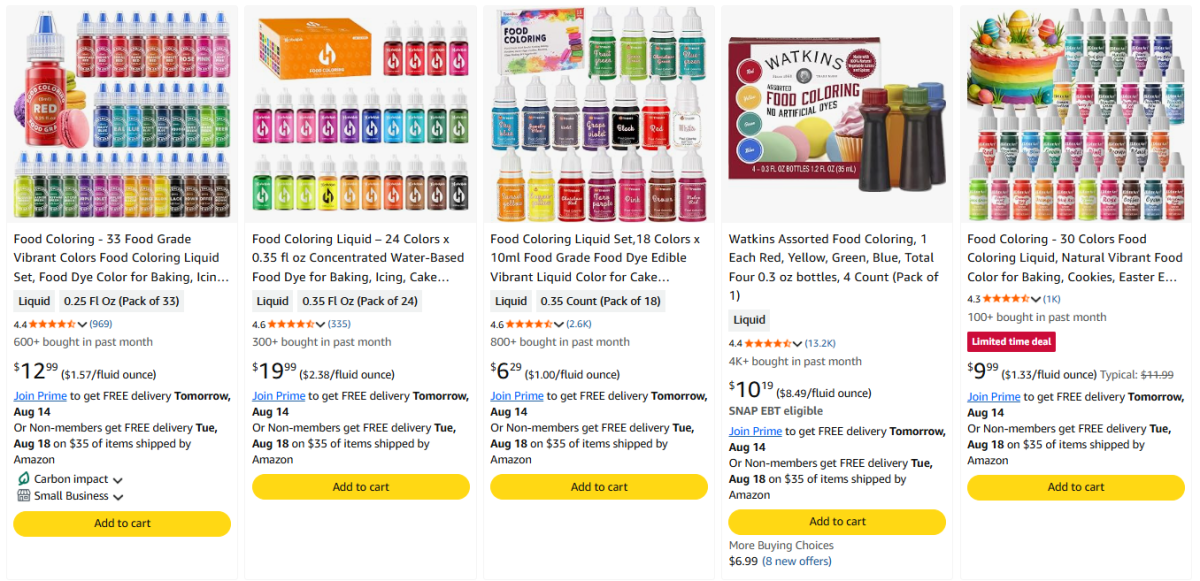
- Why it sells: Buyers pick them up because color is the fastest way to make a bake look "finished," and gel or specialty sets promise results the grocery-store bottles can't match
- Price potential: $8-$20 for standard sets, more for larger collections
- Shipping risk: Very low, though gel and liquid products need leak-resistant packaging
- Best products to test: Gel food coloring, pastel sets, neon colors, natural food coloring, holiday collections, and decorating-specific palettes
Profit insight: Generic "food coloring" is a weak marketing angle. Position the product around a specific outcome, such as pastel birthday cakes, Halloween cookies, or rainbow desserts, to create stronger ad creatives and targeting.
5. Cookie Cutters
Cookie cutters are one of the easiest baking products to niche, because the same basic item can be redesigned for hundreds of audiences, occasions, and seasonal trends.
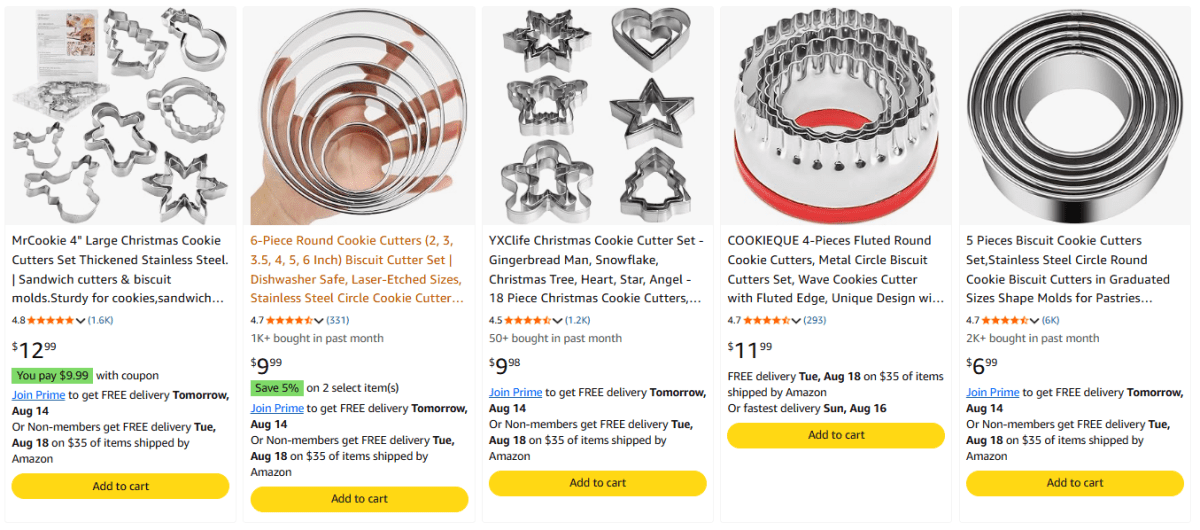
- Why it sells: People usually buy for a specific event rather than as a generic kitchen tool, which creates strong intent around birthdays, holidays, weddings, and baby showers. Buyers also grab them on impulse when the design is cute or oddly specific, since the price is low enough to justify almost instantly
- Price potential: $8-$25 for themed sets or specialty designs
- Shipping risk: Very low, as most cutters are compact and cheap to ship
- Best products to test: Holiday sets, personalized cutters, alphabet sets, animal designs, wedding collections, and hobby-specific shapes
Profit insight: Cookie cutters work particularly well as micro-niche products. Instead of selling a generic baking accessory, you can target a specific audience with a highly relevant design.
6. Cake Scrapers and Smoothers
Scrapers and smoothers solve a clear problem for home decorators: getting clean, professional-looking frosting without professional equipment or years of practice.
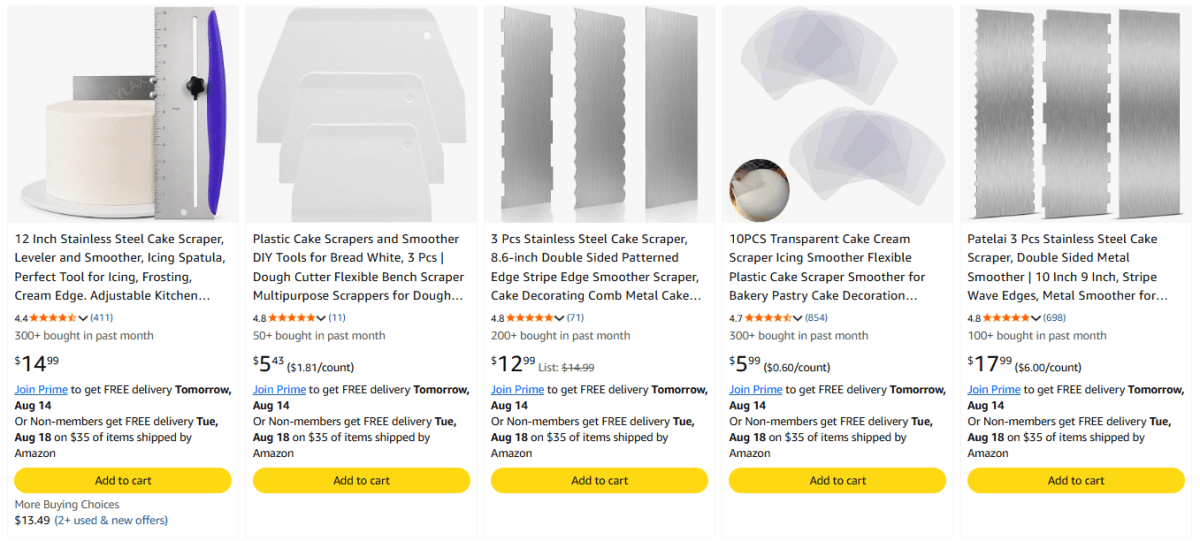
- Why it sells: The value is easy to show. A rough layer of frosting turns visibly smoother in seconds, which is perfect for before-and-after video. Buyers want the professional finish they've seen on social media, and this is the cheapest tool that gets them noticeably closer to it
- Price potential: $10-$25, depending on material, design, and set size
- Shipping risk: Very low, since these tools are light with little breakage risk
- Best products to test: Acrylic scrapers, stainless steel scrapers, textured combs, patterned smoothers, and multi-piece sets
Profit insight: The strongest ads should demonstrate the result rather than simply show the product. A short video showing a rough cake becoming smooth can communicate the product's value almost instantly.
7. Reusable Silicone Baking Cups
These are simple products, but their lightweight design and multi-pack potential make them a comfortable fit for stores that want low fulfillment risk.
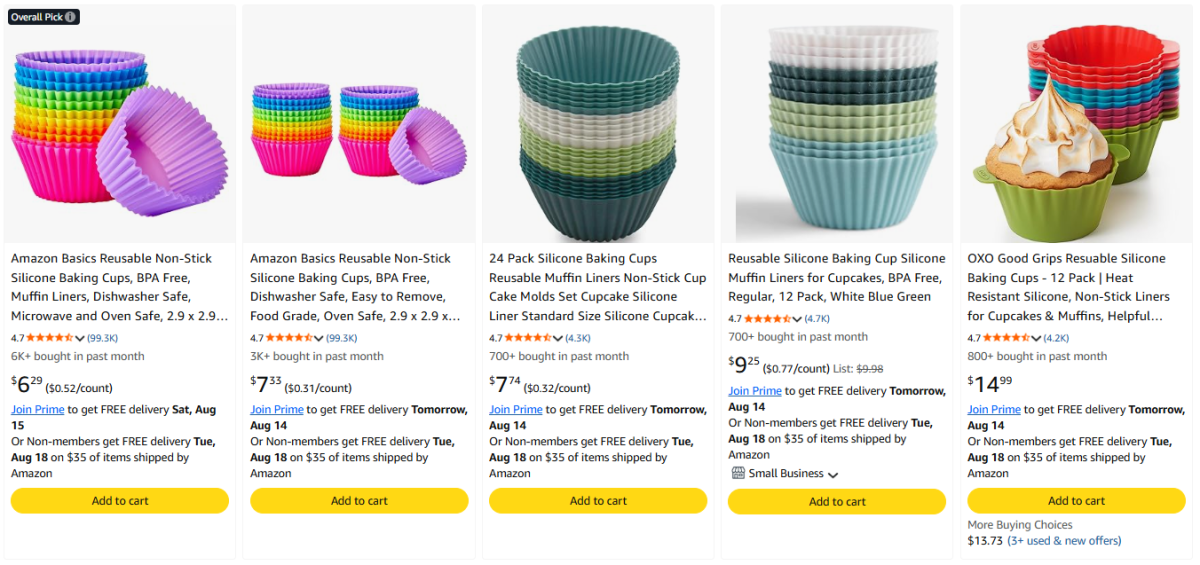
- Why it sells: They work over and over for muffins, cupcakes, and egg bites, and they need almost no product education to understand. Buyers are often drawn in by the eco and money-saving angle, since a reusable pack replaces box after box of paper liners
- Price potential: $8-$20, depending on pack size and design
- Shipping risk: Very low, since the cups are flexible, light, and hard to damage
- Best products to test: Colorful multi-packs, mini baking cups, reusable cupcake liners, and themed sets
Profit insight: Individual cups have limited pricing power, so sell them as larger sets. Six-, 12-, or 24-piece bundles can increase AOV while spreading fulfillment costs across more units.
8. Cake Turntables
Turntables appeal to more serious bakers because they make decorating easier and help people get cleaner, more consistent results.
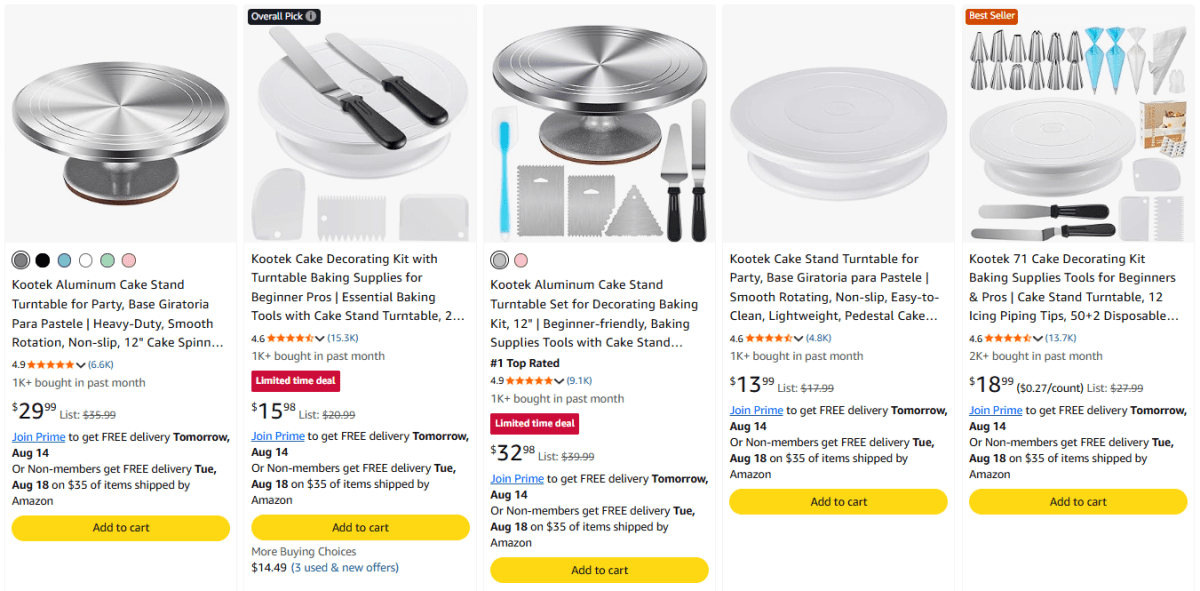
- Who buys it: Serious hobby bakers, decorators, home-based cake businesses, and advanced beginners
- Why it sells: It solves a real problem during decorating and carries a higher perceived value than most small accessories. Buyers at this stage are invested enough in the hobby to spend on an upgrade, and they see the turntable as the piece that separates amateur results from clean ones
- Price potential: $20-$50, depending on size, build, and features
- Shipping risk: Medium, as the larger dimensions push shipping costs up and cheaper models can be more fragile
- Best products to test: Rotating cake stands, non-slip turntables, aluminum turntables, and decorating bundles
Profit insight: Cake turntables offer stronger AOV potential, but their larger size can increase fulfillment costs. Calculate the landed cost, rather than looking only at the supplier price, before scaling this product.
9. Bread Baking Accessories
Bread accessories target a more specialized crowd, including sourdough enthusiasts and home bakers happy to invest in tools that improve their results.
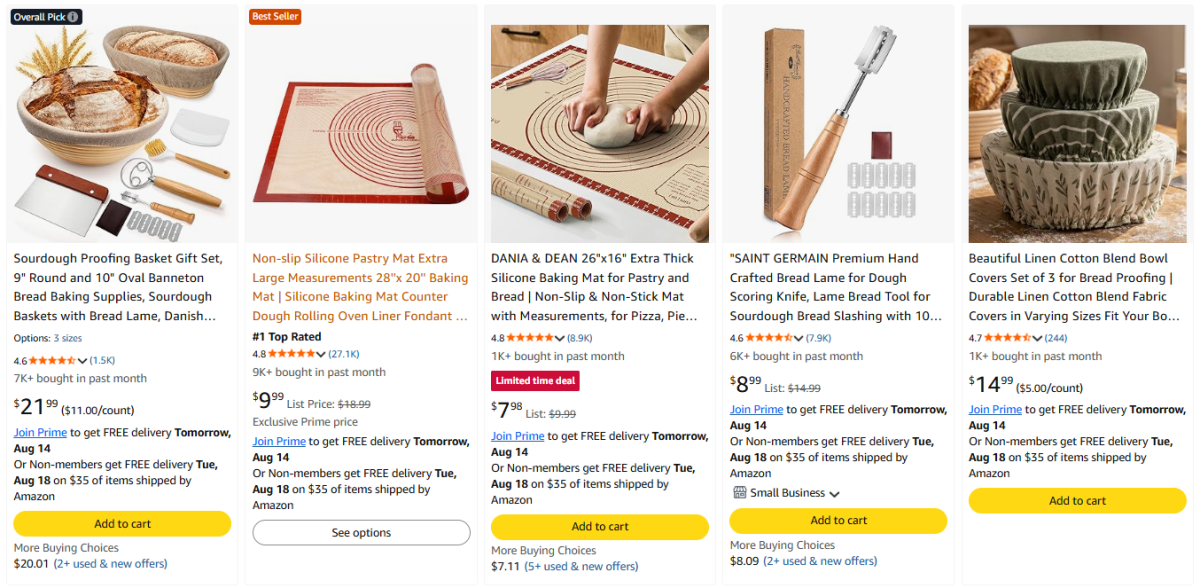
- Why it sells: Enthusiasts research specific tools and tend to buy multiple accessories as their skills grow. Buyers in this niche are chasing a better loaf, so they'll happily add scrapers, scoring tools, and slings to the cart once they trust the store
- Price potential: $15-$40
- Shipping risk: Low to medium, depending on the product
- Best products to test: Dough scrapers, bread scoring tools, proofing accessories, bread slings, dough whisks, and lightweight proofing baskets
Profit insight: Lightweight accessories are generally safer for dropshipping than heavy cookware. Dough scrapers, scoring tools, proofing accessories, and bread slings let you target a passionate niche without taking on unnecessarily high shipping costs.
10. Cake and Cupcake Toppers
Toppers are small, cheap products with one big advantage: strong event-based buying intent.
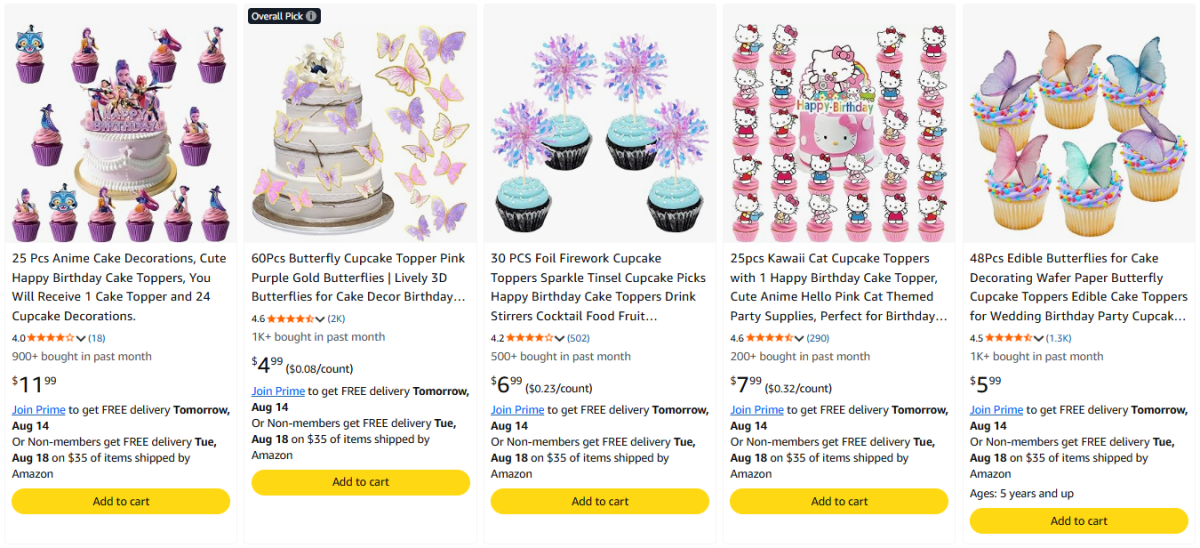
- Why it sells: Customers usually have a specific event and a deadline, which makes the decision more immediate than for most generic accessories. Buyers reach for them because a topper is the fastest way to make a homemade cake feel occasion-ready, and the emotional stakes of a birthday or wedding push them to buy rather than browse
- Price potential: $8-$25, depending on personalization, design, and pack size
- Shipping risk: Very low, as most toppers are small and light
- Best products to test: Birthday toppers, wedding toppers, baby shower designs, graduation collections, Halloween toppers, and Christmas sets
Profit insight: Event-driven products can have shorter demand windows, but the specific occasion also gives you a clear marketing angle. Build collections around birthdays, weddings, baby showers, graduations, and holidays instead of relying on generic designs.
Which Baking Supplies Are Best for Dropshipping?
If you're starting on a small testing budget, there's no need to launch all 10 products at once. I'd rather see you prioritize based on your business model, because the right first product depends entirely on how you plan to sell.
Whichever route fits, the key is to look past the sticker price and think about what each product does for the kind of store you're actually building.
How to Pick Baking Products That Actually Leave You Profit
The best baking supplies to dropship tick four boxes: strong demand, healthy margins, low shipping risk, and clear customer value.
Before you add anything to your store, I'd run it through the six checks below. They take a few minutes each, and they save you from products that look good on paper and lose money in practice.
1. Prioritize Healthy Profit Margins
Start by picking products with enough markup to absorb ads, payment processing, shipping, and refunds. A practical target is 65%+ gross margin, which leaves enough room for a healthy net margin once fulfillment and marketing are paid for.
In this dropshipping niche, specialty tools, decorating kits, silicone molds, and reusable accessories tend to outperform commodity products. That's mostly because commodities are the exact items shoppers can grab in one click on Amazon or off a shelf at Walmart, which caps how much you can charge.
2. Choose Lightweight, Durable Products
Shipping is the silent margin killer in baking supplies, and it bites hardest on international orders. So lean toward products that are lightweight, compact, non-fragile, and easy to package. The less that can go wrong in transit, the fewer refunds and angry reviews you'll deal with later.
To put it concretely: piping tips, cake scrapers, and silicone molds travel far more safely than glass mixing bowls or ceramic bakeware. When you're choosing between two similar products, the one that survives a rough courier wins.
3. Solve a Specific Problem
Products sell better when the benefit is obvious at a glance. Rather than a generic spatula, reach for something with a clear angle, like an ergonomic scraper built for precision cake decorating. The more instantly a shopper understands what a product does for them, the easier your product pages and ads become to write.
This matters more than it sounds. On a cold ad, you have a second or two to communicate value, so a product that explains itself does half your marketing for you.
4. Favor Products With Strong Visual Appeal
Baking is a deeply visual hobby, which is exactly why it's such a good fit for TikTok, Instagram, Pinterest, and short-form video in general. Products that show a visible transformation, think decorating tools, fondant cutters, and specialty molds, tend to outperform because the "before and after" does the selling.
The gold standard is a product that can turn a plain cake into a showpiece in 15 seconds of footage. That kind of item has a built-in advantage on social commerce, where you're competing for attention against everything else in the feed.
5. Check the Selling Price Before Sourcing
Steer clear of products so cheap that you'd need dozens of sales just to make real money. A useful starting range is $15-$60, though higher-priced equipment can work too, as long as the perceived value clearly justifies the price.
Before you list anything, run the math:
Net Profit = Revenue − COGS − Shipping & Fulfillment − Payment Fees − Ad Spend − Refunds/Returns − Other Operating Costs
Doing this before you commit is the single easiest way to avoid products that look profitable on markup alone but fall apart once fulfillment and advertising get added in.
6. Look for Bundle and Upsell Opportunities
Baking projects almost always need more than one tool, which makes this niche a natural home for bundles. You can pair piping bags with tips and a scraper, or cookie cutters with decorating tools and icing accessories, and it feels helpful rather than salesy.
The payoff is twofold. Bundles lift AOV, and they cut down your dependence on winning a brand-new customer for every single sale, which is where most of your ad budget goes anyway.
Top Baking Supplies Suppliers for Dropshipping in 2026
Your supplier decides your shipping speed, your margins, and how many refund emails you answer, so it's worth choosing carefully. Here are five worth considering in 2026, along with where each one actually fits.
1. CJdropshipping: Overall baking supply sourcing and scaling
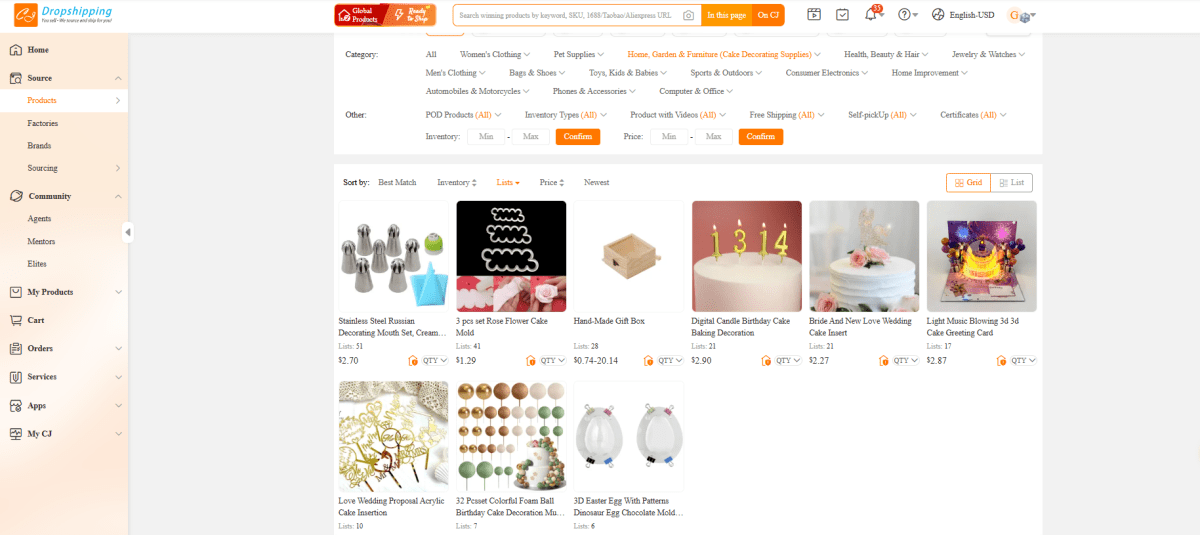
CJdropshipping rolls sourcing, fulfillment, and shipping into a single platform, which is why it's such a strong starting point. Its catalog covers a lot of the lightweight kitchen and baking products that dropship well, including silicone mats, molds, utensils, and piping tools.
- Product range: Large selection of kitchen and baking products
- Shipping: Multiple options plus overseas warehouses
- Branding: Custom packaging and branding available
- Best for: Beginners who want an all-in-one supplier, and sellers scaling proven products
Watch out for: Quality and shipping costs swing depending on the supplier, warehouse, and destination. Always order samples before you scale a winner, because what looks fine in a listing photo doesn't always show up that way.
2. AliExpress + DSers: Testing a lot of products with minimal commitment
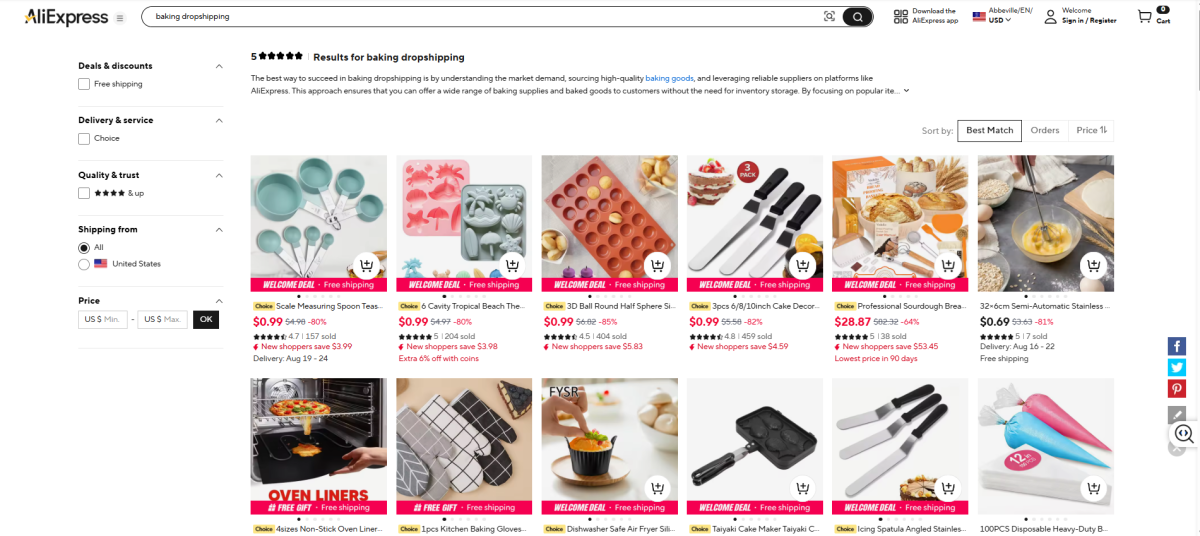
AliExpress gives beginners access to a massive supplier base without any wholesale inventory, and DSers automates the order fulfillment side for your Shopify store. Together they make product testing about as low-risk as it gets.
- Product range: Extremely large
- Shipping: Varies significantly by supplier and destination
- MOQ: Generally none
- Best for: Product testing and hunting down low-cost accessories
Watch out for: Shipping speed and supplier quality are all over the map. Standard shipping can drag, so check the real delivery estimate for your target market before you list anything, not the best-case number on the page.
3. Spocket: Faster shipping from US and EU suppliers

Spocket curates a supplier network with a heavy US and EU focus, which makes it a better fit when your customers expect quick delivery and you're willing to pay more per product to get it.
- Product range: Curated home, kitchen, and lifestyle products
- Shipping: Faster options from US/EU suppliers
- Supplier focus: Primarily US and Europe
- Best for: Stores targeting US or European customers
Watch out for: Higher supplier prices and subscription costs eat into margin compared with cheaper marketplaces. It can absolutely be worth it, but only if faster delivery is genuinely improving your conversion rate.
4. Zendrop: A simpler fulfillment workflow for beginners
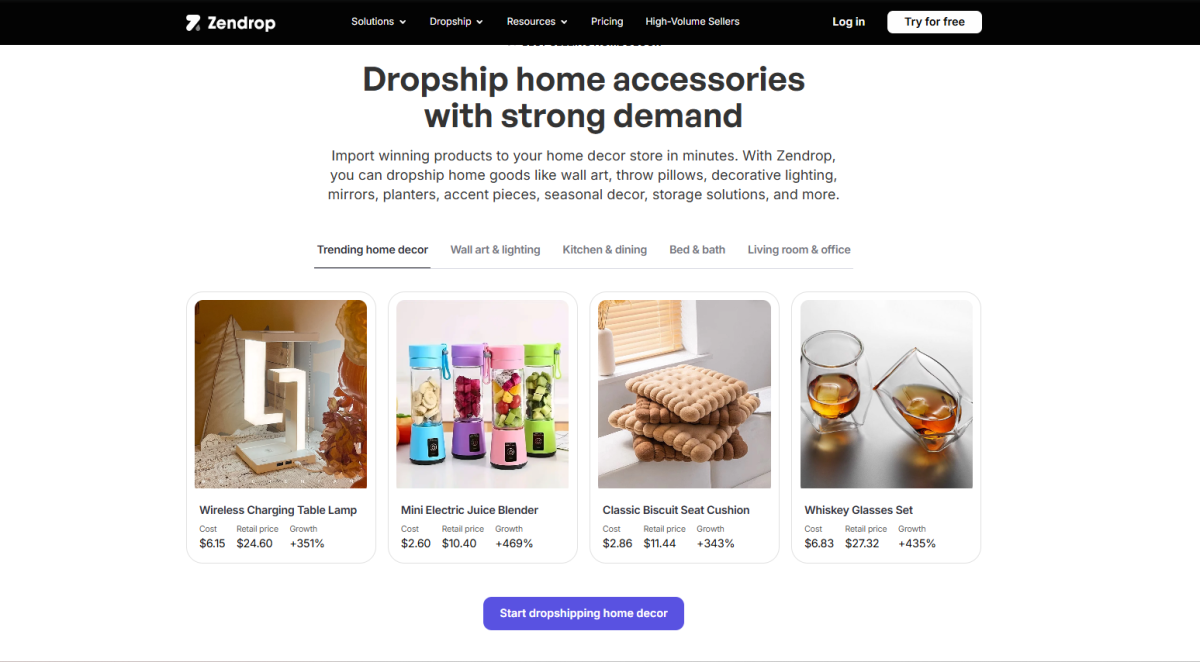
Zendrop handles sourcing and fulfillment through a fairly streamlined system. For baking supplies, it makes the most sense once you've already found a few winners and want to stop juggling orders manually across a handful of marketplace suppliers.
- Product range: General catalog with kitchen and home products
- Shipping: Faster fulfillment for selected products and destinations
- Automation: Built for automated product and order management
- Best for: Shopify sellers who value ease of use
Watch out for: Shipping speed and margin still vary product by product, so don't assume they're uniform. Check the landed cost and delivery estimate before importing each item.
5. Faire: Premium and differentiated baking products
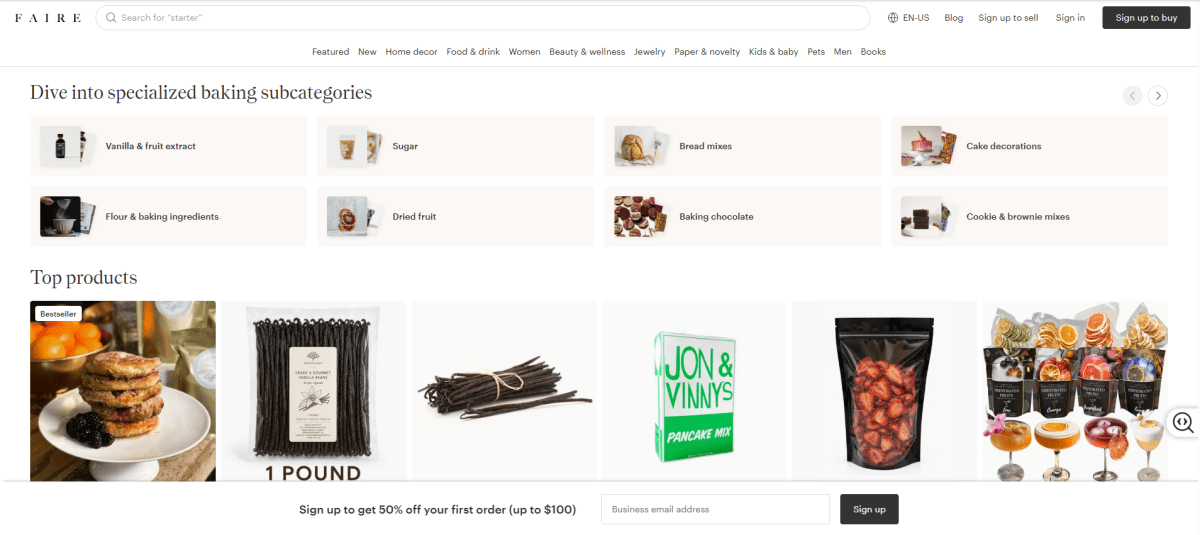
Faire is the one I'd look at when you want distinctive wholesale products rather than the same generic catalog everyone else is pulling from. Its baking category spans cake decorations, cupcake accessories, specialty ingredients, and more, from a mix of independent and recognizable brands.
- Product range: Branded and independent wholesale products
- MOQ: Some brands allow orders as low as one unit
- Positioning: More differentiated and premium
- Best for: Established stores, specialty shops, and brand-focused sellers
Watch out for: Faire is a wholesale marketplace, not zero-inventory dropshipping like CJ or AliExpress. Many suppliers set a minimum first order, commonly somewhere around $50-$150, so it's not the model to reach for if you're testing on a shoestring.

How to Start a Baking Supply Dropshipping Business
Getting a baking supply store off the ground breaks down into three phases: laying the legal groundwork, lining up vetted suppliers, then building and marketing the store. Tackle them in that order and you'll avoid most of the early scramble.
1. Plan and Set Up the Legal Foundation
First, pin down your niche around non-perishable items like silicone molds, piping tips, cookie cutters, or specialty toppers, rather than perishable ingredients, which come with heavier regulation you don't want to wrestle with as a beginner.
Next, handle the paperwork. Forming an LLC and getting an Employer Identification Number (EIN) covers you for tax and wholesale purposes.
From there, apply for a reseller or retail sales certificate so you're not paying sales tax every time you buy wholesale from your suppliers. It's tedious, but it's a one-time setup that pays for itself quickly.
2. Find and Vet Suppliers
With the foundation in place, go looking for established baking and kitchenware wholesalers that explicitly offer blind dropshipping, meaning they ship without their own branding on the box. That detail matters more than people expect, since a competitor's invoice in the package is a fast way to lose a customer.
Then order samples before you list a single item. Testing shipping times, quality, and packaging yourself is the only way to know what your customers will actually receive.
While you're at it, confirm the supplier offers automated inventory sync through CSV or API, so your store updates in real time the moment a product sells out and you're not selling stock that isn't there.
3. Build Your Store and Market It
Now for the fun part. Launch on Shopify (or any ecommerce platform you want), connect a domain, and install a clean, bakery-appropriate theme.
In marketing, content is your friend here. Partnering with baking influencers on Instagram and TikTok gets your products in front of the right audience, and publishing recipes or decorating tutorials that naturally feature your tools builds trust while doing double duty as SEO fuel. In a visual niche like this, showing beats tells every time.
5 Baking Dropshipping Mistakes That Can Wipe Out Your Profit
Sidestep these three and you're already ahead of most of the competition.
1. Manually Tracking Net Profit Performance
Dropshipping in 2026 is far more complex than it used to be. With rising ad costs, multiple sales channels, fluctuating shipping fees, payment processing costs, refunds, and increasingly competitive product markets, you need smarter ways to manage your store, not just more sales.
That is why manually tracking net profit performance is a mistake. Pulling numbers from Shopify, Meta Ads, Google Ads, TikTok, payment processors, and spreadsheets quickly becomes slow, error-prone, and difficult to keep up with as you scale. By the time you spot that a product, campaign, or order is eating into your margins, you may have already spent thousands of dollars scaling it.
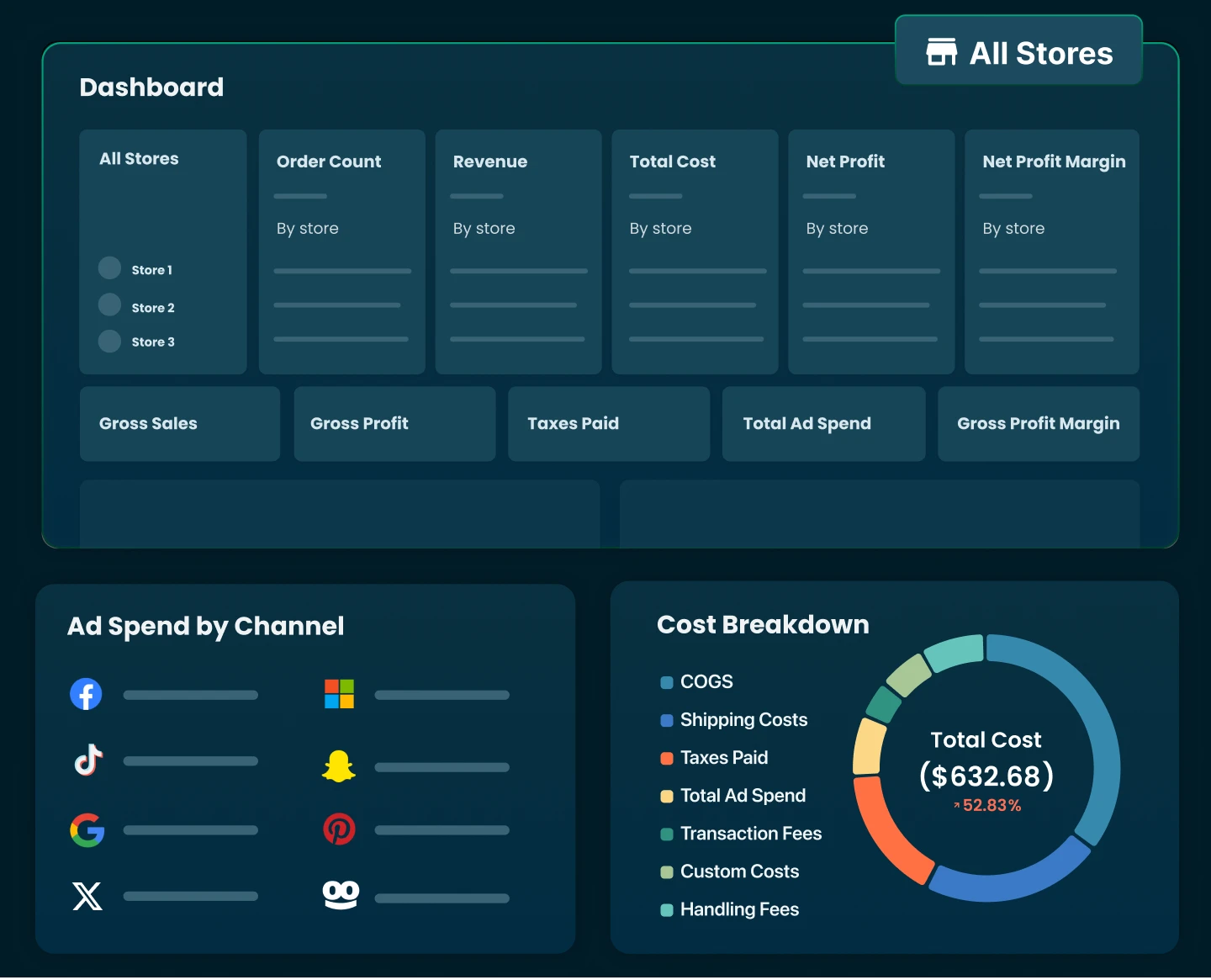
Instead of manually piecing together your numbers, it makes more sense to let a reliable system handle the heavy lifting. TrueProfit is the #1 net profit tracking solution for Shopify merchants that brings your revenue and real business costs into one place.
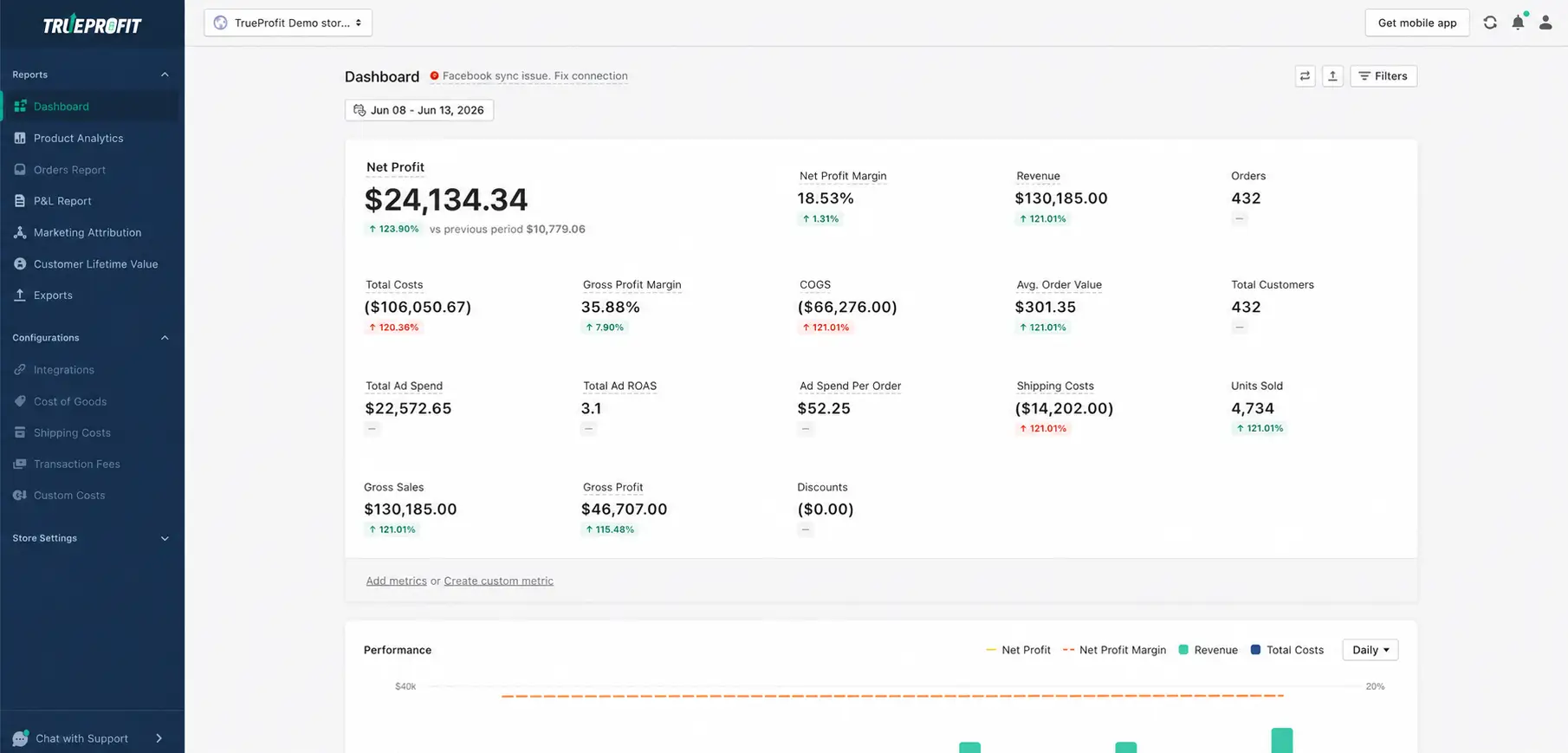
More importantly, TrueProfit can act as a right hand for dropshipping owners by helping you:
- Track true net profit in real time: See what is left after COGS, ad spend, shipping, transaction fees, refunds, and other costs instead of relying on revenue or ROAS alone.
- Identify profitable and unprofitable products: See which SKUs are genuinely contributing to your bottom line and which ones are generating revenue without enough profit.
- Monitor profit by order: Understand your actual profit per order so you can spot margin problems that average store-level metrics can hide.
- Connect marketing spend to profit: Compare the money you spend across channels with the profit those campaigns actually generate, helping you scale winners and cut losers faster.
- Automate your P&L Report: Replace scattered spreadsheets and manual calculations with an automated view of your store's financial performance.
- Analyze and report with TrueProfit MCP: Connect your profit data to an AI assistant like Claude or ChatGPT to get answers, surface insights, and build custom reports in plain language, without digging through dashboards.
For modern dropshippers, the goal is no longer simply to find a winning product or generate more revenue. It is to know exactly where the money is being made, where it is being lost, and when to scale or cut. That is the kind of decision-making a reliable net profit tracking system can support.
2. Choosing Products Based Only on Trends
A product can go viral without ever being profitable, so a spike in interest isn't a green light on its own. Before adding a trending item, run it through the basics: selling price, product cost, shipping fees, competition, and profit potential. Virality brings you traffic, sure, but margin is what keeps the lights on after the trend cools off.
3. Ignoring Shipping and Product Quality
Fragile, bulky, or low-quality supplies snowball into high shipping costs, damaged orders, refunds, and bad reviews, and those reviews follow you around. The fix is boring but effective: prioritize lightweight, durable products, and test samples yourself before you scale. It's a small amount of effort up front that saves you a mountain of refund emails later.
Final Thoughts
Baking supplies remain one of the more forgiving niches to start with in 2026. The products are cheap to source, safe to ship, and made for the kind of short-form video that carries a store on a small budget, all sitting inside a market that's still growing rather than fading.
But I'll leave you with the same point the whole guide keeps circling back to. The store that wins here isn't the one with the trendiest product or the biggest ad spend. It's the one that knows its real numbers. Pick lightweight products with room in the margin, vet your suppliers with samples instead of listing photos, and track net profit per order from day one so you can scale winners and cut losers before they drain you.

Lila Le is the Marketing Manager at TrueProfit, with a deep understanding of the Shopify ecosystem and a proven track record in dropshipping. She combines hands-on selling experience with marketing expertise to help Shopify merchants scale smarter, through clear positioning, profit-first strategies, and high-converting campaigns.