How to Start a Dropshipping Business in 2026: Beginner’s Guide


Starting a dropshipping business is one of the fastest ways to begin selling online without buying inventory upfront. You don’t need a warehouse, you don’t need to ship products yourself, and you don’t need a huge budget. What you do need is the right strategy, and this guide walks you through everything step-by-step.
What is Dropshipping?
Dropshipping is an eCommerce model where the retailer sells products online but doesn't keep them in stock. Instead, they work with a third-party supplier who eventually stores, packages, and ships the products to customers after the order is made in their stores.
Here’s how the fulfillment process looks in a typical store:


4 Types of Dropshipping: Which Model Should You Choose?
There are three main dropshipping models:
1. Traditional Dropshipping
Gross Profit Margin: 30% to 60%
For beginners, it’s often the first model to try since it provides the most straightforward and lowest-risk way to start selling online.
Traditional dropshipping often revolves around generic products, meaning items that are widely available from multiple suppliers and aren’t branded under your name. These products can be anything from phone accessories to home gadgets, fashion items, or kitchen tools. Since these products are not unique, many dropshippers sell the same items, which makes competition pretty high.
And since the products are generic, the focus is mainly on marketing, pricing strategy, and customer service rather than product differentiation.
This approach is ideal for beginners who want to test trends quickly, understand the market, and gain experience in running an eCommerce business without investing in custom products or branding.
2. White Label Dropshipping
Gross Profit Margin: 40% to 60%
White label dropshipping means selling the product directly from suppliers with the basic branding.
White-label products are generic products that suppliers create in bulk and allow many different merchants to sell under their own store name. The product itself is the same for everyone, what's different is the basic branding on the store such as brand name, logo, packaging, and the price on the product page.
So in this model, you can differentiate yourself slightly from competitors who are selling the same underlying product by offering branded packaging, better descriptions, and personalized marketing.
However, white-label products still face some limitations. Since the core product is not totally unique, competition remains present.
3. Private Label Dropshipping
Gross Profit Margin: 50% to 70%
Private label dropshipping allows merchants to sell products totally under their own brands, but a third-party supplier handles manufacturing, inventory, and shipping directly to the customer.
Private labeling adds a layer of branding to this model. Instead of selling items exactly as they come from the manufacturer, you add your own brand identity. You can request change in product material, logo, customized packaging, or branded inserts, anything that makes the product uniquely yours.
Therefore, this model clearly gives you a competitive edge because branded products look more unique than the generic versions your competitors are selling.
One major downside, however, is that most private label suppliers require a minimum order quantity (MOQ) before producing customized products. This becomes complicated because the core advantage of dropshipping is selling without buying inventory upfront. If a supplier needs you to order 100 or 200 units before customizing, it breaks the dropshipping model.
This challenge is the main reason new sellers struggle to combine private labeling with dropshipping. However, as you build trust with suppliers by showing sales history or proving demand,many suppliers become more flexible.
4. Print on Demand
Gross Profit Margin: 30% to 40%
Print-on-demand or POD is another form of dropshipping where products are mostly custom-designed like t-shirts, mugs, posters, phone cases, and more. After an order, these products will be printed with unique designs and shipped directly to the customer.
A winning POD product depends heavily on its design. Not all designs sell best so sellers need to be strategic about which design to print on products.
So, now beginners often ask: White label or Private label or Print on demand? They’re all more accessible compared to traditional retail, but of course, coming with their own pros and cons.
For your quick pick, here’s our advice:
- White-label dropshipping: Perfect for beginners who want to quickly test trends and find winning products before committing to branding.
- Private-label dropshipping: Best for those who want full control over their products and brand identity.
- Print on demand: Best for specific niches such as fashion, jewelry, furniture, etc, where design can be the cutting-edge advantage.
Dropshipping of any type is highly promising to make profit in 2026. Beginners may gradually earn $1,000 to $5,000, while experienced sellers can make $10,000 to $50,000 or more thanks to their better cost optimization and proven growth strategies.
How to Start a Profitable Dropshipping Business in 8 Steps
1. Find Your Most Potential Niche
Here’s our go-to rule: look for sub-niches with low competition but high demand. Put simply, instead of selling generic “T-shirts,” niche it down to “sustainable T-shirts” or “motivational quote T-shirts” where a specific group of buyers is actively searching, but there aren’t too many sellers fulfilling that demand.
Of course, it’s always easier said than done, so let’s find dropshipping niches step by step.
First, tools like Google Trends can help you gauge the popularity of a niche or theme. Ask yourself: is there real demand for this product? Are people actually spending money on it?
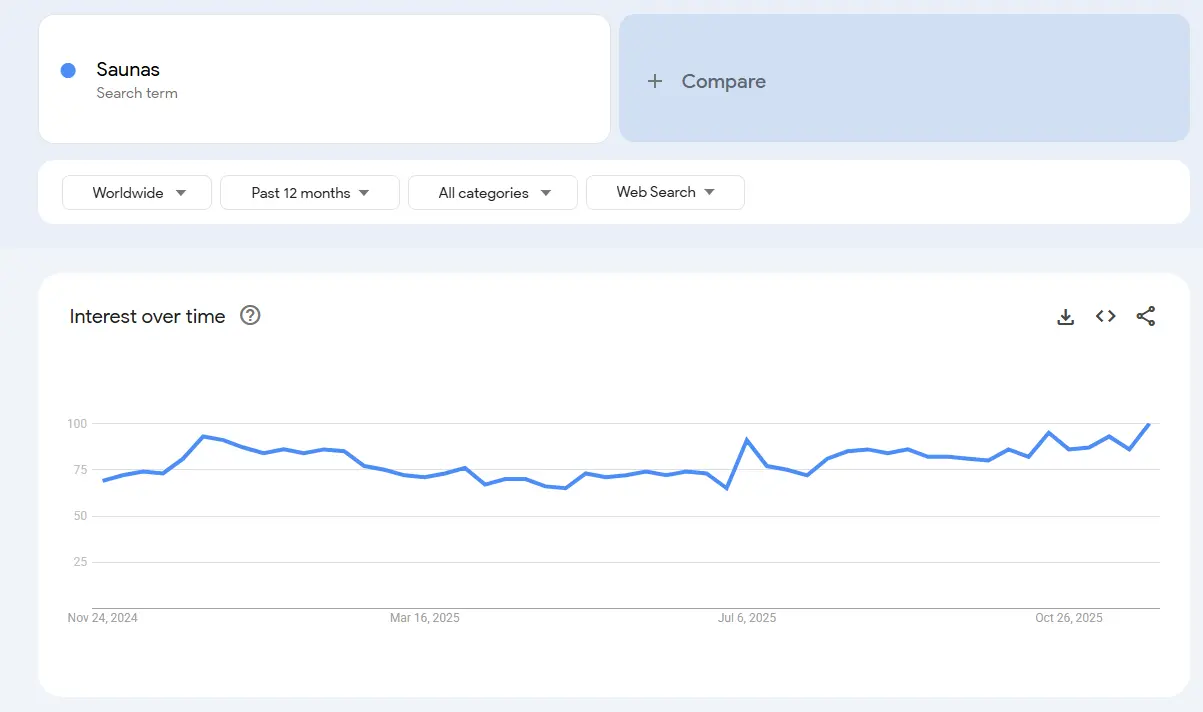
Next, check the competition. You can evaluate it using the Search Engine Results Pages (SERPs). Once you have a sense of keywords with low difficulty, high search volume, and low cost per click, screenshot your results if needed. Then search it back on Google. Notice how many of the top 10 results are sellers. All sellers means high competition. If those sellers are big brands like Walmart or Amazon, that also means extremely high competition with dropshipping.
To go a step further, one critical metric to quickly evaluate a niche’s potential is gross profit margin. In dropshipping, a healthy gross margin is usually between 30% and 40%. This means that after paying for the product, merchants still have a gross profit to cover advertising, shipping, and other expenses.
Finally, being passionate about your niche is especially important for beginners. As Harry Chu from TrueProfit says:
2. Pick Products to Sell
There’re 3 types of products in dropshipping: low & high-ticket products, digital products, etc.
We’ll introduce a list of top trending products to test in 2026. But even more, we'll show you how to build a system of KPI metrics that by tracking them consistently, you’ll eventually have a truly profitable dropshipping product.
Top Trending Dropshipping Products in 2026
The list collect top 10 of promising products that potentially sell best in 2026:
1. Peeling Exfoliating Facial Serum, gross profit margin ranging from 80% to 85%
2. Magnetic Water Bottle Bag for Gym, gross profit margin ranging from 75% to 85%
3. Detox Slimming Patches, gross profit margin ranging from 75% to 85%
4. Children’s Writing Magic Book, gross profit margin ranging from 75% to 80%
5. 16 Head Deep Tissue Massager, gross profit margin ranging from 80% to 85%
6. 2-in-1 Bath Ball Loofah, gross profit margin ranging from 70% to 80%
7. Rain Cloud Aroma Diffuser, gross profit margin ranging from 70% to 80%
8. Adjustable Anti-Snoring Mouthpiece, gross profit margin ranging from 75% to 80%
9. Feminine Balance Gummies, gross profit margin ranging from 75% to 80%
10. Red Light Therapy Belt, gross profit margin ranging from 65% to 75%
These 10 products are proven to work with a healthy profit margin ranging from 60% to 85%, higher than the average. But if you want to seek product ideas yourself, here’re 2 methods commonly used by seasoned dropshippers:
Method 1: Etsy research. This method recommends using Etsy for research. Look for a badge that says “Popular.” This indicates what products are trending right now. The same method applies to other dropshipping platforms such as AliExpress, CJdropshipping, etc.
Method 2: TikTok Creative Center, Facebook Ad Library. This free method is faster than the others. Head to TikTok Creative Center to see all trending ads currently running. A high number of engagement means the product has potential to sell. The same methods can be used through Pinterest, Instagram, and other social media platforms.
What Metrics Behind a Profitable Product?
Here’s the ideal benchmarks of a high-performing product. Together they signal whether the product is even worth scaling. You can also use them as KPIs to track product performance during the testing phase.
(*) These benchmarks follow expert guidance from Harry Chu, Founder at TrueProfit.
Want a checklist to quickly figure out if a product is even worth testing? Check out this winning product masterlist alongside a library of real product winners, failed flops, and potential gems.
3. Find Reliable Dropshipping Suppliers
First, let’s explore three types of suppliers in dropshipping:
The first type is manufacturers. These are the people who actually make the products, usually in Shenzhen or other parts of China. They're the cheapest option but communication is usually difficult and shipping times are slow, often 30 days or more. Working directly with manufacturers is usually a challenge for beginners.
Next, forwarders or agents. These are the middlemen who help you get the best price from manufacturers and offer custom packaging, labeling, and reliable shipping. They communicate better, understand your needs, and run their own warehouses. This setup is more beginner-friendly.
Lastly, you have 3PLs, also called third-party dropshipping suppliers. These could be AliExpress, Spocket, AutoDS, Zendrop, and more, they’re the ones that ship inventory to the warehouse, and they ship orders to the customers for you.
No matter which type of supplier you choose, there're six pillar you should consider carefully:
- Starting with product quality. Work with suppliers to make sure the product arrives in good condition and works the way it should. Else, you might deal with refund & return cost, which could eat into your profit margin.
- The second thing you need to consider is adaptability. It means if a store goes from 25 orders a day to 100 after running ads, the supplier needs to be able to handle it. You never want multiple suppliers for the same product because it quickly becomes messy.
- The third pillar is shipping time. The product should take a standard delivery time ranging from 2-3 days for local order, 5-7 days for international order.
Once you find one who checks your pillars, move to the sample-testing phase.
4. Pick Where to Sell
In eCommerce, a retailer can sell in multiple places such as social platforms, building their own store through Shopify, BigCommerce, or appearing on marketplaces such as Etsy.
In dropshipping, however, the option narrows down to two most common options: Shopify vs Marketplaces such as Amazon FBA, Etsy, etc. In this section, we’ll look at some differences between the two, then compare to make sure you’re using the right one to sell your products.
While people say the greatest pros of selling a marketplace is its million traffic per month, we don’t call it truly a pros especially for new dropshipping stores. It’s because when someone searches a product on Etsy, all relevant listings appear, including yours. As a new seller, fighting for visibility among hundreds of thousands of competitors can be a major challenge.
Shopify, by contrast, gives you complete ownership of your store, your own site, and your own domain. Instead of directing people to etsy.com, you can use Shopify domain “mybrand.com,” which is easier to market and builds credibility.
Driving traffic yourself might be the only challenge with Shopify. But after months trying different strategies to drive visitors to Shopify stores, you’ll see it’s not that difficult. The key is consistency and smart strategy. Meanwhile, building your own fully controlled site is totally impossible with marketplaces.
That’s why we recommend starting right away with Shopify as a beginner. Compared to other e-commerce platforms, it’s the easiest to set up, beginner-friendly, and most importantly, it offers a library of up to 8,000 dropshipping apps that you can rely on as your store grows.
5. Pricing Your Products (In a Way That Makes It Profitable)
Lila Le, an eCommerce expert at TrueProfit with over 10 years of experience running dropshipping stores, shares her quick pricing rule:
Your selling price should generally be 5x to 8x your product cost, depending on product types and the estimated customer acquisition cost for that item.
For example, if your product costs $5 and your ads are estimated to cost $10 per sale, a selling price of $30–$40 ensures you a healthy margin. This markup nets you a sufficient profit after covering your COGS and ad cost, which are the two biggest costs determining your net profit per product.
Many beginners make the mistake of pricing by simply copying other stores’ prices, but this approach rarely works unless you check their margins. Just because a competitor sells a product at $20 doesn’t mean you can profitably sell at the same price if your costs are higher.
Margin should always be the critical component of your product pricing strategies. “Since without healthy margins, the product was never profitable to begin with, and no amount of marketing or sales volume will fix that fundamental issue,” said Lila.
👉Want to test product price to see if you earn a good profit selling it? Calculate profit margin using this gross profit calculator by TrueProfit.
6. Make It Legal
Dropshipping is a legal business model itself, but there’re still some clear red lines you should stay away from.
First, you should never dropship anything harmful to people, adult material (except possibly on your own website), health products or supplements that could cause adverse reactions, alcohol or other age-restricted items, or copyrighted products such as Disney, Nike, or Apple. Selling knockoffs or copyrighted designs can get your store banned or worse.
Secondly, dropshipping is already full of scams, so don’t be another scam yourself. This means you don’t advertise something as one thing and deliver something else. Accurate product description and promotion is a legal requirement, supported by consumer protection laws.
7. Market Your Dropshipping Store
There are several marketing strategies that work well in dropshipping, and they generally fall into two categories: paid strategies and organic strategies.
Paid strategies include many practices, but here we mention more about running ads across platforms like Facebook, TikTok, Google, Twitter, Pinterest, etc, since it's one of the fastest ways to drive traffic.
On the other hand, organic strategies could be SEO, content marketing, giveaways, referral programs, building owned channels, community seedings, etc, are free & low-cost methods to promote your products.
As a beginner, you might wonder: why rely on paid ads if organic marketing is free? Tragilos, a dropshipper once answered this directly from his own experience in this niche: "Definitely both are good when done well. But organic takes time and works better for a long-term brand. But for dropshipping, where you frequently test hundreds of products every month, you need quick validation. Paid ads simply work much better for that.”
8. Monitor Performance and Optimize
Once your store is live and your campaigns are running, the next crucial step is to actively monitor performance and optimize everything that impacts results. This doesn’t just mean tweaking your ads, it means reviewing and improving every element of your store, from product pages to checkout flow, ad creatives, and even your website speed.
Every little adjustment that enhances the shopping experience or the effectiveness of your marketing directly contributes to better performance and ultimately boosts your bottom line.
Start by tracking your key ad performance metrics such as click-through rates, add-to-cart rate, conversion rate, etc, alongside other key financial metrics such as revenue, cost of goods sold, ad spend, average order value, repurchase rate, customer acquisition cost, profit margin, and net profit - the bottom line that reflect the most accurate picture of if your store is truly profitable or not.
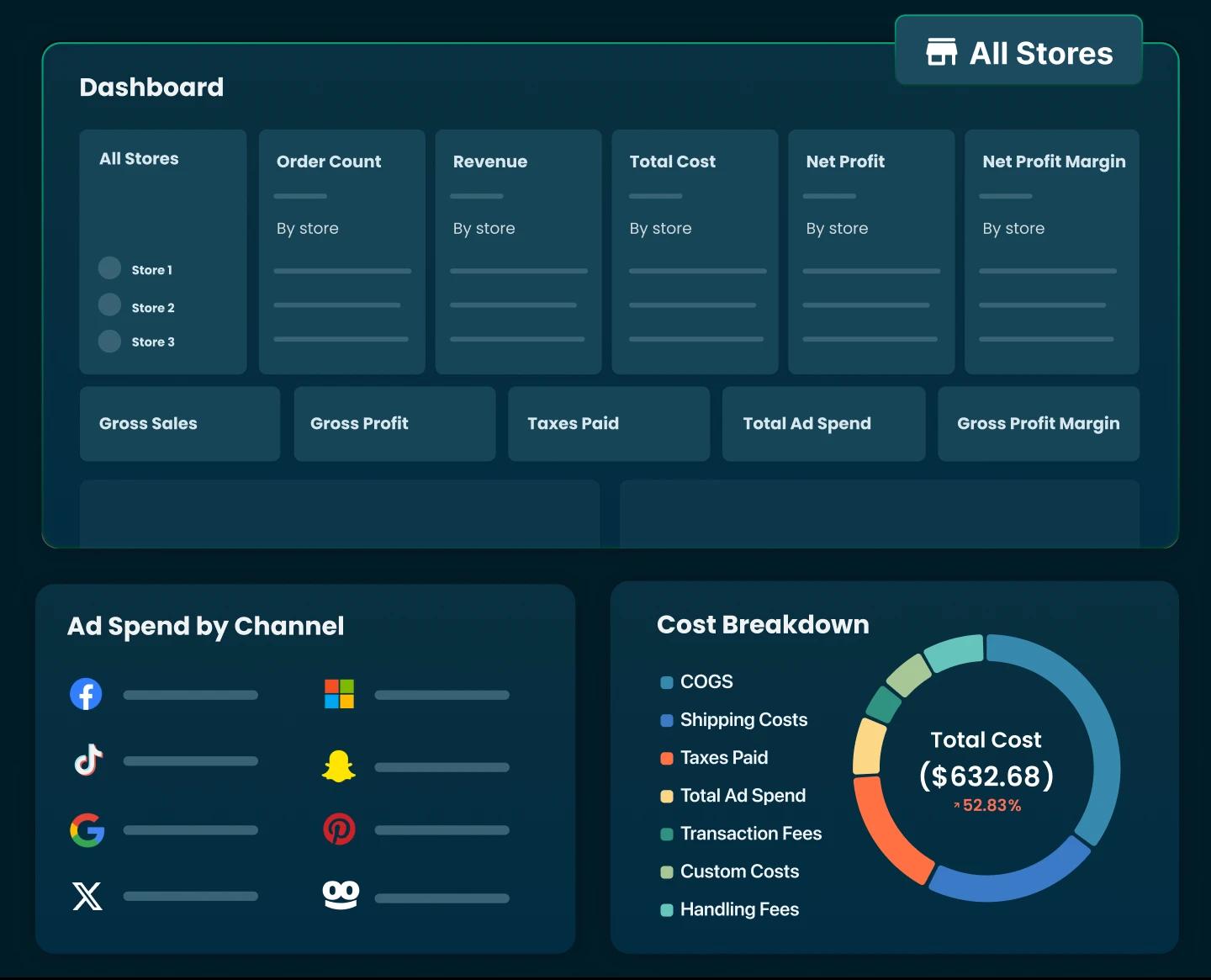
Want to track your store performance? TrueProfit is the Shopify net profit analytics that track the ins and outs of stores in real-time, revealing the true performance through the lens of net profit.
10 Common Dropshipping Mistakes to Avoid
Dropshipping can be an exciting way to start an online business, but beginners often fall into the same traps that can seriously hurt profits and growth. To help you avoid common pitfalls, here are ten mistakes every dropshipper should watch out for.
1. Focusing Too Much on Revenue Instead of Net Profit
Many beginners make the mistake of celebrating “high revenue” without carefully tracking profit margins, and that’s how their stores end up being unprofitable.
Simply put, revenue is your income before costs. Since it doesn’t account for expenses, it can’t accurately reflect how much you truly earn from dropshipping.
Net profit, on the other hand, is the metric that really matters. It’s your income after subtracting product costs, advertising, shipping, platform fees, operational expenses, and other hidden leaks. Net profit is the bottom-line figure you check on your P&L report to evaluate whether your store is performing profitably whether by day, month, or year.
Both revenue and net profit should be tracked, but the key takeaway is to always focus on net profit first if measuring dropshipping success is your goal. Measuring success by profit, not just revenue, allows you to make smarter decisions for optimizing and scaling your store effectively.
2. Poor Supplier Vetting
One of the most common mistakes in dropshipping is not properly vetting your suppliers, and it can quickly derail your business. A poor supplier can impact every step of your fulfillment process, from slow shipping to inconsistent product quality.
The key takeaway is simple: always vet suppliers carefully. Check reviews, order sample products, test shipping times, and make sure they consistently meet quality standards. Reliable suppliers may cost a bit more, but they save you from costly mistakes and ensure your store can scale sustainably.
3. Not Understanding Payment & Fraud Protection
Another critical mistake many beginners make in dropshipping is not fully understanding payment and fraud protection, and it can cost you more than just a few dollars. In this business, you’re constantly handling customer payments through gateways like PayPal, Shopify Payments, or Stripe, and without knowing the rules, you’re exposing yourself to chargebacks, payment holds, and fraudulent orders.
4. Not Checking Advertising Platform Policies
Another big mistake beginners make is not checking advertising platform policies, and honestly, having an ad banned is almost unavoidable when you’re just starting out in dropshipping. Every platform, whether it’s Facebook, TikTok, Google, or Pinterest, has strict rules about what products and content are allowed. Weapons, adult items, medical claims, and even certain supplements are frequent triggers.
For beginners, it’s common to spend time and money creating ads only to see them disapproved or accounts temporarily restricted. This can be frustrating, but it’s part of the learning curve.
5. Not Testing Enough Before Making Decisions
Another common mistake beginners make is not testing enough before making decisions. Many skip potential winning products or creatives that could generate significant sales simply because they didn’t give them enough time to prove themselves.
Testing needs time to provide accurate insights. Ads require other platforms to gather data about what you’re selling, who you’re targeting, and which audience finds your ad most relevant and is likely to make a purchase. Without thorough testing, you might miss the best-performing product or creative, and that could cost you a lot of potential revenue.
6. Poor Market Demand Research
Another critical mistake in dropshipping is poor market demand research. Even the most perfectly designed store won’t sell products that nobody actually wants. Many beginners pick products based on personal preference, trends they saw online, or flashy ads without validating whether there’s real demand behind them.
7. Not Understanding Basic Finances
Another common mistake is not understanding basic finances. Many beginners start dropshipping without knowing key numbers like cost of goods sold, ROAS, customer acquisition cost, or net profit. While you don’t need to master all of these from day one, it’s crucial to learn them as you go because data from your store will reveal what’s really happening.
Want to quickly grasp basic understanding of ecommerce finances? This Finance Fundamentals from TrueProfit covers all the useful guides you can learn along the way.
8. Expecting Zero Upfront Cost
Another frequent mistake beginners make is expecting to start dropshipping with zero upfront cost. While dropshipping is often advertised as “low-cost” or “no-inventory,” or dropshipping with no money is doable, beginners still need a budget of $5,000 to $10,000 before seeing consistent profit, with the majority spent on advertising and product testing.
9. Not Preparing for Unhappy Customers
As a seller, you’re the one who bears the brunt of these issues. Returns, refunds, and negative reviews directly affect your revenue, your store’s reputation, and even your ad performance. Failing to have clear processes for handling unhappy customers can quickly spiral into bigger problems, including lost trust and repeat business.
10. Neglecting Optimization and Continuous Learning
Many beginners make the mistake of setting up a store and assuming it will run itself. Dropshipping requires continuous monitoring, testing, and optimization from product pages to ads, creatives, and store UX. The more you refine, the better your results.
Avoiding these common mistakes will save you time, money, and stress, while giving your dropshipping store a stronger foundation for growth. Remember, building a profitable dropshipping business is about smart decisions, consistent testing, and never losing sight of the bottom line.

Final Thoughts
Starting a dropshipping business can seem overwhelming at first, but it’s entirely manageable when you break it down into the right steps.
The most important takeaway is to track your store’s performance carefully and be financially prepared to accept mistakes along the way. Mistakes are inevitable, especially in the early stages, but by analyzing your performance data, you can quickly identify what’s going wrong, spot underperforming products or ads, and make informed, data-driven decisions to improve and grow your store.

Harry Chu is the Founder of TrueProfit, a net profit tracking solution designed to help Shopify merchants gain real-time insights into their actual profits. With 11+ years of experience in eCommerce and technology, his expertise in profit analytics, cost tracking, and data-driven decision-making has made him a trusted voice for thousands of Shopify merchants.