



8 Best Dropshipping Hair Vendors To Source From In 2026


Table of Contents
If you're searching for a legit supplier for your hair product dropship store, I'm guessing you don't want a lecture. You want a shortlist you can actually trust with your brand.
So I'll give you the shortlist. Then I'll give you the context that actually makes it useful: which vendors are good at what, the niches worth your ad spend in 2026, and how to stop your margins from quietly leaking away once orders start coming in.
In this blog:
What Makes A Good Vendor For Your Hair Store?
When comparing dropshipping hair vendors, these are the four factors that matter most.
1. Consistent Hair Quality
Quality should always be your first priority.
Many suppliers claim to sell "100% human hair," but the actual quality can vary significantly between vendors or even between production batches. Differences in softness, shedding, density, lace quality, or color accuracy are immediately noticeable to customers, especially in the premium hair market.
Before adding products to your store, order samples and test them yourself. This is the best way to verify whether the supplier consistently delivers products that match their listings.
The pattern I keep seeing is sellers who skip this step to save a week, then spend the next three months fighting refunds because the hair that arrives to customers isn't the hair from the photos. Sample first. Always.
2. Branding and White-Label Options
Unlike many other dropshipping niches, hair is heavily driven by branding.
Customers rarely remember where a wig or bundle was manufactured, but they do remember the brand that delivered a premium shopping experience. That's why many successful hair businesses eventually move beyond generic packaging and invest in custom branding.
If you plan to build a long-term business, look for vendors that offer white-label services such as branded packaging, custom labels, logo printing, or personalized inserts.
3. Reliable Fulfillment
Fast shipping is important, but reliability is even more valuable.
Hair products are often purchased for specific occasions like weddings, vacations, graduations, or salon appointments. Customers are generally willing to wait a few extra days for a quality product, but they are far less forgiving of delayed shipments, inaccurate tracking, or orders that never arrive.
If most of your customers are located in the US or Europe, suppliers with local warehouses or faster shipping options can significantly improve the customer experience.

The Three Types of Hair Vendors You'll Run Into
Understanding the different types of dropshipping hair vendors can help you narrow your search and avoid choosing a supplier that doesn't match your goals.
By Product Focus
The first question to ask is what type of hair products you want to sell.
If you're targeting customers willing to spend more for quality, vendors specializing in human hair are usually the best fit. They often carry virgin hair bundles, lace wigs, closures, and frontals, making them ideal for brands positioned in the premium market.
On the other hand, if your strategy is to sell affordable, trend-driven products, synthetic hair vendors may be a better option. They typically offer lower prices and a wider selection of fashion wigs, colorful styles, and braiding hair, although competition can be more intense.
Some suppliers focus almost entirely on hair extensions rather than wigs. If extensions are your core product, working with a specialist often gives you more choices in lengths, textures, colors, and installation methods than a general hair supplier.
By Location
Where your supplier is based affects more than just shipping time.
China-based vendors remain the most popular choice for dropshippers because they offer extensive product catalogs, competitive pricing, and flexible manufacturing options. They're particularly suitable if you're testing products or looking for suppliers that support private labeling.
If your primary market is the United States, US-based vendors can provide a better customer experience through faster domestic shipping. While product costs are generally higher, shorter delivery times can improve customer satisfaction and reduce refund requests.
For merchants targeting the premium segment, Vietnam-based vendors have earned a strong reputation for supplying high-quality human hair, especially raw and virgin hair. Many growing hair brands source from Vietnam to differentiate themselves on quality rather than price.
By Business Model
Direct manufacturers are usually the best choice if you're planning to build a long-term brand. They often provide better pricing, custom packaging, and private-label services, although they require more communication and supplier vetting.
For beginners, dropshipping platforms make the sourcing process much easier. Instead of contacting multiple factories individually, you can browse products, import listings, and automate order fulfillment through a single platform.
There are also online marketplaces, where thousands of independent suppliers compete for your business. These platforms offer plenty of options and make product testing easy, but they also require more careful supplier verification since quality and service can vary significantly.
Best Dropshipping Hair Vendors in 2026
Here's the shortlist in full, grouped by what each vendor is genuinely good at.
Vendor | Location | Best for | Branding | Notes |
|---|---|---|---|---|
CJdropshipping | China (global warehouses) | Beginners testing on Shopify | Yes | Sourcing service, automated fulfillment |
AliExpress sellers | China | Single-order testing | Rarely | Huge selection, verify each seller |
Private Label Extensions | US (Georgia) | Private-label scaling | Yes | 100% human hair, broad catalog, since 2014 |
Dropship Bundles | US (Atlanta) | Fast branded fulfillment | Yes | Since 2016, blind-ships under your brand |
Beaudiva | China | Entry-level testing | Yes | Most affordable, large catalog |
Helene Hair | China (manufacturer) | Custom wig brands | Yes | OEM/ODM, dropship program, since 2010 |
Alipearl Hair | China | Premium human hair wigs | Yes | Bundles, closures, frontals, ships in 24-48h |
Virgin City Hair | US | Premium wigs ($200-400) | Limited | Single-donor virgin hair, less tangling |
1. CJdropshipping
CJdropshipping is one of the most widely used dropshipping platforms for Shopify merchants, and a solid first stop if you're just starting out. Its hair catalog covers wigs, extensions, bundles, and accessories, and it handles the parts beginners struggle with most.

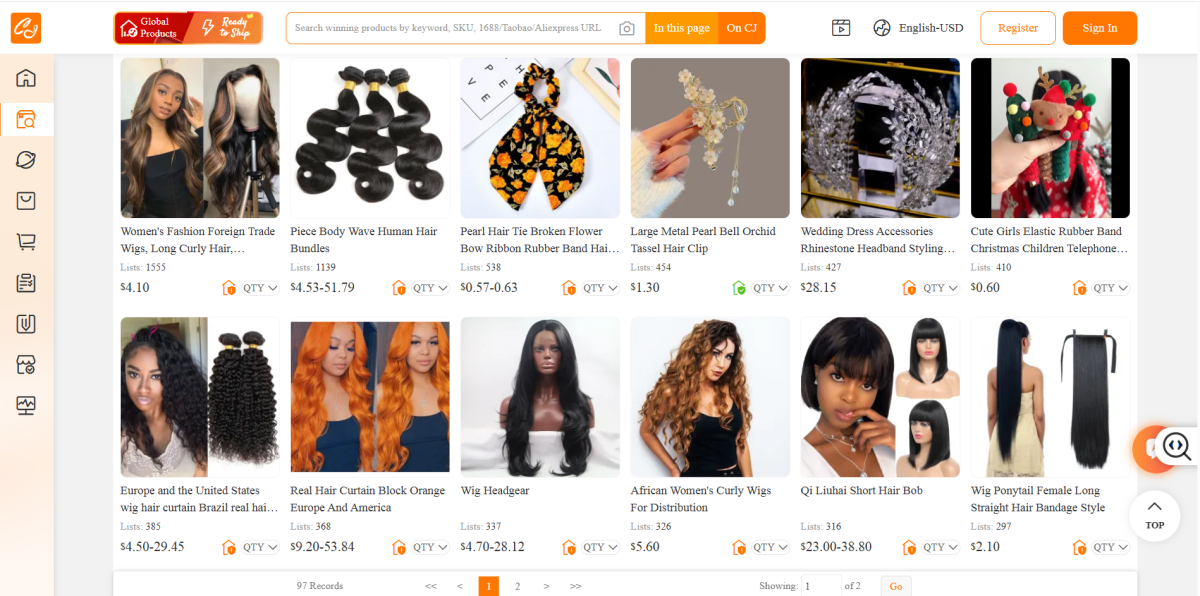
Why merchants pick it: native Shopify integration, a product sourcing service, global warehouses, automated order fulfillment, and custom packaging. It's a low-pressure way to test different hair products before you commit to a manufacturer directly.
2. AliExpress Hair Vendors
AliExpress is the most accessible sourcing option for new dropshippers, with thousands of suppliers offering human hair wigs, lace front wigs, bundles, and extensions. The upside is a low barrier to entry, a huge selection, easy testing, and visible customer reviews.
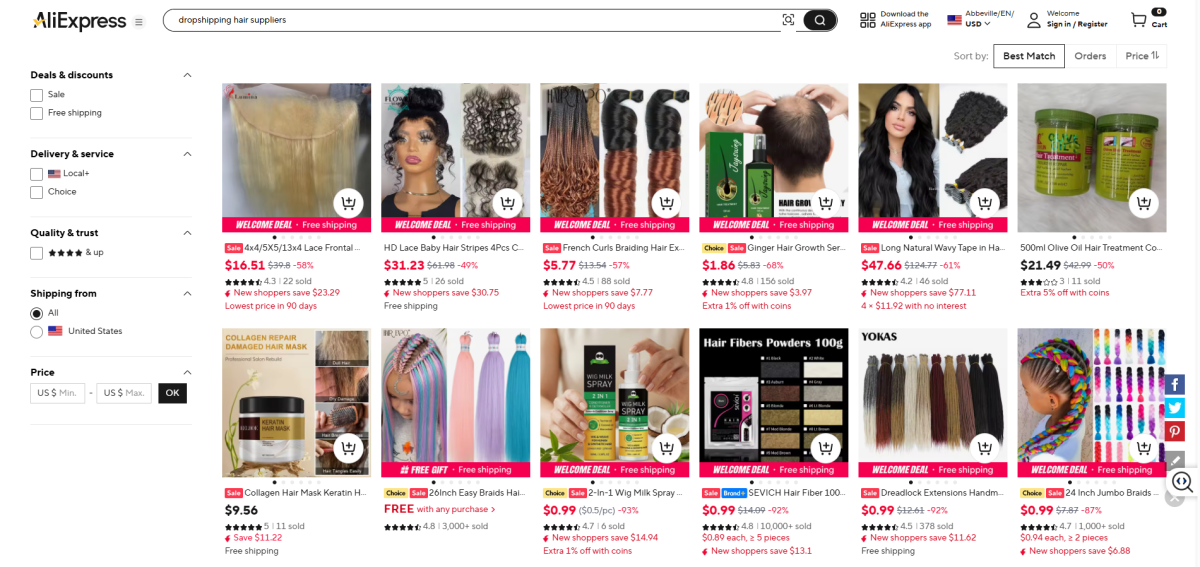
The catch is that supplier verification is on you, because quality is all over the map. Before you sell anything, check the store rating, reviews, product photos, and shipping history, and always order a sample first. Most AliExpress sellers don't offer branding, so treat this as a testing ground rather than a place to build a brand.
3. Private Label Extensions
Private Label Extensions is built for merchants who want a branded, long-term business rather than a quick trend play. It carries 100% human hair across bundles, closures, frontals, and wigs, plus beauty add-ons, so your catalog can grow without switching vendors. The company has run since 2014 out of three Georgia locations, which is a strong credibility signal.
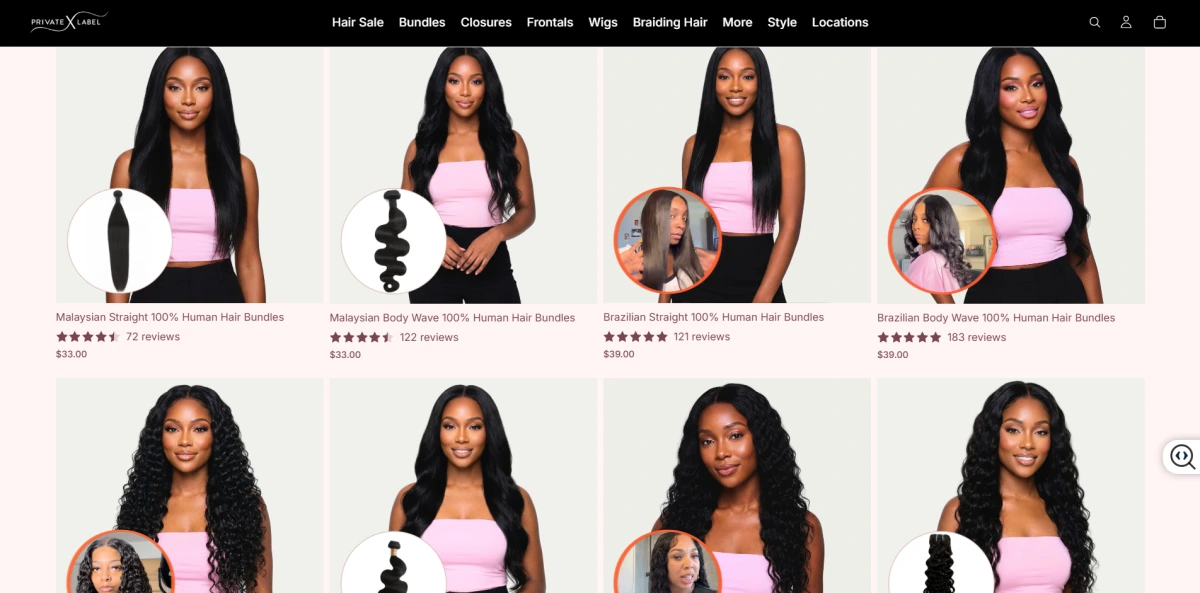
What you're getting: wholesale hair, private-label options, custom branding support, and training resources. The main knock is price, which runs higher than most alternatives, though quality complaints are rare.
4. Helene Hair
Helene Hair is a wig manufacturer, established in 2010, with a dedicated dropshipping program and full OEM/ODM support. That makes it a strong pick if your goal is a custom wig brand rather than reselling generic stock.
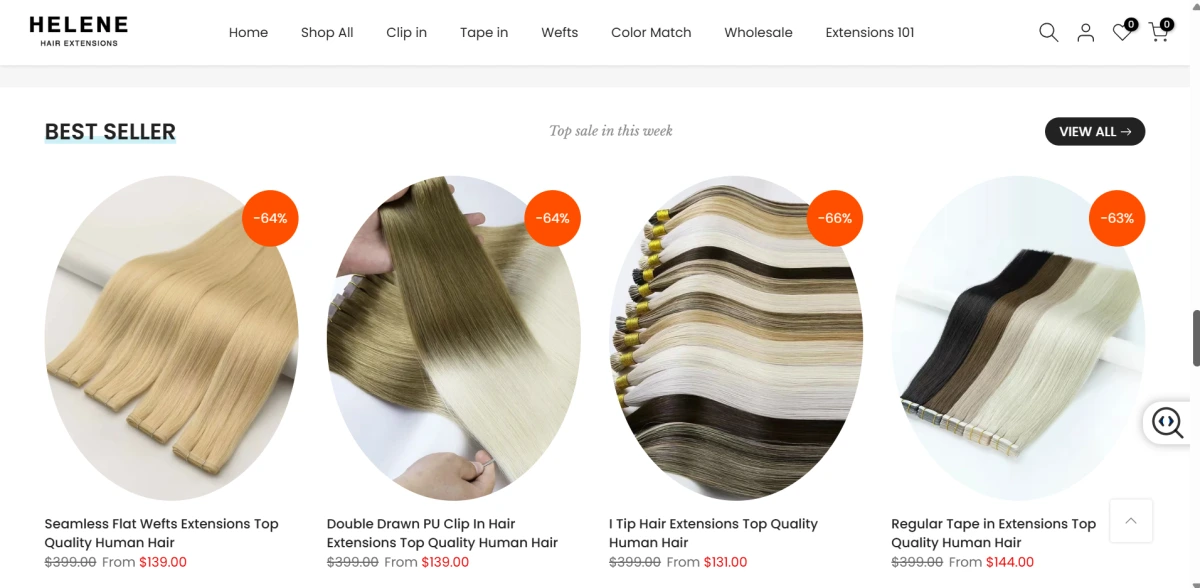
Why merchants consider it: zero inventory required, fast shipping, custom branding, and factory-level support even for first-timers. It handles the product, packaging, and delivery while you focus on marketing, whether you sell on Shopify, TikTok, or Instagram.
5. Alipearl Hair
Alipearl Hair is an established human hair supplier with over 20 years in the industry, focused on lace wigs, bundles, closures, and frontals. It's a good fit if you're targeting customers who want premium human hair at a more accessible price than US vendors charge.
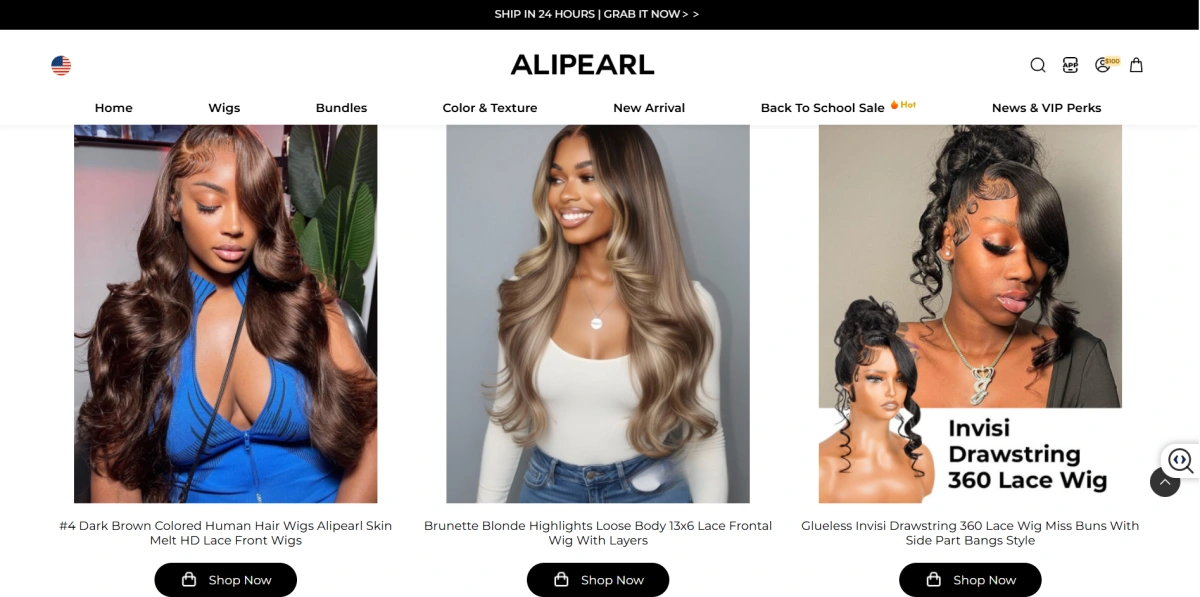
Standouts: 100% human hair across HD lace and glueless wigs, most orders shipped within 24 to 48 hours, and a wholesale program that supports custom logos and private packaging like silk bags, boxes, and headbands. That combination makes it genuinely viable for a branded premium store.
6. Dropship Bundles
Dropship Bundles is an Atlanta-based supplier that's been running since 2016, and it's my pick when speed and branding both matter. It blind-ships bundles, wigs, closures, frontals, lashes, and extensions to your customers under your own brand, so nothing in the box points back to the supplier.
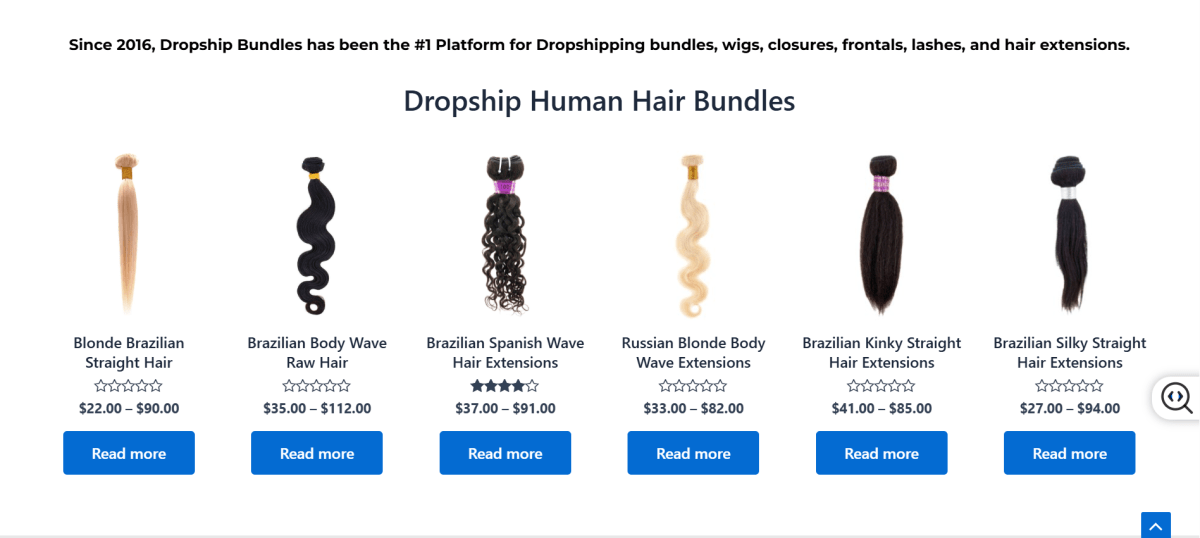
Why merchants consider it: fast US domestic shipping, private-label fulfillment, and membership options that fit whether you already have a store or need one built. It costs more than sourcing overseas, but for US-focused sellers who can't afford slow delivery, that premium usually pays for itself in fewer refunds.
7. Beaudiva
Beaudiva is the most budget-friendly name on this list, which makes it a strong entry-level option for testing. It combines factory-level pricing with a large catalog of bundles, lace front wigs, HD lace wigs, closures, and multiple textures, so you can trial several products before committing to a niche.
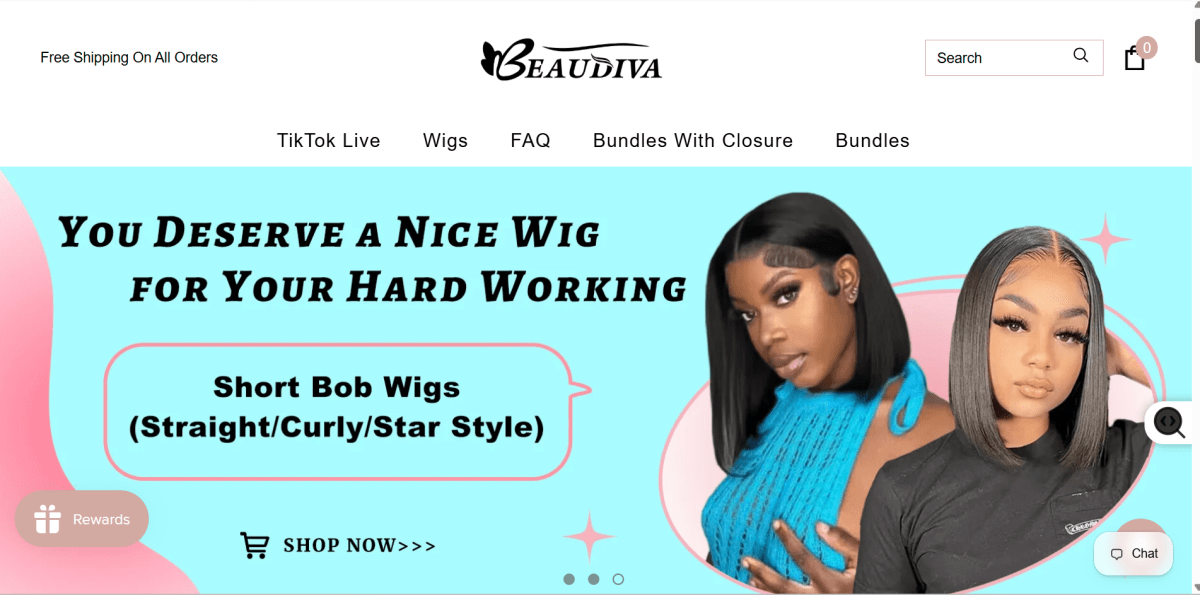
A lot of sellers validate on Beaudiva's AliExpress store first, then move to ordering directly once sales are steady. It also offers custom branding, which is unusual at this price point, so you're not locked out of building a brand just because you started cheap.
8. Virgin City Hair
Virgin City Hair is a US vendor built for the premium end, ideal if you're targeting $200-400 retail wigs. It sells virgin, unprocessed hair sourced from single donors, which typically means less tangling and a longer product lifespan, exactly what higher-value customers expect.
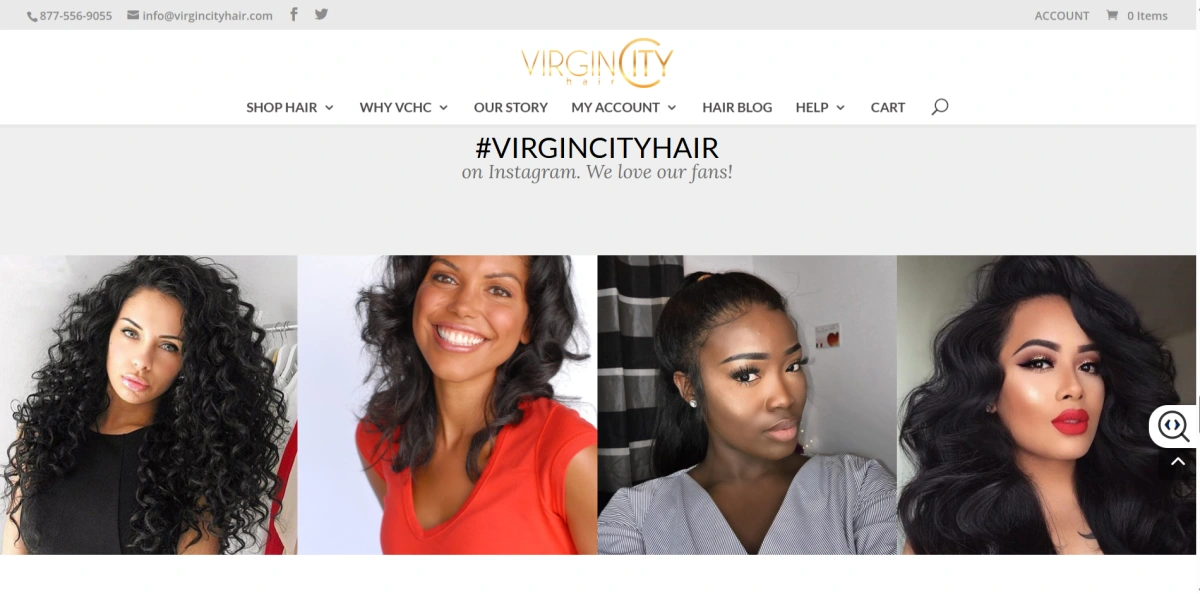
Its dropship program keeps the hair in stock and blind-ships under your brand, so you set your own retail price without touching inventory. Branding options are more limited than a full private-label manufacturer, and the wholesale price is higher, but for a premium store that consistency often offsets the cost through fewer returns.
Best Hair Niches That Are Worth Your Attention This Year
Here are six niches worth your attention in 2026, with rough gross margin ranges so you know what you're working with before ad spend.
1. Premium human hair wigs
Premium human hair wigs are one of the strongest opportunities out there, because customers pay more for a natural look and real durability. Popular products include HD lace wigs, transparent lace wigs, glueless wigs, wear-and-go wigs, and custom-colored wigs.
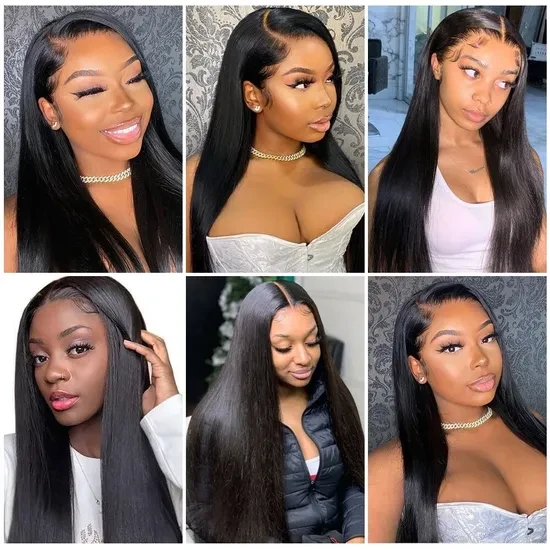
Human hair lace wigs typically retail between $100 and $400, with premium HD lace pieces running $300 to $470, so this is your highest average-order-value niche. Because factory-direct sourcing can save 30-50% versus retail, gross margins here commonly land in the 57-72% range on specialized and custom pieces, well above the dropshipping average.
Why it works: high AOV, strong emotional buying motivation, repeat purchases, and real branding potential. Many customers aren't just buying a wig, they're buying confidence and a specific look.
2. Hair extensions for everyday styling
Extensions are one of the most beginner-friendly categories because they're easier to explain and market than custom wigs. Popular products include clip-in, tape-in, halo, ponytail, and I-tip extensions.
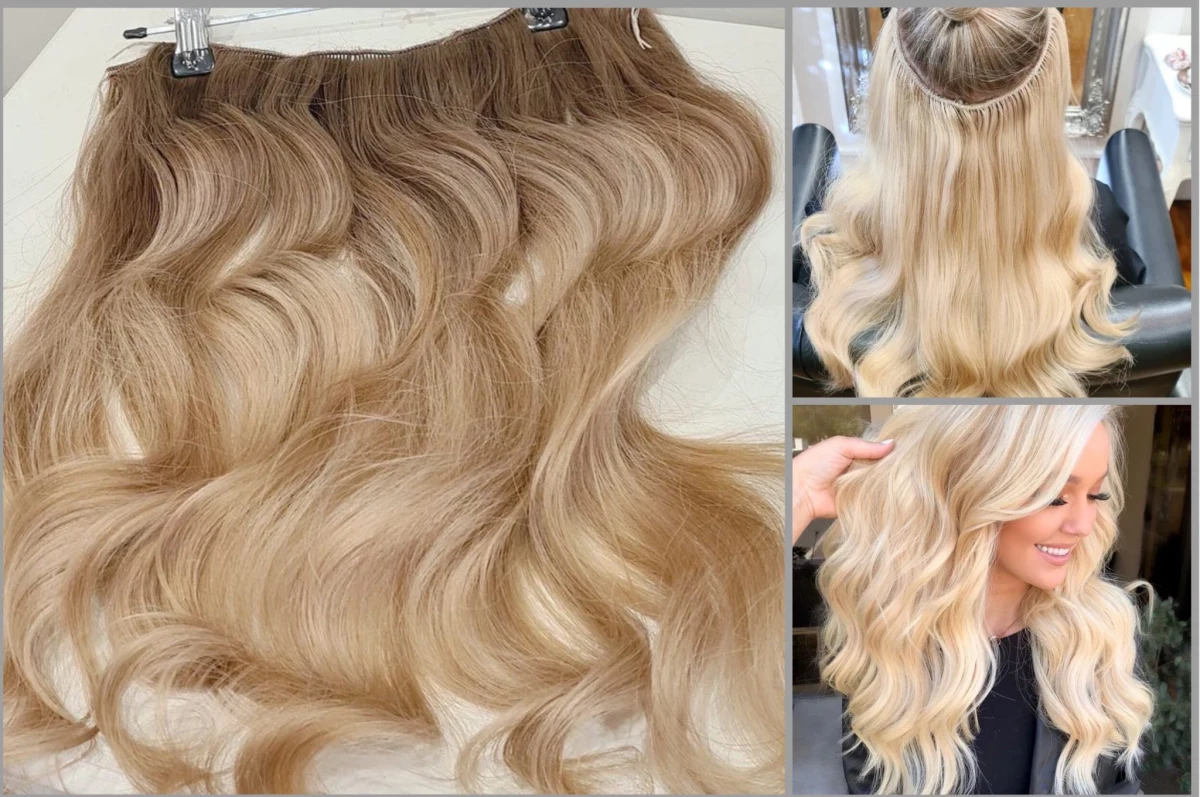
Clip-ins sit in a $29-$120 sweet spot, while premium human hair sets like halos, tape-ins, and longer lengths push toward $150-$200. Sold at volume and sourced factory-direct, this niche typically delivers gross margins in the 55-65% range, with women aged 25-45 making up roughly 80% of buyers.
Why it works: a lower price barrier than wigs, a large customer base, strong repeat purchases, and content that's easy to demo in short video. Transformation angles perform especially well, think "before vs after," "add 20 inches in 5 minutes," or "salon-style hair at home."
3. Products for specific hair types
Instead of competing with general hair stores, targeting one hair type gives you sharper positioning. Think curly hair extensions, straight Asian hair extensions, textured hair products, natural hair solutions, or protective styling products.
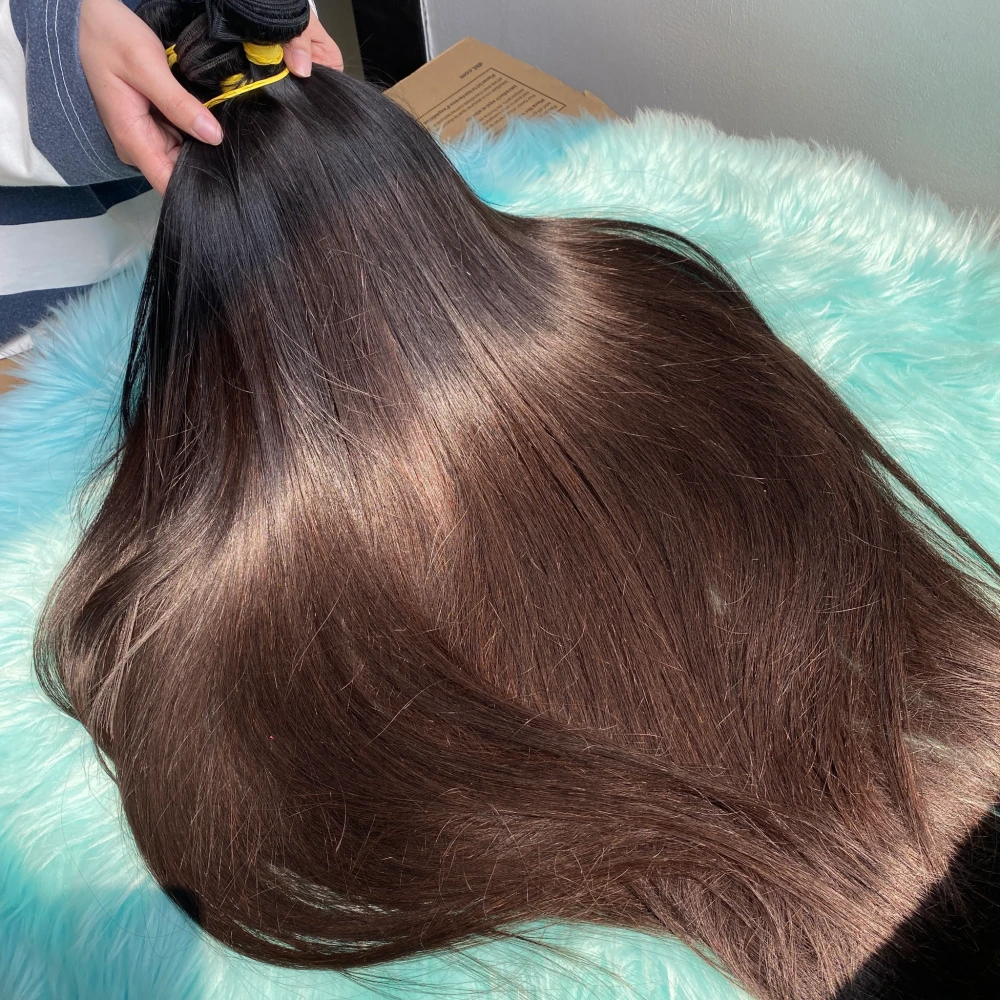
Pricing spans a wide band depending on whether you sell extensions or full units, roughly $40 for a texture-matched extension set up to $250 for a specialty wig, with gross margins commonly around 60-69% on human hair options.
Why it works: customers searching for a specific hair solution have stronger purchase intent. They're not browsing, they're hunting for the product that solves their exact problem, and they convert accordingly. The narrower positioning also means less direct competition than generic store faces.
4. Hair loss and hair replacement products
Hair loss is a problem-driven market with strong customer motivation. Potential products include hair toppers, scalp coverage wigs, hair replacement systems, and natural-looking hairpieces.
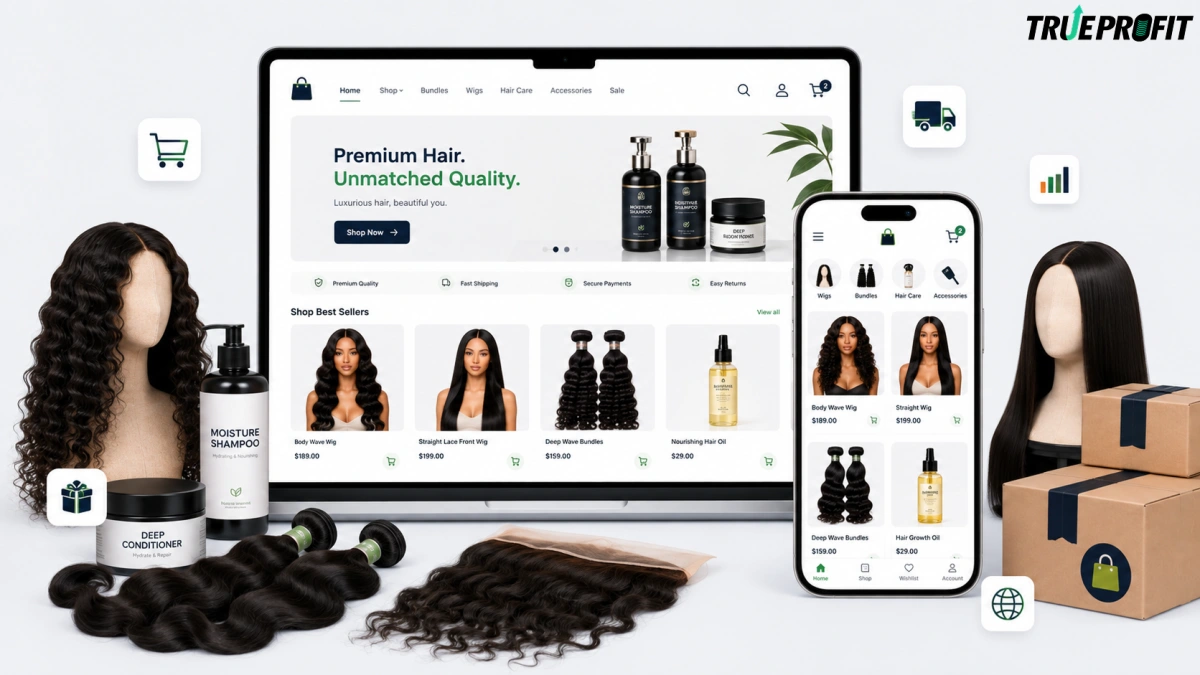
Synthetic toppers retail around $50-200, while human hair toppers run $200-800 depending on base size and quality, so you can serve both budget and premium buyers. With that pricing power and factory-direct sourcing, gross margins here often reach 55-70%.
Why it works: customers actively search for solutions, they're willing to pay a premium, and demand is far less trend-dependent than fashion hair. These buyers also tend to be loyal and vocal in support communities, which fuels word of mouth.
5. Trend-based fashion hair
Fashion hair pulls in customers who want to experiment: colored wigs, Y2K-inspired styles, festival looks, costume wigs, and bold color extensions.
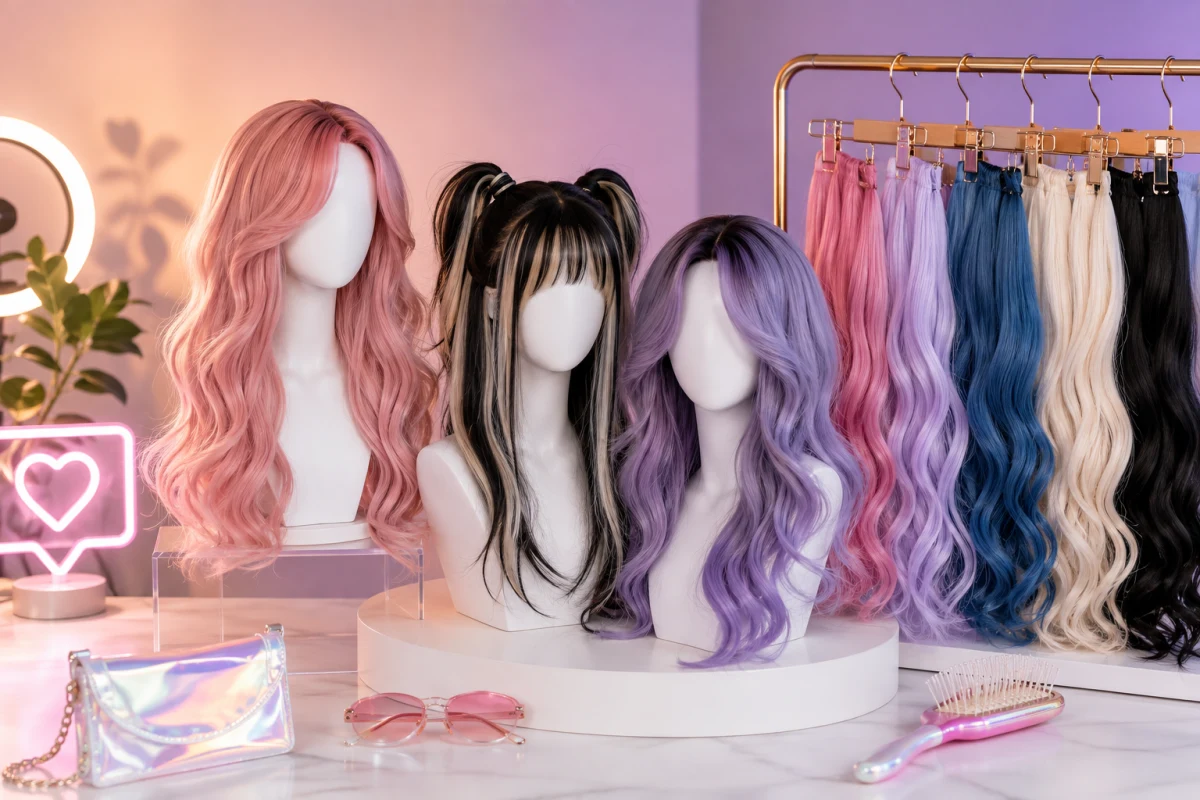
Most of it is synthetic, so retail typically lands in the $50-150 range. The upside is that synthetic product cost is low, so even at these prices gross margins can sit around 55% or higher when you buy well.
Why it works: strong social media potential, easy impulse purchases, and a natural fit for TikTok and Instagram. The downside is that demand shifts fast, so you'll need to keep testing new styles rather than settling on a fixed catalog.
6. Hair accessories and add-on products
Accessories are your average-order-value lever rather than a standalone niche. Wig caps, brushes, edge control, hair clips, storage bags, styling tools. Individually they carry lower prices, but they shine as upsells, bundles, and cross-sells.
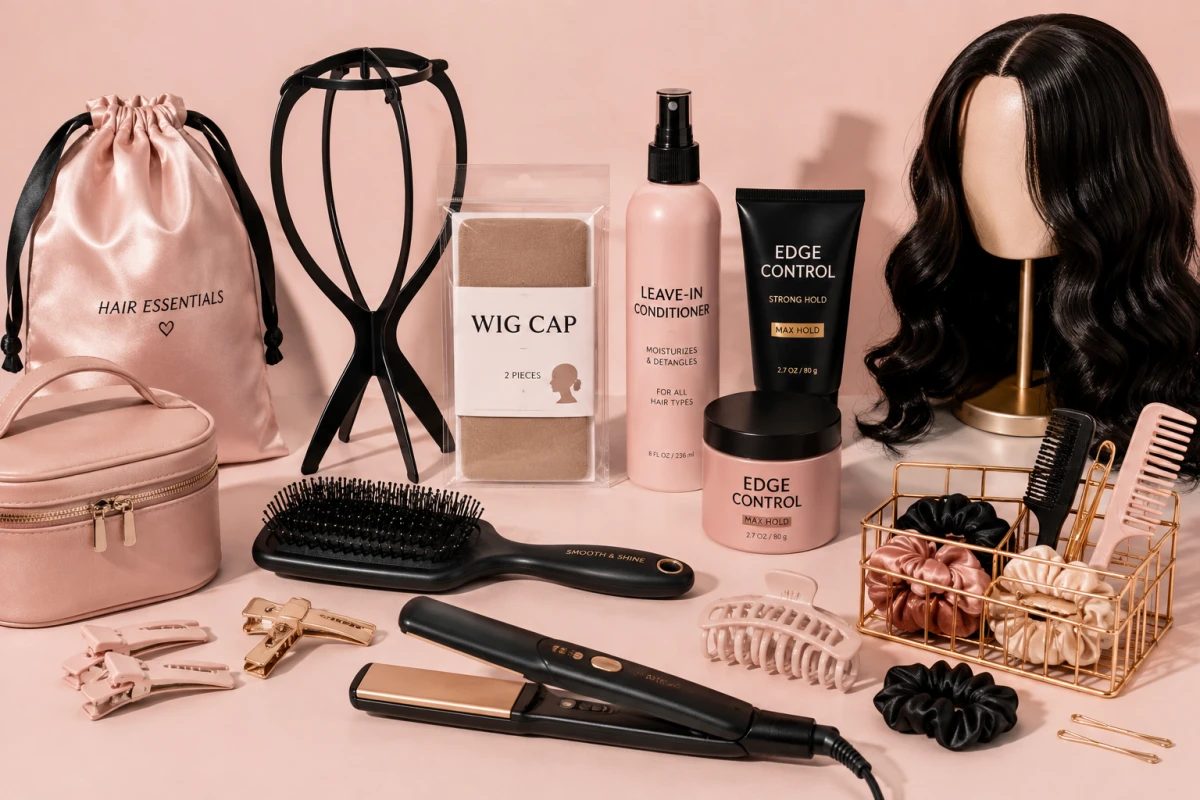
A customer buying a wig often also needs a wig stand, a brush, a storage case, and styling accessories. Bundling those in lifts your order value without any extra ad spend, which effectively raises the margin on the whole cart.

Dropshipping or Wholesale: Which Model Fits Your Hair Business?
Neither model is inherently better. And here's how the two approaches compare.
Dropshipping | Buying Wholesale |
|---|---|
Low upfront investment | Higher upfront investment |
No inventory to manage | Requires storage space |
Lower financial risk | Better profit margins |
Easier to test products | More control over quality and packaging |
Less control over fulfillment | Faster shipping when inventory is local |
Dropshipping is the better choice if you're launching a new store or entering the hair niche for the first time. It lets you test products and suppliers with minimal upfront investment, though you'll have less control over fulfillment and lower profit margins.
Wholesale becomes more attractive once you've identified products with consistent demand. Buying in bulk improves margins and gives you greater control over quality and branding, but it also requires more capital and carries inventory risk.
For most beginners, start with dropshipping to validate demand. Once you've found winning products, consider moving them to wholesale to improve margins, speed up fulfillment, and build a stronger brand.
How to Connect Your Store With a Dropshipping Hair Vendor
Setting up a hair store comes down to a handful of steps. Here's the short version.
1. Pick your niche and price tier
Decide your niche and price tier before choosing a vendor, because they determine which vendor fits. A $200 premium wig store and a $40 clip-in store need very different suppliers. Get this order right and you avoid courting the wrong partners.
2. Choose and vet your vendor
Order samples from two or three vendors and test them in hand. For raw or virgin hair, check that cuticles are aligned, there's no chemical smell, and the hair returns to its natural pattern after washing. Confirm white-label options and real shipping times before you commit.
3. Choose your ecommerce platform
Most hair sellers build on Shopify because it integrates cleanly with dropship apps like CJdropshipping and handles payments, themes, and apps out of the box. Pick the platform your vendor supports best so fulfillment stays automated rather than manual.
4. Import products and build product pages
Hair is a visual, trust-driven purchase, so your product pages carry the sale. Use high-quality photos and video, real reviews, and clear texture and length guides. Publish accurate specs, grams per bundle, length, texture, and realistic delivery windows, because honesty here cuts the returns and chargebacks that silently eat your margin.
5. Price your hair products correctly
Pricing is one of the most important steps when working with hair suppliers, and it's where a lot of new stores quietly go wrong. Don't just copy competitor prices. Build your price from your actual cost stack instead.
Start with your vendor's product cost, then add shipping from vendor to customer, estimated app and platform fees, payment processing, and your marketing spend. Only then set a target margin that covers those costs and leaves room to reinvest. Consider tiered pricing, where premium styles and longer lengths carry higher margins.
6. Connect fulfillment and test an order
Link your vendor's fulfillment (through their app, a manual process, or a tool like AutoDS) and place a test order to yourself. You'll catch packaging, branding, and timing issues before a real customer does.
How To Track Your Business’s True Profits?
Here's the part I want to warn you about. Most store owners start tracking performance one of two ways: a spreadsheet they update by hand, or the built-in dashboard on their ecommerce channel like Shopify. Both feel good enough at first. Neither holds up.
A spreadsheet is outdated the moment you touch it, because you're entering numbers manually, it eats your time, and it almost always misses costs, which means the profit figure you're staring at isn't accurate anyway.
And a native Shopify dashboard, for all its polish, was built to show you revenue and orders, not your true net profit after every ad, fee, and refund. You end up making scaling decisions on a number that was never designed to tell you whether you're profitable.
The fix: track net profit automatically
If you don't want to make that mistake, and it's an expensive one, consider a dedicated net profit app like TrueProfit.
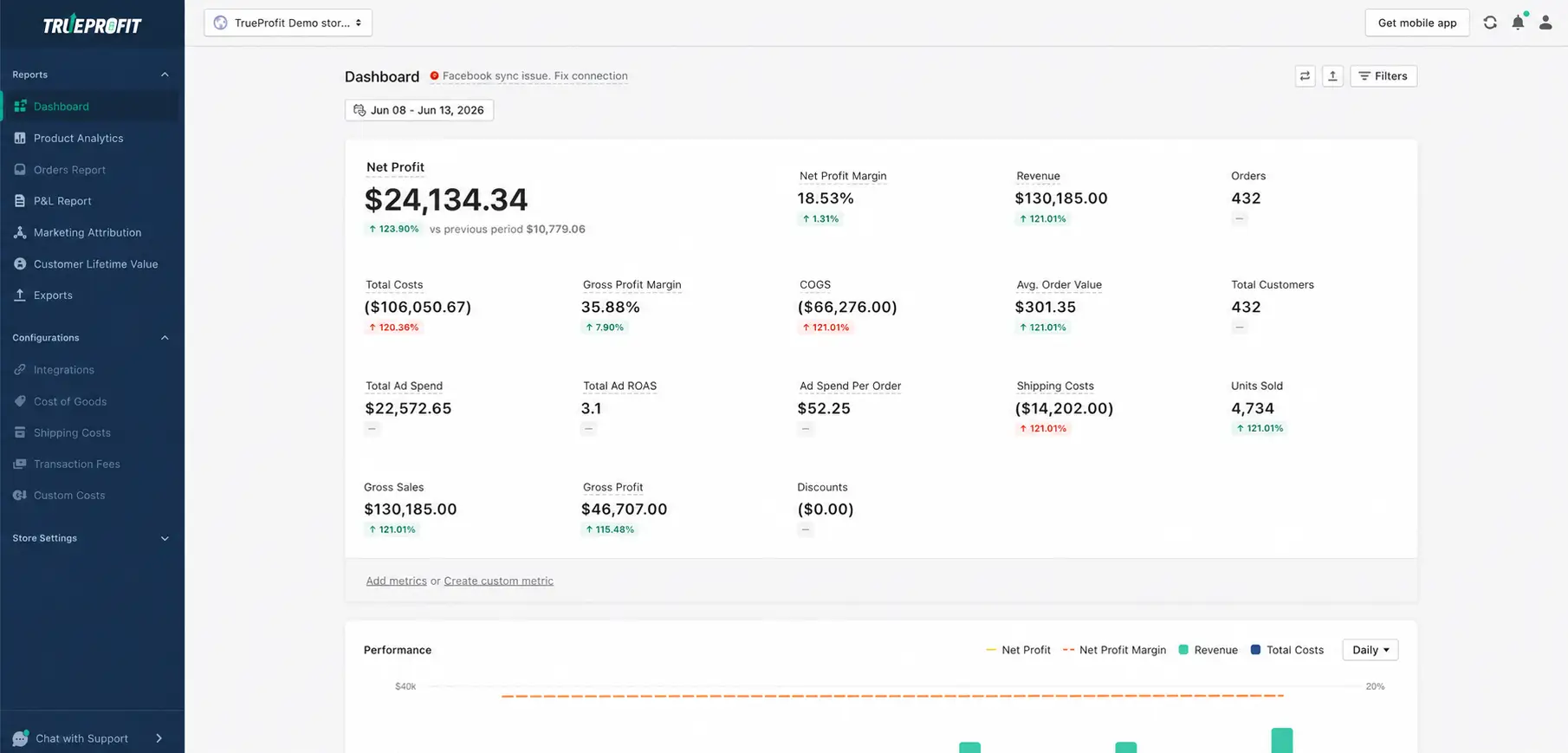
Beyond killing the outdated, manual, cost-missing spreadsheet problem, here's what you actually get:
- The #1 Net Profit Analytics platform for Shopify. Trusted by 70,000+ Shopify brands across 185+ countries, with a 5/5 rating from 750+ reviews, so this isn't an untested tool you're gambling on.
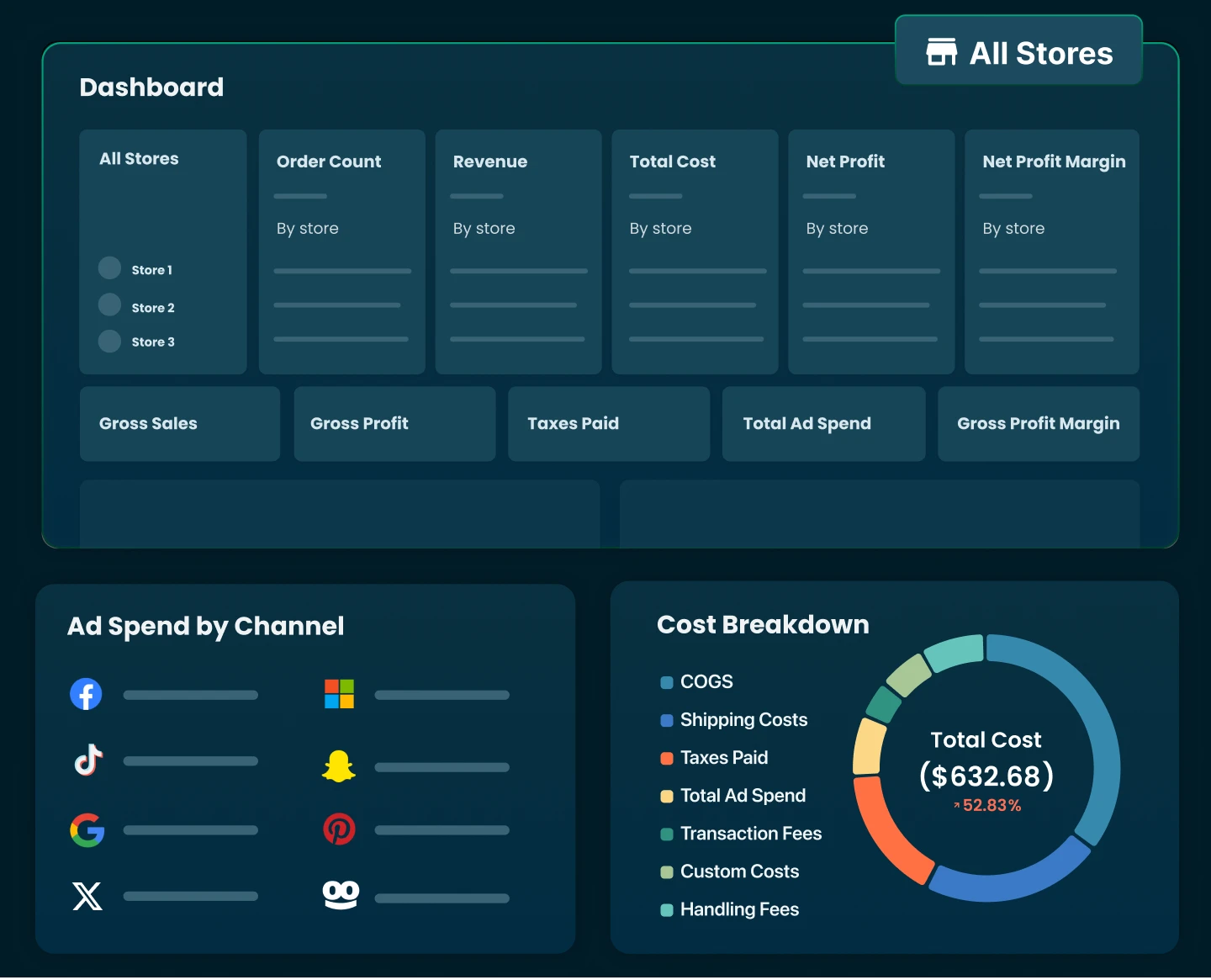
- A real-time profit dashboard. Revenue, total costs, net profit, and net profit margin in one live view, updated as orders come in rather than at month-end.
- Product-level analytics. See net profit per product, not just revenue, so you know exactly which wigs or bundles to scale, which to fix, and which to drop.
- Marketing attribution. Replace ROAS and vanity ad metrics with net-profit-on-ad-spend down to the ad level, unaffected by cookie limitations, which matters when ads are your biggest cost.
- Complex cost tracking built in. COGS by SKU or country, shipping by weight or destination, transaction fees synced from Shopify Payments, PayPal, and Stripe, plus any custom fixed or variable cost, exactly the messy stack hair sellers deal with.
- 25+ integrations and a mobile app. Connect every ad channel, fulfillment platform, and payment processor, and check your numbers on the go.
Final Thoughts
The best dropshipping hair vendors don't guarantee success, they simply give you the foundation to build on.
What separates successful hair stores is how they use that foundation. They focus on a clear niche, choose suppliers they can trust, create a professional shopping experience, and continuously improve based on real customer feedback and business performance.
Whether you're selling premium wigs, hair extensions, or synthetic styles, choosing the right vendor is only the beginning. Long-term growth comes from making better decisions with every order, every product launch, and every customer you serve.

Rosie Doan is a Senior Content Specialist at TrueProfit with over 4 years of experience creating content for the ecommerce and SaaS industry. Having worked closely with Shopify merchants and ecommerce businesses, she has developed a deep understanding of the challenges store owners face, from growing revenue and acquiring customers to tracking performance, managing costs, and improving profitability.