8 Top Plus-Size Dress Suppliers to Dropship in 2026 (+ Winning Niches & Profit Tips)


Table of Contents
- 1. Why Plus-Size Fashion Is a Profitable Dropshipping Niche
- 2. 8 Plus-Size Dress Suppliers Worth Checking Out in 2026
- 3. Don’t Pick a Supplier Until You Check These 5 Things
- 4. 7 Plus-Size Dress Styles With Room to Make Money
- 5. How to Build a Profitable Plus Size Dress Dropshipping Store
- 6. Final Thoughts
- 7. Plus Size Dress Dropship FAQs
If you are looking for an e-commerce model to dropship with less direct competition, strong customer loyalty, and high margins, plus-size dress deserves your attention. But is it truly profitable? Let's break down the market dynamics, hidden risks, and winning strategies for building a successful brand in this space.
In this blog:
- 1. Why Plus-Size Fashion Is a Profitable Dropshipping Niche
- 2. 8 Plus-Size Dress Suppliers Worth Checking Out in 2026
- 3. Don’t Pick a Supplier Until You Check These 5 Things
- 4. 7 Plus-Size Dress Styles With Room to Make Money
- 5. How to Build a Profitable Plus Size Dress Dropshipping Store
- 6. Final Thoughts
- 7. Plus Size Dress Dropship FAQs
Why Plus-Size Fashion Is a Profitable Dropshipping Niche
A Large, Underserved Market
The plus-size clothing market is already a $317 billion global market in 2026, and it's projected to reach more than $417 billion by 2031. Women's plus-size clothing alone accounts for an estimated $103 billion in 2026, with online retail growing at a faster pace than the overall market.
And yet, the opportunity isn't simply about market size. Fit, style variety, and availability are still major gaps. Market research points to continued demand for better-fitting, more fashionable extended-size clothing, while limited variety and inconsistent sizing remain challenges for the category.
Higher Margins Than Standard Fast Fashion
Plus-size shoppers will happily pay a premium for a good fit, quality fabric, and a flattering silhouette. Because retail prices sit higher than standard sizes while product cost stays roughly the same, you can comfortably reach 65% to 70%+ gross margins.
But here's the thing I want you to remember early on: gross margin isn't what lands in your pocket. Returns, ad spend, and payment fees all chip away at it, so the real number is usually lower than the sticker margin suggests. We'll come back to this later, because it's where most stores quietly bleed money.
Strong Repeat Purchase Rates
Finding stylish, comfortable dresses that actually fit is genuinely hard for plus-size women. So when a store nails both, customers come back, and repeat purchase rates end up well above what you'd see in typical fast fashion.
That loyalty does something powerful to your economics. A customer who buys three times a year costs you far less than three separate one-time buyers, which means your effective acquisition cost keeps dropping the longer you keep them happy.

8 Plus-Size Dress Suppliers Worth Checking Out in 2026
You can check the quick table below first, then I’ll walk you through what makes each supplier worth considering.
1. Trendsi: Best for US-focused plus-size fashion stores

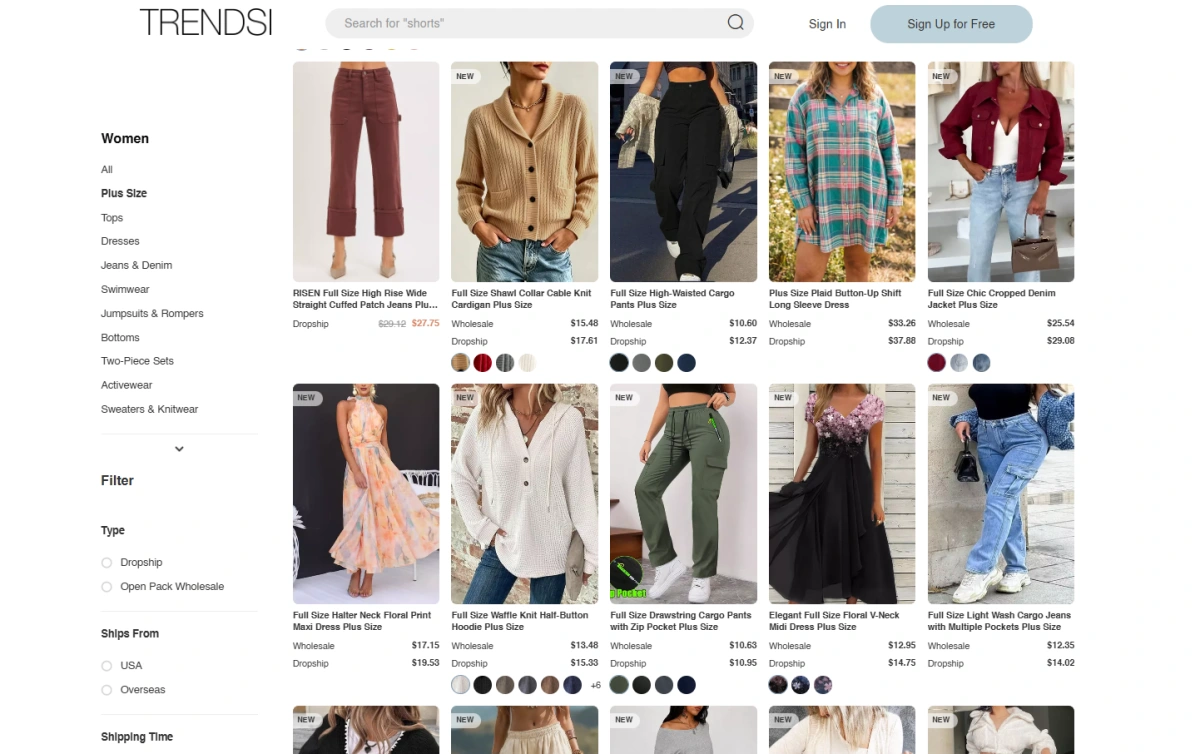
Trendsi is probably the easiest starting point if you're targeting US customers and want to test a lot of plus-size styles without holding inventory.
Its plus-size catalog currently shows 2,300+ items, with dresses making up a substantial portion. Many listings explicitly support dropshipping, and the platform lets merchants filter products by US vs. overseas fulfillment and shipping time.
The pricing is also attractive for testing. Current plus-size dress examples include products around $13-$35 in dropship cost, depending on style and supplier.
What I like:
- Huge selection of plus-size/full-size fashion
- Multiple dress styles, from casual maxi dresses to cocktail and occasion pieces
- US fulfillment options
- Shopify-friendly dropshipping workflow
- Low product cost gives merchants room to test different retail prices
Best for: US merchants who care more about fulfillment speed and boutique-style products than rock-bottom sourcing costs.
2. Bloom Dropship: Best for Boutique-Style Plus-Size Dresses
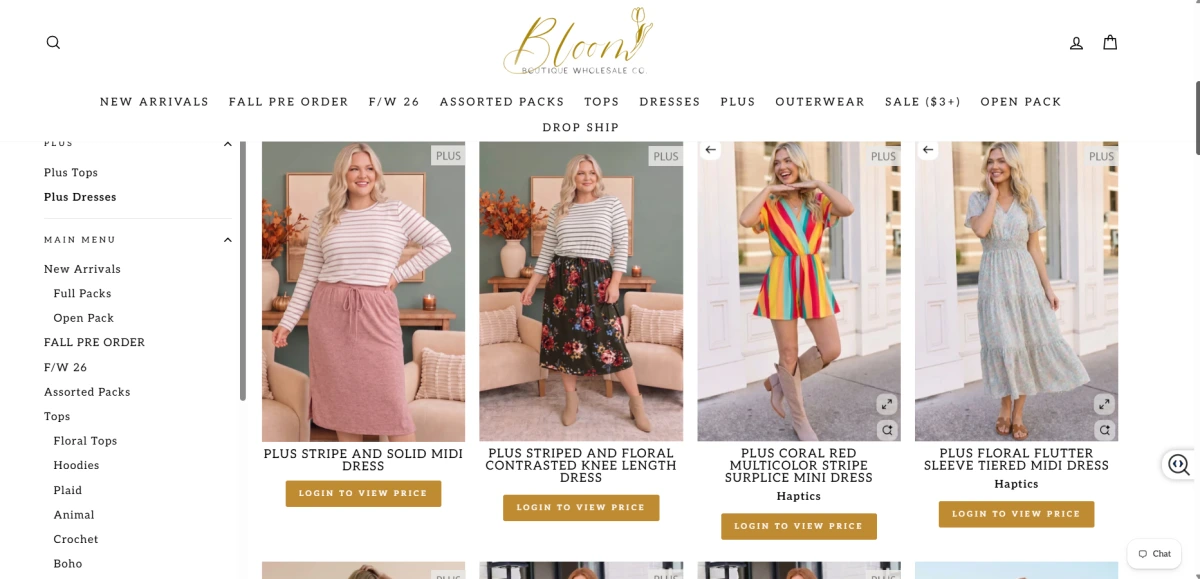
If your store is supposed to feel like a real women's fashion boutique, I'd put Bloom high on the list.
Bloom Dropship specifically focuses on women's and plus-size fashion, rather than treating plus-size clothing as a tiny category inside a massive general marketplace. The company is based in the LA Fashion District and says it sources directly from LA designers and manufacturers.
That matters because your competitive advantage isn't necessarily finding the cheapest $12 dress. It's finding products that look good enough to sell at a healthy retail price.
What I like:
- Dedicated plus-size fashion selection
- Boutique-oriented aesthetic
- LA-based sourcing
- New styles added weekly
- Better fit for merchants building a curated fashion brand
The catalog isn't as broad as a giant marketplace like Trendsi. If your strategy is to upload hundreds of products and test aggressively, Bloom may feel more limited.
Best for: Merchants building a curated, boutique-style plus-size brand rather than a general fashion store.
3. Dear-Lover: Best for a large plus-size catalog
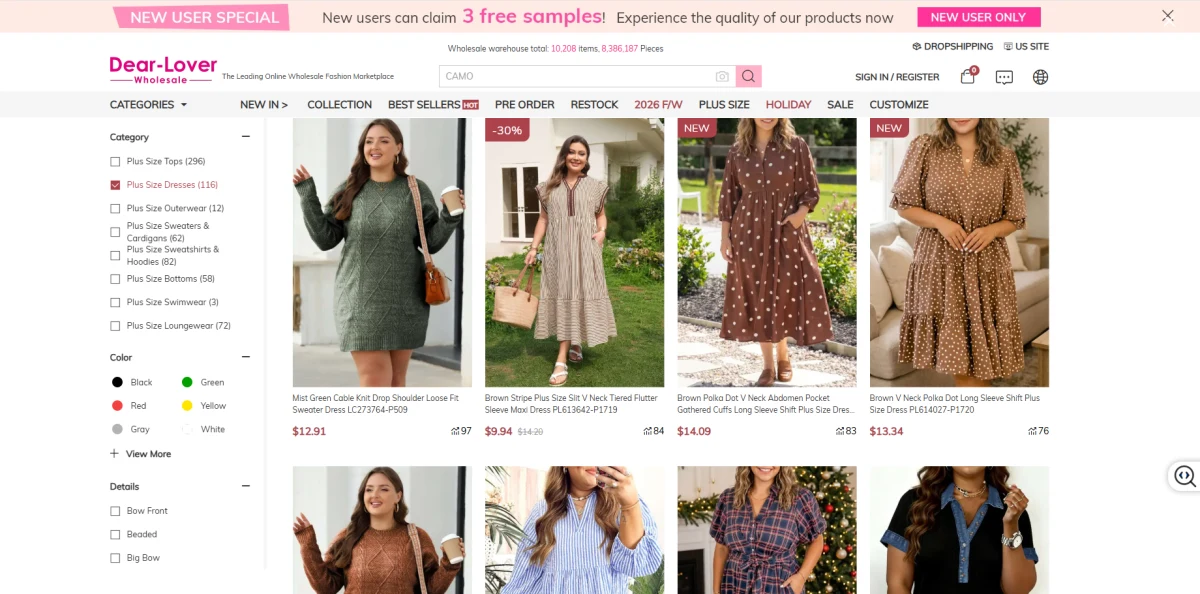
Dear-Lover is a better fit if your strategy is trend volume: lots of designs, lots of price points, and frequent product testing.
The appeal here is straightforward. Instead of building the store around a narrow aesthetic, you can test different plus-size dress angles such as casual, vacation, party, bodycon, maxi, and occasion wear.
What I like:
- Large women's fashion catalog
- Strong focus on trendy styles
- Competitive wholesale pricing
- Useful for testing different fashion niches
- Suitable for merchants who want a broad product pipeline
Best for: Merchants who prioritize product variety and trend testing.
4. FashionTIY: Best for Low-Cost Product Testing
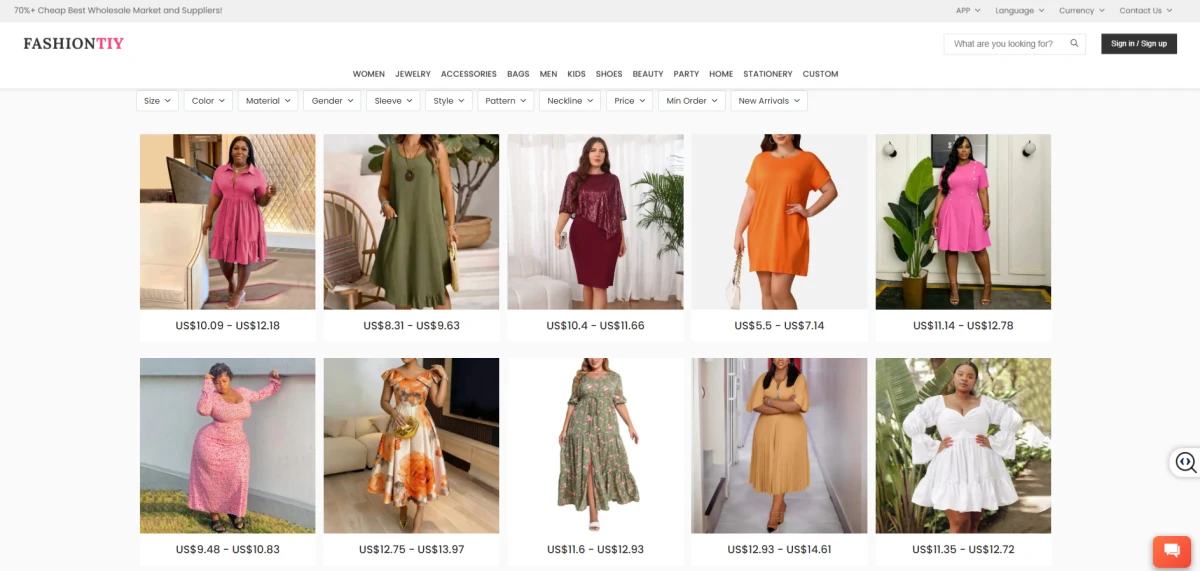
FashionTIY is worth considering when product cost is your biggest constraint.
The platform covers a broad range of women's fashion, so it can work well if you're looking to test plus-size dresses alongside other categories such as tops, bottoms, accessories, and sets.
The biggest advantage is cost flexibility. Lower sourcing costs give you more room to experiment with your retail price and promotional strategy.
What I like:
- Broad fashion catalog
- Competitive sourcing prices
- Useful for testing multiple categories
- Good option when you're optimizing for product cost
Low COGS doesn't automatically mean high net profit. If you're selling into the US, I'd compare the landed cost rather than just the product price.
Best for: Merchants who want to test products cheaply before committing more budget to inventory or ads.
5. FondMart: Best for Plus-Size Variety + Low COGS
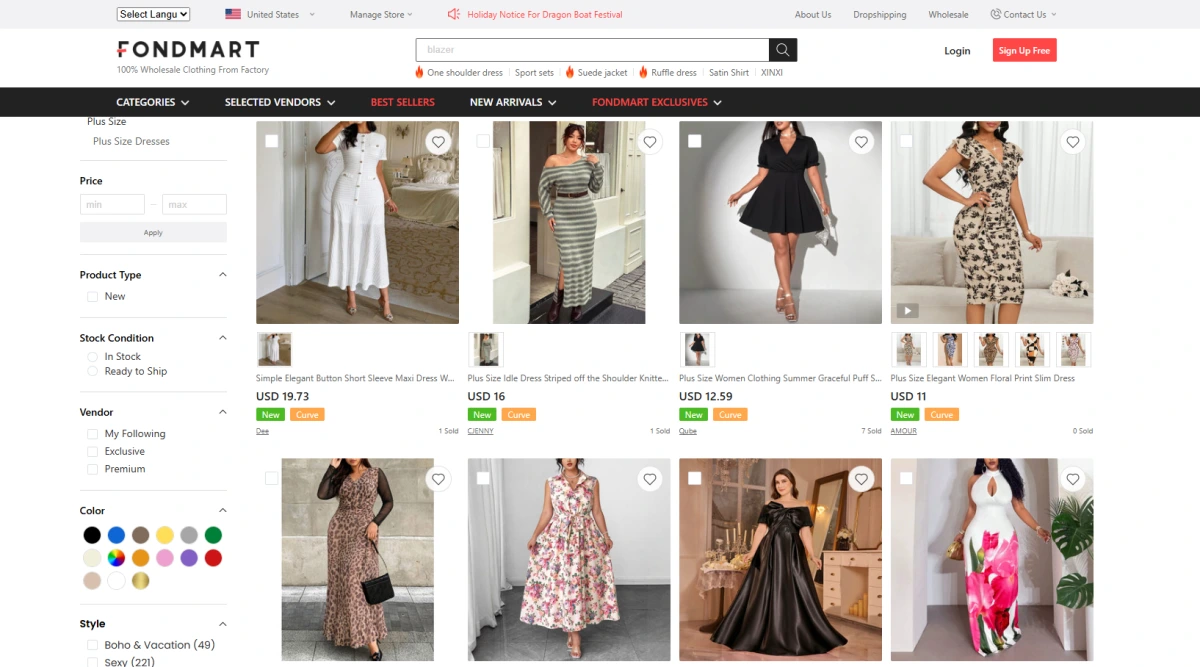
Unlike Spocket and Syncee, which are primarily supplier marketplaces, FondMart has a very deep dedicated plus-size catalog.
FondMart also says it works with 2,000+ suppliers and offers private-label services, which makes it more interesting if you eventually want to move from pure dropshipping into a branded model.
What I like:
- Very large dedicated plus-size catalog
- Low product costs
- Lots of dress styles
- No-MOQ positioning
- Private-label option
- Potential path from dropshipping → branded products
The catalog can feel more like a sourcing marketplace than a tightly curated fashion brand. You need to be selective about fabrics, photography, sizing, and product quality.
Best for: Merchants who want low COGS now and the option to build a private-label brand later.
6. CJdropshipping: Best for low-cost product testing
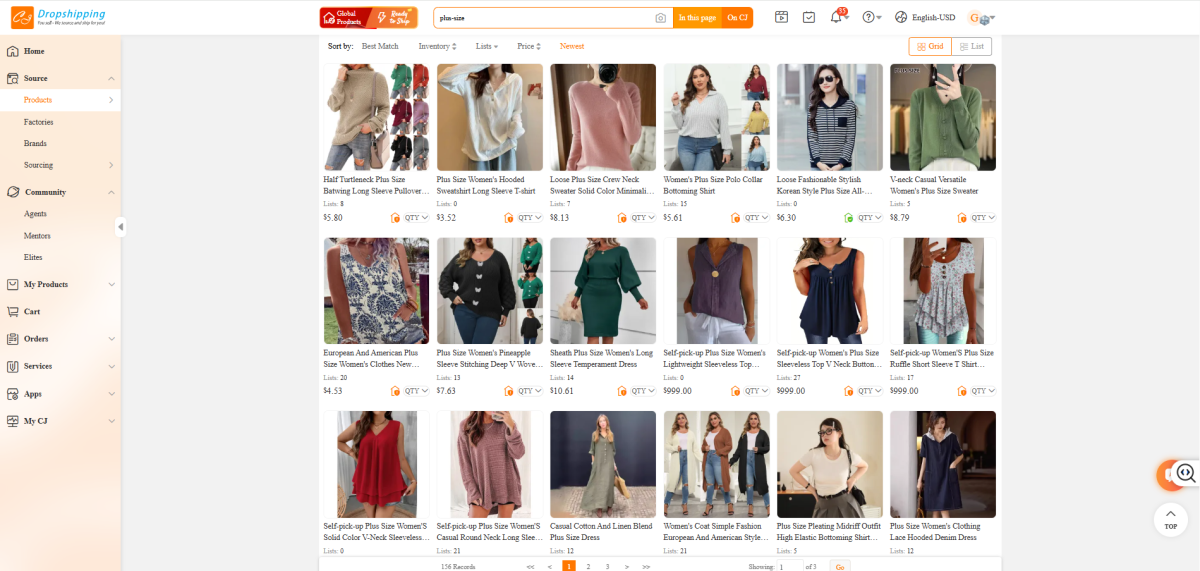
CJdropshipping is probably the strongest of these four if your priority is finding a lot of inexpensive plus-size dresses and testing products quickly.
Its catalog currently includes plus-size dresses ranging from basic casual styles to more fashion-forward pieces. Some listings go up to 6XL, and individual products can be surprisingly cheap.
Another advantage is flexibility. CJ supports dropshipping, wholesale, preorder inventory, and even customization on some products.
What I like:
- Very competitive product costs
- Huge fashion catalog
- Some dresses available up to 5XL/6XL
- Product sourcing and customization options
- Good for testing lots of SKUs
Size consistency and shipping need more attention. CJ itself warns that some Asian sizes run smaller than US/EU sizing, so merchants need to check individual size charts carefully.
Best for: Merchants who want to test lots of plus-size dress products at low COGS.
7. Spocket: Best for finding US/EU-based plus-size suppliers
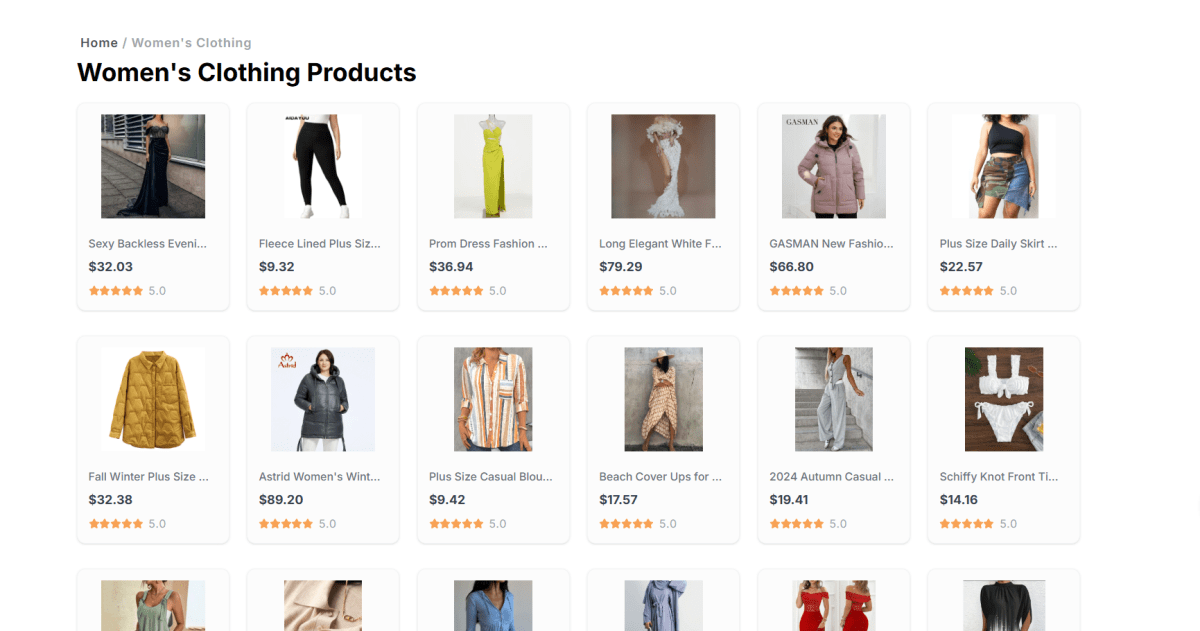
Spocket is different from CJ. You're not really choosing Spocket because it has the biggest plus-size dress catalog. You're choosing it because it gives you access to a network of suppliers, with a strong emphasis on US/EU sourcing.
Spocket currently has a dedicated plus-size women's clothing category and specifically promotes plus-size fashion for dropshipping.
What I like:
- Better fit for US/EU-focused merchants
- Curated supplier network
- Plus-size category already available
- Faster shipping can be a selling point
- Useful if you don't want to deal with dozens of overseas suppliers yourself
You're generally paying for that convenience. Product costs can be higher than CJ/FondMart, which means you need to watch your margin closely.
Best for: Merchants who care more about supplier quality, fulfillment, and customer experience than getting the absolute lowest COGS.
8. Syncee: Best for multi-supplier sourcing
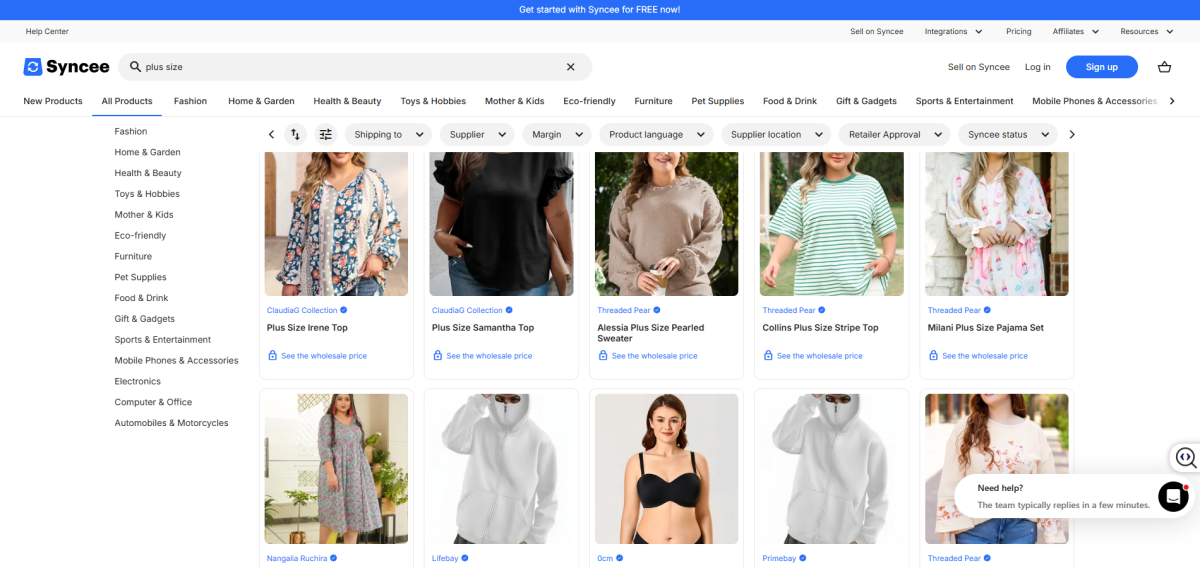
I'd position Syncee as a supplier marketplace, rather than a single plus-size supplier.
That's actually its strength. Its current plus-size marketplace has products from suppliers such as Capella Apparel, Threaded Pear, SMC Fashion, Nangalia Ruchira, ClaudiaG Collection, and FashionFitz. It also has specific categories for dresses, evening gowns, cocktail dresses, wedding dresses, and other women's fashion.
That gives you more room to build a specific store aesthetic rather than relying on one generic catalog.
What I like:
- Multiple suppliers in one platform
- Dedicated plus-size listings
- Good variety of styles
- Easier to find more niche/boutique products
- Useful for merchants who want to compare suppliers
Best for: Merchants who want to curate a differentiated plus-size catalog from multiple suppliers.
Don’t Pick a Supplier Until You Check These 5 Things
There are a few things that might look perfectly fine on paper, but become a real headache once you start getting orders. Sizing is one. Quality is another. And returns? Those can quietly eat into your margins if you don't catch the problem early.
So before you commit to a supplier, there are five things I’d pay close attention to: sizing, fabric and construction, samples, fulfillment and returns, and product media.
1. Sizing Consistency and Measurement Accuracy
Let's start with sizing, because this is where plus-size fashion gets tricky.
A label like 1X or 3X doesn't really tell a shopper much. What she actually wants to know is pretty simple: “Is this dress going to fit me?”
That's why the supplier should give you actual measurements for the bust, waist, hips, sleeve or armhole, and dress length for every size. Having measurements in both inches and centimeters is even better if you're selling internationally.
But here's the part that's easy to miss: how are those sizes actually graded?
You can't just take a straight-size pattern, scale everything up, and expect it to fit a plus-size body properly. Armholes, waist placement, darts, proportions, and stretch all affect how the dress sits and moves.
One question I’d definitely ask the supplier is:
“Are your size charts based on body measurements or finished garment measurements, and what's the measurement tolerance for each size?”
That answer can tell you much more about the supplier's sizing consistency than a “true to size” label ever will.
2. Fabric Quality and Garment Construction
Here's where supplier photos can get a little deceptive.
A dress can look absolutely beautiful on the product page and then arrive feeling like a completely different product. And obviously, your customer isn't going to blame the supplier. They're going to blame your store.
For plus-size dresses, pay close attention to drape, opacity, stretch, and recovery.
If it's a fitted dress, does it actually have enough stretch to move comfortably? If it's a lightweight fabric, does it become see-through when stretched across the bust or hips?
And don't just take “stretch fabric” at face value. Check the actual fabric composition. Two dresses can both be described as stretchy and behave very differently once they're on a real body.
Then look at the construction. Side seams, waistbands, armholes, zippers, and necklines are usually where cheaper construction starts to show.
You don't necessarily need boutique-level craftsmanship here. What you need is a dress that can survive normal wear without seams popping, zippers failing, or the fabric losing its shape after a few washes.
3. Order Samples Before You Scale
This is one of those steps that's very easy to skip when you think you've found a winning product.
I'd strongly recommend not doing that.
Supplier photos are great for finding products. They're not enough to tell you whether you've actually found a product worth putting ad spend behind.
Order samples of the dresses you're seriously considering, and whenever possible, test them on an actual plus-size body.
Because a mannequin can show you what the dress looks like standing still. It can't tell you what happens when someone sits down, walks around, bends over, or moves their arms.
Here's what I'd look at:
- Delivery: Did it arrive within the promised timeframe?
- Measurements: Do the actual measurements match the size chart?
- Fabric: Is it still opaque when stretched?
- Stretch and recovery: Does it move comfortably and return to shape?
- Construction: Are the seams, hems, and closures secure?
- Wash test: Does it shrink, bleed, pill, or lose its shape?
And there's another benefit to ordering samples: you get your own content.
Instead of using the same supplier photos that dozens of other stores might be using, you can create your own product photos, try-on videos, and UGC-style content.
For fashion, that's a pretty big advantage.
4. Fulfillment, Inventory, and Returns
Once the dress itself passes the quality test, you need to look at the operational side.
Because a great product isn't going to save you if it takes three weeks to arrive or your supplier suddenly runs out of your best-selling 2X.
Start with the supplier's actual processing time, not just the shipping estimate on their website. Check whether orders come with reliable tracking and whether inventory can sync automatically with Shopify.
That last one becomes surprisingly important in plus-size fashion.
One dress can have multiple colors and a full range of sizes, so you're dealing with a lot of variants. Manually keeping track of all of them might work when you're getting a handful of orders. It gets messy very quickly once sales pick up.
And then there's returns.
Don't just see “30-day returns” and call it a day. Find out who pays return shipping, where the customer has to send the item, how claims are handled, and whether you get a refund or replacement.
Because those details eventually show up in your profit numbers.
A supplier with a slightly higher product cost can actually be the better choice if they help you avoid unnecessary returns, replacements, and customer service headaches.
5. Product Photos, Videos, and Model Diversity
This one is especially important for plus-size fashion.
Product media isn't just there to make your store look pretty. It helps customers answer one of the biggest questions they have before buying:
“What is this actually going to look like on a body like mine?”
So, look for suppliers that use real plus-size models and show the dress from multiple angles.
Even better if they provide the model's height, measurements, and the size she's wearing.
Something as simple as “Model is 5'9", wearing 2X” gives shoppers context that a flat-lay photo simply can't.
I'd also be careful with catalogs that use the same straight-size model for everything and digitally stretch the clothing to represent larger sizes.
It might make the catalog look complete, but it doesn't really help a plus-size customer understand how the dress is going to fit.
And that's really the bigger point: the more accurately your product page sets expectations, the fewer surprises you have after the sale.
Better fit information can mean better conversion, fewer returns, and ultimately, healthier margins.
7 Plus-Size Dress Styles With Room to Make Money
Here are the styles worth prioritizing:
1. Plus Size Wrap & Faux-Wrap Dresses
Best for: Everyday wear, work, date nights, events
- Typical source price: $10-$18
- Suggested selling price: $35-$55
- Estimated gross margin: 64-74%
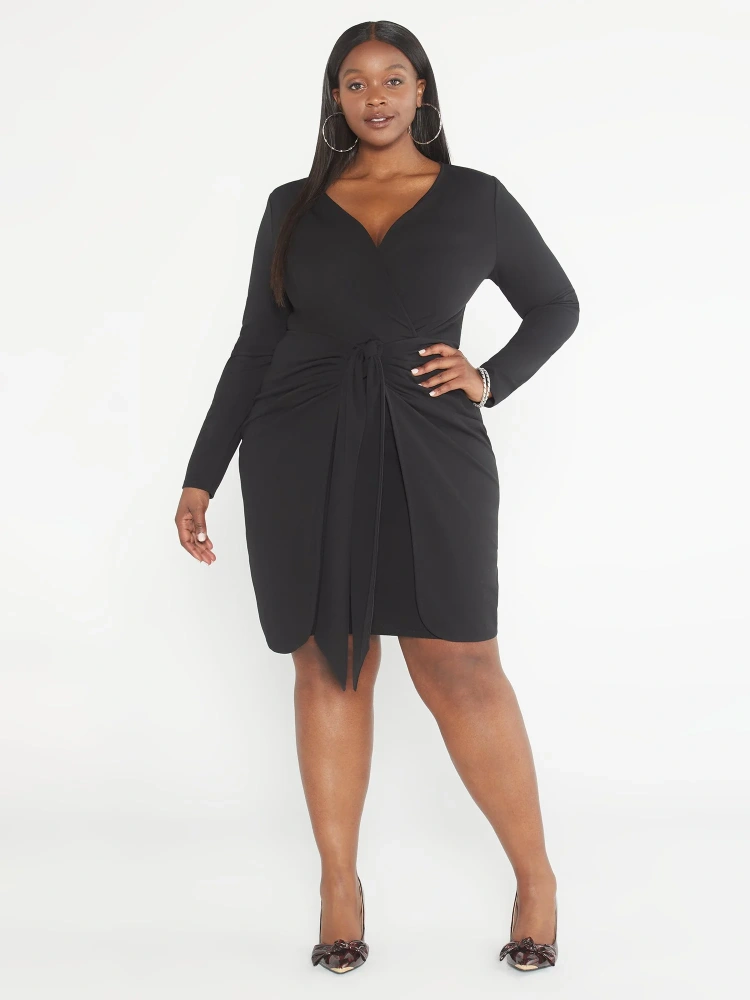
Wrap dresses are a strong option for plus-size shoppers because the adjustable waist gives them more control over the fit around the bust and waist. Instead of being locked into a rigid silhouette, shoppers can adjust the tie to accommodate their proportions. The V-neck also creates a more elongated look, while an A-line skirt gives the hips more room.
For dropshipping, look for:
- Adjustable or faux-wrap waist
- V-neckline
- Stretch fabric
- A-line or gently flared skirt
- Hidden snap on faux-wrap styles to prevent gaping
The adjustable fit addresses one of the biggest concerns when buying clothing online, while the same dress can be positioned for work, dates, brunch, or events.
2. Plus Size Midi Dresses
Best for: Everyday, work, brunch, casual events
- Typical source price: $10-$18
- Suggested selling price: $35-$55
- Estimated gross margin: 63-72%
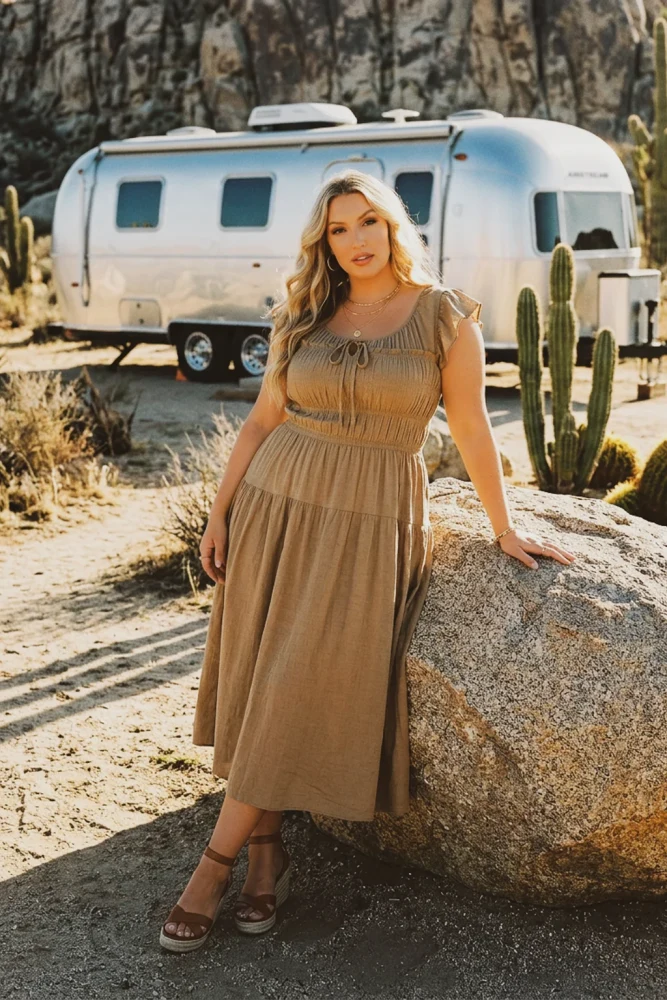
Midi dresses are particularly versatile for plus-size shoppers because the length provides more coverage than a mini while still feeling lighter and easier to style than a full maxi. A defined waist can add shape without making the dress overly fitted.
For a dropshipping store, prioritize defined-waist midi dresses rather than completely shapeless styles.
Good product features include:
- V-neck or square neckline
- Smocked or adjustable waist
- Side pockets
- Short or elbow-length sleeves
- Moderate stretch
- Small-to-medium prints
This gives shoppers plenty of ways to wear the same style, from work and brunch to casual events and date nights.
3. Plus Size Maxi Dresses
Best for: Vacation, summer, casual and occasionwear
- Typical source price: $12-$25
- Suggested selling price: $45-$75
- Estimated gross margin: 50-65%
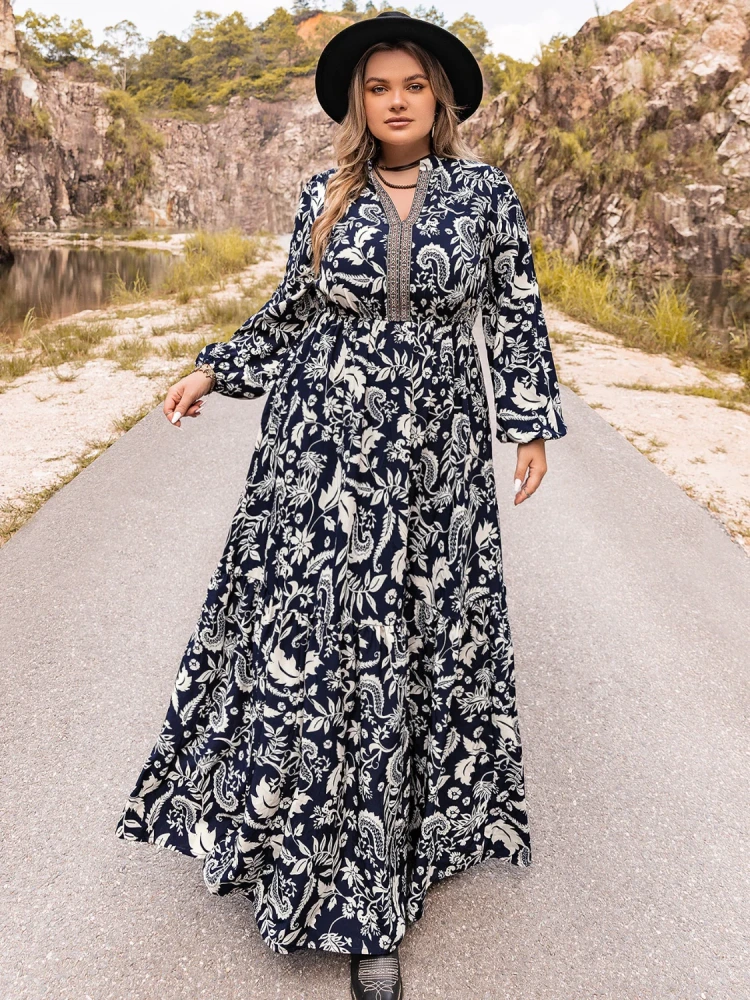
Maxi dresses appeal to plus-size shoppers who want more coverage without sacrificing style. A long, flowing silhouette can feel comfortable around the hips and legs, while details such as a defined waist, side slit, or V-neck prevent the dress from looking overly bulky.
For plus-size dropshipping, prioritize A-line, wrap, tiered and defined-waist maxis rather than oversized “tent” silhouettes.
Look for:
- Adjustable straps
- Elastic or smocked waist
- V-neckline
- Side slits
- Pockets
- Lightweight but non-sheer fabric
A good maxi can also work well as a vacation product, giving shoppers a clear use case and giving your store a stronger merchandising angle.
4. Smocked & Tiered Dresses
Best for: Casual, summer and vacation stores
- Typical source price: $10-$18
- Suggested selling price: $35-$55
- Estimated gross margin: 50-65%
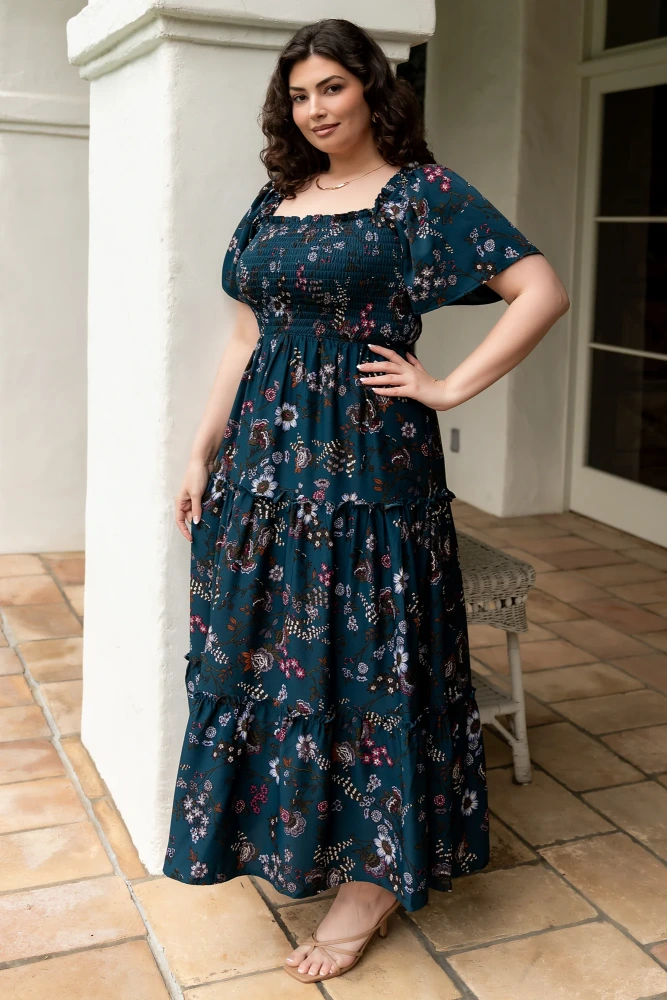
Smocked bodices are appealing because they provide flexibility around the bust and waist without requiring a precise fitted construction. For plus-size shoppers, that extra give can make the dress feel more comfortable through the day and accommodate natural differences in body proportions.
Look for combinations such as:
Smocked bodice + tiered skirt + midi/maxi length
or
Smocked bodice + puff/short sleeves + floral print
The important part is not to confuse stretchy with well-fitting. Order a sample and verify that the smocking actually provides enough room without digging into the body.
5. Ruched & Bodycon Dresses
Best for: Date nights, parties, going-out fashion
- Typical source price: $8-$18
- Suggested selling price: $30-$50
- Estimated gross margin: 50-65%
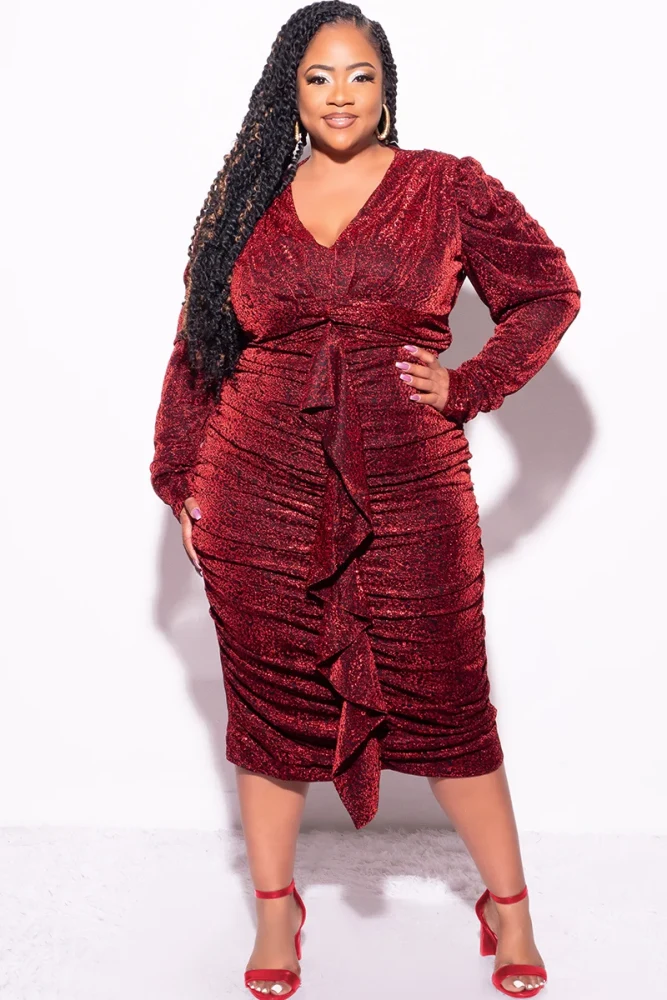
Bodycon dresses can work well for shoppers who want to embrace and highlight their curves, rather than automatically choosing loose clothing to hide them. Ruching adds texture and creates a more forgiving visual effect, while stretch fabric allows the dress to move with the body.
The key is choosing ruched or draped bodycon styles rather than thin, unforgiving fabric that simply clings to the body.
Look for:
- Side-ruching midi dresses
- Ruched waist dresses
- Long-sleeve bodycon dresses
- Off-shoulder styles
- Square-neck dresses
This category is especially suitable for TikTok/Reels-style video creatives, where shoppers can immediately see how the fabric moves and how the ruching shapes the silhouette.
6. Plus Size Occasion & Wedding Guest Dresses
Best for: Higher AOV and seasonal campaigns
- Typical source price: $15-$30
- Suggested selling price: $50-$85
- Estimated gross margin: 50-65%
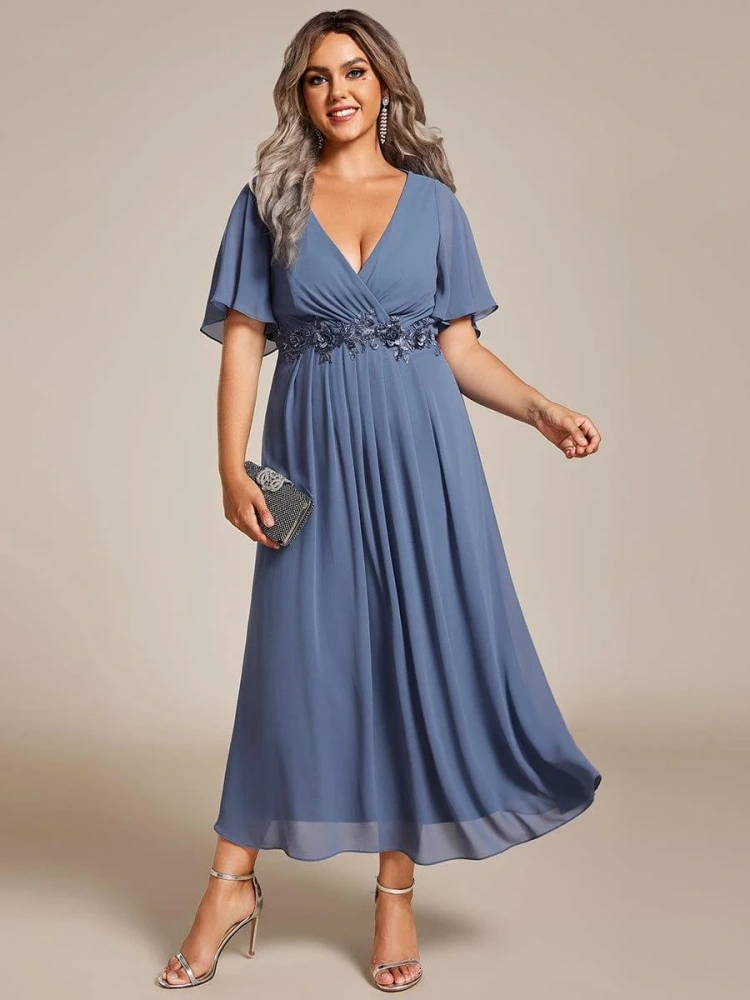
Plus-size shoppers can face fewer options when shopping for weddings, parties, graduations, and other formal occasions. That makes occasionwear an opportunity to offer fashion-forward designs specifically made in extended sizes, rather than treating plus-size customers as an afterthought.
Look for:
- Satin midi dresses
- Lace dresses
- Chiffon maxi dresses
- One-shoulder dresses
- Flutter-sleeve dresses
- Ruched evening dresses
- Sequin party dresses
Occasionwear can support higher retail prices because shoppers are buying for a specific event and often place more value on the overall look. The downside is that fit expectations are higher, so sample testing and clear return policies become especially important.
7. Plus Size Shirt Dresses
Best for: Workwear, casual and mature shoppers
- Typical source price: $12-$20
- Suggested selling price: $40-$60
- Estimated gross margin: 50-65%
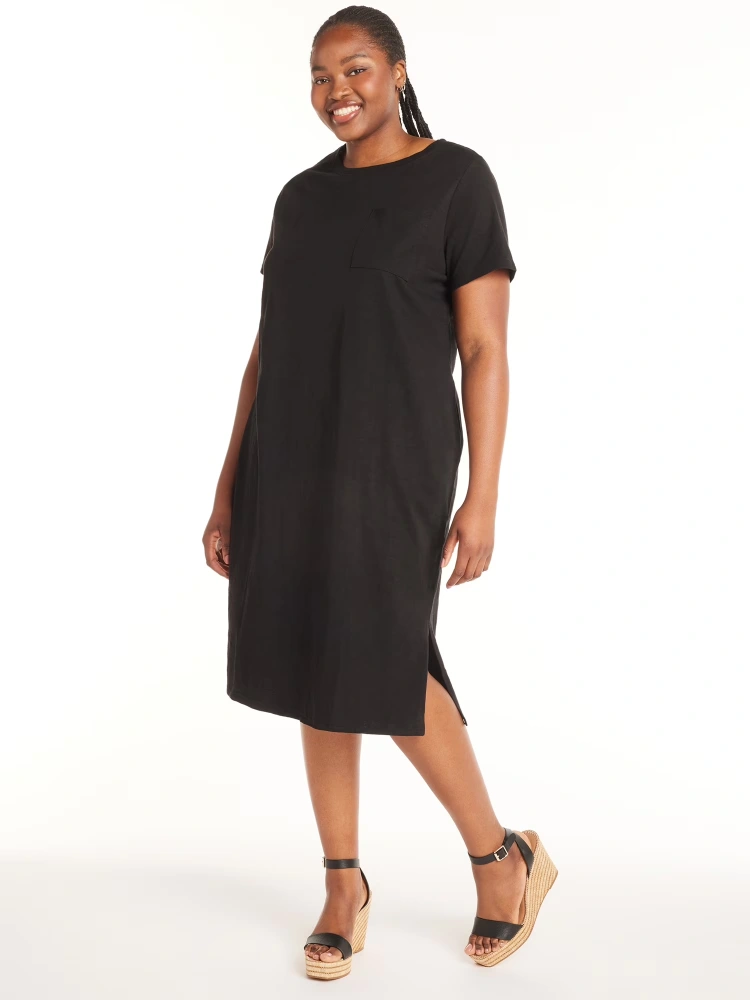
Shirt dresses appeal to shoppers who want something polished without feeling restrictive. The combination of a structured collar and button-front design with a relaxed skirt makes the style easy to wear for work, errands, or casual occasions.
This is also a useful category if you want to move away from the crowded “sexy plus-size fashion” positioning.
Prioritize:
- Waist ties or belts
- Stretch or soft woven fabric
- Bust-friendly button placement
- Midi length
- Pockets
- Defined shoulder/waist structure
These details help the dress feel intentionally designed for a curvier body rather than simply sized up from a straight-size pattern.

How to Build a Profitable Plus Size Dress Dropshipping Store
1. Choose a Specific Plus Size Fashion Niche
I wouldn't build a store around “plus size dresses” as the entire concept. That's simply too broad.
Instead, pick a more specific angle. You could focus on plus size workwear, vacation dresses, occasionwear, going-out fashion, or affordable everyday dresses.
Because once you know exactly who you're selling to and what she's shopping for, pretty much everything gets easier. Your branding becomes more focused, your content has a clear direction, and your ads don't have to speak to every plus-size shopper at once.
2. Prioritize Suppliers That Actually Understand Plus-Size Fit
Just because a supplier offers sizes 1X through 6X doesn't automatically make them a good plus-size supplier.
That's the bare minimum.
What you really want to see is accurate measurement charts, proportional grading, clear stretch information, consistent sizing, quality samples, and reliable inventory.
And ideally, the supplier should actually design around plus-size proportions rather than taking a straight-size pattern and simply making everything bigger.
3. Build Product Pages Around Fit Confidence
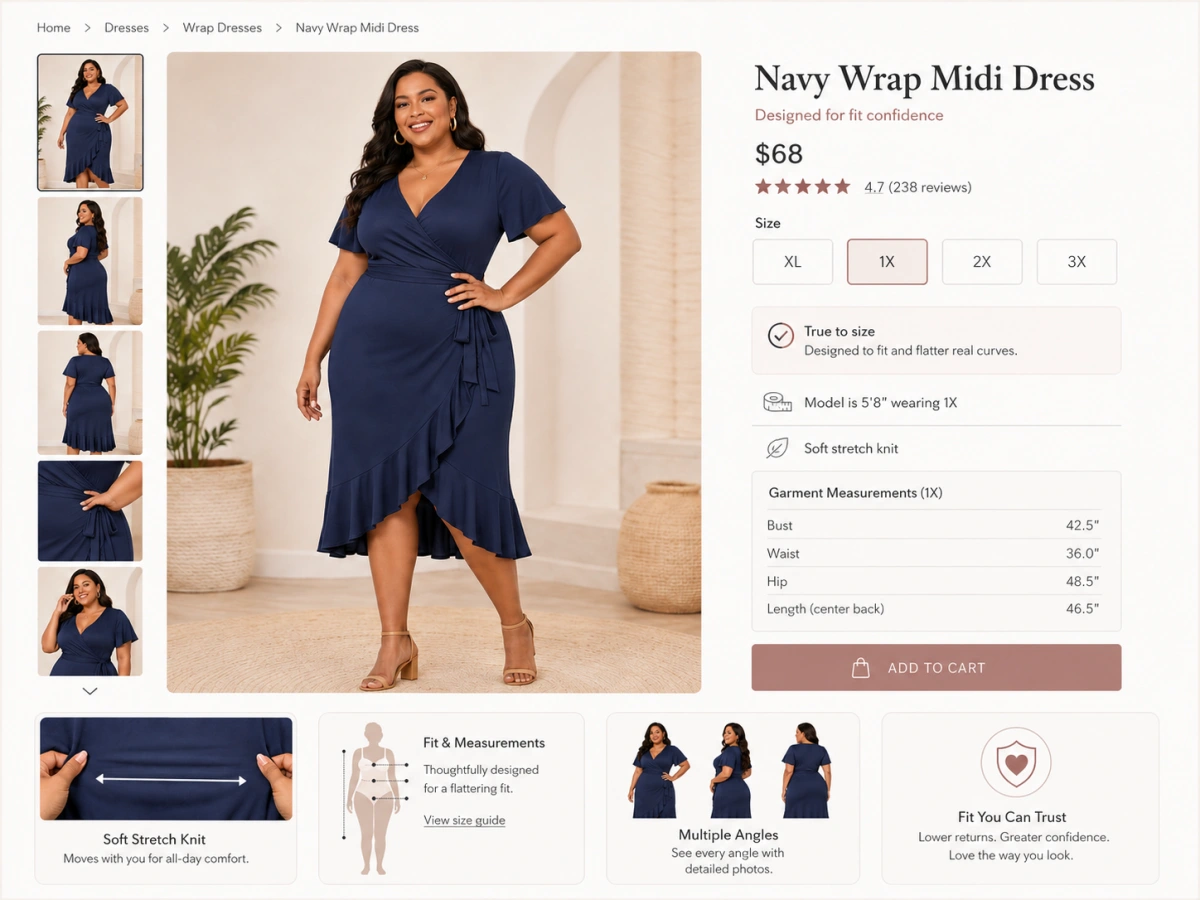
For plus-size fashion, your product page has one very important job:
Get the shopper to feel confident that the dress will fit.
That's it.
Think about all the questions she might have before clicking Add to Cart.
How does it fit around the bust? Is there enough room around the hips? Is the fabric stretchy? How long is the dress? What size is the model wearing?
Your product page should answer those questions before the customer has to ask.
At a minimum, include:
- Detailed bust, waist, hip, and length measurements
- Model height, measurements, and size worn
- Fabric composition and stretch information
- Fit notes such as true-to-size, relaxed, or fitted
- Multiple photos showing the dress from different angles
The less guesswork the customer has to do, the easier it is to buy with confidence.
And that's important because in fashion, fit uncertainty can quickly turn into returns.
4. Price for Margin, Not Just Markup
Here's a mistake I see all the time in dropshipping: someone finds a dress that costs $20, sells it for $40, and thinks they've got a 100% markup and a great business.
Not quite.
That $20 difference still has to cover shipping, payment processing, discounts, advertising, returns, refunds, and all the other costs sitting between a sale and actual profit.
So instead of asking, “How much can I mark this dress up?” start with the margin you actually want to keep.
Then work backward.
5. Use Real Plus-Size Content to Drive Conversions
This is a big one for fashion.
People don't just want to see what the dress looks like. They want to see how it looks and moves on an actual body.
That's why try-on videos and UGC can be so useful here.
Think about content like:
- Try-on videos
- UGC
- Diverse plus-size models
- Different body shapes and heights
- Close-ups showing fabric stretch
- Videos showing movement and fit
- Styling the same dress for different occasions
And whenever possible, don't rely entirely on the supplier's photos.
Create content that answers the questions customers are already asking themselves: Does it stretch? How does it move? Where does it hit on the body? Can I wear it to work, dinner, vacation, or a night out?
6. Automate Your P&L Process From Day One
There are plenty of ways to track your store's real profitability from the very first order, yet surprisingly few dropshippers think about automating it. Plus-size sellers are no exception.
The problem is that knowing your real profit means capturing every cost attached to an order, not just the obvious ones. It's easy to track revenue, COGS, and ad spend while overlooking shipping fees, payment processing fees, refunds, chargebacks, and all the smaller costs that quietly chip away at your margin.
And in apparel, where returns can quickly eat into profit, those blind spots matter.
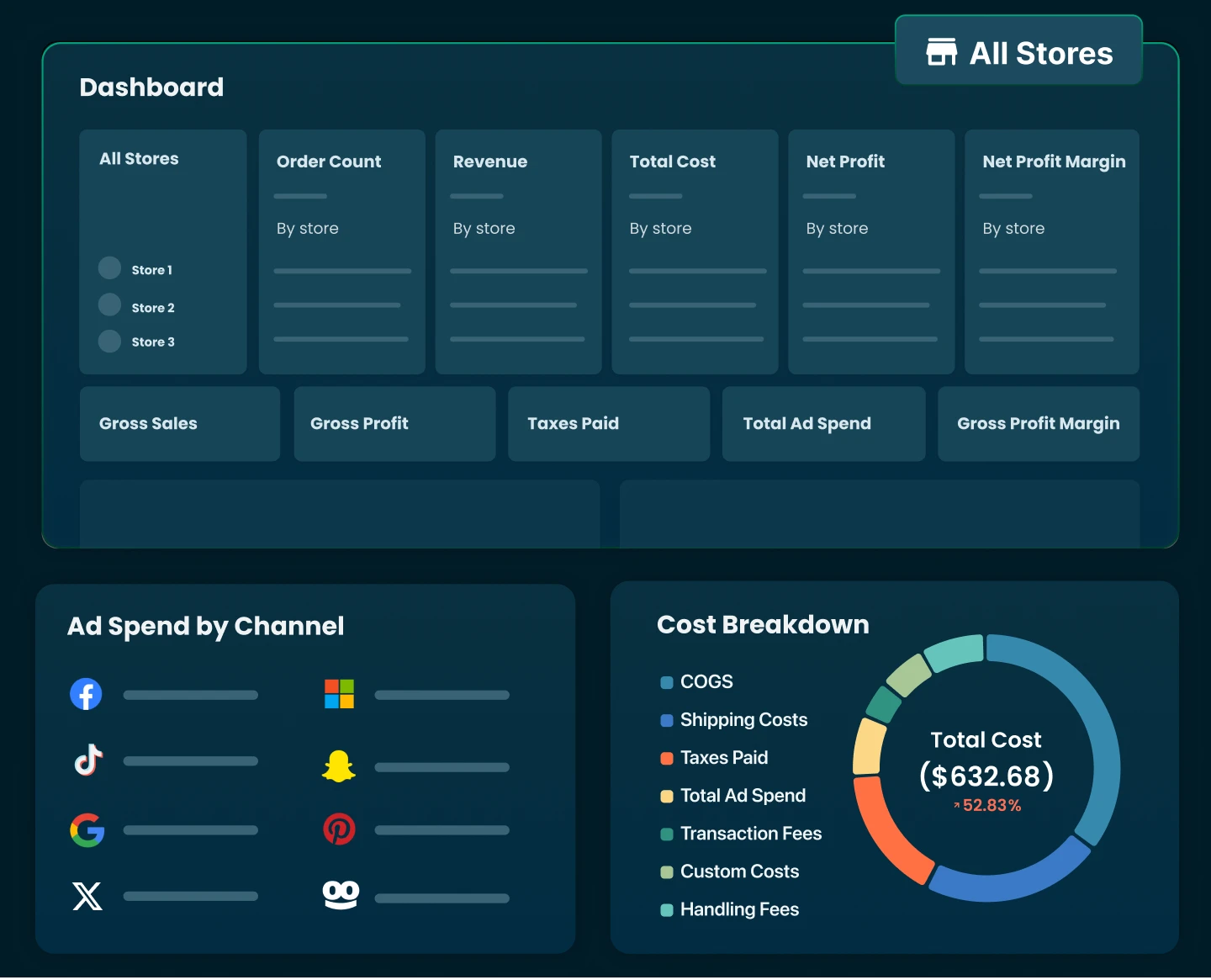
That's the case for setting up an automated P&L system from the start rather than bolting one on later. TrueProfit is worth a look here because it goes deeper into cost tracking than most profit analytics tools, letting you track and customize a far wider range of costs so the net profit on screen is much closer to what you actually take home.
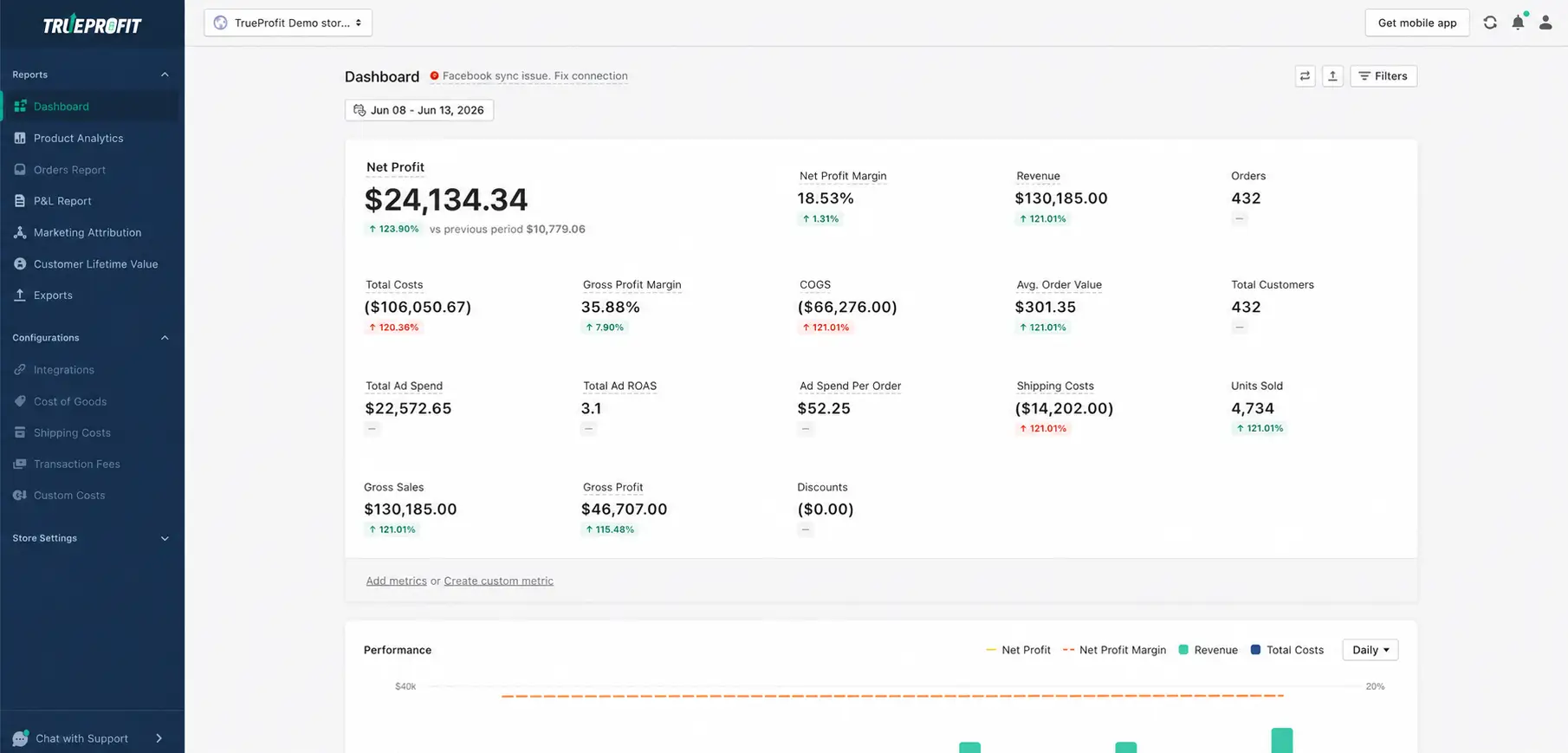
A few features that make it useful:
- Real-time net profit: see what's left after costs rather than judging performance from revenue or ROAS alone.
- Automated P&L tracking: pulls revenue and expenses together automatically, so there's no spreadsheet to maintain by hand.
- Detailed cost tracking: covers COGS, shipping, payment fees, ad spend, refunds, chargebacks, taxes, and custom costs instead of a simplified profit calculation.
- Custom cost settings: add your own cost types and configure how they're calculated, so the dashboard reflects your actual business model.
- Product-level profit analytics: find out which dresses actually make money after costs, not just which ones sell the most.
- Ad tracking: Automatically sync ad spend from multiple platforms and track your ad costs alongside your store's net profit.
Final Thoughts
Plus-size fashion gives dropshippers a compelling opportunity, but it's also a category where customer experience can make or break your margins.
A dress that looks great in an ad but fits poorly can turn into refunds, replacements, negative reviews, and wasted ad spend very quickly.
So I'd keep the strategy simple: choose a focused niche, work with reliable suppliers, validate products with samples, and make fit information impossible to miss.
Once the store starts generating sales, let your profit data guide the next move. Scale the products and channels that make money, not simply the ones that generate the most revenue.

Irene Le is the Content Manager at TrueProfit, specializing in crafting insightful, data-driven content to help eCommerce merchants scale profitably. With over 5 years of experience in content creation and growth strategy for the eCommerce industry, she is dedicated to producing high-value, actionable content that empowers merchants to make informed financial decisions.