How to Start a Print on Demand Shoe Business That Sells (2026)


Table of Contents
- 1. What Are Print on Demand Shoes?
- 2. Why Sell Print on Demand Shoes?
- 3. Types of Print on Demand Shoes You Can Sell
- 4. The Best Print on Demand Shoe Suppliers for Your Business in 2026
- 5. How to Start Your Print on Demand Shoe Business in 5 Steps
- 6. Designing for Print on Demand Shoes: Best Practices
- 7. Pricing Your Print on Demand Shoes for Profit
- 8. Marketing and Selling Your Custom Footwear
- 9. Challenges and Considerations for POD Shoe Sellers
- 10. Is Selling Print on Demand Shoes Profitable?
- 11. Final Thoughts
- 12. Print On Demand Shoes FAQs
Print on demand (PoD) shoes offer e-commerce entrepreneurs a unique opportunity to design and sell custom footwear without the complexities of inventory management. This low-risk business model capitalizes on the growing demand for personalized fashion, enabling sellers to tap into a creative market with minimal upfront investment.
This comprehensive guide will walk you through understanding the market, choosing the right suppliers, designing unique footwear, setting up your store, and effectively marketing your custom shoes to maximize your profit potential.
In this blog:
- 1. What Are Print on Demand Shoes?
- 2. Why Sell Print on Demand Shoes?
- 3. Types of Print on Demand Shoes You Can Sell
- 4. The Best Print on Demand Shoe Suppliers for Your Business in 2026
- 5. How to Start Your Print on Demand Shoe Business in 5 Steps
- 6. Designing for Print on Demand Shoes: Best Practices
- 7. Pricing Your Print on Demand Shoes for Profit
- 8. Marketing and Selling Your Custom Footwear
- 9. Challenges and Considerations for POD Shoe Sellers
- 10. Is Selling Print on Demand Shoes Profitable?
- 11. Final Thoughts
- 12. Print On Demand Shoes FAQs
What Are Print on Demand Shoes?
1. Definition
Print on demand (PoD) shoes are custom footwear produced only after a customer places an order. Instead of holding inventory, sellers upload designs to a PoD supplier, who handles printing, production, and shipping directly to the customer.
This model removes the need for upfront stock, lowers financial risk, and allows sellers to launch and test designs quickly under their own brand.
2. The Growing Demand for Custom Footwear
The demand for personalized products, especially in fashion, continues to rise as consumers shift toward more unique and expressive styles. This trend is clearly reflected in market data.
The global custom shoes market is projected to grow significantly, reaching $16.8 billion by 2033 with a 12.3% CAGR. Even more conservative estimates show steady expansion, with the market expected to surpass $1.2 billion by 2034 .
At the same time, the broader footwear market is also expanding, projected to hit $675+ billion by 2033, with consumers increasingly favoring premium, limited, and personalized products over mass-produced options.
This growth is largely driven by a shift in consumer behavior: buyers want products that reflect their identity, not just functionality. For sellers, this creates a clear opportunity to build niche brands around unique designs, while for customers, it turns footwear into a form of self-expression rather than just a commodity.

Why Sell Print on Demand Shoes?
Selling print on demand shoes offers a compelling business opportunity for aspiring entrepreneurs, artists, and dropshippers alike. This model is particularly attractive due to its inherent flexibility and reduced barriers to entry compared to traditional retail.
1. Low Startup Costs and Inventory-Free Model
One of the most significant advantages of the print on demand model for shoes is the minimal financial outlay required to get started. Unlike conventional retail, you don't need to invest heavily in purchasing or manufacturing stock upfront.
This offers two key benefits:
- Eliminating upfront investment: By removing the need to buy inventory, you save on warehousing costs, stock management, and the risk of unsold goods. This frees up capital that can be allocated to design, marketing, and growing your brand more effectively.
- Focus on design and marketing, not logistics: By outsourcing production and fulfillment to your PoD supplier, you can dedicate your time and resources to what you do best: creating captivating shoe designs and promoting your brand to your target audience.
2. Creative Freedom and Niche Opportunities
The print on demand model is a dream for creatives, offering an unparalleled level of design flexibility:
You can:
- Bring unique visions to life: Artists and designers can translate their unique artwork, patterns, slogans, or photographs directly onto various shoe types, creating truly original products without the constraints of mass production.
- Target highly specific audiences: This creative freedom enables sellers to identify and cater to extremely niche markets. Whether it's shoes for cat lovers (explore print on demand pet products for more ideas), sneakerheads passionate about sci-fi art, or designs appealing to a specific lifestyle, PoD allows for hyper-targeted product lines that resonate deeply with particular customer segments.
3. Scalability and Dropshipping Integration
The PoD model is inherently scalable, making it an excellent choice for businesses aiming for growth without the typical operational challenges.
As your business grows, your PoD supplier handles the increased production volume without you needing to expand your physical infrastructure or hire more staff for manufacturing. You can simply add more designs or product types without worrying about inventory capacity.
Moreover, leading print on demand shoe suppliers integrate smoothly with popular e-commerce platforms such as Shopify, Etsy, and WooCommerce. This integration automates order fulfillment, making the process efficient and hands-off for the seller.
Types of Print on Demand Shoes You Can Sell
The world of print on demand footwear is diverse, offering many styles to customize and sell. Each type appeals to different tastes and occasions, providing ample opportunities to cater to various niches, including exploring unique non-traditional print on demand product ideas to expand your offerings.
1. Sneakers (High-Tops, Low-Tops, Athletic)
Sneakers dominate the custom footwear space thanks to their versatility and broad appeal. High-tops give you more room for bold, detailed designs, while low-tops work better for cleaner, minimalist styles. This category is ideal if you’re targeting streetwear, lifestyle, or sports-inspired niches.
2. Slip-Ons and Canvas Shoes
Slip-ons and canvas shoes are built for simplicity and visual impact. Their smooth surfaces make them perfect for all-over prints like patterns, illustrations, or vibrant artwork. They naturally fit casual, artistic, and lifestyle-driven brands.
3. Flip-Flops and Sandals
These are highly seasonal but effective for tapping into travel, beach, and summer-focused audiences. Their lower price point makes them easier to sell as impulse purchases or bundle with other products to increase order value.
4. Boots (Combat, Ankle, Fashion)
Boots bring a different positioning, more premium, more niche. They work well for specific aesthetics like streetwear, gothic, or outdoor-inspired styles, and allow you to target more defined communities willing to pay higher prices.
5. Specialty Footwear (Slippers, Socks)
This category expands beyond traditional shoes into more giftable and lifestyle products. Slippers and socks are easy entry points for customers and can work well as add-ons, helping you diversify your catalog without overcomplicating your store.
The Best Print on Demand Shoe Suppliers for Your Business in 2026
Choosing the right supplier directly affects your product quality, pricing power, fulfillment speed, and ultimately your margins. Each platform is built for a different type of seller, so the “best” option depends on how you want to position your brand.
1. Printful

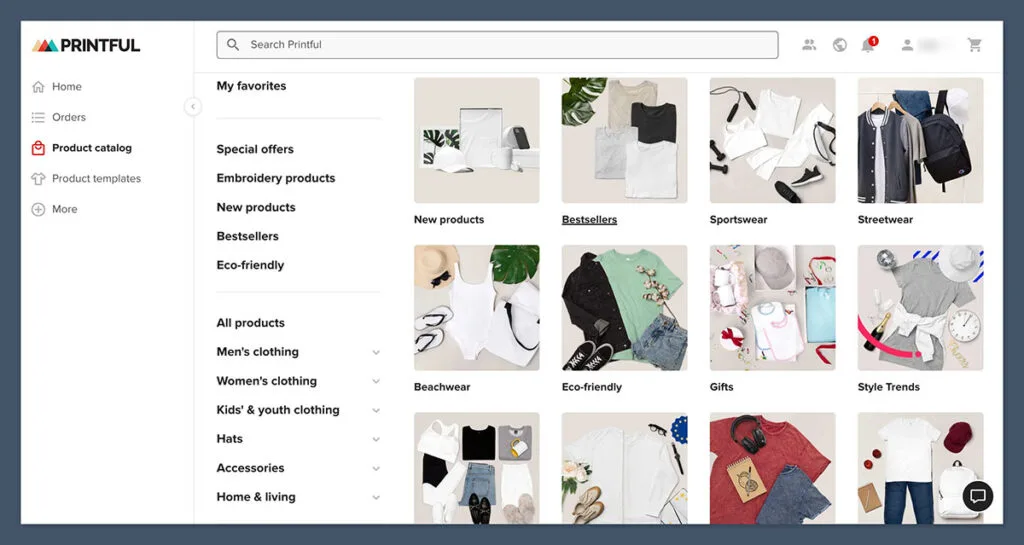
Printful positions itself as a premium, all-in-one PoD partner focused on consistency and brand reliability rather than lowest cost. It’s built for sellers who want fewer operational headaches and are willing to accept slightly lower margins in exchange for stable quality and smooth fulfillment.
Key features
- High-quality printing (DTG) with consistent output
- Built-in design tool with 3D mockups
- Seamless Shopify and ecommerce integrations
- Warehousing and branding options
Pros
- Reliable quality and fulfillment
- Strong customer support and infrastructure
- Easy to scale without operational complexity
Cons
- Higher base costs, which reduce margin flexibility
2. Printify
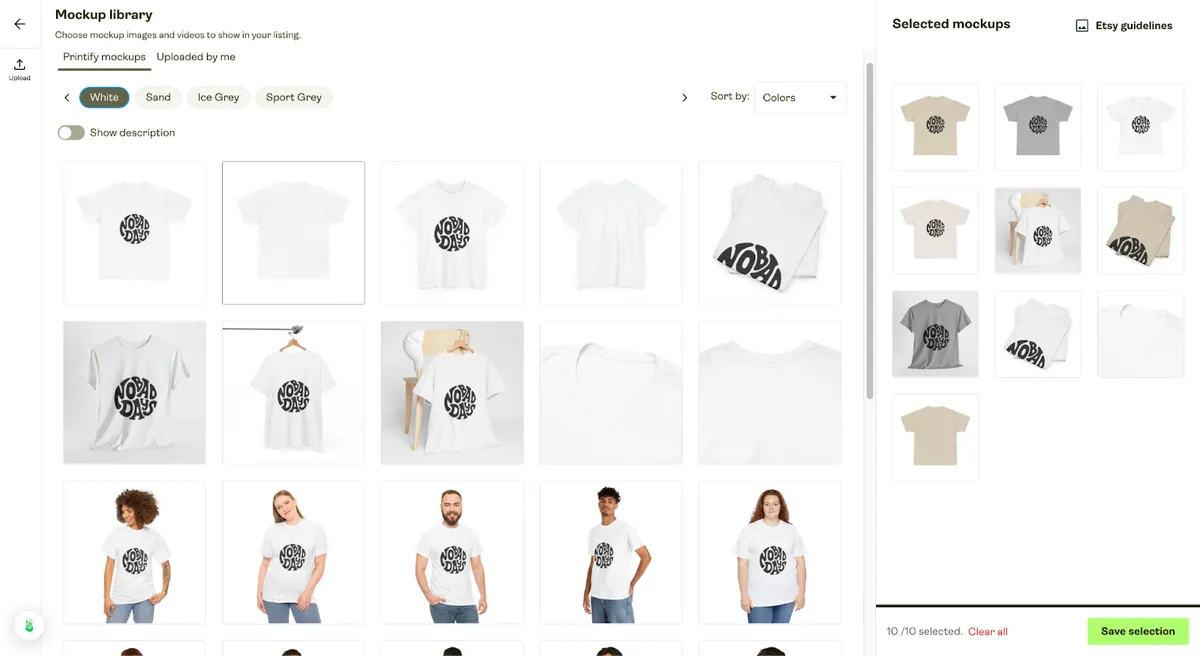
Printify is best understood as a marketplace of suppliers, not a single manufacturer. It gives you control over cost and product variety, making it ideal for sellers who want to optimize margins or experiment with different suppliers and price points.
Key features
- Multiple suppliers per product
- Wide range of footwear styles and pricing tiers
- Global fulfillment network
- Supplier comparison system
Pros
- Strong margin potential through cost optimization
- Large catalog and flexibility
- Easy to test and switch suppliers
Cons
- Quality inconsistency across providers
- Requires active management and testing
3. JetPrint
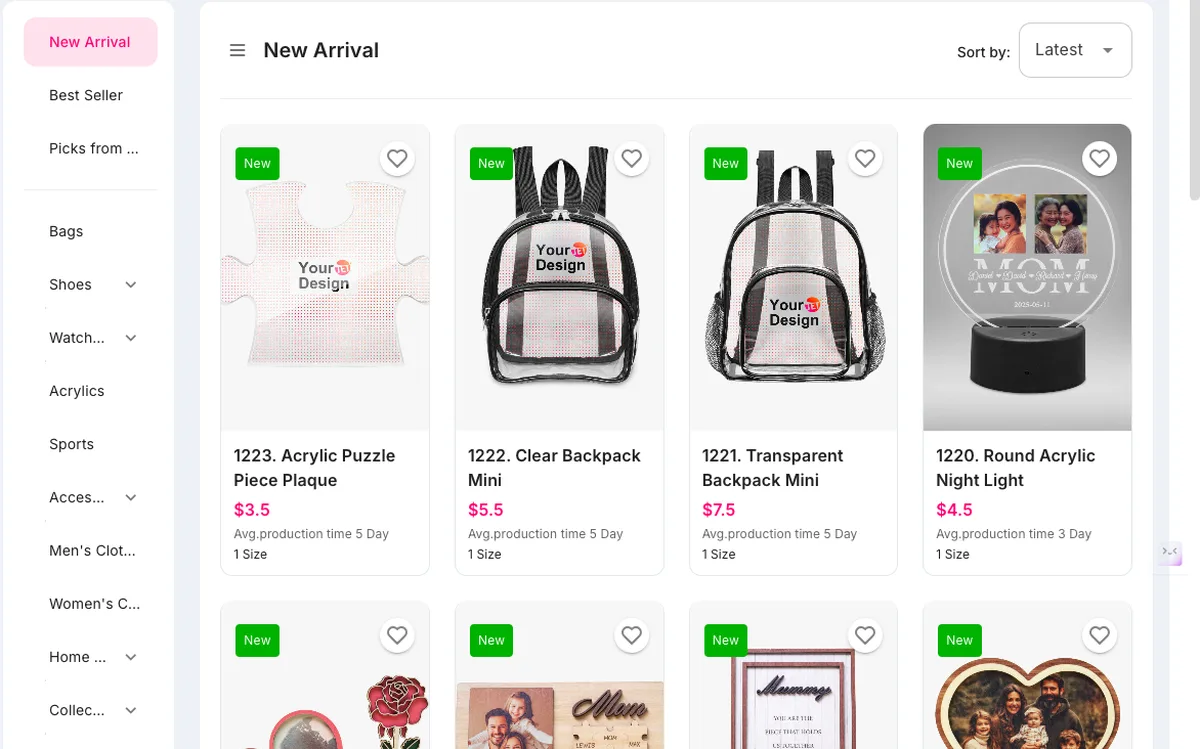
JetPrint is a footwear-first PoD supplier, meaning its entire system is optimized specifically for shoes. Compared to general PoD platforms, it offers more unique shoe structures and better craftsmanship in this category.
Key features
- Specialized footwear manufacturing
- More distinctive shoe designs beyond basic canvas
- Free templates and Shopify app integration
Pros
- Better product differentiation in footwear
- Strong quality control for shoes
- Built specifically for shoe-focused brands
Cons
- Limited ecosystem outside footwear
4. Contrado
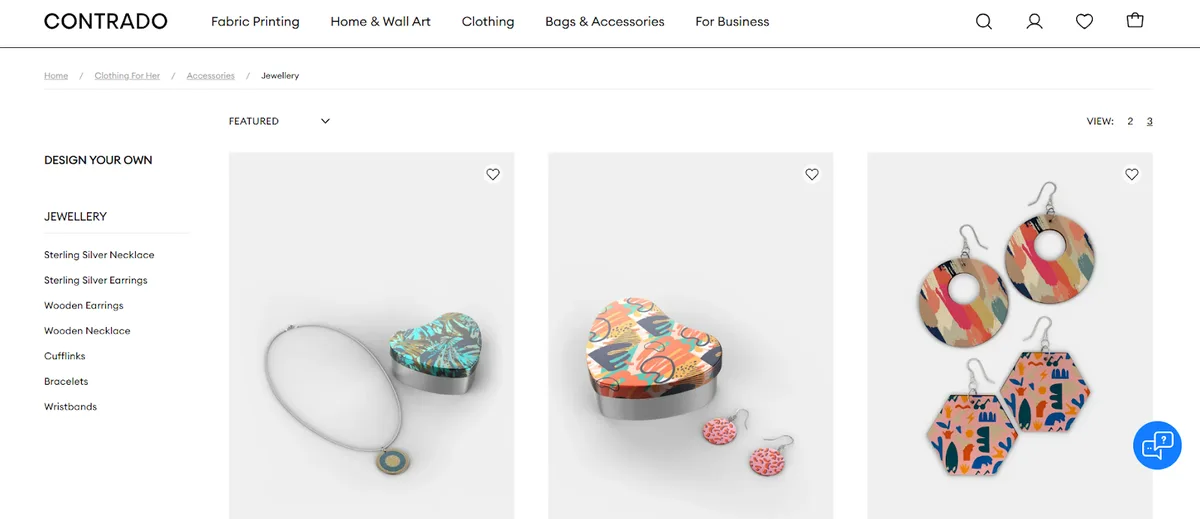
Contrado operates at the luxury end of the PoD spectrum, focusing on handmade production and premium materials. It’s less about volume and more about brand positioning, pricing power, and uniqueness.
Key features
- Handmade, in-house production
- Premium materials (e.g. leather)
- Focus on craftsmanship and sustainability
Pros
- High perceived value and strong pricing power
- Unique, hard-to-copy products
- Ideal for premium branding
Cons
- High costs require strong branding to stay profitable
- Slower production times
5. Art of Where
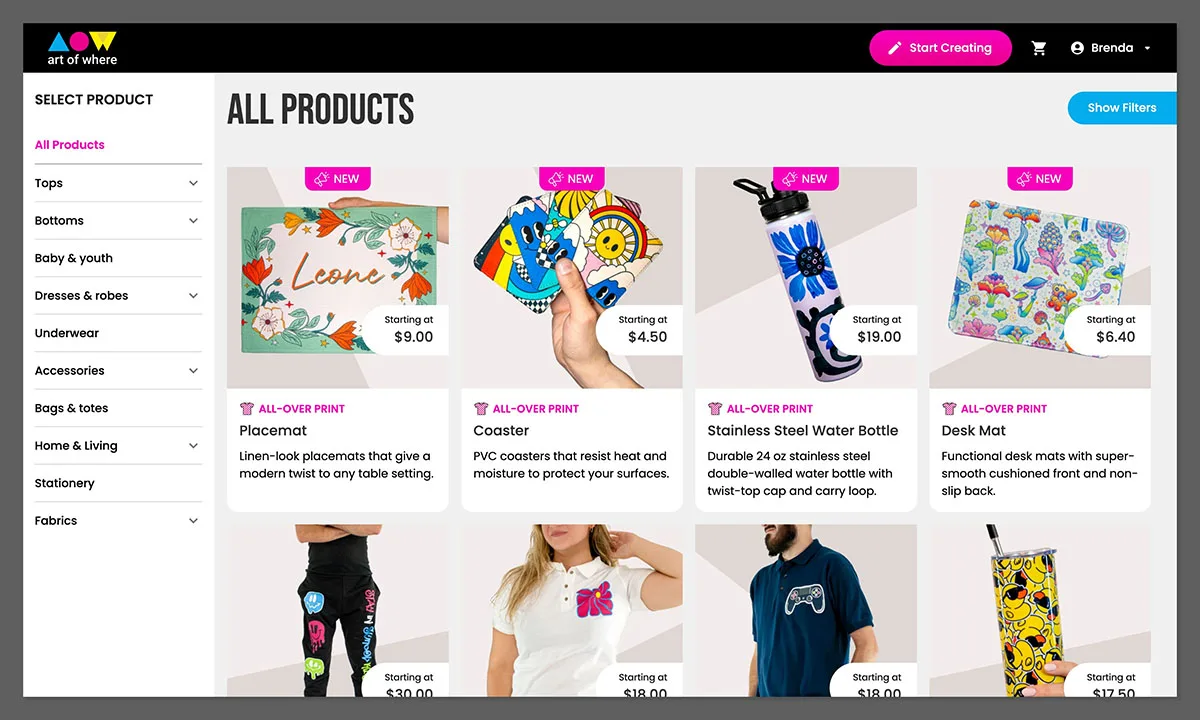
Art of Where is built around a creator-first, artist-driven model, making it a strong fit for design-heavy or community-based brands. It sits between premium and mid-tier, with a focus on quality and ethical production.
Key features
- Strong support for independent artists
- High-quality fabric printing
- Ethical, transparent production
Pros
- Great for design-led or niche brands
- Strong storytelling and brand alignment
- Consistent print quality
Cons
- Smaller scale than major providers
- Fewer integrations and less operational flexibility

How to Start Your Print on Demand Shoe Business in 5 Steps
Launching a print on demand shoe business can be straightforward if you follow a structured approach. Just like how to start a print on demand business generally, specific steps for shoes are crucial.
Step 1. Niche Down and Identify Your Target Audience
Start by finding a clear angle instead of selling “for everyone.” Look for specific communities, aesthetics, or use cases where custom shoes make sense, from hobby-based niches like gaming or hiking to identity-driven groups like teachers or creatives.
The goal is to understand who you’re designing for: their style, preferences, and willingness to pay. This will shape everything from your designs to pricing and marketing.
Step 2. Choose Your Print on Demand Suppliers
Not all suppliers are equal. Focus on what actually impacts your business: product quality, base cost, shipping time, and how well they integrate with your store.
Before committing, order samples. This is non-negotiable if you want to avoid quality issues. It’s the fastest way to validate print accuracy, materials, and overall customer experience before you start selling.
Step 3. Create Unique Shoe Designs
Your designs are your main differentiator, especially in a crowded market. Whether you use tools like Illustrator or Canva, the key is not complexity but clarity, designs that fit a specific audience and stand out instantly.
Work closely with your supplier’s templates. Footwear isn’t a flat canvas, so placement, scaling, and bleed areas matter more than you think. Always export in high resolution to avoid print quality issues.
Step 4. Set Up Your Online Store
Choose a platform that matches your goals. Shopify works well if you want full control and scalability, while Etsy gives you faster access to existing demand.
Once integrated with your supplier, focus on how you present your product. Clean mockups, clear descriptions, and a strong brand angle will matter more than listing dozens of designs.
Step 5. Market and Launch Your Brand
Before launching, build some level of demand. Tease your designs, share your process, or collect emails so you’re not starting from zero.
A soft launch can help you test what actually resonates. Early feedback on designs, pricing, and messaging is often more valuable than trying to perfect everything upfront.
Designing for Print on Demand Shoes: Best Practices
In print on demand, design quality is not just about aesthetics, it directly impacts perceived value, conversion rate, and return risk. The difference between a “cool design” and a product that sells often comes down to execution details.
- Design for perceived value, not just creativity. Clean, bold, and niche-relevant designs consistently outperform complex artwork that looks good on screen but loses clarity on shoes
- Treat templates as constraints, not guidelines. The best designs are built around shoe panels and seams from the start, not adjusted after, which is where most quality issues come from
- Optimize for real-world viewing, not zoomed-in previews. Customers see shoes from a distance, so contrast, readability, and composition matter more than fine details
- Print quality = brand trust. Low-resolution or poorly adapted designs immediately signal “cheap product,” increasing refunds and hurting long-term brand equity
- Mockups are your conversion lever. Strong, lifestyle-oriented visuals can make the same design feel premium and justify higher pricing without changing the product itself
Pricing Your Print on Demand Shoes for Profit
Pricing isn’t just about covering costs. It determines your margins, positioning, and how customers perceive your brand. Most sellers underprice because they only look at product cost, not the full picture.
1. Understand Your True Costs
Before setting any price, you need a clear view of what each sale actually costs you.
This includes your base product cost from the supplier, shipping fees, platform and payment processing fees, and most importantly, your customer acquisition cost from ads. These layers add up quickly, and missing just one can turn a “profitable” product into a losing one.
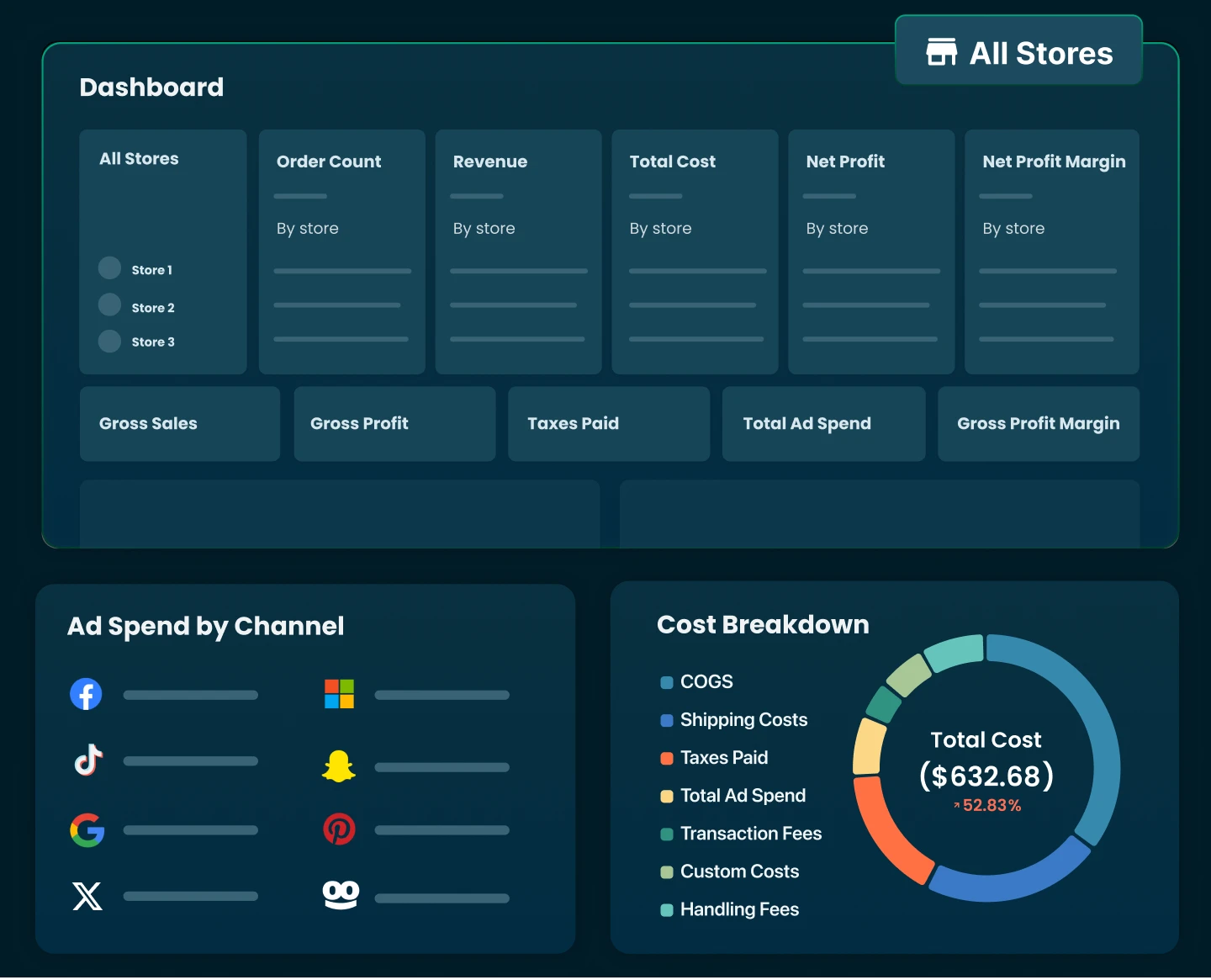
This is where many sellers struggle. Tracking everything manually across spreadsheets is not only time-consuming but often inaccurate. Tools like TrueProfit help centralize these costs in one place, so you can see your real profit per order instead of guessing.
2. Price Against the Market, Not in Isolation
Your price doesn’t exist in a vacuum. Customers are always comparing, even if subconsciously.
Look at similar products in your niche, from other PoD sellers to established brands. This gives you a realistic range of what customers are willing to pay and where you can position yourself, whether that’s more affordable, competitive, or premium.
Tactics like psychological pricing or simple bundles can also increase perceived value without significantly changing your cost structure.
3. Price for Value, Not Just Cost
The biggest pricing mistake is treating your product like a commodity.
If your designs are distinctive, niche-specific, or emotionally resonant, you can price higher. Customers are not just buying shoes, they’re buying identity, style, and uniqueness.
Stronger branding, better mockups, and clear positioning allow you to charge more without resistance. In many cases, improving perceived value has a bigger impact on profit than trying to reduce costs.
Marketing and Selling Your Custom Footwear
Even great designs don’t sell on their own. In print on demand, distribution and positioning matter just as much as the product itself.
1. Social Media and Influencer Leverage
Custom shoes are inherently visual, which makes platforms like Instagram, TikTok, and Pinterest your primary growth channels. The goal is not just to post products, but to create content that fits how people already consume these platforms, short videos, styling ideas, and trend-driven visuals.
Instead of chasing large influencers, focus on smaller creators within your niche. Micro-influencers often convert better because their audience is more specific and trust-driven, which matters more than reach when you’re selling design-led products.
2. SEO and Content That Compounds Over Time
While social brings short-term traffic, SEO builds long-term demand. Optimizing your product pages and content around keywords like custom sneakers or personalized shoes helps you capture buyers who are already searching with intent.
Beyond product pages, content plays a key role. Articles around styling, trends, or niche-specific ideas not only bring in traffic but also position your brand as more than just another store, which increases trust and conversion.
3. Paid Ads That Actually Convert
Paid ads are where most of your revenue will likely come from, but also where most profit is lost if not managed properly.
The key is precise targeting and strong creatives. Platforms like Facebook and Instagram allow you to reach specific audiences based on interests and behaviors, but your ad still needs to stand out visually to work.
Retargeting is where the real efficiency happens. Showing ads to people who already visited your store or added to cart often delivers the highest ROI, turning lost traffic into actual revenue.
Challenges and Considerations for POD Shoe Sellers
While print on demand shoes are easy to launch, most of the real challenges show up after you start getting orders. What looks simple upfront can quickly impact your margins, customer experience, and brand reputation if not managed carefully.
- You don’t control production, which means quality issues and inconsistencies can happen, and every bad product reflects on your brand, not the supplier
- Custom products limit flexibility on returns, so unclear policies or mismatched expectations often lead to disputes and negative reviews
- Slower production and shipping times can quietly kill conversion rates if customers expect Amazon-level speed
- “Free shipping” and hidden costs often erode margins more than expected, especially once you factor in ads and refunds
- Designs are both your biggest advantage and your biggest risk, easy to copy, easy to get wrong legally, and hard to protect without strong branding
Is Selling Print on Demand Shoes Profitable?
Yes, selling print on demand shoes can be a highly profitable venture when approached strategically. Its inherent low-risk nature allows for scalability and high-profit margins if managed correctly.
Several elements play a crucial role in determining the profitability of your PoD shoe business:
- Niche selection: A well-defined and eager niche often allows for higher pricing and more effective marketing, leading to better profit margins.
- Design appeal: Unique, high-quality, and desirable designs are more likely to sell at premium prices, directly increasing your profit per unit.
- Marketing effectiveness: Efficient marketing campaigns that generate sales without excessive ad spend contribute significantly to overall profitability.
- Supplier costs vs. selling price strategy: Successfully balancing the base cost from your supplier with a competitive yet profitable selling price is fundamental to your profit margins.
Final Thoughts
Print on demand shoes offer one of the most accessible ways to build a custom product brand today. With no inventory risk and growing demand for personalized fashion, the barrier to entry has never been lower.
But the real challenge isn’t starting, it’s staying profitable. Success comes down to how well you execute across niche selection, design, pricing, and marketing. More importantly, it comes down to whether you actually understand your numbers.
Most POD sellers underestimate how quickly costs add up. Product costs, shipping, platform fees, and especially ad spend can quietly eat into margins. A product that looks profitable on paper can easily become a loss once everything is accounted for.
This is where tools like TrueProfit become essential. Instead of manually tracking everything across spreadsheets, TrueProfit automatically pulls in your orders, ad spend, product costs, and fees to give you a real-time view of your net profit. You can instantly see which products, designs, or campaigns are actually making money, and which ones are draining your budget.
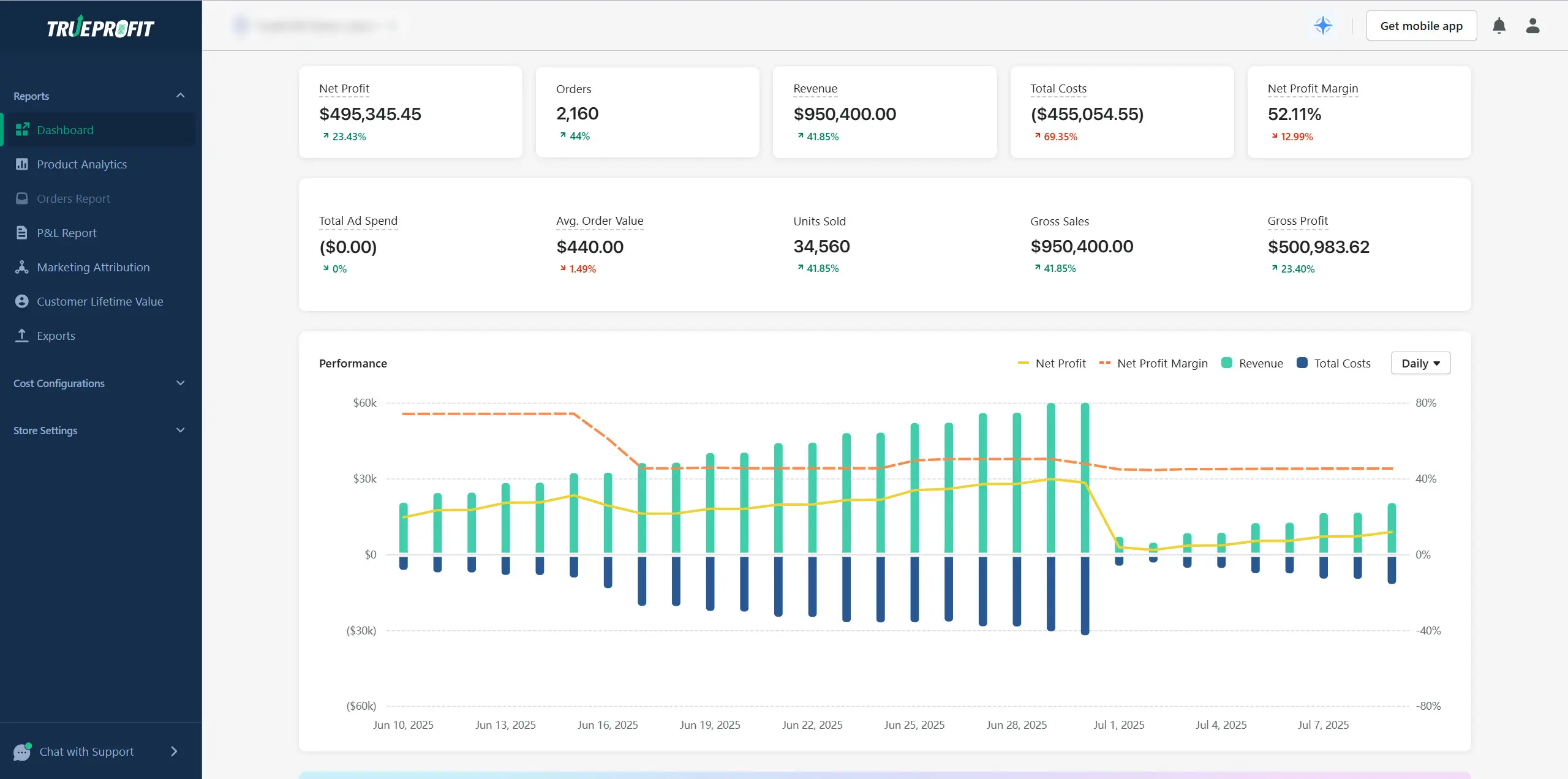
For POD sellers running multiple designs, testing creatives, or scaling ads, this level of clarity is what allows you to make faster, smarter decisions. Instead of guessing what works, you’re optimizing based on real profit data.

Harry Chu is the Founder of TrueProfit, a net profit tracking solution designed to help Shopify merchants gain real-time insights into their actual profits. With 11+ years of experience in eCommerce and technology, his expertise in profit analytics, cost tracking, and data-driven decision-making has made him a trusted voice for thousands of Shopify merchants.