How To Start A Profitable Print On Demand Business On Shopify In 2026


Table of Contents
- 1. What Is Shopify Print on Demand?
- 2. How to Start a Shopify Print on Demand Business
- 3. Choosing the Right POD App for Shopify
- 4. Is Shopify Print on Demand Profitable?
- 5. What It Costs to Start a Shopify POD Business
- 6. How To Get Sales for Your Stores
- 7. Common Mistakes to Avoid
- 8. Scaling Your Shopify Print on Demand Business
- 9. Final Thoughts
- 10. Shopify Print On Demand FAQs
Shopify print on demand (POD) has become one of the easiest ways to start an ecommerce business today, no inventory, no upfront stock, and no fulfillment headaches.
But while the barrier to entry is low, building a profitable POD store is a different game.
This guide breaks down exactly how to start, grow, and scale a Shopify print on demand business from choosing the right niche and suppliers to pricing your products and tracking what actually makes you money.
In this blog:
- 1. What Is Shopify Print on Demand?
- 2. How to Start a Shopify Print on Demand Business
- 3. Choosing the Right POD App for Shopify
- 4. Is Shopify Print on Demand Profitable?
- 5. What It Costs to Start a Shopify POD Business
- 6. How To Get Sales for Your Stores
- 7. Common Mistakes to Avoid
- 8. Scaling Your Shopify Print on Demand Business
- 9. Final Thoughts
- 10. Shopify Print On Demand FAQs
What Is Shopify Print on Demand?
Shopify print on demand (POD) lets you sell custom-designed products without holding any inventory. You design the products, list them in your store, and when a customer orders, a third-party supplier prints and ships the item directly to them. You never touch the stock.
The model removes the biggest barriers to starting an online store: upfront inventory costs, warehousing, and fulfillment logistics.
How it works
- A customer places an order on your Shopify store.
- The order automatically syncs to your POD supplier (like Printify or Printful) via app integration.
- The supplier prints your design, packs the product, and ships it to your customer.
- You collect the selling price; the supplier takes their base cost. What remains is your profit.
Why Shopify Works Well for POD
Shopify is one of the most popular e-commerce platforms for POD sellers because of its deep app integrations, reliable checkout, and strong branding tools. You can connect Printful or Printify in minutes, customize your storefront without touching code, and use built-in analytics to track performance.
The app ecosystem is a real strength. Whether you need email marketing, upsells, SEO tools, or profit tracking, there is a Shopify app for it.

How to Start a Shopify Print on Demand Business
Starting a Shopify POD store comes down to six steps: setting up your store, picking a niche, choosing a supplier, designing products, pricing correctly, and launching with a marketing plan.
1. Set Up Your Shopify Store
Start on the Basic Shopify plan at $39/month. It covers everything a new seller needs. Configure your store name, currency, and legal pages (Privacy Policy, Refund Policy, Terms of Service) from the beginning.
For your storefront, pick a clean theme that fits your brand. There are solid free Shopify themes worth exploring before spending on a premium option, which typically cost $180 to $350 as a one-time purchase.
Register a custom domain for around $10 to $15 per year to give your brand a professional presence.
2. Choose a Profitable Niche
A focused niche outperforms a broad store almost every time. Generic "custom t-shirt" shops compete with everyone. A store built around "rescue dog owners" or "vintage hiking culture" competes with far fewer sellers while attracting buyers who feel seen.
Use Google Trends, Etsy search, and Reddit communities to find underserved audiences. Micro-niches convert better and keep your design and marketing efforts focused. For inspiration, explore these print on demand business ideas worth building a store around.
3. Select Your POD Supplier
Your supplier affects product quality, delivery speed, and your margins. Install their app directly from the Shopify App Store, authorize the connection, and start importing products.
Always order samples before you go live. Budget $50 to $150 to test product quality and print accuracy. What you see in a mockup and what lands in a customer's hands can differ.
4. Design and Upload Your Products
Upload designs at 300 DPI to avoid pixelation. Most POD apps include a mockup generator so you can preview designs on actual product images before publishing.
If you are not a designer, platforms like Fiverr and Upwork have freelancers available for $20 to $100 per design. Keep designs tied to your niche rather than producing generic art that speaks to no one in particular.
5. Set Up Pricing and Shipping
Price products to cover all costs and still leave a real margin. Your net profit formula is: Selling Price minus Product Cost minus Shipping minus Payment Fees minus Marketing Spend.
Use a tool like TrueProfit to automate this calculation in real time. It pulls data directly from Shopify and tracks actual profit per order rather than just revenue.
For shipping, decide upfront whether you will charge customers exact rates, use flat-rate shipping, or offer free shipping built into your product price. Configure this in Shopify's shipping profiles before launch.
6. Launch and Market Your Store
Before going live, test every product link, payment flow, and legal page. Announce your launch on social media, email your network, and run a small paid ad test of $50 to $100 to collect early performance data.
Choosing the Right POD App for Shopify
The best print on demand app for Shopify depends on what you are selling and where your customers are located. Here is how the top five compare:
Printify
Printify connects you to a global network of print providers, giving you the widest product selection (over 600 items) and competitive pricing. The tradeoff is variability: quality depends on which print provider you select per product. Use their Quality Program scores to guide your choices.
Printful
Printful uses in-house fulfillment, which means tighter quality control and strong branding options like custom labels and packing inserts. Product costs run slightly higher than Printify, but the consistency makes it worth it for sellers building a premium brand. It is also one of the most beginner-friendly options available.
Gelato
Gelato routes orders to local print facilities in over 30 countries, cutting shipping times and costs for international customers. It is the strongest choice if your audience spans multiple continents. Its product catalog is narrower than Printify or Printful in some niche categories.
CustomCat
CustomCat focuses on apparel with fast US-based fulfillment and solid embroidery options. It is a good fit if you are building an apparel-heavy store and primarily selling to US customers.
ShineOn
ShineOn specializes in personalized jewelry and gift products paired with message cards. Profit margins are higher than typical POD categories, but the niche is specific. You need an audience that buys sentimental or occasion-based gifts.
For a deeper comparison of suppliers, this guide to print on demand platforms covers more providers across different product categories.
Is Shopify Print on Demand Profitable?
Yes, doing print on demand business with Shopify can absolutely be profitable in 2026. The market itself is growing fast, with projections estimating it could exceed $39 billion globally by 2033, driven by creators and ecommerce brands selling customized products at scale.
But here’s the reality most guides skip: POD is easy to start, but harder to make truly profitable.
On average:
- Gross profit margins typically sit around 60–70%
- Net profit margins are usually 20–35%, with ~20% being the common baseline
That means while the markup looks high, your actual take-home profit is much tighter once you factor in:
- shipping costs
- transaction fees
- ad spend
And this is where many sellers get it wrong.
A store can generate consistent sales and still struggle to make money if margins aren’t managed carefully. Especially in POD, where fulfillment costs are fixed and marketing costs fluctuate, profitability comes down to how well you control your numbers.
That’s also why income varies so widely:
- many beginners make under $100/month in their first year
- some reach $1,000–$3,000/month with consistency
- experienced operators can hit $10,000+/month
- top-tier stores generating $20,000–$80,000/month are rare outliers
So yes, Shopify print on demand is profitable. But only for sellers who treat it like a business, not just a side hustle.

What It Costs to Start a Shopify POD Business
Budget $150 to $500 to launch a Shopify print on demand store properly. There is no upfront inventory cost, which is one of the model's strongest advantages.
1. Fixed Setup Costs
- Shopify Basic plan: $39/month. Shopify regularly runs promotional rates for new accounts, such as $1/month for the first three months.
- Custom domain: Around $10 to $15 per year. See a full breakdown of Shopify domain costs if you are comparing registrar options.
- Theme: Free themes cover most needs at launch. Premium themes cost $180 to $350 as a one-time purchase.
2. Variable and Ongoing Costs
- Product samples: $50 to $150 to verify print quality before selling.
- Graphic design: $20 to $100 per design when outsourcing to freelancers.
- Initial ad spend: $100 to $300 to run your first campaigns and gather data.
You only pay your supplier when a customer places an order, which keeps early cash flow manageable. Keep in mind that Shopify charges a transaction fee on every sale unless you use Shopify Payments. Understanding how much Shopify takes per sale helps you price accurately from day one.
For a full breakdown of every cost involved in running a POD business, this guide covers what print on demand actually costs & Shopify fees across both startup and ongoing expenses.
How To Get Sales for Your Stores
Marketing drives every sale. A great product in an invisible store generates nothing.
1. Social Media Marketing
Instagram, TikTok, and Pinterest work well for POD because the products are inherently visual. Post mockups and lifestyle photos that reflect your niche. A pet-themed store performs well with funny pet content and community engagement. A hiking gear brand should look like it belongs in the hiking world, not like a generic product catalog.
Use hashtags tied to your niche community rather than generic product tags. Building a presence in niche communities, whether on Reddit, Facebook groups, or TikTok comment sections, is often more effective than broadcasting to a general audience.
2. Content Marketing and SEO
Write blog content that targets what your audience is already searching for. A store selling gifts for nurses could publish "best gifts for nurses 2026" or "what to get an ICU nurse." These posts drive organic traffic and product discovery without paid spend.
Optimize product titles and descriptions for long-tail search terms. "Funny French Bulldog coffee mug" ranks far more easily than "custom mug."
3. Paid Advertising
Facebook and Instagram ads are effective for reaching niche interest groups with visual creative. Google Shopping Ads capture high purchase-intent traffic from people actively searching for specific products. Start with a small daily budget of $10 to $20, test two or three creatives, then scale what works.
Retargeting campaigns aimed at visitors who viewed products but did not buy typically return the highest ROAS and are worth setting up early.
4. Email Marketing
Collect emails through pop-ups or at checkout. Run automated sequences covering welcome emails, abandoned cart reminders, and post-purchase follow-ups. Email converts at higher rates than cold social traffic and costs almost nothing once set up.
Common Mistakes to Avoid
Most early failures in print on demand come from the same handful of avoidable errors.
1. Skipping Niche Research
Selling generic products to everyone means marketing to no one. A store without a defined audience struggles to build brand recognition, convert visitors, or earn repeat customers. Pick a specific audience, design for them, and speak their language in every part of your store.
2. Using Low-Quality Designs
Blurry or generic artwork signals an unprofessional store immediately. Pixelated prints lead to returns and bad reviews. Upload at 300 DPI and invest in designs that feel specific to your niche rather than interchangeable with a hundred other stores.
3. Not Testing Products Before Selling
Order samples before listing any product. A hoodie that looks sharp in a mockup might have inconsistent color output or poor stitching when printed. Find out before your customers do.
4. Underpricing
Pricing too low to compete on cost is a fast way to run an unprofitable store. Cover all costs including product, shipping, transaction fees, and ad spend, then set a margin that makes the business worth running.
5. Ignoring Analytics
Without tracking net profit per product, you do not know what is actually working. Set up real profit tracking from day one and review it regularly. Revenue trending upward while margins trend downward is a problem that catches many sellers off guard.
Scaling Your Shopify Print on Demand Business
Once you have consistent sales and understand your margins, scaling becomes a process of deliberate expansion rather than guesswork.
1. Expanding Your Product Catalog
Add products that complement what is already selling. If mugs are your top performer, test matching tote bags or coasters with the same design. Expand within your niche before moving into new territory.
2. Automating Operations
Use Shopify apps to automate order management, customer service responses, and email sequences. The more you automate, the more time you can redirect toward product development and growth.
3. Testing International Markets
Suppliers like Gelato fulfill orders locally in over 30 countries. If you are seeing organic interest from outside your home country, test targeted ad campaigns to those regions. Faster shipping times in Europe or Australia can be a real competitive advantage over stores shipping from a single location.
4. When to Upgrade Your Shopify Plan
The Basic plan handles most early-stage stores without issue. As your team grows or you need advanced reporting and analytics, it may be worth reviewing whether Shopify vs Shopify Plus makes sense at your volume.
For practical examples of what scaling looks like in action, see how these successful print on demand stores built their growth over time.
Final Thoughts
Shopify print on demand is one of the most accessible ways to start an ecommerce business, but accessibility is exactly why competition is so high.
The difference between stores that “get some sales” and stores that actually scale comes down to discipline:
- choosing a focused niche
- building a real brand
- pricing with margin in mind
- and most importantly, tracking profit, not just revenue
Because in POD, it’s easy to feel like you’re growing while your margins quietly disappear into shipping costs, transaction fees, and ads.
That’s where a tool like TrueProfit becomes essential.
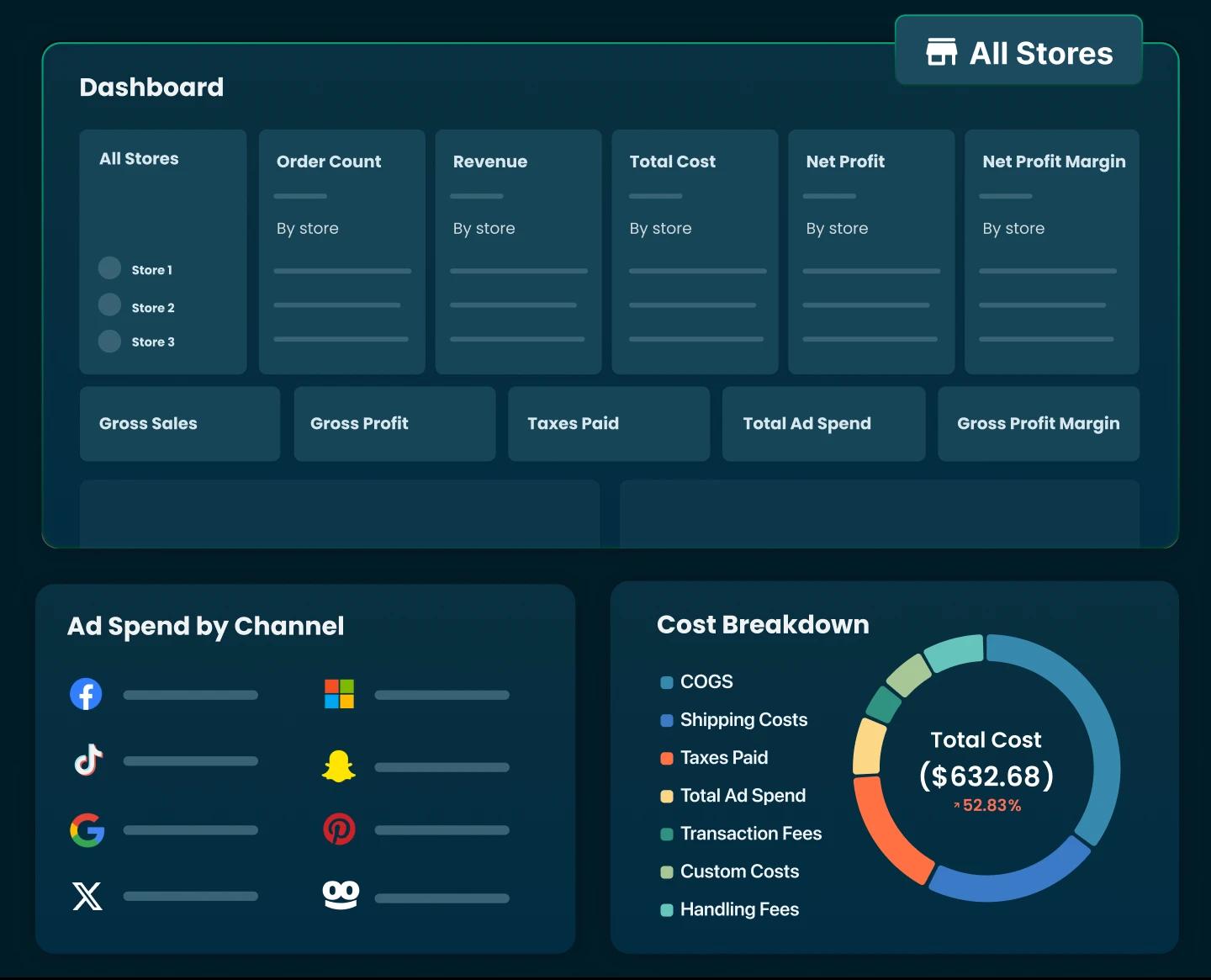
Instead of guessing, you get a clear view of your net profit by product, channel, and order, factoring in COGS, shipping, ad spend, and every hidden cost that most sellers overlook. So you’re not just selling more… you’re scaling what’s actually profitable.


Harry Chu is the Founder of TrueProfit, a net profit tracking solution designed to help Shopify merchants gain real-time insights into their actual profits. With 11+ years of experience in eCommerce and technology, his expertise in profit analytics, cost tracking, and data-driven decision-making has made him a trusted voice for thousands of Shopify merchants.