




17+ Best Dropshipping Pet Products to Sell in 2026 (With Real Profit Potential)


Table of Contents
The pet niche keeps outrunning most ecommerce categories, and the reason is simple: demand runs on recurring needs, emotional buying, and a growing pile of online spending. But here's the part nobody tells you. Not every pet product is worth your time, and the wrong picks will quietly drain your budget.
So in this guide, you'll find a list of dropshipping pet products with strong profit potential, reliable suppliers to source them from, and real performance data to help you prioritize products that can generate sustainable profit instead of just sales. Let’s dig in!
In this blog:
17+ Best Dropshipping Pet Products by Category
I picked these 19 products because they solve a repeat problem, ship cheap, and demo well on video. Each one comes with why people buy it and its real profit potential:
- GPS Pet Tracker
- Automatic Pet Feeder
- Smart Water Fountain
- Interactive Pet Camera
- Pet Hair Remover
- Nail Grinder
- Deshedding Brush
- Paw Cleaner
- Automatic Ball Launcher
- Snuffle Mat
- Puzzle Toy
- Portable Water Bottle
- Car Seat Cover
- Pet Carrier Backpack
- Pet Seat Belt
- Orthopedic Bed
- Cooling Mat
- Anxiety Vest
- Slow Feeder
Let’s dive into each of them!
1. GPS Pet Tracker

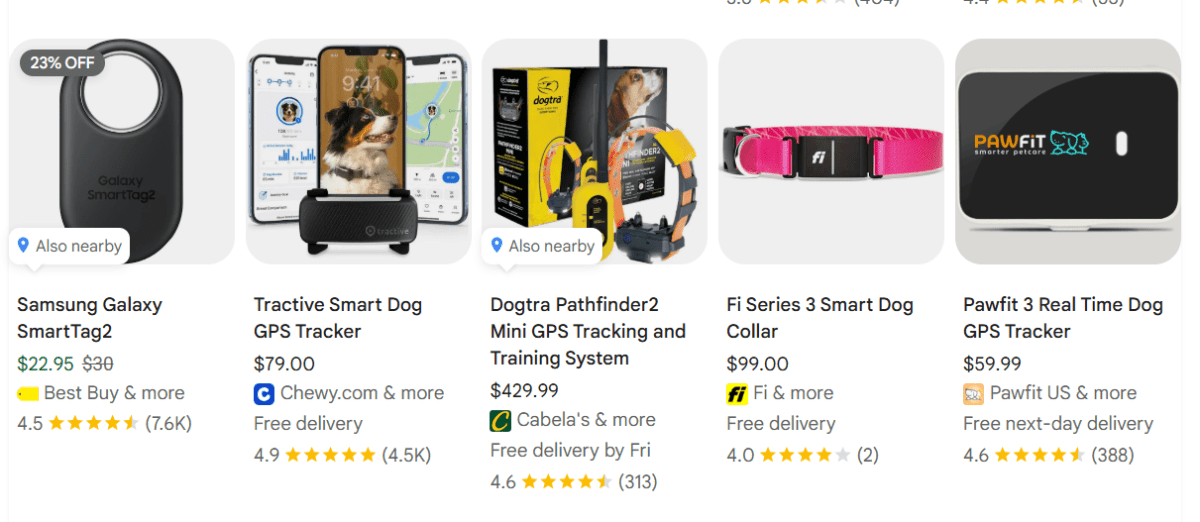
A GPS pet tracker is a collar-mounted device that shows a pet's live location right on the owner's phone.
Why people buy it: Losing a pet is every owner's worst nightmare, and this turns that fear into a one-time purchase. That's about as strong an emotional hook as you'll find in the niche.
Profit potential: Source around $12 to $22, retail $39 to $69. The dollar profit per order is solid, but do yourself a favor and test real-world connectivity before you list it. A tracker that drops a signal will bury you in return.
2. Automatic Pet Feeder
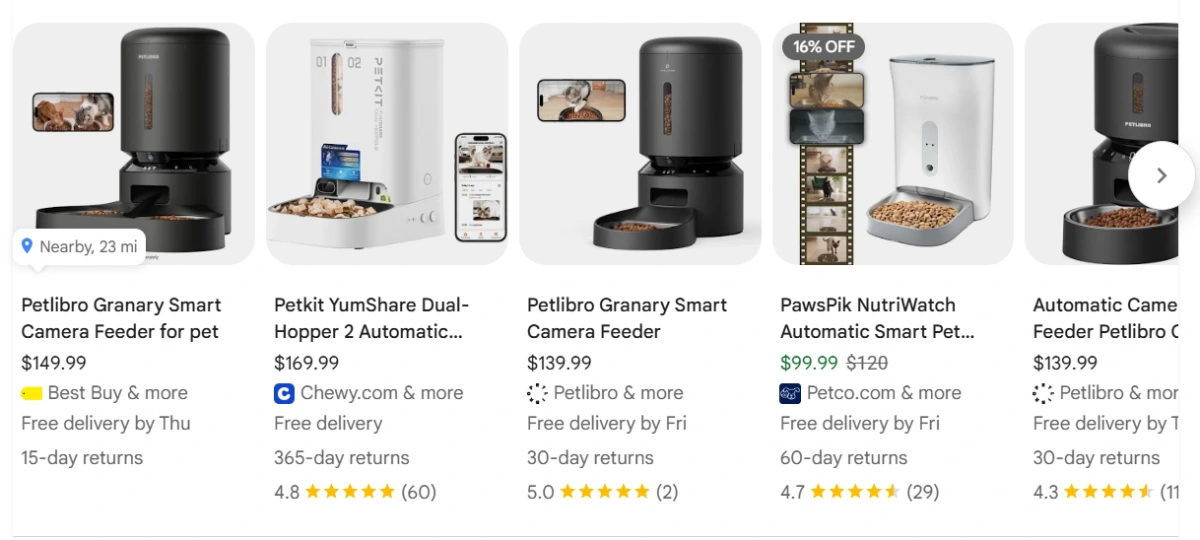
An automatic pet feeder is a programmable dispenser that drops set food portions on a schedule, and the better ones run through an app.
Why people buy it: It fixes a daily headache for owners who work long hours or travel, so the convenience angle pretty much sells itself. Add app scheduling and you can charge a premium on top.
Profit potential: Source $15 to $25, retail $49 to $79. The high order value here lifts your entire store. One thing I'd push on: insist on supplier QC, because jamming and timer faults are the complaints that come back to haunt you.
3. Smart Water Fountain
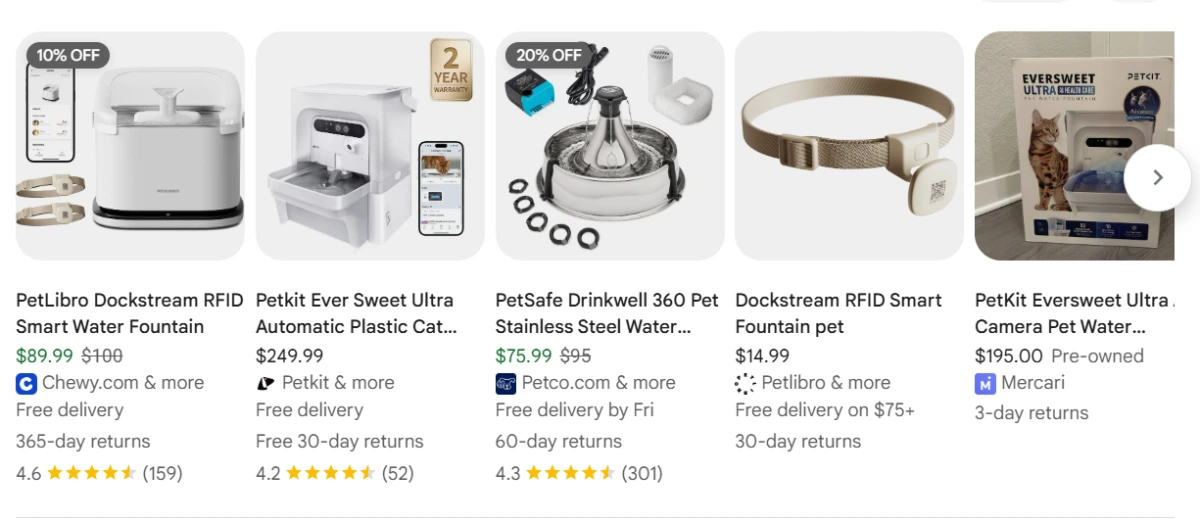
A smart water fountain is a recirculating bowl with a filter that keeps water fresh and moving.
Why people buy it: Cats and dogs drink more from moving water, so owners frame it as a health buy. But the real money is in the replacement filters, which hand you recurring revenue in a niche that's otherwise full of one-and-done purchases.
Profit potential: Source $8 to $15, retail $28 to $45, plus those filter refills that keep customer value climbing. For the long game, this is one of the best plays on the list.
4. Interactive Camera
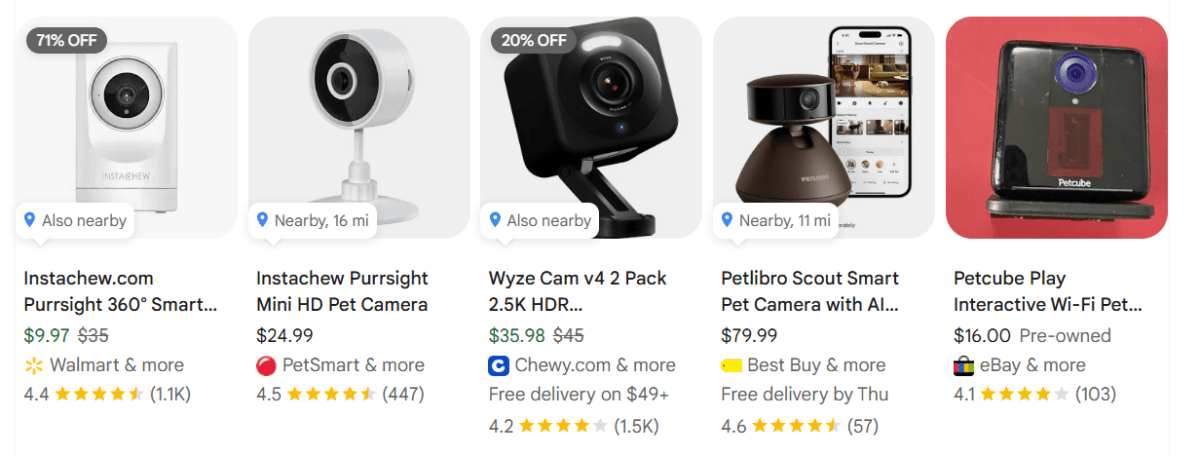
An interactive camera is a home camera that lets owners watch, talk to, and sometimes play with or treat their pet from anywhere.
Why people buy it: Owners hate leaving pets alone and love being able to check in. Slap on a built-in laser or a treat launcher and you've got a demo that's practically made for video ads.
Profit potential: Source $20 to $30, retail $59 to $89, the highest order value in the category. It also carries the highest return risk, so stick to vetted electronics suppliers and don't cut corners.
Next up are grooming products.
If I were opening a new store tomorrow, I'd start right here. Grooming tools sell all year, they bundle beautifully into kits that push your order value up, and they carry the fattest margins in the whole catalog, a potential gross margin near 74.7% on the numbers below.
5. Pet Hair Remover
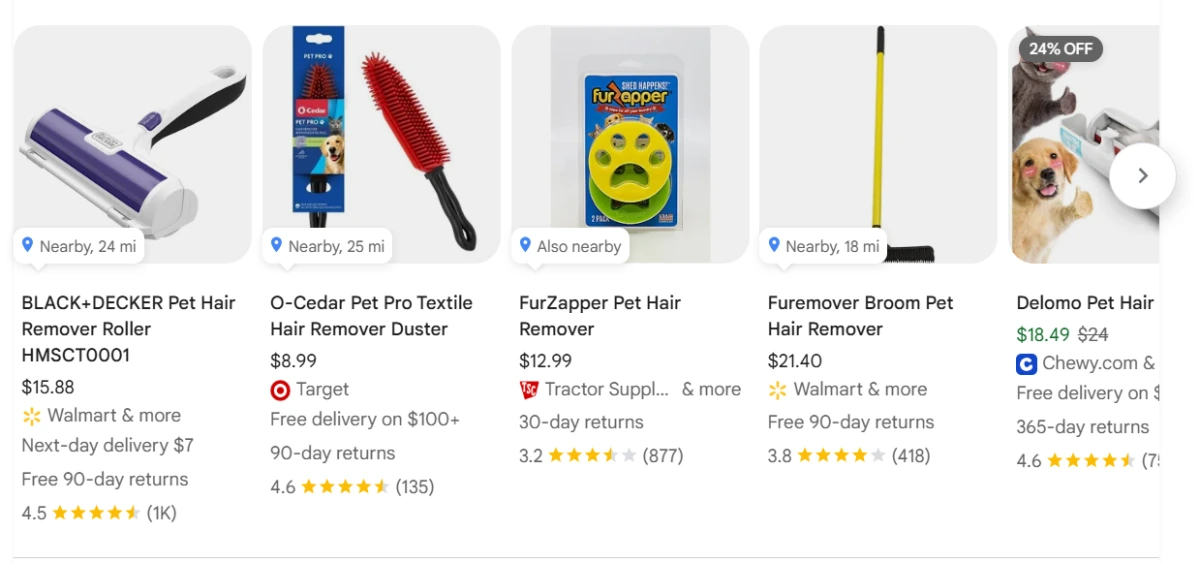
A pet hair remover is a reusable roller or brush that lifts fur off furniture, clothes, and car seats.
Why people buy it: Fur everywhere is a universal, daily annoyance, and a reusable remover fixes it for good. That makes it a classic impulse grab.
Profit potential: Source $2 to $6, retail $14 to $24. You get a big margin on a light, unbreakable item that ships cheap and almost never comes back.
6. Nail Grinder
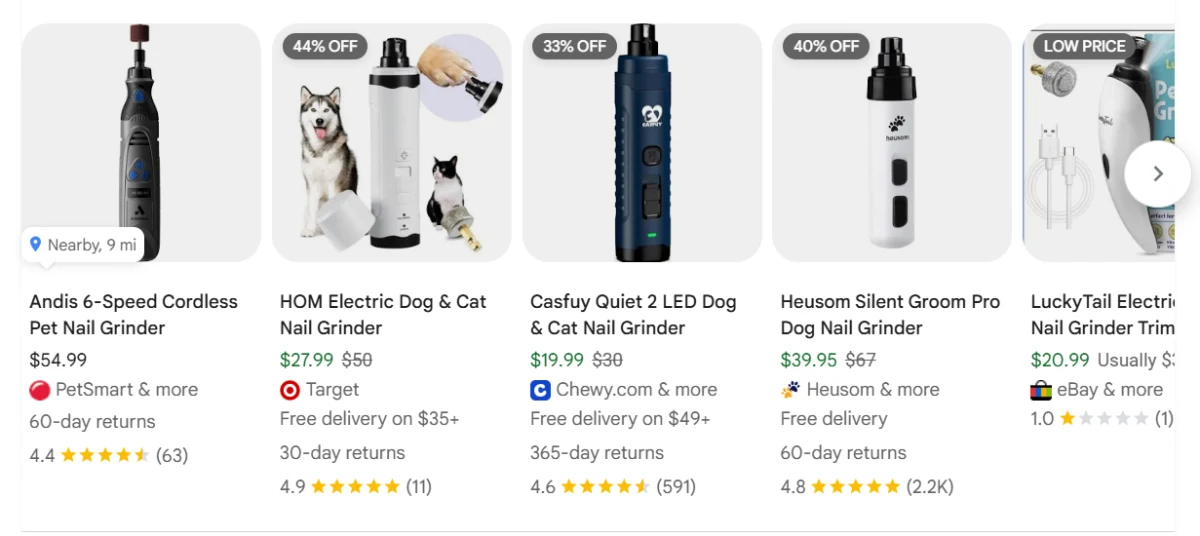
A nail grinder is a rotary tool that files a pet's nails down smoothly instead of clipping them.
Why people buy it: Most owners are terrified of clipping too far and hurting their pet. A grinder takes that fear off the table, which makes for a clean, pain-point sale.
Profit potential: Source $6 to $12, retail $22 to $38. Demand repeats as pets grow, and the safety story lets you hold a premium price.
7. Deshedding Brush
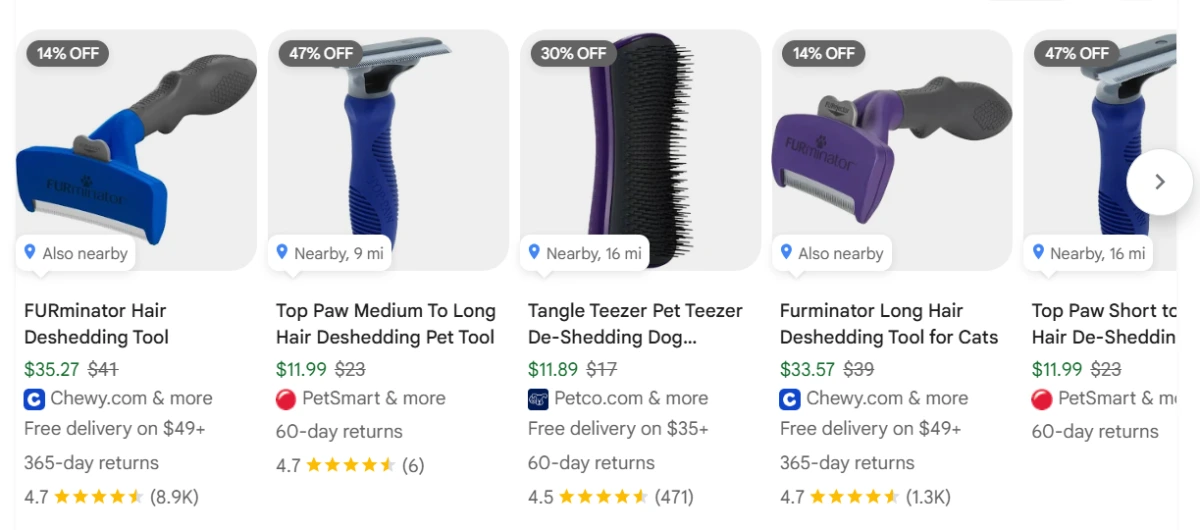
A deshedding brush is built to pull loose undercoat fur before it ends up all over your floor.
Why people buy it: Shedding never takes a day off. Pair a "reduces shedding by 90%" hook with a satisfying before-and-after clip and you've got a reliable video winner.
Profit potential: Source $3 to $8, retail around $21.91. The margin is strong, and once a pet gets used to a brush, owners rarely switch, so it quietly builds loyalty.
8. Paw Cleaner
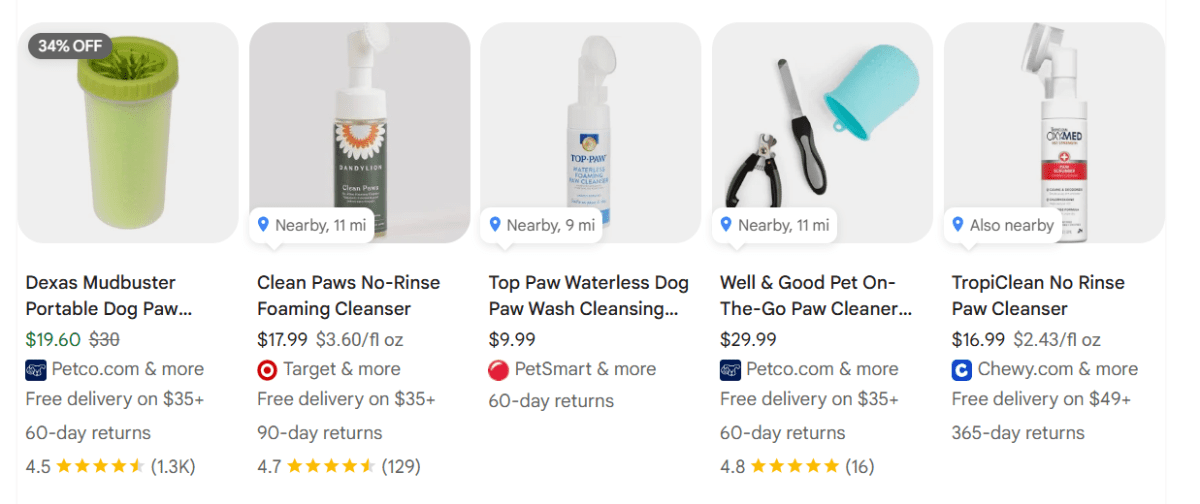
A paw cleaner is a portable cup with soft bristles that scrubs muddy paws clean in seconds after a walk.
Why people buy it: Muddy paws after every walk are a mess owners will happily pay to skip. The use case is obvious and there's basically no learning curve.
Profit potential: Source $3 to $7, retail $15 to $25, which works out to roughly a 75% gross margin. Light shipping, strong impulse trigger, easy win.
Another collection worth exploring is interactive toys. I like this category because it gives you flexibility. You can sell impulse-buy items for just a few dollars or premium toys priced well over $100, while still maintaining a potential gross margin of around 70.4%.
9. Automatic Ball Launcher
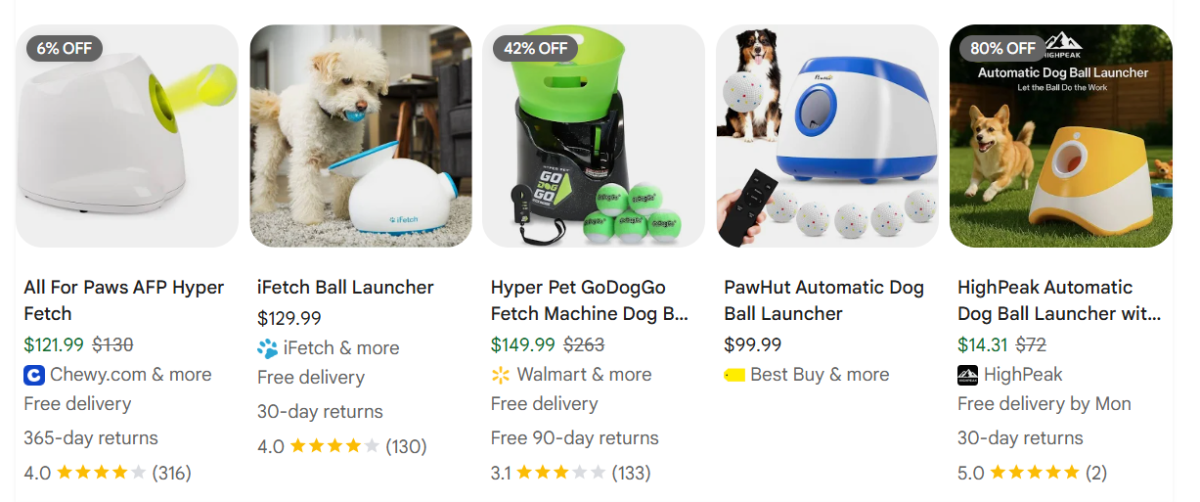
An automatic ball launcher throws tennis balls on repeat so dogs can fetch without the owner lifting a finger.
Why people buy it: It wears out high-energy dogs so the owner doesn't have to throw a ball for an hour straight. Frame it as an investment in the dog's health and the owner's free time, and it moves.
Profit potential: This is your high-ticket star. Wholesale $30 to $70, US retail $78 to $172, for a gross margin around 60%. That's the lowest percentage on the list, sure, but the absolute profit per order is the biggest, and you can stack upsells like extra balls and chargers on top.
10. Snuffle Mat
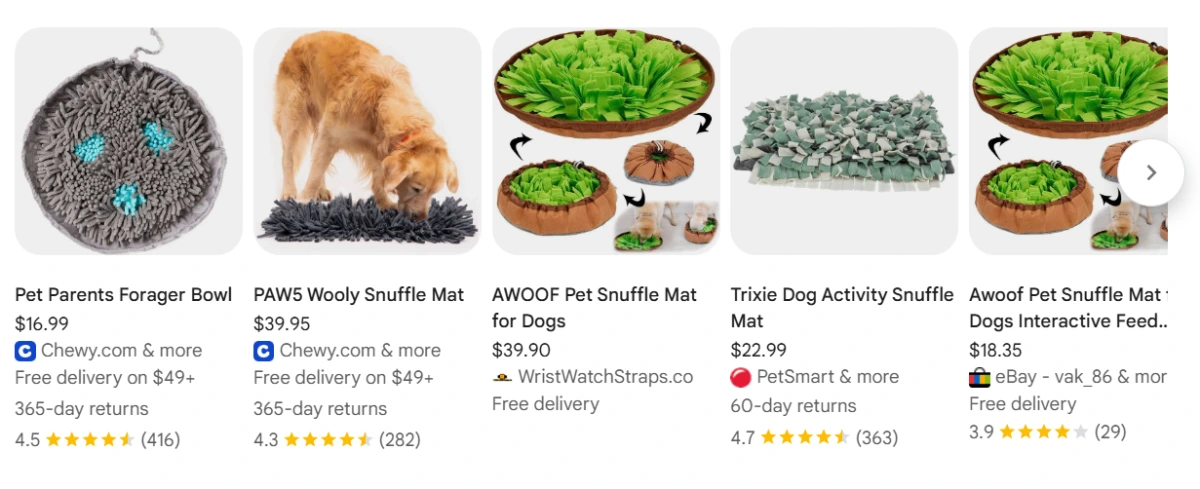
A snuffle mat is a folded fabric pad that hides treats so dogs can sniff and forage for their food.
Why people buy it: It taps into a dog's natural foraging instinct and slows down fast eaters. Sell it as mental enrichment and health-minded owners lean right in.
Profit potential: Source $5 to $8, retail $20 to $30. It's light, bundle-friendly, and pairs naturally with lick mats or slow feeders to nudge the cart higher.
11. Puzzle Toy
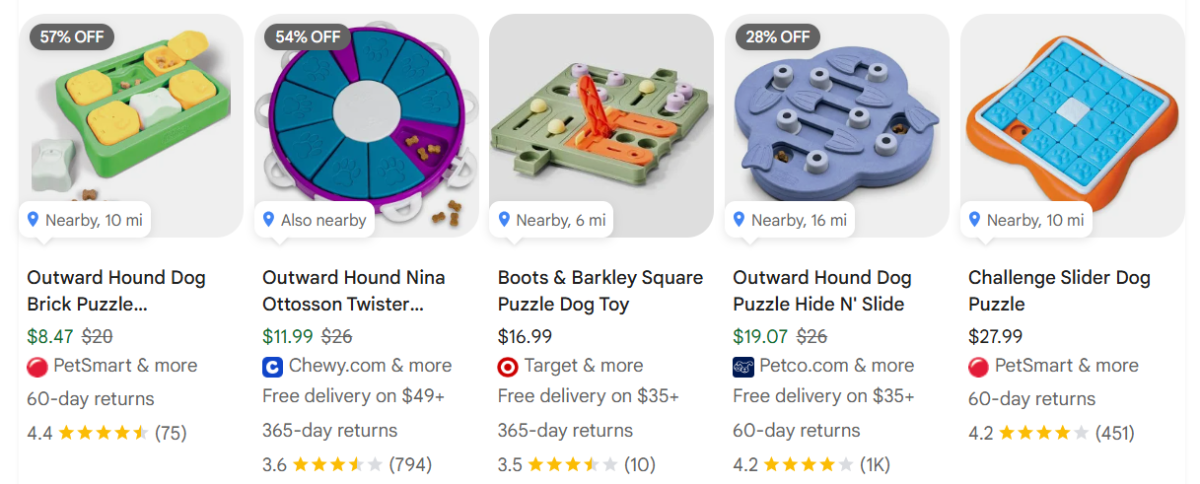
A puzzle toy is an interactive feeder that makes pets solve a small challenge to reach hidden treats.
Why people buy it: It fights boredom and the destructive behavior that comes with it by making pets work for their reward. Owners read that as a benefit, not just a toy, so they open their wallets a little wider.
Profit potential: Source $3 to $9, retail $16 to $30. Strong margin, and a natural anchor for enrichment bundles.
And our fourth pick is travel & outdoor products. Thanks to the growing trend of pet-friendly travel, this category has become a reliable source of high-ticket items and engaging lifestyle content, with potential gross margin near 70%.
12. Portable Water Bottle
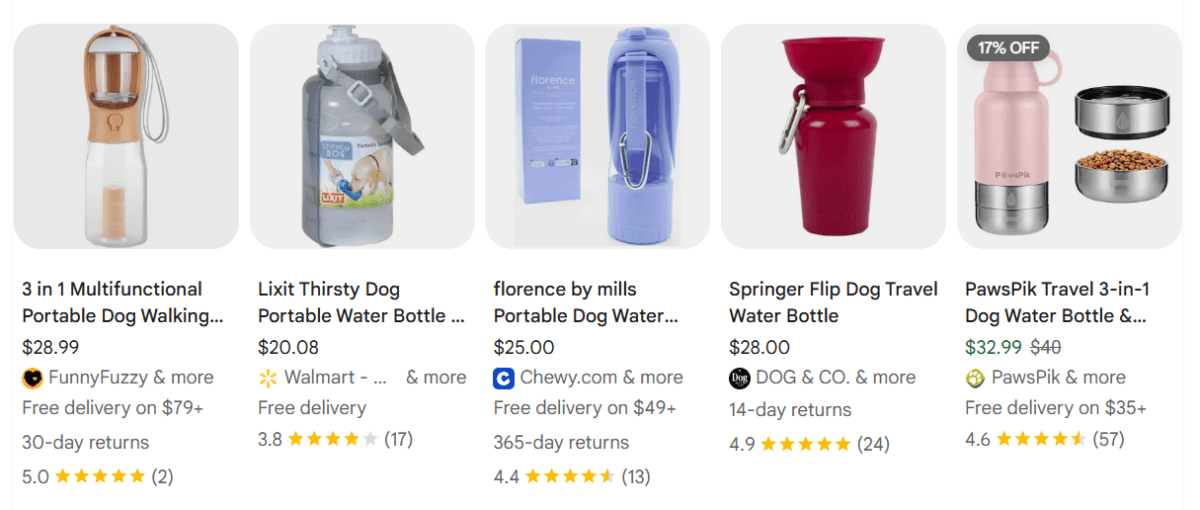
A portable water bottle has a built-in bowl so dogs can drink on walks and hikes.
Why people buy it: Keeping a dog hydrated on the move is a constant worry, and the all-in-one bottle-and-bowl design is about as clean a fix as it gets.
Profit potential: Source $3 to $7, retail $16 to $26. High margin, feather-light, and a strong impulse buy in any adventure-themed store.
13. Car Seat Cover
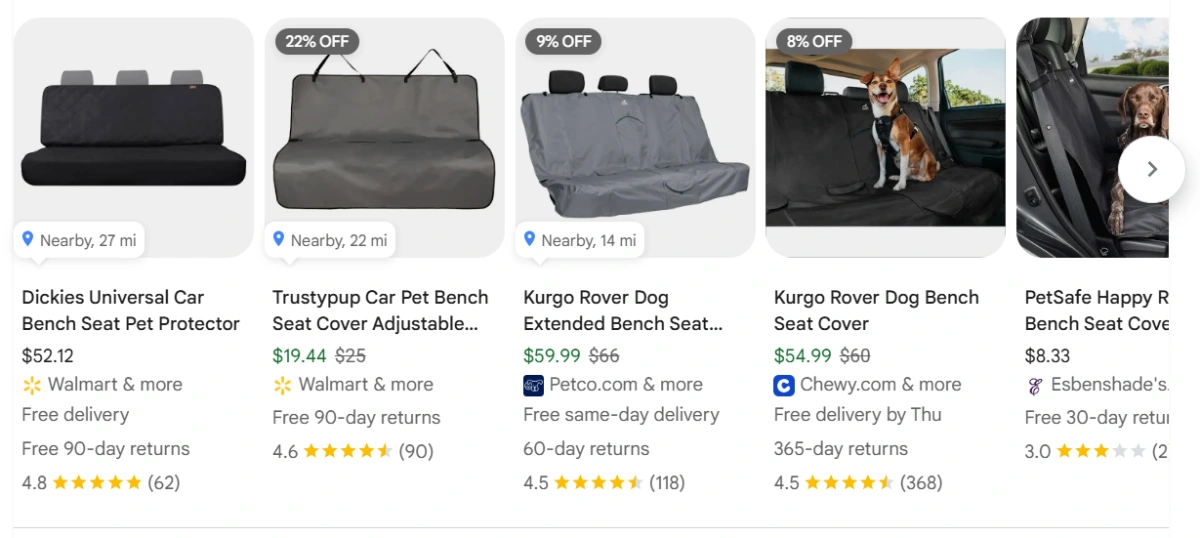
A car seat cover is a waterproof layer that shields seats from fur, mud, and scratches.
Why people buy it: It solves a recurring headache for anyone who drives with their dog. A waterproof, one-fits-most design does the job without much thought.
Profit potential: Source $8 to $16, retail $29 to $49. Good dollar profit, and the bigger SUV versions quietly push your order value up.
14. Pet Carrier Backpack
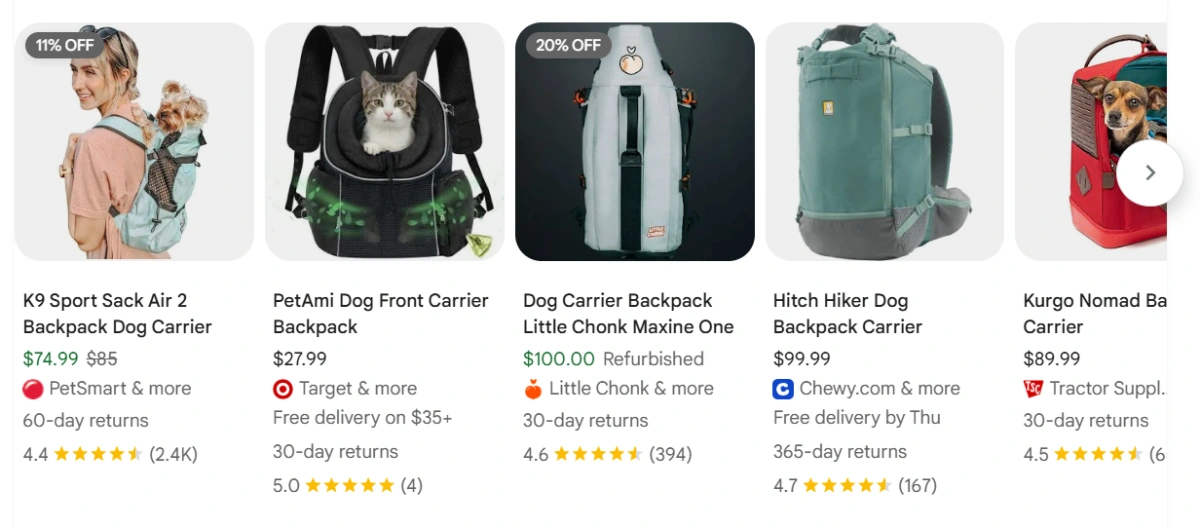
A pet carrier backpack is a ventilated pack that carries a small pet hands-free on trips and hikes.
Why people buy it: It lets owners bring small pets along on hikes, trips, and vet runs without tying up their hands. The emotional and lifestyle pull in outdoor content is real.
Profit potential: Source $10 to $20, retail $30 to $50, often dressed up as a "50% off" $39.99 offer. Solid margin, and the demo tends to get shared.
15. Seat Belt
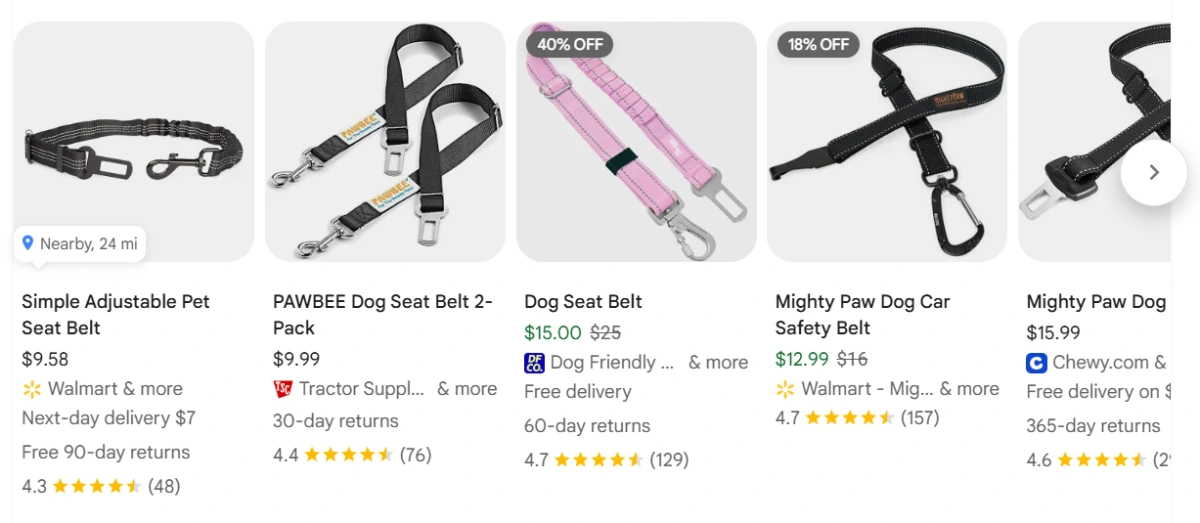
A pet seat belt is a short tether that clips a harness to the car's seat-belt buckle for safety.
Why people buy it: Safety-minded owners want their pets secured on the road, and the low price plus a clear safety message makes it an easy grab.
Profit potential: Source $2 to $5, retail $11 to $19. Low ticket but high margin. I'd sell it as an add-on to car seat covers rather than on its own.
Finally, let's wrap up with health & comfort products.
These convert on care and carry premium prices, landing a potential gross margin around 68.4%. Just know the catch going in: beds and vests come with sizing-related returns, so I'd always lead with a crystal-clear size guide.
16. Orthopedic Bed
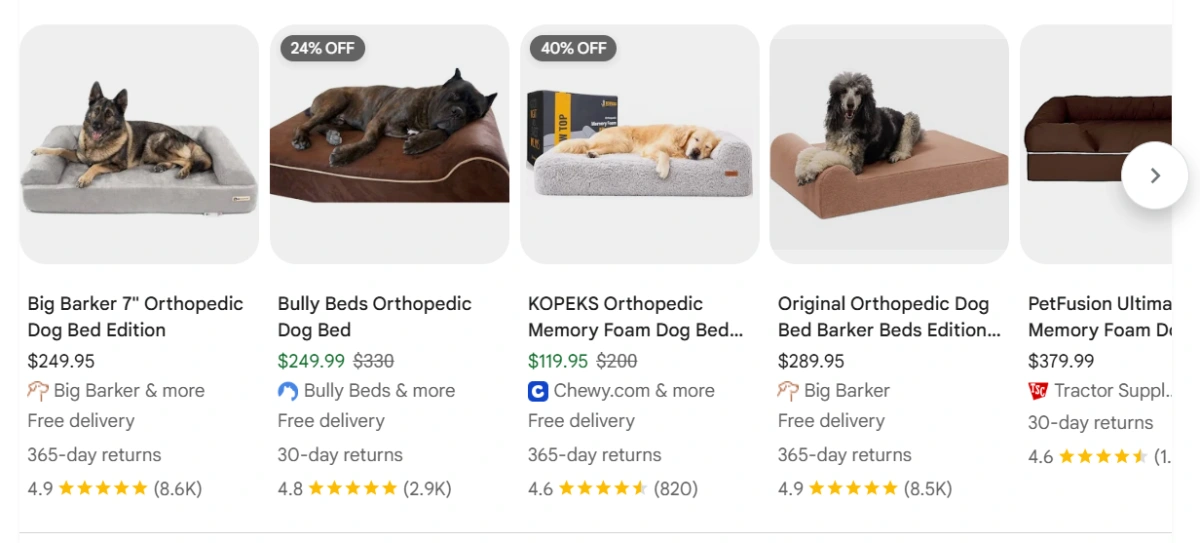
An orthopedic bed uses supportive foam to cushion the joints of aging or large-breed dogs.
Why people buy it: Older and bigger dogs need joint support, and owners will happily pay up for a vet-friendly "orthopedic" positioning.
Profit potential: This has the widest price band in the niche. Suppliers cost $35 to $70, US retail $85 to $270, and the larger sizes leave the biggest absolute profit. Nail the size chart or returns will eat that profit alive.
17. Cooling Mat
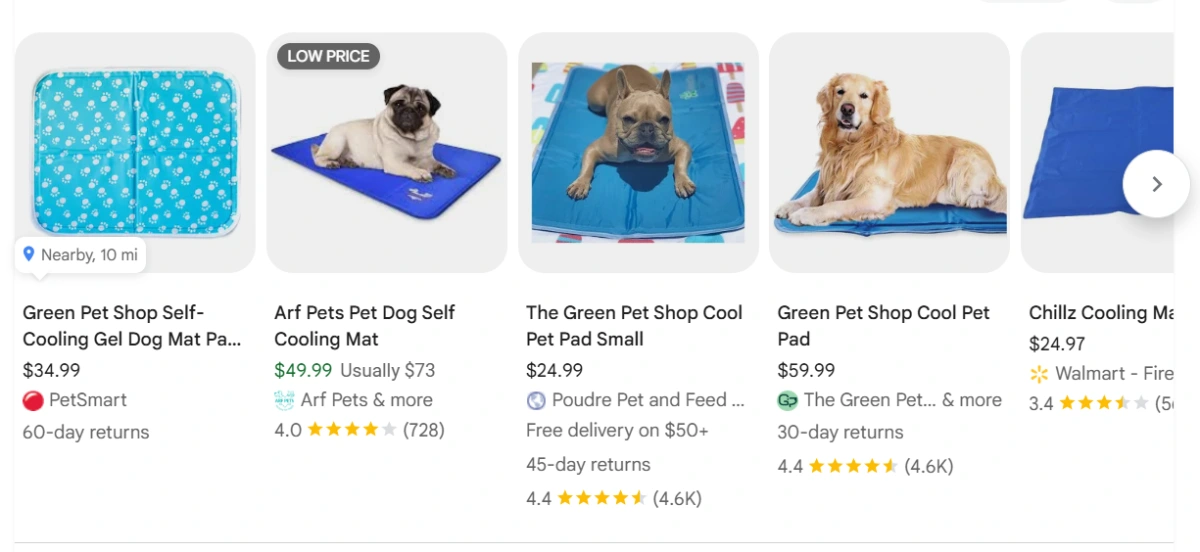
A cooling mat is a gel-filled pad that soaks up body heat to keep pets comfortable when it's warm.
Why people buy it: Overheating is a genuine safety worry in summer, and the gel-mat health angle drives a strong seasonal spike that runs year-round in hot climates.
Profit potential: Source $6 to $15, retail $24 to $49. Reliable margin and a proven seasonal winner you can lean on.
18. Anxiety Vest
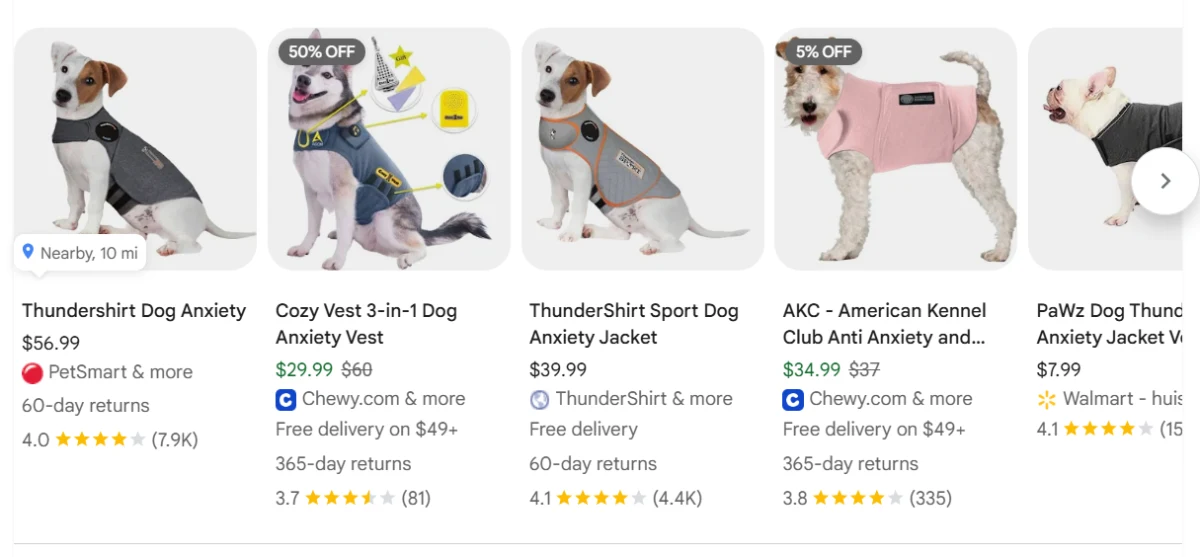
An anxiety vest is a snug pressure wrap that calms pets during storms, fireworks, or travel.
Why people buy it: Thunder, fireworks, and car rides can wind a dog up tight. A pressure-wrap vest settles them down without sedatives. That's a story ads love to tell.
Profit potential: Source $6 to $14, retail $24 to $42. An emotional purchase with a healthy margin, though again, sizing needs a clear guide.
19. Slow Feeder
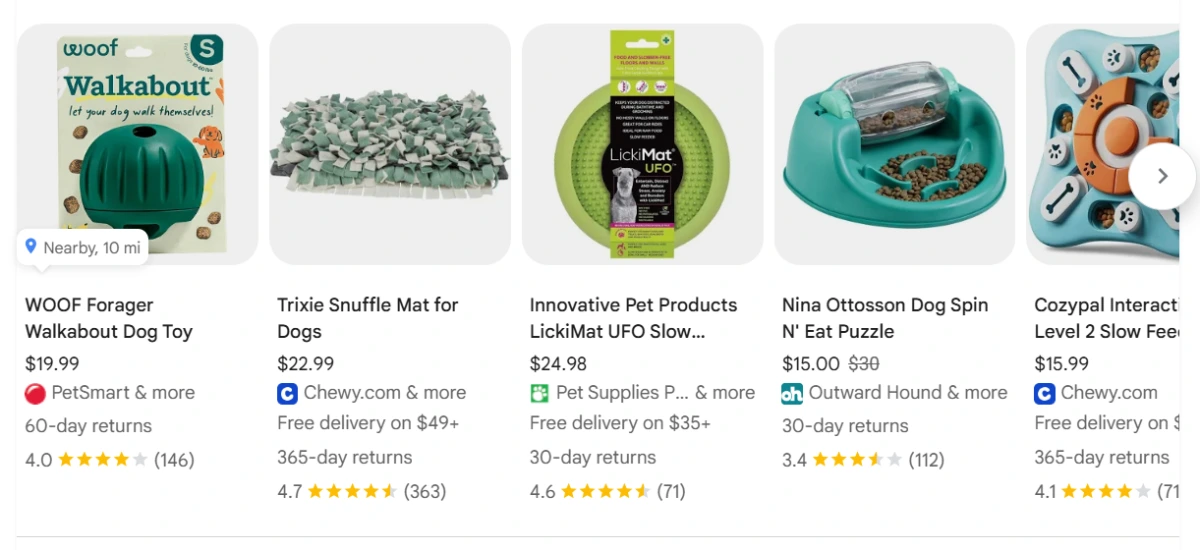
A slow feeder is a bowl with built-in ridges that forces fast eaters to pace themselves.
Why people buy it: It prevents bloating and choking in fast eaters, a vet-backed benefit that hands you built-in credibility.
Profit potential: Source $6 to $10, retail around $24.99, for a gross margin near 68%. After fees and an $8 CPA, that still nets roughly $11 per order, or about a 46% net margin.

Best Suppliers For Pet Products You Should Know for 2026
My rule is simple: test cheap, then ship fast. Validate a product on a low-cost supplier, then move the winners to one with domestic warehousing, because shipping speed drives conversion and returns more than almost anything else.
AliExpress (best for beginners)
The lowest-friction way to test a product idea with zero commitment and near-endless catalog depth.
It's a Chinese marketplace, not a dropshipping tool, so you'll pair it with an app like DSers to import products and automate orders. Ideal for your first validation runs before you spend on faster fulfillment.
Pros: No monthly fee, massive selection, integrates with tools like DSers for one-click imports, cheapest unit costs for validating demand.
Cons: Standard shipping runs 15 to 45 days, quality is inconsistent, no branding control, and high 2026 tariff exposure on China parcels. Move winners off it fast.
CJ Dropshipping
The best low-cost sourcing option once you want more control than raw AliExpress.
CJ warehouses stock in China, the US, and Europe, and its sourcing team will hunt down a specific product and quote you a price, which helps when you find a winner that isn't already listed. Pet supplies are one of its deeper categories.
Pros: No monthly subscription, unit costs often $3 to $18, blind shipping to protect branding, product sourcing service, huge catalog including strong pet selection.
Cons: Shipping speed still varies by line and warehouse, and the interface has a learning curve for new sellers.
Zendrop
The strongest pick for a guided, managed Shopify fulfillment workflow with branding built in.
Zendrop vets its own supply chain rather than connecting you to random sellers, and it handles custom packaging and inserts so your store looks like a real brand from the first order. Best once a product is proven and you want to scale cleanly.
Pros: 1 to 3 day order processing, US and China sourcing, custom branding options, strong onboarding and training, vetted suppliers.
Cons: Product costs run higher than direct AliExpress, and the subscription is the main cost driver, so it pays off best when you use the full toolset.
Spocket
The go-to for fast US and EU domestic shipping once a product is proven.
Spocket's suppliers sit mostly in North America and Europe, so delivery lands in days instead of weeks, and many offer discounted sample orders so you can check quality before listing. That speed is what protects conversion and cuts refunds on a scaling store.
Pros: 2 to 7 day delivery from US and EU warehouses, one-click imports, branded invoicing, mature Shopify integration, strong US supplier concentration.
Cons: Premium supplier pricing eats into margin, and the best US and EU suppliers sit behind paid tiers.
Syncee
The best fit for stores targeting international customers, with a hybrid dropshipping-plus-wholesale model.
Syncee is a B2B marketplace where you can message suppliers directly and negotiate terms, then shift from dropshipping to bulk wholesale on the same platform once a product sells consistently. Its supplier base skews toward local US, UK, EU, and Australian brands.
Pros: 12,000+ brands across the US, Europe, Canada, and Australia, direct supplier chat, a free plan to trial, 24/7 support, and a clean path to wholesale as you scale.
Cons: The free plan caps you at 25 products and is really for browsing, catalog depth varies by region, and lower tiers have restrictive import limits.
AutoDS Marketplace
Best for sellers who want automation across channels rather than a single sourcing catalog.
AutoDS sits on top of your existing suppliers and handles the tedious backend work, monitoring price and stock changes and even placing orders for you. Most useful once you're running real volume across more than one storefront.
Pros: Automates price monitoring, stock updates, and order fulfillment across Shopify, eBay, and Wix, and connects to multiple supplier marketplaces including AliExpress, Amazon, and Walmart.
Cons: It is an automation layer, not a supplier itself, so product quality and shipping still depend on the underlying source. Pricing starts around $39 per month after the trial.
Wholesale2B
Best for feeding one supplier account into multiple sales channels.
Wholesale2B pulls products from 100+ US and Canada suppliers into a single dashboard, then pushes them out to Shopify, eBay, and Amazon at once, so you manage one catalog instead of juggling several accounts. A solid multi-channel base once you're ready for a paid plan.
Pros: Over a million products from 100+ US and Canada suppliers, built-in Shopify, eBay, and Amazon integrations, and bulk-order discounts that can improve margins.
Cons: Monthly fee from around $29.99 regardless of order volume, and a dated interface next to newer platforms.
Pet Product Trends That Will Shape the Market in 2026
Three forces decide what sells right now: pet humanization, health awareness, and short-form video. Match your picks to these and you're swimming with the current instead of fighting it.
1. Pet humanization drives premium spend
Owners increasingly treat pets as family, and that pulls demand toward premium products and digital convenience. The upshot for you is simple: that mindset means shoppers will accept higher price points when the positioning earns it.

When pets become family, higher-value products win
2. Health and wellness products keep growing
Preventive health is the fastest-growing angle in the whole niche. Slow feeders, orthopedic beds, supplements, and calming products all ride the rising awareness of pet wellbeing. And with vets pushing slower eating and joint support, you've got built-in credibility to sell into.

Health-conscious pet parents are driving demand
3. Smart pet tech goes mainstream
App-controlled feeders, cameras, and trackers are moving from niche gadget to expected category. The higher order values are great, but the return risk climbs right alongside them, so lean on suppliers with serious QC.
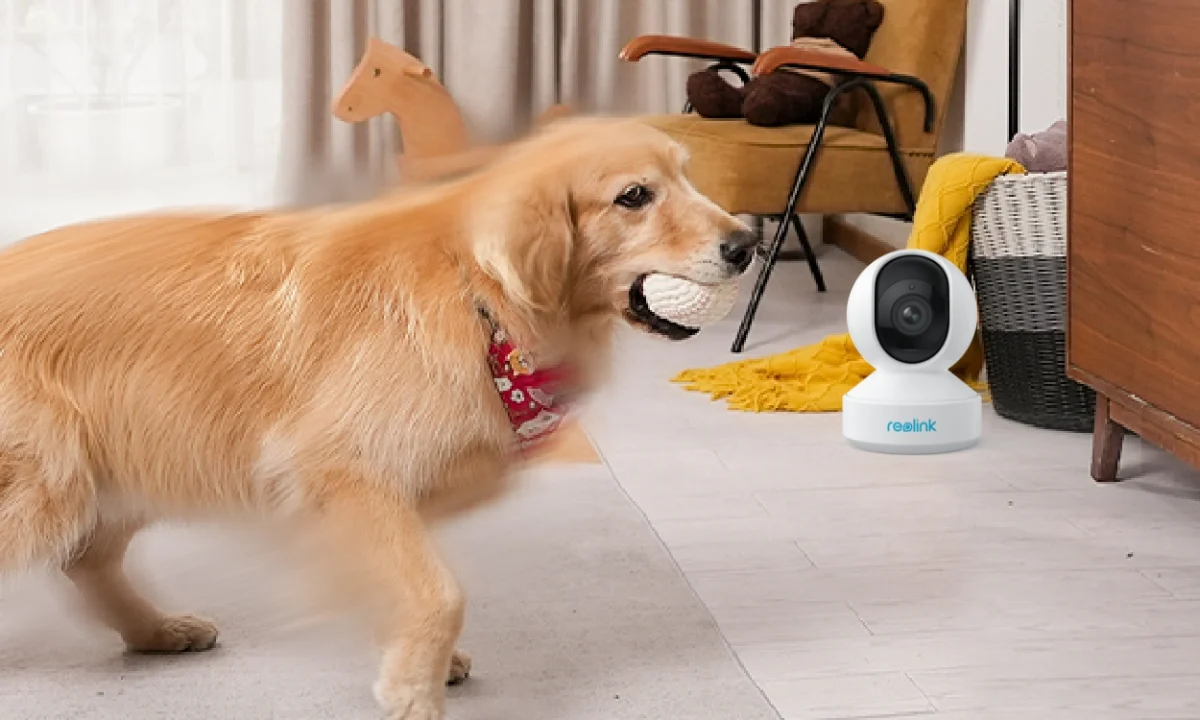
Technology is changing how we care for pets
4. Sustainability shifts purchase decisions
Biodegradable and natural products aren't nice-to-have anymore. Eco-conscious owners actively hunt for bamboo brushes, recyclable packaging, and natural formulas, which gives you a clean way to stand out in a crowded market.
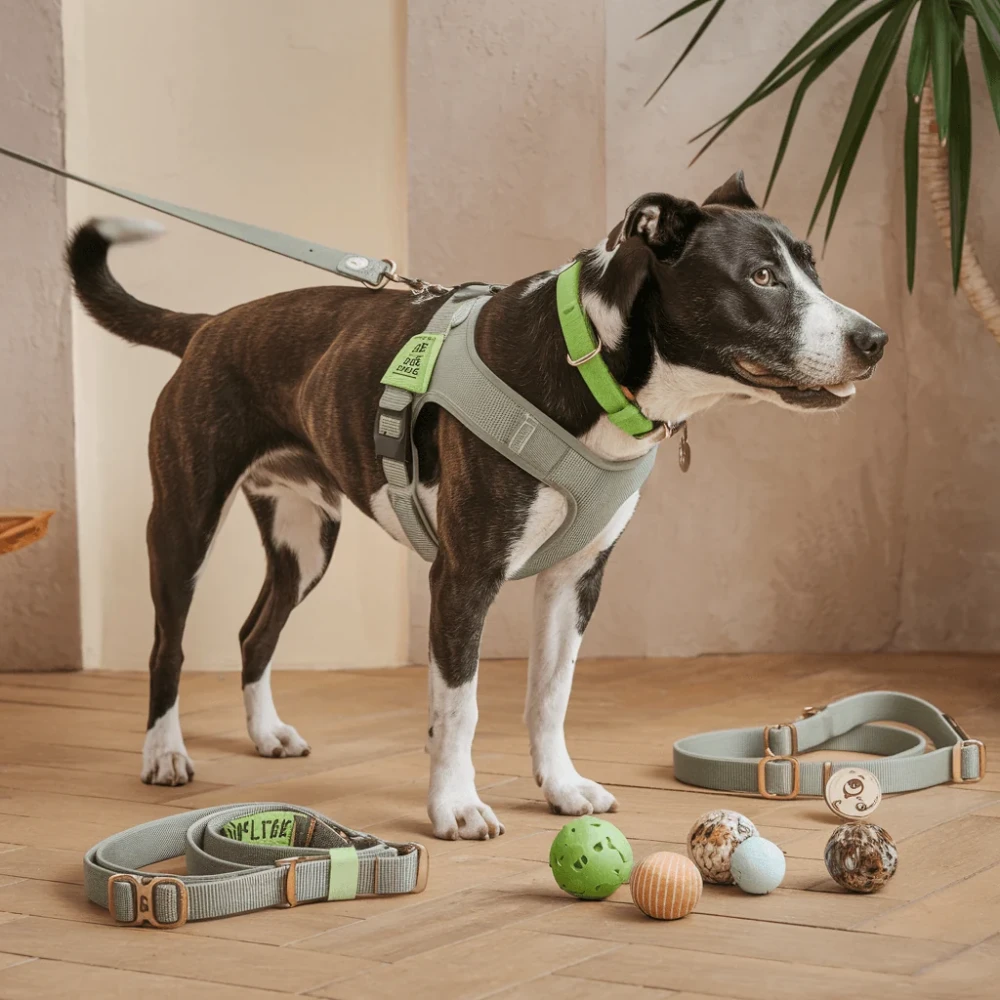
Green choices are driving pet care trends
How Much Can Dropshippers Really Make Selling Pet Products?
Here's where it gets interesting. Across seven months of TrueProfit first-party data (January to July 2026), the average of 41 dropshipping stores selling pet products looked like this:
Metric | Monthly average |
|---|---|
~$81.33K | |
~$51.02K | |
~$13.94K | |
~$76.80 | |
~64.03% | |
~17.26% | |
Net profit per order | ~$13.29 |
So what's this data actually telling us?
Pet products carry healthy profit potential, with an average 64.03% gross profit margin. But once advertising, shipping, payment fees, and the rest of the operating costs take their cut, the average store walks away with 17.26% as net profit margin. That gap is exactly why high revenue doesn't automatically add up to a profitable business.
The other number worth staring at is the $76.80 average order value. It hints that the stores doing well aren't leaning on low-ticket impulse buys, they're lifting profitability through bundles, premium products, and smart upselling.
But the biggest takeaway is this. The best-performing stores aren't the ones ringing up the most sales. They're the ones that know their true profit per order, cut underperformers without hesitation, and pour money back into winners based on real profit data, not just revenue or ROAS.

Your Step-by-Step Guide to Launching a Profitable Pet Store
A profitable store comes from a sequence, not a lucky guess. Here's the order you should follow.
1. Pick a focused sub-niche
Resist the urge to open a general pet store. Pick a lane instead, whether that's dogs, cats, or an angle like travel gear or anxiety products. A focused store earns trust faster, and it lets your ads talk straight to one buyer instead of shouting at everyone.
2. Validate 15 to 25 products
Keep your starting catalog tight, 15 to 25 products that each clear the five filters above. Before you commit, dig through Reddit threads and pet forums for the complaints owners actually have. That's where you'll find angles your competitors missed, and it's how you spot the items with real margin and low return risk.
3. Source with speed in mind
Test cheap, then ship fast. Start on AliExpress or CJ Dropshipping to validate a product without sinking money into it. The moment one proves itself, move it to Spocket, Zendrop, or Syncee, because faster domestic delivery lifts conversion and quietly kills your refund rate.
4. Build a store optimized for AI search
Write product pages and FAQs the way a buyer actually asks questions, clear and direct. More shoppers now discover products through AI search and assistants, and that kind of structured, benefit-first content is what gets your store pulled into those answers.
5. Test fast with video creative
Lead with a short video showing a real pet using the product, since that instant reaction is what stops the scroll. Run your tests hard for about two weeks, then be ruthless: pour budget into your top three performers and cut everything else.
6. Track true profit from day one
Now, I know profit tracking isn't a new idea. Every dropshipper does some version of it. But here's the problem: most sellers only track the costs that are easy to see, like product costs, ad spend, and shipping costs.
The costs that quietly eat your margin are the ones that slip through: payment transaction fees, refunds, app subscriptions, and other operating expenses. Leave those out, and the "profit" on your dashboard isn't your real profit.
When your numbers are incomplete, every decision built on them is a little bit wrong. In a market as competitive as 2026's, scaling on the wrong numbers doesn't just slow you down, it sends you confidently in the wrong direction.
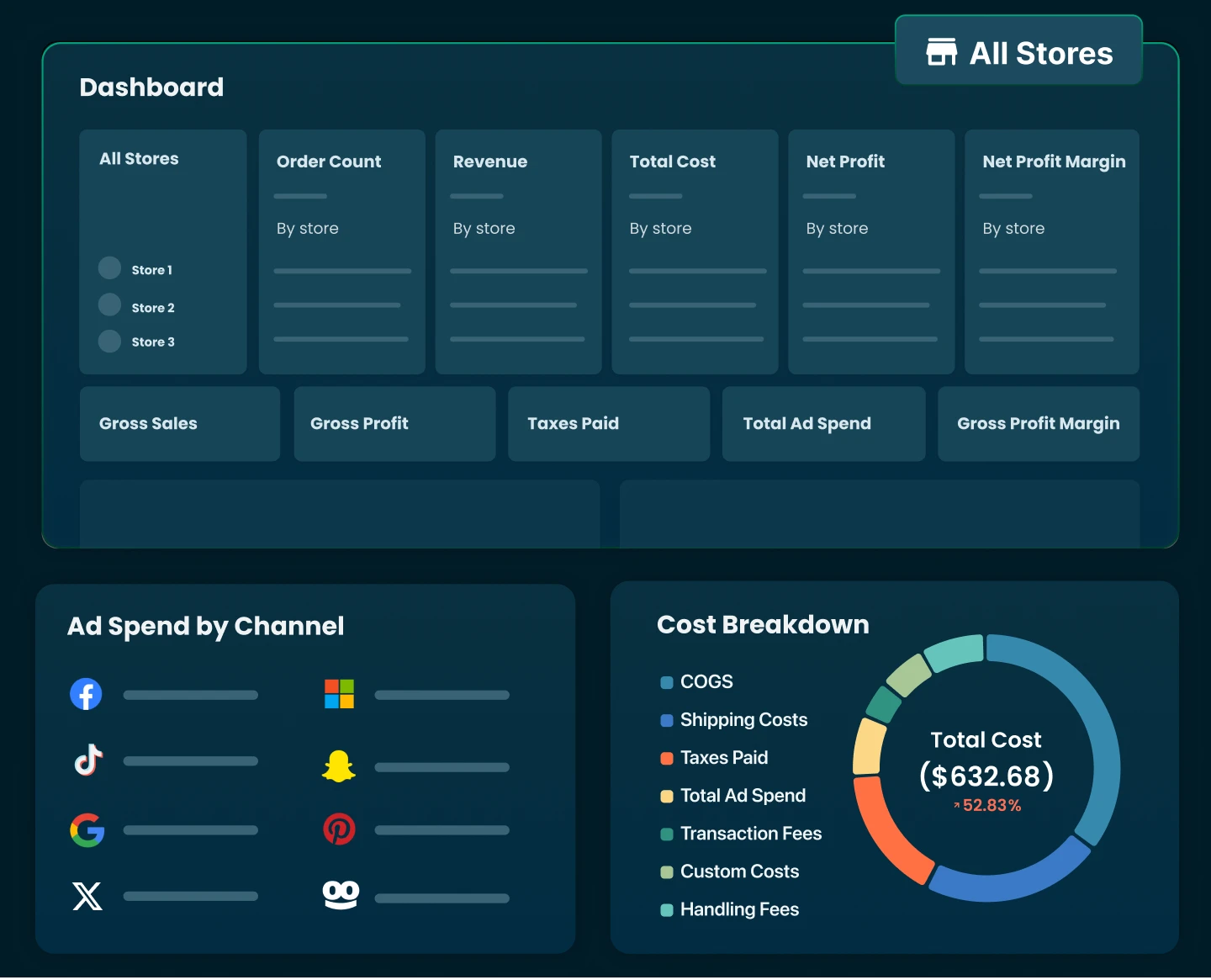
This is where automation earns its place. Instead of stitching data together across spreadsheets and hoping you didn't miss anything, a tool like TrueProfit pulls every cost into one place and calculates your net profit in real time, so the number you're looking at is the number that actually lands in your pocket.
I won't pretend that's the only way to do it. But it's telling that more than 70,000 merchants rely on TrueProfit each year to see their true margins and make decisions with confidence, rather than guessing at what's left after the hidden costs.
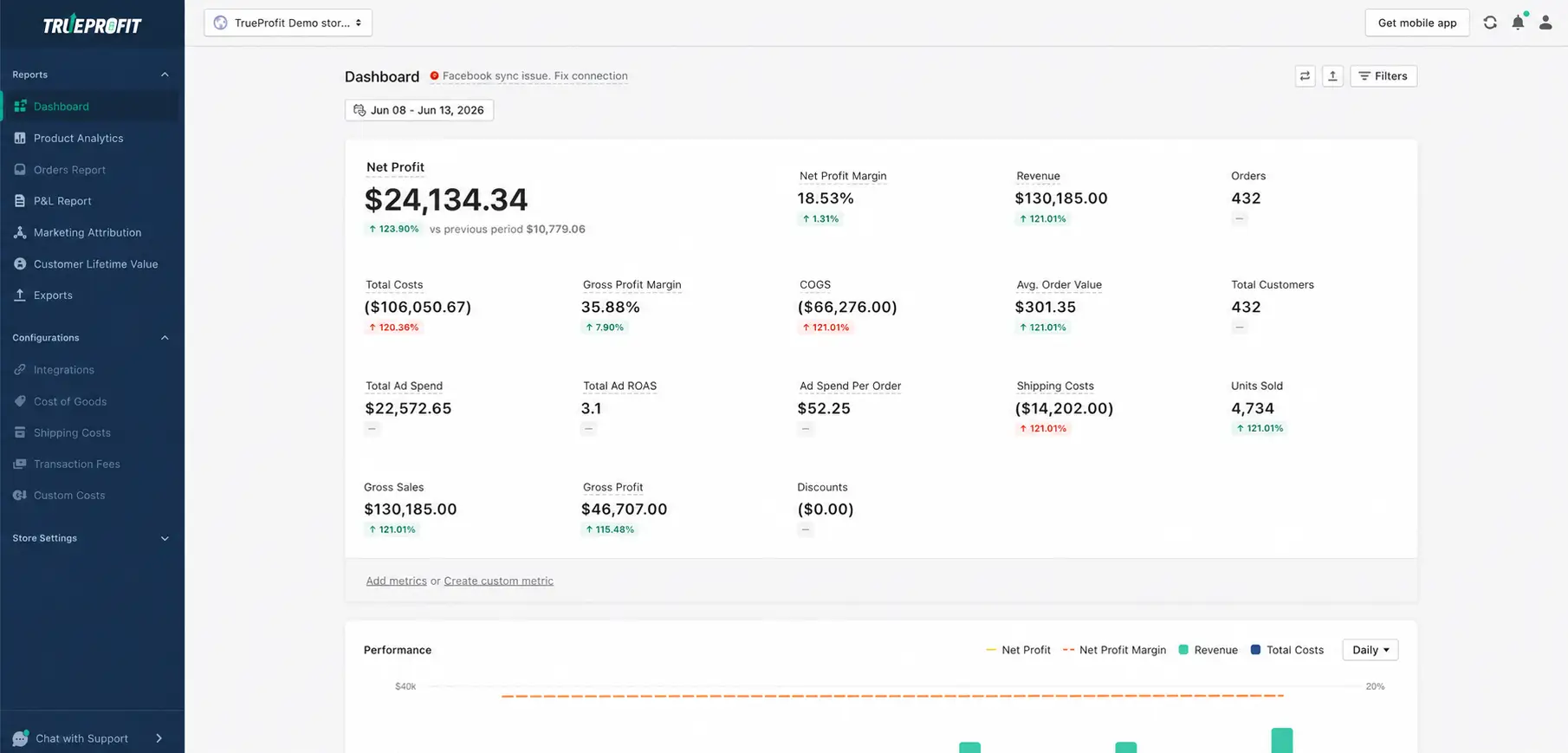
And this is something you should set up from day one, not after your store starts making serious revenue. The earlier you track your real profit, the easier it is to understand what’s working, and avoid costly mistakes.
Final Thoughts
The pet industry isn't short on opportunities, but successful stores don't win by listing hundreds of random products. They win by choosing products that solve real problems, validating demand quickly, and making decisions based on profit rather than revenue alone.
As your store grows, tracking costs like advertising, shipping, transaction fees, and COGS becomes just as important as finding the next winning product. Knowing your true profit helps you scale confidently and avoid investing in products that only look successful on the surface.
Lila Le is the Marketing Manager at TrueProfit, with a deep understanding of the Shopify ecosystem and a proven track record in dropshipping. She combines hands-on selling experience with marketing expertise to help Shopify merchants scale smarter, through clear positioning, profit-first strategies, and high-converting campaigns.