
5 Successful Shopify Halloween Stores to Inspire Your 2026 Campaigns


Table of Contents
Every "best Shopify Halloween stores" list just names storefronts and stops there. Useless if you're trying to figure out what to actually copy.
So here's the version that matters: real Shopify stores that win Halloween, and the exact moves behind each one. Design, offers, timing, merchandising. The stuff you can steal.
Let's get into it.
In this blog:
1. Killstar: The Year-Round Halloween Brand
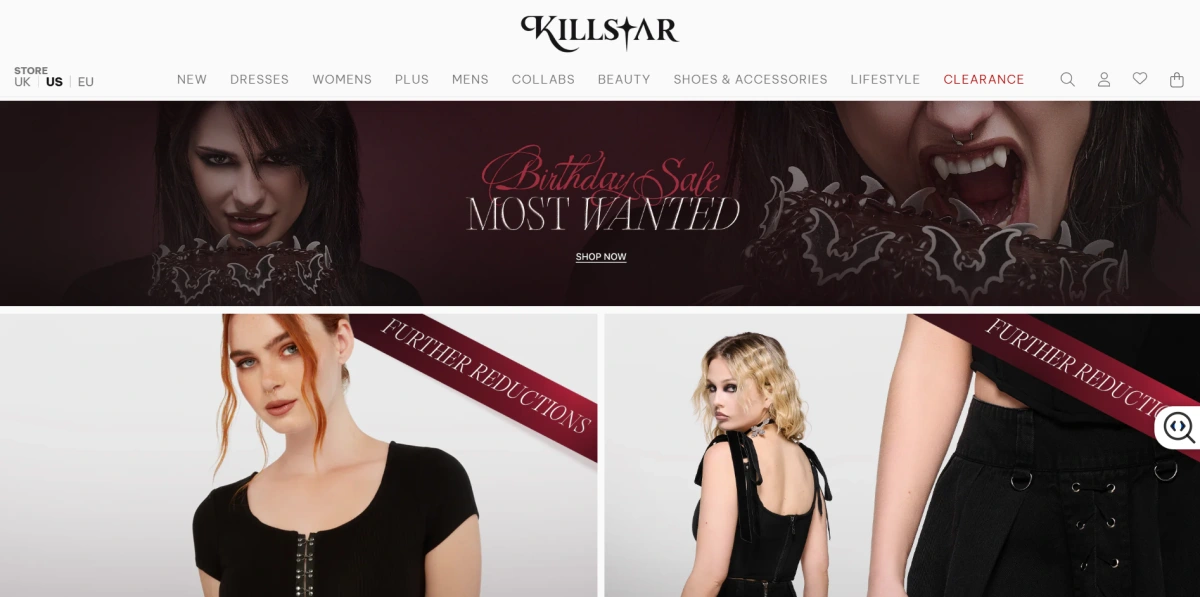
Killstar is a gothic clothing and lifestyle brand based in the UK, running on Shopify Plus. They describe themselves as a clothing and lifestyle company with a twist of darkness, and that dark aesthetic runs through every page, not just a seasonal landing page.
The brand did an estimated $23.3M in online sales in 2025, with a near-two-million Instagram following feeding the store.

Why it wins
Halloween isn't a campaign for Killstar, it's the entire brand identity, which makes October their home turf rather than a scramble.
Instead they layer urgency on top: a time-limited Halloween Sale, a dedicated "Halloween Is Everyday" page, a Spooky Season Sale, and their own in-house COVEN Cosmetics line for goth makeup.
They also run a Halloween email competition with a fixed entry window to grow their list right before the peak buying period, and stack free-shipping thresholds and an "Inner Circle" loyalty program to lift average order value.
The takeaway for merchants
If your brand has any tonal overlap with Halloween, own it year-round so you're not starting from zero every fall. And build offers around spend, not just traffic. Killstar's email competition, shipping thresholds, and loyalty program are cheap to run and aimed squarely at lifting order value.

2. G FUEL: The Non-Halloween Brand That Nails the Seasonal Spin
G FUEL is a Shopify-powered energy drink brand built for gamers and esports fans. It's one of the higher-traffic Shopify stores in its category, with a custom theme and a large, frequently updated product catalog. It doesn't sell a single Halloween product, yet it wins the season every year.
Why it wins
Instead of forcing a costume category that doesn't fit, G FUEL runs a dedicated Halloween collection built on licensed horror collabs and limited seasonal flavors. Recent drops include:
- Ghost Face from Scream ("Stab Stimulant")
- Michael Myers from Halloween ("Knife's Edge")
- plus Chucky
- A Nightmare on Elm Street
- Friday the 13th tie-ins
often as collector's boxes with themed shaker cups and stickers.
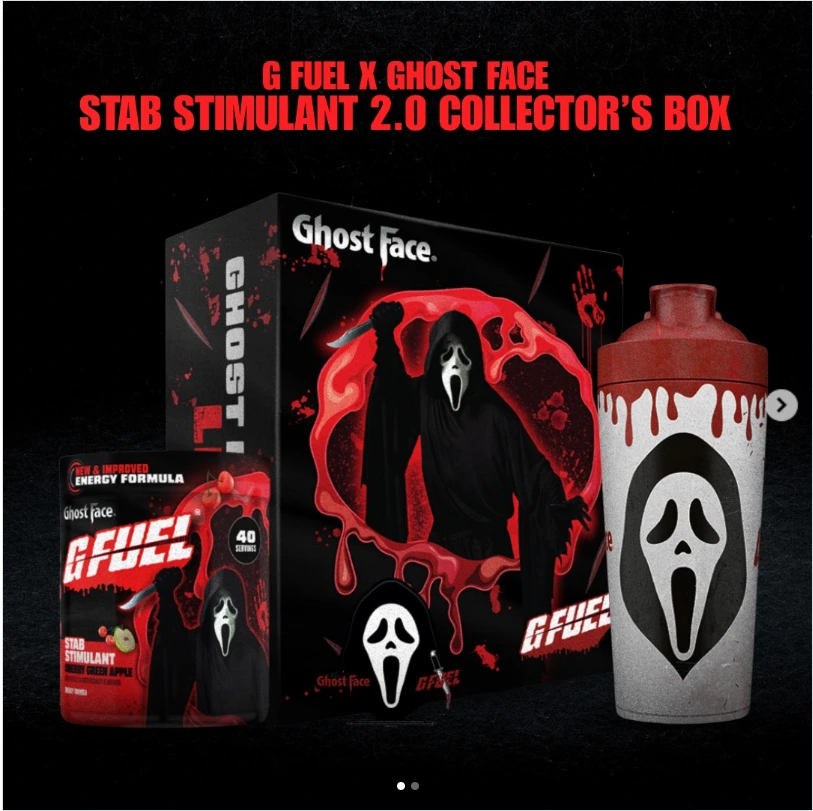
Source: Officialfye
The product is the same energy formula. The wrapper, the license, and the story change. Their own collection page notes the lineup sells out fast every year and won't return until the next season, which manufactures real urgency.
The takeaway for merchants
You probably already have a product people like. Halloween is permission to repackage it, not to invent something new. An all-black edition, a "cursed" flavor, a spooky bundle, a themed gift set. The cost is low and the urgency is built in because the edition disappears after October.
3. Jeffree Star Cosmetics: Design Details That Signal the Season
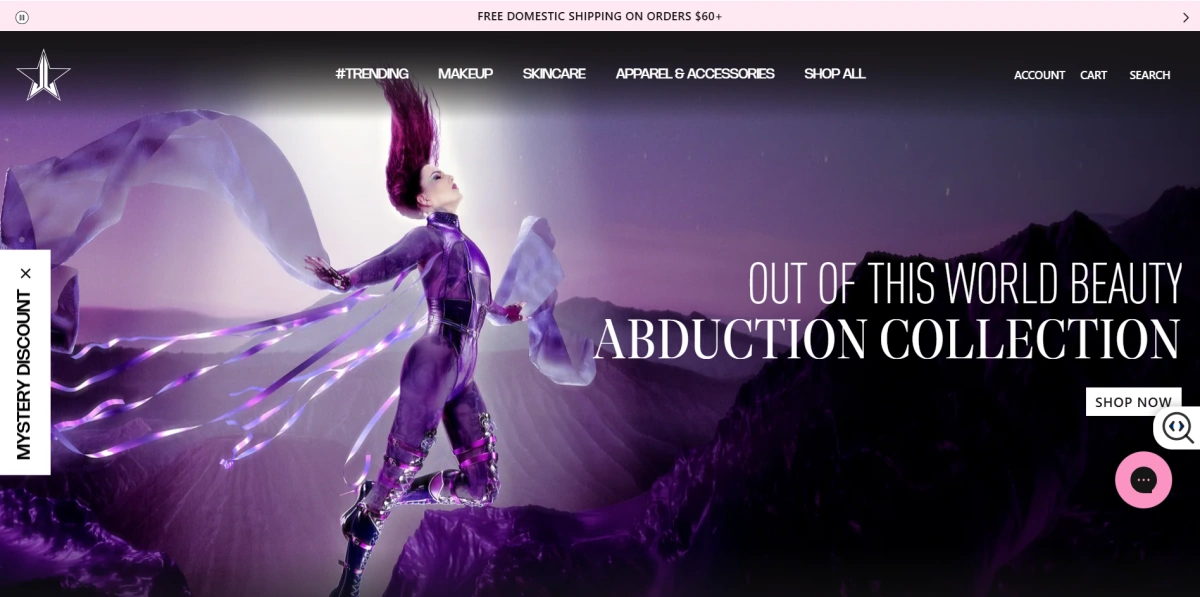
Jeffree Star Cosmetics is an influencer-founded beauty brand on Shopify Plus, running a fully custom theme and doing an estimated $100M in annual sales at its peak. During Halloween the store leans into edgy, seasonal makeup and has run Halloween-themed limited drops, including a Halloween mystery box.
Why it wins
A common mistake is slapping one banner on the homepage and calling it done. The stronger move, which Jeffree Star's launches lean on, is theming the details customers actually interact with: announcement bars, product badges, packaging, and drop pages.
Small, well-placed touches carry the theme through the whole shopping flow. They do more for conversion than a single hero image, because the seasonal feeling follows the shopper all the way to checkout.
The takeaway for merchants
You don't need a custom build to copy this. Retheme high-visibility, low-effort elements: the announcement bar, menu, product-badge icons, and cart. Shopify apps that add seasonal animations or effects can get you 80% of the feel for a fraction of the work.
4. Trick or Treat Studios: Licensing and Scarcity as a Growth Engine
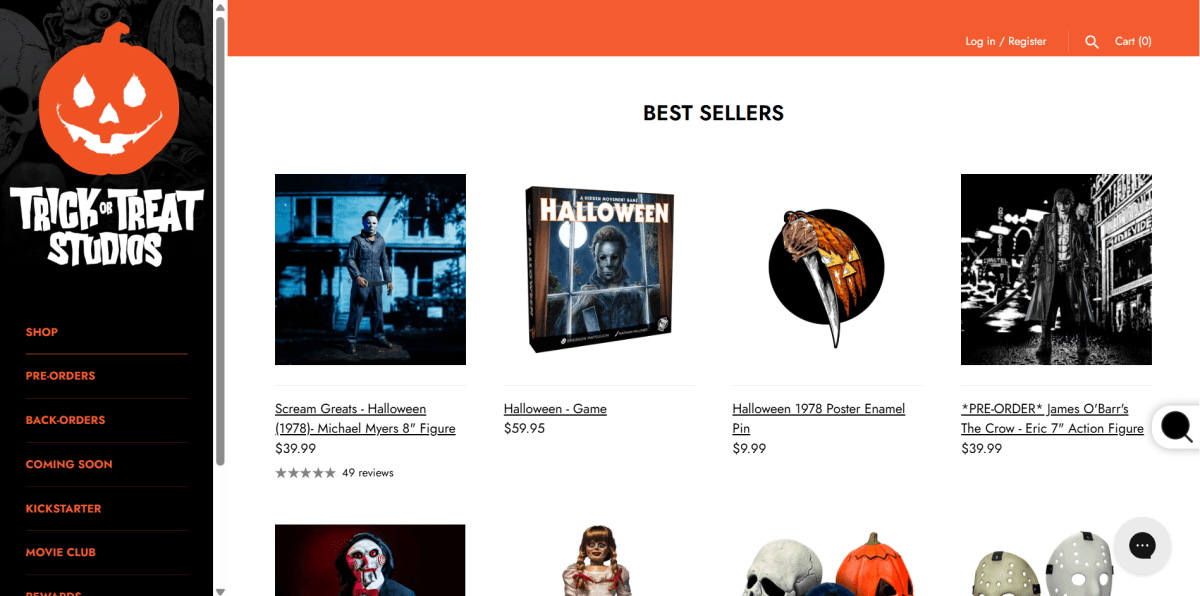
The brand: Trick or Treat Studios is a Shopify store selling premium Halloween masks, costumes, and props. They hold official licenses for franchises like Halloween, Terrifier, The Texas Chainsaw Massacre, A Nightmare on Elm Street, and Killer Klowns from Outer Space, which lets them sell exact movie replicas nobody else can.
Why it wins
Licensing is the moat. Because their Michael Myers or Art the Clown masks are officially accurate, collectors buy from them specifically, not from a generic costume shop. That pricing power and loyalty is hard to copy.
They stack scarcity on top with pre-orders, back-orders, and "coming soon" and "last chance" collections. Fans commit money before a product ships, which funds production and signals demand. Reviews show buyers treating masks as heirloom collectibles, not one-time costume buys.
The takeaway for merchants
You may not hold movie licenses, but you can borrow the mechanic. Use pre-orders and limited "coming soon" drops to build anticipation and validate demand before you spend on inventory. Position seasonal items as collectible and worth returning for, so a Halloween buyer becomes a repeat customer.

5. MeUndies: A Non-Halloween Brand That Turns Prints Into a Seasonal Event
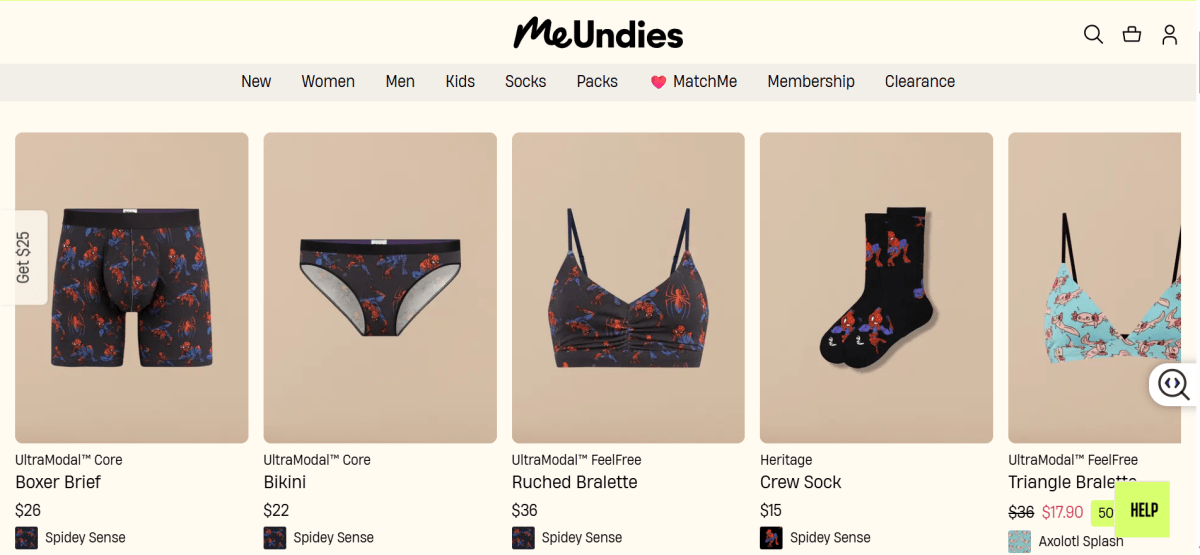
MeUndies is a direct-to-consumer underwear and loungewear brand running on Shopify Plus, best known for its subscription model and bold patterned prints. It has nothing to do with Halloween the other eleven months of the year, yet it treats October as a genuine product moment.
Why it wins
MeUndies drops a dedicated, limited-edition Halloween print collection every year, spanning men's, women's, and matching pairs.
They go further than just recoloring a product. MeUndies runs designer spotlights explaining the artist behind each print.
Because the core product is a repeat purchase with a subscription attached, a seasonal print is also a smart tool to reactivate lapsed members and lift order value.
The takeaway for merchants
If you sell anything with a visual or design element, such as apparel, packaging, accessories, or homeware, you can run the MeUndies playbook.
Release a limited seasonal print or edition, give it a story (a designer, a collab, a theme), and gate it with a clear end date. You don't need Halloween products. You need a reason for existing customers to buy again right now.
How to Measure the Performance of Your Halloween Campaigns on Shopify
October revenue jumps, the dashboard looks great, and everyone calls the season a win. But revenue is not profit. A discount-heavy Halloween push can set sales records while quietly losing money once ad spend, transaction fees, shipping, and cost of goods come out.
Here's what to watch instead.
1. Track profit at the campaign and product level
Revenue and ROAS don't tell you if you're actually making money. Here's why.
First of all, not every campaign or product carries the same cost structure. Two products can generate the same revenue, but if one has 70% COGS and the other has 30%, their net margins are completely different. Look only at revenue or ROAS, and you'll miss which campaigns are quietly losing money.
Secondly, ad platforms report revenue, not profit. They don't subtract COGS, shipping, payment fees, discounts, or returns. A 4x ROAS can still mean negative net profit once those costs come out.
This gets expensive when it drives budget decisions. Scale a high-ROAS campaign that's pushing a thin-margin product, and you scale the loss. Cut a "low-performing" campaign that's actually selling your best-margin product, and you cut real profit.
Lastly, returns compound the problem. They cluster around specific SKUs, not campaigns. Track only at the account level, and a high return rate on one product gets diluted into the total, invisible.
2. Watch the discount-to-margin relationship
Halloween rewards urgency, but urgency often leads merchants to over-discount. The trap is that discounts reduce your contribution margin while acquisition costs rarely fall with them. A campaign that doubles revenue can still generate less profit if every order carries a thinner margin.
Before announcing a "Spooky 30% Off" sale, model your net profit after discounts, ad spend, shipping, and fees. The goal isn't to maximize sales during Halloween. It's to maximize profitable orders while demand is at its peak.
Often the smarter play isn't a bigger percentage off, but a bundle or free-gift threshold that lifts average order value while protecting your margin on each item.
3. Separate new-customer economics from repeat buyers
Seasonal shoppers are a double-edged sword. Halloween pulls in a wave of first-time buyers, but many are one-off, deal-driven, and expensive to acquire through October's crowded, high-CPM ad auctions. If you judge that traffic on revenue alone, it looks like a great month. Judge it on profit, and a chunk of those orders may have cost more to win than they returned.
The fix is to separate the economics. Track acquisition cost against first-order profit, so you know whether each new Halloween customer paid for themselves on day one. Then flag who comes back in November and December.
A seasonal buyer who returns and buys again at full price is worth far more than their first discounted order suggests, and that repeat rate tells you whether Halloween built real customer value or just rented a one-time spike. That's the number worth optimizing for next year.
4. Use a profit-tracking tool built for Shopify
The three points above all need the same thing to work: profit visibility at the campaign and product level, in real time. Shopify's native analytics won't get you there.
They report revenue and orders, but your real margin is scattered across Meta and Google ad accounts, shipping invoices, payment fees, and supplier COGS. By the time you reconcile it all in a spreadsheet, Halloween is over and the money is already spent.
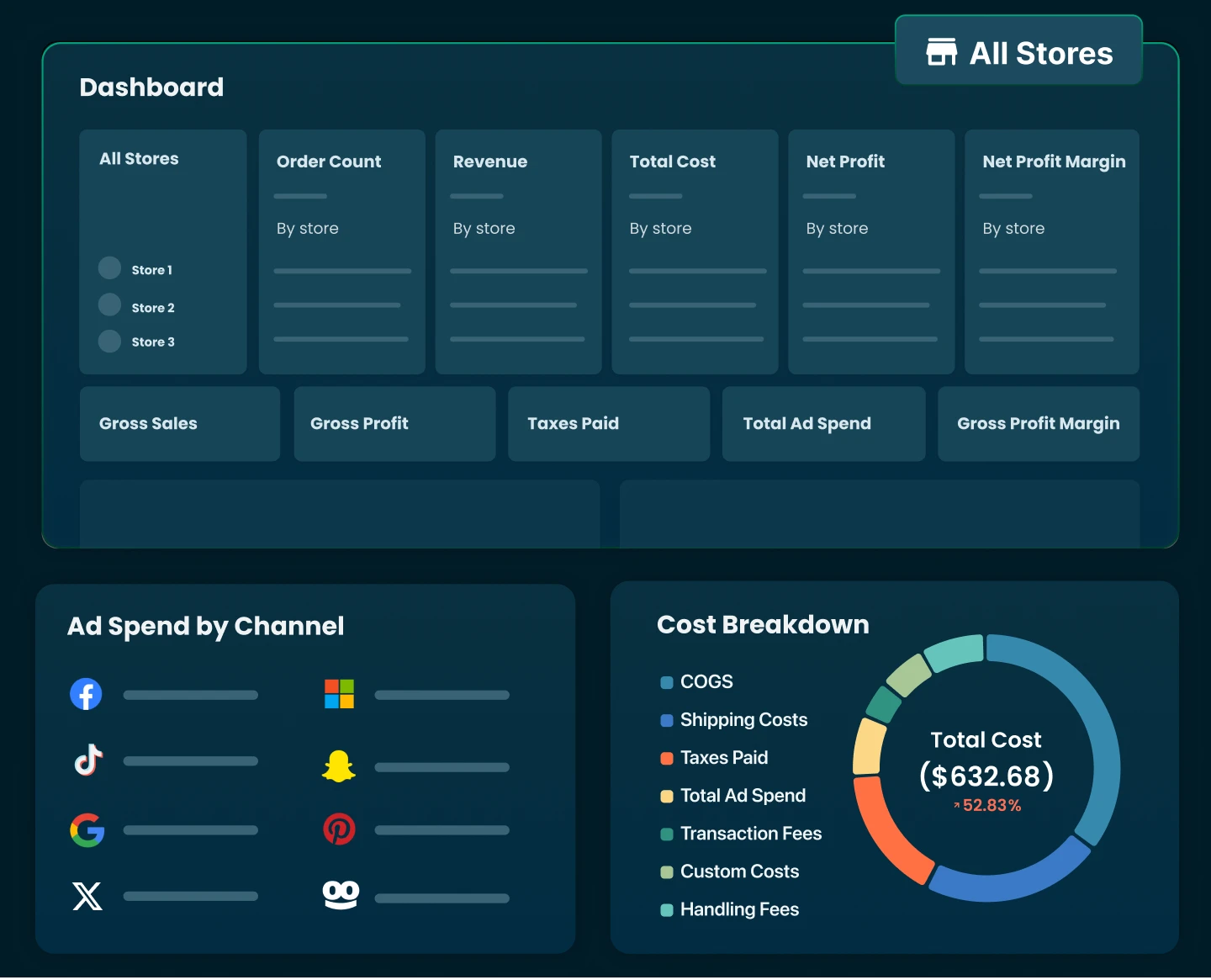
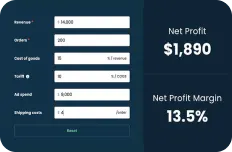
This is the problem TrueProfit was built to solve. It pulls those costs together into a single net-profit view, broken down by campaign and product, updated as orders come in. So instead of hoping your "spooky 30% off" worked, you can watch it in real time, kill the offers that bleed margin, and double down on the ones that actually clear a profit while the season is still alive.
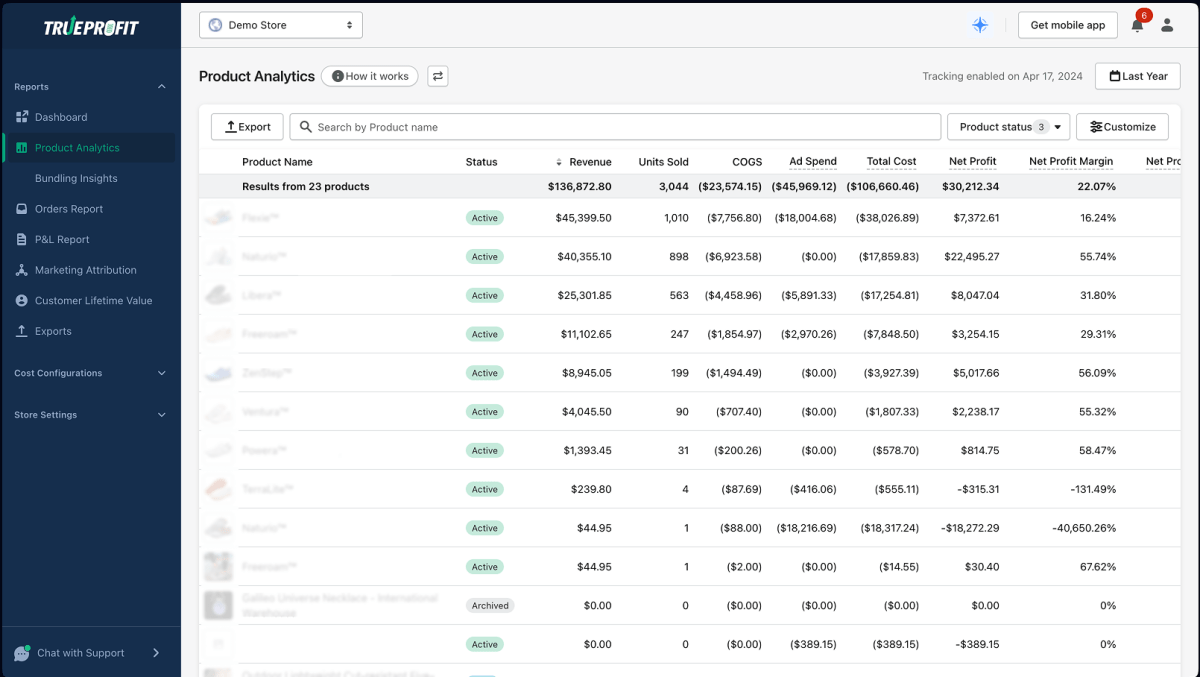
That difference, seeing profit as it happens instead of discovering it months later, is what separates the stores that repeat their Halloween wins from the ones guessing every year. The merchants who win the season long-term aren't the ones with the biggest revenue spike. They're the ones who know exactly which campaigns made money, and do more of that.
Final Thoughts
The best Shopify Halloween stores don't win because they have the biggest marketing budgets. They win because every part of their strategy is intentional, from limited-edition products and seasonal storytelling to carefully timed launches and urgency-driven promotions.
Whether you sell apparel, beauty products, food, home décor, or something completely unrelated to Halloween, the same principles apply. Give customers a compelling reason to buy now instead of later, and make every seasonal campaign feel exclusive.
Rosie Doan is a Senior Content Specialist at TrueProfit with over 4 years of experience creating content for the ecommerce and SaaS industry. Having worked closely with Shopify merchants and ecommerce businesses, she has developed a deep understanding of the challenges store owners face, from growing revenue and acquiring customers to tracking performance, managing costs, and improving profitability.