Halloween Print on Demand 2026: Winning Products, Design Trends & Q4 Strategies

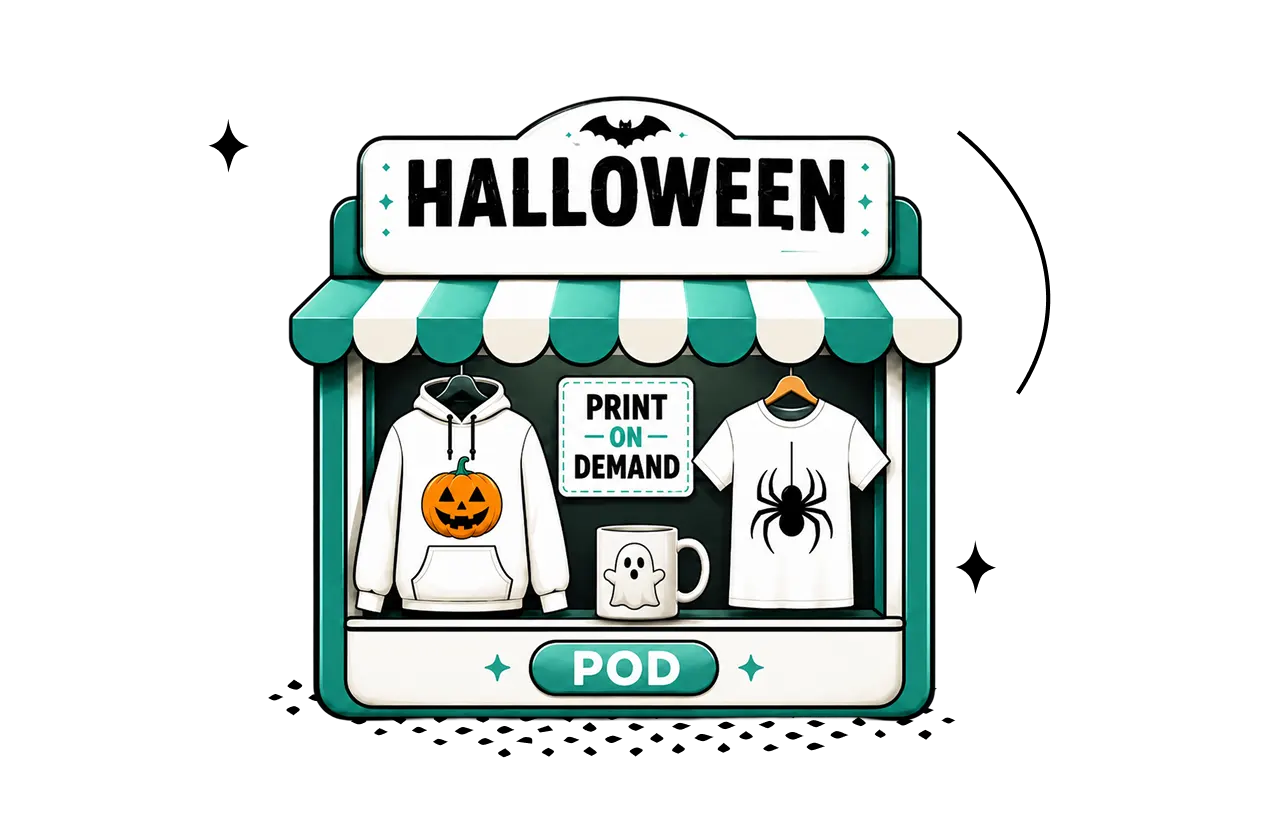

Halloween is the first big test of your Q4. Get it right and you build the audience, cash flow, and momentum that carry you through Black Friday and Christmas. Get it wrong and you spend the busiest quarter of the year playing catch-up.
In this guide, you’ll find the best Halloween print-on-demand products for 2026, the trends shaping customer demand, and a practical timeline to turn seasonal traffic into sales. Let’s get started!
Best product categories to sell POD in Halloween season
The best Halloween POD products combine low production cost, fast design turnaround, and built-in gifting or self-expression appeal. Apparel leads, but drinkware and home decor lift your average order value and margins.
Below are the 6 categories worth stocking, each with realistic pricing and margin ranges.
1. Halloween T-shirts
T-shirts remain the best print-on-demand product for Halloween because they pair low production costs with high demand and nearly unlimited design possibilities. They work for impulse buys and for family matching sets, which lifts order size.
- Selling price: $26–32
- Production cost: $9–12
- Gross margin: ~60–66%

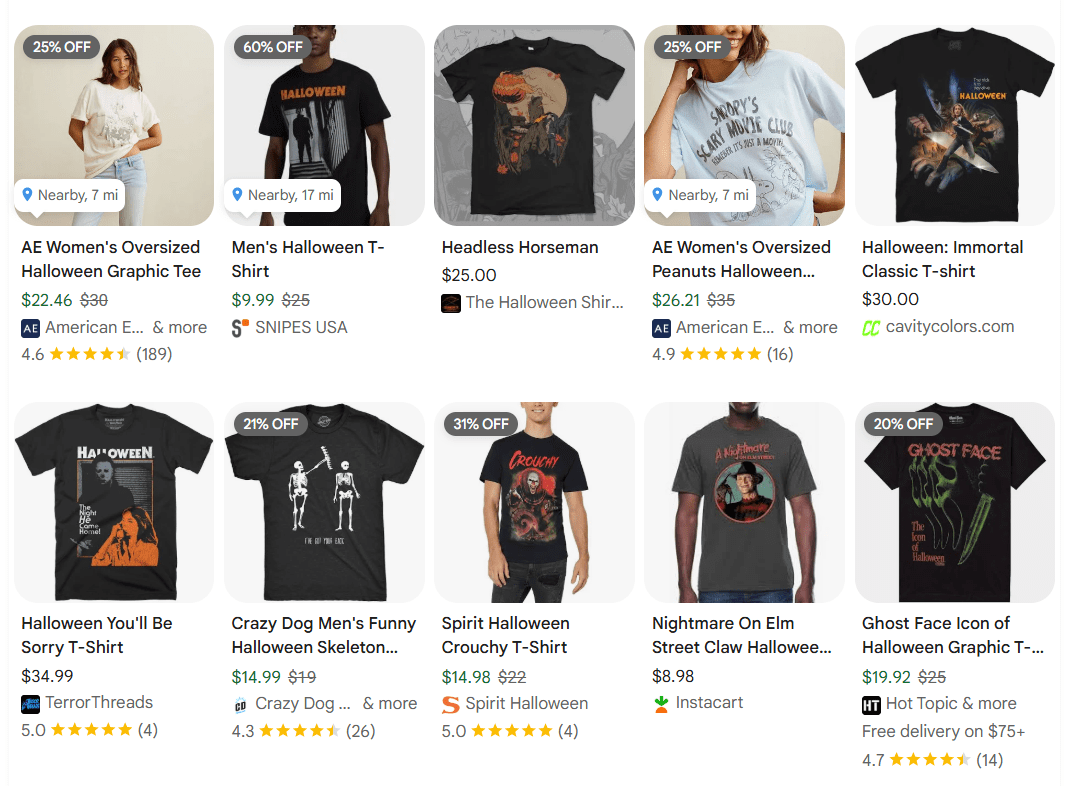
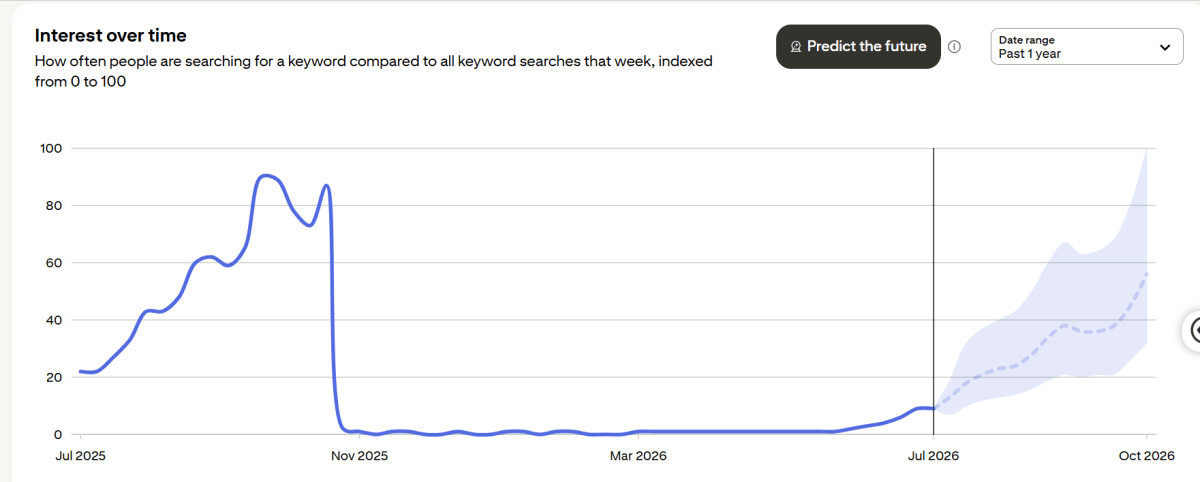
Why it sells: Customers wear them to parties, pumpkin patches, school events, and trick-or-treating. Demand starts building in August and peaks in late September and October.
Target audience: Families, teachers, moms, couples, and pet owners.
Selling tip: Launch before August, build matching collections, and bundle shirts with mugs or tote bags to raise average order value.
2. Hoodies And Sweatshirts
Hoodies deliver the highest profit per order in Halloween POD because buyers accept a higher price point and October weather makes them practical.
- Selling price: $48–62
- Production cost: $17–22
- Gross margin: ~64–72%
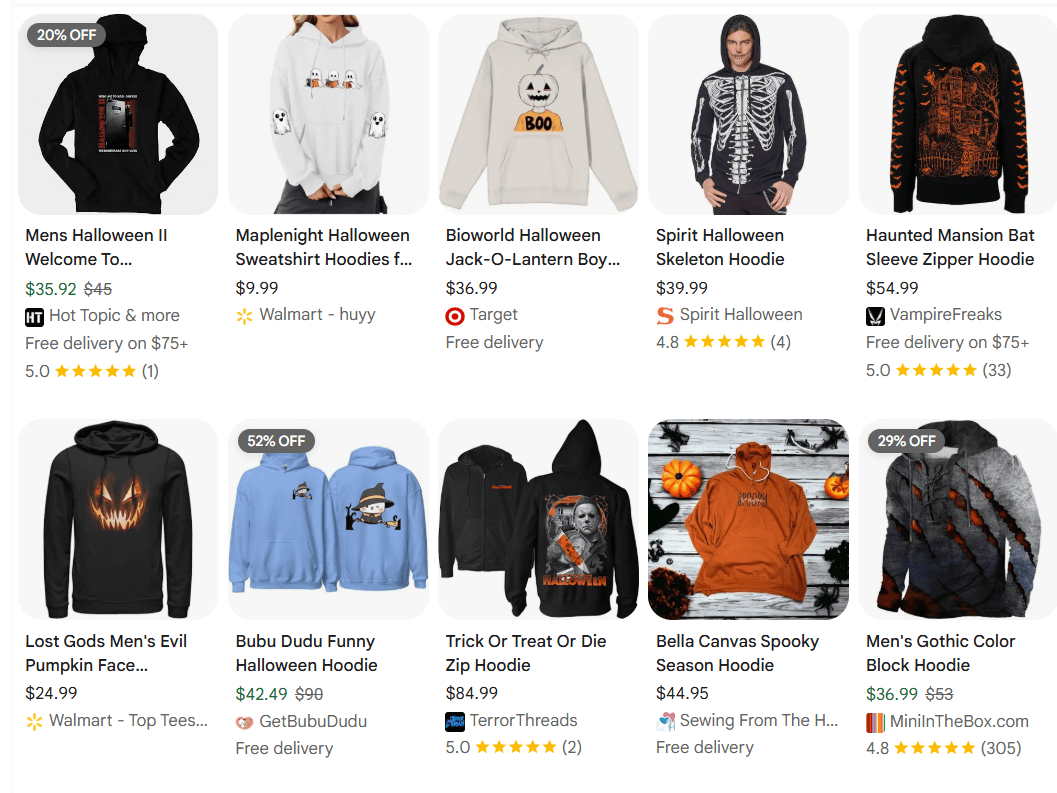
Why it sells: Fall timing is perfect. Oversized and streetwear-style Halloween hoodies tap into a fast-growing apparel trend and read as everyday wear, not just a one-night costume.
Target audience: Teens, young adults, streetwear fans, and gift buyers.
Selling tip: Offer embroidery as a premium tier. It justifies a higher price and separates you from every seller running the same printed graphic.
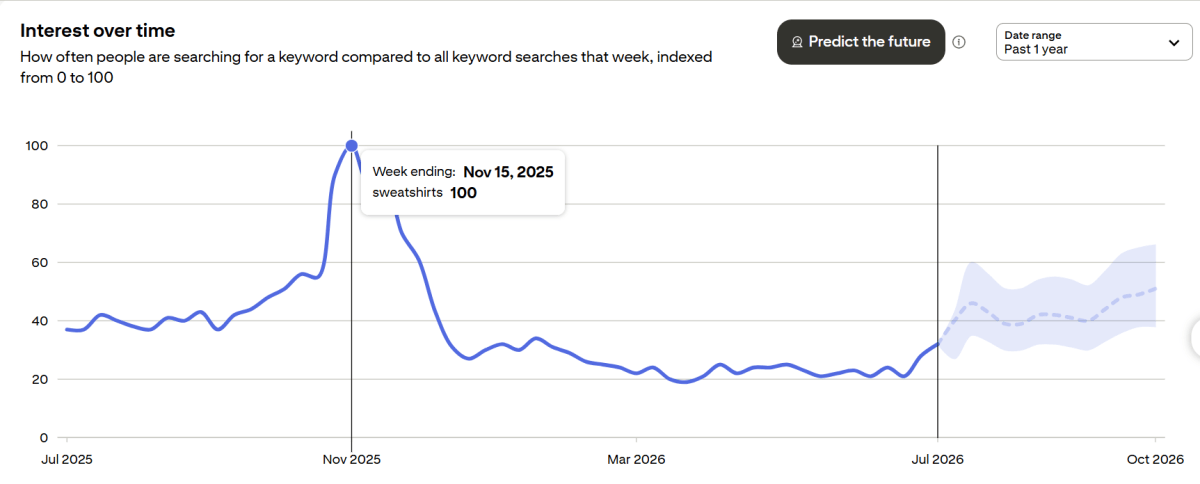
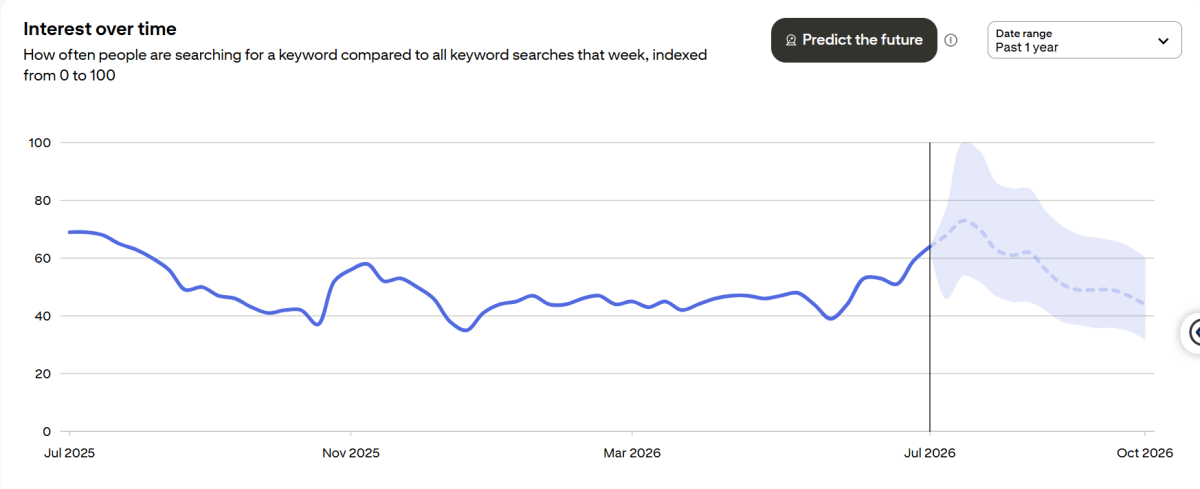
Hoodie and sweatshirt demand starts rising in July and reaches a peak through November
3. Mugs And Drinkware
Mugs are the easiest add-on product to attach to a Halloween order, which makes them a bundle and AOV tool more than a standalone hero product. They photograph well in themed settings and carry strong gifting appeal.
- Selling price: $18–24
- Production cost: $6–9
- Gross margin: ~58–64%
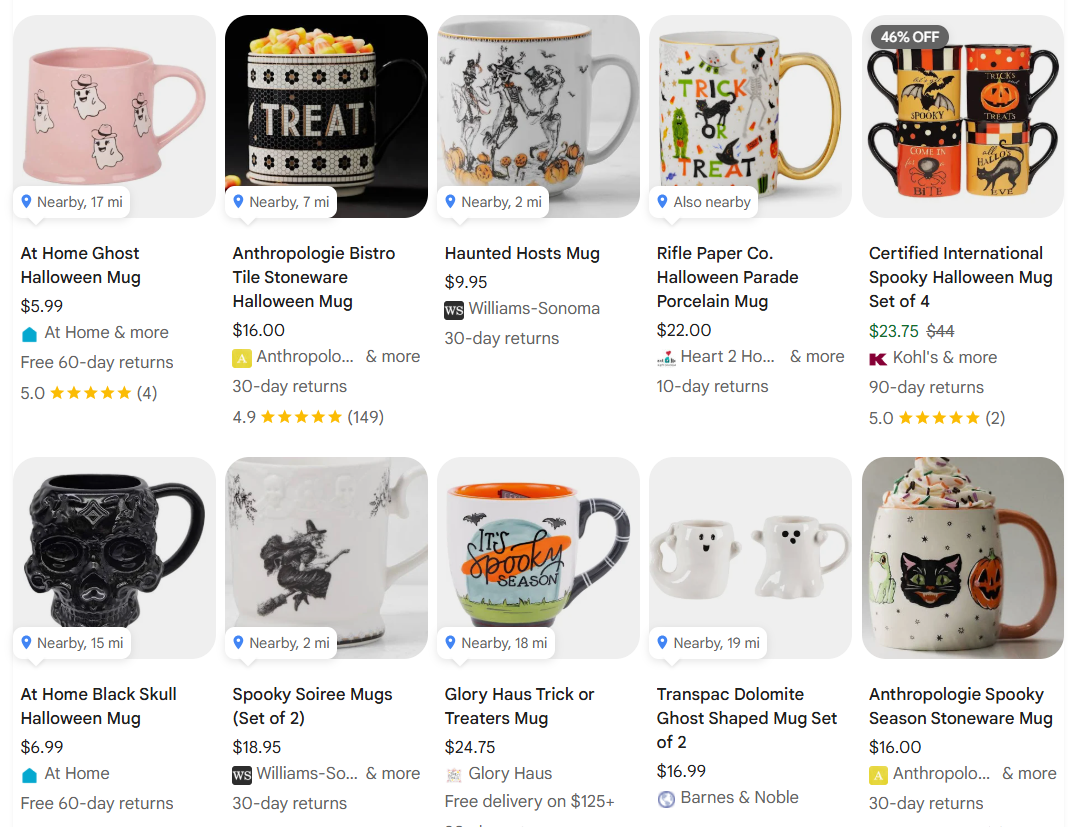
Why it sells: Seasonal home decor is booming, and people swap in "spooky" mugs for the season the same way they swap throw pillows. Low price makes them an easy impulse add.
Target audience: Coffee lovers, coworkers, teachers, and gift buyers.
Selling tip: Choose a reliable supplier. Mugs break in transit more than any other category, and returns eat your margin fast.
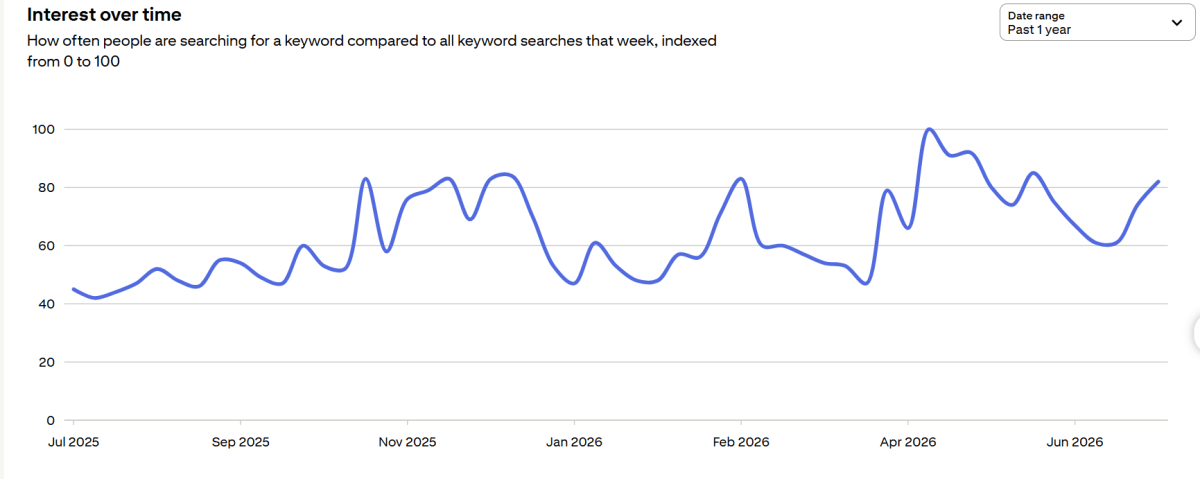
Mugs are an evergreen product, with demand staying strong year-round and rising during holidays
4. Tote Bags And Accessories
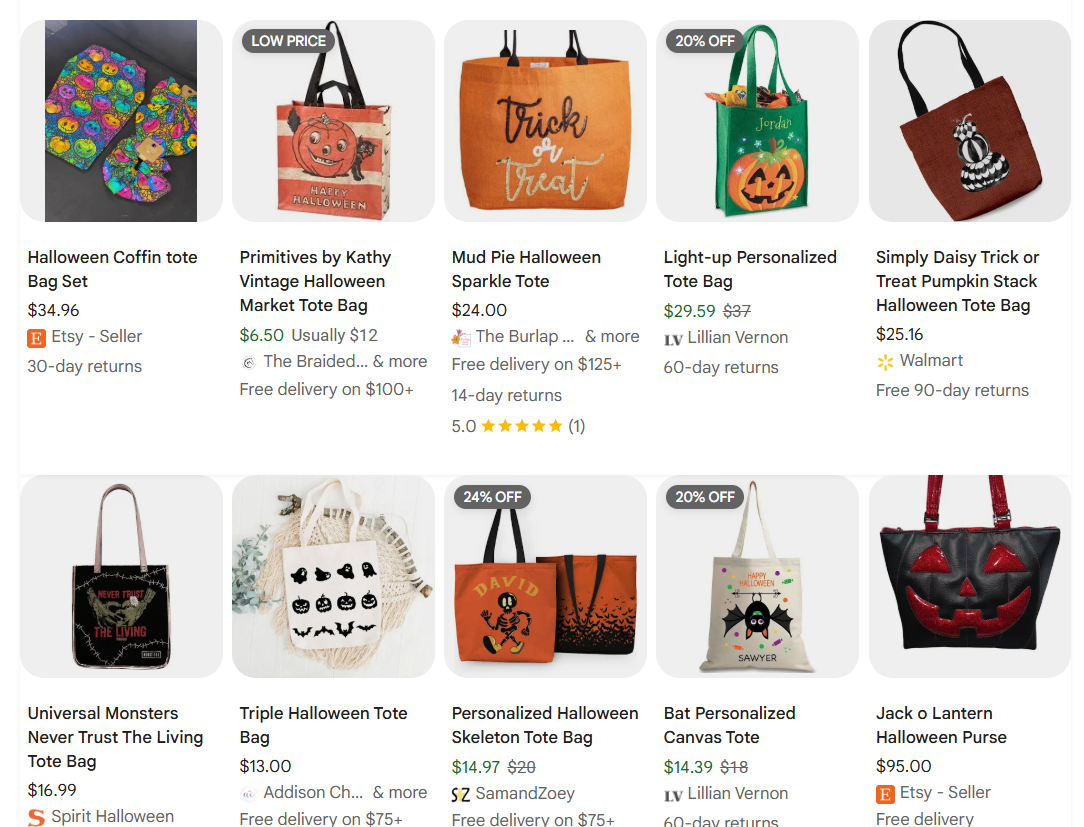
Tote bags are the highest-margin low-cost Halloween product because base costs stay low while trick-or-treating utility gives them a clear seasonal reason to exist. They also double as everyday carry bags after the holiday.
- Selling price: $20–28
- Production cost: $7–10
- Gross margin: ~60–66%
Why it sells: Kids need candy bags and parents want reusable ones. Adults use themed totes for grocery runs well past October.
Target audience: Parents, kids, and eco-conscious shoppers.
Selling tip: Personalized candy bags with a child's name convert especially well and command a premium.
5. Home Decor
Halloween home decor is one of the fastest-growing POD sub-niches because it rewards personalization and faces less design competition than apparel. Throw pillows, wall art, and doormats all sell on seasonal impulse and let buyers refresh their space for the season.
- Selling price: $28–45
- Production cost: $9–14
- Gross margin: ~65–78%
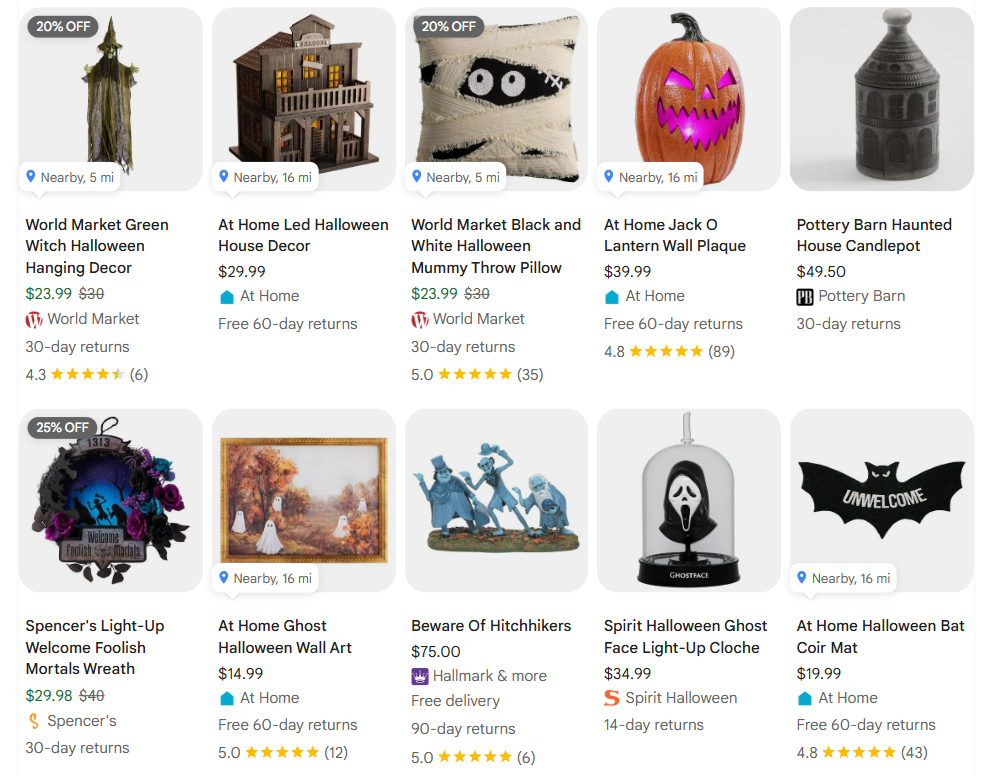
Why it sells: People decorate for the season the same way they swap out summer for fall. A haunted-house throw pillow or spooky doormat is an easy emotional yes, and it photographs well for social.
Target audience: Homeowners, renters decorating for the season, and social-first "spooky nook" decorators.
Selling tip: Sell decor in small themed sets (pillow plus doormat plus print). Bundling lifts order value and gives buyers a ready-made "spooky corner."
6. Pet Products
Pet products are a proven Halloween gold mine because owners treat pets like family and personalization removes any price comparison. Bandanas and pet apparel carry low base costs and high emotional pull, which makes them easy premium sellers.
- Selling price: $22–34
- Production cost: $7–11
- Gross margin: ~64–72%
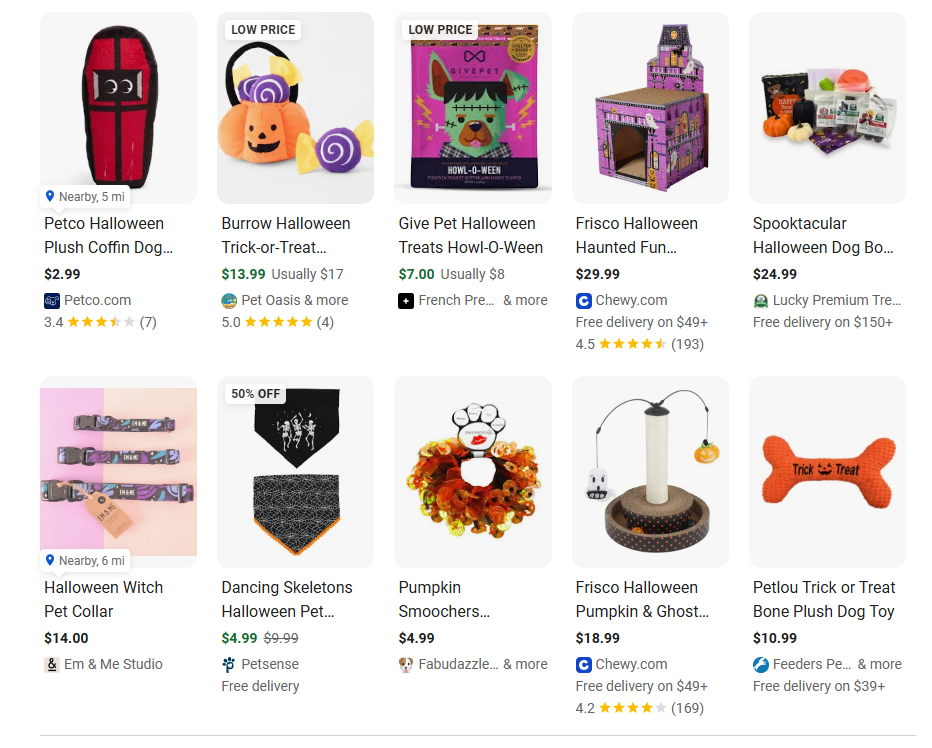
Why it sells: A named product like "Luna's First Halloween" is impossible to find anywhere else, so buyers stop comparing prices and just buy. Pet costumes and bandanas also drive tons of shareable social content.
Target audience: Dog and cat owners, especially millennials and Gen Z who treat pets as family.
Selling tip: Offer matching owner-and-pet sets. It doubles the order and taps straight into the shareable content that fuels organic reach.

Trending Halloween Design Ideas For POD Sellers
Nostalgia, personalization, and "make it shareable" are the three forces driving what sells. Orange, black, and purple still anchor the season, but how you use them is what separates a $12 listing from a $30 one.
Here are the five trends worth building your catalog around, plus how to apply each one.
1. Retro And Vintage "Beistle" Nostalgia
Halloween designs styled to look like decorations from the 1950s and 60s. The look is defined by faded colors, grainy textures, old-fashioned witches, etc. so the design feels like a vintage find rather than a modern graphic.
Why it's trending: Nostalgia is running the show this year. Buyers want the grinning black cats, paper-mache pumpkins, and stylized witches from mid-century Halloween, and they'll pay a premium for anything that feels like a curated vintage find instead of clip art.
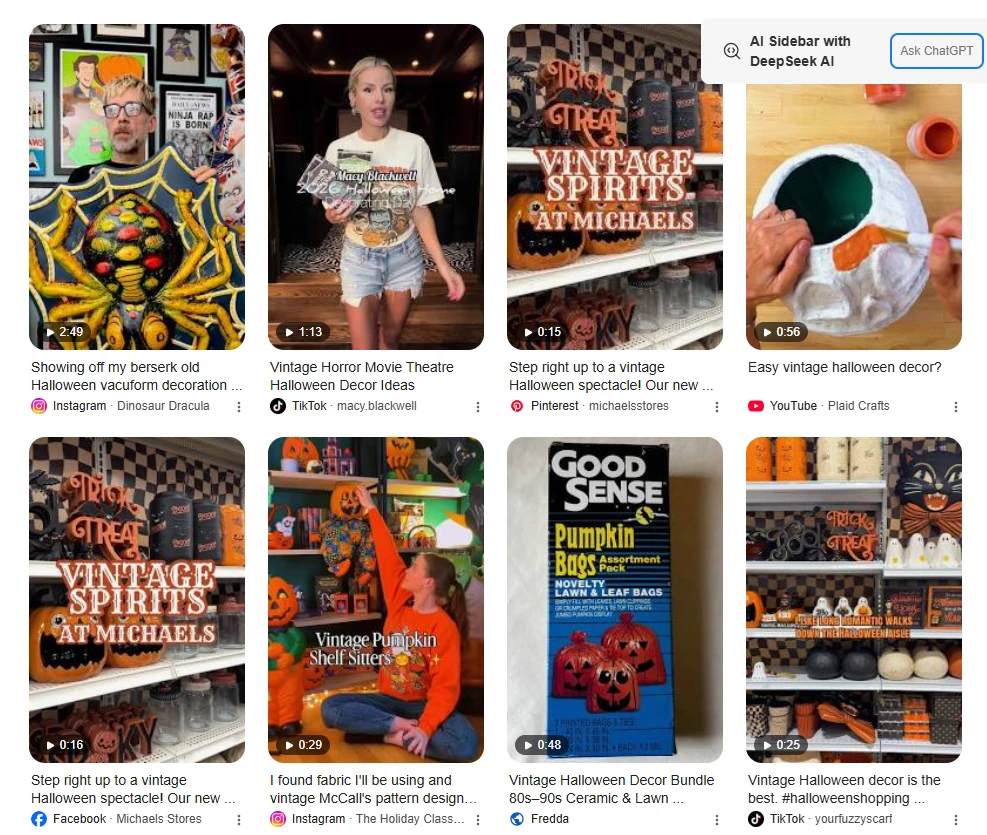
"Vintage Halloween" has racked up more than 17 million posts on TikTok, and Pinterest boards for 2026 trends are stacked with retro and 90s Halloween pins.
2. Cute-Spooky And "Ugly-Cute" Characters
Cute, non-scary Halloween characters instead of gory ones. These designs use oversized eyes, round plush shapes, and soft pastel colors to make ghosts, pumpkins, and monsters.
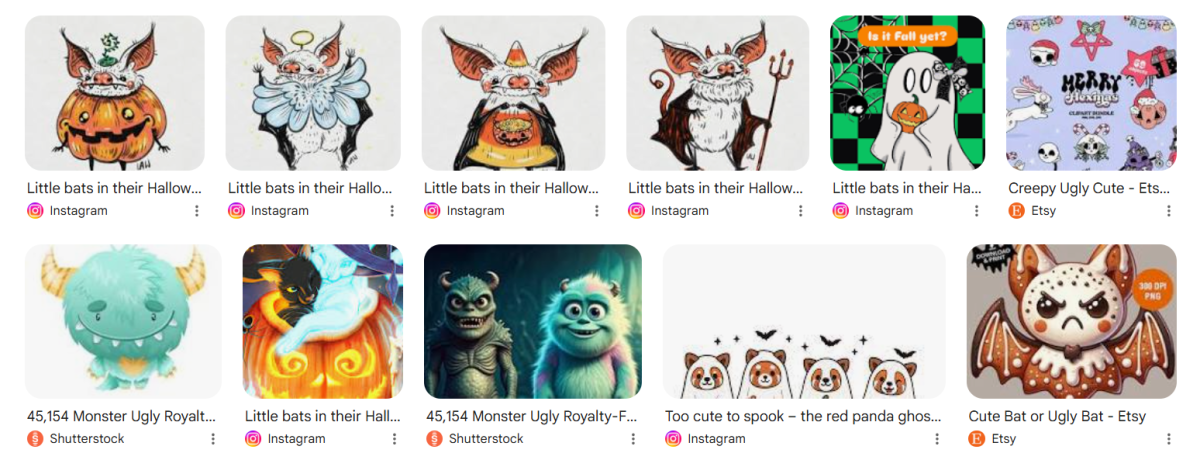
Why it's trending: Not everyone wants gore. A huge slice of buyers, especially parents and pet owners, want playful over scary. The "ugly-cute" look, all oversized eyes and rounded plush shapes, has crossed over from viral toy culture straight into Halloween.
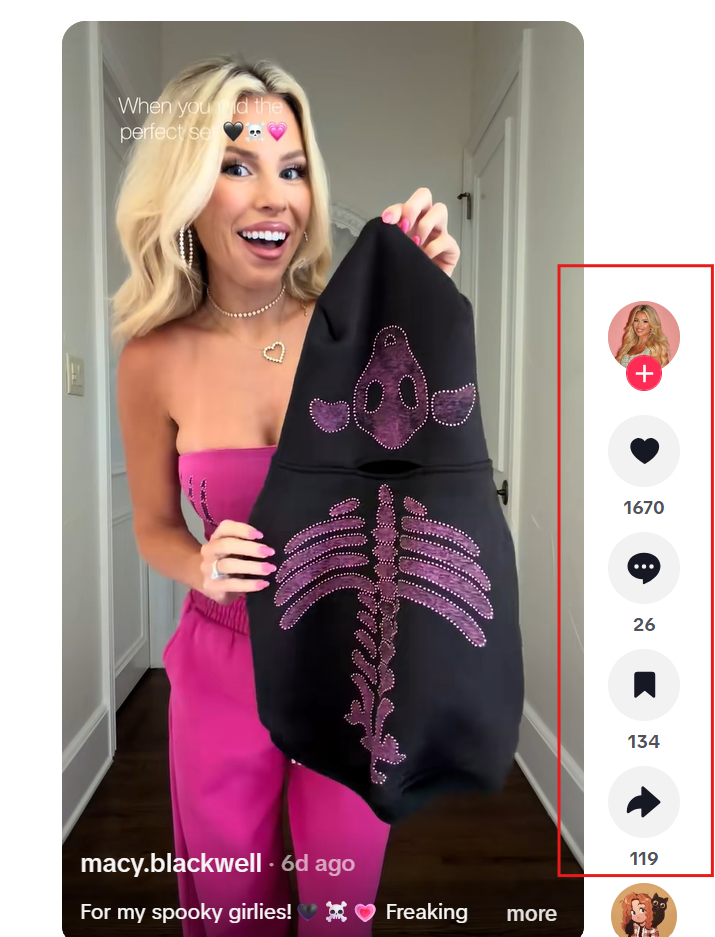
The pastel and cute-spooky aesthetic is one of the most-searched Halloween looks of 2026, spreading across TikTok and Pinterest.
3. Personalized And Family Matching Sets
This covers add-a-name designs, "First Halloween" baby items, and matching outfits made for a whole family or group to wear together.
Why it's trending: Personalization is the single biggest lever in POD right now, and Halloween is built for it. A named product can't be bought anywhere else, which kills price comparison and justifies a premium.
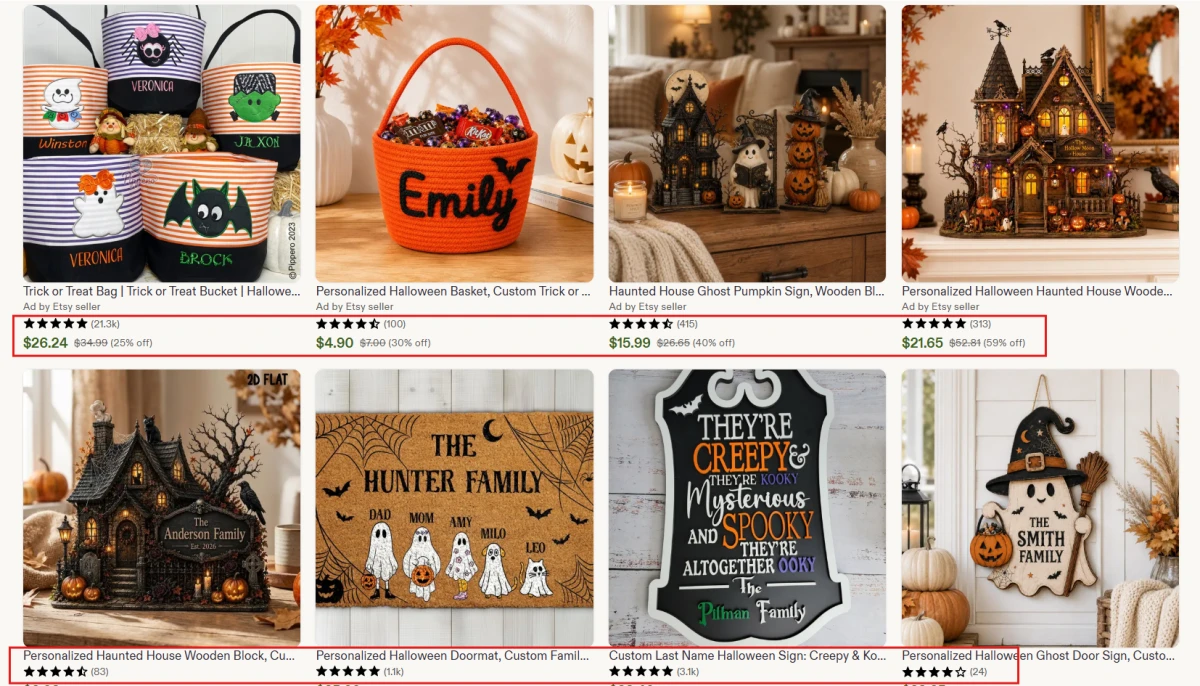
Personalized products are growing faster than the POD market overall, and Etsy's best-selling Halloween listings are dominated by custom, name-based items.
4. Girly And Feminine Ghost Aesthetic
Coquette is one of the biggest style movements right now, and it has spilled straight into Halloween. It blends the viral "coquette" fashion look, all ribbons, lace, and pearls, with spooky-season motifs, so the result is pretty and romantic rather than scary.
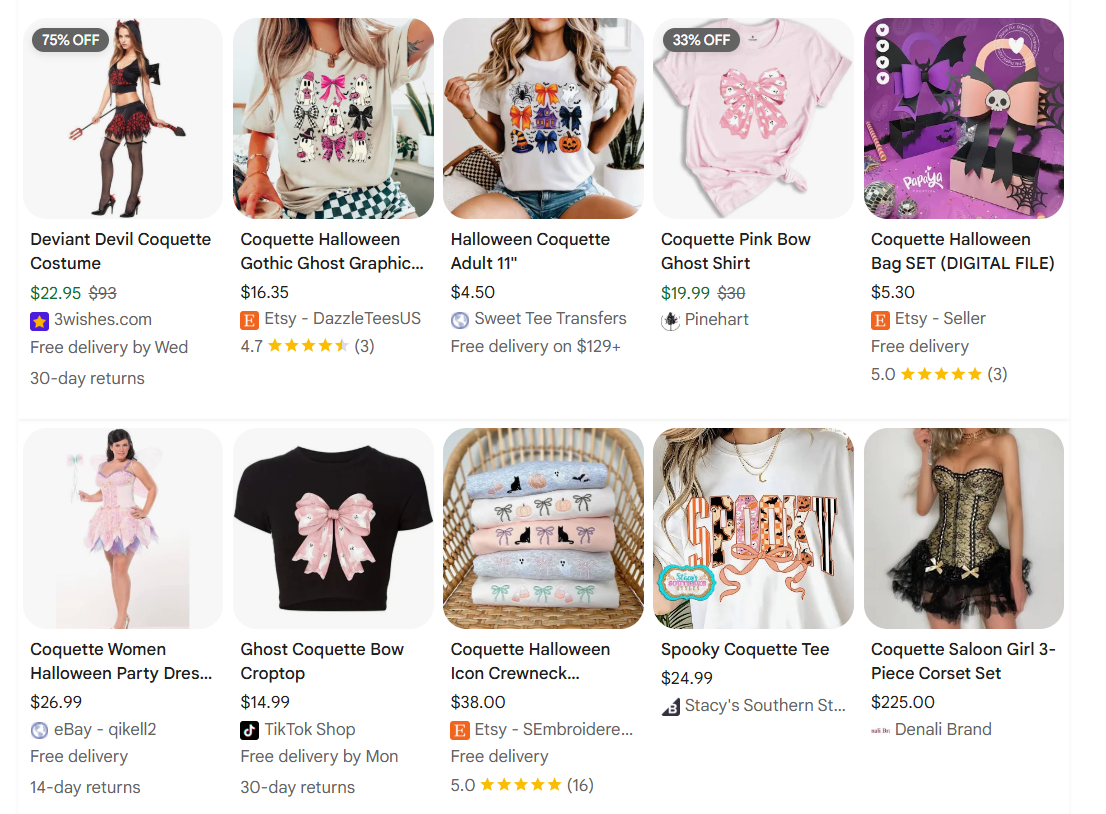
Why it's trending: Buyers want a version of the holiday that matches their feminine, pink aesthetic instead of the usual black-and-orange gore.
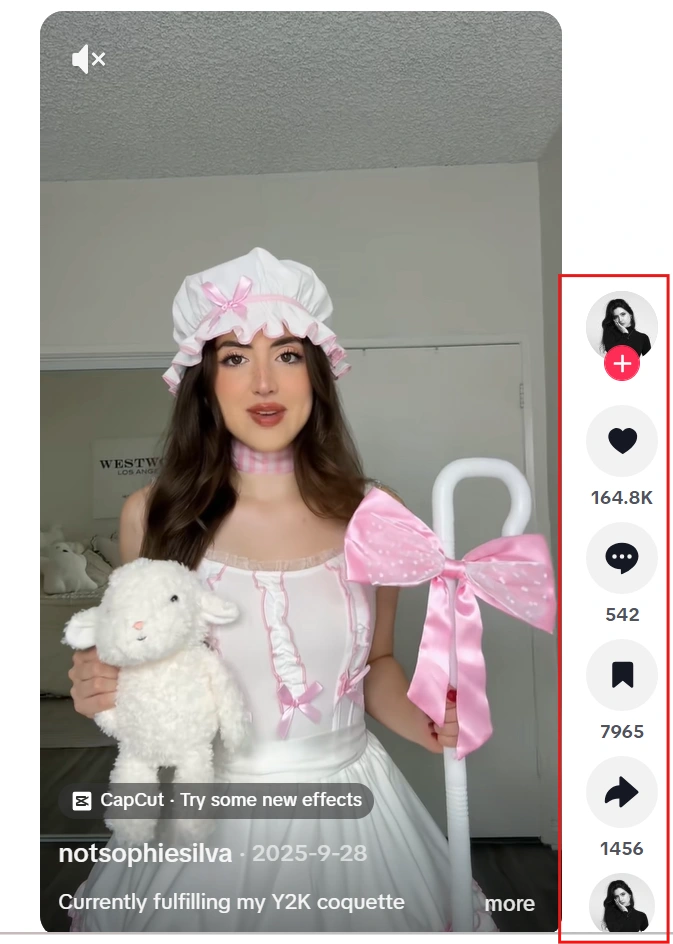
"Coquette Halloween," "girly ghost," and "pink Halloween" are active search terms across TikTok and Pinterest, and major retailers including Target and Walmart already stock coquette ghost tees and bow sweatshirts.
5. Black Cat Designs
Halloween designs built entirely around the black cat, one of the most recognizable and best-loved Halloween symbols.
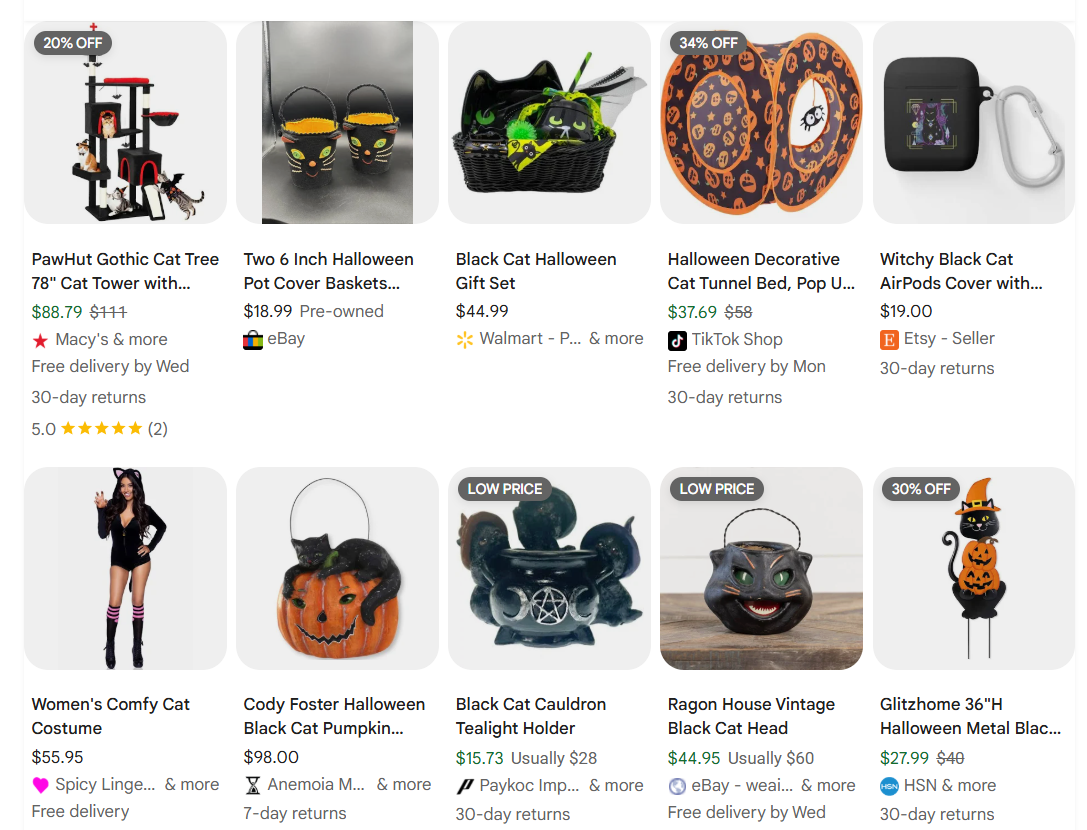
Why it's trending: The black cat sits right where two huge audiences overlap: Halloween shoppers and the enormous cat-lover market. That means a black cat design sells during October and keeps selling year-round to cat owners, which few other seasonal motifs can do.
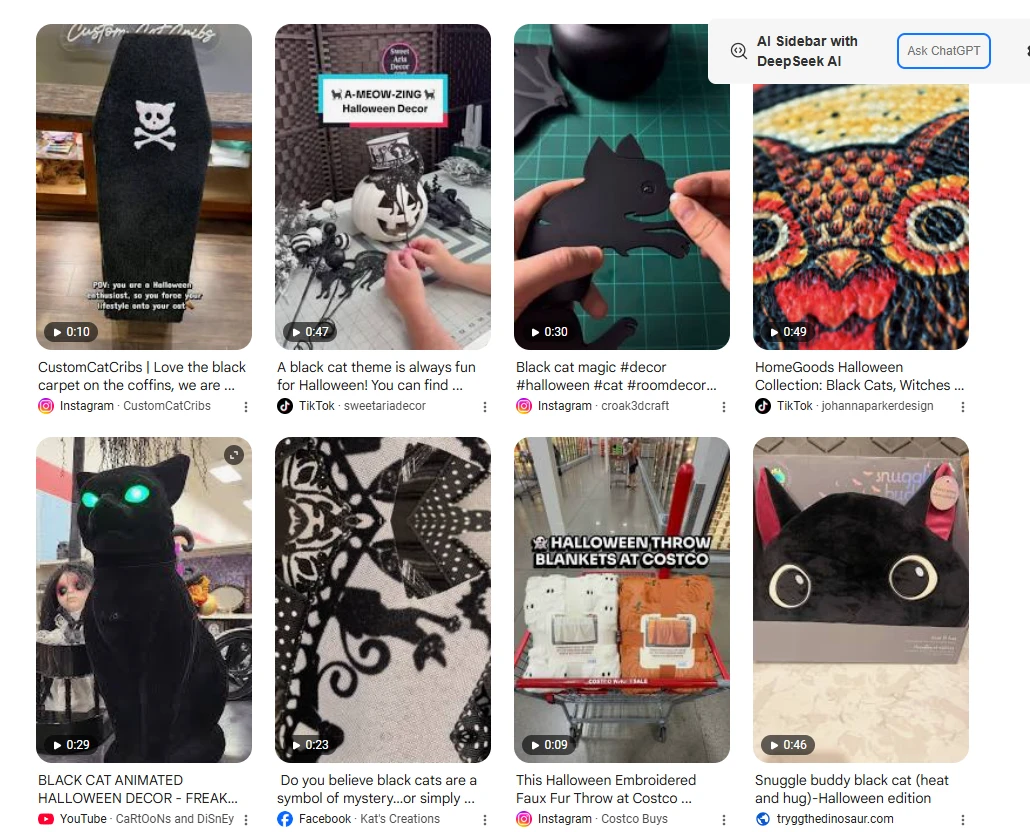
Black cat-themed products are consistently among the top-selling niches in print-on-demand.
How To Launch Halloween Campaigns For POD Sellers
Launch your Halloween products 4 to 6 weeks before the buying peak, not in October. Search engines need time to index new listings, and buyers in the research phase save products in August and September before purchasing. Sellers who drop products early consistently capture higher conversion rates than those reacting in real time.
1. August: Build And Index (6 To 8 Weeks Out)
Upload your full Halloween catalog by early-to-mid August. This is the "60-day rule" in action: get pages live so search engines index them and you build ranking momentum before demand peaks.
Prioritize your hero products first (shirts and hoodies), then layer in add-ons like mugs and totes for bundling. Write SEO-friendly titles and descriptions now while you have time to do them well.
2. September: Arm Up Traffic And Email
September is when buyers start researching and saving. Turn on low-budget awareness ads, publish themed social content, and start collecting emails with a quiz or early-access signup.
Stage your product photos in real Halloween settings, such as candlelit rooms, autumn leaves, or beside carved pumpkins. Skip the plain white background. Seasonal staging lifts click-through and conversion.
3. Early October: Scale Spend And Launch Bundles
The first three weeks of October are your peak. Scale ad spend on the products already converting, launch limited-time bundles (shirt plus mug, or costume plus accessory), and create urgency with countdowns.
Consider daily or frequent product drops through October. A new design or bundle every few days gives buyers a reason to return, fuels email open rates, and turns your store into an event people anticipate.
4. Mid-to-late October: Communicate Shipping Cutoffs
Publish clear shipping cutoff dates and repeat them everywhere: product pages, cart, email, and ads. Confirm exact deadlines with your POD partner, since lead times vary by supplier and product.
Handling cutoffs well is a trust builder. Sellers who set clear expectations avoid complaints and convert one-time Halloween buyers into Q4 repeat customers. After the cutoff, pivot messaging to digital products or gift cards.
5. Track Performance So You Know What Actually Worked
A successful Halloween campaign is measured by profit and momentum, not gross revenue. Revenue tells you what came in. It does not tell you what you kept after product costs, transaction fees, shipping, and ad spend.
This is exactly where most POD sellers get burned. A campaign can post record revenue and still lose money once you subtract COGS and rising October ad costs. The number that matters is net profit per order, not the total on your Shopify dashboard.
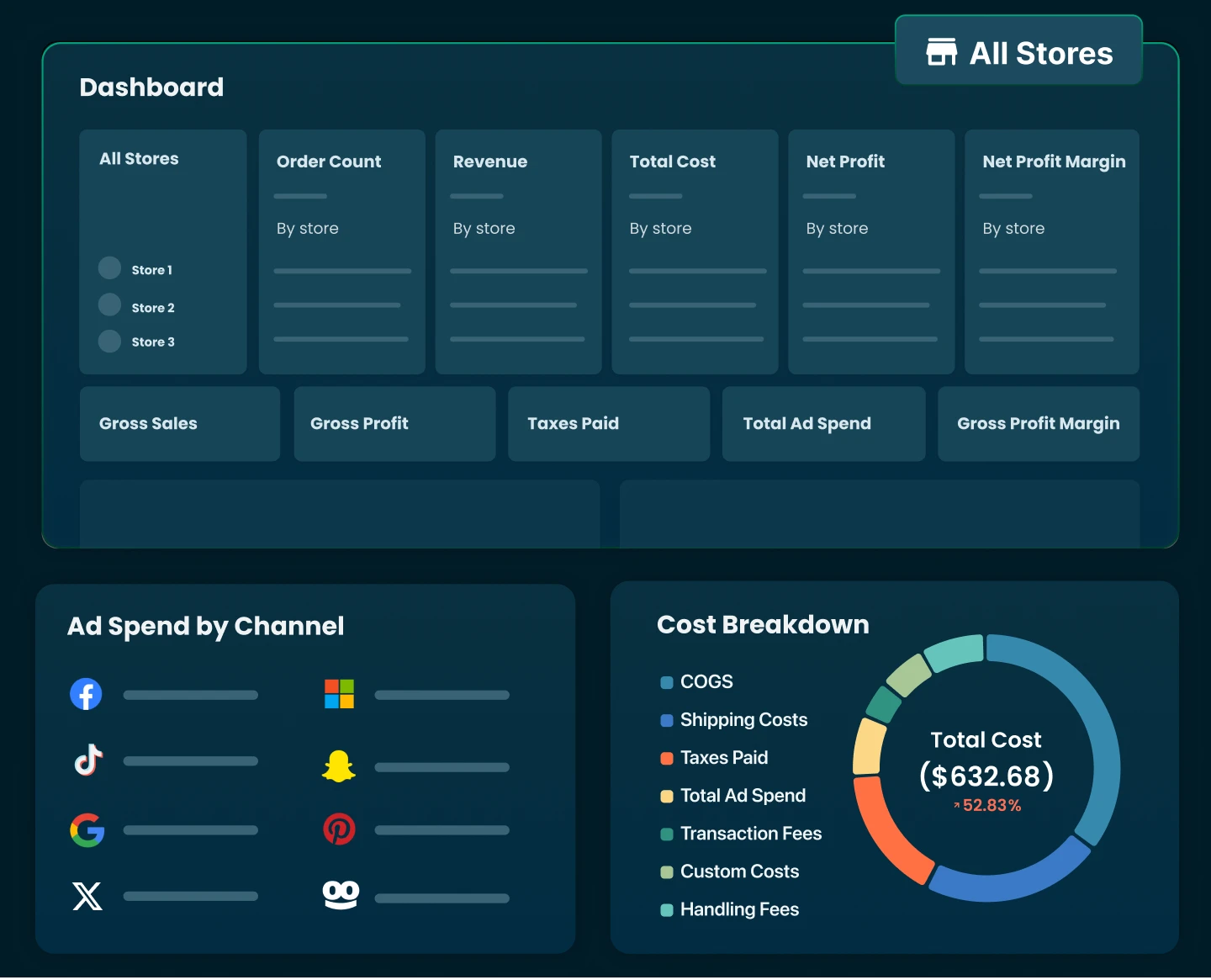
Track your true net margin in real time with a tool like TrueProfit, which connects your Shopify store, ad platforms, and product costs to show real profit per products and per channels. Instead of guessing, you see which Halloween designs, bundles, and ad sets are genuinely profitable while there is still time to reallocate budget.
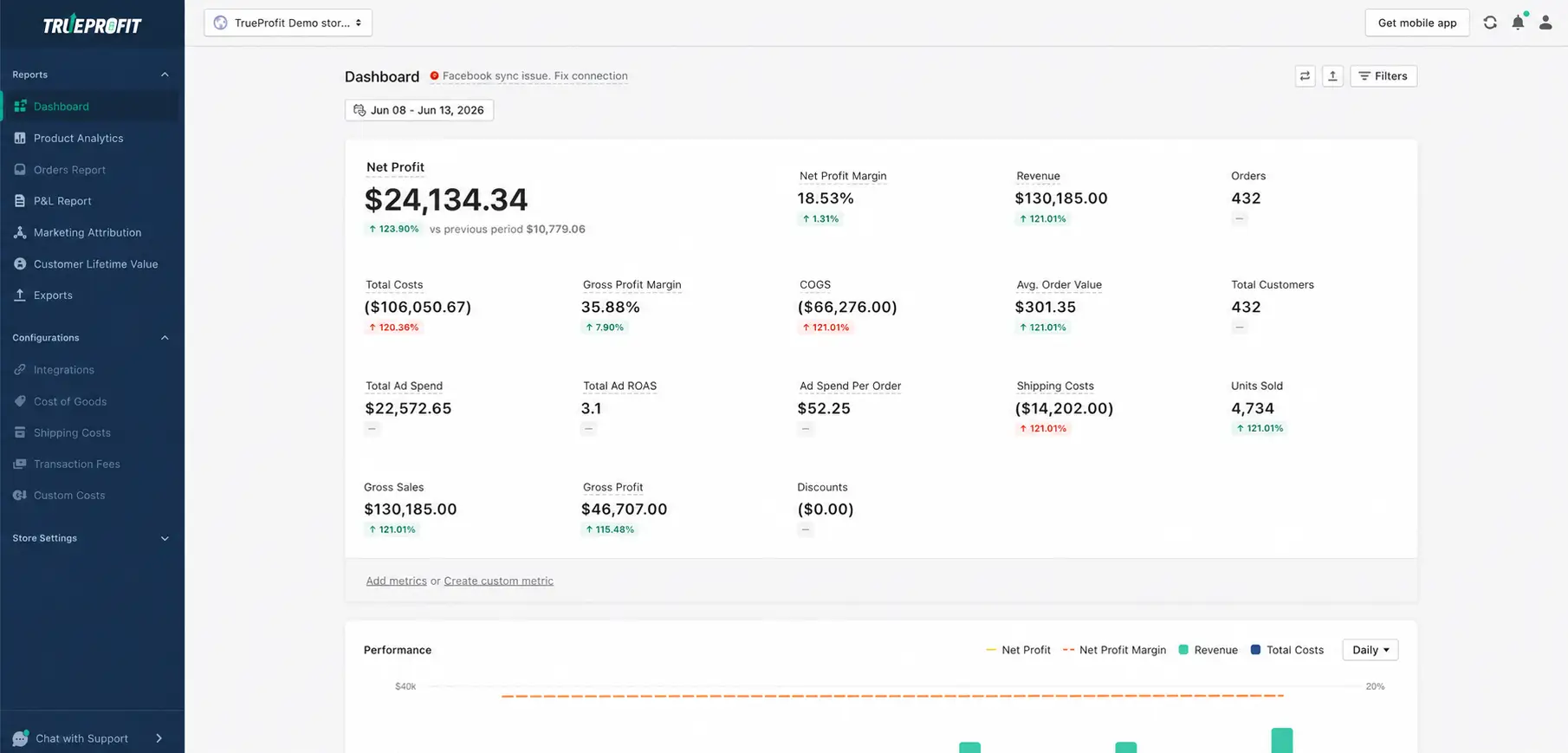
The core metrics I’d recommend every merchant to watch during your Halloween campaign:
- Net profit and net margin: revenue minus every cost. The only number that tells you if the campaign worked.
- Revenue vs. the same window last year: measures real seasonal growth.
- Conversion rate: confirms your traffic is actually buying, not just browsing.
- Average order value: shows whether bundling is working.
- ROAS: tells you if ad spend is producing profitable orders, not just clicks.
- New vs. returning customers: a strong Halloween push should bring in fresh buyers you can retarget through the rest of Q4.
Final Thoughts
Halloween rewards sellers who plan early and measure honestly. The products that win are proven: t-shirts and hoodies for profit, mugs and totes for AOV, and personalized home and pet items for less-crowded niches. The designs that win lean into nostalgia, personalization, and everyday wearability rather than throwaway costume graphics.
But the real difference between a good Halloween and a profitable one is knowing your numbers. Launch by August, warm up traffic through September, scale in early October, and watch net profit, not just revenue, the whole way. Do that, and Halloween becomes the launchpad for your strongest Q4 yet.

Rosie Doan is a Senior Content Specialist at TrueProfit with over 4 years of experience creating content for the ecommerce and SaaS industry. Having worked closely with Shopify merchants and ecommerce businesses, she has developed a deep understanding of the challenges store owners face, from growing revenue and acquiring customers to tracking performance, managing costs, and improving profitability.