
12 Halloween Marketing Ideas to Boost Ecommerce Sales in Q4 2026 (+ Slogans & Profit Tips)


Table of Contents
Halloween stopped being a one-day thing a long time ago. In 2025 it turned into a $13.1 billion shopping season in the US, up from $11.6 billion the year before, according to the National Retail Federation. People spent a record $114.45 each, and nearly half of them (49%) started buying in September or earlier.
That's a big window to capture demand. But a themed banner and an orange logo won't get you any of it. What works is campaigns that create urgency, lean into the fun of the season, and actually move product.
Here are 12 Halloween marketing ideas I recommend for online stores this year. Every one is built for ecommerce, works across most niches, and can be up and running in an afternoon.
In this blog:
1. Launch A Limited-Edition Halloween Collection
The easiest way to justify a Halloween campaign is to give people something they can only get right now. Scarcity sells, and a limited collection builds it in from the start.
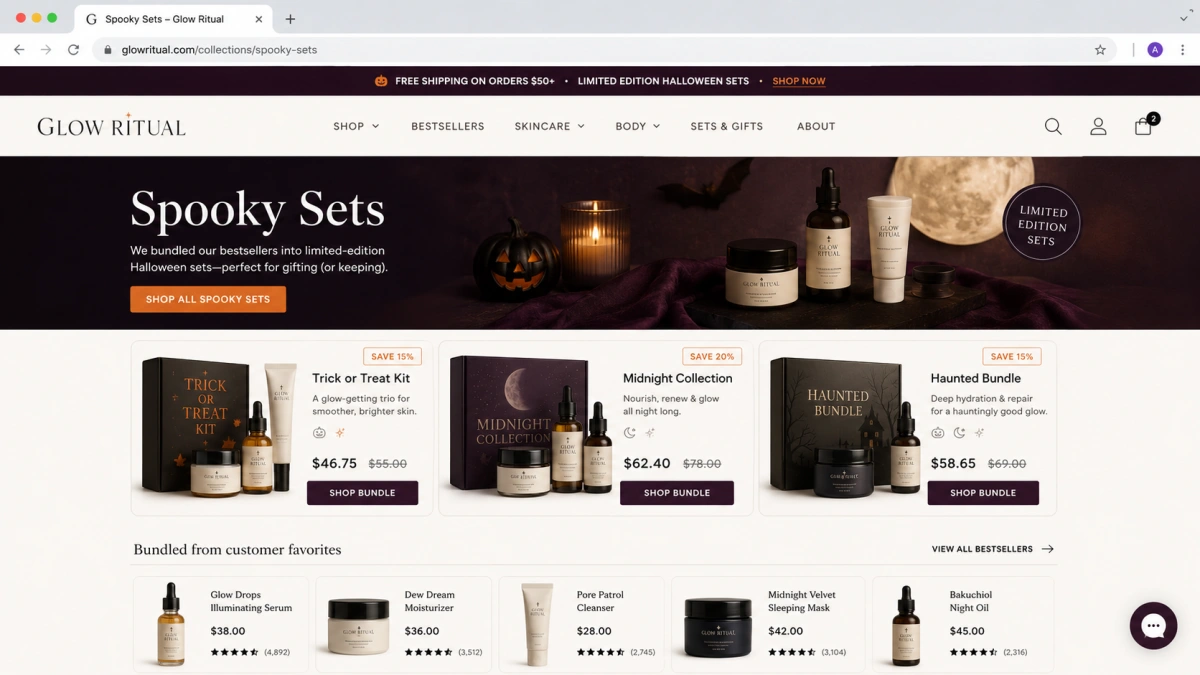
Bundle existing products into "spooky" sets
You don't need new inventory for this. Take your bestsellers and repackage them into themed sets: a "Trick or Treat Kit," a "Midnight Collection," a "Haunted Bundle." Add a small discount for buying the set and you nudge up average order value while making familiar products feel fresh.

Add seasonal packaging or colorways
If you sell physical goods, a black-and-orange variant or Halloween-themed packaging is often enough to make a product feel new. US shoppers spent an estimated $4.3 billion on costumes and $4.2 billion on decorations in 2025 (NRF), so people are primed to buy anything that fits the aesthetic.
Set a hard end date
A limited collection only works if it actually ends. Put a visible "available through October 31" label on your product pages and repeat it in email. Leave it vague and the urgency disappears.

2. Run A Flash Sale With A Countdown Timer
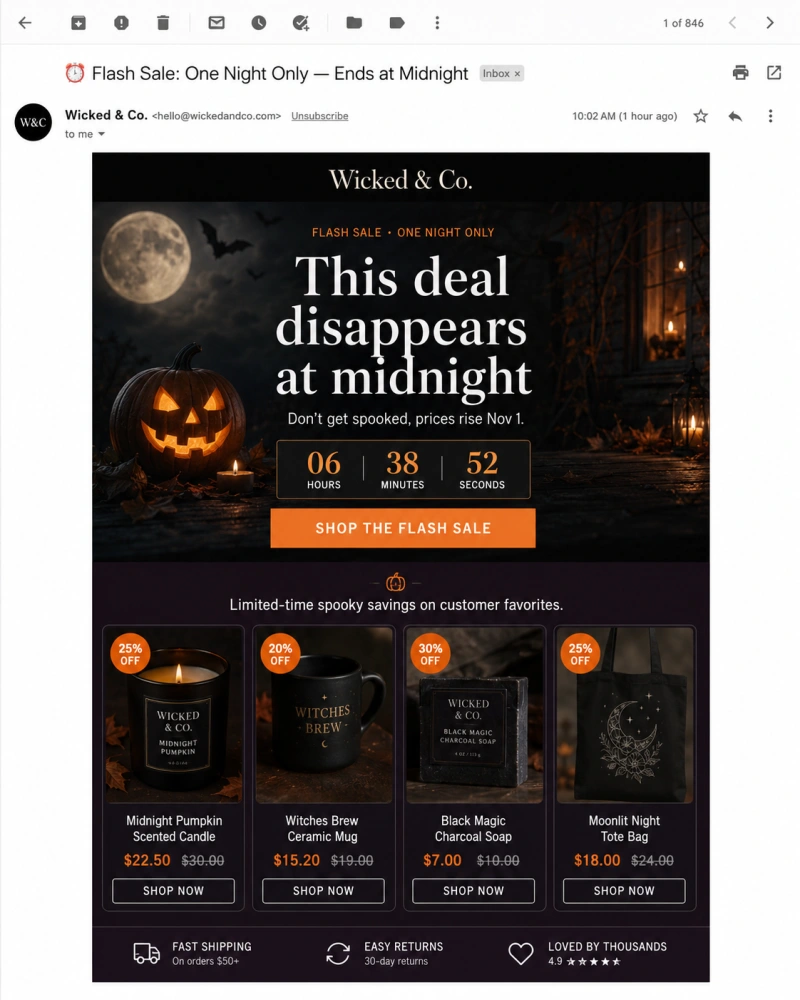
Flash sales work because they force a decision. A 24- or 48-hour Halloween sale with a live countdown gives someone on the fence a reason to buy now instead of bookmarking your page and forgetting it exists.
Time it to peak shopping windows
Nearly half of Halloween shoppers (49%) buy in September or earlier, per NRF, and then a second wave of last-minute buyers hits in mid-to-late October. So run two: an early-bird flash sale in the first week of October, and a "final countdown" sale in the last week. You catch both crowds instead of picking one.
Use urgency copy that fits the theme
Lean into the holiday. "This deal disappears at midnight" or "Don't get spooked, prices rise Nov 1" turns a generic discount into something on-brand.
Show the timer everywhere
Put the countdown on the homepage, product pages, and in your abandoned-cart emails. The more places a shopper sees the clock ticking, the harder it is to ignore.
3. Send a Halloween Email Sequence
Email is still the best-ROI channel you have for seasonal pushes, and Halloween gives you an excuse to land in the inbox a few times without feeling like a nag.
Write subject lines that earn the open
Playful, curiosity-driven subject lines outperform plain discount lines during Halloween. Think "Trick or treat yourself to 20% off" or "A little something wicked this way comes." The goal is a smile, then a click.
Build an email sequence with at least three emails
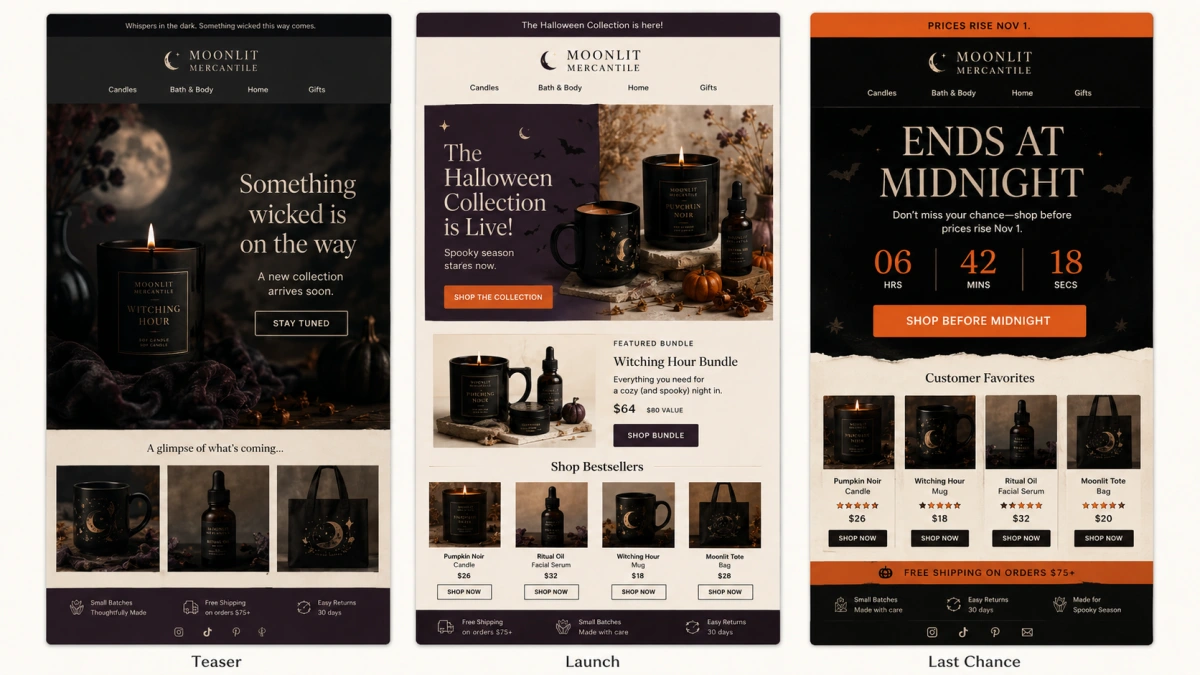
Don't send one email and hope. Run a sequence: a teaser announcing the collection, a launch email when the sale goes live, and a "last chance" email 12 hours before it ends. Each one targets a different stage of intent.
Segment by past behavior
Send your deepest offer to lapsed customers and early access to your VIPs. Blast the same discount to everyone and you're handing your best margin to people who would have bought at full price anyway.
4. Host A Costume Or Photo Contest On Social
Halloween is visual and made to be shared, which makes it one of the best times all year to get customers creating content for you. A contest basically turns your buyers into your marketing team.
Ask for content that features your product
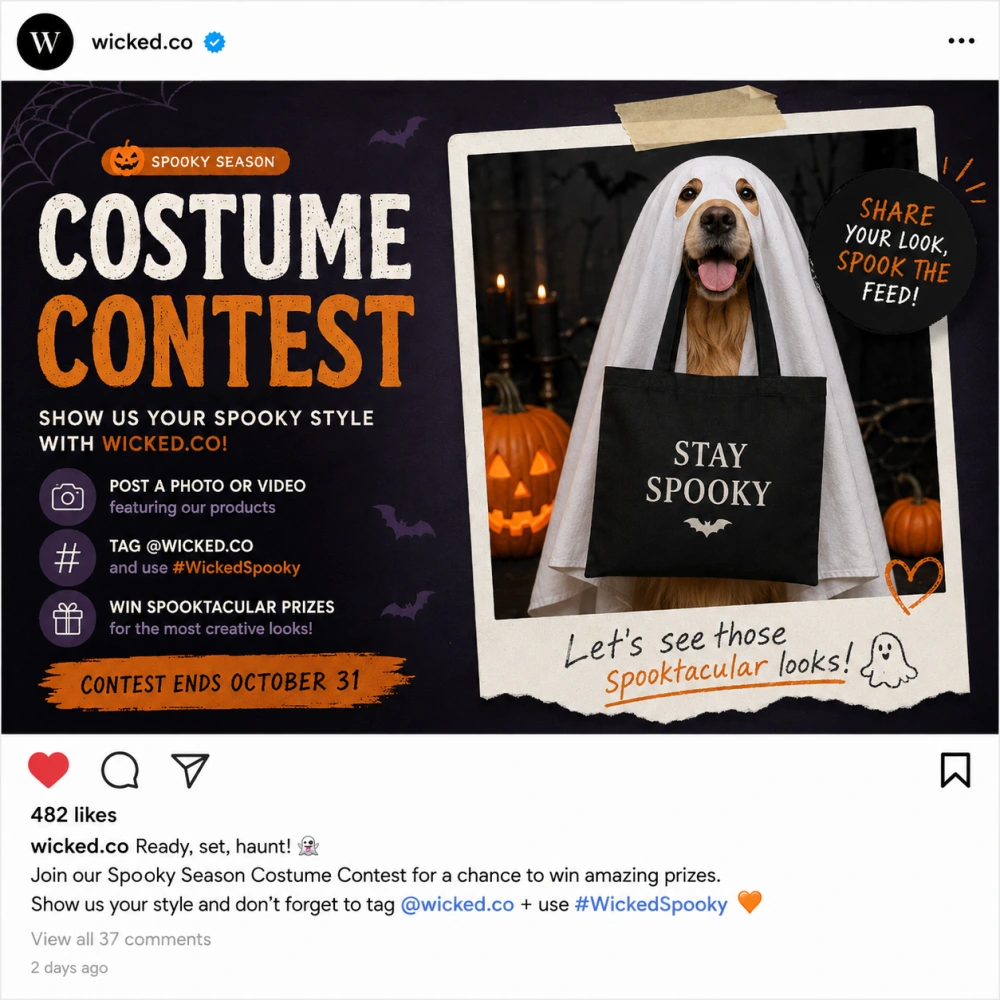
The contest only works if entries put your brand on display. Ask customers to share their costume using your product, tag your account, and use a branded hashtag. You get authentic content, reach into their networks, and social proof for future campaigns.
Make the prize worth the effort
A $25 gift card to one winner won't get you entries. Offer something people actually want, and think about multiple prize tiers so more entrants feel like they've got a real shot at winning.
Repurpose the best entries
Winning and standout entries become ad creative, email content, and social posts long after Halloween ends. One contest can feed your content calendar for weeks.

5. Add A Gamified Element To Your Store
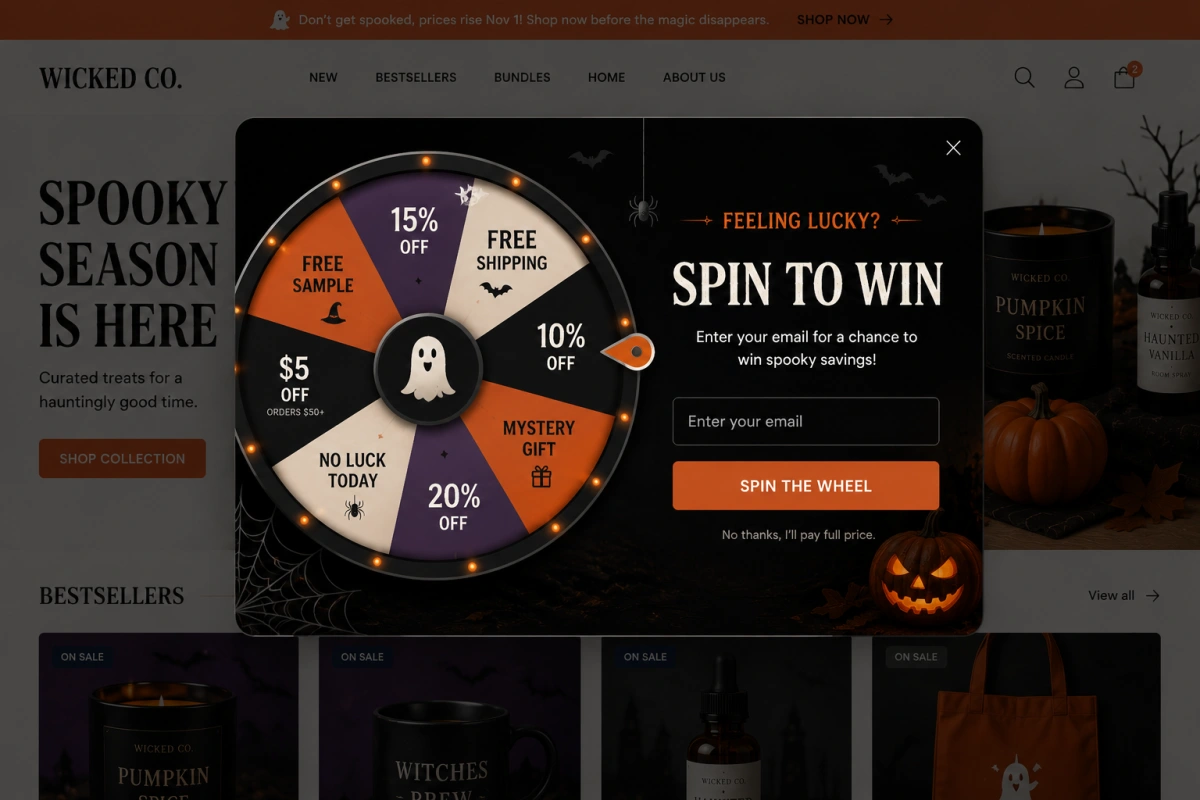
Gamification plays right into the trick-or-treat spirit and keeps people on your site longer. A "spin to win" wheel, a hidden discount code, a scavenger hunt across your product pages, it all makes shopping feel like part of the fun instead of a transaction.
Try a "spin the wheel" popup
Offer visitors a spin for a discount, free shipping, or a mystery gift in exchange for their email. You capture leads and hand out an offer that feels earned rather than pushed.
Hide "treats" across your site
Place hidden pumpkin or ghost icons on random pages and reward shoppers who find them with a code. It's a low-cost way to drive page views and keep browsers exploring your catalog.
Keep the rules simple
Gamification dies the moment it gets confusing. One clear action, one clear reward. If someone has to read the rules twice, you've already lost them.
6. Offer A Halloween-Themed Lead Magnet
Not everyone browsing in October is ready to buy today. A free, seasonal lead magnet captures those people so you can keep marketing to them through the rest of Q4.
Give away something genuinely useful
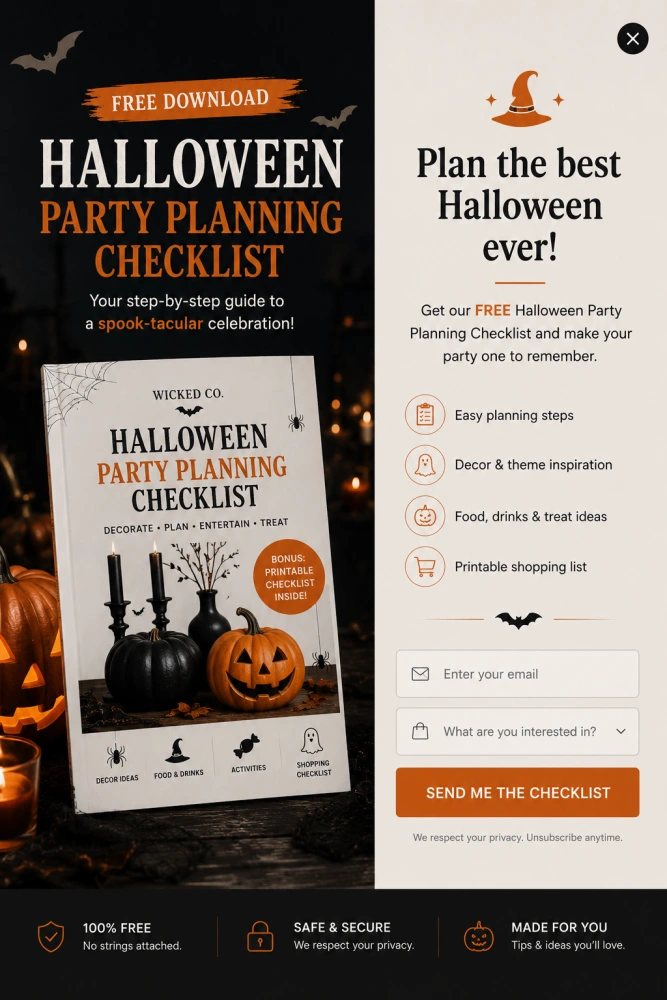
A "Halloween party planning checklist," a costume lookbook, or a themed recipe guide works if it fits your niche. The magnet should relate to your products so the people who download it are real prospects.
Use it to build your Black Friday list
Every email you collect in October is a warm lead for November. This is one of the cheapest ways to grow your list right before the biggest sales weekend of the year, so don't waste the run-up.
Deliver it instantly
Automate the delivery. A freebie that shows up late, or never, breaks trust at the exact moment you were trying to earn it.
7. Partner With Influencers And Creators
Creators can get your Halloween campaign in front of the kind of engaged, trusting audience that ads just can't buy. And since costumes and decor are so visual, they're a natural fit for creator content.
Prioritize micro-influencers in your niche
You don't need a celebrity. Micro-influencers with small but engaged niche audiences usually convert better and cost a fraction of the price. A creator whose followers actually trust their picks beats a huge account with a passive, scrolling audience every time.
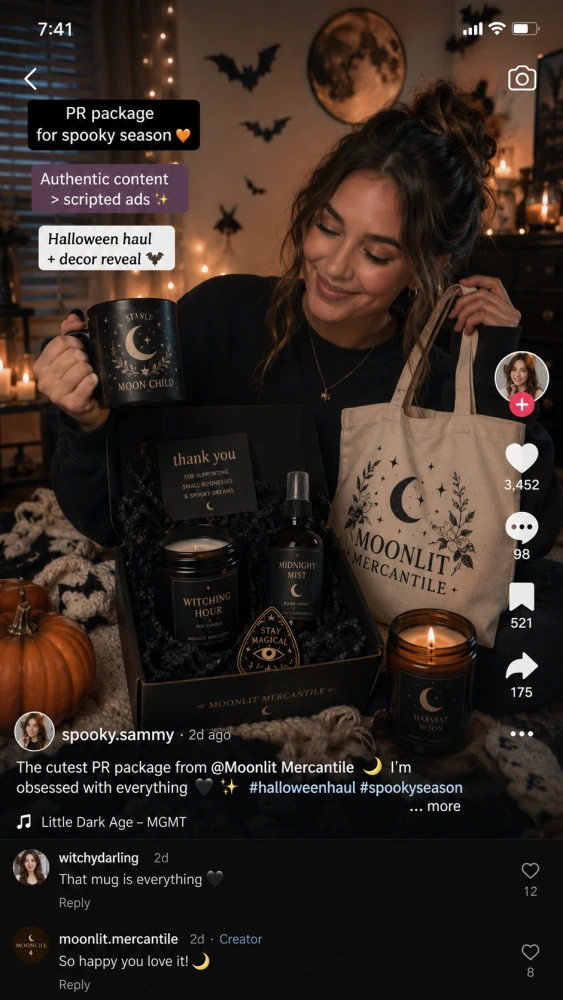
Send products for authentic content
Give creators your Halloween collection and let them show it in their own style: a haul, a get-ready-with-me, a decor reveal. Authentic content outperforms scripted ads because it doesn't feel like an ad.
Track with unique codes
Give every creator a unique code or link so you can see exactly what each one drives. No attribution means you're just guessing whether the partnership actually paid off, and guessing is how budgets get wasted.
8. Create Shareable, On-Theme Content
Not all your Halloween content has to sell. Fun, seasonal stuff builds awareness, earns shares, and keeps you top of mind for the moment people are finally ready to buy.
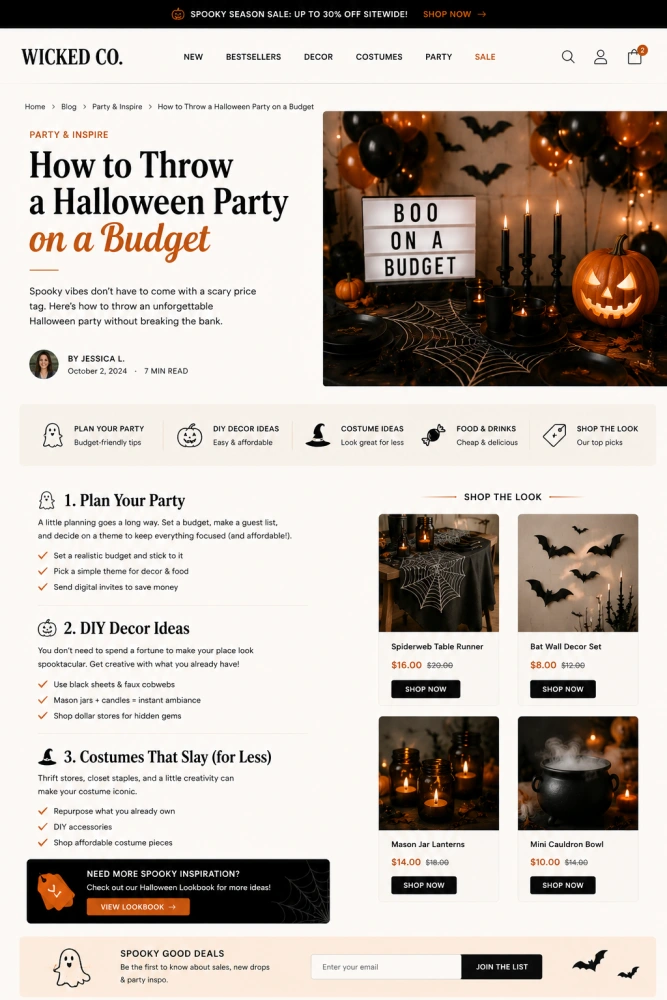
Publish blog posts and guides
"Best costume ideas for [your niche]" or "How to throw a Halloween party on a budget" pulls in search traffic and links naturally back to your products. This content keeps working long after the campaign ends.
Make short-form video
Behind-the-scenes clips, quick how-tos, and playful skits do well on TikTok, Reels, and Shorts during Halloween. Short-form video is where seasonal discovery actually happens now, so that's where you want to be.
Tie every piece back to a product
Shareable content only earns its keep if it eventually drives sales. Every guide, video, and post needs a clear, natural path back to a relevant product page. Otherwise it's just content for content's sake.
9. Run Retargeting Ads for October Browsers
Most people don't buy on their first visit, and that's normal. Retargeting ads bring them back, and during a deadline-driven holiday like Halloween, that second nudge is often what closes the sale.
Target cart and product-page abandoners
Show ads featuring the exact products a shopper viewed or added to cart. Pair them with a Halloween-specific offer or urgency message to pull them back before the season ends.
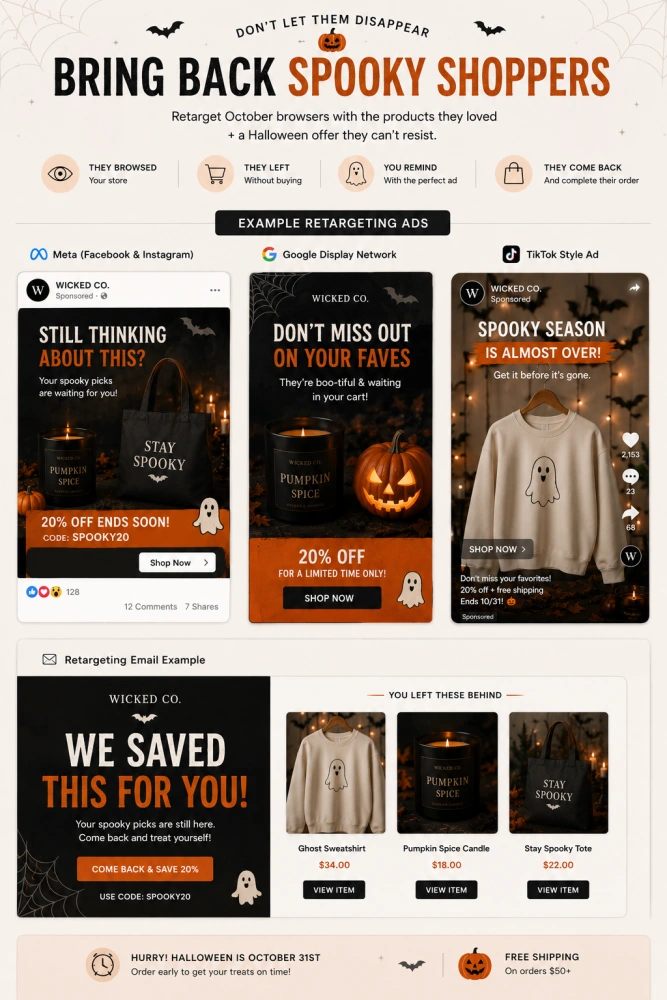
Refresh creative with seasonal visuals
Your evergreen ads blend into the wallpaper in October. Swap in Halloween creative so your retargeting matches the mood people are already in when they see it.
Cap frequency so you don't annoy
Retargeting works right up until it doesn't. Set frequency caps so the same person isn't seeing your ad ten times a day. Past a certain point you're not reminding them, you're annoying them, and that costs you the sale.
10. Add Urgency With Free Shipping Deadlines
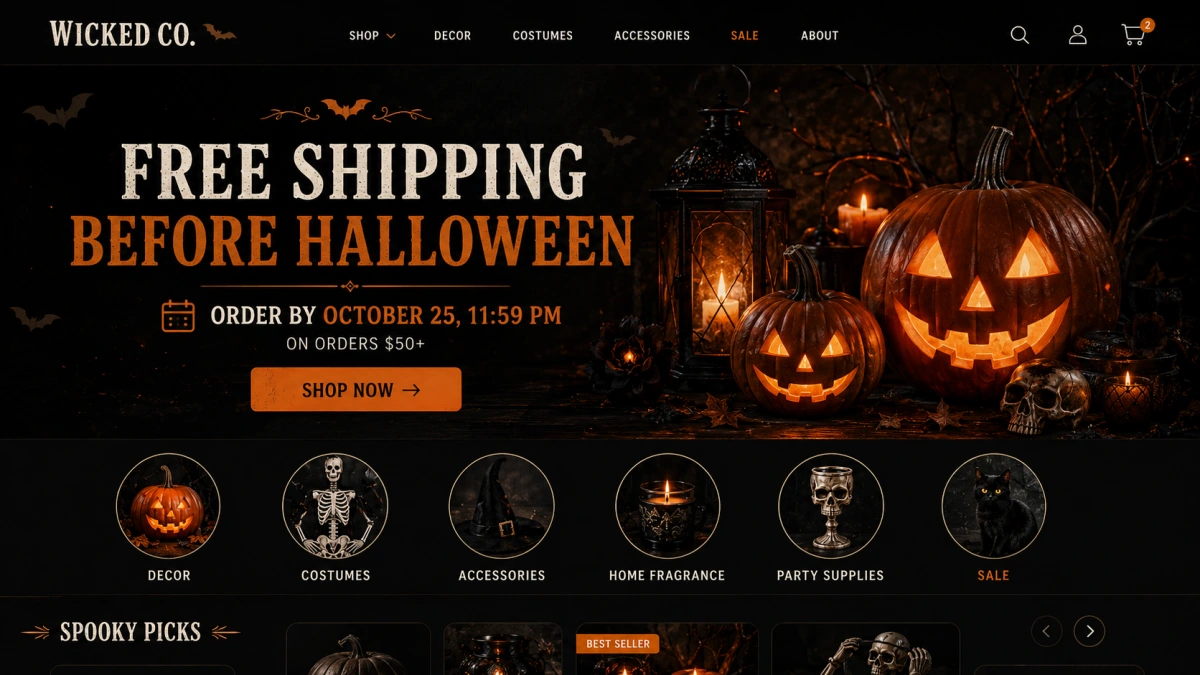
Free shipping is one of the strongest conversion levers you've got, and Halloween hands you a built-in deadline to make it urgent. "Order by [date] to get it before Halloween" turns a passive perk into a reason to buy today.
Set a clear "order by" cutoff
Work out your real shipping times and publish a firm cutoff date. Anyone who wants their costume or decor before October 31 will move fast once they see the clock running down.
Combine it with a minimum order threshold
Offer free shipping above a set order value to lift average order value. Shoppers routinely add an extra item to hit a free-shipping threshold.
Promote the deadline across channels
The cutoff only works if people see it. Put it in your email footer, on product pages, and in your ad copy through the second half of October.
11. Bundle A Charitable Or Community Angle
People increasingly want to buy from brands that stand for something. Tie your Halloween campaign to a cause and you build goodwill while giving shoppers one more reason to pick you over the store next door.
Donate a portion of Halloween sales
Pledge a percentage of October revenue to a relevant cause and make it visible at checkout. Shoppers feel good about the purchase, and you differentiate from stores competing on price alone.
Run a community event or drive
A costume donation drive or a local pumpkin-carving contest builds real connection, especially for brands with a regional audience. It's marketing that doesn't feel like marketing.
Be genuine, not performative
Pick a cause that actually fits your brand and follow through in public. People can smell it when charity is just a gimmick, and the backlash costs you far more than the goodwill was ever worth.
12. Extend The Campaign Into A "Halloween To Black Friday" Bridge
Halloween shouldn't fall off a cliff on November 1. The smartest brands treat it as a running start into the biggest shopping season of the year.
Convert Halloween buyers into Black Friday shoppers
Everyone who bought during Halloween is already a warm customer. Drop them into a segment and give them early access to your Black Friday deals. Re-selling to a recent buyer is far cheaper than chasing a brand-new one.
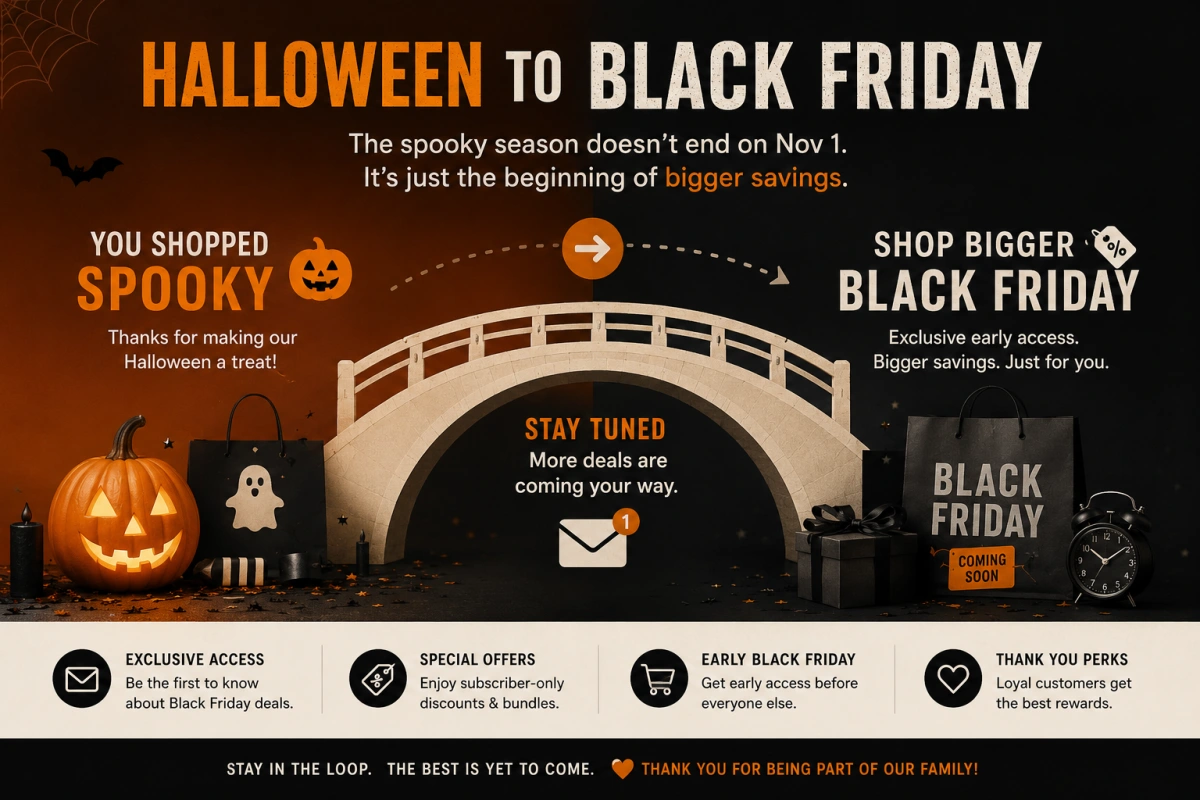
Keep the momentum in email
Don't go silent after Halloween. Bridge the gap with a "thanks for a spooky season, here's what's coming" email that teases November promotions and keeps your list engaged.
Reuse what worked
Whatever drove the most sales in October, a specific offer, angle, or channel, is your signal for what to scale in November. Think of Halloween as a live dress rehearsal for your biggest revenue month.
How to measure the success of your Halloween campaigns
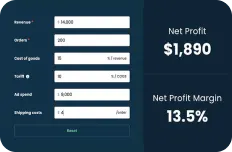
There's only one way to know if a Halloween campaign actually worked: measure profit, not revenue. A campaign can post your best sales day ever and still lose money once you subtract ad spend, discounts, shipping, and transaction fees. Revenue is a vanity number. Profit is the one that tells you whether to run it again.
Track the metrics that actually matter
Focus on the numbers tied to outcomes, not activity:
- Net profit per campaign, after ad spend, discounts, COGS, shipping, and fees
- Customer acquisition cost (CAC), so you know what each new buyer really costs
- Average order value (AOV), to see if bundles and thresholds are working
- Return on ad spend (ROAS), per channel and per campaign
- New vs. returning customer split, to gauge whether you're acquiring or just discounting loyalists
Watch the gross-to-net margin gap
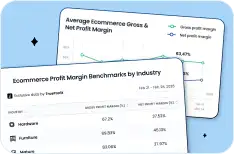
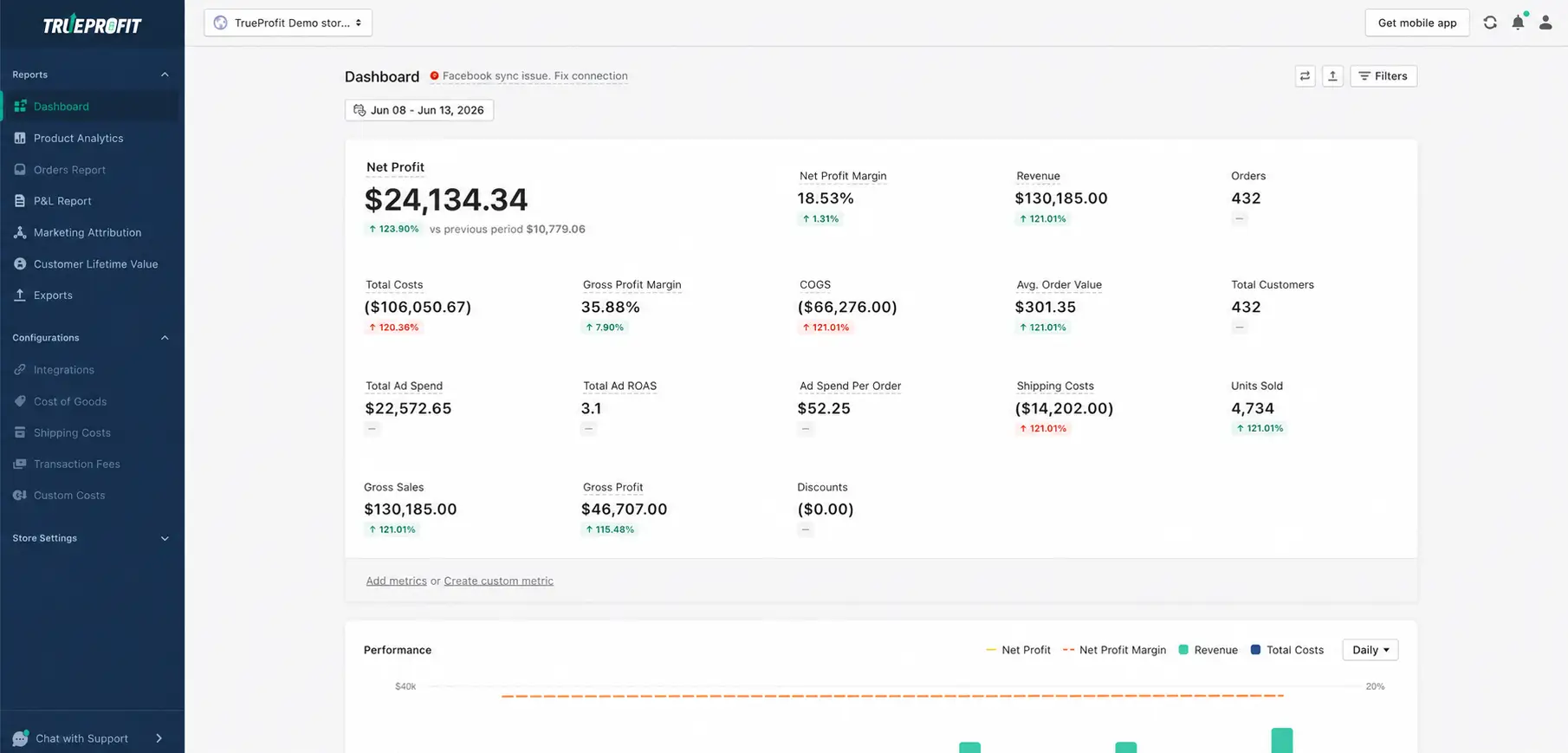
This is where most Halloween campaigns quietly bleed cash. A 40% discount, "free" shipping, and October's inflated ad costs can turn a great-looking top line into a razor-thin or negative net margin. And if you're only watching Shopify's revenue dashboard, you won't catch it until the money's already gone.
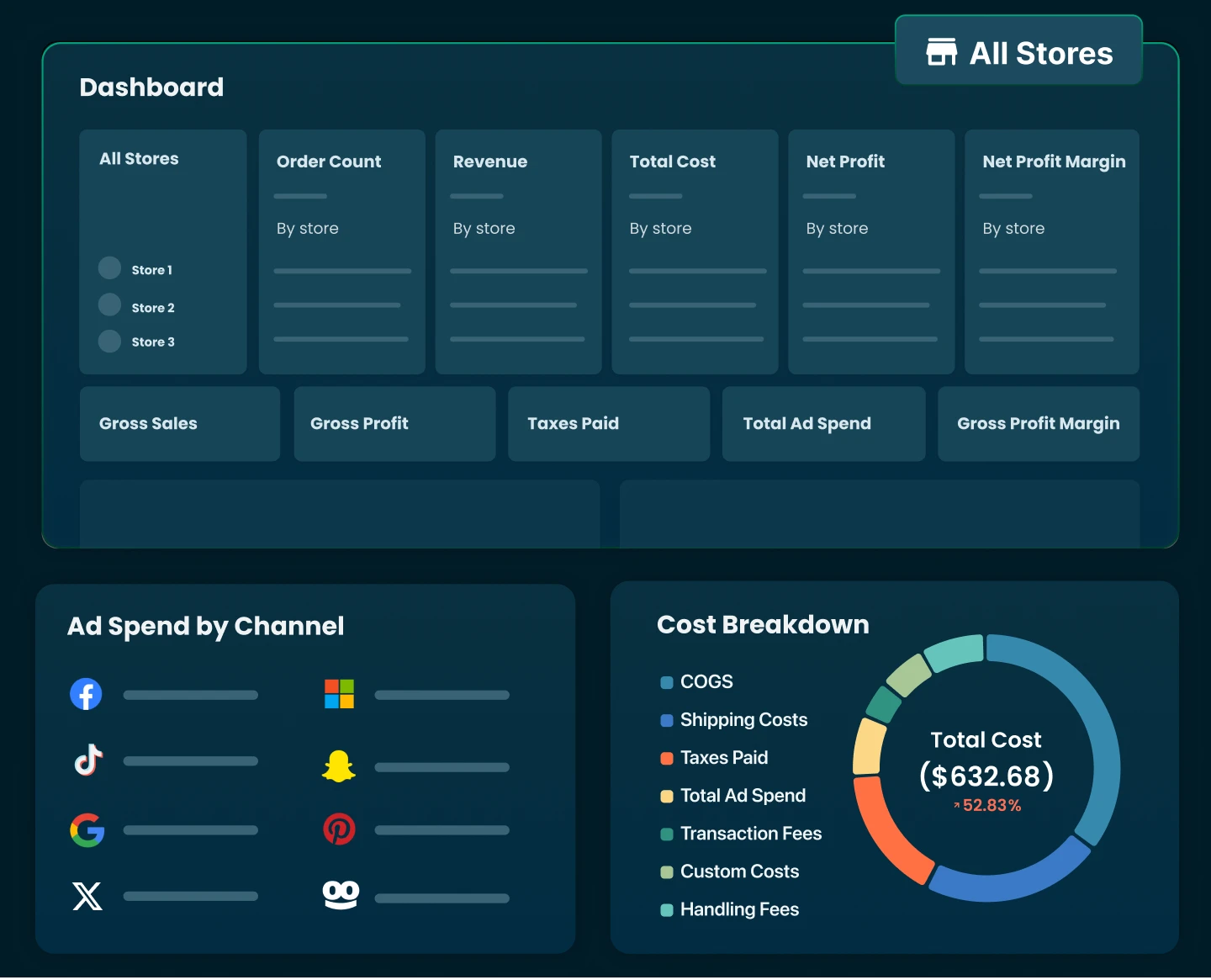
Seeing true net profit in real time is exactly what TrueProfit is built for. It pulls your ad spend, COGS, shipping, transaction fees, and discounts into one dashboard, so you can watch the real profit of every Halloween campaign, broken down by product and channel, while it's still live. Instead of guessing which offer paid off, you know before November 1 which ones to scale into Black Friday and which ones to kill.
Review, then document for next year
Once Halloween wraps, write down what worked: your best-converting offer, your most profitable channel, the subject lines that actually got opened. A quick post-campaign doc is what turns this year's guesswork into next year's playbook.
Bonus: 20 punchy slogans for Halloween campaigns
Need to copy fast? Here are 20 ready-to-use slogans for emails, ads, banners, and social posts. Swap in your brand or offer where it fits.
For sales and discounts
1. Treat yourself. No tricks.
2. Deals so good, it's scary.
3. Prices this low should be illegal (and slightly haunted).
4. Don't get spooked, prices rise Nov 1.
5. Trick or treat yourself to [X]% off.
For urgency
6. This deal disappears at midnight.
7. Blink and it's gone. Just like a ghost.
8. The clock is ticking. So is our sale.
9. Last chance before the graveyard shift closes.
10. Order by [date] or wait till next Halloween.
For collections and launches
11. Something wicked this way comes.
12. Our spookiest collection yet.
13. Dressed to kill. Priced to move.
14. Limited edition. Unlimited spooky.
15. New drops, straight from the crypt.
For playful brand voice
16. Warning: highly addictive treats ahead.
17. No candy. Just really good deals.
18. Come for the scares, stay for the savings.
19. We put the "boo" in bougie.
20. Fang-tastic finds, all October long.
Final Thoughts
Halloween is one of the best low-risk testing grounds you get all year. The stakes are lower than Black Friday, the audience is in a fun, spend-ready mood, and almost every idea here can be launched fast and cheaply.
Pick two or three that fit your store rather than trying all twelve. A limited collection, a flash sale with real urgency, and a solid email sequence will get most brands further than a scattered attempt at everything.
Above all, track your true net profit, learn what converts, then carry those winners straight into your biggest month of the year.
Irene Le is the Content Manager at TrueProfit, specializing in crafting insightful, data-driven content to help eCommerce merchants scale profitably. With over 5 years of experience in content creation and growth strategy for the eCommerce industry, she is dedicated to producing high-value, actionable content that empowers merchants to make informed financial decisions.