



Dropshipping Lingerie: Best Products, Suppliers, Profit Margins & Tips (2026)


Table of Contents
Selling lingerie online is one of the more lucrative ecommerce models out there, but it comes with hurdles you will not find selling phone cases or kitchen gadgets. Between social ad bans and sizing complaints, a lot of store owners struggle to hold onto their profit.
So before you jump in, let me walk you through what actually works: the products worth selling, the suppliers worth trusting, and how to scale without blowing up your margins.
In this blog:
Dropshipping Lingerie in 2026: Profit or Pitfall?
Yes, lingerie dropshipping is still profitable. It just stopped being a quick-cash game a long time ago.
The margins are real, but not forgiving
Inside a global lingerie market north of $100 billion, a well-run store can realistically net 15-20%. That only holds if you keep customer acquisition costs on a tight leash. Get sloppy with ad spend or returns and that number slips into the red fast. The margin is there; it simply no longer covers for careless operators.
To see why the niche still pays, it helps to look at the economics underneath it.
Why lingerie still pays
Three things keep this niche attractive, and they all come down to cost structure.
First, sourcing is cheap. Products often cost just 20-25% of retail, which leaves a healthy cushion to soak up ad spend. That cushion is the whole reason the model works, so guard it closely.
Second, shipping barely registers. Lingerie is light, compact, and hard to damage, so fulfillment fees stay low. That matters more than people realize once you are shipping hundreds of orders a month.
Third, order value climbs on its own. Lingerie begs to be bundled. A bra pulls in a matching brief, then a robe, stockings, an accessory. Build the set for the customer and your average order value rises without a single extra ad dollar.
Those tailwinds are real. That said, they only pay off if you clear three hurdles first.
The three hurdles you have to solve
Ignore any one of these and the math stops working.
1. Return rates that top 30%. Bras and structured pieces are among the most-returned items in all of fashion, simply because fit is nearly impossible to judge online. The fix is fit confidence before checkout: publish exact multi-measurement charts and visual guides on every product page, and tell customers which way to size when they land between fits. Kill the guesswork and you kill most of the returns.
2. Ad policies that ban you overnight. Meta and TikTok are quick to flag explicit lingerie creative, and a suspended account brings your whole business to a standstill. The fix is to shift the story: lead with comfort, body positivity, and self-care instead of skin. It keeps you compliant, and it tends to convert better anyway.
3. A crowded market that punishes generalists. Selling generic styles drops you into a price war you cannot win. The fix is to go narrow and own a sub-niche, whether that is plus-size intimates, shapewear, or seamless bralettes, rather than trying to dress everyone. A store built for one customer beats a store built for anyone.
With the risks on the table, let me show you which products are actually worth putting in the catalog.

Best Lingerie Products to Dropship in 2026
To sidestep the price war with generic fast-fashion stores, focus on high-demand sub-niches where customers care about fit, comfort, and function over rock-bottom pricing.
Here is how the main categories stack up before we dig into each one.
Product Category | Selling Price | Est. COGS | Gross Margin | Strategic Role |
|---|---|---|---|---|
Seamless Briefs & Underwear | $12 – $28 | $4 – $9 | 62% – 72% | Customer acquisition & restocks |
Seamless Bralettes | $18 – $35 | $5 – $12 | 60% – 70% | Everyday comfort & broad appeal |
Lace Bralette & Brief Sets | $25 – $50 | $8 – $18 | 60% – 68% | Impulse buys & gifting |
Structured & Underwire Bras | $28 – $55 | $9 – $20 | 58% – 66% | High margin, high returns |
Shapewear & Bodysuits | $30 – $65 | $10 – $25 | 55% – 65% | Video-driven & high AOV |
Plus-Size Sets & Bras | $30 – $60 | $10 – $22 | 58% – 66% | Underserved & high loyalty |
Occasion & Luxury (Teddies, Satin) | $25 – $80 | $8 – $32 | 55% – 68% | High AOV & seasonal spikes |
1. Seamless Bralettes
If one category balances easy entry with real brand-building, it is seamless bralettes. As shoppers keep leaning toward comfort-first lingerie, these products pull in a broad audience without depending on trend-driven designs that go stale.

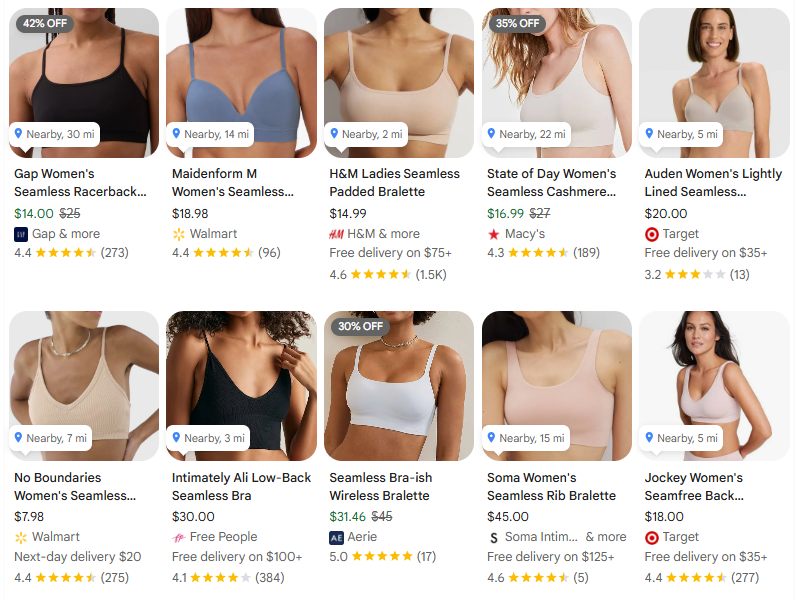
They are also more forgiving in fit than structured bras, which means fewer sizing headaches and a smoother buying experience. For a new store, that adds up to lower operational complexity while still leaving room to position around comfort, quality, or everyday essentials instead of racing to the bottom on price.
Business insight: A dependable evergreen category that is easier to scale than traditional bras.
2. Lace Bralette & Brief Sets
Customers rarely buy matching lace sets because they need them. More often, they are shopping for a moment, whether that is Valentine's Day, an anniversary, a honeymoon, or simply treating themselves.
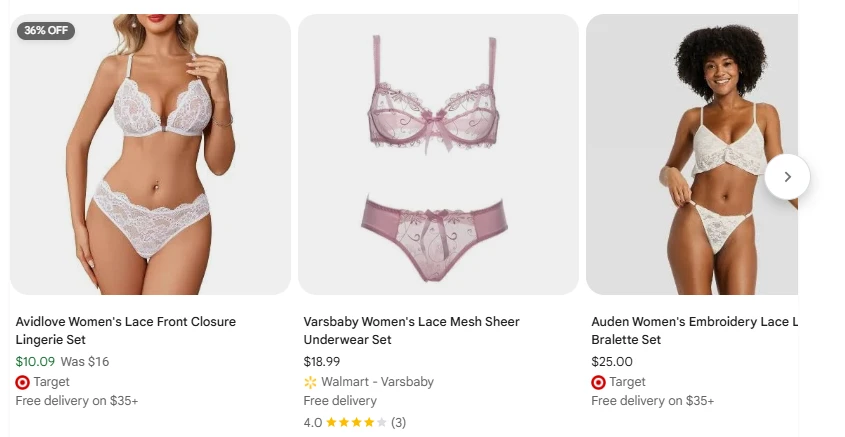
Because the purchase runs on emotion, shoppers weigh aesthetics, branding, and presentation more than technical specs. That hands well-positioned stores far more pricing flexibility than they ever get with basic everyday lingerie.
Business insight: Strong branding and premium presentation often move conversions more than discounts do.
3. Structured & Underwire Bras
Few lingerie categories have a higher revenue ceiling, and few are less forgiving when you get execution wrong.
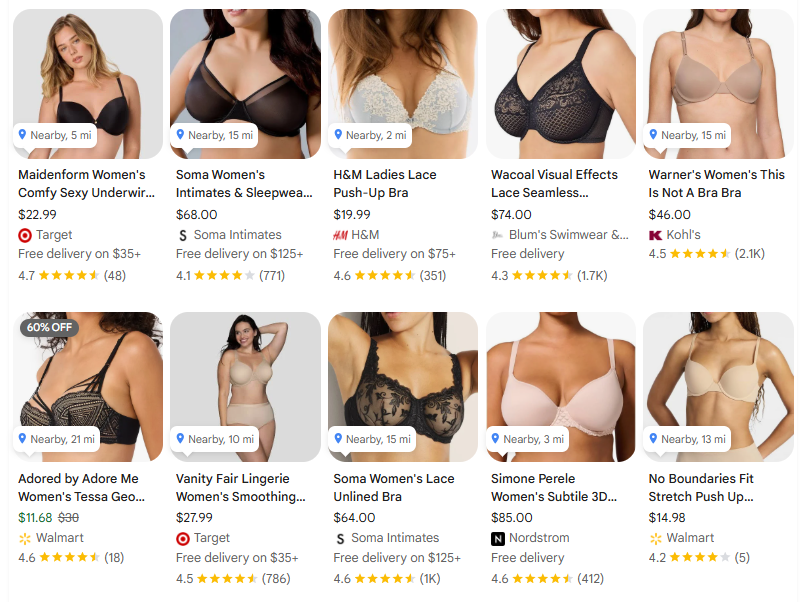
Customers expect a near-perfect fit, so even small sizing inconsistencies between suppliers snowball into exchanges, refunds, and negative reviews. Those hidden costs usually eat into profitability more than product cost itself, which is exactly why established brands pour money into size guides, fit education, and supplier consistency.
Business insight: Winning here depends as much on cutting returns as on generating sales.
4. Shapewear & Bodysuits
Few products make their case as fast as shapewear. Customers see the difference right away through before-and-after demos, which makes this one of the strongest categories for short-form video on TikTok and Instagram Reels.
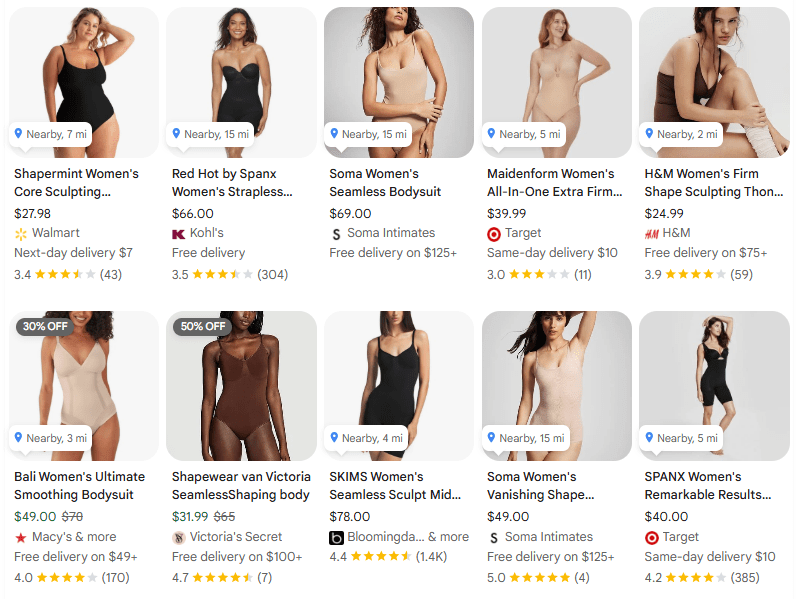
That same visual punch raises the stakes. Brands that anchor on comfort, confidence, and realistic results tend to earn better reviews and stronger repeat business than the ones leaning on exaggerated transformation claims.
Business insight: Your marketing message carries just as much weight as the product itself.
5. Plus-Size Sets & Bras
The opportunity in plus-size lingerie is not simply offering more sizes. It is removing the uncertainty that so often stops customers from buying online in the first place.
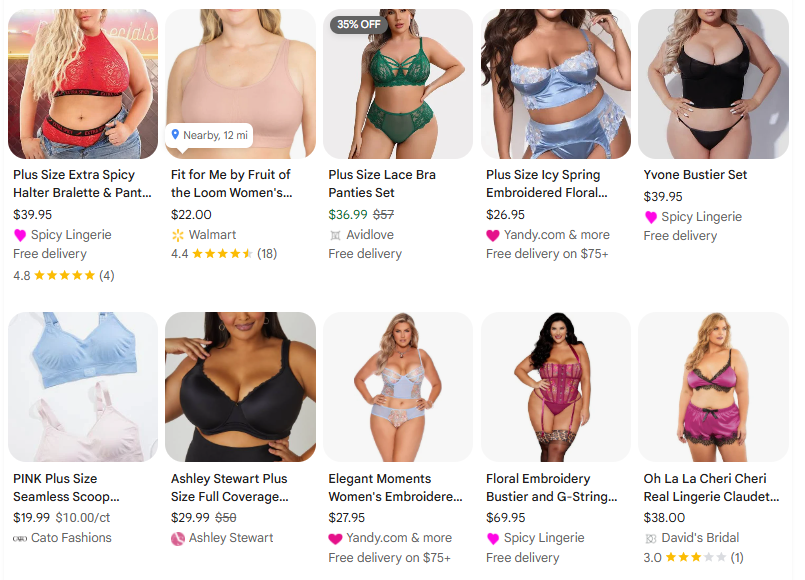
Plus-size shoppers usually spend more time weighing fit, support, and real customer photos before they commit. Stores that show inclusive imagery, detailed size guidance, and authentic reviews build trust faster, and that trust tends to translate into stronger loyalty than you see in standard sizing.
Business insight: The edge comes from easing purchase anxiety, not just widening the size range.
6. Occasion & Luxury Lingerie (Teddies, Satin)
Luxury lingerie runs on a different buying cycle from everyday essentials. Demand spikes around gifting occasions and life events like Valentine's Day, weddings, anniversaries, or honeymoons rather than routine replacements.
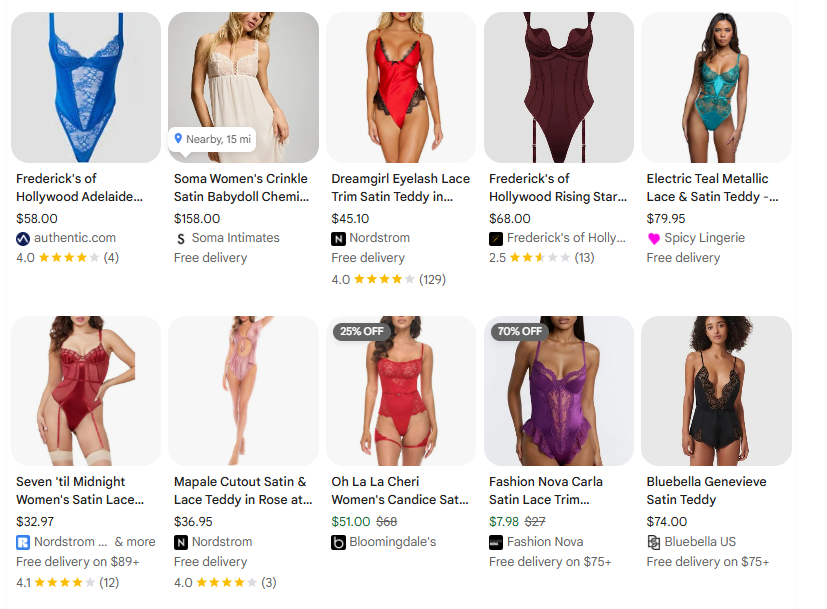
During those windows, customers stop hunting for the lowest price and start looking for beautiful designs, premium fabrics, and an elevated experience. High-quality imagery, thoughtful packaging, and curated collections can matter just as much as the product itself.
Business insight: You are selling an occasion and an experience, not just another piece of lingerie.
Once you know what to sell, the next question is who you trust to fulfill it, and in this niche that choice carries more weight than usual.
Best Lingerie Dropshipping Suppliers in 2026
In most dropshipping niches, your supplier is just a logistics partner. In intimate apparel, your supplier is a brand-survival decision. An ill-fitting lace bra or cheap-feeling fabric lands as personal in a way a bad phone case never will.
So to protect both your margins and your customer goodwill, you want partners who bring verified quality, precise sizing charts, fast shipping, and discreet packaging to the table.
Supplier | Primary Strengths | Shipping & Warehouses | Strategic Fit |
|---|---|---|---|
Trendsi | US boutique styles, pro model photos | 2–5 days (US warehouses) | Best for Shopify stores relying on social ads |
CJdropshipping | Custom satin bags, direct factory pricing | 7–12 days (Global) / 3–7 days (US/EU hubs) | Best for building a low-cost private label brand |
Spocket | Vetted US/EU suppliers, premium fabrics | 2–7 days (US/EU) | Best for high-ticket boutique stores ($45+) |
Snazzyway | Manufacturer-direct, plus-size specialization | Global shipping (India factory) | Best for full-figure support and low return rates |
Be Wicked | Traditional US intimate apparel wholesaler | Ships from US (requires B2B license) | Best for established US retailers & seasonal items |
DSers / AliExpress | Massive product catalog, low-cost testing | 10–20 days (Global) | Best for initial product validation only |
Let me break down where each one fits.
1. Trendsi: The US Fashion & Social-Commerce Choice
Trendsi plugs straight into your store to supply boutique-quality apparel with no upfront inventory.
- Why it works: It hands you high-end, professionally shot model photography and video for every item, which cuts down your creative costs in a big way.
- Sizing & shipping: Reliable Western sizing with dedicated plus-size selections. Items ship from US warehouses in 2–5 days in discreet poly-mailers.
- Best for: Merchants running visual campaigns on TikTok, Instagram, or Pinterest who need fast US delivery.
2. CJdropshipping: The Custom Branding & Private Label Hub
CJdropshipping bridges direct Asian factory pricing with global fulfillment centers, which makes it the most versatile pick for scaling stores.
- Why it works: It is the cheapest way to pull off a real private label unboxing experience. You can drop custom satin pouches, branded tags, and thank-you cards into every order for a few cents.
- Sizing & shipping: Base products ship globally in 7–12 days, or faster through US/EU regional centers. Keep in mind that Asian factory sizing runs 1 to 2 sizes smaller than US/EU standards, so custom size charts on your store are non-negotiable.
- Best for: Store owners chasing high gross margins (65%+) while building brand equity through packaging.
3. Spocket: The High-Ticket US/EU Boutique Curator
Spocket focuses on connecting sellers with vetted, independent dropship suppliers based mostly in the US and Europe.
- Why it works: Higher material quality and faster domestic transit keep refund requests to a minimum, and it supports branded invoices.
- Sizing & shipping: 2–7 day delivery across Western markets with accurate US/EU sizing.
- Best for: Premium stores targeting customers happy to pay $45–$70+ for better lace and stitching.
4. Snazzyway: The Dedicated Manufacturer & Fit Specialist
Snazzyway is a specialized intimate apparel manufacturer with a dropship program built around bras, panties, and shapewear.
- Why it works: Because they make their own garments, their structural quality control on underwires, lace durability, and cup shaping runs well ahead of generic aggregators.
- Sizing & shipping: Industry-standard international cup and band sizing, which makes it ideal for the underserved plus-size market.
- Best for: Niche stores that put fit accuracy, full-figure support, and repeat retention first.
5. Be Wicked: The Traditional US Intimate Wholesaler
A long-standing US brand specializing in romantic lingerie, babydolls, and costumed intimates.
- Why it works: It offers authentic, US-designed products protected by strict Minimum Advertised Price (MAP) rules that head off price-undercutting wars.
- Requirements & logistics: You need a registered business resale permit to access the catalog. Orders ship straight from US warehouses in plain, non-descript boxes.
- Best for: Registered US business owners focused on bridal, holiday, or event-driven lingerie.
6. DSers / AliExpress: The Product Testing Ground
The standard entry path for new dropshippers sifting through millions of low-cost variations.
- Why it works: Rock-bottom unit costs let you run low-budget test ads to find winning designs before you commit to bigger supply deals.
- Drawbacks: Inconsistent sizing, hit-or-miss fabric feel, and basic unbranded packaging.
- Best for: Initial validation. Once a design sells 5–10 units a day, move it over to CJdropshipping or a private sourcing agent for quality control and faster fulfillment.
One more thing before you place a single order. Unlike standard clothing, intimate items fall under strict hygiene rules, and most suppliers enforce a "final sale" policy on opened underwear and bodysuits. Always order physical samples to check fabric stretch and sizing yourself before you run paid traffic.
Sourcing sorted, let me turn to the part that actually decides whether you turn a profit: building the brand around those products.
How to Build a Profitable Lingerie Dropshipping Brand
Simply uploading products to a store will not move units in 2026. Because intimate apparel is an emotional, high-touch purchase, your profit hinges on building trust, lifting average order value, and keeping acquisition costs in check.
Here are the four moves that carry the most weight, plus the tool that ties them together.
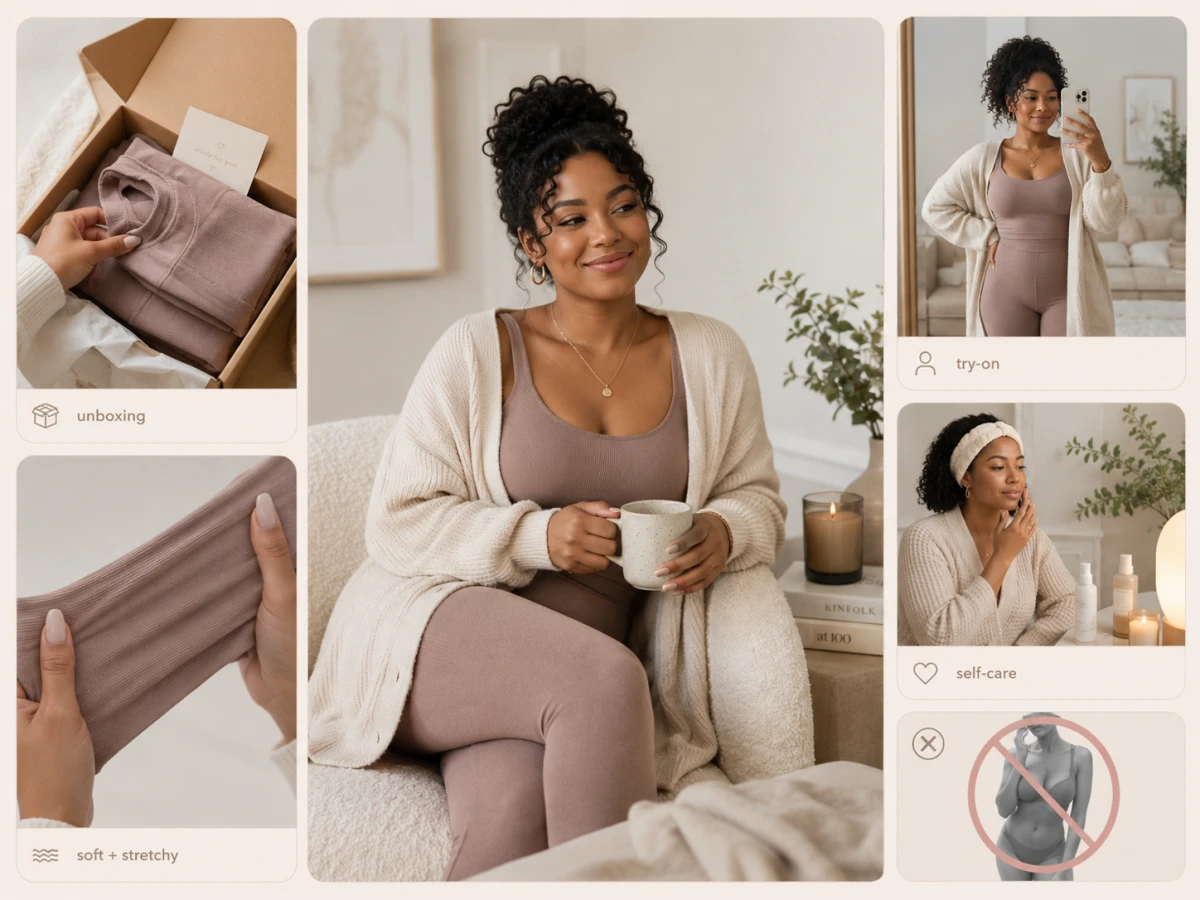
1. Pivot Ad Messaging Toward Comfort & Empowerment
The biggest mistake new stores make is running hyper-sexualized ads. Meta, TikTok, and Pinterest all enforce strict policies against sexually explicit content, so provocative creative gets you flagged fast.
Instead, angle your creatives around lifestyle, body positivity, seamless everyday wear, and self-care. For formats that convert, lean on user-generated content: unboxing clips, fabric-stretch close-ups, try-on hauls layered over modest clothing, and "Get Ready With Me" style videos.
2. Elevate the Unboxing Experience
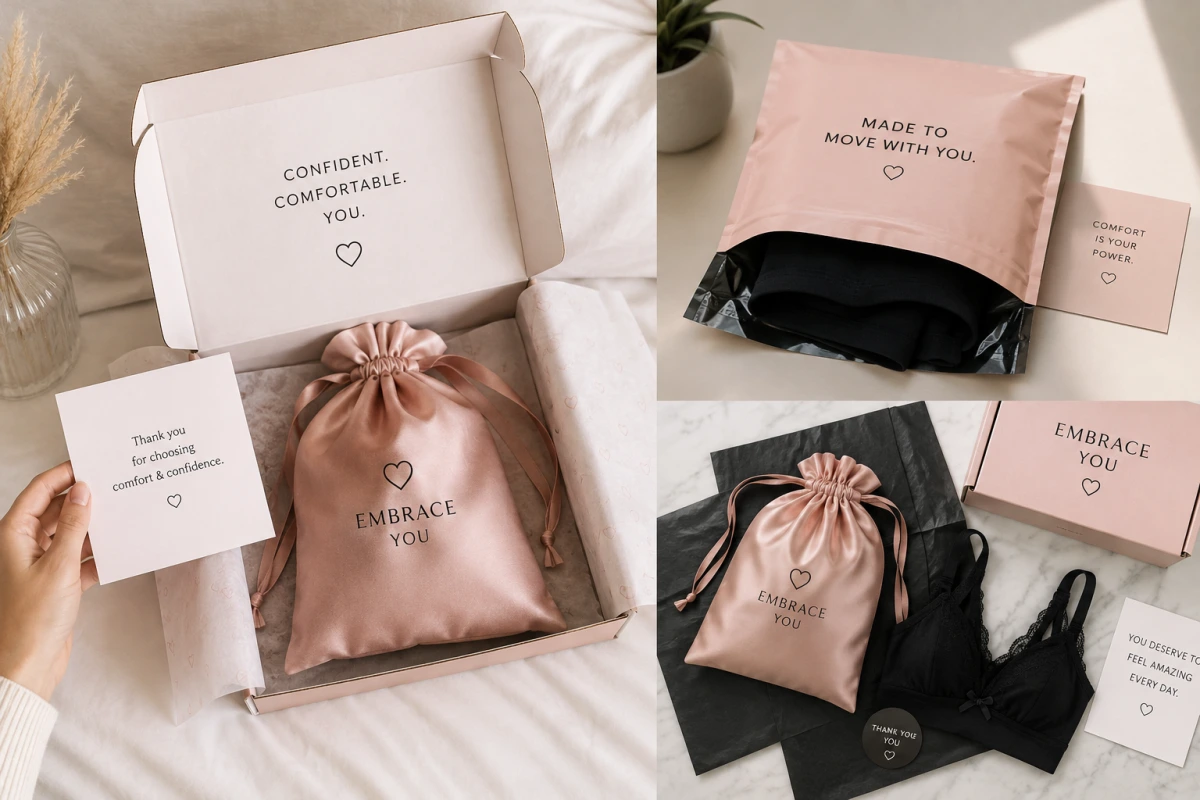
Generic plastic mailers scream cheap dropshipping and quietly kill repeat business.
To flip that, tap suppliers like CJdropshipping or a private agent to source custom branded satin drawstring bags, printed mailers, or branded tissue paper. Upgrading the unboxing runs only $0.30–$0.60 per order, yet it turns a $12 supplier item into something that feels like a $45 brand and pushes retention up noticeably.
3. Implement Aggressive "Bundle & Save" Strategies
Paid ads eat up 35% to 45% of your retail margin, so you cannot survive on single-item sales like $15 panties or $25 bralettes.
The way out is to build your store around smart bundling apps such as Kaching or Frequently Bought Together. A few bundles tend to pull their weight:
- The Everyday Pack: "Buy 3 Seamless Briefs, Get 1 Free"
- The Curated Set: Matching bra, panty, and satin robe ($65+ retail)
- Free Shipping Threshold: Free delivery only on orders above $50
4. Build an Email & SMS Revenue Machine
Leaning 100% on paid ads means you pay for every single order. Top intimate brands, by contrast, drive 25%–35% of total revenue from zero-CAC email and SMS flows.
A few flows do the heavy lifting: a welcome series with a discount code and sizing quiz, replenishment reminders sent by SMS around 60 days post-purchase ("Time to refresh your everyday underwear drawer?"), and VIP loyalty perks like early access to seasonal bridal or holiday drops.
5.Track Every Cost That Hits Your Margin from Day One
I know tracking profit is already something every serious dropshipper cares about.
You are checking your revenue. You are watching your ROAS. You are looking at your best-selling products and trying to understand what is working.
But here is the part most stores eventually discover:
The real challenge is not caring about margins. It is having a simple way to capture every cost that affects them.
Because your profit is not only decided by product cost and ad spend. It is shaped by dozens of moving pieces happening behind the scenes: refunds, sizing-related returns, shipping fees, transaction charges, discounts, packaging costs, and other expenses that quietly eat into your bottom line.
When those numbers are scattered across different platforms, spreadsheets, and dashboards, getting a true picture of your profitability becomes difficult and time-consuming.
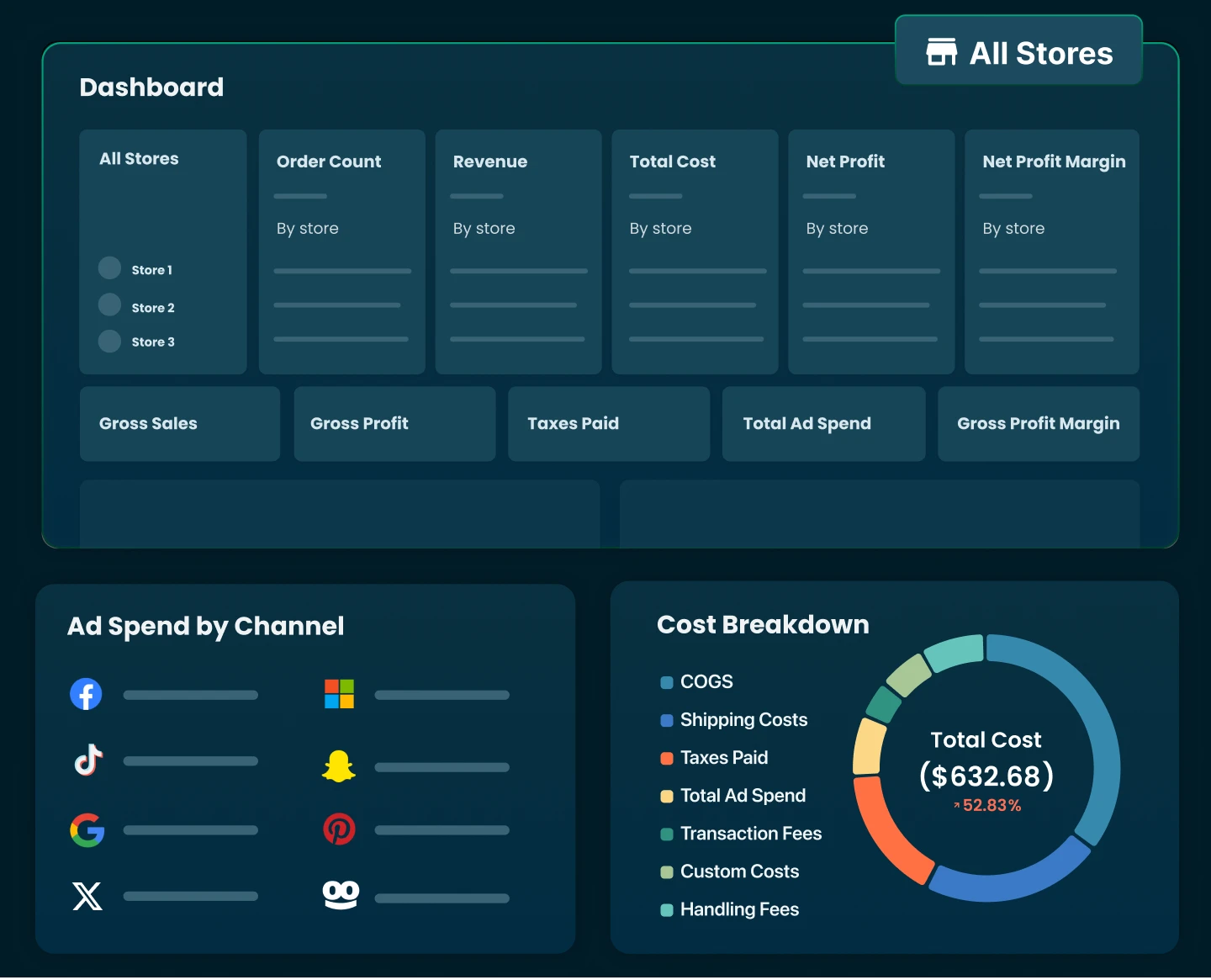
This is exactly why I confidently recommend TrueProfit, the #1 real-time net profit analytics app for Shopify merchants.
TrueProfit changes the way you look at profitability by automatically tracking the costs that matter most, so you can stop piecing numbers together and start making decisions based on your actual profit.
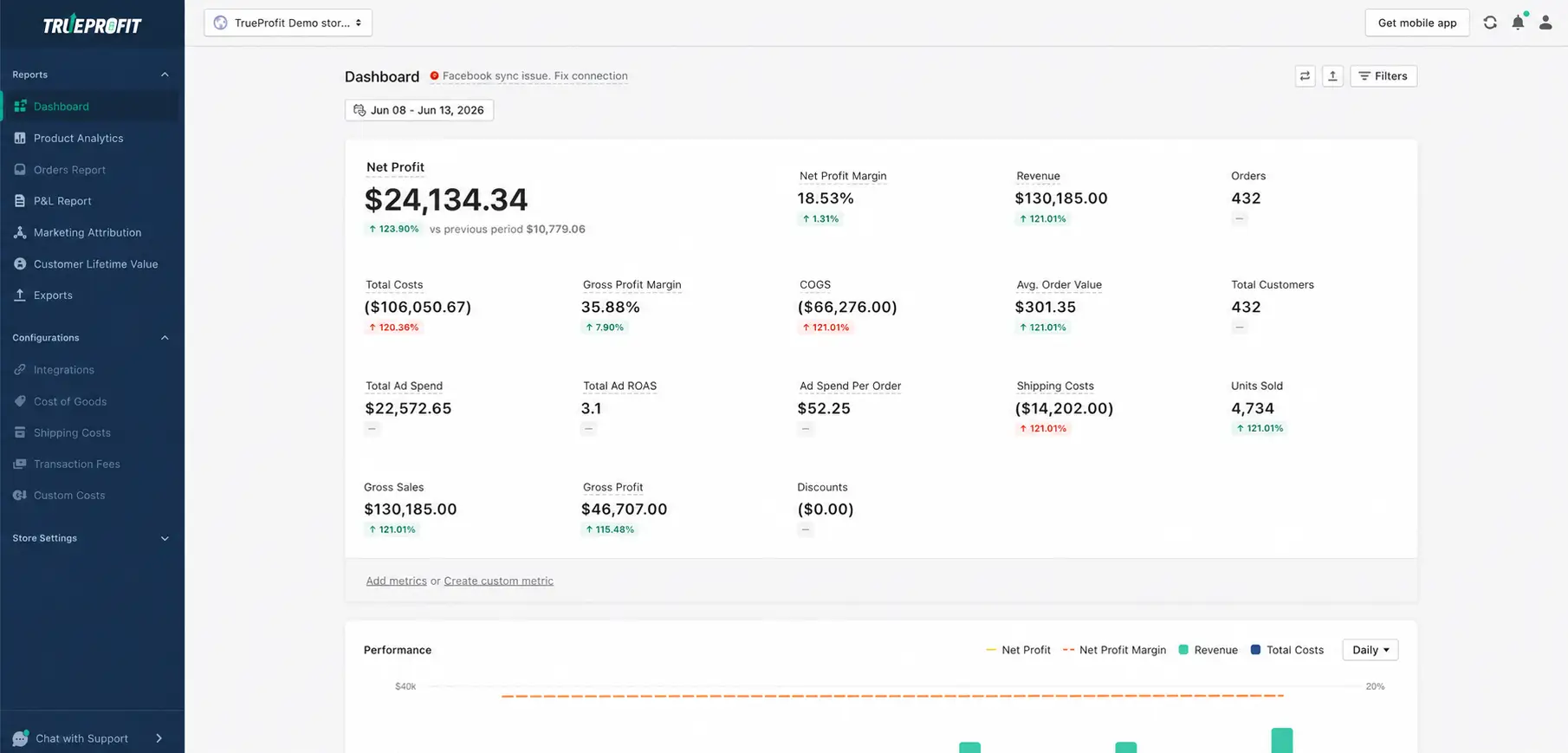
With TrueProfit, you can:
- See your true net profit in real time instead of relying on revenue or ROAS alone.
- Track every cost impacting your margins, including COGS, ad spend, shipping fees, transaction fees, refunds, and chargebacks.
- Understand product-level profitability to identify which products, variants, and bundles are truly worth scaling.
- Measure marketing performance through a profit lens, not just clicks, conversions, or revenue.
- Generate automated P&L reports without spending hours maintaining spreadsheets.
- Understand customer profitability with insights like customer lifetime value and profit per customer.
- Access smarter profit insights with TrueProfit MCP: Connect your store’s profit data with AI assistants to quickly analyze performance, identify profit opportunities, and make faster decisions without digging through dashboards.

Common Challenges & Mistakes (and How to Fix Them)
Here are the pitfalls I see most, and how to head them off.
1. High Sizing-Related Returns
Sizing is the single biggest reason lingerie orders come back. Unlike an oversized tee or hoodie, customers expect bras and shapewear to fit right the first time. A confusing size chart or inconsistent supplier sizing turns profitable products into expensive support tickets in a hurry.
To keep returns down, invest in detailed size charts in both inches and centimeters, spell out how each product fits (true to size, runs small, high stretch), and add a size quiz for your popular categories. For hygiene-sensitive items like panties or bodysuits, make your return policy crystal clear before checkout so you avoid disputes later.
2. Ad Account Restrictions
Lingerie brands walk a fine line on Meta and TikTok. Even legitimate products can trip automated reviews when creatives play up nudity, cleavage, or suggestive poses.
Rather than pushing provocative visuals, put the spotlight on product quality, comfort, fit, and craftsmanship. Flat-lay photography, mannequin shots, lifestyle imagery, or lingerie styled under everyday clothing get the value across while keeping your campaigns advertiser-friendly.
3. Relying on Supplier Stock Photos
One of the fastest ways to make your store look untrustworthy is recycling the same factory photos that show up across AliExpress, Temu, and Amazon.
Customers pick up on recycled images, especially in fashion where authenticity carries the sale. Ordering samples early lets you shoot original product photography, while micro-influencers or UGC creators give you relatable try-on content that builds trust and usually performs better in paid ads.
4. Slow Shipping and Poor Product Quality
Beautiful photos will not save a store when customers wait three weeks for delivery or unwrap fabric that feels nothing like what was advertised.
Lingerie is a tactile product, so softness, stretch, and stitching feed straight into satisfaction and reviews. Whenever you can, work with suppliers that run local warehouses or faster shipping lines for your main markets, and always inspect samples yourself before you pour money into ads.
5. Depending on a Single Supplier
Plenty of stores only stumble onto this risk after they find a winner. If your best-selling bra suddenly goes out of stock or your supplier swaps the material, your ads keep spending while fulfillment grinds to a halt.
So treat supplier diversification as part of your scaling plan from the start. Line up at least one backup supplier for every bestseller, compare sizing consistency across vendors, and check stock before you crank up ad budgets. A backup sourcing plan keeps an inventory hiccup from turning into lost revenue.
Final Thoughts
Lingerie can absolutely be a profitable dropshipping niche, but the numbers only add up when the whole business pulls in the same direction. High margins mean little if refunds, pricey acquisition, or inconsistent quality wipe them out.
So treat every order as the start of a long-term relationship, not a one-off sale. Improving retention, lifting average order value, and protecting your margins will nearly always beat chasing the next winning product. Keep a clear eye on profit rather than revenue, and this niche will reward you.
Lila Le is the Marketing Manager at TrueProfit, with a deep understanding of the Shopify ecosystem and a proven track record in dropshipping. She combines hands-on selling experience with marketing expertise to help Shopify merchants scale smarter, through clear positioning, profit-first strategies, and high-converting campaigns.