Is Shoe Dropshipping Still Profitable in 2026? 13 Suppliers & Winning Niches


Table of Contents
- 1. 13 Suppliers That Shoe Dropshippers Need To Keep An Eye On In 2026
- 2. The Best Shoe Niche Categories for Dropshipping
- 3. Is Shoe Dropshipping Still Profitable in 2026?
- 4. How Much Profit Can You Realistically Make Dropshipping Shoes?
- 5. How to Start a Shoe Dropshipping Business
- 6. How to Stop Shoe Returns From Killing Your Profit
- 7. How To Measure Your Store P&L?
- 8. Final Thoughts
- 9. Dropshipping Shoes Frequently Asked Questions
Dropshipping shoes is a business model where you sell shoes online without buying or storing inventory yourself. When a customer places an order, you purchase the shoes from a third-party supplier, who then packs and ships them directly to your customer.
This guide covers what actually makes money in footwear, which suppliers to trust, the niches worth entering, and how to protect your profit margins from the two things that quietly kill shoe stores: returns and shipping costs.
Let’s get started!
In this blog:
- 1. 13 Suppliers That Shoe Dropshippers Need To Keep An Eye On In 2026
- 2. The Best Shoe Niche Categories for Dropshipping
- 3. Is Shoe Dropshipping Still Profitable in 2026?
- 4. How Much Profit Can You Realistically Make Dropshipping Shoes?
- 5. How to Start a Shoe Dropshipping Business
- 6. How to Stop Shoe Returns From Killing Your Profit
- 7. How To Measure Your Store P&L?
- 8. Final Thoughts
- 9. Dropshipping Shoes Frequently Asked Questions
13 Suppliers That Shoe Dropshippers Need To Keep An Eye On In 2026
There's no single best supplier for every shoe store. The right pick comes down to what you're optimizing for:
- For custom sneakers and POD: Start with Printify or JetPrint.
- For low-cost AOP designs: Test Yoycol.
- For fast US fashion fulfillment: Trendsi is a strong starting point.
- For US/EU supplier access: Spocket is worth considering.
- For European fashion footwear: Matterhorn fits the model better.
- For wide-width shoes: Footwear US gives you a more defensible niche.
- For luxury footwear: BrandsGateway or BDroppy.
- For private label and factory sourcing: CJdropshipping or Zendrop.
Category 1: Print-on-Demand Shoe Suppliers
Print-on-demand is where I'd start if you want to sell custom shoes without buying inventory upfront. Instead of holding dozens of sizes and designs, you create the product, list it in your store, and let the supplier produce each pair only after the customer orders. It's the lowest-risk way to test whether a design has legs.
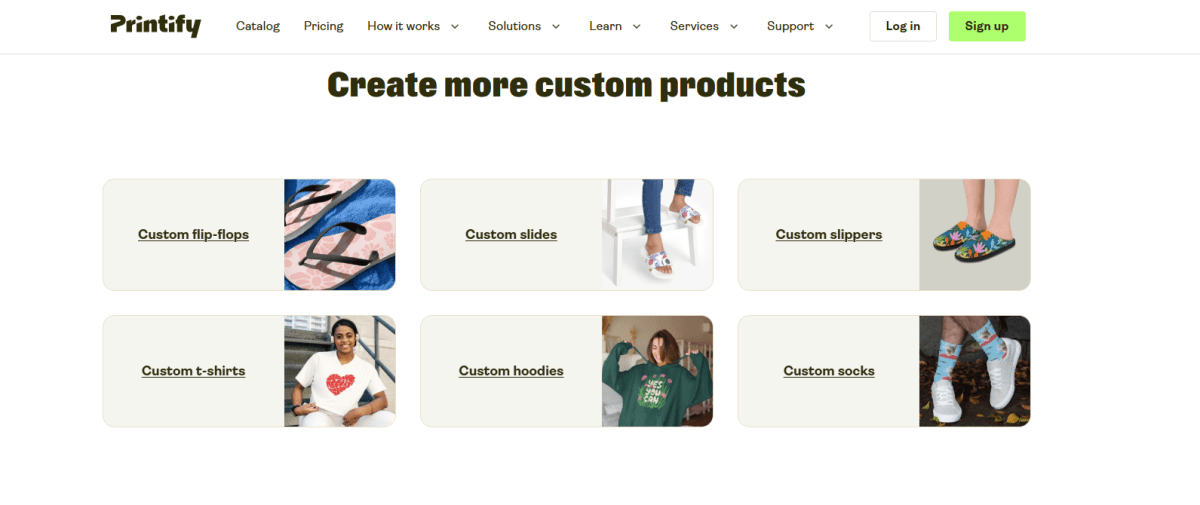
1. Printify: Best for flexible sourcing and multi-channel sellers
Printify is a POD marketplace rather than a single shoe manufacturer. It connects sellers with 90+ print providers across 140+ print facilities, giving you more flexibility over production location, pricing, and fulfillment. The platform also supports more than 2,000 customizable products and 10 million-plus merchants.

Key details
- Shoe types: Sneakers, high-tops, slip-ons, flip-flops, slippers
- Pricing: Free to start; paid plans offer product discounts
- Fulfillment: Multiple print providers and fulfillment locations
- Integrations: Shopify, Etsy, eBay, WooCommerce, Wix, BigCommerce, TikTok Shop, Amazon, and API options
- Branding: Available on eligible products
Why it's good for shoe dropshipping
Printify's biggest draw is choice. Rather than being tied to one production partner, you get to compare available providers and pick based on price, location, and fulfillment requirements.
The tradeoff
The marketplace model also means consistency can vary between providers. Production time, print quality, and shipping costs aren't necessarily identical across suppliers, so order samples before scaling a winning shoe.
Bottom line: Choose Printify if you want maximum flexibility when testing custom footwear and selling across multiple channels.
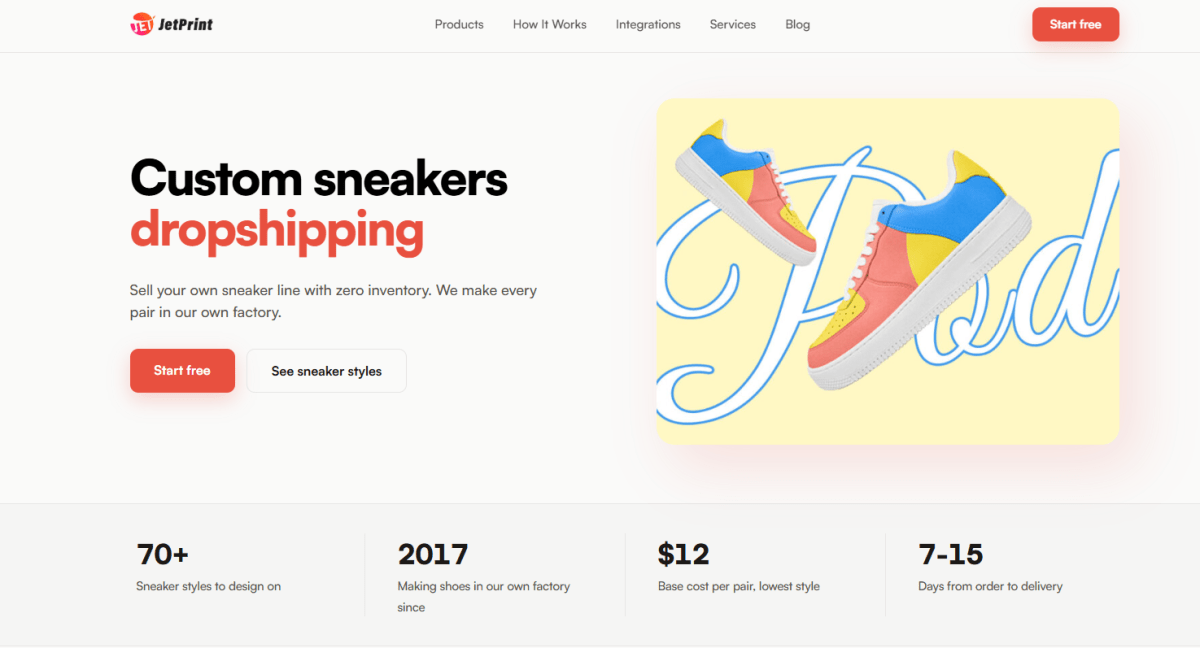
2. JetPrint: Best for custom footwear and branded unboxing
JetPrint focuses heavily on POD and offers a particularly deep range of custom footwear. It also supports custom shoe boxes and blind shipping, making it more interesting for sellers who want the package to feel like a real footwear brand rather than a generic POD order.
Key details
- Shoe types: Sneakers, boots, running shoes, canvas shoes, high-tops, slides
- Pricing: No monthly subscription; product cost varies by shoe
- Fulfillment: Global shipping to more than 150 countries
- Integrations: Shopify, WooCommerce, Etsy, Wix
- Branding: Custom shoe designs, shoe boxes, and blind shipping
Why it's good for shoe dropshipping
JetPrint’s custom shoe range gives you room to build around a specific aesthetic instead of adding one or two generic sneakers to a broader POD catalog.
The custom packaging is another advantage. If you're selling premium-looking footwear, branded boxes can make the unboxing experience feel much closer to a dedicated shoe brand.
The tradeoff
Production and delivery can take longer than domestic inventory-based suppliers.
Bottom line: JetPrint is a strong fit if you're building a footwear-first POD brand and care about custom shoes and branded presentation.
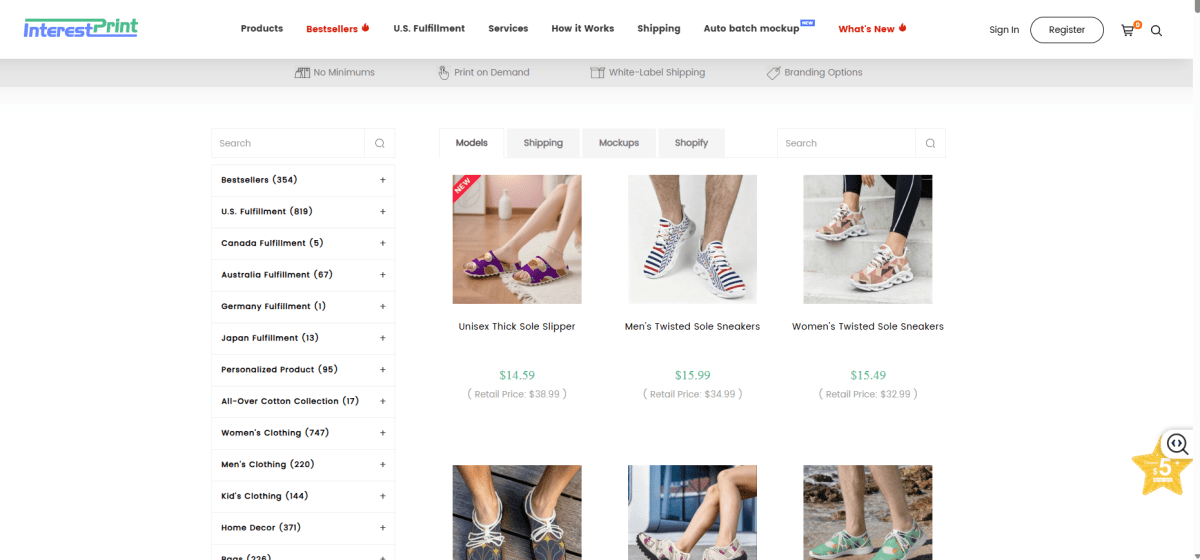
3. InterestPrint: Best for US-focused custom footwear
InterestPrint is a long-running POD platform with a broader footwear selection than many general POD services.
Key details
- Shoe types: Sneakers, boots, heels, slip-ons, and other custom footwear
- Pricing: Free to use; product and fulfillment costs vary
- Fulfillment: International production and fulfillment options, including US-based facilities for selected products
- Integrations: Shopify, WooCommerce, Wix, and other ecommerce channels
- Branding: Custom labels and packaging options on eligible products
Why it's good for shoe dropshipping
The main attraction is footwear variety. InterestPrint gives sellers access to shoe styles that aren't always available on the largest POD marketplaces, which can be useful when you're targeting a specific fashion or design niche.
For US sellers, selected domestic production can also help reduce delivery times compared with sending every order internationally.
The tradeoff
InterestPrint has a smaller ecosystem than the biggest POD platforms. That makes it worth testing individual products and fulfillment routes rather than assuming every shoe will perform equally well.
Bottom line: Consider InterestPrint when your niche needs footwear styles that are harder to find on mainstream POD platforms, especially if you want US-focused fulfillment options.
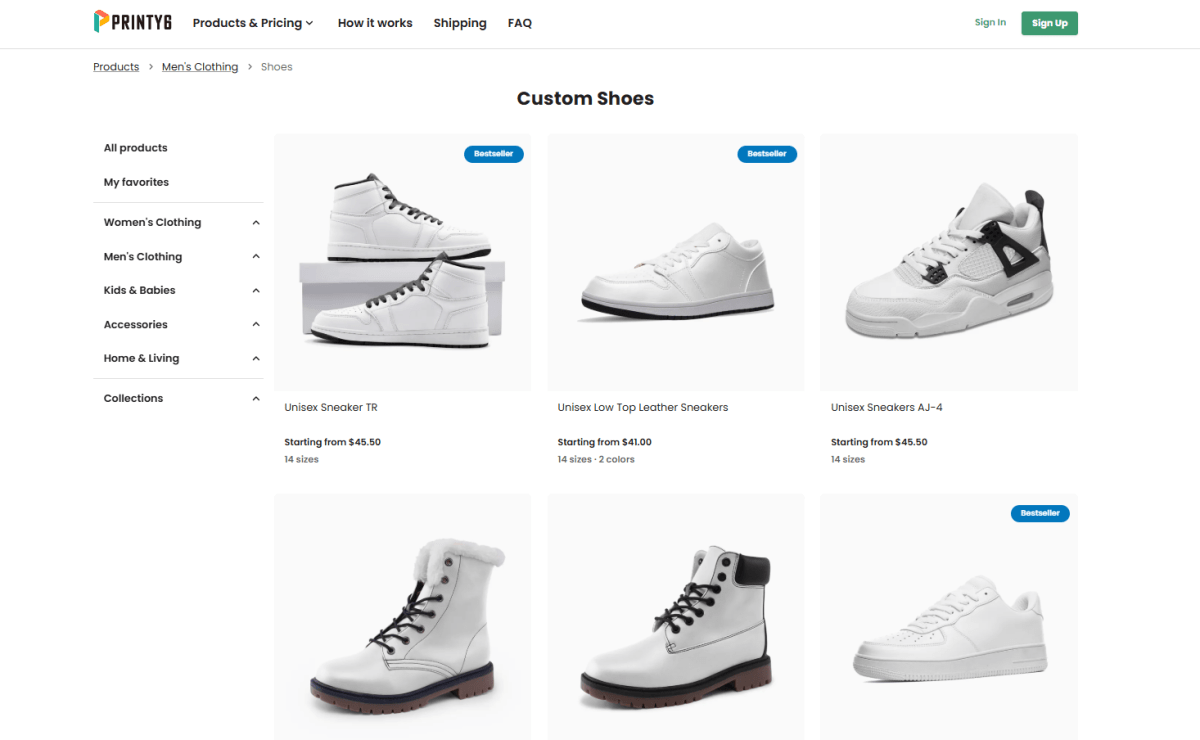
4. Printy6: Best for low-cost design testing
Printy6 is another POD option for sellers who want to test custom footwear without committing to inventory. Its product creator is geared toward relatively simple product setup, making it accessible for beginners experimenting with graphic-heavy shoe designs.
Key details
- Shoe types: Sneakers, canvas shoes, low-tops, and other custom footwear
- Pricing: Free to start; product costs vary by style
- Fulfillment: International fulfillment with selected US and European warehouse options
- Integrations: Shopify, WooCommerce, BigCommerce, Etsy, eBay
- Branding: More limited than dedicated private-label suppliers
Why it's good for shoe dropshipping
Printy6 is most useful at the testing stage. If you have a trend-driven design and want to put several variations in front of customers before investing in a larger brand operation, the low upfront commitment can work in your favor.
The tradeoff
It's less compelling once branding and premium customer experience become your priorities. Before scaling, test both the product and the fulfillment experience yourself.
Bottom line: Use Printy6 primarily as a low-risk testing platform rather than assuming it will be the best long-term supplier for a premium shoe brand.
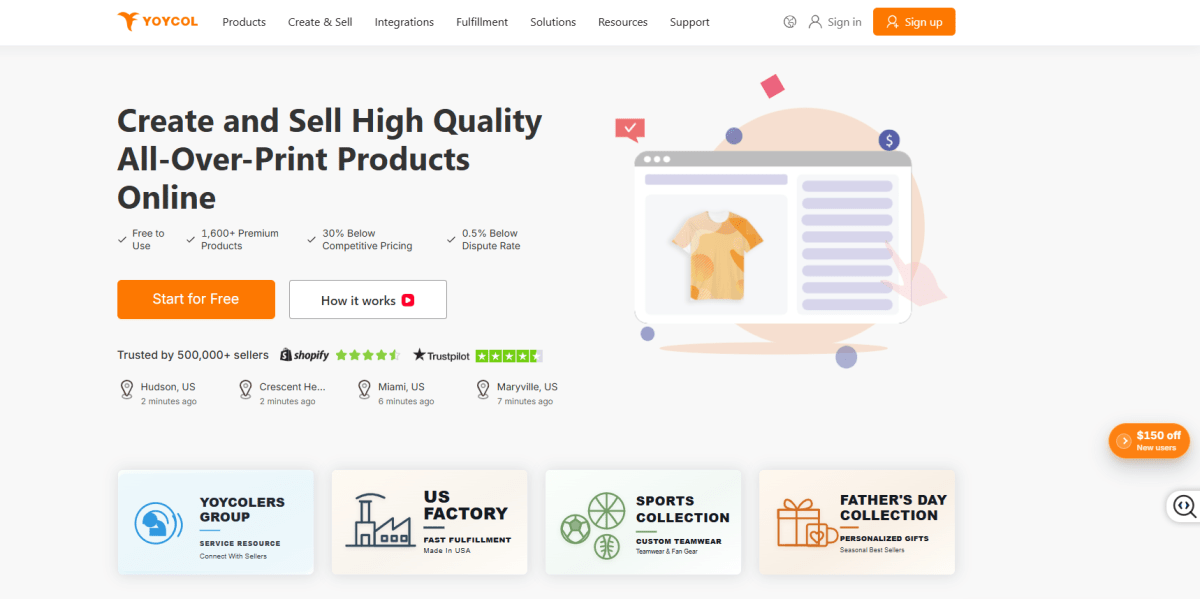
5. Yoycol: Best for low-cost all-over-print footwear
Yoycol is built around low-cost POD and all-over-print products, with footwear among its product categories. Its appeal is straightforward: sellers can experiment with highly visual shoe designs without holding stock or paying for a monthly platform subscription.
Key details
- Shoe types: Sneakers, basketball shoes, hiking shoes, slip-ons, clogs, boots, and other AOP footwear
- Pricing: Budget-oriented; product and shipping costs vary by style and destination
- Fulfillment: International
- Integrations: Shopify, WooCommerce, Wix, and other ecommerce platforms
- Branding: Branding options available on eligible products
Why it's good for shoe dropshipping
Yoycol is particularly interesting for graphic-heavy niches. If your competitive advantage is the artwork rather than the shoe silhouette itself, lower product costs give you more room to test designs and pricing.
The tradeoff
Lower product cost doesn't automatically mean higher profit. Shipping, production time, returns, and advertising still determine what you actually keep per order.
Bottom line: Yoycol is worth testing when low product cost and all-over-print variety matter more than premium fulfillment or brand presentation.
Category 2: US and EU Shoe Dropshipping Suppliers
If you're selling standard fashion or comfort footwear rather than custom designs, regional suppliers are where I'd point you instead. Here’s the list:
6. Trendsi: Best for fast US fashion footwear
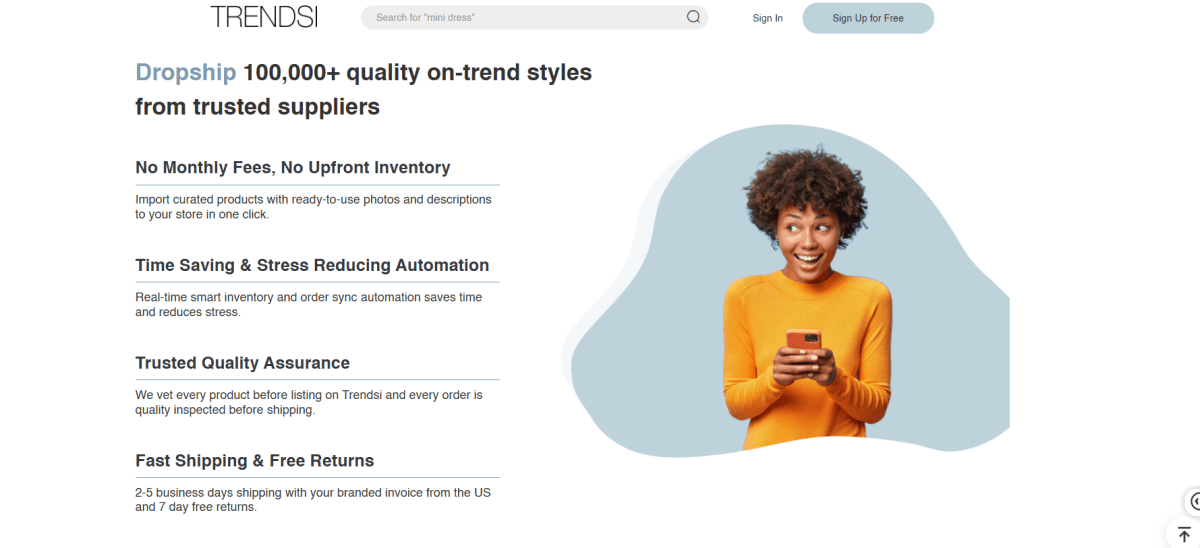
Trendsi is one of the stronger options for US-focused fashion dropshipping. Selected footwear products ship from the US, with processing and shipping timelines of around 2-5 business days. Trendsi also supports direct shipping to customers and branding options on eligible products.
Key details
- Shoe types: Women's heels, boots, sandals, casual footwear
- Pricing: Free to start; paid options available for additional features
- Fulfillment: US and overseas inventory depending on the product
- Integrations: Shopify and social-commerce channels
- Branding: Branded invoices and custom packaging options on eligible products
Why it's good for shoe dropshipping
Trendsi's biggest advantage is speed. If you're selling fashion footwear to US customers, having products already positioned for domestic fulfillment can make a meaningful difference in customer experience.
The tradeoff
Footwear isn't the platform's only focus, so its shoe catalog is less specialized than a dedicated footwear wholesaler. Product availability and shipping speed also depend on where the individual item is stocked.
Bottom line: Trendsi is one of the best starting points for a US fashion boutique that wants shoes with relatively fast domestic fulfillment.
7. Spocket: Best for US and EU supplier access
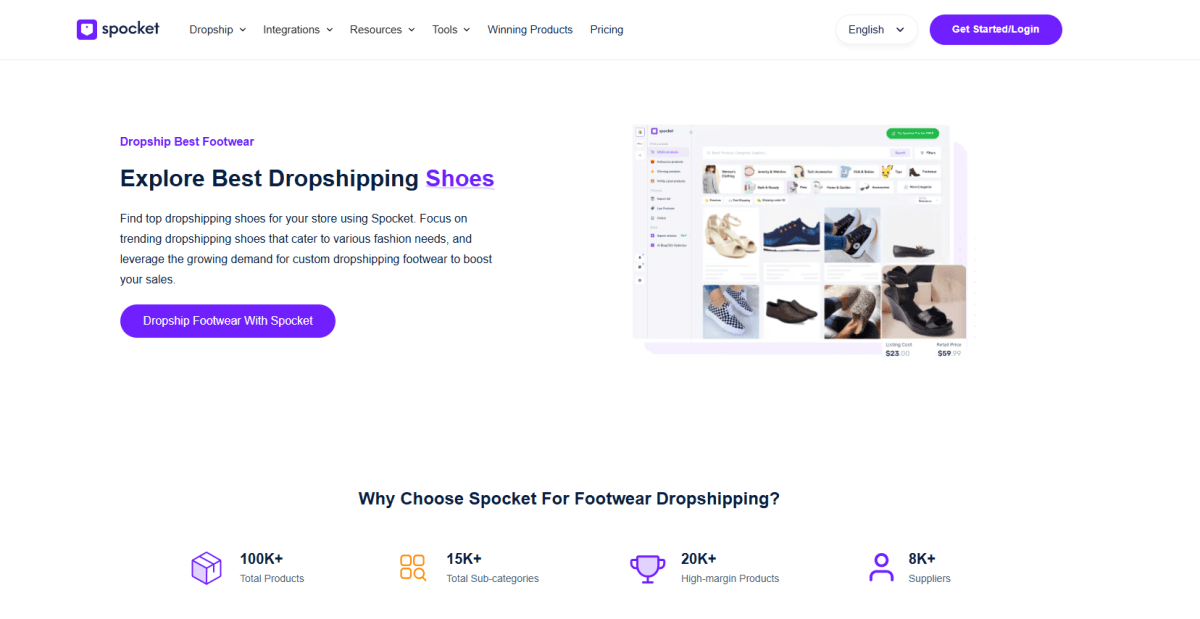
Spocket is a supplier marketplace that emphasizes US and European sourcing. The platform says more than 80% of its suppliers are based in the US or Europe, while its catalog includes footwear and other fashion products.
Key details
- Shoe types: Sneakers, sandals, heels, boots, and selected custom footwear
- Pricing: Paid subscription model; product costs vary by supplier
- Fulfillment: Strong US/EU supplier coverage
- Integrations: Shopify, WooCommerce, Wix, BigCommerce, Squarespace, and others
- Branding: Branded invoicing available on paid plans
- Samples: Suppliers can be sampled before you commit to selling
Why it's good for shoe dropshipping
Spocket is less about finding the absolute cheapest pair and more about finding suppliers that can deliver a better customer experience. Its supplier-location information and sample ordering make it easier to evaluate products before listing them.
The tradeoff
Western sourcing generally comes with higher product costs than China-direct suppliers. You'll need enough perceived value and pricing power to absorb that difference.
Bottom line: Choose Spocket if faster US/EU fulfillment and supplier quality matter more to you than getting the lowest possible product cost.
8. Matterhorn: Best for European fashion footwear
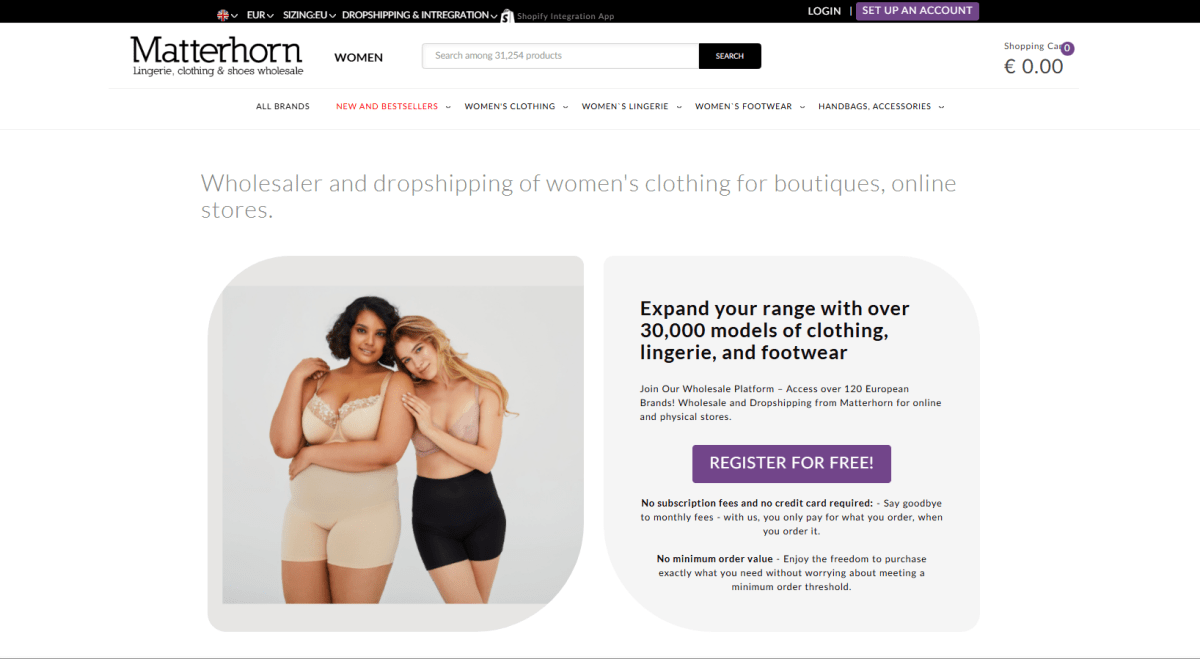
Matterhorn is a Poland-based fashion wholesaler with a large catalog of European brands and styles. It's particularly relevant for stores targeting European customers who want established fashion labels rather than generic shoes.
Key details
- Shoe types: Heels, boots, casual footwear, winter shoes, and other fashion styles
- Pricing: No subscription; pay for products and shipping
- Fulfillment: Strong European coverage, with international shipping available
- Integrations: Shopify, WooCommerce, BaseLinker
- Catalog: 30,000+ products from more than 100 European brands
- Branding: Primarily wholesale/reseller model rather than private label
Why it's good for shoe dropshipping
Matterhorn's advantage is its access to European fashion brands and a broad catalog in one place. It's also better suited to an EU customer base than a China-direct supplier because fulfillment is geographically closer to your buyers.
The tradeoff
The advantage decreases as you move farther outside Europe. International shipping can take longer and cost more, so the supplier makes the most sense when Europe is your core market.
Bottom line: Matterhorn is a strong choice for EU-focused stores that want European fashion footwear rather than generic dropshipping products.
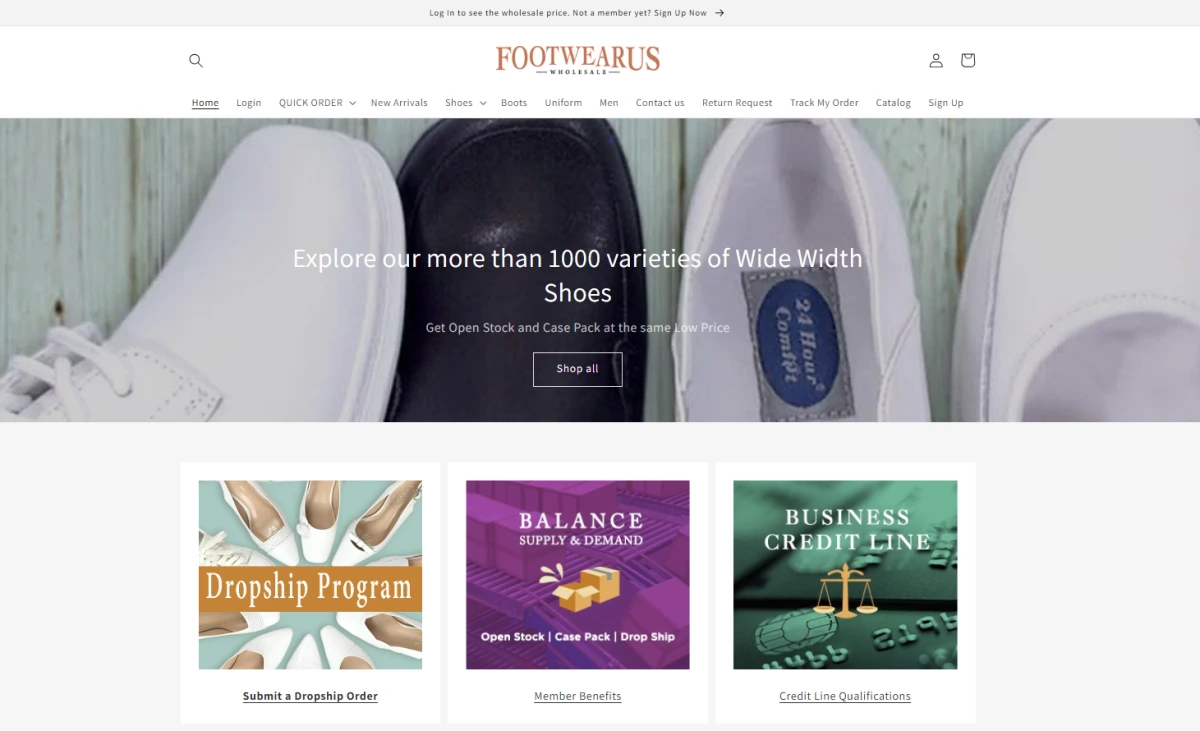
9. Footwear US: Best for wide-width and comfort footwear
Footwear US takes a very different approach from the other suppliers on this list. Instead of competing on trendy designs or massive catalogs, it focuses on footwear categories such as wide-width and comfort shoes.
Key details
- Shoe types: Wide-width casual, comfort, and dress footwear
- Market: Primarily US
- Fulfillment: Domestic shipping through major carriers
- Dropshipping: Available for qualified businesses
- Branding: Limited compared with private-label suppliers
- Integration: More wholesale/manual than plug-and-play Shopify dropshipping
Why it's good for shoe dropshipping
The opportunity here is the niche itself. Customers looking for genuinely wide shoes can have fewer options than shoppers buying standard sizes. That can create stronger repeat-purchase potential because shoppers are more likely to return to a store that consistently carries sizes that fit them.
The tradeoff
This isn't the easiest supplier for a beginner. The business model involves more manual wholesale processes, and the monthly cost makes more sense for a focused niche store than a general shoe catalog.
Bottom line: Footwear US is worth considering if you want to build a specialized wide-width or comfort footwear store rather than compete in the crowded general shoe market.
Category 3: Luxury and Designer Shoe Dropshipping Suppliers
10. BrandsGateway: Best for luxury designer footwear
BrandsGateway specializes in luxury fashion dropshipping and wholesale, including footwear from established designer brands.
Key details
- Shoe types: Designer sneakers, boots, heels, loafers, and other luxury footwear
- Brands: 100+ luxury and designer brands
- Pricing: Premium subscription model
- Fulfillment: International
- Integrations: Shopify, WooCommerce, Wix, BigCommerce, Shift4Shop, CSV, API
- Branding: Reselling authentic branded products rather than private-label branding
Why it's good for shoe dropshipping
BrandsGateway is built for a very different store model from Yoycol or CJdropshipping. You're not trying to win by selling a $30 pair of sneakers. You're building a higher-AOV store around recognized brands and premium products.
The tradeoff
Luxury doesn't automatically mean high margins. Product acquisition costs, platform fees, payment fees, advertising, and returns can still leave you with a surprisingly thin net margin.
You also need to verify authenticity, supplier terms, and the rights associated with product imagery and brand representation before listing products.
Bottom line: BrandsGateway is best for established sellers who want to build a premium store around authentic designer footwear and can support the higher operating costs.
11. BDroppy: Best for European designer brands
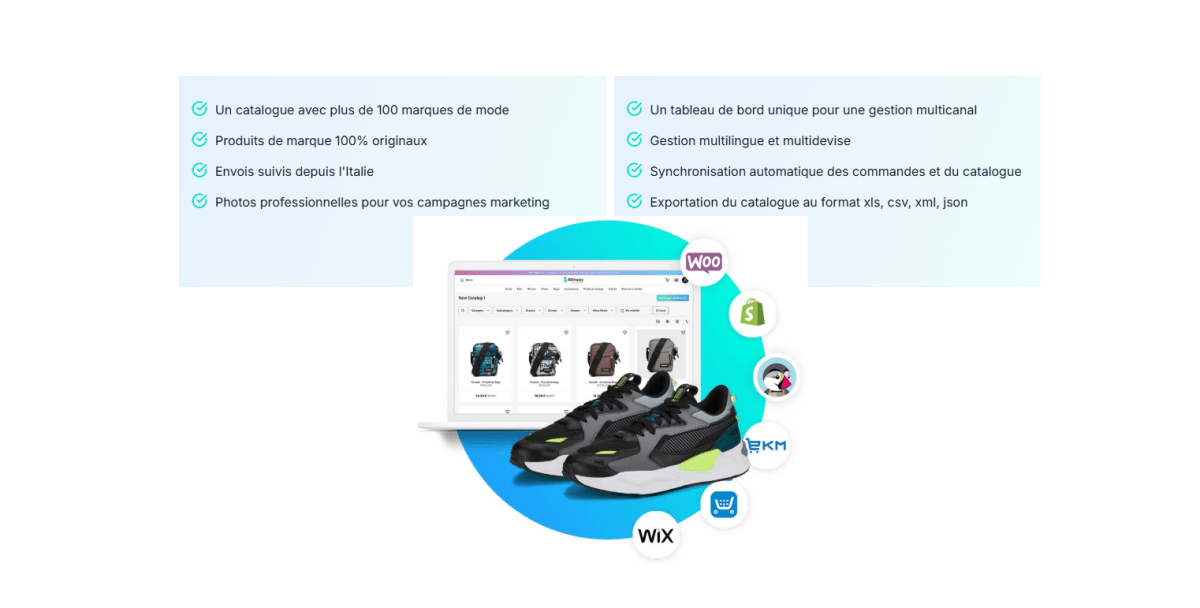
BDroppy is the dropshipping platform from Brandsdistribution, an Italian fashion distributor. It gives sellers access to established fashion brands and manages product, inventory, and order data through a centralized platform.
Key details
- Shoe types: Designer sneakers, boots, formal shoes, and fashion footwear
- Brands: 100+ verified fashion brands
- Pricing: Plans range from entry-level social selling to higher-priced ecommerce integrations
- Fulfillment: Primarily from Italy, with international delivery
- Integrations: Shopify and other ecommerce platforms depending on plan
- Branding: Reseller model with professional product content rather than private label
Why it's good for shoe dropshipping
BDroppy is particularly attractive if your target market is Europe. Products are positioned around established brands rather than generic footwear, while the platform gives you centralized catalog and inventory management.
The tradeoff
European fulfillment is an advantage for EU customers but becomes less compelling when you're selling heavily into distant markets. Shipping costs and delivery times need to be built into your pricing model.
Bottom line: BDroppy is a good middle ground for sellers who want branded European fashion footwear without jumping immediately into the higher cost structure of premium luxury dropshipping platforms.
Category 4: General and Private-Label Shoe Suppliers
General dropshipping platforms come into their own once you've actually found a shoe that sells.
12. Zendrop: Best for US fulfillment and private labeling
Zendrop combines product sourcing, fulfillment, automation, and branding tools in one platform. It's designed for sellers who want more control than a basic marketplace while avoiding the complexity of managing suppliers directly.
Key details
- Shoe types: General footwear depending on current catalog
- Pricing: Free to explore; paid plans start at the Pro tier
- Fulfillment: US-stocked products can offer faster domestic delivery; China-sourced products take longer
- Integrations: Shopify and WooCommerce
- Branding: Private labeling and custom packaging available for eligible products
Why it's good for shoe dropshipping
Zendrop makes the most sense once you've identified a product worth scaling. You can use its sourcing and fulfillment infrastructure while moving toward custom packaging or private labeling.
The US warehouse option can also help you compete on delivery speed when you're selling to American customers.
The tradeoff
Not every product is stocked domestically. A shoe appearing in Zendrop's catalog isn't automatically a fast-shipping US product, so check the fulfillment location for each SKU before building your advertising strategy around a delivery promise.
Bottom line: Zendrop is a good fit for sellers moving from product testing toward a branded shoe business with faster US fulfillment.
13. CJdropshipping: Best for factory sourcing and custom branding
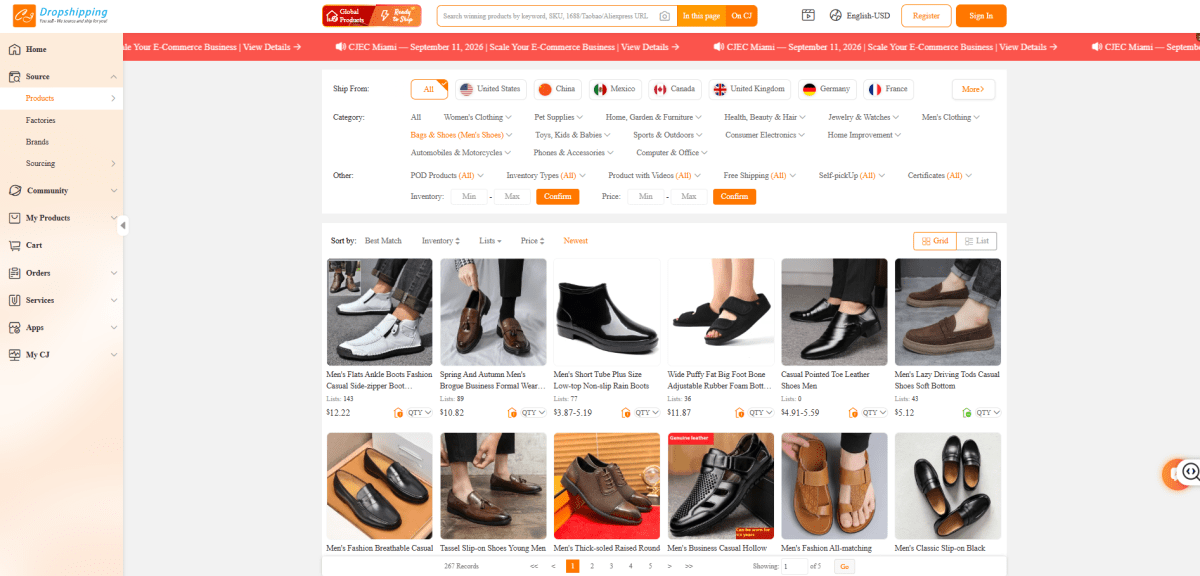
CJdropshipping is one of the most flexible general sourcing platforms on this list. Instead of limiting you to the products already visible in a catalog, CJ can source products from manufacturers and help with fulfillment, quality control, white labeling, and branding. Its platform also supports POD and international warehouse fulfillment.
Key details
- Shoe types: General footwear, sourced products, and selected POD shoes
- Pricing: No standard monthly platform fee
- Sourcing: Factory and marketplace sourcing
- Fulfillment: China plus international warehouse options
- Integrations: Shopify and major ecommerce channels
- Branding: White label, custom packaging, and other branding options
Why it's good for shoe dropshipping
CJ is particularly useful when you've already identified a winning shoe and want to improve the economics. You can request sourcing, compare suppliers, negotiate product costs, and explore custom packaging instead of simply accepting the retail-like price of a marketplace listing.
The tradeoff
The flexibility comes with more responsibility. A product that isn't already stocked near your customers may take longer to fulfill, and supplier quality can vary.
Bottom line: CJdropshipping is one of the strongest options when your goal is to turn a proven shoe product into a lower-cost, branded, scalable business.

The Best Shoe Niche Categories for Dropshipping
Here's how the main niches stack up.
- Walking & Comfort Shoes
- Sandals & Slides
- Work Shoes
- Kids' Shoes
- Sneakers
- Hiking & Outdoor Shoes
- Running Shoes
- Fashion Shoes (Heels, Boots & Loafers)
1. Walking and Comfort Shoes
- Typical selling price: $55–$80
- Estimated COGS: $17–$29
- Estimated gross margin: 64%–69%
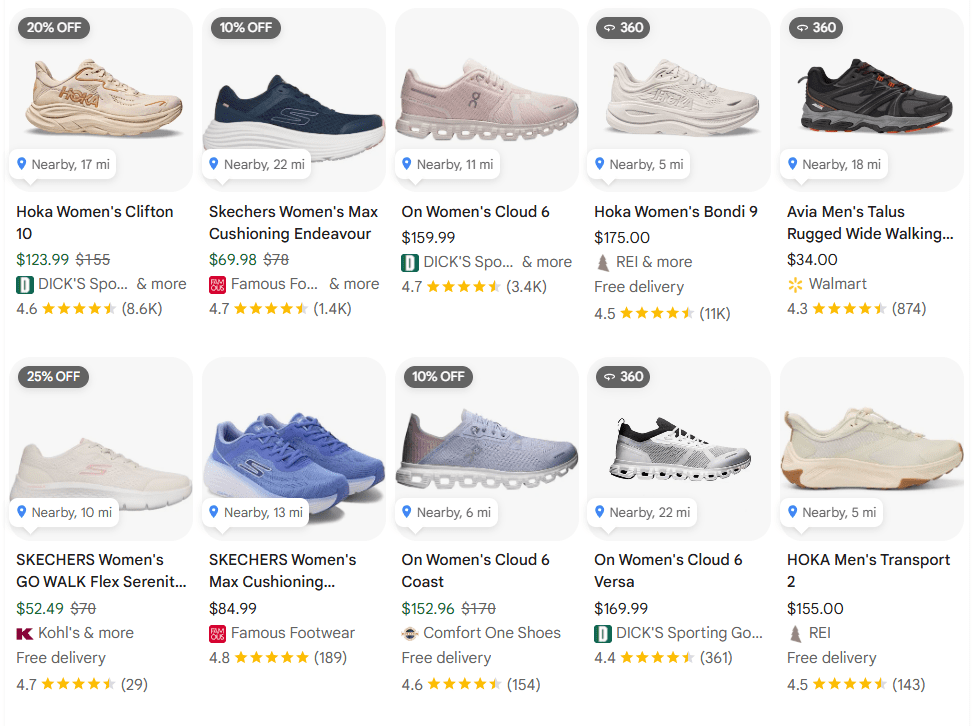
Comfort footwear is the top profit driver in shoe dropshipping. It targets people on their feet all day (nurses, teachers, retail staff) and those with foot conditions like plantar fasciitis or flat feet. Buyers chasing pain relief are far less price-sensitive.
The catch is that this niche needs educational marketing and clear feature breakdowns to build trust.
2. Sandals and Slides
- Typical selling price: $35–$60
- Estimated COGS: $11–$21
- Estimated gross margin: 63%–69%
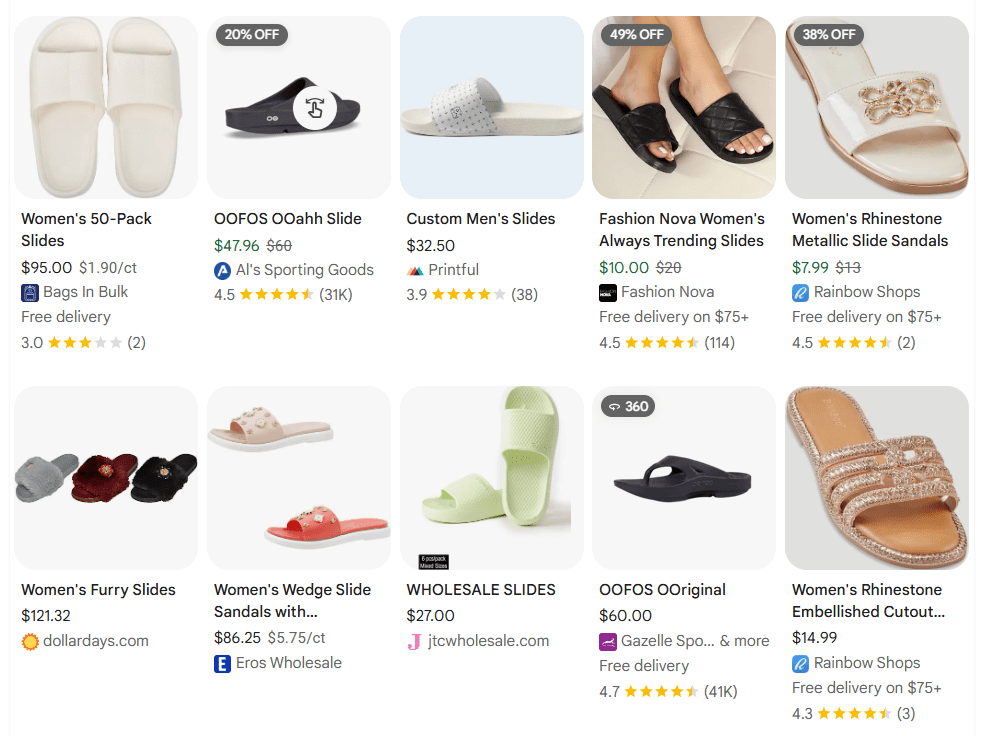
Sandals and slides carry healthy margins because open-toe designs push size-related returns below 5%. They see huge seasonal spikes in spring and summer and steady demand in warm regions, with low production costs and lightweight shipping.
The downside is low retail prices, so you need bundles or upsells to lift average order value.
3. Work Shoes
- Typical selling price: $65–$100
- Estimated COGS: $20–$35
- Estimated gross margin: 57%–69%
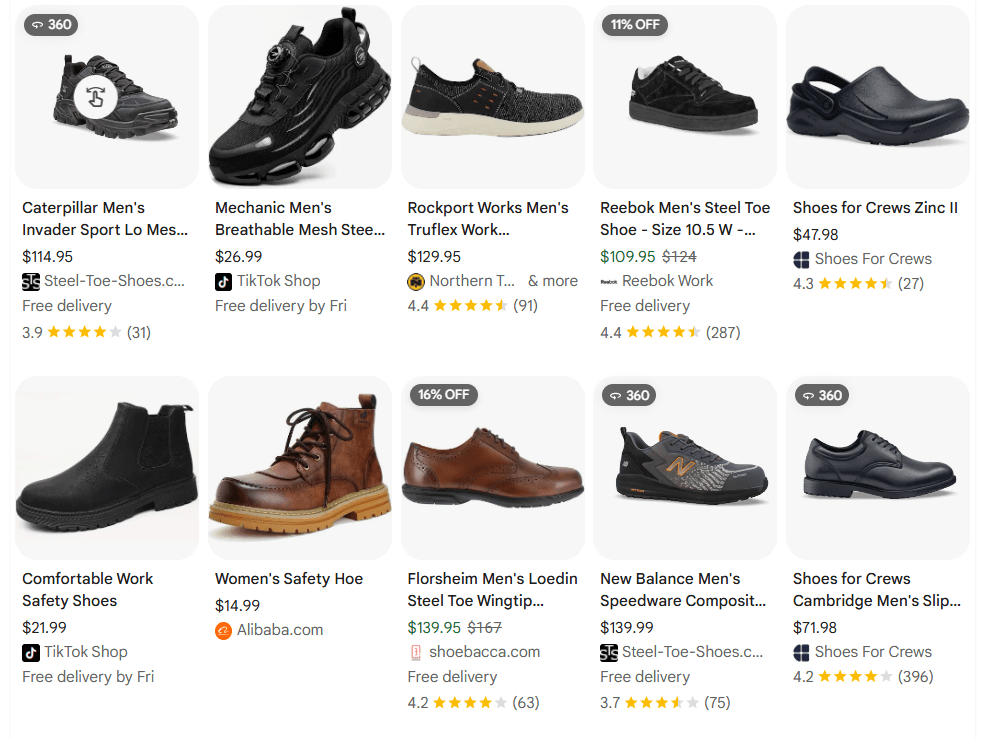
Work shoes serve construction, warehouse, and industrial buyers who prioritize safety certifications, steel toes, puncture-resistant soles, slip resistance, and waterproofing. Those features justify premium pricing.
Higher product weight raises base shipping costs, and ordering physical samples to verify durability is non-negotiable to avoid refund claims.
4. Kids' Shoes
- Typical selling price: $28–$50
- Estimated COGS: $8–$16
- Estimated gross margin: 64%–71%
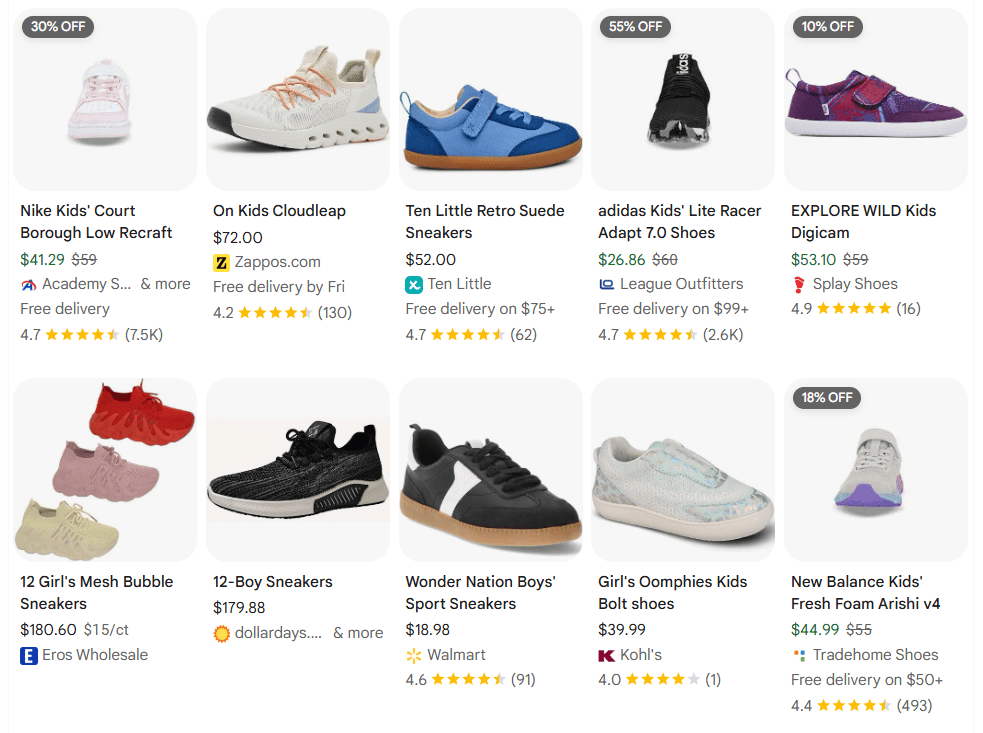
Kids' shoes generate frequent repeat purchases as children outgrow footwear fast. Parents decide quickly on cute designs, easy Velcro closures, or fun features like LED lights.
Strict safety and material compliance in the US and EU is the main hurdle, and sizing matrices across age groups get complex.
5. Sneakers
- Typical selling price: $45–$80
- Estimated COGS: $14–$27
- Estimated gross margin: 63%–69%
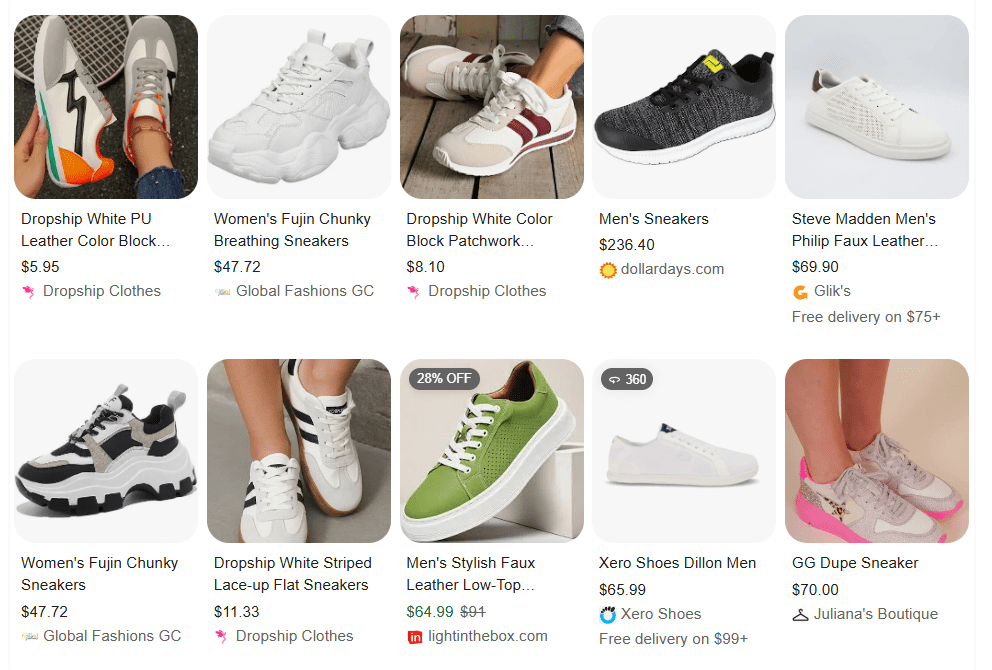
Sneakers convert well with younger buyers through short-form video and pair naturally with print-on-demand for exclusive graphic designs. Visual appeal drives impulse purchases.
Trends shift fast, and margins collapse on generic commodity models under price competition.
6. Hiking and Outdoor Shoes
- Typical selling price: $80–$120
- Estimated COGS: $25–$40
- Estimated gross margin: 66%–69%
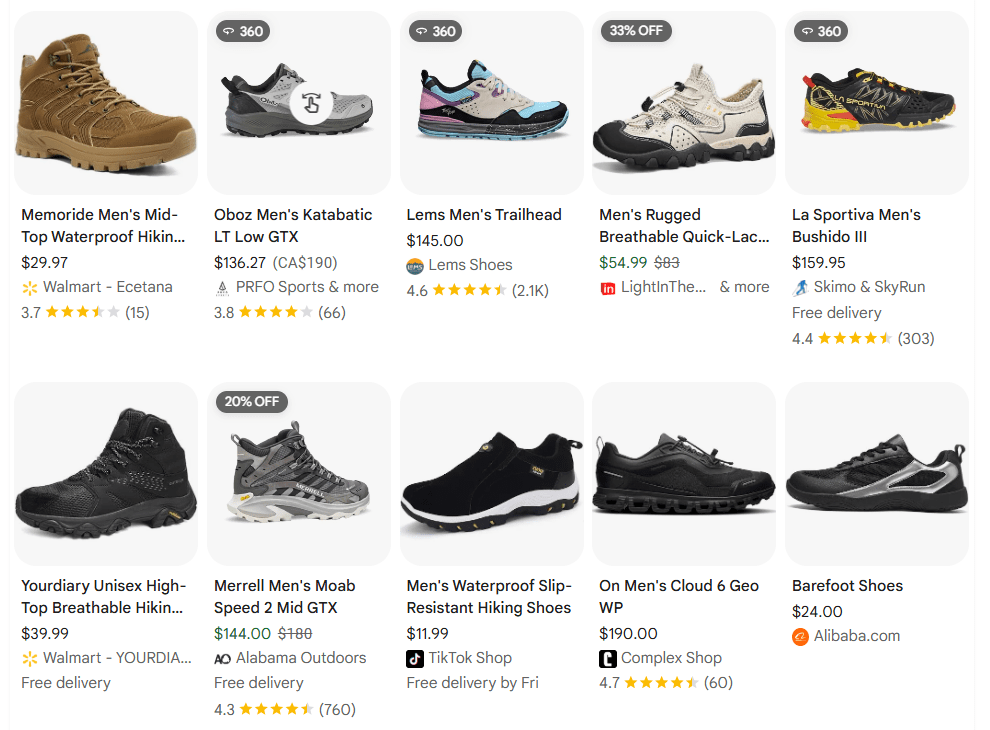
Hiking footwear attracts passionate outdoor communities with strong buying power and higher average order values, typically retailing between $80 and $120-plus.
These buyers are technically knowledgeable and demand proven durability, traction, and waterproofing, so weak products get returned.
7. Running Shoes
- Typical selling price: $65–$100
- Estimated COGS: $20–$32
- Estimated gross margin: 68%–72%
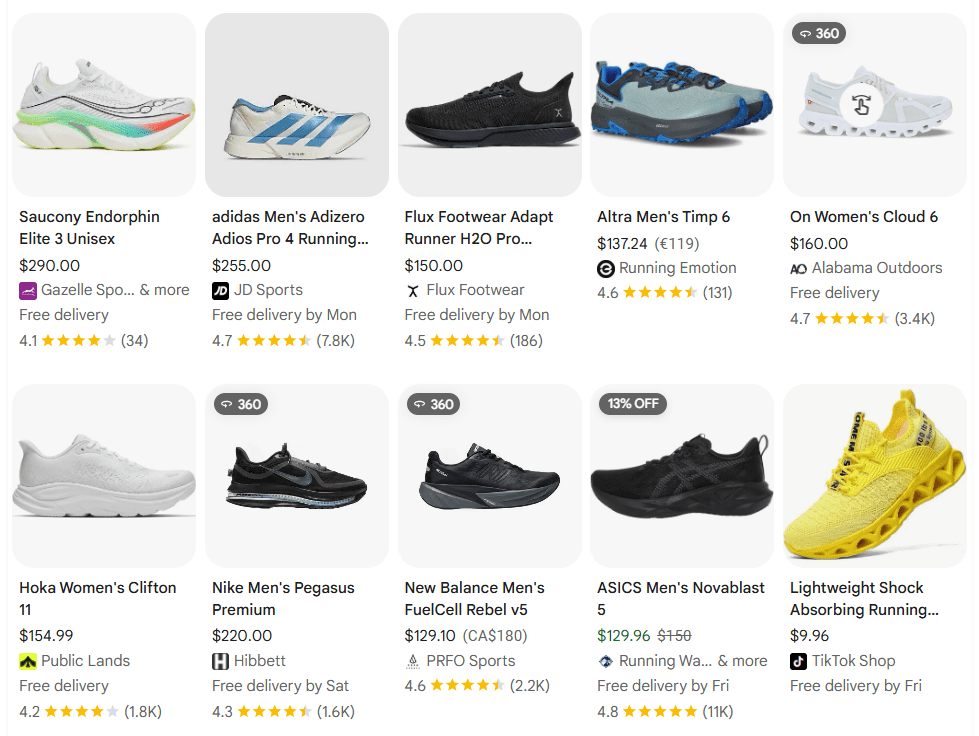
Running shoes see steady year-round demand from fitness buyers who pay a premium when marketing highlights energy return, breathability, or impact absorption.
Competition from Nike and Adidas is fierce, and strict fit expectations during high-impact use drive higher returns.
8. Fashion Shoes (Heels, Boots, Loafers)
- Typical selling price: $45–$90
- Estimated COGS: $12–$26
- Estimated gross margin: 71%–74%
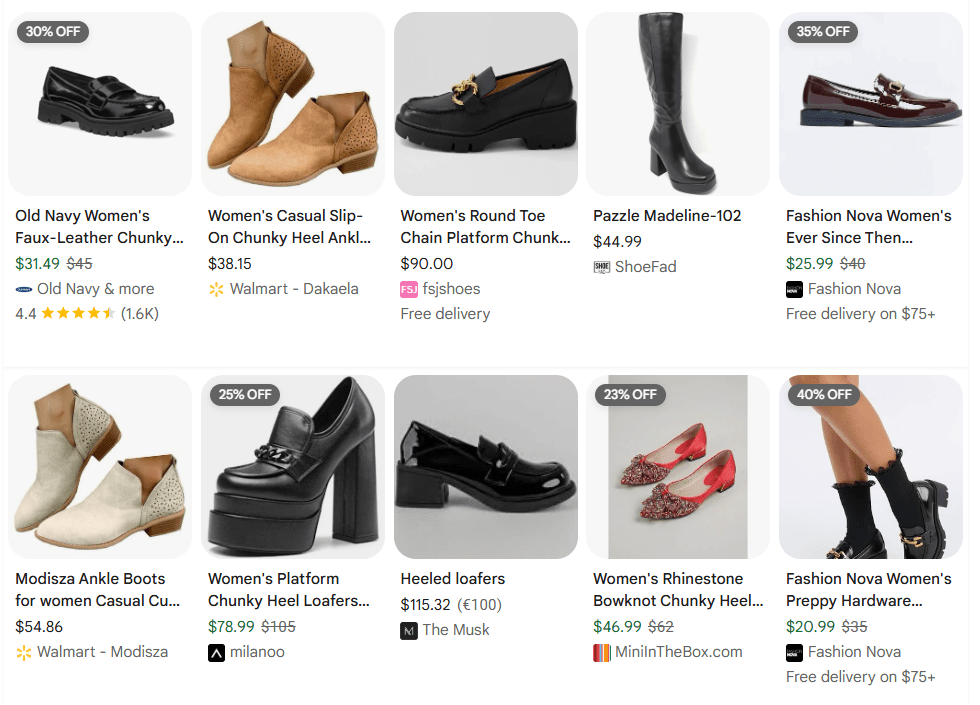
Fashion shoes suit boutique positioning and drive impulse buys on Instagram and Pinterest through strong imagery. The problem is the highest return rate in the category, often 30% or more, from tight sizing and comfort expectations.
Without a reliable local return-handling setup, those returns erase your profit.
Is Shoe Dropshipping Still Profitable in 2026?
Shoe dropshipping is profitable in 2026, but standard footwear is one of the toughest niches to win. The old model of shipping unbranded shoes from AliExpress or CJ Dropshipping is effectively unprofitable now, killed off by high ad costs, brutal competition, and heavy operational friction.
That said, specialized or "branded" footwear in the right sub-niche can still hit 15% to 20% net profit margin - a healthy one, as long as you manage returns and fulfillment tightly.
Here's the thing worth remembering: the footwear market itself is enormous. It was valued at around $476.8 billion in 2025 and is projected to grow to $496.2 billion in 2026, on its way past $675 billion by 2033. So demand was never the problem. Margin discipline is.
How Much Profit Can You Realistically Make Dropshipping Shoes?
A well-run shoe store can keep roughly 15% to 20% in net profit per order, but I want to be honest that this is the ideal, not the norm.
With marketing costs climbing year after year, most stores I see today land closer to 10% to 15% once all the ad spend is accounted for. The exact figure still swings hard depending on your niche and fulfillment model, but 10% to 15% is the range you should plan around, and treat anything above it as upside.
Here's a realistic breakdown for a single pair sold at a $70 retail price through a US warehouse supplier:
At $11.70 profit per order, the math gets more interesting once you look at monthly volume. 300 orders would put you at about $3,510 in net profit for the month. At 600 orders, that's $7,020. At 1,000 orders, you'd be looking at around $11,700.
But there's an important catch: that $11.70 isn't fixed. If ad costs go up or returns start eating into your margins, your profit per order can drop pretty quickly. For example, if it falls to $6 or $7, you're making almost half as much from the same 1,000 orders.
That's why I wouldn't look at order volume alone when estimating how much you can make with shoe dropshipping. Getting more orders only helps if you're still making enough on each one.
Returns are a big part of that calculation, and they're easy to underestimate. At an 18% return rate, almost one in five orders comes with some additional cost to deal with. Once you add reverse shipping, restocking, refunds, and other processing costs, a single return can cost 20% to 65% of the item's price.
So when you calculate your shoe store's profit, don't stop at product cost, shipping, and ad spend. Track what actually comes out of each order after returns and refunds, too. Otherwise, the margin you're looking at may be much higher than what you're really taking home.

How to Start a Shoe Dropshipping Business
Once you've settled on a niche, starting the actual business comes down to four moves: pick a specialized niche, secure fast suppliers, build a mobile-first store, and market with short-form video. Get step one right and dodge the commodity trap, and everything after it gets noticeably easier.
1. Pick a Specialized Niche
Whatever you do, don't sell general fashion sneakers where you're going head-to-head with the major brands. Focus on problem-solving or audience-specific footwear instead: orthopedic and wide-toe-box shoes, print-on-demand custom designs, safety and work boots, or forgiving-fit slides and mules. Specialization is what lets you price for value instead of racing everyone else to the bottom.
2. Select Reliable Suppliers
Use suppliers with US or EU warehouses like Trendsi or Spocket to cut delivery to 3-7 days. If you source overseas through CJ Dropshipping or a sourcing agent, order samples first to verify material quality, flexibility, and sizing accuracy before you spend on ads.
3. Build a High-Converting Shopify Store
Design mobile-first, since the large majority of footwear purchases start on phones. Show high-resolution close-ups of treads, stitch quality, and interior cushioning, and publish a clear, country-specific size chart to head off the returns that sizing confusion causes.
I recommend Shopify for most shoe dropshipping stores because it's relatively easy to set up, works with a wide range of dropshipping and print-on-demand apps, and gives you plenty of room to scale as your catalog and order volume grow. You can also choose another ecommerce platform, such as WooCommerce or BigCommerce, if you need more control over your store's setup.
4. Deploy Short-Form Video Marketing
Run ads on TikTok, Instagram Reels, and YouTube Shorts. Show the problem-solving feature in motion: roll the sole to prove flexibility, demonstrate foot alignment, or show water beading off the upper. Motion sells shoes far better than static product shots.
How to Stop Shoe Returns From Killing Your Profit
The single highest-impact lever is attacking sizing confusion before the sale, because size and fit issues cause roughly 45% of all returns. Footwear returns average around 18%, climbing past 30% in fashion sub-niches, and each one can cost 20% to 65% of the item price to process. Shave even a few points off that rate and the savings flow straight to net profit.
Fix Sizing Before Checkout
Publish detailed, brand-specific size charts with measurements in centimeters and multiple country conversions. Add fit notes ("runs half a size small") pulled from real customer feedback. A short pre-purchase size quiz or a simple foot-measuring guide removes most sizing guesswork, which is where returns start.
Choose Low-Return Product Types
Not all footwear returns equally. Open designs like sandals and slides keep size-related returns under 5%, while tight-fitting heels and boots run the highest. Weighting your catalog toward forgiving-fit styles structurally lowers your return rate before you optimize anything else.
Use Regional Fulfillment
Fast, local delivery reduces both chargebacks and buyer's-remorse returns. Suppliers with US or EU warehouses deliver in 3-7 days and handle returns domestically, which is far cheaper and faster than routing a return back overseas.
How To Measure Your Store P&L?
Whatever supplier and niche you land on, don't try to track profit by hand. Spreadsheets are where good shoe stores probably go to die: you forget to log a cost, miscalculate a return, or realize the ad-spend figure you pasted in last week is already out of date. And with footwear, the numbers move too fast and the return costs bite too hard for a manual sheet to keep up.
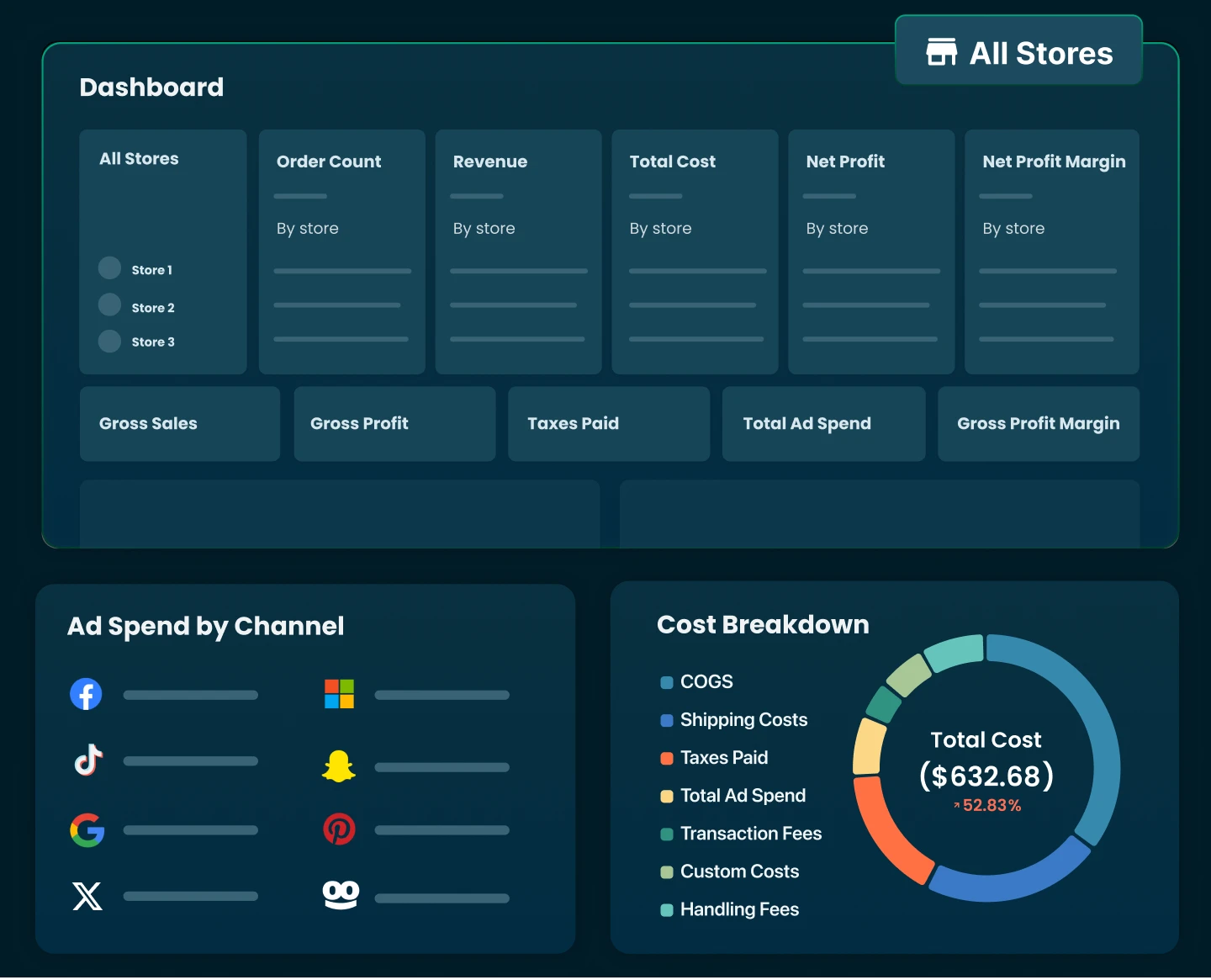
This is where I'd point every seller to TrueProfit. It plugs straight into Shopify, your ad platforms (Meta, TikTok, Google), payment processors, and your other business apps, then pulls product cost, shipping, transaction fees, ad spend, and refunds together into one real-time net profit figure, accurate down to the order. No manual entry, no formula errors, no stale numbers.
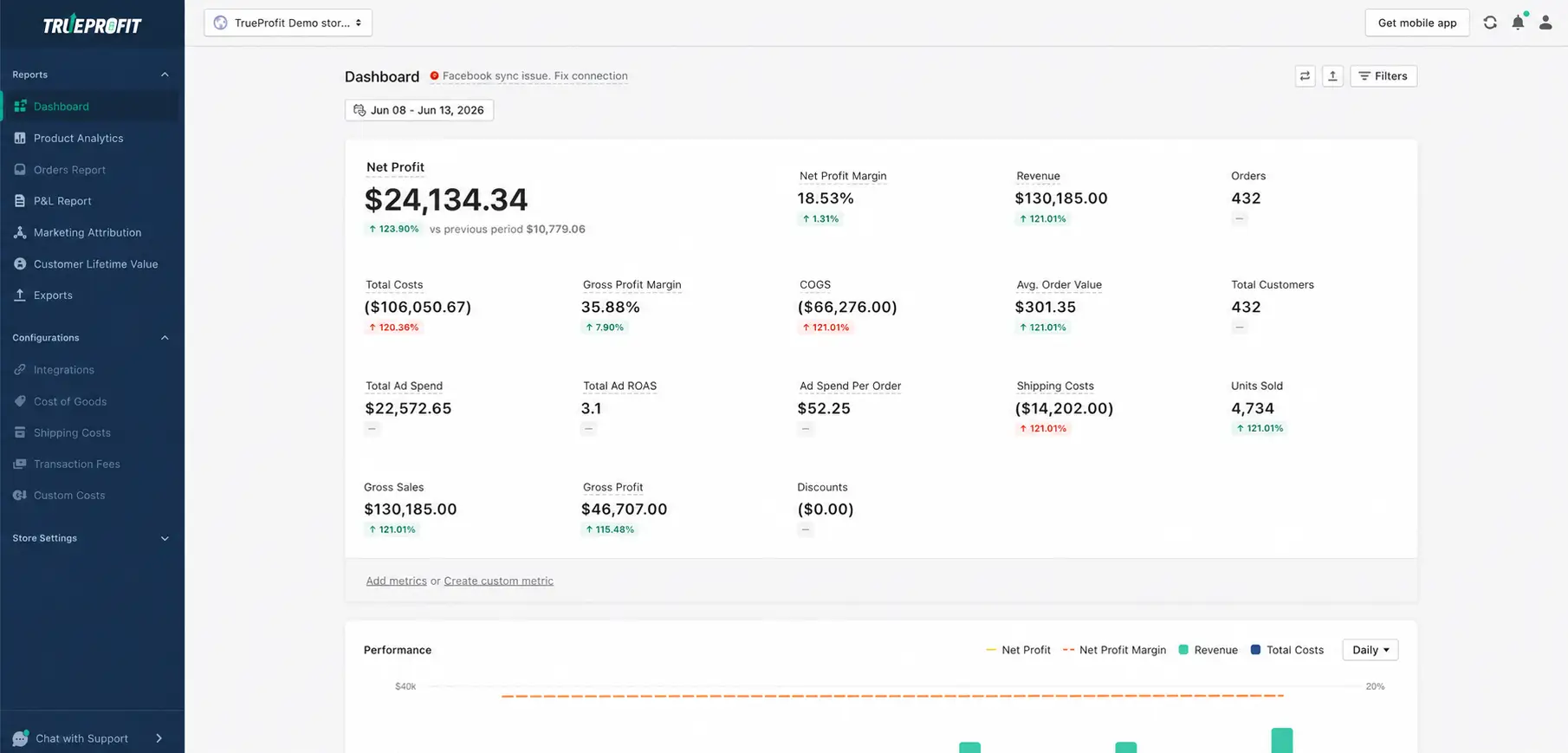
What makes TrueProfit different from basic profit trackers is how deeply it handles your costs:
- Advanced Cost Tracking: Track COGS, shipping, payment processing fees, transaction fees, ad spend, refunds, chargebacks, taxes, and custom costs in one place. You can also create custom cost rules and metrics to match the way your shoe business actually operates.
- Real-Time Net Profit: See your true profit after all those costs, rather than relying on revenue or ROAS to tell you how the store is doing.
- Product-Level Profitability: Break down profit by product, variant, SKU, and order to see which shoes are genuinely worth scaling.
- Ad Profitability Tracking: Connect Meta, TikTok, Google, and other ad channels to see how much profit each campaign actually generates after product and operating costs.
- Automated P&L Reporting: Keep your profit and loss data updated automatically instead of manually combining numbers from Shopify, ad dashboards, payment processors, and spreadsheets.
For a shoe store specifically, that's the difference between guessing and knowing. You can see exactly which products, sizes, colorways, and campaigns still make money after returns and every relevant cost, then cut the ones quietly draining your margin. When footwear returns can take a serious bite out of profitability, that level of cost visibility is what separates scaling a winner from scaling a loss.
For a shoe store specifically, that's the difference between guessing and knowing. You can see exactly which sizes, colorways, and campaigns actually make money after returns, and cut the ones quietly draining your margin. When nearly one in five orders can come back, that clarity is what separates scaling a winner from scaling a loss.
Final Thoughts
Dropshipping shoes can still be a profitable business in 2026, but the days of simply listing generic shoes and waiting for sales are long gone. The better approach is to choose a focused niche, work with a supplier you can rely on, and offer products with enough perceived value to support your costs.
Just as importantly, keep a close eye on what happens after the sale. Shipping fees, returns, refunds, and ad spend can quickly turn a good-looking order into an unprofitable one. Track your real net profit by product and order, double down on the shoes that consistently make money, and cut the ones that don't. That's how you build a shoe dropshipping store that can actually scale.

Rosie Doan is a Senior Content Specialist at TrueProfit with over 4 years of experience creating content for the ecommerce and SaaS industry. Having worked closely with Shopify merchants and ecommerce businesses, she has developed a deep understanding of the challenges store owners face, from growing revenue and acquiring customers to tracking performance, managing costs, and improving profitability.