Dropshipping Fitness Products in 2026: Best Items, Suppliers, and Profit Strategy


Table of Contents
- 1. The Profit Potential of Fitness Dropshipping in 2026
- 2. Best Fitness Products to Dropship in 2026: Profit Breakdown
- 3. Best Fitness Dropshipping Suppliers in 2026
- 4. What Do Buyers Want in Fitness Products?
- 5. How to Build a Profitable Fitness Dropshipping Brand
- 6. Common Fitness Dropshipping Mistakes to Avoid
- 7. Final Thoughts
- 8. Frequently Asked Questions
Dropshipping fitness products is a business model where you sell fitness gear online without buying or storing inventory yourself. With home fitness and smart recovery gear driving demand, the niche offers plenty of opportunities for high-margin products.
In this guide I'll walk through what actually sells, where to source it, what buyers are really searching for, and how to build a fitness store that keeps the profit instead of handing it all to ad platforms and shipping carriers.
In this blog:
- 1. The Profit Potential of Fitness Dropshipping in 2026
- 2. Best Fitness Products to Dropship in 2026: Profit Breakdown
- 3. Best Fitness Dropshipping Suppliers in 2026
- 4. What Do Buyers Want in Fitness Products?
- 5. How to Build a Profitable Fitness Dropshipping Brand
- 6. Common Fitness Dropshipping Mistakes to Avoid
- 7. Final Thoughts
- 8. Frequently Asked Questions
The Profit Potential of Fitness Dropshipping in 2026
Fitness remains an attractive dropshipping niche because customers buy across multiple categories, from strength and cardio equipment to recovery and wellness accessories. However, profitability varies significantly from one product to another.
Let me break down why the opportunity holds up, and where it doesn't.
The market is large and still growing
The global fitness equipment market is projected to reach $19.13 billion in 2026 and climb to $30.22 billion by 2034, driven by home workouts, connected devices, and rising health awareness. What matters more for a dropshipper is who's buying: home consumers, not commercial gyms, now account for more than half of that demand.
That's exactly the crowd a small online store can reach without competing for gym contracts. And since North America makes up roughly 40% of the market, a US-focused store is aiming at the biggest slice from day one.
The margins are the real story
Here's where I want to slow down, because this is the part most "start a fitness store" guides skip.
Across dropshipping as a whole, average profit margins land between 10% and 20%, with beginners usually stuck under 15% and stronger operators pushing toward 20%. Fitness accessories sit on the higher end of that range because the perceived value is high relative to cost. A $3 resistance band can retail for $25 and still feel fair to the buyer.
But gross margin is a flattering number. Net margin is what actually pays you. Once you subtract product cost, shipping, payment fees, and ad spend, a product that looks like it has a 70% gross margin can net you single digits if your ads run hot.
This gap between "looks profitable" and "is profitable" is the single biggest reason fitness stores fail, so it's worth building your whole store around avoiding it.

Best Fitness Products to Dropship in 2026: Profit Breakdown
If you’re looking for fitness products to add to your store, these ten are worth a closer look.
1. Resistance Bands

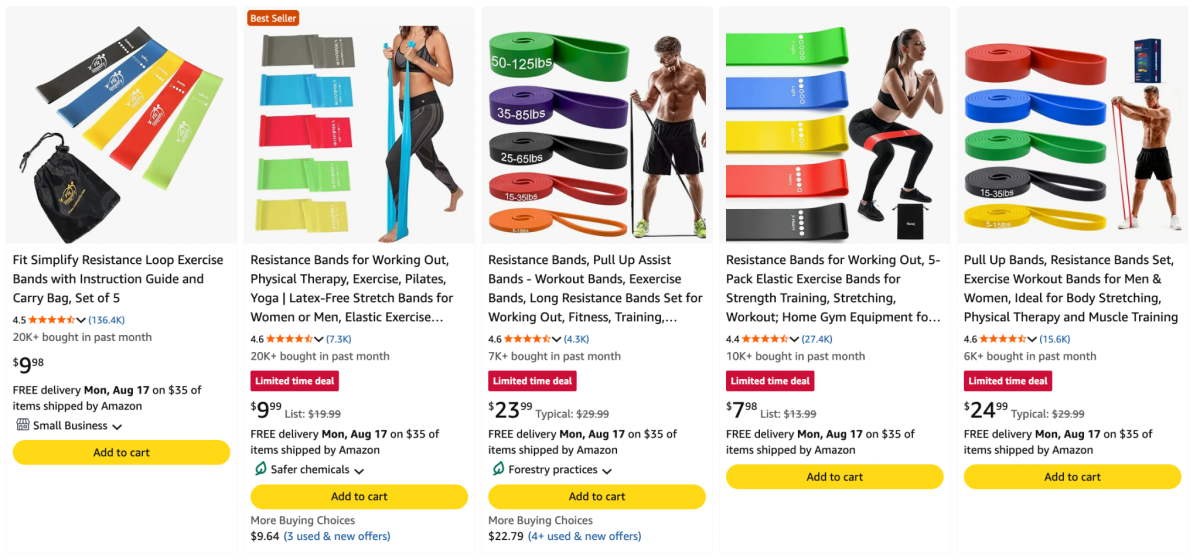
If I could only pick one product for a first-time fitness dropshipper, it'd be resistance bands. They're lightweight, compact, and versatile enough to cover home workouts, strength training, and mobility work, which means a single product speaks to several audiences at once.
- Selling price: $15-$40
- Estimated COGS: $2-$8
- Margin potential: 60-80%
- Shipping difficulty: Easy
- Best audience: Home workout beginners, women focused on glute training, travelers, and general fitness beginners
Area to win: Don't go head-to-head with generic bands on price, because that's a race to the bottom you can't win. Sell goal-based bundles instead, like glute sets, full-body resistance kits, or beginner workout packs, then add a simple workout guide to lift perceived value without adding much to your cost.
2. Adjustable Hand Grippers
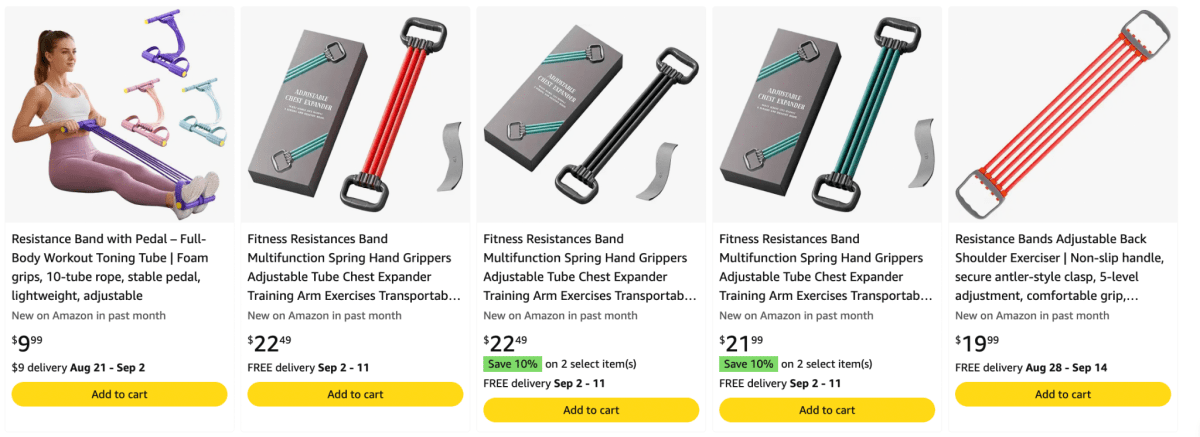
Adjustable hand grippers are a smart pick when you want something smaller and more specialized. They're cheap to ship and they speak directly to people chasing better grip and forearm strength.
- Selling price: $12-$25
- Estimated COGS: $3-$6
- Margin potential: 55-75%
- Shipping difficulty: Easy
- Best audience: Climbers, weightlifters, athletes, and people training grip strength
Area to win: Niche down around a goal rather than marketing "another hand exerciser." Position it for climbing grip, stronger forearms, or at-home strength work, and lean on the adjustable resistance as an easy edge over basic fixed-resistance models.
3. Jump Ropes
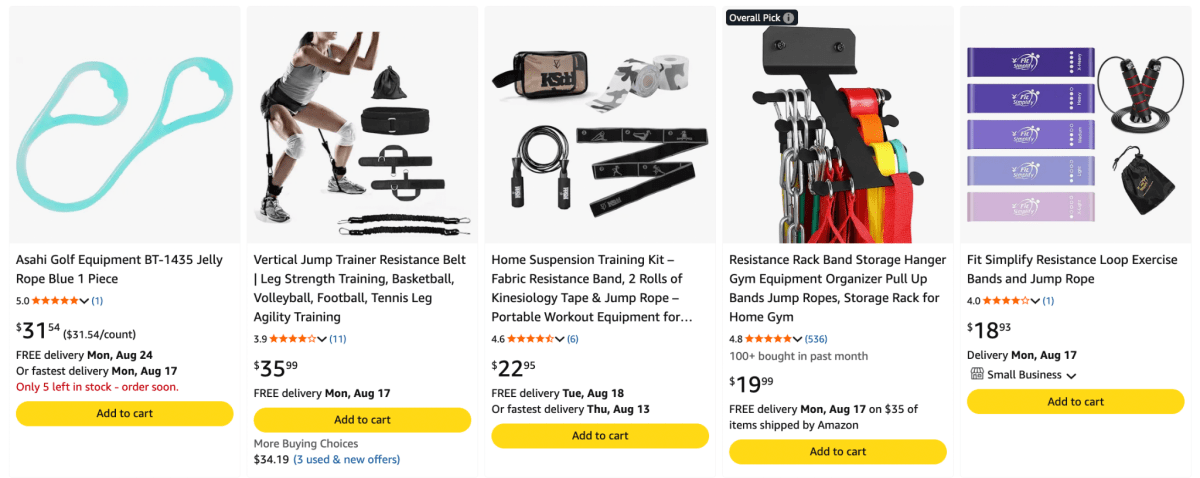
Jump ropes tick every dropshipping box. They're small, cheap to source, and they film beautifully in short-form content, which is half the battle in this niche.
- Selling price: $12-$30
- Estimated COGS: $2-$7
- Margin potential: 60-80%
- Shipping difficulty: Easy
- Best audience: HIIT enthusiasts, boxers, CrossFit users, beginners, and home workout customers
Area to win: Steer clear of the plain generic rope. Differentiate with weighted ropes, speed ropes, adjustable designs, or beginner bundles, then package the rope with a jump-rope challenge to make the whole offer feel more valuable.
4. Yoga Mats
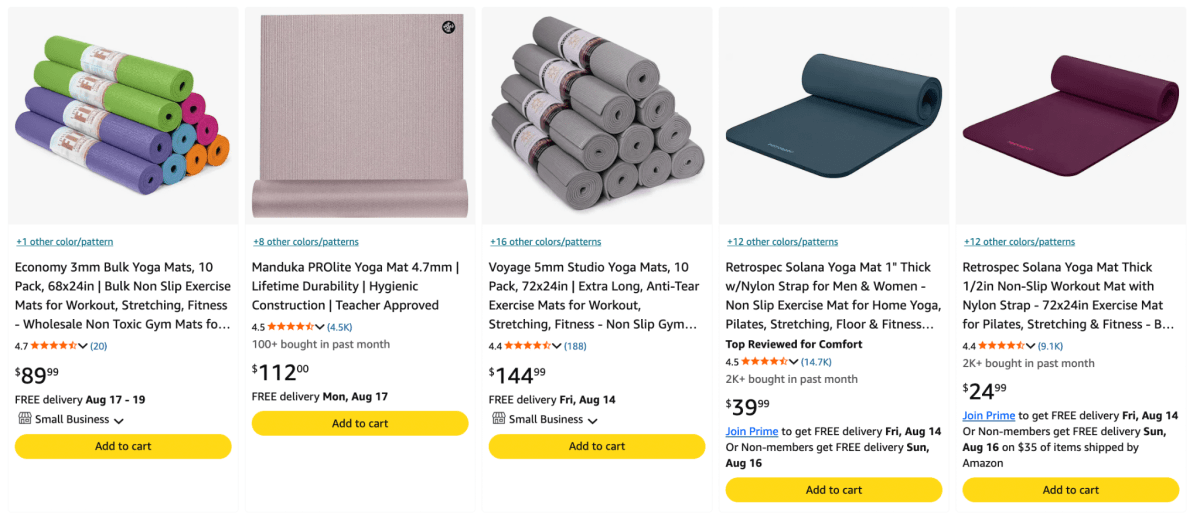
Yoga mats can carry a higher price tag than most small accessories, but there's a catch: they're bulkier and heavier, so fulfillment gets trickier.
- Selling price: $25-$70+
- Estimated COGS: $5-$20
- Margin potential: 50-70%
- Shipping difficulty: Medium
- Best audience: Yoga practitioners, Pilates users, beginners, and wellness-focused shoppers
Area to win: Go premium here. Lean into extra cushioning, non-slip surfaces, eco-friendly materials, travel-friendly designs, or a distinctive look rather than fighting over cheap mats, and make sure your price accounts for shipping so the bulk doesn't quietly erode your margin.
5. Foam Rollers
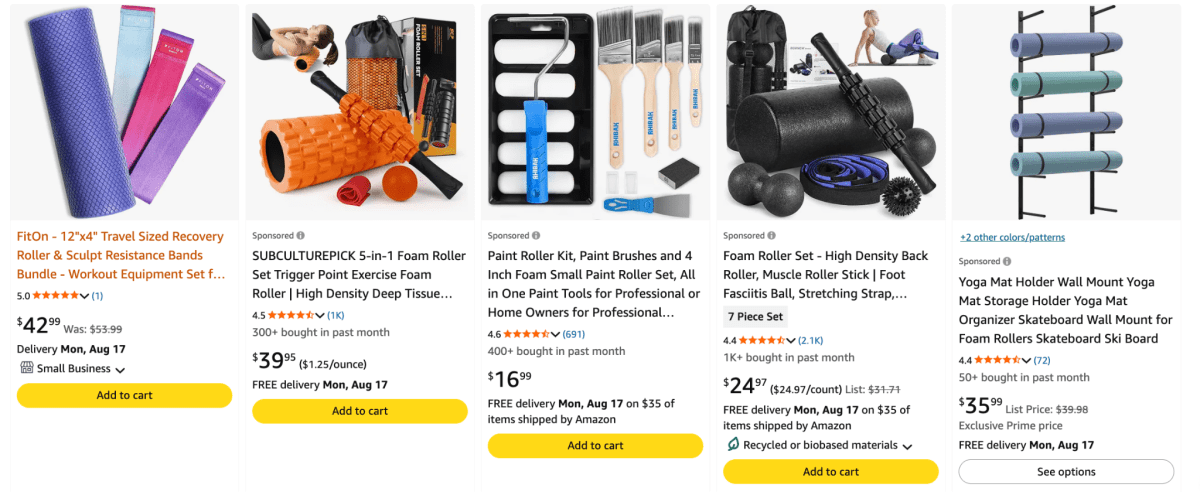
Foam rollers slot naturally into both home gyms and post-workout routines, which makes them a great anchor product if you're building a recovery-focused store.
- Selling price: $20-$50
- Estimated COGS: $6-$15
- Margin potential: 50-70%
- Shipping difficulty: Medium
- Best audience: Runners, gym-goers, athletes, and recovery-minded customers
Area to win: Tie the roller to a specific need rather than selling it generically, whether that's muscle recovery, back mobility, deep-tissue relief, or post-workout soreness. Bundling it with a set of massage balls is an easy way to lift average order value without chasing a whole new customer.
6. Massage Balls
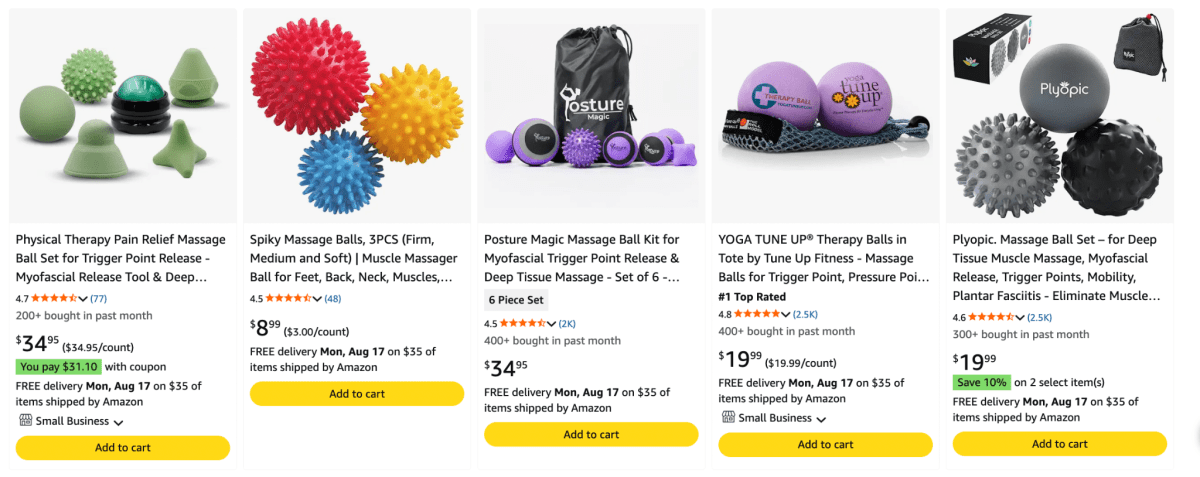
Massage balls are one of the easiest recovery products to dropship because they're small, lightweight, and inexpensive to fulfill. They also work well as an add-on alongside foam rollers and other mobility gear.
- Selling price: $12-$30
- Estimated COGS: $2-$7
- Margin potential: 60-80%
- Shipping difficulty: Easy
- Best audience: Runners, athletes, gym-goers, and people with active lifestyles
Area to win: Sell the use case, not just the product. Target muscle recovery, foot relief, mobility, or post-workout relief, then bundle massage balls with foam rollers or stretching accessories to push order value higher.
7. Ab Rollers
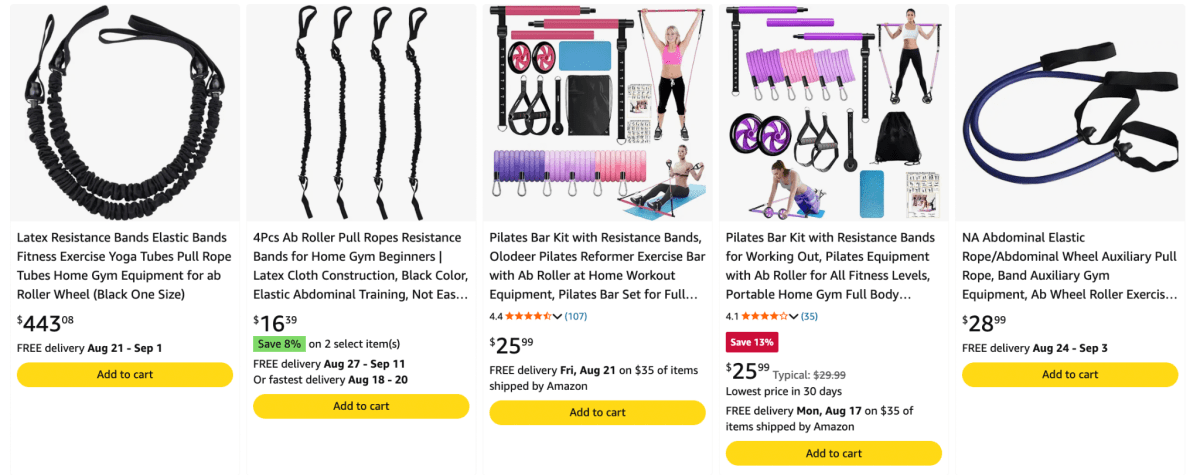
Ab rollers are cheap, compact, and easy to show off in a 15-second clip, which makes them a natural fit for social-first marketing. The use case is obvious, so you don't have to work hard to explain what they do.
- Selling price: $15-$35
- Estimated COGS: $4-$10
- Margin potential: 55-75%
- Shipping difficulty: Easy
- Best audience: Home gym users, beginners, and core-training enthusiasts
Area to win: Sell stability and progression, not just "an ab roller." Wider wheels, ergonomic handles, included knee pads, and beginner-friendly designs give you real angles and help justify a higher price.
8. Workout Gloves
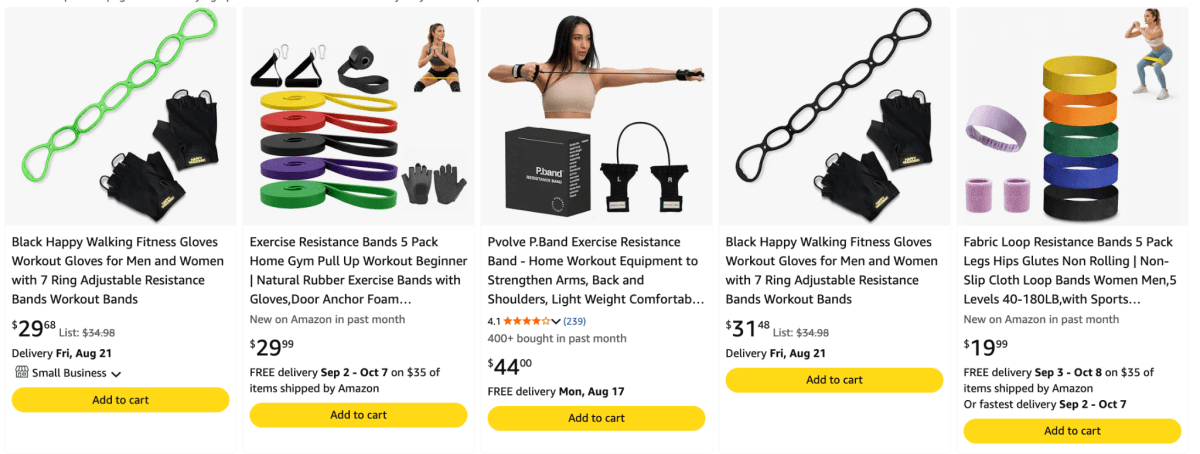
Workout gloves have one of the broadest audiences on this list, from someone's first day at the gym to seasoned lifters. They're light, cheap to ship, and they bundle nicely with other strength gear.
- Selling price: $15-$35
- Estimated COGS: $4-$10
- Margin potential: 55-75%
- Shipping difficulty: Easy
- Best audience: Weightlifters, CrossFit users, gym beginners, and strength-training enthusiasts
Area to win: Skip the price war with generic gym gloves. Differentiate on grip, wrist support, breathable materials, or a specific lifting style, and pair gloves with lifting straps or wrist wraps to turn a small purchase into a fuller strength-training offer.
9. Lifting Straps
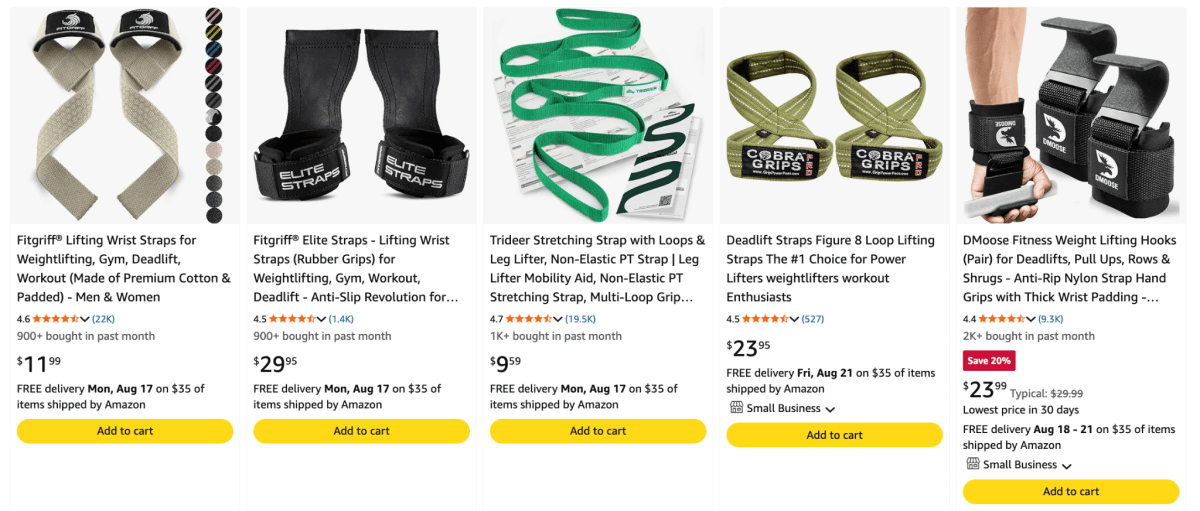
Lifting straps are tiny, but the audience is sharp and motivated. They help lifters hold onto the bar during heavy pulls, and the low COGS makes them genuinely attractive for dropshipping.
- Selling price: $12-$25
- Estimated COGS: $2-$6
- Margin potential: 60-80%
- Shipping difficulty: Easy
- Best audience: Bodybuilders, powerlifters, weightlifters, and serious gym-goers
Area to win: Aim at committed lifters, not casual exercisers. Heavy-duty materials, padded wrist support, and durable stitching let you frame the product as a performance accessory instead of a throwaway gym add-on, which is exactly what this audience will pay for.
10. Push-Up Boards
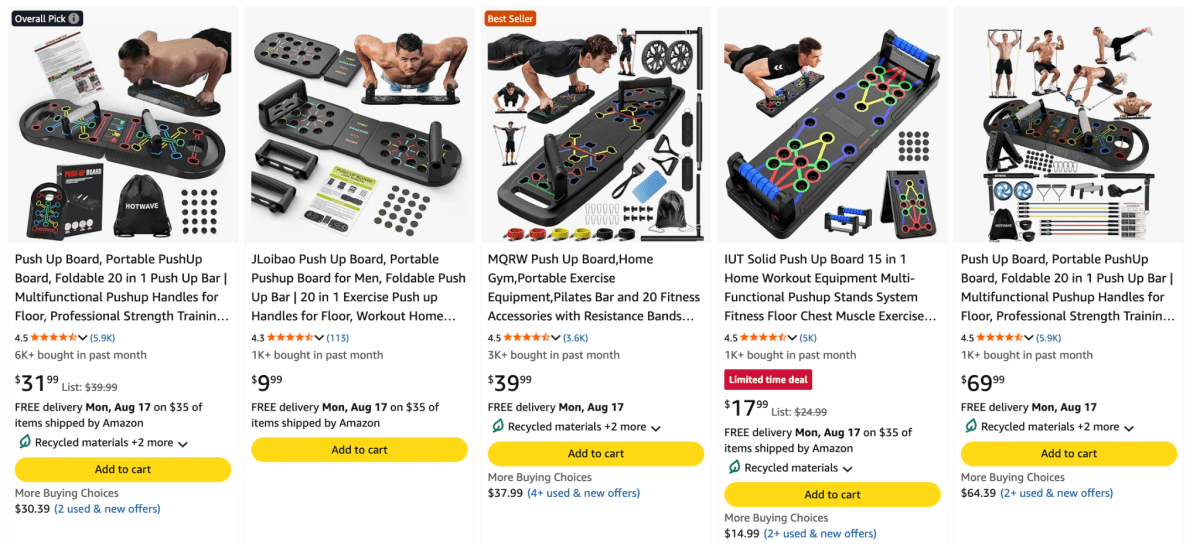
Push-up boards take a basic bodyweight move and turn it into a structured routine, which appeals to people who want a bit of equipment without building a full home gym. They're also visually satisfying, so they do well on social media.
- Selling price: $20-$45
- Estimated COGS: $7-$15
- Margin potential: 50-70%
- Shipping difficulty: Easy-Medium
- Best audience: Home workout beginners, bodyweight-training enthusiasts, and apartment dwellers
Area to win: Lean into adjustable designs that let users hit different muscle groups. Position the board around convenient home strength training rather than "just another push-up accessory," and the value proposition writes itself.
Best Fitness Dropshipping Suppliers in 2026
Here's how the main options stack up.
1. CJdropshipping: Best Overall for Fitness Products
CJdropshipping is where I'd point most people starting out, mainly because its catalog is broad enough to cover almost anything fitness-related, from resistance bands and jump ropes to massage guns and larger home gym gear. On top of that, it handles sourcing, fulfillment, and the integrations that keep a Shopify store running smoothly.
- Best for: Overall fitness product selection and flexible sourcing
- Product range: Resistance bands, fitness accessories, recovery products, home gym equipment, and more
- Fulfillment: Global warehouses and multiple shipping options
- Integrations: Shopify, WooCommerce, Etsy, and others
- MOQ: Low or no MOQ for many dropshipping products
Why choose it: The real draw is that it lets you test several products before committing. You can start light with bands or ropes, see what gains traction, then expand into bigger equipment once you've found a winner.
2. Spocket: Best for US & EU Suppliers
When delivery speed matters more than shaving every cent off your product cost, Spocket is the one to reach for. Its network leans heavily on US and EU suppliers, which enables 2 to 5 day delivery instead of the multi-week waits you get from overseas sourcing.
- Best for: US/EU fitness stores and faster shipping
- Product range: Fitness accessories, wellness products, and home workout gear
- Fulfillment: Primarily US/EU supplier network, 2 to 5 day delivery
- Integrations: Shopify, WooCommerce, Wix, BigCommerce, Amazon, eBay, and others
- MOQ: Generally no minimum order requirement
Why choose it: It's a natural fit if you're building a premium fitness brand where fast, reliable shipping is part of the promise. The US/EU network also makes fulfillment far more predictable than leaning entirely on overseas suppliers.
3. DSers: Best for AliExpress Product Testing
If you want to test a lot of ideas cheaply, DSers opens the door to the enormous AliExpress supplier pool. It isn't a supplier itself; think of it as the layer that automates product importing, order processing, and supplier management on top of AliExpress.
- Best for: Beginners and low-cost product testing
- Product range: Virtually every type of fitness accessory
- Fulfillment: AliExpress suppliers
- Integrations: Shopify, WooCommerce, Wix, and TikTok Shop
- MOQ: Often zero
Why choose it: The upside is huge variety and almost no upfront risk, so you can trial several products without buying inventory. Just know that quality and shipping times swing a lot between suppliers, so sample orders and careful vetting are non-negotiable before you scale.
4. Syncee: Best for Multi-Market Supplier Sourcing
Syncee comes into its own when you'd rather pull from a wide network of suppliers than lean on a single marketplace. It spans vendors across multiple countries and supports several major platforms.
- Best for: Stores looking for multiple regional suppliers
- Product range: Fitness equipment, accessories, wellness products, and more
- Fulfillment: Suppliers across multiple regions
- Integrations: Shopify, WooCommerce, Wix, BigCommerce, and others
- MOQ: Depends on the individual supplier
Why choose it: It's the better call when your priority is finding local or regional suppliers and cutting your dependence on one fulfillment source, which becomes especially useful once you're selling into more than one market.
5. AutoDS: Best for Automation
AutoDS is less a fitness supplier and more an automation layer, but that's exactly why it earns a spot here. It automates sourcing, inventory monitoring, pricing, and fulfillment across multiple supplier sources.
- Best for: Automated product testing and fulfillment
- Product range: Fitness products across multiple supplier sources
- Fulfillment: Depends on the selected supplier
- Integrations: Shopify and other major ecommerce platforms
- MOQ: Depends on supplier
Why choose it: If you're juggling a large number of products, the automation saves a ton of time. The one thing to keep in mind is that it doesn't fix a bad supplier, so you still need to check the actual vendor behind each product.
6. Printful: Best for Custom Fitness Apparel
If your ambition is a fitness brand rather than a product store, Printful is worth adding to the mix for custom apparel and accessories. Its print-on-demand model lets you sell branded workout clothing without ever holding stock.
- Best for: Fitness apparel and branded accessories
- Product range: Workout shirts, leggings, hoodies, accessories, and other customizable products
- Fulfillment: Print-on-demand
- Integrations: Shopify, WooCommerce, Etsy, and other major platforms
- MOQ: No inventory minimum for standard POD
Why choose it: It works best as a complement rather than a core supplier. Picture sourcing resistance bands from a fitness supplier while using Printful for branded shirts, so you end up with a fuller brand without the inventory headache.
What Do Buyers Want in Fitness Products?
Not everyone searching for fitness products to dropship is after the same thing, and that's easy to forget when you're deep in product research. Some want cheap items to test quickly, others are hunting for products that can anchor a long-term brand.
The more precisely you match your store to one of these intents, the easier your products are to market and the more of your orders actually turn a profit.
Here are the five intents I see come up most.
1. Problem-solving fitness products
Another strong intent is the search for a product that fixes a specific problem rather than a generic accessory. When customers are chasing better grip strength, faster recovery, a workable home routine, or improved mobility, products like adjustable grippers, foam rollers, ab rollers, and massage balls become easy to position around that exact need.
Best angle: sell the outcome, not the object. A "grip strength trainer" pulls far more weight than a "hand gripper," even when it's the same product.
2. Home gym and space-saving products
Home fitness has stayed at a dependable angle because so many people want to train without kitting out a full gym. Resistance bands, doorway pull-up bars, push-up boards, and compact weights all slot neatly into this intent.
Best angle: frame products around small-space workouts, apartment gyms, or low-equipment training. Bundles work especially well here, turning a handful of cheap items into a higher-value home workout kit.
3. Premium fitness and wellness products
Not everyone is hunting for the cheapest option, and that's good news for your margins. A meaningful slice of buyers will happily pay more for gear that looks better, feels better, or fits a wider wellness lifestyle, which is where yoga mats, premium recovery tools, weighted accessories, and well-designed products shine.
Best angle: compete on quality, design, materials, and brand experience instead of price. That's what gives you the room to build something recognizable and protect what you earn on each sale.
4. Products for specific fitness niches
To me, this is the biggest opportunity of the five. Instead of trying to sell to everyone who works out, you build the whole offer around one group:
- Runners: recovery balls, foam rollers, compression accessories
- Bodybuilders: lifting straps, workout gloves, grip trainers
- Yoga and Pilates users: yoga mats, resistance bands, ankle weights
- Home workout users: push-up boards, ab rollers, resistance bands
- Boxers and HIIT users: jump ropes, hand grippers, weighted ropes
Best angle: the narrower the audience, the easier every product page, bundle, and ad becomes to write, because you're speaking to one person instead of shouting into the crowded "fitness equipment" market.

How to Build a Profitable Fitness Dropshipping Brand
Selling fitness products is the easy part. Building a fitness brand that customers trust and come back to is where the real work lives. The aim isn't to cram your store with dozens of gym products, it's to build a clear offer around a specific audience and a specific goal. Here's how I'd approach it.
1. Choose a specific fitness niche
Resist the urge to sell everything from yoga mats to heavy racks on launch day. Start with one audience or use case, whether that's home workouts, strength training, yoga, recovery, or running.
A focused niche makes every downstream decision easier, from choosing products to creating content to building an identity people recognize.
2. Build the store around the customer, not the product
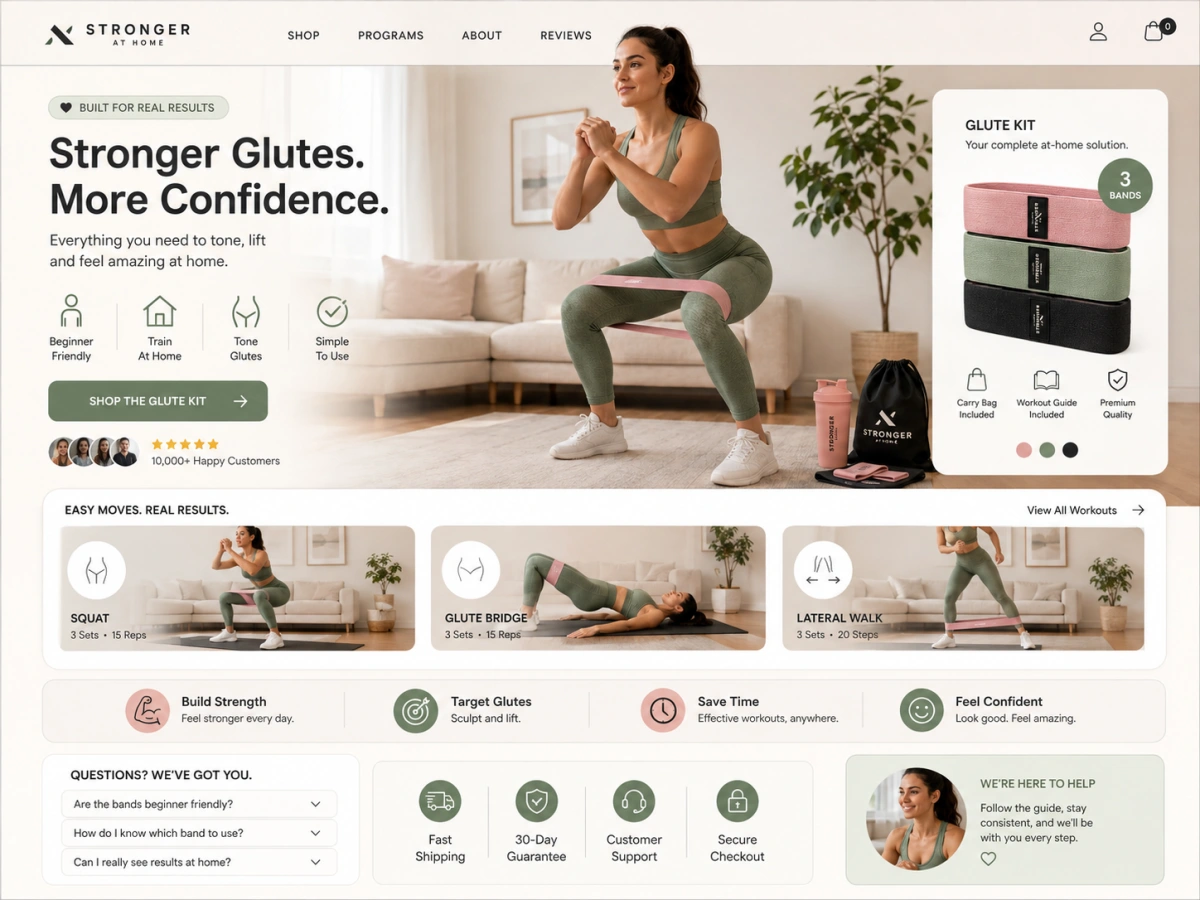
Your store should make it instantly obvious who your products are for and what they help someone achieve. Rather than listing "Resistance Bands" and leaving it there, position them as part of a home glute workout kit or a beginner strength program.
Clear benefits, workout demonstrations, honest FAQs, and simple usage guidance all chip away at the hesitation that kills conversions.
3. Create bundles to increase AOV
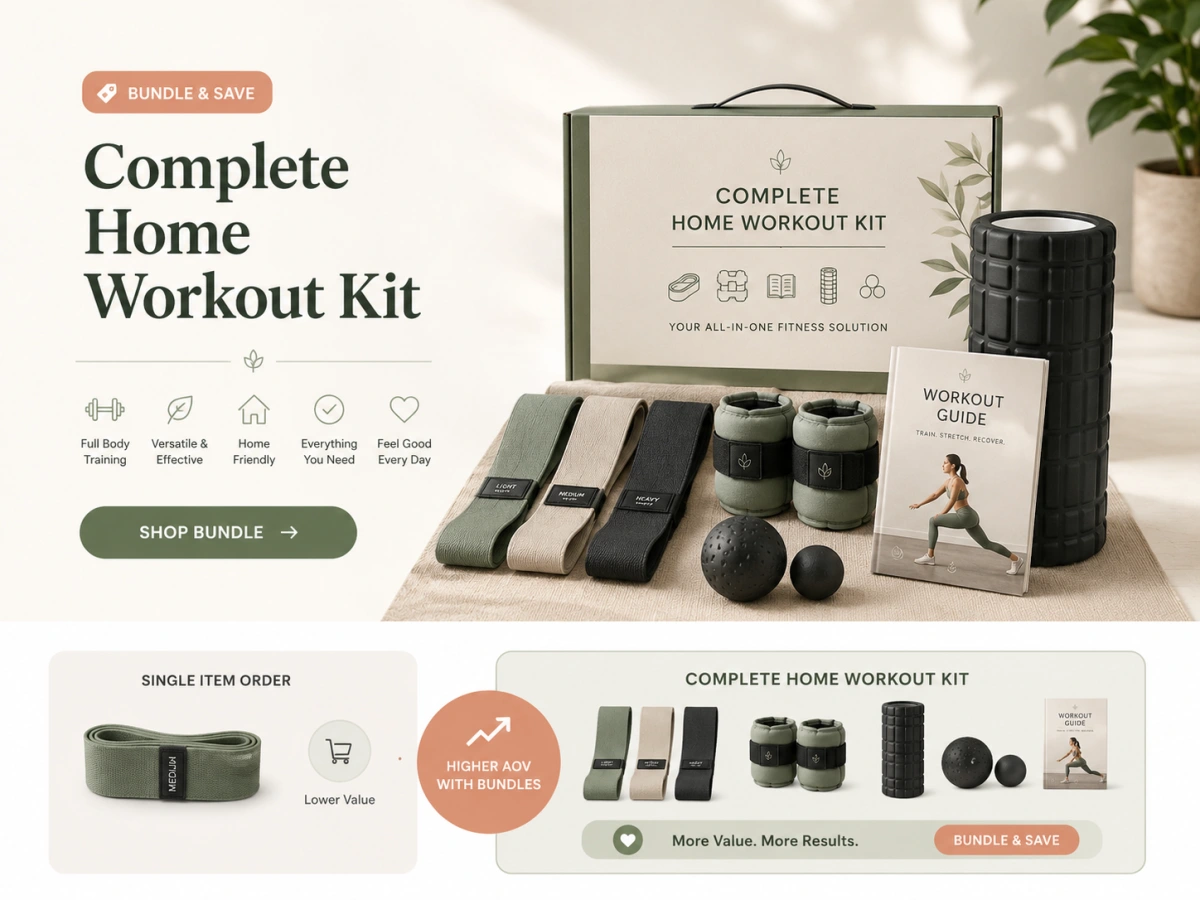
Fitness products are practically begging to be bundled. Instead of relying on single-item orders, group complementary products into one offer, like resistance bands with ankle weights and a workout guide, or a foam roller paired with massage balls.
Done well, bundles lift your average order value and hand the customer a more complete solution at the same time.
4. Use short-form content to demonstrate products
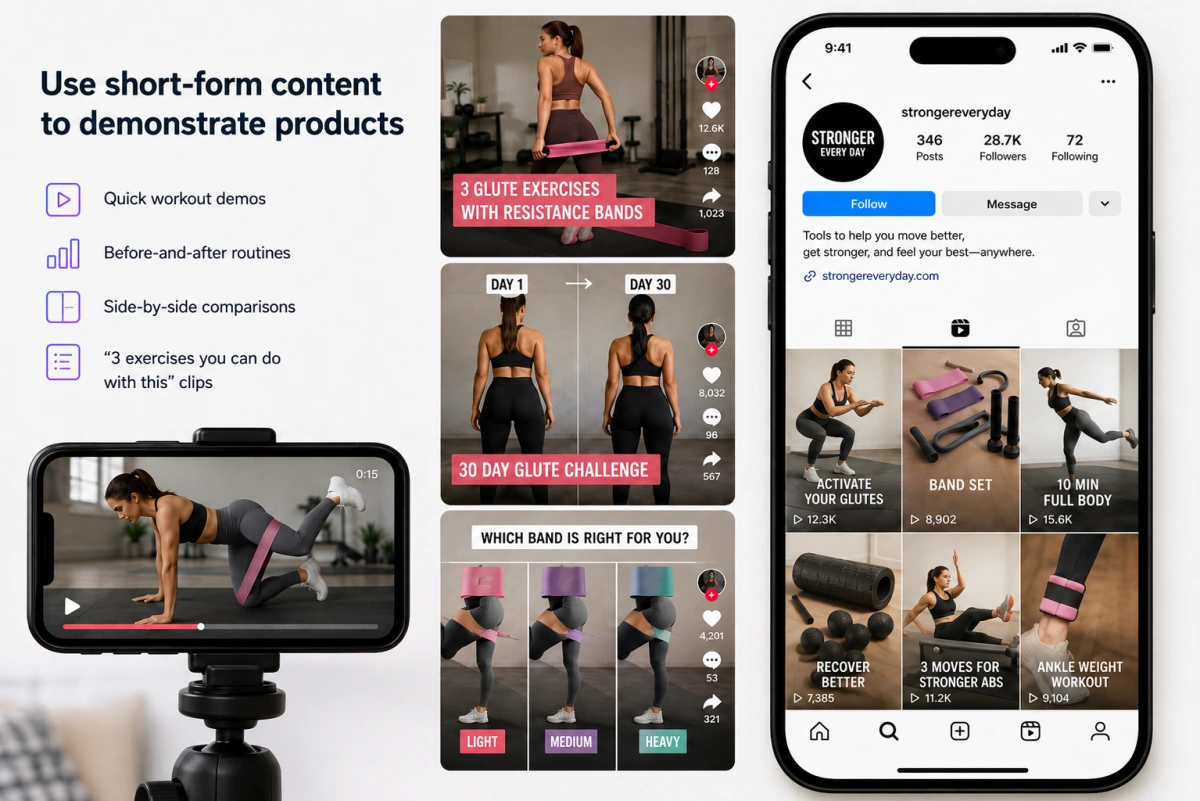
Fitness is inherently visual, which is a gift for anyone marketing on TikTok, Instagram Reels, or YouTube Shorts. Show the product in action rather than leaning on polished studio shots. Quick workout demos, before-and-after routines, side-by-side comparisons, and "3 exercises you can do with this" clips all do the heavy lifting of turning attention into clicks.
5. Scale with true profit data, not just revenue or ROAS
So what does this actually mean in practice? It means looking past the revenue on your dashboard, whether that's total store revenue or the sales on a single order or product, and tracking the handful of metrics that tell you whether the money is real.
This matters for everyone, but if you're just starting out I'd treat these numbers as non-negotiable, because they're the difference between confidently scaling a winner and pouring your budget into a product that only looks profitable.
Before you pour more budget into any product, keep a close eye on these numbers:
- Net profit: how much you actually keep after all costs
- Net profit margin: what percentage of revenue turns into profit
- COGS: how much each product costs you to fulfill
- MER: how much revenue your store generates for every dollar spent on ads
- Shipping and transaction fees: costs that can quietly eat into your margins
- Refunds and chargebacks: revenue you may have to give back
- Net profit by product: which products are actually worth scaling
- Net profit by marketing channel: which channels generate profitable customers, not just sales
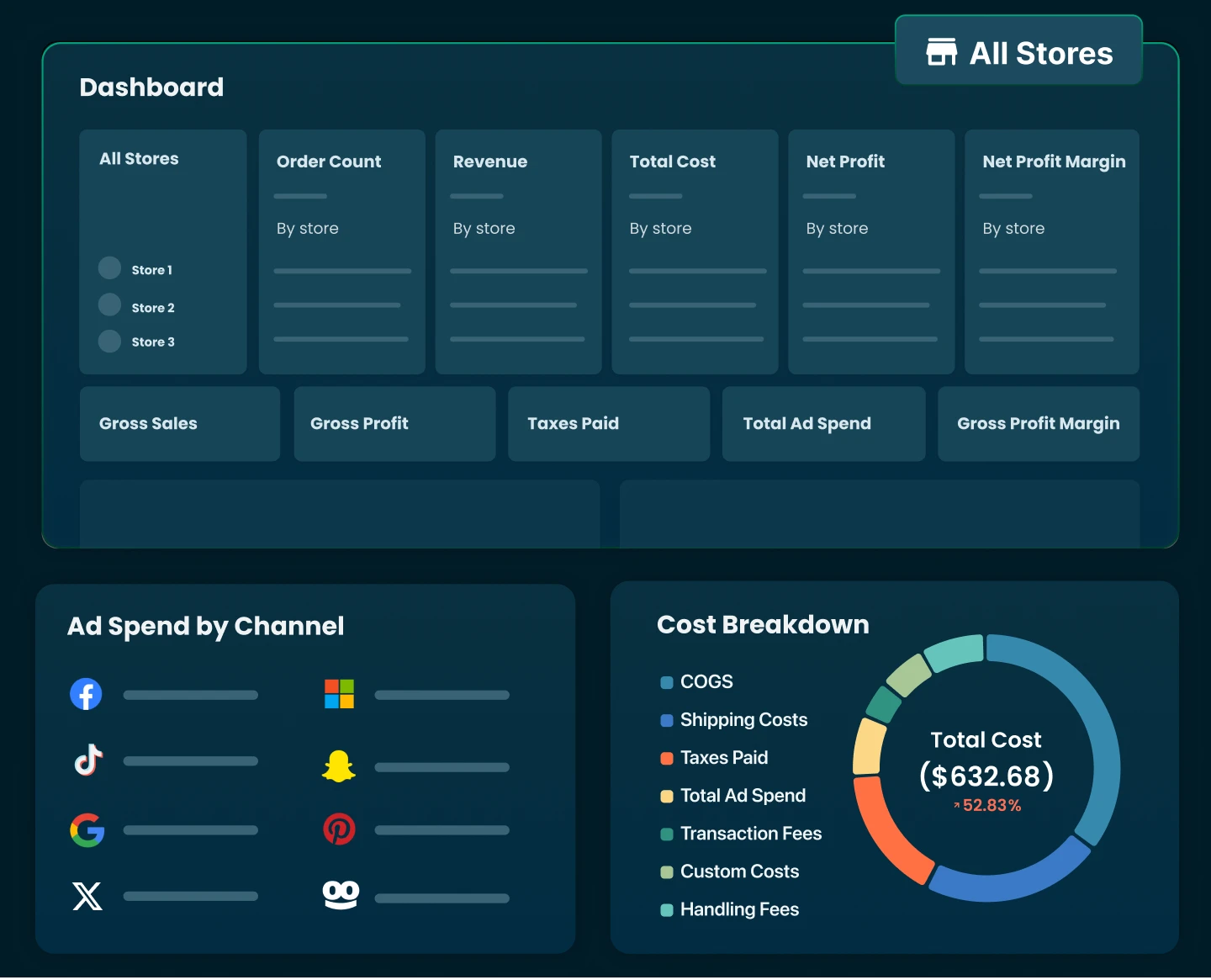
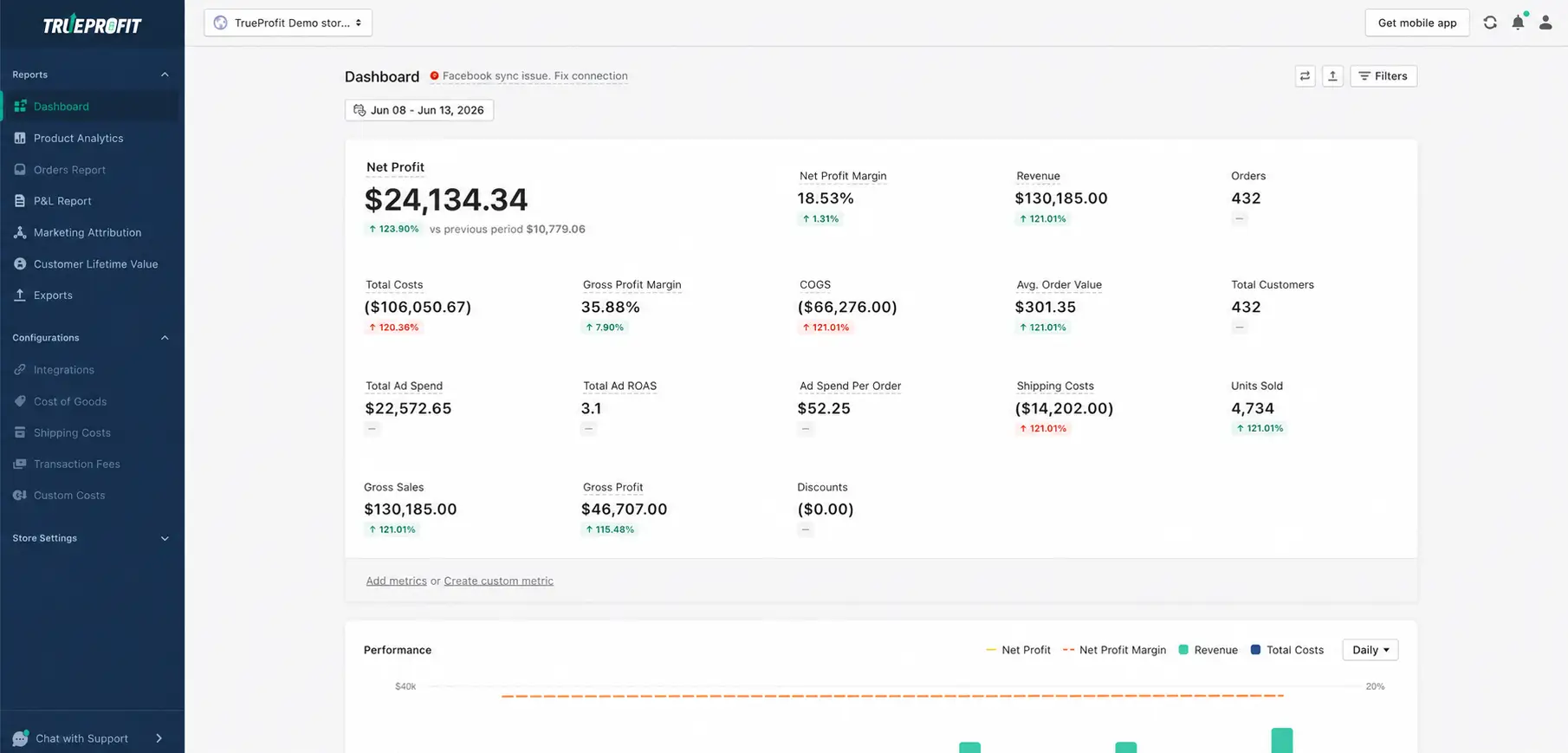
Net profit sits at the top of that list for a reason, but it's also the hardest number to get right. To calculate it properly you need a single report that pulls in every cost your store carries, from COGS and shipping to ad spend across each channel, transaction fees, and refunds.
If you'd rather not spend hours manually pulling that data from a dozen different sources, only to end up reading numbers that are already outdated by the time you're done, this is where a dedicated tool earns its keep.
That's what I'd point you to TrueProfit for. It's the #1 net profit analytics app for Shopify merchants. And here's how it helps you scale faster and more accurately:
- It pulls COGS, ad spend across channels, shipping, transaction fees, and refunds into one dashboard, so your true net profit is calculated automatically instead of by hand.
- It generates automated P&L reports, turning all that revenue, cost, and profit data into a clean profit and loss statement you can filter by day, week, or month, export, or have emailed to you on a schedule, no spreadsheet required.
- It updates in real time, which means you're making decisions on today's numbers rather than a spreadsheet you last touched a week ago.
- It breaks profit down by campaign, order and by product, so you can instantly see which fitness products are genuinely carrying the store and which ones to cut.
- It surfaces the metrics above, like net margin and ad-spend impact, in one place, so you can spot a product slipping into the red before it drains your budget.
Common Fitness Dropshipping Mistakes to Avoid
Most fitness dropshipping failures come back to a short list of avoidable mistakes. Sidestepping these is honestly worth more than finding one more winning product, so it's a good list to keep handy.
Final Thoughts
Fitness dropshipping still offers plenty of room to grow in 2026, especially if you focus on products that are easy to ship, easy to demonstrate, and built around a clear customer need.
Start with a focused niche, choose your products and suppliers carefully, and give customers a reason to choose your store over generic marketplaces. With the right combination of products, positioning, and branding, you can build a fitness store with room to grow beyond short-lived product trends.

Irene Le is the Content Manager at TrueProfit, specializing in crafting insightful, data-driven content to help eCommerce merchants scale profitably. With over 5 years of experience in content creation and growth strategy for the eCommerce industry, she is dedicated to producing high-value, actionable content that empowers merchants to make informed financial decisions.