





Operating Revenue: Definition, Formula, and How It Impacts Your Business



Table of Contents
Most people think revenue is just the total amount of money coming into a business. However, this definition is incomplete. Not all money that enters your business should be treated the same way, and different types of revenue can impact your financial picture in very different ways.
This is especially important in ecommerce, where income can come from multiple sources. Some revenue comes directly from product sales, while other income may come from subscriptions, shipping fees, etc. Understanding these differences is a key part of running a profitable and scalable business.
That’s why operating revenue matters.
In this article, you’ll learn what operating revenue means in an ecommerce context, how it is calculated, and see practical examples.
In this blog:
What Is Operating Revenue?
Definition of Operating Revenue
Operating revenue is the total amount of money a business earns from its main, everyday business activities. For an ecommerce brand, this mainly means the money coming in from selling products to customers through its online store.
It includes things like product sales, subscription orders, shipping fees charged to customers, and any other revenue that is directly tied to fulfilling orders. In other words, if the income comes from running the store and selling products, it is part of operating revenue.
The formula is:
What Doesn’t Usually Count as Operating Revenue
Some income sources are generally not included in operating revenue. These are often classified as non-operating revenue.
Examples include:
- Interest income from bank deposits
- Dividends or capital gains from investments
- Proceeds from selling company assets
- Government grants unrelated to core services
- Legal settlements or insurance payouts
To see how operating revenue fits into the bigger picture, it helps to understand where it sits within a profit and loss statement.
Operating Revenue Examples (Ecommerce Business)
Here’s a simple example of an ecommerce store with different types of income in one month:
- Product sales (Shopify orders): $200,000
- Subscription revenue (monthly product box, 800 customers × $25): $20,000
- Shipping fees charged to customers: $5,000
- Upsells and add-ons (bundles, warranties, gift wrap): $10,000
- Refunds and credits issued: -$8,000
=> Then Gross Operating Revenue = Gross Sale − (Returns + Allowances + Discounts) = $200,000 + $20,000 + $5,000 + $10,000 - $8,000 = $227,000
This number reflects the total revenue coming from the store’s core ecommerce activities before separating out non-operating income.
Now let’s look at income that comes into the business but is not part of running the ecommerce store itself:
- Sale of old warehouse equipment: $10,000
- Interest income from bank savings: $500
These are not included in operating revenue because they don’t come from selling products or serving customers through the store.

Operating Revenue vs. Related Metrics
Now that you know what operating revenue includes, let’s look at how it differs from other revenue metrics that are often used interchangeably.
Gross Operating vs. Net Operating Revenue
Gross and net operating revenue start with the same income sources, but the final numbers change depending on what gets deducted. The table below highlights those differences.
Metric | What It Includes | What It Excludes |
|---|---|---|
Gross Operating Revenue | Product sales, subscriptions, shipping fees charged to customers, upsells/add-ons (bundles, warranties, gift wrap) | Refunds, returns, discounts, store credits not yet deducted |
Net Operating Revenue | Product sales, subscriptions, shipping fees, and upsells/add-ons after deducting refunds, returns, discounts, and credits | Non-operating income like interest income or one-time asset sales |
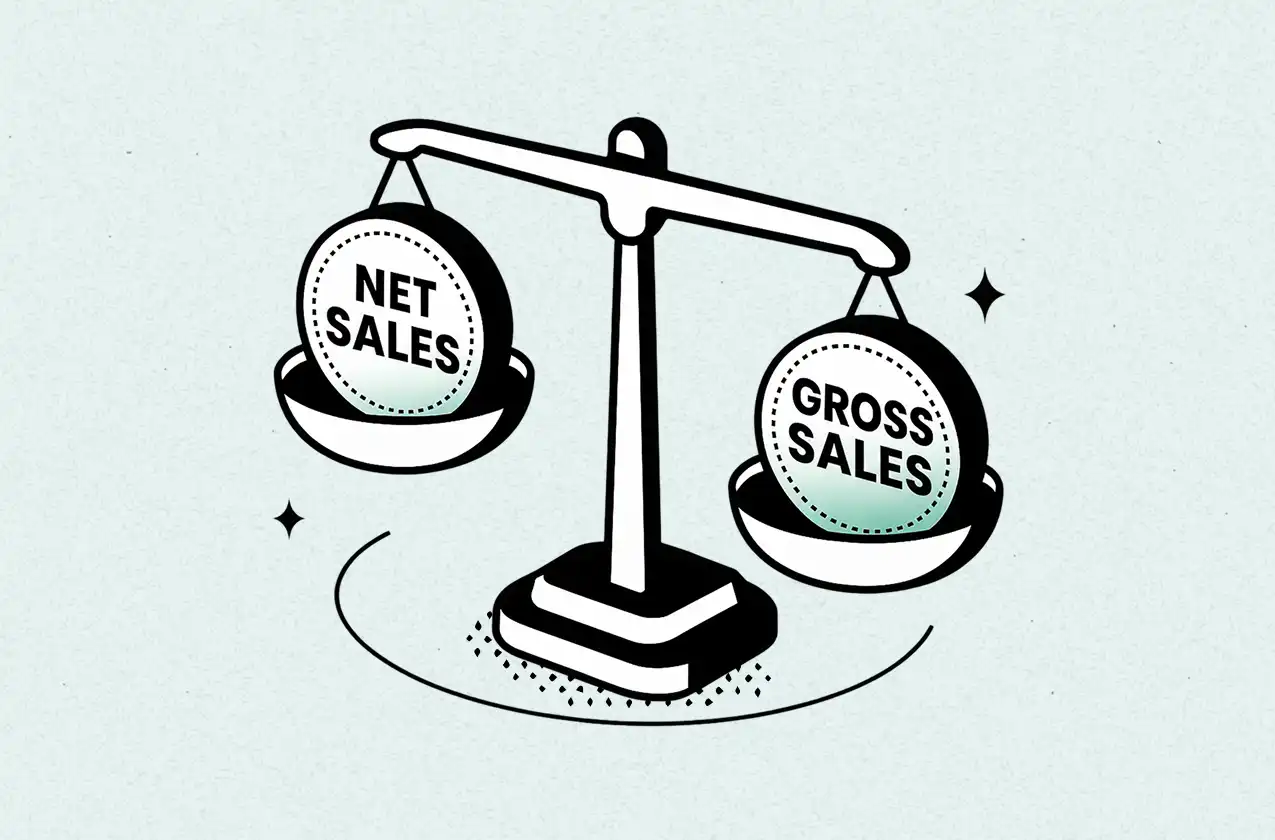
The easiest way to think about it is that gross shows the bigger picture, while net shows the cleaner number. Gross reflects revenue before adjustments, while net reflects revenue after those adjustments are applied, making it easier to understand the actual revenue outcome.
For a broader look at how gross revenue flows through an ecommerce business before deductions kick in, it's worth understanding the mechanics before you build your formula.
Operating Revenue vs. Total Revenue vs. Sales
These three terms are often used as if they mean the same thing, but in ecommerce they actually describe different views of your income.
To make the distinction clearer, here’s a quick comparison of what each metric actually represents.
Metric | What It Includes | What It Excludes |
|---|---|---|
Operating Revenue | Money earned from core business activities like product sales | Non-operating income such as interest income, investment gains, or one-time asset sales |
All income the business receives, from both core operations and non-operating sources | Nothing. It includes everything | |
Gross Sales | Revenue from product or service sales before subtracting returns, discounts, or allowances | Returns, discounts, refunds, and allowances |
For example, a Shopify store might report strong gross sales, but after discounts, returns, and refunds, the actual operating revenue could be much lower.
At the same time, total revenue might look higher if the business also earns interest income or one-time gains, even though those don’t come from selling products.
That’s why sellers usually focus on operating revenue. It shows how much money the store is actually making from running the core business, not from financial side effects or accounting noise.
Operating Revenue vs. Operating Income (Operating Profit)
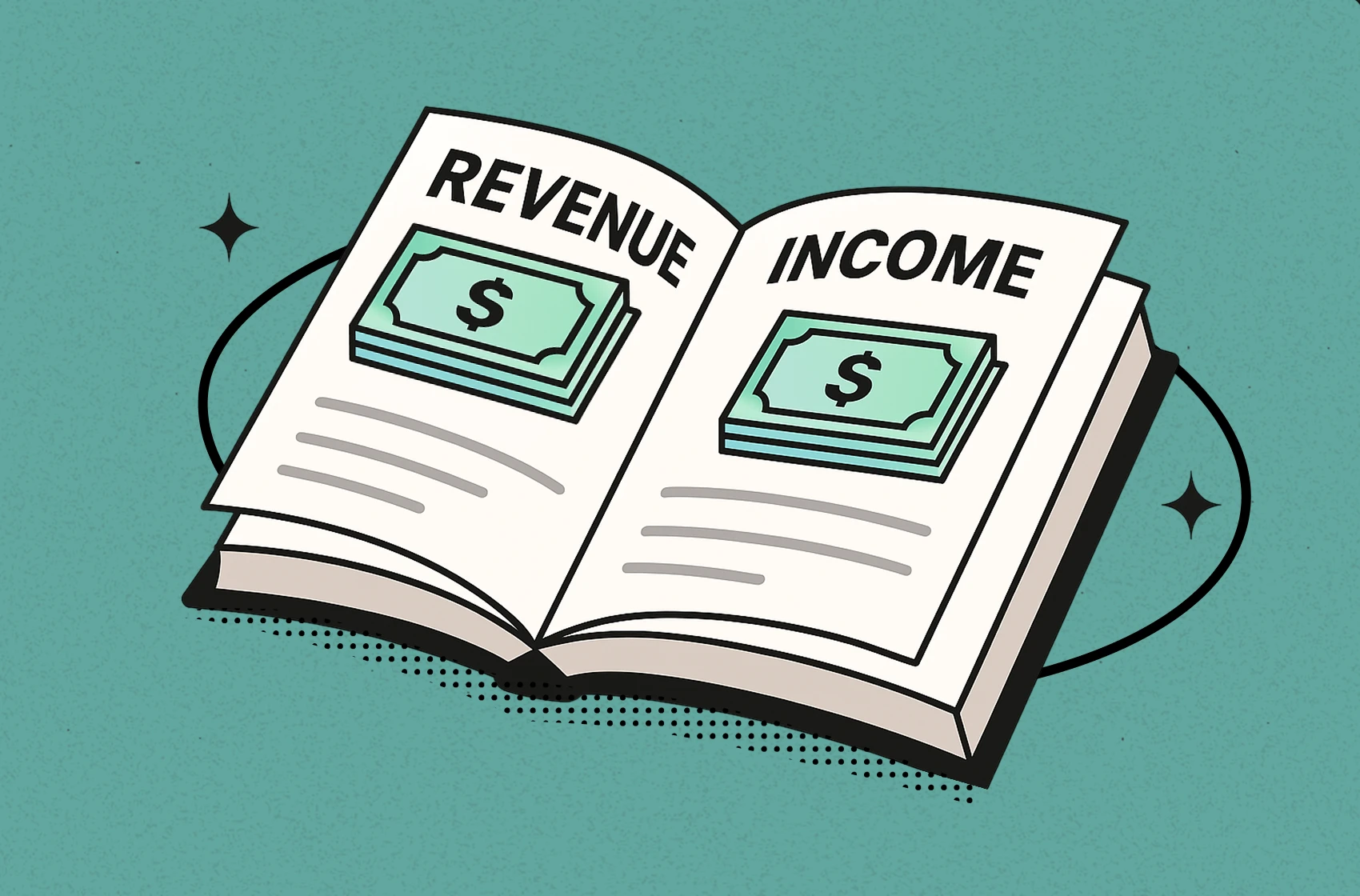
While operating revenue tells you how much money is coming into the business from its core operations, operating income shows how much of that money is actually left after running the business.
In simple terms, operating revenue is the “top line,” while operating income is what you keep after paying the bills. Here’s a quick comparison:
Metric | What It Means | What It Includes | What It Excludes |
|---|---|---|---|
Operating Revenue | Money earned from core business activities | Product sales, subscriptions, shipping fees, upsells (ecommerce) | Non-operating income (interest, investment gains, asset sales) |
Operating Income | Profit after covering operating costs | Revenue from core business minus operating costs | Non-operating income and non-operating expenses |
Operating Revenue vs. Non-Operating Revenue
Operating revenue helps show whether the business model itself is working and generating sustainable growth. Non-operating revenue may increase total revenue in the short term, but it does not necessarily mean the company’s core operations are improving.
The comparison below highlights the difference:
Metric | Operating Revenue | Non-Operating Revenue |
|---|---|---|
Generated From | Core business activities | Activities outside core operations |
Typical Examples | Product sales, subscriptions, shipping fees | Interest income, asset sales, insurance payouts |
What It Shows | Business performance | Additional income outside normal operations |
Why Operating Revenue Matters For Ecommerce Owners
Operating revenue is one of the clearest ways to understand how healthy your ecommerce business really is. It shows how much money your store is actually making from selling products and serving customers. When this number grows, it usually means more people are buying from your store, existing customers are coming back, or your average order value is increasing.
For Business Decisions
For ecommerce owners, operating revenue is often what drives day-to-day and long-term decisions. It affects how much you can safely spend on ads, when to hire more staff, and whether it makes sense to expand your product line or enter new markets.
If operating revenue starts slowing down, it’s usually a signal that something in the business needs attention. It could be lower conversion rates, weaker retention, rising ad costs, or market saturation. The important thing is that each issue requires a different fix, so spotting the trend early really matters.
Even if total sales are still growing, operating revenue gives a clearer picture of the real business performance behind those numbers.
For Growth and Profitability
Growing operating revenue is not just about getting more traffic. It’s also about improving the quality of your revenue. That includes attracting better customers, increasing repeat purchases, and improving your product mix so each order is more profitable.
Many stores grow fast on the surface but struggle underneath because they rely too much on discounts or high ad spend. In those cases, revenue may look good, but profitability does not improve. Operating revenue helps you focus on what is actually sustainable.
Final Thoughts
For ecommerce owners, understanding operating revenue is not just about accounting, it’s about seeing what is actually driving the business. When you separate core store income from refunds, discounts, and non-operating gains, you get a much clearer picture of performance. That visibility makes it easier to identify real growth, manage costs, and avoid decisions based on numbers that don’t reflect day-to-day operations.
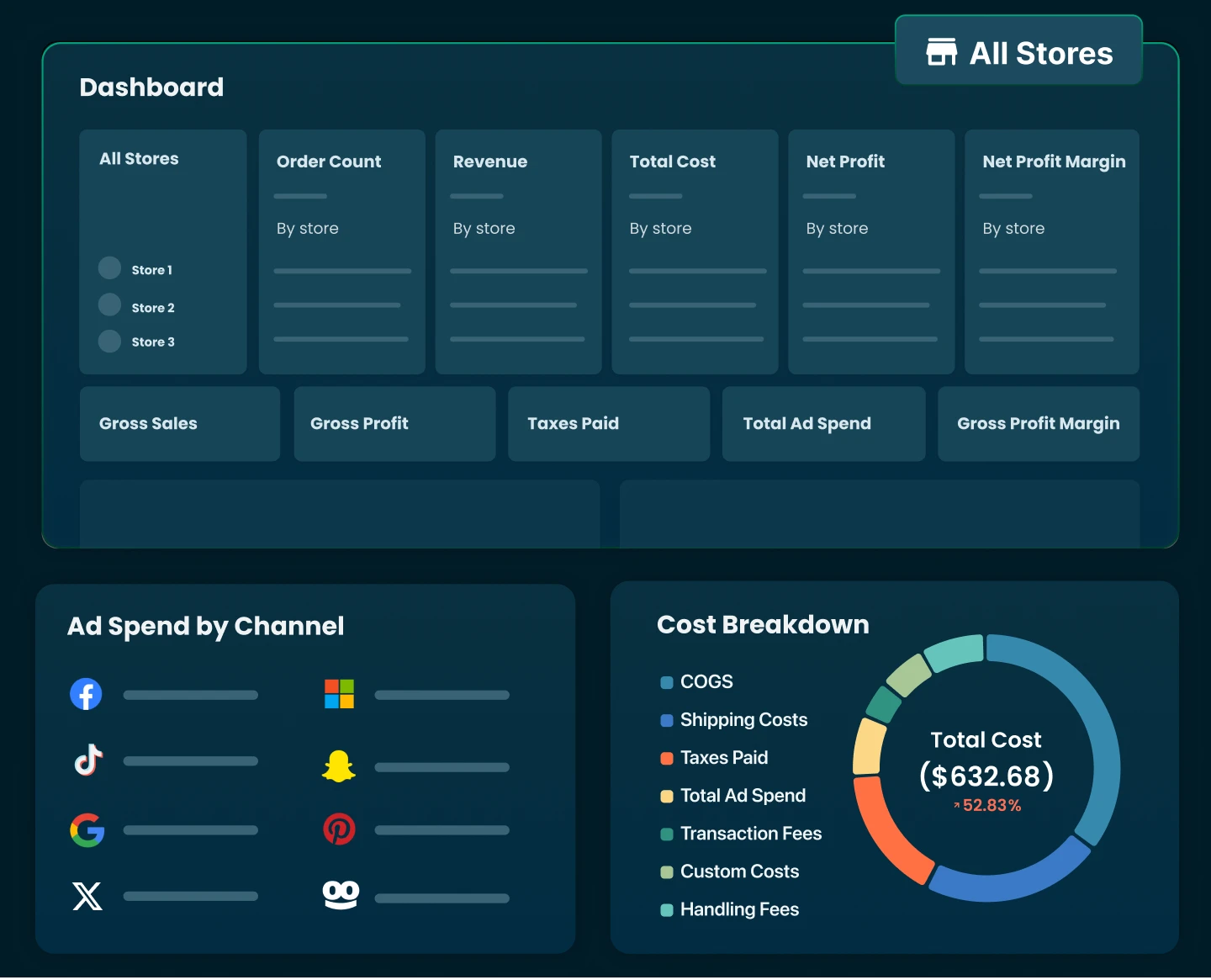
At the end of the day, the goal is not simply to grow revenue, but to grow the right kind of revenue: repeatable, sustainable, and tied directly to your store’s core operations. Tools like TrueProfit can support that process by helping ecommerce brands track net profit, revenue and overall store performance in one place, making it easier to connect top-line growth with actual business results.

Harry Chu is the Founder of TrueProfit, a net profit tracking solution designed to help Shopify merchants gain real-time insights into their actual profits. With 11+ years of experience in eCommerce and technology, his expertise in profit analytics, cost tracking, and data-driven decision-making has made him a trusted voice for thousands of Shopify merchants.