Non-Operating Revenue (NOR): What It Is, What It Tells You


For ecommerce brands especially, understanding non-operating revenue helps separate true store performance from temporary or external financial gains. A business may appear highly profitable because of investment income, asset sales, or foreign exchange gains, even if its actual product sales and operational efficiency are struggling underneath.
In this guide, we’ll break down what non-operating revenue (NOR) is, how it differs from operating revenue, where it appears in the P&L statement, and why ecommerce sellers often separate it when evaluating real business performance.
What Is Non-Operating Revenue?
Non-operating revenue is income a company earns from activities outside its core business. The key idea is that the business did not earn this money through its normal day-to-day operations, such as selling products, fulfilling orders, or providing services. Instead, the income came from side activities, financial assets, or one-time transactions.
For example, if an ecommerce brand earns interest from cash sitting in a bank account, that interest is considered non-operating revenue. Similarly, if a company sells an unused warehouse, office equipment, or other business assets and records a gain, that income is also non-operating revenue.
Some of the most common NOR examples
In business analysis, non-operating revenue usually comes from a few specific sources that are separate from a company’s core operations.
Some of the most common NOR examples include the following:
- Interest income: This refers to the interest a business earns from cash held in bank accounts or other savings instruments. It usually comes from simply keeping money idle in financial accounts rather than from day-to-day operations.
- Investment gains: This is the profit a business makes when it sells stocks, bonds, or other financial investments it owns. These gains depend on market performance rather than the core business activity.
- Foreign exchange gains (FX gains): This is income that comes from changes in currency exchange rates when a business works with international customers or suppliers. The gain happens when currency movements work in the company’s favor.
- Asset sale gains: This is the money earned when a business sells old or unused assets like equipment, warehouse space, or vehicles. These transactions are not part of normal operations, even though they can create extra income.
- One-time financial gains: This refers to any non-recurring income that does not come from regular business activities. These events usually happen only once and are not expected to repeat in the normal course of operations.
Where It Fits in the P&L Report
The typical structure looks like this:
Revenue → COGS → Gross Profit → Operating Expenses → Operating Income → Non-Operating Items → Income Before Tax → Net Profit
From an ecommerce perspective, this separation is important because it clearly isolates performance from selling products (your store operations) versus everything else, like financial income or one-off gains.

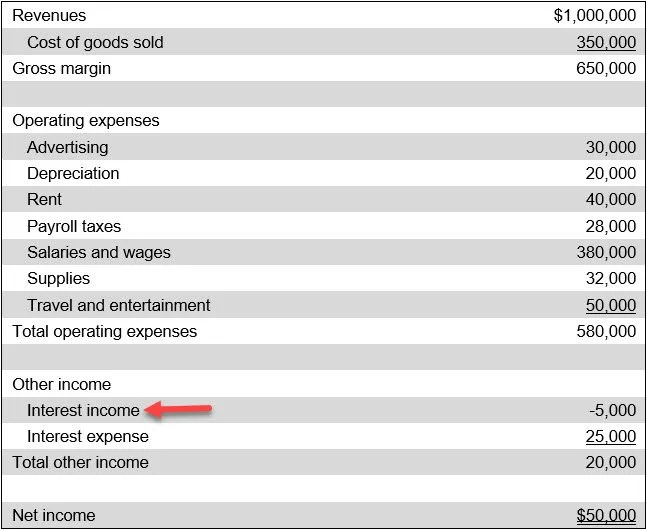
For more context on how these layers connect, see the breakdown of P&L vs. income statement.

Non-Operating Revenue vs. Operating Revenue: A Direct Comparison
Understanding the difference between these two metrics makes it easier to tell whether growth is coming from core operations or from outside sources.
- Operating revenue comes from the company’s core business activities like the products or services it was built to sell. For ecommerce brands, this usually includes product sales, subscriptions, shipping protection programs, or service-related revenue tied directly to customers.
- Non-operating revenue is different. It comes from activities outside normal operations and is often less predictable or non-recurring. Examples can include interest earned on cash balances, gains from selling business assets, or foreign exchange gains.
One reason this distinction matters is that operating revenue helps show how healthy and scalable the actual business is, while non-operating revenue may only provide temporary or one-time boosts to total income.
To make the distinction clearer, the comparison table below shows how these two revenue types differ:
How Non-Operating Revenue Affects Financial Analysis
When I look at an ecommerce or any business P&L, I usually separate non-operating revenue early in the process. The main reason is that it can make a company look more profitable without actually improving the performance of its core business.
Here’s how it affects the main financial areas:
Impact on Net Profit
Net profit is calculated by starting with operating income, then adding non-operating revenues and subtracting non-operating expenses such as interest on debt, along with taxes. Because of this formula, any positive non-operating revenue will lead to a direct, dollar-for-dollar increase in your overall net profit.
For ecommerce businesses, this matters because profitability can appear stronger even when sales performance hasn’t actually changed. As a result, net profit alone doesn’t always reflect the true strength of the core ecommerce operation.
Impact on Profit Margins
Since net profit is higher, profit margins such as net profit margin can also look better. For ecommerce businesses, this can be misleading. A store might appear more profitable or efficient on paper, even though nothing has actually improved in day-to-day operations.
Final Thoughts
Non-operating revenue can be misleading if you look at it the wrong way. On the surface, it looks like extra income that improves your results.
That’s where many sellers get caught off guard. Revenue looks strong in reports, but the core business underneath is not improving at the same pace. When non-operating income is mixed in, it can quietly distort the real picture and lead to overconfidence in decisions like scaling ads, hiring too fast, or expanding too early.
If you want to build a stable ecommerce business, you need to separate “noise” from real performance. The real signal is always in your operating results, the money your store makes from selling products and serving customers.
With tools like TrueProfit, ecommerce owners can measure their true net profit in real time more accurately while also breaking down where that profit comes from, so it’s easier to see the real drivers behind business performance.


Harry Chu is the Founder of TrueProfit, a net profit tracking solution designed to help Shopify merchants gain real-time insights into their actual profits. With 11+ years of experience in eCommerce and technology, his expertise in profit analytics, cost tracking, and data-driven decision-making has made him a trusted voice for thousands of Shopify merchants.