




Revenue vs. Sales: Key Differences Every E-commerce Seller Should Know


Table of Contents
Most people use "sales" and "revenue" as if they mean the same thing. And honestly, for a lot of small e-commerce stores, the two numbers are nearly identical, so the confusion is understandable.
But they're not the same. And when they diverge, you really want to know why.
For most businesses, the gap between the two is small. But once you start growing (or when something goes wrong), understanding which number is which becomes genuinely useful.
In this blog:
What Are Sales?
Sales measure the total value of goods or services your business exchanged for money in a given period. It's a direct read on how well your core product is performing.
There are two versions of this number, and they tell very different stories.
- Gross sales is the raw total of every transaction before anything gets taken out. If you sold 200 units at $40 each, gross sales are $8,000. Simple.
- Net sales is what you actually retained after subtracting returns, discounts, and allowances. It's the more honest number, and it's the one that feeds directly into your gross profit calculation.
The difference between gross and net can be surprisingly large. A store running heavy discount campaigns or selling in categories with high return rates (apparel, electronics) can see a 15-25% gap between the two. If you're only watching gross sales, you're watching a number that flatters you.

What Is Revenue?
Revenue is all income a business generates, not just from selling products. It's the first line on a P & L statement and the starting point for every profitability calculation.
For most e-commerce businesses, gross revenue and gross sales are the same number. The distinction only gets interesting when non-operating income shows up.
There are two types of revenue, and they reveal very different parts of the business.
- Operating revenue comes from the business’s core activities, such as product or service sales.
- Non-operating revenue comes from other sources like interest income, asset sales, licensing fees, or rental income.
Both contribute to total revenue, but only operating revenue reflects actual sales performance and business demand.
Revenue vs. Sales: Key Differences
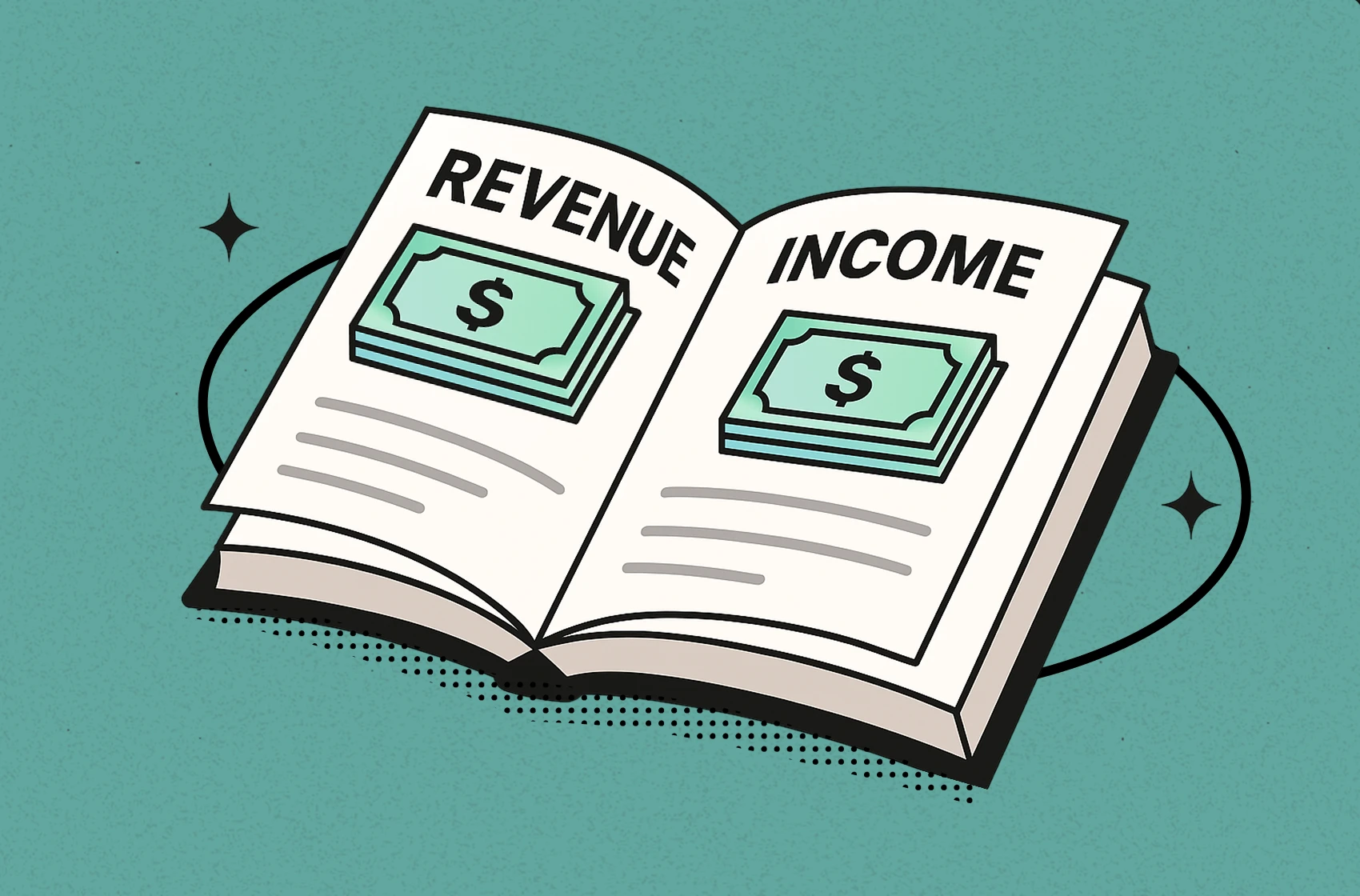
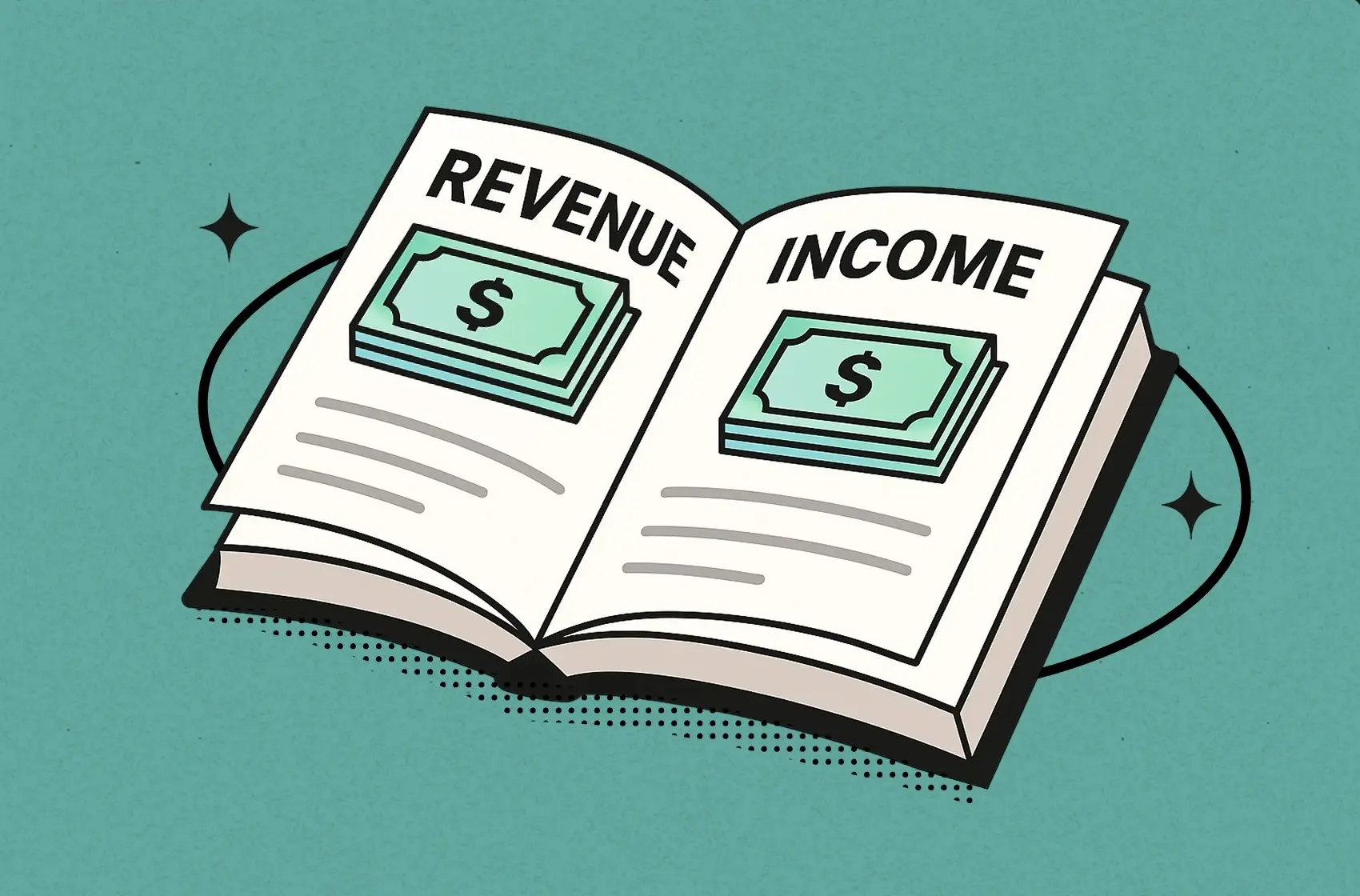
The simplest way to understand the difference is this: sales are part of revenue.
Every product sold adds to revenue, but revenue can also include income that does not come directly from sales. For most ecommerce businesses, sales make up the largest share of revenue. But other income sources, like interest earned from business accounts or licensing fees, can also be included in total revenue.
Feature | Sales | Revenue |
|---|---|---|
Definition | Income from selling goods or services | All income: sales + non-operating sources |
Scope | Narrow, core transactions only | Broad, every income stream |
PnL Report Position | Sub-line under Operating Revenue | The "top line" total income before expenses |
What It Tells You | Product demand, promotion effectiveness | Overall financial health, income diversification |
1. Scope
Sales provide a more focused view of business performance. They show how much customers spent on products or services after deductions like returns and discounts.
Revenue includes sales, but it can also include income from activities outside the core business.
That distinction matters because total revenue does not always reflect actual sales performance. A business can report growing revenue while customer demand weakens underneath.
Sales focus more directly on product performance and customer purchasing behavior. Revenue shows the bigger picture.
2. Source
Sales only come from customer transactions. In ecommerce, that usually means people buying products from your store.
Revenue can also include income that has nothing to do with direct product sales. Some ecommerce businesses earn additional income from affiliate partnerships, licensing deals, interest earned on business accounts, or selling old equipment.
For example, a store might generate $800,000 from customer purchases and another $50,000 from selling unused warehouse equipment. Total revenue would be $850,000, but only $800,000 came from actual sales.
3. How They Appear on the Income Statement
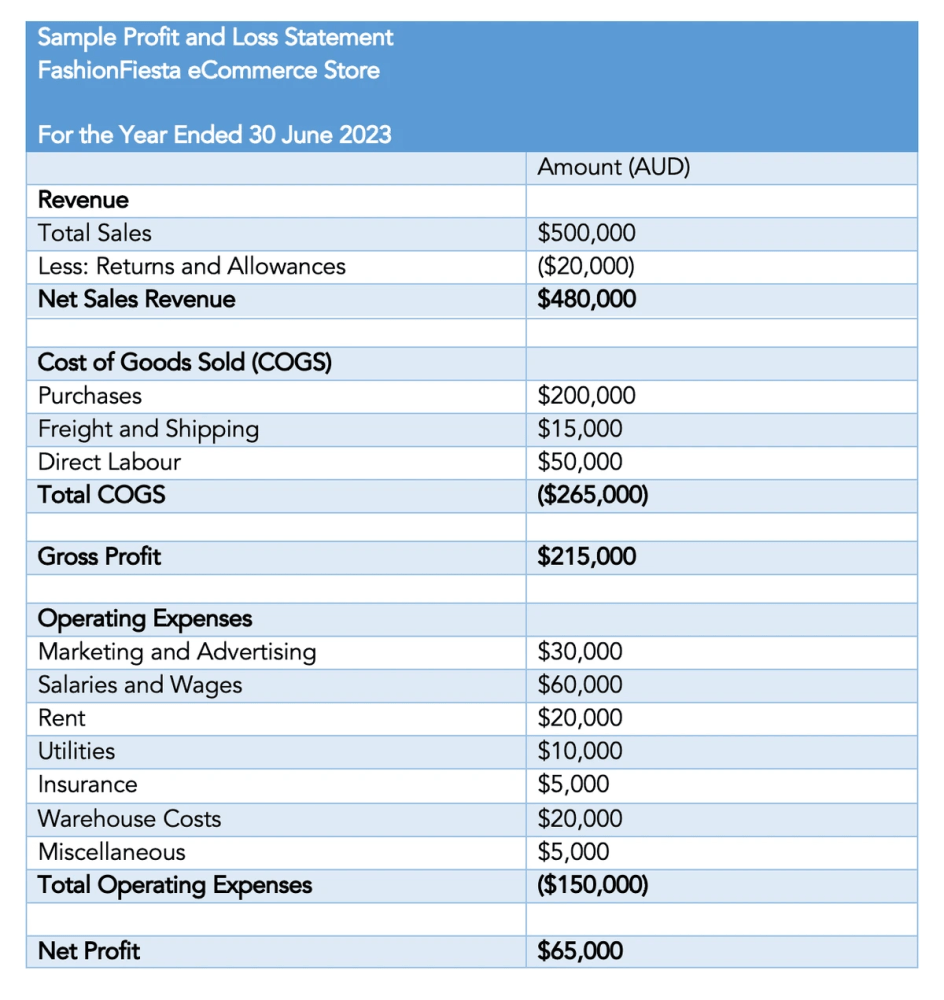
On a P&L report, revenue appears at the top because it represents the total income generated during the reporting period.
Net sales are usually recorded as part of operating revenue because they reflect the business’s core selling activity.
For many ecommerce stores, sales and revenue appear nearly identical because almost all income comes from product purchases. But once a business starts generating non-operating income, the separation becomes more visible in financial reporting.

Source: Sparkverse
4. Which Metric Drives Better Business Decisions?
Neither metric is automatically more important. They answer different questions.
Sales are usually more useful for evaluating day-to-day business performance. They help ecommerce brands measure customer demand, pricing effectiveness, product performance, and marketing efficiency.
Revenue is more useful for understanding the broader financial position of the business. It helps owners evaluate total income growth and understand how different income streams contribute to the company.
Looking at both together creates a much clearer picture than relying on either metric alone.
5. Example: Revenue vs. Sales in a Real Ecommerce Business
Imagine an ecommerce skincare brand sells $100,000 worth of products in one month.
At first glance, that looks like both sales and revenue. But once you break the numbers down, the difference becomes clearer.
The store had:
- $100,000 in gross sales
- $8,000 in product returns
- $5,000 in discount codes and promotions
- $2,000 in partial refunds for damaged orders
After those deductions, net sales become $85,000.
During the same month, the business also earned:
- $3,000 from an affiliate partnership
- $2,000 from renting unused warehouse space
Now the numbers look like this:
Metric | Amount |
|---|---|
Gross Sales | $100,000 |
Net Sales | $85,000 |
Non-Operating Revenue | $5,000 |
Total Revenue | $90,000 |
This example shows why sales and revenue are not always the same thing.
Sales only measure money generated from customer purchases after deductions. Revenue includes those sales plus additional income sources outside normal product transactions.
Application in Business: Analysis and Strategy
Businesses use sales and revenue differently when making decisions.
Sales data is often used at the operational level. Ecommerce brands use sales trends to decide which products to restock, which collections deserve more advertising budget, and which campaigns are actually converting customers.
Revenue becomes more useful when evaluating the business at a higher level. It helps owners understand total business growth and identify how much income comes from core operations versus secondary activities.
The distinction also matters when analyzing profit margins. Two stores can report similar revenue numbers while operating very differently underneath. One may generate healthy repeat purchases with stable margins, while another depends heavily on discounts, refunds, or temporary income sources that are harder to sustain.

When Revenue Growth Can Be Misleading
Revenue growth does not always mean the business itself is getting stronger.
An ecommerce store can increase revenue through aggressive discounting, one-time equipment sales, or temporary partnership income while the core business weakens underneath.
For example, net sales growth may slow while return rates, advertising costs, and fulfillment expenses continue rising. On the surface, revenue still looks healthy. In reality, profitability and customer quality may already be deteriorating.
That is why experienced ecommerce operators rarely evaluate performance using revenue alone. They also pay close attention to net sales, margins, repeat purchase behavior, and cash flow quality.
Final Thoughts
For most ecommerce stores, the numbers look nearly identical in the early stages. But as a business grows, the difference becomes more important. That’s why experienced operators do not look at revenue alone. Strong top-line growth can still hide weak margins, rising return rates, or declining product demand underneath.
But even sales and revenue only tell part of the story. To understand whether the business is truly becoming more profitable, you also need visibility into costs, margins, ad spend, shipping, and cash flow together.
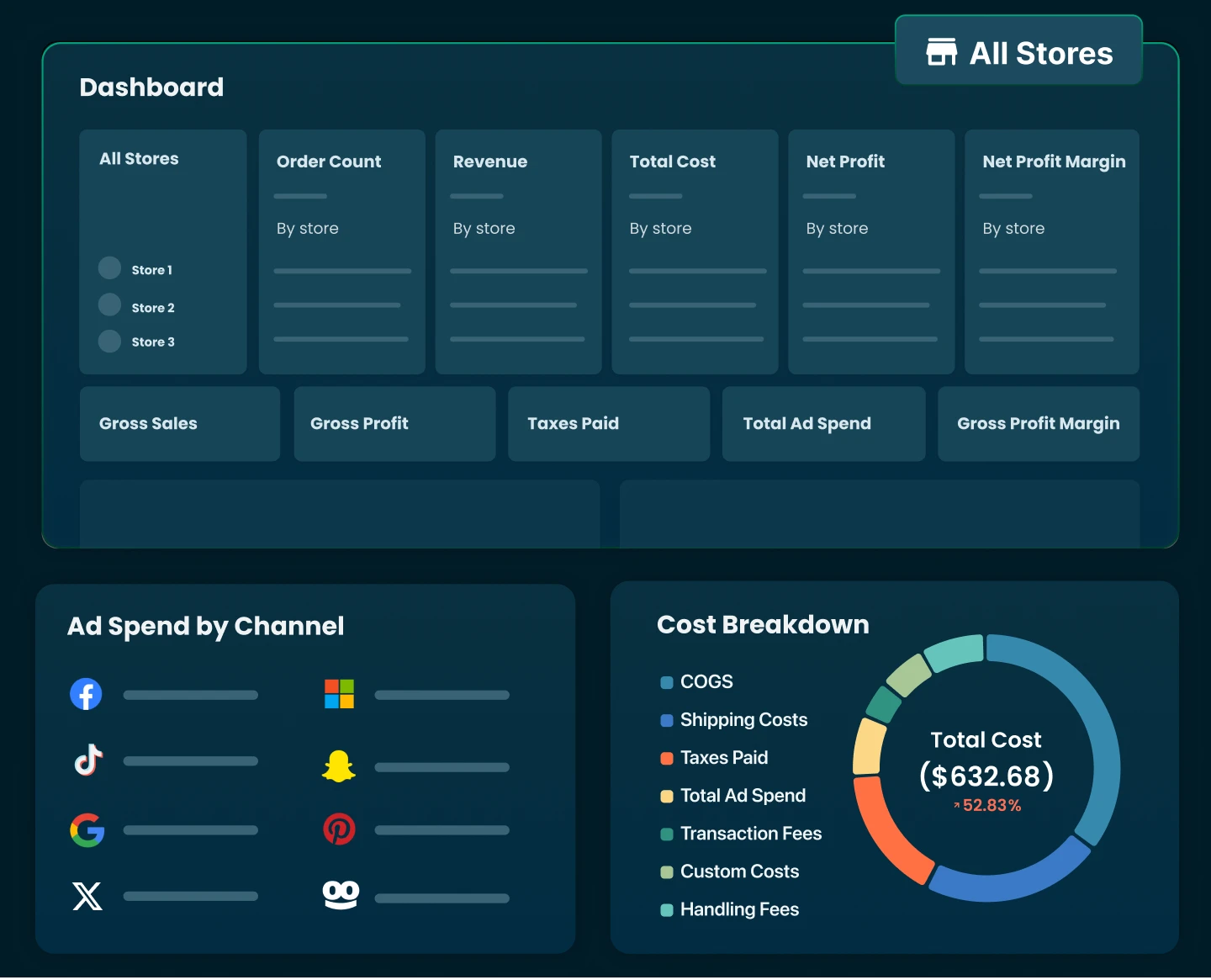
For Shopify sellers, that’s where tools like TrueProfit become especially useful. It gives ecommerce brands a real-time view of their profit and loss performance by tracking sales, product costs, ad spend, fees, and other expenses in one place, so you are not just measuring revenue growth, but understanding the business’s true bottom line - net profit.

Harry Chu is the Founder of TrueProfit, a net profit tracking solution designed to help Shopify merchants gain real-time insights into their actual profits. With 11+ years of experience in eCommerce and technology, his expertise in profit analytics, cost tracking, and data-driven decision-making has made him a trusted voice for thousands of Shopify merchants.