




Net Revenue vs Net Income: What’s the Difference and Why It Matters


Table of Contents
When I look at a business’s financial performance, I never stop at revenue.
Revenue can tell a good story, but it rarely tells the whole story. A store may be generating plenty of sales, running successful campaigns, and bringing in new customers, but still have weak profit at the end of the month.
That is why understanding the difference between net revenue and net income matters.
In this article, I’ll walk you through both metrics, explain how they connect, and show you when to focus on each one.
In this blog:
Understanding Net Revenue: What It Really Means
What Is Net Revenue?
Net revenue is the income generated from core business operations after subtracting returns, refunds, discounts, and allowances. It reflects the actual amount earned from customer transactions before any operating costs are deducted. It focuses purely on sales performance and is often used to evaluate how effectively pricing, promotions, and marketing efforts translate into real revenue.
Formula:
Net revenue sits at the top of the income statement, which is why people call it the "top line." In ecommerce, it's your gross sales minus every coupon, return, and allowance you issued.

Understanding Net Income (Net Profit): What It Really Means
What Is Net Income
Net income is the final profit a business keeps after all expenses are deducted from net revenue, including COGS, operating costs, depreciation, interest, and taxes. It represents the clearest measure of true profitability, showing whether the company actually earns money after covering all obligations.
Formula:
Net income sits at the very bottom of the income statement, which is why it's called the "bottom line." Investors, lenders, and acquirers use it to assess whether a business generates sustainable profit, not just impressive sales numbers.
Net Revenue vs Net Income: Key Differences
Net Revenue and Net Income are often confused, but they appear at different points on the P&L statement and measure different things. The table below highlights the key differences.
Category | Net Revenue | Net Income (Net Profit) |
|---|---|---|
Also known as | Net sales, top line | Net profit, net earnings, bottom line |
Position on Pnl statement | Top | Bottom |
What it measures | Sales after deductions | Profit after all costs and taxes |
What it excludes | Operating costs, taxes, interest | Nothing, it accounts for everything |
Best used for | Sales performance, pricing power, demand | Profitability, cost efficiency, sustainability |
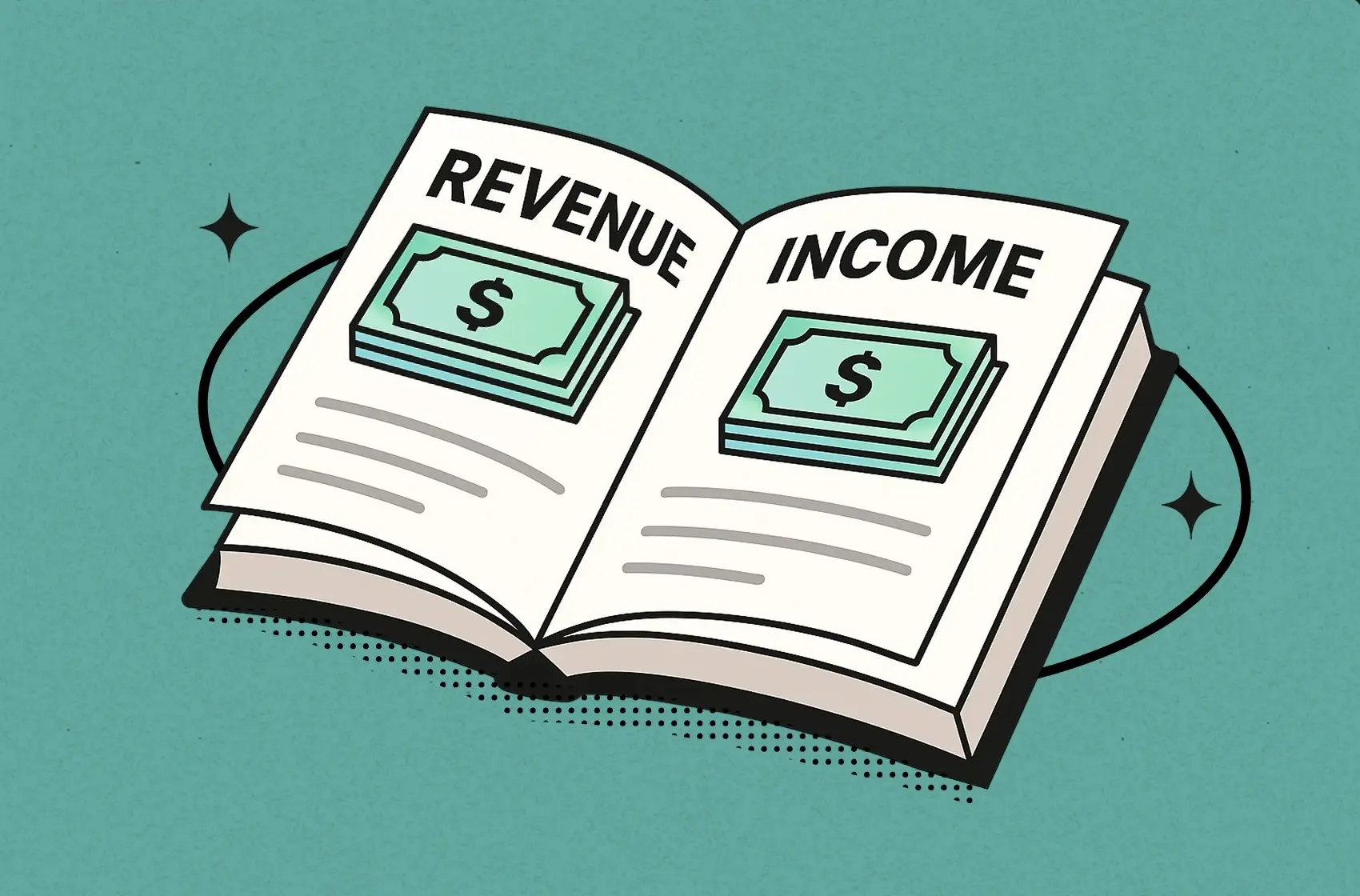
Net revenue and net income are closely related, but they measure very different aspects of business performance. Net revenue focuses on how much money the business actually earns from sales after deductions like returns and discounts. Net income goes further by showing how much profit remains after every expense has been paid.
While net revenue helps evaluate sales performance and customer demand, net income reveals whether the business is truly profitable. A company can generate strong net revenue but still struggle with profitability if operating costs, fulfillment expenses, or taxes are too high.
For a full breakdown of what drives the bottom line, What is Net Profit and How to Calculate It is worth reading.
Example: From Net Revenue to Net Income
Imagine an ecommerce shoe store generated strong sales during the month. At first glance, the revenue numbers look impressive, but revenue alone does not show how much profit the business actually keeps.
To calculate net profit, the business must subtract returns, product costs, operating expenses, depreciation, and taxes from its revenue. The example below shows how a store moves from gross and net revenue all the way down to final profit.
Item | Amount |
|---|---|
$100,000 | |
Returns & Refunds | -$3,000 |
Net Revenue | $97,000 |
COGS | -$40,000 |
Operating Expenses | -$20,000 |
Depreciation, Interest & Taxes | -$8,840 |
Net Income/ Net Profit | $28,160 |
The store generated $100,000 in sales, but after returns, operating costs, and taxes, the actual profit left was only $28,160. This highlights why net income matters more than revenue alone when evaluating true business profitability.
Why Businesses Need Both Metrics
Net revenue and net income should not be viewed as competing metrics. They answer different questions and become most powerful when analyzed together.
Net revenue shows whether the business can consistently generate customer demand and grow sales after refunds and discounts. Meanwhile, net income shows whether the business can convert those sales into sustainable profit after covering all operating costs.
Looking at only one metric creates blind spots. A company can report strong net revenue growth while losing money due to rising fulfillment, advertising, or operating expenses. On the other hand, a business focused only on short-term net income may underinvest in growth opportunities that could expand revenue over time.
The strongest ecommerce businesses monitor both metrics together to balance growth, efficiency, and long-term profitability.
Net Revenue vs Net Income by Business Stage
The importance of net revenue and net income can change depending on where your business is in its growth journey. Both metrics always matter, but each one becomes more useful for different decisions at different stages.
- For a new store, net revenue may matter more at first because it shows whether the market wants the product. At this stage, the business is still testing pricing, offers, channels, and customer demand.
- For a growing store, net income becomes more important because the business needs to prove that growth is profitable, not just sales-driven.
- For a mature store, both metrics should be reviewed together to protect margins, plan cash flow, and decide whether to expand, hire, or invest in new channels.

How Net Revenue and Net Income Impact Business Decisions
Net revenue and net income affect different types of business decisions because they measure different parts of performance.
Net revenue shows how well the business is generating sales after customer-facing deductions. It helps you understand whether your products, pricing, promotions, and customer experience are working. For example, if net revenue increases after a promotion, it may show that the offer attracted real demand. If net revenue drops despite strong gross sales, it may point to problems such as excessive discounts, high return rates, or too many refunds.
This makes net revenue especially useful for decisions around:
- Pricing and discount strategy
- Product demand
- Marketing campaigns
- Customer retention
- Refund and return management
- New product or sales channel testing
Net income shows how much profit the business actually keeps after all costs are paid. It helps you understand whether the business model is efficient and sustainable. A company may have strong net revenue, but if product costs, ad spend, shipping, payroll, rent, software, or taxes are too high, net income can remain weak.
This makes net income more useful for decisions around:
- Cost control
- Hiring
- Expansion
- Debt repayment
- Owner compensation
- Profit reinvestment
- Long-term financial stability
For example, if you are considering a new location, product line, or brand extension, net revenue can show whether there is enough customer demand to support the move. But net income tells you whether the business has enough profit cushion to take that risk. If net revenue is growing but net income is thin, expansion may add pressure instead of creating growth.
Final Thoughts
Net revenue and net income tell two different but equally important parts of your business story.
The key takeaway is that revenue alone can be misleading. An ecommerce store can have strong sales, successful campaigns, and growing order volume, but still end the month with thin margins if ad spend, shipping, fulfillment, transaction fees, or app costs are too high. That is why understanding the path from net revenue to net income is so important. It helps you see not just how much your store sells, but how much it actually keeps.
For Shopify sellers, this becomes even more important as the business scales. More orders often mean more moving parts, more costs, and more chances for profit to slip through unnoticed.
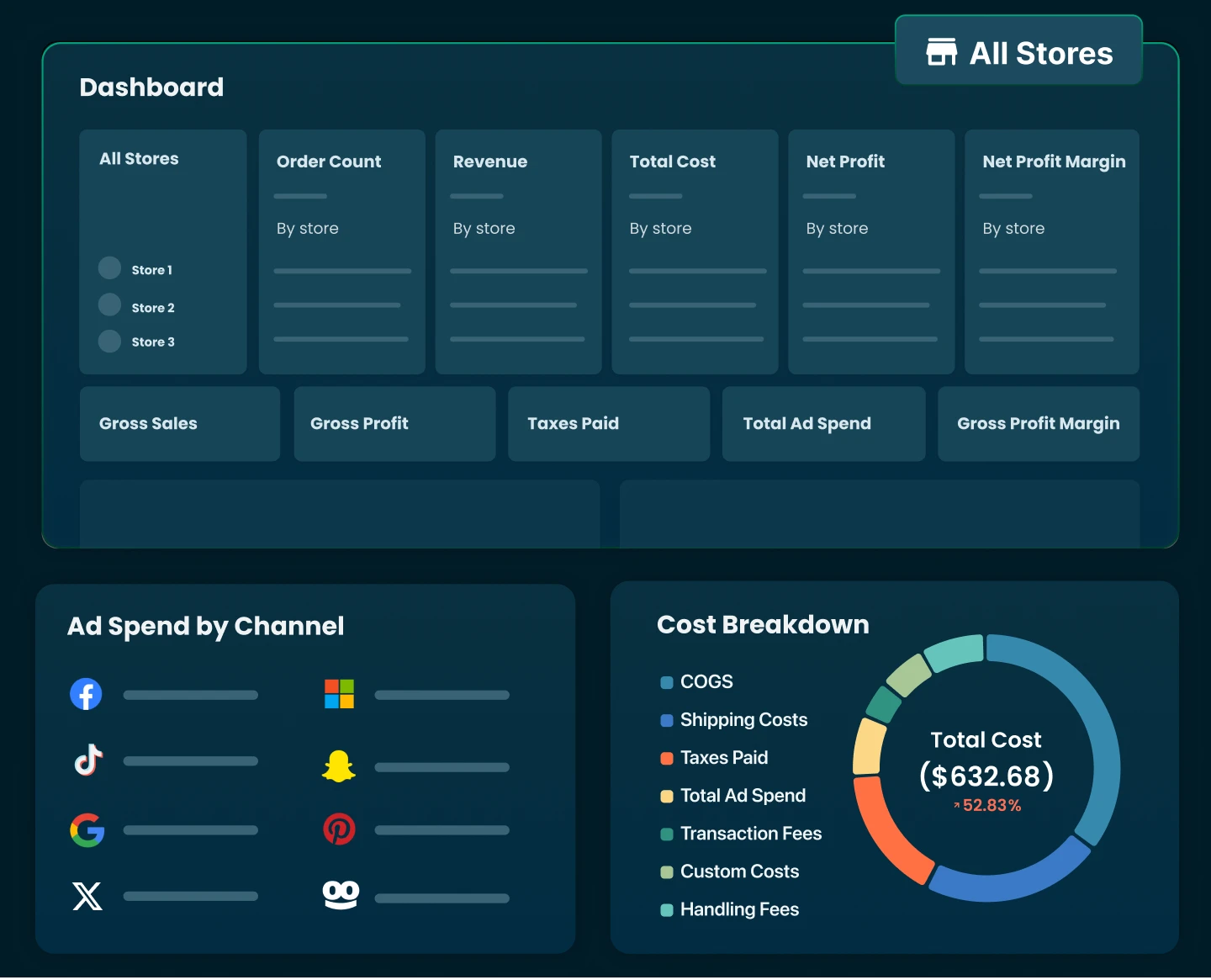
That’s where TrueProfit can help. As one of the best profit and loss apps for Shopify sellers, TrueProfit brings revenue, COGS, shipping, ad spend, transaction fees, and other expenses into one real-time profit dashboard. Instead of guessing whether your store is profitable, you can clearly see your actual net profit and make better decisions around pricing, spending, and growth.

Lila Le is the Marketing Manager at TrueProfit, with a deep understanding of the Shopify ecosystem and a proven track record in dropshipping. She combines hands-on selling experience with marketing expertise to help Shopify merchants scale smarter, through clear positioning, profit-first strategies, and high-converting campaigns.