


Shopify SEO Tips 2026: Guide to Boosting Your Store’s Traffic and Sales


Table of Contents
Shopify SEO is how you build organic traffic that does not dry up the moment you pause ads spend. The platform handles a lot of the technical groundwork, but ranking consistently and converting that traffic into sales requires deliberate, ongoing work.
This guide covers every layer of Shopify SEO: technical foundations, on-page optimization, off-page authority building, and long-term monitoring. Each section gives you specific, actionable steps you can start using today.
In this blog:
Technical SEO: Building a Solid Shopify Foundation
1. Optimize Your Store Speed

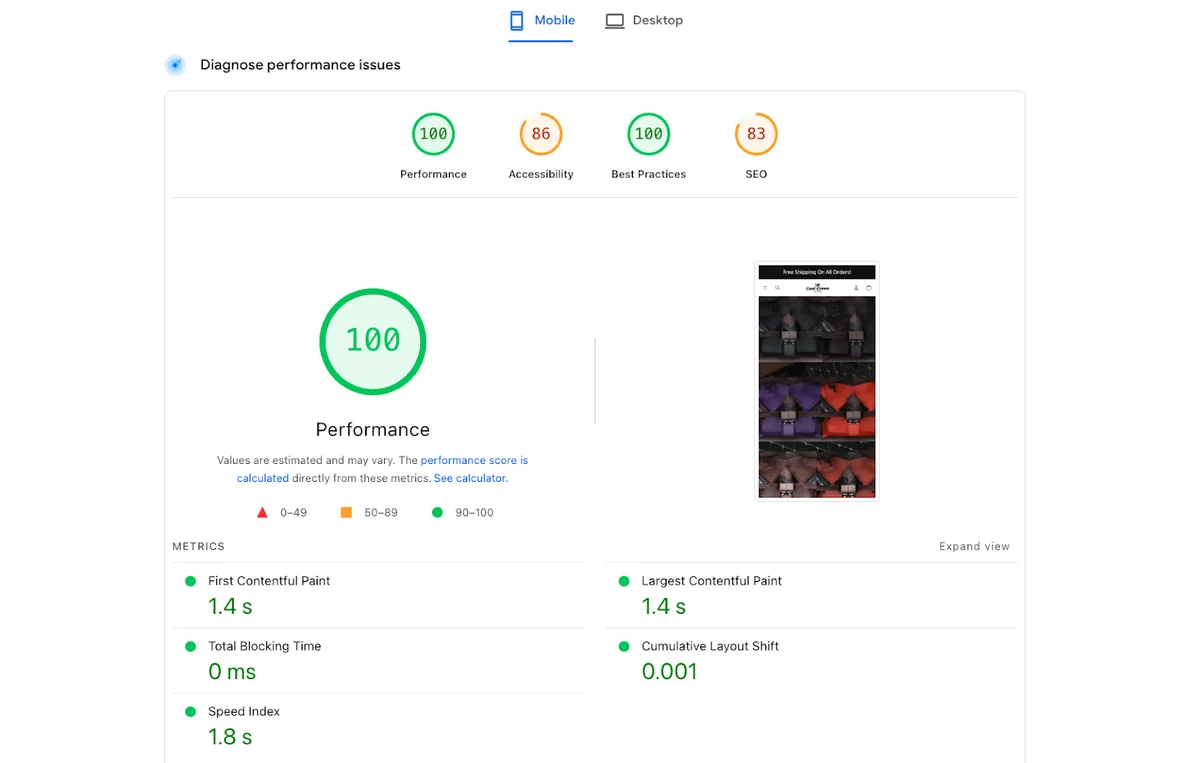
Page speed affects both rankings and revenue. A one-second delay in load time can reduce conversions by up to 7%. Run your store through Google PageSpeed Insights and GTmetrix to identify what is slowing you down, then work through these fixes:
- Compress images before uploading. You can use image optimizer tools for compressing your images smoothly. Large image files are the most common culprit.
- Trim your app list. Every installed app adds code. Remove anything you are not actively using.
- Choose a performance-first theme. Shopify's native themes, Dawn, Refresh, and Sense, consistently outperform feature-heavy alternatives.
2. Make Your Store Mobile-Friendly
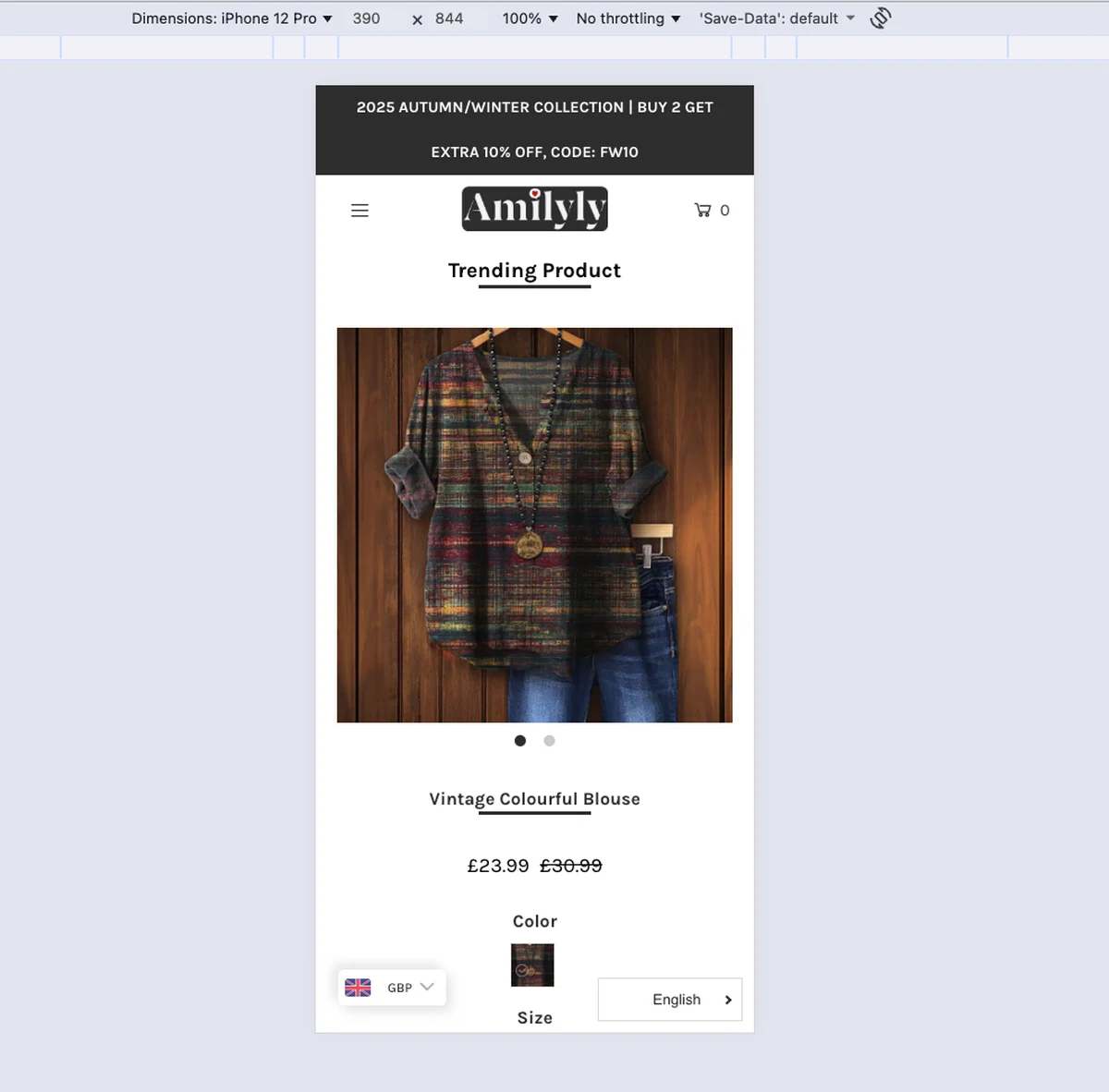
Google uses mobile-first indexing, meaning it ranks your store based on how the mobile version performs. Test your store using Google's Mobile-Friendly Test and navigate it yourself on a phone. Look for text that is too small, buttons that are hard to tap, and images that do not scale properly.
3. Submit Your Sitemap and Fix Crawl Errors
Shopify automatically generates your sitemap.xml, available at yourstore.com/sitemap.xml. The one action that matters most: submit it to Google Search Console. This tells Google what pages exist and gets new content indexed faster. Check Search Console regularly for crawl errors and indexing issues.
4. Add Schema Markup for Rich Snippets
Schema markup helps search engines display your listings with extra detail like price, availability, and star ratings. These rich snippets increase click-through rates without any change to your rankings position.
Schema Type | What It Shows in Search Results |
|---|---|
Product | Price, availability, review rating, brand |
Breadcrumb | Site hierarchy path |
Organization | Business name, logo, contact info |
FAQPage | Expandable Q&A in the SERP |
Many Shopify themes include basic product schema by default. For full control, use the JSON-LD for SEO app or add JSON-LD directly to your theme.liquid file. Validate everything using Google's Rich Results Test.

On-Page SEO: Optimizing Every Page in Your Store
1. Do Keyword Research Before Writing Anything
Focus on keywords that signal purchase intent. "Buy noise-cancelling headphones," "best waterproof hiking boots for wide feet," and "handmade stoneware coffee mug 12oz" convert better than broad terms like "headphones" or "coffee mug."
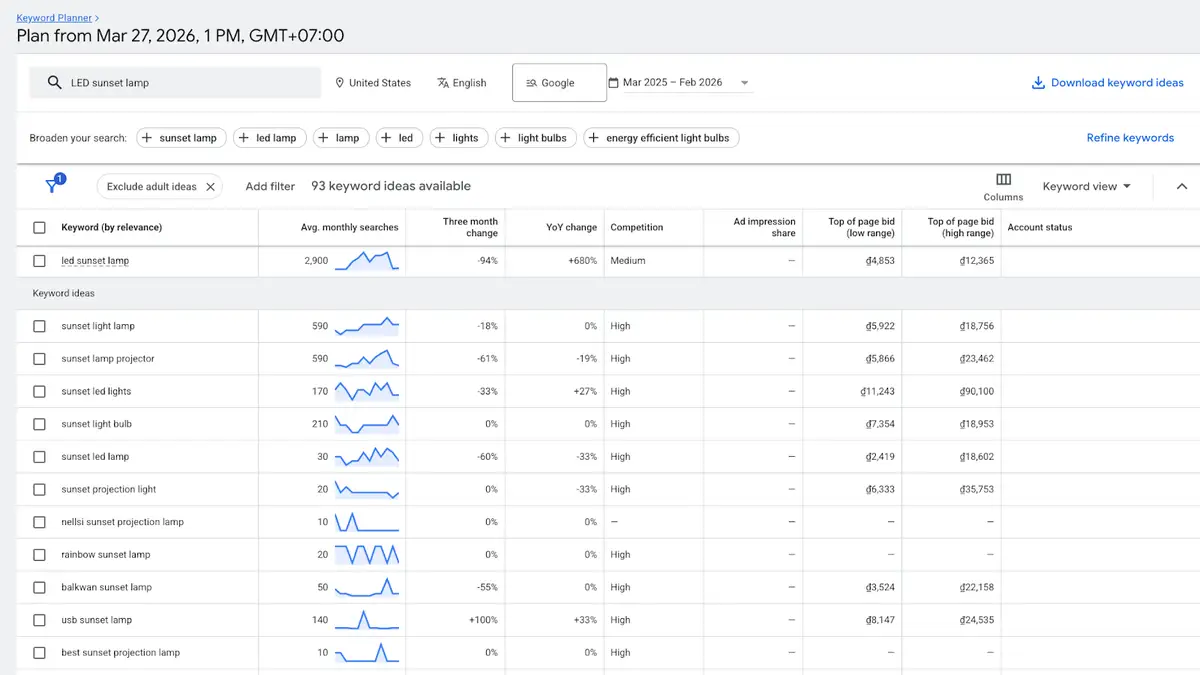
Use Google Keyword Planner for free search volume data. Semrush and Ahrefs go deeper, showing keyword difficulty, competitor rankings, and related term clusters. Always check what successful competitors rank for and look for gaps they have missed.
2. Optimize Meta Titles and Descriptions
Your meta title and description are your ad copy in the search results. They determine whether someone clicks your listing or a competitor's.
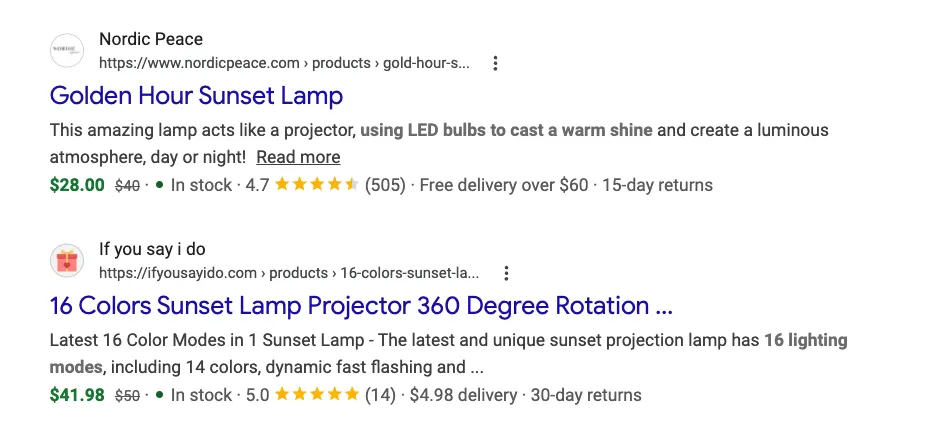
- Meta titles: Place your primary keyword near the start, add your brand name, include a differentiator like "Free Shipping" or "Handmade in USA," and keep it under 60 characters.
- Meta descriptions: Summarize the page clearly, include secondary keywords naturally, end with a call to action ("Shop the collection," "Order today"), and stay under 160 characters.
Every page needs a unique meta title and description, including product pages, collection pages, and blog posts.
3. Write Product Pages That Rank and Convert
Product pages are where SEO and conversion meet. Getting more sales on Shopify depends on getting both right.
- Product titles should be keyword-rich and descriptive. "Organic Cotton Baby Swaddle Blanket, Muslin, 47x47 inches" outperforms "Swaddle Blanket" for both search visibility and shopper clarity.
- Product descriptions should be original, benefit-focused, and written for the customer first. Never copy manufacturer copy. Anticipate questions about materials, dimensions, sizing, and care. Use bullet points for features and short paragraphs for narrative copy.
- Alt text on every image should describe the product specifically: "red leather women's crossbody bag with gold hardware, front view." This improves accessibility and contributes to image search rankings.
- Customer reviews generate fresh, keyword-rich content on your pages without any extra effort. Use Loox, Judge.me, or Yotpo to collect and display them.
4. Add Descriptive Text to Collection Pages
Collection pages target broader, category-level keywords like "women's linen dresses" or "eco-friendly water bottles." Add a short keyword-rich paragraph at the top of each collection page. Two to three sentences is enough. It gives search engines and customers context for what the collection contains, and it is one of the easiest on-page wins available in Shopify.
5. Build Out Your Blog
A blog lets you target informational keywords that product pages cannot. It attracts customers earlier in their buying journey and builds topical authority over time. If you are serious about learning how to drive traffic to your Shopify store, a blog is one of the most durable tools available.
Write about the questions customers ask before buying, problems your products solve, and category comparisons. A store selling coffee equipment could publish "French press vs pour-over: which is right for you?" and rank for multiple transactional keywords while warming up prospective buyers.
Every blog post should link to at least one product page or collection. Internal links keep users moving through your Shopify sales funnel and distribute ranking signals across your site.
Off-Page SEO: Building Authority Outside Your Store
1. Build Backlinks Strategically
Backlinks from reputable websites are among Google's strongest ranking signals. The most reliable tactics:
- Guest blogging: Write for industry publications your customers read. You earn a backlink and reach a targeted audience at the same time.
- Broken link building: Use Ahrefs or Semrush to find broken links on competitor or industry sites. Offer your relevant content as a replacement.
- Unlinked brand mentions: Use Google Alerts to find mentions of your brand without a link. Contact site owners and ask them to add one.
- HARO: Respond to journalist queries in your niche. Media coverage from authoritative publications carries strong SEO value.
- Product reviews: Send products to bloggers or influencers for honest reviews. These typically include a backlink and drive direct referral traffic.
2. Use Social Media for Indirect SEO Benefits
Social media links are mostly no-follow, so they do not directly pass ranking signals. But social activity drives traffic to your store, increases brand search volume, and gets your content in front of people who may link to it. Consistent social presence is a core part of any Shopify marketing strategy and amplifies the reach of your SEO content.
Monitoring and Ongoing SEO for Your Shopify Stores
1. Track Performance with the Right Tools
SEO compounds over time, but only if you track what is working and fix what is not. Use these three tools consistently to understand your Shopify SEO performance:
- Google Search Console: Shows which queries bring traffic, flags crawl errors, reports Core Web Vitals, and confirms indexing status. Check it every two weeks at minimum.
- Google Analytics 4: Tracks traffic sources, user behavior, and conversions. Use it alongside Search Console to connect organic performance to actual sales.
- Semrush or Ahrefs: Monitor keyword rankings over time and track competitor movements. This tells you whether your content and link building efforts are producing results.
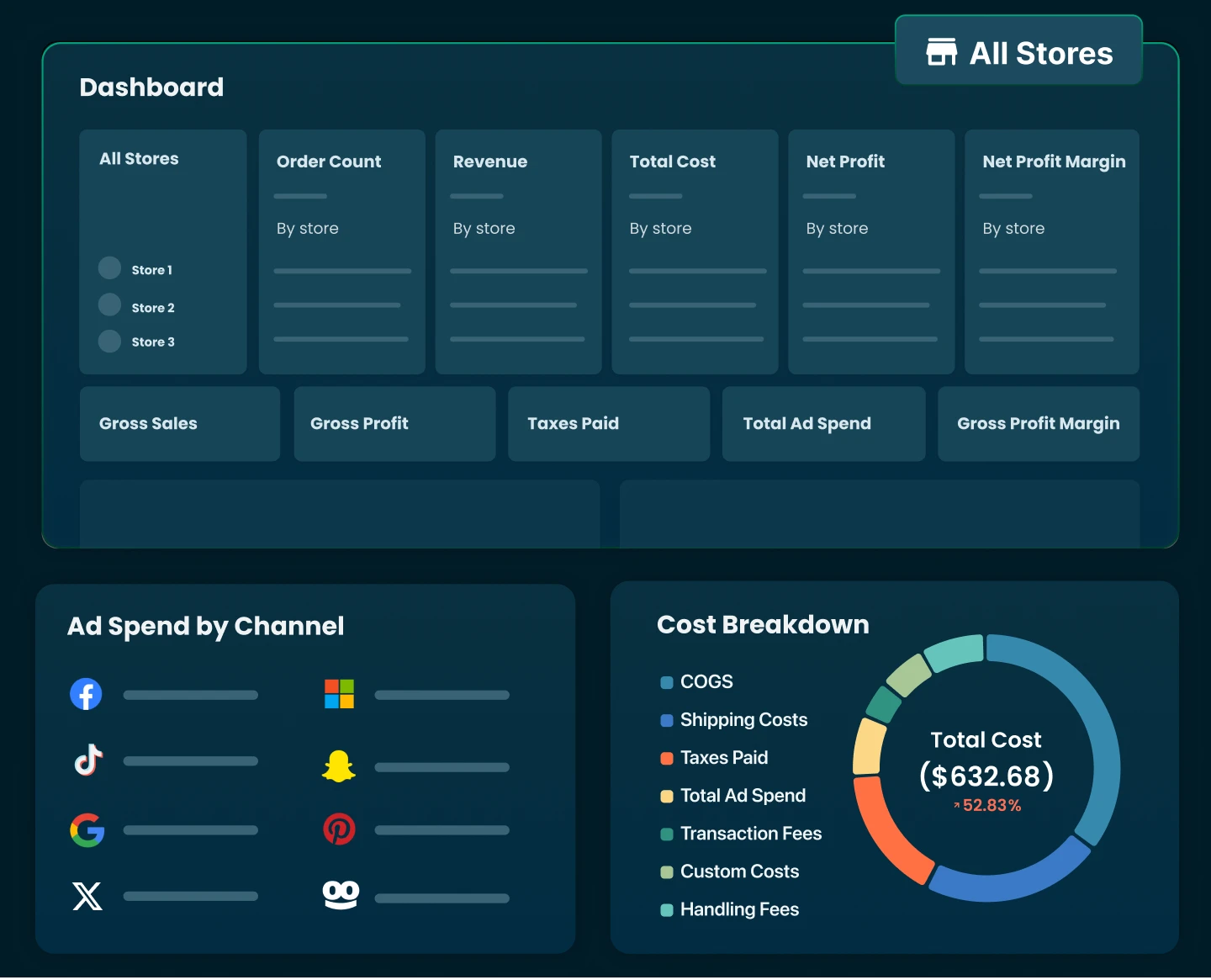
For a complete picture of whether your SEO investment is generating real margin, you should also track your overall profit and loss. Tools like TrueProfit connect all your data and help you track net profit, so you know if the sales SEO drives are actually contributing to a healthy bottom line. That connection is central to understanding how to make money on Shopify sustainably.
2. Stay Current with Algorithm Changes
Three principles that hold across every major Google update:
- E-E-A-T matters more every year. Google evaluates content on Experience, Expertise, Authoritativeness, and Trustworthiness. Genuine product knowledge, real customer reviews, and transparent business practices all strengthen these signals.
- Helpful content wins. Google consistently deprioritizes content written to rank rather than to inform. Write for your customer first and answer their actual questions completely.
- AI is changing search. Features like Google's AI Overviews & AI mode or LLMs like Chatgpt, Claude, Gemini pull from content that directly and completely answers user queries. The best defense is producing thorough, accurate content that is worth citing.

Common Shopify SEO Mistakes to Avoid
- Copied product descriptions: Manufacturer copy creates duplicate content and offers no differentiation. Always write original descriptions.
- No blog: Without one, you cannot target informational keywords or build topical authority.
- Keyword stuffing: Forcing keywords into content unnaturally hurts readability and can trigger penalties.
- Not tracking performance: Without Search Console and GA4 data, you cannot identify what to fix or scale what is working.
- Focusing on only one SEO type: Technical, on-page, and off-page SEO each contribute differently. Neglecting any one area limits how far the others can take you.
Recommended Tools at a Glance
In short, these are the core tools you need to operate efficiently and scale with confidence:
Category | Tool | What It Does |
|---|---|---|
All-in-one SEO | SEO Manager, Plug in SEO | Meta tags, schema, broken links, SEO audits |
Image optimization | TinyIMG, Image Optimizer | Compress images without quality loss |
Speed | Booster: Page Speed Optimizer | Minimizes CSS and JavaScript for faster load times |
Reviews | Loox, Judge.me, Yotpo | Collect and display customer reviews |
Schema | JSON-LD for SEO | Structured data without coding |
Analytics | Google Search Console, GA4 | Traffic, indexing, conversions |
Keyword research | Semrush, Ahrefs | Rankings, competitor analysis, keyword data |
Final Thoughts
Shopify SEO is one of the few growth channels that compounds over time. Ads stop the moment you pause spending, but strong SEO keeps bringing in qualified traffic day after day.
But traffic alone is not the goal. More visitors do not automatically mean a better business. What actually matters is whether that traffic turns into profitable sales.
That is where most stores get it wrong. They focus on rankings, clicks, even revenue, but never connect it back to the bottom line.
As your SEO efforts start driving more orders, you need to understand which products, pages, and channels are actually generating profit after all costs. Tools like TrueProfit help close that gap by showing your real net profit across your store, so you are not just growing traffic, you are building a business that is sustainably profitable.

Because at the end of the day, SEO is not about getting more traffic. It is about getting the right traffic and turning it into real profit.
Irene Le is the Content Manager at TrueProfit, specializing in crafting insightful, data-driven content to help eCommerce merchants scale profitably. With over 5 years of experience in content creation and growth strategy for the eCommerce industry, she is dedicated to producing high-value, actionable content that empowers merchants to make informed financial decisions.