





Dropship Furniture 2026: Complete Guide to Suppliers, Profitability & Success



Table of Contents
The online furniture market is large, growing, and still accessible to independent sellers. Dropshipping furniture lets you tap into it without holding inventory, managing a warehouse, or buying products in bulk. The tradeoff is complexity: furniture is heavy, fragile, and expensive to ship, which means this niche rewards sellers who plan carefully.
This guide covers everything you need to launch and scale a dropship furniture business, from choosing the right model and finding suppliers to handling freight logistics and marketing high-ticket pieces.
If you're new to the model entirely, start with our beginner's guide to dropshipping before diving in.
In this blog:
Understanding the Dropship Furniture Business Model
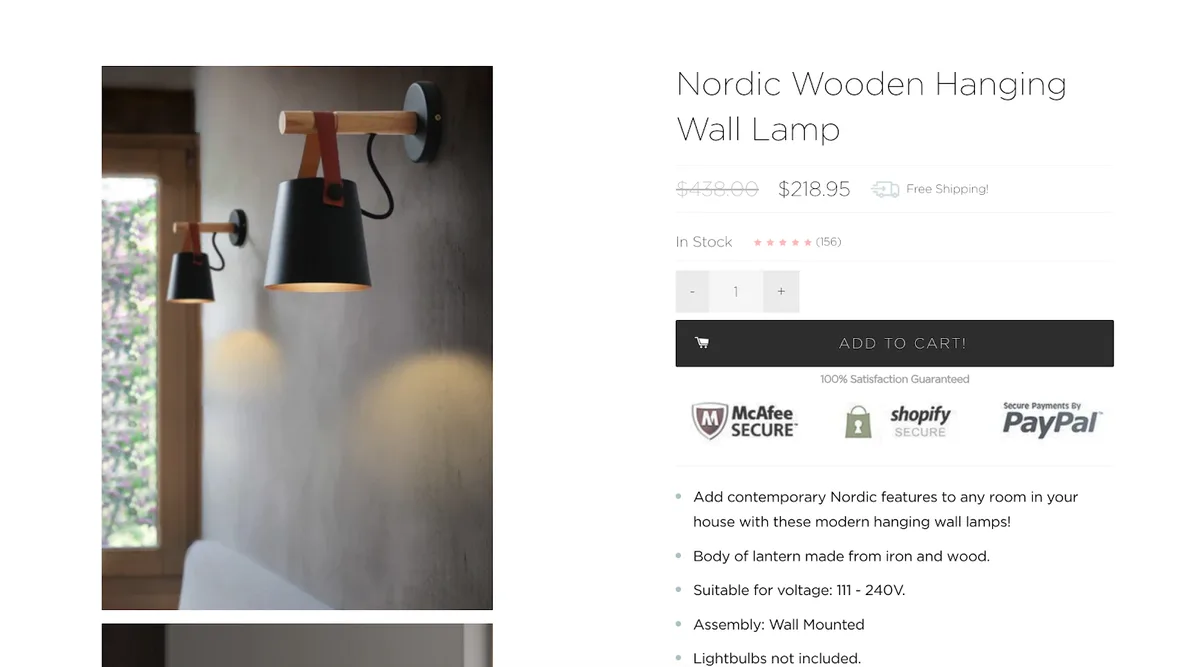
Furniture dropshipping is an e-commerce fulfillment model where you sell furniture online without ever touching the product. When a customer places an order, you forward it to your supplier, who packages and ships it directly to the customer. You handle marketing, sales, and customer service. The supplier handles storage, fulfillment, and logistics.
For furniture specifically, this often means Less Than Truckload (LTL) freight rather than standard parcel shipping. Items are palletized and share truck space with other shipments, which keeps costs manageable for oversized goods. The core model stays the same: no inventory, no warehouse, no upfront stock purchases.

Pros and Cons
Furniture dropshipping offers real advantages, but the challenges are more significant than in most other niches. Here's an honest breakdown:
Advantages:
- Lower startup costs. You skip bulk purchasing, warehouse rent, and stock management. The financial barrier to entry is much lower than traditional furniture retail.
- Wide catalog without inventory risk. You can offer dozens of styles, from minimalist modern to rustic farmhouse, and test new products without committing capital.
- High average order value. A 20% margin on a $1,200 sofa is $240 per sale. That same margin on a $30 product yields $6. The math heavily favors furniture.
Challenges:
- Freight complexity. LTL shipping involves freight classes, accessorial charges (liftgate service, residential delivery fees, delivery appointments), and longer transit times.
- Damage risk. Large, heavy items are vulnerable in transit. You need clear supplier agreements on who covers replacement costs.
- Return logistics. Arranging a freight pickup for a returned sofa is expensive and operationally complex. This must be addressed in your policies before launch.
- Supplier performance dependency. A supplier who ships late, sends damaged goods, or goes out of stock reflects directly on your brand.

Choosing a Profitable Furniture Niche
Trying to sell all furniture to everyone is a losing strategy in a market dominated by Wayfair, IKEA, and Amazon. Focused niche stores attract more targeted traffic, convert better, and build stronger brand loyalty.
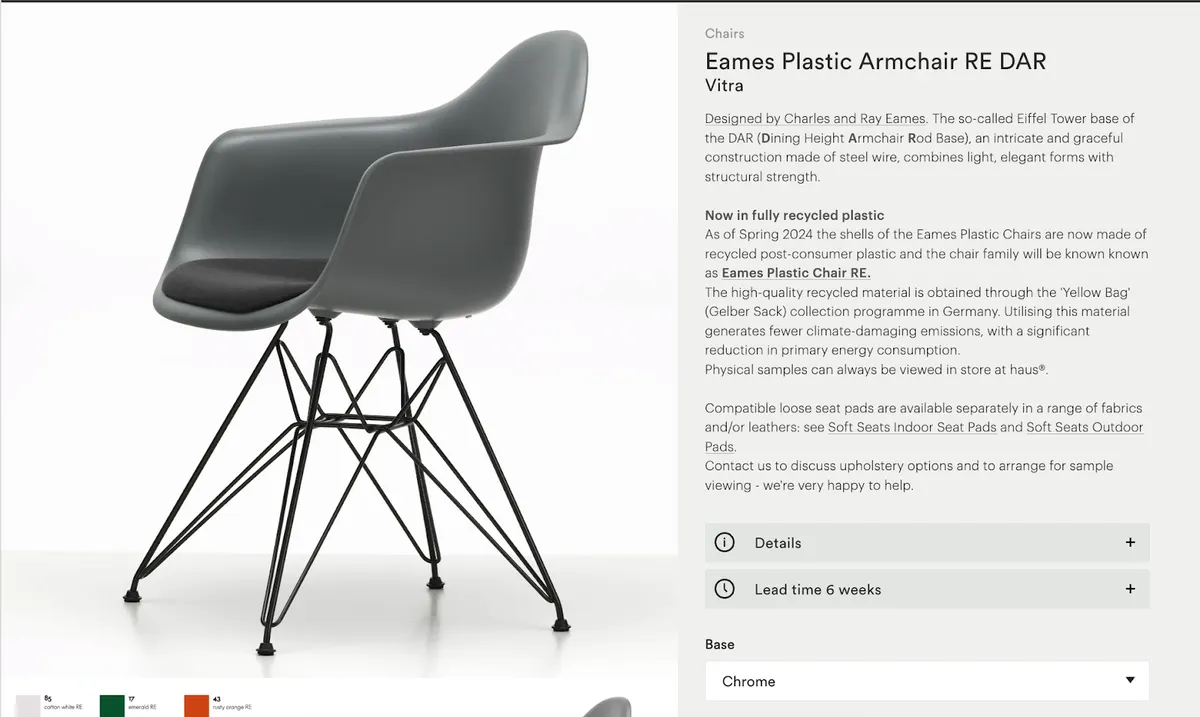
Here’s the list of the most promising furniture niche, each has distinct supplier needs, customer expectations, and marketing angles:
- Modern and minimalist furniture: Clean lines, neutral palettes, and contemporary materials. Strong demand among urban professionals and first-time homeowners.
- Rustic and farmhouse furniture: Natural wood, distressed finishes, earthy tones. Consistent evergreen demand, particularly in North American markets.
- Outdoor and patio furniture: Weather-resistant materials, strong seasonal peaks. Allows for complementary product bundling (cushions, covers, fire pits).
- Home office furniture: Ergonomic chairs, standing desks, storage solutions. Remote work adoption has sustained demand well beyond the initial pandemic surge.
- Luxury and high-end furniture: Designer or custom pieces targeting affluent buyers. Higher margins, but white glove delivery and premium service are expected. See our guide to high-ticket dropshipping for the operational approach this niche requires.
- Kids' furniture: Beds, desks, and storage designed for children's rooms. Parents are willing to pay for safety certifications and durable materials. This overlaps with the broader opportunity in dropshipping baby and children's products.
- Eco-friendly furniture: Sustainably sourced materials and ethical manufacturing. Growing segment with strong loyalty among environmentally conscious buyers.
For a deeper look at how to evaluate and validate a niche before committing, read our guide on how to find profitable dropshipping niches.
Finding and Vetting Dropship Furniture Suppliers
What to Look For in a Furniture Dropshipping Supplier
The right supplier is the foundation of your business. Evaluate every potential partner against these criteria:
1. Product Quality and Variety
Request samples before committing to any supplier. High-quality products reduce returns, generate better reviews, and protect your brand. Suppliers should also provide high-resolution images and detailed product specs including exact dimensions, weight, materials, and assembly complexity.
2. LTL Freight Experience
Shipping furniture requires more than a standard parcel carrier. Your supplier must have proven experience with LTL freight, including proper palletizing, freight class knowledge, and coordination with carriers for residential deliveries and liftgate service.
3. Clear Damage and Return Policies
Transit damage is inevitable with large items. Before signing on with any supplier, get clear written answers to: Who files the freight claim? Who covers replacement costs? Who pays return shipping? What are the restocking fees? Ambiguity here will cost you money.
4. Real-Time Inventory Data
Out-of-stock items that have already been sold to customers are one of the fastest ways to destroy trust. Prioritize suppliers who offer live inventory feeds via CSV, XML, or API so your product availability stays accurate automatically.
5. Responsive Communication
Problems will happen. A supplier who responds quickly and takes ownership of issues is worth far more than one who offers slightly lower prices but goes silent when something goes wrong.
6. Fees and Minimums
Most dropshipping programs have no per-order minimum quantity, but some require an annual program fee or initial account minimum. Confirm all fees upfront so they're built into your margin calculations.
Reputable Dropship Furniture Suppliers
US-Based Suppliers
UK-Based Suppliers
Supplier | Specialty | Notes |
|---|---|---|
Hill Interiors | Home decor and accents | Strong UK wholesale presence; ideal for complementary product lines |
Supplier Directories and Platforms
- Syncee: Integrates with Shopify and BigCommerce; automated product syncing and order routing; good variety of furniture and home goods suppliers.
- SaleHoo: Vetted wholesale and dropship directory; filter by furniture category to find pre-screened options.
- Flxpoint: Middleware platform that connects your store to multiple suppliers simultaneously; automates inventory sync and order routing across vendors.
Many smaller furniture manufacturers run their own dropship programs. Look for "Wholesale," "Trade," or "Partnerships" sections on manufacturer websites, or contact their sales team directly. Come prepared with your marketing plan and target audience. Manufacturers want partners who will actually move products, so demonstrate that clearly.
How To Set Up Your Dropship Furniture Store
1. Choosing the Right E-Commerce Platform
Your platform choice affects functionality, cost, scalability, and how easily you can integrate with suppliers. Here's a comparison of the main options:
Shopify is the most common starting point for furniture dropshipping due to its supplier integration apps and manageable learning curve. For examples of what a high-performing store looks like in practice, browse our breakdown of top Shopify dropshipping stores.
Whatever platform you choose, confirm it supports three critical integrations:
- Automated order routing to send orders directly to suppliers in real time
- Inventory sync to prevent selling out-of-stock products
- Freight shipping calculators to estimate accurate LTL costs at checkout
2. Designing for High-Value Purchases
Furniture buyers are cautious. They spend more time researching before buying, compare more options, and expect more from the shopping experience. Your site needs to support that decision-making process.
High-Quality Visuals
Furniture is a visual product. Use high-resolution images from multiple angles, lifestyle shots showing pieces in real rooms, and close-ups of materials and finishes. 360-degree views help customers who can't see the product in person. If your suppliers don't provide this quality of imagery, find better suppliers.
Complete Product Specifications
List exact dimensions (height, width, depth), weight, materials, available finishes, assembly requirements, and care instructions on every product page. Vague descriptions lead to mismatched expectations, which leads to returns.
Transparent Policies
Put your shipping policy, return procedure, and warranty terms on dedicated pages linked from every product page and your site footer. Customers buying a $900 dining table want to know what happens if it arrives damaged before they click "Buy."
Mobile and Speed Optimization
A large share of furniture research now happens on mobile. Your site must be fully responsive and load fast. Slow pages kill conversions on high-consideration purchases.
3. Managing Inventory and Order Fulfillment
Automated Syncing
Use middleware like Flxpoint or your platform's native supplier apps to automate inventory updates, pricing changes, and order forwarding. Manual processes at scale create errors that damage customer trust.
Manual Process Backup
If full automation isn't in place yet, build a written SOP for manually placing orders, confirming details with suppliers, tracking shipments, and communicating with customers. Consistency prevents mistakes.
Proactive Tracking Communication
Send customers tracking information as soon as it's available. For LTL freight, delivery windows are wider than standard parcel delivery. Set that expectation early and follow up with updates. Customers who know what to expect are far more forgiving of delays than those left in the dark.

Overcoming the Unique Challenges of Furniture Dropshipping
1. Managing Freight Logistics for Bulky Items
LTL freight is fundamentally different from standard parcel shipping, and mastering it separates successful furniture stores from struggling ones.
How LTL shipping works: Items too large or heavy for standard carriers (typically 150+ lbs or oversized dimensions) ship via LTL freight. Products are palletized and share truck space with other shipments. Pricing is based on freight class, weight, dimensions, and distance. Delivery to residential addresses often adds fees for liftgate service and appointment scheduling.
White glove delivery: A premium option that includes inside delivery, unpacking, assembly, and debris removal. For high-ticket pieces, offering white glove delivery as an upsell or default option significantly reduces damage risk and increases customer satisfaction. It also justifies a higher price point. See our guide to high-ticket dropshipping products for more on pricing premium service into your offer.
Calculating and pricing shipping: LTL rates are complex to calculate manually. Use freight quoting APIs, work with your suppliers on standard rate agreements, or integrate a shipping calculator that accounts for product dimensions and destination. Flat-rate or "free shipping" offers work, but only when freight costs are accurately built into product prices first.
Handling delays: Set realistic delivery windows on every product page and at checkout. Build a communication protocol for delays so customers get updates before they contact you frustrated. Strong supplier and carrier relationships give you more leverage to resolve problems quickly.
2. Handling Damaged Goods and Returns
Damage during transit is a cost of doing business in furniture dropshipping. What separates good operations from bad ones is how they handle it.
Prevention: Partner only with suppliers who use freight-appropriate packaging designed for LTL transit. Instruct customers to inspect deliveries before signing and to note any visible damage on the delivery receipt before the driver leaves. That notation is essential for filing freight claims.
Supplier agreements: Establish in writing before you start selling: who files damage claims, who funds replacements, and who covers return freight. Ambiguity in these terms will cost you significantly when a claim comes in. For high-value items, consider third-party shipping insurance if supplier coverage is limited.
Customer service process: Create a clear damage claim process: require photo evidence, set a report window (typically 48 to 72 hours of delivery), and commit to resolution timelines. Prioritize fast replacements or refunds. A customer who receives a damaged table and gets a replacement within a week often becomes a loyal repeat buyer. One who waits weeks with no update does not.
3. Ensuring Consistent Product Quality
Vet suppliers rigorously. Request physical samples for your best-selling or highest-ticket products. Check public reviews and industry forums before committing to a supplier. Periodically reorder samples to confirm quality hasn't slipped.
Monitor and respond to reviews. Actively encourage buyers to leave reviews. Address negative feedback publicly and promptly with a real solution, not a boilerplate apology. In a high-consideration category like furniture, social proof carries enormous weight.
4. Legal and Regulatory Compliance
Warranties. Understand exactly what warranty your supplier provides, and align your store's stated warranty accordingly. If you offer anything beyond the supplier's terms, make sure you can actually deliver on it.
Consumer protection laws. Return rights for large, high-value items vary by region and are often more stringent than those for standard retail goods. Research the consumer protection regulations in every market you sell into, particularly if you're operating across multiple countries. Furniture dropshippers targeting UK buyers should be especially familiar with UK consumer rights legislation around faulty and non-conforming goods.
Marketing and Scaling Your Dropship Furniture Business
1. Build a Brand, Not Just a Store
Generic furniture stores compete on price and lose to Wayfair. A specific positioning wins. "Modern office furniture for remote workers" is a brand. "Furniture" is not. Know exactly who you're selling to, articulate one clear USP, and let that drive every marketing decision. For angle inspiration, browse our dropshipping business ideas.
2. Drive Traffic With SEO and Paid Ads
SEO is the highest-ROI long-term channel. Target specific purchase-intent terms like "mid-century modern dining table" or "outdoor sectional sofa weather resistant," not generic terms dominated by major retailers. Use Google Shopping Ads for buyers who are ready to purchase, and Instagram or Pinterest for buyers in the inspiration phase.
Set up abandoned cart email sequences too. Furniture buyers research for days before converting, and a well-timed follow-up email recovers meaningful revenue. Keep an eye on trending dropshipping products to align campaigns with seasonal demand.
3. Treat Customer Service as a Revenue Driver
For $500 to $3,000 purchases, responsive service directly influences conversion and repeat business. Answer pre-purchase questions about dimensions and materials quickly. Communicate shipping timelines proactively. Resolve post-delivery issues fast. Customers who trust your service refer others, which keeps acquisition costs down over time.
4. Scale With Data, Not Guesswork
Expand your catalog strategically by adding complementary categories like rugs, lighting, and decor to increase AOV. Diversify your supplier base to avoid stock disruptions, and only expand into new markets like the UK or Europe once your logistics are stable. Most importantly, scale based on what is actually profitable, not what looks good on revenue dashboards.
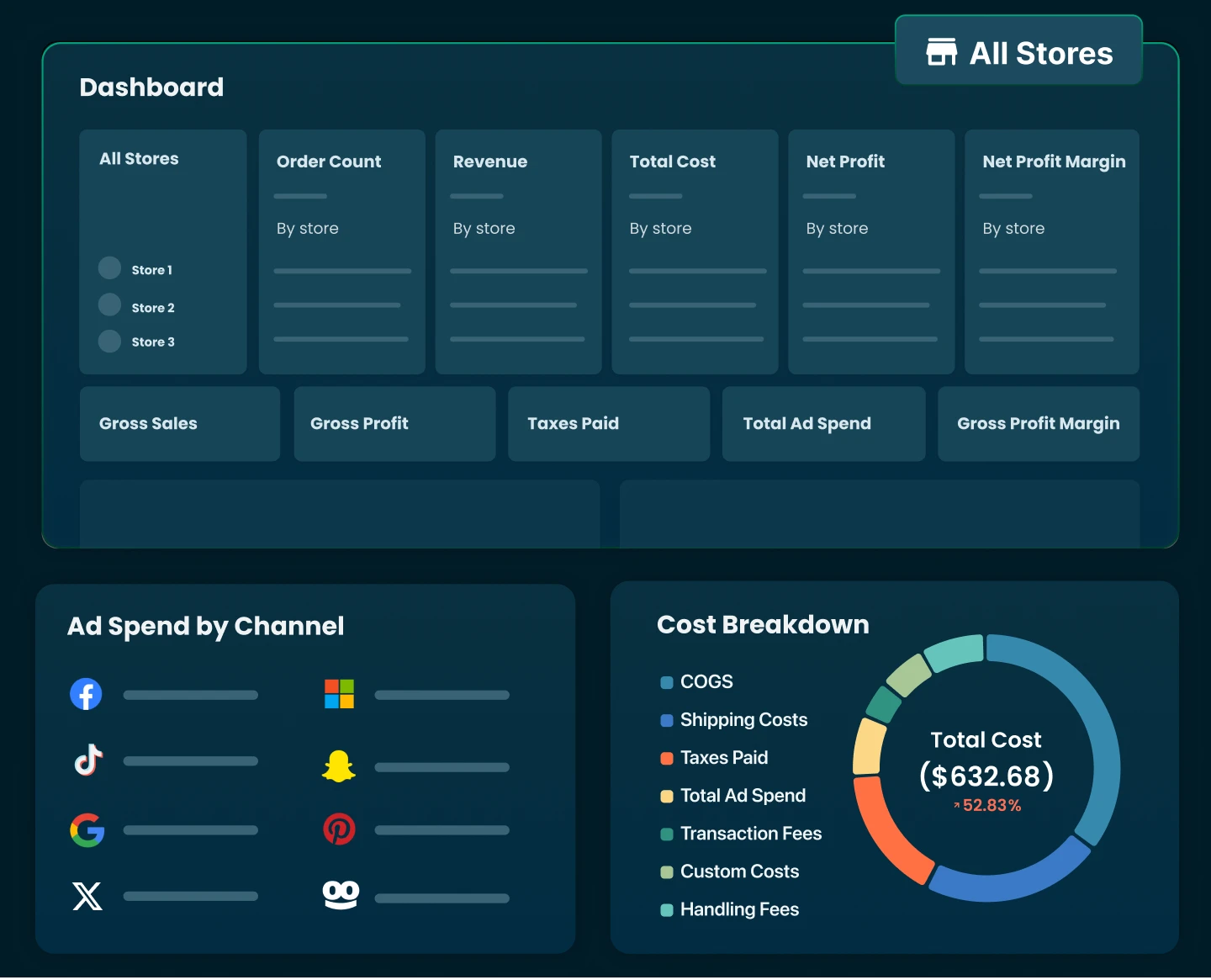
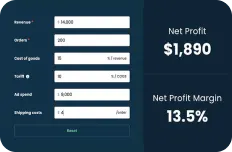
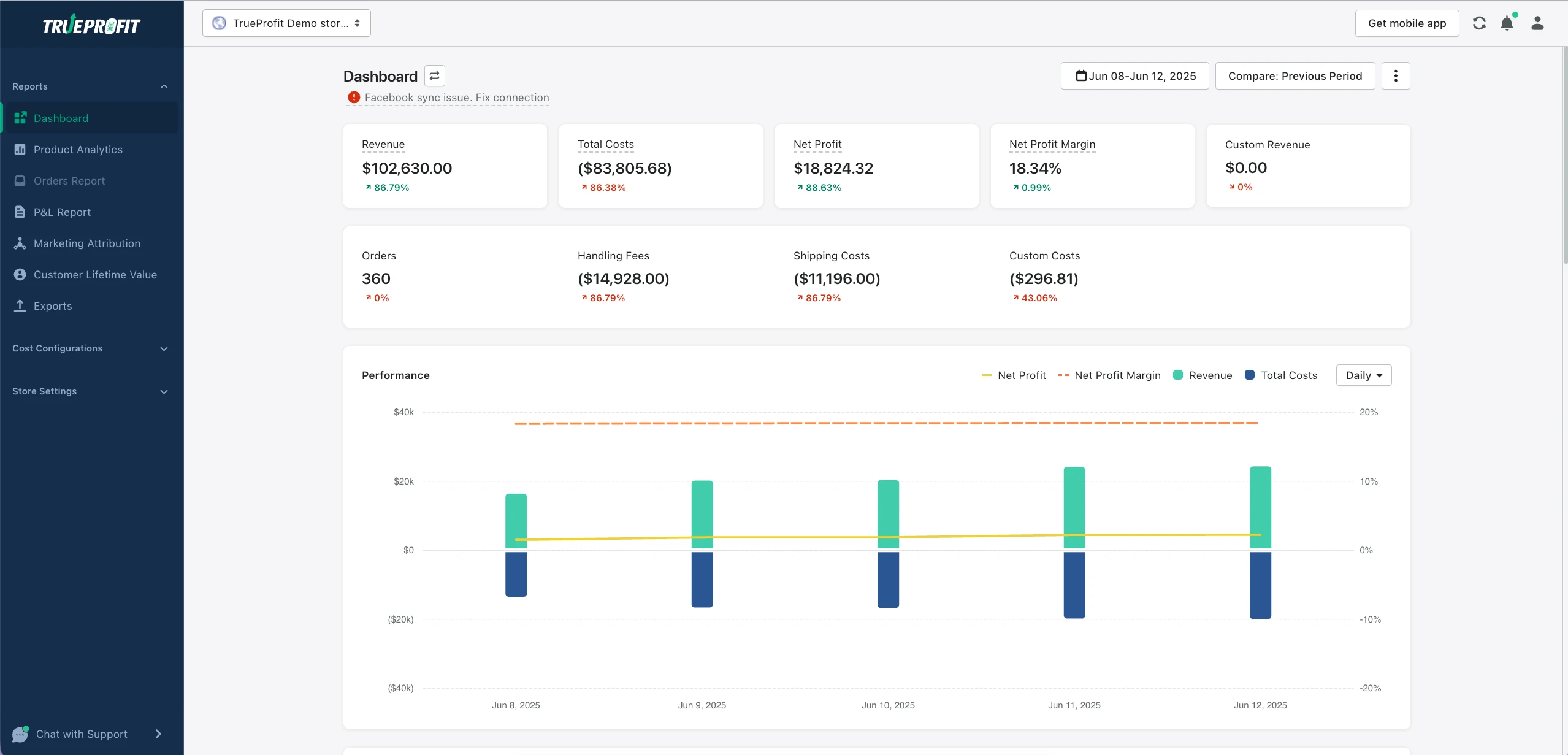
This is where most dropshippers get it wrong. Revenue and ROAS can look strong while margins are quietly shrinking due to rising ad costs, shipping fees, and transaction charges. Without a clear view of your numbers, it is easy to scale unprofitable products.
TrueProfit gives you that clarity. It tracks real time net profit at the order, product, and channel level by consolidating all your costs including COGS, ad spend, shipping, and fees into one dashboard. This allows you to quickly identify which products deserve more budget, which campaigns are actually profitable, and where your margins are leaking. Instead of guessing what to scale, you are making decisions based on your true bottom line.
Final Thoughts
Dropshipping furniture is a high effort, high reward niche. The logistics are complex, order values are higher, and supplier reliability matters more than ever. But with strong AOV, steady demand, and the right execution, it can become a highly profitable business.
The fundamentals are simple: choose a focused niche, work with reliable suppliers, build a store that earns trust, and stay disciplined with your numbers. Because at this level, small cost leaks can quickly eat into your margins.
That is where having clear visibility matters. For dropshippers, TrueProfit helps you track real net profit across every order by combining product costs, shipping, ad spend, and fees into one view. This makes it easier to understand which products and channels are truly driving profit, so you can scale with confidence instead of guesswork.

Harry Chu is the Founder of TrueProfit, a net profit tracking solution designed to help Shopify merchants gain real-time insights into their actual profits. With 11+ years of experience in eCommerce and technology, his expertise in profit analytics, cost tracking, and data-driven decision-making has made him a trusted voice for thousands of Shopify merchants.