
White Label Dropshipping: Top Suppliers, Products, and How to Start (2026)


Table of Contents
Let me be upfront about something: white label dropshipping sounds more complicated than it is.
The core idea is simple. You find a generic product, put your brand on it, and sell it. A supplier handles storage and ships directly to your customers. You never touch the product.
What makes it useful is the branding layer. Unlike regular dropshipping, where you're just reselling someone else's product as-is, white label lets you build something that looks and feels like your own brand, without the cost of manufacturing anything from scratch.
This guide covers how the model works, how to find good suppliers, which products to sell, and how to actually make money doing it.
In this blog:
What Is White Label Dropshipping?
White label dropshipping is when you sell pre-made, unbranded products under your own brand name. A supplier manufactures and ships the product. Your logo goes on the packaging. The customer never knows the supplier exists.

How It Actually Works
Here's the full process, start to finish:
- A customer buys a product from your store.
- You send the order details to your supplier.
- The supplier packs the product with your branding and ships it directly to the customer.
- The customer receives what looks like a product from your brand.
Your job is running the brand: marketing, customer experience, and service. The supplier handles everything behind the scenes.
How Does It Differ from Standard Dropshipping?
Standard dropshipping means reselling someone else's product with no brand attached. The same item might appear in a dozen other stores. You compete on price, and margins get squeezed fast.
White label dropshipping changes the dynamic. Custom packaging, branded inserts, and a consistent store experience give you pricing power that generic resellers don't have. A branded candle can sell for $20 where the same unbranded one sells for $10.
If you're brand new to this model, this beginner's guide to dropshipping is worth reading first.

White Label vs. Private Label: What's the Difference?
People mix these up constantly. They're not the same thing.
White label: You take an existing, unbranded product and put your name on it. The product itself doesn't change. You're competing on brand, not on what's inside the box.
Meanwhile,
Private label: A manufacturer makes or significantly modifies a product to your specifications. You get unique features, a custom formula, or a design no one else has. It's more expensive and takes longer, but the product is genuinely yours.
Feature | White Label | Private Label |
|---|---|---|
Product | Generic, off-the-shelf | Custom-made or modified |
Branding | Packaging and marketing only | Product, packaging, and marketing |
Startup Cost | Low | Higher |
MOQ | Low or none | Often higher |
Product Control | Limited | Full |
Exclusivity | Non-exclusive | Can be exclusive |
Best For | New brands, fast launches | Brands that need differentiation |
For a deeper look at private labels specifically, read our guide on private label dropshipping.
Which One Should You Choose?
It depends.
You should go with white label if you're starting out, testing a niche, or working with limited capital. It's faster and less risky.
On the other hand, just go with private labeling once you have proof that customers want what you're selling and you're ready to invest in something more defensible.
Why White Label Dropshipping Works
Here's the honest case for the model.
1. No Inventory, Low Startup Cost
You skip manufacturing, warehousing, and bulk purchasing entirely. That removes most of the upfront financial risk that kills traditional retail businesses before they get started.
Curious about the actual numbers? Our breakdown of how much it costs to start dropshipping covers what to expect realistically.
2. You Work on the Business, Not the Logistics
Because your supplier handles fulfillment, your time goes toward things that actually grow revenue: content, ads, customer relationships, brand building. That's the work that compounds.
3. You Can Test Without Burning Money
Not sure if a niche will work? With white label, you can list a few products, run some traffic, and find out quickly without sitting on unsold inventory. Once something works, scaling doesn't require a warehouse.
4. The Risk Is on the Supplier's Side
Manufacturing defects, overproduction, excess stock: none of that is your problem. Your risk is mainly supplier selection and marketing performance, both of which you can control.
How to Start a White Label Dropshipping Business in 2026
Here's a straightforward process. Skip any step and you'll probably regret it.
1. Pick a Niche Where Branding Drives the Sale
This is the most important decision you'll make. White label only works when the brand story matters more than the product specs.
Good niches for this: beauty and skincare, wellness supplements, pet products, home decor, apparel. Customers in these categories make buying decisions based on how a brand makes them feel, not on comparing technical specs.
Bad niches: commodity electronics, tools, industrial supplies. Price wins in those categories, and you can't out-price Alibaba.
To validate demand, use Google Trends and check TikTok search. Look for consistent interest over 12+ months, not a short spike. Seasonal products are fine, but your bread-and-butter line should have year-round demand.
2. Find Suppliers Worth Trusting
Your supplier is the most important business relationship you have. If they ship late, deliver poor quality, or go dark when you have an issue, your customers blame you.
Before committing to any supplier, check for:
- Positive reviews with specifics, not just star ratings
- Willingness to ship without their own branding on the package
- Custom packaging options: branded boxes, labels, inserts
- Shipping times that match your customer expectations
- Support that actually responds
And order samples. Always. A product that looks fine in listing photos can arrive feeling cheap or poorly made. Find out before your customers do.
3. Build a Store That Looks Like a Real Brand
Platform choice matters less than most people think. Shopify and WooCommerce both work well. What matters is how your store makes someone feel when they land on it.
Our guide to ecommerce platforms for dropshipping covers the tradeoffs if you're still deciding.
Your brand identity needs four things: a visual style, a consistent voice, a clear positioning statement, and product descriptions that sell the outcome, not just the features. "Natural face serum with hyaluronic acid" is a feature. "Skin that actually holds moisture through a full workday" is what the customer wants.
4. Automate Order Fulfillment
Connect your store directly to your supplier's system using an app or API integration. The goal is zero manual steps between a customer placing an order and your supplier receiving it.
Every manual step is a potential mistake and a bottleneck when volume grows. Set it up properly from day one.
Set up automatic tracking notifications too. Customers who know where their order is are less likely to email you asking where their order is.
5. Do Marketing That's Actually About Your Brand
Here's what doesn't work: running generic product ads that could apply to any store. Here's what works: marketing that makes someone feel like your brand gets them.
The channels worth focusing on:
- SEO and content marketing for sustainable organic traffic that doesn't disappear when you pause ad spend
- Paid social on Meta and TikTok for fast testing and scaling once you find a winning angle
- Email marketing for bringing customers back without paying for them twice
- Influencer partnerships for social proof in niches where recommendations carry weight
TikTok dropshipping in particular has become a real acquisition channel for white label beauty, wellness, and lifestyle brands. If your product has a visual result or a satisfying unboxing, short-form video is worth testing early.
6. Own the Customer Experience Post-Purchase
This is where most dropshippers fall down. They spend all their energy getting the sale and then treat support as an afterthought.
Your customers don't know or care that you use a third-party supplier. Every complaint, return, or shipping delay is your problem to solve. Handle it quickly and without friction. A customer whose issue gets resolved fast is often more loyal than one who never had a problem.

Best White Label Products to Sell
The best white label products are ones where branding can meaningfully increase what someone will pay. Here are the top categories with realistic margin estimates.
Category | Example Product | Selling Price | Supplier Cost | Estimated Gross Margin |
|---|---|---|---|---|
Beauty & Skincare | Natural Face Serum | $25 | $7 | 72% |
Apparel (POD) | Custom T-shirt | $28 | $10 | 64% |
Home Decor | Scented Candle | $20 | $6 | 70% |
Pet Products | Ergonomic Pet Bowl | $35 | $12 | 66% |
Small Electronics | Wireless Charging Pad | $40 | $15 | 62.5% |
Supplements | Vegan Protein Powder | $55 | $20 | 63.6% |
Kids' Products | Wooden Stacking Toy | $30 | $9 | 70% |
These are gross margins only. Ad spend, platform fees, and shipping will reduce your net.
- Beauty and skincare is one of the strongest categories for white label. Customers respond to packaging design, brand values, and ingredient narratives, not just the formula. A serum with beautiful packaging and a clear story can command $25-$40 even if the underlying product costs $7.
- Apparel via print-on-demand is inherently white label. Printful and Printify print your designs on blank products and ship them under your brand. No inventory, no upfront cost. It's the lowest-friction way to launch a clothing brand.
- Supplements offer high margins and strong repeat purchase rates when positioned well. Platforms like Supliful let you start a dropshipping supplements business with your own branding, handling all manufacturing and fulfillment.
- Pet products attract emotionally invested buyers willing to pay a premium for a brand that matches their values. An ergonomic pet bowl marketed to health-conscious dog owners can justify a $35 price tag.
- Home decor works when positioned around a specific aesthetic or lifestyle. Scented candles, minimalist organizers, and decorative objects sell well when the brand communicates a clear visual identity.
Is White Label Dropshipping Profitable?
Yes, but only if you track the right number. Most sellers fixate on gross margin and miss what's actually happening to their money.
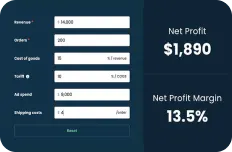
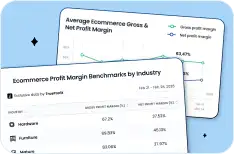
Dropshipping averages around 60–75% gross margin, but net profit margin, after ad spend, fees, and returns, typically lands between 5% and 20%+ or even negative (a lot of the time). That's the number that tells you whether you're actually making money.
White label gives you an edge here. Because you're selling a branded product instead of a commodity, you have room to price above the market rate. The same candle that sells for $8 unbranded can sell for $20 under a recognizable brand. That headroom is what keeps ad spend sustainable.
Based on data from 1,200+ dropshipping stores, beginners typically net $0–$2,000/month, intermediate sellers $2,000–$10,000, and advanced dropshippers $10,000–$50,000+. The difference between those levels isn't just revenue. It's cost control, supplier reliability, and ad efficiency.
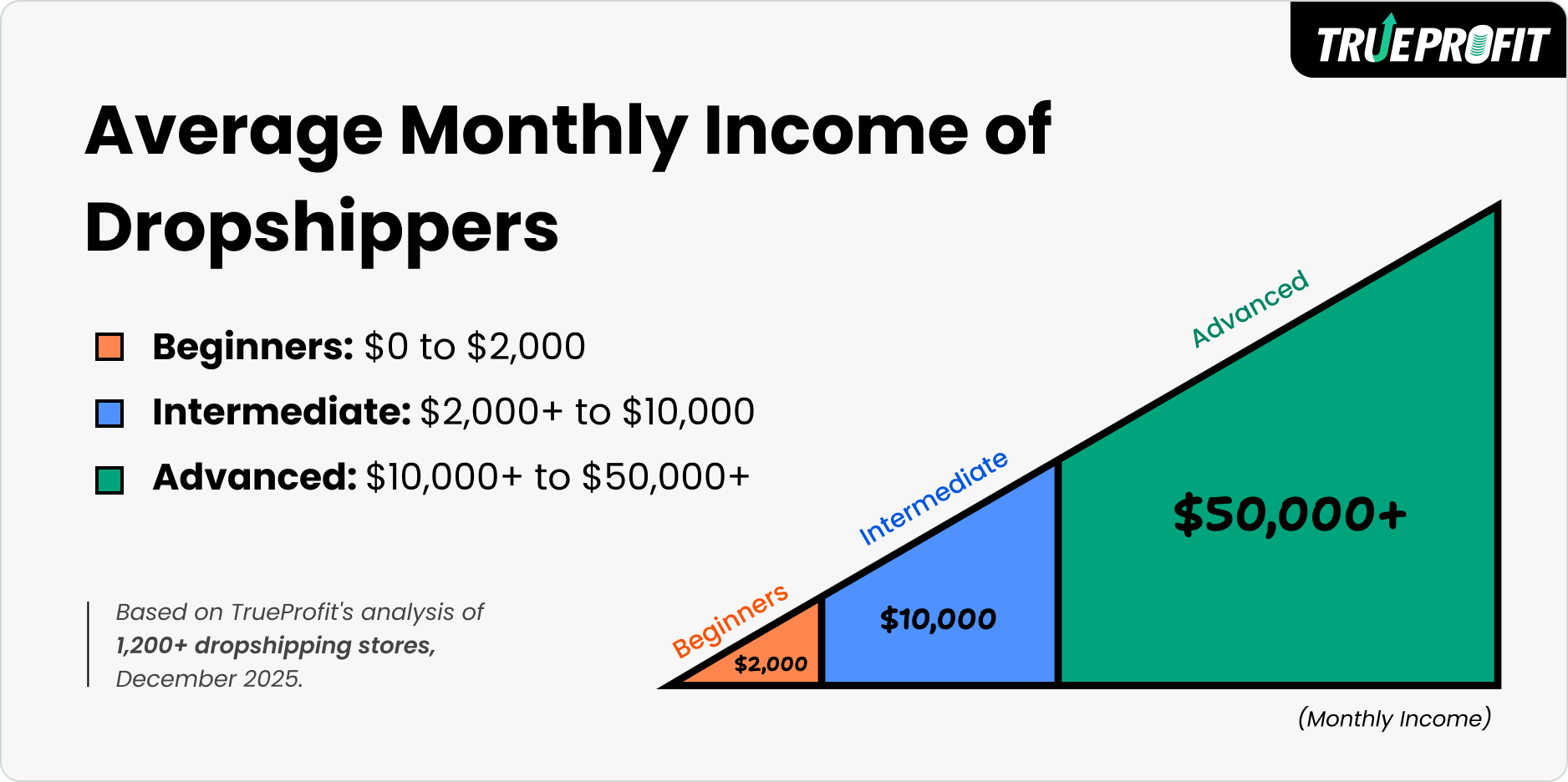
For the full income breakdown by experience level, see TrueProfit's analysis of average dropshipping income 2026.
Is White Label Dropshipping Legal?
Yes. Purchasing products from a manufacturer and reselling them under your own brand is standard commercial practice. It's how private label consumer goods have worked for decades.
For a full legal breakdown including what to watch for, see our guide on whether dropshipping is legal.
A few areas to be careful about: health claims on supplements, cosmetic labeling requirements, and age-restricted product categories. If you're selling in regulated categories, know the rules for your target market before you launch.
Final Thoughts
White label dropshipping is a practical way to build an ecommerce brand without manufacturing products or holding inventory. You can launch faster, test ideas with less risk, and use branding to charge more than generic dropshippers selling the same product.
But the model only works if you treat it like a real business, not a quick product-flipping game. Your supplier, brand positioning, customer experience, and cost tracking all matter. A product may show a 60%+ gross margin on paper, but ad spend, payment fees, shipping, returns, and platform costs can quickly change the real profit picture.
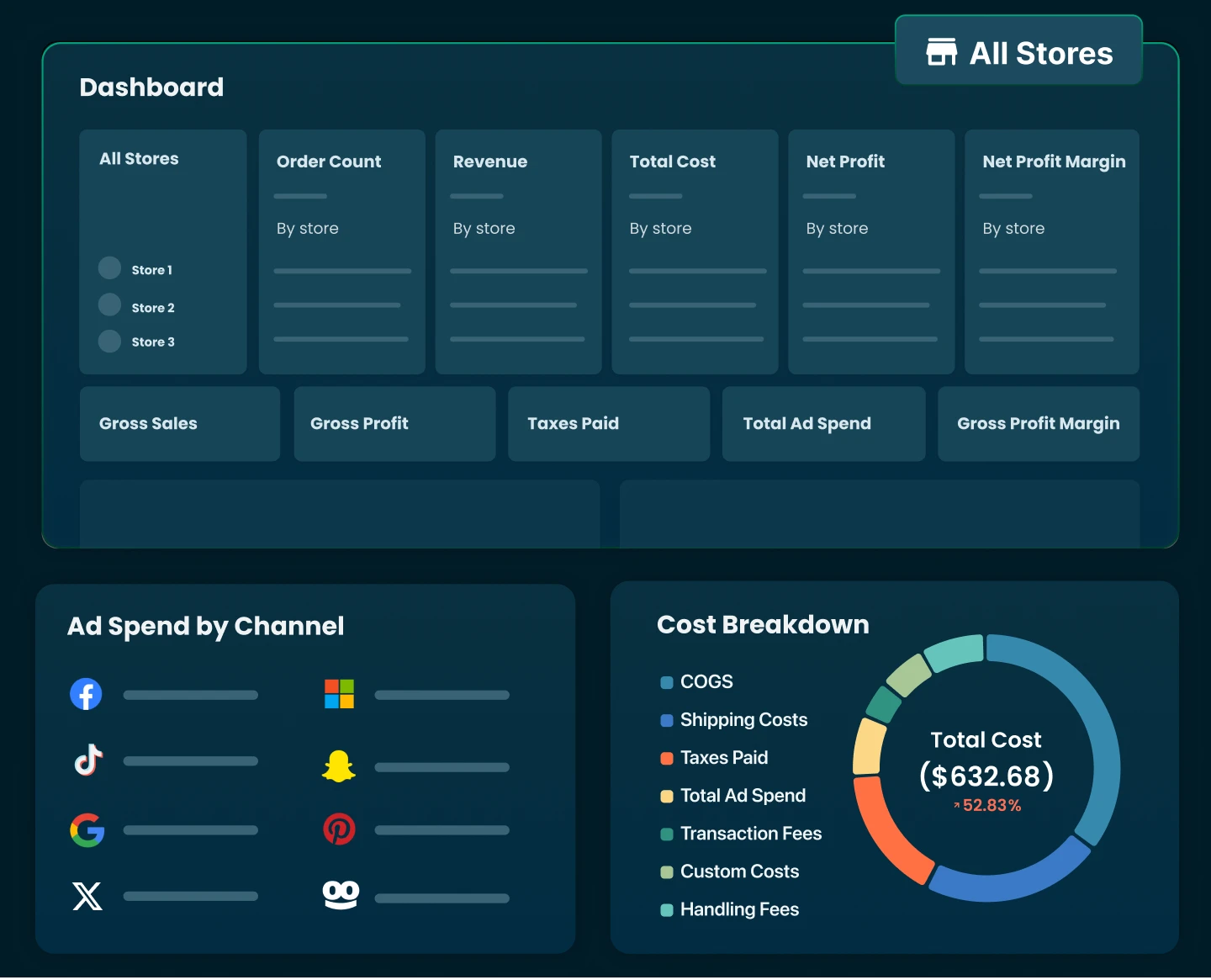
That’s why tracking net profit from day one matters. TrueProfit helps Shopify sellers see exactly what they keep after every cost, so they can price smarter, scale winning products, and avoid growing a store that looks profitable but quietly leaks money.
And as workflows become more AI-driven, having your profit data ready to plug into tools like ChatGPT or Claude makes decision-making faster and more grounded. With TrueProfit’s new features like MCP, you can move from raw numbers to actual actions in seconds, turning your store data into something you can work with, not just look at.
Irene Le is the Content Manager at TrueProfit, specializing in crafting insightful, data-driven content to help eCommerce merchants scale profitably. With over 5 years of experience in content creation and growth strategy for the eCommerce industry, she is dedicated to producing high-value, actionable content that empowers merchants to make informed financial decisions.