Temu Dropshipping: Is It Profitable? Pros, Cons & Alternatives (2026)


Table of Contents
- 1. What Is Temu Dropshipping?
- 2. Can You Legally Dropship from Temu?
- 3. Is Temu Dropshipping Profitable?
- 4. Pros and Cons of Temu Dropshipping
- 5. How to Dropship from Temu: Step-by-Step
- 6. Temu vs. Other Dropshipping Platforms
- 7. Better Alternatives to Temu Dropshipping
- 8. Protecting Your Brand When Using Temu
- 9. Is Temu Dropshipping Right for You?
- 10. Temu Dropshipping FAQs
Temu has exploded in popularity with buyers drawn to its rock-bottom prices and enormous product catalog. It's no surprise that dropshippers want in. But can you actually build a profitable business sourcing from Temu?
The short answer: yes, but it's complicated. Temu has no official dropshipping program. What most people call "Temu dropshipping" is really manual order fulfillment, and that distinction creates real operational headaches. This guide breaks down what actually works, what doesn't, and whether Temu belongs in your sourcing strategy at all.
In this blog:
- 1. What Is Temu Dropshipping?
- 2. Can You Legally Dropship from Temu?
- 3. Is Temu Dropshipping Profitable?
- 4. Pros and Cons of Temu Dropshipping
- 5. How to Dropship from Temu: Step-by-Step
- 6. Temu vs. Other Dropshipping Platforms
- 7. Better Alternatives to Temu Dropshipping
- 8. Protecting Your Brand When Using Temu
- 9. Is Temu Dropshipping Right for You?
- 10. Temu Dropshipping FAQs
What Is Temu Dropshipping?
Temu dropshipping means selling products on your own store and fulfilling orders by buying directly from Temu, entering your customer's address at checkout. No API. No automated fulfillment. No reseller account. It's entirely manual.
Temu is owned by PDD Holdings and connects consumers directly with Chinese manufacturers. That's how it keeps prices so low. But that same direct-to-consumer model means there's no infrastructure for resellers. You're bending a consumer platform to do something it wasn't built for.

1. No Official Dropshipping Program
Temu's site has a "dropshipping / supplier:independently" page, but this describes how their own suppliers operate, not a program for outside sellers. There are no wholesale tiers, no branded packaging options, no dropshipping integrations of any kind.
2. How Temu's Platform Works for Sourcing
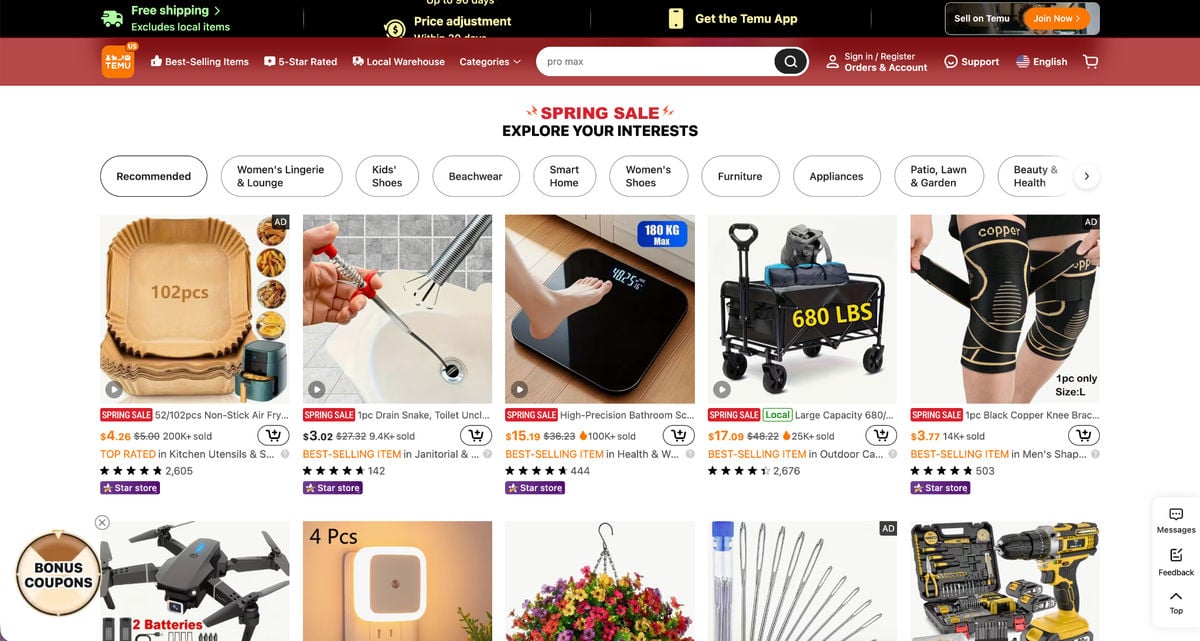
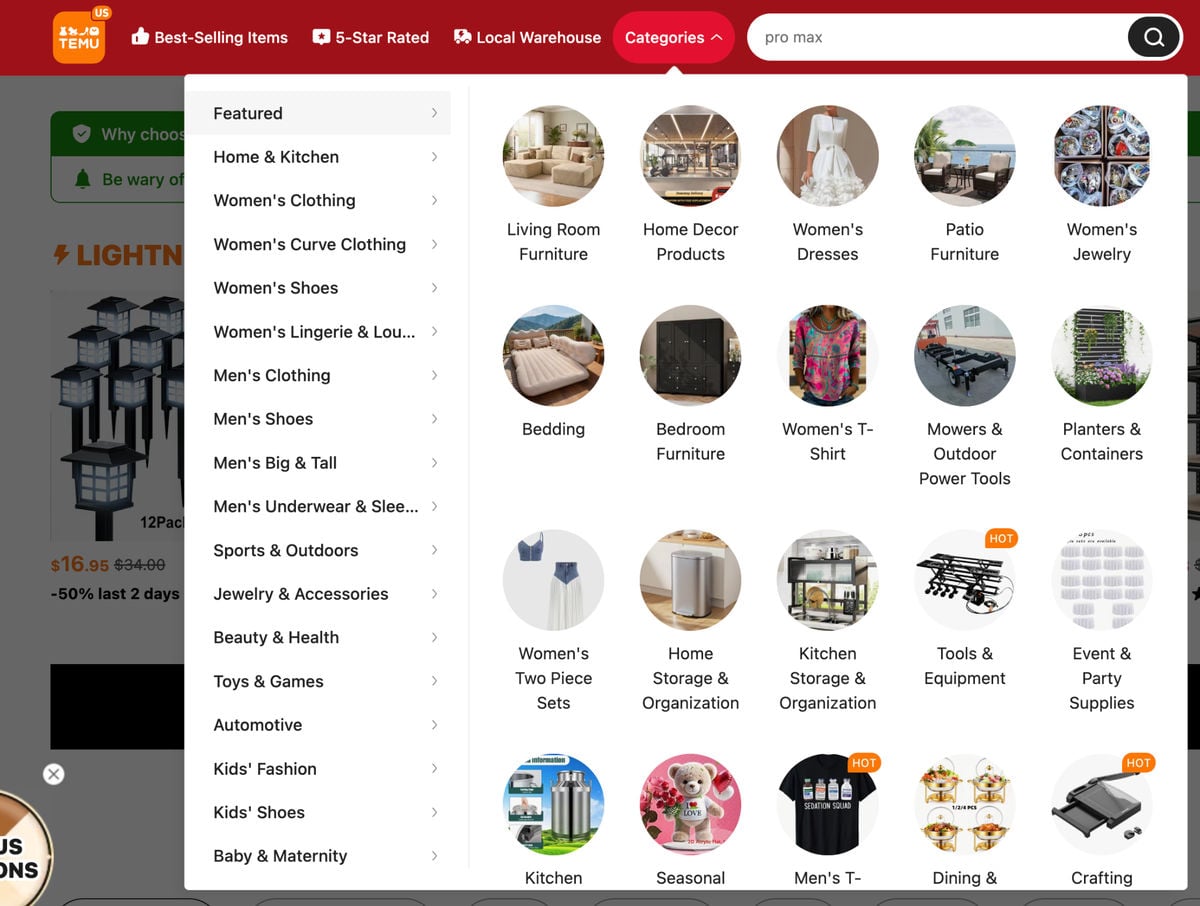
Temu's catalog covers thousands of categories, from home gadgets and pet accessories to fashion and electronics. Products cycle quickly, so trending items show up fast. Prices regularly beat AliExpress thanks to direct-from-manufacturer sourcing and heavily subsidized logistics.
The catch: the platform is built for consumers. Gamified deals, flash sales, spin-to-win promos. Great for spotting trending products, but not designed for bulk sourcing or business accounts.

Can You Legally Dropship from Temu?
Yes, but with real caveats. Temu's terms of service are written for individual consumers, not commercial resellers. Reselling isn't explicitly banned, but running high-volume commercial activity through a consumer account puts you in gray territory.
If Temu notices patterns like repeated orders to different addresses or unusually high purchase frequency, your account can be flagged, delayed, or suspended. That's a serious problem if your entire fulfillment pipeline runs through one account. Keep up with their evolving policies and never build a business that collapses if a single account gets banned.
Is Temu Dropshipping Profitable?
Gross margins look great on paper. Net margins are a different story. The answer depends entirely on what you count as a cost. If you're evaluating whether dropshipping is profitable at all, the same rule applies here: gross margin is just the start.
1. Gross Margin Potential
Temu's prices are genuinely low. Here's a realistic look at gross margins on common product types:
Those numbers look promising. The problem is that gross margin is only the starting point.
2. What Eats Into Your Margins
Once real operating costs hit, that 80% gross margin shrinks fast:
- Payment processing: 2-3% of every transaction
- Paid advertising: Facebook, TikTok, and Google ads commonly run 20-40% of revenue
- Returns and refunds: Every refund is a full loss, and Temu's return process doesn't favor dropshippers
- Platform fees: Shopify starts at $39/month; WooCommerce has hosting and plugin costs
- Customer service time: Higher than average with Temu due to shipping unpredictability
After all of that, realistic net margins for Temu dropshipping land in the 10-25% range, often lower for new stores still optimizing ad spend. Before you commit, understand how much it actually costs to start dropshipping.
3. Hidden Costs Specific to Temu
Returns are the biggest trap. Temu's return policy works great for consumers. For dropshippers, it's a mess. When a customer wants to return something, you have two options:
- Pay for a return label and handle a separate Temu return yourself
- Refund the customer and tell them to keep the item, taking a full loss
Most Temu dropshippers default to the second option on low-value orders. That erodes margins on anything with a moderate return rate.
Chargebacks are another hidden cost. When customers receive Temu-branded packaging showing the product cost a fraction of what they paid, trust breaks down fast. Disputes follow, and chargebacks bring payment processor fees on top of the lost revenue.
Pros and Cons of Temu Dropshipping
Thinking about Temu as a starting point, a side hustle, or a supplement to an existing store? Here's the honest breakdown.
Advantages
- Ultra-low product costs: Temu's direct-from-manufacturer pricing beats most wholesale alternatives. That means more room on margin or room to undercut competitors on price.
- Massive, fast-moving catalog: Thousands of categories, constant new arrivals, and a knack for listing trending products early. Good for product research and testing new niches.
- Frequent free shipping: Temu runs free shipping promos often. When you hit those windows, it removes a variable cost entirely and simplifies your pricing math.
- No MOQs: You can test any product without committing to bulk inventory. Low-risk product validation at its best.
Disadvantages
- Slow, unpredictable shipping: Standard delivery is 7-15 days, but 20-30+ days is common. Your customers expect Amazon speeds. Temu rarely comes close.
- Variable product quality: Descriptions are often inaccurate. Materials differ from photos. When quality disappoints, your brand takes the hit, not Temu's.
- No supplier communication: There's no way to contact the manufacturer directly. Everything goes through Temu's general customer support, which is built for individual buyers, not resellers.
- Temu-branded packaging: Orders ship in Temu's packaging, often with Temu's prices visible. Customers know exactly where it came from and what it cost. That makes building a branded dropshipping store nearly impossible.
- Complex returns: There's no clean return workflow. You absorb the cost one way or another.

How to Dropship from Temu: Step-by-Step
Decided to give it a shot? Here's how to run it properly.
1. Research and Select Products Carefully
Don't just grab the cheapest thing you can find. Look for products where the buyer's perceived value is much higher than the Temu price. Strong categories include unique problem-solving gadgets, niche accessories, and items not easily found in local stores.
Always order samples first. Ship to your own address, check the quality, time the delivery, and inspect the packaging. What your customers get is your responsibility.
Skip generic items like basic phone cases or plain clothing. They're easy to price-compare and customers can find the exact same product on Temu for less than you're charging.
2. Set Up Your Store
Shopify and WooCommerce are your best options. Both offer solid SEO, reliable checkout, and enough flexibility for any niche. For a full platform comparison, see our guide to the best ecommerce platforms for dropshipping.
One thing to be clear on: there are no official Temu integrations. Any third-party tool claiming to automate Temu imports or fulfillment is unofficial, unreliable, and likely violates Temu's terms. Skip them.
3. Write Your Own Listings
Don't copy Temu's descriptions. Write benefit-focused copies that actually represents what the product does. Use your own sample photos where possible. Temu's imagery is often low-resolution or doesn't match what arrives.
Set prices to cover: Temu cost + ad spend + payment fees + platform fees + a 10-15% buffer for returns. Net profit is the number that matters, not gross margin.
4. Fulfill Orders Manually
Once a customer places an order, you go to Temu, find the product, enter your customer's shipping address at checkout. That's it. There's no shortcut, no automation, no workaround.
If you're running ads on social platforms, note that TikTok dropshipping follows the same manual fulfillment process. The channel changes; the workflow doesn't.
5. Handle Returns and Customer Service Proactively
Put shipping times front and center on your product pages and in order confirmation emails. "Allow 2-4 weeks for delivery" sets a real expectation. Vague promises create disputes.
For low-value returns, refund without asking for the item back. The logistics cost more than the product. For disputes, respond fast and document everything. A chargeback is far harder to win than it is to prevent.
This is where most Temu dropshippers hit the wall. Customer service overhead affects your success rate more than any product decision you make.
Temu vs. Other Dropshipping Platforms
Here's how Temu stacks up against the most common alternatives.
1. Temu vs. AliExpress
AliExpress wins on infrastructure. Temu wins on price. Between the two, AliExpress is the more practical choice for running a real dropshipping operation, unless a specific product is significantly cheaper on Temu.
2. Temu vs. Dedicated Dropshipping Platforms
CJdropshipping and Spocket were built for resellers. You get Shopify/WooCommerce integration, automated fulfillment, branded packaging options, and support from people who understand your business model. Spocket focuses on US and European suppliers with 3-7 day shipping. CJdropshipping handles warehousing and custom packaging.
Products cost more than Temu. But the time saved, shipping reliability, and branding options frequently make up the difference. Many also offer free-tier plans, which makes them a realistic path if you want to start a dropshipping business with no money.
Better Alternatives to Temu Dropshipping
1. Established Dropshipping Platforms
- CJdropshipping: Direct manufacturer sourcing with warehousing, custom packaging, and Shopify automation. Good for scaling.
- Spocket: US and EU suppliers with 3-7 day shipping, better quality control, slightly higher prices.
- SaleHoo / Worldwide Brands: Vetted wholesale supplier directories covering most niches.
- Printful / Printify: Best for print-on-demand. Fully branded fulfillment with no inventory risk.
2. Local Suppliers and Private Label
Domestic suppliers cut delivery to 3-7 days, which immediately reduces complaints, returns, and disputes. Quality is more consistent, and regulatory standards are stricter.
Going local also opens the door to private label dropshipping: your own branding, premium pricing, and a store that doesn't look like a Temu reseller. Some sellers go further with reverse dropshipping, sourcing high-quality Western products to sell in fast-growing Asian markets for better margins.
For stores built on content and SEO rather than paid ads, organic dropshipping with domestic suppliers is a more durable model than anything Temu-based.
Protecting Your Brand When Using Temu
If you're going ahead with Temu, three things matter more than anything else.
1. Set Accurate Shipping Expectations
Be specific. "Ships in 2-3 weeks" belongs on your product page, at checkout, and in your confirmation email. Under-promise and over-deliver. The alternative always ends in disputes.
2. Build a Return Policy That Stands on Its Own
Your return policy can't depend on Temu's. For orders under $20-30, offer a no-return refund and move on. The logistics cost more than the product anyway. For higher-value items, have a clear written process.
3. Build Brand Value Beyond Price
Temu's packaging problem isn't going away. The only way around it is to build enough brand value that customers don't care. Fast responses, honest copy, a specific niche, a recognizable identity. Stores that build real brand equity survive this. Stores that are just Temu middlemen don't.
Is Temu Dropshipping Right for You?
Temu dropshipping works best as a testing tool, not a long-term business model. Use it to validate demand before committing to inventory or building a supplier relationship.
For a scalable, sustainable store, dedicated platforms with automation, branding, and stronger supplier infrastructure will outperform Temu’s manual model almost every time. The initial price advantage often gets eaten up by ad costs, customer service overhead, and the brand damage that comes with Temu-branded packaging.
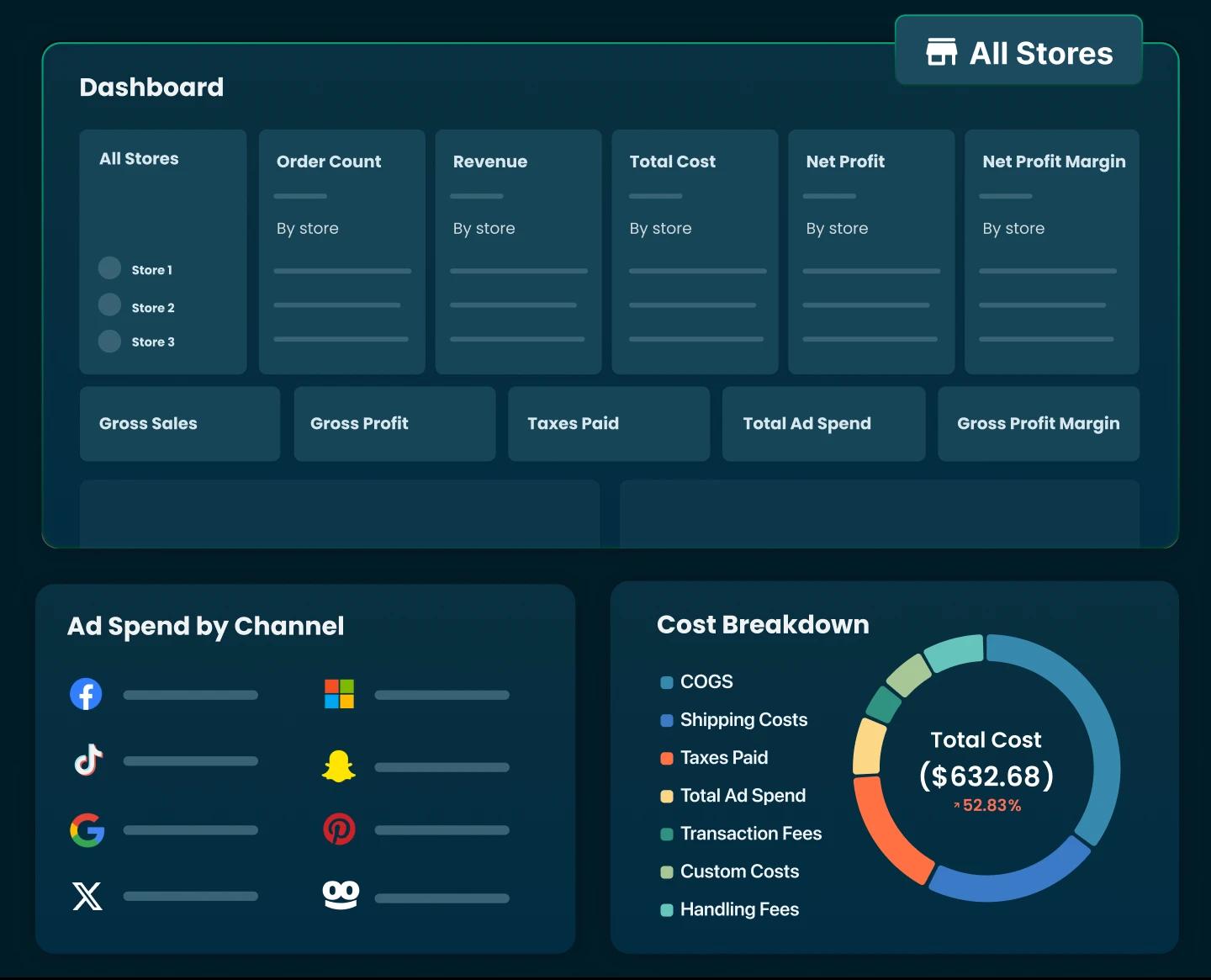
As you start validating products and moving toward scaling, having clear visibility into your real margins becomes critical. This is where tools like TrueProfit can help you track your actual profitability across products, ads, and orders, so you know what’s worth scaling and what’s not.


Irene Le is the Content Manager at TrueProfit, specializing in crafting insightful, data-driven content to help eCommerce merchants scale profitably. With over 5 years of experience in content creation and growth strategy for the eCommerce industry, she is dedicated to producing high-value, actionable content that empowers merchants to make informed financial decisions.