6 Best Giclée Print Suppliers & Products for Starting an Online Art Business (Complete Guide)


Table of Contents
- 1. What Is Giclée Print Dropshipping?
- 2. Can You Actually Make Money With Giclée Dropshipping?
- 3. 6 Best Giclée Print Dropshipping Suppliers to Try in 2026
- 4. What Giclée Products Can You Dropship?
- 5. How to Start a Giclée Dropshipping Business From Scratch
- 6. Final Thoughts
- 7. Dropship Giclee Prints FAQs
Dropshipping Giclée prints is a promising business model for artists, graphic designers, and ecommerce sellers. Unlike traditional printing, Giclée prints offer greater value thanks to their museum-quality archival standards.
In this guide, I’ll walk you through everything you need to build and grow a Giclée print dropshipping business from scratch.
In this blog:
- 1. What Is Giclée Print Dropshipping?
- 2. Can You Actually Make Money With Giclée Dropshipping?
- 3. 6 Best Giclée Print Dropshipping Suppliers to Try in 2026
- 4. What Giclée Products Can You Dropship?
- 5. How to Start a Giclée Dropshipping Business From Scratch
- 6. Final Thoughts
- 7. Dropship Giclee Prints FAQs
What Is Giclée Print Dropshipping?
Giclée print dropshipping is a business model where you sell high-quality fine art prints online without keeping inventory or handling fulfillment yourself. When a customer places an order, your dropshipping supplier prints the artwork, packages it, and ships it directly to the customer under your store’s name.
The key difference from standard print-on-demand is print quality. Giclée printing uses high-resolution inkjet technology, archival-quality inks, and premium fine art papers or canvas to reproduce artwork with exceptional color accuracy and detail.
For artists, photographers, designers, and art-focused ecommerce brands, this makes Giclée dropshipping particularly attractive. You can offer premium wall art at a higher selling price while avoiding the upfront cost of printing and storing inventory.

Can You Actually Make Money With Giclée Dropshipping?
Yes, Giclée print dropshipping can be highly profitable, but the outcome depends almost entirely on perceived value, positioning, and how much you pay to acquire each customer. This isn't a race-to-the-bottom niche like $10 phone cases. You're selling to people who happily pay premium prices for art they love.
Because Giclée prints use museum-grade paper and pigment inks, you can market them as fine art rather than posters. That framing is what unlocks the margins below.
Where the Margins Come From
The margins here are strong because your selling price sits well above your production cost. A standard digital poster tops out around $15 to $30. Giclée prints, on the other hand, target collectors, interior designers, and art lovers who expect to pay more.
Here's roughly how the numbers shake out per print:
- Base production cost (POD): $12 - $35, depending on size and paper stock
- Retail selling price: $50 - $200+, higher for framed or limited-edition runs
- Net margin: $30 - $150+ per unit before advertising
Those figures assume you've priced for the premium buyer, not the bargain hunter. Chase discount shoppers and the model falls apart.
Increase AOV With Frames, Canvas, and Upgrades
The biggest profit lever in fine art dropshipping is framing. An unframed 18x24" print might net you $35. Add a solid wood frame and you can raise the price by $100 to $180, which often doubles or triples your margin on the same order.
Canvas, larger sizes, and multi-print sets work the same way. Once someone has decided to buy art from you, nudging them toward a better version is far cheaper than finding a new customer.
Why Selling Without Inventory Helps
You never sink money into stock you might not sell. Because prints are made on demand by fine art labs like Gelato, Prodigi, FinerWorks, or Giclée Today, you skip the fragile paper stock, the expensive pigment printers, and the oversized shipping materials.
That's a big deal in a category where a single damaged print can wipe out your margin. Letting a specialist handle production keeps your risk close to zero.
Key Challenges You Should Watch For
Profit potential is high, but there are traps worth knowing before you launch. The table below covers the three that catch most sellers off guard.
6 Best Giclée Print Dropshipping Suppliers to Try in 2026
The best supplier depends on what you're optimizing for. Here's how they stack up side by side.
The distinction matters when you're charging a premium. Paper quality, archival inks, color accuracy, packaging, and branding all shape how your customer perceives the final product.
1. Prodigi
Best for: Overall balance of fine-art quality, global fulfillment, and ecommerce integration
Prodigi is one of the strongest all-around picks for artists who want to sell fine-art prints internationally. Unlike a general POD marketplace, its catalog leans heavily into wall art, photography, and premium print products.

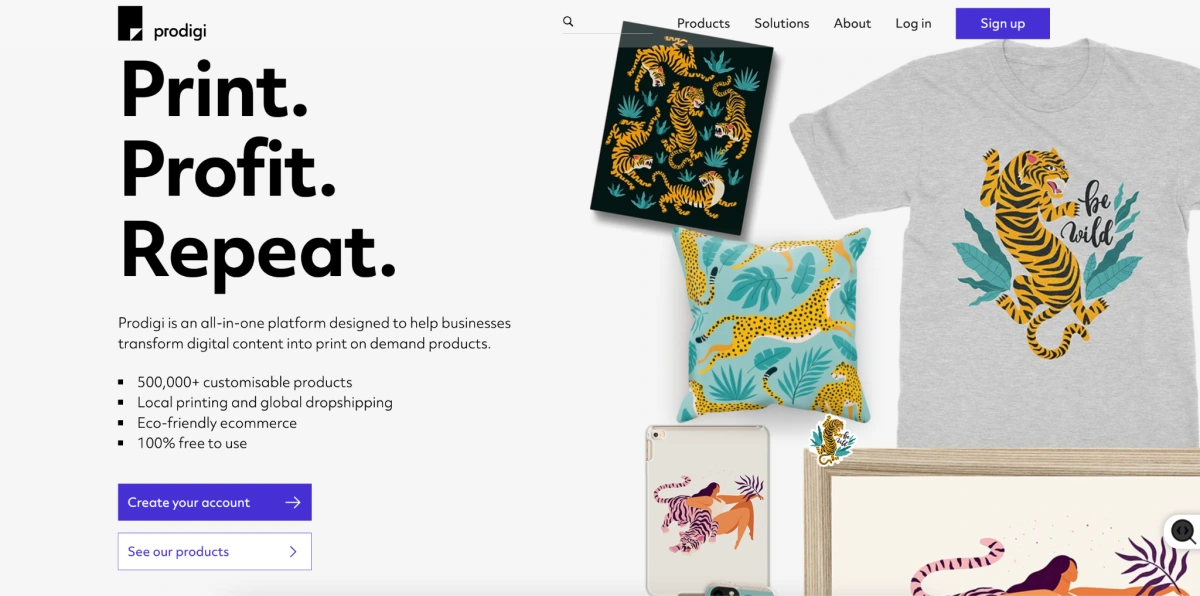
Fine-art options: Hahnemühle German Etching, Eco Vegan Cold Press Watercolour Paper, Eco Smooth Art Paper, and other premium stocks depending on the product and fulfillment location.
Key strengths: Prodigi pairs fine-art printing with a real international fulfillment network, producing orders closer to your customer across multiple markets.
If you're selling into both North America and Europe, that shortens delivery times and takes a lot of the shipping headache off your plate.
Ecommerce integrations: Shopify, Etsy, WooCommerce, API, and other integrations.
Best use case: Artists, photographers, and art brands that want premium prints without locking themselves into a single geographic market.
2. FinerWorks
Best for: Fine-art artists, photographers, US-focused stores, and extensive archival media choices
FinerWorks is one of the most specialized options here. Its core business is fine-art and photo printing rather than general merchandise, which makes it a strong fit when print quality is your main selling point.
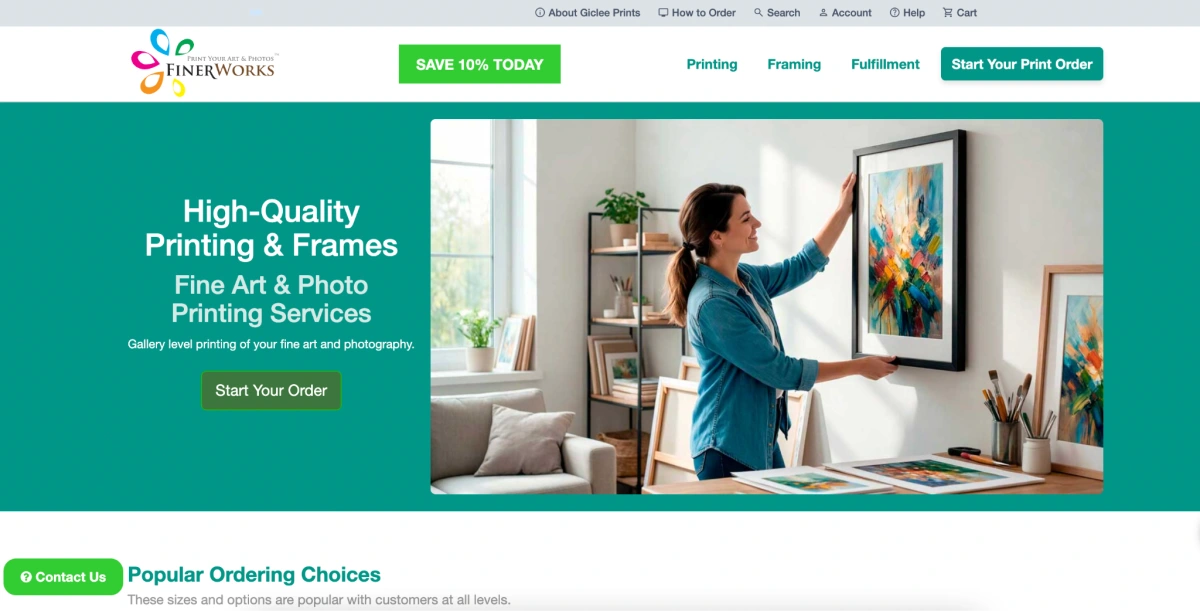
Fine-art options: Hahnemühle papers, cotton-based fine-art papers, archival matte papers, canvas, and other specialty media.
Key strengths: FinerWorks prints with archival pigment inks and supports blind dropshipping and branded fulfillment, so orders ship under your own name rather than exposing FinerWorks to your customer. It also handles framing and finishing, which lets you sell a complete wall-art product instead of unframed prints alone.
Ecommerce integrations: Shopify, Etsy, and other order-import and ecommerce workflows.
Best use case: Artists and photographers who want deeper control over paper, finishing, framing, and branding.
3. Giclée Today
Best for: Fine artists, photographers, limited editions, and gallery-style fulfillment
If Giclée printing is the heart of your business, Giclée Today is one of the most specialized suppliers around. The company focuses squarely on fine-art and photographic printing and supports dropshipping for artists and businesses.
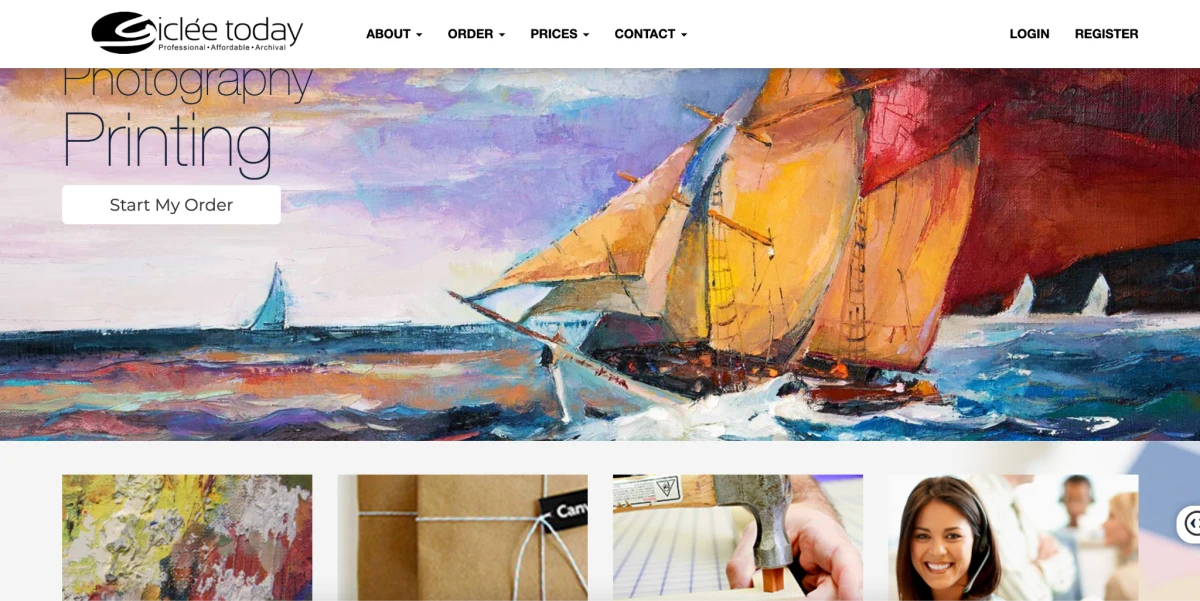
Fine-art options: Archival papers, textured fine-art papers, cotton rag, canvas, and other fine-art media.
Key strengths: Giclée Today prints with 12-color archival pigment inks and offers gallery-grade extras that go beyond standard POD, including hand-numbered editions, custom fulfillment, and blind dropshipping on certain orders. That makes it a natural fit for anyone selling limited-edition collections rather than mass-market posters.
Ecommerce integrations: Direct ordering, dropshipping workflows, and custom/CSV-based order processes rather than the large native app ecosystem of general POD platforms.
Best use case: Fine artists, photographers, galleries, and creators selling premium or limited-edition artwork.
4. Gelato
Best for: International fulfillment and broad ecommerce integration
Gelato isn't a dedicated fine-art printer, but it earns a spot because its catalog includes Giclée and archival-quality art printing alongside a wide range of other products.
Fine-art options: Archival matte and fine-art printing options, plus framed and unframed wall-art products depending on the market.
Key strengths: Gelato's distributed production network prints orders closer to the customer in many markets, which cuts down on international shipping complexity and delivery times compared with shipping every order from one country.
Its Giclée offering uses fine-art printing technology on selected products, making it practical for artists who prioritize global reach and operational simplicity over the deepest possible paper selection.
Ecommerce integrations: Shopify, Etsy, WooCommerce, Wix, Squarespace, BigCommerce, API, and other supported platforms.
Best use case: Artists selling internationally who want one POD platform for both Giclée wall art and other customizable products.
5. Printful
Best for: Beginners who want simple setup and reliable ecommerce automation
Printful is another general POD platform rather than a fine-art specialist, but it offers Giclée printing for artwork and photography, which makes it a comfortable starting point for creators who don't want to manage a specialized printing workflow.
Fine-art options: Giclée art prints using archival-quality materials, plus canvas and other wall-art products.
Key strengths: Printful uses pigment-based inks for its Giclée printing and handles production, packing, and fulfillment once an order lands. Its biggest advantage is ease of use: connect your store, upload artwork, build products, and automate fulfillment from one dashboard.
Ecommerce integrations: Shopify, Etsy, WooCommerce, Amazon, eBay, Wix, Squarespace, and other supported sales channels.
Best use case: New artists and ecommerce sellers who want an easy POD workflow and don't need the widest possible selection of specialty fine-art papers.
6. Printify
Best for: Product variety, supplier choice, and testing different Giclée products
Printify works differently from specialist labs like FinerWorks or Giclée Today. It's a marketplace that connects you with independent print providers, so specs and fulfillment vary from one provider to the next.
Fine-art options: Giclée art prints, fine-art posters, and other premium paper products from selected providers.
Key strengths: The main draw is flexibility. You can compare providers, sizes, prices, and production times before committing, which is handy when you're testing a new collection without locking into one specialist. Just don't assume every Printify print is equal. Check the individual listing, print provider, paper specs, and reviews before you settle on a long-term partner.
Ecommerce integrations: Shopify, Etsy, WooCommerce, TikTok Shop, Amazon, and other supported channels.
Best use case: Beginners and growing stores that want to test Giclée prints alongside a wider POD catalog.
Which Giclée Dropshipping Supplier Should You Choose?
If fine-art reproduction is the core of your brand, start with FinerWorks, Giclée Today, and Prodigi. These suit sellers who care deeply about paper, archival quality, and presentation.
If international fulfillment and automation matter more, prioritize Prodigi and Gelato.
And if you're new and just want to test demand fast, Printful and Printify make setup easiest, though you'll want to be picky about the exact product and print provider you use.
What Giclée Products Can You Dropship?
Giclée printing goes well beyond the standard art poster. The right product depends on who you're targeting and how much you want to charge.
Here are the main products worth building around.
- Unframed Giclée Art Prints
- Giclée Photography Prints
- Giclée Canvas Prints
- Framed Giclée Prints
- Limited-Edition Giclée Prints
- Custom & Personalized Giclée Prints
- Giclée Art Reproductions
- Giclée Prints for Gallery & Commercial Displays
1. Unframed Giclée Art Prints
Best for: affordable wall art, digital artists, illustrators, and scalable collections.
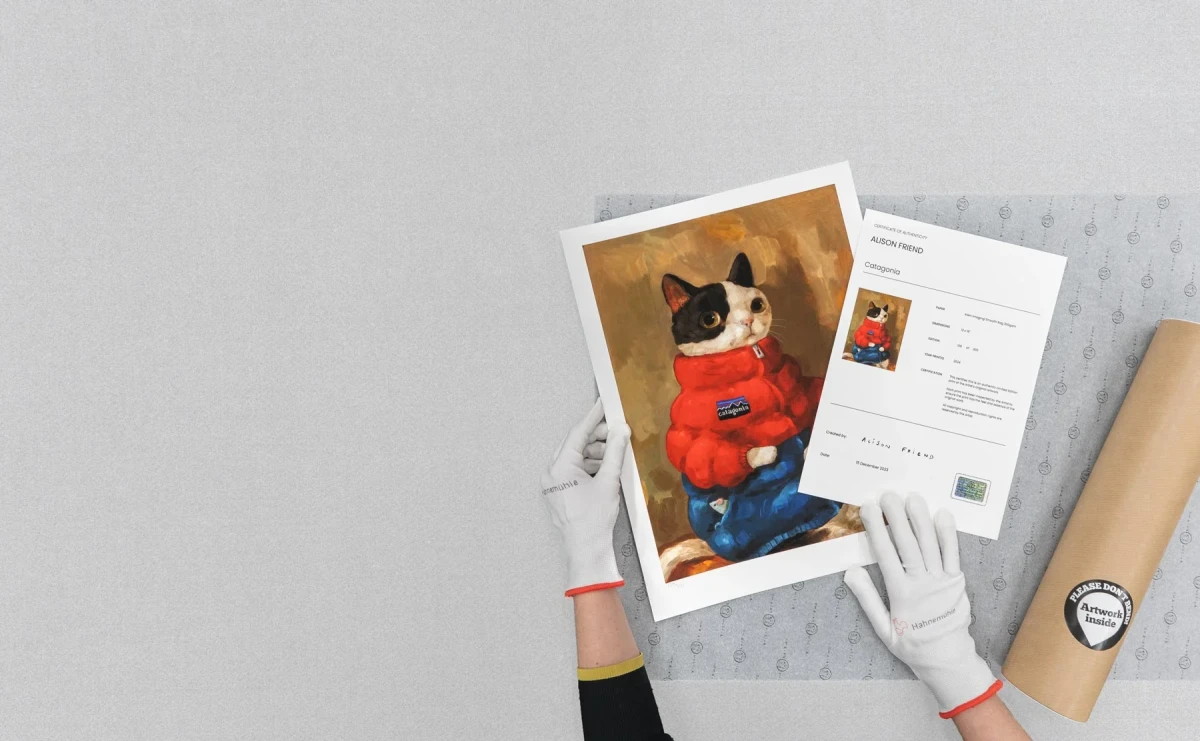
Unframed prints are the easiest place to start. They’re lightweight, affordable to test, easy to fulfill and ship, and simple to scale. They also let you build a broad catalog without carrying inventory.
Depending on your supplier, you can offer everything from fine-art and archival matte papers to cotton rag, textured watercolor, Hahnemühle, and Somerset papers.
2. Giclée Photography Prints
Best for: photographers, travel brands, and fine-art photographers.
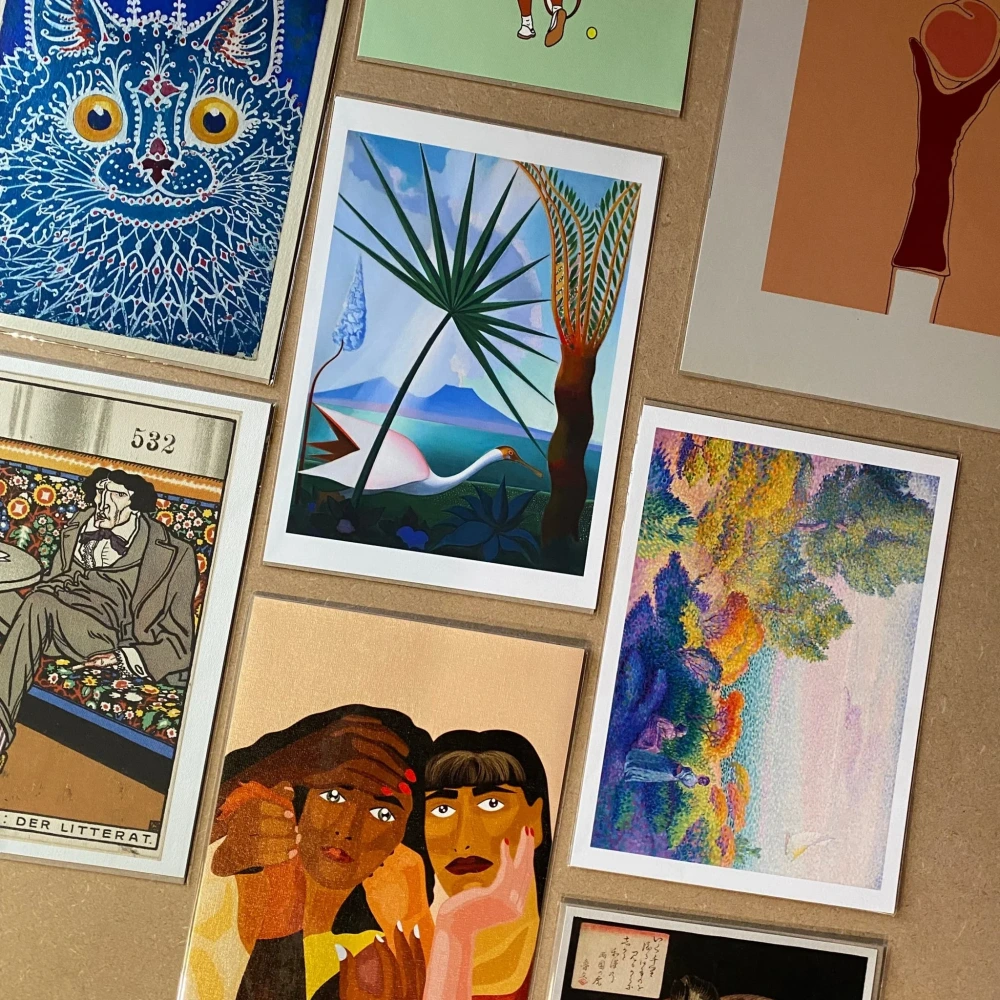
Giclée printing is a natural match for photography because pigment inks reproduce subtle gradients, shadows, and fine detail with real accuracy. You can build collections around niches like landscape, travel, architecture, black-and-white, fine-art portraits, or wildlife.
For photographers, this is a clean way to monetize an existing image library. Instead of selling digital files alone, you turn your best shots into physical, collectible products that command more.
3. Giclée Canvas Prints
Best for: premium wall art and higher-ticket products.
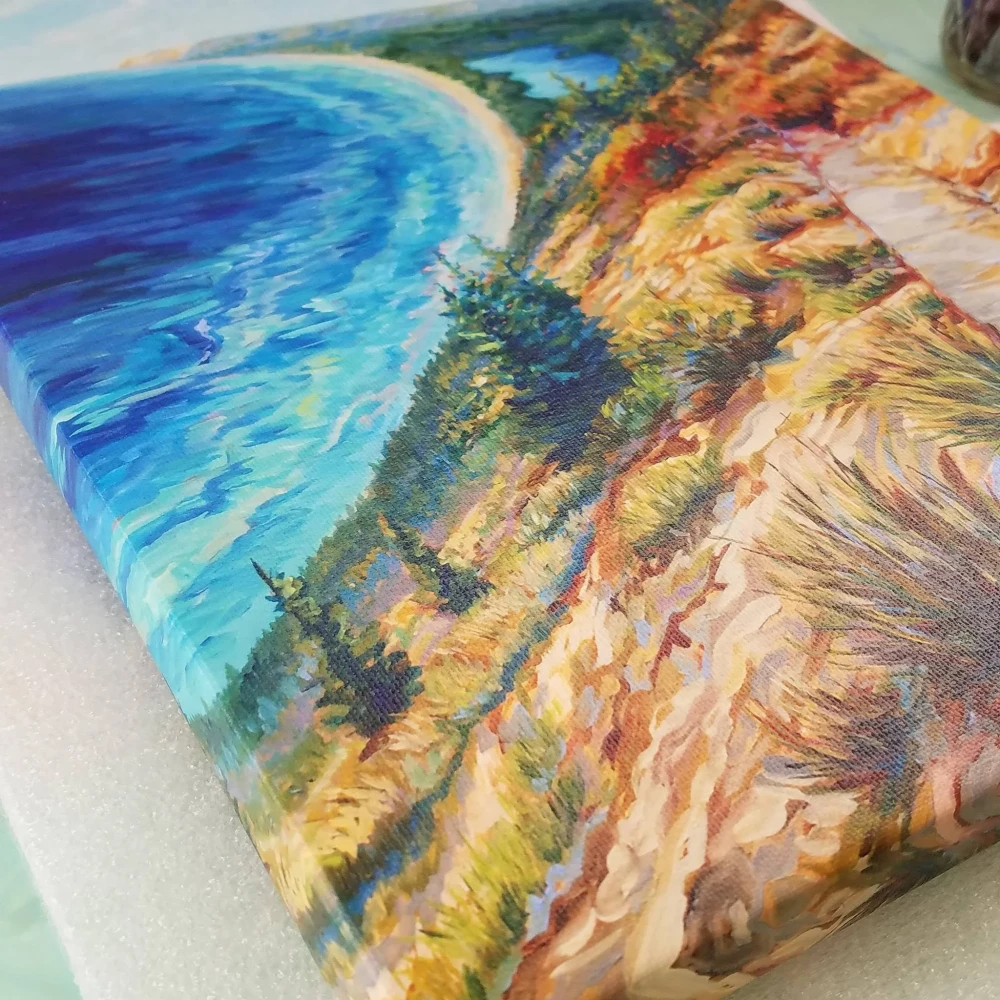
Canvas gives artwork a more substantial, gallery-style presence than paper, which makes it useful when you want to push selling prices up. Depending on your supplier, you can offer stretched, rolled, gallery-wrapped, or framed canvas.
The trade-off is packaging and shipping, which cost more and demand more care. Still, the higher perceived value makes canvas a strong fit for stores focused on statement pieces.
4. Framed Giclée Prints
Best for: premium home decor and gift buyers.
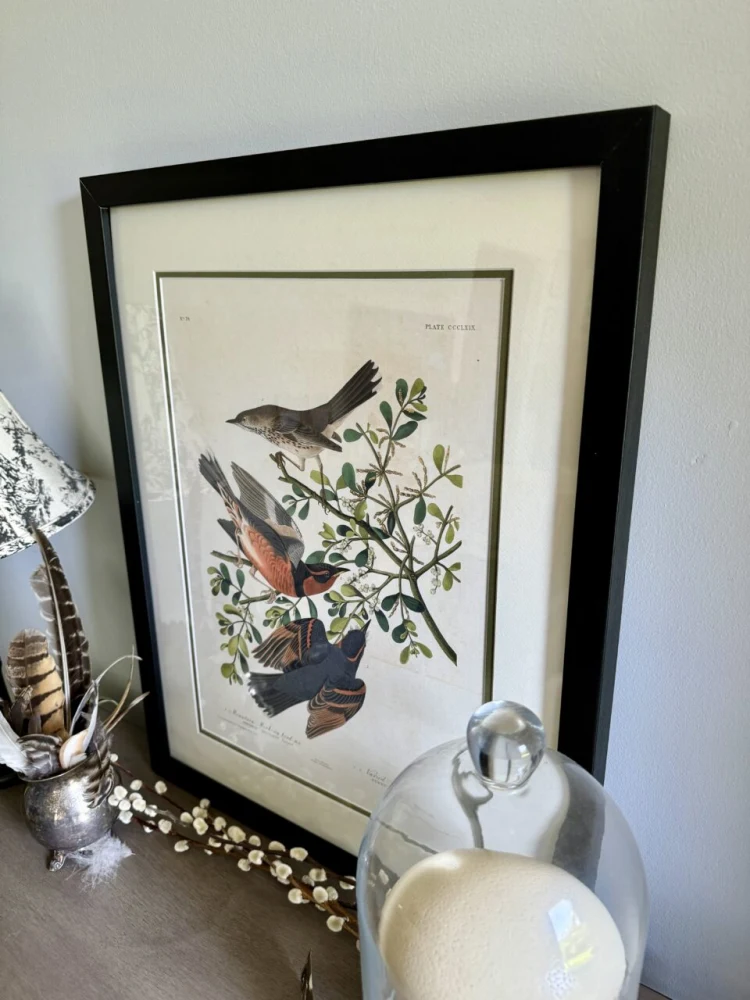
Framing turns a print into a ready-to-hang product, and that convenience changes how customers value it. Rather than asking buyers to source a frame themselves, you offer a finished piece through a supplier that prints, frames, and ships in one go.
Common options include wood frames, gallery frames, floating frames, acrylic or glass protection, and ready-to-hang formats.
5. Limited-Edition Giclée Prints
Best for: artists, collectors, and premium art brands.
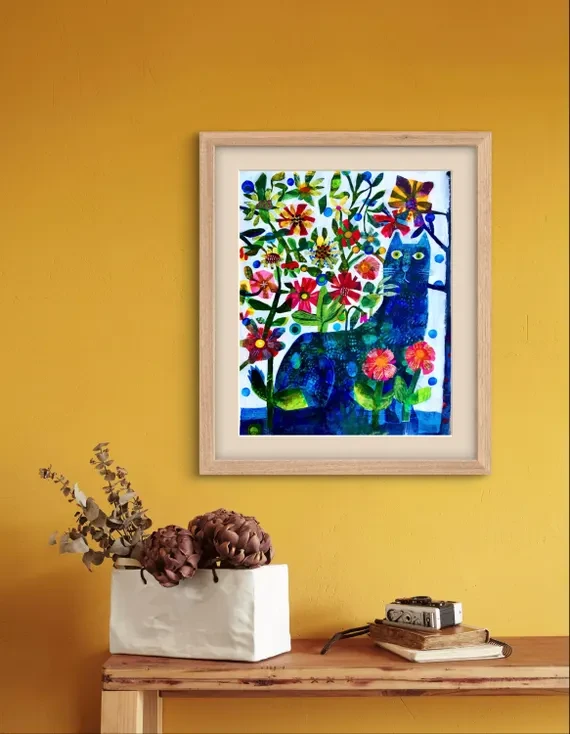
Limited editions let you compete on exclusivity instead of price. Rather than an unlimited poster, you release a fixed run, for example an edition of 50, signed and numbered, with a certificate of authenticity, at a premium price.
This works best when the artwork has a strong story, a recognizable creator, or genuine collector appeal. You'll need to track edition numbers carefully so buyers know exactly what they're getting. For an artist-led brand it's especially powerful, since the same piece can be sold as an open edition, a limited edition, framed, or on canvas.
6. Custom & Personalized Giclée Prints
Best for: gifts, personalized decor, and occasion-based products.

Personalization turns a standard print into something worth far more. Depending on your workflow, that can mean custom portraits, pet portraits, wedding art, family illustrations, personalized maps, custom typography, or customer-submitted photography.
The advantage is perceived value. Customers aren't buying a print, they're buying something made for them, which supports higher prices and makes it far more giftable.
The catch is fulfillment time, so you'll need a reliable process for collecting details, approving designs, and sending final files to your supplier.
7. Giclée Art Reproductions
Best for: artists, galleries, and creators monetizing original work.
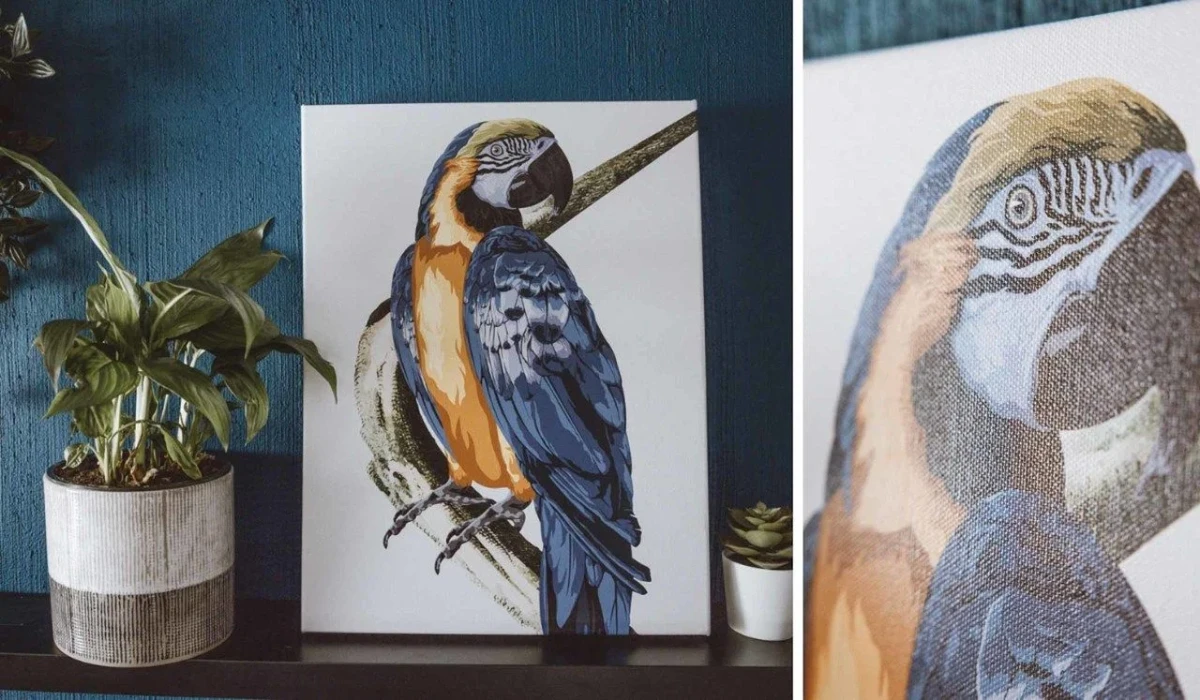
Reproduction lets one original piece become an entire product line. A single artwork can become a print, a framed print, a canvas, and a limited edition, all from the same master file. That's what makes this one of the most attractive Giclée use cases: you never physically reproduce every piece or store finished prints.
Once the artwork is professionally digitized, the same file can span different sizes and formats. For artists with an existing portfolio, this scales far better than producing and shipping every print by hand.
8. Giclée Prints for Gallery & Commercial Displays
Best for: interior designers, hotels, restaurants, offices, and B2B buyers.

You don't have to sell only to individuals. Commercial and interior-design projects open the door to larger, higher-value orders. Think hotel artwork, restaurant decor, office spaces, gallery displays, and retail interiors, where a single client might need art for an entire space.
The upside is order value. The downside is expectations. B2B buyers care about color consistency, sizing, packaging, lead times, and damage replacement.
If you want this market, pick suppliers that handle large formats and repeat orders reliably rather than chasing the cheapest per-print price.

How to Start a Giclée Dropshipping Business From Scratch
Getting started is straightforward once you break it into steps. Here's the sequence I'd follow.
1. Find or Create Commercially Licensed Artwork
You don't have to be an artist to sell Giclée prints. You can create your own artwork, hire freelance artists, or source designs that come with the right commercial rights.
If you use someone else's artwork, read the license carefully. Make sure it actually lets you reproduce and sell the piece as a physical product. Finding an image online and slapping it on a print is not enough, and it's the fastest way to end up in a copyright mess.
For beginners, I'd start with a small set of designs you clearly have rights to. It keeps your catalog manageable and takes copyright risk off the table early.
2. Order Samples Before You Start Selling
This is the one step I wouldn't skip. Start with 3 samples of your own designs and inspect the real prints, checking sharpness, color reproduction, paper texture, margins, sizing, and overall presentation.
Test the shipping experience too. See how long delivery takes and whether the print arrives without bending, creasing, or damage.
Your customer won't blame the printer if something goes wrong. They'll blame your store. A sample order is a small expense next to the cost of bad reviews and replacements down the line.
3. Build Your Store and Product Catalog
Once you're happy with your supplier, set up your store and start building out the catalog. Keep product pages simple but complete: artwork, available sizes, paper type, framing options, production time, shipping details, and care instructions.
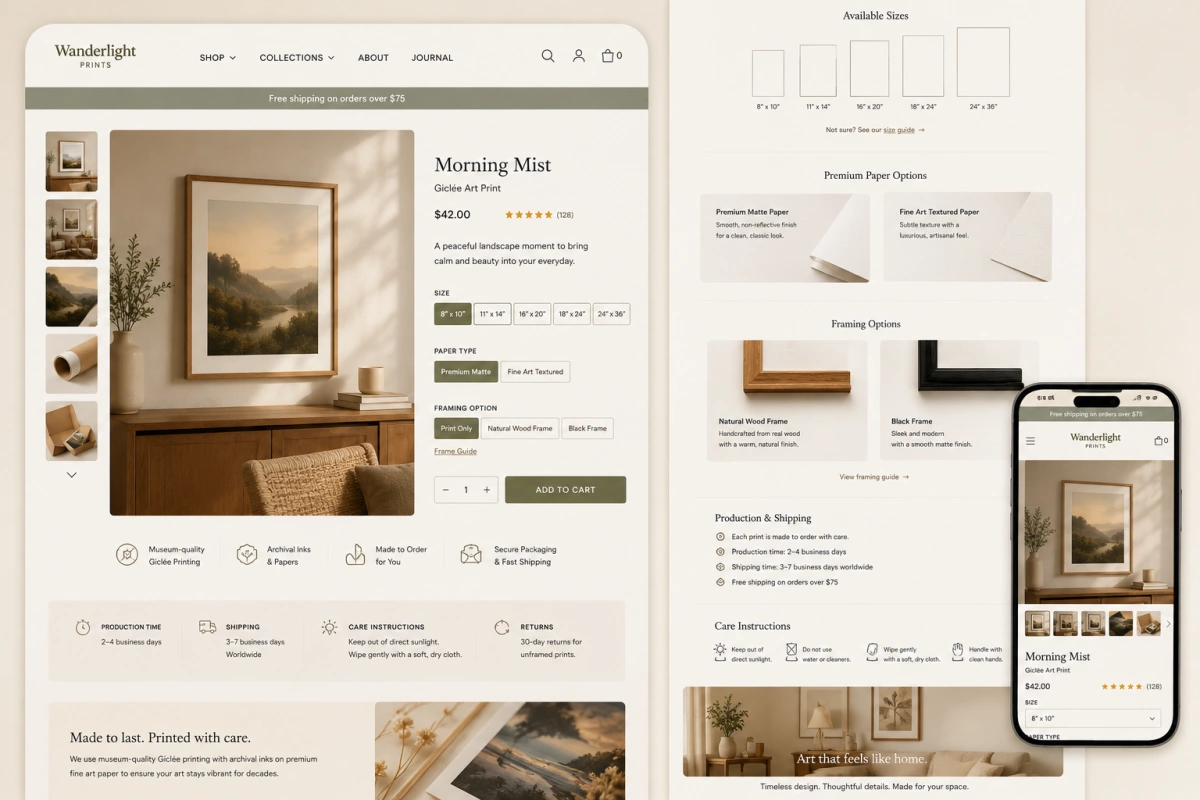
High-quality mockups matter most for wall art. Customers want to see how a print looks in a real room, not as a flat digital file. I'd also group products into clear collections by style, theme, room, or audience, which makes a growing catalog far easier to browse.
4. Price Your Giclée Prints for Profit
Don't price your Giclée prints by simply adding a markup to the supplier's cost. Your real margin depends on much more than the print itself. Shipping, payment processing, platform fees, advertising, refunds, replacements, and other selling costs can quickly eat into your profit.
I’d calculate your margin before setting the retail price, not after making a few sales. A dropshipping profit margin calculator can help you factor in your key costs, test different price points, and see whether your margins leave enough room for marketing and unexpected expenses.
The goal is to find a price that gives you healthy profit margins without pricing your artwork out of the market. For Giclée prints, that balance matters even more because you're selling a premium product where perceived value plays a big role in what customers are willing to pay.
5. Launch With a Small Collection
You don't need hundreds of designs to start. I'd rather launch with 10 to 20 strong pieces than upload 200 random ones. Group them into a coherent collection and watch which styles, subjects, sizes, and price points customers respond to.
Once sales and traffic data start coming in, expand around the products showing real demand. This also keeps testing cheap. Instead of pouring time into a huge catalog upfront, you let customer behavior tell you what deserves more attention.
6. Market Your Best-Selling Prints
Giclée prints are highly visual, which opens up a lot of marketing angles. Pinterest, Meta, TikTok, Etsy, and visual search can all work depending on your audience. Lifestyle images pull the most weight because they help shoppers picture the art in their own homes.
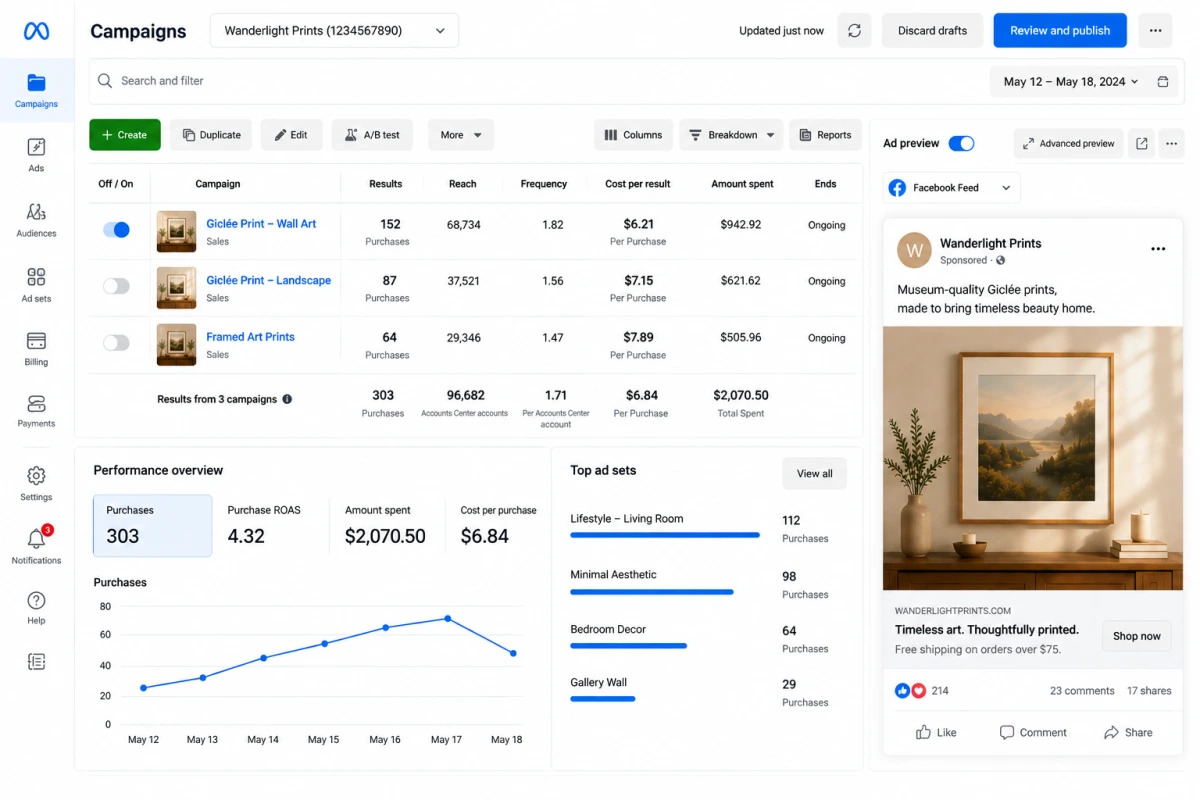
You can also build content around decorating ideas, gallery walls, room makeovers, seasonal decor, or the story behind a collection. Don't promote every design equally, though. Once you have sales data, put your marketing budget behind the prints that consistently earn clicks, conversions, and healthy margins.
7. Let a Profit-Tracking Tool Handle All Numbers & Reports
A lot of merchants don't realize they can automate this part of running a Giclée print business or any types of business. Instead of updating spreadsheets, hopping between dashboards, and piecing your numbers together by hand, a dedicated tool can save time, cut errors, and track the key metrics for you.
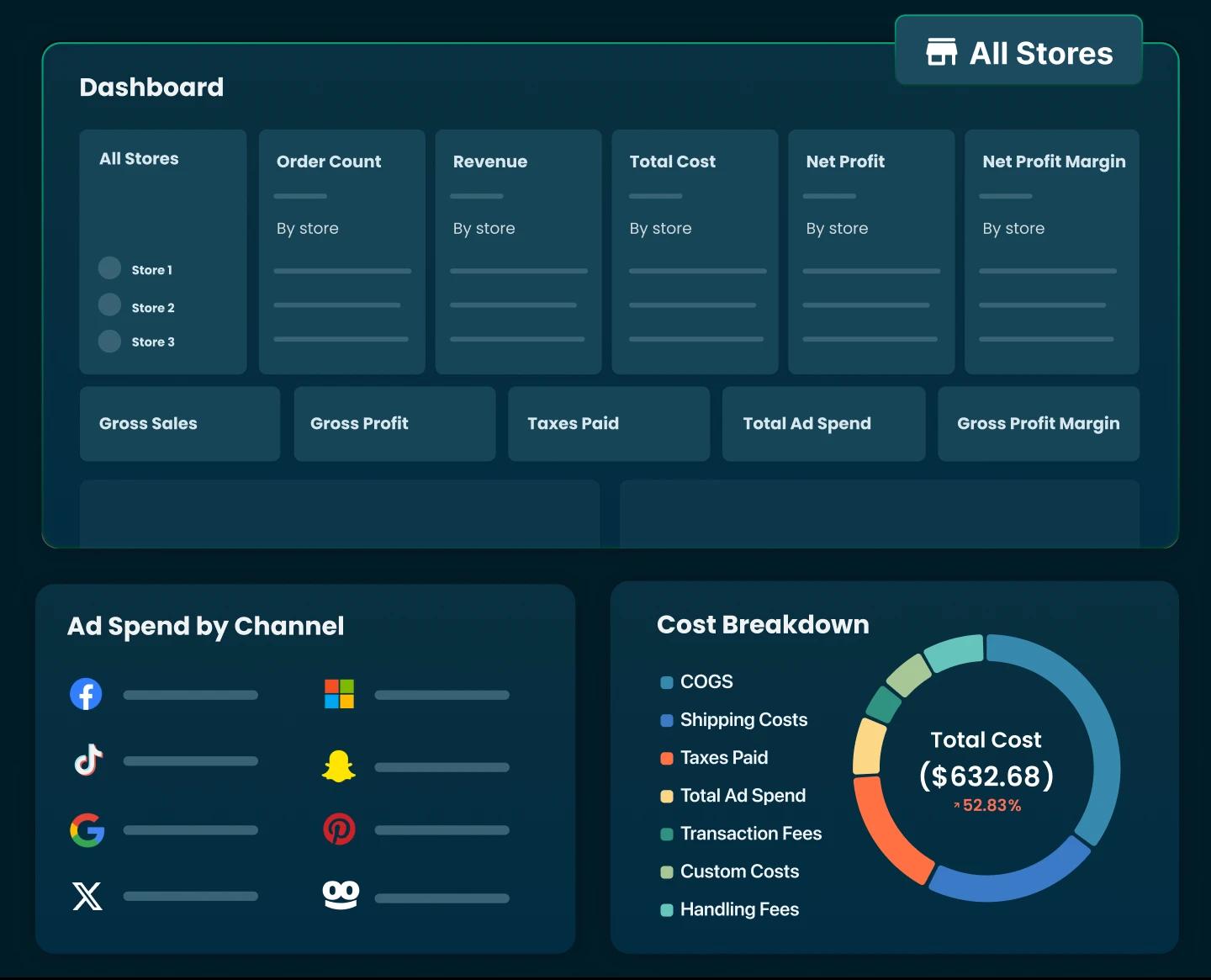
My advice is to hand reporting and profit tracking over to a net profit analytics tool like TrueProfit if you’re running a store on Shopify. It usually does a better job than the spreadsheets you maintain yourself or the standard ecommerce dashboards you already use, because it brings your revenue and costs into one place and turns them into profit data you can act on.
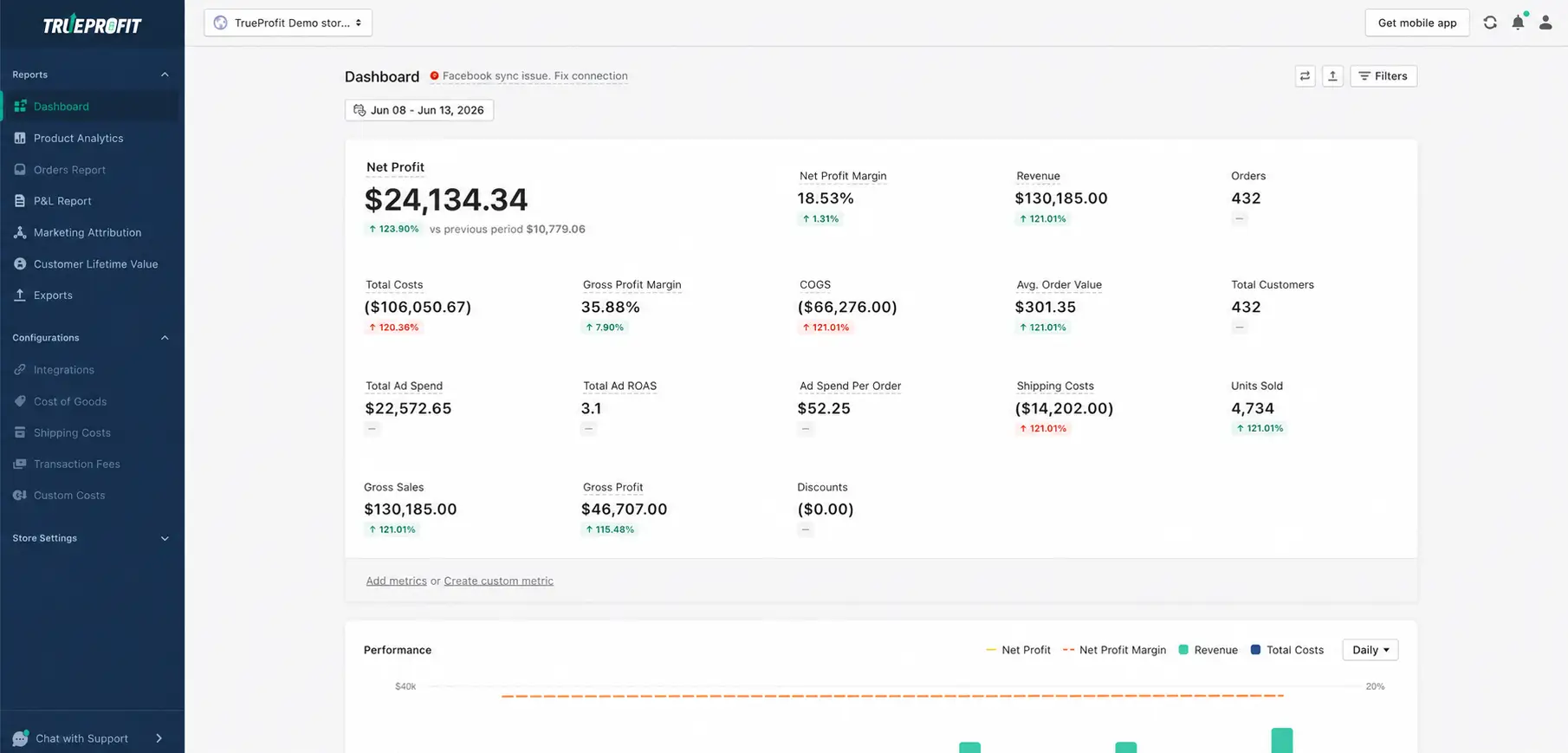
Once it's connected, the guesswork disappears. And here's what TrueProfit tracks for you automatically:
- Real-time net profit after COGS, shipping, handling, transaction fees, ad spend, and any other costs you configure, so a framed 24x36" order and a small unframed print each show their true bottom line
- COGS at the product or variant level, so profit reflects what you actually pay per size, paper, and finish rather than one blended average across your catalog
- Ad spend synced from connected platforms and factored straight into your profit, which matters in a niche where Pinterest and Meta costs can quietly outrun a print's margin
- Shipping costs you actually pay, rather than just the amount charged to customers, so tubes, rigid mailers, and oversized canvas boxes don't hide in your numbers
- Custom costs for other recurring or variable expenses, from your Shopify app stack to sample orders and the occasional damaged-print replacement
- Product analytics showing revenue, costs, margins, and funnel metrics per print, so you can tell a best-selling design apart from a merely popular one
- P&L reporting across any period, plus marketing attribution on eligible plans to see which channels actually drive profitable orders, not just clicks
I'd set this up from the very first sale, not once the business feels big enough. You don't need a lot of orders to need accurate numbers. You need accurate numbers because you're making decisions from the very beginning. Your early data helps you see whether your pricing, product costs, and marketing spend are working before you commit more time and money to them.
Final Thoughts
Dropshipping Giclée prints is one of the cleaner ways to build a premium product business without handling production yourself, whether you're selling your own art or designs you've licensed. The fundamentals are simple: secure quality artwork you have the rights to sell, partner with a reliable print lab, and build a brand that makes the work feel worth paying for.
Do that well and a small collection of prints can grow into a premium art business with the potential to reach customers around the world. Get your margins right from the start, and it can be a genuinely profitable one too.


Rosie Doan is a Senior Content Specialist at TrueProfit with over 4 years of experience creating content for the ecommerce and SaaS industry. Having worked closely with Shopify merchants and ecommerce businesses, she has developed a deep understanding of the challenges store owners face, from growing revenue and acquiring customers to tracking performance, managing costs, and improving profitability.