

Dropshipping vs Traditional Ecommerce: Which Business Model Is Better in 2026?

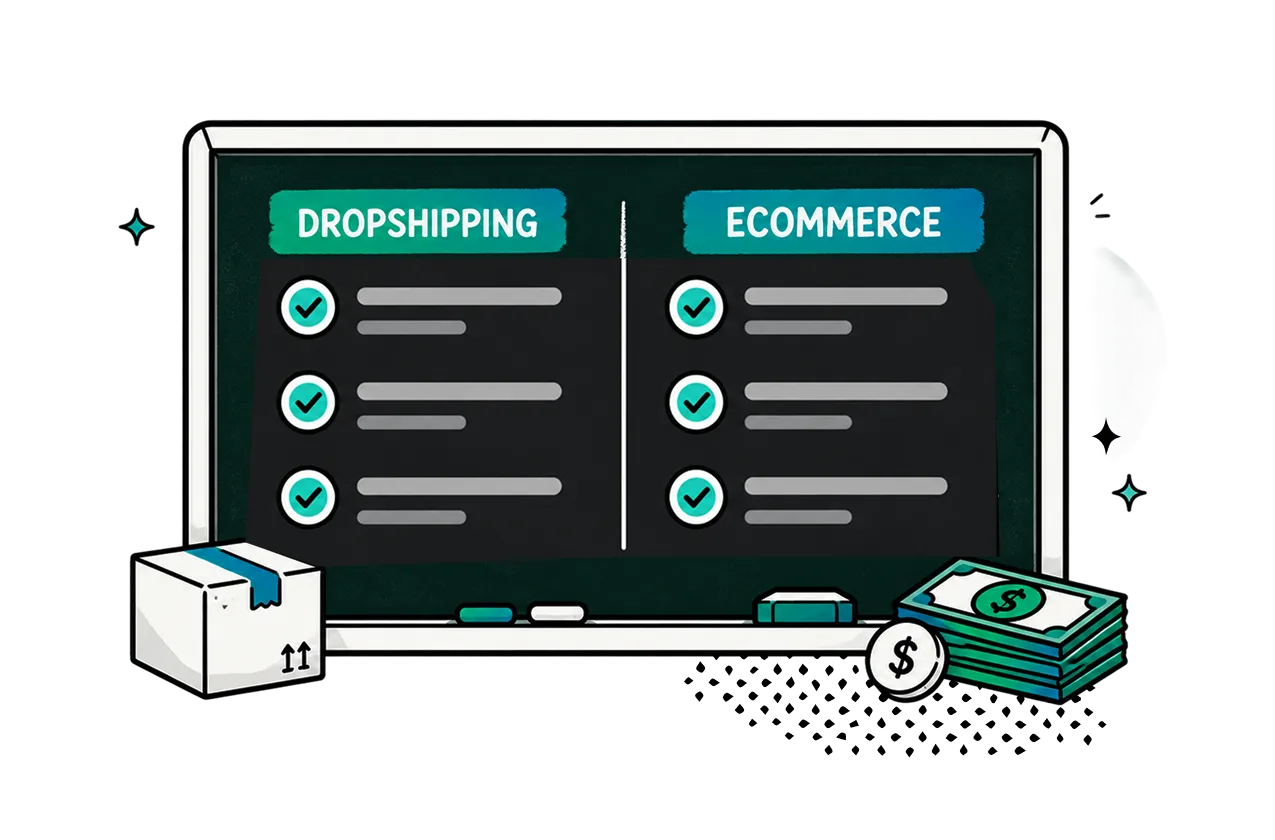

Table of Contents
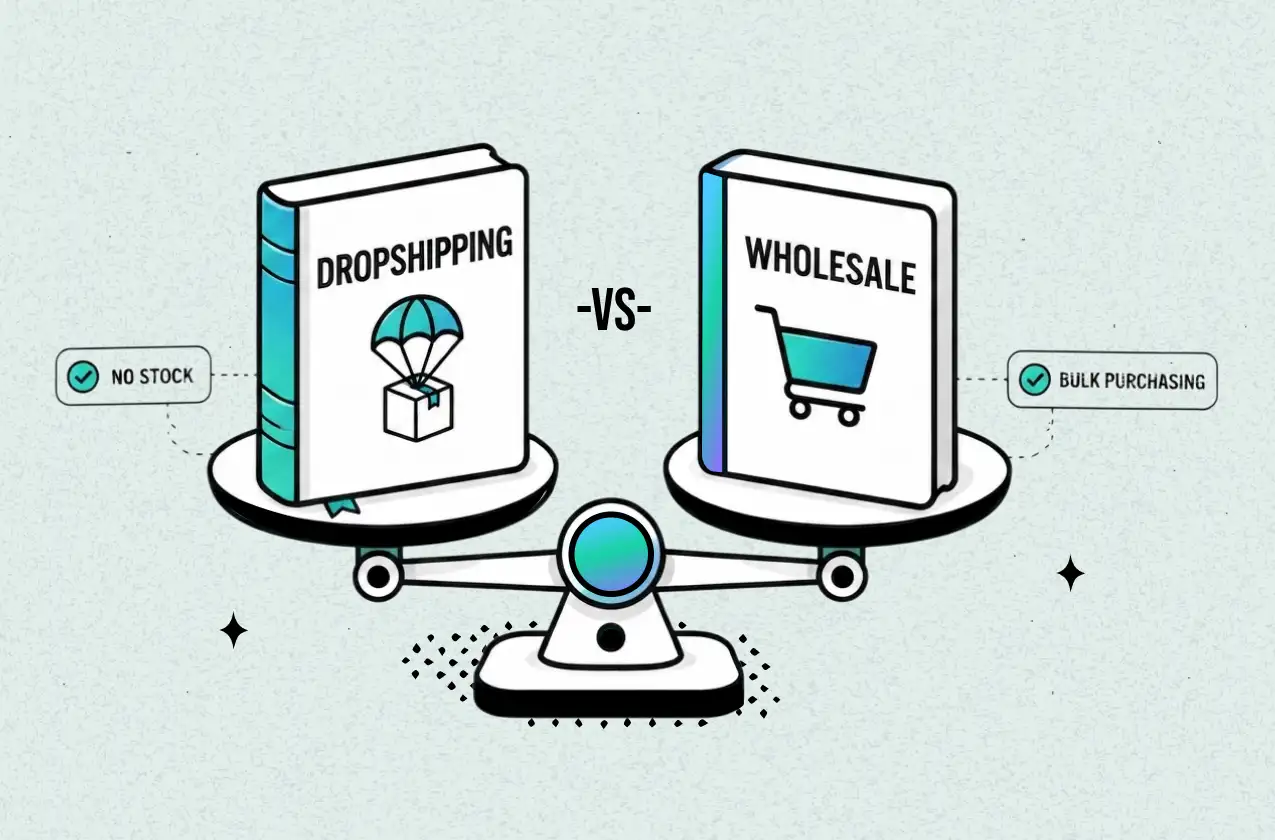
Both models sell products online. The difference is who owns the inventory, and that single distinction shapes almost everything else: your startup budget, your margins, your cash flow, and how much control you have over the customer experience.
I'll walk through how each model actually works, where the real trade-offs live, and how to pick the right one for where your business is today. Spoiler: for a lot of owners, the smartest answer isn't one or the other.
In this blog:
What Is Dropshipping?
Dropshipping is an ecommerce model where you sell products without buying or storing inventory upfront. When a customer orders, you pass the details to your supplier, who ships the product directly to them. You never touch the product.
This removes the single biggest barrier to starting an ecommerce business: inventory investment.

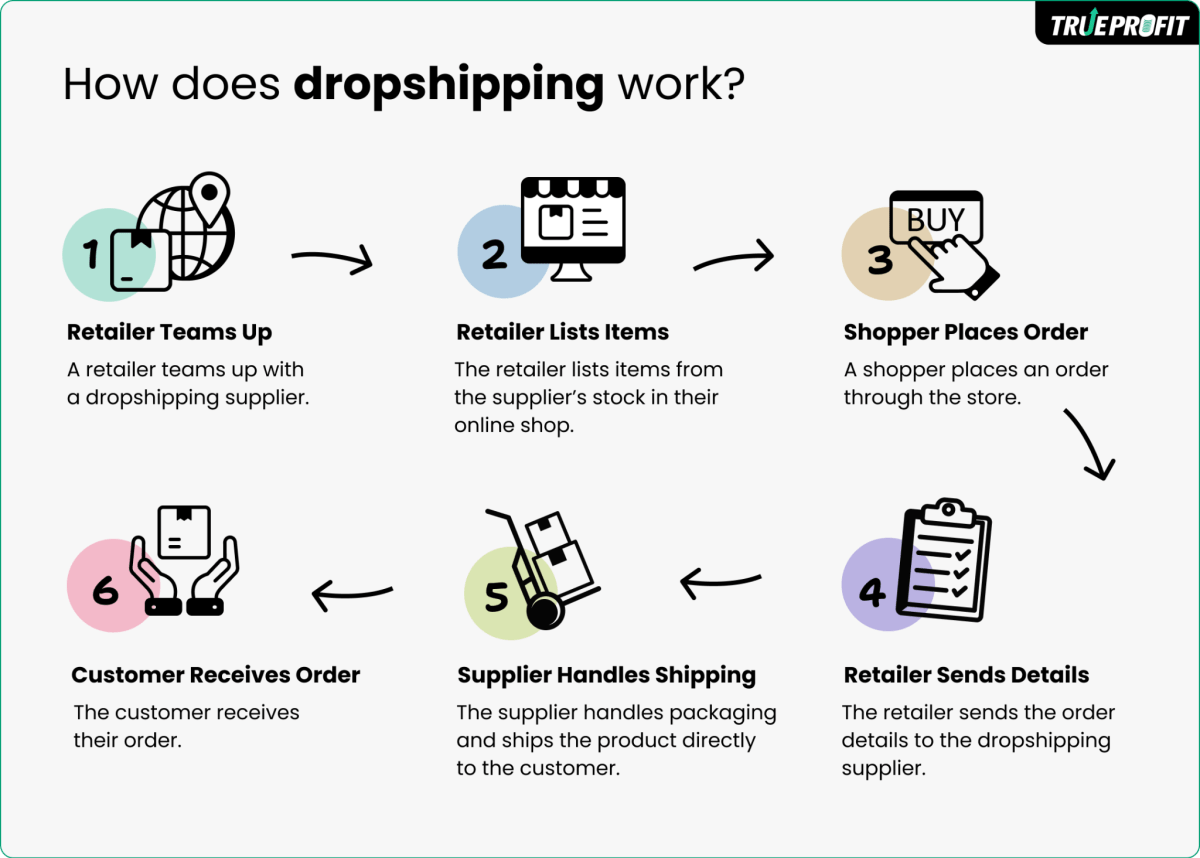
The real advantage
You can launch on a small budget, test multiple products, and add or drop items without getting stuck with unsold stock. For a beginner, that's the appeal.
For an established owner, the advantage isn't that it's cheap. It's that you can validate demand before committing serious capital to inventory.
The trade-offs
Lower financial commitment comes at a cost. You have less control over product quality, availability, packaging, and shipping speed. Per-unit supplier costs also run higher, which squeezes margins when you're competing on price.

What Is Traditional Ecommerce?
Traditional ecommerce uses the conventional inventory model: you buy products upfront, store them yourself or through a fulfillment partner, and ship orders as they come in. You take on more responsibility and gain far more control in return.Image (sentence note): https://be.trueprofit.io/uploads/dropshipping-vs-ecommerce-2.webp, Alt is Illustration of the traditional ecommerce process from inventory purchase to customer delivery
What you gain
With inventory in hand, you can negotiate better supplier pricing, control packaging, inspect quality, bundle products, and optimize fulfillment. You also keep shipping times predictable instead of depending entirely on a third party.
What you risk
The main downside is capital risk. Buying stock before you know how much will sell ties up cash and opens the door to dead stock, storage fees, markdowns, and cash flow crunches.
Here's how the two models compare at a glance:
Aspect | Dropshipping | Traditional Ecommerce |
|---|---|---|
Definition | Sell without holding inventory. Supplier ships each order. | Buy inventory upfront, store it, and ship orders yourself or via 3PL. |
Main advantage | Low upfront cost. Easy to test products and validate demand. | More control over quality, packaging, fulfillment, and pricing. |
Control | Less control over quality, stock availability, and shipping speed. | Greater control over product quality, brand experience, and delivery. |
Cost structure | Lower capital commitment but higher per-unit supplier costs. | Higher upfront inventory cost but better unit economics. |
Main risk | Supplier dependence and tighter margins when competing on price. | Capital tied up in stock, dead inventory, and cash flow pressure. |
Dropshipping vs Traditional Ecommerce: How Do They Actually Differ?
The two models diverge most in the areas that hit your business economics directly: upfront cost, margins, cash flow, flexibility, and control.
Here's the quick view before we break each one down.
Factor | Dropshipping | Traditional Ecommerce |
|---|---|---|
Upfront investment | Low (~$600–1,400) (monthly) | High (~$2,000–10,000+) |
Inventory risk | Minimal | Significant |
Per-unit cost | Higher | Lower with bulk |
Cash flow | Friendlier early | Tighter when scaling |
Testing speed | Fast and cheap | Slow and costly |
Operational control | Limited | High |
1. Upfront Investment and Inventory Risk
Dropshipping wins on startup cost and inventory risk; traditional ecommerce needs more capital but earns better unit economics once demand is proven.
The gap shows up before your first sale. With dropshipping, you don't buy hundreds of units in advance. You test a product, watch how customers respond, and scale only when the numbers work. Your initial risk stays low.
Traditional ecommerce flips that. You pay for inventory before you know how fast it sells. Buying in bulk lowers your per-unit cost, but more of your cash is locked up from day one.
In practice, a lean dropshipping store might need around $600–1,400 per month to get off the ground, depending on how much you spend on samples, apps, creative testing, and initial marketing.
2. Which Model Leaves More Profit on the Table?
Traditional ecommerce has more room for margin optimization because bulk buying cuts your per-unit cost. Dropshipping carries higher per-unit supplier costs, and fees, shipping, processing, ads, and refunds all chip away at what's left.
That doesn't mean dropshipping margins are weak. TrueProfit's 2026 data shows dropshipping stores averaging around 65%–70% gross margin and 15%–20% net margin, which is plenty healthy once the full cost structure is accounted for.
3. Cash Flow and Working Capital
Dropshipping is more cash-flow friendly early; traditional ecommerce gets more efficient once demand is predictable and you have capital to manage stock.
With dropshipping, you usually pay the supplier after the customer pays you. Less cash sits in inventory, so you can reinvest in ads, creative testing, and new products.
Traditional ecommerce reverses that. You fund inventory before you sell it, which creates a classic trap: a profitable business can still run short on cash.
Why can growth hurt?
Doubling sales sounds like a win, but if your inventory purchases double too, you suddenly need far more working capital to fund that growth. Without it, success itself becomes a squeeze.
4. Product Testing and Flexibility
Dropshipping is built for experimentation; traditional ecommerce makes testing expensive but rewards proven winners with lower COGS.
You can add a product, launch ads, watch conversion and profit, and cut it if it flops, all without hundreds of units sitting in storage. That's ideal for trend-driven or social-media products.
Traditional ecommerce demands capital before you have reliable sales data. Once a product proves itself, though, buying in volume drops your cost per unit and improves your economics.
The practical play is…
Use dropshipping to validate demand, then move proven winners to bulk inventory once volume justifies the spend. You get cheap testing and better margins on the products that earn it.
5. Operational Control and Fulfillment
Traditional ecommerce gives you clear control over fulfillment and the customer experience; dropshipping hands much of that to your supplier.
When you own inventory, you shape product quality, packaging, shipping speed, bundling, returns, and the whole post-purchase experience. You can warehouse stock yourself or use a 3PL, negotiate shipping rates, and tune delivery times to your market.
With dropshipping, your supplier stores, packs, and ships. That keeps you lean, but a supplier delay or quality slip instantly becomes your customer service problem, and your brand takes the blame.
Why control matters more at scale?
A supplier that's flawless at 20 orders a day may buckle at 500. If you're competing on price, some inconsistency is manageable. If you're building repeat purchases and loyalty, consistent fulfillment becomes essential, which is why supplier selection and monitoring are core to running a dropshipping business well.
Which Model Is Better for Beginners?
Dropshipping is the best start for most beginners. It costs less, carries no inventory risk, and lets you test products fast. If you have under $1,000 and want to learn ads, product selection, and customer handling without betting real money on stock, start here.
But "easier to start" isn't the same as "better long term." Traditional ecommerce gets more attractive once you have proof a product sells consistently. The right choice depends on where your business is right now.
Choose dropshipping if you:
- Have limited upfront capital
- Are still testing products or niches
- Want to minimize inventory risk
- Need to add or drop products quickly
- Want to focus capital on marketing
- Don't yet have predictable demand
Choose traditional ecommerce if you:
- Already have proven products and steady demand
- Have working capital to fund inventory
- Want control over fulfillment and shipping
- Need custom packaging or private-label products
- Can benefit from bulk purchasing discounts
- Are building a long-term brand with repeat customers
The decision isn't permanent. A store can start on dropshipping, find its winners, and gradually shift those into bulk inventory or 3PL fulfillment. You cut the cost of testing while gaining control as you scale.

How Much Does It Cost to Start Each Model?
Startup cost depends less on the model and more on how you build and run the store. Platform, domain, apps, payment processing, sourcing, inventory, fulfillment, and marketing all factor in.
So I’ll show you budget comparison at a glance first:
Dropshipping | Traditional Ecommerce | |
|---|---|---|
Lean launch | ~$2,000–10,000+ | |
Largest cost | Marketing/testing | Inventory |
Inventory investment | Minimal | Significant |
Working capital need | Lower initially | Higher |
Main financial risk | Ad spend & supplier costs | Inventory + operating costs |
Best for | Product validation | Proven demand & branding |
Dropshipping Startup Costs Breakdown
A lean dropshipping store can launch on a small budget since there's no inventory to buy in advance.
Expense | Typical Cost |
|---|---|
Ecommerce platform | ~$0–50+/month |
Domain | ~$10–20/year |
Dropshipping apps/tools | ~$0–100+/month |
Product samples | ~$50–150+ |
Initial marketing | ~$300–1,000+ |
Business registration | Varies by location |
Lean starting budget | ~$600–1,400+ |
Platform cost depends on your setup. Shopify starts at $29/month billed annually for Basic, while WooCommerce is free at its core but needs hosting and paid extensions. BigCommerce, Wix, Squarespace, and Ecwid each have their own pricing.
The biggest variable is usually customer acquisition. You can start with a few hundred dollars in testing, but a more realistic budget of $600–1,400 gives you room to cover setup costs, order samples, test creatives, and run initial ads without running out of cash too quickly.
Traditional Ecommerce Startup Costs Breakdown
Traditional ecommerce needs more upfront capital because inventory becomes a major part of the initial investment.
Expense | Typical Cost |
|---|---|
Platform & hosting | ~$0–100+/month |
Domain | ~$10–20/year |
Initial inventory | ~$1,000–7,000+ |
Product samples | ~$50–300+ |
Packaging & branding | ~$200–1,000+ |
Product photography | ~$0–1,000+ |
Initial marketing | ~$500–2,000+ |
Lean starting budget | ~$2,000–10,000+ |
Inventory is the biggest variable. You might start with 50–100 units, while a private-label brand with custom manufacturing could need far more.
Your platform choice shifts the structure too: hosted platforms like Shopify and BigCommerce bundle hosting into a subscription, while WooCommerce keeps the core free but bills you separately for hosting and extensions.
Can You Combine Dropshipping and Traditional Ecommerce?
Yes, you can. On paper, the hybrid model sounds like the ideal setup: dropship new products to test demand, then move proven winners into bulk inventory for better margins and more control.
But not that many stores run both models side by side long term. Once a business has enough sales data and capital to move into traditional ecommerce, it often makes more sense to focus on owned inventory rather than keep dropshipping part of the catalog.
Why? Predictability. With your own inventory, you have more control over product quality, fulfillment, shipping times, and unit costs. Dropshipping is more unpredictable because you're still dependent on suppliers, their stock levels, fulfillment speed, and pricing.
How the Hybrid Model Can Work
The most realistic way to combine the two is to treat dropshipping as a testing stage, rather than a permanent part of the business.
You can dropship a new product first, see whether customers actually want it, and track whether the numbers make sense. If it consistently generates sales and healthy profit, you can then order it in bulk and move fulfillment to your own warehouse or a 3PL.
At that point, you don't necessarily need to keep dropshipping the same product. The goal is to use dropshipping to validate demand, then move proven products into a more controlled model.
Why Hybrid Isn't Always Better
The hybrid model sounds great because it seems to give you the best of both worlds. But running two fulfillment models at once also adds complexity.
You may have different suppliers, shipping times, product costs, fulfillment processes, and customer experiences across the same store. As order volume grows, managing all of that can become more trouble than it's worth.
That's why hybrid ecommerce is possible, but it isn't automatically the better choice. For many stores, the more natural path is to start with dropshipping, prove that a product works, and gradually move successful products into traditional ecommerce once the numbers justify the investment.
So think of hybrid as a transition strategy, not something you have to run permanently.
Whichever Model You Choose, Track the Profit That Actually Matters
Dropshipping, traditional ecommerce, or a mix of both, the model doesn't tell you whether you're making money. Your numbers do.
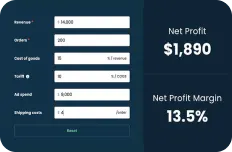
Your Shopify dashboard or other ecommerce analytics tools can give you plenty of useful sales and performance data. But getting a complete, accurate, real-time view of net profit often means pulling costs from multiple sources and keeping them up to date yourself.
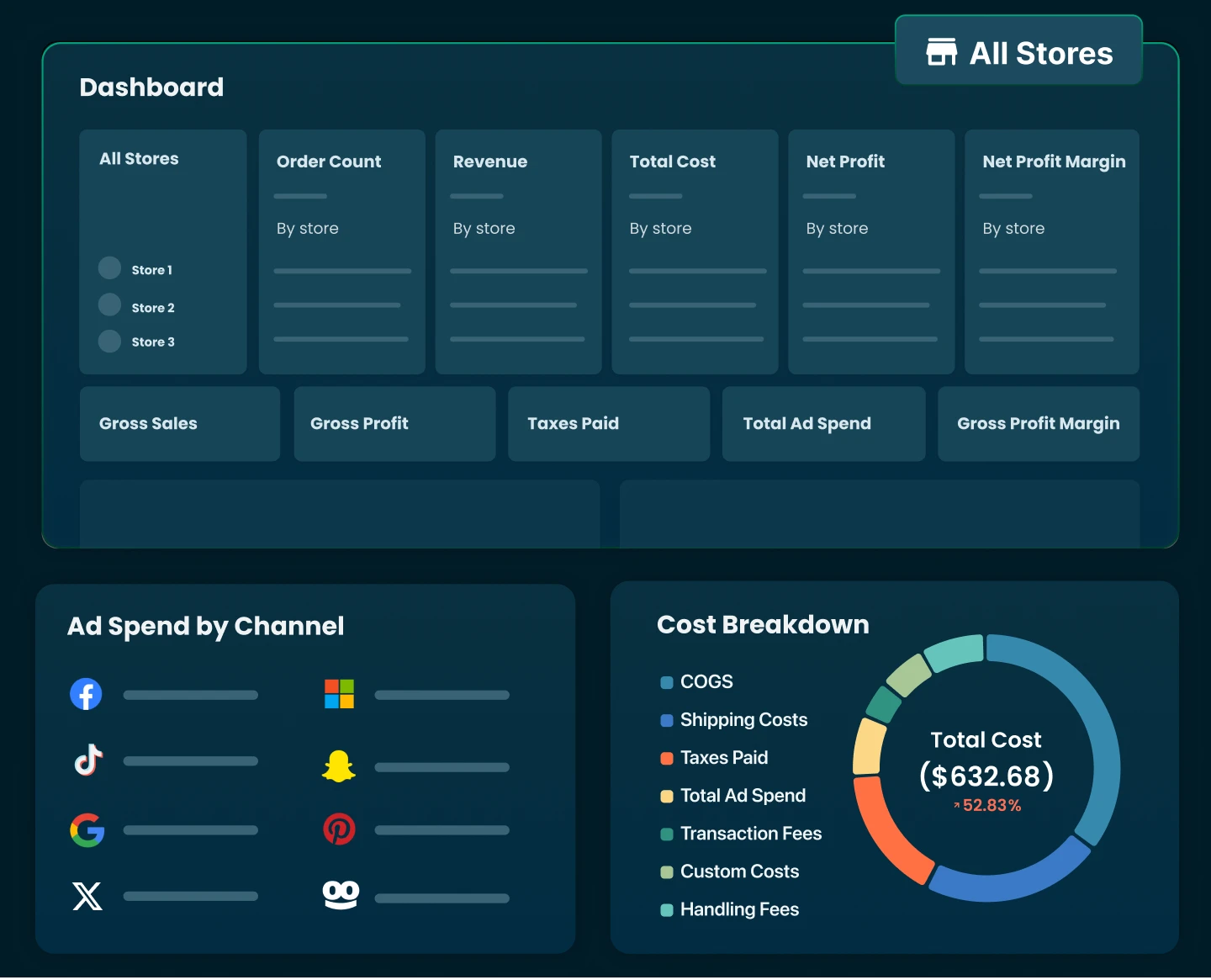
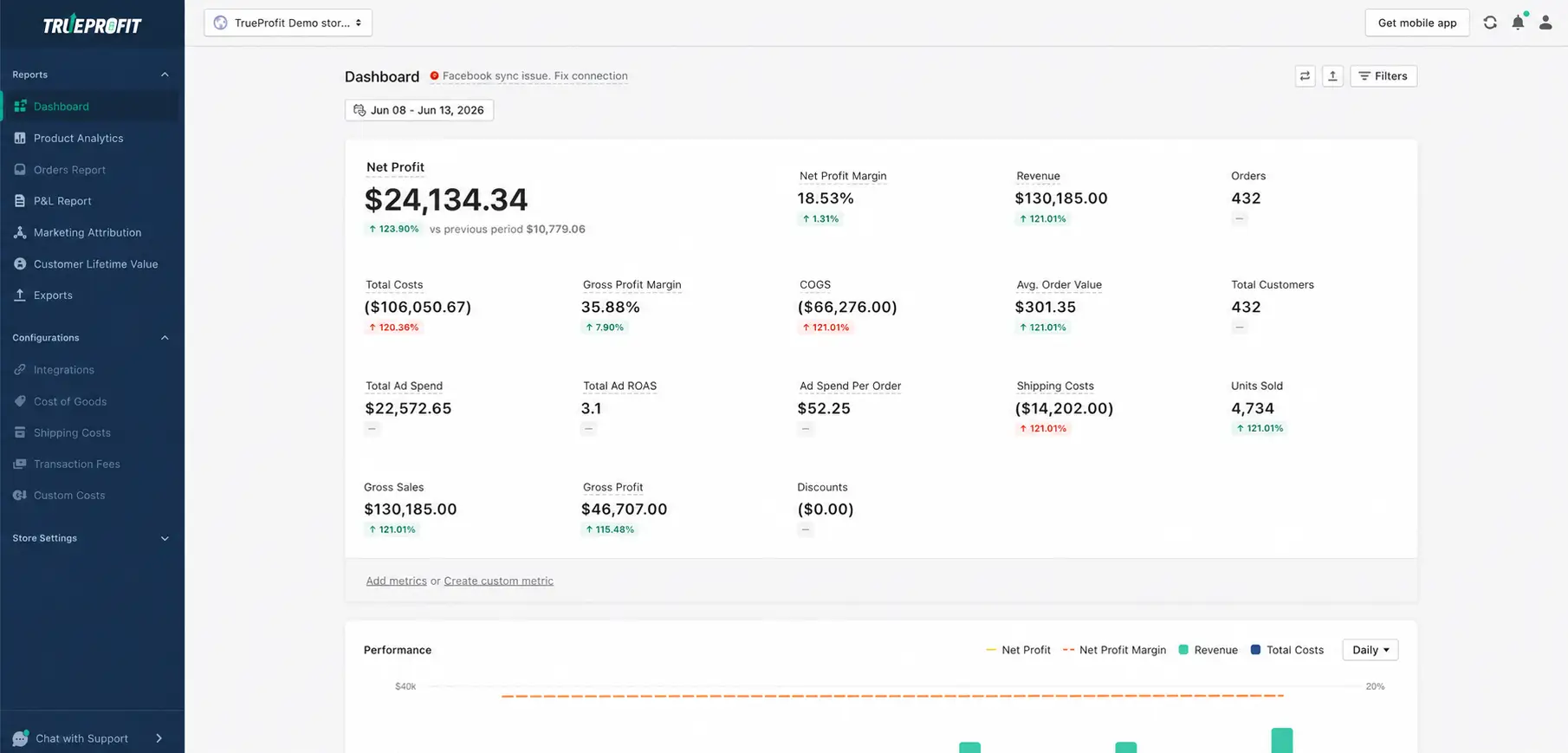
That's the gap TrueProfit is built to solve. It automatically brings together COGS, ad spend, shipping, transaction fees, refunds, chargebacks, and other business costs, including costs that are easy to overlook when you're calculating profit manually.
With TrueProfit, you can:
- Track real-time net profit across your store with all major costs factored in.
- Analyze profit by product to see which products actually contribute to your bottom line.
- Measure profit-based ad attribution to understand which campaigns drive profitable sales, not just revenue.
- Generate P&L reports to get a clearer view of your store's overall financial performance.
- Track Customer Lifetime Value (CLV) to understand how much customers are worth beyond their first purchase.
- Create custom metrics to monitor the numbers that matter most to your business.
As a #1 net profit analytics platform for Shopify merchants, TrueProfit brings these insights into one place, so you spend less time piecing together data and more time making decisions based on actual profit.
Whether you're testing products through dropshipping, buying inventory in bulk, or running both, you can see what's actually making money, what's eating into your margin, and where to put your next dollar.
Final Thoughts
Dropshipping and traditional ecommerce aren't rivals so much as two stages of the same journey.
If you're starting out or protecting limited capital, dropshipping lets you learn the business and find what sells without betting on stock. Once a product proves itself, owned inventory rewards you with better margins and control. The smartest operators don't choose one and stay there. They use dropshipping to discover winners, then graduate those winners into owned inventory.
Know your true net profit per product, and every decision after that, what to scale, what to cut, when to move a product in-house, gets a lot clearer.

Harry Chu is the Founder of TrueProfit, a net profit tracking solution designed to help Shopify merchants gain real-time insights into their actual profits. With 11+ years of experience in eCommerce and technology, his expertise in profit analytics, cost tracking, and data-driven decision-making has made him a trusted voice for thousands of Shopify merchants.