


Wholesale vs Dropshipping: Which Business Model Is Better?

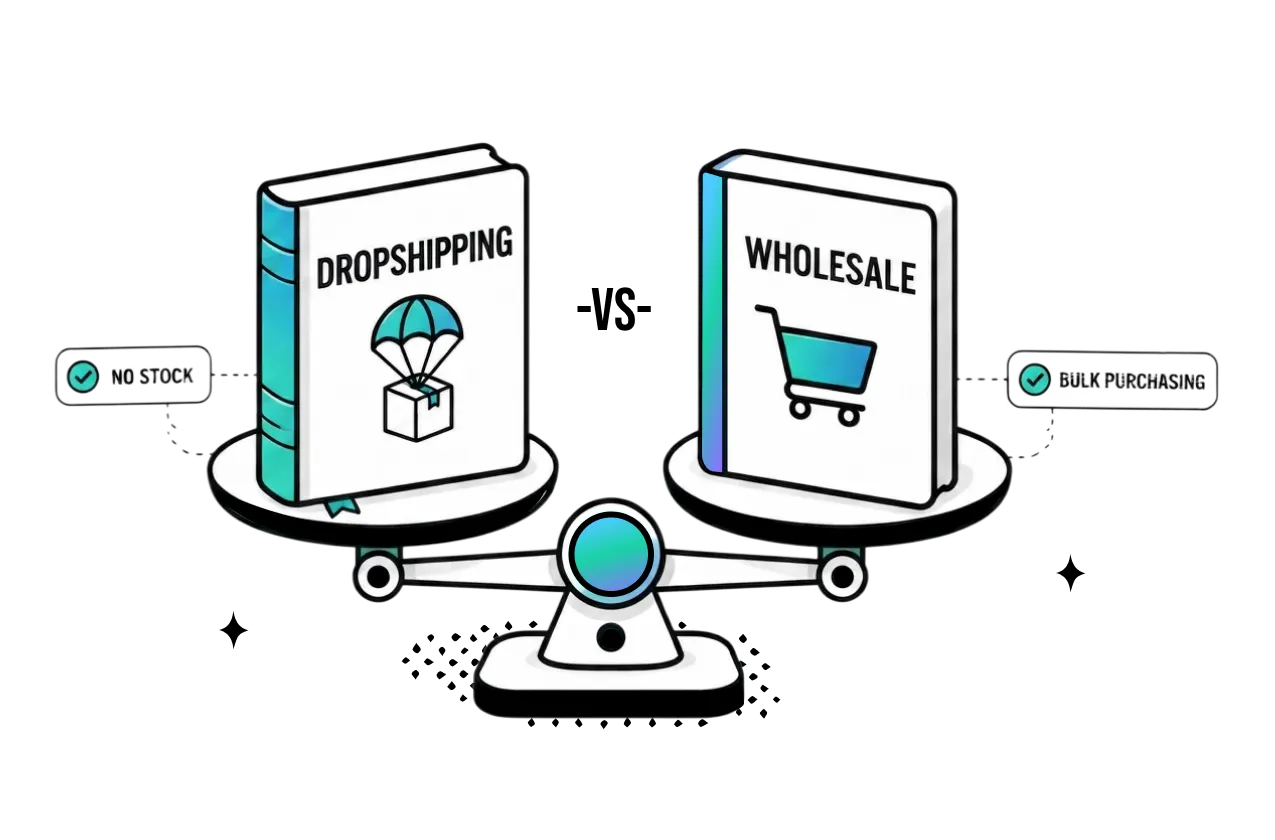

Table of Contents
Which is better: buying inventory upfront or letting your supplier ship every order for you?
That's essentially the choice you're making when comparing wholesale vs dropshipping. One gives you lower upfront risk and more flexibility. The other gives you more control and potentially better unit economics.
But the better model depends on where your business is right now. Let's break down both models and see how they stack up on cost, profit, cash flow, risk, and growth.
In this blog:
What Is Wholesale?
So, what exactly is wholesale? In simple terms, you buy products in bulk from a manufacturer or supplier at a lower per-unit cost, then resell them to customers at a higher price.
The big thing to understand is that you own the inventory. You can keep the products in your own warehouse or use a third-party fulfillment service to store, pack, and ship orders for you. That gives you much more control over product quality, packaging, branding, and the overall customer experience.

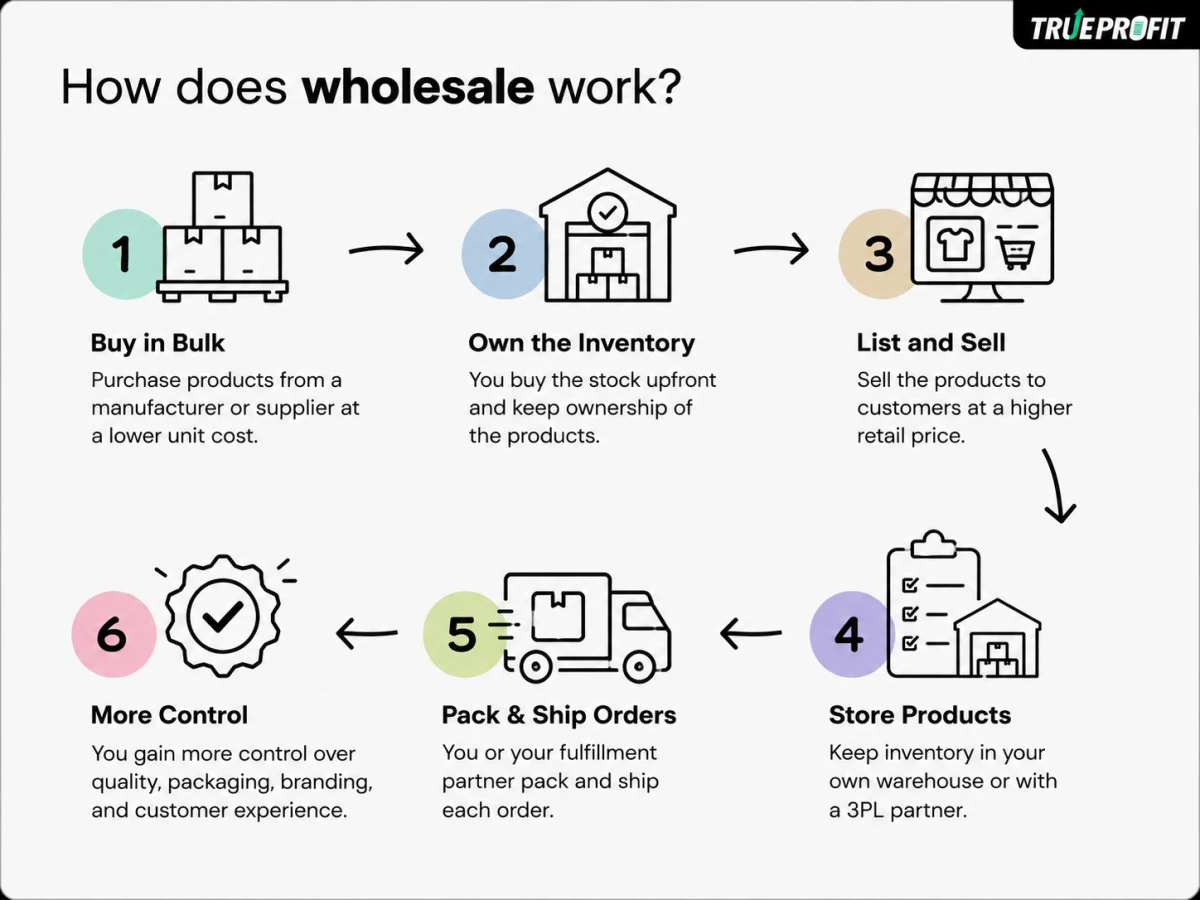
The catch? You need to put money into inventory upfront. If those products don't sell as expected, your cash is sitting in unsold stock. On the flip side, buying in larger quantities usually means lower product costs and more room for profit once you start generating consistent sales.

What Is Dropshipping?
Now, dropshipping takes almost the opposite approach. You sell products without buying or storing inventory upfront. When a customer places an order, you send the order to your supplier, and they handle the picking, packing, and shipping directly to the customer.
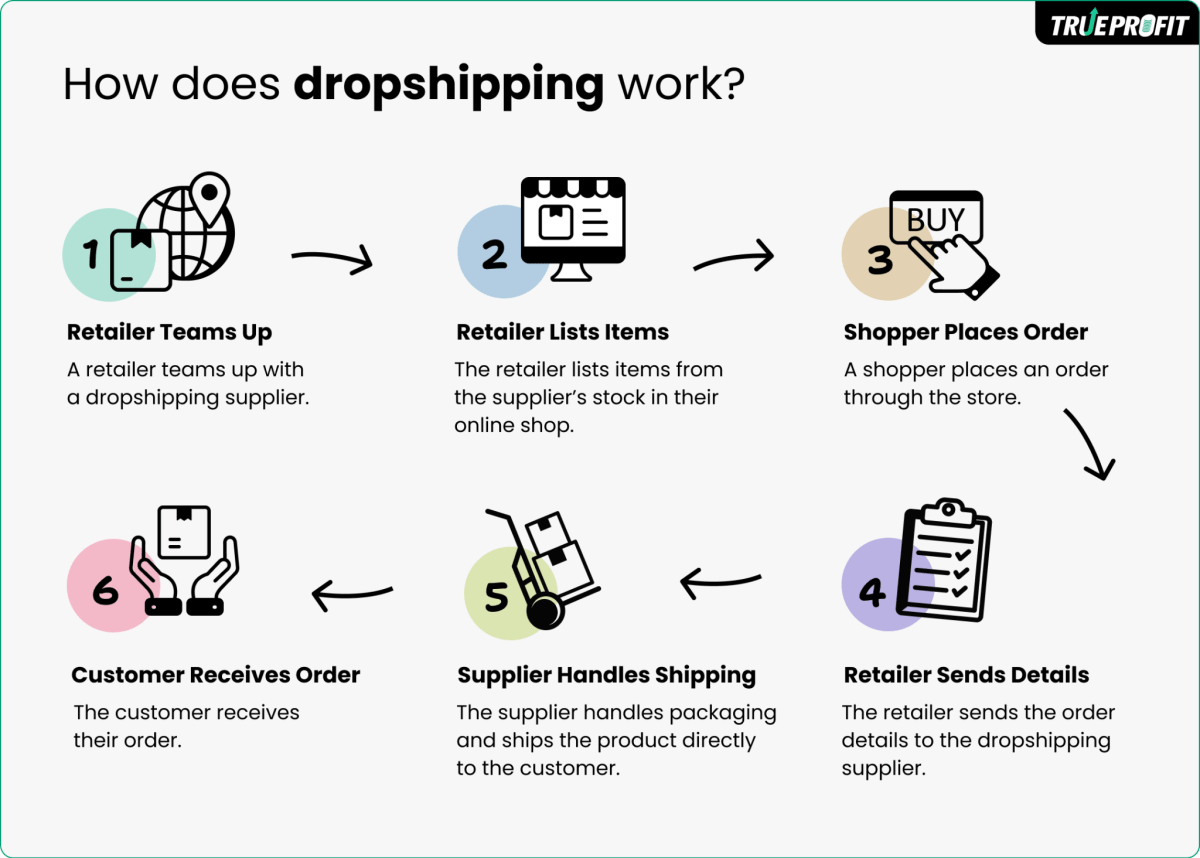
That's what makes dropshipping so attractive. You don't need to spend thousands of dollars on inventory before you know whether a product will sell. You can test different products, see what gets traction, and scale the winners without taking on the same inventory risk as wholesale.
But there's a trade-off. Because your supplier controls fulfillment, you have less say over product quality, packaging, shipping times, and delivery experience. And while the upfront cost is lower, higher supplier prices, shipping fees, ad spend, refunds, and other operating costs can put pressure on your margins.
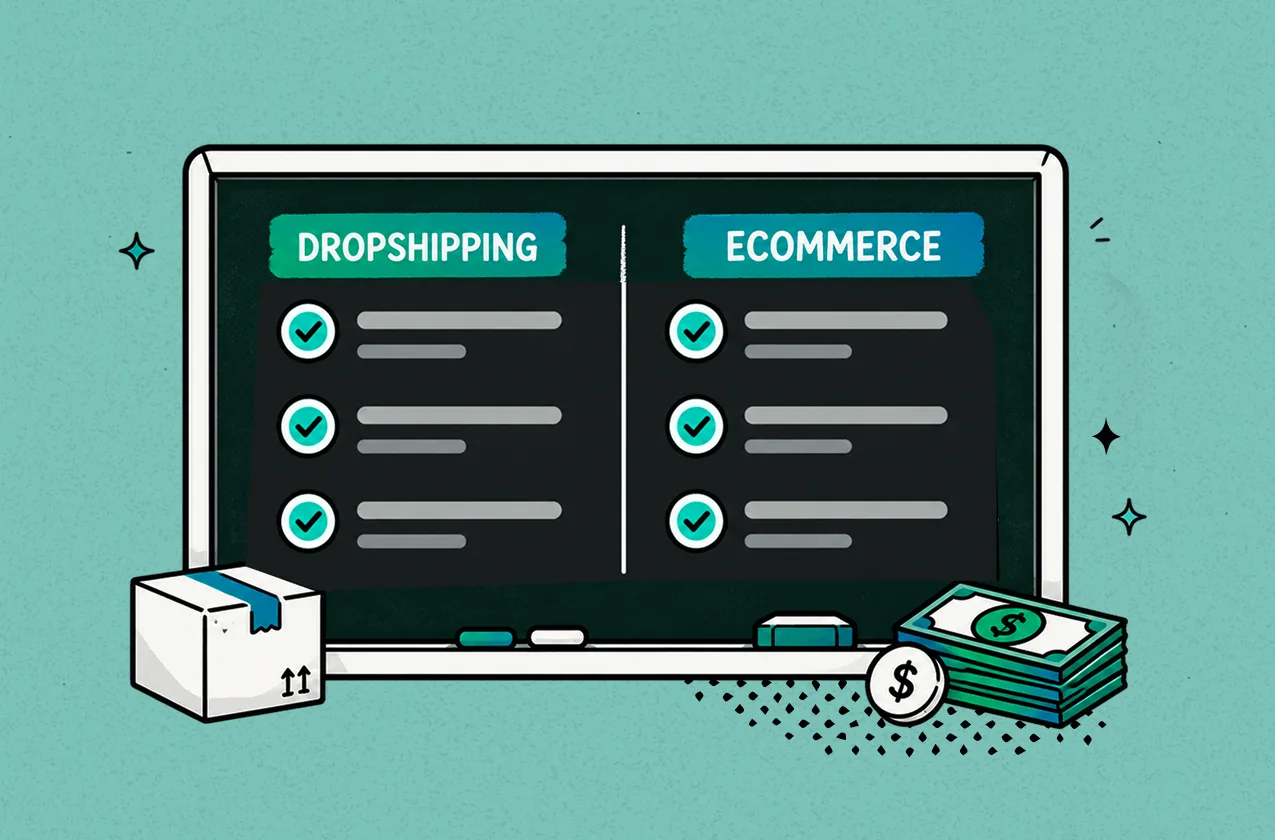
Wholesale vs Dropshipping: How Do They Compare?
Now that we’ve covered how each model works, let’s put them side by side.
The core difference comes down to inventory ownership and fulfillment. With dropshipping, you don't hold stock. Your supplier stores the products and ships each order directly to your customer. With wholesale, you buy inventory in bulk upfront, own the stock, and handle fulfillment yourself or through a 3PL.
Factor | Dropshipping | Wholesale |
|---|---|---|
Inventory ownership | Supplier owns and stores stock | Merchant buys and owns stock |
Upfront investment | Low; no bulk purchase needed | High; requires bulk purchases and MOQs |
Estimated gross margin | Thinner; higher per-unit costs from suppliers. | Higher; volume discounts lower per-unit expenses. |
Cash flow | Easier initially; supplier is paid after the sale | More capital tied up in inventory |
Inventory risk | Low; no unsold stock | Higher; unsold stock ties up cash |
Fulfillment | Supplier picks, packs, and ships | Merchant or 3PL handles fulfillment |
Product & brand control | Limited | High |
Product testing | Easy to test without inventory | Requires upfront inventory commitment |
Scalability | Easy to expand product range | Better unit economics at higher volumes |
Now, let’s dig deeper into these differences and see how each model affects your costs, operations, and growth.
Startup Costs and Inventory Risk
This is where the difference becomes very clear. With dropshipping, you don't need to buy inventory before you make a sale. You can put your initial budget into your store, product samples, and marketing instead of tying it up in stock.
Wholesale requires more working capital from day one. Suppliers often set minimum order quantities (MOQs), so you may need to purchase dozens or hundreds of units before you know how quickly they will sell.
If demand falls short, that inventory doesn't just sit there. It ties up your cash and may also create storage and fulfillment costs.
Profit Margins and Unit Economics
Wholesale can have an advantage in unit economics, especially at higher volumes. Buying inventory in bulk allows merchants to negotiate lower per-unit costs, while dropshippers typically pay supplier prices on an order-by-order basis. This can give wholesale merchants more room to improve their margins as order volume grows.
However, gross margins vary widely across both models depending on the product, supplier pricing, selling price, shipping costs, and other COGS. Dropshipping can still achieve strong gross margins, while wholesale’s main advantage is often lower per-unit COGS and better purchasing power at scale.
Cash Flow and Working Capital
Dropshipping generally puts less pressure on your cash flow in the early stages. You collect the customer's payment when they order, then use part of that revenue to pay the supplier. Since you're not buying inventory upfront, less cash is sitting in stock.
Wholesale works in the opposite direction. You pay for inventory before you make those sales, which means more of your working capital is tied up from the start.
The upside is that holding inventory can help you secure better supplier pricing, keep popular products in stock, and fulfill orders faster. So while wholesale requires more cash upfront, it can create stronger economics once demand is predictable.
Fulfillment and Control
With dropshipping, your supplier takes care of most of the fulfillment process. That's convenient, but it also means giving up some control. You may have limited influence over product quality, packaging, shipping methods, and delivery times.
Wholesale gives you much more control over the customer experience. You can inspect products before they ship, use custom packaging, choose your fulfillment and shipping strategy, and maintain more consistent quality standards.
You don't necessarily have to manage everything yourself, either. A 3PL can handle storage and fulfillment while you still own the inventory and control how your products are presented to customers.
Product Testing and Scalability
Dropshipping is particularly useful when you're still figuring out what sells. You can launch a product, test your marketing, and evaluate demand without committing to a large inventory order. If the product doesn't perform, you can move on without being left with hundreds of unsold units.
Wholesale makes more sense when you've already identified products with consistent demand. Buying in larger quantities can lower your COGS and improve your unit economics, but scaling also means taking on more responsibility for inventory, warehousing, and fulfillment.
So, which model comes out ahead? Dropshipping gives you more flexibility and lower inventory risk, while wholesale gives you better potential unit economics and more control.
The right choice depends on your available capital, how confident you are in product demand, and how much of the customer experience you want to manage.
Can You Combine Wholesale and Dropshipping Together?
Absolutely. In fact, combining wholesale and dropshipping can be a practical way to balance growth, cash flow, and inventory risk. You don't have to choose one model for your entire store.
The idea is simple: use dropshipping when you're testing or discovering products, then move proven winners to wholesale once the sales data justifies the upfront investment. This gives you the flexibility to experiment without giving up the better unit economics and control that wholesale can offer.
1. Use Dropshipping to Test Products
When you're launching a new product, dropshipping lets you test demand without committing to a large inventory order. You can track sales volume, conversion rate, customer acquisition cost, and, most importantly, whether the product generates a healthy net profit.
If the product doesn't perform, you can stop selling it without being left with a warehouse full of unsold stock.
2. Move Proven Products to Wholesale
Once a product consistently generates sales and profit, it may make sense to switch to wholesale. Buying in larger quantities can lower your COGS, improve your margins, and give you more control over fulfillment, packaging, and product availability.
The basic playbook is straightforward: dropship, validate, identify winners, move them to wholesale, then scale.
3. Keep Dropshipping for Product Discovery
Moving your bestsellers to wholesale doesn't mean you have to stop dropshipping altogether. Keep proven products in your wholesale inventory while continuing to use dropshipping to test new products and expand your catalog.
This creates a hybrid model where wholesale handles products with proven demand, while dropshipping handles products that are still being tested. The key is knowing when a product has earned a place in your inventory. That decision should be based on consistent sales and profitability, not revenue alone.
Using Wholesale and Dropshipping Together
You don't necessarily have to choose one model and stick with it. A hybrid approach lets you use dropshipping to test new products and wholesale to stock the ones that prove they can sell.
This way, you can try new ideas without tying up too much cash in inventory, then move proven products to wholesale to get better supplier pricing and more control over fulfillment.
The downside is that things get a little more complicated. You'll be working with different suppliers, fulfillment processes, and inventory systems, so keeping everything in sync matters. You'll also need to watch your cash flow closely when moving a product to wholesale, since you're putting money into inventory upfront.

How Much Does It Cost to Start Wholesale vs Dropshipping?
The upfront gap is wide. Dropshipping usually costs around $600–1,400 to launch safely, while wholesalers often run $2,000–10,000+ to buy inventory, cover storage, and prepare for fulfillment.
Inventory is the reason. With dropshipping you don't buy stock until a customer orders. With wholesale you pay for stock upfront, often in large quantities, before you know how fast it moves.
Cost | Dropshipping | Wholesale |
|---|---|---|
Inventory | $0 upfront | ~$1,000–6,000+ |
Platform & software | ~$40–150/month | ~$40–200/month |
Marketing & testing | ~$300–800 | ~$500–3,000 |
Storage | Usually $0 upfront | ~$0–500/month |
Packaging & shipping | Minimal upfront | ~$200–1,000 |
Branding & product assets | ~$0–300 | ~$0–1,500 |
Cash buffer | ~$100–500 | ~$1,000+ |
Estimated launch budget | ~$600–1,400 | ~$2,000–10,000+ |
Dropshipping Startup Costs
Dropshipping stays cheap because you don't buy inventory before you sell. A realistic $600–$1,400 budget covers your ecommerce platform, essential apps, product samples, and early marketing tests.
Your biggest variable cost is customer acquisition. Expect to spend a few hundred dollars testing products, creatives, and audiences before you land on a winner. That keeps inventory risk low but shifts the risk toward ad performance and supplier costs.
Wholesale Startup Costs
Wholesale needs real capital because you buy stock upfront. A typical starting budget runs $5,000–25,000+, depending on the product, MOQ, order volume, shipping, and storage.
Inventory is usually the largest line, followed by warehousing, packaging, freight, and fulfillment. Buy too much before demand is proven and a big chunk of your working capital gets stuck in unsold stock. The upside is that bulk pricing lowers your cost per unit, so when demand is predictable, better margins give you more room to grow.
The bottom line: dropshipping lets you start small and test demand before committing to inventory, while wholesale asks for a bigger upfront investment but rewards you with better unit economics and control once your sales volume is established.
Final Thoughts
So, wholesale vs dropshipping isn't about choosing one business model for good. It's about knowing when each model makes more sense for your Shopify store.
Dropshipping gives you a low-risk way to test products, validate demand, and find winners without committing cash to inventory. Once a product has consistent sales and proven profitability, wholesale can become the next step. Buying in bulk can lower COGS, improve unit economics, and give you more control over inventory, fulfillment, and the customer experience.
The key is knowing when a dropshipping product is profitable enough to move into wholesale. Shopify merchants already have access to their sales and expense data, but the problem is that not every cost gets tracked or accounted for completely. COGS, ad spend, shipping, transaction fees, refunds, and other expenses can add up quickly.
If some of these costs are missing, the reported profit can look healthier than the product's actual net profit.
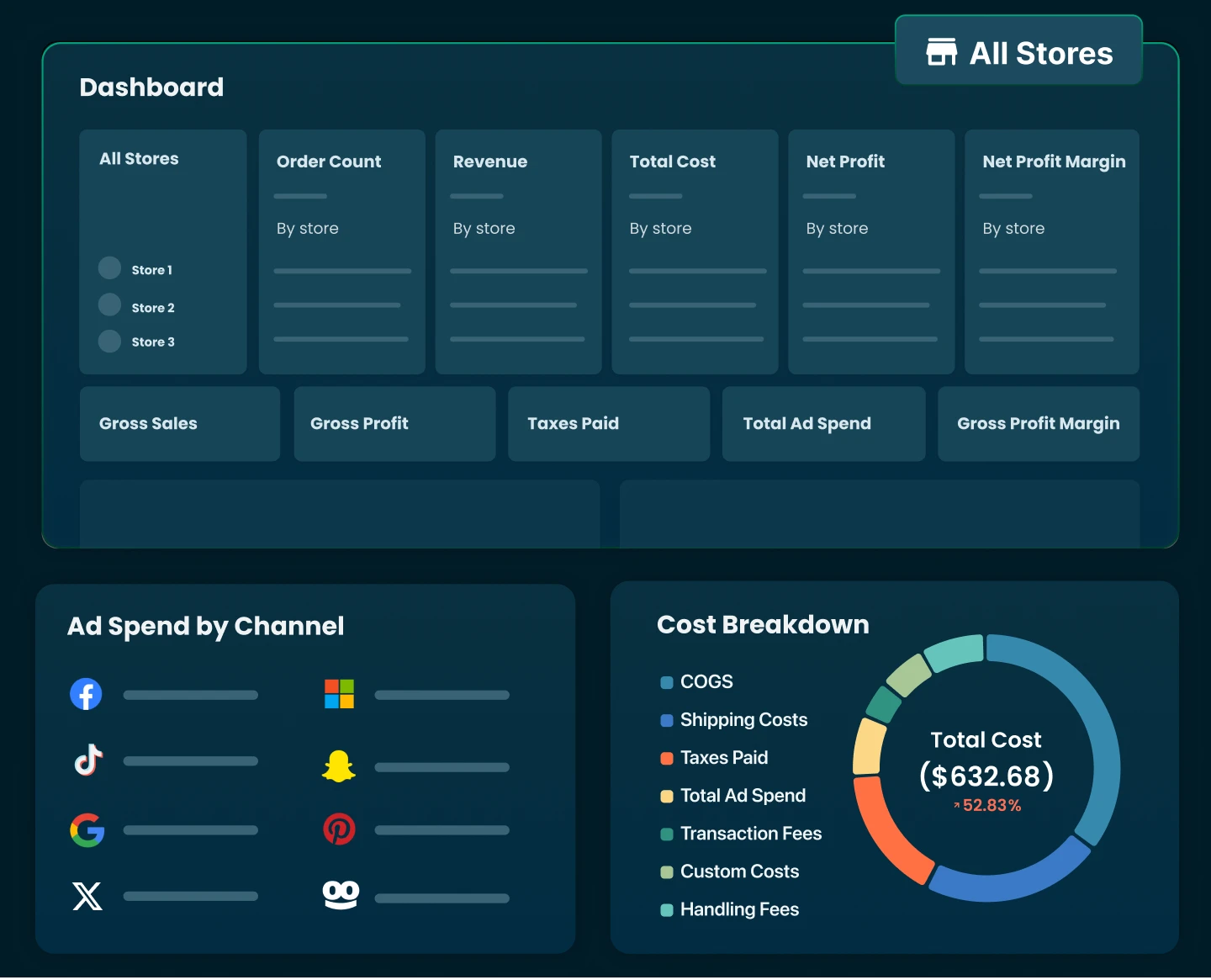
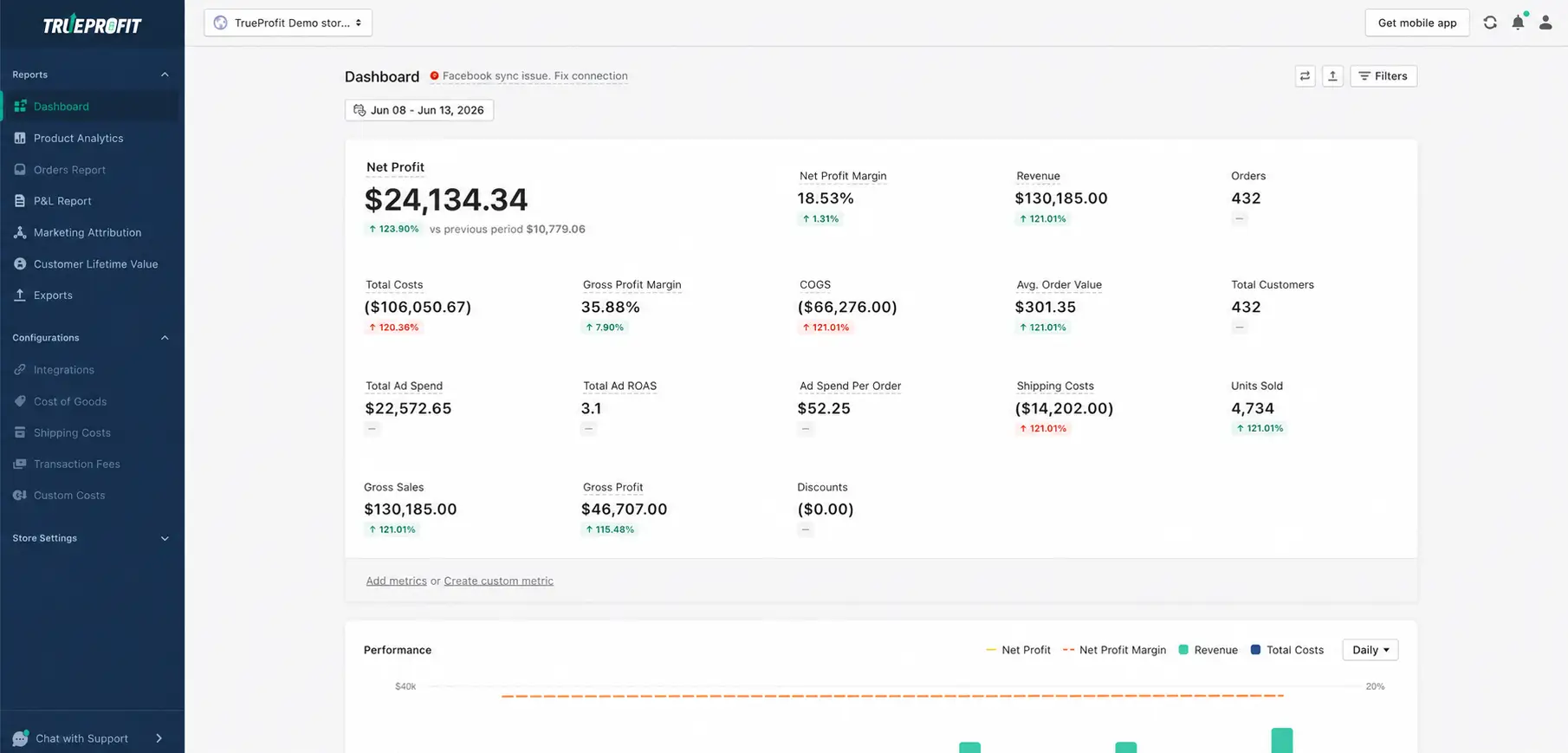
TrueProfit brings your Shopify sales data and all the costs that affect profitability into one real-time dashboard, helping you get a more accurate view of net profit by product. That makes it easier to know which products are worth continuing to test through dropshipping, and which proven winners have enough profit potential to move into wholesale for better COGS, margins, and control.
And you don't have to stick with just one. A hybrid approach can give you the best of both: dropshipping for testing, wholesale for scaling.
Lila Le is the Marketing Manager at TrueProfit, with a deep understanding of the Shopify ecosystem and a proven track record in dropshipping. She combines hands-on selling experience with marketing expertise to help Shopify merchants scale smarter, through clear positioning, profit-first strategies, and high-converting campaigns.