

How to Scale a Dropshipping Business in 2026: 3 Phases to Profitable Growth


Table of Contents
“How to scale a dropshipping business without burning through your cash or margins?” is a question a lot of dropshippers ask.
Dropshipping is cheap to start, but scaling aggressively is where the real financial risk starts to show. Inefficient ad spend, rising supplier costs, chargebacks, and fulfillment issues can quickly eat into the cash you've built. The bigger your store gets, the more expensive those mistakes become.
That's why profitable scaling takes more than a winning product or a good ad. You need healthy unit economics, a repeatable acquisition system, and operations that can handle higher order volume without putting your margins at risk. Here's how to build each one across three phases.
In this blog:
Phase 1: Get Your Business Ready to Scale
Scaling too early is the fastest way to turn a promising store into an expensive mess. I've watched plenty of founders learn that the hard way. Before you touch your ad budget, confirm your current model can survive more volume. That means looking past sales and checking whether your products, margins, acquisition, and operations are consistent enough to grow.
Nothing here has to be perfect. But you need enough visibility to know what's working, what's leaking profit, and what breaks first when orders spike.
Signs Your Store Is Ready to Scale
Your store is ready to scale when it makes money predictably, not occasionally. You want profit that repeats, not a lucky month you can't explain.
Look for these signals:
- Winning products sell consistently, not in random bursts.
- CAC stays in a predictable range.
- AOV leaves real room for acquisition costs.
- Products carry healthy margins after every fee.
- Ads turn a profit on a steady basis.
- Your supplier can handle a volume jump without breaking.
- Fulfillment and support are under control.
- You can name which products and channels actually drive profit.
- Net profit margin is consistently above 25% to secure room to absorb costs.
Once those are in place, you shift from proving the business works to finding out how far it goes.
Track the Metrics That Actually Drive Profit
Look beyond top-line sales and advertising performance. The metrics that matter most are the ones that show how much you earn, spend, and keep at the product and order level.
Start with the core four:
- CAC (Customer Acquisition Cost): what you spend to win each customer. As you scale, watch it climb instead of assuming it holds.
- AOV (Average Order Value): how much a customer spends per order. Higher AOV absorbs acquisition and fulfillment costs.
- CLV (Customer Lifetime Value): total value a customer generates over time. If you rely on repeat buyers, a strong CLV justifies a higher CAC.
- Net profit: what's left after product cost, ad spend, shipping, fees, refunds, and everything else.
- Net profit margin: the percentage of revenue you actually keep after all business expenses. This shows whether your store is generating enough profit relative to its sales volume, not just making more revenue.
From there, go one layer deeper: net profit per order, net profit on ad spend, and net profit per product. This is where you catch the campaign with great ROAS that quietly loses money after COGS, or the bestseller that barely clears break-even.
Fix Your Unit Economics Before Buying More Traffic
Next, fix your unit economics before you spend a dollar more on ads. Scaling multiplies your margins in both directions.
If you make $5 per order today, more orders won't fix that. You'll just own the problem at a larger scale.
Audit your COGS, shipping, payment fees, discounts, refunds, and CAC. Then hunt for margin: better supplier pricing, smarter retail pricing, bundles, upsells, or higher-ticket products.
Before you scale, know your break-even point cold. You should be able to say exactly how much you can pay for a customer and still profit. If you can't answer that off the top of your head, you're not ready to spend more.

Phase 2: Scale Your Business
Once your economics are healthy and people consistently want your product, you can pour fuel on the fire. But scaling isn't just spending more on ads.
At this stage every part of the business starts pulling on every other part. More traffic means more orders, which means more pressure on your site, suppliers, support, fulfillment, and cash flow.
The goal here is controlled growth: more volume while keeping the economics that made you profitable in the first place.
1. Build a High-Converting Scaling Funnel
Squeeze more value from the traffic you already have before you buy more. Doubling visitors to a leaky funnel just makes the leak more expensive.
If 10,000 visitors produce 200 orders, 20,000 won't magically double your profit. Weak product-page messaging or checkout friction scales right along with the traffic.
Fix the highest-impact steps first. Your product page should answer what it does, who it's for, why it's worth the price, and why you're trustworthy, without making shoppers dig.

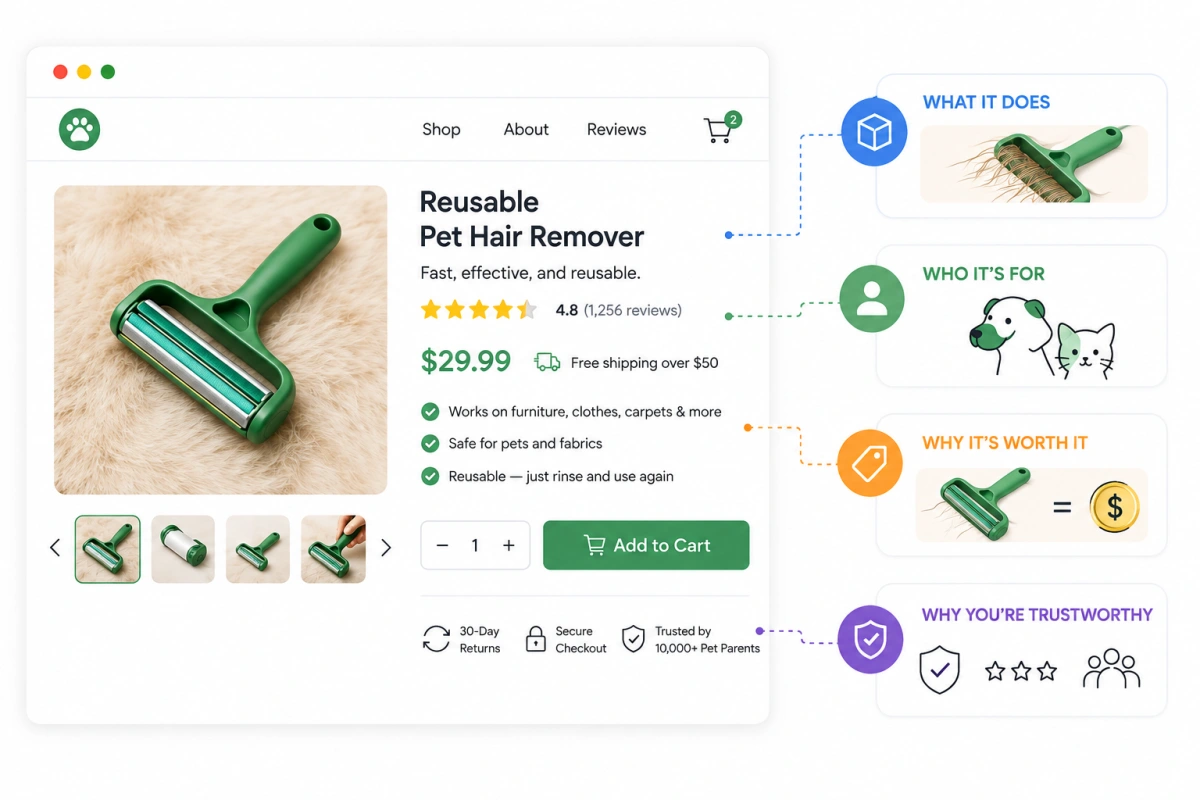
Then push past conversion rate into order value. A $60 buyer beats a $30 buyer even when the same ad brought them in. This is where bundles, quantity breaks, cross-sells, and upsells earn their keep, raising the value of customers you're already paying to acquire.
So the best scaling funnel isn't the one with the highest conversion rate. It's the one that turns more traffic into profitable customers.
2. Automate Your Operations
Automate the predictable work so 10x more orders don't demand 10x more manual effort. Spreadsheets and founder hustle carry you through the first few hundred orders. They collapse at thousands.
At scale, someone has to check order status, send tracking, answer "where is my order" emails, watch inventory, process refunds, and keep the finances current. Left manual, that work eats the hours you need for growth.
Automate order processing, tracking updates, inventory alerts, customer notifications, and routine support. Document the workflows that still need a human so you can delegate them later. The aim isn't to remove people. It's to stop volume from multiplying your workload one-to-one.
3. Scale Winning Ads Vertically and Horizontally
Grow proven campaigns without breaking them by using two levers: vertical and horizontal scaling. Let me explain more about this approach:
- Vertical scaling means adding budget to an existing winner. But don't assume double the spend means double the sales. As spend rises you hit less responsive audiences, more competition, and diminishing efficiency. You can follow this rule: raise budgets in steps and watch CAC, conversion rate, AOV, and net profit, not just revenue.
- Horizontal scaling means reproducing what made the winner work. If a creative angle lands, test new hooks around the same pain point. If an audience responds, explore adjacent ones. If a format performs, adapt it to other placements and platforms.
This matters more in dropshipping because creative fatigue hits fast. Don't chase one ad that works forever. Build a system that keeps producing fresh variations of proven concepts. That's what makes paid acquisition actually scalable.
4. Diversify Your Traffic Sources
A store that gets most of its sales from one ad platform is one algorithm change away from a bad quarter. When your whole engine sits on one platform, any hiccup hits revenue immediately.
That said, you don't need to spread yourself thin. Once you have one profitable channel, test another where your customers already spend time: Google Ads, TikTok, SEO, influencer marketing, affiliate, email, or organic social.
Add one at a time, not all at once.
Carry your existing insight into each new channel. If Meta works because a specific pain point or product demo converts, use that same insight in TikTok content, influencer briefs, and SEO landing pages.
You're not just adding traffic. You're building multiple paths to the same profitable customer.
Phase 3: Build a Dropshipping Business That Can Handle Scale
Once your products sell and your channels produce profitable customers, the problem changes shape. Growth stops being a marketing problem and becomes an operations problem.
More orders strain suppliers, fulfillment, inventory, support, and internal processes. This is the ceiling most stores hit. They can create demand, but the infrastructure can't hold it.
1. Upgrade Your Supplier and Fulfillment Infrastructure
You're not just looking for a supplier that fulfills more. You need fulfillment that grows without eating margins or wrecking the customer experience.
As volume grows, watch product quality, processing times, shipping speed, inventory availability, tracking accuracy, and returns. A minor fulfillment slip becomes a real problem across hundreds of orders.
On the flip side, volume also buys leverage. Once a product ships consistently, negotiate better COGS or shipping rates, explore faster fulfillment, or find suppliers who serve your new volume more reliably.
I'd also keep a backup supplier for your top products. If your bestseller goes out of stock, your entire acquisition engine stalls.
2. Transition From a Dropshipping Store to a Branded Store
Turn your proven winners into a brand once demand is consistent. Dropshipping is a great way to test products without buying inventory upfront. But competing on a generic product and price alone gets harder the bigger you get.
You don't have to jump to a private label overnight. Start by upgrading the experience around products that already sell: custom packaging, better photography, original content, sharper positioning, and a consistent visual identity.
Over time, move into private-label products, custom variations, or exclusives no competing store carries. That gives you pricing control and makes your business harder to copy. Treat dropshipping as demand validation. Once you know what customers want, use that data to decide where deeper investment pays off.
3. Build an Operations and Customer Service Team
If you're spending hours a day on routine support or checking individual orders, you're doing work someone else could own. Identify the predictable, repeatable processes first: support, order management, supplier communication, creative production, and reporting usually go first.
Hiring alone won't fix it. You need clear SOPs, defined responsibilities, and measurable standards so the business doesn't depend on you deciding everything. Scale your team as complexity grows, not just as revenue grows.
4. Track Profit Before You Scale Further
Keep tracking profit through the entire process, not just at the finish line. It's easy to fixate on the next revenue milestone. $50K becomes $100K becomes $500K, and the business looks bigger every month.
But if CAC is rising, margins are shrinking, refunds are climbing, or a bestseller barely profits, revenue growth paints a misleading picture. Break profitability down by product, channel, campaign, and order to see where growth truly comes from.
More often than not, you'll find one product drives most of your revenue while another delivers most of your profit. Or that your highest-ROAS campaign isn't your most profitable once COGS lands. So before you put another $10K into ads, ask: how much profit did the last $10K actually create?
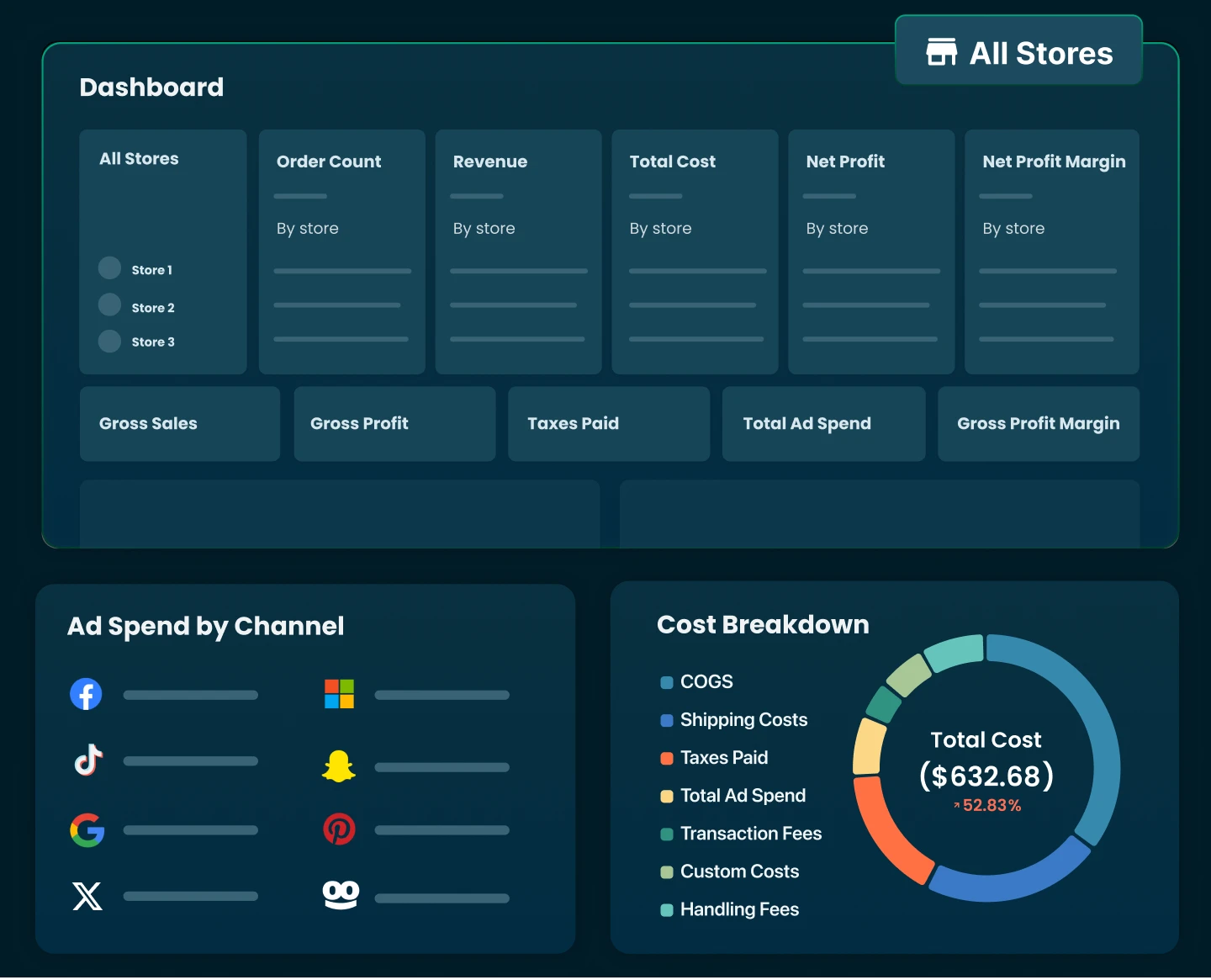
That's not something a revenue dashboard or spreadsheet can tell you. It's where TrueProfit comes in, tying your ad spend, COGS, fees, and shipping back to net profit by product, order, and channel, so you can see which campaigns truly pay off instead of trusting ROAS at face value.
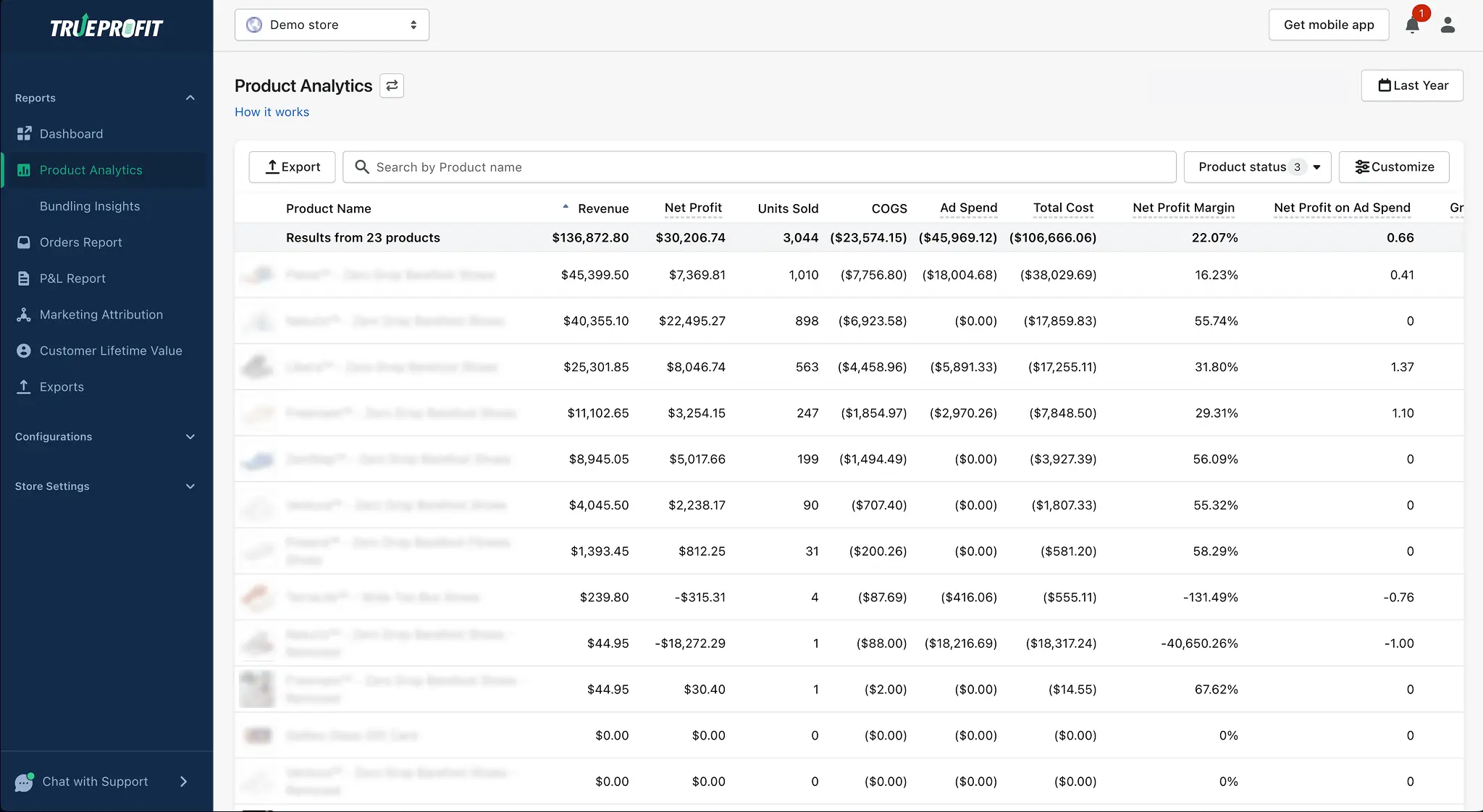
If you can answer that with confidence, you'll know when to push, when to fix a bottleneck, and when the numbers are telling you to pump the brakes.
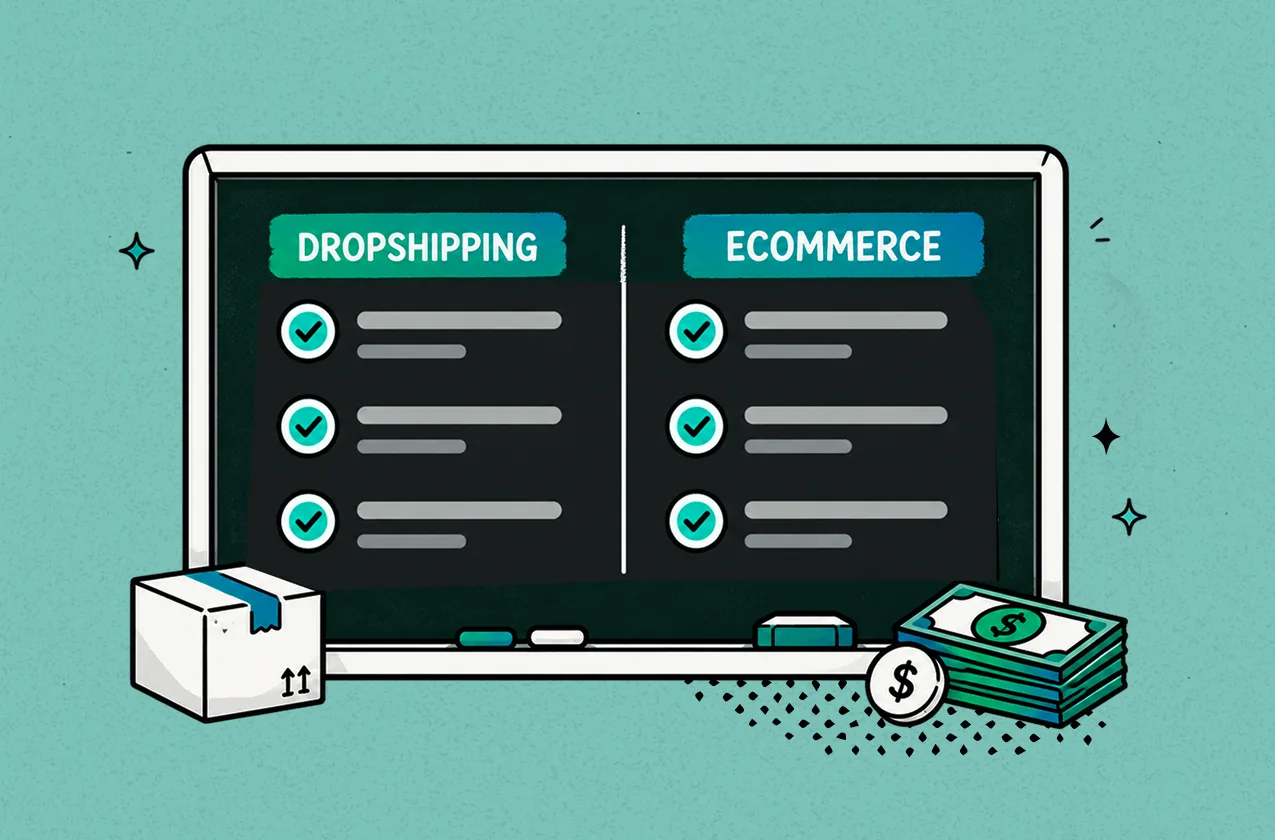
Pre-Scale vs. Scaled Dropshipping Business: What’s Difference?
The real gap between a pre-scale and scaled store isn't order count or revenue. It's how the business operates and makes decisions.
- Pre-scale, you're still proving the product, offer, and acquisition work.
- Scaled, the focus shifts to systems that absorb volume without letting costs and complexity rise at the same pace.
Pre-Scale Business | Scaled Business | |
|---|---|---|
Main focus | Validate the business model | Grow profitable revenue |
Products | Test and validate winners | Double down on profitable products |
Marketing | Find a working channel | Scale and diversify traffic |
Metrics | Revenue, CAC, AOV, conversion rate | Net profit, CLV, profit per order, product-level profit |
Operations | Mostly manual | Automated and systemized |
Suppliers | Find a reliable supplier | Negotiate, diversify, and secure exclusive suppliers |
Customer support | Founder-led or small team | Dedicated team and SOPs |
Brand | Product-focused store | Stronger brand identity and experience |
Decision-making | "Does this product sell?" | "Does this growth create enough profit?" |
The mindset shift is the point. Early on, the question is "Can I make this product sell?" Once you've proven that, it becomes "Can I sell more without sacrificing profit?" Eventually it turns into "Can I build a more valuable business around what already works?"
That progression is the whole game.

Final Thoughts
Scaling a dropshipping business isn't one winning ad or a budget doubled overnight. It's a sequence.
Get your unit economics right and gather enough data to know what's actually profitable. Improve your funnel, scale your winning channels, and diversify traffic. As volume grows, strengthen suppliers, fulfillment, operations, and team. Then use your proven products and customer insight to build a real brand.
Do it in that order and profit leads to every decision. In my book, that's the difference between a store that scales and one that just gets busier.
Lila Le is the Marketing Manager at TrueProfit, with a deep understanding of the Shopify ecosystem and a proven track record in dropshipping. She combines hands-on selling experience with marketing expertise to help Shopify merchants scale smarter, through clear positioning, profit-first strategies, and high-converting campaigns.