


10+ Best Eco-Friendly Dropshipping Suppliers for Your Store in 2026


Table of Contents
Dropshipping eco-friendly products has one advantage that a lot of people overlook: you’re selling a product story, not just a product. Customers may care about recycled materials, plastic-free packaging, or ethical production, but that only works if the supplier can actually deliver on those promises.
And that makes supplier selection a little different here. You’re not just looking for someone with a good catalog. You’re looking for a supplier whose products, sourcing, fulfillment, and pricing all make sense together.
With that in mind, here are 11 eco-friendly dropshipping suppliers worth considering in 2026, along with what each one does best and where you’ll need to be more careful.
In this blog:
What Separates a Good Eco-Friendly Supplier From the Rest?
Before we get into the supplier list, let's clear up one thing:selling an “eco-friendly” product doesn't automatically make your dropshipping business eco-friendly.
This is where a lot of merchants get tripped up.
So when you're evaluating suppliers, I'd look at the entire supply chain, not just the product catalog.
Look Beyond the “Eco-Friendly” Label
The first thing I'd check is what actually makes the product sustainable.
Look for specific information about materials, sourcing, manufacturing, and product lifespan. For example, “made with 100% organic cotton” tells you much more than simply calling a product “green.”

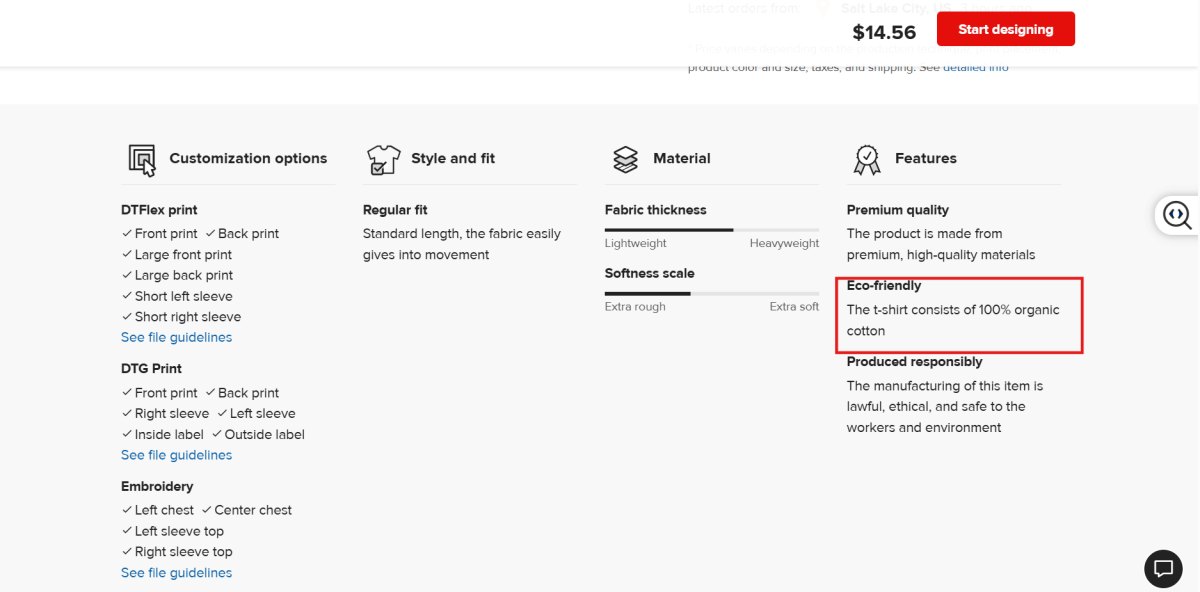
Depending on the product category, certifications such as GOTS, OEKO-TEX, FSC, Fair Trade, or Global Recycled Standard can also give you something more concrete to evaluate.
You don't need a supplier covered in sustainability badges. What matters is whether the claims are specific, relevant, and verifiable.
Check the Packaging and Fulfillment
Here's something merchants often forget: the product isn't the only thing your customer receives.
A reusable kitchen product doesn't look particularly sustainable if it arrives inside several layers of plastic packaging.
So before committing to a supplier, check:
- What material is used for packaging?
- Is unnecessary plastic involved?
- Can the supplier use recyclable or minimal packaging?
- Where is the order fulfilled from?
- How far does it typically travel to reach your target customer?
This doesn't mean you should automatically choose a local supplier or assume shorter shipping equals lower environmental impact. You want to look at the whole fulfillment setup and decide whether it aligns with your brand positioning.
Pay Attention to Transparency
This is probably my favorite filter when comparing suppliers.
Ask a simple question: can they prove what they're claiming?
If a supplier says its products are sustainable, ask where the materials come from, where the products are manufactured, whether certifications are available, and what packaging is used.
A good supplier doesn't necessarily need to have an impressive sustainability report. But they should be able to give you clear answers to reasonable questions.
If all you get is “100% eco-friendly” with no supporting information, I'd be careful about putting that claim on your product page.
Consider the Product's Entire Lifecycle
There's another angle that's easy to miss: how long does the product stay useful?
A product made from recycled materials isn't necessarily a better choice if it breaks after a few uses. Likewise, something marketed as reusable isn't particularly compelling if customers have to replace it every few months.
For an ecommerce brand, durability can actually become part of your sustainability proposition.
Look for products that are designed to be reused, refilled, repaired, recycled, or simply used for a long time.
That's a much stronger foundation than putting a green label on a conventional product.

11 Eco-Friendly Dropshipping Suppliers Worth Checking Out
Not every supplier will fit the same type of store, so here’s a quick comparison to help you narrow down your options before we take a closer look at each one.
Supplier | Best for | Product focus | Key strength |
|---|---|---|---|
GreenDropShip | Natural & wellness stores | Organic, beauty, household, food | Large U.S. catalog |
Printful | Sustainable POD brands | Apparel, accessories, custom products | Strong POD infrastructure |
Syncee | Multi-category stores | Fashion, home, beauty, lifestyle | Large supplier marketplace |
Jungle Culture | Sustainable lifestyle stores | Kitchenware, reusable goods, home | Strong sustainability focus |
DropCommerce | U.S. & Canada-focused stores | Consumer products | North American suppliers |
Spocket | U.S. & EU-focused stores | Fashion, beauty, home, lifestyle | Regional supplier network |
TPOP | Eco-conscious POD brands | Apparel, accessories | Sustainability-focused POD |
Printify | Flexible POD stores | Apparel, home, accessories | Large product selection |
EPROLO | Sustainable fashion stores | Fashion, accessories, general products | Sourcing + branding options |
Modalyst | Stores wanting supplier variety | Multiple categories | Broad supplier marketplace |
Syncio | Multi-brand stores | Fashion, home, lifestyle | Independent brand marketplace |
1. GreenDropShip
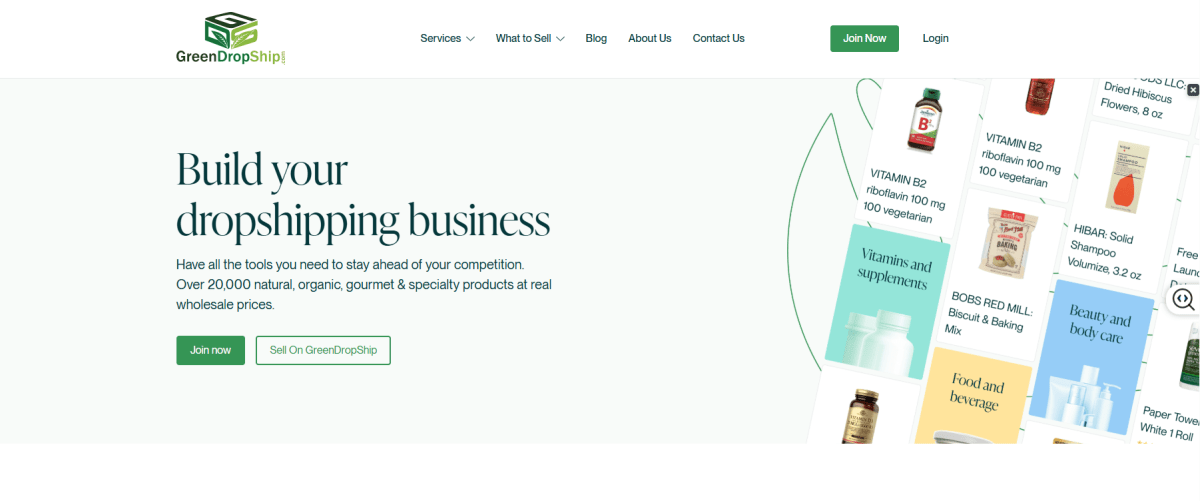
If you’re looking for a supplier to build an eco-friendly store around natural, organic, and wellness products, GreenDropShip is a solid option to consider. It offers more than 20,000 products across categories like beauty, personal care, household, food, and wellness, with fulfillment handled in the U.S.
GreenDropShip also integrates with Shopify, so you can import products, sync inventory, and automate order fulfillment instead of handling every order manually.
Best for: Natural, organic, wellness, beauty, and household products
Pros:
- 20,000+ products across multiple categories
- U.S.-based fulfillment
- Shopify integration and automated order fulfillment
- Access to established brands
Cons:
- Not every product is necessarily eco-friendly
- Sustainability claims should be checked at the product level
- Membership and app costs can affect your margins
2. Printful
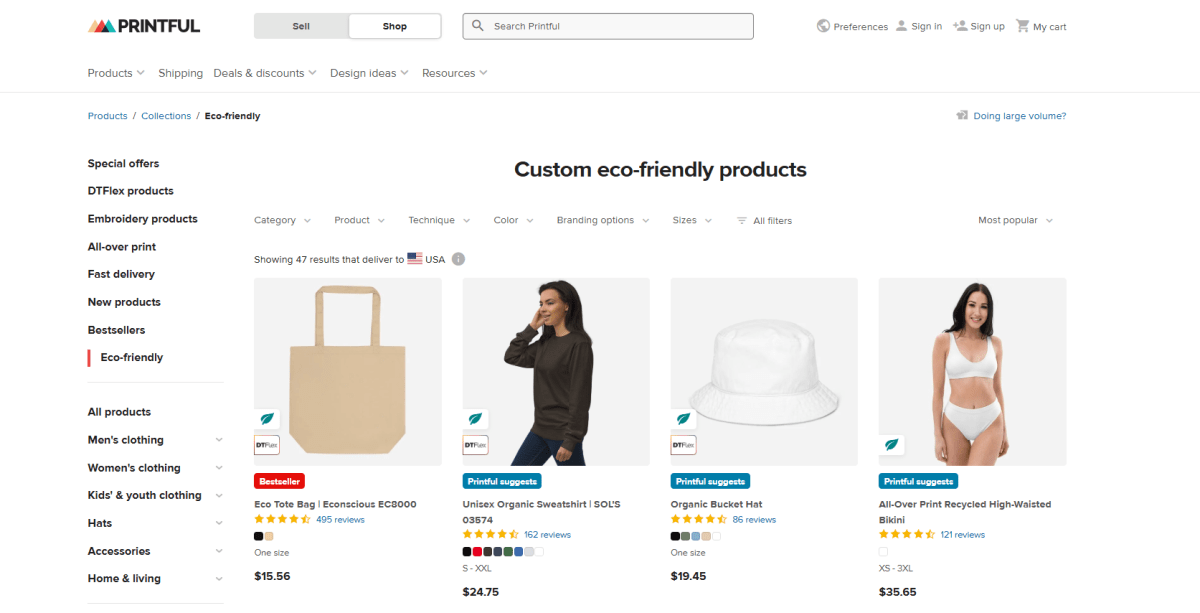
Printful stands out when sustainable products meet print-on-demand. Its eco-friendly range includes apparel and accessories made with organic or recycled materials, with material claims supported by certifications such as GOTS, OCS, GRS, and RCS.
The print-on-demand model is another reason it works well for sustainable stores. Products are made after an order comes in, so you don’t have to commit to inventory upfront. Printful also handles production, packing, and shipping, while its Shopify integration keeps fulfillment largely automated.
Best for: Sustainable print-on-demand apparel, accessories, and custom products
Pros:
- Organic and recycled-material product options
- Recognized certifications for certain materials
- No minimum order quantity
- Shopify integration and automated fulfillment
- Global fulfillment network
Cons:
- Sustainable products can come with higher base costs
- More focused on print-on-demand than traditional dropshipping
- Product-level margins can vary considerably
3. Syncee
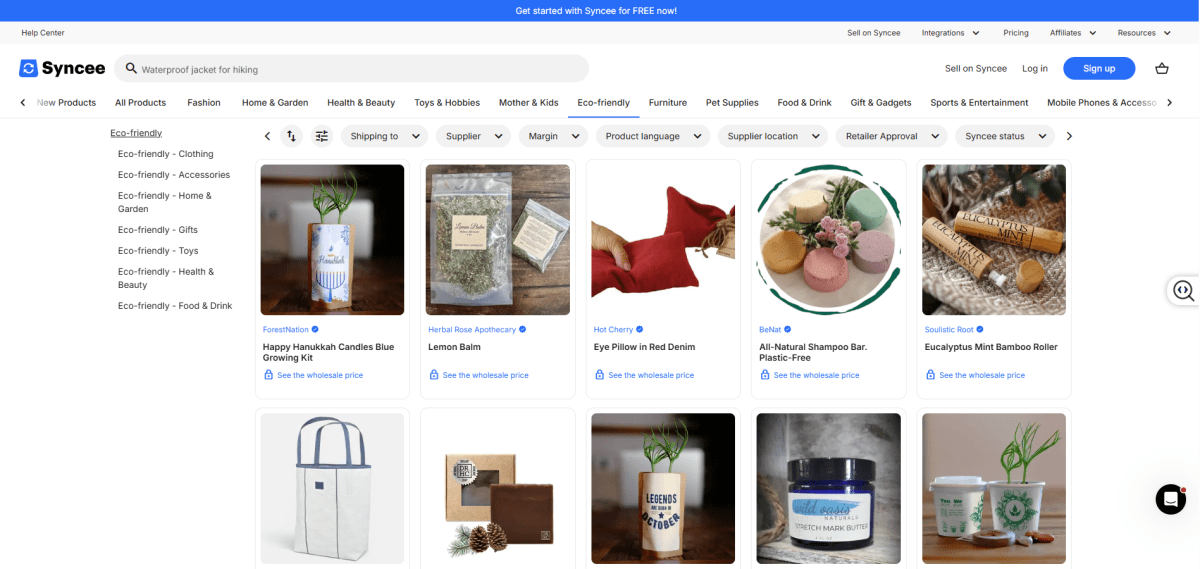
Syncee is less of a single supplier and more of a dropshipping marketplace that connects you with suppliers offering eco-friendly products. You’ll find options across sustainable fashion, zero-waste home goods, organic beauty, reusable products, and more, with suppliers available across markets such as the U.S., Canada, Europe, the UK, and Australia.
Best for: Stores that want to source eco-friendly products from multiple suppliers
Pros:
- Wide range of eco-friendly product categories
- Suppliers available across multiple regions
- Product, inventory, and order synchronization
- Automated fulfillment and tracking
- Free plan available
Cons:
- Sustainability standards vary between suppliers
- Shipping policies depend on the individual supplier
- Some features require paid plans
4. Jungle Culture
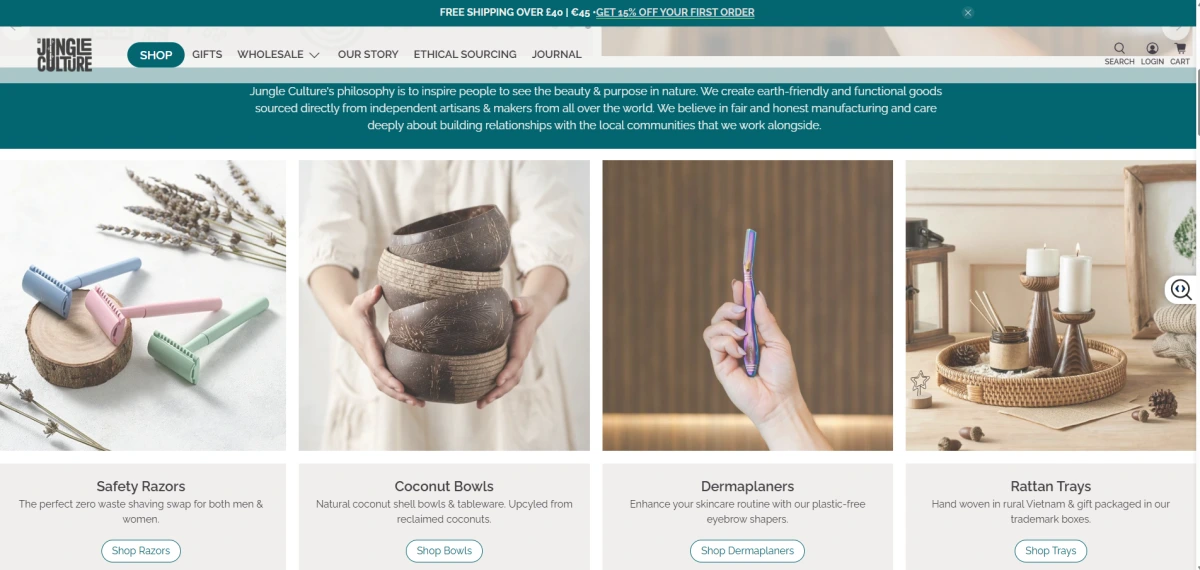
Jungle Culture takes a more focused approach to sustainability, offering products such as coconut bowls, bamboo kitchenware, reusable personal care items, and other plastic-free alternatives.
The company works with artisans and producers in Southeast Asia and runs its dropshipping program through Syncee, with fulfillment available from warehouses in the U.S., UK, and EU.
Best for: Sustainable kitchenware, reusable products, and eco-friendly lifestyle goods
Pros:
- Strong focus on sustainable and plastic-free products
- Products sourced from artisan and ethical producers
- Fulfillment warehouses in the U.S., UK, and EU
- Recycled packaging
- Dropshipping available through Syncee
Cons:
- More niche product selection than large supplier marketplaces
- Dropshipping setup runs through Syncee
- Product range is more focused on sustainable lifestyle goods than general merchandise
5. DropCommerce
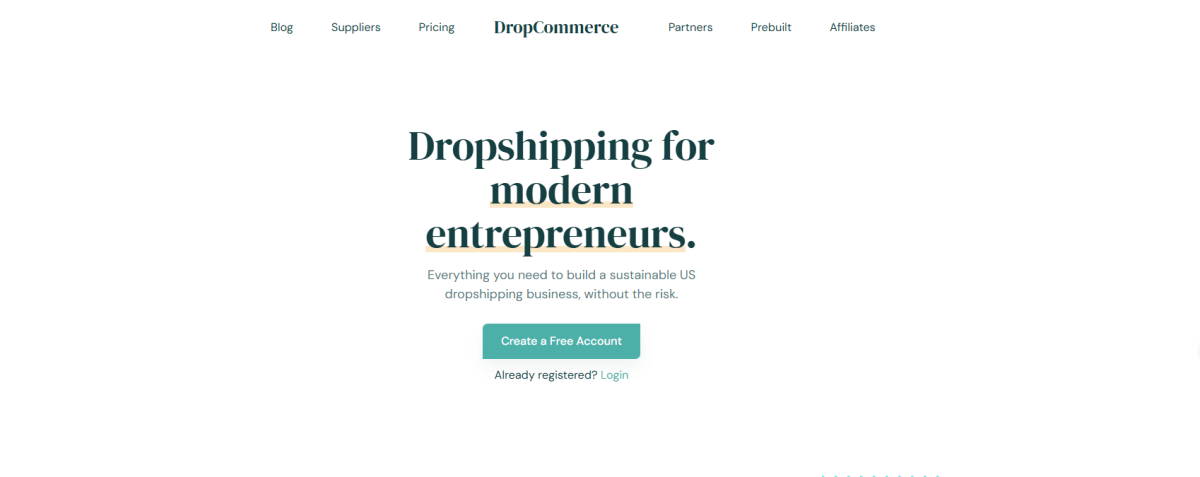
DropCommerce takes a more curated approach than the large dropshipping marketplaces. It connects stores with U.S. and Canadian suppliers, and its catalog includes products that can fit eco-friendly stores, with an “Eco-friendly” values filter helping you narrow down relevant options.
Best for: Eco-friendly stores targeting U.S. and Canadian customers
Pros:
- U.S. and Canadian supplier network
- Eco-friendly product filter
- Faster domestic shipping
- No transaction fees on top of product prices
- Branded invoicing available
Cons:
- Product prices can be higher
- More limited geographic coverage
- Some automation features require higher-tier plans
6.Spocket
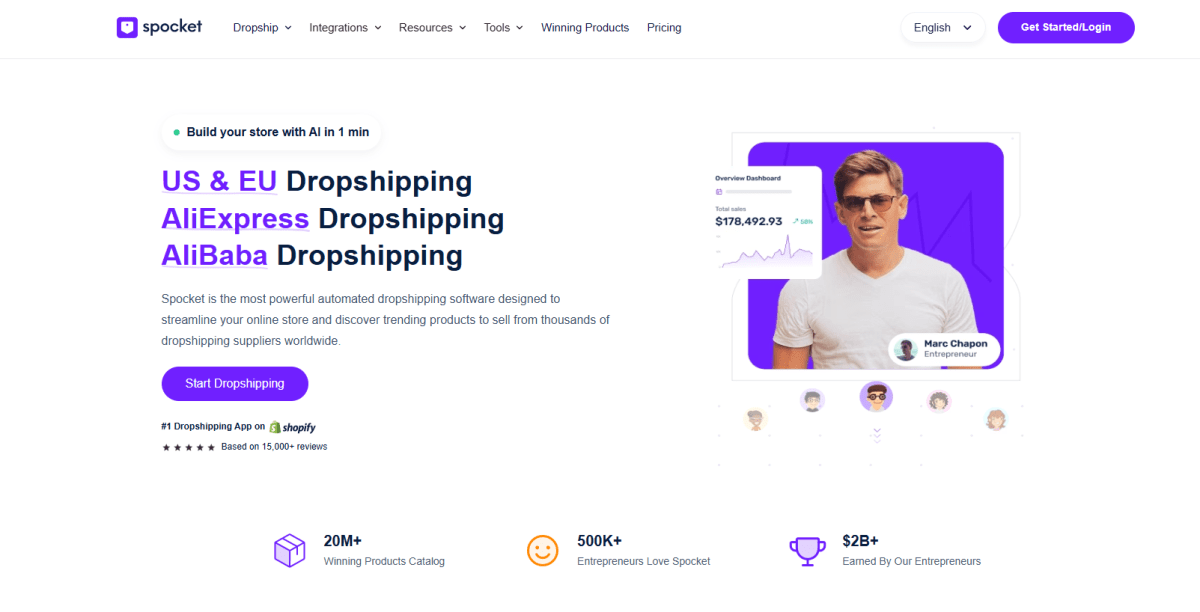
Spocket works well for eco-friendly stores that want more supplier variety without sacrificing fulfillment speed. Its marketplace includes sustainable products across categories such as fashion, beauty, home, and wellness, with many suppliers based in the U.S. and Europe.
You can also filter products by supplier location, import products into your store, and sync inventory and orders automatically.
Best for: Stores looking for eco-friendly products from U.S. and European suppliers
Pros:
- Wide selection of eco-conscious products
- Many suppliers based in the U.S. and Europe
- Shopify integration and automated order syncing
- No minimum order quantities for dropshipping
- Supplier and product filters make sourcing easier
Cons:
- Sustainability standards can vary between suppliers
- Product prices may be higher than overseas alternatives
- Some features require a paid plan
7.TPOP
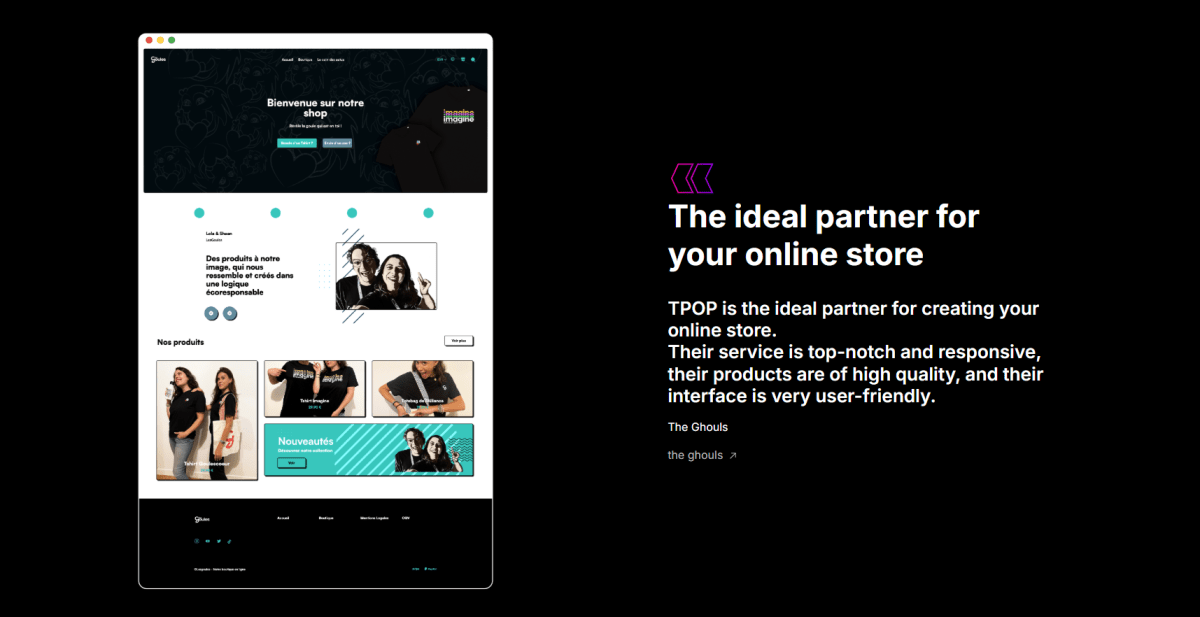
TPOP takes a more sustainability-focused approach to print-on-demand, with a catalog built around organic and recycled textiles, eco-responsible products, and plastic-free packaging. It offers products such as apparel, bags, mugs, and other accessories, making it a good fit for brands that want sustainability to be part of their product offering rather than just a marketing angle.
Best for: Sustainable print-on-demand apparel and lifestyle products
Pros:
- Strong focus on eco-responsible products
- Organic cotton and recycled textile options
- Plastic-free packaging
- Shopify, Etsy, and WooCommerce integrations
- No minimum orders
Cons:
- Product selection is more limited than general dropshipping marketplaces
- Primarily focused on print-on-demand
- Shipping and product costs can make margins tighter
8.Printify
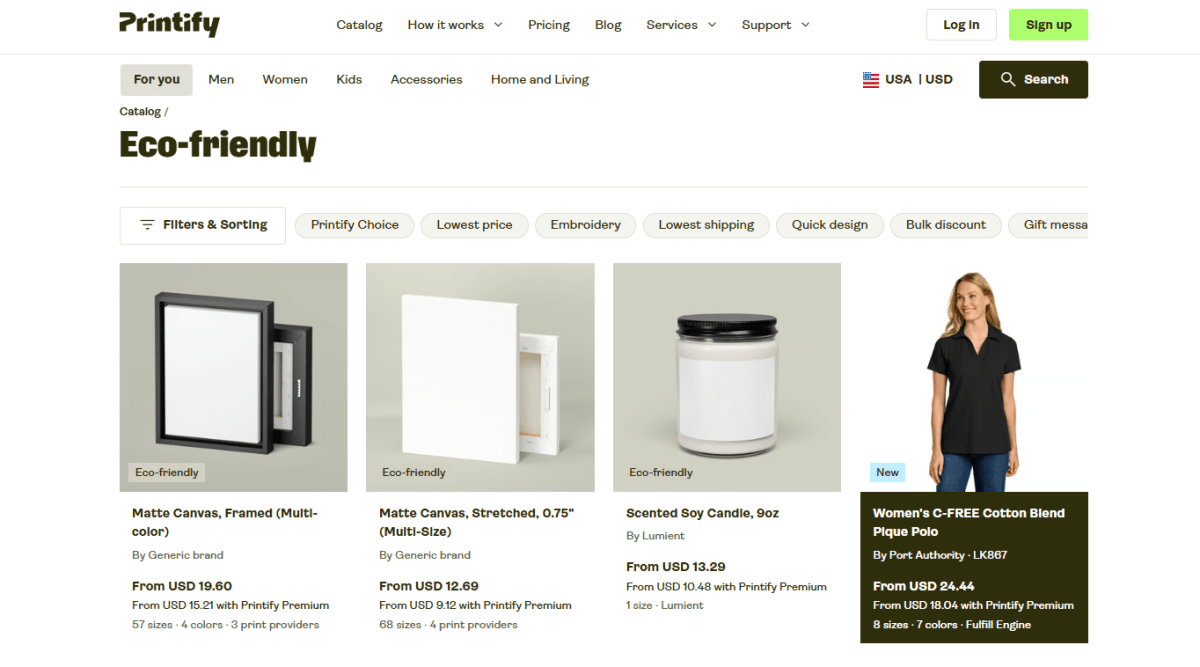
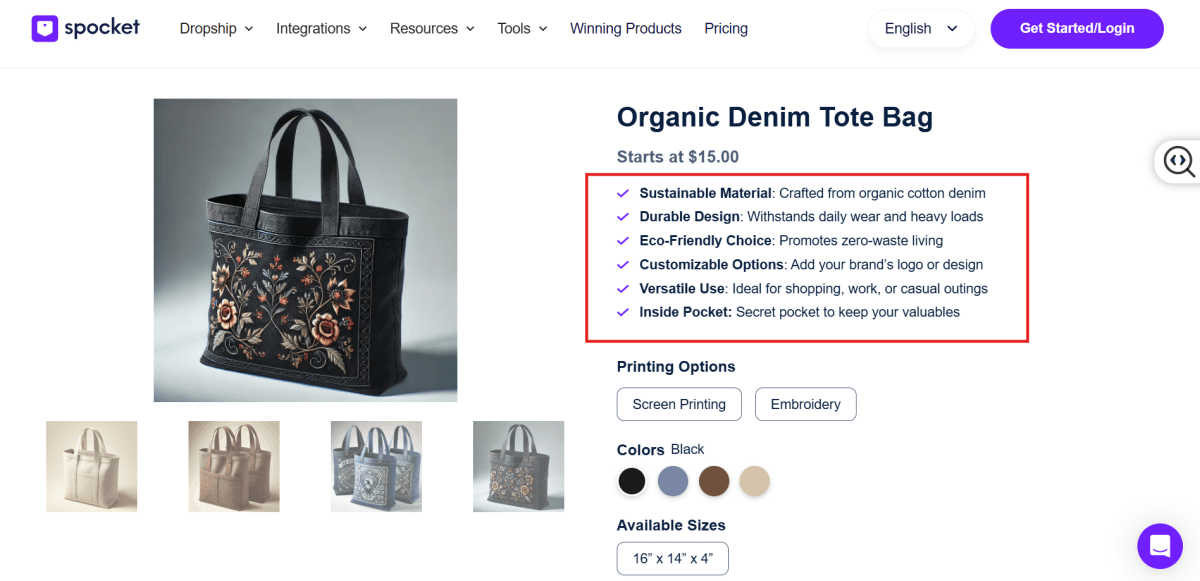
Printify is another strong option for eco-friendly print-on-demand products, especially if you want more variety than just apparel. Its catalog includes products made with organic cotton, recycled materials, and other lower-impact materials, while product pages provide material details and available certifications so you can verify sustainability claims before listing them.
Best for: Eco-friendly print-on-demand apparel, accessories, and home products
Pros:
- Wide selection of eco-friendly products
- Organic and recycled material options
- Product-level sustainability information and certifications
- Made-to-order production reduces excess inventory
- Global Print Provider network
- Shopify integration
Cons:
- Sustainability options vary by product and Print Provider
- Product and shipping costs can vary significantly
- You need to verify individual product claims before marketing them as sustainable
9.EPROLO
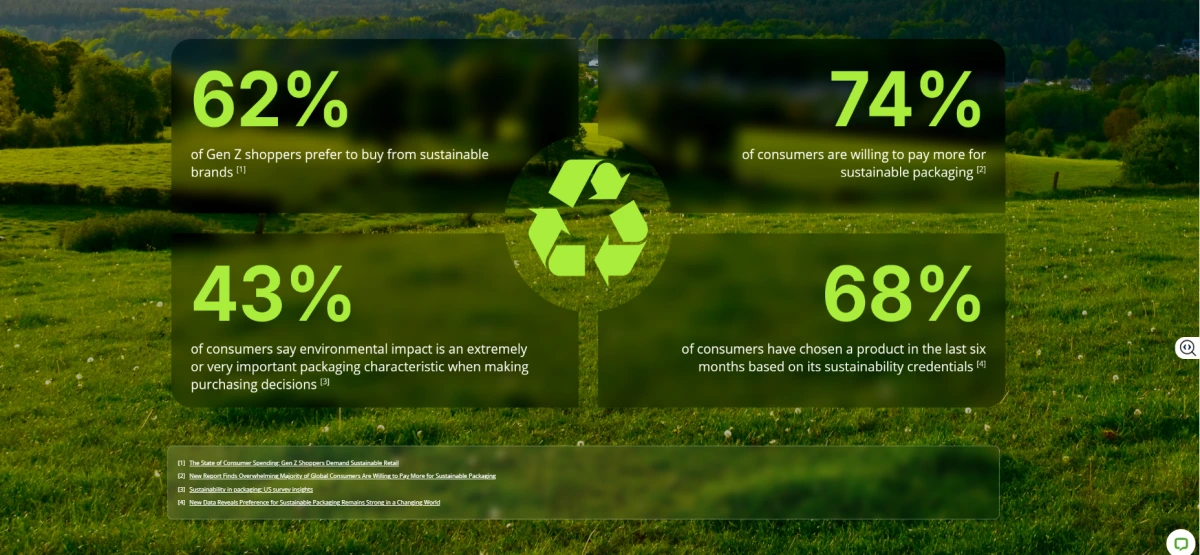
EPROLO gives you a broader dropshipping setup, but it has a dedicated green dropshipping solution for fashion as well. You can source sustainable fashion products and opt for plant-based, biodegradable packaging, while also using its Shopify integration to sync products, inventory, and orders.
Best for: Sustainable fashion and stores that want sourcing, fulfillment, and branding in one platform
Pros:
- Dedicated green dropshipping options for fashion
- Sustainable packaging made from plant-based materials
- Shopify and other ecommerce integrations
- Product sourcing and fulfillment services
- Custom branding available with no MOQ
Cons:
- Eco-friendly options are more focused on fashion than the entire catalog
- Sustainability varies by product, so individual products still need to be checked
- Broader catalog means you need to be selective when building a truly eco-friendly store
10.Modalyst
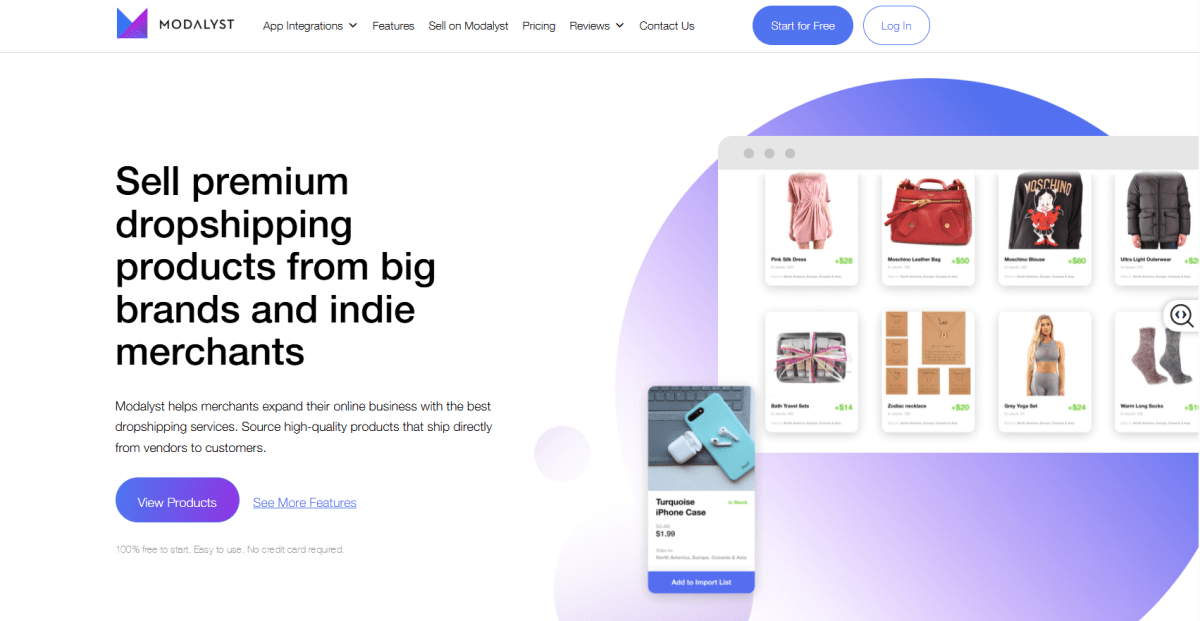
Modalyst is worth a look when you want to source eco-friendly products from a broader mix of independent suppliers, rather than relying on a single catalog. Its marketplace covers thousands of suppliers and categories, and you can connect it directly to Shopify to import products, sync inventory, and automate orders.
The main thing to remember is that Modalyst is a marketplace, not an eco-friendly supplier itself. That gives you more flexibility, but it also means you need to evaluate each supplier and product carefully before making sustainability claims.
Best for: Stores that want flexibility when sourcing eco-friendly products
Pros:
- Large network of suppliers and product categories
- Shopify integration with automated order syncing
- Inventory updates help reduce overselling
- Access to independent and niche suppliers
- No minimum orders for dropshipping
Cons:
- Sustainability standards vary by supplier
- Shipping costs and delivery times depend on the supplier
- Product quality and sustainability claims need to be checked individually
11.Syncio
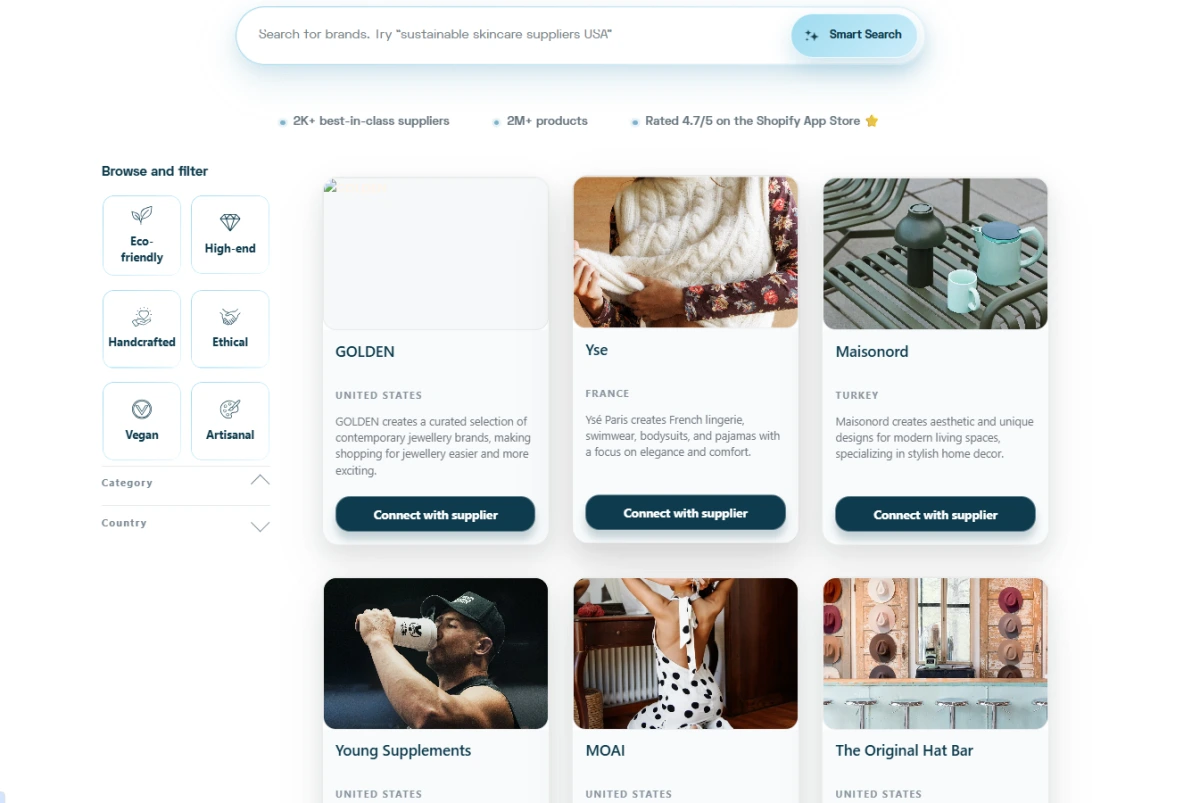
Syncio is a little different from a traditional dropshipping supplier. It’s a supplier marketplace and dropshipping platform that connects merchants with independent brands, including suppliers offering sustainable fashion, zero-waste home goods, reusable products, and other eco-conscious products.
You can browse suppliers, import products into Shopify, and keep inventory and orders synced automatically.
Best for: Stores that want to discover and work with multiple eco-conscious brands
Pros:
- Large marketplace of independent suppliers
- Eco-friendly products across multiple categories
- Real-time inventory synchronization
- Automatic order syncing
- Shopify and WooCommerce support
- Free to get started
Cons:
- Sustainability standards vary by supplier
- Shipping and pricing depend on the individual brand
- You still need to verify sustainability claims before marketing products as eco-friendly
How to Verify the Right Suppliers For Your Stores?
Here are the key checks worth making before you commit.
1. Verify the Sustainability Claims
Don't take “eco-friendly” at face value. Look at what specifically makes the product sustainable and whether the supplier provides evidence to support the claim.
For certifications, check who issued them, what they cover, and whether they apply to the specific product you're considering. This helps prevent vague sustainability claims from becoming a problem for your brand later.
2. Order Samples Before You Commit
Ordering samples gives you a chance to evaluate the product beyond what you see on the supplier's website.
Pay attention to product quality, materials, packaging, branding, and delivery time. This is also where you can catch issues that product photos won't show, such as excessive packaging or a product that doesn't match its description.
3. Check the Fulfillment Experience
The product itself is only part of the customer experience. Look at where orders are fulfilled from, how they're packaged, how long delivery takes, and how returns are handled.
This becomes particularly important for an eco-conscious store. A sustainable product paired with excessive packaging or an inefficient fulfillment process may not align with the positioning you're trying to build.
4. Compare Shipping Costs and Delivery Times
Shipping can quickly change the economics of a product.
Compare shipping rates, delivery times, and fulfillment locations across suppliers, then factor those costs into your product pricing. The goal is to find a balance between a reasonable customer experience and enough margin to run the business profitably.
5. Check Whether the Supplier Can Scale
A supplier that works for a small store may not necessarily work once order volume increases.
Look at inventory syncing, order automation, tracking updates, ecommerce integrations, and fulfillment capacity. These operational details can make a significant difference once you're managing a larger catalog or higher order volume.
Final Thoughts
If there's one thing to take away from this guide, it's that “eco-friendly” shouldn't be the only box you check when choosing a supplier. A supplier can tick every sustainability box and still leave you with poor margins, slow fulfillment, or a product your customers don't love.
So take a step back and evaluate the full picture. Look at the product, the supplier, the customer experience, and especially your actual net profit.
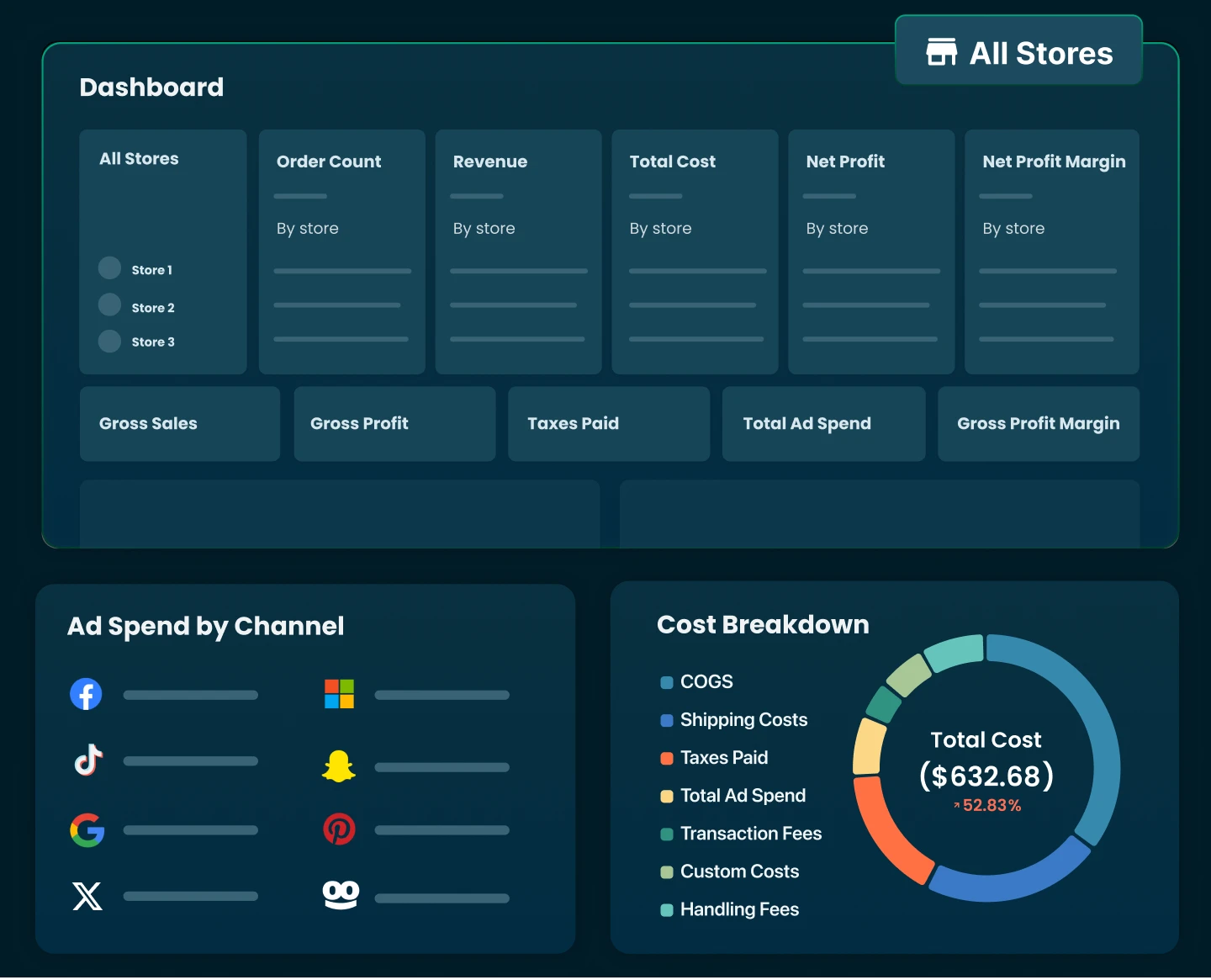
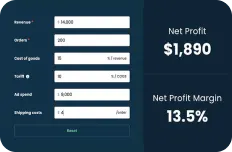
Our tool - TrueProfit can take some of the guesswork out of the equation. Instead of spending hours manually tracking COGS, shipping, ad spend, transaction fees, refunds, and other costs, you can see them in one place and get a much clearer picture of your true bottom line.
You can also drill down to net profit by order and by product, so you’re not just seeing which products sell the most, but which ones are actually making you money.
Because at the end of the day, the goal isn’t to build a store that’s simply greener. It’s to build one that’s sustainable for the planet, your customers, and your bottom line.

Lila Le is the Marketing Manager at TrueProfit, with a deep understanding of the Shopify ecosystem and a proven track record in dropshipping. She combines hands-on selling experience with marketing expertise to help Shopify merchants scale smarter, through clear positioning, profit-first strategies, and high-converting campaigns.