Is AI Dropshipping Legit? Or Just Overhyped in 2026?


Table of Contents
- 1. Is AI Dropshipping Legit?
- 2. What Is AI Dropshipping, Exactly?
- 3. Is Using AI In Doing Dropshipping Legal?
- 4. Common AI Dropshipping Myths and How Reality Differs
- 5. How AI Changes Dropshipping Pros and Cons
- 6. Step-by-Step On How to Try AI Dropshipping Safely If You Decide To
- 7. Advanced Tips to Make AI Dropshipping More Legit and Sustainable
- 8. Final Thoughts
- 9. Is AI Dropshipping Legit FAQs
Is AI dropshipping legit? Yes, when it is run as a real ecommerce business. But it is not magic passive income, and it does not remove the need for product validation, customer support, compliance, and profit tracking.
AI dropshipping is traditional dropshipping supported by AI tools for product research, store setup, copywriting, ad creation, customer support, and sometimes fulfillment automation. The tools can help you move faster, but they cannot guarantee sales or protect you from poor margins.
This guide breaks down what AI dropshipping really is, what public experiments show, where beginners often lose money, and how to test the model more safely in 2026.
In this blog:
- 1. Is AI Dropshipping Legit?
- 2. What Is AI Dropshipping, Exactly?
- 3. Is Using AI In Doing Dropshipping Legal?
- 4. Common AI Dropshipping Myths and How Reality Differs
- 5. How AI Changes Dropshipping Pros and Cons
- 6. Step-by-Step On How to Try AI Dropshipping Safely If You Decide To
- 7. Advanced Tips to Make AI Dropshipping More Legit and Sustainable
- 8. Final Thoughts
- 9. Is AI Dropshipping Legit FAQs
Is AI Dropshipping Legit?
The short answer is yes, but only if you separate the business model from the marketing claims surrounding it.
What “Legit” Means in the Context of AI Dropshipping
AI dropshipping can mean several things, so the answer depends on what you are asking.
First, there is business model legitimacy. Dropshipping itself is a real retail model. You sell a product, a supplier ships it, and you keep the margin. AI does not change that basic model. It only helps you complete some tasks faster.
Second, there is platform legitimacy. Tools like AutoDS, Shopify AI store builders, AI ad creators, and copywriting tools can be useful. But a useful tool does not make a weak product, poor store, or unprofitable ad strategy work.
Third, there is offer legitimacy. This is where many beginners get confused. Some creators promote AI dropshipping as “no work,” “guaranteed profit,” or “fully passive.” That is usually where the model becomes overhyped.
Many people search for “is AI dropshipping a scam?” because the barrier to entry looks low. A video may show a store built in one hour, a product imported in seconds, and AI ads launched the same day. Reddit discussions are often more skeptical, especially from users who have seen beginners lose money on ads, tools, or courses.
Is AI Dropshipping a Scam?
It is not a scam. It is a legitimate extension of dropshipping that uses AI for speed, research, creative production, and automation.
However, it is often marketed unrealistically. Public 7 day and 24 hour experiments usually show mixed results. Some creators get one or two sales quickly. Others spend more on ads than they make in revenue. In many cases, early profit is small, unstable, or negative after ad costs.
The issue is not AI itself. The issue is dishonest marketing.
Watch for these red flags.
- Fake sales screenshots
- Misleading income claims
- Fake testimonials or AI generated reviews
- Hidden shipping times
- No clear refund policy
- Exaggerated product claims
A beginner should treat dropshipping like a small business test, not a lottery ticket. You still need a product people want, a store they trust, ads that convert, and support that keeps customers satisfied.
Further reading: 9 Most Common Dropshipping Scams & How to Avoid As Beginners
Who Should and Shouldn’t Try Dropshipping With AI
AI dropship may suit people who want to learn ecommerce, test products, write better ads, improve landing pages, and handle customer service with a more efficient workflow.
It is risky for people who want fast money without learning. If your goal is “100% passive income,” AI dropshipping will likely disappoint you. Public experiments shared on YouTube and Medium show that AI can help you launch faster, but it does not remove the need for testing, judgment, and daily decisions.
A better mindset is simple: use AI to reduce repetitive work, then use human judgment to make better business decisions.

What Is AI Dropshipping, Exactly?
In short, AI dropshipping is doing dropshipping with AI tools layered on top of different parts of the workflow.
Here's how that breaks down.
Traditional Dropshipping vs. AI Dropshipping
Traditional dropshipping is a retail model where you sell products without keeping inventory. A customer buys from your store. You forward the order to a supplier. The supplier ships the product directly to the customer.
AI dropshipping uses the same model, but adds artificial intelligence to parts of the workflow. AI can help with product ideas, store drafts, product descriptions, ad scripts, brand names, FAQs, policies, pricing suggestions, product imports, and order fulfillment.
The core business is still dropshipping. AI is not a new business model. It is a set of tools layered on top of an existing model.
Common AI Tools Used in Dropshipping
Most AI dropshipping setups use a mix of ecommerce tools, automation apps, and creative tools. For a broader breakdown, see this guide to AI tools dropship sellers use.
AutoDS is often mentioned in AI dropshipping challenges because it can help with product sourcing, auto importing listings, price monitoring, stock sync, and order automation. If you want to understand this workflow further, this article explains how automated dropshipping workflows typically work.
Shopify sellers may also combine AI tools with fulfillment, upsell, review, and conversion apps. This list of useful dropshipping apps for Shopify stores can help you compare what different apps actually do.
Store builders are popular because they make the first store feel easy. Some videos show stores built in less than an hour. That is useful, but it can also create a problem: many AI generated stores start to look the same.
The strongest use of AI is not replacing the merchant. It is helping the merchant move from idea to test faster.
Is Using AI In Doing Dropshipping Legal?
Short answer: yes, with conditions, the details depend on how you run it.
Legal Aspects of AI Dropshipping
Dropshipping with or without AI is generally legal when you follow local business, tax, advertising, privacy, and consumer protection rules. This is not legal advice, and requirements can vary by country or region.
Legal problems can happen when sellers mislead customers. Examples include fake reviews, false health claims, unclear shipping times, copied product images, weak refund policies, or AI generated testimonials that look real.
If you use AI generated influencers, reviews, or testimonials, check your local rules on disclosures and advertising honesty. When in doubt, disclose clearly and avoid claims you cannot prove.
Ethical Concerns with AI-Generated Stores and Ads
AI can create fake human spokespeople, fake looking reviews, and polished product claims very quickly. That creates risk.
A safer approach is to use AI for drafts, not deception. Replace AI testimonials with real customer reviews once available. Be clear about shipping. Avoid claims you cannot prove. Long term trust is worth more than one fast sale.
Common AI Dropshipping Myths and How Reality Differs
Hype videos and course ads push a specific narrative, here's where that narrative breaks down against reality.
Myth 1: AI Dropshipping Is Easy Passive Income
AI can make setup easier, but it does not make the business passive. Product testing, ad changes, customer emails, refunds, supplier problems, and store optimization still require work.
The challenge videos show tinkering, failed tests, and small results, not effortless daily income.
Myth 2: AI Can Replace ALL Human Work
AI product ideas can be generic. AI copy may sound flat. AI ads may break platform rules or fail to connect with real buyers.
Human judgment is still needed for product selection, positioning, pricing, creative direction, and customer experience.
Myth 3: Any AI Dropshipping Course or Tool Guarantee Success
Be careful with courses or tools that promise guaranteed income, no work, or secret methods. Many teach the same public tools: AutoDS, Shopify builders, ChatGPT prompts, TikTok research, and Meta ads.
A tool can help you test. It cannot guarantee demand.

How AI Changes Dropshipping Pros and Cons
AI cuts setup time significantly, but it also introduces new risks sellers didn't have to manage before.
1. Key Advantages of Using AI in Dropshipping
AI is useful because it saves time. It can create a store draft, suggest product angles, write product descriptions, generate FAQs, and help produce ad scripts.
The biggest advantage is speed. A beginner can move from idea to live test much faster than before.
2. Major Drawbacks and Risks
The main risk is sameness. If many sellers use the same AI tools, they may choose the same products, templates, hooks, and ad styles.
Other risks include ad disapprovals, weak compliance, slow shipping, poor product quality, refund pressure, and payment holds.
AI can also overpromise. If your product page says “instant relief” but the product is average, customers may complain.
Step-by-Step On How to Try AI Dropshipping Safely If You Decide To
If you're still set on testing this model, here's a safer sequence to follow instead of jumping straight to ads.
Step 1: Clarify Your Expectations and Budget
Start with a learning budget, not a dream budget. A small test budget around $500-1000 is more realistic than trying to scale from day one.
Give yourself several weeks. A 24 hour test is too short to judge the full model.
Step 2: Validate the Business Model First
Before using AI tools, learn the basics of dropshipping: margins, supplier costs, shipping, returns, chargebacks, and ad spend.
If you do not understand profit math, you can lose money while thinking the store is doing well. For a more complete setup process, follow this beginner roadmap to starting a dropshipping business.
Step 3: Use AI for Product Research But Verify Manually
Use AI to create shortlists, then check the market yourself.
Good checks include supplier reviews, TikTok activity, Meta Ads Library, competitor stores, product quality signals, and customer complaints. You can also compare dedicated product research tools for finding stronger candidates before deciding what to test.
Step 4: Build Your Store with AI Then Human-Optimize
Let AI create the first version of your home page, product page, FAQs, and policies. Then improve the brand voice, layout, trust badges, shipping clarity, and product benefits.
A human optimized store usually feels more trustworthy than a default AI template.
Step 5: Create AI-Assisted Ads, Not Fully AI-Driven
Use AI for hooks, scripts, and angles. Add real product footage when possible. Review every claim before publishing.
This helps your ads feel more authentic and reduces compliance risk. For more examples, see these practical AI use cases for dropshipping.
Step 6: Launch Small Tests and Track Real Metrics
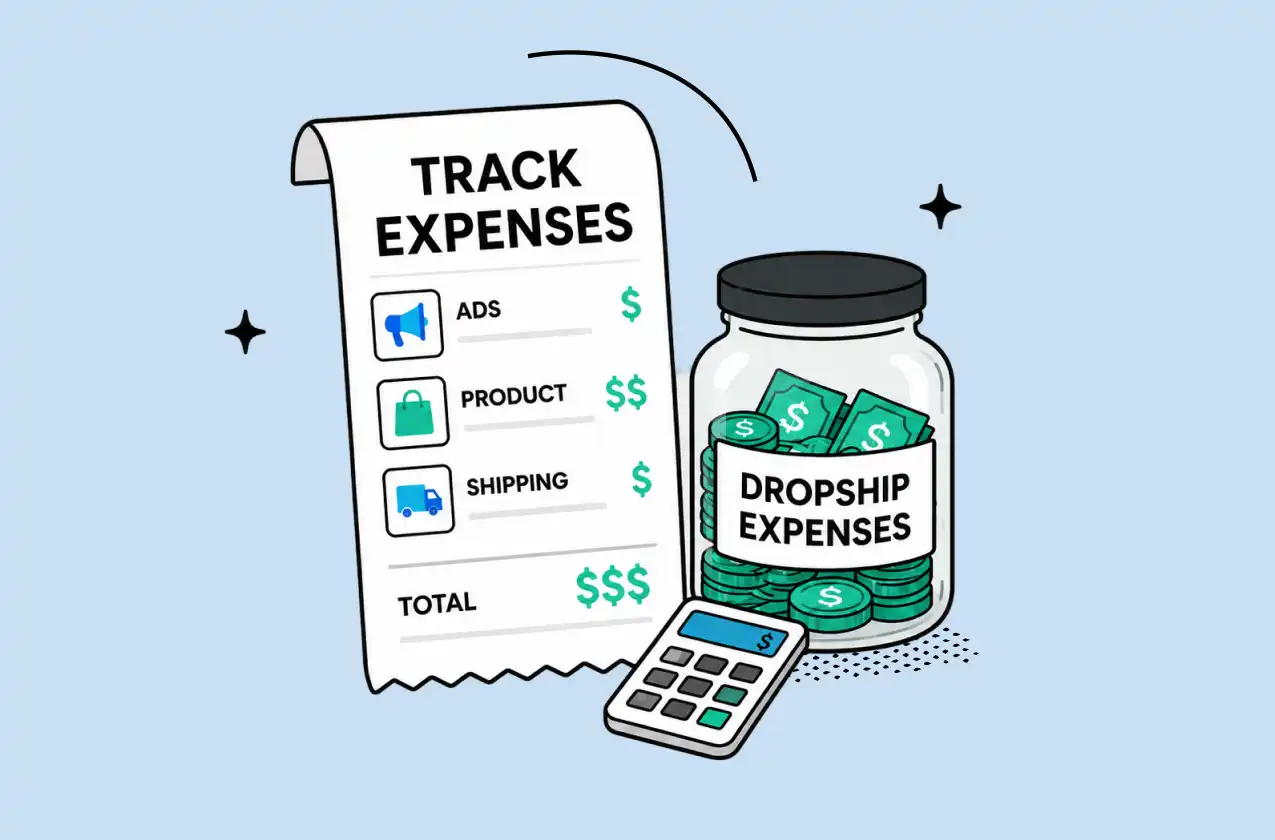
Start with simple campaigns and clear rules. Track cost per purchase, conversion rate, average order value, refund rate, and net profit.
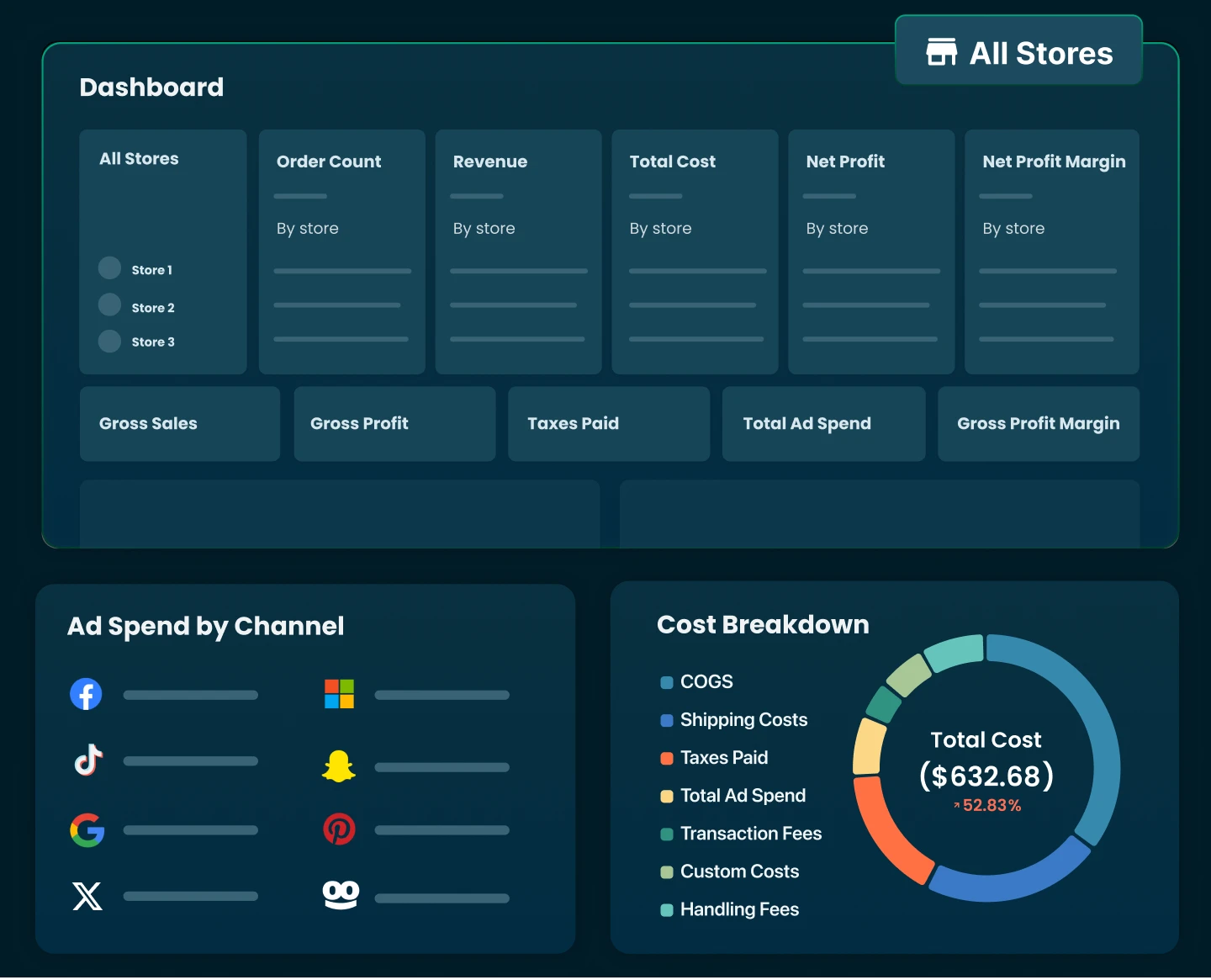
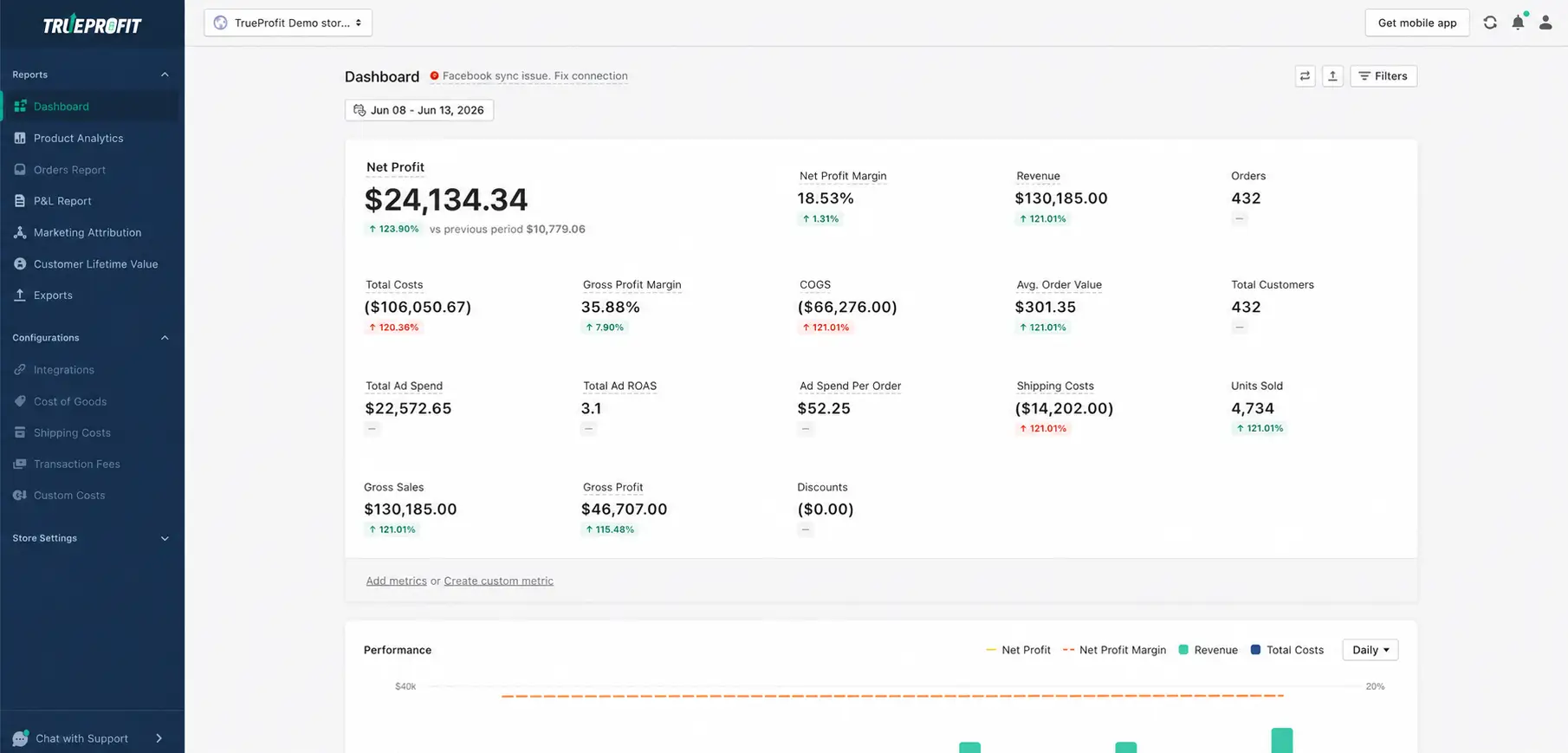
TrueProfit can help Shopify dropshippers see real bottom line (net profit) performance after all costs, which is more useful than only checking revenue or ROAS.

7. Step 7: Improve E-E-A-T Over Time
Build trust as you learn. Add an About page, real reviews, clear policies, support contact details, and honest shipping information.
Documenting your own tests also helps you make better decisions over time. Over time, this gives you stronger evidence than generic AI recommendations.
Advanced Tips to Make AI Dropshipping More Legit and Sustainable
If you're past the testing phase and want the store to hold up long-term, these are the levers that actually matter.
Build a Unique Brand, Even on Top of AI Tools
Use AI for speed, but customize the name, colors, tone, product page, and offer.
Speed is where AI helps. Differentiation is where you still have to show up. If your store, product photos, and ad hooks look identical to five other AI-generated stores selling the same product, price becomes the only thing left to compete on and that's a race to zero margin.
A unique brand gives customers a reason to buy from you instead of another similar store. That reason can be as simple as a clearer value proposition, a tighter niche, better shipping transparency, or a product page that actually answers the objections customers have (not just the ones AI assumed they'd have).
Combine Multiple Data Sources with AI
Do not rely on one tool. Combine TikTok trends, Meta Ads Library, supplier reviews, competitor pages, Reddit discussions, and AI summaries.
Each source tells you something different: TikTok shows what's trending right now, Meta Ads Library shows who's already spending money on it (and for how long, which hints at whether it's actually profitable), supplier reviews flag quality and shipping risk before you commit, and Reddit threads surface complaints AI-generated product descriptions conveniently leave out.
AI is best when it helps you organize data, not when it replaces your thinking. Feed it the raw signals and ask it to summarize patterns, don't ask it to make the sourcing decision for you. If you want to monitor competitors more systematically, compare these dropshipping spy tools for product and ad research.
Slowly Reduce Dependency on Generic AI Assets
As the store grows, replace AI spokespeople with real UGC, AI reviews with real reviews, and generic product images with custom content.
This is a sequencing decision, not a one-time swap. Early on, AI assets get you to a live test faster, that's the whole point. But once a product proves demand, every AI-generated asset you leave in place is a liability: AI reviews can trigger platform bans, stock spokesperson videos get reused across dozens of stores selling the same product, and generic images make it trivial for a competitor to clone your listing overnight.
This makes the business more trustworthy and harder to copy. Trustworthy because real customers can tell the difference between generic and real, even when they can't articulate why. Harder to copy because the parts a competitor could scrape and repost, the assets no longer exist anywhere else.
Final Thoughts
AI dropshipping is legit as a business model. It's overhyped as a shortcut.
The tools genuinely save time on product research, store setup, copy, and creative testing - that part is real, and it's the whole reason this trend took off. What's not real is the "no work, guaranteed profit" version sold in courses and challenge videos. Strip away the marketing and you're left with regular dropshipping: margins, supplier quality, ad performance, and customer trust still decide whether you make money.
If you're going to try it, treat AI as a way to test faster, not a way to skip the work. Validate the product, watch your actual margins after ad spend and refunds, and swap out generic AI assets for real ones as the store proves itself. That's the difference between a store that survives past the first test and one that looks identical to a hundred others that folded within a month.
Lila Le is the Marketing Manager at TrueProfit, with a deep understanding of the Shopify ecosystem and a proven track record in dropshipping. She combines hands-on selling experience with marketing expertise to help Shopify merchants scale smarter, through clear positioning, profit-first strategies, and high-converting campaigns.