Build a Memorable Brand: 500+ Unique Shopify Store Name Ideas (2026)


Most people treat naming their Shopify store like a creative exercise. They brainstorm a few words, check if the domain exists, and go with whatever feels good that day.
I think that's a mistake.
Your store name shapes how customers find you, remember you, and talk about you. It affects your SEO, your social media presence, and your ability to build a brand people actually recognize. A name chosen carelessly is hard to change once you've built rankings, followers, and reputation under it. And rebranding, when it's forced rather than chosen, is expensive.
This guide walks you through a five-step naming process, the principles that separate strong names from weak ones, what to do when your first choice is taken, and 500+ name ideas organized by category and niche.
500+ Shopify Store Name Ideas by Category
Catchy and Clever Store Names
Catchy and clever store names work best when they are simple, memorable, and spark curiosity without overcomplicating the brand identity.
- The Daily Dose
- Swift Finds
- Urban Flow
- Market Mavens
- Clever Collective
- The Crafty Corner
- Spark and Bloom
- Witty Wares
- Gizmo Grove
- Bright Batch
- Quirk Loft
- The Gifting Genie
- Pixel Place
- Thread and Trend
- Curiosity Cart
- Zenith Zone
- Pulse Picks
- Echo Emporium
- Loop and Line
- Fusion Finds
- Whimsy Lane
- Quick Picks
- Trendsetter Hub
- Vibe Vault
- The Clever Cartel
Unique and Creative Business Names
Unique and creative business names often rely on abstract or conceptual language that helps the brand feel distinct and more premium.
- Aether Supply
- Luminary Lane
- Terra Nova Goods
- Solstice Shop
- Veridian Collective
- Zephyr Store
- Chroma Craft
- Nexus Nook
- Pristine Path
- Radian Retail
- Sylvan Stream
- Whisper Wind
- Elara Emporium
- Hiraeth Haven
- Lumen Luxe
- Nyx Niche
- Orion's Outlet
- Penumbra Place
- Rune Rise
- Vespyr Ventures
- Forlorn Forest
- Isolde's Items
- Zylos Goods
- Kaelen Kreations
- Oculus Outfitters
Dropshipping Store Names
Names for dropshipping stores work best when they suggest breadth, convenience, or curation, rather than tying you to a specific product.
If you need flexibility to test products, find profitable items on Shopify, and refine your catalog as you grow.
- Global Glimpse
- Rapid Realm
- Inspire Finds
- Curated Connect
- World Wonders Hub
- Express Essentials
- The Omni Outlet
- Voyage Finds
- Flexi Freight
- The Curated Crate
- Nexus Niche Co.
- Quick Ship Essentials
- Transcend Trade
- Peak Provisions
- Source Stream
- Swift Storehouse
- Aura Arrivals
- Vanguard Ventures
- Eco Edge Drops
- Utility United
- Flow State Goods
- Infinite Imports
- Modern Market
- Simple Shipments
- Prime Pace Picks
- Diverse Delivers
- Zenith Zone Drops
- The Daily Drop
Names like "Inspire Finds," "Quick Ship Essentials," or "The Curated Crate" work well here because they imply selection and service rather than a product category. Avoid names tied to a single item type. Your bestsellers will shift as you learn what's actually selling on Shopify in your niche.
Aesthetic and Cute Shop Names
Aesthetic and cute shop names tend to work best when they use soft, emotional language that creates a warm and inviting feeling.
- Petal and Bloom
- Cozy and Co.
- Sweet Pea Goods
- Dreamy Delights
- Little Luxe Shop
- Soft Touch Store
- Willow and Whimsy
- Glimmer and Glee
- Sugar Plum Shop
- Honeybee Haven
- Cloud Nine Curations
- Moonbeam Market
- Chic Charm Co.
- Daisy Delivers
- Fawn and Feather
- Blush Boutique
- Sparkle and Sprout
- Tiny Treasures
- Lullaby Lane
- Giggle and Glow
- Dainty Delights
- Melody Makers
- Star Gazer Goods
- Sunny Side Shop
- Whispers and Wares
Modern and Trendy Store Names
Modern and trendy store names usually perform well when they are short, minimal, and designed to feel current and fast-moving.
- Flux
- Verte
- Ascend Co.
- Neo Niche
- Urban Edge
- Kinetics
- Axiom Goods
- Form Collective
- Align Store
- Modish Market
- Stellar Supply
- Momentum Mode
- Core Concepts
- The Elevate Shop
- Metric Mart
- Pulse Point
- Shift Source
- Tidal Threads
- Optic Goods
- Echo Shop
- Grid and Grain
- Prime Persona
- Nexus Trends
- Vibe Vault
- Fusion Finds
- Core Supply
- Signal Store
Professional and Brandable Store Names
Professional and brandable store names work best when they sound trustworthy, structured, and scalable for long-term growth.
- Sterling Solutions
- Apex Ascent
- Pinnacle Products
- Meridian Mercantile
- Fathom Forge
- Cadence Commerce
- Equinox Emporium
- Veritas Ventures
- Integrity Goods
- Zenith Retail
- The Cornerstone Co.
- Beacon Brands
- Prosper Point
- Legacy Luxe
- Noble Nexus
- Echelon Essentials
- Summit Storehouse
- Valiant Ventures
- Paragon Picks
- Regal Retail
- True North Trading
- Prime Paradigm
- Guardian Goods
- Ascent Goods
- Optimum Offerings
Store Name Ideas by Niche
Store Name Ideas by Niche work best when they are grouped to match specific audiences, making it easier to find names that fit your market.

The 3-Step Process for Naming Your Shopify Store
There's a temptation to jump straight into brainstorming. I'd encourage you to resist it. The stores that end up with names they regret almost always skipped the groundwork.
Define Your Brand Identity Before You Name Anything
Before you write down a single name idea, you need to know what your brand actually is. Not in a vague, aspirational sense. Concretely.
Ask yourself four questions, and write the answers down:
- What's your niche? Be specific. "Sustainable activewear for women" gives you far more to work with than "clothing." The more precise you are, the more relevant your naming options become.
- Who's your ideal customer? A store targeting Gen Z streetwear buyers needs a fundamentally different name than one targeting 40-something home decor enthusiasts. You should think about their age, values, and the language they actually use, not the language you wish they used.
- What's your brand personality? Playful and irreverent? Minimal and sophisticated? Warm and community-driven? Your name should reflect that personality. If the name doesn’t quite fit the brand, customers can sense it right away.
- What makes you different? Speed, quality, price, ethics, curation, exclusivity? If you know your differentiator, you can often build it into the name, or at least use it to discard options that don't fit.
Once you've answered these, write down 20 to 30 keywords that feel genuinely connected to your brand. These become the raw material for everything that follows. If you're still figuring out whether Shopify is the right platform for your business, this overview of how Shopify works is worth reading first.
Generate Ideas Using Multiple Methods
Word association is one of the easiest ways to generate ideas. Start with a keyword and write down every word it makes you think of. If you sell candles, a word like “flame” might lead to “flicker,” “amber,” “ember,” or “glow.” Each of these can take you in a different direction. The goal is to keep expanding without overthinking, so you end up with more options than you need.
Another approach is to combine words into something new. This is how names like Netflix and Pinterest were created. You can try mixing your product type with a feeling or value, such as “GlowCraft” or “NestForge.” When the combination works, the name feels unique but still easy to understand.
Using words from other languages can also add a different tone. French, Italian, or Japanese terms often feel more distinctive or refined. For example, “Belle” means beautiful in French, and “Lusso” means luxury in Italian. Still, it is important to double-check the meaning in your target market. A word that sounds appealing can carry the wrong meaning in another context.
You can also adjust a name by adding a prefix or suffix. Words like “Lab,” “Studio,” or “Collective” can change how a name feels and make it sound more complete. This is especially useful when your preferred name is already taken and you need a variation that still fits your brand.
AI tools can help speed up the process, especially when you want a large number of ideas quickly. Tools like ChatGPT, Namelix, or Brandmark work best when you give clear instructions. Instead of asking for general name ideas, describe your product, your audience, and the tone you want. The more specific your input, the more useful the results will be.
Shopify’s free name generator is a simple way to get ideas fast. You enter a few keywords, and it suggests name combinations while also checking domain availability at the same time. It’s useful when you need quick inspiration, but it works best as a starting point rather than a final decision.
Filter Against These Seven Principles
Once you have a long list, cut it down. A strong Shopify store name scores well on all seven of these. A weak one usually fails two or three.
- Memorable: The name should be easy to recall after hearing it once. Simple and punchy works better than clever but complicated.
- Unique: It should not sound like other brands. Similar names create confusion and can lead to legal issues.
- Relevant: It does not need to describe your product directly, but it should connect to it in a clear, natural way.
- Available: You need a usable domain, consistent social handles, and a clear path to trademark ownership.
- Scalable: Will the name still make sense if you expand your product range in two or three years? "OnlyBlueTshirts.com" is an obvious trap, but the same problem appears at a smaller scale all the time. If you have broader ambitions around how to make money on Shopify beyond your initial product, name it for the future, not just for today.
- Clear and simple: If people struggle to spell or pronounce it, it will slow you down. Say it out loud to test it.
- Brandable: It should look good as a logo and sound credible in conversation. A name that works visually and verbally gives your Shopify marketing a stronger foundation from day one.
Tools Worth Using for Name Research
Shopify's Business Name Generator
Shopify's free generator lets you enter keywords and returns combinations with domain availability checked in real time. It's genuinely useful at the brainstorming stage, where the goal is volume. Understanding the Shopify business model before you name your store is also worth doing, because how you operate shapes the kind of name that actually fits.
AI Name Generators
Namelix, Looka, and Brandmark generate names from your keywords and style preferences. ChatGPT works well too, particularly with a detailed prompt. The specificity of your prompt determines the usefulness of the output.
Generic prompts get generic results. Specific prompts get options you'd actually consider using.
Instead of typing something vague like “generate Shopify store names”, treat it like a brief. Here are a few examples you can use or adapt:
1. Generate 20 Shopify store name ideas for a print-on-demand brand in the fitness niche (gym lovers, weightlifting).
The brand vibe is bold, motivational, slightly aggressive but still premium.
Avoid generic words like "fit", "store", "shop".
Names should be short (1–3 words), easy to pronounce, and feel like real brands (e.g., Gymshark, Alphalete).
Include a mix of abstract and descriptive names.
2. Generate [X] Shopify store name ideas for a [niche] brand targeting [audience].
The brand vibe is [tone/style].
Avoid [overused words or patterns].
Names should be [length/format constraints].
Make them feel [brand qualities: premium, fun, minimal, etc.]
Domain Registrars
GoDaddy, Namecheap, and Google Domains let you search name availability and show alternatives when your first choice is gone. Check .com first. If it's taken, .store, .shop, and .co are the next best options. Domain extensions do affect perceived trust and can influence discoverability, so factor this into your Shopify SEO approach from the start.
Naming Mistakes That Are Entirely Avoidable
These aren't edge cases. I see versions of all of them regularly.
1. Choosing a Generic Name
Names like "Great Products Store" or "The Online Shop" communicate nothing. They're forgettable by design, and forgettable names make it harder to build word-of-mouth, rank in search, or get sales on Shopify through any organic channel. If your name could describe any store in any category, it's not working hard enough.
2. Making It Hard to Spell or Say
If customers can't type your name without guessing, you're losing search traffic and direct visits every day. Avoid intentional misspellings like "Kreative Kutts," foreign words that are hard to pronounce for your audience, and unusual character combinations.
Friction at this level affects your Shopify conversion rate more than most people realize.
3. Naming Too Narrowly
"OnlyBlueTshirts.com" is extreme, but the principle applies at a smaller scale constantly. Names tied tightly to one product, one color, or one trend create a constraint that becomes painful the moment you want to expand. Think about where you want your store in three years and name for that version of the business. This matters especially if you're serious about scaling your Shopify store into new categories.
4. Skipping the Trademark Check
Trademark disputes are expensive, disruptive, and entirely avoidable. A forced rebrand wipes out your SEO, your social following, and the brand recognition you've built. Spend 30 minutes on the USPTO, IPO, or WIPO database before you commit to any name. It is genuinely the cheapest insurance available to you at this stage.
5. Checking Domain Without Checking Social
A lot of store owners verify the domain and forget about social handles, or do it in two separate sessions and miss the fact that handles are inconsistent across platforms. If someone else owns @YourBrandName on Instagram and TikTok, you'll have a fragmented brand presence from day one. Check everything in a single pass.
A strong name supports everything from your Shopify sales funnel to long-term referral traffic. It also matters in ways that are easy to overlook, like Shopify A/B testing, where a trusted brand name lifts conversion rates across every experiment you run. Rushing rarely saves the time you think it does.

Final Thoughts
Choosing a name for your Shopify store is not just a creative task. It’s a decision that shapes how your brand is perceived and how easily you can grow over time. The strongest stores treat naming as a process. They define the brand clearly, generate options with intention, and filter them using practical criteria like clarity, flexibility, and availability. It’s not complicated, but it does require discipline.
Once your store gains traction, changing the name becomes expensive and disruptive. That’s why getting it right early matters. The ideas in this guide are meant to spark direction, but the right name is the one that fits your specific brand, audience, and long-term goals.
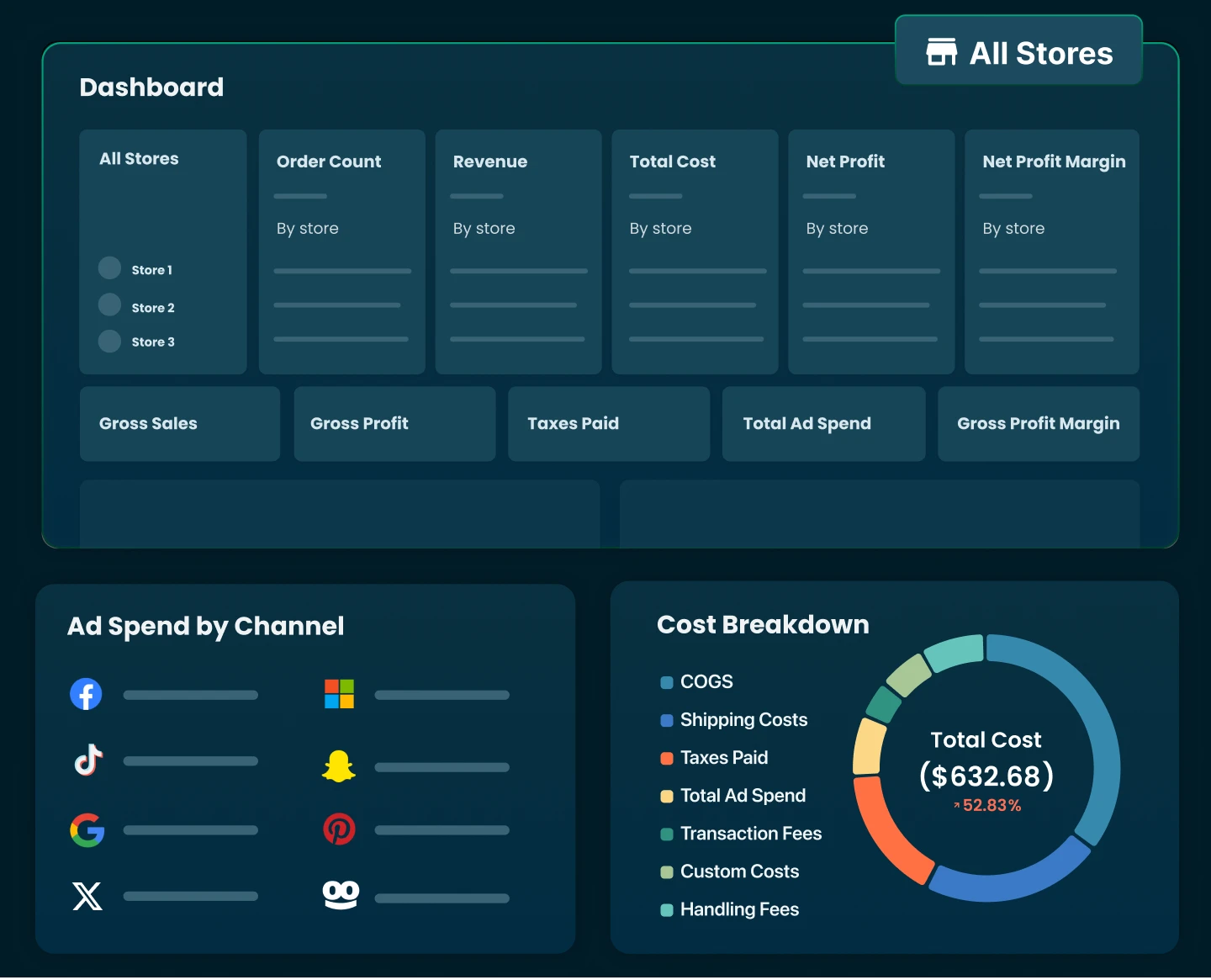
As your store grows, branding is only one side of the equation. You also need a clear view of how your business is actually performing. For Shopify sellers, that’s where a tool like TrueProfit becomes useful. It tracks your real-time net profit across orders, products, and channels, so you’re not just building a brand that looks right, but a business that is truly profitable.

Irene Le is the Content Manager at TrueProfit, specializing in crafting insightful, data-driven content to help eCommerce merchants scale profitably. With over 5 years of experience in content creation and growth strategy for the eCommerce industry, she is dedicated to producing high-value, actionable content that empowers merchants to make informed financial decisions.